The University of San Francisco
USF Scholarship: a digital repository @ Gleeson Library |
Geschke Center
Master's Theses Theses, Dissertations, Capstones and Projects
Fall 12-16-2016
A Political Ecology of Copper Production and
Environmental Degradation In Zambia
Chalwe C. Mwansa
University of San Francisco, [email protected]
Follow this and additional works at:https://repository.usfca.edu/thes Part of theAfrican History Commons
This Thesis is brought to you for free and open access by the Theses, Dissertations, Capstones and Projects at USF Scholarship: a digital repository @ Gleeson Library | Geschke Center. It has been accepted for inclusion in Master's Theses by an authorized administrator of USF Scholarship: a digital repository @ Gleeson Library | Geschke Center. For more information, please [email protected].
Recommended Citation
Mwansa, Chalwe C., "A Political Ecology of Copper Production and Environmental Degradation In Zambia" (2016).Master's Theses. 244.
“A POLITICAL ECOLOGY OF COPPER PRODUCTION AND ENVIRONMENTAL
DEGRADATION IN ZAMBIA”
by
Chalwe Charles Mwansa
A Thesis
Submitted to the faculty of the Department of International Studies
of the University of San Francisco
in Partial Fulfillment of the Requirements for the Degree of
Master in International Studies
UNIVERSITY OF SAN FRANCISCO
San Francisco
DECLARATION:
I, Chalwe Charles Mwansa, declare that the thesis hereby submitted is my own work and it has
not previously been submitted for a degree, diploma or other qualification at the University of
San Francisco or any other university. The views stated therein are those of the author and not
DEDICATION AND ACKNOWLEDGEMENT
To my late mother, Charity Chanda Mwansa, “A True Son Never Forgets.” I wish to thank my
God for the many mercies she has shown me to sustain my life. I would also be failing if I do not
mention the University of San Francisco for providing the necessary facilities.
Many thanks to my advisor Professor Brian Dowd-Uribe. Your critical comments, ideas and
suggestions helped fully conceptualise and deepen the research and gave this paper a better
focus. Thanks also to Professor Lucia Cantero, without whose encouragement and support I
would not have been able to make it this far.
Finally, I also owe a debt of appreciation to the following for their assistance during my research
Table of Contents
Declaration ii
Dedication and Acknowledgement iii
Table of Contents iv
List of Figures vi
List of Acronyms vii
Chapter 1: Focus of the Investigation
1.1 Introduction 1
1.2 Formulation and Background Context 4
1.3 Research Objectives 8
1.4 Research Questions 9
1.5 Significance of the Study 9
1.6 Limitations of the Study 11
1.7 Structure of the Thesis 11
Chapter 2: Research Framework
2.1 Political Ecology: Origins and Development 13
2.2 Conceptual Framework 17
2.3 Linkage to Study 18
2.4 Methods and Data Collection 19
2.5 Research Methods 19
2.6 Relevant Literature 20
2.7 Case Study Methods 20
2.8 Choice of Copper Belt Province as Case Study 21
Chapter 3 Overview of the Political Economy in Zambia
3.1 Introduction 23
3.2 The Political Economy of Zambia 24
3.3 Zambia’s Unsuccessful Economic Intervention Changes: 1965-1990 26 3.4 Structural Adjustment Reforms under the MMD since 1991 32
3.4.1 Macroeconomic Equilibrium 33
3.4.2 Debt Relief through the Highly-Indebted Poor Countries (HIPC) Initiative 35
3.4.3 Economic Liberalization 36
3.4.4 Sale of State Owned Enterprises and Parastals 37
Chapter 4 Environmental Assessment of Copper Mining
4.1 Copper Mining and Processing 40
4.1.1 Ore Extraction 41
4.1.2 Ore Concentration–Separating Minerals from the Gangue 41 4.1.3 Smelting to form “Matte” and “Blister” Copper 41
4.1.4 Electronic Refining to Form Pure Copper 42
4.1.5 Leaching 43
4.1.6 Recovery of Copper from Old Tailings of Gangue. 43 4.2 Regulatory Environmental Laws and Copper Mining in Zambia. 45 4.2.1 Ministries Relevant to Environmental Protection in Zambia 45 4.2.2 Environmental Legislation and National Guidelines in Zambia 49
4.3 Stakeholders’ Effects on Environmental Conservation. 51
4.4 Zambian Copper Mine and Smelter Pollutants 53
4.4.1Air Pollution Impacts: Sulphur dioxide (SO2 53
4.4.2 Water Pollution Impacts 55
4.4.3 Land and Soil Pollution Impacts 56
Chapter 5: Analysis and Discussion of Findings
5.1 Introduction 58
5.2.1 The Impact of Large Scale Copper Production on the Environment 58
5.2.2 Mining Pollution Impacts at the Local Level 64
5.3 Conclusion and Recommendations 66
List of Figures
Figure 1. Blaikie & Brookfield’s Multi-Scale Approach Framework 18 Figure 2. Map of Zambia highlighting Copper Belt Province 22
Figure 3. Copperbelt Province Mining Locations 22
Figure 4 Timeline: Political and Economic History of Zambia 23 Figure 5. Real GDP and Population Growth, 1965-2001 26
Figure 6 Ecological Effects of Copper Production 44
Acronyms
CEMP Consolidated Environmental Management Plan CEP Copper Belt Environmental Project
ECZ Environmental Council of Zambia
EIAR Environmental Impact Assessment Regulation EMA Environmental Management Act
EMP Environmental Management Plan EPA Environmental Protection Agency
EPPCA Environmental Protection and Pollution Control Act FDI Foreign Direct Investment
GDP Gross Domestic Product IMF International Monetary Fund LME London Metal Exchange
MCM Mopani Copper Mine
MMD Movement for Multiparty Democracy
MTENR Ministry of Tourism, Environment and Natural Resources NCCM Nchanga Consolidated Copper Mines
NEAP National Environmental Action Plan NGO Non-Governmental Organization
OPEC Organization of Petroleum Exporting Countries RCM Roan Consolidated Mines
RST Rhodesia Selection Trust SAP Structural Adjustment Programs SO2 Sulphur Dioxide
UNIP United National Independence Party
WB World Bank
WTO World Trade Organization
ZCCM Zambia Consolidated Copper Mines
CHAPTER ONE: Focus of the Investigation
1.1 Introduction
Natural resources such as copper, oil, gold, diamonds and manage historically play a dynamic
role in many countries’ development and growth, as they provide employment, generate tax
revenues and earn foreign exchange. The impact of mining sectors on economic development in
these countries cannot be overemphasized, as they create employment opportunities for
individuals on the domestic, sub-regional and international levels (i.e. direct or indirect
employment, e.g. mining suppliers, contractors, international consultants, engineers etc.), and
transfers modern technology and skills, thus altering the structure of their economies and
providing the basis and potential for “sustainable growth.”
Copper is one resource which has the potential to build a nation’s economy through the injection
of enormous levels of foreign investment and the transfer of advanced technology and skills. One
of world’s largest sources of copper ore is found Zambia. Following the first commercial mine,
which was opened in 1928 at Roan Antelope (now Luanshya), copper mining has dominated
Zambia’s economy, with Zambia being the second largest producer of copper in Africa following
the Democratic Republic of Congo (DRC).1
Copper mining in Zambia accounts for about three quarters of the nation’s export earnings,2 16%
of the nation’s gross domestic product (GDP) and roughly 20% of the overall formal
1 Https://www.facebook.com/AfricanBusinessMagazine." DRC Now Africa's Biggest Copper Producer - African Business Magazine." African Business Magazine. 2015. Accessed December 06, 2016.
http://africanbusinessmagazine.com/sectors/commodities/drc-now-africas-biggest-copper-producer/.
employment.3 The mining industry as a whole was reported in the Government’s 2015 Economic
Report to have contributed $5,457.1M US dollars (74.7 percent) of the entire export earnings of
$7,305.71160 million in 2015. Of this amount, $5,304. 3M US dollars originated from the
auctions of copper and cobalt only.
Although the immense contribution of mining toward economic growth and public finance,
copper mining in Zambia has also produced enormous negative social-environmental impacts,
owing to historical legacies from mining. This reinforces the notion that mineral wealth does not
in the long term sustain and increase a nation’s economy in a manner that provides equitable
development; indeed, in many cases, it hinders inclusive development and is responsible for
environmental degradation and persistent poverty, sometimes leading to social unrest and
conflict. For example, Zimbabwe has enjoyed huge diamond and gold revenues from as far back
as the late 1960s; nevertheless, its per capita GDP is currently among the lowest in the world.
Copper mining remains the backbone of Zambia’s economic sector. Yet inadequate resources
and training, and the adoption of cheap but potentially dangerous approaches to extraction and
processing of minerals, has created significant dangers for both local communities and the
environment at large. Such a situation has been and is being experienced in most of Zambia’s
copper mining districts. It is important to measure the scale of these social and environmental
problems and to advance practical methods to deal with them. For example, the Consolidated
Environmental Management Plan(CEMP)assessed the impact of copper mining on the Zambian
Copper Belt Province and determined that most of the mining townships had significant levels of
contamination of copper and cobalt elements, resulting in acid drainage and metal absorption in
the province’s streams and rivers.4
Moreover, chemical spillage and leakages into the main water bodies in the rural areas
surrounding the mining townships has created a serious food security threat, as farmers are
unable to safely irrigate their crops or water their animals, and the food produced on the
contaminated land endangers biodiversity, the health of both human and animal life, and affects
residents’ economic livelihood.5 Frequent leakage of contaminants around rivers has forced
many native settlers to abandon their ancestral lands and relocate to safer places.6 This was the
case in the village of Shimulala in Chingola town, where the mining giant Vedanta’s subsidiary
company KCM spilled toxic waste into the Mushishima stream, turning the water into a river of
acid. In 2010, KCM drilled a borehole to provide clean water for the village, but a leaked
document shows that the water from the borehole is also contaminated.7
These undesirable ecological and social issues which are intrinsically linked with mining have
serious implications for the economic growth and development of the nation. In Zambia, there
are approximately 10 functioning copper mines, with 17 international companies and over 87
local contractors. Several of these companies have come into operation by way of mergers, thus
multiplying the scale of their actions into other provinces in the country, namely North-western,
4 SGAB, SWECO, THOMRO and UNZA. (2005). Preparation of Phase 2 of aConsolidated Environmental Management Plan –
Project Summary Report. ZCCM Investments Holdings, Copper belt Environment Project. 5 Ibid.
5 Vidal, John. "'I Drank the Water and Ate the Fish. We All Did. The Acid Has Damaged Me Permanently'" The Observer. 2015. Accessed December 07, 2016. https://www.theguardian.com/global-development/2015/aug/01/zambia-vedanta-pollution-village-copper-mine.
5 "Chamber of Mines of Zambia » Production Figures." Chamber of Mines of Zambia. Accessed December 07, 2016. http://mines.org.zm/production-figures/.
6 Ibid.
Eastern, Southern and Central Provinces.8 The activities of these companies have also affected
local livelihoods and environmental conservation efforts.
This thesis explores the impact of large scale copper mining on the environment and the
distribution of its benefits. This will be achieved using the Copper Belt Province as a case study.
The Copper Belt Province of Zambia is one of the nation’s largest copper ore producing
provinces, with six active copper mines dating as far back as 1928.9 This study will use a
political ecological framework to show that Zambia’s mineral resource wealth has produced a
sequence of economic and political realignments arising from the operations of the copper
mining industry that has subsequently negatively impacted the local environment and the
communities who live in, and depend upon it.
1.2 Formulation and Background Context
The Republic of Zambia is endowed with many minerals such uranium, gold, emeralds, zinc,
coal, cobalt and amethyst, to name but a few.10 Nevertheless, the nation is principally reliant on
the large-scale extraction of copper for its export earnings, tax revenue and direct and indirect
employment opportunities. Commercial copper mining in Zambia started in the late 1920s; thus,
the country has a long history of copper mining activities. At independence in October 1964,
Zambia’s Gross National Product per capita was one of the highest on the continent, mainly due
8 "Chamber of Mines of Zambia » Production Figures." Chamber of Mines of Zambia. Accessed December 07, 2016. http://mines.org.zm/production-figures/.
9 Ibid.
10“Sustainable Development in Zambia: Experiences and Ways Forward,”
to the copper mining industry, which in 1960 accounted for 90% of its total export earnings11 and
contributed 16% of wage employment.12
Unfortunately, the nation’s reliance on copper has made her a mono-economy, primarily
dependent on the export of one major natural resource to generate government revenue and earn
foreign exchange.13 In an increasingly global economy and marketplace, mining companies are
not limited to domestic markets; rather, they are constantly searching for future potential markets
to boost their revenues. This globalization of the mining industry affects copper production in
Zambia owing to its reliance on foreign direct investment, technological transfer, and enhanced
trade opportunities beyond domestic borders.14
Multinational corporations (MNC) play a huge role in Zambia’s mining industry, because they
operate on a global scale with major activities and strategies centrally determined by their boards
in developed countries. Multinational corporations such as the Anglo-Swiss company Glencore,
First Quantum Minerals Ltd of Canada and the London-based Indian founded mining company
of Vedanta Resources plc are able to mobilise capital investment resources which often far
exceed the annual GDP of emerging nations like Malawi, Lesotho and Zambia. As the academic
scholar Todaro15 has observed, “Their capital security gain has permitted MNCs to increase their
economic and political strength in emerging nations through product market supremacy, thus
conferring upon them the ability to manipulate prices and incomes and to conspire with other
firms in limiting access by other potential players.”16 In the case of Zambia, the influence of
11 Osei-Hwedie, Z, B. Development Policy and Economic Change in Zambia: A Re-Assessment, 2003
12 Daniel, Philip. Africanization, Nationalization and Inequality: Mining Labor and the Copper Belt in Zambian Development. Cambridge University Press, London, 1979.
13 Osei-Hwedie, Z, B. Development Policy and Economic Change in Zambia: A Re-Assessment, 2003 14 Ibid.
these mega-sized MNCs cannot be overstated. The mismanagement of Zambia’s copper
resources by the State-owned Zambia Consolidated Copper Mines (ZCCM) ltd. in the 1970s and
80s was one of the key factors leading to over nearly two decades of neo-liberal economic
policies and strategies from the early late 1990s that saw private industry-led growth as the main
path towards recovery from the economic crisis arising from the socialist economic policies of
the one-party state that came to an end in 1991. Zambia, like many other nations that
implemented structural adjustment program (SAP) reforms from the latter part of the 20th
century, was forced to privatize industries such as mining by selling the state-owned copper
mines. The Zambian government implemented policies and enacted legislation aimed at
enhancing private foreign direct investment in the mining industry, and multinational
corporations were awarded concessions and obtained mining licenses for huge portions of land,
rich in natural ores for exploration and extraction.
Despite enormous investments in the mining sector after the privatization of the mines, the
benefits accruing to the majority in the nation are scarcely noticeable. The claims of inclusive
growth for which the government sold the mines are farfetched with the benefits largely reaped
by the shareholders and executives of the MNCs and a small local elite. Although Zambia is
today classified as a middle-income country,17 on many measures it is paradoxically one of the
poorest nations in the world, with 79.6 % of the population living below the income poverty line
of US $1.25 per day.18 There have in recent times since privatization, been periods of relative
economic development; but this has been far from inclusive development and current mining
operations have impacted negatively upon the natural environment and livelihoods that depend
17UNDP (2011) ‘Sustainability and Equity: A Better Future for All’ Explanatory note on 2011 Human Development Report composite indices
upon it. Part of the reason for increased ecological degradation in the nation relates to procedures
used by the government when granting mining licences and concessions in Zambia. There has
been little to no consultation with the public, local communities or other interested stakeholders
on matters pertaining to “proposals, purchases, environment management and mining rights, the
result being no local informed input on the potential of mining exploration developments will
influence upon the environment.”19
Currently, major shareholders in the Zambian mines industry include Mopani Copper Mines Plc.,
owned by Carissa Investments (jointly Glencore and First Quantum of Canada; the latter
invested $3 billion dollars into the former ZCCM holdings);20 Kokoda Copper Mines, a
subsidiary of Vendata Plc., which invested $8 billion dollars into the mines; J&W of
Switzerland, which also owns Chambeshi Metals Plc., with Chibuluma Copper Mines subsidiary
owned through the South African giant firm Metorex, which invested a sum of $406 million
dollars in the mines.21
The overdependence on copper by Zambia has been made more serious by the nation being a
“price taker” on the London Metal Exchange. Copper produced by the nation is sold on
international trade platforms such as the London Metal Exchange (LME), which sets the copper
price per global supply and demand conditions. As investor perceptions about these conditions
can change rapidly, the LME’s copper price is infamous for its limited period instability. In just
the first two weeks of November 2016, the price has spiked by over 20% to in excess of US
19 Garvin, T., Mcgee, T.K., Smoyer, Tomic, K. E. and Aubynn, E.A. (2009) “Community-company relations in gold mining in Ghana,”Journal of Environmental Management, Vol.90: 571-586
$5,600 a ton, from about $1000 less a month earlier.22 The outcome of this price instability is
unpredictability and volatility in Zambia’s foreign exchange earnings and government tax
revenue from copper.
As the Zambian copper mining sector is inextricably linked to the global capitalist system, it is
inevitably exposed to the manner in which this system operates. Its predominant motivation is
the maximization of returns to shareholders, often achieved by “price taking” companies like
mining companies by the minimization of costs. Thus, for example, wage levels for local miners
are kept as low as possible. Further, particularly pertinent in the context of this paper, when a
conflict arises between minimizing costs and enhancing environmental safeguards through costly
adjustments to processes and installations, the natural tendency of a capitalist firm is to cut
corners to protect the bottom line. This is even more likely in the case of the modern MNC
where the line between corporate management and the shareholders has become very blurred.
Thus, the CEO of Glencore since 2002 has been Ivan Glasenburg. He has benefitted enormously
from his large holdings of Glencore stock. In this context, the operational decisions taken by
such a stock holding CEO and his directors are even more likely to put the maximization of
returns to shareholders above any costly investments in environmental protection measures.
Indeed, they are only likely to do so if required and effectively compelled to by the Governments
in whose countries their mines and smelters operate.
1.3 Research Objectives
The study seeks to explore the impact that copper mining in Zambia has made on the
environment by enriching or just preserving and conserving it on the one hand or rather
impoverishing and degrading it on the other. To do this, the study will consider the following
specific objectives.
1. To investigate how mining operations in the Copper Belt Province have impacted local
social and environmental conditions.
2. To assess the financial gains from copper mining and how the revenue from copper
mining is distributed among the various interested parties, stakeholders and recognized
participants.
3. To comprehend and critically examine the policy framework established to foster
environmentally sustainable extraction of copper in Zambia, and make recommendations
that will strengthen this framework for the future promotion of an environmentally
sustainable copper mining industry.
1.4 Research Questions
To achieve the above objectives, the following major research questions were posed:
1. What are the political and economic factors influencing the scale, scope and distribution
of the benefits accruing from copper mining in Zambia?
2. What are the types and distribution of environmental impacts associated with copper
mining in Zambia?
3. What kind of environmental conservation and preservation policies and strategies have
emerged to mitigate the environmental impact of copper mining in Zambia?
1.5 Significance of the Study
Copper is a commodity utilized in a wide range of sectors due to its chemical and physical
have on the environment and local communities in Zambia. In explaining the effects of
environmental degradation, the study results can potentially be used by various stakeholders
including the government, non-governmental organizations (NGOs), the church and the private
sector as well other international partners, to amend economic-environmental practices
pertaining to mitigating water contamination and soil and air pollution.
Given that the Zambian government has ratified various international agreements and
declarations such as the United Nations Sustainable Development Goals (SDG’s) - which include
SDG number 3 (“Good health and Wellbeing”), SDG number 6 (“Clean Water and Sanitation”)
and SDG number 11 (Sustainable Cities and Communities) - , this research study would avail the
Government of Zambia with the opportunity to implement these declarations domestically by
working hand in hand with mining companies to develop environmentally sustainable strategies.
The information gathered would furthermore support interventions by various government
ministries and agencies (i.e. Ministry of Community Development as well as the Ministry of
Mines and Minerals Development). The research may also contribute to the existing knowledge
of mining activities and their impact on the environment, by aiding other academicians and
researchers to build on the existing literature to strengthen social and civic policy appraisal and
execution modalities. Communities at the local level must demand improved social corporate
responsibility, and grassroots advocacy may empower them to apply the existing study results in
demanding dialogue and participatory decision making on aspects related to mining in Zambia,
especially as it relate to the distribution of benefits and the efforts to mitigate all negative
1.6 Limitations of the Study
This research had several restrictions. First, the study is constrained in scope as it is concentrated
on one study area—the Zambian Copper Belt Province; therefore, it offers restrictions for
broader scale generalization. In addition, it does not incorporate the successes and generally
albeit inequitable economic effects of the mining industry, but instead studies the influence of
copper mining on the environment and how the environment and local communities have been
negatively impacted because of copper mining activities.
Second, a major limitation of the work related to the researcher’s inability to travel to the study
site (the Copper Belt Province, Zambia) owing to financial and immigration restrictions. This in
turn impacted the overall direction of the study, as the researcher had to rely upon existing
research conducted and published by other scholars, limiting his investigative inquiry (especially
in gathering information from key informants and other participants through in-depth
interviews). However, with perseverance, the research was conducted. A third limitation was the
difficulty of gathering literature reviews within a restricted time frame; this in turn had
inferences for the theoretical depth of the investigation.
1.7 Structure of the Thesis
The study consists of five chapters. This first chapter presents the introduction of the study by
covering the contextual background of the issue under investigation, addresses the statement of
the problem, research objectives and questions and furthermore provides the justification for, and
limitations of, the investigation. The second chapter reviews Political Ecology’s origins and
development; it also highlights the significance of the conceptual framework adopted for this
study, by linking the study to the debate. The chapter then discusses methods and data collection
economic background of Zambia, and how these two aspects have influenced copper mining
production in the nation. Chapter four covers an overview of environmental assessment of
Copper Mining by setting out a thorough description of copper production processes, debates the
actors and policies involved in environmental protection, before, discussing specific pollutants
that originate from the Zambian copper mines and smelters. Finally, chapter five deliberates on
CHAPTER TWO: Research Framework
2.1 Political Ecology: Origins and Development
This study will use a political ecology framework to analyze the environmental impact of copper
mining in Zambia, from considerations of power (policy and practice) to how the environment
and communities have changed at local level. It shows how the distribution of power (which is
the main subject of political science) determines the use of the natural environment between
different categories and groups of humans and with regard to other species.23
The development of political ecology as a field of study and as an analytical framework arose in
response to the need to analyze the dynamics of change in human ecosystems, emerging first as a
subsidiary field of geography in the mid-late 1960s. The discussion of issues covered in political
ecology grew out of a very large number of disjointed works from several disciplines, including
geography, sociology, anthropology, biology, and ecology.24 The application of a political
ecology perspective has been instrumental in assisting scholars to comprehend how and why the
costs and benefits related to changes in ecology and the environment that arise from human
activity are unevenly dispersed among humans according to the economic and political power
they are able to exercise.25 The field has greatly expanded to include discussions on a wide range
of environmental problems such as loss of topsoil, disposal of nuclear waste, global population
23 Robbins P. Political Ecology: A Critical Introduction .2nd ed. Chichester: John Wiley & Sons Ltd; 2012, 296.
24Brown, J. Christopher, and Mark Purcell. "There’s nothing inherent about scale: Political ecology, the local trap, and the politics of development in the Brazilian Amazon." Geoforum 36, no. 5 (2005): 607-624.
growth, global warming, ozone depletion, depletion of global fisheries, species extinction,
desertification, environmentally-related illness, acid rain, and decline in air and water quality.26
One approach to political ecology joins human ecology (largely, the study of human social
existence and habitat) with a social and political examination, i.e. how distinct groups of players
at diverse scales challenge the rights of other players to revenues and other benefits from an
economic activity that uses natural resources in a predominantly ecological setting.27 The
overriding necessity for access and control over land, space and ecological resources, 28 suggests
that power relationships are key to the political ecology method—specifically, the central
attention it gives to its political analysis regarding the insatiable need for humans to use natural
resources.29 An examination of “scale” (physical, financial, information, political, social) in
political ecology deepens an understanding of the resource curse30, which is the failure of many
resource-rich nations to benefit significantly, sustainably and equitably from their natural
resource capital, and for their governments to respond effectively to the public welfare and
economic empowerment requirements of their citizens. Thus, for example, because of poor
public administration and governance in many developing countries and unfair trade practices
between unevenly balanced nations in a globalised capitalist world, the MNCs from rich nations
can extract concessions such as tax breaks for their mining activities, reducing the public finance
benefits of being a natural resource rich country. There are very few African nations that have
26 Https://loyno.academia.edu/JohnClark. "Dialectical Political Ecology" Academia.edu-Share Research. Accessed December 09, 2016. https://www.academia.edu/2937823/_Dialectical_Political_Ecology.
27 Brosius JP. Comments to A. Escob-after nature: steps to an anti-essentialist political ecology. Cur Anthropol 1999, 40:16-17. 28 Tan-Mullins, M. 2007, "The State and its Agencies in Coastal Resources Management: the political ecology of fisheries management in Pattani, Southern Thailand", Singapore Journal of Tropical Ecology, vol. 28, no. 3, pp. 898-918.
29 Swyngedouw, E. 2007, "Techno-natural Revolutions: the scalar politics of Franc's hydro-social dream for Spain, 1939-75",
Transactions of the British Institute of British Geographers NS, vol. 32, no. 1, pp. 9-28.
gained sustainable and equitable development from their possession and exploitation of their
mineral resources.31
The scholarship on mining raises huge concerns in attempting to comprehend environmental and
individual livelihood sustainability. It is evident that the political ecology of mining has a
combined appeal where biophysical and social/political conditions are intimately entangled.
From this standpoint, it can be seen that the mining industry in emerging countries operated
overwhelmingly and disproportionately in the direction of those who have power through their
control over huge capital resources.
Power is said to be “the capacity of a performer to regulate their own synergy with the
environment and the cooperation of other performers with the environment.”32 Power may be
derived from the State, individuals and organisations alike. The exercise of power inevitably
results in an uneven relationship between different groups and performers and, as a consequence,
affects environmental outcomes. The exercise of power invariably favours the specific interests
of those with power over other less powerful players, so dominating their legitimate interests in
preserving and using ecological resources to advance their own interests. In the case of mining,
land ownership and control in areas rich in mineral resources is invariably directed toward
conferring commercial mining rights to powerful MNCs over enabling local smallholder farmers
to continue to have access to that land for the raising of crops and animals. This result is
manifested when the powerful party’s control of the ecological and natural resources is
consolidated through regulation and intervention by the State to prioritize their activities over
those of less powerful groups. Thus, these vulnerable groups are side-lined in policy formulation
31 Molle, F. 2007, "Scale and Power in River Basin Management: the Chayo Phraya River in Thailand," The Geographical Journal, vol. 173, no. 4, pp. 731-753.
and implementation and indeed are often abandoned, usually facing the future with increased
difficulty as their source of livelihood is no longer available to them.33
In the case of Zambian copper mining, as in many other emerging nations where natural
resources are extracted, the “resource curse” is apparent. The “resource curse” postulates that
possession of mineral resources does not always lead to sustainable and equitable development
for the majority of the citizens of a resource rich nation. Indeed, in most cases they have turned
out to be curses rather than blessings in that they breed corruption and rent-seeking behaviour by
state officials, delay the adoption of more broad-based development strategies that can produce
equitable economic growth and expose the nation to significant external shocks as a result of
highly volatile commodity prices. There are so many influential and powerful players in resource
rich countries - such as highly capitalised and profit maximising multinational mining companies
(MNCs), the State and its rent-seeking officials and other local elites (e.g. traditional leaders)
who can be subverted into supporting the interests of the MNCs such that these MNCs take away
a disproportionate share of the nation’s treasure. The local people and their communities are left
to cope with the negative effects of mining these resources, including alienation from the
benefits they traditionally received from the land, leading to greater material hardship and
insecurity and a life lived in a degraded natural environment. In some cases, like that of the
Democratic Republic of Congo (DRC), and previously in Angola with the UNITA rebels,
conflict over their resources (diamonds) lead to political and social unrest and conflicts and the
loss of life for many hundreds of thousands of people.34. These battles originated from disputes
over income streams, scuffles over area dominance, inequitable access to ecological resources,
33 Ibid. 40
failure to protect human and citizen rights and disapproval of individuals and groups over the
distribution of mineral rentals.35
Political ecology, like many other philosophical concepts and analytical frameworks, has not
advanced far without having its own challenges and detractors within academic circles, largely
emanating from the high level of ambiguity that exists when it comes to defining and classifying
what political ecology is and what it means. Some scholars have argued that it is simply a study
plan;36 awkwardly enough, others have called it a method.37 Some address it as a standpoint,38
with others calling it a training method.39
2.2 Conceptual Framework
The broader political economy has been further explained in terms of political ecology by Piers
Blaikie in The Political Economy of Soil Erosion in Developing Countries.40 This work both
elaborates the political discussion of soil erosion’s causes and impacts and recognizes the diverse
social contexts in which soil erosion is considered problematic.41 Blaikie’s work uses chains of
explanation at multiple scales; it acknowledges various root causes of degradation, and examines
the social and institutional impacts on environmental knowledge itself.42
This framework sheds light on pertinent issues associated with mining, for example, the effect of
local inequalities on land use and land degradation such as reduced access to land ownership due
to over population, increased pressure from other industrial sectors in need of land (i.e.
35 Ibid.
36Bryant, R. L. (1998), “Power, Knowledge and Political Ecology in the Third World: A Review,” Progress in Physical Geography, 22, (1), 79-84
37 Zimmerer, K. S. & Bassett, T. J. (2003), Political Ecology: An Integrative Approach to Geography and Environment
Development Studies, The Guilford Press, New York, 311pp
38Neumann, R. P. (2005), “Making Political Ecology,” Hodder Arnold, Human Geography in the Making, London, 213pp 39Blaikie, P. (2011), “Should Some Political Ecology Be Useful?” The Inaugural Lecture for the Cultural and Political Ecology Specialty Group, Annual Meeting of the Association of American Geographers, April 2010 (in press), Geoforum
40 Blaikie, P. and Brookfield, H. 1987, Land Degradation and Society, Methuen, London. 41 Ibid.
commercial agriculture, cattle rearing and urban growth development). Multiple scales of
analysis provide different types of information on societal and environmental processes that
operate at different scales, thus a multi-scale approach is necessary to fully understand trends and
their causes. Blaikie applied the multi-scale approach to the case of Luangwa National Park, in
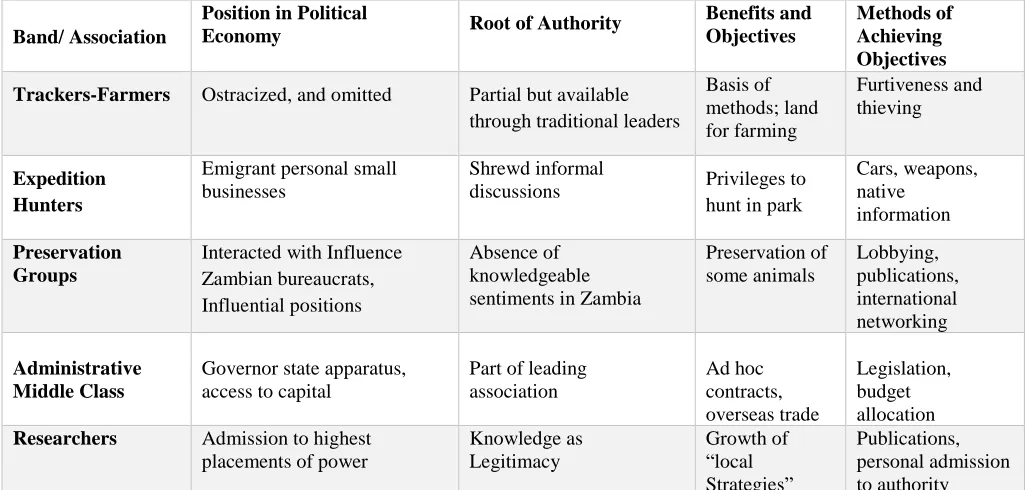
Eastern Zambia, using land-based research methods (See Figure 1).
Band/ Association
Position in Political
Economy Root of Authority
Benefits and Objectives
Methods of Achieving Objectives
Trackers-Farmers Ostracized, and omitted Partial but available through traditional leaders
Basis of methods; land for farming Furtiveness and thieving Expedition Hunters
Emigrant personal small businesses
Shrewd informal
discussions Privileges to
hunt in park
Cars, weapons, native
information
Preservation Groups
Interacted with Influence Zambian bureaucrats, Influential positions
Absence of knowledgeable sentiments in Zambia
Preservation of some animals Lobbying, publications, international networking Administrative Middle Class
Governor state apparatus, access to capital
Part of leading association Ad hoc contracts, overseas trade Legislation, budget allocation
Researchers Admission to highest placements of power
Knowledge as Legitimacy Growth of “local Strategies” Publications, personal admission to authority
Figure 1: Blaikie & Brookfield’s Multi-Scale Approach Framework (Blaikie 1995: 2008)
2.3 Linkage to Study
This research focuses on the effects of copper mining on local communities and on the
environment in the Copper Belt Province of Zambia. The use of both a political ecology
framework and the concept of multiple scale analysis will provide a better comprehension of
how copper mining operations influence environmental outcomes in the local countryside and
levels. Both the theory and concept of political ecology will be useful in understanding how
environmental strategies are carved out.
2.4 Methods and Data Collection
The study involved the collection of secondary data in an effort find answers to the paper’s
research questions. The secondary data used has been critically assessed to validate the
credibility and reliability of key official documents, publications, reports and various internet
sourced articles. The paper focuses on a case study of the Copper Belt Province of Zambia,
examining the impact of large scale copper mining on the environment and surrounding
communities, as well as observing the environmental policies put in place to curtail negative
social and environment effects.
2.5 Research Methods
Qualitative methods have a descriptive capability based on primary and unstructured data,43 and
are an effective method for studies of a liberal nature such as sociology. Gunnarson44 contends
that the advantage of applying a qualitative technique in research is that it takes into
consideration the overall picture, objectively observing variables in their natural habitats. A
primarily qualitative approach was therefore selected over a more quantitative method as the
proper approach to guide this research, focusing on how copper mining in Zambia is either
empowering or impoverishing the environment and the people in it.
2.6 Relevant Literature
43 Ghauri, P., Grønhaug, K. and Kristianslund, I. (1995). Research Methods in Business Studies: A Practical Study, New York: Prentice Hall
Project-related documents such as relevant Environmental Impact Assessments (EIA), reports
from the Copper Belt Environment Project (CEP),45 the Government of Zambia’s Consolidated
Environmental Management Plan (CEMP) and its related Legislative Action Plan and Social
Impact Assessment Report (ESIA) were also used as references. Other Government progress
reports, reports of non-government organizations and other academic articles on the mining
sector were also referred to.
2.7 Case Study Methods
Bryman and Bell46 (2007) state that a case study methodology comprises a thorough and
demanding examination of one or more cases, critically analyzing the extent of the case. The use
of case studies cuts across a variety of academic fields and disciplines such as in anthropology,
ethnography, geography, politics, philosophy and scientific research. Nevertheless, there are
limitations when it comes to using a case study design. Given that one case scenario does not fit
all other cases, it may create bias towards showcasing a certain group or situation. However, the
drive for use of this technique is not to oversimplify the results of other cases or larger
communities;47 rather, it is intended draw attention to those specific cases, examine their
distinguishing settings and to generate an outline for dialogue on the issue.
2.8 Choice of Copper Belt Province as Case Study
45 World Bank. 2012. Zambia - Copper Belt Environment Project (cep). Washington, DC: World Bank Group. http://documents.worldbank.org/curated/en/759211474589929467/Zambia-Copperbelt-Environment-Project-cep accessed12/10/2016
The “copper belt” runs through northern Zambia and southern Democratic Republic of Congo. In
the 2010 census, the population of the Copper Belt Province of Zambia was 1,972,317.48 The
urban population was 376,861; rural was 1,595,456.49 The Copper Belt Province is an ideal
case-study given the province’s large-scale mining activity, both currently and in colonial days.
Mining has been identified as the chief source of most of the water, air and soil pollution in the
province due to the extraction and processing of copper and cobalt ores. This provides a defined
area in which to study the impact of mining on the environment and the local communities, and
how environmental conservation efforts are being designed and implemented. Also, as a former
long-term resident of Copper Belt Province, the researcher has first-hand experience of the
mining industry’s impact on the environment and on local communities.
Even though there are about six large scale mines in the province, there have not been enough
impact studies undertaken despite the vast and long-standing environmental problems they have
caused. This provided the author with an opening to investigate copper mining in the province in
depth, and attempt to disentangle the sensitivities and uncertainties felt by those close to mining
operations, as well as to contribute to the body of work with regard to mining in the Copper belt
Province.
48 "2010 Census Final Population and Electoral Information." Accessed December 11, 2016.
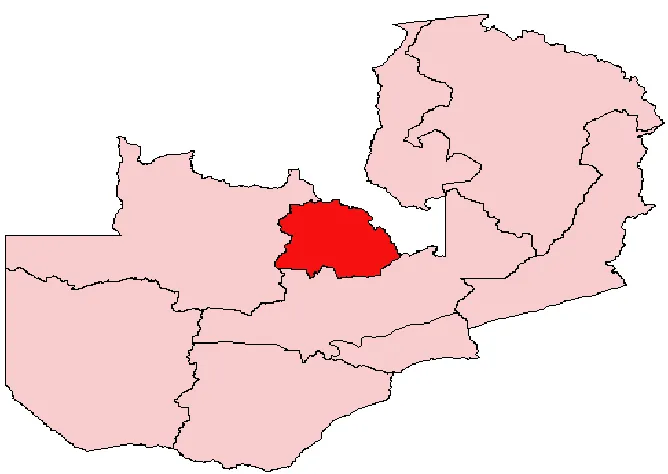
Figure 2: Map of Zambia highlighting Copper Belt Province50
Figure 3: Copper belt Province Mining Locations51
50 Map A highlights the geographical location of the Copperbelt Province on the Zambian map.
http://www.touristlink.com/zambia/copperbelt/overview.
51 Map. B shows the major Copperbelt mining towns, as geographically located on the map of Zambia. The map
CHAPTER 3: Overview of the Political Economy in Zambia
3.1 Introduction
For over half a century after her independence from Great Britain, Zambia continues to
encounter severe problems including persistently high poverty rates, poor land administration,
inadequate public service delivery, high pollution levels in mining areas and inadequate capacity
to manage her environmental and natural resources. This chapter presents a historical and
contextual background of Zambia’s political economy with a description of the political and
economic influences that have shaped the governance and administration of Zambia.
3.2 The Political Economy of Zambia
In the early 1960s, Zambia was ranked as a middle-income country, with vast economic growth
potential; presently, despite huge mineral resources, the country was ranked a low 139th in the
world in terms of the Human Development Index of the United Nations in 2014. Zambia is a
land-locked country surrounded by seven neighboring countries: Angola, Botswana, the
Democratic Republic of Congo, Mozambique, Namibia, Tanzania, and Zimbabwe.
Geographically positioned in central Southern Africa, it is 753,000 km2 (291,000 square miles)
in size, a little larger than Texas. Farming potential is relatively high due to favorable climatic
conditions and rainfall patterns. Nevertheless, like many other nations in the sub-Saharan region,
Zambia’s economy remains heavily dependent on the mining sector and trade, and there is a
relative neglect of other high potential sectors such as agriculture, tourism and agro-processing.
Large scale copper mining has been the engine of development for the country since the 1920s,
initially laying the foundation favorable for investment in industry and developing an
industrialized society.52
When mining exploration activities began under the administration of the British South African
Corporation in 1921, the company invested massive capital resources into Zambia’s first
commercial copper mines. However, prior to the mining operations, Zambia had remained
scarcely populated, with the only commercial interest in the nation being access to slave labor.
Slave traders exploited the area by selling slaves to rich southern groups in South Africa and
Mashonaland (present-day Zimbabwe).53
52 The urban share of the population rose rapidly from 17 percent in 1960 to about 40 percent in 1980. For two decades this share has remained stable between 39 and 40 percent (World Bank, 2003).
Following the discovery of large deposits of copper ore, white settlers started arriving in large
numbers, with little or no initial supporting investment in infrastructure. Men from all corners of
Zambia, who prior to the opening of the mines had mainly lived in rural areas, engaged in the
barter system of trade (exchange of goods), and had a subsistence fishing and an agri-pastoral
economic livelihood, started migrating to the mining areas to find work. Huge investments were
poured into the copper mining sector, encouraging urbanization, with urban areas being the
central economic wealth zones leaving the rural areas economically backward. Investment in
rural Zambia was chiefly along the rail line between the Copper belt and southern provinces, and
was merely for enhancing transportation networks to facilitate swift exportation of minerals to
export markets in neighboring countries with access to seaports.
This divide between rural and urban development persists today, strongly influenced by
tribalism, mining and urban political power. It is a defining characteristic of Zambia’s economic
growth path. Given her endowment of abundant lands and mineral wealth, and despite
urbanization, a significant population still lives in rural areas, limiting their access to markets,
public services and transportation.54 Even in urban areas, the majority of the people live in
densely populated shanty compounds with inadequate housing and social amenities. Very little
progress has been made when it comes to the equitable distribution of national resources, even
though the nation has undergone several different forms of government administration and
leadership.55 During the last three decades, Zambia has experienced five distinct policy
regimes.56
54 Ibid.
55 Ibid.
3.3 Zambia’s Unsuccessful Economic Interventions: 1965-1990
Zambia’s first President, Kenneth Kaunda, initially embarked on an economic strategy that
favoured the fortunes of private sector companies like the Anglo-American Corporation that
were engaged in the mining sector in what was - in the first years after independence -
fundamentally a market economy.57 Mining and urban towns were significantly favored over
agriculture and the rural areas because of an import substitution policy funded by revenues from
rising copper exports58. Thus, very few Zambians benefited from foreign investment in mining,
specifically those that were located in rural areas, even at a time (1964-72) when the nation’s
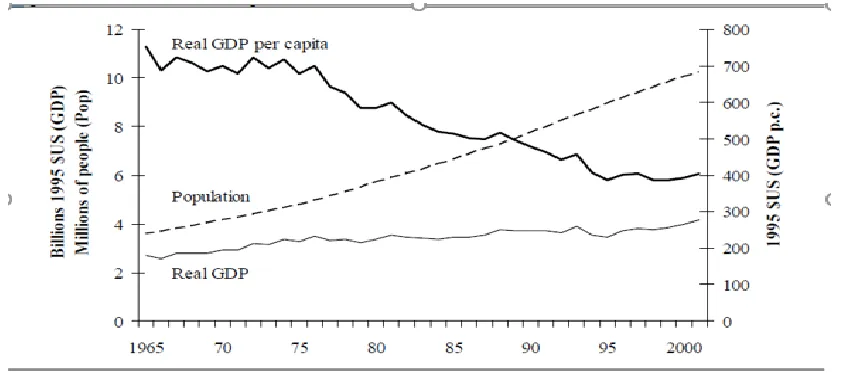
gross domestic product (GDP) increased at 5.1%59 (see Figure 5). The economic gap between the
rich and the poor was widened, and increased in the decades that followed.60
Figure 5. Real GDP and Population Growth, 1965-200161
57 World Bank. 1994. Zambia Poverty Assessment. World Bank, Washington, D.C. 58 Ibid.
59 McCulloch, N., Baulch, B., and Cherel-Robson, M. 2000. Poverty, Inequality and Growth in Zambia during the 1990s. Working Paper, Institute for Development Studies, University of Sussex.
Under the Mulungushi Economic Reforms announced on 19th April 1968, the Zambian
Government began to dismantle the market economy and the private sector owned mines
themselves were nationalized in 1972 ending the period of market-driven economic policies. At
the same time, the Constitution was changed and the country left multi-party democracy behind
and embarked on a “One-party participatory democracy” – effectively a one-party State under
Kenneth Kaunda and his United National Independence Party (UNIP).
The economic, financial and political power that came with being in control of the mining sector
was enormous, especially because it generated a large proportion of the nation’s foreign
exchange and tax revenue. The mine workers were among the most well paid and politically
active groups of employees in the country, given the role that the mining sector trade unions
played in demanding improved worker conditions and increased wages, sometimes accompanied
with threats of nationwide boycotts and strikes against the State.
Inequality gaps between urban dwellers and rural dwellers, created when the copper mines were
nationalized, was further increased by the newly-adopted socialist policies that the Kaunda
administration implemented with the goal of supporting nationalized businesses including the
mines. This switch in policy orientation from a market economy to a socialist economic stance
coincided with the global recession of the early 1970s, triggered by the oil price increases
engineered by the cartel of oil producing countries – OPEC. The recession hit the commodity
markets, and global copper prices fell. As a result, Zambia’s foreign exchange earnings and tax
revenues fell rapidly and government began to borrow heavily in an attempt to maintain its
spending programmes. However, the fast development of the late 1960s ended. As the recession,
prolonged throughout the 1970s, export incomes and tax revenues continued to dwindle and a
Unsure if the recession was momentary, they failed to make reasonable accommodations to
address the matter, (e.g. limiting spending on its subsidies and holding back on salary increments
for government workers). Instead, the government borrowed, unsustainably raising its foreign
debt.
Increased pressure was placed on the Kaunda administration as the growth in the nation’s GDP
fell precipitously becoming negative in several years in the 1980s. For most of this decade, there
was lack of real political will to make the necessary fiscal and economic adjustments and
eventually meant that the government was forced to begin to implement “structural adjustment”
policies by the two Bretton Woods Institutions i.e. the World Bank (WB) and the International
Monetary Fund (IMF).
Until these policies were started, subsidies and consumer price controls protected most of the
urban population from the effects of the recession. Further, a scheme of import licensing
supported the mining industry, other nationalized industries and state owned ventures, in that
they were favoured when it came to access to the country’s dwindling foreign exchange reserves.
This meant that there was little practical encouragement to diversify and invest in other
productive sectors, so despite all the economic policy intervention efforts, the economy
staggered and remained indifferent to the strategies introduced.
The first adjustment program with IMF backing was introduced in the early 1980s when the state
began to admit policy failures. Immediately, a plan of action to stabilize the economy was
implemented through a structural adjustment program (SAP). Stabilization was achieved to a
certain extent through better macroeconomic steadiness, but unfortunately, the lack of
decline.62 Because of the nation’s inability to implement the SAP and maintain economic
stability, by the mid-1980s subsidies included 20% of the economic budget, whereas prices
controls for the products of a wide number of nationalized businesses made them uneconomic
and in desperate need of cross-subsidization from the falling revenues from the mines.63
Following the cancellation intervene reform agreements by Kaunda’s government in 1983, the
government entered a second SAP aimed at reducing price controls and a general reduction of
tariffs. The second SAP had a broader scope, recognizing the need to diversify and invest in
other sectors including agriculture. Like earlier attempts, the success of the program was
dependent on the support of the elite and urban dwellers. This led to civil unrest over food prices,
and in urban towns in the Copper Belt Province, residents protested and threatened to
disempower the government, specifically interest groups within the mining sector and in
particular the trade unions.
As the foreign debt payments accumulated, and fearing losing popularity, the government gave in
to the escalating political and economic forces by backpedaling on the IMF supported SAP.
Indeed, in 1987, the Government cut ties with the two Bretton Woods Institutions and tries to go
it alone though its own economic programme which it called “Growth from Own Resources”.
Inflation grew and the situation became politically volatile in the Copper belt.
The economic reform policies introduced in the 1980s had some effect on restoring
macro-economic balance but political support was always lukewarm and while the reforms appeared to
be effective momentarily and, for a while, the financial system and economy was responsive
toward growth, by 1985, the economy took a slump, and entered a recession in 1989. Political
62 Bigsten, A. and Kayizzi-Mugerwa, S. 2000. The Political Economy of Policy Failure in Zambia. Working Papers in Economics, Department of Economics, Göteborg University.
debate and unrest mounted against Kaunda’s one party State – especially from the Zambia
Congress of Trade Unions – ZCTU – led by Fredrick Chiluba, as communism collapsed in the
Soviet Union and Eastern Europe and while inflation in Zambia spiraled following the rapid
depreciation of the Zambian currency – the Kwacha.
It was becoming clear by 1990 that the one-party State and the socialist leaning policies
implemented by Kaunda’s party UNIP (United National Independence Party) were ineffective in
addressing the dire economic condition of the country. Kaunda was forced to re-establish
multi-party politics and hold multi-multi-party elections in 1991 after a new Constitution was enacted earlier
that year. Kaunda’s “Growth from Own Resources” economic programme quickly unraveled as
the government backpedaled on the reforms. The maize and fertilizer subsidies were enhanced,
the allocation of foreign currency through a “distribution pipeline” managed by the Bank of
Zambia lengthened, and civil service wages were increased to gain political mileage in the run
up to the November 1991 general elections.64 The consequence of this was the further loss of
donor confidence by the bi-lateral donor countries, who, following the Bretton Woods
Institutions, pulled out their support for the government, owing to its breach of commitment to
attaining economic reform and recovery.
Assessing the developments throughout this period, where the UNIP government maintained
economic and political control of the nation for nearly three decades, copper dependence turned
out to be a source of fiscal instability and ensured that the economy was always susceptible to
external shocks. The economic quagmire into which Zambia increasingly became immured in
the 1980s up to 1991 was the major factor in the UNIP government’s loss of political dominance
in the country. In addition, the State’s administration and control of mining revenue and foreign
exchange created a powerful political elite who were nevertheless reliant on the copper mining
sector for political support. Consequently, they developed many strategies aimed at appeasing
urban residents in general, and the miners through broadly accepted fiscal entitlements (i.e.
subsidies ranging from food to housing) financed from mineral profits, as opposed to using those
resources to finance programmes and policies that promoted long term growth for both urban and
rural areas.
The national budget and Zambia’s fiscal position had become progressively unsustainable since
the mid-1970s, being the major victim of falling global copper prices with a growing dependence
on donor assistance to finance an ever-widening fiscal deficit. With no donor support or no
international financial institution willing to loan to the State from the latter part of the 1980s
because of the president’s socialist approach to growth, which he called ‘humanism’, the future
of the one-party State became untenable. The inadequate mineral export revenues and the
government’s inability to take long term measures to diversify into agriculture and other
productive sectors were among the leading causes of persistently high rates of poverty and
considerable income disparity between a small urban elite and the majority who lived in
peri-urban shanty compounds and the rural areas. By 1991, the dwindling proceeds from the
country’s copper exports had negatively impacted the Government’s social expenditure
programmes primarily aimed at appeasing the urban population – especially in the mining towns
on the Copperbelt. Rationing of basic goods and services became the order of the day because of
the dearth of foreign exchange and the underdevelopment of the industrial and agricultural
one-party state in the early 1970s.65
3.4 Structural Adjustment Reforms under the MMD since 1991
The opposition Movement for Multiparty Democracy (MMD), led by Frederick Chiluba, the
former leader of the powerful Zambia Congress of Trade Unions (ZCTU) which had
spearheaded opposition to Kaunda’s one party State and socialist economic policies won the
elections in November 1991. The MMD ran on a progressive economic platform and quickly
re-engaged support from the international community, particularly the IMF and World Bank. This
support was given on the basis of a promise to embark on a thorough structural adjustment
programme (called the Economic Recovery Programme - ERP) modelled on the typical
“Washington Consensus” model with a further commitment to transparent and responsible
administration.66 The new Movement for Multiparty Democracy (MMD) party comprised a
diverse alliance of intellectuals, business interests, students and trade unions that were
enthusiastic about bringing a different style of leadership from its predecessor UNIP. Still, the
new government was passed a poisoned chalice in the form of an unstable and stagnant economy
based on an ailing copper sector, a three-figure inflation rate which had the potential to spiral
into hyper-inflation, a high foreign debt burden and a depreciating currency, unemployment and
under-employment for a rapidity growing and young population, low productivity especially in
the mines and parastatal sectors which dominated the economy, increased poverty and large
disparities in income and wealth.
The new SAP was designed with the aim of restoring macro-economic stability and arresting the
economic malaise and decline. Implementation of the SAP immediately began winning back
65Bates, R.H. and Collier, P. 1993. “The Politics and Economics of Economic Reforms in Zambia”, in Bates, R.H. and Krueger, A. (eds.) Political and Economic Interactions in Economic Policy Reform, Blackwell, Oxford
donor confidence, with international donors supporting Zambia with close to US$1.5 billion in
1992, reaching its all-time peak. The MMD’s SAP, like similar programmes across Sub-Saharan
Africa at the time, was a full blown “Washington Consensus” SAP which included restoring
macroeconomic equilibrium; public sector reform; liberalization of the foreign exchange market
and domestic product markets; the sale of nationalized industries and businesses; and
agricultural sector reforms.67
3.4.1 Macroeconomic Equilibrium
During the transition from a one-party State to multi-party politics, Zambia experienced a
record high inflation rate – reaching an annual rate of 127% in 1993, the highest it had ever
been since Independence. During this period, following the liberalization of the exchange rate,
the Zambian kwacha experienced rapid depreciation and interest rates rose making access to
credit unaffordable. The Economic Reform Program (ERP) was launched by the government to
re-establish macroeconomic stability and this was broadly achieved by 1995, when inflation had
been reduced to about 26%the exchange rate stabilized (as donor support resumed) and interest
rates fell. Yet the country was far from stable politically and key economic decisions – in
particular the privatization of the copper mines themselves and their consequent massive
re-capitalization using the resources that could be mobilized by the MNCs, were delayed
throughout the 1990s.68
This success was to come after the privatization of ZCCM in 2000, albeit on relatively
unfavorable terms, as by the end of 1999, ZCCM was hemorrhaging money as copper prices
had once again fallen and the privatization process itself was more like a fire sale. The MNCs
67Ibid.
68 Political uncertainty continued to undermine private investment despite the more stabilized economic environment of the mid-1990s. As evidence of this uncertainty, Chiluba’s government banned Kaunda from running for office in 1995, and in 1997
which bought the mines in the first years of the 21st century was able to negotiate favorable
“development agreements” with the Government which included generous tax concessions and
– most importantly from the perspective of this paper – no liability for past environmental
degradation caused by the copper mines. The poor performance of the copper mining sector
since the mid-1970s, had gradually led to an increasingly inadequate management of the
negative environmental impacts arising from copper mining and ore smelting activities. Thus,
during the sale of the various mines operated by ZCCM to various MNCs, liability for the
adverse environmental legacies was an important matter throughout the negotiations, with the
private MNC investors unwilling to accept legal responsibility for historical environmental
liabilities, given both the degree and gravity of mining-related ecological and public health
obligations that had arisen over the previous three decades.
Further, as part of the ERP, the government introduced a “cash budget system” in 1993 as an
integral measure to reduce the high inflation rate. This restricted the government to available
funds, spending only from tax revenues already collected. While this measure was very effective
in reducing inflation, and restoring macro-economic stability, it also saw a large contraction in
public expenditure, even on areas like health (including environmental health programmes
important for mining communities) and education where demands were rising as a result of a
rapidly growing and youthful population and in the face of the HIV pandemic. In 1996, when the
HIV/AIDS pandemic was at its highest in Zambia, before the advent of ARV treatment, 16% of
the nation’s adult population was living with HIV, with higher occurrence in urban areas. The
Copper belt and Lusaka were reported to have the highest number of people living with the virus
and the average life expectancy rate dipped below 40 years.6970. Indeed, under the “cash budget”