The University of San Francisco
USF Scholarship: a digital repository @ Gleeson Library |
Geschke Center
Master's Theses Theses, Dissertations, Capstones and Projects
Spring 5-28-2015
Institutionalizing Urban Agriculture Can Provide
More Than Hope for Poor San Franciscans: An
analysis of the Urban Agriculture Incentive Zone
Act (UAIZ)
Rania Ahmed
Follow this and additional works at:https://repository.usfca.edu/thes
This Thesis is brought to you for free and open access by the Theses, Dissertations, Capstones and Projects at USF Scholarship: a digital repository @ Gleeson Library | Geschke Center. It has been accepted for inclusion in Master's Theses by an authorized administrator of USF Scholarship: a digital repository @ Gleeson Library | Geschke Center. For more information, please [email protected].
Recommended Citation
Ahmed, Rania, "Institutionalizing Urban Agriculture Can Provide More Than Hope for Poor San Franciscans: An analysis of the Urban Agriculture Incentive Zone Act (UAIZ)" (2015).Master's Theses. 147.
University of San Francisco
Thesis toward completion of a Master of Arts in Urban Affairs:
Institutionalizing Urban Agriculture Can Provide More Than Hope for
Poor San Franciscans
An analysis of the Urban Agriculture Incentive Zone Act (UAIZ)
Rania Ahmed
1. ABSTRACT ... 6
2. INTRODUCTION ... 7
3. PROBLEM DESCRIPTION ... 9
3.1 Poor San Franciscans Are Suffering from Food Insecurity ... 9
3.2 The Recent Urban Agriculture Law ... 11
4. RESEARCH SIGNIFICANCE ... 12
5. RESEARCH METHODS ... 13
6. CONTEXT OF URBAN AGRICULTURE IN SAN FRANCISCO ... 14
6.1 History of UA ... 14
6.2 The Urban Agriculture Incentive Zone (UAIZ) Act ... 18
6.3 A Vehicle for UAIZ -‐ The Williamson Act ... 19
6.4 The Current State of UAIZ ... 20
7. LITERATURE REVIEW ... 21
7.1 Urban Agriculture and Economic Development: how the definition identifies benefits and beneficiaries? ... 22
7.2 Definition, Purpose and Benefits of UA under the UAIZ Act ... 23
7.3 Is It All About Economic Development? Who Are the Real Beneficiaries? ... 24
7.4 Clustering of Agro-‐Activities: The Economy of Scale Could Magnify Impacts of UA 26 7.5 Zoning for Heterogeneity of Land Uses ... 28
7.6 Shall urban agriculture build social entrepreneurialism or is it just urban romanticism? ... 31
7.7 Food as a Right to the City: Urban Agriculture is Good but not Good Enough! ... 33
7.8 UAIZ: from adoption to implementation, how does Institutionalization apply? ... 36
8. WHAT ROLE DID NONPROFITS AND COMMUNITY MEMBERS PLAY IN THE UAIZ ACT? 39 9. WHAT ROLE DOES THE CITY OF SAN FRANCISCO PLAY IN THE IMPLEMENTATION OF UAIZ? ... 44
10. WHAT DOES IT TAKE FOR AN URBAN FARMER TO APPROVE A TAX INCENTIVE? ... 47
10.1 Application Documents Required ... 48
10.2 Application deadlines: easier to manage harder to appeal applicants ... 48
10.3 Approval Procedure ... 48
10.4 Mutual Benefits versus Community Benefits Agreement ... 51
11. GEOGRAPHIC INFORMATION SYSTEMS AS A RESEARCH METHOD ... 53
11.1 UAIZ on the Ground ... 53
11.2 Walking Through Datasets ... 56
11.3 How Common is Three-‐acre Parcels in San Francisco and Where Are They? ... 58
11.4 Vacant Opportunity Lots in a built-‐out Landscape, a Tough balance! ... 61
11.5 How could Vacant Private Properties be Used to Help Poor Urbanites Find Access to Food? ... 62
11.6 Vacant Lands Inventory ... 64
11.7 Implication of GIS Application ... 75
11.8 How could this Research Method Take Policy Implementation to the Next Level? 76 12. FINDINGS ... 78
12.1 How Many Lots Really Qualify? ... 78
12.3 Zoning Secures Access to Land but Not to Food ... 78
12.4 Effectiveness within Time Burdens ... 79
12.5 Cross Departmental Issues ... 80
12.6 Good Value: Property Tax Based on Rural Land Valuation in San Francisco! ... 80
12.7 Ideological Transformation or Contributor to Change, Is a Question of the Power Game 80 12.8 What is the Future of UA Under the UAIZ ... 81
12.9 What Policy Problem is the UAIZ Supposed to Solve? ... 82
12.10 The Power of Maps and What they Reveal and What they Conceal ... 82
13. RECOMMENDATIONS ... 83
14. CONCLUSIONS ... 84
15. REFERENCES ... 86
16. APPENDICIES ... 90
16.1 Appendix #1: GIS methods for Network Analysis ... 90
16.2 Map of the three categories of zoning for large-‐scale urban agriculture. ... 91
16.3 Appendix #2: Metadata Report: Datasets and GIS Metadata ... 92
List of Figures
Figure 1 Access to food vendors that accept EBT and the concentration of low-‐income
population ... 11
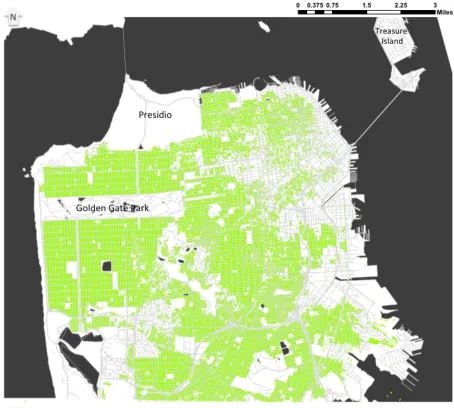
Figure 2: Map of the zoning by principal for Large-‐scale Urban Agriculture in SF. ... 58
Figure 3 Map Abstract locations of three-‐acre parcels ... 60
Figure 4 Location of Vacant, 2.5-‐3.0-‐acre private properties that qualify for UAIZ ... 62
Figure 5 Potential urban farms and concentration of low-‐income population ... 64
Figure 6 Potential urban farms and impact distance ... 66
Figure 7 Location of Site one, Joice St., Chinatown. Source: Google Earth, 2014 ... 67
Figure 8: Site one, Joice St., Chinatown. Picture taken by author on April 25, 2015 ... 68
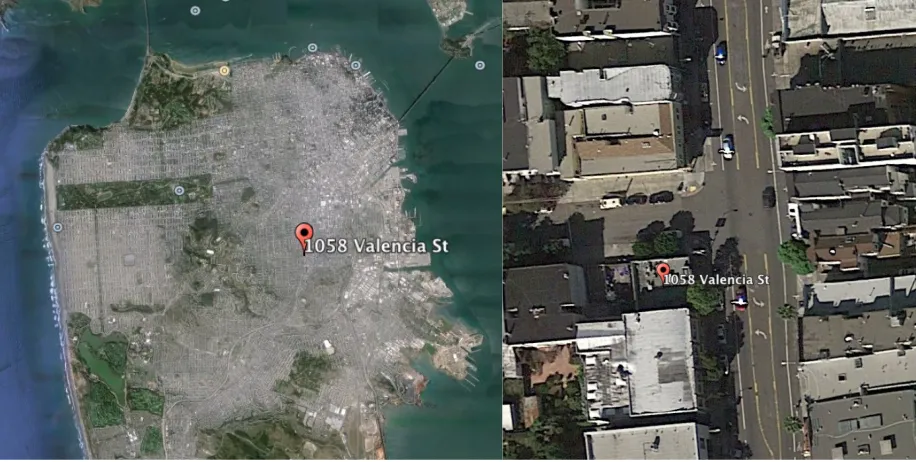
Figure 9 1058 Valencia St., The Mission. Source: Google Earth, 2014 ... 69
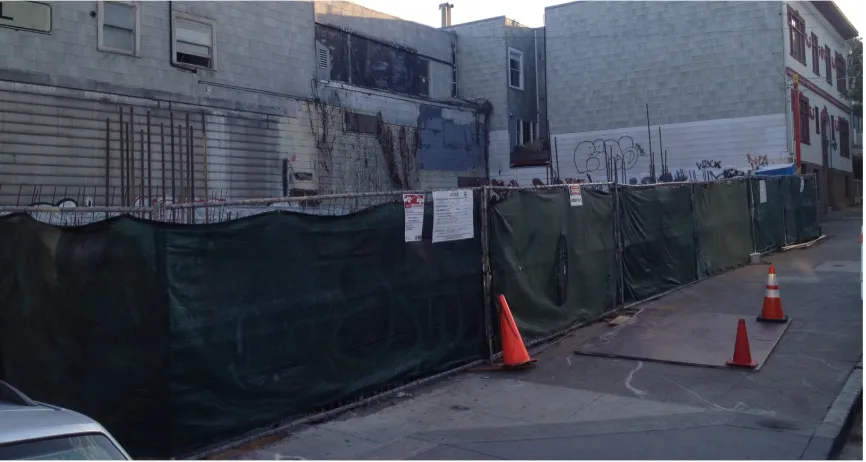
Figure 10 Source: Author, April 2015 ... 70
Figure 11 2160 Oakdale Ave., Bayview. Source: Google Earth, 2014 ... 71
Figure 12 Source: Author, April 2015 ... 71
Figure 13 896 Innes Ave., Bayview Hunters Point. Source: Google Earth, 2014 ... 72
Figure 14 Source: Author ... 73
Figure 15, 1326 09th Ave., Inner Sunset. Source: Google Earth, 2014 ... 74
Figure 16, Source: Author, April 2015 ... 75
Figure 17 Zoning for large-‐scale urban agriculture in San Francisco ... 91
ACKNOWLEDGEMENTS
From an academic standpoint, I would like to extend my gratitude to Rachel Brahinsky,
David Saah, Sandy Brown and Alex Tarr for helping me to overcome both my technical and
language challenges. Other than the academic challenges, I would like to share the credit
for being able to accomplish this research with the many people who helped me in my
financial and personal challenges. Personally, I would like to mainly thank two Angelas,
Angela Mason and Angela Fleekop; without their fundamental support, I wouldn’t had been
able to pursue grad school. Their names are Angela, but they carry many Angels in their
soul. Thanks to everyone who donated for my crowd funding; it helped a lot. Julia Wakelee,
and Alexa Hauser, your support was beyond my hopes. Thanks for the food pantries that
provided my kids with food supplies for many days and nights. A special thank you to my
kids for being patient with my stress and tight schedule. Thanks for the City of Albany, Jeff
Bond and Anne Hersch, who provided me with the opportunity to learn in the real world’s
classroom.
1.
ABSTRACT
Cities have turned to urban agriculture (UA) as a means of revitalizing neighborhoods and
addressing unmet food needs of urbanites. Farming the city has gained momentum and has
become an important force in urban social landscapes and economics. UA has also sparked
debates about the appropriate development of highly valuable private spaces. In 2014, the
City of San Francisco created a tax incentive to encourage owners to use undeveloped
private properties in UA. This tax incentive represents the political prioritization of UA as
legitimate land use in San Francisco with the possible purposes of either meeting a
pressing residential need or implementing a feel-‐good policy to meet public demand.
This research raises a significant question: What is the role of the Urban Agriculture
Incentive Zone (UAIZ) Act in utilizing private properties to provide access to food for low-‐
income populations in the built-‐up landscape of San Francisco? This question leads to many
other questions on the subject: What is the policy problem that UAIZ is attempting to solve?
This paper thus conducts a Geographic Systems Analysis (GIS) analysis of UA on private
lands and discusses how this relates to the distribution of low-‐income population. The
literature indicates that UA can help revitalize disinvested neighborhoods and provide
supplemental nutrition and food access to low-‐income residents suffering from food
insecurity. Additionally, by providing the “Choice” NOT to develop vacant lands,
incentivizing UA reframes the relationship between the public and private spheres in the
urban landscape. This research ultimately produces a vacant land inventory that illustrates
the power of maps and data analysis to help achieve more effective implementation and a
better use of resources. Findings reveal the opportunities and challenges that UAIZ brings
of implementation. In this paper, I refer to the City of San Francisco as a public agency and
City officials and Staff with the City.
2.
INTRODUCTION
Urban agriculture (UA) is increasingly claiming its space in the urban landscape of the
United States. In 2000, Kameshwari Pothukuchi and Jerome L. Kaufman drew attention to
the lack of consideration for food systems in the fields of urban and regional planning,
resulting in urban landscapes that do not reflect the food needs of local residents.1 At the
same time, many post-‐industrial cities have been looking at ways to deal with the issues of
population loss, urban decay, public disinvestment, and the underutilization of vacant
parcels and open lots that can socially and financially hinder the well-‐being of a city.2
Furthermore, there has been an increased interest in creating sustainable cities with the
hope of reducing the negative impacts of urban sprawl on the environment.3 This
increased interest in urban sustainability is intersecting with food production and
agriculture. Furthermore, the growing numbers of food insecure low-‐income populations
that lack access to food reveal that San Francisco is a good example of a city with a
dysfunctional urban system, which makes San Francisco a useful case to study.
City officials, planners and social activists alike are increasingly recognizing and
embracing urban agriculture as a land use to help address urban issues, from improving
local food systems to revitalizing disinvested neighborhoods and creating a more
sustainable urban environment. The benefits of urban agriculture have been well
1 K. Pothukuchi and J. Kaufman, “The Food System: A Stranger to the Planning Field.” Journal of the American Planning
Association 66(2), 2000: 113.
2 M.R. Meenar, J.P. Featherstone, A.L. Cahn, and J. McCabe, “Urban Agriculture in Post-‐Industrial Landscape: A Case for
Community-‐Generated Urban Design,” ISOCARP Congress, 2012, p. 1.
3 D. Satterthwaite, “Sustainable cities or cities that contribute to sustainable development?” Urban Studies (34)10, 1997:
documented academically in the literature. Socially, urban agriculture can help revitalize
blighted or disinvested areas, build social capital, improve community building in a
neighborhood, provide educational and learning opportunities, and provide a space for
cultural expression and inclusion.4 Economically, urban gardening can provide
supplemental food assistance to low-‐income residents, provide job opportunities for urban
farmers, and motivate further investment and revitalization efforts in the neighborhood.5
Urban agriculture can also help improve both personal health and wellness and public
health through increased access to locally grown food, which also improves local food
systems.6 In theory, urban farms and gardens as a typology of urban agriculture are
capable of responding to public needs and creating new spaces for community building and
social inclusion, and more importantly, provide access to food.
In early 2014, the State of California adopted the Assembly Bill 551 that provides
the authority for local counties and cities to conduct local implementation to offer tax
breaks on private properties that would in return use the land in agricultural activities. By
the end of the same year, the City of San Francisco adopted its tax incentive, the Urban
Agriculture Incentives Zone (UAIZ) Act, to encourage property owners to use undeveloped
private lands for UA. This tax incentive represents the political prioritization of UA in the
City of San Francisco to expand through nonprofit-‐led efforts as needed. Nonetheless, the
tax incentive raises significant questions about the future of urban agriculture in San
Francisco as a leading model to other U.S. cities: What is the role of UA in a built-‐out city
4 S. Golden, “Urban Agriculture Impacts: Social, Health, and Economic: A Literature Review.” Davis, CA: UC Sustainable
Agriculture Research and Education Program Agricultural Sustainability Institute at UC Davis. November 13, 2013: 8.
5 Ibid.
6 P. Allen, “Reweaving the food security safety net: Mediating entitlement and entrepreneurship.” Agriculture and Human
with a severe housing crisis? What institutional support does incentivizing UA need to
address a public demand on extremely scarce urban land? This paper address these
questions as it investigates the dynamic created by San Francisco’s urban agriculture tax
incentive that promotes the use of private land for the public good. This ideological shift in
the development mentality of the City as a public agency brings opportunities and
challenges for the future of urban agriculture in San Francisco. Those opportunities, and
challenges embedded in San Francisco’s urban agriculture tax incentive are important to
consider as the law moves forward into its implementation phase in 2015. Thus the main
research question this paper is concerned with is what is the role of Urban Agriculture
Incentive Zone (UAIZ) Act in utilizing vacant private properties to provide access to food
for the low-‐income population in the built-‐out landscape in San Francisco?
3.
PROBLEM DESCRIPTION
3.1Poor San Franciscans Are Suffering from Food Insecurity
Despite the fact that San Francisco is well known to be a city for the rich, food insecurity
still is a pressing issue. According to the national nonprofit Feeding America’s 2012 report,
133,420 San Francisco residents -‐a shocking 16.5% of the total population of the city-‐
experienced food insecurity in 2012. Of the 16.5%, only 46% (66,710 residents) meet the
federal income requirements in order to receive supplemental food assistance, such as
Food Stamps (SNAP) or the Women, Infants and Children (WIC) program. The result is that,
insecure poor urbanites are experiencing hunger in San Francisco and receive no
government support in order to meet their food needs7.
7 “2012 Annual Report,” Feeding America, 2013. Retrieved May 25, 2015 from http://www.feedingamerica.org/about-‐
The issue of insufficient and unaffordable food access is so acute in San Francisco that in
order for the City to meet the food needs of all of its food-‐insecure populations in 2012, it
would have had to dedicate an additional $88 million to food assistance programs that year
alone. This figure becomes even more daunting when considering that the number of
people at risk of hunger is growing in the city, as exemplified by the 14% increase in food
insecurity in the short time from 2008 to 2011. Accordingly, food insecure populations
prove that San Francisco is a useful model of a dysfunctional urban food system. Moreover,
the housing and land values crisis in San Francisco is constantly exacerbating the food
insecurity problem in a way that brings political tension to the dominant pattern of urban
development.
Figure one shows access to food vendors that accept EBT, or food stamps (SNAP). Food
vendors are not equally distributed across the city. Parts of the city that are less than 0.5
miles walking distance of an EBT food vendor are concentrated downtown and along
transit corridors. When compared to the proportion of residents living under the poverty
level, I could identify see trends emerging in the urban landscape. For example, the
Southeastern parts of the city, particularly the area around Stonestown and the campus of
San Francisco State, are lacking access. However, the urban poor living downtown are
relatively well connected to EBT food vendors. We have highlighted these areas in need of
improved access in our analysis. (For more information about the GIS geoprocess, see
Figure 1 Access to food vendors that accept EBT and the concentration of low-‐income population
3.2The Recent Urban Agriculture Law
Under the state Assembly Bill AB551, San Francisco’s ordinance is the first of its kind to be
passed in California and is branded as the Urban Agriculture Incentive Zones (UAIZ) Act. As
In September 2014, San Francisco’s Board of Supervisors approved the local ordinance to
provide tax incentives for owners of vacant private properties to voluntarily use their land
for five years to use the land in urban agriculture in order to grow food for sale. As
previously regulated, urban farming was only permitted on open spaces such as
community gardens and for personal use and donations, while selling food grown in these
gardens was allowed merely once every month. Thus, the new UAIZ law embraces farming
regulatory frameworks. By adding the sale component to the new UAIZ law, urban
agriculture can adopt both social entrepreneurship and social justice aspects.
The approval of San Francisco’s UAIZ has been important in establishing the idea of urban
agriculture as a growing and vital part of the City’s political, social and economic urban
landscape. However, this local ordinance, with its current structure, does not guarantee
that the tax break would incentivize urban agriculture to provide affordable access to food.
Barriers to providing affordable access to food are not only related to high land values in
San Francisco’s Bay Area, which spark debates over the economic viability and the
appropriate kind of development of private properties, but also includes the high initiation
cost of the business that includes infrastructure, space preparation, the complexity of the
application process and the Urban Agriculture Tax Incentive permit fees. For a start-‐up
business to survive, it is more likely that initiation costs will be reflected in food prices.
Thus the UAIZ might end up reproducing the exact same dysfunctional urban food system
in San Francisco. However, this research optimistically aims to aims to show that despite
these potential limitations, the UAIZ may still improve food access in San Francisco.
4.
RESEARCH SIGNIFICANCE
The need for access to food for the low-‐income populations in San Francisco far exceeds the
limited aid provided by governmental food assistance programs. The Board of Supervisors
of the City of San Francisco has played a historical role by passing the UAIZ with eleven
supporters and no opponents. The significance of this research resonates from the rising
salience of UA as part of the ongoing conversation both on the state and local level.
created in the urban affairs in San Francisco, such as tensions raised around what kind of
development the city needs; utilizing lands in providing more market rate housing
development or creating green spaces when land is available. It is thus, a timely need to
capitalize on what Kingdon (1977) frames as an open policy window to push for a
constantly heightened attention to UA in general and the issue of access to food specifically.
Therefore, it is significant to look into ongoing processes of policy implementation of the
adopted UAIZ on the local level in order to visualize how the law will evolve to promote or
hinder UA in San Francisco. This research thus embraces the UAIZ to incentivize
entrepreneurial urban farming in San Francisco as a means that enhances community
access to affordable food. However, this study shows why planners and policy makers
should be critical about the most complex claims for the future of UA in San Francisco
5.
RESEARCH METHODS
In this context, the research methods include a literature review that considers
aspects of zoning for land use heterogeneity, urban agriculture and building social
entrepreneurship, institutionalization framework to boost urban farming, and lastly food
as a right to the city. This research also provides a cross-‐section analysis of the Urban
Agriculture Incentive Zones Act based on three different research methods:
• First, document analysis of the staff report registered in the public hearing meeting
on July 2014.
• Secondly, five structured interviews:
o Isabel Wade, Urban Agriculture Activist, Just One Tree
o Juan Carlos, Individual Attorney who assisted in writing the law
o Janelle Orsi, Founder of the Sustainable Economies Law Center
o Anonymous, City Official
• Third, Geographic Information Systems analysis to develop a vacant land inventory
and maps visualization of parcels in San Francisco that are likely to be eligible for
urban farming according to the criteria set forth by the UAIZ.
Ultimately, by overlapping different analyses, the research offers a snapshot of
workability of the UAIZ and its potential relevance to provide access to food.
6.
CONTEXT OF URBAN AGRICULTURE IN SAN FRANCISCO
6.1History of UA
Similar to other issues in the urban planning and public policy arena, urban agriculture in
San Francisco as a legitimate land use has a long, fluctuating history. However, this history
of urban agriculture reveals that the role of dedicated champions was fundamental in
placing urban agriculture on the policy agenda. Many Urban Agriculture advocates trace
their origins to policies created to promote UA to the World War I. However, the
significance of urban farming, mainly in community gardens, changed according to the
varying social, economic and political landscape of cities. As World War I raged on, the
United States became the main supplier of food for the allied forces, which resulted in a
fear of a short supply of food for local communities (Cohen, 2012; Lawson, 1995).
Accordingly, the need for urban farming bloomed. Termed “War Gardens,” people
started to grow food in every available small space of land. Later on, after the allies had
won the war, these spaces were re-‐named to “Victory Gardens.” Organized on private
properties, Victory Gardens met wartime demands of food and served as information
social and economic haven for urbanites (Sullivan, 2008). San Francisco’s Victory program
was described as exceptional. In addition to front yards and lawns, the City put public lands
to use in gardening. At that time, urban agriculture expanded widely in San Francisco with
the creation of the well-‐known existing urban gardens on the lawn at City Hall and over
800 gardens in Golden Gate Park8.
According to the official history published on the City’s website, the major
introduction of gardening in the urban landscape of San Francisco would not take hold,
however, for another several decades. It was finally achieved through establishing the first
formal community gardening program in 1973. The community gardening program was
promoted by the Board of Supervisors, championed by former member Robert Mendelson
that passed a measure to fund community gardens after a charter amendment that utilize
property taxes to fund UA. This interest in the 70s in urban gardening supported by the
City as a public agency was the catalyst that founded the political infrastructure towards
urban agriculture. Interestingly, many departments of the City took part in raising the
salience of and growing the gardening program. The Department of Public Works used the
greenhouse at Laguna Honda Hospital to grow plants to give to community gardens, and
helped people research new sites and obtain insurance. The Water Department provided
water to the community gardens and the Department of Parks and Recreation provided the
tools needed for the up keeping and cultivation on the urban farms, as well as free compost
from Golden Gate Park.9
8 “History of Urban Agriculture in SF,” San Francisco Recreation & Parks, 2015. Retrieved April 25, 2015 from
http://sfrecpark.org/park-‐improvements/urban-‐agriculture-‐program-‐citywide/city-‐resources/.
Around the same time, at the federal level, the government provided grants towards
job training and education in various disciplines; the City thus implemented a federally
funded program called the Comprehensive Employment Training Act (CETA). The funds
from the CETA program paid for 20 trained and experienced gardeners to educated citizens
and residents about gardening practices and the importance of urban agriculture.
Gardeners also worked with neighborhoods to start new gardens and programs in many
schools and housing projects. The CETA program heightened the self-‐awareness and
consciousness about the importance of farming in the city and made gardening in urban
areas possible by providing in the field training. However, financial sustainability of
governmental funding have always been challenging for programs and policies to thrive.
On the local level, San Francisco’s mid-‐70s urban agriculture upsurge was cut short due to
changing the City’s leadership. Additionally, state-‐wide, the passage of Proposition 13 in
1978 severely limited property taxes; the main source of funding urban agriculture. Due to
shrinking funds, programs of community gardens were cut. Moreover, without securing a
champion on the policy table who advocates for urban agriculture, CETA gardeners phased
out, by 1979, the UA program was essentially dead10.
Some community members soon noticed that many gardens had leftover grant
money from the U.S. Department of Housing and Urban Development (HUD). Here arose
the first interest and introduction of the role of non-‐profit organizations in expanding
urban agriculture in San Francisco. To use the funds, Pam Peirce, a non-‐profit and former
CETA member, Steve Michaels, formed the San Francisco’s League of Urban Gardeners
(SLUG) in 1981. Thus in early 80’s, SLUG became the primary urban agriculture force in the
City. Over the next two decades, the Department of Recreation and Parks was in charge to
help build, renovate, and maintain community gardens. From 1981 until 2005, “SLUG built
the main physical infrastructure for urban agriculture that the City is still utilizing today”11.
However, in another uphill challenge for urban gardening in San Francisco, SLUG
disbanded in 2005 due to management issues. Alemany Farm is one of the most well
known urban farms in San Francisco that thrived under the SLUG and was negatively
affected by disbanding SLUG. This rise and fall of urban gardening brought attention to the
need for a sustainable city-‐funded program to maintain UA12.
It was thus not until 2009, when Mayor Gavin Newsom took a leadership role and
became the new policy champion of urban gardening. Mayor Newsom issued a directive
committing the City and County of San Francisco to increase its healthy and sustainable
food spectrum. The directive called on all city agencies to conduct an audit of land within
their jurisdiction suitable for food producing gardens and other agricultural purposes.
Newsom set the context for public agencies to make land, resources and institutional
support available to urban agriculture. By further expanding UA on public lands and using
public fund and institutional support, Mayor Newsom has raised the salience of urban
framing in a city where massive development is the bottom-‐line.
Under the leadership of Mayor Ed Lee, in 2011, the city changed its zoning code to allow
small-‐scale urban agriculture in all neighborhoods. This code change made possible dozens
of gardens and small farms sprouting across the city. With more public support, the Board
of Supervisors passed legislation in 2012 creating the city’s first Urban Agriculture
11 H. Shulman, Notes from Urban Agriculture Board Meeting, March 2015. San Francisco Planning and Urban Renewal Association.
Program. In 2013, the program started to be housed at the Recreation and Park
Department under the guidance of its coordinator, Hannah Shulman. Shulman is an active
advocate and practical leader for urban agriculture citywide.13 Hiring a fulltime
coordinator to manage urban agriculture raises the bar for what could be achieved on the
ground in San Francisco in the coming few years that could lead to a thriving interest -‐ to
the ongoing heightened interest -‐ among the UA community. However, 2014 marks a
significant shift in the policy making mentality that is now directed to not only supporting
urban agriculture by providing public resources and assets but also by incentivizing private
property owners to use their land in urban agriculture and in return receive property tax
breaks for five years. The state-‐wide interest in expanding urban farming on private
properties was reflected in the state Assembly Bill AB 551 that provides the opportunity
for cities and counties to adopt ordinances in order to implement the Urban Agriculture
Incentive Zone Act (UAIZ) on the local level. This tax incentive represents a shift in the
City’s ideology of urban development. The City is fundamentally providing the “Choice” for
private property owners not to develop the land but to farm it. However, it is interesting to
experience how this shift would paly out. 2014 hence marks a significant milestone in the
future of UA in San Francisco.
6.2The Urban Agriculture Incentive Zone (UAIZ) Act
The Urban Agriculture Incentive Zone (UAIZ) Act is a local ordinance that operates under
the State of California’s Assembly Bill (AB 551), which was introduced by Assembly
member Phil Ting. The UAIZ was passed by the City of San Francisco Board of Supervisors
and championed by the president David Chiu. It went into effect on January 1, 2014 and
sunsets January 1, 2019. On the local level, the City and County of San Francisco is the first
in California to implement the UAIZ Act. The first round of applications was opened in
October 2014. The local ordinance allows the City to establish Urban Agriculture Incentive
Zones by offering reduced property taxes for landowners who choose to use undeveloped,
vacant lands exclusively in small-‐scale agricultural activities for five years.14 In return,
pursuant to a contractual agreement between the landowner and the City and County of
San Francisco, private properties will be subject to taxes assessed at a rate equal to rural
farmland not at a full market urban value. This tax incentive estimates an annual average
per acre value of irrigated cropland in California. In 2013, this tax amount was estimated at
$12,500 per acre, or $ 0.29 per square foot.15
6.3A Vehicle for UAIZ -‐ The Williamson Act
The California Land Conservation Act of 1965, referred to as the Williamson Act, enables
local governments to enter into contracts with private landowners for the purpose of
restricting specific lands to agricultural use.16 In return, landowners receive property tax
assessments at a lower rate than normal by basing the tax rate upon farming land use as
opposed to the full market value of the property. The Williamson Act of California provides
relief of property tax to owners of farmland in exchange for a ten-‐year agreement that the
land will not be developed or converted to another use. The motivation for the Williamson
Act is to promote voluntary farmland conservation.17 Modeled on the basis of the
Williamson Act that values farmlands, the Urban Agriculture Incentive Zones Act (UAIZ)
14 San Francisco Board of Supervisors, “Resolution of Intent: Street Vacation.” Land Use and Economic Development
Committee, July 21, 2014: 3.
15 “2013 Pacific Regional Land Values and Cash Rents,” United States Department of Agriculture National Agricultural
Statistics Service. United States Department of Agriculture. September 16, 2013: 1.
promotes farming within an urban context and provides alternative forms of tax valuation
for urban land.
6.4The Current State of UAIZ
Currently, the UAIZ is its implementation phase. The UAIZ is being executed under the
management and oversight of the City and County of San Francisco’s Department of the
Parks and Recreation Department’s Urban Agriculture Program Coordinator.18 The
incentive became effective starting December 2014. The first garden to utilize the tax break
is the 18th and Rhode Island Garden. A 5000 sq. ft. site, the 18th and Rhode Island Garden
is self-‐described as a community-‐created permaculture food forest on Potrero Hill.19 The
garden grows produce that is donated to neighbors, local food activist organizations, and
volunteers that keep the garden running.
The most recent application deadline for UAIZ eligibility was March 1, 2015. No
applications were submitted. The lack of interest in the UAIZ could be justified according to
various perspectives. Some activists relate this lack of interest to the “slow performance of
the city in getting things done.” (Zigas, Interview, 2015) “People don’t really know about
the law” (Wade, Interview, 2015). On another front, the City’s approach towards marketing
the law is by providing an easy online step by step application form and streamlining the
opportunity in limited public meetings that is accessible to members of the public who
originally have long invested and/or involved in farming community gardens throughout
San Francisco.
18 San Francisco Board of Supervisors, “Resolution of Intent: Street Vacation,” 12.
Farming is a long-‐term investment that has a low investment return. Unlike other
shrinking cities, such as Detroit, this new dynamic of offering tax breaks in San Francisco is
in fact further empowering the already empowered social structure and power elites. For
example, owners of high land value private might lack the experience and/or the interest in
urban agriculture, but would have the interest to receive tax breaks on their properties.
This dynamic thus raises the question of who really benefits from this policy and whether
landowners of potential urban farms would have the will to use their private properties for
the public good.
7.
LITERATURE REVIEW
Due to massive urbanization over time, food grown in rural areas frequently has to travel
hundreds of miles to reach urbanites where they live. Food Miles or distances traveled by
food to reach urbanites have created a disconnect between where urban dwellers live and
where their food grows. Due to transportation costs, this disconnect results in heightened
food prices and food insecurity for the most vulnerable low-‐income populations.
Consequently, charitable food assistance programs became a pattern in the American
political landscape on the federal, state and local levels. In other words, access to food has
been delegated from the federal down to state to the local level and lastly out to nonprofits.
In practice, food provision in the U.S. occurs through two main streams: first, through
charitable frameworks such as food pantries, soup kitchens, and Meals on Wheels. Such
food assistance programs keep donating food to the low-‐income individuals and families
but do not consider altering the way the food systems function in the first place. The
second stream is through a corporate driven food supply or food entrepreneurialism,
prices in order to earn substantial revenue that ensures economic sustainability of the food
business.
7.1Urban Agriculture and Economic Development: how the definition
identifies benefits and beneficiaries?
The term urban agriculture (UA) is associated with several definitions. The American
Planning Association describes UA as: “ farms beyond that which is strictly for home
consumption or educational purposes, production, distribution and marketing of food and
other products within the cores of metropolitan areas and at their edges.” (American
Planning Association, 2011) Golden (2013) asserts that the typology of UA includes
community gardens, entrepreneurial urban farms, Community Supported Agriculture
(CSA) and farmers’ markets. Community gardens are venues for urban agriculture activities
including gardening at a small-‐scale level. Several studies highlight that in community
gardens, social capital is produced, accessed, and used by a network of community
gardeners. For example San Francisco’s city-‐owned community gardens offer
opportunities for volunteerism in gardening activities in addition to educational
demonstrations. Additionally, food grown in public spaces is donated to needy urbanites.
With this in mind and due to its multi-‐functionality, community gardens are the most
commonly researched aspect of UA in literature.
This typology and definition of UA articulates that in order for communities to
benefit from UA, it is important to establish partnerships between local governments,
nonprofits and the community in a way that make all stakeholders accountable by
responsibility for reclaiming a structural and institutional climate that supports a balanced
importance of creating a new model – in this research, the focus is on urban food system -‐
that makes community-‐based businesses profitable and positioned to serve local
communities and stabilize distressed neighborhoods. At the same time these new models
could stimulate sustainable local economy that generates genuine competitive advantage
rather than being based on charity platforms or governmental mandates.
7.2Definition, Purpose and Benefits of UA under the UAIZ Act
The State of California Assembly Bill (AB 551) under which the San Francisco Urban
Agriculture Incentives Zone (UAIZ) Act was created defines urban agriculture as the “small-‐
scale, active production of marketable crops and animal husbandry, including, but not
limited to, foods, flowers, and seedlings, in urban centers.”20 On the local level, San
Francisco’s implementation defines and understands the purpose of urban agriculture as
having multiple, intersectional benefits, including that it “connects city residents to the
broader food system, provides green space and recreation, may save public agencies
money, provides ecological benefits and green infrastructure, builds community and offers
food access, public health, and economic development potential.”21
While the City of San Francisco embraces a broad understanding of the purposes and
benefits of urban agriculture, the UAIZ in San Francisco does not prioritize any particular
public benefit for the ordinance, providing a great level of flexibility in how private
property owners and urban agriculturalists or any interested constituency interpret and
implement a “public benefit” under this law. In particular, the City’s prediction that urban
agriculture could have “economic development” potential is notable for its elusiveness-‐
would the potential economic development help low-‐income communities through
agricultural activities, or instead will promote increased gentrification and higher property
values as a result of turning vacant lots into thriving urban farms? Furthermore, it is
expected by some academics that non-‐residential gentrification would more likely sweep
San Francisco. Kato (2015) explains that since high land values and the power elites master
the scene of urban politics in San Francisco, it is more likely that turning vacant lots into
urban gardens would bring new creative class and white farmers into those neighborhoods
in a way that creates a new model of non-‐residential gentrification, thus white farmers
could generate new racially gentrified land values. Non-‐residential gentrification could be a
new sweeping force that reshapes the urban, social and political landscape in a way that
brings more tension to the urban affairs in San Francisco. Quastel (2009) critically
addressed the possibilities for political ecology of gentrification. However, gentrification is
one such inevitable urban pressure and potential impact that the UAIZ could bring in on the
long term, which may become either more evident or prove opponents wrong as the
implementation of the UAIZ continues in San Francisco in the coming few years.
7.3Is It All About Economic Development? Who Are the Real Beneficiaries?
The UAIZ raises questions about problem definition and how the City and non-‐profits
defined the policy problem that the UAIZ could solve. For example, the City’s prediction
that urban agriculture could have “economic development” potential is notable for its
blurriness. Economic development is an essential piece of UA, there is a consensus in the
literature that being a commercial or a non-‐commercial model of urban farming does not
mandate an economic impact. Studies however show that providing a farming space raises
economy. There are thus a variety of scales and levels through which UA models can
promote economic development.
Peter Ladner (2011) highlights the importance of the intersection of food policy and
city planning as a tool to make access to local food affordable and economically viable.
Ladner’s book The Urban Food Revolution provides a framework for community food
security based on leading innovations across North America. In his chapter about economic
sustainability, Ladner argues that the smaller the better. SPIN, an abbreviation of Small Plot
INtensive Farming embraces the concept of urban farming by utilizing free land, with no-‐
capital investment, labor-‐intensive and high-‐value plots model. A SPIN farm range in size
from 500-‐3,000 square feet. Interestingly, a SPIN model on a privately owned land was
established in Philadelphia that grossed $ 26,000 in its first year of operation.
Unfortunately, the Philadelphia plot was abandoned when the property was needed for
other land uses, according to Ladner. “There are two things all SPIN farmers have in
common; markets to support them and an entrepreneurial spirit,” says Satzewich. (Ladner,
p.88, 2011). Similar to the abandoned urban farm in Philadelphia, the Hayes Valley Farm in
San Francisco lasted for three years until the interim land use was developed into housing,
thus necessitating the displacement of the farm, and the created socially invested
community that had come to thrive in the soon-‐to-‐be developed space. Welch (Interview,
March 2015) explained that the Hayes Valley Farm demonstrated to urban agriculturalists
in the City that the tension between housing development and urban agriculture is not a
theoretical concept, but one that plays out often in the urban landscape and policy making
and power game22. The Hayes Valley farm is one example of a prototype of vacant land
holding model that might challenge the future of UA in San Francisco when the UAIZ
sunsets in 2019. Moreover, by implementing the UAIZ, the City as a public agency and
officials, prove that urban agriculture is envisioned as an interim land use not as land
tenure or a sustainable social and physical infrastructure. Farming will be more likely
intimidated by the market choices to develop condos not crops.
Economic development is one possible distinctive benefit of farming the city. But will
the imagined potential of economic development through urban agriculturalism raise the
quality of living and create jobs for the low-‐income communities that geographically are
surrounding an urban farm. Or instead, will farms raise property values as a result of
turning vacant lots into thriving homesteads; that will ultimately reproduce gentrification
and the systematic ways of food production that sell gentrified food to the elites? Farming
is a long-‐term investment; it is thus more likely that no real change will be noticed in the
social and physical landscape in the coming few years. However, it is inevitable that raising
land values as opposed to raising social values are some of the urban foreseen policy
tensions, which may become evident in San Francisco as the UAIZ further its
implementation on the ground.
7.4Clustering of Agro-‐Activities: The Economy of Scale Could Magnify
Impacts of UA
Given the definition mentioned above, several studies identify benefits of urban agriculture
according to the various scales and scopes. In terms of scale, the impact of establishing a
farm stand on food insecurity is relatively minor compared to establishing a three-‐acre
urban farm. In terms of scope, the San Francisco Chamber of Commerce perceives UA from
2014 report by SPUR, Public Harvest, reminds us that urban agriculture adds a new level of
dynamism and sustainability and provides benefits to both the city and the community
alike. According to the report, benefits could include economic and employment diversity.
The report further explains that as the food system industry will create jobs; by adopting
the theory of cluster effect, the geographic concentration of urban farms shall stimulate
economic development, provide the opportunity to share knowledge, motivate business
models and diversify food options. In academia, the theory of land use clustering is well
positioning economic development as the main benefit of aggregating industries in one
geographic zone. The theory of clustering land uses and activities is acknowledged in the
literature. For example, Porter (1995) argues that inner cities provide a promising
economic development future that lies in capitalizing on nearby clustering of supporting
services. Such clustering not only facilitates accessibility to products (such as food) and
services, but also according to Porter, it provides a competitive advantage toward business
formation. The UAIZ makes available access to private lands in an innovative initiative that
increases the inner city entrepreneurs’ awareness about their value to the broader
community. Porter adds that clustering of activities in inner cities also leverages
development by providing access to spaces for training and better utilization of
infrastructure. Creating such urban farming clusters could bring new users and activities,
which in turn will create jobs, and acknowledge dynamics of economy of scale by
aggregating the need for supporting industries towards food production such as larger
scale packaging and establishing local distribution outlets for startups and dairy