Proceedings of
ED-MEDIA 96 & ED-TELECOM 96—
World Conference on
Educational Multimedia and Hypermedia
&
World Conference on
Educational Telecommunications
Boston, Mass., USA; June 17-22, 1996
Educational Multimedia
and Hypermedia, 1996
&
Educational
Telecommunications, 1996
Copyright © 1996 by the Association for the Advancement of Computing in Education (AACE)
All rights reserved. No part of this book may be reproduced, stored in a retrieval system, or transmitted, in any form or by any means, without the prior written permission of the publisher.
The publisher is not responsibile for the use which might be made of the information contained in this book.
Published by
Association for the Advancement of Computing in Education (AACE) P.O. Box 2966
Charlottesville, VA 22902 USA
P
REFACEIt is our pleasure to welcome you to ED-MEDIA/ED-TELECOM 96. With over 300 presentations in 22 major areas, the conference offers a forum for the exchange of ideas and presentation of developments in the theory and practice of computers in education. We are especially fortunate this year to include as part of the program the World Conference on Educational Telecommunications.
This year’s gathering marks the 9th in a series of conferences dedicated to exploring the uses of advanced computer applications in education and training. The conference originated as the International Conference on Computers and Learning (ICCAL), and held four highly successful meetings: Wolfville, Nova Scotia (Canada 1992), Hagen (Germany 1990), Dallas, TX (USA 1989), and Calgary (Canada 1987). These well-attended meetings became the foundation for sponsorship by the Association for the Advancement of Computing in Education (AACE) in 1993. With this merger, the conference became an annual event and was enlarged in scope, holding meetings in Orlando, FL (USA 1993), Vancouver, BC (Canada 1994), and Graz (Austria 1995). With each successive year, the conference has grown, becoming the premier event for researchers and practitioners in the many disciplines that go into this rich and advancing field. Marking the 10th anniversary in 1997, the conference will return to the location of the first gathering, Calgary, Canada.
The major determining factor in the success of a conference is the people who make up the event. We take this opportunity to thank the various constituencies who have worked with us in the past year. We acknowledge the hard work of the Program Committee, who reviewed a record number of submissions, selected the program, and recruited the keynote and invited speakers. A special thanks goes to the Steering Committee—the “organizational memory” and guiding spirit of the conference—who provided sound advice both on policy and on day-to-day issues. Additionally, we offer thanks to everyone who submitted proposal and to all who are presenting. Without the tireless efforts and continued support of these individuals, the conference would not have achieved its remarkable growth and continued reputation for freshness of thought and consistent quality.
The conference would not be possible without sponsorship. We extend a heartfelt thanks to the AACE, especially to Dr. Gary Marks and his staff for the many, many hours they have contributed to making the conference possible. We also express our appreciation to the local hosts in Boston, who have worked to make our stay enjoyable.
We have before us a rich and stimulating week of activities. Please partake of all that the conference and its venue have to offer.
Patricia Carlson
Rose-Hulman Institute, USA
Fillia Makedon
Full Paper-Award
Enhancing student learning by incorporating learning styles into adaptive hypermedia Curtis A. Carver, Richard A. Howard & Edward Levelle
Off-campus preservice teacher education via IMM technology: An indigenous cohort case study
Lyn Henderson, Bill Patching & Ian Putt
The Impact of Learning Pathways on Performance in an Interactive Multimedia LearningEnvironment
Hueyching Janice Jih
Delivery methods for hypertext-based courseware on the World Wide Web A.D. Marshall & S. Hurley
Experience with the Learning Web M.L.G. Shaw & B.R. Gaines
Full Paper-Award Hon.
Efficacy of story in multimedia training Daniel R. Bielenberg & Ted Carpenter-Smith
Experiences with learning scenarios in an authoring support environment T.T. Carey & J.V. Minstrell
Instructional hypertext: Study strategies for different types of learning tasks Diana Dee-Lucas
Designing and managing virtual learning environments for secondary, post-secondary, graduate and continuing education: A land gra
A Hill Duin & E.A. Nater
The Flashlight Project: Developing tools for local assessment of educational strategies and technology
Stephen C. Ehrmann
The Web as a Student Communication Medium: What's Different? Stephen Gilbert
Advanced collaborative educational environment using virtual shared space
Yasuhisa Kato, Akihisa Kawanobe, Susumu Kakuta, Katsumi Hosoya and Yoshimi Fukuhara
Full Paper-Student Award
Toward a software engineering discipline for the modelling and the design of hypermedia distributed applications
Patrick Senac, Francois Fabre, Emmanuel Chaput & Michel Diaz
Learning to learn by doing by doing Suzanne J. Suprise & Richard G. Feifer
Full Paper-Award Student Hon.
Support for Cooperation in Smalltalk Kenn Hussey, Ivan Tomek
Use of WWW resources by an intelligent tutoring system Roger Nkambou & Gilles Gauthier
Full Paper
Infusion of Telecommunications Technology into a Project-based Curriculum: Running with the River
Natalie M. Abell, William D. Newsted
Some effects of motivational elements in mathematical drill-and-practice software Andrea Abercrombie & John King
A WWW Microworld for Mathematics
Kostadin Antchev, Markku Luhtalahti, Jari Multisilta, Seppo Pohjolainen, Kari Suomela
DIALECT: Digital Interactive Lectures in Higher Education Nicolas Apostolopoulos, Albert Geukes, Stefan Zimmermann
Intelligent agents to support the effective collaboration in a CSCL environment Gerardo Ayala & Yoneo Yano
Tools and services for authoring on the fly Ch. Bacher & Th. Ottmann
What's IS all about?: A multimedia aid for learning information systems (IS) concepts and methodologies
Seung Ik Baek, Jay Liebowitz & Alisa Leibowitz
Interface design to support active learning Philip Barker
Evaluating educational multimedia programmes in North America Antonio R. Bartolome & Lauran Sandals
Learning as action: A social science approach to the evaluation of interactive media Peter Baumgartner & Sabine Payr
User navigation strategies for multimedia tutorials Barbara Beccue & Joaquin Vila
How I can't teach without making noise Alfred Benney
Multiple Levels of Use of the Web as a Learning Tool Evelijn S. Bos, Annemieke Kikstra, Christina M. Morgan
An Interactive Cooperative Teleworking Environment
C. Bouras, D. Fotakis, V. Kapoulas, S. Kontogiannis, K. Kyriakou, P. Lampsas, P. Spirakis, A. Tatakis
The Harlem Environmental Access Project: A Partnership with Columbia University, The Environmental Defense Fund, and the Public Schools of Harlem, New York
Joseph Bowman, Jr.
The Development of a Computer-Mediated Academic Communication System Duane T. Brandau, Xuming Chi
Breaking the spell: Towards a reconciliation of education and television Brian Burke
A multimedia training tool for speech impaired clients D.J. Calder, B.M. Chen & G. Mann
Hypermedia interface design and mental models: A case study Licia Calvi
HCID: An Experience in Collaborative Work and Distance Education Daniel Campos D., Pedro Salcedo L., Pedro Rossel F.
The experimental learning cycle as a framework for integrating multimedia case studies and task workbenches
T.T. Carey & M. Blurton-Jones
A formal approach to the EMI model and case study
Enrique Espinosa Carrillo, Marc Boumedine Montaner & Ivonne Chirono Barcelo
Multiplatform implementations of the EMI model using the JAVA technology Enrique Espinosa Carrillo & Alejandro Brito Lopez
"Getting Lost in Hyperspace": Lessons learned and future directions Carlo Castelli, Luigi Colazzo & Andrea Molinari
Experiences in evaluating electronic books: Hyper-book and Ceasar Nadia Catenazzi, Ignacio Aedo, Paloma Diaz & Lorenzo Sommaruga
Efficient methodology for automatic video-content indexing and retrieval of lectures for CAI systems
A computer logging method for collecting user-reported inputs during formative evaluation of computer network-assisted distance l
Chien Chou
Evaluation of a hypermedia music CAL system Huey-Wen Chou
Walk the Footsteps of a Stranger: Learning Things You Never Knew You Never Knew Lauren Cifuentes, Teri Metcalf, Gwendolyn Webb-Johnson, Karen L. Murphy, Trina Davis
The effect of technology on student learning Vicki L. Cohen
The ‘Learning Station’: An Interactive Learning Environment for Distance Learners in Geographical Information Systems.
Sarah Cornelius, Ian Heywood
Teacher-learners cooperation produces an innovative computer-based course Giorgio Da Bormida, Giuliano Donzellini & Domenico Ponta
Superhighways for Teachers AND Teachers for Superhighways (Invited Speaker)
Niki Davis
ScienceSpace: Research on using virtual reality to enhance science education Chris Dede, Marilyn C. Salzman & R. Bowen Loftin
SLIM: A model for automatic tutoring of language skills
Rodolfo Delmonte, Andrea Cacco, Luisella Romeo, Monica Dan, Max Mangilli-Climpson, Francesco Stiffoni
Multimedia: How INTER-How ACTIVE: Do we really know? Concern about 'positions' and priorities for action
Jim Devine
A Teaching and Learning Framework for the Images for Teaching Education Project
Patrick Dillon, Alison Hudson, Penni Tearle
Simulations: New "worlds" for learning? Carolyn Dowling
When is software both valuable and viable? Stephen C. Ehrmann
Learning styles and hypermedia courseware usage: Is there a connection? Ainslie E. Ellis
Networking in Fifth Grade: Learning Through Exchanging Questions and Answers Michele Evard
Hypercalculus: Will students be completely satisfied with our Hypertext, one day? Laura Farinetti & Anna Rosa Scarafiotti
Multimedia communications: Designing for interactivity Richard G. Feifer & Denise Tazbaz
Designing effective multimedia programs to enhance teacher problem solving skills and cognitive flexibility
Gail E. Fitzgerald, Brenda Wilson & Louis P. Semrau
The evaluation of a distributed multimedia foreign language learning system Sandra P. Foubister, Patrick McAndrew & Terry Mayes
Networks, Workstations, Multimedia, and Electronic Communities: Creating a University Learning Environment
Wendy A. L. Fowler, Richard H. Fowler
A framework for CAL performance support: An open hypertext model Jane M. Fritz
Foundations for the Learning Web
Brian R. Gaines, Douglas H. Norrie & Mildred L.G. Shaw
Visualized conceptual structuring for heterogeneous knowledge acquisition Tatjana Gavrilova & Alexander Voinov
Interactive multimedia information: Evaluation by home users Mark Gillham & Kathy Buckner
Obstacles in Web Multimedia Publishing: Bringing Conference Proceedings On-line Peter A. Gloor, Fillia Makedon, Oliver Van Ligten
Networked, asynchronous student evaluations of courses and teaching: An architecture and field studies
John Greenwood & Mimi M. Recker
QTVR aided urban design and planning Shen Guoqiang
Computers and the College Classroom: Two studies of Computer Training and Use Patterns
Marjorie L. Hatch, Mary Sue Hayward
Embedding game's attractiveness into CALL system Toshihiro Hayashi, Yukuo Hayashida & Yoneo Yano
Qualitative diagnosis of error-based simulation for error-visualization Tomoya Horiguchi, Tsukasa Hirashima, Akihiro Kashihara & Jun'ichi Toyoda
Encouraging the investigation and solution of real-life problems with Mathematica and QBASIC
R. Ilango & Tock Keng Lim
Broadband architectures for arts education: An exploratory study Susan Jacobson
MASK: Multimedia Audit Situated Knowledge Rodger Jamieson & Andrew Chodkiewicz
Multimedia-based case studies in education Ewald M. Jarz, Gerhard A. Kainz & Gerhard Walpoth
A classroom-based multimedia teaching system: SHARE Zhang Ji-Ping & Italo De Diana
Scriptable Applications: Implementing Open Architectures In Learning Technology Jeremy Roschelle, Rich DeLaura, James Kaput
Learning computer skills in school Satu-Sisko Koivula & Eero Ropo
Software factories for active learning environments Michael Korcuska
MediaADE: The MHEG-based distribution multimedia/hypermedia Application Development Environment
Sei-Hoon Lee & Chang-Jong Wang
Flexible link architectures in hypermedia systems Jennifer Lennon & Hermann Maurer
Adaptive Interaction through WWW Fuyau Lin, Ron Danielson, Sherry Herrgott
ATM as a Facilitator for Distance Learning Marlyn Kemper Littman
Supporting Learning from Field Experience in Teacher Education James M. Laffey, Dale Musser
Net-Frog: Analyzing monthly user access patterns on the WWW Valerie A. Larsen, Mable B. Kinzie, Steven M. Boker & Joseph B. Burch
Obstacles to the Implementation of Computer-Assisted Reporting Courses Kevin C. Lee
Comparative Analysis of Teacher’s Discourse and Students' Behaviour in Traditional and
Distance Lectures
Benoît LEMAIRE, Pascal MARQUET, Jacques BAILLÉ
Collaborative learning with multimedia Min Liu
Engaging high school students in multimedia development Min Liu & Keith Rutledge
Formal language as a medium for technical education Edward S. Lowry
Specifying educational software: Goals and process Christophe Marquesuzaa, Jaques Meyranx & Thierry Nodenot
Is this thing really going to work?: The development of two computer-based multimedia programs
Mary Mauldin, Robbin Cullum, Diane Raeke, G. Robert Ross
Courseware market: Problems and solutions Hermann Maurer & Nick Scherbakov
HM-Card: A new approach to courseware production Vanessa Mayrhofer, Nick Scherbakov & Keith Andrews
Creating A Multimedia Interface To Teach Inexperienced Circuit Board Assembly Line Operators How To Correctly Assemble Circuit Boards.
Fergal McCaffery & Michael McTear
A flexible multimedia tutoring system for medicine
James J. McGregor, John Poyser, Margaret E. Anderson & Ali A.H. Mansour
A practitioner validated list of competencies needed for courseware authoring Sara McNeil
Multimedia and language learning: A study of features that support off-screen communication practice
Carla Meskill & Mingming Jang
A software tool for educational research in pictorial communication Ch. Metaxaki-Kossionides, S. Vazouras & S. Sehperides
The effect of on-screen instructor gender and expressivity upon adult learning of basic skills from a videotaped lesson
Arnold Meyrow
Virtual Knowledge Park: A Cooperative Learning Environment in Cyberspace
David Mioduser, Avigail Oren, Amichay Oren
Cal-farm: A Distance Learning CAL Project for Farm Investment Decision Makers Ian Moncrieff, Des Thornton, Larry Nelson, Mike Jefferson
The Technology Rich Classroom Project: Where Learning Soars Mike Muir & JoLynne Crout
An interactive hypermedia tutorial for power electronics instruction A. Moreno-Munoz, J. Ortiz-Medina & A. Plaza-Alonso
The design and evolution of an authoring environment and its applications Tomasz Muldner, Kasia Muldner & Christine Marie van Veen
Authoring a literary hypermedia encyclopedia CD-ROM using hypermedia modeling technique
Linking Models to Data: Hypermodels for Science Education Eric K. Neumann
Implementing a Student Allele Database via the World Wide Web Lee A. Newberg, John A. Kruper, David Micklos
School work: Learning and leading in an information age Joy Nunn & Ron Toomey
FAST: A research paradigm for educational performance support systems
Jennifer J. Ockerman, Lawrence J. Najjar, J. Christopher Thompson, Christopher J. Treanor, & F.D. Skip Atkinson
Knowledge awareness: Bridging between shared knowledge and collaboration in Sharlok
Hiroaki Ogata, Kenji Matsuura & Yoneo Yano
The Western Australian Telecentres Network: Enhancing Equity and Access to Education in Rural Communities
Ron Oliver, Gay Short
Hypermedia and the transfer of self-directed learning C. Paakkanen & J.J. Viteli
Distributed computing network for science and math education in rural New Mexico Andrea P.T. Palounek, Connie L. Witt, M. Carolyn Briles, Jeff Dulaney & Norman Georgina
Developing the Virtual Campus Environment
G. Paquette, C. Ricciardi-Rigault, C. Paquin , S. Liegeois and E. Bleicher
Authoring an interactive multimedia CD-ROM on French civilization Rebecca M. Pauly
Telematics for Education: the Design of a Distributed Computer-Based Collaborative Learning System.
Domenico Ponta, Anna Marina Scapolla, Mauro Taini
Implementation Aspects of Information Technology at a Campus University C.L.M. Pouw, J.T. van der Veen, A.B.M. Koppen
International Collaboration Using Digital Media Patrick Purcell, Gerard Parr
Distance Learning System for Telekom Slovenije Matev Pustišek, Janez Bešter, Peter Homan
Strategy for Setting up a Multimedia Resource Centre for Hungarian Universities Peter Rackso
How to measure the behavioural and cognitive complexity of learning processes in man-machine systems
Matthias Rauterberg & Roger Aeppli
Revising an environmental information database using interactive multimedia technology H. J. Rosen
First Amendment Rights and the Internet in K-12 Schools: Legal Precedent from Print Media
Russell I. Rothstein
Presenting HyTime documents with HTML Lloyd Rutledge
Education via hyperobjects on the Web
Carola Salis, Francesco Benevento & Andrea O. Leone
New tools of the trade: Using multimedia in the history classroom Steven Schoenherr
World-Wide Intelligent Textbooks
Elmar Schwarz, Peter Brusilovsky, and Gerhard Weber
A computer based student Welfare Information Support and Help system Peter J. Scott, Janet Curson, Geraldine Shipton & John McAuley
The Role of Electronic Communication in Supporting Beginning Teachers Michelle Selinger
Incorporating Asynchronous Collaborative Learning into an AS Engineering Degree Program for Home-Based Learners: Challenges, Strategies and Tools
John Sener
SWAN: A student-controllable data structure visualization system Clifford A. Shaffer, Lenwood S. Heath & Jeffrey M.Nielsen; Jun Yang
Creating Educational Guided Paths over the World-Wide Web
Frank M. Shipman III, Catherine C. Marshall, Richard Furuta, Donald A. Brenner, Hao-wei Hsieh, and Vijay Kumar
Analysis of hypermedia browsing processes in order to reduce disorientation Ana Paula Sousa & Paulo Dias
Assessing the Learning of Distant Students: Competency-Based Instruction Emilie D. Steele, Frank Linton
An experimental comparison of effects of dynamic and static visual displays in computer based instruction on declarative and prod
Michael Szabo & Ron Schlender
Change in the use of alternate delivery systems through professional development within colleges and universities
Michael Szabo
HyperMed: A hypermedia system for anatomical education
The effects of different compter-based instructional modes on students of different cognitive styles
Seong-Chong Toh
A learning-lab where AI meets hypermedia Guglielmo Trentin & Vittorio Midoro
The metaphoric hammer: Driving messages home through the use of metaphor in an EPSS
Rick Trevail & Robert Chafetz
Assessing the usability and effectiveness of a remote language teaching system Anna Watson & Angela Sasse
Educational hypermedia systems for the Earth Sciences: Students as authors Denise A. Wiltshire & Carmelo F. Ferrigno
Analyzing the Process of Learning in a Web Based Community of Learners Karsten D. Wolf
A multimedia authoring system for building intelligent learning systems Wing-Kwong Wong, Tak-Wai Chan, Yao-Sheng Cheng & Shih-Shen Peng
Concept-map based navigation in educational hypermedia: A case study Romain Zeiliger, T. Reggers & Robert Peeters
Cooperation in a hypertext environment Zizi Zhang
Panel
Ways of Knowing Teaching with New Technologies Deborah Ball
From straightjackets and blinders to infinite space: Using the internet to transform writing in the classroom
Robert M. Bender, Glenda Moum & Byron T. Scott
Educational applications of virtual reality
Jack A. Chambers, John Q. Mullins, Veronica S. Pantelidis, Eben Gay & Carl E. Loeffler
Finding Common Language and Common Ground: The Talking Mathematics Videotapes Rebecca Corwin
Technology planning for connecting kids
Mary Flynn-Maguire, Cheryl Zupan & Jill Moffitt Cullen
General and specific issues in applying standards in multimedia development Lynette Gillis, Peter S. Ho & Martin R. Ramirez
Multiple Perspectives on Using Multimedia To Provide a Common "Text" for the Study of Innovative Teaching
Magdalene Lampert
School-Based Lesson Study Groups: Exploring American Practice through Japanese Teaching
Jim Stigler
Collaborative inter-class teaching and research over the Internet: Students' perspectives on the research and learning process
Thomas Treadwell, Adel Barimani, Hanna Kellar, Michelle Pole & Erin Ross
Roundtable
E-mail metrics: It is better to give than to receive Gerald Knezek & Rhonda Christensen
Making the most of learning opportunities: The role of reflection for action, on action, and in action
Som Naidu, Ray McAleese & Jacques Le Cavalier
Applications of interactive technologies for reluctant readers Raymond S. Pastore, Stefanie Pastore & Paul Quick
Redesigning Courses for the Computer Carol Washburn, Prabha Vasudevan
Short Paper
Development of an Electronic Teaching and Learning System for Undergraduate Degree Courses
Marco Adria
Multimedia Training in the Mining Industry - Collaborative Development in Customised Projects
Trish Andrews
The EduAnet Project: Education Across Internet Walther Antonioli, Michel Rudoy
An interactive, simulated experiment for biochemistry and molecular biology students Mark Arundel & David Day
The relationship between linear/nonlinear navigation and linear/nonlinear mental models of hypermedia environments
David J. Ayersman, John M. Oughton & W. Michael Reed
Towards the Definition of a General Model for the Transfer of Knowledge in Multimedia-Based Learning Systems
Marc Boumedine Montaner, Ivonne Chirino Barceló and Enrique Espinosa Carrillo
The Development of a Computer-Based Academic Tracking System with PowerBook and
PowerTalk
Duane T. Brandau, Xuming Chi
Using virtual reality technology for learning design skills Ted Carpenter-Smith & Lisa Seaman Anderson
Large-Scale, Hypermedia-based, Course Legacy Systems MAJ Curtis A. Carver Jr.
An intelligent multimedia tutoring system for quality control training in the food industry Oscar Castillo & Patricia Melin
A Learning Activity Development System on World Wide Web Chih-Kai Chang and Gwo-Dong Chen
A script-based development environment for instructional games Gwo-Dong Chen & Chih-Kai Chang
Assembling the Double Helix: Development of an NCTM-compliant interactive mathematics learning environment
S.C. Andrew Chen, George L. Johnston & Kai C. Liu
Global Classrooms In Perspective: Reflecting On Five Years Of The Air/Water Projects Rhonda Christensen, Gerald Knezek
Facing east: Multimedia interface design for the Far East Jiin-Tian Chyou & Norman Eisley
A multimedia computer-based test generation system Donald H. Cooley & Jianping Zhang
Creating Engaging Courseware Using System Dynamics J. Michael Spector, Pål I. Davidsen
The University of Colima Distance Education Project J. Eliezer de los Santos & S. Lourdes Cruz
FRAMES - A User-Controlled Practice Environment in Theoretical Computer Science Ruth de Villiers
The Role of the Multimedia Features in the Natural World on the Human Knowledging
Processes. Application to the Design of Computer Mediated Communications Sophie M. DELOUIS
A Model of Architecture for Integrated Open and Collaborative Hypermedia Paloma Díaz and Ignacio Aedo
Designing Hypertext: What we can learn from Linguistics and Discourse Research Mary Ann Eiler
Fixing Chinglish!: Developing educational multimedia for Asian ESL traning Norman Eisley & Jiin-Tian Chyou
Authoring semantic hypermedia: A concept mapping approach G.J. Elliott, Eleri Jones & P. Barker
Embedding the aesthetic objective in educational multimedia design: Adding the human element
Veronica I. Ent
The language of art
Sandra Ewing & Robert Munro
The Evaluation of Electronically Delivered Distance Education Courses Stuart Fletcher and Robyn Benson
Developing multimedia courseware: Two EFL applications for teaching phonetics Richard Foley
Eleven lessons from the DAGS '93 hypermedia conference proceedings
James Ford, Fillia Makedon, Charles Owen & Samuel A. Rebelsky, Kenneth E. Harker, P. Takis Metaxas
A different learning approach: The hypertextual paradigm A. Franich
Reflections on the multimedia explanation
Giovanni Fulantelli, Mario Allegra & Alessandra Salerno
Institutional faculty development in education technologies to improve classroom teaching: Launching the IDO Pioneers and Guides
Michael Randy Gabel & Veronica D. Feeg
Implementing the Learning Web Brian R. Gaines & Mildred L.G. Shaw
The Underserved Families Internet Research Project: A Case Study Michael Gallo, Melinda Bier
Recording and Replaying of an X-Session: an Approach for an Asynchronous Interaction Method
Lassaâd Gannoun , Philippe Dubois, Jacques Labetoulle
Visual programming in Smalltalk Randy Giffen & Ivan Tomek
Letting Learners Be Learners: Combining Constructivism and Computer-based
Instruction
Doug Holyoak, Ken Goldwasser
Learning with hypermedia: What users do and how to observe it automatically Joachim P. Hasebrook & Gilbert Fezzardi
An authoring metaphor to match constructivist theory John Hedberg, Barry Harper, Robert Wright & Grant Farr
Shifting the paradigm as schools and technology improve
Kathleen Heide, Mary Beal, Tom Cook, Susan Lynds & Michael Nicholson
An Interactive Distributed Distance Education Environment Jwu-Hwa Ho, Wen-Han Lin, Jia-Sheng Heh and Tzong-Tsann Wu
Using the World-Wide-Web to Promote Faculty Development in the Use of Technology Michael R. Hoadley, Jeri L. Engelking
A study of cognitive effectiveness on computer-assisted learning Jon-Chao Hong, Jing-Shin Yang & Ming-Chou Liu
Integrating the Internet into the Undergraduate Curriculum M. Eleanor Irwin, Janice Crichton Patterson
A hypermedia-driven computer assisted mathematics remediation package: From
prototype to problem shell with tracking mechanism Jeff James & Margaret Taplin
Implementation of new technologies in Hong Kong Polytechnic University John Jones & Jeff James
The Multimedia Mentor Frank Kaduk, Richard G. Feifer
Courseware authoring method for ITS on WWW
Y. Koike, M. Maruyama, K. Nakabayashi, Y. Fukuhara & Y. Nakamura
Evidence-based advising
Michael Korcuska, Joe Herman & Menachem Jona
Simulation in the learning of automated systems Jean-Baptiste La Palme
Computer-Mediated Discussion in a Postgraduate Course: Some Observations Kwok-Wing Lai
Interactive Distance Learning Network Decision Model Joyce M. Lang
Teaching hypermedia use more effectively using mental models Richard F. Lewis & Michael J. Lewis
The customer-focused evaluation of the LEAP intelligent tutor Frank Linton
Navigation through medical digital video libraries
Assessing Educational Multimedia Courseware A.D. Marshall and S. Hurley
An Approach to Implementing Adaptive Hypermedia for an Intelligent Tutoring System on the World-Wide Web
Mina Maruyama, Kiyoshi Nakabayashi, Yoshimasa Koike, Yoshimi Fukuhara and Yukihiro Nakamura
The work expansion and implementation of multimedia authoring tool "Tsumiki": Generating webpage, visual editor and OLE support
Tsutomu Matsumoto, Hideo Kiyohara, Hidenori Miyamoto, Chieko Kouyama, Hideki Hayashi, Keiji Uemura & Shinsuke Shiota
A comparison of the influence of CD-ROM interactive storybooks and traditional print
storybooks on reading comprehension and atti
Kathryn I. Matthew
Keeping Up With The Jones's: A Survey Of New Technology on The World Wide Web and Their Instructional Potential
Thomas Fox McManus
A virtual hand with tactile feedback for virtual learning environments T.A. Mikropoulos & E. Nikolou
Mediated Design: A Collaborative Learning Experience Karen Madsen Myers, Lorraine Sherry
Effects of navigation structure in CD-ROM courseware on learning achievement Som Naidu & Jenny L. Wilson
Building a demonstration multimedia electronic performance support system
Lawrence J. Najjar, Jennifer J. Ockerman, J. Christopher Thompson & Christopher J. Treanor
Promoting structural knowledge by computer based case studies: Studies on different help systems
Helmut M. Niegemann
Teaching social skills through face-to-face versus computerized instruction Beverly B. Palmer, Robert Dutile & Sharla Solsma
AGD: Knowledge modeling in an instructional design support system Gilbert Paquette, Francoise Crevier, Claire Aubin & Eric Bleicher
Hypermedia in the literature classroom: Literalizing poststructuralism Christiane Paul
Learning Environments for Manufacturing: a Framework and Example Valery A. Petrushin and Chris Thompson
An interactive environment based on a distributed architecture for an educative museum application
Dimensions of learning styles and their influence on performance in hypermedia lessons Karen Rasmussen & Gayle V. Davidson
A systems approach to adaptive computerized instructional design: The relevance of guiding principles
Roger D. Ray
Why and how to teach hypermedia in introductory computer science courses (summary) Samuel Rebelsky
A review of the research on the effect of learning styles on hypermedia-related performance and attitudes
W. Michael Reed
Collaborative Educational Design towards Collaborative Learning Franz Reichl
Hypermedia learning environment for especially mathematically gifted students for mathematical word problem-solving
Heli Ruokamo-Saari
Hyperstories for creative thinking Jaime Sanchez & Mauricio Lumbreras
Evaluating structural organization of a hypermedia learning environment using GOMS model analysis
Terry Shikano, Mimi Recker & Ashwin Ram
Using World-Wide Web (WWW) Technology for Teaching Zafar ul Islam Singhera
MultiWorlds-II: Multimedia microworlds instrumentation tools
Peter Skobelev, L. Berdnikov, S. Garchev, S. Kazarine, I. Maiorov, V. Rasskazov & A. Sverkounov
The effects of an interactive learning environment on learning styles Keng-Soon Soo & Yeok-Hwa Ngeow
Creating engaging courseware using system dynamics J. Michael Spector & Pal I. Davidsen
CBL Evaluation: The Why’s, What’s & How’s G. Stubbs & M. Watkins
Design and Development of the CORAL System Chuen-Tsai Sun
Exploring the role of video in learning from hypermedia Karen Swan, Carla Meskill, Bill Reilly
Technology and assessment: How to measure competence when integrating technology into preservice teacher education
A WWW Based Interactive Hypermedia Tutorial Patrick S. Tse, Ming-kuen Lin
Using Computer Based Conferencing In Teaching University Courses Danney Ursery
ALGANI: Algorithm animations for computations Kai Warendorf, Wen- Jing Hsu & Yew-Chong Chia
Combining interactive multimedia and inquiry teaching to build an intelligent multimedia tutoring system
Kai Warendorf
Design guidelines for achieving synergy between digital multimedia & artificial intelligence
Merrill E. Warkentin
Multimedia and virtual reality in instruction: Some risks of virtual learning Joe Winslow
Evaluation Tools for Web-Based CBT Mark E. Woodcock
The application of hypermedia technology in foreign language education: The experience in designing a Chinese language course
Chia-shing Yang & Cathy J. Wei
TELECOM: An analysis of hypermedia in higher education Gayle J. Yaverbaum
Poster/Demo
Case Studies in Coaching and Facilitating Student Creation of Multimedia Palmer Agnew, Anne Kellerman, Jeanine M. Meyer
Towards adaptive multimedia systems
Chrystalla Alexandrou, Christos N. Schizas & Costas Yenethli
A demonstration of multimedia teaching packages developed at the Australian National University
Mark Arundel, David Day, Peter Janssens, Sue Bennett, Simon Yates, Jane Worner, Chris Trevitt, Anthony Diller, Peter Ross, Ja
Courseware for undergraduate technical students on "Superconducting Accelerator Magnets: An Interdisciplinary Application"
Millicent Ball & Carl L. Goodzeit
Basile, a world wide tool Antonio R. Bartolome
Cognitive issues in the desgin of windowing enviroments Louis H. Berry & Patrick S. Tse
Sharing parts of forty professional lives with television Marie-Michele Boulet
Science Technology Entry Program: Integrating Technology into a Cross Curricula Design
Joseph Bowman, Jr., Aliya Holmes,, Donavan Smith, Marc Callendar, Etwin Mapp-Bowman
Computer-based clinical log-update and management Duane T. Brandau, Xuming Chi & Jeff Thomas
The developing, testing and rewriting of the multi-media Royal New Zealand Ballet case study in strategic marketing
Richard Brookes & Simon Dixon
Application of software to enhance listening and reading competence in French Anne Brown & Doris LeBlanc
Nutritional orientation of patients with chronic renal failure: Self-learning with the interactive multimedia
Fernanda Claudia A. Campos, Jaqueline Aparecida S. Rocha, Maria Amelia R. Elias & Marcus G. Bastos
Piggy in Numberland: A multimedia tool for numerical concept and skill development with children ages 4-8
Shaw-Jing Chao & J. Arthur Woodward
Designing the structure of a hypermedia package Wing Cheung
The use of interactive multimedia in patient education: The asthma files Lynda Cleveland
Kindergarten students' predictive ability using a science interactive videodisc Richard L. Daughenbaugh, Edward L. Shaw & Robert L. Doan
The Internet, ....and the Changes it has Wrought! Martha Davies & Alberto Delgado
ESCUELA: Integration of Environments, Inter-personal Space and Shared Workspace Gisela E.T. de Clunie, Gilda H.B. Campos & Ana Regina C. Rocha
An interactive statistics tutorial for statistics-anxious students J.A. Dunning & L.M. Sorensen
Developing a Computer-Conferenced Masters Degree in Computer Information Systems: Preliminary Steps
Douglas E. Durand, James B. Pettijohn
A virtual reality environment for jazz improvisation Hugh Garraway & Larry Panella
User-centered education: Teaching computer graphics for artists and designers Gregory Patrick Garvey
Hypertext database management for the cognitive navigation and creation of new hypertext
Gentile E., Plantamura V.L.
Problem Solving with Multimedia Sonja Gilliland, Dawid B Jordaan
Interactive electronic training materials in basic electricity and electronics Charles W. Hesse & Dan Latourelle
Four key tasks of meta-media management: Design, development, delivery and recovery Mary E. Hopper
The structure of human memory and the impact of multimedia on learning Mingming Jiang & Karen Swan
Oz-TeacherNet: Teachers Helping Teachers for Professional Development Peter Kendal
Multimedia training packages for the mining industry Mike Keppell & Trish Andrews
Integrating computer algebra system in the teaching of trigonometry Heng Ooi Khiang & Lim Tock Keng
A qualitative case for increasing technology in teacher education Cheryl Murphy Krawchuk
Linguistic awareness for teacher education: A multimedia CAL learning experience Thao Le, Phillip Mahnken, & Quynh Le
Opthalmology educational program
J.M. Lee, M.E. Salvador, K.C. Christo, R.P. Zanardo, M.P. Ramos, R. Uras, R.B. Matos, M.S, Ancao, D. Sigulem
Integration of device control in an interactive learning environment Pascal Leroux & Martial Vivet
Multimedia for marketing a university degree in information systems Jo Luck, Graham Ivers & Robin Breuer
New communication technologies and social movements: Can computer networks function as social networks?
R. Daniel Maher
Understanding of the Persuasive Effects of Interactive Media in HIV/AIDS Prevention Programs
The development of Theory of Music computer-based lessons for underprepared students
Brenda Mallinson
Re-purposing an instructional design for a computer-based simulation: A case study Martin Mann
Evaluation of the effectiveness of ScreenCam for teaching Fergal McCaffery & Terry Anderson
Subject discussion panel on Artificial Intelligence (AI) Fergal McCaffery
Applying the Power of Telecommunications to Daily Routine in Medical Education O.S. Medvedev, A.V.Mikhailov, A.V.Prokhorov
Relationships between computer aided experiments in psychology and general attitude towards computers in education: Results from
Ananda Mitra
Collaborative problem solving with relative motion simulations James M. Monaghan & John Clement
Transportable multimedia can be easy and inexpensive
Duane Moser
CALAT: A multimedia ITS integrated on the WWW
Kiyoshi Nakabayashi, Yoshimasa Koike, Mina Maruyama & Yoshimi Fukuhara
Brazilian literary hypermedia encyclopedia CD-Rom Fabio Nemetz, Jose Valdeni de Lima & Altair Cardoso Borges
The effects of authoring on problem-solving skills and cognitive levels John M. Oughton
Educational program on multimedia through Internet: Molecular biology, genetics and genetic engineering
S. Oyafuso, E.B. Tasso, M.E. Salvador, V. Bernardo, H.B. Nader, M.A.C. Smith, J.F. Silveira, J.M. Lee, M.P. Ramos, M.S. Andao
Hypermedia learning environments: A research review of the effects of cognitive style on performance
Rocco Paolucci & Robert J. Wright
My Top 3: A novel idea for constructing learning strategies in educational hypermedia? James Paradiso
Design, development and validation of the use of multimedia and hypermedia: The case of distance teaching of research methods for
Laura Moran Pena & Zoila Leon Moreno
Authentic texts and the use of concordancing programs in foreign language teaching Heike Rautenhaus
Kutiyattam: Marrage of an ancient art and the new technology Farley Richmond
ARIS-Mentor: Towards a process-oriented learning environment for software users August-Wilhelm Scheer & Sabine Stehle
Implementation of an Advisory System for On-The-Job Training of Printers Ulrich Schmitt
Computer interactive case studies in teacher education Larry J. Shaw
Applying principles of hypermedia design: Teachers as entry-level developers Annette C. Sherry
Challenges In Developing an Effective Distance Education Delivery System in Malaysia Abu Daud Silong, Norhayati Abdul Mukhti, Maimunah Ismail
The effects of active error correction in computer assisted learning of statistics L.M. Sorensen, J.A. Dunning & L.A. Matteau
Creating engaging courseware using system dynamics J. Michael Spector & P. I. Davidsen
Experimental and virtual laboratory: A strategy for modelling in physics education R.M. Sperandeo-Mineo & M.L. Aiello-Nicosia
New media for an old method: Using multimedia and hypermedia in case studies David E. Spicer
Collaboratively-Created Multimedia Modules for Teachers and Professors Ronald M. Stammen
The Beats: Tools for supporting response-based literature teaching and learning Karen Swan, Carla Meskill & William J. Reilly
How Students Have Used a Discussion List in a Course M.O. Thirunarayanan
Multimedia Training "Designing Randstad" ir. Alexandra Tisma
Interactive design of a hypermedia tutorial via rapid prototyping Patrick S. Tse
Teaching and learning through multimedia: Theoretical and applied issue
Regina Vasconcellos, Edison F. Pratini, Claudio E.X. Bueno, Lilia M. Feijo & Madalena Pereira
Standards-based educational reform and interactive technologies: A multimedia application for undergraduate human services educat
The magic of telescribing Fawn Whittaker
Student navigational choices in multimedia computing environments Joseph Winslow
Learning computer programming as an apprentice: Improving undergraduate course teaching
Eiichi Yamaguchi, Michiko Kayasima & Yuko Kato
Hypermedia interface: The effects of the magnitude of links and the granularity of nodes on learners' information searching and l
Enhancing Student Learning by Incorporating Learning Styles into
Adaptive Hypermedia
MAJ Curtis A. Carver Jr. [email protected]
Department of Electrical Engineering and Computer Science United States Military Academy
West Point, NY 10996
MAJ Richard A. Howard [email protected]
Department of Electrical Engineering and Computer Science United States Military Academy
West Point, NY 10996
Cadet Edward Lavelle [email protected]
Department of Electrical Engineering and Computer Science United States Military Academy
West Point, NY 10996
Abstract:1 This paper outlines a project to enhance student learning using course hypermedia
and an adaptive hypermedia system based on student learning styles. Initial attempts at generating networked hypermedia at the United States Military Academy produced a wide variety of tools which students could use to prepare for lessons. Students had on-line access to over one gigabyte of hypermedia course information including lesson slideshows, note-taking guides, lesson objectives, extensive course hypertext, a student response system, a configurable virtual computer, and extensive graphics, sound files, animations and digital movies. This plethora of tools confused some students as they were uncomfortable making active choices of what course material would be most conducive to their learning. Furthermore, an assessment of the multimedia and hypertext documents in the course revealed that the value of a particular multimedia tool to a student varied widely. Each student was traversing the course material according to their own unique learning style. As a result, an adaptive hypermedia interface was developed that tailored the presentation of course material based on the individual student's learning styles. Adaptive hypermedia, implemented through Common Gateway Interface forms and based on the Felder learning style model, provided this mechanism. Every time a student logs into the course hypermedia, the interface into the course is dynamically generated based on the student's learning style. By tailoring the presentation of material to the student's learning style, the authors believe the students learn more efficiently and effectively.
Introduction
The Problem
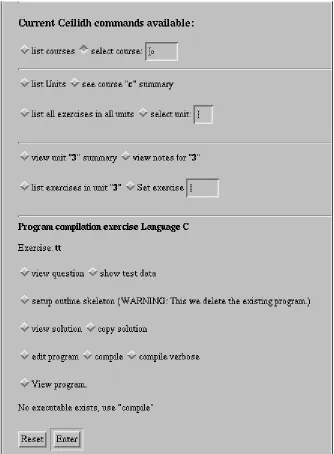
To address this problem, a series of hypertext, multimedia and hypermedia tools were developed as the basis for enhancing the course, CS383, Computer Systems [Carver & Biehler 1994a, Carver & Gregory 1995a, Carver et al. 1995a]. These tools provided a rich selection of World Wide Web (WWW), hypermedia-based tools as depicted [Fig. 1 and 2] and described below in [The Course]. These enhancements to the course were enthusiastically received by students and significantly improved the performance of many students. This enhanced student control and flexibility over how and when they studied and transformed many students from passive to active participants in the education process. Unfortunately, it also confused some students as they
were unsure as to how to proceed through the plethora of course material. Anecdotal evidence based student surveys over 1 ½ years suggests approximately 25% of the students remained confused and uncertain at the end of the semester as to how to effectively use the hypermedia material [Carver & Howard 1995a]. This wasted student time and required a different approach to presenting course material to students.
While providing a single path through the material was considered, this was inconsistent with the goal of transferring control and flexibility to the student. What was needed was a mechanism for tailoring the
presentation of the course material to different students based on how they learned best. By tailoring lesson presentation to the individual student, students should learn more in less time because the students can absorb the material presented more rapidly and are more receptive to how the material is presented. As a result, an adaptive hypermedia approach using student learning styles was developed.
Previous Efforts
Adaptive hypermedia interfaces have been discussed in several papers [Beumont & Brusilousky 1995a, Boyle & Encarnacion 1994a, Brusilousky & Pesin 1994a, Beumont 1994a, Brusilousky 1992a, Fisher et al. 1990a, Hekmatpour 1995a]. These papers have focused on dynamically assembling information and presenting that information according to the user's class and knowledge state. No attempt was made to incorporate the student's learning style into the decision of what information to present to the student. Likewise, Felder's learning styles have been presented in several papers as the basis for conducting classes [Felder & Silverman 1988a, Felder & Baker-Ward 1990a, Felder 1993a] but have not been adapted for implementation into hypermedia-based courseware. In only one instance has Felder's Learning Styles been incorporated into multimedia courseware [Montgomery 1995a]. This multimedia courseware is more than two orders of magnitude smaller than the CS383 Computer Systems hypermedia courseware. No system coupling Felder's learning styles with adaptive hypermedia to provide tailored lesson presentations has been proposed or implemented. In this regard, this paper is both novel and significantly different from previous efforts in this field.
Figure 1: The User Interface into Hypermedia CS383
The Course
The course utilizing this approach is CS383, Computer Systems, which is typically offered to third year undergraduate students. This course covers in detail hardware technologies in personal computers as well as providing a brief introduction to several areas in computer science such as computer networks, the Internet, robotics, artificial intelligence, expert systems, human factors, automated decision-aiding tools, computer graphics and office automation. The class size is less than eighteen students per section.
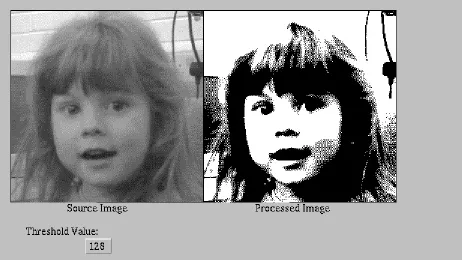
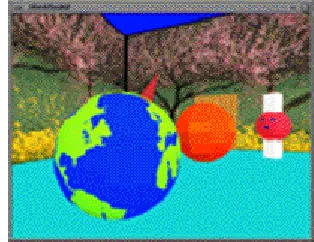
The hypermedia course material consisted of: A ISMAP-based HTML interface to course materials [see Fig. 1]; lesson objectives; Harvard Graphics for Windows or PowerPoint slideshows with sound, graphics, executables, and digital video embedded in the slides for every class [see Fig. 2]; a note-taking guide; a course hypertext document over 300 pages in length with 178 cross references, 678 glossary terms, and 700 searchable index terms; 184 sound files, 147 graphics, 57 digital movies, and 13 links to other external programs that support the course material; a course legacy system consisting of over 250 student presentations and papers from past semesters; an animated virtual computer [see Fig 2]; and a student response system [see Fig. 2]. The animated virtual computer allows students to build a virtual computer, run a series of benchmarks against the computer, and consists of over 40 HTML files, 25 digital movies, and five animated benchmarks. The student response system is an adaptive testing system with over 250 questions tied to specific lesson objectives and levels of Bloom’s Taxonomy. These questions include true/false, multiple choice, short answer, fill-in-the-blank, and essay questions. Students could, at any time before, during, or after class utilize these hypermedia lessons. The intent was to transfer control over how and when the students learned to the students. No longer were the students locked into fifty-five minutes of interaction with the instructor three times a week. Instead, the students had complete access to all of the lesson materials available twenty-four hours a day.
Felder's Learning Styles
According to [Felder & Silverman 1988b], there are five dimensions of learning that define a student's learning style of which four are measurable: sensing/intuitive, visual/verbal, active/reflective, and sequential/global. Professors likewise present material according to their learning style which is often quite different from the students they are teaching. Instructors tend to present material in an intuitive/ auditory/inductive/reflective/sequencial manner while their student are predominantly sensing/visual/deductive/active/ sequential learners [Felder & Baker-Ward 1990a]. In only a single dimension does the presentation of material match the learning styles of the presentation's audience. Adaptive hypermedia addresses this shortcoming by providing tailored, networked, hypermedia course material to the students
according to their individual learning styles.
Adaptive Hypermedia Based on Learning Styles
Common Gateway Interface (CGI) forms are used during the first lesson to determine each student's learning profile. These forms are based on an assessment tool developed at North Carolina State University [Solomon,
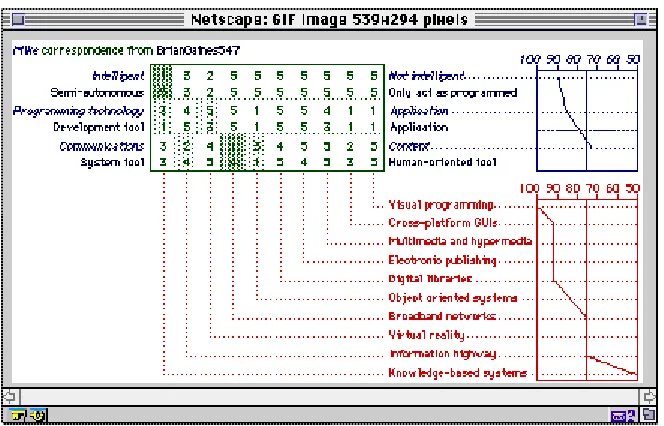
1992a]. Students determine their learning style by answering a series of twenty-eight questions [see Fig. 3]. Based on the student's responses, the CGI executable calculates each student's individual learning style, stores this student profile as a file on the WWW server, and associates it with the user's login. There are 720 different, possible learning styles that could be generated from the initial survey.
When the student logs in to begin a lesson, the student is given the option of exploring the course material according to their learning style or without their learning style. If the student chooses to use his or her learning style, a second CGI executable loads the student profile and calculates the effectiveness of the different course media using the heuristics described below. Based on these calculations, the CGI executable dynamically creates an HTML page containing an ordered list of the lesson media elements [see Fig. 3]. These lesson media elements are presented to each student in a sorted list ranked from most to least conducive based on their effectiveness to each student's individual learning style. The students need only to sequentially click on the links to explore the course material according to their personal learning style.
Relating Learning Styles to Course Hypermedia Materials
Key to this approach is a determination of what types of media types are appropriate for different learning styles. Each hypermedia course element supports one or more learning characteristic. However, regardless of which hypermedia lesson component is chosen, all components support both active and reflective learners. Instead of passively accepting the information presented, the hypermedia course forces students to constantly make choices. This facilitates active learners who become actively involved in the learning process. Reflective learners are likewise facilitated by the computer-based nature of the material. Students can stop and reflect at any point during their studies and ponder the meaning of the material presented. As a result, these learning characteristics are removed from consideration in the adaptive hypermedia interface leaving the sensing/intuitive, visual/verbal, and sequential/global learning characteristics as the basis for the adaptive hypermedia.
Certain media is inherently appropriate to different learning styles. For example, slideshows, graphics, and digital movies clearly appeal to visual learners while the course hypertext with its text-based, hierarchical, presentation of material appeals to verbal, sequential learners. For other media types, media content will determine the degree of support for each learning style. Each course tool was rated on a scale from 0 to 100 to determine the amount of support for each learning style. This rating was combined with the student profile to produce a unique ranking of each media type from the perspective of the student's unique profile. This ranking will differ from course to course depending on the course and media content. Different courses, media, and instructors will result in different tool ratings.
Adaptive Hypermedia Tool Granularity
In ranking the course media, the granularity of media ranking can significantly impact on the overall effectiveness of the hypermedia interface. If each media element (cpu.gif, intro.wav) can be assigned a learning style ranking, then the adaptive hypermedia system has fine granularity. If each media type (sound files, graphics, hypertext, etc.) receives a ranking, then the adaptive hypermedia system has coarse media granularity. There is tradeoff between the accuracy of the adaptive hypermedia interface and the speed of development of the hypermedia courseware. Adaptive hypermedia systems with fine media granularity accurately match the student's learning styles with the specific media that most directly supports that learning style. However, each media element must be rated in terms of its support of different learning styles. Adaptive hypermedia systems with coarse media granularity can be developed more quickly but are not as accurate.
Future Research and Summary
Future research is based on extending the current working model of the adaptive hypermedia system to (1) allow the student the option of overriding the ordering of media and instead provide their own ordering and (2) provide fine media granularity. A comparison between two sample populations using fine and coarse media granularity will validate the perceived tradeoff between cost of development and the accuracy of the adaptive hypermedia interface with relationship to the student's learning style. Additionally, the relationship between various media tools and learning styles is unproven in a formal study. Additional research is required to validate the validity of this relationship in CS383. The validity of the relationship will always depend in large part on the content of the various media elements.
Adaptive hypermedia based on student learning styles provides the ability to individually tailor the presentation of course material to each student. The underlying idea of adaptive hypermedia based on learning styles is quite simple: adapt the presentation of course material so that it is most conductive to each student learning the course material. To a certain extent, each student is taking a different course based on what material is most effective for each student. This tailoring allows for efficient and effective student learning in the shortest possible period of time. Student reaction to the adaptive hypermedia system has been uniformly positive. The adaptive hypermedia system for determining learning styles is public domain software and is available through the primary author.
Endnotes
[Beumont 1994a] Beumont, I (1994). User Modeling in the Interactive Anatomy Tutoring System. User Modeling and User-Adapted Interaction, 4 1994. 21-45.
[Beumont & Brusilousky 1995a] Beumont, I. and P. Brusilousky (1995). "Adaptive Educational Hypermedia". 1995 ED-MEDIA Conference on Educational Multimedia and Hypermedia. Graz, Austria. June 17-23, 1995. 93-98.
[Brusilousky & Pesin 1994a] Brusilousky, P. and L. Pesin (1994). "ISIS-Tutor: An Adaptive Hypertext Learning Environment" Japanese-CIS Symposium in Knowledge-based Software Engineering. May 10-13, 1994. Tokyo. 83-87. [Brusilousky 1992a] Brusilousky, P. (1992). “Intelligent Tutor, Environment, and Manual for Introductory Programming”.
Educational and Training Technology International, 29(1). 1992. 26-34.
[Boyle & Encarnacion 1994a] Boyle, C. and A.O. Encarnacion (1994). "MetaDoc: an Adaptive Hypertext Reading System" User Modeling and User-Adapted Interaction, 4 1994: 1-19.
[Carver & Gregory 1995a] Carver, C. A. and J. E. Gregory (1995). "Networked Hypermedia in Undergraduate Curriculum" 1995 ED-MEDIA Conference on Educational Multimedia and Hypermedia. Graz, Austria. June 17-23, 1995. 139-144. [Carver & Biehler 1994a] Carver, C. A. and M. A. Biehler, (1994). "Incorporating Multimedia and Hypertext Documents in an Undergraduate Curriculum". Proceedings of the 1994 IEEE/ASEE Frontiers in Education Conference. San Jose, CA. November 2-4, 1994. 87-92.
[Carver et al. 1995] Carver, C. A., E. Ressler, and M. A. Biehler (1995). "Low-Cost, Deliverable, Student Response Systems" Journal of Information Systems Education. Summer 1995. 73-78.
[Carver & Howard] Carver, C. A. and R.A. Howard (1995). “An Assessment of Networked Multimedia and Hypermedia” Proceedings of the 1995 IEEE/ASEE Frontiers in Education Conference. Atlanta, GA. November 1-5, 1995. 2c5.17-2c5.21.
[Felder & Silverman] Felder, R. M. and L. K. Silverman (1988). "Learning and Teaching Styles in Engineering Education." Engineering Education 78(7). April 1988. 674-681.
[Felder & Baker-Ward 1990a] Felder, R. M. and L. Baker-Ward (1990). "How Engineering Students Learn, How Engineering Professors Teach, and What Goes Wrong in the Process." 1990 IEEE/ASEE Frontiers in Education Conference. 82-84.
[Felder 1993a] Felder, R. M (1993). "Reaching the Second Tier -- Learning and Teaching Styles in College Science Education." Journal of College Science Teaching 23(5). March/April 1993. 286-290.
[Fischer et al. 1990a] Fischer, G. Mastaglio, T. B. Reeves, and J. Rieman (1990). Minimalist Explanations in Knowledge-based Systems. 23rd Annual Hawaii International Conference on System Sciences. 2-5 January, 1990. Kalua-Kona. 309-317.
[Hekmatpour 1995a] Hekmatpour, A. (1995). “An Adaptive Presentation Model for Hypermedia Information Systems” Journal of Educational Multimedia and Hypermedia, 4 (2/3), 211-238.
[Montgomery 1995a] Montgomery, S. (1995). "Addressing Diverse Learning Styles In a Large Classroom" 1995 ASEE National Conference Proceedings. Anaheim, CA. June 24-28, 1995. 344-349.
Off-Campus Preservice Teacher Education via IMM Technology:
An Indigenous Cohort Case Study
Lyn Henderson, Bill Patching, Ian Putt School of Education
James Cook University of North Queensland Townsville, Australia. 4811 E-mail [email protected]
Abstract: Since 1990 the School of Education at James Cook University, Australia, has produced and delivered on- and off-campus teacher education courseware materials via interactive multimedia (IMM) mode. Over a similar time period a research program has developed to investigate, primarily, the effectiveness of IMM courseware, especially in terms of its mathemagenic properties. This paper documents pertinent research conducted with a cohort of Indigenous off-campus teacher education students studying through IMM materials in their remote home communities. The findings led to a profile of the cohort's (a) study approaches; (b) perceptions and usage patterns of IMM materials; (c) thinking process while interacting with the IMM courseware; (d) concept mapping and IMM courseware, (e) thinking and use of IMM click-drag interactions, and (f) usage patterns and perceptions of embedded metacognitive activities in the IMM courseware.
Setting the Context
Racial discrimination, minimal sustainable political power, educational marginalisation, land alienation and, for some, geographical remoteness place indigenous minorities, such as Australia’s Aboriginal and Torres Strait Islander peoples, in the centre of the equity and social justice debate. Part of the solution is the Remote Area Teacher Education Program (RATEP) that is an affirmative action initiative driven by the concepts of social justice, culturally appropriate education, empowerment, and interactive multimedia information technology. The program is designed to deliver preservice teacher education to Aboriginal and Torres Strait Islander students in their own communities. The course is taught by the same lecturers who teach it on campus, the difference being that the subjects are delivered via interactive multimedia computer (IMM) courseware, other electronic technology (facsimile, audioconferencing, and electronic mail), print material, and on-site tutors.
In association with the traditional on-campus model, much research has focussed on student teachers' learning styles but virtually none with respect to Indigenous students who are studying in their own cultural milieu. This paper address this paucity by presenting data from a series of ecologically-valid research studies to describe Indigenous students' study approaches, IMM material usage patterns, and thinking processes in an attempt to develop a profile of their learning attributes whilst studying for a Diploma of Teaching (a university qualification for teacher registration) via the RATEP mode.
The cohort referred to in this paper comprised 23 students (6 males and 17 females) studying across six RATEP study centre sites (York Island, Boigu Island, Bamaga, Hopevale, Cairns, and Cherbourg). All students have English as their second or third language and were adult learners who were considerably older than the usual pre-service on-campus teacher education students, with only one having benefit of a Year 12 high school education. Students were selected to undertake the course on the basis of having completed a para-professional teacher education qualification, personal commitment, and motivation to becoming a registered teacher. Undertaking academic learning at university level was an entirely new experience for all but two students who, nevertheless, left the on-campus course after approximately one year's study.
Although the cohort consisted of 23 students, the number of students in the various research studies reported in this paper varies. By way of an overview, the studies are as follows:
1. Ascertaining students' study approaches. A study of the 23 students was undertaken using the Study Process Questionnaire (SPQ) [Biggs 1987] to assess students in terms of surface, deep, or achieving approaches to learning.
3. Student thinking. Three studies form the data base for the information detailed in this paper: (a) click-and-drag cognitive mapping with 10 students, (b) IMM and concept mapping with 21 students, and (c) IMM and metacognitive interactions with nine students.
Approaches to learning
How students undertake formal study is very much related to their study approaches. According to [Biggs & Moore 1993), study approaches can be viewed from two perspectives: (a) the presage notion of orientation or predisposition to learn in a certain way and (b) from a process notion of how ongoing tasks are handled. The approaches to learning refer to consistent ways that students undertake their learning or study and derive from a student's metacognition, linking both motives and strategies for study with perceived task demands and desired types of learning outcomes. Based on [Marton's 1975] original conceptualisation about approaches to learning, [Biggs & Moore 1993] have postulated three types: surface, deep, and achieving. The surface approach is characterised by extrinsic motives whereby the student engages in tasks and passes minimally in order to gain a paper qualification. A deep approach is characterised by intrinsic motivation and strategies that are meaning-oriented. Achieving approaches occur when motives and strategies are associated with institutionally desirable learning outcomes, namely high grades.
To ascertain student study approaches, [Biggs 1987] developed the SPQ which provides profiles on students with respect to surface, deep, and achieving motives and strategies. In the SPQ manual, six of the more common profiles encountered in a quantitative study of on-campus university preservice teacher education students are: deep, achieving, deep-achieving, surface-achieving, surface, and low achieving. As part of the overall description of the cohort of Indigenous students reported in this paper, the SPQ was administered to gain information about their study approaches. The questionnaire was administered in a way that attempted to overcome obstacles associated with cross-cultural context and English as a Second-Third language. In some items the on-campus examples were inappropriate for the RATEP model so wording was sometimes reinterpreted to place it in the RATEP context: for example, one question referred to "lectures and labs"; this was changed to "teleconferences and IMM courseware session".
Analysis of the RATEP cohort's results showed that, as a group, the students displayed strong evidence of metalearning skills. That is, SPQ results indicated high ratings for students' awareness of and control over motives or intentions for study and strategies in line with such intentions. By way of contrast, [Biggs 1987] stresses that students who lack metalearning capability choose strategies that are incongruent with motives. In addition, results reveal that, as a group, the RATEP cohort does not align with the six profiles listed above. The current students tended to be reflective and "thinking" learners who were flexible in identifying motives.
IMM Research Studies
IMM Courseware Materials: Student Perceptions and Usage Patterns
Three studies conducted over a period of three years have been completed in this area. Two investigated usage patterns of RATEP students as they interacted with two 13-week subjects: Contemporary Australian Society
(CAS) (19 students) and Primary School Mathematics Education (18 students) [Henderson & Putt 1993; Putt, Stillman & Henderson 1995]. The third study involved learner navigation access patterns of another 13-week IMM subject, Australian Minorities Today in World Perspective (18 students) [Henderson & Arger 1995]. The students were totally immersed in IMM courseware as a mode of studying. In the first two studies, data were collected by a survey instrument comprising structured and open-ended questions and interviews while in the third study, observation, modified stimulated-recall interviews [Marland, Patching & Putt 1992], and culturally appropriate yarning-type interviews were conducted. In this paper general findings are reported based on the three individual studies. The findings tended to be consistent across the three studies. In general, the following points can be made about student usage of materials.
1. All but two of the students preferred to work alone when studying with the IMM courseware for the first time. 2. In the maths subject most students preferred to revise their work individually whereas with the other two subjects the majority emphasised the strengths of collaborating with others on the first or second revision. 3. They preferred to work cooperatively only after everyone had acquired some information because they considered it a waste of time interacting with someone who had as little understanding as themselves.
4. The majority of students worked through the screens systematically and sequentially.