Victoria University of Technology
School of Human Movement, Recreation and Performance
On Making Warriors Out of Worriers:
The Management of Trait Anxiety in Competitive Sports
Thesis submitted to satisfy the requirements for the Degree of Doctor of Philosophy
Chris Larner
Student ID: 3032810
DOCTOR OF PHILOSOPHY DECLARATION
I, Chris Larner, declare that the PhD thesis entitled ‘On Making Warriors Out of Worriers: The Management of Trait Anxiety in Competitive Sports’ is no more than 100,000 words in length including quotes and exclusive of tables, figures, appendices, bibliography, references and footnotes. This thesis contains no material that has been submitted previously, in whole or in part, for the award of any other academic degree or diploma. Except where otherwise indicated, this thesis is my own work.
02-04-2009
ABSTRACT
There were three broad aims for this thesis. These included (1) an investigation of the relationships between the intensity and directional dimensions of trait anxiety, state anxiety and performance in sport, (2) a detailed exploration of mechanisms mediating observed relationships, using the theory of Rational Emotive Behaviour Therapy (REBT) as a framework, and (3), based on the findings of this exploration, an assessment of the efficacy of a tailored REBT treatment as a means of modifying harmful trait anxiety directional interpretations, resulting in changes at the state level and ultimately changes in performance. A total of 189 competitors from the sports of freestyle skiing, athletics, and ten-pin bowling participated in Study 1. Each competitor provided general demographic information, information pertaining to their overall skill level, and also completed the Competitive Trait Anxiety Inventory version 2 –
ACKNOWLEDGEMENTS
I set out on this PhD with a moderate hike in mind. Having trekked for a number of years now, the experience has evolved into an expedition. During my travels I was supported in many ways by a number of people. I would like to take this opportunity to thank everyone who has facilitated my journey and mention the following people explicitly:
TABLE OF CONTENTS
DOCTOR OF PHILOSOPHY DECLARATION ... 2
ABSTRACT ... 3
ACKNOWLEDGEMENTS ... 5
TABLE OF CONTENTS ... 6
LIST OF TABLES ... 11
LIST OF FIGURES ... 13
CHAPTER 1: INTRODUCTION ... 15
CHAPTER 2: LITERATURE REVIEW ... 18
INTRODUCTION ... 18
THE THEORETICAL DEVELOPMENT AND MEASUREMENT OF ANXIETY IN SPORT ... 18
Definitions ... 18
Unidimensional Theories of Arousal ... 19
Anxiety-Based Approaches ... 22
State-Trait Anxiety Theory ... 22
Sport Specific Measures ... 25
Multidimensional Conceptualisation of Anxiety ... 26
Directional Interpretation of Anxiety Symptoms ... 41
Potential Mechanisms Underlying Directional Observations ... 50
Theoretical Conceptualisations ... 56
Reversal Theory ... 57
Zones of Optimal Functioning Model ... 57
Summary of the Theoretical Development and Measurement of Anxiety in Sport . 60 APPLIED ANXIETY MANAGEMENT IN SPORT ... 60
Major Interventions Applied by Sport Psychologists ... 61
Relaxation ... 63
Imagery ... 66
Combined Relaxation and Imagery ... 74
Attentional Control Training ... 75
Self Talk ... 80
Summary of Applied Anxiety Management in Sport ... 85
THE PRESENT THESIS ... 86
CHAPTER 3: STUDY 1: EXPLORING MEASURES OF ANXIETY ... 88
INTRODUCTION ... 88
Predicted Internal Consistency of Anxiety Questionnaires ... 89
Predicted Between-Scale Correlations within Anxiety Questionnaires ... 89
Predicted Relationships Between Subscales of Trait Anxiety Questionnaires ... 90
Predicted Relationships Between Trait and State Anxiety Measures ... 91
Predicted Relationships Between Dimensions of Anxiety and Performance Outcome Measures ... 93
METHOD ... 95
Participants ... 95
Measures ... 96
Procedure ... 99
Analysis ... 99
RESULTS ... 99
Observed Internal Consistency of Anxiety Questionnaires ... 100
Correlational Analyses ... 101
Observed Between-Scale Correlations within Anxiety Questionnaires ... 103
Observed Relationships Between Subscales of Trait Anxiety Questionnaires ... 104
Observed Relationships Between Trait and State Anxiety Measures ... 104
Observed Relationships Between Dimensions of Anxiety and Performance Outcome Measures ... 105
DISCUSSION ... 112
Methodological Issues ... 119
Future Research ... 121
CONCLUSIONS ... 123
CHAPTER 4: IDENTIFYING A THEORETICAL FRAMEWORK ... 124
INTRODUCTION ... 124
GENERAL THEORIES OF EMOTION ... 125
The Cannon-Bard Theory ... 127
Schachter’s Two-Factor Theory ... 127
Lazarus’s Cognitive Appraisal Theory of Emotion ... 128
GENERAL THEORIES OF ANXIETY ... 130
Trait Anxiety Theories ... 130
Eysenck’s Unified Theory of Anxiety and Cognition ... 131
ELLIS’S THEORY OF EMOTIONAL DISTURBANCE ... 133
Background ... 133
The Theory of REBT ... 134
Basic Biological Tendencies ... 134
REBT and Emotions ... 134
The ABC Framework of REBT ... 135
Activating Events ... 136
Beliefs ... 139
Consequences ... 144
Disputation ... 148
Secondary Emotional Problems ... 149
Summarising the ABC’s of REBT ... 151
REBT Research and Measurement ... 151
Measurement of Beliefs in REBT ... 152
Meta-analyses of REBT... 154
REBT in Sport ... 156
CHAPTER 5: STUDY 2: EXPLORING ANXIETY-CAUSING COGNITIONS ... 166
INTRODUCTION ... 166
METHOD ... 169
Participants ... 169
Measures ... 169
Procedure ... 170
Analysis ... 171
RESULTS ... 172
ABC Frequency Counts ... 173
ABC Pathway Analyses ... 180
Methodological Issues ... 193
Future Research ... 195
CONCLUSIONS ... 197
CHAPTER 6: STUDY 3: MANAGING ANXIETY IN SPORT WITH REBT ... 198
INTRODUCTION ... 198
METHOD ... 200
Participants ... 200
General Measures ... 201
Specific and State Measures ... 202
Procedure ... 205
Data Analysis ... 206
RESULTS ... 206
Preliminary Data Analysis ... 206
DISCUSSION ... 228
Methodological Issues ... 231
Future Research ... 232
Implications for Practice ... 234
CONCLUSIONS ... 234
CHAPTER 7: DISCUSSION ... 236
METHODOLOGICAL ISSUES ... 241
FUTURE RESEARCH ... 245
IMPLICATIONS FOR PRACTICE ... 249
CONCLUDING REMARKS ... 251
REFERENCES ... 253
APPENDICES ... 281
Study 1 Participant Details Form... 282
Study 1 Competitive State Anxiety Inventory-2-D ... 283
Study 1 Competitive Trait Anxiety Inventory-2-D ... 284
Study 1 Sport Anxiety Scale ... 285
Study 1 Participant Instructions ... 287
Study 1 Informed Consent form ... 288
Study 2 Informed Consent form ... 289
Study 2 Interview Schedule ... 290
Study 2 Rational Cognitions Coding Tree ... 295
Study 2 Irrational Cognitions (Self directed) Coding Tree ... 296
Study 2 Irrational Cognitions (Other directed) Coding Tree ... 297
Study 2 Irrational Cognitions (Life directed) Coding Tree ... 298
Study 3 Social Desirability Scale ... 300
Study 3 Shortened General Attitude and Belief Scale ... 301
Study 3 Mental Readiness Form-L-D ... 302
Study 3 REBT Intervention Structure ... 303
Study 3 Relaxation Imagery Intervention Structure ... 305
Study 3 Invitation to Participate ... 306
Study 3 Participant Instructions – Following Inclusion ... 307
LIST OF TABLES
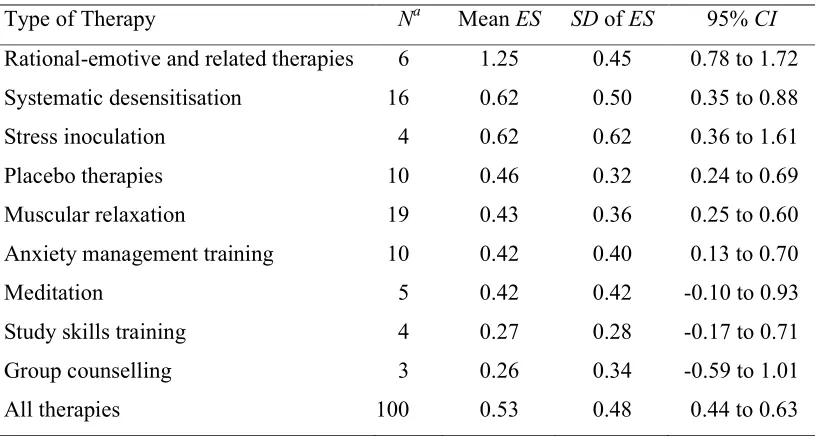
Table 2.1 Effect Sizes (ES) with Trait Anxiety/Neuroticism Measures for Various Types of Therapy (Jorm, 1989, p. 24) ... 25 Table 3.1 Means, SD’s, and Internal Consistency of the CSAI-2-D and SAS ... 100 Table 3.2 Intercorrelations Between Subscales of Anxiety Measure, and
Performance Outcomes ... 102 Table 4.1 Inappropriate and Appropriate Negative Emotions and their Cognitive
Correlates (Dryden & DiGuiseppe, 1990) ... 147 Table 4.2 Productive and Unproductive Arousal Chains (Goldman, 2003). ... 161 Table 4.3 Common Examples of Activating Events, Defeating Self-Talk, and
Unproductive Outcomes (Goldman, 2003). ... 162 Table 4.4 Common Examples of Disputation (Goldman, 2003). ... 163 Table 4.5 Common Examples of Activating Events, Rational Self-Talk, and
Productive Outcomes After Disputing (Goldman, 2003). ... 164 Table 5.1 Major Bowling Goals ... 173 Table 5.2 Activating Events - Frequency of Reporting ... 174 Table 5.3 Number of Demands/Preferential Citations Falling into Major Themes ... 175 Table 5.4 Number of Demands/Preferential Citations Falling into Major Themes
for Debilitative and Facilitative Bowlers... 176 Table 5.5 Number of Evaluative Citations Falling into Major Themes for
Debilitative and Facilitative Bowlers ... 177 Table 5.6 Number of Emotional Consequence Citations Falling into Major
Themes ... 178 Table 5.7 Frequency of Citations for Each Response Dimension and Directional
Interpretations for Debilitative and Facilitative Trait Anxiety
Competitors ... 179 Table 6.1 Internal Reliabilities of Scales ... 208 Table 6.2 Correlations among Trait Anxiety Subscales (CTAI-2-D) and State
Anxiety Subscales (MRF-L-D) at Game 1. ... 210 Table 6.3 Correlations among subscales of the CTAI-2-D and the SGABS ... 211 Table 6.4 Means and Standard Deviations for Each SGABS Subscale for Each
LIST OF FIGURES
Figure 2.1. The relationship between performance and arousal as predicted by
drive theory. ... 20
Figure 2.2. The Relationship between Performance and Arousal as Predicted by the Inverted-U Hypothesis. ... 21
Figure 2.3. Influence of State and Trait Anxiety on Sport Performance (Spielberger, 1966, p.17). ... 23
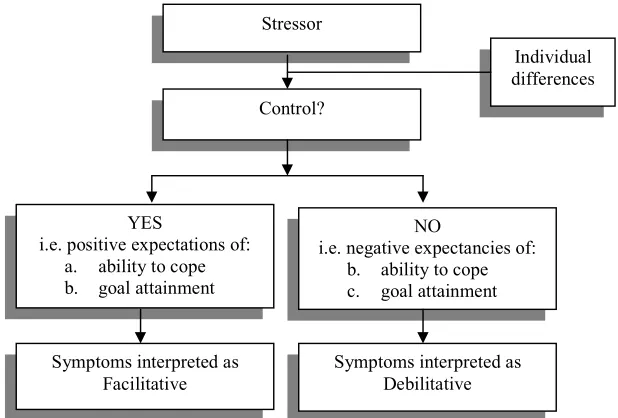
Figure 2.4. A Control Model of Debilitative and Facilitative Competitive State Anxiety (Jones, 1995, p. 466). ... 55
Figure 2.5. The Cusp Catastrophe Model (Hardy, 1996). ... 59
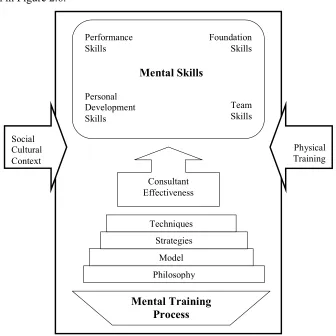
Figure 2.6. A Framework for Understanding Mental Skills Training in Sport (Vealey, 2007, p. 291). ... 61
Figure 2.7. An Applied Model of Mental Imagery Use in Sport (Martin, Moritz, & Hall, 1999, p. 248). ... 68
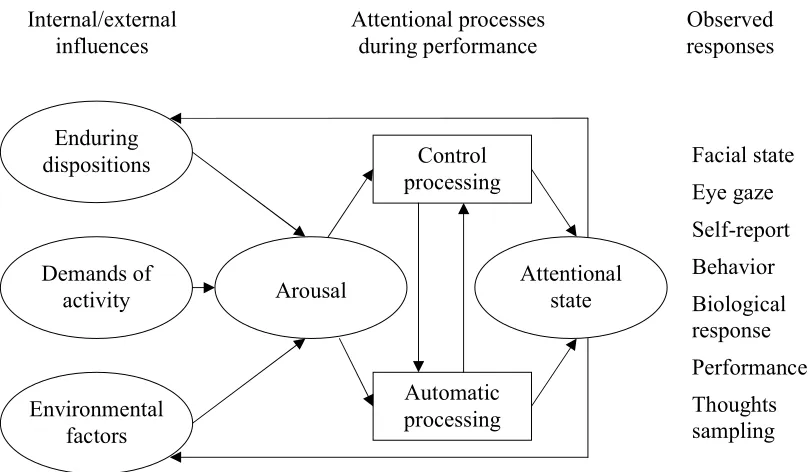
Figure 2.8. Interactions Between Internal and External Factors and Attentional Processing (Boutcher, 2002, p. 449)... 76
Figure 3.1. Mean CSAI-2-D Cognitive and Somatic State Anxiety Intensity Scores Across Skill Groups. ... 107
Figure 3.2. Mean CSAI-2-D Cognitive and Somatic State Anxiety Direction Scores Across Skill Groups. ... 108
Figure 3.3. Mean CTAI-2-D Cognitive and Somatic State Anxiety Intensity Scores Across Skill Groups. ... 109
Figure 3.4. Mean CTAI-2-D Cognitive and Somatic State Anxiety Direction Scores Across Skill Groups. ... 110
Figure 3.5. Mean SAS Concentration Disruption, Somatic, and Worry Across Skill Groups. ... 111
Figure 4.1. The James-Lange Theory of Emotion. ... 126
Figure 4.2. The Cannon-Bard Theory of Emotion. ... 127
Figure 4.3. Schachter’s (1964) Two-Factor Theory of Emotion. ... 128
Figure 4.4. Lazarus’s (1991) Cognitive Appraisal Theory of Emotion. ... 129
Figure 4.5. Eysenck’s (1997) Four-Factor Theory of Trait Anxiety ... 132
Figure 4.6. The Expanded ABC’s of REBT. ... 135
Figure 4.8. Processes Associated with the A Component of REBT (Adapted from,
Wessler & Wessler, 1980). ... 137
Figure 4.9. A Model of Private Thought (Bernard & Joyce, 1984, p. 57). ... 141
Figure 4.10. Single Continuum Showing no Differentiation between Anxiety and Concern (Dryden, 1994, p. 55). ... 146
Figure 4.11. Two Continua Showing Differentiation between Anxiety and Concern (Dryden, 1994, p. 55). ... 146
Figure 4.12. Primary and Secondary Emotional Disturbances. ... 150
Figure 5.1. Goal Setting Hierarchical Index Tree. ... 171
Figure 5.2. Anxiety Pathway Map for the Entire Sample. ... 181
Figure 5.3. Anxiety Pathway Map for the Debilitative Trait Anxiety Group. ... 182
Figure 5.4. Anxiety Pathway Map for the Facilitative Trait Anxiety Group. ... 183
Figure 5.5. Anger Pathway Map for the Entire Sample. ... 184
Figure 5.6. Annoyance Pathway Map for the Entire Sample. ... 185
Figure 5.7. Concern Pathway Map for the Entire Sample ... 186
Figure 5.8. Focussed Pathway Map for the Entire Sample. ... 187
Figure 5.9. Happiness Pathway Map for the Entire Sample. ... 188
Figure 6.1. Somatic State Anxiety Intensity Across Games ... 219
Figure 6.2. Average Pre- and Post-Intervention Somatic State Anxiety Intensity Scores. ... 220
Figure 6.3. Cognitive State Anxiety Intensity Across Games ... 221
Figure 6.4. Average Pre- and Post-Intervention Cognitive State Anxiety Intensity Scores ... 222
Figure 6.5. Somatic State Anxiety Direction Scores Across Games ... 223
Figure 6.6. Average Pre- and Post-Intervention State Somatic Anxiety Direction Scores ... 223
Figure 6.7. State Cognitive Anxiety Direction Scores Across Games ... 225
Figure 6.8. Average Pre- and Post-Intervention Cognitive State Anxiety Direction Scores ... 225
Figure 6.9. Average Game Scores for all Participants Across the Study. ... 227
CHAPTER 1: INTRODUCTION
Differences between elite sport competitors in underlying fitness and skill are frequently negligible (Jones & Swain, 1995). It is often the mental state of the
competitor, both prior to and during the event that is the primary determinant of success or failure (Watson, 1984). A critical aspect of sports competitors’ mental state that is reported by the majority of performers entering important sporting events is anxiety (Anshel, 1995). The importance of anxiety and other emotions in sports competition has been recognised for many years (e.g., Martens 1971a; Singer, 1975). In a survey of more than 200 college athletes, Smith (1980) observed that more than 40% of
respondents reported experiencing high levels of anxiety that they felt interfered with their performance. Murphy (1988) reported that over 50% of consultations among athletes at an Olympic festival were related to stress- or anxiety-related problems. Jones (1995) noted that this state of affairs is not surprising given that competitive sport is generally characterized by a demand to perform at optimum levels in high pressure situations.
Athletes’ experience of this anxiety is important because it can potentially have a profound impact on performance. This situation is not unique to elite competition, because both youth and sub-elite competitors have consistently reported the adverse effects of anxiety on performance (Bird & Horn, 1990; Jones & Hardy, 1990; Meyers & Schleser, 1980). Furthermore, high levels of competitive anxiety have been identified as one of the prime motives for youth dropout from sport (Gould, Feltz, Horn, & Weiss, 1982; Klint & Weiss, 1986).
In response to this situation, researchers and applied practitioners’ have devoted considerable attention to the construct of anxiety. Early distinctions were based on measures designed to identify athletes’ general tendency to be anxious, and their
immediate anxiety states (Spielberger, 1966). This distinction predicts that people’s trait anxiety, or acquired behavioural disposition to experience a range of situations as distressing, should result in disproportionately intense state anxiety reactions (Spielberger, 1966).
In the sports setting, the majority of research has focussed on the measurement and modification of the intensity of the state anxiety response. This anxiety dimension has typically been interpreted as negative and hurtful to performance (Jones & Swain, 1995). Theories based on anxiety intensity have generally predicted that cognitive state anxiety intensity is negatively related to performance, and that somatic state anxiety intensity forms an inverted-U relationship with performance (Martens et al., 1990). There has been little consistency in findings across numerous studies testing these hypotheses (Gould & Udry, 1994; Hassmén, Raglin, & Lundqvist, 2004; Jones & Hardy, 1990; Jones, 1995).
One major development that has the potential to explain some of the
inconsistencies observed in past research, and advance the theoretical conceptualisation of anxiety, is the proposal of directional interpretations of anxiety symptoms. Research applying this approach has indicated that athletes’ directional interpretation of their anxiety experience, not the intensity of their anxiety symptoms, may have the greatest impact on subsequent performances (Jones, Swain, & Hardy, 1993; Parfitt & Hardy, 1993). For example, research has revealed that elite performers interpret both cognitive and somatic trait anxiety symptoms as being significantly more facilitative to
performance than non-elite performers (Jones & Swain, 1995). Such findings provide a rationale to further investigate the relationship between directional interpretations of trait anxiety and performance.
Past research has also tended to focus heavily on the modification of the state anxiety response, based on the premise that trait anxiety is highly stable and inflexible (Jorm, 1989). Research from the clinical psychology setting has indicated that the trait components of anxiety may be modifiable (Jorm, 1989). Notably, interventions
employing a Rational Emotive Behaviour Therapy (REBT) framework have produced a reduction in trait anxiety intensity of around 1.25 standard deviations across a
substantial number of studies in clinical settings (Jorm, 1989). At present, there is little research concerning the modification of cognitive and somatic dimensions of trait anxiety, or even the modification of directional interpretations of generalised unidimensional trait anxiety in sport.
modifying dysfunctional directional interpretations of cognitive or somatic trait anxiety should be mirrored in more appropriate state anxiety interpretations, and, ultimately, result in significant performance improvements. Cognitive behavioural techniques, such as REBT, would appear to be well-suited forms of intervention because they target individuals’ predispositions to interpret their thoughts, emotions, behaviour, and environment negatively, and offer alternative thought patterns that promote individual goal attainment.
CHAPTER 2: LITERATURE REVIEW Introduction
The conceptualisation of anxiety has undergone considerable refinement over time. To gain a complete understanding of the current state of anxiety theory,
measurement, and treatment, it is necessary to consider conceptual breakthroughs chronologically. The literature reviewed in this thesis is divided into three separate, but interrelated, parts. In the first part of the literature review, I outlined the theoretical development and measurement of anxiety from its beginnings as a uni-dimensional construct in the educational and clinical literature, to current multidimensional
approaches adopted in the sports setting. I explored both theory and measurement as one because major theoretical advances in anxiety have often been driven by the
development of measures. In the second part of the literature review, I discussed how theoretical developments have been interpreted in the applied setting by examining common applied management techniques, with a focus on cognitive interventions. In the final part of the literature reviewed for the purposes of this thesis (see Chapter 4), I explored general theories of emotion as a basis to evaluate the potential role of REBT in the management of anxiety in sport.
The Theoretical Development and Measurement of Anxiety in Sport Definitions
The concept of anxiety has been used synonymously with both arousal and stress (Jones, 1995). Researchers in the sports setting continue to confuse these constructs, despite the fact that they are measured differently, and require different regulation strategies (Gould & Krane, 1992). For the purposes of this thesis, the following operational definitions will be used for the terms stress, arousal, and anxiety. Seyle (1975) originally defined stress as a response of the body to a demand placed on it. Jones (1990) has defined stress as a state resulting when demands are placed on an individual that require that person to engage in some form of coping behaviour. Perhaps the clearest description of stress was provided by Martens et al. (1990), who defined it as “the process that involves the perception of a substantial imbalance between
environment demand and response capabilities under conditions in which a failure to meet demand is perceived as having important consequences and is responded to with increased levels of cognitive and somatic anxiety” (p. 10). Importantly, Lazarus (1999) highlighted that stress refers to a relationship between the individual and their
perspective should be adopted to emphasise the relationship meaning construed by an individual operating in a particular environment. Based on this, Fletcher, Hanton and Mellalieu (2007) defined stress as:
An ongoing process that involves individuals transacting with their
environments, making appraisals of the situation they find themselves in, and endeavoring to cope with any issues that may arise (p. 45).
Marchant and Morris (2004) defined arousal as a reflection of “the level of activity of various physiological indicators of the body, such as heart rate, respiration rate, galvanic skin response, hormonal activity, brain wave activity (EEGs) and temperature” (p. 75). It is a physiological response that is represented on a continuum ranging from sleep to high excitation.
Anshel, Freedson, Hamill, Haywood, Horvat, and Plowman (1991) defined anxiety as a “subjective feeling of apprehension or perceived threat, sometimes accompanied by heightened physiological arousal” (p. 9). Gould and Krane (1992) contended that anxiety can be considered “the emotional impact or cognitive dimension of arousal” (p. 121). It is what results when individuals doubt their ability to cope with a situation that causes them stress (Hardy, Jones, & Gould, 1996). It is also important to note that, until recently, anxiety has generally been characterised as a negative or unpleasant experience (e.g., Jones & Hanton, 2001). A more general conceptualisation of anxiety will be proposed in this thesis, following on from general theories of
emotion. This conceptualisation highlights the understanding that anxiety is comprised of cognitive, physiological, and behavioural components (Jones, 1990).
Unidimensional Theories of Arousal
Until the early 1980’s, the literature on the competitive anxiety-performance relationship was largely dominated by arousal theories. These were heavily influenced by research conducted in the educational and clinical psychology settings. Two basic theories have been used commonly to describe the arousal-performance relationship in the sport psychology setting, Drive theory and the Inverted-U hypothesis. Drive theory proposes a linear relationship between arousal and performance, whereas the Inverted-U hypothesis applies a quadratic curve to describe this relationship.
Drive Theory
conceptual nuances, one of its basic tenets that has been widely adopted by sport psychologists is the prediction that arousal and performance will form a positive linear relationship. Athletic performance on complex or novel tasks is predicted to be highest with low levels of arousal, whereas performance on simple or well-learned tasks is predicted to be best with a higher level of arousal. This relationship is illustrated in Figure 2.1.
Figure 2.1. The relationship between performance and arousal as predicted by drive theory.
Martens (1971) noted that support for this theory is not consistent. More arousal does not necessarily predict improved performance and, despite modifications to the model, the predicted linear relationship has since been found to be simplistic. Of particular relevance to sport is the observation that the model fails to accommodate the effects of complex tasks (Martens, 1971; Tobias, 1980; Weinberg, 1979), which means it is too simple to explain arousal and motor/sport performance relationships (Fisher, 1976). A final and important limitation of the model lies in its failure to consider the role of thought or appraisal in the arousal-performance relationship (Gill, 1994). The Inverted-U Hypothesis
With its origin in the work of Yerkes and Dodson (1908), the Inverted-U hypothesis posits that for every type of behaviour there exists an optimal level of arousal, usually of moderate intensity, that produces maximum performance. Levels of arousal above and below this optimum are predicted to produce inferior performances. The theory further postulates that as the complexity of a task increases, the arousal needed for optimal performance will decrease. The Inverted-U relationship is illustrated
in Figure 2.2. The simplicity of this model in relating arousal to sports performance has advanced its dissemination as an illustrative model by many sport psychologists.
Figure 2.2. The Relationship between Performance and Arousal as Predicted by the Inverted-U Hypothesis.
Criticisms of the Inverted-U hypothesis have focussed on its inability to explain why performance is impaired at arousal levels above and below the optimum (Eysenck, 1984; Landers, 1980). As one would expect, this model is also virtually impossible to disprove because extremely high or low levels of arousal (panic or sleep) would necessarily impact on performances in most circumstances (Landers, 1994). The model’s simplicity has also been criticised in that it only relates to general effects on global performance effectiveness, rather than specific effects upon
information-processing efficiency (Eysenck, 1984). Applied knowledge also brings into question the shape of the curve on the grounds that rapid performance declines are often observed when arousal reaches a harmful level, and that it may be unrealistic to assume that an over-aroused performer can simply reduce their arousal level to regain optimal performance (Fazey & Hardy, 1988; Hardy, 1990; Hardy & Fazey, 1987). Finally, the model is unable to account for the often-observed differences in the performance of athletes who are exposed to the same stressor (Humara, 1999).
In response to these criticisms, there has arisen a general dissatisfaction with the use of arousal as a unitary concept that incorporates the emotion of anxiety. This was driven in part by more accurate delineations between the concepts of arousal, anxiety, and stress (Gould & Krane, 1992; Jones, 1990; Jones & Hardy, 1989; Krane, 1992), and partly by the understanding that anxiety is a multidimensional, and not unidimensional,
construct, comprising cognitive, physiological, and behavioural components (Jones, 1990). As already indicated, cognitive psychologists have been particularly concerned with the absence of cognitive appraisal in these models (Gill, 1994).
In summary, unidimensional approaches have contributed to the understanding of the relationship between arousal, anxiety, and performance. As Marchant and Morris (2004) noted, however, these approaches have failed to capture considerable support, and have struggled to assimilate ongoing developments in the measurement and management of anxiety in sport.
Anxiety-Based Approaches
State-Trait Anxiety Theory
Cattell and Scheier (1961) have been credited with first differentiating between state and trait aspects of anxiety, resulting from a series of factor analytic studies they conducted. Following their lead, Spielberger (1966) developed the State-Trait Anxiety Theory, which provided a general framework for examining the major variables that comprise anxiety, and enabled predictions to be made concerning the possible
relationship between these variables. Spielberger defined state anxiety as a transitory experience, characterised by “subjective, consciously perceived feelings of
apprehension and tension, accompanied by or associated with activation or arousal of the autonomic nervous system” (p. 17). Anshel et al. (1991) defined state anxiety as “an immediate emotional experience that is characterised by apprehension, fear, and
tension, and is sometimes accompanied by physiological arousal” (p. 145). These definitions emphasise the situational nature of state anxiety.
The antecedents, thoughts, and processes of anxiety, and relationships between state and trait anxiety as conceptualised by Spielberger (1966) are illustrated in Figure 2.3.
Figure 2.3. Influence of State and Trait Anxiety on Sport Performance (Spielberger, 1966, p.17).
This model applies a stimulus-cognition-response paradigm to competition. Spielberger hypothesised that arousal of an A-state nature involves a sequence of events in which individuals appraise a stimulus as threatening, resulting in an state reaction. This A-state reaction is hypothesised to initiate behaviour designed to avoid the danger or alter the appraisal. Individual differences in A-trait anxiety are predicted to affect the appraisal process by influencing the direction of attention towards stimuli that are seen as threatening. According to this model, individuals who are high in A-trait anxiety are hypothesised to appraise certain circumstances more threateningly than individuals low in A-trait anxiety.
The State-Trait Anxiety Inventory (STAI) was developed to measure state and trait anxiety in the clinical setting (Spielberger, Gorsuch, & Lushene, 1970). Following
Subjective feelings of apprehension or “anxious
expectation” A-State
Activation (arousal) of the autonomic system Internal Stimuli
Thoughts, feelings, biological needs
Defense Mechanisms Adjustive processes
for avoiding or reducing A-states External Stimuli
(Stressors)
A-Trait Individual difference in anxiety proneness
Behaviour Cognitive
Appraisal
Alteration of cognitive appraisal by defense mechanisms
Responses to stimuli appraised as
the conception of the STAI, it has been used extensively in both clinical and sports research settings (Spielberger, 1984). Research that has explored the relationship between pre-competitive trait and state anxiety in sport has generally supported the hypothesised relationship that individuals high in trait anxiety will respond to specific pre-competition situations with heightened state anxiety (e.g., Gould, Horn, &
Spreeman, 1983a; Murphy & Woolfolk, 1987; Powell & Verner, 1982; Sonstroem & Bernardo, 1982).
Clinical research undertaken by MacLeod (1990) indicated that individuals who are predisposed to high levels of trait anxiety and who are state anxious, have a
tendency to attend to more threat-related information than individuals predisposed to low levels of trait anxiety who are state anxious. Moreover, Endler and Parker (1990) observed that individuals who exhibited high levels of trait anxiety tended to cope with stressful situations in a relatively passive way, using “avoidance-oriented” strategies. They also observed that low trait anxious individuals more often used “task-oriented” or active coping strategies. Eysenck (1992) generalised these latter findings by proposing that individuals reporting high trait anxiety are more vulnerable to state anxiety, because they possess less adequate coping strategies than persons low in trait anxiety.
Generally, trait anxiety is held to be a stable personality attribute, which reflects a predisposition to react with heightened levels of anxiety (Jorm, 1989). Given that trait anxiety is correlated with state anxiety, Jorm went on to conduct a meta-analysis of clinical therapy outcome studies to determine whether trait anxiety is modifiable, and whether trait-based interventions may be efficaciously used to influence individuals’ state anxiety responses. Jorm noted that trait measures are generally stable over time, but that the magnitude of the correlations between such measures would still allow for a considerable amount of individual change. In addition, he noted that, in the past, it has generally been held that individual differences in traits are largely attributable to genetic factors (based on twin studies). Jorm challenged this assumption by citing research that has indicated that less than half of the variation in trait anxiety is attributable to genetic factors, and in some studies this figure has been as low as 20% (e.g., Scarr, Webber, Weinberg, & Wittig, 1981). Such observations leave considerable scope for
Table 2.1
Effect Sizes (ES) with Trait Anxiety/Neuroticism Measures for Various Types of Therapy
(Jorm, 1989, p. 24)
Type of Therapy Na Mean ES SD of ES 95% CI
Rational-emotive and related therapies 6 1.25 0.45 0.78 to 1.72 Systematic desensitisation 16 0.62 0.50 0.35 to 0.88
Stress inoculation 4 0.62 0.62 0.36 to 1.61
Placebo therapies 10 0.46 0.32 0.24 to 0.69
Muscular relaxation 19 0.43 0.36 0.25 to 0.60
Anxiety management training 10 0.42 0.40 0.13 to 0.70
Meditation 5 0.42 0.42 -0.10 to 0.93
Study skills training 4 0.27 0.28 -0.17 to 0.71
Group counselling 3 0.26 0.34 -0.59 to 1.01
All therapies 100 0.53 0.48 0.44 to 0.63
a
Number of effect sizes
Table 2.1 clearly highlights that a range of therapies have noteworthy effects on trait anxiety. In particular, Jorm observed that rational-emotive and related therapies were the most promising for reducing levels of trait anxiety, with an average effect size of 1.25 standard deviations, more than twice the impact of any other intervention type. At present, there is little research concerning the modification of trait anxiety in sport, and these findings highlight that this as a fruitful area for further investigation. Sport Specific Measures
Evidence from non-sport areas of psychology has reinforced the importance of employing anxiety measures that are sensitive to the unique characteristics of different situations (e.g., Mandler & Sarason, 1952; Mellstrom, Cicala, & Zuckerman, 1976; Paivio & Lambert, 1959; Watson & Friend, 1969). As a result, sport psychology researchers did not predict that competitive trait anxiety would influence performance directly, since performance is the result of a combination of person and situation factors. They, therefore, tended to more often use measures of state anxiety in both research and applied settings.
When comparing successful and less successful competitors on a unidimensional measure of anxiety, research generally shows that less-experienced and non-elite
performance. Experienced and elite performers demonstrate a similar pre-event increase, but then a reduction just prior to and during performance (e.g., Mahoney & Avener, 1977). Cerin, Szabo, Hunt, and Williams (2000) summarised the current temporal patterning literature by stating that, in general, analysis of the temporal patterning of one-dimensional competitive anxiety shows that, over a one-week pre-competitive period, state anxiety increased as the competition neared.
When considering the role of trait anxiety in such observed patterns, further support for the distinction between state and trait anxiety is apparent. For example, in examining team sports, Huband and McKelvie (1986) noted that the state anxiety of low trait anxious athletes did not change one day before, just before, and one day after the event, whereas high trait-anxious athletes peaked in state anxiety just before the competition. At the individual level, Donzelli, Dugoni, and Johnson (1990) reported similar state anxiety in high and low trait-anxious athletes one week before competition, but more intense state anxiety in the high trait-anxious group on post-competition assessments.
With the aid of sport specific measures, the predicted association between state and trait measures of anxiety has gained support. In a study with elite golfers, measures of self-consciousness and trait anxiety interacted with pre-competition mood states, as well as with subsequent golf performance (Hassmén, Koivula, & Hansson, 1998). These results have not been easily replicated, however. For example, Hassmén, Raglin, and Lundqvist (2004) found that trait anxiety scores were not consistently associated with pre-competition state anxiety responses in a group of eight elite golfers. Such a small sample size limits the generalisability of such findings.
Combined, these findings not only provide general support for the predicted relationship between trait and state anxiety, but also highlight the modifiability of trait anxiety. Given that trait anxiety can be unobtrusively assessed and potentially modified away from competition, and that it is predicted that changes in trait anxiety will be reflected in state anxiety responses, further research examining measures of trait anxiety is warranted.
Multidimensional Conceptualisation of Anxiety
provided the initial impetus for researchers to attempt to incorporate subcomponents into their measures that addressed these conceptual dimensions.
Cognitive and somatic anxiety. Educational psychologists Liebert and Morris (1967) first distinguished between somatic and cognitive sub-components of state anxiety. They introduced the concepts of worry and emotionality in their
two-component model of test anxiety. This was accomplished through the utilisation of the Worry-Emotionality Inventory (WEI; Liebert & Morris, 1967). Following on from this distinction, clinical psychologists Davidson and Schwartz (1976) moved towards a more extensive multidimensional theory of anxiety involving two factors: somatic and
cognitive anxiety. Their supposition was bolstered by the demonstration that they could effectively negate either form of anxiety through selective relaxation therapy, i.e., focusing on one, or both, of the factors. Concurrently, Schwartz, Davidson, and Goleman (1978) developed a multidimensional trait scale, the Cognitive Somatic Anxiety Questionnaire (CSAQ), cementing this conceptual distinction. Morris, Davis, and Hutchings (1981) have since concluded that the cognitive-somatic distinction is essentially the same as Liebert and Morris’s (1967) worry-emotionality distinction.
The complete assimilation of the concept of a multidimensional theory of anxiety into the field of sport psychology came about through Martens, Burton, Vealey, Bump, and Smith’s (1990) development of the Competitive State Anxiety Inventory-2 (CSAI-2). The CSAI-2 is a sport specific, multidimensional, state anxiety questionnaire that measures the intensity of cognitive and somatic anxiety, as well as self-confidence. It borrows from the cognitive and somatic conceptualisations made by Morris et al. (1981), who defined cognitive anxiety as “negative expectations and cognitive concerns about oneself, the situation at hand and potential consequences” (p. 541). Morris et al. defined somatic anxiety as “one’s perceptions of the physiological-affective elements of the anxiety experience, that is, indications of autonomic arousal and unpleasant feeling states such as nervousness and tension” (p. 541).
Evidence for the cognitive-somatic distinction has been based on the proposal that cognitive and somatic anxiety may be elicited by different classes of antecedents. For example, threat of electric shock had its primary effect on somatic anxiety, whereas social or performance evaluation had a stronger eliciting effect on cognitive anxiety (Smith et al., 1990). It has also been observed that cognitive and somatic anxiety have differential effects on performance, depending on the nature of the task. For example, in test situations, worry correlates with performance, but somatic anxiety generally does not, whereas, on tasks requiring fine motor control, such as pistol shooting, the inverted-U relationship tends to hold for state somatic anxiety and performance (Hanton, Jones, & Mullen, 2000). Finally, there has been some evidence provided for matching
treatments with the dominant anxiety symptoms experienced (Davidson & Schwartz, 1976). For example, in a study conducted with field hockey players, Maynard and Cotton (1993) found that anxiety reduction techniques that were directed at the individual's dominant anxiety type (cognitive or somatic) were more effective.
As with Spielberger (1966), Hardy’s (1999) definition of somatic anxiety was based on competitors’ perceived autonomic arousal, not a direct measure of that arousal itself. This critical distinction has often been overlooked by researchers, resulting in ambiguous theoretical development and fundamentally flawed research. For example, Anshel (1995), citing Smith, Smoll, and Schutz (1990) noted that anxiety is primarily a manifestation of psychological processes, such as cognitive appraisal and expectancies, but then went on to make the point that researchers have also recognised the importance of somatic anxiety in affecting sport performance. In the sport psychology literature, the concept of “somatic anxiety” does not refer to a direct measure of physiological
reactivity, but reflects individuals’ interpretations of this. As a result, this interpretation is a form of cognitive appraisal. Anshel et al. (1991) further complicated this delineation by defining state anxiety as a “state of arousal engendered by a stressful or threatening situation” (p. 145). This is just one example of the undercurrent of confusion that has plagued the sport psychology field in differentiating between arousal and anxiety, particularly in relation to the interpretations of somatic anxiety.
Davidson and Schwartz failed to note that most of the measures used to test their hypothesis only address cognitive appraisal. Perhaps this explains why research has indicated that there is a need to treat both cognitive and somatic anxiety simultaneously, as only addressing the physical symptoms would not be predicted to have a strong influence on a measure of cognitive appraisal, albeit a measure related to interpretations of somatisations. Maynard and Cotton (1993) provided a typical example of this
confusion when they suggested that the matching hypothesis could be tested by applying a cognitive technique to both a cognitively anxious population and a
somatically anxious population, claiming that such an approach would be investigating the effects of a compatible versus a non-compatible treatment. Maynard, Smith, and Evans (1995) went on to conduct such an investigation. They distinguished cognitive and somatic components based on definitions by Burton (1988) by delineating cognitive anxiety as the mental component of anxiety, whereas somatic anxiety was defined as the physiological or affective component of anxiety that is directly related to autonomic arousal. Although such a conceptualisation makes semantic sense, it does not match those variables being addressed by multidimensional measures. Maynard et al. used Positive Thought Control as a form of cognitive anxiety intervention, applied to both matched and mismatched groups (designated by high intensity scores on either of the cognitive or somatic scales of the CSAI-2). Maynard et al. failed to appreciate that both cognitive and somatic anxiety interpretations would be expected to respond well to a cognitive intervention, as they both entail cognitive appraisal. As one would expect, both perceived cognitive and somatic anxiety intensities and directional interpretations changed in a positive direction. The authors mistakenly took this to indicate that there was a cross-over effect. Notably these changes were greater for the directional
interpretations, again as one would expect, given the intervention was a cognitive one that emphasised interpretations or appraisal of perceived cognitive and somatic symptoms. Maynard et al. went on to suggest that their findings (if replicable) could have “profound” implications for stress management prescription, suggesting that small changes in intensity scores may reflect large changes in dimensional interpretations. Again, one would expect such results, if the primary intervention was a cognitive one, because individuals are not taught to deny the perceived intensity of their emotional affect, but to interpret this intensity in a more realistic or positive manner.
environment in which the body’s autonomic nervous system becomes activated. Such an association would seem problematic when classical conditioning research adopted direct measures of physiological reactivity, not perceived physiological reactivity. The main point is that the primary difference between cognitive and somatic anxiety in the context of multidimensional measures, such as the CSAI-2, is the content of the appraisal (perceived cognitions or perceived somatisations).
Related to the previous discussion, researchers have often observed low correlations between physiological and psychological measures of anxiety (Cottyn, De Clercq, Pannier, Crombez, & Lenoir, 2005; Karteroliotis, & Gill, 1987; Landers, 1980). Such observations would suggest that interventions aimed at changing individuals’ interpretations of the intensity of their anxiety symptoms may be more efficient than encouraging them to directly address those symptoms. Alternatively, a combined intervention addressing actual physiological reactivity, and interpretations of this reactivity may be most effective. There has been some research employing direct physiological measures. For example, Anshel, Brown, and Brown (1993) examined the effectiveness of coping strategies on participants’ dart throwing performance, emotion, and muscular tension immediately after receiving critical feedback. The intervention strategies resulted in higher levels of performance and fewer unpleasant feelings, but muscular tension, as measured by electromyography, was uninfluenced. Sonstroem (1984) noted that there is no single physiological response to the anxiety state. Based on this, it is possible that muscular tension was not a characteristic anxiety symptom for this sample. Importantly, there is also no single cognitive or behavioural response that delineates anxiety. Thus, a combined theoretical conceptualisation of anxiety and multimodal measures, covering a range of content, should result in a greater ability to explain the variance in performance.
The state-trait association has also been explored from the perspective of a multidimensional conceptualisation of anxiety, providing general support for the predicted relationship between trait and state anxiety dimensions (Albrecht & Feltz, 1987; Crocker, Alderman, & Smith, 1988; Karteroliotis & Gill, 1987; Maynard & Howe, 1987). In a typical study, Ryska (1993) assessed 270 tennis players on
anxiety was correlated 0.37 with cognitive state anxiety and 0.47 with somatic state anxiety, and follow up analyses revealed that these correlations were significant. Such findings, however, have not been unanimously forthcoming. For example, Man, Stuchlikova, and Kindlmann (1995) did not find support for the predicted relationship between state and trait anxiety in a study that employed 45 top-level soccer players as participants. Man et al. suggested that the status of the soccer players many have influenced this relationship, noting that players compete in important games regularly, and so become desensitised to pre-competition anxiety responses. To further support this claim, Man et al. cited unpublished studies that have indicated that highly skilled soccer players are generally unresponsive to measures of anxiety.
Although cognitive and somatic state anxiety have often been treated as entirely independent sub-components, a number of researchers have drawn attention to the finding that these dimensions actually correlate to some extent with each other (e.g., Jones, Cale & Kerwin, 1988; Petlichkoff & Gould, 1985). Researchers have explained these observations by highlighting that certain situations that cause a great deal of stress would be predicted to elicit both a physiological and a cognitive response, and one might assume at least a moderate relationship between physiological arousal and somatic anxiety to be observed in such circumstances (Martens et al., 1990; McNally, 2002). A more likely explanation is apparent when one considers that both cognitive and somatic scales of the CSAI-2 are measures of cognitive appraisal. In other words, both of these scales assess appraisal, the former associated with cognitions and the latter with somatisations. The important point being that neither is a direct measure of either cognitions or somatisations. The relationship between these scales may not be predicted to be that strong, however, because the two types of cognitive appraisal differ in terms of the focus of their content. In other words, the cognitive intensity subscale of the CSAI-2 measures competitors’ interpretation of the intensity of cognitive symptoms, for example, ‘I have self doubts’, whereas the somatic intensity subscale measures
competitors’ interpretation of somatic symptoms, for example, ‘my heart is racing’. Other areas of possible content may include the behaviour of the competitor, for example, ‘I am bowling badly’, or aspects associated with their experience with the world, for example, ‘people are watching me’.
anxiety response, even if these only relate to differences in the content of
interpretations. In the following section, I outline in more detail specific observations that have been generated from a multidimensional conceptualisation of anxiety.
The anxiety performance relationship. One of the primary hypotheses held by researchers in the past has been that cognitive anxiety diverts attention away from task-relevant cues, and, as a result, is predicted to negatively impact performance (e.g., Wine, 1980). Early research investigating the prediction of a linear relationship between worry and performance found support in some situations, for example, swimming (Burton, 1988), pistol shooting (Gould, Petlichkoff, Simons, & Vevera, 1987), and volleyball (Cox, 1986). Conversely, it has been predicted that the relationship between somatic anxiety and performance takes the form of an inverted-U curve. In other words, there is an optimal level of anxiety intensity above or below which performance
declines (Martens et al., 1990).
In an investigation of the relationship between anxiety and performance, Burton (1988) employed the CSAI-2 with a sample of elite level swimmers. The performance outcome for this study was the swimmers' times. Results indicated that cognitive anxiety was more consistently and strongly related to performance than was somatic anxiety. Further, polynomial trend analysis confirmed that somatic anxiety showed an inverted-U relationship with performance, whereas cognitive anxiety and performance were negatively related.
In a study of the temporal patterning of the anxiety response, Martens et al. (1990) administered the CSAI-2 to a selection of athletes, 48 hours, 24 hours, 2 hours, and 5 minutes before a critical event. Their results indicated that the cognitive
component of multidimensional state anxiety remained relatively stable before the start of the event, but the somatic component began to increase prior to the onset of the event. Such an observation was also supported by Burton (1988), but his findings suggested that the cognitive component of anxiety showed a stronger relationship to performance decline than the somatic component. Combined, these findings tend to suggest that the interrelationships between anxiety dimensions and performance are not as simple as original, multidimensional theory might predict.
Kleine (1990) conducted a meta-analysis of the anxiety-sport performance research and reported that only 10 studies actually tested for an inverted-U relationship, and within these only equivocal results occurred. Kleine also noted that the effects on performance are sometimes negative and sometimes positive.
In summarising the findings of research into some of the predictions of
multidimensional theory, inconsistent evidence for the predicted relationships has been observed, and anxiety as a construct generally does not explain a significant proportion of the variance in performance (e.g., Barnes, Sime, Dienstbier, & Plake, 1986; Gould et al., 1984; Krane & Williams, 1987; Martens et al., 1990). Notably, Jones et al. (1993) claimed that only Burton (1988) has been able to provide empirical evidence to support all predictions made by multidimensional anxiety theory concerning performance.
Jones (1995) summarised some of the primary weaknesses identified in this research, which may help to explain why it fails to support the theoretical predictions. Firstly, investigators have tended to rely upon between-subject, cross-sectional designs as opposed to within-subject, longitudinal designs as first advocated within the
competitive anxiety literature by Sonstroem and Bernardo (1982). Secondly,
competitors are not actually experiencing anxiety, but excitement). On this point, Eysenck (1992) has proposed that global performance measures commonly employed may not be sufficiently sensitive to allow detection of anxiety effects. In response, Jones encouraged the development of standardised, reliable, ecologically valid and sensitive performance measures. Further, based on some of the work by Lazarus (1993), Jones highlighted that a more general focus on emotion, rather than just anxiety may be more informative. Related to this suggestion, two additional explanations have been offered for the findings that performance can sometimes improve under higher levels of anxiety. Carver and Scheier (1986) proposed that anxiety may have an energising effect on the individual, and Eysenck (1982) suggested that competitors may invest additional effort in response to their perceived heightened anxiety symptoms. The implication of these explanations is that anxiety has the potential to exert either a positive or a negative influence on performance, depending on the attentional demands of the task and the perceived probability of success.
Hassmén, Raglin, and Lundqvist (2004) highlighted that another factor influencing the anxiety-performance relationship may be associated with
intra-individual variability in the anxiety response. Hassmén et al. highlighted the observation that one competitor may have a very consistent anxiety response for each competition, whereas a second may vary greatly, and have suggested that where the variability is large, anxiety may play a bigger role in the prediction of performance.
In response to these limitations, Jones (1995) proposed that the use of integrative approaches that attempt to measure multiple facets of the anxiety response are more likely to be effective predictors of performance. Jones (1995) cited Gill (1994), who noted that there is a requirement for models that “highlight cognitive appraisal in a multidimensional system of interrelated psychobiological variables” (p. 25). In addition, Jones suggested that methods attempting to predict performance well before that actual performance, may not reasonably be expected to be all that successful based on the understanding that more accurate performance predictions would be expected just prior to performing by which time the majority of perceived threats to success would become apparent. In response, Jones suggested the development of short self-report measures and the use of physiological indices.
gender of the performer, the type of sport studied, antecedents of anxiety, temporal patterning of the anxiety response, and the frequency of cognitive and somatic intrusions.
Kerr and Cox (1991) studied individual differences in the level of arousal, psychological preparation, and players’ cognitive reactions under competitive situations in the sport of squash. Prior to analyses, participants were assessed for skill level. Results indicated that skilled players engaged in more mental strategies related to attention and concentration prior to competing and were more successful at achieving their desired arousal level. These players appeared to show more stable and more appropriate mood states (in particular less anxiety) than less skilled players.
Based on a review of the literature, Mahoney and Meyers (1989) concluded that skilled athletes are less negatively influenced by feeling anxious, tend to pace their anxiety more effectively before competition, and are less focussed on their anxiety and more focussed on the immediate task demands during their performance. Higher quality athletes appear to cope more effectively with their anxiety, and, as a result, suffer fewer of the negative consequences to their performance. Possibly related to the competitors’ skill, Thuot, Kavouras, and Kenefick (1998), found that adolescents, regardless of gender, experienced significantly higher levels of cognitive and somatic anxiety and lower levels of self-confidence, as the ability of opponents increased.
In conducting research that has explored gender differences in anxiety experiences, Jones, Swain, and Cale (1991) noted that, among males, cognitive and somatic anxiety is more strongly affected by individuals’ interpretation of opponents’ ability and probability of winning, whereas for females, cognitive anxiety and self-confidence were determined by readiness to perform and the importance they personally placed on doing well. Humara (1999) highlighted that these gender differences are indicative of the need to develop interventions that are tailored to individual needs, and the importance of considering all factors when developing an intervention.
role skill level plays in gender predictions (Hanton & Jones, 1995). In summary, the need for researchers and practitioners to consider gender in anxiety research is apparent.
There is some evidence in the literature that pre-competition state anxiety may be greater among individual sport athletes than team athletes (Martin & Hall, 1997; Simon & Martens, 1979). For example, recent research conducted by Zeng (2003) indicated that team sport competitors shared lower levels of cognitive and somatic state anxiety than their individual sport counterparts, but the level of trait anxiety between these two conditions was not observed to be significantly different.
Empirical findings also support the proposition that cognitive and somatic anxiety have different antecedents (Gould, Petlichkoff, & Weinberg, 1984; Jones et al., 1990). Researchers have adopted the multidimensional anxiety notion and have noted that this provides a more detailed perspective because it has aimed to identify the antecedents of specific types of anxiety symptoms. The antecedents of cognitive anxiety, and also those of self-confidence, are hypothesised to be those factors in the environment that are related to athletes’ expectations of success, including perception of one's own and opponents’ ability (Jones, 1995). Antecedents of somatic anxiety are thought to be non-evaluative, of shorter duration, and consist mainly of conditioned responses to stimuli, such as changing room preparation and pre-competition warm-up routines (Gould, Petlichkoff, & Weinberg, 1984; Martens et al., 1990).
Further findings reported by Jones, Swain, and Cale (1991) suggest that the antecedents of anxiety and confidence are also a function of sex. They found that predictors of cognitive anxiety and self-confidence in females tended to be associated with personal goals and standards, whereas predictors of these variables in males were associated with interpersonal comparison and winning. Generally, recent findings suggest that anxiety antecedents differ across sport and also as a function of skill level (Hanton & Jones, 1995).
and tournament organisation, coach and team-mate influences, and lack of social support (Hardy & Jones, 1994).
In one such qualitative study, Hanton, Fletcher, and Coughlan, (2005) compared the content and quantity of competitive and organizational stressors in elite athletes. Ten international performers were interviewed about sources of stress. Content analysis of the data involved categorising the demands associated primarily and directly with competitive performance under the dimension “performance issues”, and the demands associated primarily and directly with the sport under one of the following four dimensions: environmental issues, personal issues, leadership issues, and team issues. The findings from this study indicated that elite athletes experience and recall more demands associated primarily and directly with the sport organization than with competitive performance.
The temporal patterning of the anxiety response has drawn considerable attention in the anxiety performance literature. Swain, Jones, and Cale (1990) reported the relationship between cognitive and somatic anxiety, in general, to be low and non-significant one week before competition, but highlighted that this relationship becomes progressively stronger as the competition approaches. More specifically, empirical results from analyses of the temporal patterning of the CSAI-2 sub-scales has indicated that somatic anxiety tends to increase rapidly close to the start of the competitive event, whereas cognitive anxiety remains relatively stable prior to competition, unless there is new information that changes the competitors’ evaluation, such as an injury to a key opponent (Karteroliotis & Gill, 1987; Slaughter, Selder, & Patterson, 1994). This disassociation of cognitive and somatic anxiety as the event approaches provides further support for the partitioning of the two anxiety components. Jones (1995) has
commented, however, that the patterning of the multidimensional competitive state anxiety components differs as a function of a range of individual difference variables, further complicating the nature of this relationship. Research that has been conducted to investigate these predicted relationships as a function of the proximity of competition has indicated that the relationship between cognitive and somatic anxiety is generally low and non-significant one week before competition, but becomes progressively greater as the competition approaches (Jones, 1995).
the phase close to the onset of competition, because they are often an unwanted distraction for the performer who is immersed in both physical and psychological preparation.
Research findings reported by Swain and Jones (1993) indicated that, although the intensity of cognitive anxiety symptoms in a sample of track and field athletes remained relatively stable during the week preceding competition, the frequency with which they experienced these symptoms increased substantially and progressively during this period. Although the intensity of the symptoms may not change, there is a clear difference between a cognitive state in which worries about an upcoming event are occurring 5 per cent of the time one week before, compared to one in which such worries are occurring 90 per cent of the time on the day of competition, that is, the athletes are thinking these thoughts almost all the time. Such findings highlight the relevance of measuring frequency to provide additional information about the temporal patterning of the anxiety response.
Two major meta-analyses published in 2003, provide considerable insight into the anxiety-performance relationship. Woodman and Hardy (2003) conducted a meta-analysis to determine the relative impact of cognitive anxiety and self-confidence upon sport performance. They excluded somatic anxiety from their analysis based on the suggestion that there is no clear rationale for justifying an inverted-U relationship between performance and an indirect measure of physiological arousal. Admittedly somatic anxiety, as conceptualised by the CSAI-2, is an indirect measure of arousal, but given that it has been used in this manner by most researchers, and would be predicted to correlate at least moderately with direct physiological measures, it seems their decision to discard it from the meta-analysis may not have been warranted.
Fundamentally, cognitive anxiety is also an “indirect measure” because we do not have the technology to directly measure cognitions, and as a result have to rely on subjective reports.
Despite this omission, Woodman and Hardy investigated three hypotheses. Firstly, they assessed the predictions of multidimensional anxiety theory in terms of the predicted relationships between cognitive anxiety and performance. Secondly,
standard of competition, and gender. Findings revealed a weak negative mean effect size for cognitive anxiety (r = -0.10), and only moderately higher effect size for self-confidence (r = 0.24). Both of these effect sizes were found to be significant, providing support for multidimensional theory. In addition, both gender and competitive standard were found to be significant mediating variables for the relationship between cognitive anxiety and performance. More specifically, pre-competitive cognitive anxiety was observed to have a greater impact on men than women. In response to their results, Woodman and Hardy encouraged the development of alternate measures of the anxiety construct.
In a second meta-analysis, Craft, Magyay, Becker, and Feltz (2003) explored the relationships between cognitive and somatic anxiety intensity (as measured using the CSAI-2) and performance as predicted by multidimensional anxiety theory. In addition, Craft et al. went on to investigate the relative importance of a range of mediating variables in the anxiety-performance relationship. Their findings were at odds with Woodman and Hardy (2003), in that Craft et al. observed an overall small (0.01), but positive, correlation between cognitive anxiety intensity and performance. Craft et al. indicated that such an observation was unsupportive of one of the primary hypotheses of multidimensional theory. Explanations given for such results included the possibility that the relationship predicted by the theory may simply be incorrect, that the CSAI-2 is unable to adequately assess cognitive anxiety because of how items are phrased, that researchers have failed to employ the CSAI-2 in an effective manner (for example, too far from the competition), and, finally, that the relationship may be too complex to predict using cognitive anxiety alone.
Most researchers have used linear measures when assessing the relationship between somatic anxiety and performance. Close to zero Pearson’s r values have generally been observed. Craft et al. (2003) suggested that if this relationship were actually curvilinear, a close to zero relationship would be expected to be observed by these researchers as low Pearson’s r values would result. Alternatively, close to zero Pearson’s r values may indicate that performance and somatic anxiety are only weakly, if at all, associated variables.
relationship between anxiety and performance for open sports (i.e., skills performed in environments that are constantly changing, such as tennis or football) as opposed to closed sports (i.e., skills performed in environments that are relatively stable, such as gymnastics or diving). Further, Craft et al. observed that both cognitive and somatic anxiety were positively related to performance for elite competitors, however, this relationship was close to zero for entry level competitors. These findings lend support to the observation of other researchers that elite level performers may be able to interpret their anxiety symptoms in a more positive manner than their entry level counterparts. Finally, Craft et al. observed that the CSAI-2 has the most predictive power 31-59 minutes prior to competition, and that this relationship weakens as the time of the competition draws nearer. Craft et al. suggested that such findings may be the result of the competitors’ reluctance to complete a wordy questionnaire at a time when they are either planning for their performance, or trying to reach a favourable emotional state, instead of an illustration of the temporal patterning of the anxiety response. An additional explanation may be that the competitors are repressing, or in denial of their anxiety at this time. The findings of Craft et al. have cast considerable doubt on the validity of employing the CSAI-2 in its current form, when conducting research
studying the relationship between performance and anxiety. Having said this, at present there are few well-tested and notable alternatives.
In summary, the advent of a multidimensional theory of anxiety, comprising of cognitive and somatic sub-components, has encouraged considerable research into the anxiety construct. A once overly-simplistic predicted relationship between a uni-dimensional conceptualisation of anxiety and performance, has now been considerably complicated by a range of variables, each of which warrant further investigation. These have included the competitors’ level of skill or ability, the gender of the performer, the type of sport studied, antecedents of anxiety, temporal patterning of the anxiety
that such a situation may have arisen, because the concept of anxiety has generally been viewed as negative and detrimental to performance.
Directional Interpretation of Anxiety Symptoms
In a review of anxiety in sport, Jones (1995) noted that until the early 1990’s, the experience of anxiety was generally viewed as negative, and anxiety was thought to have a harmful impact on performance. Different interpretations of anxiety symptoms (positive and negative) have been considered in the test anxiety literature since the early 1960’s. Alpert and Haber (1960) found that a scale that measured both debilitative and facilitative interpretations of anxiety, the Achievement Anxiety Test (AAT), was a more sensitive predictor of academic performance than a conventional scale based on a “debilitative only” conceptualisation of anxiety. A number of subsequent investigations that have employed the AAT have demonstrated the value of distinguishing between debilitative and facilitative interpretations of symptoms associated with anxiety in the academic/educational setting (e.g., Carrier, Higson, Klimoski, & Peterson, 1984; Couch, Garber, & Turner, 1983; Gaeddert & Dolphin, 1981; Hudesman & Wiesner, 1978).
Some time after Alpert and Haber’s (1960) developments in the test anxiety literature, Mahoney and Avener (1977) noted the relevance of symptom interpretation in the sport setting. In a study comparing US gymnasts, who were and were not selected for the Olympic team, Mahoney and Avener found that those gymnasts who achieved selection had a pre-existing tendency to interpret their anxiety symptoms as
performance enhancing, whereas those gymnasts who were unsuccessful had a tendency to interpret their anxiety symptoms as performance blocking. The notion of directional interpretations of anxiety was introduced into the sport psychology literature 15 years after Mahoney and Avener’s insight (Jones, 1991), and this conceptualisation has since received considerable attention. In fact Wang, Morris, and Marchant (2004) noted that, at least at the state level, it is now standard practice to measure directional
interpretations in sport anxiety research.