© 2016, IRJET | Impact Factor value: 4.45 | ISO 9001:2008 Certified Journal | Page 1173
RII & IMPI: EFFECTIVE TECHNIQUES FOR FINDING DELAY IN
CONSTRUCTION PROJECT
Mamata Rajgor
1, Chauhan Paresh
2, Patel Dhruv
3,Panchal chirag
4,Bhavsar Dhrmesh
51
Assistant Professor. Civil Engg. Babaria institute of Technology, varnama, Gujarat, India
2345Student of final year BE, Babaria institute of Technology ,varnama ,Gujarat
---***---Abstract -
Delays are unique one in every of thelargest issues construction companies are facing today. The research presents the result of the questionnaires survey conducted to identify and evaluate the relative importance of the significant factors contributing to delay in construction project. Construction projects are heavily affected by causes of delay, if anybody doesn’t knows which are the factors that causes delay then they cannot be succeeded. The project investigated in this study included residential building, office building projects and high rise building .In this research the project team members i.e. owner, contractor, consultant, Engineers etc. are taken for questionnaire survey to obtain the delay factors and research to identify the main causes and effects of delay in construction projects.
Key Words:
Project management, Inventory, Cost
efficient, Survey, Relative important index (RII),
Importance index (IMPI)
1.
INTODUCTION
In construction work delay is defined as time more time consuming either beyond completion date of the project which is given to the contractor and given to the parties for delivery of it. Project delay is on over its planned schedule and is considered as common problem in construction projects. To the owner of the project delay means loss of money through lack of production facilities and rentable space. To the contractor delay means higher overhead cost because of longer time of project, higher material cost, machinery and labour cost increase. The construction process is subjected to various and unwanted factors
which result from many sources. These sources include availability of resources, environmental condition, performance of various parties, involvement of other parties and contractual relations. It is very rarely happen that project completed in the specified time period. Delay means more activities are pending which mentioned within the contract duration of project. For various parties definition of delay is different such as for owner delay means low income in more time, for consultant delay means more work remaining in less time period etc. so because of delay project cost, material cost, government charges and overall cost are increase. All these factors are related to causes if delay so, we can find the causes of delay in construction to increase the performance of project. For any construction projects requirement of work is very high so, owner needs planning at which time and cost of project is satisfy. This can be listed out by proper planning and by identification of causes of delay.
2.
0BJECTIVES
To study the Factors affecting on Delay.
To identify the key factors affecting on different Mega projects and their behavior.
To evaluate the critical factors affecting the Delay.
© 2016, IRJET | Impact Factor value: 4.45 | ISO 9001:2008 Certified Journal | Page 1174 To minimize the effect of delay in construction
project.
3.
RESEARCH METHODOLOGY
The data collected to determine the most influential factors on project management of the project was done through a survey by explorative questionnaire to the respondents involved in daily activities of construction firms in various regions in the Gujarat region of India. The questionnaire was designed so that respondents can give the rank to their answers based on their opinions. The analysis of these data was done by a method named relative importance index (RII) method as well as important index (IMPI).
4.
DATA COLLECTION
The target population included civil engineering and buildings construction firms of central Gujarat region of India. The architects, contractors and developers of various Vadodara and of various cities of Gujarat who work in Vadodara were targeted for survey. The details of various stakeholders and total numbers of were collected through internet. These details were considered as size of population to decide sample size of study.
We distributed over a 100 Questionnaires, out of which we received 60 questionnaires. The analysis of these questionnaires helped us calculate the Relative Importance Index and Important index of each clause. We received responses from a pretty diverse group of professionals ie owners, contractors, builders, architects, consultants, etc
A. Relative Importance Index Technique: It is used determine the relative importance of the various causes and effects of delays. The same method is going to adopted in this study within various groups (i.e. contractors, project engineers, owner and site supervisor). The four-point scale ranged from 1 (vey little degree affect) to 4 (very high degree affect) is
adopted and transformed to relative importance indices (RII) for each factor as follows:
RII = ΣW / (A*N)
Where, W is the weighting given to each factor by the respondents (ranging from 1 to 4), A is the highest weight (i.e. 4 in this case), and N is the total number of respondents. Higher the value of RII, more important was the cause of delays.
B. Importance Index Technique -In this technique, for each cause/factor two questions were asked: What is the frequency of occurrence for this cause? And what is the degree of severity of this cause on project delay? Both frequency of occurrence and severity were categorized on a four-point scale. Frequency of occurrence is categorized as follows: always, often, sometimes and rarely (on 4 to 1 point scale). Similarly, degree of severity was categorized as follows: extreme, great, moderate and little (on 4 to 1 point scale).
C. Frequency index: A formula is used to rank causes of delay based on frequency of occurrence as identified by the participants.
Frequency Index (F.I.) (%) = Σ a (n/N) * 100/4….(4)
Where, a is the constant expressing weighting given to each response (ranges From 1 for rarely up to 4 for always), n is the frequency of the responses, and N is total number of responses.
D. Severity index: A formula is used to rank causes of delay based on severity as indiacated by the participants.
© 2016, IRJET | Impact Factor value: 4.45 | ISO 9001:2008 Certified Journal | Page 1175 severe), n is the frequency of the responses, and N is
total number of responses.
E. Importance index: The importance index of each cause is calculated as function of both frequency and severity indices, as follows:
Importance Index (IMPI) (%) = [F.I. * S.I.]/100… (6)
5.
RESULTS
PART – 1 RII Results
Top 10 causes ranked by Relative Importance Index (RII) technique
The relative importance index, RII, was computed for each cause to identify the most significant causes. The causes were ranked based on RII values. From the ranking assigned to each cause of delays, it was possible to identify the most important factors or causes of delays in Indian construction industry.
[image:3.595.311.563.133.313.2]Base on the ranking, the 10 most important causes of material management by RII were:
Table -1: Critical Causes of delay by RII Method
No Critical Causes of delay RII
1 Shortage of labours (A) 0.84
2 Delay in material delivery(B) 0.83
3 Poor site management and supervision by contractor (C ) 0.82
4 Improper construction methods implemented by contractor (D) 0.82
5 Rework due to errors during construction (E ) 0.81 6 Change orders by owner during construction (F) 0.81
7 Poor communication and coordination by owner and other parties (G) 0.80 8 Slowness in decision making process by owner(H) 0.79 9 Poor communication& coordination by contractor with other parties (I) 0.79
10 Original contract duration is too short (J) 0.78
Chart -1: Critical Causes of Delay by RII Method
PART-2 IMPI Results
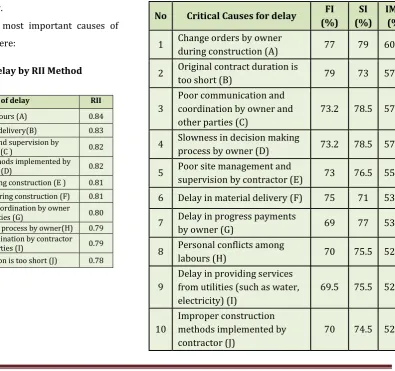
[image:3.595.168.564.412.783.2]Top 10 causes ranked by Importance Index (IMPI) technique
Table -2: Critical Causes of delay by IMPI Method
No Critical Causes for delay FI
(%) SI (%)
IMPI (%)
1 Change orders by owner
during construction (A) 77 79 60.83 2 Original contract duration is
too short (B) 79 73 57.67
3
Poor communication and coordination by owner and other parties (C)
73.2 78.5 57.47
4 Slowness in decision making
process by owner (D) 73.2 78.5 57.47 5 Poor site management and
supervision by contractor (E) 73 76.5 55.85 6 Delay in material delivery (F) 75 71 53.25
7 Delay in progress payments
by owner (G) 69 77 53.13
8 Personal conflicts among
labours (H) 70 75.5 52.85
9
Delay in providing services from utilities (such as water, electricity) (I)
69.5 75.5 52.48
10
Improper construction methods implemented by contractor (J)
© 2016, IRJET | Impact Factor value: 4.45 | ISO 9001:2008 Certified Journal | Page 1176
Chart -2: Critical Causes of Delay by IMPI Method
6.
CONCLUSION
Delays can be avoided or minimized when their causes are clearly identified. The aim of this report was to identify the delay factors in construction projects, since delays are considered to be a serious problem in the construction industry. The paper addressed the most significant factors and groups to cause delays.
According to the findings above, following points can be recommended in order to minimize and control delays in construction projects:
1) Advance arrangement of equipment’s should be made or equipment should purchase on rent.
2) The quality and experience of labor supply can have major impact on the projects. Unexperienced labor may lead to inefficient work and may cause accidents during construction.
3) Site management and supervision should be made in a correct manner. Administrative staff should be assigned to make necessary arrangements to complete the project
within specified time while satisfying required quality and estimated cost.
4) Approval of design documents should not be late, since it could delay the progress of work. Progress payments should be made on time to contractor to finance the work.
5) Finding out G.L. water pipe connection leakage and quickly take appropriate action consulting with structural engineer like (Pile foundation, providing impervious layer etc.)
7. ACKNOWLEDGEMENT
The Authors thankfully acknowledge to Mr J.D.Patel, Chairman, BITS edu Campus, Mr Dhruv.J.Patel, Vice Chairman, BITS edu Campus, Dr. N.D.Shah, Principal, Babaria Institute of Engineering College, Dr. L.S.Thakur, Head and Professor, Civil Engineering Department, Babaria Institute of Engineering College, for their motivations and infrastructural support to carry out this research.
8. REFERENCES
1. Aditi Dinakar “Delay Analysis in Construction Project” (Volume 4, Issue 5, May 2014)
2. Ashish D. Joshi1, Prof. Dr. S.D. Khandekar, “Project Management for Construction Projects: Improving Project Performance”(volume02 Issue: 03 | June-2015) 3. Arditi R.D., Akan G.T., Gurdamar S. (1985). “Reasons for
Delays in Public Projects in Turkey”. Construction Management and Economics. 3: 171-181.
4. Assaf, S.A., Al-Khalil, M. and A-Hazmi, M. (1995). “Causes of Delay in Large Building Construction Projects”. Journal of Management in Engineering. ASCE: 45-50.
© 2016, IRJET | Impact Factor value: 4.45 | ISO 9001:2008 Certified Journal | Page 1177 6. Dennis Daina R. and Meredith Jack R., “An analysis of
Process Industry Production and Inventory Management Systems”, Journal of Operations Management, 18 (2000) 683-699.
7. Desai Megha, Dr Bhatt Rajiv “A Methodology for Ranking of Causes of Delay for Residential Construction Projects in Indian Context” (Volume 3, Issue 3, March (2013)
8. Desai Megha, Rajiv Bhatt, “Critical Causes of Delay in Residential Construction Projects: Case Study of Central Gujarat Region of India “(Volume-4 Issue-4
,
Year of Publication: 2013)9. Kasim Narimah, Liwan Siti Radziah, Shamsuddin Alina, Zainal Rozlin and Kamaruddin Naadira che, “Improving on Site Material Tracking for Inventory Management in Construction Projects”, Proceedings International Conference of Technology Management, Business and Entrepreneurship, 2012
10. Patil Ashwini R. and Pataskar Smita J., “Analysing Material Management Techniques on Construction Project”, International Journal of Engineering and Innovative Technology, Volume-3 Issue-4, October 2013, 2277-3754
11. Patel Khyomesh V. and Prof. Chetna M. Vyas,“Construction Material Management on Project Site”, National Conference on Recent Trends in Engineering & Technology, May-2011
12. Patel Hemish A, Jayeshkumar Pitroda and J. J. Bhavsar, “A Review on Material Management through Inventory Management “, Journal of International Academic Research for Multidisciplinary, Volume-2 Issue-12, January 2015, 2320-5083.
13. Sugiharto Alwi ,Keith Hampson “IDENTIFYING THE IMPORTANT CAUSES OF DELAYS IN BUILDING CONSTRUCTION PROJECTS “(2003)
14. N.Hamzah,M.A.Khoiry, I. Arshad, W.H.W. Badaruzzaman, and N. M. Tawil “Identification of the Causes of Construction Delay in Malaysia”
Environmental, structural, Construction and Architectural Engineering Vol: 6, No: 12, 2012
15.
Sahari Salawati, Tinggi Michael and Kadri
Norlina, “Inventory Management in Malaysian
Construction Firm: Impact on Performance”, SIU
Journal of Management, Volume-2 Number-1,
June 2012, 2229-0044
16.