Balancing Network Load and Resources to Optimize
Energy Consumption in Homogeneous Wireless Sensor
Networks
Abdullah Al-Mamun Bulbul*,Md. Mizanur Rahman*, Dr. Md. Moniruzzaman*
Electronics and Communication Engineering Discipline, Khulna University Khulna-9208, Bangladesh
Abstract- The Wireless Sensor Networks (WSNs) are energy constraint as the nodes of WSN run by the batteries. Energy consumption of a node is higher when it operates as a Cluster Head (CH) or located far from the Base Station (BS). In non-cluster based WSN the nodes close to the BS consume less power and live longer life unlike the cluster based WSN where nodes in the distant cluster lives longer time. In both the methods network performance and coverage degrades overtime as nodes have uneven lifetime. Energy consumption optimization is required to synchronize the lifetime of the nodes with the whole network lifetime. In this paper we propose a network load and resources balancing algorithm to optimize energy consumption for a homogeneous WSN. The algorithm is run by the BS before the network starts its operation. Depending on the GPS position, battery energy and energy consumption rate per unit of data to be processed by each node, the BS prepares and broadcast the schedule of the nodes’ activity as a CH or child. Node operations are synchronized by their clocks. Simulation result shows that in this method, the nodes operate together for full network lifetime. This indicates optimum utilization of the WSN’s usable energy.
Keywords—WSN, Energy consumption optimization,
Homogeneous, Load Balancing
I. INTRODUCTION
ireless Sensor Networks (WSNs) are collection of sensor nodes organized into a network to co-operate each other to monitor conditions such as temperature, sound, vibration, pressure, motion or pollutants. It is critical to reenergize the battery powered WSN nodes deployed in remote areas. Thus optimization of energy consumption and utilization is a great issue in WSN.
WSNs can be deployed over a network in random or deterministic fashion. In unreachable remote area random deployment from the helicopter or airplane is convenient. But places like civil construction or in cities deterministic deployment is chosen. Our proposed method of energy consumption optimization was done for random deployment of the nodes but it is also applicable to deterministic networks. Sensor nodes can be grouped as: non-clustering approach and clustering approach. In non-clustering approach, every sensor node directly sends its data to the BS synchronously. This approach implies high power consumption for the sensors situated longer distance from BS compared to the nodes that are
close which makes WSN energy inefficient. However, in clustering approach, all the nodes are grouped in clusters to cover smaller regions. Clustering in WSN has advantages such as data aggregation support [1], data gathering facilitation [2], organizing a suitable structure for scalable routing [3] and efficient propagation of data in the network [4].CH is chosen from each cluster at any instant of time. Every child sensors send data to its CH and CH sends data to BS. This approach is energy efficient as sensors does not need to send data to longer distance. Selection of CH is an important issue to make network more energy efficient. In this paper, we propose a CH selection algorithm that optimizes the energy utilization of all the nodes and keeps them in operation together till the full network lifetime. This ensures 100% utilization of the maximum usable power of the nodes. Depending on the GPS position, battery energy and energy consumption rate per unit of data to be processed by each node, the BS prepares and broadcast the schedule of the nodes’ activity as a CH or child. In section II clustering and routing approaches proposed till date has been discussed. Theory of our proposed method has been discussed in section III. Section IV contains simulation results and discussions. Finally section V contains the concluding remarks and future work.
II. LITERATURE REVIEW
WSN structure broadly fall into two major categories: non-clustering and non-clustering. In non-non-clustering approach, where nodes communicate directly with the BS, far nodes lose their energy quickly compared to the nodes closer to the BS. Moreover in non-clustering approach BS needs to process data from all the nodes either in parallel or in a time sharing basis. However parallel process increases load to the BS and time sharing policy introduce delay to the network. For improving the energy efficiency and optimizing the delay, clustering policy is widely accepted.
To design energy efficient WSN, a cluster head based network has been proposed in Low Energy Adaptive Clustering Hierarchy (LEACH) [5] algorithm. In LEACH, nodes are randomly chosen to be cluster head without considering residual energy and distance from the center of the clusters. In this process cluster head may be chosen which has low energy or is far from the cluster center causing higher energy consumption for some child nodes and the CHs.
Different methods have been proposed to minimize the limitations of LEACH. In centralized-LEACH (LEACH-C) [6] algorithm, nodes’ location and their residual energy have been considered to solve the problem of LEACH. This algorithm involves re-cluster formation at the beginning of each round with equal number of nodes which is not energy efficient clustering. Moreover, re-clustering increases setup overhead at the beginning of each round. Fixed number of cluster-LEACH (LEACH-F) [7] algorithm uses fixed clusters to avoid re-clustering. These fixed clusters are formed using LEACH-C algorithm only once. Hence this algorithm decreases the setup overhead at the beginning of each round. In LEACH-F algorithm, LEACH algorithm has been followed in steady state phase. Though LEACH-C and LEACH-F increase the energy efficiency of LEACH, user interaction is required to set the threshold. Genetic algorithm-based-LEACH (LEACH-GA) [8] algorithm has been proposed with the motto of omitting the involvement of user defined threshold function. This approach uses a preparation phase prior to the set-up phase of the first round of the network activity to gather information about node status of being a candidate of CH or not, identifications (IDs) and distances from BS. This information is sent to BS to determine the threshold probability of the CH selection mechanism. The algorithm appreciably increases network life-time compared with LEACH but does not account for the residual energy of nodes. LEACH-RA [9] is an improved version of LEACH. Based on residual energy and average minimum distance between nodes, this algorithm proposed a CH selection mechanism. But in LEACH and it’s all modified algorithms, some nodes remain alive while they cannot find alive nodes near the BS to route their data to BS. Hence residual energy in the alive nodes comes to no use. In [10], clustering overhead has been mentioned as a limitation of LEACH. An algorithm has also been proposed in this paper named Power-Efficient Gathering in Sensor Information Systems (PEGASIS) to avoid clustering overhead. But this algorithm requires dynamic topology adjustment which means that a node needs to know its neighboring nodes position to decide where to route its data. Though PEGASIS decreases clustering overhead compared to LEACH, but dynamic topology adjustment introduces significant overhead.
Hybrid Energy Efficient Distributed Protocol (HEED) [11] is a stochastically CH choosing algorithm. In this algorithm, nodes are classified into minimum degree nodes and maximum degree nodes based on residual energy as primary parameter and network topology features (e.g. node degree, distances to neighbors) as secondary parameters. Depending on the average minimum reachable power (AMRP), a cluster is formed in HEED. But it may select the low energy node as cluster head in heterogeneous environments which may cause the death of the node faster. LEACH, PEGASIS and HEED are single-level clustering algorithm in the sense that the CHs of every cluster communicate the BS directly i.e., not by hop. The advantage of multi-level clustering approach over single-level approach has been shown in Energy efficient multi-level clustering algorithm [12] (EEMC). It employs a CH choosing scheme which increases network performance compared to LEACH. But it only considers uniform node distribution. Besides here some nodes die before the end of the network life-time and some nodes may remain
alive far from BS with significant power which causes energy inefficiency.
From the review of the clustering methods, it is evident that although the network life-time increases the numbers of alive nodes are decreased in number causing reduction in effective coverage area. To get rid of this problem, we propose a network load and resources balancing algorithm to optimize energy consumption in homogeneous WSN that ensures optimum energy efficiency and keeps all the nodes alive for whole network lifetime.
III. SYSTEM DESIGN
Sensor Node Deployment
We have considered a set of sensor nodes of equal power deployed randomly within a cluster of radius meters. Figure 1 shows the random deployment of the nodes for our simulation.
Figure1: Experimental random deployment plan of 20 nodes.
Input Parameters
The BS will use the following input parameters for simulation of the proposed algorithm depending on the deployment model shown in figure 1:
i. GPS position of nodes ii. Initial energy of each node
iii. Energy consumption to process each unit of data by each node
BS collects the input parameter values as explained below.
GPS position of nodes
The location of each node is collected by the base station (BS) within its recommended area through the Global Positioning System (GPS) which is a space-based satellite navigation system that provides location and time information in all weather conditions.
Initial energy of each node
used which initial energy storage and consumption rate for data processing is known to the BS beforehand.
Expected data load of each node
Expected data load of a node means the amount of power consumed for every unit of data processing and transmission. When nodes act as head it collects data from all the Childs in TDMA process. The sensed data is transmitted to the BS. Therefore, a child node is considered to send a unit of data at a time to its CH. Hence, the amount of energy consumed for transmitting 1 unit of data to the cluster head at a distance ‘d’ from the child node according to [6] is given in equation (i):
𝑃
𝑛𝑜𝑑𝑒=
𝑃
𝐸𝑙𝑒𝑐+
𝑃
𝑡𝑑
2 (ι)Where,
𝑃
𝐸𝑙𝑒𝑐 denotes the energy consumption due to digital coding, modulation, filtering and spreading of signal;𝑃
𝑡denotes energy consumption by the transmitter power amplifier per unit of data per unit distance.As the CH has to receive data from all of its child nodes and transmit data of its own and all of its child’s to the BS, the amount of energy consumed by the CH to receive (N-1) units of data from child and send N units of data to the BS at a distance D from CH is given in (ii):
𝑃
𝐶𝐻=
𝑁
(
𝑃
𝐸𝑙𝑒𝑐+
𝑘𝐷
2) +
𝑃
𝑟𝑥(N
−
1)
(ιι)
Here, 𝑁 denotes the number of sensor nodes in a cluster and 𝑃𝑟𝑥 defines the amount of power consumed to receive 1 unit of data.
Power Consumption Map for the Nodes
BS constructs a power consumption table of all the nodes based on the input parameters. This table is considered as a matrix. Each column of the matrix is multiplied by a random variable. Then each row element is added and made equal to the energy of the corresponding row node. For example, consider a WSN consisting of only 3 nodes. Firstly, power consumption table is constructed based on the input parameters. Then simultaneous linear equations are made up as shown in equation (iii)~(v):
1 3 13 2 12 1
11
x
a
x
a
x
b
a
+
+
=
(iii)2 3 23 2 22 1
21
x
a
x
a
x
b
a
+
+
=
(iv)3 3 33 2 32 1
31
x
a
x
a
x
b
a
+
+
=
(v)Where,
𝑎
𝑚𝑛≝
Power consumed by mthnode to transmit every unit of data to the BS when(
𝑚
=
𝑛
).
𝑎
𝑚𝑛≝
Power consumed by mthnode to transmit every unit of data to the𝑛
𝑡ℎnode when(
𝑚 ≠ 𝑛
)
and𝑛
is CH.𝑏
𝑚= Initial Power of mthnode.𝑥
𝑖= Data cycles for which node will be cluster head.The number of simultaneous equations and variables will be equal to the number of the nodes.
Scheduling CH sequence and cycles
Gauss elimination with partial pivoting method was used to determine the number of cycles a node remains CH and the number of cycles it operates as simple node to ensure that all the nodes can achieve equal lifetime to that of the network lifetime. This is done in the following two steps.
i. Forward elimination of unknowns ii. Back substitution
Forward Elimination of Unknowns
A coefficient matrix is formed from the simultaneous linear equations. This coefficient matrix is transferred into an upper triangular matrix in this step. For example, equations (iii) to (v) manipulated to take the following forms for further simplification after forward elimination of unknown.
1 3 13 2 12 1
11
x
a
x
a
x
b
a
+
+
=
(vi)' 2 3 ' 23 2 '
22
x
a
x
b
a
+
=
(vii)" 3 3 " 33
x
b
a
=
(viii)Where, n m mn mn
a
a
a
a
a
1 11 1 '=
−
( ix) ' 23 ' 22 ' 32 ' 33 " 33a
a
a
a
a
=
−
(x)Back Substitution
To find the values of the variables
𝑥
𝑖in any network the last equation in the system of equations will have only one unknown variable as shown in the above example in equation (viii). For the above three node example equation (viii) i.e. last equation from simultaneous equations as found by in Forward Elimination of Unknowns step we can find:" 33 '' 3
a
b
x
i=
(xi)Substituting the determined values of unknown variables from bottom to top sequentially, all the values of unknown variables has been determined. Back Substitution can be represented for all equations by the following formulas (xii) & (xiii):
) 1 ( ) 1 ( − −
=
n nn n n na
b
x
(xii)And ) 1 ( 1 ) 1 ( ) 1 ( − + = − −
−
∑
=
i ii n i j j i ij i i ia
x
a
b
x
(xiii)Therefore CH sequence and normally operating cycles of every node along with the lifetime of each node and total network can be determined.
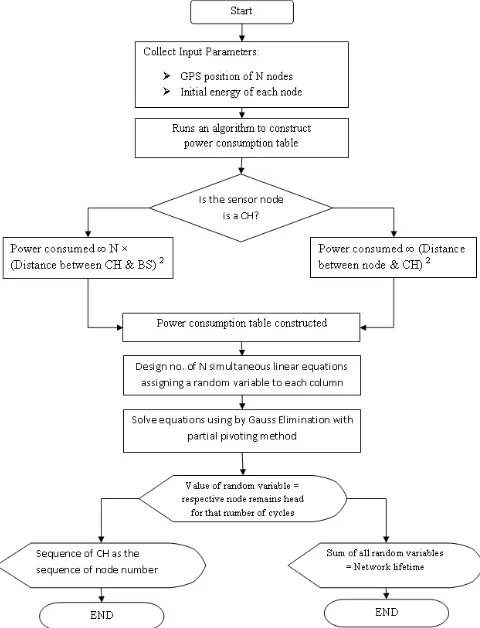
Figure 2: Flow Chart of the algorithm for optimization of energy consumption.
Cluster head selection process
According to the flow chart given in figure 2 the BS runs a program based on GPS position of the nodes, energy consumption per unit data load and initial energy of each node and thereby calculates the sequences and the number of data cycles for which each node will operate as CH to keep itself alive to make its lifetime equal to all other nodes in the WSN. This information is broadcasted by the BS and every node stores the information in its memory. Every node maintains its own clock and act as head when its turn comes. Besides, the sum of the lifetime of all the CHs’ gives the total lifetime of each node as well as the total network. All the nodes die together at the end of network lifetime. Thus no energy is lost in any node as residual energy.
IV. SIMULATION RESULTS
In this section, the performance of the proposed load and resource balancing method to optimize energy consumption has been evaluated by simulation results. We have also compared our proposed algorithm with fixed threshold based LEACH [5] algorithm that chooses CHs depending on fixed threshold level of the nodes. Both our proposed algorithm and LEACH are simulated, analyzed and compared using MATLAB software. We have considered random deployment of sensors in a single
cluster. Figure 1 shows a single clustered WSN of 20 randomly deployed sensor nodes with a radius of R=500 meters.
[image:4.612.40.280.103.417.2]Figure 3: Graphical Representation of the Life-Time of Nodes in fixed threshold method.
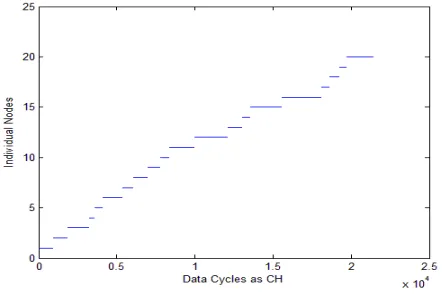
[image:4.612.325.547.295.478.2]Figure 5: CH sequence in proposed method
[image:5.612.47.274.554.677.2]Figure 5 represents the data cycles for which each node are a cluster head. It is seen that they become CH for uneven number of cycles to confirm their evenly consumption of stored energy and thus keeps supporting the whole network together till the end.
Figure 6: Graphical comparison between Threshold method and proposed method
Figure 7: Required time of program simulation for different number of nodes
In figure 6 a comparison of network and node lifetime for 20 nodes has been performed between our proposed load and resource balancing method to optimize energy consumption and conventional fixed threshold method. It can be seen that in the LEACH method although the network lifetime is more than that of the proposed method, number of alive network nodes start decreasing after 5300 cycles of data communication cycles. This decrease in the number of nodes decreases the coverage area of the network. Whereas in our proposed load balancing and resource balancing method method, all the nodes support the network for full network lifetime and no node energy is wasted as residual energy which makes the curve of network lifetime versus number of alive node steep reflecting 100% energy efficient network in terms of no residual energy lost in a premature death of a node.
Finally in figure 7 we have shown the time taken by the BS to run the algorithm for various sizes of WSNs in terms of number of nodes deployed. Time taken by a network of size is 270 seconds. We argue that this time is reasonable for an initial setup because in the proposed method time consumption would not occur to reassign the node duties once the network is on the fly.
V. CONCLUSION
In this paper a new algorithm for optimization of energy efficiency by network load and resource balancing has been proposed and compared with LEACH. In our proposed method all the nodes support the full network coverage area by balancing the network load by assigning head responsibility to each node according to their position and residual energy. Whereas in LEACH method nodes does not lives till the end of the network lifetime causing less coverage and more energy lost in the nodes as residual energy as time progress. As in the proposed method all the nodes support the network for full network lifetime no node energy is wasted as residual energy which makes the curve of network lifetime versus number of alive node steep reflecting 100% energy efficient network in terms of no residual energy lost in a premature death of a node and complete coverage till to the end.
VI. FUTURE WORK
In our proposed method, we have discussed how to achieve better energy efficiency and full network coverage throughout the full network lifetime. Due to shortage of time we have considered the whole network to be a single cluster and small number of nodes. In our future work we shall extend the method for multiple clusters WSN and analyses the algorithm complexity as well.
VII. REFERENCES
[1]. J. Amiri, M. Sabaei. A new energy efficient data gathering approach in Wireless Sensor Networks. s.l. : Wireless Communication - 2011. p. 730. [2]. E. H. JUNG, J. W. CHOI. A Cluster Head Selection Algorithm Adopting
Sensing-Awareness and Sensor Density forWireless Sensor Networks. s.l. : IEICE TRANS. COMMUNICATION, SEPTEMBER 2007. Vols. E90–B, NO.9.
[3]. M. Ali, S.i K. Ravula. REAL-TIME SUPPORT AND ENERGY EFFICIENCY IN WIRELESS SENSOR NETWORKS. S-301 18 Halmstad, Sweden : School of Information Science, Computer and Electrical Engineering Halmstad University Box 823, January 2008.
[5]. W. Heinzelman, A. Chandrakasan, H. Balakrishnan. Energy-efficient communication protocol for wireless microsensor networks. s.l. : Proceedings of the 33 rd International Conference on System Science (HICSS'00), Hawaii, U. S. A., January 2000.
[6]. W.B. Heinzelman, A.P. Chandrakasan, H. Balakrishnan. An application-specific protocol architecture for wireless microsensor networks. s.l. : IEEE transactions on Wireless Communications , 2002. pp. 660-670. Vol. 1(4). [7]. W.Heinzelman. Application-Specific Protocol Architectures for Wireless
Networks. s.l. : PhD thesis, Massachusetts Institute of Technology, June 2000.
[8]. J.L. Liu, C. V. Ravishankar. LEACH-GA: Genetic algorithm-based energy-efficient adaptive clustering protocol for wireless sensor networks. s.l. : International Journal of Machine Learning and Computing, April, 2011. Vol. 1 ( No. 1).
[9]. C. Fu, W. Wei, A. Wei. Study on an Improved Algorithm based on LEACH Protocol. s.l. : Information Technology Journal, 2012. pp. 605-612. Vol. 11. [10]. S. Lindsey, C. S. Raghavendra. Data gathering algorithms in sensor
networks using energy metrics. s.l. : IEEE Transactions on Parallel and Distributed Systems, 2002. pp. 924 - 935 . Vol. 13 (issue 9).
[11]. Younis, O. Fahmy, Sonia. HEED: A hybrid, energy-efficient, distributed.
s.l. : IEEE Transactions on Mobile Computing., Oct.-Dec. 2004. pp. 600-669. Vols. 3 , Issue: 4.
[12]. Y. Jin, L. Wang, Y. Kim, X. Yang. EEMC: An energy efficient multi-level clustering algorithm for large-scale wireless sensor networks. [ed.] F. Cuomo. s.l. : International Conference on Wireless Communications,
Networking and Mobile Computing, 2006. WiCOM 2006., 22-24 Sept. 2006. pp. 1- 4.
AUTHORS
First Author – Abdullah Al-Mamun Bulbul, Student, Electronics and Communication Engineering Discipline, Khulna University, Bangladesh. Email: [email protected]
Second Author – Md. MizanurRahman, Associate Professor, Electronics and Communication Engineering Discipline, Khulna University, Bangladesh. Email: [email protected]
Third Author – Dr. Md. Moniruzzaman, Professor, Electronics and Communication Engineering discipline, Khulna University, Bangladesh. Email: [email protected]