© 2019, IRJET | Impact Factor value: 7.211 | ISO 9001:2008 Certified Journal
| Page 1472
Process Parameter Optimization for FDM 3D Printer
Yash Magdum
1, Divyansh Pandey
2, Akash Bankar
3, Shantanu Harshe
4, Vasudev Parab
5,
Mr. Mahesh Shivaji Kadam
61,2,3,4,5
Student, Department of Mechanical Engineering, SGI, Atigre, Kolhapur, India
6
Assistant Professor, Department of Mechanical Engineering, SGI, Atigre, Kolhapur, India
---***---Abstract - Fused 3D printing technology is an additive manufacturing method used for manufacturing of solid Three Dimensional parts. It requires less human efforts and manufacturing time for parts is less. Different parameters such as Layer Thickness, Shell Thickness and Fill Density affect the mechanical properties such as Surface Roughness, Hardness and Tensile Strength of 3D Printed Parts. On this basis, this paper focuses on “Optimization of Process Parameters for 3D Printing Operation on FDM 3D Printer”. On the basis of optimized parameters the manufacturing time and mechanical properties will be enhanced. It provides proper methodology for optimized 3D Printing. Experimental results are comparable to those for different variations in parameters.
Key Words: 3D printing, design of experimens, material selection, taguchi DOE.
1. INTRODUCTION
The 3D printing or additive manufacturing is a process of making three dimensional solid objects from a digital file. 3D printing is used in both rapid prototyping and additive manufacturing. Objects can be of almost any shape or geometry and typically are produced using electronic data source such as an Additive Manufacturing File (AMF) file. Fused deposition modelling was developed by S. Scott Crump, co-founder of Stratasys, in 1988. It is an additive manufacturing process and is one of the most common techniques used for 3D printing. It is also known as solid-based Additive Manufacturing (AM) technology.
In fused deposition modelling, a plastic material filament is fed through a heated moving head that melts and extrudes it depositing it, layer after layer, in the desired shape. A moving platform lowers after each layer is deposited. Unlike material removed from a stock in the conventional machining process, 3D printing or Additive Manufacturing builds a three-dimensional object from a computer-aided design (CAD) model or AMF file, usually by successively adding material layer by layer. The term "3D printing" originally referred to a process that deposits a binder material onto a powder bed with inkjet printer heads layer by layer. For this kind of 3D printing technology additional vertical support structures are needed to sustain overhanging parts.
2. METHODOLOGY
A. Materials and Methods
Raw material which is used in the study is Polylactic Acid Resins (PLA) of size 1.75mm diameter, which is one of the common filaments used for 3D Printing. PLA is one of the thermoplastics used commonly in FDM 3D Printers which has several characteristics like, it has low melting point so it requires less temperature from 200O c-300O c to print as well as it is less toxic compare with other thermoplastics.
The 3D printing machine (I3D Minds, INDIA) is equipped with number of useful features, such as automated setup and automated manufacturing, like giving program in form of codes and getting 3D part printed. It has maximum built volume of 190x190x180 mm and nozzle diameter is 0.4 mm. The samples were designed by using ‘Solid works-2017’ and the slicing program used for preparing samples is ‘CURA ‘.
B. Specimen preparation
© 2019, IRJET | Impact Factor value: 7.211 | ISO 9001:2008 Certified Journal
| Page 1473
[image:2.595.316.547.106.314.2]the unconditional effect of printing parameters on physical and mechanical properties of the printed specimens.
Table -1: Specimen printing parameter variations.
Specimen Density Layer
Height Shell Thickness
1 50 0.1 0.6
2 50 0.2 0.8
3 50 0.3 1.0
4 75 0.1 1.0
5 75 0.2 0.8
6 75 0.3 0.6
7 100 0.1 0.8
8 100 0.2 1.0
9 100 0.3 0.6
3. Discussion:
A. Different process parameters of specimens:
Layer height (mm):
As this additive manufacturing method uses layer by layer printing, the Layer Height Parameter plays an important role in variation in mechanical as well as physical properties. Layer Height varies from 0.06 to 0.4mm for 0.4mm diameter nozzle.
Shell thickness (mm):
The shell thickness is the thickness of outer shell of the part. This is used in combination with the fill density which is selected for printing to increase the mechanical as well as physical properties.
Infill density (%):
It is the density of the part which is to be printed. For a solid part use 100% and for an empty part use 0% fill ensity. A value around 20 is usually enough. This won’t affect the outside of the print and adjusts how strong the part becomes.
Printing speed (mm/s):
Printing speed is the speed at which printing happens by the movement of printing head. A well-adjusted printer can reach 150mm/s, but for good quality prints it need to print slower. Printing speed depends on lot of B. Self-supporting-based strategy
4. Manufacturing Process
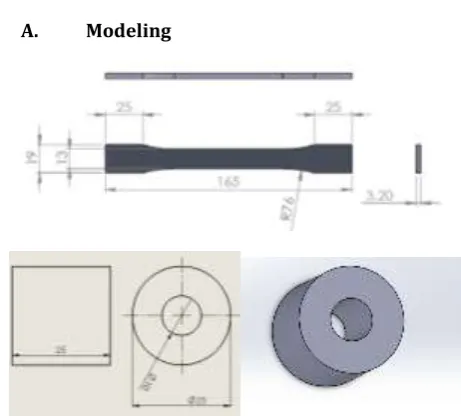
A. Modeling
Fig. 1 Cad modeling
3D printable models may be created with a computer-aided design (CAD) package, via a 3D scanner, or by a plain digital camera and photogrammetry software. 3D printed models created with CAD result in reduced errors and can be corrected before printing, allowing verification in the design of the object before it is printed. The manual modelling process of preparing geometric data for 3D computer graphics is similar to plastic arts such as sculpting. 3D scanning is a process of collecting digital data on the shape and appearance of a real object, creating a digital model based on it.
B. Printing
Fig -2: Specimens Manufacturing
Before printing a 3D model from an STL file, it must first be examined for errors. Most CAD applications produce errors in output STL files, of the following types:
1. Holes;
2. Faces normal;
[image:2.595.48.276.149.314.2] [image:2.595.327.536.491.644.2]© 2019, IRJET | Impact Factor value: 7.211 | ISO 9001:2008 Certified Journal
| Page 1474
4. Noise shells;
5. Manifold errors.
A step in the STL generation known as "repair" fixes such problems in the original model. Generally STLs that have been produced from a model obtained through 3D scanning often have more of these errors. This is due to how 3D scanning works-as it is often by point to point acquisition, reconstruction will include errors in most cases.
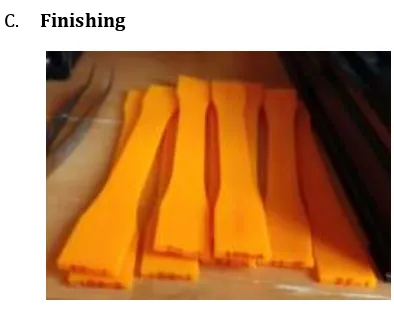
[image:3.595.52.249.213.368.2]C. Finishing
Fig-3: Finishing of specimen
Though the printer-produced resolution is sufficient for many applications, printing a slightly oversized version of the desired object in standard resolution and then removing material with a higher-resolution subtractive process can achieve greater precision.
5. Design of Experiments.
A. Taguchi DOE:
Taguchi design, or an orthogonal array, is a method of designing experiments that usually requires only a fraction of the full factorial combinations. An orthogonal array means the design is balanced so that factor levels are weighted equally. Because of this, each factor can be evaluated independently of all the other factors, so the effect of one factor does not influence the estimation of another factor. Dr.Genichi Taguchi is regarded as the foremost proponent of robust parameter design, which is an engineering method for product or process design that focuses on minimizing variation and/or sensitivity to noise.
B. Taguchi Method
In the optimization of 3D printer there are THREE Parameters (Factors) THREE Levels.
For Full Factorial method the number of experiments is 27.
For Taguchi Method for THREE factors THREE levels.
For maximization of Tensile Strength.
For maximization of Strength (Hardness).
For Larger -the-Better
S/FL=-10log10 [⅀ (1/y2)/n]
For minimization of Surface Roughness
For Smaller-the-Better
[image:3.595.312.536.371.731.2]S/FS=-10log10 [(⅀y2)/n]
Table -2: No. of parameters and levels.
Factors Levels
1 2 3
Fill Density 50 75 100
Layer Thickness 0.1 0.2 0.3
Shell Thickness 0.6 0.8 1.0
Table -3: Experiment no. and Control Factors.
Experiment
No. Control Factors A B C
1 1 1 1
2 1 2 2
3 1 3 3
4 2 1 3
5 2 2 1
6 2 3 2
7 3 1 2
8 3 2 3
9 3 3 1
6. Testing Techniques
A. Tensile Test
[image:3.595.317.551.380.521.2] [image:3.595.318.492.544.733.2]© 2019, IRJET | Impact Factor value: 7.211 | ISO 9001:2008 Certified Journal
| Page 1475
A universal testing machine (UTM), also known as a universal tester, materials testing machine or materials test frame, is used to test the tensile strength and compressive strength of materials. An earlier name for a tensile testing machine is a tensometer. The "universal" part of the name reflects that it can perform many standard tensile and compression tests on materials, components, and structures (in other words, that it is versatile).
Components:
Several variations are in use. Common components include:
Load frame - Usually consisting of two strong supports for the machine. Some small machines have a single support.
Load cell - A force transducer or other means of measuring the load is required. Periodic calibration is usually required by governing regulations or quality system.
Cross head - A movable cross head (crosshead) is controlled to move up or down. Usually this is at a constant speed: sometimes called a constant rate of extension (CRE) machine. Some machines can program the crosshead speed or conduct cyclical testing, testing at constant force, testing at constant deformation, etc. Electromechanical, servo-hydraulic, linear drive, and resonance drive are used.
Means of measuring extension or deformation - Many tests require a measure of the response of the test specimen to the movement of the cross head. Extensometers are sometimes used.
Output device - A means of providing the test result is needed. Some older machines have dial or digital displays and chart recorders. Many newer machines have a computer interface for analysis and printing.
Conditioning - Many tests require controlled conditioning (temperature, humidity, pressure, etc.). The machine can be in a controlled room or a special environmental chamber can be placed around the test specimen for the test.
Test fixtures, specimen holding jaws, and related sample making equipment are called for in many test methods.
B. Hardness Test
Fig-5: Shore-A Durometer.
The Shore Durometer is a device for measuring the hardness of a material, typically of polymers, elastomers, and rubbers
Higher numbers on the scale indicate a greater resistance to indentation and thus harder materials. Lower numbers indicate less resistance and softer materials.
The term is also used to describe a material's rating on the scale, as in an object having a “‘Shore Durometer’ of 90.”
The scale was defined by Albert Ferdinand Shore, who developed a suitable device to measure hardness in the 1920s. It was neither the first hardness tester nor the first to be called a Durometer (ISV duro- and -meter; attested since the 19th century), but today that name usually refers to Shore hardness; other devices use other measures, which return corresponding results, such as for Rockwell hardness.
4.2.1 Mititoyo SJ-210
© 2019, IRJET | Impact Factor value: 7.211 | ISO 9001:2008 Certified Journal
| Page 1476
FEATURES
• The 2.4-inch colour graphic LCD provides excellent readability and an intuitive display that is easy to use. The LCD also includes a backlight for improved visibility in dark environments.
• The Mititoyo SJ-210 can be easily operated using the buttons on the front of the unit and under the sliding cover.
• Up to 10 measurement conditions and one measured profile can be stored in the internal memory.
• An optional memory card can be used as an extended memory to store large quantities of measured profiles and conditions. Access to each feature can be password protected which prevents unintended operations and allows you to protect your settings.
• The display interface supports 16 languages, which can be freely switched.
• An alarm warns you when the cumulative measurement distance exceeds a preset limit.
• The Mititoyo SJ-210 complies with the following standards: JIS (JIS-B0601-2001,
JIS-B0601-1994, JIS B0601-1982), VDA, ISO-1997 and ANSI.
• In addition to calculation results, the Mititoyo SJ-210 can display sectional calculation results and assessed profiles, load curves, and amplitude distribution curves.
7. CONCLUSION
On the basis of varying different parameters in different level a Design of Experiments are carried out which can be used for preparation of specimens for optimization of 3D printed products for different parameters of 3D printing. Testing machines are selected for testing mechanical properties such as Tensile strength, Hardness and Surface Roughness of 3D printed specimens.
REFERENCES
[1] Elizabeth Matias, Bharat Rao, 3D Printing: On Its Historical Evolution and the Implications for Business, PICMET '15: Management of the Technology Age ,(2015) (Pg.551-558)
[2] Dina R. Howeidy , The Impact of Using 3D Printing on Model Making Quality and Cost in the Architectural Design Projects, International Journal of Applied Engineering Research ISSN 0973-4562 Volume 12, (2017) (pg.987-994).
[3] Mamta Junejaa, Niharika Thakura, Dinesh Kumara, Ankur Guptab, Babandeep Bajwac, Accuracy in dental surgical guide fabrication using different 3-D printing
techniques, Additive Manufacturing, (2018), (Pg.243-255).
[4] Barry Berman, 3-D printing: The new industrial revolution, Kelley School of Business, Indiana University. All rights reserved, (2011) (Pg.155-162).
[5] Wei Dai Vian, PhD and Nancy L. Denton, Hardness Comparison of Polymer Specimens Produced with Different Processes , PE School of Engineering Technology Purdue University Kokomo and West Lafayette, Indiana, (2015) (Pg.1312-1314).
[6] Wenyong Liu, Ying Li, Jinyu Liu, Xufeng Niu, Yu Wang and Deyu Li, Application and Performance of 3D Printing in Nanobiomaterials, Key Laboratory for Biomechanic sand Mechanobiology of Ministry of Education, School of Biological Science and Medical Engineering, BeihangUniversity,Beijing100191,China, (2014)(Pg.1-7)
[7] Nathaniel Hudson1, Celena Alcock2, Parmit K. Chilana1, Understanding Newcomers to 3D Printing: Motivations, Workflows, and Barriers of Casual Makers , 1Management Sciences University of Waterloo Waterloo, ON Canada {ndphudso, pchilana} 2Drama and Speech Communication University of Waterloo Waterloo, ON Canada(2016)(Pg. 384-396)
[8] Yingying Xuea, Xinfu Wanga, Wen Wanga, Xiaokang Zhonga, Fusheng Hana,Compressive property of Al-based auxetic lattice structures fabricated by 3D printing combined with investment casting, aKey Laboratory of Materials Physics, Institute of Solid State Physics, Chinese Academy of Sciences, Hefei, Anhui 230031, China bUniversity of Science and Technology of China, Hefei, Anhui 230026, China(2018)(255-262)
[9] Chelsea Schelly, GeraldAnzalone, BasWijnen, JoshuaM.Pearce , Open-source 3-D printing technologies for education: Bringing additive manufacturing to the classroom,(2015)(Pg. 1-12)
[10] Nadim S. Hmeidat, James W. Kemp, Brett G. Compton, High-strength epoxy nanocomposites for 3D printing, Mechanical, Aerospace, and Biomedical Engineering Department University of Tennessee, Knoxville Knoxville, TN 37996 USA, (2018)(1-36)
[11] Wei Dai Vian, PhD and Nancy L. Denton, Hardness Comparison of Polymer Specimens Produced with Different Processes, School of Engineering Technology Purdue University Kokomo and West Lafayette, Indiana, (2018)
© 2019, IRJET | Impact Factor value: 7.211 | ISO 9001:2008 Certified Journal
| Page 1477
BIOGRAPHIES
Y D. Magdum, pursuing B.E degree in Mechanical Engineering from Shivaji University, Kolhapur, India, in 2018.
D L. Pandey, pursuing B.E degree in Mechanical Engineering from Shivaji University, Kolhapur, India, in 2018.
A S. Bankar, pursuing B.E degree in Mechanical Engineering from Shivaji University, Kolhapur, India, in 2018.
S S. Harshe, pursuing B.E degree in Mechanical Engineering from Shivaji University, Kolhapur, India, in 2018.
V A. Parab, pursuing B.E degree in Mechanical Engineering from Shivaji University, Kolhapur, India, in 2018.