1 Journal of Medical Internet Research
Randomised controlled trial to assess feasibility and acceptability of web-based enhanced relapse prevention for bipolar disorder (ERPonline)
Lobban, Fiona. PhD. Spectrum Centre for Mental Health Research, Faculty of Health of Medicine, Lancaster University, LA14YW, UK
Dodd, Alyson. L., PhD. Spectrum Centre for Mental Health Research, Faculty of Health of Medicine, Lancaster University, LA14YW, UK and Department of Psychology, Northumbria University, NE18ST, UK.
Sawczuk, Adam P. Spectrum Centre for Mental Health Research, Faculty of Health of Medicine, Lancaster University, LA14YW, UK
Asar, Ozgur. PhD. CHICAS Faculty of Health of Medicine, Lancaster University, LA14YW, UK and Department of Biostatistics and Medical Informatics, Acibadem University, Istanbul, Turkey
Dagnan, Dave. PhD. Cumbria Partnership NHS Foundation Trust, Penrith, Cumbria, CA11 7QQ
Diggle, Peter J., PhD. CHICAS Faculty of Health of Medicine, Lancaster University, LA14YW, UK
Griffiths, Martin. Spectrum Centre for Mental Health Research, Faculty of Health of Medicine, Lancaster University, LA14YW, UK
Honary, Mahsa. PhD. Spectrum Centre for Mental Health Research, Faculty of Health of Medicine, Lancaster University, LA14YW, UK
Knowles, Dawn. Spectrum Centre for Mental Health Research, Faculty of Health of Medicine, Lancaster University, LA14YW, UK
Long, Rita. Spectrum Centre for Mental Health Research, Faculty of Health of Medicine, Lancaster University, LA14YW, UK
Morriss, Richard. MD. Department of Psychiatry and Applied Psychology, Institute of Mental Health, University of Nottingham, Nottingham, NG7 2TU, UK
Parker, Rob. Spectrum Centre for Mental Health Research, Faculty of Health of Medicine, Lancaster University, LA14YW, UK
Jones, Steve H. PhD. Spectrum Centre for Mental Health Research, Faculty of Health of Medicine, Lancaster University, LA14YW, UK
2
Abstract
Background: Interventions that teach people with Bipolar Disorder (BD) to recognise and respond to early warning signs of relapse are NICE recommended but implementation in clinical practice is poor. Objective: This study tests the feasibility and acceptability of a randomised controlled trial to
evaluate an online enhanced relapse prevention intervention (ERPonline), and reports preliminary evidence of effectiveness.
Methods: Single blind, parallel primarily online randomised controlled trial (n=96) over 48 weeks comparing ERPonline plus usual treatment to waitlist (WL) control plus usual treatment for people with BD recruited through National Health Services, voluntary organisations, and media.
Randomisation was independent, minimised on number of previous episodes (<8,8-20,21+). Primary outcomes were feasibility and acceptability assessed by rates of study recruitment and retention, levels of intervention use, adverse events and participant feedback. Process and clinical outcomes were assessed by telephone and online and compared using linear models with intention-to-treat analysis.
Results: Two hundred and eighty people registered interest online, from which ninety-six met inclusion criteria, consented and were randomised (49 to WL, 47 to ERPonline) over seventeen months, with 80% retention in telephone and online follow up, except week 48 online (76%). Acceptability was high for both ERPonline and trial methods. ERPonline cost approximately £19,340 to create, and £2176 per year to host and maintain the site. Qualitative data highlighted the
3
Conclusions: ERPonline offers a cheap accessible option for people seeking ongoing support
following successful treatment. However, given high functioning and low relapse rates in this study, testing clinical effectiveness for this population would require very large sample sizes. Building in human support to use ERPonline should be considered.
Funding: National Institute of Health Research (NIHR) under the Research for Patient Benefit (RfPB) Programme (Grant Reference Number PB-PG-0211-10001).
Declaration of interest: The ERPonline intervention was developed by the authors and therefore this is not an independent evaluation
Trial registration number: ISRCTN56908625.
4
Introduction
Bipolar Disorder (BD) is a lifelong mental health condition characterised by extreme fluctuating mood including recurrent episodes of depression and mania, that generally starts in adolescence and effects approximately 1-1.5% of adults worldwide [1]. The impact of BD on employment and
relationships can be devastating, and the condition has high financial costs, estimated at £5.2 billion annually in England alone [2]. Preventing relapse is a key goal of most interventions for Bipolar Disorder (BD). Interventions that teach people to recognise and respond to early warning signs are recommended by clinical guidelines worldwide [3-5] but implementation in routine clinical practice is poor [6]. Enhanced Relapse Prevention (ERP), a structured manualised intervention for frontline care staff, has shown significant benefit and is well received by patients and staff [7]. However, delivered face-to-face it will only ever be available to a small percentage of people with BD due to low rates of psychological intervention provision even among those who remain in secondary care services. Here we test the feasibility and acceptability of an online version of ERP: ERPonline. Online interventions in mental health offer the potential to: broaden access, reduce waiting times, delivery costs and stigma; and improve quality through standardised delivery [8, 9]. There is growing
evidence for short term benefits of internet-delivered psychological treatments for depression and anxiety disorders compared to wait-list controls [10], though understanding their implementation into real-world services is still in its infancy [11]. In BD, the evidence, whilst promising, is at an earlier stage, comprising small-scale feasibility studies [12-18]. These studies, along with results from an international multisite survey [19], suggest that people with BD can use, and are interested in further using, online mental health support. However, detailed evidence is lacking on what kinds of psychosocial support can be offered online, the best ways to deliver these, who accesses online interventions, what processes and outcomes are impacted on, and how to best design rigorous trials to evaluate them online. This information is essential to inform definitive clinical and
cost-effectiveness trials. Here we address these issues in a novel randomised controlled trial (RCT) to assess feasibility and acceptability of ERPonline with all recruitment and assessments of outcome performed remotely.
5
1. Assess the feasibility of: (i) creating a web-based version of Enhanced Relapse Prevention for BD (ERPonline) and (ii) an RCT design using web-based and telephone data collection to evaluate effectiveness.
2. Determine the acceptability of ERPonline for people with BD via (i) ERPonline website usage, (ii) number and type of adverse events associated with site use , and (iii) detailed feedback from participants about their experiences of ERPonline to inform future developments.
3. Determine the feasibility and acceptability of data collection via the internet and telephone
measured by recruitment & retention rates, data completion, and direct feedback from participants. 4. Test the impact of the intervention on hypothesised mechanisms of change to understand
processes underlying any impact.
5. Estimate the likely effect size of the intervention on a range of outcomes, particularly noting any negative impacts.
Method
Design
A single blind randomised controlled trial (RCT) with nested qualitative study comparing ERPonline plus usual treatment to a “waitlist control” arm with delayed access to ERP online plus usual
treatment. Primary outcomes were feasibility and acceptability. Process and clinical outcomes were assessed to identify measures sensitive to change collected remotely and to explore potential positive and negative impacts of the intervention. Remote data collection and online recruitment increased the external validity of the trial by encouraging participation from those unable or unwilling to engage in face to face clinical trials, who are also more likely to be those people unable or unwilling to engage in face to face clinical support for whatever reason. The study was not powered to test statistically significant impact. The trial was preregistered and full protocol
published [16]. Ethics approval was given by UK National Research Ethics Service (NRES) Committee North West (Ref 12/NW/0594). Statistical protocol is published at
https://figshare.com/articles/Statistical_analysis_protocol_-_ERPonline_docx/3978567.
Participants
6
current episode (within previous 4 weeks), currently under Mental Health Act section and therefore likely to be in current episode or at high risk of harm to self or others, or unable to understand English sufficiently to engage with the study.
Recruitment strategy
The study was presented to clinical teams in eight NHS Mental Health Trusts in England, and staff were reminded in monthly team meetings to direct service users to the online registration site. An advert was placed in a UK charity newsletter (Bipolar UK), and on a charity website (Bipolar Scotland). A link to ERPonline was put in NHS Choices, and BBC health online presented a short article that linked to the website. The research team regularly tweeted about the study, and our service user lead was interviewed on local radio about the study. The number of people coming into the study via each route is shown in Figure 1.
People were invited to visit the site which explained the study, allowed them to check eligibility, and to register an interest in participating. Participants read an online participant information sheet and completed an online consent form. Consent and capacity were reassessed prior to the SCID
interview and at each subsequent telephone assessment.
Intervention
ERPonline was developed with extensive input from a reference group of eight adults with BD to adapt the original ERP manual to an online format. Input (online and face to face) occurred throughout the study but was more extensive during the initial development of the ERPonline site and included feedback on content of draft modules, user testing of the ERPonline website, and providing video and case material of lived experience which are integral parts of the intervention site. The aim of the intervention is to help people develop a coherent working model of their mood changes, recognise and manage triggers and early warning signs, and develop coping strategies to manage these effectively. Key modules are summarised in Table 1 with more detail in the protocol paper [20].
Table 1. Key Intervention Modules in ERPonline
Section Module title Module description ERPonline (n = 47) average number of module views per person
7 Mean (SD) Median (min-max) Mean (SD) Median (min-max) Getting Started
How to use the site
Ways to navigate the site to get the best from the available modules
7.43 (5.77) 7 (0-25)
8.61 (8.70) 7.5 (0-46.5) Introduction Explains what ERPonline is,
rationale for this approach, why it might be useful, and how to involve a relative/ friend if desired
4.28 (5.46) 3 (0-30)
5.88 (8.99) 2 (0-40) What is Bipolar? Background information about
what Bipolar Disorder is, theories about causes, common
consequences, and an overview of available treatments 8.00 (7.34) 7 (0-30) 11.95 (13.51) 7 (0-52.5) Key Modules
Mood Charting How to use an online tool to monitor mood on a daily basis to help recognise normal mood fluctuation and pick up early signs of a mood episode
138.38(445.54) 13 (0-2519)
122.89 (386.43) 14.5 (0-2150.5)
Life Charting Complete a chart of past mood episodes, identifying potential triggers and coping strategies for future mood changes
49.09 (147.55) 11 (0-990) 47.34 (114.45) 8.00 (0-744) Identifying Triggers
Detailed analysis of triggers of previous mood episodes, followed by a personalised plan of how to manage triggers 11.34 (25.57) 1 (0-148) 15.07 (30.09) 0.5 (0-140.5) Specific Moods Early Warning Signs (EWS)- high mood
Detailed analysis of EWS of high mood to develop a relapse signature for (hypo) mania
14.47 (26.72) 0 (0-90)
17.36 (32.31) 0 (0-114) Coping Strategies
– high mood
Review of current strategies to manage high mood and
introduction to new strategies that may be helpful
5.68 (10.62) 0 (0-44)
10.0 (19.78) 0 (0-71.5)
Early Warning Signs (EWS)- low mood
Detailed analysis of EWS of low mood to develop a relapse signature for depression
9.26 (22.47) 0 (0-94)
9.38 (21.87) 0 (0-84.5) Coping Strategies
– low mood
Review of current strategies to manage low mood and
introduction to new strategies that may be helpful
3.83 (11.26) 0 (0-59)
8 Wrapping
Things Up
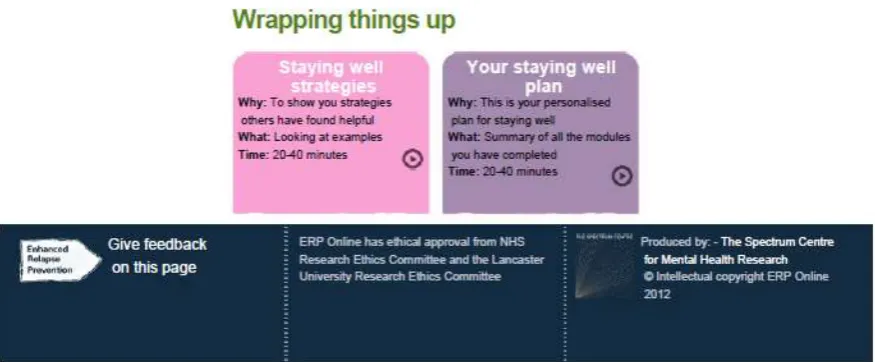
Staying Well Strategies
Identifying and managing stress levels
Understanding the importance of social rhythms and how to regulate these to manage mood How relationships with other people impact on mood
4.06 (6.11) 0 (0-25)
4.39 (8.30) 0 (0-37)
Your Staying Well Plan
An individualised summary of staying well strategies, early warning signs to look out for, and coping strategies to regulate mood
3.09 (5.94) 0 (0-30)
2.35 (4.60) 0 (0-18.5)
Note: where the median value 0 then at least half the sample did not visit this module
11
Procedure- randomisation and masking
Diagnostic eligibility was confirmed using SCID Clinical Interview for DSM-IV [21] administered by telephone by trained research assistants. Training consisted of scoring training videos, conducting clinical sensitive interviews on the telephone, and recording an interview with someone with Bipolar Disorder who provided experiential feedback and which was then rated by a supervising clinical academic. Training continued until ratings were reliable and clinical style was of high quality. Monthly supervision to ensure reliability in scoring of telephone interviews continued throughout the study. Following baseline assessments (by telephone and online) participants were randomly allocated by an independent clinical trials unit (CTU) using 1:1 ratio, minimised on number of previous episodes (<8,8-20, 21+) and including a random element to minimise predictability of allocation. Those in the ERPonline arm received an email containing a web-link and instructions of how to log onto the site using a unique username and password. Control participants received an email or telephone call informing them of the allocation and emphasising the importance of
continued participation throughout the trial. All communication with CTU and participants regarding randomisation was conducted by the trial manager (unblinded). All communication with participants reiterated the importance of not telling the researcher carrying out the follow-up interviews which group they were in, and why this was important. All assessments were conducted by blind
researchers. Blindness was further maintained using restricted file access to any data showing randomisation, and prefacing each follow-up interview with a reminder about why it was important not to say anything about which arm they were in.
During the trial, participants were sent an additional email inviting them to provide qualitative feedback. The ERPonline group were asked to complete an online survey about their views of the ERPonline site and any improvements they would recommend. They were also given the option (between 2-12 months following randomisation) to take part in a telephone interview about their experiences of using ERPonline. Given the relatively novel primarily online trial design, the WL control group were sent a survey prior to accessing the site about their reasons for engaging in the trial, and their experience of taking part in the trial.
12
Measures
Proposed mechanisms of change, were assessed online at baseline, 24 and 48 weeks including: frequency of early warning signs monitoring (Early Warning Signs checklist for relapse in depression and mania [22] Likert scale 1 = never to 4 = very regularly); adapted Brief Illness Perception
Questionnaire (BIPQ score 0-110: higher score = more negative beliefs) [23]; and the Medication Adherence Rating Scale (MARS 0-10: higher score = higher compliance) [24]. These measures were either designed for use with people with Bipolar Disorder (EWS checklists and BIPQ), and / or have been successfully used with this population (MARS). They are all self-report, have high face validity, and have been shown to be valid and reliable measures, making them highly applicable to online use.
Interviewer – rated outcome measures were administered by telephone by two trained research assistants, at baseline, 12, 24, 36 and 48 week follow-up. These included: SCID- LIFE [25] providing a retrospective weekly rating of depression (1-6) and mania (1-6), (scores of 5/6 indicate major mood episode); Hamilton Depression Rating Scale (HAM-D scores above 7 indicate mild depression, above 13 moderate, and above 18 severe) [26], and Mania Rating Scale (MRS scores of 11 and above indicate hypomania) [27]; the Personal and Social Performance Scale (PSP scores 70-80 indicate mild difficulties, above 80 is good functioning) [28]; and the Multidimensional Scale of Independent Functioning (MSIF Likert scale 1 = normal functioning, to 7 = total disability) [29]. Self-report outcome measures were collected online at baseline, 24 and 48 weeks and included: the Work and Social Adjustment Scale (WSAS less than 10 = subclinical; 10-20 some functional impairment; above 20 moderate psychopathology) [30]; Quality of Life in BD (QoLBD range 48-240 with high score = higher quality of life) [31]; and the Bipolar Recovery Questionnaire (BRQ score 0-3600 high score = higher recovery) [32]. Online versions of the EQ5D5L [33]and the Client Service Receipt Inventory (CSRI) [34] were piloted to assess the feasibility of collecting this data online and to test the sensitivity to change in this population as neither have been previously used in online self-report format. A checklist to record current treatment was developed for the study to define usual treatment.
13
Analysis
Descriptive statistics report the characteristics of the sample recruited; use of the website; rates of recruitment, retention, and data completion in each arm of the trial. The impact on repeated process and outcome measures was tested using linear models with correlated errors, which allow for correlation between repeated measures from the same participant. For ordinal data, we used generalised linear mixed models. We report both unadjusted analyses, and those adjusting for any differences in baseline demographic (age, gender, ethnicity, employment, education) and clinical variables (number of previous episodes, and whether or not prescribed a mood stabiliser). Incomplete records from participants were retained, and analyses used maximum likelihood
estimation for all model parameters. Statistical comparison of outcomes was made between the two trial arms at 24 and 48 weeks follow-up.
Weekly ratings of depression and mania from the SCID-LIFE were used to analyse time to first relapse (any and separately for depression (requiring 2 consecutive weeks), or mania (1 week)) and the proportion of time spent in episode (defined as SCID-LIFE rating of 5/6), or in sub-syndromal state (SCID-LIFE rating of 3/4) or euthymic (SCID-LIFE rating of 1/2). To analyse the impact of the intervention on time to first relapse we used a Cox’s proportional hazards regression model. Beta regression was used to compare the proportion of time spent in episode / sub-syndromal / euthymic in each arm.
The study is not powered to test for statistically significant impact and therefore we do not specify a primary outcome, or set a level of statistical significance for interpreting analyses. All analyses were run from R open-source computing environment (version 3.3.1).
Content analysis of qualitative survey data highlighted the individual points made and these were grouped into key themes. Interview transcripts were analysed in depth using indexing and charting methods inspired by Framework Analysis [35]. All transcripts were independently coded by the interviewer (MG) and a second member of the research team. Codes were compiled into a tentative coding frame with thematic headings. Narrative summaries were created from each of the
conceptual themes across all cases. This data will be reported in full elsewhere but here we present key data relevant to the feasibility and acceptability aims of the trial.
14
Quality assurance
Only two unblindings occurred. In both instances, the participant inadvertently indicated their group during a telephone assessment (one waitlist control, one ERPonline). Subsequent assessments were completed by a blind RA. At each follow up, 10% of the SCID-LIFE interviews were rated by both researchers and kappa statistic calculated to assess interrater reliability. These ranged from
acceptable (κ = .54 (95% CI, .39 to .69) at 36 weeks based on 142 weekly ratings for 6 participants) to high (κ = .90 (95% CI .82 to .98) at 12 weeks based on 192 weekly ratings for 8 people).
Feasibility and acceptability of trial design
15
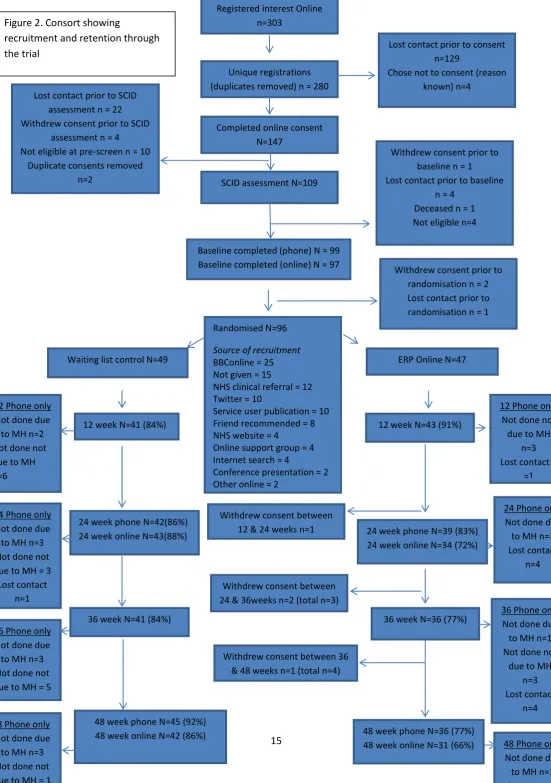
Registered interest Online n=303
Unique registrations (duplicates removed) n = 280
Completed online consent N=147
SCID assessment N=109
Baseline completed (phone) N = 99 Baseline completed (online) N = 97
Randomised N=96 Source of recruitment BBConline = 25 Not given = 15
NHS clinical referral = 12 Twitter = 10
Service user publication = 10 Friend recommended = 8 NHS website = 4
Online support group = 4 Internet search = 4
Conference presentation = 2 Other online = 2
Lost contact prior to SCID assessment n = 22 Withdrew consent prior to SCID
assessment n = 4 Not eligible at pre-screen n = 10
Duplicate consents removed n=2
Waiting list control N=49 ERP Online N=47
12 week N=41 (84%) 12 week N=43 (91%)
24 week phone N=42(86%)
24 week online N=43(88%) 24 week phone N=39 (83%)
24 week online N=34 (72%)
36 week N=41 (84%) 36 week N=36 (77%)
48 week phone N=45 (92%)
48 week online N=42 (86%) 48 week phone N=36 (77%)
[image:15.595.21.573.45.829.2]48 week online N=31 (66%) Figure 2. Consort showing
recruitment and retention through
the trial Lost contact prior to consent n=129
Chose not to consent (reason known) n=4
Withdrew consent prior to randomisation n = 2 Lost contact prior to randomisation n = 1 Withdrew consent prior to
baseline n = 1 Lost contact prior to baseline
n = 4 Deceased n = 1 Not eligible n=4
Withdrew consent between 12 & 24 weeks n=1
Withdrew consent between 24 & 36weeks n=2 (total n=3)
Withdrew consent between 36 & 48 weeks n=1 (total n=4) 12 Phone only
Not done due to MH n=2 Not done not due to MH n=6
12 Phone only Not done not
due to MH n=3 Lost contact n
=1
24 Phone only Not done due to MH n=3 Not done not due to MH = 3
Lost contact n=1
24 Phone only Not done due to MH n=3 Lost contact
n=4
36 Phone only Not done due to MH n=3 Not done not due to MH = 5
36 Phone only Not done due to MH n=1 Not done not
due to MH n=3 Lost contact
n=4 48 Phone only
Not done due to MH n=3 Not done not due to MH = 1
48 Phone only Not done due to MH n=1 Lost contact
16
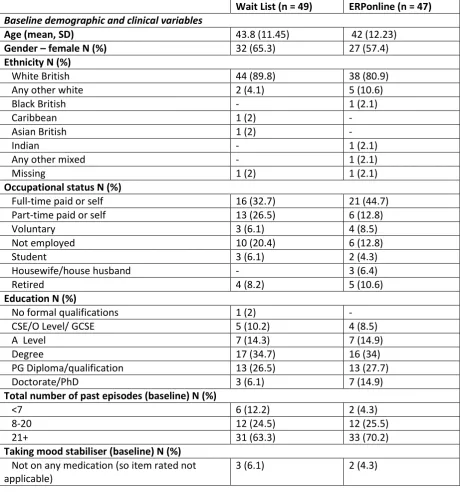
[image:16.595.68.529.278.772.2]Participants were predominantly diagnosed with BD1 (90%) and had a chronic relapsing course (67% had over 21 relapses; see Table 2). Despite this, the group were currently high functioning and had a positive attitude to recovery. The vast majority were taking and adherent to medication to manage their mood and over half had previously received psychological treatment for BD (where specified, this was most commonly described as Cognitive Behaviour Therapy (CBT)).
Table 2 – Key characteristics of participant sample at baseline
Wait List (n = 49) ERPonline (n = 47) Baseline demographic and clinical variables
Age (mean, SD) 43.8 (11.45) 42 (12.23)
Gender – female N (%) 32 (65.3) 27 (57.4)
Ethnicity N (%)
White British 44 (89.8) 38 (80.9)
Any other white 2 (4.1) 5 (10.6)
Black British - 1 (2.1)
Caribbean 1 (2) -
Asian British 1 (2) -
Indian - 1 (2.1)
Any other mixed - 1 (2.1)
Missing 1 (2) 1 (2.1)
Occupational status N (%)
Full-time paid or self 16 (32.7) 21 (44.7)
Part-time paid or self 13 (26.5) 6 (12.8)
Voluntary 3 (6.1) 4 (8.5)
Not employed 10 (20.4) 6 (12.8)
Student 3 (6.1) 2 (4.3)
Housewife/house husband - 3 (6.4)
Retired 4 (8.2) 5 (10.6)
Education N (%)
No formal qualifications 1 (2) -
CSE/O Level/ GCSE 5 (10.2) 4 (8.5)
A Level 7 (14.3) 7 (14.9)
Degree 17 (34.7) 16 (34)
PG Diploma/qualification 13 (26.5) 13 (27.7)
Doctorate/PhD 3 (6.1) 7 (14.9)
Total number of past episodes (baseline) N (%)
<7 6 (12.2) 2 (4.3)
8-20 12 (24.5) 12 (25.5)
21+ 31 (63.3) 33 (70.2)
Taking mood stabiliser (baseline) N (%) Not on any medication (so item rated not applicable)
17
No mood stabiliser 15 (30.6) 11 (23.4)
Lithium 12 (24.5) 11 (23.4)
Sodium valproate 5 (10.2) 14 (29.8)
Carbamazepine 3 (6.1) 1 (2.1)
Lamotrigine 11 (22.4) 8 (17)
Treatment History (Baseline) N (%) Ever used mental health
services
46 (93.9) 42 (89.4) Clinical diagnosis of BD1 (vs BD2) 44 (89.8) 44 (93.6)
Ever seen a psychiatrist 46 (93.9) 43 (91.5)
Ever prescribed medication for BD 49 (100) 46 (97.9) Currently taking medication
for Bipolar Disorder
40 (81.6) 40 (85.1)
Ever received therapy/psychosocial intervention for Bipolar Disorder
26 (53.1) 27 (57.4)
Currently receiving therapy for Bipolar Disorder
8 (16.3) 10 (21.3)
Process Measures
Early Warning Signs monitoring frequency - depression N (%)
never 3(6) occasionally 18(37) fairly regularly 8(37) very regularly 10(20)
never 3(6) occasionally 11(23) fairly regularly 20(43) very regularly 13(28) Early Warning Signs monitoring frequency -
(hypo)mania N (%)
never 6 (12) occasionally 21(43) fairly regularly 16(33) very regularly 6 (12)
never 5(11) occasionally 14(30) fairly regularly 18(38) very regularly 10(21) Brief Illness Perception Questionnaire- total
(high score = more negative model) mean (SD)
60.6 (10.5) 60.7 (9.9) Medication Adherence Rating Scale mean,(SD) 6.9 (2.2) 7.0 (2.1) Outcome measures
Hamilton Depression Rating Scale mean (SD) 4.5 (5.3) 3.5 (4.2)
Mania Rating Scale mean (SD) 1.3 (2.4) 1.0 (1.7)
Personal and Social Performance Scale mean (SD)
79.7 (11.2) 79.1 (13.1) Multidimensional Scale of Independent
Functioning N (%)
1 25 (51) 2 14 (29) 3 8 (16) 4 2 (4) 5 0 (0) 6 0 (0)
18
Feasibility and acceptability of data collection
Telephone and online data collection procedures were generally acceptable to participants based on information from 41 participants (WL survey n = 22; ERPonline interviews n = 19 reported
separately). Survey data indicated factors that encouraged people to take part including: opportunity to improve their own resilience and self-management; wanting to help others; and recognising the importance of research on improving web-based interventions, due to a perceived gap in face-to-face services and some existing websites feeling unsafe. Many of these factors were also cited as facilitating retention in the trial, as well as factors such as text reminders about follow-ups, and viewing the research team as sensitive, polite and not intrusive. Participants reported that the research process was well-managed, clearly explained, straightforward, and flexible, and they liked the shopping vouchers. Some participants believed completing the measures had changed their thinking about their mood and diagnosis. Barriers to retention included: procedural difficulties such as, remembering follow-up times and re-scheduling missed appointments, feeling ‘weird’ to have interviews only on the phone and difficulties finding private space for the phone calls; issues with measures, some of which were too long (CSRI) and could be tiring, distressing, and required recall over long periods of time; and technical difficulties with online questionnaires. Some reported feeling disappointed to be in the waitlist control arm, although had remained in the trial. Additional key data collection lessons we learnt included: the importance of checking electronic communication is received (some of our reminder emails were initially going into junk folders); the need to accommodate the high demand for evening and weekend telephone appointments; the importance of text reminders for telephone appointments.
Feasibility and acceptability of ERPonline intervention
ERPonline is low cost at an estimated £19,340 to create, and approximately £2176 per year to host and maintain the site. Development costs included: time to adapt content from the ERP manual; discussion and feedback with co-authors; web developer time to build the site; filming and producing videos; costs for the Service User Reference Group to feedback on early iterations. Hosting costs include software updates and technical issues (estimated at 2hrs per week) and space on a server. To keep costs low, ERPonline was delivered unsupported and without an interactive moderated forum, despite these being part of the intended design.
19
throughout the 48 week intervention period. The most frequently viewed modules were” Life Charting” (median views 11; range 0-990 per person) and “Mood Charting” (median views 13; range 1- 2519 per person), which is unsurprising as they offered an ongoing monitoring function. “Coping strategies for Low Mood” (median views 0: range 0-44 per person) and “Your Staying Well Plan” (median views 0; range 0-30 per person) were the least frequently visited, but also occurred towards the end of the listed modules (see Table 1 for number of visits and time spent on all modules).
Seventeen ERPonline participants (36%) responded to the online survey. Overall these participants were satisfied (13 people (76%) somewhat/very satisfied), found it somewhat/very helpful (n = 12, 71%), and very/extremely relevant (n = 13, 76%). Only one person said they would not recommend it to a friend. Most useful features were recognising early warning signs of relapse, shared
experiences through videos, mood monitoring, ability to revisit and refresh skills, improved
knowledge and self-management of BD, ease of use, and being able to use the site with the family. The key recommendation for improvement was additional support with working through the materials. The sample of questionnaire respondents described themselves as confident (n = 16, 94% very or extremely confident) and regular (n=12, 71% at least daily) internet users.
Nineteen people took part in qualitative interviews about their experience of the trial and use of the ERPonline site. The key finding was the importance of relationships that the individual developed with the ERPonline team in determining retention into the study and use of the site:
“I think the sort of general thoroughness and kindness of the people I dealt with that certainly contributed to, you know, me sort of staying in the study. Everybody’s been really upbeat, very positive, very accommodating.” (P10)
This is particularly interesting when we consider there was no face to face contact. Sole direct contact was by telephone at 3 monthly interviews for SCID-LIFE interviews, which for some was preferable to face to face:
“…I think it being over the ‘phone makes it a bit easier. If it’s face-to-face I would have probably not been quite so comfortable answering. But yeah over the ‘phone was definitely not so bad.” (P13)
Crucial to the strength of the alliance was the perceived trustworthiness of the team and being made aware of the extensive user involvement in design and content of the site :
20
“I suppose the prospect of the online study kept me quite interested and the fact that it was developed by other people with Bipolar and that was something that I was definitely interested in…”(P17)
A key recommendation to improve the ERPonline site was to integrate human support to facilitate ongoing use of the site. This is consistent with previous studies in which adherence was higher in groups receiving a web intervention plus support as compared to web intervention only [31]. Participants felt websites should be used to support interventions delivered by real people and not as a cheaper replacement:
“The cash strapped health service will rely heavily on these sort of techniques which I think only fill one part of the market. I think they only really deal with, you know, and a
comparatively narrow field of potential patients. I think they’re very useful but I do think the gold standard involves some sort of face-to-face psychological therapy. And I think the clinical literature bears that out so, I want more jobs for psychologists basically.” (Henry: 23.893-898)
Estimate of impact on outcome & process measures
21
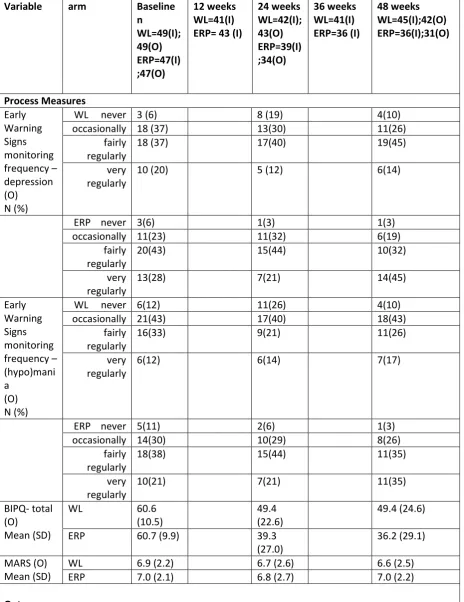
Table 3 – Descriptive statistics on outcome and process measures at 24 and 48 week followups.
Variable arm Baseline
n WL=49(I); 49(O) ERP=47(I) ;47(O) 12 weeks WL=41(I) ERP= 43 (I)
24 weeks WL=42(I); 43(O) ERP=39(I) ;34(O) 36 weeks WL=41(I) ERP=36 (I) 48 weeks WL=45(I);42(O) ERP=36(I);31(O) Process Measures Early Warning Signs monitoring frequency – depression (O) N (%)
WL never 3 (6) 8 (19) 4(10)
occasionally 18 (37) 13(30) 11(26)
fairly regularly
18 (37) 17(40) 19(45)
very regularly
10 (20) 5 (12) 6(14)
ERP never 3(6) 1(3) 1(3)
occasionally 11(23) 11(32) 6(19)
fairly regularly
20(43) 15(44) 10(32)
very regularly
13(28) 7(21) 14(45)
Early Warning Signs monitoring frequency – (hypo)mani a (O) N (%)
WL never 6(12) 11(26) 4(10)
occasionally 21(43) 17(40) 18(43)
fairly regularly
16(33) 9(21) 11(26)
very regularly
6(12) 6(14) 7(17)
ERP never 5(11) 2(6) 1(3)
occasionally 14(30) 10(29) 8(26)
fairly regularly
18(38) 15(44) 11(35)
very regularly
10(21) 7(21) 11(35)
BIPQ- total (O)
Mean (SD)
WL 60.6
(10.5)
49.4 (22.6)
49.4 (24.6)
ERP 60.7 (9.9) 39.3
(27.0)
36.2 (29.1) MARS (O)
Mean (SD)
WL 6.9 (2.2) 6.7 (2.6) 6.6 (2.5)
ERP 7.0 (2.1) 6.8 (2.7) 7.0 (2.2)
22 HAM-D (I)
Mean (SD)
WL 4.5 (5.3) 7.5 (7.4) 7.3 (8.6) 6.8 (8.6) 8.2 (9.0) ERP 3.5 (4.2) 6.6 (6.7) 6.9 (8.0) 6.0 (8.3) 7.1 (9.3) MRS (I)
Mean (SD)
WL 1.3 (2.4) 2.7 (3.7) 2.2 (4.1) 1.7 (2.9) 1.7 (2.2) ERP 1.0 (1.7) 2.5 (4.4) 2.4 (3.9) 2.0 (4.0) 1.4 (2.4) PSP (I)
Mean (SD)
WL 79.7
(11.2)
75.0 (15.1) 76 (16.4)
79.8 (14.8) 78.4 (15.6)
ERP 79.1
(13.1)
77.8 (15.1) 76.7 (15.4)
77.8 (16.1) 80.7 (16.1) MDSIF-
global (frequencie s for scores categories 1,
2, 3, 4,5,6) (I)
N (%)
WL 1 25 (51) 24 (59) 20 (48) 25 (61) 28 (62) 2 14 (29) 8 (20) 13 (31) 10 (24) 9 (20)
3 8 (16) 4(10) 5 (12) 3 (7) 6 (13)
4 2 (4) 5 (12) 3 (7) 1 (2) 1 (2)
5 0 (0) 0 (0) 1 (2) 2 (5) 0 (0)
6 0 (0) 0 (0) 0 (0) 0 (0) 1 (2)
ERP 1 21 (45) 26 (60) 18 (46) 20 (56) 22 (61) 2 16 (34) 10 (23) 12 (31) 9 (25) 9 (25) 3 6 (13) 3 (7) 6 (15) 5 (14) 4 (11)
4 2 (4) 3 (7) 2 (5) 0 (0) 1 (3)
5 2 (4) 1 (2) 1 (3) 2 (6) 0 (0)
6 0 (0) 0 (0) 0 (0) 0 (0) 0 (0)
WSAS (I) Mean (SD)
WL 11.4 (9.4) 12.4
(10)
12.9 (10.6)
ERP 12.8 (8.7) 14.3
(9.1)
14.8 (10.3) QoLBD (O)
Mean (SD)
WL 162.7
(33.5)
161.2 (39.7)
154.9 (36.1)
ERP 162.5
(22.8) 156.5 (33.4) 151.8 (41.7) BRQ (O) Mean (SD)
WL 2332
(394)
2309 (504)
2336 (468)
ERP 2342
(383)
2451 (430)
2414 (577)
(I) = interviewer rated by telephone (O) = completed online
SD = standard deviation
BIPQ = Brief Illness Perception Questionnaire (score 0-110 higher score = more negative beliefs) MARS = Medication Adherence Rating Scale (0-10 higher score = higher compliance)
HAMD =Hamilton Depression Rating Scale (scores above 7 indicate mild depression, above 13 moderate, and above 18 severe)
MRS = Mania Rating Scale (scores of 11 and above indicate hypomania)
PSP = Personal and Social Performance Scale (scores 70-80 indicate mild difficulties, above 80 is good functioning)
MDSIF = Multidimensional Scale of Independent Functioning (Likert scale 1 = normal functioning, to 7 = total disability)
WSAS = Work and Social Adjustment Scale (less than 10 = subclinical; 10-20 some functional impairment; above 20 moderate psychopathology)
24
Table 4 –Comparison of linear models with correlated errors to test for differences between Wait List and ERPonline on outcome and process measures at 12, 24 and 48 week followups. Unadjusted model showing estimates of difference between Beta estimates at each time point.
Model 1 – unadjusted analysis
Variable 12wk
FU estimate 95% CI (P value) 24wk FU Estimate 95%CI (P Value) 36 week FU Estimate 95%CI (P value) 48wk FU 95%CI (P Value) Early Warning Signs monitoring frequency – depression
0.73 -1.86, 0.40 (.20)
1.39 2.61, -.163 (.03) Early Warning Signs monitoring frequency – (hypo)mania
-1.72 -2.98, -.47 (.01)
1.61 2.92, -.30 (.02) Brief Illness Perception Questionnaire- total
10.70 0.90- 20.5 (.03)
13.18 2.44 – 23.93 (.02) Medication Adherence Rating Scale
-.102 -1.07, 0.87 (.84)
-.327 -1.34, .685 (.53) Personal and Social Performance Scale
-2.91 -9.19, 3.37 (.36)
-.198 -6.77, 6.38 (.95)
0.77 -5.87, 7.41 (.82)
-2.87 -9.27, 3.52 (.38) Multidimensional Scale of Independent Functioning - global (frequencies for scores categories 1, 2, 3, 4,5,6)
.169 -.867, 1.20 (.75)
.029 -.959, 1.02 (.95)
-.074 -1.15, 1.00 (.89)
.281 -.785, 1.35 (.61)
Work and Social Adjustment Scale
-1.61 -5.67, 1.46 (.30)
-.53, -3.90, 2.83 (.76) Quality of Life in
Bipolar Disorder
6.67 -5.73, 19.1 (.29)
3.99 -9.72, 17.7 (.57)
-25
Questionnaire 90.7
(.47)
[image:25.595.69.530.73.113.2]38.09 208.58, 132.41 (.66) BIPQ total measures how negative a model the person has – so high score = more negative model.
Table 5 –Comparison of linear models with correlated errors to test for differences between Wait List and ERPonline on outcome and process measures at 12, 24 and 48 week followups. Adjusted for any differences in baseline demographic (age, gender, ethnicity, employment, education) and clinical variables (number of previous episodes, and whether or not prescribed a mood stabiliser).
Model 2 – adjusted analysis
Variable 12wk FU
Estimate 95%CI (P value) 24wk FU Estimate 95%CI (P Value) 36wk FU Estimate 95%CI (P value) 48wk FU Estimate 95%CI (P Value) Early Warning Signs monitoring frequency – depression
-.721 -1.85, .413 (.21)
-1.38 2.61, -.153 (.03) Early Warning Signs monitoring frequency – (hypo)mania
-1.70 2.96, -.452 (.01)
-1.60 2.91, -.291 (.02) Brief Illness Perception Questionnaire- total
11.06 1.25 – 20.9 (.03)
13.6 2.69 – 24.6 (.02) Medication Adherence Rating Scale
-.128 -1.11, .855 (.80)
-.356 - 1.39, .674 (.50) Personal and Social Performance Scale
-2.99 -8.84, 2.863 (.32)
-.430 -7.02, 6.16 (.90)
.704 -6.06, 7.47 (.84)
-3.21 -9.69, 3.26 (.33) Multidimensional Scale of Independent Functioning – global (frequencies for scores categories 1, 2, 3, 4,5,6)
.092 -.907, 1.09 (.86)
-.075 -1.03, .878 (.88)
-.084 -1.12, 0.95 (.87)
.275 -.743, 1.29 (.60)
26 Adjustment
Scale
1.64 (.36)
3.03 (.82) Quality of Life in
Bipolar Disorder
6.23 -6.13, 18.6 (.32)
3.58 -10.4, 17.5 (.62) Bipolar Recovery
Questionnaire
-63.29 -206.47, 79.88 (.39)
-35.84 -209.78, 138.10 (.69) BIPQ total measures how negative a model the person has – so high score = more negative model.
Process Measures
ERPonline increased the frequency of monitoring early signs of mood change (EWS – depression and EWS- (hypo)mania), evident for (hypo)mania at 24 weeks (-1.72 (-2.98, -0.47 95%CIs), and for both at 48 weeks (depression -1.39 (-2.61, -.163 95%CIs); (hypo)mania -1.61 (-2.92, -0.30 95%CIs)), and improved working model of mood changes (BIPQ – high score indicates more negative model) at both 24 weeks (10.70 (0.90 – 20.5 95% CIs) and 48 weeks follow ups (13.18 (2.44 – 23.93 95%CIs) (Table 4). All differences are robust to adjustments in model 2 for baseline differences between the groups (Table 5). Medication adherence was high (indicated by high score on the MARS) throughout the study and did not differ between groups.
Mood and Functioning
Depression and hypomania were low at all time points suggesting a generally stable and euthymic group. Similarly, functioning on WSAS, PSP and MSIF at baselines were suggestive of very mild impairment in work and social performance and remained so throughout. Time spent in euthymic, subsyndromal and relapse mood states respectively in WL were: 93% (SD 8%); 5% (SD 7%); and 3% (SD 15%), and in ERP online: 95% (SD 8%); 4% (SD 6%); and 2% (SD 4%). There were no notable differences between the two groups in any of the outcome measures at any of the time-points.
Relapse
27
4.83),p=0.47; time to mania type episode HR 2.87 (95% CI 0.56, 14.8), p=0.12. Given the low level relapses, no Kaplan Meier curves are presented.
Adverse Events
During the trial, one participant completed suicide prior to randomisation. Eleven participants (11% of those randomised) reported suicidality and/or self-harm, and one made a suicide attempt (prior to withdrawing from the study). Six were in the WL arm, and five were receiving ERPonline. None of the SAEs were deemed study related by an independent TSC.
Discussion
ERPonline is a novel web intervention for improving relapse prevention and providing NICE
congruent information to people with BD. This study indicates that the development and evaluation of this type of approach in a rigorous RCT using telephone and online assessments is both feasible and acceptable. Important lessons were learnt relevant to each of our study aims, but which also have relevance to the wider development and evaluation of remote-access approaches for other health problems.
With the help of our Service User Reference Group, we were able to develop an online version of an existing Enhanced Relapse Prevention intervention for people with Bipolar Disorder at very low cost that received largely positive feedback, and led to no evident adverse events. Activity was highly skewed but over 90% of our sample visited the site more than once, which can be compared to MyRecoveryPlan [17] which reported site returns for 71% in a coached group, and only 44% in an unsupported group. Based on levels of use of the different modules, and direct participant feedback, engagement could be enhanced by making the intervention more interactive and providing support to use it.
28
Feedback about the experience of taking part in a primarily online trial was mixed. Some participants reported difficulties finding a private space to take telephone calls or finding the online difficult, tiring or distressing, whilst others valued the flexibility, convenience and felt more able to be open about the problems they had experienced than in a face to face interview. This suggests that trials which offer a choice of data collection options may be most effective in achieving recruitment and retention targets.
However, further work is needed to test the validity and reliability of these data collection approaches. Our data showed that whilst, the hypothesised increase in early warning signs monitoring and development of more positive beliefs about mood swings did occur in those receiving ERPonline compared to waitlist control group, we did not see any benefit of ERPonline on any of the clinical outcome measures. This was largely due to the ceiling effect on our outcome measures. Only 16% of the total sample experienced any relapse, compared to expected levels of 50-70% [37].
This ceiling effect was consistent across all outcome measures, and all assessors. Therefore the most likely explanations are either that the method of data collection is leading to underreporting of problems, or that the participating sample reflect a different population from those taking part in more traditionally designed face to face clinical studies.
With regards to the first possibility, whilst we did not directly test the reliability of the data
compared to a face to face interview, other studies have done this comparing telephone and face to face interview data of SCID assessments found high levels of agreement [38]. Our team have also carried out a parallel online randomised controlled trial which included the same online and
telephone assessments, delivered through researchers trained by the same methods, and which will report relapse rates of 47% which are akin to those expected from previous research data and much higher than in this study [39].
The second possible explanation can be explored by examining the characteristics of our
29
The future for ERPonline
ERPonline offers a cheap and easily accessible option for people who are seeking ongoing support following successful treatment, which is currently unavailable. However, given the high functioning and low relapse rates evident in this study, testing the clinical effectiveness of ERPonline for this population would require very large sample sizes. Alternatively, ERPonline could target people at an earlier stage of treatment, who have had not yet received more expensive face-to-face psychological therapy, and need support to understand their mood swings, consider the pros and cons of
medication use, and explore the usefulness of monitoring and managing early warning signs of relapse. For this group, ERPonline may offer a way to reduce the need for expensive individual therapy. Consistent with participant recommendations and previous research we also need to consider how best to integrate support mechanisms to facilitate use of the intervention, either by integrating the online resource with clinician delivered relapse prevention, or through online peer support as described in other online interventions for BD [10, 11, 13]. This study highlights the importance of the relationship users have with online interventions and how this develops as an extension of the relationship with the humans perceived as offering and supporting its use. Online interventions offered in isolation in this context seem unlikely to engage people in the same way and may be perceived negatively as attempts to save money rather than improve care. Our study has explored the feasibility and acceptability of a specific online intervention (ERPonline), but does not address the broader social issue of how acceptable the increasing use of digital health technology is to people with mental health problems [40].
Strengths of study
Extensive user involvement improved the content of the ERPonline website, identified recruitment sources, and ensured the measures were appropriate and not too burdensome. The sample was sufficiently large to be able to comment on patterns in the data likely to be indicative of effects on process and outcome measures in a larger trial. Independent randomisation, trained blind assessors and the use of well-established outcome and process measures ensured the data are reliable and valid. Extensive reflection and learning around feasibility was built into the design process using face to face meetings and an online reflection log.
Limitations
30
arm, which is common in trials with a waitlist control arm and is likely due to the perceived reward of the intervention retaining people through waitlist. Survey responses were incomplete for feedback on trial participation (22 out of 49 in waitlist group (45%)) and for feedback on the
ERPonline intervention (17 out of 47 in ERPonline arm (36%)). The bias in responders is likely to skew the nature of the feedback which on the whole was very positive.
In summary we were able to successfully adapt and deliver online a relapse prevention intervention for BD previously used face-to-face. The intervention was successfully evaluated against a waitlist control group using a RCT design with high levels of retention and data completeness over 48 weeks. Participants had high rates of previous bipolar episodes but had accessed previous psychosocial interventions (where specified, most commonly described as CBT) for BD. Online interventions may prove an important cheap, feasible and acceptable step forward in creating a choice of evidence-based interventions for people with BD at different stages of recovery, but may be more
appropriately designed with built-in support and targeted at those with less prior experience of effective care.
Funding and Disclosures
This paper presents independent research commissioned by the National Institute of Health
Research (NIHR) under the Research for Patient Benefit (RfPB) Programme (Grant Reference Number PB-PG-0211-10001). The views expressed are those of the authors and not necessarily those of the NHS, the NIHR or the Department of Health. The funder played no role in the study design, conduct or interpretation of the data. The corresponding author had full access to all the data in the study and had final responsibility for the decision to submit for publication. RM is funded by the Collaboration for Leadership in Applied Health Research and Care and East Midlands and the NIHR MindTech Health Technology Co-operative.
Acknowledgements
The authors would like to thanks all the participants, the Service User Reference Group, and the Trial Steering Committee including Professor Danny Smith (Chair), Professor Gillian Haddock, Dr Kim Wright, Mr Tim Rawcliffe, and Dr Chris Sutton.
Author Contributions
31
web usage data. RL Chaired the SURG, ensuring continued service user input throughout the study. RP developed the ERPonline website. RM and SJ contributed to the design analysis and
interpretation of data, and edited drafts of the paper. DD facilitated recruitment through NHS Trusts. All authors were involved in drafting and final approval of this paper.
Lobban, Fiona. PhD. Spectrum Centre for Mental Health Research, Faculty of Health of Medicine, Lancaster University, LA14YW, UK
Dodd, Alyson. L., PhD. Spectrum Centre for Mental Health Research, Faculty of Health of Medicine, Lancaster University, LA14YW, UK and Department of Psychology, Northumbria University, NE18ST, UK Sawczuk, Adam P. Spectrum Centre for Mental Health Research, Faculty of Health of Medicine, Lancaster University, LA14YW, UK
Asar, Ozgur. PhD. CHICAS Faculty of Health of Medicine, Lancaster University, LA14YW, UK Dagnan, Dave. PhD. Cumbria Partnership NHS Foundation Trust, Penrith, Cumbria, CA11 7QQ Diggle, Peter J., PhD. CHICAS Faculty of Health of Medicine, Lancaster University, LA14YW, UK Griffiths, Martin. Spectrum Centre for Mental Health Research, Faculty of Health of Medicine, Lancaster University, LA14YW, UK
Honary, Mahsa. PhD. Spectrum Centre for Mental Health Research, Faculty of Health of Medicine, Lancaster University, LA14YW, UK
Knowles, Dawn. Spectrum Centre for Mental Health Research, Faculty of Health of Medicine, Lancaster University, LA14YW, UK
Long, Rita. Spectrum Centre for Mental Health Research, Faculty of Health of Medicine, Lancaster University, LA14YW, UK
Morriss, Richard. MD.
Department of Psychiatry and Applied Psychology, Institute of Mental
Health, University of Nottingham, Triumph Road, Nottingham, NG7 2TU, United Kingdom
Parker, Rob. Spectrum Centre for Mental Health Research, Faculty of Health of Medicine, Lancaster University, LA14YW, UK
32
References
1. Whiteford HA, Degenhardt L, Rehm J, Baxter AJ, Ferrari AJ, Erskine HE, et al. Global burden of disease attributable to mental and substance use disorders: findings from the Global Burden of Disease Study 2010. The Lancet. 2013;382(9904):1575-86.
2. McCrone PR, Dhanasiri S, Patel A, Knapp M, Lawton-Smith S. Paying the price: the cost of mental health care in England to 2026: King's Fund; 2008. ISBN: 1857175719.
3. National Institute for Health and Clinical Excellence. Bipolar disorder: assessment and management (Clinical Guideline 185). 2014.
4. Malhi GS, Bassett D, Boyce P, Bryant R, Fitzgerald PB, Fritz K, et al. Royal Australian and New Zealand College of Psychiatrists clinical practice guidelines for mood disorders. Australian and New Zealand Journal of Psychiatry. 2015 December 1, 2015;49(12):1087-206. doi:
10.1177/0004867415617657.
5. American Psychiatric A. Practice guideline for the treatment of patients with schizophrenia, 2nd ed. Am J Psychiatry. 2004;161.
6. Merikangas KR, Jin R, He J-P, Kessler RC, Lee S, Sampson NA, et al. Prevalence and correlates of bipolar spectrum disorder in the world mental health survey initiative. Arch Gen Psychiat.
2011;68(3):241-51.
7. Lobban F, Taylor L, Chandler C, Tyler E, Kinderman P, Kolamunnage-Dona R, et al. Enhanced relapse prevention for bipolar disorder by community mental health teams: cluster feasibility randomised trial. Br J Psychiatry. 2010 Jan;196(1):59-63. PMID: 20044662. doi:
10.1192/bjp.bp.109.065524.
8. Hollis C, Falconer CJ, Martin JL, Whittington C, Stockton S, Glazebrook C, et al. Annual Research Review: Digital health interventions for children and young people with mental health problems: a systematic and meta‐review. Journal of Child Psychology and Psychiatry. 2016. 9. Wallin EEK, Mattsson S, Olsson EMG. The Preference for internet-based psychological interventions by individuals without past or current use of mental health treatment delivered online: a survey study with mixed-methods analysis. JMIR mental health. 2016;3(2).
10. Arnberg FK, Linton SJ, Hultcrantz M, Heintz E, Jonsson U. Internet-delivered psychological treatments for mood and anxiety disorders: a systematic review of their efficacy, safety, and cost-effectiveness. PLoS One. 2014;9(5):e98118. PMID: 24844847. doi: 10.1371/journal.pone.0098118. 11. Drozd F, Vaskinn L, Bergsund HB, Haga SM, Slinning K, Bjørkli CA. The Implementation of Internet Interventions for Depression: A Scoping Review. Journal of Medical Internet Research. 2016;18(9).
12. Smith DJ, Griffiths E, Poole R, di Florio A, Barnes E, Kelly MJ, et al. Beating Bipolar:
exploratory trial of a novel Internet-based psychoeducational treatment for bipolar disorder. Bipolar Disord. 2011 Aug-Sep;13(5-6):571-7. PMID: 22017225. doi: 10.1111/j.1399-5618.2011.00949.x. 13. Murray G, Leitan ND, Berk M, Thomas N, Michalak E, Berk L, et al. Online mindfulness-based intervention for late-stage bipolar disorder: pilot evidence for feasibility and effectiveness. J Affect Disord. 2015 Jun 1;178:46-51. PMID: 25795535. doi: 10.1016/j.jad.2015.02.024.
14. Lauder S, Chester A, Castle D, Dodd S, Gliddon E, Berk L, et al. A randomized head to head trial of MoodSwings.net.au: An internet based self-help program for bipolar disorder. J Affect Disorders. 2015 1/15/;171:13-21. doi: http://dx.doi.org/10.1016/j.jad.2014.08.008.
33
16. Barnes CW, Hadzi-Pavlovic D, Wilhelm K, Mitchell PB. A web-based preventive intervention program for bipolar disorder: Outcome of a 12-months randomized controlled trial. J Affect
Disorders. 2015 3/15/;174:485-92. doi: http://dx.doi.org/10.1016/j.jad.2014.11.038.
17. Simon GE, Ludman EJ, Goodale LC, Dykstra DM, Stone E, Cutsogeorge D, et al. An online recovery plan program: can peer coaching increase participation? Psychiatr Serv. 2011
Jun;62(6):666-9. PMID: 21632737. doi: 10.1176/appi.ps.62.6.666.
18. Todd NJ, Jones SH, Hart A, Lobban FA. A web-based self-management intervention for Bipolar Disorder 'Living with Bipolar': A feasibility randomised controlled trial. J Affect Disorders. 2014 Dec 1;169:21-9. PMID: WOS:000342616400005. doi: 10.1016/j.jad.2014.07.027.
19. Bauer R, Conell J, Glenn T, Alda M, Ardau R, Baune BT, et al. Internet use by patients with bipolar disorder: results from an international multisite survey. Psychiatry Research. 2016. 20. Lobban F, Dodd AL, Dagnan D, Diggle PJ, Griffiths M, Hollingsworth B, et al. Feasibility and acceptability of web-based enhanced relapse prevention for bipolar disorder (ERPonline): trial protocol. Contemp Clin Trials. 2015 Mar;41:100-9. PMID: 25602581. doi: 10.1016/j.cct.2015.01.004. 21. First MB, Spitzer RL, Gibbon M, Williams JB. User's guide for the Structured clinical interview for DSM-IV axis I disorders SCID-I: clinician version: American Psychiatric Pub; 1997. ISBN:
0880489316.
22. Lobban F, Solis-Trapala I, Symes W, Morriss R, Erp Group UoL. Early warning signs checklists for relapse in bipolar depression and mania: utility, reliability and validity. J Affect Disord. 2011 Oct;133(3):413-22. PMID: 21640385. doi: 10.1016/j.jad.2011.04.026.
23. Lobban F, Solis-Trapala I, Tyler E, Chandler C, Morriss RK, Grp E. The Role of Beliefs About Mood Swings in Determining Outcome in Bipolar Disorder. Cognitive Ther Res. 2013 Feb;37(1):51-60. PMID: WOS:000314064400007. doi: 10.1007/s10608-012-9452-9.
24. Thompson K, Kulkarni J, Sergejew AA. Reliability and validity of a new Medication Adherence Rating Scale (MARS) for the psychoses. Schizophr Res. 2000 May 5;42(3):241-7. PMID: 10785582. 25. Keller MB, Lavori PW, Friedman B, Nielsen E, Endicott J, Mcdonaldscott P, et al. The Longitudinal Interval Follow-up Evaluation - a Comprehensive Method for Assessing Outcome in Prospective Longitudinal-Studies. Arch Gen Psychiat. 1987 Jun;44(6):540-8. PMID:
WOS:A1987H528500007.
26. Hamilton M. A rating scale for depression. J Neurol Neurosurg Psychiatry. 1960 Feb;23:56-62. PMID: 14399272.
27. Bech P, Rafaelsen OJ, Kramp P, Bolwig TG. The mania rating scale: scale construction and inter-observer agreement. Neuropharmacology. 1978 Jun;17(6):430-1. PMID: 673161.
28. Morosini PL, Magliano L, Brambilla L, Ugolini S, Pioli R. Development, reliability and
acceptability of a new version of the DSM-IV Social and Occupational Functioning Assessment Scale (SOFAS) to assess routine social functioning. Acta Psychiatr Scand. 2000 Apr;101(4):323-9. PMID: 10782554.
29. Jaeger J, Berns SM, Czobor P. The multidimensional scale of independent functioning: a new instrument for measuring functional disability in psychiatric populations. Schizophr Bull.
2003;29(1):153-68. PMID: 12908671.
30. Mundt JC, Marks IM, Shear MK, Greist JH. The Work and Social Adjustment Scale: a simple measure of impairment in functioning. Br J Psychiatry. 2002 May;180:461-4. PMID: 11983645. 31. Michalak EE, Murray G, Collaborative RTtSPIiBD. Development of the QoL.BD: a disorder-specific scale to assess quality of life in bipolar disorder. Bipolar Disord. 2010 Nov;12(7):727-40. PMID: 21040290. doi: 10.1111/j.1399-5618.2010.00865.x.
32. Jones S, Mulligan LD, Higginson S, Dunn G, Morrison AP. The bipolar recovery questionnaire: psychometric properties of a quantitative measure of recovery experiences in bipolar disorder. J Affect Disord. 2013 May;147(1-3):34-43. PMID: 23182591. doi: 10.1016/j.jad.2012.10.003. 33. EuroQol. EQ-5D-5L. [cited 2014 14 July ]; Available from:
34
34. Chisholm D, Knapp MR, Knudsen HC, Amaddeo F, Gaite L, van Wijngaarden B. Client Socio-Demographic and Service Receipt Inventory--European Version: development of an instrument for international research. EPSILON Study 5. European Psychiatric Services: Inputs Linked to Outcome Domains and Needs. Br J Psychiatry Suppl. 2000 (39):s28-33. PMID: 10945075.
35. Ritchie J, Lewis J. Qualitative research practice: A guide for social science students and researchers. London: Sage; 2003. 263-86 p.
36. Morgan AJ, Jorm AF, Mackinnon AJ. Internet-based recruitment to a depression prevention intervention: lessons from the Mood Memos study. Journal of medical Internet research.
2013;15(2):e31.
37. Oud M, Mayo-Wilson E, Braidwood R, Schulte P, Jones SH, Morriss R, et al. Psychological interventions for adults with bipolar disorder: systematic review and meta-analysis. Br J Psychiatry. 2016 Mar;208(3):213-22. PMID: 26932483. doi: 10.1192/bjp.bp.114.157123.
38. Hajebi A, Motevalian A, Amin-Esmaeili M, Hefazi M, Radgoodarzi R, Rahimi-Movaghar A, et al. Telephone versus face-to-face administration of the Structured Clinical Interview for Diagnostic and Statistical Manual of Mental Disorders, for diagnosis of psychotic disorders. Comprehensive psychiatry. 2012;53(5):579-83.
39. Jones S, Wainwright LD, Jovanoska J, Vincent H, Diggle PJ, Calam R, et al. An exploratory randomised controlled trial of a web-based integrated bipolar parenting intervention (IBPI) for bipolar parents of young children (aged 3–10). BMC psychiatry. 2015;15(1):1.