Available online on 15.09.2014 athttp://jddtonline.info
Journal of Drug Delivery and Therapeutics
Open access to Pharmaceutical and Medical research© 2014, publisher and licensee JDDT, This is an Open Access article which permits unrestricted noncommercial use, provided the original work is properly cited
RESEARCH ARTICLE
FORMULATION AND EVALUATION OF FAST DISSOLVING TABLETS OF
ROSUVASTATIN
Singh Jaskirat*, Walia Manpreet, Harikumar S L
Rayat and Bahra Institute of Phamacy, Sahauran, Kharar, District Mohali, Punjab, India-140104
*Corresponding Author’s E-mail: [email protected], Contact No: +91-8968590808
INTRODUCTION
Oral ingestion is the most convenient and commonly employed route of drug delivery due to its ease of administration, safety, high patient compliance, cost-effectiveness, least sterility constraints and flexibility in the design of dosage form. Among all newly discovered chemical entities about 40% of the drugs are lipophillic in nature and they fail to reach market due to their poor aqueous solubility. However, the major challenge in designing an oral dosage form lies with their poor bioavailability1. Limited drug absorption resulting in poor bioavailability is paramount amongst the potential problems that can be encountered when delivering an active agent by the oral route. When delivering an active agent orally, it must first dissolve in gastric fluids before it can permeate the membranes of the gastrointestinal tract to reach the systemic circulation2. The oral bioavailability depends on several factors including aqueous solubility, drug permeability, dissolution rate, first-pass metabolism, pre systemic metabolism and susceptibility to efflux mechanism3. Among all the orally administered dosage forms, tablet is most preferred because of its ease of administration, compactness and flexibility in manufacturing.
A fast dissolving tablet dissolves or disintegrates in the oral cavity without the need of water or chewing4. Many patients groups such as the elderly, children and patients who are mentally retarded, uncooperative, nauseated or on reduced liquid-intake have difficulties in swallowing ordinary tablets. For such patients, fast dissolving tablets dosage form is a better alternative for oral medication5. Dysphagia is a common problem for all age groups especially the elders and the paediatrics because of physiological changes associated with this group. Fast dissolving tablets are not only indicated for people who have swallowing difficulties, but are also ideal for active people6. Fast dissolving tablets have been investigated for their potential in improving bioavailabilty of poorly soluble drugs through enhancing the dissolution profile of the drug.
Rosuvastatin is a hydroxylmethylglutaryl (HMG-CoA) reductase selective and competitive inhibitor. It is an antilipidemic agent used in the treatment of dyslipidemia having absolute bioavailability of approximately 20% belonging to class II of Biopharmaceutical classification system7. Rosuvastatin is a white crystalline powder that is poorly soluble in water, sparingly soluble in methanol and slightly soluble in ethanol. After oral administration, ABSTRACT
The objective of the present study was to formulate and evaluate fast dissolving tablets of Rosuvastatin (BCS Class II drug) to enhance solubility, improve bioavailability and patient compliance especially for the paediatric and geriatric patients with sufficient therapeutic benefits. Rosuvastatin exhibits poor solubility in water and low bioavailability of approximately 20%. Four solid dispersions (1:1, 1:2, 1:4 and 1:6 w/w) were prepared by melting method using PEG 4000 as a polymer. Solid dispersions were characterized for drug content uniformity, XRD, DSC and in vitro dissolution studies. It was then further compressed into tablets by direct compression method using different superdisintegrants like sodium starch glycolate, crospovidone and croscarmellose sodium. All the fast dissolving tablets were evaluated for pre compression parameters such as angle of repose (θ), bulk and tapped density, percentage compressibility (%) and Hausner ratio. Post compression parameters like general appearance, uniformity of weight, tablet hardness, thickness, friability, estimation of drug content, in vitro
disintegration time, wetting time, in vitro dispersion time and water absorption ratio were evaluated. Among the solid dispersions prepared and based on the dissolution studies performed, SD4 formulation having 1:6 ratio was selected for the preparation of fast dissolving tablets. Crospovidone as superdisintegrant was found to be ideal for rapid dispersion and for improving dissolution rate, which in turn increased the bioavailability. The drug release of tablet formulations in the prese nce of various superdisintegrants was in the order of crospovidone > croscarmellose sodium > sodium starch glycolate. This study indicated the possibility of utilizing the selected best formulation F6 in the preparation of Rosuvastatin fast dissolving tablet as a new dosage form for oral administration having increased solubility, improved bioavailability, rapid dissolution and more patient compliance.
Rosuvastatin is well absorbed from gastrointestinal tract. Peak plasma concentration was reached at 3-5 hours following oral dosing. It has got elimination half life of approximately 19 hours and 88% of Rosuvastatin calcium has the tendency to protein binding.
Based on the above physicochemical and biopharmaceutical properties, it was decided to formulate fast dissolving tablets of Rosuvastatin, enhancing its solubility by solid dispersion method which may be a better option for immediate effect, uniform plasma concentration profile, enhanced bioavailability and patient compliance with sufficient therapeutic benefits. As the drug exhibits poor solubility in water and low bioavailability due to incomplete absorption, it demands for a drug delivery system to enhance its absorption. PEG 4000 is soluble in water, physiologically inert, non-toxic and thermally stable at melting temperature. These properties make it ideally suitable for formulating solid dispersions.
MATERIAL AND METHODS
Material
Rosuvastatin was purchased as a gift sample from Solrex Pharmaceuticals Pvt. Ltd., Baddi, India. Sodium starch glycolate (Explotab®), crospovidone (Polyplasdone®), croscarmellose sodium (Ac-di-sol) and PEG 4000 were purchased from S.D. fine chemicals Ltd, Mumbai, India.
All other chemicals were of analytical reagent grade and procured from commercial sources.
Methods
Formulation of solid dispersions
The solid dispersions were prepared by melting together Rosuvastatin and PEG 4000 in different weight ratios 1:1, 1:2, 1:4 and 1:6. Respective amount of carriers were melted in a glass beaker and the drug was added to it and dispersed. The mixtures were stirred repeatedly, after 10 minutes cooled either at room temperature or by placing the closed container for 15 minutes in an ice bath. After cooling at ambient temperature the solid dispersions were kept in dessicator for 24 hours8.
Formulation of fast dissolving tablets
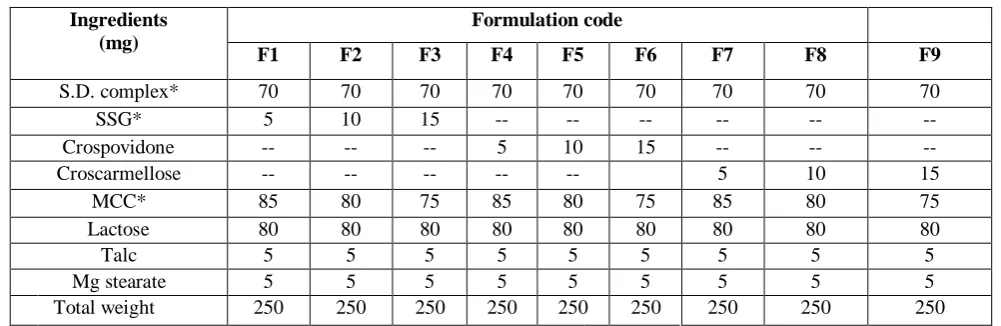
Fast dissolving tablets were made from best formulation of solid dispersions which was 1:6 by direct compression method. Drug was mixed with superdisintegrants i.e. sodium starch glycolate, croscarmellose sodium and crospovidone, microcrystalline cellulose, lactose as diluent, magnesium stearate as lubricant and talc as glidant. All ingredients were passed through mesh #60. 70 mg of which is the best formulation of solid dispersions of Rosuvastatin was compressed by using single punch tablet machine. (Rolex, India) Average tablet weight was adjusted to 250 mg9.
Table 1: Formulation of Rosuvastatin fast dissolving tablets
Ingredients (mg)
Formulation code
F1 F2 F3 F4 F5 F6 F7 F8 F9
S.D. complex* 70 70 70 70 70 70 70 70 70
SSG* 5 10 15 -- -- -- -- -- --
Crospovidone -- -- -- 5 10 15 -- -- --
Croscarmellose -- -- -- -- -- 5 10 15
MCC* 85 80 75 85 80 75 85 80 75
Lactose 80 80 80 80 80 80 80 80 80
Talc 5 5 5 5 5 5 5 5 5
Mg stearate 5 5 5 5 5 5 5 5 5
Total weight 250 250 250 250 250 250 250 250 250
*S.D. Complex = solid dispersion complex SD4 (1:6) equivalent to 10mg of drug, SSG = Sodium Starch Glycolate, MCC = Micro Crystalline Cellulose
Pre compression parameters of fast dissolving tablets
Angle of repose (θ)
The angle of repose was then calculated by measuring the height and radius of the heap of granules formed10.
θ = tan-1 (h/r)
Where, θ is the angle of repose and h is the height and r is the radius
Bulk and Tapped density
The accurately weighed amount of sample was taken in a 25 ml measuring cylinder of borosil recorded the volume
of packing and tapped 100 times on a plane hard wooden surface and tapped volume of packing was recorded10.
LBD (Loose Bulk Density) =
Mass of powder / Bulk Volume
TBD (Tapped Bulk Density) =
Mass of powder / Tapped Volume of packing Carr’s compressibility index (%)
% Carr’s Index = TBD – LBD / TBD * 100
where, LBD = Loose Bulk Density and
TBD = Tapped Bulk Density
Hausner Ratio
Hausner Ratio is a number that is correlated to the flowability of a powder or granular material. Compressibility index has been defined by Hausner. It is calculated as:
Hausner Ratio = Tapped Bulk Density / Loose Bulk Density
Evaluation of fast dissolving tablets
General appearance
Tablets of different formulations were randomly selected and organoleptic properties such as colour, odour, taste, shape, were evaluated.
Uniformity of weight
As per IP, twenty tablets were taken randomly from each formulation and weighed collectively and average weight was calculated using digital balance. The individual weights were compared with the average weight for obtaining weight variation.
Tablet hardness
The hardness of the tablets was determined using Monsanto hardness tester. It is expressed in kg/cm2. Three tablets were randomly picked and hardness of the same tablets from each formulation was determined11.
Tablet thickness
Ten tablets from each batch formulation were selected randomly and their thickness was measured by the vernier-caliper (Tresna, India).
Friability
Roche friabilator was used for the purpose. Pre-weighed sample of tablets was placed in the friabilator and were subjected to 100 revolutions. Tablets were dusted using a soft muslin cloth and reweighed. Compressed tablets should not lose more than 1% of their original weight.
Estimation of drug content
Drug content of fast dissolving tablets of Rosuvastatin was calculated by weighing ten tablets of each formulation. A quantity of powder equivalent to 10 mg of Rosuvastatin was dissolved in methanol and solution was filtered through a 0.45 μm whatmann filter paper. Rosuvastatin content was determined by measuring the absorbance at 242 nm at UV visible spectrophotometer after appropriate dilution with methanol. The drug content was determined using calibration curve. The mean percent drug content was calculated as an average of three dimensions12.
In vitro disintegration time
The disintegration time was measured using disintegration test apparatus. One tablet was placed in each of the six tubes of the basket. The basket with the bottom surface made of a stainless-steel screen (mesh no. 10) was immersed in water bath at 37 ± 2°C having
phosphate buffer pH 6.8. The assembly should be raised and lowered between 30 cycles per minute in the pH 6.8. The time in seconds required for complete disintegration was determined using a stop watch13.
Wetting time
A piece of tissue paper folded twice was placed in a small petridish (d = 5 cm) containing 6 ml of water, a tablet was put on the paper. The time required for water to reach the upper surface of the tablet and to completely wet the tablet was noted as wetting time14.
In vitro dispersion time
In vitro dispersion time was measured by dropping a tablet in a measuring cylinder containing 6 ml of phosphate buffer pH 6.8. Three tablets from each formulation were randomly selected and in vitro
dispersion time was performed. In vitro disintegration is measured by observing the time taken by the tablets to undergo uniform dispersion in pH 6.8 buffer.
Water absorption ratio
A piece of tissue paper folded twice was placed in a small petridish containing 6 ml of distilled water. A tablet was put on the paper and the time required for complete wetting was measured. The wetted tablet was then weighed. The weight of the tablets prior to placing in Petridish was noted (Wb) using the digital balance. The weighted tablet was removed and reweighed (Wa).
Water absorption ratio was determined by using equation
R= 100 * (Wa-Wb) / Wb
where, Wa = weight of the tablet after water absorption.
Wb = weight of the tablet before water absorption.
In vitro release studies
In vitro release studies were carried out using tablet dissolution test apparatus (USP type-II dissolution apparatus). The samples were withdrawn at different time intervals and analysed at 242 nm using phosphate buffer pH 6.8 as blank. Dissolution medium containing 900 ml of phosphate buffer at pH 6.8 rotating at a speed of 75 rpm and temperature conditions at 37 ± 0.5º C are
in vitro dissolution parameters used in vitro dissolution studies. Aliquots, each of 5 ml, from the dissolution medium were withdrawn at time intervals of 5, 10, 15, 20, 25 up to 60 minutes and replenished by an equal volume of fresh dissolution medium to maintain sink conditions. The samples were filtered through 0.45μm whatman filter paper analyzed by measuring the absorbance at 242 nm. Drug concentration was calculated from the standard calibration curve and expressed as cumulative percent drug dissolved15.
Drug release kinetics
To establish a relationship between the release kinetics of the dissolution study, data obtained from in vitro
dissolution study was fitted into various kinetic models. Zero order as cumulative percent of drug dissolved vs.
percent drug dissolved vs. square root of time , Korsmeyer and Peppas equation as log cumulative percentage of drug released vs. log time and the exponent n was calculated from slope of the straight line. If exponent is 0.5, then diffusion mechanism is fickian; if 0.5 < n < 1.0, mechanism is non- fickian.
Comparison with marketed formulation
The promising formulation was compared with the conventional marketed formulation which is 10 mg Crestor tablet (Astrazeneca, Bangalore) for in vitro
dissolution studies between the best released formulation and conventional marketed formulation.
Stability studies
The stability studies were studied at different temperature conditions according to ICH guidelines at 25 ºC ± 2 ºC / 60 % ± 5 % RH for real and at 40 ºC ± 2 ºC / 75 % RH ± 5 % for accelerated stability studies The samples were withdrawn at different time intervals as 0, 7, 15, 30, 60 and 90 days. The selected formulation was subjected to stability studies for 3 months. Samples were evaluated for colour, thickness, hardness, drug content,
in vitro disintegration time, friability and in vitro drug release studies16.
Table 2: Pre compression parameters of FDTs of Rosuvastatin
Batch Angle of Repose (θ) Bulk density (gm/cm3)
Tapped density (gm/cm3)
Carr’s index (%)
Hausner Ratio
F1 29.19 ± 0.59 0.61 ± 1.32 0.71 ± 0.51 14.08 ± 1.51 1.163 ± 0.15
F2 27.89 ± 1.61 0.62 ± 0.51 0.71 ± 1.09 12.61 ± 0.77 1.145 ± 0.87
F3 29.68 ± 0.58 0.60 ± 0.44 0.70 ± 1.47 14.27 ± 1.83 1.166 ± 0.65
F4 28.53 ± 0.78 0.61 ± 0.79 0.72 ± 0.99 14.98 ± 0.57 1.179 ± 0.81
F5 30.28 ± 1.16 0.59 ± 1.72 0.69 ± 1.34 14.49 ± 0.98 1.169 ± 0.77
F6 29.77 ± 1.17 0.59 ± 0.78 0.68 ± 0.67 13.23 ± 0.64 1.152 ± 1.22
F7 30.62 ± 0.47 0.60 ± 1.11 0.69 ± 0.89 13.09 ± 0.22 1.150 ± 1.09
F8 28.94 ± 0.78 0.63 ± 0.61 0.72 ± 0.76 12.51 ± 0.77 1.142 ± 0.77
F9 29.22 ± 0.58 0.64 ± 0.55 0.75 ± 1.77 14.66 ± 0.81 1.171 ± 0.81
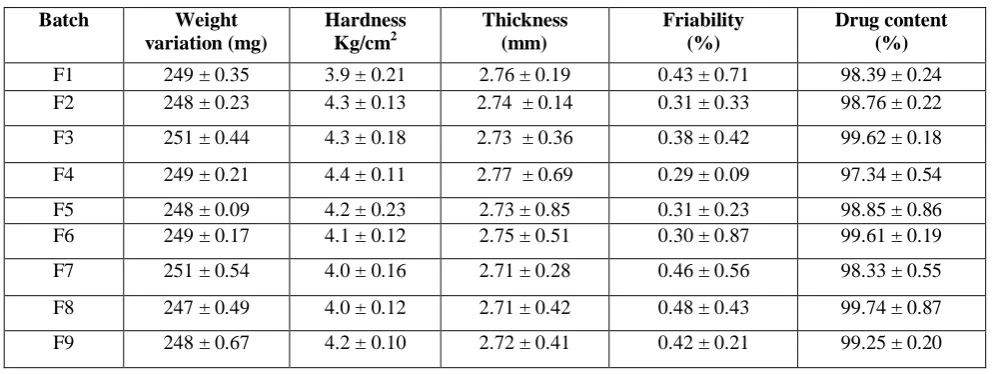
Table 3:Weight variation, hardness, thickness, friability and drug content of fast dissolving tablets
Batch Weight variation (mg)
Hardness Kg/cm2
Thickness (mm)
Friability (%)
Drug content (%)
F1 249 ± 0.35 3.9 ± 0.21 2.76 ± 0.19 0.43 ± 0.71 98.39 ± 0.24
F2 248 ± 0.23 4.3 ± 0.13 2.74 ± 0.14 0.31 ± 0.33 98.76 ± 0.22
F3 251 ± 0.44 4.3 ± 0.18 2.73 ± 0.36 0.38 ± 0.42 99.62 ± 0.18
F4 249 ± 0.21 4.4 ± 0.11 2.77 ± 0.69 0.29 ± 0.09 97.34 ± 0.54
F5 248 ± 0.09 4.2 ± 0.23 2.73 ± 0.85 0.31 ± 0.23 98.85 ± 0.86
F6 249 ± 0.17 4.1 ± 0.12 2.75 ± 0.51 0.30 ± 0.87 99.61 ± 0.19
F7 251 ± 0.54 4.0 ± 0.16 2.71 ± 0.28 0.46 ± 0.56 98.33 ± 0.55
F8 247 ± 0.49 4.0 ± 0.12 2.71 ± 0.42 0.48 ± 0.43 99.74 ± 0.87
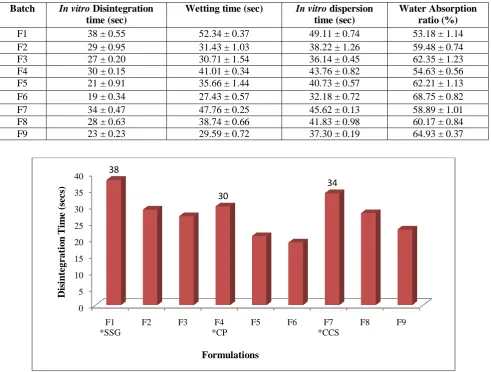
Table 4:In vitro disintegration time, wetting time, In vitro dispersion time and water absorption ratio of fast dissolving tablets
Batch In vitro Disintegration time (sec)
Wetting time (sec) In vitro dispersion time (sec)
Water Absorption ratio (%)
F1 38 ± 0.55 52.34 ± 0.37 49.11 ± 0.74 53.18 ± 1.14
F2 29 ± 0.95 31.43 ± 1.03 38.22 ± 1.26 59.48 ± 0.74
F3 27 ± 0.20 30.71 ± 1.54 36.14 ± 0.45 62.35 ± 1.23
F4 30 ± 0.15 41.01 ± 0.34 43.76 ± 0.82 54.63 ± 0.56
F5 21 ± 0.91 35.66 ± 1.44 40.73 ± 0.57 62.21 ± 1.13
F6 19 ± 0.34 27.43 ± 0.57 32.18 ± 0.72 68.75 ± 0.82
F7 34 ± 0.47 47.76 ± 0.25 45.62 ± 0.13 58.89 ± 1.01
F8 28 ± 0.63 38.74 ± 0.66 41.83 ± 0.98 60.17 ± 0.84
F9 23 ± 0.23 29.59 ± 0.72 37.30 ± 0.19 64.93 ± 0.37
Figure 1: Disintegration time for fast dissolving tablets
Table 5: Best fit models for all the formulations
Formulation code
Zero Order r2
First Order r2
Higuchi r2
Hixon Crowel
r2
Korsemeyer and Peppas
‘n’
Release order and Main Transport
Mechanism
F1 0.931 0.987 0.983 0.977 0.760 First order, Non-
fickian
F2 0.875 0.982 0.966 0.979 0.759 First order, Non-
fickian
F3 0.882 0.994 0.946 0.978 0.731 First order, Non-
fickian
F4 0.815 0.981 0.979 0.943 0.703 First order, Non-
fickian
F5 0.787 0.984 0.974 0.949 0.699 First order, Non-
fickian
F6 0.733 0.970 0.950 0.915 0.687 First order, Non-
fickian
F7 0.871 0.994 0.933 0.925 0.758 First order, Non-
fickian
F8 0.842 0.990 0.932 0.915 0.755 First order, Non-
fickian
F9 0.756 0.976 0.952 0.926 0.735 First order, Non-
fickian
0 5 10 15 20 25 30 35 40
F1 *SSG
F2 F3 F4
*CP
F5 F6 F7
*CCS
F8 F9
38
30
34
D
is
in
te
gr
ati
o
n
Ti
m
e
(s
ec
s)
Table 6: Comparison with marketed formulation (Crestor)
Time (mins)
F6 Marketed Formulation 2.0 57.17 ±
0.19
38.87 ± 0.91
4.0 70.31 ± 0.49
46.45 ± 0.23
6.0 78.83 ± 0.61
49.39 ± 0.77
8.0 85.14 ± 0.79
57.22 ± 0.36
10.0 91.16 ± 0.84
64.63 ± 0.44
12.0 95.76 ± 0.37
69.55 ± 0.71
Figure 2: In vitro drug release of FDTs with sodium starch glycolate
Figure 3: In vitro drug release of FDTs with crospovidone
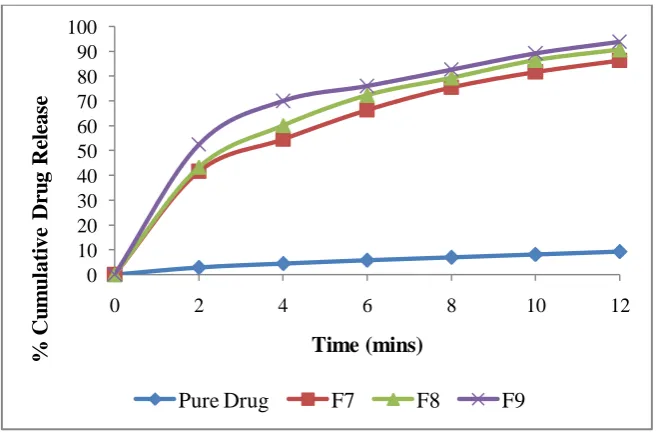
Figure 4: In vitro drug release of FDTs with croscarmellose sodium
0 10 20 30 40 50 60 70 80 90 100
-3 2 7 12
%
C
u
m
u
lat
iv
e
D
ru
g
R
el
eas
e
Time (mins)
Pure Drug
F1
F2
F3
0 10 20 30 40 50 60 70 80 90 100
0 2 4 6 8 10 12
%
C
u
m
u
lati
v
e
D
r
u
g
R
e
le
as
e
Time (mins)
Pure Drug F4 F5 F6
0 10 20 30 40 50 60 70 80 90 100
0 2 4 6 8 10 12
%
Cu
m
u
lat
ive
Dr
u
g
Re
le
a
se
Time (mins)
Figure 5: Comparative in vitro drug release of FDTs for formulations F3, F6 and F9
Figure 6: Percentage cumulative drug release of FDTs for F6 and marketed product
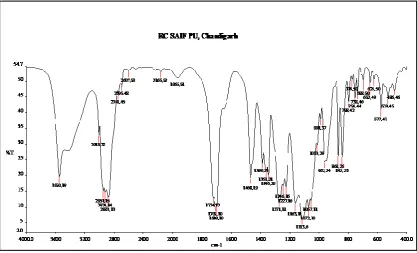
Figure 7: FTIR spectra of pure Rosuvastatin 0
20 40 60 80 100
0 2 4 6 8 10 12
%
C
u
m
u
lat
ive
D
ru
g
R
el
ea
se
Time (mins)
Pure Drug F3 F6 F9
0 20 40 60 80 100
0 2 4 6 8 10 12
%
C
u
m
u
lat
ive
D
ru
g
R
el
ea
se
Time (mins)
Figure 8: FTIR spectra of Rosuvastatin with PEG 4000 (1:1)
RESULTS AND DISCUSSION
The model drug selected (Rosuvastatin) was characterized and analyzed for its physical appearance and solubility, which complies with the monograph as specified in Indian pharmacopoeia and British pharmacopoeia. UV and IR spectral analysis was done and the drug shows similar data as mentioned in different official publications. By FTIR analysis of pure Rosuvastatin showed characteristic peaks at 3551 cm-1, 1658 cm-1, 1656 cm-1, 1522 cm-1, 1756 cm-1 and 1224 cm-1 these are almost same as reported in the monograph for Rosuvastatin. Drug-polymer interaction study by FTIR for pure drug, PEG 4000, crospovidone, croscarmellose sodium and sodium starch glycolate showed that there were no significant changes in the position of the characteristic peaks of drug when mixed with superdisintegrants which indicated compatibility of polymers with the drug. In vitro dissolution study showed increased dissolution rate as compared to pure drug for the solid dispersions. SD4 formulation showed highest release and 100% drug was released in 60 minutes. The pattern of drug release was SD4 > SD3 > SD2 > SD1 > pure drug. Before the compression, the powder blends were subjected to pre compression evaluation to determine the flow properties and the compressibility. The angle of repose of pre compressed blend of Rosuvastatin of formulations F1 to F9 was in the range of 27º.89′ ± 1.61 to 30º.62′ ± 0.47 thus indicating that the studied blends have excellent flow properties, because for a blend to have excellent flow properties value of θ should be between 25-300
. Bulk density and tapped density for all the formulations were found in the range between 0.59 ± 0.78 g/cm3 to 0.64 ± 0.55 gm/cm3 and 0.68 ± 0.67 gm/cm3 to 0.75 ± 1.77 gm/cm3 respectively. The compressibility index of pre compressed blends of Rosuvastatin formulations F1 to F9 was in the range of 12.51 ± 0.77 % to 14.98 ± 0.57 %,
released from the system was by Non-fickian diffusion. The conventional marketed product gave 69.55 ± 0.71 of drug release in 12 minutes of dissolution study. In vitro
dissolution profile of marketed product i.e. Crestor (10 mg) showed that the formulation F6 with 95.76 ± 0.37 % drug release has better drug dissolution in comparison with the conventional marketed product. The results of stability studies depicted that fast dissolving tablet formulations remained clear even after a period of time. There was a small difference between the formulations and it was found to be consistent with respect to their physicochemical parameters during the stability study.
CONCLUSION
In the present research a successful attempt was made to formulate fast dissolving tablets of Rosuvastatin by direct compression method to improve solubility, bioavailabity and patient compliance especially for the pediatric and geriatric patients. Rosuvastatin has poor solubility in water. It is a BCS Class II drug. The present study has shown that it is possible to increase the dissolution rate of poorly soluble drug Rosuvastatin by preparing it as solid dispersions with carriers like PEG 4000. Solid dispersions prepared by melting method in the ratio of 1:6 for drug and carrier exhibit rapid dissolution rate when compared with pure drug. Fast dissolving tablets of Rosuvastatin prepared by using various superdisintegrants showed rapid dissolution when compared with the marketed tablets. Based on the
study, it may be concluded that Rosuvastatin tablets prepared by using solid dispersions with crospovidone as superdisintegrant was found to be ideal for rapid disintegration and for improving dissolution rate, which in turn increased the bioavailability. Crospovidone was the best superdisintegrant showing the shortest disintegration time. Crospovidone quickly wicks saliva to generate the volume of expansion and hydrostatic pressure, this is necessary to provide the rapid disintegration in the mouth The drug release of tablet formulations in the presence of various superdisintegrants were in the order of crospovidone > croscarmellose sodium > sodium starch glycolate. This study indicates the possibility of utilizing the selected best formulation F6 in the preparation of Rosuvastatin fast dissolving tablet as a new dosage form for oral administration having increased solubility, improved bioavailability, rapid dissolution and more patient compliance.
ACKNOWLEDGEMENT
Authors are thankful to FTIR Lab, Punjab University, Chandigarh, India, for carrying out FTIR studies and also thankful to Rayat & Bahra group of pharmacy for providing the support encouragement in carrying out this work. I admit my sincere thanks to my guide Director/Principal S.L. Harikumar and Ms. Manpreet Kaur Walia, Assistant Professor for their encouragement.
CONFLICTS OF INTEREST: None
REFERENCES
1. Bajaj Himani, Bisht Seema, Yadav Mayank, Singh Vinod,,
Bioavailability enhancement: A Review, International Journal of Pharma and Bio Sciences, 2010, 2(2), 202-216.
2. Basu B, Bagadiya A, Makwana S, Bhatt V and Dharamsi A,
Formulation and evaluation of fast disintegrating tablet of cinnarizine with subliming material, Journal of Advance Pharma Technology Res, 2011, 2(4).
3. Kumar A, Padhee Kumud, Singh Ajit, Pathak Naveen, Review on solubility enhancement techniques for hydrophobic drugs, International Journal of Comprehensive Pharmacy, 2011, 2(3), 1-7.
4. Palkhede MB, Amrutkar SV, Erande KB, Formulation,
optimization and evaluation of fast disintegrating tablets of
mebeverine HCl, International Journal of pharmacy and
pharmaceutical Sci, 2012, 4(4), 121-125.
5. Singh H, Formulation and evaluation of mouth dissolving
tablets of carvedilol, Intl. Journal of Pharma and
Biosciences, 2011, 2(1), 232-239.
6. Bhushan SY, Sambhaji SP, Anant RP, Mahadik KR,New
drug delivery system for elderly, Indian Drugs, 2010, 37(7), 312-318.
7. Amar M, Badawy NM, Abd El-Aziz B, Abd El-Aleem,
Nesrine T. Lamie, Stability indicating spectrophotometric methods for determination of rosuvastatin in the presence of
its acid degradation products by derivative
spectrophotometric techniques, Journal of Advanced Pharmaceutical Research, 2011, 2(1).
8. Akiladevi D, Shanmugapandiyan P, Jebasingh D,
Sachinanadan,Preparation and evaluation of Paracetamol by
solid dispersion technique, International Journal of Pharmacy and Pharmaceutical science, 2011, 3(1), 188-191.
9. Solanki and Dahima, Formulation and evaluation of
fexofenadine mouth dissolving tablet, Journal of Pharm Sciences, 2010, 8(2), 167-170.
10. Subramanyam CVS, Textbook of Physical Pharmaceutics,
Vallabh Prakashan., 2001,2ndedition.
11. Lachman L., Liberman H.A, theory and practice of industrial
pharmacy, 3 rd edition,1998; 462-464.
12. Masareddy RS, Kadia RV, Manvim FV, Devlopment of
mouth dissolving tablet of clozapine cusing two different
techniques, Ind. J. Pharma. Sci, 2008, 57, 526-528.
13. Jha SK, Vijaylakshmi P, Karki P, Goli D, Formulation and
evaluation of melt in mouth tablets of haloperidol, AAPS
Pharm Sci Tech, 2008,2(4), 255-260.
14. Rangole US, Kawitkwar PS, Sakarkar DM, Formulation and
in-vitro evaluation of rapidly disintegrating tablet using hydrochlorothiazide as a model drug, Res.J.Pharma. Tech, 2008, 1, 349-352.
15. Arora SC, Sharma PK, Irchhaiya R, Khatkar A, Singh N,
Gagoria J, Devlopment, characterization and solubility study of solid dispersion of cefuroxime axetil by solvent
evaporation method, Journal of Advanced Pharma TechRes,
2010, 1, 326-329.
16. Shah P, Rajshree M, Rane Y, Stability testing of