Power Quality Enhancement In DG Based Micro grid Using UPQC
M Jyothi1, G Kamesh2
M.Tech Scholar, Department of EEE, KIET, kakinada, India.1 Asst. Professor, Department of EEE, KIET, kakinada,, India.2
ABSTRACT
This proposition is to control methodology of bound together power quality conditioner (UPQC) in dissemination age (DG)- based framework associated/independent small scale matrix/miniaturized scale age (µG) framework. The shunt some portion of UPQC Active power Filter (APFsh) is put at the Point of Common Coupling (PCC).The arrangement part of the UPQC (APFse) is associated before the PCC and in arrangement with the network. A keen islanding location and reconnection strategy (IR) are presented in the UPQC as an optional control. Henceforth, it is
named as UPQCμG −IR. The benefits of the proposed UPQCμG −IR over the ordinary UPQC are to repay
voltage intrusion notwithstanding voltage list/swell, symphonious, and responsive power pay in the interconnected mode. Fuzzy rationale controller based DG control framework is proposed in this undertaking amid the interconnected and islanded mode, DG converter with capacity will supply the dynamic power just and the shunt some portion of the UPQC will repay the responsive and consonant energy of the heap.
IndexTerms—Distributed age (DG), savvy islanding location (IsD), small scale framework, control quality, bound together power quality conditioner (UPQC), Fuzzy controller.
Introduction
The testing issues of a fruitful combination of bound together power quality conditioner (UPQC) in a disseminated age (DG)- based framework associated
miniaturized scale age (μG) framework are
fundamentally: 1) control multifaceted nature for dynamic power exchange; 2) capacity to remunerate non dynamic power amid the islanded mode; and 3) trouble in the limit upgrade separately [1]. For a consistent power exchange between the framework associated activity and islanded mode, different operational changes are included, for example, exchanging between the current and voltage control mode, vigor against the islanding location and reconnection postponements, et
control multifaceted nature of the μG frameworks. To stretch out the operational adaptability and to enhance
the power quality in matrix associated μG frameworks,
another situation and reconciliation method of UPQC
have been proposed in [4], which is named as UPQCμG. In the UPQCμG incorporated circulated framework, μG
framework (with capacity) and shunt some portion of the UPQC are put at the Point of Common Coupling (PCC). The arrangement part of the UPQC is set before the PCC and in arrangement with the lattice. The dc interface is likewise associated with the capacity, if display. To keep up the task in islanded mode and reconnection through the UPQC, correspondence
process between the UPQC μG and μG framework is
said in [4]. In this task, the control method of the
displayed UPQC μG in [4] is upgraded by executing a savvy islanding and novel reconnection system with lessened number of switches that will guarantee
consistent activity of the μG without interference. Consequently, it is named as UPQC μG−IR. The advantages offered by the proposed UPQC μG−IRover the customary UPQC are as per the following.
1) It can repay voltage intrusion/list/swell and non dynamic current in the interconnected mode. In this way, the DG converter can in any case be associated with the framework amid these contorted conditions. In this manner, it improves the operational adaptability of
the DG converters/μG framework, all things considered,
which is additionally expounded in later area.
2) Shunt piece of the UPQC Active Power Filter (APFsh) can keep up association amid the islanded mode and furthermore repays the non dynamic Reactive and Harmonic Power (QH) energy of the heap.
3) Both in the interconnected and islanded modes,
the μG gives just the dynamic energy to the heap. Along
these lines, it can decrease the control intricacy of the DG converters.
4) Islanding identification and reconnection strategy are presented in the proposed UPQC as an
Power Quality Enhancement In DG Based Micro grid Using UPQC
M Jyothi1, G Kamesh2
M.Tech Scholar, Department of EEE, KIET, kakinada, India.1 Asst. Professor, Department of EEE, KIET, kakinada,, India.2
ABSTRACT
This proposition is to control methodology of bound together power quality conditioner (UPQC) in dissemination age (DG)- based framework associated/independent small scale matrix/miniaturized scale age (µG) framework. The shunt some portion of UPQC Active power Filter (APFsh) is put at the Point of Common Coupling (PCC).The arrangement part of the UPQC (APFse) is associated before the PCC and in arrangement with the network. A keen islanding location and reconnection strategy (IR) are presented in the UPQC as an optional control. Henceforth, it is
named as UPQCμG −IR. The benefits of the proposed UPQCμG −IR over the ordinary UPQC are to repay
voltage intrusion notwithstanding voltage list/swell, symphonious, and responsive power pay in the interconnected mode. Fuzzy rationale controller based DG control framework is proposed in this undertaking amid the interconnected and islanded mode, DG converter with capacity will supply the dynamic power just and the shunt some portion of the UPQC will repay the responsive and consonant energy of the heap.
IndexTerms—Distributed age (DG), savvy islanding location (IsD), small scale framework, control quality, bound together power quality conditioner (UPQC), Fuzzy controller.
Introduction
The testing issues of a fruitful combination of bound together power quality conditioner (UPQC) in a disseminated age (DG)- based framework associated
miniaturized scale age (μG) framework are
fundamentally: 1) control multifaceted nature for dynamic power exchange; 2) capacity to remunerate non dynamic power amid the islanded mode; and 3) trouble in the limit upgrade separately [1]. For a consistent power exchange between the framework associated activity and islanded mode, different operational changes are included, for example, exchanging between the current and voltage control mode, vigor against the islanding location and reconnection postponements, et
control multifaceted nature of the μG frameworks. To stretch out the operational adaptability and to enhance
the power quality in matrix associated μG frameworks,
another situation and reconciliation method of UPQC
have been proposed in [4], which is named as UPQCμG. In the UPQCμG incorporated circulated framework, μG
framework (with capacity) and shunt some portion of the UPQC are put at the Point of Common Coupling (PCC). The arrangement part of the UPQC is set before the PCC and in arrangement with the lattice. The dc interface is likewise associated with the capacity, if display. To keep up the task in islanded mode and reconnection through the UPQC, correspondence
process between the UPQC μG and μG framework is
said in [4]. In this task, the control method of the
displayed UPQC μG in [4] is upgraded by executing a savvy islanding and novel reconnection system with lessened number of switches that will guarantee
consistent activity of the μG without interference. Consequently, it is named as UPQC μG−IR. The advantages offered by the proposed UPQC μG−IRover the customary UPQC are as per the following.
1) It can repay voltage intrusion/list/swell and non dynamic current in the interconnected mode. In this way, the DG converter can in any case be associated with the framework amid these contorted conditions. In this manner, it improves the operational adaptability of
the DG converters/μG framework, all things considered,
which is additionally expounded in later area.
2) Shunt piece of the UPQC Active Power Filter (APFsh) can keep up association amid the islanded mode and furthermore repays the non dynamic Reactive and Harmonic Power (QH) energy of the heap.
3) Both in the interconnected and islanded modes,
the μG gives just the dynamic energy to the heap. Along
these lines, it can decrease the control intricacy of the DG converters.
4) Islanding identification and reconnection strategy are presented in the proposed UPQC as an
Power Quality Enhancement In DG Based Micro grid Using UPQC
M Jyothi1, G Kamesh2
M.Tech Scholar, Department of EEE, KIET, kakinada, India.1 Asst. Professor, Department of EEE, KIET, kakinada,, India.2
ABSTRACT
This proposition is to control methodology of bound together power quality conditioner (UPQC) in dissemination age (DG)- based framework associated/independent small scale matrix/miniaturized scale age (µG) framework. The shunt some portion of UPQC Active power Filter (APFsh) is put at the Point of Common Coupling (PCC).The arrangement part of the UPQC (APFse) is associated before the PCC and in arrangement with the network. A keen islanding location and reconnection strategy (IR) are presented in the UPQC as an optional control. Henceforth, it is
named as UPQCμG −IR. The benefits of the proposed UPQCμG −IR over the ordinary UPQC are to repay
voltage intrusion notwithstanding voltage list/swell, symphonious, and responsive power pay in the interconnected mode. Fuzzy rationale controller based DG control framework is proposed in this undertaking amid the interconnected and islanded mode, DG converter with capacity will supply the dynamic power just and the shunt some portion of the UPQC will repay the responsive and consonant energy of the heap.
IndexTerms—Distributed age (DG), savvy islanding location (IsD), small scale framework, control quality, bound together power quality conditioner (UPQC), Fuzzy controller.
Introduction
The testing issues of a fruitful combination of bound together power quality conditioner (UPQC) in a disseminated age (DG)- based framework associated
miniaturized scale age (μG) framework are
fundamentally: 1) control multifaceted nature for dynamic power exchange; 2) capacity to remunerate non dynamic power amid the islanded mode; and 3) trouble in the limit upgrade separately [1]. For a consistent power exchange between the framework associated activity and islanded mode, different operational changes are included, for example, exchanging between the current and voltage control mode, vigor against the islanding location and reconnection postponements, et
control multifaceted nature of the μG frameworks. To stretch out the operational adaptability and to enhance
the power quality in matrix associated μG frameworks,
another situation and reconciliation method of UPQC
have been proposed in [4], which is named as UPQCμG. In the UPQCμG incorporated circulated framework, μG
framework (with capacity) and shunt some portion of the UPQC are put at the Point of Common Coupling (PCC). The arrangement part of the UPQC is set before the PCC and in arrangement with the lattice. The dc interface is likewise associated with the capacity, if display. To keep up the task in islanded mode and reconnection through the UPQC, correspondence
process between the UPQC μG and μG framework is
said in [4]. In this task, the control method of the
displayed UPQC μG in [4] is upgraded by executing a savvy islanding and novel reconnection system with lessened number of switches that will guarantee
consistent activity of the μG without interference. Consequently, it is named as UPQC μG−IR. The advantages offered by the proposed UPQC μG−IRover the customary UPQC are as per the following.
1) It can repay voltage intrusion/list/swell and non dynamic current in the interconnected mode. In this way, the DG converter can in any case be associated with the framework amid these contorted conditions. In this manner, it improves the operational adaptability of
the DG converters/μG framework, all things considered,
which is additionally expounded in later area.
2) Shunt piece of the UPQC Active Power Filter (APFsh) can keep up association amid the islanded mode and furthermore repays the non dynamic Reactive and Harmonic Power (QH) energy of the heap.
3) Both in the interconnected and islanded modes,
the μG gives just the dynamic energy to the heap. Along
these lines, it can decrease the control intricacy of the DG converters.
and μG is additionally given in the optional control. The
DG converters may not require to have islanding identification and reconnection.
5) The framework can even work within the sight of a stage bounce/contrast (inside breaking point)
between the matrix and μG. In this manner, the UPQC μG−IR will have the aggregate control of the islanding identification and reconnection for a consistent task of
μG with a top notch control benefit. Results are
confirmed through MATLAB/SIMULINK condition.
II. WORKING PRINCIPLE
The coordination procedure of the proposed UPQC μG −IR to a framework associated and DG coordinated μG
framework is appeared in Fig. 1(a). S2 and S3 are the breaker switches that are utilized to island and reconnect
the μG framework to the lattice as coordinated by the auxiliary control of the UPQC μG−IR. Interconnected Mode In this mode, as appeared in Fig. 1(b), the accompanying holds:
1) the DG source conveys just the major dynamic energy to the lattice, stockpiling, and load;
2) the APFsh repays the responsive and symphonious (QH) energy of the nonlinear load to keep the Total Harmonic Distortion at the PCC inside the IEEE standard point of confinement;
3) voltage list/swell/interference can be remunerated by the dynamic power from the lattice/stockpiling through the APF se,t. The DG converter does not detect any sort of voltage unsettling influence at the PCC and consequently stays associated in any condition;
4) if the voltage interference/pass out happens, UPQC sends a flag inside a preset time to the DG converter to be islanded
A. Islanded Mode
For this situation, as appeared in Fig. 1(c), the accompanying holds:
1) the APFse is disengaged amid the lattice disappointment and DG converter stays associated with keep up the voltage at PCC;
2) the APFsh still repays the non dynamic energy of the nonlinear load to give or keep up undistorted current at PCC for other direct loads (assuming any);
3) therefore, DG converter (with capacity) conveys just the dynamic power and subsequently does not should be disengaged from the framework;
4) the APFse is reconnected once the framework control is accessible.
From Fig. 1(a)– (b), obviously the UPQC μG−IR
requires two switches contrasted and four, as required
for UPQC μG in [4].
III. DESIGN ISSUES AND RATING SELECTION
The crucial recurrence portrayal of the framework is appeared in Fig. 1(d) and the voltage and current relations are determined in (1) and (2). As indicated by the working standard, the APF se can work amid voltage intrusion/hang/swell up to a specific level before it is landed. The APFsh dependably remunerates QH energy of the heap. In this manner, outline and rating choice for the APFse, APFsh, and arrangement transformer aditional islanding recognition and reconnection capacities. A correspondence channel (signals
exchange) between the proposed UPQC μG−IR and the μG is additionally required for the smooth task. These
signs age depend on the droop/swell/intrude on/supply disappointment conditions. This undertaking is performed in Level 2 (optional control) of the progressive control [13]. The general coordination system and control procedure are to enhance the power quality amid interconnected and islanded modes. This includes identifying islanding and reconnection that guarantees the DG converter remains connected and supply dynamic energy to the heap. This decreases the control multifaceted nature of the converter and additionally the power disappointment probability in the islanded mode. The five primary
components (c) of the proposed UPQC μG−IR
controller are: 1) positive succession recognition; 2) arrangement part (APFse) control; 3) shunt part (APFsh) control; 4) clever islanding discovery (IsD); and 5) synchronization and reconnection (SynRec). As the IsD and SynRec highlights are new in UPQC, along these lines, these have been portrayed in subtle elements
Fig1:a) Integration system of the UPQCμG−IR.
Working guideline in (b) interconnected mode, (c) islanded mode, and (d) key recurrence representation.together with the measuring of dc connect capacitor are extremely important.These are talked about in the accompanying segment:
and θpcc = 0°. The phasor graphs of The proposed
framework in various conditions are appeared in Fig. 2.Phasor charts were clarified in details(1)
Fig: 1-a
Fig: 1-b
II. CONTROLLER DESIGN
The block diagram of the proposed UPQC μG−IR
controller is shown in Fig. 4. It has the same basic functionality as the UPQC controller except for the
Fig-2,a
( b )
Fig2:Block diagram of the UPQCμG−IR. (a)
Controller.
(b) Control Algorithm.
III. FUZZY CONTROLLER
The word Fuzzy means dubiousness. Fluffiness happens when the limit of snippet of data isn't obvious. In 1965 Lotfi A. Zahed propounded the fuzzy set hypothesis. Fuzzy set hypothesis shows gigantic potential for successful unraveling of the vulnerability in the issue. Fuzzy set hypothesis is an incredible numerical device to deal with the vulnerability emerging because of ambiguity. Understanding human discourse and perceiving manually written characters are some normal examples where fluffiness shows.
activity. The outcomes are joined to give a fresh yield controlling the yield variable and this procedure is called as "DEFUZZIFICATION."
IV.MATLAB SIMULINK AND RESULTS
With the advancement of technology, real-time performance of any system can be observed using a real- time simulator. Instead of developing the complete actual system at full capacity, either the controller/system can be modeled in software or can be built in hardware or can be a combination of both. In real-time simulation, the accuracy of the computations depends upon the precise dynamic representation of the system and the processing time to produce.
Simulink modeling diagrams:
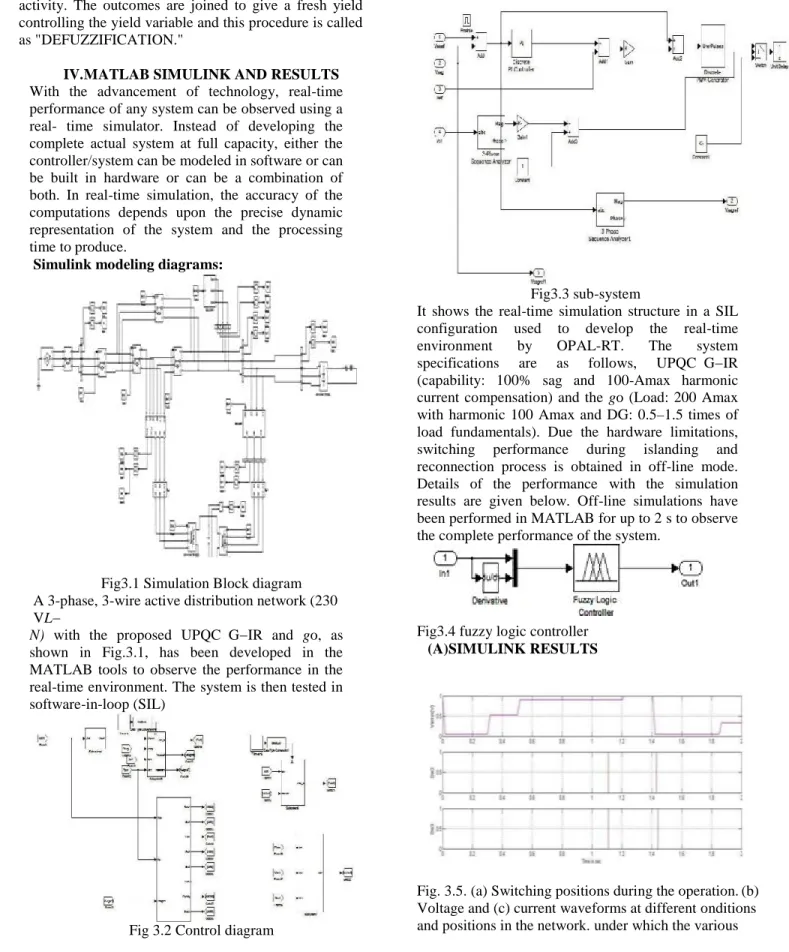
Fig3.1 Simulation Block diagram A 3-phase, 3-wire active distribution network (230 VL−
N) with the proposed UPQCμG−IR and go, as
shown in Fig.3.1, has been developed in the MATLAB tools to observe the performance in the real-time environment. The system is then tested in software-in-loop (SIL)
Fig 3.2 Control diagram
Fig3.3 sub-system
It shows the real-time simulation structure in a SIL configuration used to develop the real-time environment by OPAL-RT. The system specifications are as follows, UPQCμG−IR
(capability: 100% sag and 100-Amax harmonic current compensation) and the go (Load: 200 Amax with harmonic 100 Amax and DG: 0.5–1.5 times of load fundamentals). Due the hardware limitations, switching performance during islanding and reconnection process is obtained in off-line mode. Details of the performance with the simulation results are given below. Off-line simulations have been performed in MATLAB for up to 2 s to observe the complete performance of the system.
Fig3.4 fuzzy logic controller
(A)SIMULINK RESULTS
CONCLUSION
This project describes a powerful control and integration technique of the proposed UPQCμG−IR
in the grid connected μG condition. The real-time performance with off-line simulation has been obtained using MATLAB . The results show that the UPQCμG−IR can compensate the voltage and current
disturbance at the PCC during the interconnected mode. Performance is also observed in bidirectional power flow condition. Fuzzy logic controller based DG control system is proposed in this project. In islanded mode, the DG converters only supply the active power. Therefore, the DG converters do not need to be disconnected or change their control strategy to keep the μG operating in any time with any condition. Islanding detection and seamless reconnection technique by the UPQCμG−IR and the
dynamic change with bidirectional power flow are validated in real-time for a DG integratedμG System without compromising on power quality.
REFERENCES
[1] Shafiuzzaman K. Khadem, Member, IEEE, Malabika Basu, Member, IEEE, and Michael F.
Conlon, Member, IEEE” Intelligent Islanding and
Seamless Reconnection Technique for Microgrid
With UPQC” IEEE JOURNAL OF EMERGING
AND SELECTED TOPICS IN POWER ELECTRONICS, VOL. 03, NO. 2, JUNE 2015
[2] S. K. Khadem, M. Basu, and M. F. Conlon,
“UPQC for power quality improvement in DG
integrated smart grid network—A review,” Int. J. Emerg. Electr. Power Syst., vol. 13, no. 1, p. 3, 2012.
[3] A. Kahrobaeian and Y.-R. Mohamed,
“Interactive distributed generation interface for
flexible micro-grid operation in smart distribution
systems,” IEEE Trans. Sustainable Energy, vol. 3, no.
2, pp. 295–305, Apr. 2012.
[4] X. Yu, A. M. Khambadkone, H. Wang, and S.
Terence, “Control of parallel-connected power converters for low-voltage microgrid—Part I:A
hybrid control architecture,” IEEE Trans. Power
Electron., vol. 25, no. 12, pp. 2962–2970, Dec. 2010.
[5] S. K. Khadem, M. Basu, and M. F. Conlon, “A new
cement and integration method of UPQC to improve the
power quality in DG network,” in Proc. 48th UPEC, vol.
1. Sep. 2013, pp. 1–6.. M. Basu, S. P. Das, and G. K.
Dubey, “Comparative evaluation of two models of
UPQC for suitable interface to enhance power quality,”
Electr. Power Syst. Res., vol. 77, no. 7, pp. 821–830,
2007.
[6] J. Nielsen, F. Blaabjerg, and N. Mohan, “Control
strategies for dynamic voltage restorer compensating
voltage sags with phase jump,” inProc. 16th APEC, vol. 2. 2001, pp. 1267–1273.
[7] D. M. Vilathgamuwa, A. R. Perera, and S. S. Choi,
“Voltage sag compensation with energy optimized dynamic voltage restorer,” IEEE Trans. Power Del., vol.