S T U D Y P R O T O C O L
Open Access
Evaluating the clinical and cost
effectiveness of a behaviour change
intervention for lowering cardiovascular
disease risk for people with severe mental
illnesses in primary care (PRIMROSE study):
study protocol for a cluster randomised
controlled trial
David Osborn
1,10*, Alexandra Burton
1, Kate Walters
2, Irwin Nazareth
2, Samira Heinkel
1, Lou Atkins
3, Ruth Blackburn
1,
Richard Holt
4, Racheal Hunter
2, Michael King
1, Louise Marston
2, Susan Michie
4, Richard Morris
5, Steve Morris
6,
Rumana Omar
2, Robert Peveler
4, Vanessa Pinfold
7, Ella Zomer
2, Thomas Barnes
8, Tom Craig
9, Hazel Gilbert
2,
Ben Grey
6, Claire Johnston
10, Judy Leibowitz
10, Irene Petersen
2, Fiona Stevenson
2, Sheila Hardy
11and Vanessa Robinson
12Abstract
Background:People with severe mental illnesses die up to 20 years earlier than the general population, with
cardiovascular disease being the leading cause of death. National guidelines recommend that the physical care of people with severe mental illnesses should be the responsibility of primary care; however, little is known about effective
interventions to lower cardiovascular disease risk in this population and setting. Following extensive peer review, funding was secured from the United Kingdom National Institute for Health Research (NIHR) to deliver the proposed study. The aim of the trial is to test the effectiveness of a behavioural intervention to lower cardiovascular disease risk in people with severe mental illnesses in United Kingdom General Practices.
Methods/Design:The study is a cluster randomised controlled trial in 70 GP practices for people with severe mental illnesses, aged 30 to 75 years old, with elevated cardiovascular disease risk factors. The trial will compare the effectiveness of a behavioural intervention designed to lower cardiovascular disease risk and delivered by a practice nurse or healthcare assistant, with standard care offered in General Practice. A total of 350 people will be recruited and followed up at 6 and 12 months. The primary outcome is total cholesterol level at the 12-month follow-up and secondary outcomes include blood pressure, body mass index, waist circumference, smoking status, quality of life, adherence to treatments and services and behavioural measures for diet, physical activity and alcohol use. An economic evaluation will be carried out to determine the cost effectiveness of the intervention compared with standard care.
(Continued on next page)
* Correspondence:[email protected]
1Division of Psychiatry, Epidemiology and Applied Clinical Research
Department, Faculty of Brain Sciences, University College London, 6th Floor, Maple House, 149 Tottenham Court Road, London W1T 7NF, UK
10Camden and Islington NHS Foundation Trust, 4th Floor, East Wing, St
Pancras Hospital, 4 St Pancras Way, London NW1 0PE, UK Full list of author information is available at the end of the article
(Continued from previous page)
Discussion:The results of this pragmatic trial will provide evidence on the clinical and cost effectiveness of the intervention on lowering total cholesterol and addressing multiple cardiovascular disease risk factors in people with severe mental illnesses in GP Practices.
Trial registration:Current Controlled Trials ISRCTN13762819. Date of Registration: 25 February 2013. Date and Version Number: 27 August 2014 Version 5.
Keywords:Primary care, Severe mental illnesses, Cardiovascular risk
Background
People with severe mental illness (SMI), defined as schizophrenia, bipolar disorder and other nonorganic psychotic conditions, constitute 0.5 to 1 % of the United Kingdom population [1, 2]. The National Health Service (NHS) expenditure on mental health in 2012 to 2013 was £11.5 billion, higher than any other health category [3]. The predicted cost to the public health sector of schizophrenia is £7.6 billion, with the cost to society at £11.8 billion [4]. These disorders frequently present in the early to mid-twenties and have a major impact on health and social functioning. Whilst the employment rate for all adults aged 16 to 64 years in England is cur-rently 71 %, recent estimates place the employment rate for people with schizophrenia between 5 and 15 % [5].
People with SMI are more likely to die prematurely from cardiovascular disease (CVD) than suicide [6–9]. CVD rates are falling in the general population but not for people with SMI [10, 11]. This widening health in-equality is an NHS priority, emphasised in the National Institute for Health and Care Excellence (NICE) schizo-phrenia and bipolar guidelines [12, 13]. CVD is one of the most important physical health problems experi-enced by people with SMI. Those aged under 50 years are three times more likely to die from CVD, whereas those aged 50 to 75 years have a twofold increased risk [8]. These risks remain high after the effects of smoking and social deprivation are controlled for in the analysis.
There are likely to be multiple reasons for increased CVD in people with SMI. Research in general practice has demonstrated increased levels of cardiovascular risk factors including smoking, obesity, diabetes and dyslipi-daemia in people with SMI compared to general practice controls [14]. This included raised total cholesterol and low density lipoprotein (LDL) cholesterol levels and lower levels of high density lipoprotein (HDL) choles-terol. Research has also found a higher proportion of people with SMI eat a diet higher in fat, lower in fibre and may be less likely to take even mild to moderate ex-ercise [15]. A higher prevalence of increased CVD risk factors has been demonstrated at illness onset [16] and later in treatment [17].
The adverse effects of antipsychotic medication are a concern for both people with SMI and practitioners. The
most effective and most commonly prescribed treat-ments are associated with weight gain and abnormalities of both lipid and glucose metabolism [18, 19]. The anti-psychotics most strongly implicated are olanzapine and clozapine, but nearly all antipsychotics can have effects on appetite, weight gain and metabolism.
Most people with SMI are in contact with primary care and consult with General Practitioners (GPs) more frequently than people without SMI [9, 20], yet they are less likely to see a practice nurse [21]. NICE recom-mends routine annual screening for CVD risk factors for people with both schizophrenia and bipolar disorder in primary care [12, 13], and individuals prescribed antipsy-chotics should receive more frequent monitoring [22]. Clinics for CVD screening in other long-term conditions are routinely carried out by nurses in primary care. Training practice nurses to carry out physical health screening in people with SMI in England has the poten-tial to increase the level of screening and lifestyle advice received by people with SMI [23, 24].
The UK primary care quality outcomes framework (QoF) remunerates GPs for providing an annual review to people with SMI. The required content of such re-views has varied over the last few years with glucose and lipid measurements being retired in 2014/15. Research has shown that if people with SMI are offered CVD screening, they are as likely to take up the offer as people without SMI [25, 26].
pilot randomised controlled trial of Pravastatin identified a significant decrease in total cholesterol and LDL chol-esterol in people with SMI; however, the effects were much smaller than in the non-randomised study de-scribed above, and this effect did not remain significant at 12 weeks [29].
Clinical trials of smoking cessation in people with SMI show small effects [30]. A Cochrane systematic review of reducing weight gain in people with SMI revealed little high quality evidence [31], with a handful of small stud-ies showing modest effectiveness for pharmacological and behavioural interventions. A systematic review found that non-pharmacological interventions produced a 3.12 kg reduction in body weight [32]. Most studies, however, are short, lack statistical power, and many are not randomised. A longer, randomised effectiveness study is required to determine whether the impact of CVD risk reducing strategies can be maintained.
Study objectives
The aim of the study is to test the clinical effectiveness and cost effectiveness of a behavioural intervention to lower CVD risk in primary care delivered to people with SMI.
The primary objective is to establish the effectiveness of the intervention in reducing total cholesterol over a 12-month period compared with treatment as usual (TAU).
The secondary objectives are to determine whether the intervention accomplishes the following:
1. reduces glycated haemoglobin (HbA1c), blood
pressure, body mass index (BMI), waist
circumference, total cholesterol/HDL cholesterol ratio, HDL cholesterol, and LDL cholesterol; 2. lowers cardiovascular risk scores;
3. increases physical activity, improves diet, reduces the number of cigarettes smoked and reduces alcohol intake;
4. increases the uptake of statin medications and adherence to statin regimens; and
5. increases satisfaction with services, wellbeing and quality of life.
We also aim to establish the cost-effectiveness of the intervention while considering both the costs of the intervention itself and other direct health care costs.
Methods/Design
The study is a two arm cluster-randomised controlled trial in United Kingdom primary care services with people who have a diagnosis of SMI, are aged 30 to 75 years old and who have elevated CVD risk factors. GP practices will be randomised to provide either a 6-month CVD risk reduc-tion intervenreduc-tion or usual care. The cluster design will
decrease the likelihood of contamination by participants in the TAU arm receiving the benefits of the intervention through access to their practice nurse or healthcare assist-ant who has been trained in assertively reducing CVD risk for people with SMI.
Recruitment
Recruitment of GP practices
Recruitment of 70 GP practices across both rural and urban areas of England will be coordinated in six waves. In the first wave, we will recruit eight GP practices in North London that will act as a pilot of the research procedures. Any problems will be considered and, if ne-cessary, the trial will be modified for the remaining re-cruitment waves. Ten to 15 general practices will then be recruited per wave. GP practices will first be approached by local clinical research networks (CRNs) and asked to submit an expression of interest to the study team. Any interested practices will then be asked to complete a site feasibility questionnaire to ensure that they have a practice nurse or healthcare assistant who can assess patient eligibility and deliver the intervention if randomised, and a mental health register of 40 or more patients. A site initiation visit will then be ar-ranged by the central study team. All staff involved in the study at the practice and the research nurse from the local clinical research network, who will be taking informed consent and collecting outcome data from par-ticipants, will be invited to attend this meeting.
Recruitment of participants
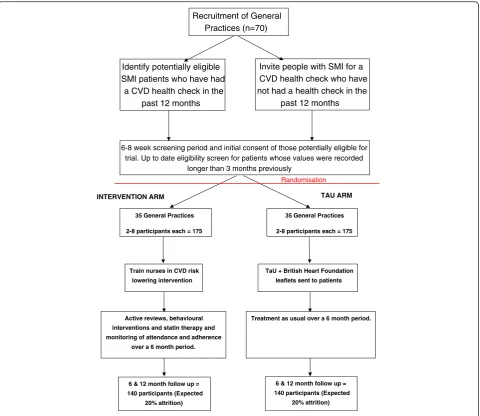
In each recruited GP practice, all people with a relevant diagnosis of SMI (see participant inclusion criteria) who have not had a CVD health check in the last 12 months will be invited to a screening appointment over an 8-week period with a practice nurse or healthcare assistant (HCA) who has been identified to work on the study. In-dividuals will be screened for CVD risk, to include current smoking status, lipid profile, blood pressure, HbA1c and BMI. At the initial appointment, people with SMI will be asked by the practice nurse or HCA if they would like to receive further information about the study should they meet inclusion criteria. When screening re-sults are received by the practice, if they are of immediate concern, the nurse/HCA will liaise with the GP. Other-wise, if an individual is eligible for the trial, the results will be handled by the nurse/HCA in a 6 to 8-week period, after the nurse/HCA has been informed of treatment allo-cation. The recruitment process is summarised in Fig. 1.
a reply slip, study leaflet and freepost practice-addressed envelope. Practices will then follow-up non-responders by telephone to check if the informa-tion has been received and to determine whether or not the person is interested in participating. An up-to-date health check will be arranged either by the practice or the research nurse for all interested indi-viduals for whom eligibility criteria were recorded more than 3 months previously to ensure that they are still currently eligible for the study.
Participant inclusion criteria
Inclusion criteria are adults on each participating GP Practice mental health register with a diagnosis of SMI (schizophrenia, persistent delusional disorder, schizoaf-fective disorder, bipolar afschizoaf-fective disorder, psychosis, psychotic depression or other psychotic disorder), aged
30 to 75 years old with a total cholesterol level above and including 5.0 mmol/l OR raised total cholesterol/ HDL cholesterol ratio above and including 4 AND one or more of the following risk factors:
1. BMI≥30 kg/m2
2. Current smoker
3. Blood pressure≥140 mm Hg systolic AND/OR≥ 90 mm Hg diastolic
4. HbA1cof 42 to 47 mmol/mol (6.0 to 6.4 %) and/or
impaired fasting glucose (5.5 to 6.9 mmol/L) 5. Diagnosis of diabetes
6. Diagnosis of hypertension
Individuals must also be able to give written informed consent and give their initial consent to be contacted by a researcher.
Randomisation Identify potentially eligible
SMI patients who have had a CVD health check in the
past 12 months
TAU ARM
Train nurses in CVD risk
lowering intervention
6 & 12 month follow up =
140 participants (Expected
20% attrition)
TaU + British Heart Foundation
leaflets sent to patients
6 & 12 month follow up =
140 participants (Expected
20% attrition)
6-8 week screening period and initial consent of those potentially eligible for trial. Up to date eligibility screen for patients whose values were recorded
longer than 3 months previously
Recruitment of General Practices (n=70)
Invite people with SMI for a CVD health check who have not had a health check in the
past 12 months
INTERVENTION ARM
35 General Practices
2-8 participants each = 175
Active reviews, behavioural
interventions and statin therapy and
monitoring of attendance and adherence
over a 6 month period.
35 General Practices
2-8 participants each = 175
Treatment as usual over a 6 month period.
[image:4.595.59.540.87.503.2]Exclusion criteria
Exclusion criteria include the following:
1. Under acute psychiatric care (for example, currently a psychiatric hospital inpatient or under the care of a crisis team)
2. Primary diagnosis of an organic mental health problem and/or severe cognitive impairment 3. Life expectancy < 6 months (diagnosis of metastatic
cancer or on the palliative care register) 4. Pre-existing CVD
5. Currently pregnant
6. Personality disorder or depression/anxiety without any psychotic features
We will not specifically exclude people who already re-ceive statins if their lipids remain raised at the initial screening, since they still require monitoring and further risk reduction.
Consent and research assessments
Initial agreement to be contacted by a researcher from the local clinical research network will be obtained from individuals either at their screening appointment with the practice nurse/HCA or through the return of a reply slip to the GP practice sent to people who are already potentially eligible. If an individual does not respond to this letter, the GP practice will call them and ask whether they would be interested in receiving further in-formation about the study from a research nurse. The researcher will then telephone each eligible and inter-ested person to explain the study in detail and to deter-mine whether they want to take part or not, answer any questions and arrange to obtain full written consent and a full baseline assessment. It will be explained that the individual is free to withdraw from the study at any time without having any effect on their care. If a participant is randomised to the intervention group and no longer wishes to attend the intervention appointments, he/she will still be invited to attend the follow-up assessments.
Written informed consent will be obtained from each participant before the baseline assessment begins. Base-line data will be collected by the researcher from the participant’s medical records and through interviews and participant self-complete questionnaires with all re-cruited participants at the start of the study. Outcome data will be collected at 6 and 12 months during the trial period. Participants will be allocated a unique study identification number, and data will be entered anonym-ously by researchers using a web-based system set up by Sealed Envelope [33]. It has range checks, consistency checks and for closed questions gives a number of op-tions plus “other” where appropriate. Researchers who will be entering the data will have no access to the group
allocation through this system. With these checks in place, there should not be any issues with illegal values or inconsistent data being entered, so necessary cleaning should be minimal. Data will be checked by the trial statistician before analysis and any problems reported to the trial manager, who will liaise with the researchers to rectify them as appropriate before data analysis.
Participants will be reimbursed £20 at baseline, £10 at the 6-month follow up and £20 at the 12-month follow-up to thank them for their time and to cover any trans-portation costs. Postcards will be sent after each data collection point to thank participants for their involve-ment in the study and remind them that follow-up will occur later in the year.
Blinding
The trial will not be blind because masking of the partic-ipants, practice nurses/HCAs and GPs to the treatment allocation is not possible. The primary outcome - total cholesterol - is objective, and researchers collecting out-come data will be blinded to participant allocation. The randomisation variable will be held separately to the main body of data and will be given to the statisticians and health economists without labels so they remain blind to allocation when they are ready to analyse the data.
Randomisation
GP practices will be randomised to intervention or to treat-ment as usual on a 1:1 basis by a statistician not otherwise involved in the programme based at the University College London PRIMENT Clinical Trials Unit. The trial man-ager will communicate the results of randomisation to the practices.
There should be the same number of GP practices re-cruited to the intervention and usual care. This will be achieved using block randomisation. The size of the blocks is at the discretion of the independent statistician, who will not divulge this to the trial management group, senior statistician, trial statistician or health economists until the allocation code is broken and the information is needed to write up the trial. Figure 1 demonstrates the recruitment pathway through the study.
Intervention arm
intervention are appropriate. We conducted focus groups with primary care nurses, people with SMI, carers, mental health experts and GPs [34]. We also benefited from a Lived Experience Advisory Panel (LEAP), which provided feedback on the intervention and associated materials [35].
Focus group interviews were underpinned by two complimentary theoretical models, the COM-B model [36] and the Theoretical Domains Framework (TDF) [37]; both have been used to identify influences on pa-tient and health professional behaviour [38]. These find-ings were mapped to a theoretical framework of behaviour change, the Behaviour Change Wheel [36] to determine eight key behavioural strategies for practice nurses/HCAs to use when working with people with SMI to help reduce their CVD risk. These eight behavioural change strategies form the basis of the intervention man-ual and training programme and include goal-setting, making an action plan, recording progress, providing posi-tive feedback, involving supporposi-tive others, reviewing pro-gress, coping with setbacks and habit formation.
The training will take place over 2 days (with a 2-week gap in between each training session to enable rehearsal of skills) with opportunities for telephone supervision. Training day one includes the following sessions: i) the reasons for increased cardiovascular risk in people with severe mental illness; ii) severe mental illness symptoms, treatments and lived experience; iii) evidence on how the intervention manual and training programme were developed; iv) how to deliver the PRIMROSE intervention and use the PRIMROSE manual; and v) how to deliver the eight behavioural change strategies in consultations with recruited patients. Nurses and HCAs will then be asked to implement what they have learned with a recruited pa-tient. Training day 2 is then an opportunity to feedback any problems, anything that went well and to practice and revisit the skills learned on training day 1.
The training will be delivered by members of the re-search team, a nurse with primary care and mental health expertise, and a lived experience trainer. The intervention has been documented in a written manual and will be distributed to practice nurses/HCAs. The nurse/HCA will be asked to record all of their work in-cluding appointment attendance, clinical measures and monitoring of health goals, and all consultations will be audio recorded. A sample of 20 % of the recordings will be transcribed and analysed to assess for fidelity to the manual using an adaptation of a reliable fidelity assess-ment method that has been developed for behavioural in-terventions including physical activity inin-terventions [39].
Participants in the GP practices allocated to the inter-vention will be offered weekly to fortnightly appoint-ments with the practice nurse/HCA over a period of 6 months. Progress with CVD risk reduction will be
reviewed at each consultation. Appointments will de-crease to monthly if satisfactory progress is made with reducing CVD risk. There will be flexibility over the de-livery of the intervention depending on each individual’s preferences and needs; however, the intervention will in-clude one or more of the following elements:
1. Setting and monitoring participant-led behavioural goals aimed at lowering CVD risk (for example, improving adherence to statins or other CVD risk lowering medications, improving diet, increasing physical activity, reducing smoking and/or alcohol consumption.
2. Use of a health plan to formulate a health goal and action plan and record progress with achieving the identified health goal.
3. Sign-posting to services such as smoking cessation or physical activity programmes.
4. Statin prescriptions to people whose CVD risk or lipids exceed recommended thresholds. The choice of statin will follow local and national treatment guidelines for statin prescribing. Current NICE guidance advises initial treatment with atorvastatin 20 mg unless there are drug interactions or contraindication [27]. Active monitoring of adherence to medication and response will be carried out.
5. Prescription of other medications such as nicotine replacement therapy for smoking cessation, anti-hypertensives for raised blood pressure or metformin for diabetes and weight loss. Again active monitoring of adherence, side effects and response will be carried out.
6. Involvement of carers and mental health key workers in monitoring adherence, supporting attendance at appointments and supporting a healthy lifestyle.
Treatment as usual arm
Measures
The primary outcome measure is total cholesterol at 12-month follow-up. A blood sample will be collected at baseline using usual GP practice equipment and proce-dures. Bloods are normally taken by the practice nurse or HCA and sent to the local NHS hospital Trust la-boratory for analysis. Results are then received electron-ically through the participant’s medical record. The blood test will be repeated at 6 and 12-month follow up by a clinical research network nurse and processed using usual GP practice procedures described above.
The baseline data described below will be collected ei-ther directly from participant interviews/clinical mea-sures or from the GP practice medical records.
Demographics
Demographic data including age, sex, marital status, em-ployment status, ethnicity, Townsend deprivation score calculated using each participant’s postcode, mental healthcare worker details, whether or not the participant is on the Care Programme Approach (CPA), and whether they have a support worker or carer will be col-lected for each participant.
Clinical measures
Clinical measures including blood pressure, HbA1c and lipids (HDL, Total/HDL ratio and LDL) will be mea-sured using usual practice procedures. Other clinical measures include waist circumference, 10-year CVD risk scores (QRisk) [41], Framingham re-estimated on the UK population [42], and the PRIMROSE CVD risk pre-diction model [42], BMI, physical co-morbid conditions, and diagnosis of SMI confirmed by the GP practice medical record.
We will also ask participants at the baseline assess-ment if they would consent to providing a saliva sample for storage at UCL laboratories or collaborating centres in the UK and internationally for future genetic research. This will be used to determine whether there is any DNA variation relevant to mental health diagnosis and physical health outcomes. Participants will be given the opportunity to opt out of providing this saliva sample if they wish. It will not affect their entry into the trial.
Behavioural measures
CVD risk-lowering behaviours will be assessed through a validated self-report questionnaire on physical activity (IPAQ) [43] and validated researcher administered ques-tionnaires on dietary intake (DINE) [44] and alcohol use (AUDIT-C) [45]. Each participant will also be asked their smoking status, and, if they are a current smoker; how many cigarettes they smoke a day.
The Morisky Scale of Adherence (MMS), a validated self-report questionnaire [46] will be completed twice at
each time point by each participant. Participants will first be advised to complete the questionnaire while thinking about their psychiatric medications (for ex-ample, antipsychotics and mood stabilisers) and secondly in relation to any CVD risk-lowering medications they are currently prescribed (for example, statins, anti-hypertensives and/or stop smoking aids).
Quality of life and wellbeing
Quality of life will be measured through the EQ-5D-5 L, a validated self-report questionnaire [47], Well-being will be assessed using the self-report Warwick Edinburgh Mental Wellbeing Scale (WEMWEBS) [48].
Economic measures
Economic measures will be collected from the medical records at baseline and 12-month follow-up, including medications used in the 12-months prior to baseline and any new prescriptions during the study follow-up period. General and psychiatric hospital admissions, Accident and Emergency (A&E) contacts, outpatient visits, pri-mary care contacts and community service use in the previous 12 months will all be collected from the med-ical records. In addition, participants will self-complete an adapted Client Service Receipt Inventory (CSRI) to collate additional information on service use, which is unlikely to be recorded in the medical records (for ex-ample, informal care arrangements, living situation, CVD risk-lowering service use external to the NHS, such as weight-management programmes, gym and leisure ac-tivities, and community service use [49].
Follow-up assessments
Follow-up assessments will be conducted at 6 and 12 months and will include all clinical measures, behav-ioural measures, quality of life and economic measures. At 12 months, we will additionally collect information on adherence to the PRIMROSE intervention appoint-ments and client satisfaction using the Client Satisfac-tion QuesSatisfac-tionnaire - (CSQ) [50].
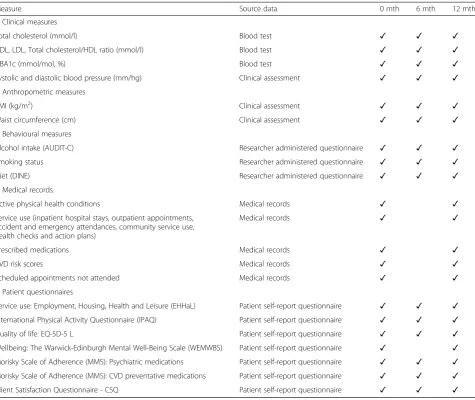
A table summarising all outcome measures and data collection time points can be found in Table 1.
Statistics and data analysis Sample size
A total of 350 people from 70 GP practices will be re-cruited in to the study. In determining the size of the trial, we considered 1) important effect sizes, 2) size of clusters, and 3) attrition.
Effect size
cholesterol levels of 5.4 mmol/l (standard deviation (SD) 1.3) [14] and 5.7 mmol/l (SD 1.4) [51].
We consider an effect size of 0.4 SDs difference in cholesterol, between the two trial arms, to be the mini-mum clinically important difference. Statins usually have far greater effect sizes, approaching two SDs [52], how-ever in this effectiveness trial, we are comparing a be-havioural intervention with treatment as usual, so cannot expect effects as large as this. Based on a two-sample t-test, to detect a difference of 0.4 x (1.3 mmol/l) requires 132 participants per arm, with 90 % power and 5 % significance level.
Sample size inflation for clustering and attrition
To account for the cluster effect, we have assumed that five participants on average will be recruited per prac-tice. Dropout rates in the SMI trials are <20 % at 12 months [30, 53]. Using an intra-class correlation coef-ficient of 0.02 for trials in primary care [54] and an
average cluster size of four participants per practice (after allowing for 20 % attrition) yields 140 participants per arm. Inflating this figure for 20 % attrition and rounding up results equates to a total of 350 participants and 70 GP practices for the trial.
Statistical analysis
All analyses will be on an intention-to-treat basis. Statis-tical analyses will be carried out using Stata [55]. We will produce summary statistics for all variables, both overall and by randomised group. Summary statistics for continu-ous variables will be mean or median, (with SD, or inter-quartile range) as appropriate, and for categorical variables, frequency and percentage within each category.
[image:8.595.62.538.97.497.2]The primary outcome will be analysed using a linear random effects regression model adjusting for the base-line cholesterol, whilst accounting for clustering as a random effect (GP practice). Results will be presented as Table 1Summary of baseline and follow-up measures
Measure Source data 0 mth 6 mth 12 mth
1. Clinical measures
Total cholesterol (mmol/l) Blood test ✓ ✓ ✓
HDL, LDL, Total cholesterol/HDL ratio (mmol/l) Blood test ✓ ✓ ✓
HBA1c (mmol/mol, %) Blood test ✓ ✓ ✓
Systolic and diastolic blood pressure (mm/hg) Clinical assessment ✓ ✓ ✓
2. Anthropometric measures
BMI (kg/m2) Clinical assessment ✓ ✓ ✓
Waist circumference (cm) Clinical assessment ✓ ✓ ✓
3. Behavioural measures
Alcohol intake (AUDIT-C) Researcher administered questionnaire ✓ ✓ ✓
Smoking status Researcher administered questionnaire ✓ ✓ ✓
Diet (DINE) Researcher administered questionnaire ✓ ✓ ✓
4. Medical records.
Active physical health conditions Medical records ✓ ✓
Service use (inpatient hospital stays, outpatient appointments, accident and emergency attendances, community service use, health checks and action plans)
Medical records ✓ ✓
Prescribed medications Medical records ✓ ✓
CVD risk scores Medical records ✓ ✓
Scheduled appointments not attended Medical records ✓ ✓
5. Patient questionnaires
Service use: Employment, Housing, Health and Leisure (EHHaL) Patient self-report questionnaire ✓ ✓ ✓
International Physical Activity Questionnaire (IPAQ) Patient self-report questionnaire ✓ ✓ ✓
Quality of life: EQ-5D-5 L Patient self-report questionnaire ✓ ✓ ✓
Wellbeing: The Warwick-Edinburgh Mental Well-Being Scale (WEMWBS) Patient self-report questionnaire ✓ ✓
Morisky Scale of Adherence (MMS): Psychiatric medications Patient self-report questionnaire ✓ ✓ ✓
Morisky Scale of Adherence (MMS): CVD preventative medications Patient self-report questionnaire ✓ ✓ ✓
mean difference between randomised arms with 95 % confidence interval andPvalue.
Appropriate analogous random effects regression models will be used to analyse the secondary outcomes.
For both the primary and continuous secondary out-comes, the residuals will be checked for normality. If they are not normally distributed, outcomes may be transformed. If it is necessary to categorise outcomes, it will be done with clinical input.
Complete case analyses will be the main analyses from this study. Bias due to missing data will be investigated. A supportive analysis will include adjusting for predictors of missingness that are related to outcome, if necessary, and adjusting for factors that have baseline imbalances that are related to the outcome. If the proportion of non-adherence is greater than 5 %, an appropriate analysis ac-counting for non-adherence will be considered. Those in the treatment-as-usual practices will be assigned an adher-ence score equivalent to no adheradher-ence to the intervention. If it is appropriate to carry out this analysis, it will be done once the statistician has been unblinded to randomised group. Results from the analysis of secondary outcomes and supportive analyses will be presented as estimates with 95 % confidence intervals.
Economic evaluation
The aim of the economic evaluation is to report the mean incremental cost of the PRIMROSE intervention com-pared to treatment as usual in the reduction of CVD risk in people with SMI, from the NHS perspective in the pri-mary analysis and from a societal perspective in a second-ary analysis. The primsecond-ary effectiveness outcome, as recommended by NICE, will be quality-adjusted life years (QALYs) [56]. Responses to the EQ-5D-5 L questionnaire collected during the trial will be used in conjunction with EQ-5D-5 L specific valuation sets [47] to calculate utility scores over a time horizon of 1 year. Baseline differences in utility scores will be adjusted for using regression ana-lysis. The cost of the intervention will include the cost of the printed materials, training, clinical tests and other consumables used during the intervention and nurse/ HCA time spent delivering the intervention. The cost-components that will be included in the health care per-spective analysis for arms of the trial include new pre-scriptions during the study follow-up period, general and psychiatric hospital admissions, A&E contacts; outpatient visits, primary care contacts and community service use. Informal care arrangements, changes in living situation, carer costs, and out-of-pocket costs for services such as weight-management programmes, gym and leisure activ-ities, smoking cessation and community service use [48] will be included in the societal perspective analysis. Unit costs will be obtained from the Personal Social Services Research Unit (PSSRU) [57], reference costs [58], British
National Formulary (BNF) [59] and other national sources of costing information. Cost-effectiveness will be reported as the mean incremental cost per QALY gained of the PRIMROSE intervention versus treatment as usual. All cost-effectiveness analyses will conform to the recom-mended methodology [56]. Bootstrapping will be used to derive 95 % confidence intervals for mean cost and QALYs for the two trial groups, 95 % confidence intervals around the incremental cost-effectiveness ratios and cost-effectiveness acceptability curves and cost-cost-effectiveness planes. The analyses will be subjected to one-way and two-way sensitivity analyses to test any assumptions made in the analysis. Trial results will also be used to update a long-run CVD cost-effectiveness model, extrapolating costs and consequences to a 10-year time horizon using discrete event-simulation.
Research governance
We will work with the Clinical Research Networks (CRNs) to identify expressions of interest from GP prac-tices to take part in the study.
A trial management subgroup will meet monthly at the start of the trial to monitor progress. At trial month 3, the group will review the effectiveness of research procedures in the first wave of practices and amend the protocol if necessary. Meetings will decrease to 3-monthly from month 18 of the trial onwards. There will also be an externally chaired trial steering committee meeting twice per year.
The trial will be fully registered and managed through the PRIMENT clinical trials unit (http://www.ucl.ac.uk/ pcph/priment), which specialises in trials in mental health and primary care. PRIMENT will oversee the de-sign, randomisation of practices, web-based data entry, all trial monitoring and the analysis plan. Data manage-ment will also be overseen by the PRIMENT clinical tri-als unit, with data being held for a minimum of 20 years from completion of the study according to University College London requirements.
Adverse events
All GP practices and research nurses will be trained in reporting adverse events procedure. If an event occurs, they will be instructed to telephone the trial manager within 24 hours of becoming aware of the event. They will then be asked to complete an adverse event form and sub-mit this to the trial manager. Adverse events will be assessed by the chief investigator, considered at trial man-agement team meetings and reported to the study sponsor.
Ethics approval
NHS approvals are being obtained before the start of each recruitment wave from the following research and development (R&D) departments: North and Central London research consortium (Noclor), Wessex primary care research support service, Northamptonshire re-search and development service, North of England commissioning support unit, Avon primary care collab-orative, Lincolnshire community health services NHS trust, clinical research network: North West Coast clin-ical commissioning group, Norfolk & Suffolk primary & community care research office, Leicester City clinical commissioning group, South London clinical research network, West Midlands Primary Care RM&G business support service and clinical research network: West Midlands, research support team. The trial has been allocated an International Standard Randomised Con-trolled Trials Number (ISRCTN13762819).
Study sponsorship
Camden and Islington NHS Foundation Trust is the trial sponsor.
Discussion
The PRIMROSE intervention has been developed using evidence from the literature, focus groups and work-shops with key stakeholders. The intervention is under-pinned by a theoretical framework [36], which was applied to the development work findings in order to select simple behaviour change strategies that can be used by practice nurses or HCAs, with minimal training, and incorporated into time-limited primary care consultations.
Existing reviews identify a need for interventions that tackle multiple cardiovascular risk factors in people with SMI [60]. Many of the interventions that have been tested in this group have been intensive behavioural in-terventions for weight loss or smoking cessation, deliv-ered in secondary care settings by research therapists [61, 62]. The PRIMROSE study is a pragmatic trial with the intervention being delivered by a practice nurse/ HCA at each participant’s GP practice. It may be pos-sible to implement this model as part of routine clinical primary care, for example, in a UK setting as part of an Enhanced Service Model [63].
Offering cardiovascular risk lowering interventions to people with severe mental illnesses may provide an oppor-tunity for early intervention and prevention before cardio-vascular events occur. Physical health checks for people with SMI can be limited and are often opportunistic [33]. The PRIMROSE intervention seeks to address this issue, offering intensive consultations over a 6-month period that complement the clinical skills of practice nurses or HCAs to manage multiple CVD risk factors.
The results will assess the impact of the intervention on total cholesterol at 12-month follow-up. The impact
of the intervention on secondary outcomes of health be-haviours, quality of life, well-being, medication adher-ence, service use and medication prescriptions will be measured. The cost effectiveness of the intervention will also be determined.
Dissemination
We will disseminate the results of the study through so-cial media, the Lived Experience Advisory Group and through summary reports of findings to all key stake-holders involved in the study.
Trial status
The trial is currently ongoing.
Abbreviations
A&E:Accident and Emergency; AUDIT-C: Alcohol Use Disorders Identification Test Consumption; BMI: Body Mass Index; BNF: British National Formulary; COM-B model: Capability Opportunity Motivation–Behaviour model; CRN: Clinical Research Network; CSQ: Client Satisfaction Questionnaire; CSRI: Client Service Receipt Inventory; CVD: Cardiovascular Disease; DINE: Dietary Instrument for Nutrition Education; DNA: Deoxyribonucleic Acid; EHHaL: Employment Housing, Health and Leisure Questionnaire; GP: General Practitioner; HbA1c: Glycated Haemoglobin; HCA: Healthcare
Assistant; HDL: High Density Lipoporotein cholesterol; IPAQ: International Physical Activity Questionnaire; LDL cholesterol: Low Density Lipoprotein cholesterol; LEAP: Lived Experience Advisory Panel; MMS: Morisky Scale of Adherence Questionnaire; NHS: National Health Service; NICE: The National Institute for Health and Care Excellence; NIHR: National Institute for Health Research; PGfAR: Programme Grants for Applied Research; PSSRU: Personal Social Services Research Unit; QALY: Quality-Adjusted Life Year; QoF: Quality Outcomes Framework; SD: Standard Deviation; SMI: Severe Mental Illness; TAU: Treatment as Usual; TDF: Theoretical Domains Framework; WEMWEBS: Warwick Edinburgh Mental Wellbeing Scale.
Competing interests
The authors declare that they have no competing interests.
Authors’contributions
DO was lead applicant and conceived the study. DO, KW, IN, RB, RHo, MK, RM, RP, TB, TC, HG, CJ, JL, IP, VP and FS led on the methodology and study design. DO, AB, SHe, KW and IN led the coordination and set up of the study. DO, AB, KW, LA, SMi, SHa and VR developed the training programme and intervention manual. AB, LA, SHa, VR and SHe delivered the training programme. LM and RO were responsible for the statistical analysis and design. SMo, RHa and EZ were responsible for the health economics and cost-effectiveness analysis. VP and BG participated in the design of the study materials and protocol from the service user perspective. All authors participated in the design of the study and helped to draft, read and approve the final manuscript.
Acknowledgements
This paper summarises independent research funded by the National Institute for Health Research (NIHR) under its Programme Grants for Applied Research (PGfAR) scheme (Grant Reference Number RP-PG-0609-10156). The views expressed are those of the authors and not necessarily those of the sponsor, the NHS, the NIHR or the Department of Health.
Author details
1Division of Psychiatry, Epidemiology and Applied Clinical Research
Department, Faculty of Brain Sciences, University College London, 6th Floor, Maple House, 149 Tottenham Court Road, London W1T 7NF, UK.
2Department of Primary Care and Population Health, Institute of
Epidemiology and Health Care, University College London, Rowland Hill St, London NW3 2PF, UK.3Division of Psychology and Language Sciences,
Centre for Behaviour Change, Department of Clinical, Educational and Health Psychology, Faculty of Brain Sciences, University College London, 1-19 Torrington Place, London WC1E 7HB, UK.4Human Development and Health
Academic Unit, Faculty of Medicine, University of Southampton, University Rd, Southampton SO17 1BJ, UK.5UCL Department of Applied Health Research, Institute of Epidemiology and Health Care, University College London, 1-19 Torrington Place, London WC1E 7HB, UK.6School of Social and
Community Medicine, University of Bristol, Canynge Hall, 39 Whatley Road, Bristol BS8 2PS, UK.7The McPin Foundation, 32-36 Loman Street, London SE1 0EH, UK.8Department of Medicine, Faculty of Medicine, Imperial College
London, Commonwealth Building, Hammersmith Campus, Du Cane Road, London W12 0NN, UK.9Institute of Psychiatry, Psychology & Neuroscience,
Kings College London, 16 De Crespigny Park, London SE5 8AF, UK.
10Camden and Islington NHS Foundation Trust, 4th Floor, East Wing, St
Pancras Hospital, 4 St Pancras Way, London NW1 0PE, UK.11University of
Northampton, Berrywood Hospital, Berrywood Drive, Upton, Northampton NN5 6UD, UK.12Rethink Mental Illness, 89 Albert Embankment, London SE1 7TP, UK.
Received: 15 October 2015 Accepted: 15 January 2016
References
1. National Audit Office. Helping people through mental health crisis: the role of crisis resolution and home treatment services. London: HMSO; 2007. 2. Goldner EM, Hsu L, Waraich P, Somers JM. Prevalence and incidence
studies of schizophrenic disorders: a systematic review of the literature. Can J Psychiat. 2002;47:833–43.
3. NHS spending on the top three disease categories in England. Nuffield Trust. 2014. http://www.nuffieldtrust.org.uk/data-and-charts/nhs-spending-top-three-disease-categories-england. Accessed 03 Sept 2015.
4. Andrew A, Knapp M, McCrone P, Parsonage M, Trachtenberg M. Effective interventions in schizophrenia the economic case. A report prepared for the Schizophrenia Commission. Personal Social Services Research Unit; 2012. 5. Marwaha S, Johnson S, Bebbington P, Stafford M, Angermeyer MC, Brugha
T, et al. Rates and correlates of employment in people with schizophrenia in the UK. France and Germany Brit J Psychiat. 2007;191:30–3.
6. Lawrence DM, Holman CD, Jablensky AV, Hobbs MS. Death rate from ischaemic heart disease in Western Australian psychiatric patients 1980–1998. Brit J Psychiat. 2003;182:31–6.
7. Hennekens CH, Hennekens AR, Hollar D. Schizophrenia and increased risks of cardiovascular disease. Am Heart J. 2005;150:1115–21.
8. Osborn DPJ, Levy G, Nazareth I, Petersen I, Islam A, King M. Relative risk of cardiovascular and cancer mortality in people with severe mental illness from the United Kingdom’s General Practice Research Database. Arch Gen Psychiat. 2007;64:242–9.
9. Osborn DPJ, Levy G, Nazareth I, King M. Suicide and severe mental illnesses. Cohort study within the UK General Practice Research Database. Schizophr Res. 2008;99:134–8.
10. Nielsen RE, Uggerby AS, Jensen SO, McGrath JJ. Increasing mortality gap for patients diagnosed with schizophrenia over the last three decades. A Danish nationwide study from 1980 to 2010. Schizophr Res. 2013;146:22–7. 11. Brown S, Kim M, Mitchell C, Inskip H. Twenty-five year mortality of a
community cohort with schizophrenia. Brit J Psychiat. 2010;196:116–21. 12. National Institute for Health and Care Excellence. Psychosis and schizophrenia
in adults: treatment and management. https://www.nice.org.uk/guidance/ cg178 NICE; 2014. Accessed 01 Oct 2015.
13. National Institute for Health and Clinical Excellence. Bipolar disorder: the assessment and management of bipolar disorder in adults, children and young people in primary and secondary care. http://www.nice.org.uk/ guidance/cg185 NICE; 2014. Accessed 01 Oct 2015.
14. Osborn DPJ, Nazareth I, King MB. Risk for coronary heart disease in people with severe mental illness: Cross-sectional comparative study in primary care. Brit J Psychiat. 2006;188:271–7.
15. Osborn DPJ, King MB, Nazareth I. Physical activity, dietary habits and coronary heart disease risk factor knowledge amongst people with severe mental illness. A cross sectional comparative study in primary care. Soc Psychiatry Psychiatr Epidemio. 2007;42:787–93.
16. Thakore JH. Metabolic syndrome and schizophrenia. Brit J Psychiat. 2005;186:435–6.
17. Meyer JM, Davis VG, Goff DC, McEvoy JP, Nasrallah HA, Davis SM, et al. Change in metabolic syndrome parameters with antipsychotic treatment in the CATIE Schizophrenia Trial: prospective data from phase 1. Schizophr Res. 2008;101:273–86.
18. Marder SR, Essock SM, Miller AL, Buchanan RW, Casey DE, Davis JM, et al. Physical health monitoring of patients with schizophrenia. Am J Psychiat. 2004;161:1334–49.
19. Anonymous. Which atypical antipsychotic for schizophrenia? Drug Ther Bull. 2004;42:57–62.
20. Lincoln CV, Harrigan S, McGorry PD. Understanding the topography of the early psychosis pathways. Brit J Psychiat. 1998;172 Suppl 33:21–5. 21. Reilly S, Planner C, Hann M. The Role of Primary Care in Service Provision
for People with Severe Mental Illness in the United Kingdom. PLoS One. 2012;7:e36468. doi:10.1371/journal.pone.0036468.
22. Barnes TRE, Paton C, Hancock E, Cavanagh M-R, Taylor D, Lelliott P, et al. Screening for the metabolic syndrome in community psychiatric patients prescribed antipsychotics: a quality improvement programme. Acta Psychiat Scand. 2008;118:26–33.
23. Hardy S, Kingsnorth R. Mental health nurses can increase capability and capacity in primary care by educating practice nurses: an evaluation of an education programme in England. J Psychiatr Nurs Ment Health Serv. 2015;22:270–7.
24. Hardy S, Hinks P, Gray R. Does training practice nurses to carry out physical health checks for people with severe mental illness increase the level of screening for cardiovascular risk? Int J Soc Psychiatr. 2014;60:236–42. 25. Osborn DPJ, King MB, Nazareth I. Participation in cardiovascular risk
screening by people with schizophrenia or similar mental illnesses. A cross sectional study in general practice. BMJ. 2003;326:1122–3.
26. Hardy S, Gray R. Is the use of an invitation letter effective in prompting patients with severe mental illness to attend a primary care physical health check? Prim Health Care Res Dev. 2012;13:347–52.
27. National Institute for Health and Clinical Excellence. Lipid modification: cardiovascular risk assessment and the modification of blood lipids for the primary and secondary prevention of cardiovascular disease. https://www. nice.org.uk/guidance/cg181 NICE; 2014. Accessed 01 Oct 2015.
28. De Hert M, Kalnicka D, van Winkel R. Treatment with rosuvastatin for severe dyslipidemia in patients with schizophrenia and schizoaffective disorder. J Clin Psychiat. 2006;67:1889–96.
29. Vincenzi B, Stock S, Borba CP, Cleary SM, Oppenheim CE, Petruzzi LJ, et al. A randomized placebo-controlled pilot study of pravastatin as an adjunctive therapy in schizophrenia patients: effect on inflammation, psychopathology, cognition and lipid metabolism. Schizophr Res. 2014;159:395–403. 30. Baker A, Richmond R, Haile M, Lewin TJ, Carr VJ, Taylor RL, et al. A
randomized controlled trial of a smoking cessation intervention among people with a psychotic disorder. Am J Psychiat. 2006;163:1934–42. 31. Faulkner G, Cohn T, Remington G. Interventions to reduce weight gain in
schizophrenia. Cochrane Database Syst. Rev. 2007; Issue 1. Art no CD005148. 32. Caemmerer J, Correll CU, Maayan L. Acute and maintenance effects of
non-pharmacologic interventions for antipsychotic associated weight gain and metabolic abnormalities: A meta-analytic comparison of randomized controlled trials. Schizophr Res. 2012;140:159–68.
33. http://www.sealedenvelope.com/. Accessed October 2015.
34. Burton A, Osborn D, Atkins L, Michie S, Gray B, Stevenson F, et al. Lowering Cardiovascular Disease Risk for People with Severe Mental Illnesses in Primary Care: A Focus Group Study. PLoS One. 2015;10:e0136603. doi:10.1371/journal.pone.0136603.
35. Gray B, Larsen J, Faulkner A. Third Sector Facilitation of Lived Experience in Research: A Case Study of Service User and Carer Involvement in the Primrose Project. JMHTEP. 2013;8:141–51.
36. Michie S, van Stralen MM, West R. The behaviour change wheel: A new method for characterising and designing behaviour change interventions. Implement Sci. 2011;6:42.
38. Michie S, Atkins L, West R. The behaviour change wheel. A guide to designing interventions. 1st ed. Great Britain: Silverback Publishing; 2014. 39. Hardeman W, Michie S, Fanshawe T, Prevost AT, McLoughlin K, Kinmonth
AL. Fidelity of delivery of a physical activity intervention: Predictors and consequences. Psychol Health. 2008;23:11–24.
40. British Heart Foundation. Keep Your Heart Healthy https://www.bhf.org.uk/ publications/heart-conditions/keep-your-heart-healthy. Accessed 01 Oct 2015.
41. QRISK™2-2015 risk calculator: http://qrisk.org. Accessed 01 Oct 2015. 42. Osborn DP, Hardoon S, Omar RZ, Holt RI, King M, Larsen J, et al.
Cardiovascular risk prediction models for people with severe mental illness: results from the prediction and management of cardiovascular risk in people with severe mental illnesses (PRIMROSE) research program. JAMA Psychiatry. 2015;72:143–51.
43. Faulkner G, Cohn T, Remington G. Validation of a physical activity assessment tool for individuals with schizophrenia. Schizophr Res. 2006;82:225–31. 44. Roe L, Strong C, Whiteside C, Neil A, Mant D. Dietary intervention in primary care:
validity of the DINE method for diet assessment. Fam Pract. 1994;11:375–81. 45. Saunders JB, Aasland OG, Babor TF, de la Fuente JR, Grant M. Development
of the Alcohol Use Disorders Screening Test (AUDIT). WHO collaborative project on early detection of persons with harmful alcohol consumption. Addiction. 1993;88:791–804.
46. Morisky DE, Green LW, Levine DM. Concurrent and predictive validity of a self reported measure of medication adherence. Med Care. 1986;24:67–74. 47. Oppe M, Devlin N, van Hout B, Krabbe P, de Charro F. A Program of
Methodological Research to Arrive at the New International EQ-5D-5 L Valuation Protocol. Value Health. 2014;17:445–53 http://www.euroqol.org/ about-eq-5d/valuation-of-eq-5d/eq-5d-5l-value-sets.html.
48. Tennant R, Hiller L, Fishwick R, Platt P, Joseph S, Weich S, et al. The Warwick-Edinburgh Mental Well-being Scale (WEMWBS): development and UK validation. Health Qual Life Outcomes. 2007;5:63. doi:10.1186/1477-7252-5-63. 49. Beecham JK, Knapp MRJ. Costing psychiatric interventions. In: Thornicroft G,
Brewin C, Wing JK, editors. Measuring Mental Health Needs. London: Gaskell; 1992. p. 200–24.
50. Attkisson CC, Zwick R. The client satisfaction questionnaire: Psychometric properties and correlations with service utilization and psychotherapy outcome. Eval Program Plann. 1982;5:233–7.
51. Mackin P, Bishop DR, Watkinson HM, Gallagher P, Ferrier IN. Metabolic disease and cardiovascular risk in people treated with antipsychotics in the community. Brit J Psychiat. 2007;191:23–9.
52. Shroufi A, Powles JW. Adherence and chemoprevention in major cardiovascular disease: a simulation study of the benefits of additional use of statins. J Epidemiol Commun H. 2010;64:109–13.
53. Jones PB, Barnes TRE, Davies L. A randomized controlled trial of effect on quality of life of second generation versus first generation antipsychotic drugs in schizophrenia. Arch Gen Psychiat. 2006;63:1079–87.
54. Eldridge SM, Ashby D, Feder GS, Rudnicka AR, Ukoumunne OC. Lessons for cluster randomized trials in the twenty-first century: a systematic review of trials in primary care. Clin Trials. 2004;1:80–90.
55. StataCorp. Stata Statistical Software: Release 14. College Station, TX: StataCorp LP; 2015.
56. National Institute for Health and Clinical Excellence. Guide to the methods of technology appraisal. https://www.nice.org.uk/article/pmg9/resources/non-guidance-guide-to-the-methods-of-technology-appraisal-2013-pdf NICE; 2013. 57. Curtis L. Unit costs of health and social care, 2013. Kent: Personal Social
Services Research Unit; 2014. Accessed 01 Oct 2015.
58. NHS reference costs: financial year 2012 to 2013. London: Department of Health; 2014.
59. Joint Formulary Committee. British national formulary. 65th edn. Great Britain: Pharmaceutical Press; 2013.
60. Gierisch JM, Nieuwsma JA, Bradford DW, Wilder CM, Mann-Wrobel MC, McBroom AJ, et al. Pharmacologic and behavioral interventions to improve cardiovascular risk factors in adults with serious mental illness: a systematic review and meta-analysis. J Clin Psychiatry. 2014;75:e424–40.
61. Bonfioli E, Berti L, Goss C, Muraro F, Burti L. Health promotion lifestyle interventions for weight management in psychosis: a systematic review and meta-analysis of randomised controlled trials. BMC Psych. 2012;12:78.
62. Tsoi DT, Porwal M, Webster A. Interventions for smoking cessation and reduction in individuals with schizophrenia. Cochrane Database Syst Rev. 2010;6:CD007253. doi:10.1002/14651858.CD007253.pub2.
63. Enhanced Services. NHS Employers. http://www.nhsemployers.org/ your-workforce/primary-care-contacts/general-medical-services/ enhanced-services. Accessed 01 Oct 2015.
• We accept pre-submission inquiries
• Our selector tool helps you to find the most relevant journal
• We provide round the clock customer support
• Convenient online submission
• Thorough peer review
• Inclusion in PubMed and all major indexing services
• Maximum visibility for your research
Submit your manuscript at www.biomedcentral.com/submit