Middle and Secondary Education Dissertations Department of Middle and Secondary Education
Spring 5-17-2019
Examining the Effect of Group Assignment on
Upper Elementary Students' Experiences in a
Technology-Mediated Collaborative
Compositional Activity
Samuel C. HolmesFollow this and additional works at:https://scholarworks.gsu.edu/mse_diss
This Dissertation is brought to you for free and open access by the Department of Middle and Secondary Education at ScholarWorks @ Georgia State University. It has been accepted for inclusion in Middle and Secondary Education Dissertations by an authorized administrator of ScholarWorks @ Georgia State University. For more information, please [email protected].
Recommended Citation
Holmes, Samuel C., "Examining the Effect of Group Assignment on Upper Elementary Students' Experiences in a Technology-Mediated Collaborative Compositional Activity." Dissertation, Georgia State University, 2019.
This dissertation, EXAMINING THE EFFECT OF GROUP ASSIGNMENT ON UPPER ELEMENTARY STUDENTS’ EXPERIENCES IN A TECHNOLOGY-MEDIATED
COLLABORATIVE COMPOSITIONAL ACTIVITY, by SAMUEL CHRISTOPHER HOLMES, was prepared under the direction of the candidate’s Dissertation Advisory
Committee. It is accepted by the committee members in partial fulfillment of the requirements for the degree, Doctor of Philosophy, in the College of Education & Human Development, Georgia State University.
The Dissertation Advisory Committee and the student’s Department Chairperson, as representatives of the faculty, certify that this dissertation has met all standards of excellence and scholarship as determined by the faculty.
_________________________________ Peggy Albers, Ph.D.
Committee Co-Chair
_________________________________ Patrick K. Freer, Ed.D.
Committee Co-Chair
_________________________________ Martin Norgaard, Ph.D.
Committee Member
_________________________________ Jennifer Esposito, Ph.D.
Committee Member
_________________________________ Date
_________________________________ Gertrude Tinker Sachs, Ph.D.
Chairperson, Department of Middle and Secondary Education
_________________________________ Paul A. Alberto, Ph.D.
AUTHOR’S STATEMENT
By presenting this dissertation as a partial fulfillment of the requirements for the advanced degree from Georgia State University, I agree that the library of Georgia State University shall make it available for inspection and circulation in accordance with its regulations governing materials of this type. I agree that permission to quote, to copy from, or to publish this
dissertation may be granted by the professor under whose direction it was written, by the College of Education and Human Development’s Director of Graduate Studies, or by me. Such quoting, copying, or publishing must be solely for scholarly purposes and will not involve potential financial gain. It is understood that any copying from or publication of this dissertation which involves potential financial gain will not be allowed without my written permission.
All dissertations deposited in the Georgia State University library must be used in accordance with the stipulations prescribed by the author in the preceding statement. The author of this dissertation is:
Samuel Christopher Holmes 785 Bryant Road Ranger, GA 30734
The director of this dissertation is:
Patrick K. Freer, Ed.D.
Middle and Secondary Education/Music Education College of Education and Human Development
Samuel C. Holmes ADDRESS: 785 Bryant Road
Ranger, GA, 30734
EDUCATION:
PROFESSIONAL EXPERIENCE:
2018-present Music Teacher, General/Choral Midvale Elementary School Dekalb County Schools, GA
2014-2015 Music Teacher, General/Choral Nina Otero Community School Santa Fe Schools, NM
2013-2014
2003-2004
Music Teacher, General/Choral, K-8 The Brandeis School
San Francisco, CA Music Teacher, General
Belmont Hills Elementary School Cobb County Schools, GA
2003-2006 Instructor of Percussion, Adjunct Faculty North Georgia University
University System of Georgia, GA 2000-2002 Choral Director
Pickens County Middle School Pickens County Schools, GA Ph.D. 2019 Georgia State University
Teaching and Learning M.M. 2002 Georgia State University
Music Education B.M. 2000 Columbus State University
Holmes, S. C. (2017). Music centers 101: Essential tips for incorporating cooperative learning music centers in the general music classroom. Georgia Music News, 28(2), 72-74.
Holmes, S. C. (January, 2017). Collaboration station: Incorporating center-based learning into the general music classroom. Presented at the Georgia Music Educators Conference, Athens, GA. Holmes, S. C. (November, 2014). Using GarageBand to spark creativity and cross-curricular learning. Presented at the Santa Fe Digital Learning Conference, Santa Fe, NM.
Holmes, S. C. (January, 2009). Center-based learning in the general music classroom. Presented at the Georgia Music Educators Conference, Savannah, GA.
PROFESSIONAL SOCIETIES AND ORGANIZATIONS
STUDENTS’ EXPERIENCES IN A TECHNOLOGY-MEDIATED
COLLABORATIVE COMPOSITIONAL ACTIVITY
by
SAMUEL CHRISTOPHER HOLMES
Under the Direction of Patrick K. Freer
ABSTRACT
Collaboration in elementary music instruction has been incorporated frequently in creative activities. With the increase of technology integration, researchers have investigated its use as a mediation tool in creative activities. The nature of how children are grouped remains in
students’ compositional products? Data consisted of a researcher-adapted questionnaire consisting of Likert type items and open-ended questions pertaining to perceptions of working collaboratively, video observations, interviews, and a final product score. Fourth grade students (N = 40) from two, intact classes were formed into student-selected (SSG) and researcher-selected (RSG) groups. Groups participated in a 60-minute, open-ended compositional activity using GarageBand as the mediation tool. While participants viewed collaboration and technology positively, quantitative results yielded no significant differences between groups in students’ perceptions. Similarly, there was no significant difference between groups in the quality of compositional products. Participants in SSG preferred working collaboratively over their RSG counterparts, which was a statistically significant finding. Qualitative findings revealed that both group sets employed a democratic approach to decision making. Both group sets reported having disagreements between members. Findings indicated that the SSG overcame differences through a shared understanding of their existing knowledge while the RSG reported frustrations in unequal role assignments, hindering the integration of individual ideas. The importance of exploratory processes in the activity indicated that the SSG employed purposeful planning of the final product, while the RSG used more random exploration.
STUDENTS’ EXPERIENCES IN A TECHNOLOGY-MEDIATED
COLLABORATIVE COMPOSITIONAL ACTIVITY
by
SAMUEL CHRISTOPHER HOLMES
A Dissertation
Presented in Partial Fulfillment of Requirements for the
Degree of
Doctor of Philosophy
in
Teaching and Learning
in
the Department of Middle and Secondary Education
in
the College of Education and Human Development Georgia State University
ACKNOWLEDGMENTS
The completion of this dissertation would not have been possible without the support and guidance from so many individuals. I would like to express my deep gratititude to my committee members, fellow doctoral students, friends, and family.
Patrick Freer has been my advisor througout this entire process. I am eternally grateful for your guidance, advisement, and great patience. Your expertise in music education has
expanded my perspectives in the field, modeled through carefully crafted writing and democratic thought. I thank you for your leadership. Thank you, Peggy Albers, for agreeing to co-chair this committee. You were always there to expand my horizons and challenge my thinking through visionaries of theory. Your time and efforts are grately appreciated. Thank you, Martin
Norgaard, for opening my eyes to the world of quantitative analysis. I would have never made it through my pilot study without your expertise and support. Thank you, Jennifer Esposito, for imparting to me a love of qualitative research. Your courses have greatly changed the way that I view the world, in general. I appreciate your insight throughout this process.
Thank you to my fellow doctoral students, especially Greg, Armon, and Brittney for all your assistance and support. In particular, I would have never completed this journey without the help from my “partner in crime,” Heston McCranie. From the start, you have always been there for me. Thank you for your collegiality and friendship.
TABLE OF CONTENTS
LIST OF TABLES ... v
LIST OF FIGURES ...vi
1 INTRODUCTION ... 1
Personal Motivations………3
Rationale for the Study……….4
Theoretical Framework……….6
Theoretical Model……….…8
Purpose of the Study………...11
Significance of the Study………11
Delimitations………..……….12
Organization of the Following Chapters……….12
Definition of Terms……….…14
2 REVIEW OF THE LITERATURE ... 16
Formal Collaborative Structures in Education………16
Collaboration in Music Education..………20
Collaboration and Musical Creativity.………23
Collaboration and Social Interaction in Elementary Musical Creative Activities…..…26
Collaboration and Technology-Mediation in Creative Activities………...……34
Perceptions of Collaboration in Musical Creative Activities……….…………40
Conclusion…………..………43
Theoretical Framework and Theoretical Model………….………47
Methodology and Research Design………48
Data Collection Methods………54
Data Collection Procedures and Implementation………...………60
Data Analysis………..………66
Pilot Study Overview………..……….………...68
Limitations…………..………68
4 RESULTS AND ANALYSIS ... 70
CCTTA Questionnaire………70
Collaborative Composition Product Rating Scale…..………93
Video Observations……….……96
Participant Interviews………...…105
Summary…………...………113
5 INTERPRETATION AND DISCUSSION ... 120
Summary of the Methods…..………120
Conclusions…………...………121
Implications………...………133
Future Research Recommendations………..………137
Professional Reflections………140
Personal Reflections…..………142
REFERENCES ... 145
LIST OF TABLES
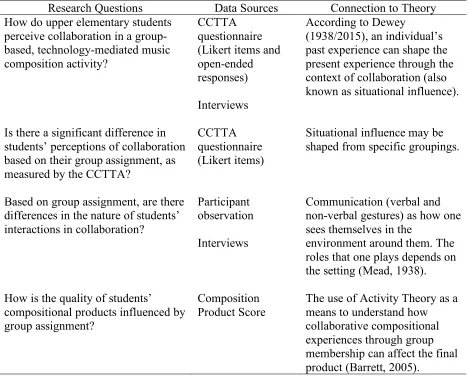
Table 1. Research Questions, Data Sources, and its Connection to Theory………..60
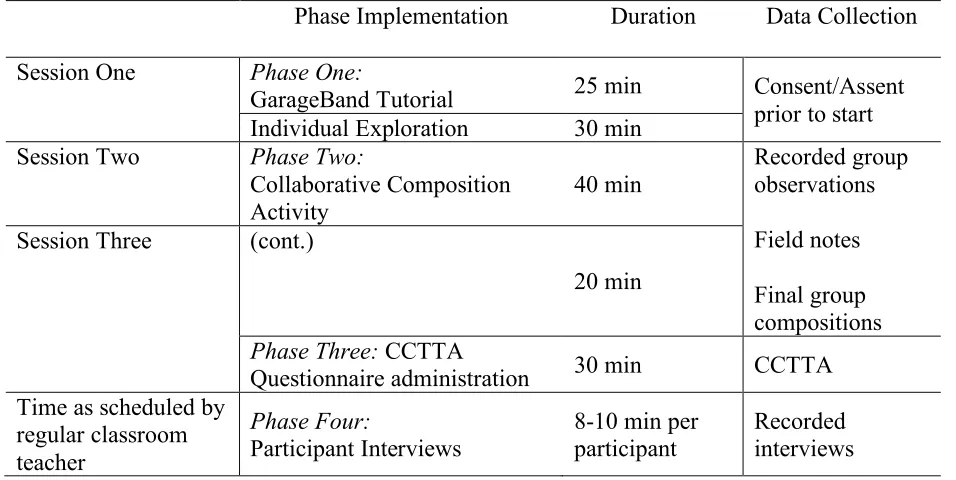
Table 2. Overview of Phases of the Study……….66
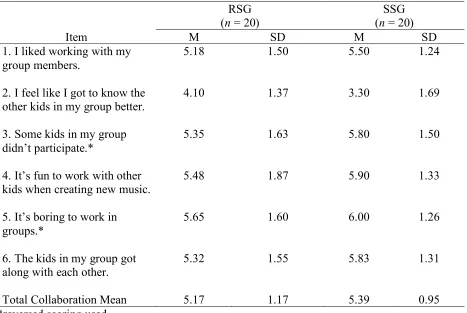
Table 3. Descriptive Statistics for Collaboration Section of CCTTA, Based on 7-point Scale…72 Table 4. Descriptive Statistics for Interaction Section of CCTTA, Based on 7-point Scale…….76
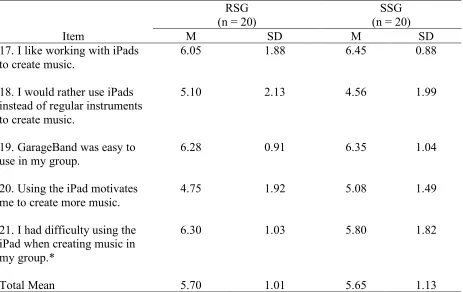
Table 5. Descriptive Statistics for Technology Section of CCTTA, Based on 7-point Scale…...80
Table 6. Collaborative Product Rating Scale Totals………..94
Table 7. Ranking of Group Product Scores, Based on Overall Mean of Independent Raters…...95
Table 8. Time Devoted to Observed Compositional Processes by Group……….97
Table 9. Observed Verbal Communication Codes………..100
Table 10. Observed Non-Verbal/Musical Communication Codes………..101
Table 11. Observed Off-Task Behavior Codes………103
LIST OF FIGURES
Figure 1. The structure of an activity system……….10
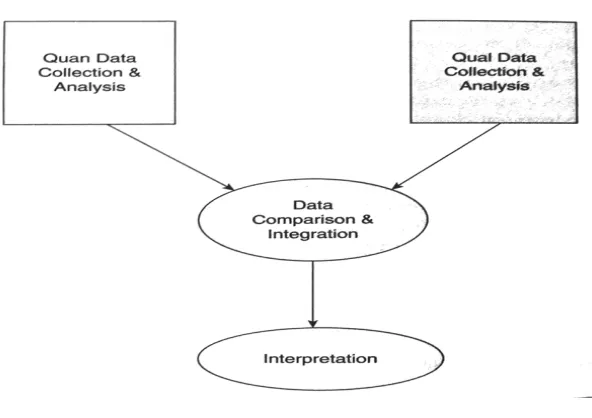
Figure 2. Display of convergent parallel design………49
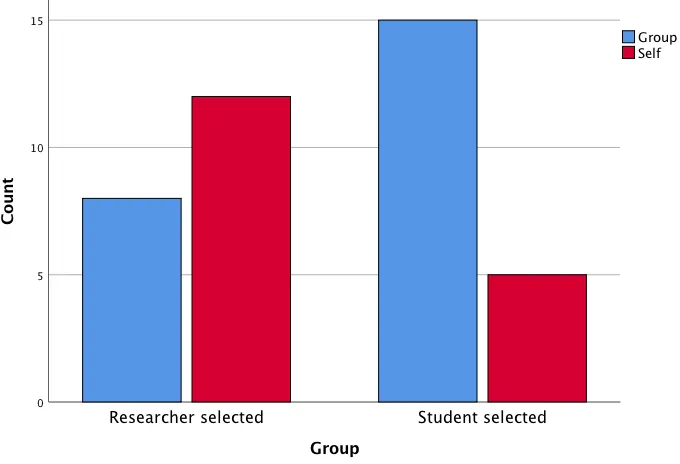
Figure 3. Participants’ preferences of collaborative work or individual work………..73
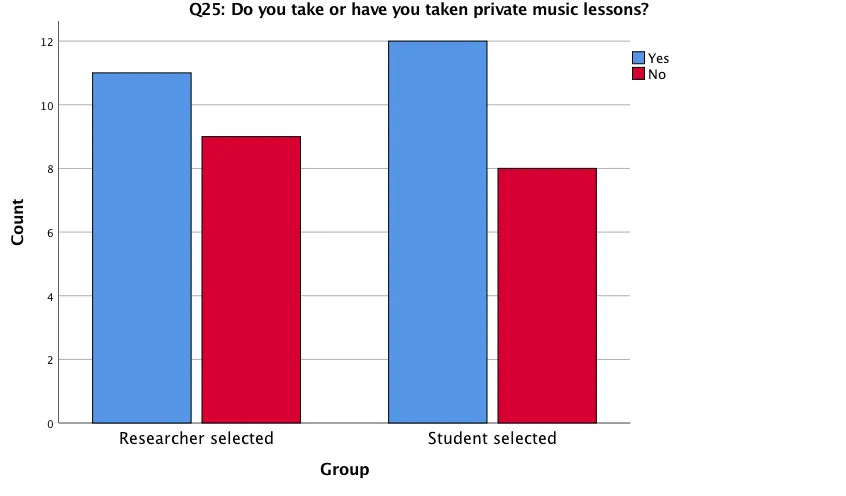
Figure 4. Frequency of participants’ experience with private music instruction………...85
Figure 5. Frequency of participants’ experience with participation in performance groups…….87
Figure 6. Frequency of participants’ descriptions of general technology use………...88
Figure 7. Frequency of participants’ experience with technology for music………90
Figure 8. Frequency of participants’ experience with GarageBand………..91
Figure 9. Frequency of participants’ experience with non-GarageBand music applications……93
Figure 10. Mean percentage of compositional processes by group………...99
1 INTRODUCTION
The study of mental life has made evident the fundamental worth of native tendencies to explore, to manipulate tools and materials, to construct, to give expression to joyous emotion, etc. When
exercises which are prompted by these instincts are a part of the regular school program, the whole pupil is engaged, the artificial gap between life in school and out is reduced, motives are afforded for attention to a large variety of materials and processes distinctly educative in effect,
and cooperative associations which give information in a social setting are provided. (Dewey, 1916/1944, p. 195)
In the aforementioned statement, Dewey draws attention to the value of active endeavors in schools. These activities, or “exercises,” contained “instincts” related to exploration, mediated resources, and positive attitudes. Later in his writing, Dewey (1916/1944) defined these
“exercises” as active play and active work. Dewey’s interpretation of active work, attributed from Plato, referenced activities in the arts as having an essential place in the school curriculum. More specifically, these “exercises” were situated in cooperative settings, emphasizing the need for students to work collaboratively.
Music educators have acknowledged the importance of collaboration with the adoption of the National Standards for Arts Education in 1994 (MENC, 1996). While the term
Collaborative efforts are designed to create a student-centered learning environment (Kassner, 2002). The use of collaborative activities can enhance not only the social interactions of children but musical achievement (Kaplan & Stauffer, 1994). This student-centered approach to learning is in direct opposition to the traditional method of music instruction, where the teacher authoritatively controls decision-making in the creation and implementation of activities (Allsup, 2003; Luce, 2001). According to Wiggins (1999), instruction in teacher-led activities only considers the interpretation of the authoritative figure and assumes that “students bring little or no musical knowledge into the classroom” (p. 30). In the elementary music setting, this
traditional method is realized through whole group instruction, where the primary focus of students’ attention is on the teacher.
Collaboration in elementary instruction has been incorporated frequently in creative activities (Coulson & Burke, 2013). Ninety-four percent of surveyed music educators rated creativity as an essential component in elementary music instruction (Fairfield, 2010),
understood through compositional and improvisational activities. The importance of creativity was recognized in the 1994 National Standards, identifying improvisation and composition as respective guidelines in formal music instructional planning. The addition of three Artistic Processes (Creating, Performing, and Responding) in the current Core Music Standards further emphasized the relevance of creative activities in student-centered instruction (Shuler, 2011). According to Shuler (2011), “our national music standards highlight the importance of creativity by suggesting that students engage in improvisation, composition, and interpretation of music. As a result, more teachers are including creative activities in their classrooms” (p. 12).
knowledge of technology from experiences that occur outside of school settings (Burnard, 2007). Prensky (2001) classifies the current student population as “digital natives,” as they have “spent their entire lives surrounded by and using computers, videogames, digital music players, video cams, cell phones, and all the other toys and tools of the digital age” (p. 1). Upon recognizing how students strongly relate to technology on a personal level, general music practitioners are transforming their classrooms with technology integration (Dobson & Littleton, 2016; Savage, 2007; Tobias, 2013). Recognized on a national level, a separate strand for technology was a part of the Core Music Standards, emphasizing the need for generating original ideas, both
individually and collaboratively. Incorporating collaborative activities through technology further emphasized a pedagogical shift to student-centered learning (Cremata & Powell, 2017).
While the incorporation of collaborative practices has been recognized as a student-centered approach to creating music, the nature of how children are grouped remains non-standardized in structure. When assigning children to collaborative groups, teachers commonly select students based on either musical ability or friendship (MacDonald, Miell & Morgan, 2000). The importance of group selection is based on “the degree of engagement with each [group member’s] ideas and perspectives which the children are able to establish and maintain” (Miell & MacDonald, 2000, p. 349). Through mutual engagement, students can achieve a greater understanding of their interactions with each other (Faulkner, 2003).
Personal Motivations
compositional and improvisational activities in my teaching. My principal suggested
implementing creative activities using student collaboration groups. While the transition from being an authoritative figure to facilitator was slow, I began to see benefits of collaborative work in classroom instruction. These benefits included peer-led negotiation, an incorporation of students’ personal musical ideas, and unique products.
The use of technology was quickly integrated in my classroom. At one of my more recent school assignments, I was fortunate enough to have my own set of classroom iPads for
instructional use. Music applications and programs were readily used, with the majority of them designated for creative, exploratory purposes, most often in collaborative settings.
While my students positively perceived these open-ended creative tasks, I often struggled with how to group them. Students frequently requested to work with their friends. My inclination was to assign student groupings by either musical ability or by patterns of behavior. Soon, I wondered if there were differences in how the selection of groups affected their overall attitudes of collaborative activities. Did group assignment affect the nature of their interactions? Did it compromise the quality of the final products?
Rationale for the Study
Compared to individualistic learning, working in collaborative groups can increase student achievement in generalist classrooms (Isik & Tarem, 2009; Peklaj & Vodopivec, 1999). In performance-based music classrooms, collaborative efforts can also benefit musical
The use of collaboration in elementary music classrooms has been studied through the creative activities of improvisation (Coulson & Burke, 2013) and composition (Burnard & Younker, 2008; Wiggins, 1994; Wiggins, 2000). Practitioners on this topic have encouraged the use of collaboration in elementary music classrooms to promote active and effective learning in creative music activities (Friedman, 1989; Kassner, 2002).
With an increase of technology integration in the music classroom, researchers have investigated its use as a mediation tool in creative activities, focusing on communication,
creative processes, and exploration and development (Charissi & Rinta, 2014; Dillon, 2003; Gall & Breeze, 2008; Sawyer, 2008).
Researchers have identified students’ attitudes of creative collaborative work in elementary general music settings (Faulkner, 2003; Kaschub, 1999) and secondary music classroom settings (Hopkins, 2015; Hopkins, 2019). More specifically, the nature in which creative activities were mediated was also investigated. These mediation forms comprised classroom instruments (Faulker, 2003; Kaschub, 1999), instruments in large-group ensembles (Hopkins, 2015; Hopkins, 2019), and technology (Cape, 2014; Cremata & Powell, 2017).
In understanding the nature of group selection, previous researchers have focused
primarily on the effect of friendship (MacDonald, Miell, & Mitchell, 2002; MacDonald, Miell, & Morgan, 2000) and compositional product quality (Burland & Davidson, 2001). While
Theoretical Framework
This study took the form of a mixed methods research design. This study was grounded in pragmatism. Pragmatism is a philosophical perspective that is most associated with mixed methods research (Teddlie & Tashakkori, 2009). The pragmatists’ position embodies a pluralistic approach to problem solving, open to the use of any means and methods necessary to answer a particular problem. (Creswell, 2009). Ontologically, pragmatists tend to believe in multiple realities. Epistemologically, pragmatists tend to be universalist, suggesting that basic “truths” exist. Importantly, however, all “truths” are influenced within a particular context (DeCuir-Gunby & Schutz, 2017).
Educational influences in pragmatic thought are derived from the works of John Dewey (Dewey, 1916/1944; 1938/2015) and George Herbert Mead (1934/2015; 1938). For pragmatists, knowledge is based on things that are experienced through action (Garrison & Neiman, 2003). In educational settings, action can come in the form of problem solving, projects, and group work. This study will apply the progressive, pragmatic approaches of Dewey and Mead.
Theory of Experience
Dewey believed that all learning is situated in the context of its environment. Dewey (1916/1944) acknowledged his theory of knowledge as pragmatic. A prominent feature in Dewey’s theory of experience is the activity itself, as it seeks to modify its surrounding
environment. To achieve knowledge, one must be adaptable to the environment, as well as one’s aims in a specific context.
which come after” (Dewey, 1938/2015, p. 35). In other words, an individual’s past experiences will have some influence on future experiences. The experiences with an environment can shape the perceptions of an individual within that environment. According to Dewey (1938/2015), this can affect the quality of how future experiences are shaped:
As we have seen, there is some kind of continuity in any case since every experience affects for better or worse the attitudes which help decide the quality of further experiences. . . . Every experience influences in some degree the objective conditions under which further experiences are had (p. 37).
An individual’s experiences take place within a particular context or environment, which Dewey calls a “situation.” It is in the situation where the principle of interaction applies.
Through interaction, an individual’s present experience is realized from the relationship between the environment and the individual’s past experiences. To Dewey, the concepts of situation and interaction are inseparable. Dewey states that “an experience is always what it is because of a transaction taking place between an individual and what, at the time, constitutes his
environment” (Dewey,1938/2015, p. 43). Important to the situation is the object that mediates an activity. Mediation objects, according to Mead (1938), are interdependent on an individual’s experience and the situated environment:
It is in so far as the reality of the thing is affected either with the future or with the past that we are able to isolate elements which are referred to the experience of the
individual. . . . Things are what they are in the relationship between the individual and his environment, and this relationship is that of conduct (p. 218).
One central focus of Mead’s (1934/2015) work is on the individual. The individual, however, is situated in society, or the surrounding environment. Mead delineates the attitudes of the individual as the “self” and the “mind.” Mead characterizes these distinctions as the “I and the Me.” In Mead’s words, “the ‘I’ is the response of the organism to the attitudes of the others; the ‘me’ is the organized set of attitudes others which one himself assumes” (Mead, 1934/2015, p. 175). In understanding the individual within society, the “I” is the immediate response of an individual to others. These immediate responses consist of impulses by the individual. The “me” is the collective attitudes of others. Here, the individual assumes the collective attitude.
The acts of an individual with his or her environment and the realization of the self and mind are dependent on communication (Mead 1934/2015). To Mead, communicating in a social process consists of language and gestures. Through language, “there are an infinite number of signs and symbols which may serve [its] purpose. . .” (p. 14). Verbalizations are commonly used in language functioning. Gestures, however, can be non-verbal. Mead describes gestures, saying that “we are reading the meaning of the conduct of other people when, perhaps, they are not aware of it. . . . Conversation in gesture may be carried on which cannot be translated into articulate speech (Mead 1934/2015, p. 14).
Theoretical Model
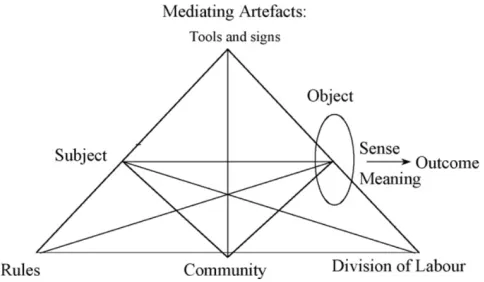
As an extension of pragmatism, the use of a holistic model can offer an understanding of several contributing elements of collaboration when analyzing students’ perceptions. This study used Engestrom’s Activity System Model as a means to identify differences in the grouping of students in collaborative creative activities. Engestrom’s model is a visual representation of the interrelationships between the individual learner situated in a socially mediated activity
Activity theory (AT), sometimes referred to as Cultural Historic Activity Theory, is a process by which “individual learning is mediated by cultural artifacts and membership of groups” (Welch, 2007, p. 25). AT’s primary focus is on the examination of the relationship between an individual within a particular environment (Barrett, 2005). In terms of peer
collaboration, AT can provide an understanding of interrelated elements that take place through interactions (Burnard & Younker, 2008).
AT is based primarily from the work of Vygotsky (1978). Vygotsky created the concept of mediation, where an action (“object”) by a “subject” is interceded by a particular mediating “artifact” (Welch, 2007). Artifacts include signs and tools which are transformed by the
individual during a social activity. It is through the mediation of artifacts where the transmission of knowledge occurs (Vygotsky, 1978). In other words, “the individual could no longer be understood without his or her cultural means; and the society could no longer be understood without the agency of individuals who use and produce artifacts” (Engestrom, 2001, p. 134).
According to Engestrom (2001), Vygotsky’s first generation of AT remained individually focused. Leontiev (1978) extended Vygotsky’s idea of cultural mediation by positing that
interactions were governed by “rules” and “division of labor,” all through a sense of
Figure 1. The structure of an activity system (Engestrom, 2015, p. 63)
In educational research, technology as a mediated artifact is becoming more prevalent, with the use of AT as a framework and visual model (Issroff & Scanlon, 2002; Kapelinin & Nardi, 2006). Through technology, the focus of AT is “on purposeful, mediated, human social activities” (Kapelinin & Nardi, 2006, p. 27) through analysis of social interactions and
perceptions.
In music education research, the use of AT as a framework has gone relatively unused (Burnard & Younker, 2008; Welch, 2007), although Burnard and Younker suggested that the Engestrom model of AT was a valuable framework for peer collaboration, specifically in music composition. Burnard (2007) indicated that AT was useful when examining the intersections of creativity and technology as the model “provides a means of tracking, over time, the
Purpose of the Study
The purpose of this study was to examine upper elementary students’ experiences in a technology-mediated collaborative music compositional activity. The goal of this study was to understand the effect of group assignment on students’ perceptions of working collaboratively. Further, this study was designed to illuminate students’ interactions and final products within a group structure as well as identify the effect of technology as a mediation tool. This study aimed to contribute to the existing body of research in understanding students’ perceptions of
collaboration where technology mediates creative activities (Burland & Davidson, 2001; Hewitt, 2008; Wallerstedt, 2013) and propose implications for educators concerning collaborative activity planning and group selection.
Research Questions
The research question for this mixed methods study were as follows:
1) How do upper elementary students perceive collaboration in a group-based, technology-mediated music composition activity?
2) Is there a significant difference in students’ perceptions of collaboration based on their group assignment, as measured by the Collaborative Composition Through Technology Assessment (CCTTA)?
3) Based on group assignment, are there differences in the nature of students’ interactions in collaboration?
4) How does group assignment influence the quality of students’ compositional products?
Significance of the Study
There is a great deal of literature concerning students’ experiences in creative
& Younker, 2008; MacDonald, Miell, & Morgan, 2000; Wiggins, 1994; Wiggins, 1999). Furthermore, the use of technology as a mediation tool in creative endeavors has also been studied (Dillon, 2003; Dillon, 2004; Hewitt, 2008). Several researchers have investigated students’ attitudes in collaborative work through the use of classroom instruments (Faulkner, 2003; Kaschub, 1999), performance-based instruments (Hopkins, 2015), and technology (Cremata & Powell, 2017).
While researchers have uncovered the importance of how students are grouped in collaborative creative activities (MacDonald, Miell, & Morgan, 2000), there remains a need for comparing students’ perceptions in group work based on their group selection. This study was designed to address this limitation.
Delimitations
This study is limited to the elementary general music setting. While the bulk of research in technology-mediated collaborative composition has been conducted in elementary general music settings, it is likely that findings may be similar in scope if conducted with older students. This study is limited to the elementary general music setting largely in part to the researcher’s expertise in that particular field.
Organization of the Following Chapters
Definition of Terms
CCTTA
The Collaborative Composition Through Technology Assessment is the survey instrument adapted for this research study. The CCTTA consists of three constructs related to students’ perceptions of working together: collaboration, interactions, and technology. A fourth section includes items related to demographic and prior musical/technological experience.
Creativity
The term “creativity” can be confusing, as it can have many meanings. In terms of music education, Webster (2002) defines creativity as “the engagement of the mind in the active, structured process of thinking in sound for the purpose of producing some product that is new for the creator” (p. 5).
Creative activities
Fundamental ways in which humans engage in creative behavior. Composition is a rehearsed creative activity, ending in an original work. Improvisation is typically a creation of music that is “in the moment” or in “real time” but can also be rehearsed, resulting in altered products.
Collaboration
An umbrella terms for the structures of collaborative learning and cooperative learning. Collaborative learning “engages students as active participants in that they are placed in
situations in which they have to explain what they are doing and why they are doing it and take account of the views expressed by others.” (Hunter, 2006, p. 78). Cooperative learning is a formal, highly structured collaborative approach to learning. Cooperative learning contains five critical elements:
2) Individual accountability 3) Face-to-face interaction
4) Interpersonal and small group skills 5) Group processing
According to Hunter, “whichever construction we use, the reference is to learning that involves students in working with others and, crucially, learning together.” (p. 76)
Musical communication
In a collaborative music setting, musical communication is typically a non-verbal form of communication where children express their ideas through the music itself.
Technology Mediation
In the context of technology, mediation can be defined as the tool used as interaction between learners and the learning outcome (Alavi & Leidner, 2001). When viewing technology through creative activities, Burnard (2007) paints a picture of mediation where creativity is an internal process and technology is the external strategy.
Verbal communication
Utterances voiced by participants. A more specific form of verbal communication is transactive. In exploring the social nature of musical collaboration, transactive communication “builds upon and extends ideas that have already been voiced (either by the self or another person)”
2 REVIEW OF THE LITERATURE
This literature review examines research that explores collaboration as it pertains to the elementary music classroom. This review will explore the contexts of formal collaborative structures in education, collaboration in music education, creativity, social interactions, technology integration, and perceptions. The discussion of collaboration pertaining to music education will focus on compositional activities.
As these respective contexts are examined, it is important to note a limitation in the literature: the effect of group assignment on students’ perceptions in technology-mediated collaborative composition. A review of research in multiple collaborative contexts is necessary in order to investigate students’ experiences of collaboration. This review does not include all literature related to the topics of collaboration, composition, and technology-mediation. This review does, however, include seminal and representative works that serve as examples for related research. Such works are frequently cited in more current publications related to a similar topic. In a recent study, Hopkins (2019) examined the group composing processes of lower secondary orchestra students. The citation of works in the introduction to his study served as the most current example for justifying citations of seminal and representative works included in the current study.
Formal Collaborative Structures in Education
Formally, group learning is understood by two structures: cooperative learning and collaborative learning. Although they differ in name, both learning structures are designed for interdependence (Bruffee, 1995), where the ultimate goal is to “help students learn by working together on substantive issues” (p. 12). Interdependence in group learning is defined as shared common goals, where working collaboratively is beneficial for both the individual and the collective group (Johnson, Johnson, & Holubec, 1990). The success of the group is dependent on the participation of all group members.
Cooperative Learning
Cooperative learning is a highly organized group learning structure designed for
achieving academic objectives and heightening social skills (Kaplan & Stauffer, 1994). As early as the 1970s, cooperative learning gained prominence in educational settings through the work of Johnson and Johnson (1992) and Slavin (1995). According to these researchers, the premise of cooperative learning is that when compared to working independently, working together toward a common objective can lead to greater achievement of that objective.
Integral to the success of cooperative learning strategies are five elements that structure group activities: positive interdependence, face-to-face promotive interaction, individual
accountability, interpersonal skills, and group processing (Johnson, Johnson, & Holubec, 1990). Through positive interdependence, the efforts of individual group members are required for the success of the collective. Each member contributes to the group. Group members are typically assigned a specific role or task. Through face-to-face promotive interaction, communication is vital in order to explain various task assignments. Social influences of peers encourage
achievement. Assessments in task completion is also a function delivered by the teacher. The fourth component is the appropriate use of interpersonal and small group skills. The teacher typically models development of interpersonal skills in cooperative learning. Additionally, it is common for teachers to control the selection of group members based on the dynamics of student interactions. The final element is group processing. This element is reflective, as group members describe each other’s peer strategies and behaviors that contribute to task completion.
Cooperative learning groups are identified by three types of member structure: formal groups, informal groups, and cooperative base groups. The teacher carefully selects members in formal groups. Tasks are crafted for specific content-related activities. Informal groups are less structured in task assignments, often designed for the discussion and review of information. Cooperative base groups are designed for longevity. Group membership can last the duration of a school year, as compared to a cohort in higher education.
Collaborative Learning
While the goals of collaborative learning are similar to that of cooperative learning, there are stark differences in how these goals are approached. Folio and Kreinberg (2009) describe the differences between the formal structures: “Cooperative learning is teacher centered and seeks to produce a ‘correct’ answer. . . who is in complete charge of the class at all times. Collaborative learning is learner centered and seeks to empower students to discover information by working together within groups” (p. 165). The learner centered approach to group work is reflected by the assigned activities, such as open-ended tasks, project-based learning, and problem-solving undertakings.
build diversity understanding, increase student self-esteem, and develop a positive attitude toward authority figures. These collaborative benefits enable students to build problem solving skills by utilizing negotiation techniques.
Formal Group Learning Structures in Music Education
Music education research concerning formal group learning structures has been relatively limited. The use of cooperative learning has been somewhat studied in elementary music settings (Cornachhio, 2008; Veenman, Kenter, & Post, 2000). In secondary school settings, the use of cooperative learning was investigated in band (Cangro, 2004; Compton, 2015; Whitener, 2016) and choral (Inzenga, 1999; Varvarigou, 2016) settings. Similarly, research in collaborative learning strategies was limited to secondary school settings in orchestra (Harrington, 2016) and choral (Timbie, 2016) settings.
Publications dedicated to practitioner teaching and learning has also been limited. In 1994, MENC published a guide on the design and implementation of cooperative learning structures in music classrooms (Kaplan & Stauffer, 1994). Books by Huffman (2012) and Katz and Brown (2011) included specific cooperative learning lessons designed for primary-aged students.
Differences in Formal Group Learning Structures
The use of cooperative and collaborative learning strategies can cause confusion in the literature. Luce (2001) notes that collaboration can be characterized as an “umbrella” term that “includes a variety of approaches of cooperation and collaboration” (p. 20). These approaches emerge from interactions between student groups, as well as students and teachers. It is
figure in cooperative learning, collaborative learning goals shift influence to the student, creating a more autonomous atmosphere. Cooperative learning risks imitating authoritarian behaviors, while collaborative learning sacrifices a guaranteed accountability (Bruffee, 1995).
Many researchers do not make a distinction between cooperative and collaborative learning (Chinn, 2010), as both structures share similarities. In this study, students will work together in small groups in a creative activity. Elements from both formal structures will be utilized in this study. The cooperative learning elements of promotive interaction and group processing is essential in understanding group selection based on how students communicate and reflect. Conversely, the creative activity in the current study is open-ended in structure, designed as a student-centered endeavor. In that respect, the open-ended structure in the current study is closely aligned with the collaborative learning structure. For purposes of the current study, the term “collaboration” will act as an umbrella definition for both cooperative and collaborative learning designations.
Collaboration in Music Education
Students working in collaboration can provide more than an increase in student achievement. The experiences of students engaged in a shared environment may also benefit their positive attitudes, cognitive development, and self-esteem (Kaplan & Stauffer, 1994). Collaborative efforts “not only meet educational goals, but also lead to more pro-social attitudes and behaviors among students” (Kaplan & Stauffer, p. 5).
The need for collaboration is important, if only for the benefits of social interactions (Kaplan & Stauffer, 1994). In music education, collaborative efforts can enhance not only social interactions of children but musical achievement. According to Kaplan and Stauffer, the
objective and development of cooperative skills, such as being a good listener, or encouraging good ideas” (Kaplan & Stauffer, 1994, p. 2).
While the majority of the focus from the literature underscores collaboration in terms of student participation and achievement, an increasing amount of the literature also focuses on the role of the teacher. Through the incorporation of collaborative music activities, educators’ roles and responsibilities shift from teacher-centered learning to student-led decision-making
(Wiggins, 1999). Teachers must shift their focus to facilitation, allowing students to achieve musical goals through their own mutual decisions.
While research in collaboration in music classrooms is relatively limited (Luce, 2001), there has been significant research in other subject areas, such as language (e.g., Hall & Burns, 2018) and mathematics (e.g., Alabekee, Samuel & Osaat, 2015). Proponents of collaboration often emphasize its importance by incorporating a variety of student abilities, as it benefits both social and academic principles (Kaplan & Stauffer, 1994). For example, the social aspect of collaboration can give students unique perspectives on diversity, such as working with special needs students (Jellison, Draper, & Brown, 2018).
Collaboration Compared to Individualistic and Traditional Learning in Music Education
Johnson, & Holubuc, 1990), comparable to the traditional teaching practices used in music education.
Collaborative work has been readily used in elementary and secondary school settings, through general music practices and performance-based groups. Compared to individualistic instruction, the effects of collaboration were investigated in the general music elementary classroom. Cornacchio (2008) found positive effects of collaboration over individualistic instruction in elementary compositional activities. Pre and post-tests were given individually to participants based on music achievement. Participants were assigned to one of two treatment groups: collaborative groups and individualistic. Both treatment groups composed music based on specified rhythmic patterns and solfege tones. Results showed that while there was no
significant difference between participants’ post-test scores between collaborative and individual conditions, there was a significance in pre and post-test scores in the collaborative group.
Furthermore, those in collaborative groups exhibited more observed on-task interactions than students who composed individually.
groups’ performance. Results from the raters’ scores indicated a significant difference in overall band performance. The treatment group performed better than the band with teacher-led
rehearsal techniques. Compton suggested factors to consider when incorporating cooperative learning in secondary performance-based groups. These factors included group structure, time management, and the importance of the teacher’s role as facilitator.
Collaboration can be an effective means for enhancing music literacy in the secondary performance-based music setting through the use of specific group strategies. Inzenga (1999) observed ninth-grade choral students in two cooperative groups. Analysis of observations uncovered collaborative strategies that were used by the cooperative groups. These strategies included: modeling, clarification, prior knowledge activation, predicting and question generating, thinking aloud, summarization, and direct explanation. Students in collaborative groupings demonstrated significant gains in music reading achievement pre and post-test scores, as measured by the Iowa Tests of Music Literacy assessment.
Collaborative strategies can also improve listening skills. Holloway (2001) investigated the effects of cooperative learning and traditional learning on listening acquisition skills, specifically in melodic and meter recognition. Students in collaborative groups demonstrated significant gains in listening achievement over students taught through the traditional, teacher-led method of instruction.
Collaboration and Musical Creativity
Working collaboratively can lead to higher levels of creativity. Baloche (1994) measured changes in levels of student creativity in collaborative groupings. Not only did students score higher in creative thinking tests, but social factors improved, including an increase in self-esteem. Other areas with increased scores included cooperation, goal interdependence, goal cohesion, and support. Support was categorized into student academic support, student personal support, and teacher personal support.
Collaboration can enhance the process of musical creativity through endeavors such as composition (Cornacchio, 2008) and improvisation (Beegle, 2010). The use of collaboration can heighten students’ interactions with peers and encourage a positive learning experience. It is through group-based interactions that students are at the core of their own instruction by incorporating personal experiences and strategies for student-based instruction (Brown, 2008). Collaborative creative activities promote peer interactions and encourage creative thinking (Menard, 2013).
Collaborative Composition in the Elementary Music Setting
While group composing has been an important part of research internationally, it remains limited in the United States (Cangro, 2016). In the elementary setting, much of this research has focused on “traditional” forms of composition, using classroom instruments for music making (Hopkins, 2015).
investigated the collaborative compositional practices of students in instrumental performance groups.
Other researchers have examined collaborative composition through various social groupings, investigating the effects that grouping has on communication and the final product (Burland & Davidson, 2001; MacDonald, Miell, & Mitchell, 2002). Further, research has been conducted to uncover the nature of collaboration through social interactions (Burnard & Younker, 2008). Veloso (2017) sought to understand the nature of embodied processes in collaborative composing.
Unique to collaborative composition is the importance of individual ideas to the
collaborative effort (Faulkner, 2003). Group members negotiate individual ideas in an effort to create a final collective product. This negotiation process produces a shared understanding of the overall collaborative effort.
Group. . . composing clearly facilitates that dynamic dialogue and collaboration, a
reactive and reflective educational process that motivates change and facilitates personal, social, musical and creative development. These processes can and do lead to individual acts of creativity, shared and validated by the social group and in tum increasing shared knowledge and understanding. (Faulkner, 2003, p.120)
The researcher concluded by stressing the importance of the individual’s experience as integral to a collective composition activity.
Open-Ended Task Structures in Collaborative Music Composition
Through the resources of communication, inquiry, construction, and artistic expression, children are in control of their own learning. It is through this student-centeredness that children ask questions and have a desire to solve problems. For Allsup (2003), children working freely in an open environment of exploration is integral to creating a democratic space. Dillon (2003) echoes this sentiment, emphasizing how open-ended task structures are central to discovery and
exploration processes. Specific to creative music activities, open-ended tasks have no “correct” answer. MacDonald, Miell, and Morgan (2002) describe open-ended tasks in a similar
description to creative problem solving by saying that “collaborators need to develop their own ways of working towards what they themselves have defined as a creative solution” (p. 150).
Kaschub (1999), using the term “umprompted,” defined open-ended tasks as “not defined by the teacher, but the student is responsible for defining their own parameters” (p. 4). The use of open-ended tasks in collaborative composition has been studied in both traditional (Kaschub, 1999; MacDonald, Miell, & Mitchell, 2002) and technology-mediated activities (Dillon, 2003; Hewitt, 2008). Task parameters have varied in how open-ended tasks instructions are given to children. For example, Hewitt (2008) directed students to “compose a piece of music that sounded good to them” (p. 15). Other researchers have used open-ended tasks, with the only stipulation being that a composed song should have a clear beginning and clear ending (Morgan, Hargreaves, & Joiner, 2000). Kaschub (1999) and Faulker (2003) found that students preferred open-ended tasks over those with more structured parameters.
Collaboration and Social Interaction in Elementary Music Creative Activities
work together” (Kaplan & Stauffer, 1994, p. 10). It is this direct attention to social needs that makes collaboration a valuable addition to an existing music curriculum, especially when considering its extension into creative activities.
Research concerning social interactions in creative activities has focused primarily on compositional processes (Stauffer, 2001; Wiggins, 1994) and forms of communication (Hopkins, 2015; MacDonald, Miell, & Mitchell, 2002; Wiggins, 2000).
Compositional Processes in Collaborative Musical Creative Activities
Examining the processes that children exhibit through creative activities is important in understanding the musical development of children (Stauffer, 2001). According to Kratus (1989), this process typically begins with some form of exploration, where the discovery of sound will ultimately shift into the development of creative ideas. Stauffer (2001) described a child’s composing processes through strategies of exploration and development using a computer software program. Over the course of her study, the child became more fluent in compositional strategies, as well as having an increased awareness of internalizing music choices. Stauffer asserted that the composition process included the interactions of time, tool, and technique, “including time to explore and become familiar with the medium [technology], time to find [children’s] own strategies and gestures, and time to practice using them” (p. 18). Stauffer’s case study observed only one child. It is included in this section, however, as Stauffer presented implications for collaborative composition, saying that collaborative efforts may have limitations with her assertions, including time for exploration, group size, and technological availability.
predetermined holistic idea of what the finished compositional product might be. Furthermore, the groups exhibited a three-stage process during group learning strategies (whole-part-whole). The first stage, whole group, consisted of initial planning of the final product, reinforcing the holistic approach that the groups demonstrated. This reflective stage also developed students’ instrument selection for performance of the final product. In the second stage, independent practice, each participant explored motivic development separately. In the third and final stage, whole group, the participants reconvened for evaluative comments and practice of the final product. This study further suggests that the groups incorporated purposeful planning in their practice, as opposed to random exploration.
Role assignments within collaborative groupings can affect the nature of compositional processing. Beegle (2010) found that social roles in collaboration efforts were often correlated to musical roles. Four components of collaboration emerged from the study: role assignments, exploration, discussion, and negotiation. It was important to note that these components were not necessarily sequential, as groups frequently moved in and out of various components.
Interestingly, the social relationships between students affected the final product. In musical terms, common themes emerged in collaborative planning. These themes were: memorization, initiation, and motivic development.
Using a systems model for analysis, Burnard and Younker (2008) found that
demonstrated the importance of assigning groups according to children’s musical background and instrumental experience.
Communication in Musical Creative Activities
Communication is vital for children in order to learn from others (MacDonald & Miell, 2000). This communication can be either verbal or musical.
Verbal Communication. Several researchers have explored the importance of verbal communication in collaborative compositional activities (Charissi & Renta, 2014; Hewitt, 2008). MacDonald, Miell, and Mitchell (2002) paired 40 girls into friendship and non-friendship
groups. The participant groups were given 20 minutes to compose a piece of music on a keyboard. The researchers found that collaborative groups formed through student selection exhibited a higher level of verbal dialogue than non-friendship groups. Verbal dialogue was also voiced by participants as expressions of feelings, as well as a means to discuss successive steps in compositional processes (Charissi & Renta, 2014).
Transactive communication. A more specific form of verbal communication is transactive communication. The presence of transactive communication is crucial to quality group work. MacDonald & Miell (2000) defined transactive communication as “communication which builds upon and extends ideas that have already been voiced” (p. 61). Several researchers have indicated the importance of group membership in verbal, transactive communication (Hewitt, 2008; MacDonald, Miell, & Mitchell, 2002), most importantly through friendship groups.
Researchers investigating technology use in collaborative composition indicated similar findings regarding the presence of verbal communication. The purpose of Hewitt’s (2008) study was to identify and analyze transactive communication using a computer for composing. Results indicated that transactive communication accounted for 37% of all coded recorded sessions.
Musical communication.Musical communication was also found to be an essential part of students’ interactions in creative collaboration. As a non-verbal communicative form, musical communication distinguishes creative musical activities apart from other respective subject contents (Hopkins, 2015). Many researchers have found that musical communication played a larger role than verbal dialogue in understanding collaborative compositional processes (Hopkins, 2015; Wiggins, 2000).
judgment purposes. Musical communication was the group members’ preference over verbal communication in terms of expressing musical ideas.
In a performance-based setting, Hopkins (2015) examined how group members used forms of communication (verbal and musical, non-verbal) in their compositions. Results showed that while group members utilized both forms of communication, all groups spend a larger percentage of time engaged in musical communication.
Shared understanding.In terms of collaboration, shared understanding was identified as “an understanding that the combined expertise of the group often exceeds that of the individuals who comprise the group, making the collaborative effort a more powerful platform for problem solving and decision making than the work of an individual might be” (Wiggins, 2000, p. 67).
In observing student interactions during creative problem-solving experiences, Wiggins (2000) analyzed shared understanding as an influential factor in student success. This shared understanding among group members included: understanding of the problem, strategies used to solve the problem, and music, in general. Findings indicated that in terms of the creative process, group members’ shared understanding was realized through the final product, based on musical elements of that product. These elements were shared through musical communication. The nature of shared understanding was characterized by the group’s vision of their respective work. This vision was deemed greater than any individual idea within the group. Creative activities using collaboration can lead to student success and benefit the individual through motivation, empowerment, and exploration, and higher levels of creativity, all within a safe environment where students were free to express original ideas.
While communication is central to collaborative activities, the nature of group selection can be just as significant. When assigning children to collaborative groups, teachers commonly select students based on either musical ability or friendship (MacDonald, Miell & Morgan, 2000). Either selection is based on the decision to actively engage children in a social context.
Friendship groups. Allowing students to select their own groupings in collaborative compositional activities can have meaningful effects on their social interactions (Burland & Davidson, 2001), which has “the potential to create an effective working environment, with good interactions. . . to produce high quality results” (p. 47). As mentioned previously, children that have experience working together can promote a shared understanding, in an effort to generate more musical ideas among groupmates (Wiggins, 2000). Researchers found that allowing children to select their own groupmates can have meaningful effects on the processes and products of creative activities (Charissi & Renta, 2014; MacDonald, Miell, & Mitchell, 2002; MacDonald, Miell, & Morgan, 2000; Hewitt, 2008).
In a seminal study, MacDonald, Miell & Morgan (2000) investigated the effects that friendship might have on collaborative interactions while performing a compositional task. Forty 7th grade students were either assigned to non-friendship pairs or asked to select a friend as a
partner. Using non-friendship pairs as the control group and friendship pairs as the experimental group, participants were given 15 minutes to compose a piece of music about the rain forest using percussion instruments. There were statistically significant findings in the friendship groups. Not only was there a greater use of transactive communication in the friendship groups, but the quality of the compositions was rated higher than that of the non-friendship groups. “This enhanced communication between friends is likely to be because their established shared
Miell, & Morgan, 2000, p. 411). Friendship enhanced communication through shared knowledge and also increased musical communication through gesturing.
Comparable to the previously mentioned study, MacDonald, Miell, and Mitchell (2002) focused their investigation of friendship and non-friendship groups on 8-year old and 11-year old pairs. Results indicated that the younger aged children paired in friendship groups scored higher in compositional product scores and achieved higher levels of meaningful verbal dialogue when compared to the non-friendship groups. In contrast to the former study (MacDonald, Miell, & Morgan, 2000), there were no significant differences in compositional product scores or verbal dialogue between the friendship and non-friendship groups in the older aged children. The researchers did state, however, that the compositional assignment was much more highly structured and less open-ended than the compositional task of the younger children, which may have required less negotiation in collaboration.
In a similar study, Burland & Davidson (2001) investigated the influence of various groupings on collaborative composition. The researchers focused on the quality of the compositional product and the quality of students’ social interactions. Various groupings
consisted of: random assignment, friendship groups, and non-friendship groups. Results showed no significant differences between groups in product scores. However, there were meaningful effects observed on the quality of social interactions in friendship groups. These effects were attributed to established methods of peer interactions, including shared understanding, completing work in a timely manner, and minimal off-task behaviors.
groupings. These variables included: friendship, prior experience of working together, tendency to lead, academic ability, and musical expertise. Transactive dialogue was higher in friendship groups and groups with experience working together. These communication variables suggest valuable insight on the selection of collaborative groups to gain maximum transactive
communication.
Non-friendship groups. Several of the previously mentioned studies compared friendship groups to non-friendship groups. Often times, students were randomly assigned to collaborative groupings (Burland & Davidson, 2001).
In other instances, students are grouped according to musical background and
instrumental experience. According to Burnard and Younker (2008), grouping students based on musical experience can be vital in group interaction, particularly in finding a balance in role assignments. In contrast, Seddon and O’Neill (2003) found that students grouped with similar instrumental experience had difficulty with exploration processes in creative composition, as formal training hindered the ability to create music outside of the traditional parameters of instrumental instruction.
Collaboration and Technology-Mediated Creative Activities
The use of non-traditional notation is viewed by many as changing the way that children interact through collaboration, allowing more students access to composition (Charissa & Renta, 2014). Non-traditional icons can be used as visual representations of various musical elements. Through these representations, elementary-aged students’ fluency in compositional strategies is heightened (Stauffer, 2001). Many technology-mediated programs offer pre-recorded loops and sequencing samples that are not available in traditional instrumental mediation tools (Dillon, 2004; Gall & Breeze, 2008).
According to Dobson and Littleton (2016), “music education is supported by an
increasing range of digital technologies that afford a remarkable divergence of opportunities for learning within the classroom” (p. 330). It is not surprising that with the rise of digital
technology in music classrooms, technology-mediated composition is establishing a solid foundation in music education research. Software programs that have been examined as compositional mediation tools have been: GarageBand (Ankney, 2012; Bolton, 2008; Cape, 2014), ejay (Dillon, 2003; Gall & Breeze, 2008); MakingMusic (Stauffer, 2001), Impromtu,
Hyperscore, O-Generator (Ackney, 2012), Sibelius Groovy Shapes, and JamMo (Charissi & Rinta, 2014). Researchers are continually investigating technology-mediating programs through the compositional processes that students experience (Dobson & Littleton, 2016).
Technology-Mediated Compositional Processes in Creative Activities
Compositional processes in traditional, instrumental collaborative activities were
the discovery of compositional processes. Forms of communication, such as verbal dialogues and non-verbal, musical gestures are essential in determining exploratory behaviors. Therefore, many of the studies cited in this section describe how communicative utterances are central to
understanding compositional processes.
Dillon (2003) conducted a series of studies to examine the collaborative processes of technology-mediated composition, specifically analyzing the nature of dialogue. The most commonly occurring dialogues revealed: suggestions, where new musical ideas were formed; extensions, where those ideas continued to develop; and questions. Most importantly, through dialogue, participants achieved a shared understanding of the compositional task. According to Dillon’s analysis, this shared understanding came in the mediated communicative forms of verbal utterances, non-verbal musical cues, and the use of technology. Integral to the success of this open-ended task was the processes of discovery and exploration.
Exploration in collaborative composition can be quite complex. Often, processes can take place within the scope of exploration (Dillon, 2004). Such processes can pertain to the discovery of sampled sounds, followed by reflection and the editing of selected sampled sounds.
Throughout this process, ultimate decisions in creative music making were made.
interactions within group members revealed several types of verbal and non-verbal communication, observed at varying times within respective processes.
Visual representations in technology-mediated compositional programs can also provide a shared space in the negotiation process of music meaning through creative endeavors. In terms of collaboration, Gall and Breeze (2008) discovered that the foundation of students’
communication was based on the visual representation of the computer display. Such
representations were visually appealing through colors, shapes and overall design. Control was an observed issue in collaboration, as students negotiated control through divergent
compositional ideas. Physical control of the computer was also reported as an issue. The researchers emphasized the importance of role assignments as children worked together in composition, particularly through issues of equity and physical control of technological devices.
The use of sound generation in compositional activities through technology-mediation can be developed at a more rapid pace than traditional composition. Savage (2005) conducted a comparative case study to observe how students composed through technology. According to Savage (2005), “the ease of access into sound ‘worlds’ and the manipulative and
was reflected upon. It was in this final evaluative stage where group members had the opportunity to return to other processes, where new understandings of decisions could be possible.
E-Collaboration in Music Compositional Activities
Technology-mediated compositional collaboration is not just designed for formal classroom use. The use of digital networks can allow students freedom and agency in creative endeavors. Through the use of online collaborative technologies, students can go beyond the walls of a classroom while interacting with others that are not tangibly present. Cremata and Powell (2017) investigated students’ experiences in an online music collaboration project. Through the use of an online compositional tool, participants worked with musicians from around the world. Exploration was encouraged, as a means to create a sense of personal agency in the open-ended activity. Each student’s creative processes were unique, as each
e-collaboration displayed distinctive forms of music choice, modes of communication, and decision making. Overall, students felt an increased sense of agency by creating their own experiences in learning.