Robust Approaches for Face Recognition
by
Ahmed Abdulateef Mohammed MSc Computer Science
Submitted in fulfilment of the requirements for the degree of Doctor of Philosophy
Deakin University September, 2018
Acknowledgements
I would like to express my sincere thanks and appreciation to my supervisor Dr. Atul Sajjanhar for his advice and guidance throughout this research period. I would like to extend my deep admiration for the support he has given me and for his valuable feedback which contributed greatly to the improvement of this work. I would also like to extend my laudation for his funding, which contributed to the success of this work. I also wish to thank Dr. Lei Pan as the associate supervisor of my work.
I give special thanks to my wife who constantly offered me help and encouragement throughout the work. I would like to thank her for enduring the hard times that accompanied us throughout the research. I appreciate her suffering, especially being far away from her relatives, her loved ones (her sisters and brothers) while longing for the homeland which has endured dark circumstances for quite some time. My thanks to my son Abdullah (Abodi) who also missed his beloved relatives despite his young age.
Immense thanks and gratitude to my father and brother, who provided so much support, encouragement, endless sacrifice, and followed up on me, my news and the progress of work in this research step by step. My thanks and respect to my beloved sisters for encouraging me and their continuous questions about the progress being achieved in this work.
I will never forget the memory of my mother (May God have mercy on her), despite her absence from us years ago and her passing to God. She did not leave me alone even for a moment. Her memories were an important source of inspiration and persistence in finalising this work.
I would also like to thank Aliaa’ Shubar and Haya Husseini who helped me edit the language in this thesis and improve the writing.
I am also grateful to the relatives and friends who stood by me and offered me all kinds of support in completing this work.
Finally, I thank God Almighty for giving me the strength and patience to go ahead with this work. I ask God Almighty to help me for the rest of my life.
List of Publications
Journals
1. Mohammed, A.A. and Sajjanhar, A 2016, ‘Experimental comparison of approaches for feature extraction of facial attributes’, International Journal of Computers and Applications, vol. 38, no. 4, pp.187-198.
2. Sajjanhar, A. and Mohammed, A.A 2017, ‘Face Classification Using Color Information’, Information, vol. 8, no. 4, pp.1-14.
Conferences
1. Mohammed, A.A., Sajjanhar, A. and Nasierding, G, 2015, ‘Multi-label approach for human-face classification’, Proceedings from the 8th International Congress in Image and Signal Processing (CISP), pp. 648-653, IEEE.
2. Mohammed, A.A. and Sajjanhar, A, 2016, ‘Robust approaches for multi-label face classification’, Proceedings of the 2016 International Conference on Digital Image Computing: Techniques and Applications (DICTA), (pp. 1-6), IEEE.
3. Mohammed, A.A. and Sajjanhar, A, 2017, ‘Robust single-label classification of facial attributes’, Proceedings of the 2017 IEEE International Conference on Multimedia & Expo Workshops (ICMEW), pp. 651-656, IEEE.
4. Mohammed, A.A. and Sajjanhar, A, 2017, ‘Investigation of gender and race classification for different color models’, Proceedings of the 2017 International Conference on Digital Image Computing: Techniques and Applications (DICTA), pp. 1-8, IEEE.
5. Mohammed, A.A., Xiamixiding R, Sajjanhar, A. Chen J and Nasierding, G, 2017, ’Texture features for clustering based multi-label classification of face images’,
Proceedings from the 10th International Congress in Image and Signal Processing
i
Table of Contents
Table of Contents ... i List of Tables ... vi List of Figures ... xi Abstract ... xvii Chapter 1 ... 1 Introduction ... 1 1.1 Introduction ... 1 1.2 Application Domain ... 21.3 Face Recognition Challenges ... 3
1.4 Face Recognition Steps ... 4
1.5 Research Questions ... 6
1.6 Aim of the Thesis ... 8
1.7 Contributions ... 9
1.8 Thesis Outline ... 11
Chapter 2 ... 13
Literature Review ... 13
2.1 Introduction ... 13
2.2 Image Face Databases ... 14
2.3 Feature Extraction Techniques for Face Recognition ... 15
2.3.1 Spectral Category ... 15
2.3.1.1 Wavelet Transform ... 16
2.3.1.2 Discrete Cosine Transform ... 20
2.3.1.3 Fourier Transform ... 24
2.3.1.4 Gabor Transform ... 29
2.3.2 Spatial Category ... 34
2.3.2.1 Scale Invariant Feature Transform ... 35
2.3.2.2 Local Binary Pattern ... 38
2.3.2.3 Histograms of Oriented Gradients ... 46
2.3.3 Mixing Techniques ... 48
2.3.4 Discussion ... 53
ii
2.5 Dimension Reduction Algorithms ... 60
2.5.1 Principal Components Analysis (PCA) ... 60
2.5.2 Linear Discriminant Analysis (LDA) ... 62
2.5.3 Binary Particle Swarm Optimisation (BPSO) ... 63
2.5.4 Discussion ... 64
2.6 Recognition/Classification ... 65
2.6.1 Single-Label Classification ... 65
2.6.1.1 Support Vector Machines ... 66
2.6.1.2 k-Nearest Neighbours Classifier ... 68
2.6.1.3 C4.5 ... 69 2.6.1.4 Naïve Bayes ... 70 2.6.2 Multi-Label Classification ... 71 2.6.2.1 Binary Relevance ... 73 2.6.2.2 Classifier Chains ... 73 2.6.2.3 Label Powerset ... 73
2.6.2.4 Calibrated Label Ranking ... 73
2.6.2.5 Random k-Labelsets ... 74
2.6.2.6 Multi-Label k-Nearest Neighbour ... 74
2.6.2.7 Multi-Label C4.5 ... 74
2.6.2.8 Ensembles of Classifier Chain ... 75
2.6.2.9 Multi-Label Classification Methods ... 75
2.7 Conclusion ... 80 Chapter 3 ... 82 Preliminary Experiments ... 82 3.1 Introduction ... 82 3.2 Databases ... 83 3.2.1 Yale Database ... 83
3.2.2 Face95 Essex Database ... 84
3.2.3 Cohn-Kanade (CK+) Database ... 86
3.3 Experiments for Face Images Using Single-Label Classification ... 87
3.3.1 Feature Extraction ... 88
3.3.1.1 Discrete Wavelet Transform ... 88
3.3.1.2 Gabor Wavelet ... 89
iii
3.3.1.4 Local Binary Patterns ... 90
3.3.1.5 Eigenfaces ... 91
3.3.2 Experimental Settings... 92
3.3.3 Experimental Results ... 94
3.3.3.1 Performance of Gender Classification ... 94
3.3.3.2 Performance of Age Classification ... 96
3.3.3.3 Performance of Race Classification ... 97
3.3.3.4 Performance of Expression Classification ... 98
3.4 Experiments for Face Images Using MLC ... 100
3.4.1 Facial Feature Extraction ... 101
3.4.2 Experimental Settings... 103
3.4.3 Evaluation Metrics ... 104
3.4.3.1Example-Based Metrics ... 104
3.4.3.2 Label-Based Metrics ... 105
3.4.4 Experimental Results ... 105
3.4.4.1 Results for Different Classifier Models ... 106
3.4.4.2 Results for Different Number of Features ... 107
3.4.5 Discussion ... 109
3.5 Conclusion ... 112
Chapter 4 ... 114
Texture Analysis for the Classification of Facial Attributes ... 114
4.1 Introduction ... 114
4.2 Proposed Texture Analysis Feature Extraction Methods ... 116
4.3 Face Databases ... 119
4.3.1 FERET Database ... 120
4.3.2 PICS Database ... 121
4.4 Experiments on Multi-Label Classification ... 123
4.4.1 Experimental Settings... 126
4.4.2 Experimental Results for Multi-Label Classification ... 128
4.4.2.1 Comparative Results ... 128
4.4.2.2 Number of Features ... 131
4.4.2.3 Number of Blocks ... 134
4.4.3 Findings ... 136
iv
4.5.1 Experimental Settings... 139
4.5.2 Experimental Results for Multi-Label Classification with Clustering .... 141
4.5.2.1 Results of the Comparative Methods ... 142
4.5.2.2 The Effect of the Clustering Algorithms ... 145
4.5.3 Findings ... 155
4.6 Experiments on Single-Label Classification ... 155
4.6.1 Experimental Settings... 156
4.6.2 Experimental Results for Single-Label Classification ... 157
4.6.2.1 Gender Classification ... 158 4.6.2.2 Age Classification ... 159 4.6.2.3 Race Classification ... 160 4.6.2.4 Expression Classification ... 161 4.6.3 Findings ... 163 4.7 Conclusion ... 163 Chapter 5 ... 165
Texture Analysis Features for Face Classification ... 165
5.1 Introduction ... 165
5.2 Colour Models ... 166
5.3 Texture Analysis Using Different Colour Models ... 169
5.4 Experimental Settings ... 171
5.5 Face Databases Used ... 174
5.5.1 CMU-PIE Database ... 175
5.6 Experimental Results ... 176
5.6.1 Performance of Gender Classification ... 177
5.6.2 Performance of Age Classification ... 186
5.6.3 Performance of Race Classification ... 193
5.6.4 Performance of Expression Classification ... 201
5.7 Conclusion ... 208
Chapter 6 ... 210
Conclusion and Future work ... 210
6.1 Conclusion ... 210
v
vi
List of Tables
Table 2.1: Publicly available face databases. ... 14
Table 3.1: Labels with classes used for facial image classification. ... 92
Table 3.2: Classification rates for gender using the Face95 database. ... 94
Table 3.3: Classification rates for gender using the CK+ database. ... 94
Table 3.4: Classification rate for age using the Yale database. ... 96
Table 3.5: Confusion matrix of age category classification using DWT and LBP methods with the C4.5 classifier. ... 96
Table 3.6: Percentage of overall correct classification rate for race attributes using the CK+ database. …... 97
Table 3.7: Confusion matrix of race classification using LBP method with SVM classifier on CK+ database. ... 97
Table 3.8: Percentage overall correct classification rate for expression attribute using the Yale database. ... 98
Table 3.9: Percentage correct classification rate for expression attribute using the CK+ database. ... 99
Table 3.10: Confusion matrix of expression classification on the CK+ database using DWT and SVM. ... 99
Table 3.11 Labels with classes used for MLC for face images. ... 101
Table 4.1: Facial attributes (labels) with their classes for facial classification. ... 126
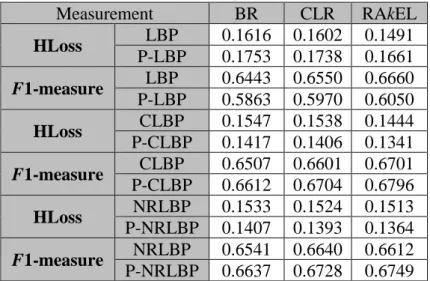
Table 4.2: The performance of multi-label classification models (BR, CLR and RAkEL) for LBP, CLBP, NRLBP, P-LBP, P-CLBP and P-NRLBP with 50 features when P=8, R=1. ... 130
Table 4.3: The performance of multi-label classification models (BR, CLR and RAkEL) for LBP, CLBP, NRLBP, P-LBP, P-CLBP and P-NRLBP with 50 features when P=8, R=2. ... 130
Table 4.4: The performance of multi-label classification models (BR, CLR and RAkEL) for LBP, CLBP, NRLBP, P-LBP, P-CLBP and P-NRLBP with 50 features when P=16, R=2. ... 131
vii
Table 4.5: Number of features for each number of blocks. ... 134
Table 4.6: The performance of multi-label classification models (BR, CLR and RAkEL) for LBP, CLBP, NRLBP, P-LBP, P-CLBP and P-NRLBP when P=4, R=1. ... 142
Table 4.7: The performance of multi-label classification models (BR, CLR and RAkEL) for LBP, CLBP, NRLBP, P-LBP, P-CLBP and P-NRLBP when P=8, R=1. ... 142
Table 4.8: The performance of multi-label classification models (BR, CLR and RAkEL) for LBP, CLBP, NRLBP, P-LBP, P-CLBP and P-NRLBP when P=8, R=2. ... 143
Table 4.9: The performance of multi-label classification models (BR, CLR and RAkEL) for LBP, CLBP, NRLBP, P-LBP, P-CLBP and P-NRLBP when P=16, R=2. ... 143
Table 4.10: The performance of multi-label classification models (BR, CLR and RAkEL) for LBP, CLBP, NRLBP, P-LBP, P-CLBP, and P-NRLBP when P=16, R=3. ... 143
Table 4.11: The performance of multi-label classification models (BR, CLR and RAkEL) for LBP, CLBP, NRLBP, P-LBP, P-CLBP and P-NRLBP when P=16, R=4. ………...……… 144
Table 4.12: Classification rate for gender attribute using the Face95 database. ... 158
Table 4.13: Classification rate for gender attribute using CK+ database. ... 158
Table 4.14: Classification rate for gender attribute using FERET database. ... 158
Table 4.15: Confusion matrix of gender attribute on the CK+ database using NRLBP and k-NN. ... 159
Table 4.16: Classification rate for age attribute using the FERET database. ... 160
Table 4.17: Confusion matrix of age attribute on the FERET database using LBP and k-NN. ... 160
Table 4.18: Classification rate for race attribute using FERET database. ... 161
Table 4.19: Confusion matrix of race attribute on the FERET database using P-NRLBP and k-NN. ... 161
viii
Table 4.20: Classification rate for expression attribute using CK+ database. ... 162
Table 4.21: Confusion matrix of expression attribute on the CK+ database using P-NRLBP and k-NN. ... 162
Table 5.1: Facial attributes (labels) with their classes for each database. ... 172
Table 5.2: Classification rates for gender attribute using H, S, V channels. ... 178
Table 5.3: Classification rates for gender attribute using L*, a*, b* channels. ... 178
Table 5.4: Classification rates for gender attribute using R, G, B channels. ... 179
Table 5.5: Classification rates for gender attribute using Y, Cb, Cr channels. ... 179
Table 5.6: Classification rates for gender attribute using Y, I, Q channels. ... 180
Table 5.7: Classification rates for gender attribute using Y, U, V channels. ... 180
Table 5.8: The percentage of the performance improvement for gender attribute in each database ... 183
Table 5.9: Classification rates for gender attribute for YVCb from FERET, PICS and CMU-PIE databases. ... 184
Table 5.10: Classification rates for gender attribute for YVG from FERET, PICS and CMU-PIE databases. ... 184
Table 5.11: Confusion matrix of gender attribute from YVG using P-CLBP and SVM (FERET database). ... 185
Table 5.12: Confusion matrix of gender attribute from YVCb using P-LBP and k-NN (PICS database). ... 185
Table 5.13: Confusion matrix of gender attribute from G colour channel (RGB) using P-CLBP and k-NN (CMU-PIE database). ... 186
Table 5.14: Classification rates for age attribute using H, S, V channels. ... 187
Table 5.15: Classification rates for age attribute using L*,a*,b* channels. ... 187
Table 5.16: Classification rates for age attribute using R*,G*,B* channels. ... 188
Table 5.17: Classification rates for age attribute using Y,Cb,Cr channels. ... 188
Table 5.18: Classification rates for age attribute using Y,I,Q channels. ... 189
ix
Table 5.20: Classification rates for age attribute for YVCb from FERET database.
... 191
Table 5.21: Classification rates for age attribute for YVG from FERET database. . 191
Table 5.22: Confusion matrix of age bracket attribute for YVG colour model using P-LBP and k-NN (FERET database). ... 192
Table 5.23: The percentage distribution of the face images according to the age brackets. ... 192
Table 5.24: Classification rates for race attribute using H, S, V channels. ... 194
Table 5.25: Classification rates for race attribute using L*, a*, b* channels. ... 194
Table 5.26: Classification rates for race attribute using R, G, B channels. ... 195
Table 5.27: Classification rates for race attribute using Y, Cb, Cr channels. ... 195
Table 5.28: Classification rates for race attribute using Y, I, Q channels. ... 196
Table 5.29: Classification rates for race attribute using Y, U, V channels. ... 196
Table 5.30: The percentage of the performance improvement for race attribute in each database ... 199
Table 5.31: Classification rates for race attribute for YVCb from FERET and CMU-PIE databases. ... 199
Table 5.32: Classification rates for race attribute for YVG from FERET and CMU-PIE databases. ... 199
Table 5.33: Confusion matrix of race attribute for L*a*b* colour channel using P-CLBP and SVM (FERET database). ... 200
Table 5.34: Confusion matrix of race attribute for R colour channel from RGB colour model using P-NRLBP and k-NN (CMU-PIE database). ... 200
Table 5.35: Proportion of ethnic distribution in the considered subset from the CMU-PIE database. ... 201
Table 5.36: Classification rates for expression attribute using H, S, V channels. ... 202
Table 5.37: Classification rates for expression attribute using L*a*b*channels. .... 202
Table 5.38: Classification rates for expression attribute using RGB channels. ... 203
x
Table 5.40: Classification rates for expression attribute using YIQ channels. ... 204 Table 5.41: Classification rates for expression attribute using YUV channels. ... 204 Table 5.42: Classification rates for expression attribute for YVCb from PAIN set of PICS database. ... 206 Table 5.43: Classification rates for expression attribute for YVG from PAIN set of PICS database. ... 207 Table 5.44: Confusion matrix of expression attribute for RGB colour configuration using P-NRLBP and SVM. ... 208
xi
List of Figures
Figure 1.1: Common face recognition steps diagram. ... 4 Figure 2.1: 3-level 2D-DWT structure. ... 17 Figure 2.2: Different frequency bands selected to represent the image features: (a) B1, (b) B2 and (c) B3 (Hwang et al. 2011). ... 27 Figure 2.3: Face image with different reference points at different distances: (a) POC_5, (b) POC_10, (c) POC_20 and (d) POC_30 (Ito et al. 2011). ... 28 Figure 2.4: Five different sized grids applied on facial image (Perez, Cament & Castillo 2011). ... 31 Figure 2.5: Fixed keypoints grouped around facial regions (Križaj, Štruc and Pavešić 2010b). ... 37 Figure 2.6: LBP encoding. ... 39 Figure 2.7: Different LBP operators: (a) R=8, P=1, (b) R=1, P=2 and (c) R=16, P=16. ... 40 Figure 2.8: Order salient encoding. ... 44 Figure 2.9: (a) The original image, (b) DFT spectrum, (c) Centred spectrum (Deepa et al. 2012). ... 48 Figure 2.10: The mask applied to extract the required features (Deepa et al. 2012) . 49 Figure 2.11: Support vector machine. ... 66 Figure 3.1: Sample cropped images from Yale database: (a) normal face images with no glasses. (b) normal face images with glasses, (c) happy face images, (d) sad face images, (e) face images with left-light shed and (f) face images right-light shed. .... 84 Figure 3.2: Sample cropped images from Face95 database: (a) male face images with turban, beard and moustache, (b) male face images without occlusion; (c) male face images with beard and moustache, (d) female face images with glasses and (e) female face ... 85 Figure 3.3: Sample cropped images from CK+ database: (a) neutral face images, (b) angry face images, (c) disgusted face images, (d) happy face images and (e) surprised face images. ... 87
xii
Figure 3.4: (a) The original face image and (b) the face image decomposed into
three-level 2D-DWT. ... 89
Figure 3.5: (a) The real part of the Gabor kernels with five scales and eight orientations and (b) the magnitude of the convolving face image with the Gabor kernels. ... 89
Figure 3.6: SIFT keypoints for face image. ... 90
Figure 3.7: LBP code image using P=8 and R=1 for face image. ... 91
Figure 3.8: (a) The original images, (b) the mean image and (c) Eigenfaces images. ... 91
Figure 3.9: (a) The original image and (b) the pre-processed image. ... 93
Figure 3.10: Examples of long hairstyle for male faces in Face95 database. ... 95
Figure 3.11: Example of the same faces with different illumination. ... 95
Figure 3.12: Similar facial images for different expressions. ... 99
Figure 3.13: Fisherfaces images. ... 102
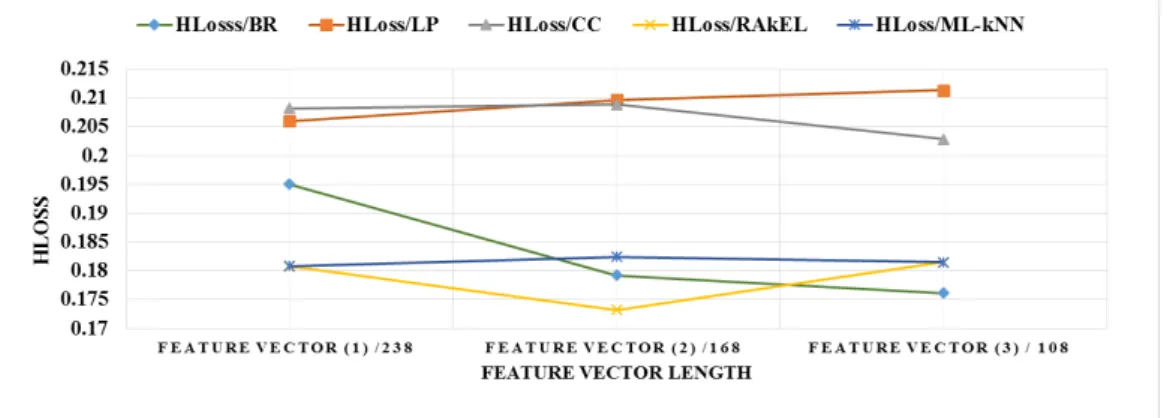
Figure 3.14: HLoss metric for BR, LP, CC, RAkEl and ML-kNN. ... 106
Figure 3.15: F1-Measure metric for BR, LP, CC, RAkEl and ML-kNN. ... 106
Figure 3.16: avgprec metric for BR, LP, CC, RAkEl and ML-kNN. ... 107
Figure 3.17: Mic-averaging metric for BR, LP, CC, RAkEl and ML-kNN. ... 107
Figure 3.18: The effect of the number of features on HLoss. ... 108
Figure 3.19: The effect of the number of features on F1-Measure. ... 108
Figure 3.20: The effect of the number of features on avgprec. ... 108
Figure 3.21: The effect of the number of features on Mic-averaging. ... 108
Figure 4.1: Face image: (a) in Cartesian space and (b) in polar space. ... 118
Figure 4.2: Samples from the FERET database. ... 121
Figure 4.3: Samples from the PICS database: (a) Aberdeen set, (b) PAIN set and (c) Utrecht ECVP. ... 123
xiii
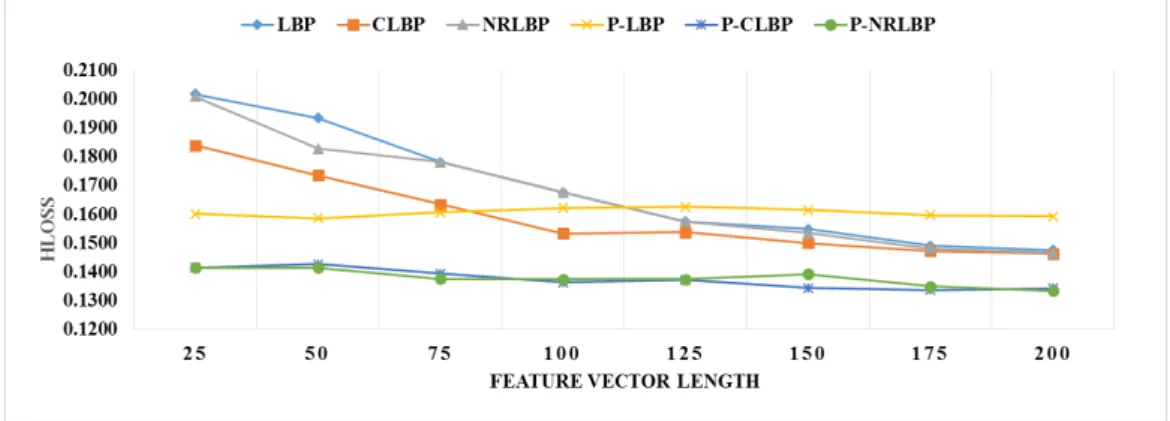
Figure 4.4: (a) Original Cartesian image, (b) LBP code image (P=8,R=1), (c) LBP code image (P=8,R=2) and (d) LBP code image (P=16,R=2). ... 124 Figure 4.5: (a) Original polar image, (b) LBP code image (P=8,R=1), (c) LBP code image (P=8,R=2) and (d) LBP code image (P=16,R=2). ... 124 Figure 4.6: Block diagram of the proposed face classification method utilizing proposed methods and MLC. ... 125 Figure 4.7: Effect of the number of features on HLoss for face classification with BR model. ... 132 Figure 4.8: Effect of the number of features on HLoss for face classification with CLR model. ... 132 Figure 4.9: Effect of the number of features on HLoss for face classification with RAkEL model. ... 132 Figure 4.10: Effect of the number of features on F1-measure for face classification with BR model. ... 133 Figure 4.11: Effect of the number of features on F1-measure for face classification with CLR model. ... 133 Figure 4.12: Effect of the number of features on F1-measure for face classification with RAkEL model. ... 133 Figure 4.13: Effect of the number of blocks on HLoss for face classification with BR model. ... 135 Figure 4.14: Effect of the number of blocks on HLoss for face classification with CLR model. ... 135 Figure 4.15: Effect of the number of blocks on HLoss for face classification with RAkEL model. ... 135 Figure 4.16: Effect of the number of blocks on F1-measure for face classification with BR model. ... 136 Figure 4.17: Effect of the number of blocks on F1-measure for face classification with CLR model. ... 136
xiv
Figure 4.18: Effect of the number of blocks on F1-measure for face classification with RAkEL model. ... 136 Figure 4.19: Block diagram of the proposed face classification method utilising proposed methods and CBMLC. ... 138 Figure 4.20: Evaluation performance: (a) HLoss and (b) F1-measure using different texture analysis operators with P=4,R=1, different clustering groups, EM, K-means and BR. ... 145 Figure 4.21: Evaluation performance: (a) HLoss and (b) F1-measure using different texture analysis operators with P=4,R=1, different clustering groups, EM, K-means and CLR. ... 146 Figure 4.22: Evaluation performance: (a) HLoss and (b) F1-measure using different texture analysis operators with P=4,R=1, different clustering groups, EM, K-means and RAkEL. ... 146 Figure 4.23: Evaluation performance: (a) HLoss and (b) F1-measure using different texture analysis operators with P=8,R=1, different clustering groups, EM, K-means and BR. ... 147 Figure 4.24: Evaluation performance: (a) HLoss and (b) F1-measure using different texture analysis operators with P=8,R=1, different clustering groups, EM, K-means and CLR. ... 147 Figure 4.25: Evaluation performance (a) HLoss and (b) F1-measure using different texture analysis operators with P=8,R=1, different clustering groups, EM, K-means and RAkEL. ... 148 Figure 4.26: Evaluation performance: (a) HLoss and (b) F1-measure using different texture analysis operators with P=8,R=2, different clustering groups, EM, K-means and BR. ... 148 Figure 4.27: Evaluation performance: (a) HLoss and (b) F1-measure using different texture analysis operators with P=8,R=2, different clustering groups, EM, K-means and CLR. ... 149 Figure 4.28: Evaluation performance: (a) HLoss and (b) F1-measure using different texture analysis operators with P=8,R=2, different clustering groups, EM, K-means and RAkEL. ... 149
xv
Figure 4.29: Evaluation performance: (a) HLoss and (b) F1-measure using different texture analysis operators with P=16,R=2, different clustering groups, EM, K-means and BR. ... 150 Figure 4.30: Evaluation performance: (a) HLoss and (b) F1-measure using different texture analysis operators with P=16,R=2, different clustering groups, EM, K-means and CLR. ... 150 Figure 4.31: Evaluation performance: (a) HLoss and (b) F1-measure using different texture analysis operators with P=16,R=2, different clustering groups, EM, K-means and RAkEL. ... 151 Figure 4.32: Evaluation performance: (a) HLoss and (b) F1-measure using different texture analysis operators with P=16,R=3, different clustering groups, EM, K-means and BR. ... 151 Figure 4.33: Evaluation performance: (a) HLoss and (b) F1-measure using different texture analysis operators with P=16,R=3, different clustering groups, EM, K-means and CLR. ... 152 Figure 4.34: Evaluation performance: (a) HLoss and (b) F1-measure using different texture analysis operators with P=16,R=3, different clustering groups, EM, K-means and RAkEL. ... 152 Figure 4.35: Evaluation performance (a) HLoss and (b) F1-measure using different texture analysis operators with P=16,R=4, different clustering groups, EM, K-means and BR. ... 153 Figure 4.36: Evaluation performance: (a) HLoss and (b) F1-measure using different texture analysis operators with P=16,R=4, different clustering groups, EM, K-means and CLR. ... 153 Figure 4.37: Evaluation performance: (a) HLoss and (b) F1-measure using different texture analysis operators with P=16,R=4, different clustering groups, EM, K-means and RAkEL. ... 154 Figure 4.38: Faces of Hispanic people that might be misclassified as Europeans. .. 161 Figure 5.1: Block diagram of the proposed face classification method utilising colour models. YCbCr is used as an example for the colour model. ... 170
xvi
Figure 5.2: (a) RGB Face image in Cartesian space (b) Y channel (c) Cb channel and
(d) Cr channel; in polar space. ... 173
Figure 5.3: (a) Polar image of Cr colour channel in Figure 5.2(d), (b) LBP (P=8, R=1), (c) LBP (P=8, R=2) and (d) LBP (P=8, R=3). ... 173
Figure 5.4: Samples from the CMU-PIE database. ... 176
Figure 5.5: Gender classification using SVM (FERET database). ... 181
Figure 5.6: Gender classification using k-NN (FERET database). ... 181
Figure 5.7: Gender classification using SVM (PICS database). ... 181
Figure 5.8: Gender classification using k-NN (PICS database). ... 182
Figure 5.9: Gender classification using SVM (CMU-PIE database). ... 182
Figure 5.10: Gender classification using k-NN (CMU-PIE database). ... 182
Figure 5.11: Age classification using SVM (FERET database). ... 190
Figure 5.12: Age classification using k-NN (FERET database). ... 190
Figure 5.13: Race classification using SVM (FERET database). ... 197
Figure 5.14: Race classification using k-NN (FERET database). ... 197
Figure 5.15: Race classification using SVM (CMU-PIE database). ... 197
Figure 5.16: Race Classification using k-NN (CMU-PIE database). ... 198
Figure 5.17: Expression classification using SVM (PAIN set from PICS database). ... 205
Figure 5.18: Expression classification using SVM (PAIN set from PICS database). ... 205
Figure 5.19: Different people express the same emotion (anger) in different ways. ... 206
Figure 5.20: Similar images for different emotions expressed by different people. ………...206
xvii
Abstract
Face recognition (FR) is in the broad area of pattern recognition. FR is the process of identifying a person by comparing his/her images with images already stored in the database. Generally, a FR system consists of two main steps, namely, feature extraction and classification. In order to improve the performance of a FR system, at least one of these steps needs to be improved. In this thesis, I have addressed the research questions described below.
The primary research question which directs this research is: How to devise face representation which is robust against illumination variation, geometric transformations, occlusion in Face95 database (University of Essex), FERET database (Face Recognition Technology) and Yale database (University of Yale) and time-lapse in FERET database? I address this research question by proposing novel methods for representation of demographic (gender, age and race) and expression attributes of face images. The proposed methods are based on Local Binary Patterns (LBP) and its derivatives because of their proven effectiveness, simplicity, robustness, and computational efficiency. I evaluated the proposed methods using publicly available face databases. Experimental results show that the proposed methods are robust and effective for classification of facial attributes, compared with other approaches. The second research question is: Can multi-label classification paradigm be used effectively for facial images? Single-label classification has been widely used for human-face classification in identity-based face classification and attributes-based face classification. However, multi-label classification (MLC) is more suitable in the real world because a human face can be associated with multiple labels relating to demographic information and facial expression. I evaluate novel face representation approaches using a broad range of MLC models. Experiments will show that the proposed approaches to represent facial attributes are effective. Results are further improved when using clustering based multi-label classification (CBMLC) in which clustering algorithms are applied prior to classification.
The third research question is: How can information from different colour models be used to improve face classification? Novel approaches for representation of face images are evaluated for the common colour models. Further, information from multiple colour models are combined for effective representation of face images. The proposed configuration of different colour models is evaluated on publicly available
xviii
face databases. Experimental results show that the proposed approaches are effective for the classification of face images.
In conclusion, this thesis answered the research questions by presenting new methods for representation of facial attributes including demographic information and expression information. The effectiveness of the proposed methods is evaluated by conducting extensive experiments on publicly available face databases.
1
Chapter 1
Introduction
1.1 Introduction
This thesis concentrates on presenting innovative methods for face recognition (FR). This work comes in light of the fundamental role the face plays during the process of human interaction. The face image carries a variety of information related to race, identity and emotions, among other factors. Accordingly, facial image analysis has become an interesting topic in multiple research areas including computer vision, image and video sequence processing, human–computer interaction, pattern recognition and machine learning.
Face recognition has received significant attention as a biometric technique. Its importance can be characterised by its low intuitiveness and can be achieved passively (i.e., without need to any outright action or involvement of the user since the image can be taken by a distance camera (Jafri & Arabnia 2009) that do not exist in other biometric techniques (Bowyer, Chang & Flynn 2006; Ito et al. 2011). Whereas other biometric techniques, like fingerprint, palm, iris, retina and signature recognition, require voluntary participation of the user (Jafri & Arabnia 2009; Zhang & Gao 2009; Zhao et al. 2003). Some of the problems associated with biometric techniques other than face recognition are summarised below:
1. The face has to be placed in the right position for iris recognition (i.e., the eye should be level with the sensor) (Bowyer, Chang & Flynn 2006); its implementation is expensive and people do not generally accept it (Abate et al. 2007).
2. Passwords and PINs are prone to loss through forgetfulness, or possibly being stolen or attained through guesswork (Jafri & Arabnia 2009). 3. Palms and fingers could be considered useless particularly where there are
injuries, bruises or fissures on the skin. In addition, there are problems related to the contamination and transfer of germs from one person to another through the use of the same equipment or objects (Jafri & Arabnia 2009).
2
For the reasons above, face recognition provides several benefits for other biometric methods (Atta & Ghanbari 2010; Bowyer, Chang & Flynn 2006; Jafri & Arabnia 2009). In order to be utilised by the independent nature of face recognition, the intended system needs to be capable of identifying/recognising an uncooperative face in a non-dominant environment and in arbitrary situations without observation of the person. Various methods of FR reveal reasonable performances under a controlled environment and conditions, which are difficult to achieve in a practical application. However, in relation to an FR subject, two particular scenarios might be interrelated in some cases. These scenarios can be referred to as identification and verification. In the literature, the terms ‘recognition’ and ‘identification’ are considered synonymous.
1. In an identification scenario, the system is fed with the test image that includes an unknown individual face. The potential responsibility of the system is to compare this image with all images that were previously stored in the database. The system will then report back to determine the identity of the individual (Bowyer, Chang & Flynn 2006). This scenario may require a high computation effort and a long time to process, depending on the size of the database. Therefore, it is known as one-to-many matching. 2. In the verification scenario (which is referred to as authentication), the
system will be responsible for affirming or denying the claim of a given image (Zhao et al. 2003; Zhou & Chellappa 2005). This scenario requires less computational effort and processing time than identification, since there is no comparison or matching up with all the faces already stored in the database. The verification scenario is known as one-to-one matching. This chapter gives an overview of the FR topic. The application domain that can benefit from FR is explained in Section 1.2. The process of developing an FR system poses significant difficulties and challenges for face recognition researchers. These challenges are addressed in Section 1.3. In Section 1.4, the steps for an FR system are outlined. The four main aims of this thesis are described in Section 1.5. Thereafter, the contributions of this thesis are indicated in Sections 1.6. Finally, Section 1.7 concludes with a summary of all subsequent chapters.
1.2 Application Domain
Significant developments in the field of FR algorithms as well as equipment over the last three decades have opened the door to a large scale of applications that can benefit
3
from FR. The more the means (algorithms and equipment) of face recognition are developed, the more its application domain is increased. However, Duró (2013) briefly outlined the application spectrum of face recognition as follows:
• Governmental programs (issuing ID cards, issuing visa, security and identifying terrorists).
• Commercial applications (access control systems, ATM machines, border checkpoints and seaports (Jafri & Arabnia 2009) and surveillance video cameras for criminal monitoring, elderly people with memory problems and missing children).
• Personal applications (computer, internet and email logon and keyless car ignition).
1.3 Face Recognition Challenges
In general, as reflected in the literature, numerous FR systems that have been developed suffer from a number of problems. It can be said that the face recognition task may suffer from different types of variabilities. These variabilities (or problems) can be summarised as follows: features of the human face change as a result of advancing age, illumination variation, expression variation (e.g., happy, sad, angry), face rotation (pose direction change), camera resolution, noise and occlusion. (Abate et al. 2007; Lu, Yuan & Yahagi 2007). Unfortunately, in many circumstances, it is very difficult to control these factors and any change in these factors may affect system performance and may cause the system to crash (Tan et al. 2006). There are two types of factors that contribute to the various facial alterations that ultimately affect the performance of FR at different levels. These are intrinsic factors and extrinsic factors
(Jafri & Arabnia 2009; Romdhani et al. 2006):
1. Intrinsic factors: These factors relate to the physical nature of the human face, and can be subdivided into two categories, namely, intrapersonal and interpersonal. Intrapersonal factors relate to the appearance variation of a person; for example, ageing, facial expressions, the effects of certain diseases, facial occlusion (sunglasses, hairstyles, headscarves and cosmetics). Interpersonal factors relate to the appearance variation of different people; for example, gender and race.
4
2. Extrinsic factors: These factors relate to circumstances associated with capturing photos. Examples include the lighting on the face, the pose and camera-related parameters (such as distance, camera viewpoint, resolution and noise).
1.4 Face Recognition Steps
Various methods for discriminating between human faces have been introduced by researchers. A variety of techniques and tools were followed in these methods. However, all these methods have encompassed some common steps to reach the intended goal. These steps are: detection, normalisation, feature extraction, feature selection, and recognition (Zhao et al. 2003; Tin 2013). Figure 1.1 illustrates the main steps for the human FR system.
1. Detection: the process of locating a face in the image is called detection. Each FR system starts with detection of a face in the image. It represents the first step in the FR system. In this step, the system will look for and try to detect a human face (if it exists in the image). Segmentation techniques could be used to detect a human face (Segundo et al. 2010). Once a human face has been detected in the image, the next task that will be performed in this step is face positioning in the image space. Face detection may include the task of locating the facial region in the image as well as locating important facial landmarks (e.g., the centre of the eyes, the nose tip) in advance of extracting other important features for face representation. In fact, this step might not be easy to achieve, especially in complicated images that are difficult to detect and extract the face from the background. Face Image Face Detection Face Normalisation Feature Extraction Feature Selection Recognition Feature Extraction Feature Selection
5
2. Normalisation: In this step, the face image is adjusted to meet the requirements of the FR system. Normalisation may be performed in an independent step, or it may be distributed between the previous or the next steps. In both cases, some of the pre-processing operations should be carried out on the face image. However, this step serves as the preparation of the image for further manipulations that work out the essence of the face recognition process. Normalisation will be achieved via the application of a series of preprocessing steps on the face image. For example, the colour of the face image may be converted to a grayscale intensity image or another colour model. Other examples of facial image preparation in this step may include cropping, illumination normalisation or face alignment (Tin 2013). However, preprocessing steps that are necessary to prepare the face image for the next step (feature extraction) is database-dependent. 3. Feature extraction: this step constitutes the essence of the FR algorithm,
through which the discriminative information of the face images will be collected. In fact, the performance of any FR system decisively depends on the techniques used in this step (Tan et al. 2006). Techniques that are exploited to extract discriminative features from the face image are described in more detail in Section 2.3. However, some facial extraction methods focus on certain parts of the face (such as eyes, mouth, eyebrows and nose); while other methods consider the face as a whole to obtain important features. Multiple categorisation schemes can be used for feature extraction techniques. In the literature review presented in chapter two, we classified these techniques into two main categories, namely, spectral category and spatial category.
4. Dimensionality reduction: In many systems, feature extraction is followed by a dimensionality reduction step in the case where the amount of data resulting from the feature extraction step is very large. As in these situations, dimensionality reduction is important in determining the significant information that better represents human faces for recognition. However, the importance of this step is to select the significant features from the large feature space that describes the facial images. As a result, the facial image will be represented in a lower space feature vector that can be processed more efficiently in subsequent steps. More advantages that
6
can be achieved by this step are: dealing with a reduced amount of data is less computationally expensive and requires fewer memory requirements. Some examples of dimensionality reduction algorithms that are used in the literature are Principal Component Analysis (PCA) (Turk & Pentland 1991), Linear Discriminant Analysis (LDA) (Belhumeur, Hespanha & Kriegman 1997) and Binary Particle Swarm Optimisation (BPSO) (Kennedy & Eberhart 1995).
5. Recognition/classification: The last step in each automatic FR system is the process of recognising/classifying faces. The main job of the face recogniser is person identification/verification. The commonly used method to achieve this goal is for the recogniser to carry out a comparison between the feature vector obtained from the input image (which is known as testing image or probe) and the feature vectors that are already stored in the database (known as the training set). The final decision would be taken when the input image (test image) is assigned to the appropriate class. Due to the overlapping that may appear between the recognition steps, there could be a possible variation in the number of steps included in the FR system. In general, systems that include all discrimination steps are known as fully automatic, while systems that include some of these steps are known as partial automatic (Philips et al. 2000).
1.5 Research Questions
This thesis addresses the following research questions:
• How to devise face representation which is robust against illumination variation, geometric transformations, occlusion in the Face95 database (University of Essex), the FERET database (Face Recognition Technology) and Yale database (University of Yale) and time-lapse in the FERET database?
This thesis proposes novel methods to represent demographic (i.e., gender, age and race) and expression attributes of face images. These methods are based on texture analysis techniques, namely, Local Binary Patterns (LBP) and its variants due to their characteristics represented by effectiveness, simplicity, robustness and computational efficiency. The proposed methods are defined by applying texture analysis techniques (LBP) and its variant to polar raster sampled images. In this context, it’s worth mentioning that LBP and its variants
7
are invariant for illumination change (Ahonen, Hadid & Pietikäinen 2004) and partial occlusion and aging (Zhang & Gao 2009). On the other hand, representing images in polar space is effective for extraction of robust features which are invariant to translation, scale, and rotation (Frejlichowski 2010; Yang, Zhao & Lan 2010). As a result, face representation methods which are robust against illumination variation, occlusion, time-lapse and geometric transformation will be presented. The proposed methods are evaluated by classifying face images according to four facial attributes (three of them are demographic attributes, namely, gender, age and race) and facial expression is a fourth attribute. Compared with other methods, the proposed methods have shown an effectiveness in the classification of facial attributes.
• Can multi-label classification paradigm be used effectively for facial images?
Previous works for facial attributes classification (as well as face recognition) have utilised single-label classification. In this classification paradigm the face image is either correctly or incorrectly classified. Therefore, multi-label classification (MLC) is more suitable to classify face images because the human face can be associated with multiple labels which represent demographic and expression information. In MLC, the classification may be partially correct or partially incorrect (Santos & Canuto 2012). This can happen because the classifier may correctly assign part of the labels and incorrectly assign other labels. The proposed facial attributes representation methods are evaluated using several MLC models. The experimental results have shown that the proposed methods are effective to represent facial attributes classification. Moreover, the classification results are further improved by applying clustering before classification, clustering based multi-label classification (CBMLC).
• The third research question is: How can information from different colour models be used to improve face classification?
The proposed methods for representation of face images are evaluated for classification of facial attributes (gender, age, race and expression) utilising common colour models. The proposed methods are evaluated to predict demographic information (gender, age and race) and expression information by comparing the classification performance with existing methods. Experimental results show that the proposed methods are effective for
8
classification of facial attributes. Furthermore, information from different colour models are combined for effective representation of face images. The proposed colour information combinations have further improved the effectiveness for classification of face images.
1.6 Aim of the Thesis
Facial image classification has a broad range of application areas, yet it has increasingly gained the interest of researchers. The main objective of this thesis is to develop robust approaches that can classify human faces with high accuracy. This thesis targets the following aspects of the facial image classification:
• Robust features
There are several challenges to the face classification task. These challenges are represented by the variations associated with human faces in uncontrolled conditions. Many methods and algorithms have been proposed in the literature to tackle variations such as illumination and pose. One of the main objectives of this thesis is to propose representative facial feature extraction methods that are robust for several challenges including illumination variation, pose rotation, scale change, translation, occlusion and time-lapse.
• Multi-label classification
There are several classification aspects that can be used for human faces. Traditional face recognition, demographic information-based classification (gender, age and race) and expression-based classification are common examples of human face classifications. The previous studies on face classification are concerned with the classification of face images that utilise one label, and which is known as single-label classification. In other words, there is no previous work dedicated to the classification of face images according to multiple labels simultaneously. This type of classification is called multi-label classification (MLC), in which face images are classified utilising multiple attributes represented as labels in this field. In single-label classification, the new face is either correctly or incorrectly classified. That is different than MLC, in which the new face may be partially correctly classified or partially incorrectly classified (Santos & Canuto 2012). This happens because the classification model may successfully assign part of the classes and incorrectly assign other classes. In this thesis, the face images are classified
9
according to facial attributes (gender, age, race and expression) utilising traditional single-label classification as well as multi-label classification. • Multi-resolution texture analysis techniques
Texture analysis techniques are some of the widely used and successful methods in the field of FR. The classification rate changed with the changing of the values of two variables. These two variables are the number of neighbours (P) and the distance from the centre pixel, also known as pixel radius (R). The values of these variables define two types of resolution: single resolution and multi resolution. Single resolution means applying the particular technique by taking fixed values for the two variables P and R and becomes a multi-resolution by multiple applications of the technique with multiple values of P or R. However, many previous studies applied these techniques utilising certain values for these variables. In this thesis, texture analysis techniques are applied utilising both analysis manners, single resolution analysis and multi-resolution analysis (MRA). More specifically, in the MRA manner, the representative facial features are extracted by applying multiple simultaneous proposed texture analysis operators utilising three different values for pixel radius (R) in order to improve face recognition performance.
• New colour configuration
Some studies report that face image classifications achieved significant improvement when colour images were adopted. These studies have been applied to improve the performance of the FR system. In contrast, demographic and expression information-based face classification that adopts colour images has not been previously addressed. This thesis addresses face image classification based on demographic (gender, age and race) and expression information using multiple colour models. Moreover, two new colour combinations have been configured to improve the classification performance of gender and race facial attributes.
1.7 Contributions
Briefly, the major contributions in human face classification of this thesis are described below:
• Novel approaches for representative facial feature extraction named Polar Local Binary Patterns LBP), Polar Compound Local Binary Patterns
(P-10
CLBP) and Polar Nun Redundant Local Binary Patterns (P-NRLBP) are proposed. These approaches are conducted utilising three texture analysis techniques and polar transformation of the face images. As a result, representative facial features extraction methods that are robust against illumination variation, pose rotation, scale change, occlusion and time-lapse are produced. The relevant publications for this contribution are the following papers:
▪ Mohammed, A.A. and Sajjanhar, A. 2016, ‘Robust approaches for multi-label face classification’, Proceedings of the 2016 International Conference on Digital Image Computing: Techniques and Applications (DICTA), pp.1–6, IEEE.
▪ Mohammed, A.A. and Sajjanhar, A, 2016, ‘Robust single-label classification of facial attributes’, Proceedings of the 2017 IEEE International Conference on Multimedia & Expo Workshops
(ICMEW), pp. 651–656, IEEE.
• Multi-label classification of the facial images. The majority of previous works of face recognition and facial attributes classification used a single-label classification scheme, while work in this thesis classifies facial images utilising both single-label and multi-label classification schemes. The relevant publications for this contribution are the following papers:
▪ Mohammed, A.A., Sajjanhar, A. and Nasierding, G. 2015, ‘Multi-label approach for human-face classification’, Proceedings from the 8th International Congress in Image and Signal Processing ( CISP-BMEI), pp. 648–653, IEEE.
▪ Mohammed, A.A., Xiamixiding R, Sajjanhar, A. Chen J and Nasierding, G, 2017, ’Texture features for clustering based multi-label classification of face images’, Proceedings from the 10th International Congress in Image and Signal Processing ( CISP-BMEI), pp. 1–5, IEEE.
• Combination of new colour information. Colour models are widely used in image recognition due to the significant information that they hold. On the other hand, texture analysis techniques have been extensively used for facial feature extraction. One of the contributions of this thesis is that representative
11
features related to facial attributes are extracted utilising different colour models and texture analysis techniques. Specifically, the proposed methods for texture analysis are used on colour models to improve classification performance for facial attributes. The proposed methods for texture analysis are based on Local Binary Patterns and its derivatives. These texture analysis methods are evaluated for six colour models (hue, saturation and intensity value (HSV); L*a*b*; RGB; YCbCr; YIQ; YUV) to investigate the effect of each colour model. In addition, the new combinations configured from colour information have allowed for further improvement of the classification performance for gender and race attributes.The relevant publications for this contribution are the following papers:
▪ Mohammed, A.A. and Sajjanhar, A. 2017, ‘Investigation of gender and race classification for different color models’, Proceedings of the 2017 International Conference on Digital Image Computing: Techniques and Applications (DICTA), pp–18, IEEE.
▪ -Sajjanhar, A. and Mohammed, A.A 2017, ‘Face classification Using Color Information’, Information, vol. 8, no. 4, pp. 1–4.
1.8 Thesis Outline
The rest of this thesis is organised as follows:
Chapter two gives a comprehensive review of facial feature extraction methods in addition to a review of dimensionality reduction algorithms and classification paradigms. For feature extraction review, facial feature extraction methods are organised into two categories, which are spectral category and spatial category. Methods related to each category are extensively investigated. Methods that mix different techniques are also presented. Furthermore, facial feature extraction methods for different facial attributes including demographic (gender, age and race) and facial expression are also investigated. In addition, dimensionality reduction algorithms that minimise the size of the extracted features into a more compact subspace that reduces the memory requirements and makes the classification process more efficient are also studied. The classification process performed utilising the above-mentioned methods is single-label classification. The experiments in this thesis are performed utilising both classification paradigms, single-label classification and multi-label classification (MLC). The commonly used methods for single-label classification paradigm are
12
explained in some detail. For multi-label classification, the MLC methods are classified into two types, which are problem transformation methods and algorithm adaptation methods. Methods relating to each type are explained in some detail. Finally, a selection of MLC studies is also investigated at the end of this chapter. Chapter three presents several preliminary experiments utilising both single-label and multi-label classification paradigms.
For single-label classification experiments, a comparison is made between the effectiveness of popular approaches for discriminative facial feature extraction. The approaches involved in these comparisons are Eigenfaces using PCA algorithm, Local Binary Patterns (LBP), Discrete Wavelet Transform (DWT), Scale-Invariant Feature Transform (SIFT) and Gabor wavelet. The comparison is performed for four facial attributes which represent three demographic attributes (gender, age and race) and the fourth attribute is facial expression using single-label classification paradigm.
For multi-label classification experiments, the facial images are classified utilising MLC scheme rather than single-label classification scheme. That is, the face images are classified according to multiple labels simultaneously.
Chapter four proposes novel methods for facial feature extraction based on texture analysis techniques to improve the performance of face classification. The proposed methods are based on applying local binary patterns and two of its derivatives on polar raster sampled face images. The proposed feature extraction methods are experimented on the facial attributes using both single-label and multi-label classification paradigms. The classification performance of the proposed methods is further improved for multi-label classification utilising clustering prior to classification in a clustering-based, multi-label classification scheme (CBMLC).
Chapter five evaluates the proposed methods in chapter four on the single-label classification of facial attributes utilising texture analysis techniques in a multi-resolution scheme and in different colour models. The proposed methods are applied on facial images in six colour models (HSV, L*a*b*, RGB, YCbCr, YIQ and YUV) separately and collectively. Furthermore, this chapter proposes two new colour configurations to improve the classification performance of gender and race facial attributes.
Chapter six concludes the thesis and gives a summary of the whole work presented in this thesis. In addition, suggestions for future works are presented.
13
Chapter 2
Literature Review
2.1 Introduction
In a face recognition system, a feature extraction process is performed to the new face image in the testing phase and stored in a feature vector. This feature vector is then compared with the feature vectors already stored in the database from the training phase. The comparison process is performed for the recognition of faces.
In general, all the FR systems that have been introduced by the researchers were tested and evaluated on a number of face image databases. These databases contain a number of human face images captured under controlled or uncontrolled conditions (e.g., illumination, pose, background, and occlusion).
It is worth mentioning that all FR systems that were introduced in the literature used single-label classification methods. These were the predominant methods in the previous face classification systems including traditional FR system or facial attributes classification. In other words, in the previous FR systems, the extracted facial feature vectors are classified into many classes within one label. On the other hand, another classification tendency exists in which the pattern (represented by feature vector) is classified by considering multiple labels at the same time, with each label containing various classes. That is, in this classification paradigm, rather than classifying the pattern into many classes within one label, the pattern will be classified according to multiple labels, each label classified into various classes. This type of classification is called multi-label classification (MLC). In this research, the face images will be classified utilising MLC paradigm and moving away from the traditional single-label classification paradigm that was previously utilised. More details regarding MLC, including the methods and metrics used in this type of classification, will be mentioned later in this chapter.
This chapter is intended to provide a state-of-the-art study of the facial feature extraction for face recognition, in addition to the basic concepts and methods of classification including single-label and multi-label paradigms. In this chapter, a brief description of the face image databases that have been widely used in the face recognition field is presented in Section 2.2. Section 2.3 investigates the popular techniques for feature extraction. Various studies for facial attribute classification, including demographic and expression information classification are investigated in
14
Section 2.4. The commonly used algorithms to reduce the dimensionality of the obtained feature space are given in Section 2.5. Several concepts regarding classification process (including single-label and multi-label classification methods) are explained in Section 2.6. Finally, the conclusion is presented in Section 2.7.
2.2 Image Face Databases
Various image databases are used by face recognition methods and are used to prove recognition accuracy and to obtain acceptable results. These databases contain human face images captured both under controlled and uncontrolled conditions (e.g., illumination, pose, background and occlusion). Widely used databases are: FERET database (Phillips et al. 2000), CMU-PIE database (Sim, Baker & Bsat 2002), ORL database (Samaria & Harter 1994), Yale database (Belhumeur, Hespanha & Kriegman 1997), SCface database (Grgic, Delac & Grgic 2011), FRGC 2.0 database (Phillips et al. 2005), Face95 database (Spacek 1995), Bosporus database (Savran et al. 2008), CK+ database (Kanade, Cohn & Tian 2000), and PICS database (Hancock n.d.). Presented in Table 2.1 are popular face image databases frequently used in different face classification systems with a description of the important aspects of each face image database.
Table 2.1: Publicly available face databases.
Database Colour /
Grayscale Dimensions
No. of persons
No. of
images Type of variability
FERET Grayscale
and colour 256×384 1199 14,126
pose, illumination, expression, occlusion, time delay
CMU-PIE Colour 640×486 68 41,368 pose, illumination, expressions
ORL Grayscale 92×112 40 400 time delay, illumination, expressions
Yale Grayscale 320×243 15 165
illumination, different camera distance, resolution, occlusion and
pose
SCface Colour Different
sizes 130 4160
expression, illumination, occlusion, time delay FRGC 2.0 Colour 1704×2272 and 1200×1600 688 50000 illumination, background, expressions
Face95 Colour 180×200 72 1440 scale, turn, tilt, slant, occlusion and
expressions
Bosporus Colour 1600×1200 105 4652 expression, pose, occlusion
CK+ Grayscale 640×480 and
640×490 100 10706 illumination and expression
PICS Black and white, grayscale and colour Different sizes for different subsets Different no. of persons for different subsets 2801 distributed over 8 subsets
Different variations for different subsets, including expression, pose,
15
Several databases are analysed in this thesis. These databases will be described in more detail in the chapters in which they are examined. In chapter 2, Yale, Face95, and CK+ databases are used to compare existing approaches for face classification. Also, FERET, PICS, Face95 and CK+ databases are further evaluated in chapter 4. Other databases (CMU-PIE, FERET and PICS databases) are also examined in chapter 5.
2.3 Feature Extraction Techniques for Face Recognition
Face recognition process can be automatically accomplished by a computer application to recognise a person from images by comparing the test image with a set of face images previously stored in the database. In this context, facial feature extraction is a crucial step for every face recognition application; it depends on the method used in recognising faces. The entire face image (or specific parts of it) is analysed to obtain a feature vector that best describes a given face image. Many methods and techniques have been introduced in this research area in order to intelligently describe the face image (i.e., obtaining feature vector in a reasonably compact subspace and high discriminative power). However, the maximum number of these techniques share the common key steps (presented in section 1.4) to solve the task of human face recognition.
The techniques for feature extraction in face recognition systems are divided into
spectral and spatial techniques.
2.3.1 Spectral Category
The techniques that fall within this category extract features from the image in the spectral domain. That is, the face image is transformed from spatial domain to spectral domain, then the salient features are extracted from the facial images in the spectral domain. This process can be obtained by applying a particular transformation technique on the given image in the spectral domain. The techniques discussed in this section include Wavelet Transform (WT), Fourier Transform (FT), Discrete Cosine Transform (DCT), and Gabor filters. Several benefits can be gained by using transformation techniques that can transform and represent data in both time and frequency domains. These are data dimensionality reductions as well as the disposal or alleviation of the impact of illumination and expression variation problems that frequently accompany the face recognition process (Zhao et al. 2003). In this context, data dimensionality reduction can be realised by cutting up the original data into a set
16
of sub-bands with low-frequency and high-frequency coefficients. In fact, not all these coefficients are useful as dominant features to describe the face image. Yet, some of this information (especially the information localised in the high-frequency sub-bands, which is not useful information) can be neglected without affecting the face recognition performance. Neglecting this worthless information will, in turn, significantly reduce the dimensionality of the data. Examples of the techniques that reduce the dimensionality of the data can be found in WT and DCT.
2.3.1.1 Wavelet Transform
Wavelet transform (WT) has been widely used as a powerful tool for feature extraction. Many researchers have exploited WT advantages represented by reducing the dimensionality of the data and processing time, and alleviating the effect of FR challenges (expression variation, illumination variation and pose variation). In general, the wavelet transform is divided into three types: Discrete Wavelet Transform (DWT), Continuous Wavelet Transform (CWT) and Wavelet Packet Transform (WPT). Amongst these techniques, there is evidence that DWT is an optimal tool for extracting salient features. DWT localises the face image information in a few frequency sub-bands. These sub-bands are created by convolving image data with a set of filters known as filter bank or mother wavelet. There are a variety of filter banks (mother wavelets) available in DWT. Examples of these filter banks include Haar, Db1, Db2, Db3, Sym1, Sym2, Coif1, Coif2 and many others. Each filter bank has two types of filters which are a low-pass filter and high-pass filter. Convolving image data with low pass filter yields low-frequency sub-band, also known as approximation coefficients, while convolving it with high pass filter yields high-frequency sub-bands, also known as detailed coefficients. In this context, the high-frequency sub-bands will have little meaningful information; these contains fine details of the image, while the low-frequency sub-bands will have more valuable information: they provide a coarse approximation of the image. In DWT, the face image is decomposed into one or more levels using low pass and high pass filters in addition to down-sampling by a factor of 2 to create approximation and detailed sub-band coefficients, respectively. In the first decomposition level, the original image data is decomposed into one low-frequency sub-band referred to as LL, and three high-frequency sub-bands referred to as LH, HL, and HH. The low-frequency sub-band (LL) is utilised for further decomposition levels into approximation and detailed sub-band coefficients. The DWT of the given digital signal f(x) is obtained by applying the following equation (Ramesha & Raja 2011):