Neuropsychiatric Disease and Treatment
Dove
press
O r i g i N a l r e s e a r c h open access to scientific and medical research
Open access Full Text article
gender differences in the association between
HTR2C
gene variants and suicidal behavior in a
Mexican population: a case–control study
gabriel Molina-guzman1
Thelma Beatriz
gonzález-castro2
Yazmín hernández Díaz2
carlos alfonso Tovilla-Zárate3
isela e Juárez-rojop3 crystell guadalupe
guzmán-Priego3
alma genis4
sherezada Pool garcía5 María lilia lópez-Narvaez6 José Manuel
rodriguez-Perez7
1División académica de ciencias de la
salud, Universidad Juárez autónoma de Tabasco, Villahermosa, 2División
académica Multidisciplinaria de Jalpa de Méndez, Universidad Juárez autónoma de Tabasco, Jalpa de Méndez,
3División académica Multidisciplinaria
de comalcalco, Universidad Juárez autónoma de Tabasco, comalcalco, Tabasco, México; 4instituto Nacional
de Medicina genómica (iNMegeN), servicios de atención Psiquiátrica (saP), secretaría de salud, ciudad de México, México; 5hospital general
de comalcalco, secretaria de salud, comalcalco, Tabasco, México; 6hospital
general de Yajalón, secretaría de salud, Yajalón, chiapas, México; 7Departamento
de Biología Molecular, instituto Nacional de cardiología ignacio chávez, ciudad de México, México
Background: The aim of this case–control study was to explore the association by gender between the HTR2C gene variants and suicidal behavior in a Mexican population.
Subjects and methods: A total of 183 suicide attempters and 208 healthy volunteers were included in this study. We genotyped five polymorphisms of HTR2C (rs547536, rs2192372, rs4272555, rs6318, and rs2428707), then measured the association by genotype, allele, and haplotype. Results: In the female group, we found an association between two polymorphisms of the HTR2C (rs4272555 and rs2428707) and suicide attempts. The C allele of the single-nucleotide polymorphism (SNP) rs4272555 was associated with a decreased risk of suicide attempt (P=0.01, odds ratio =0.26, 95% confidence interval: 0.09–0.79), whereas the G allele of the SNP rs2428707 was associated with an increased risk of suicide attempt (P=0.01, odds ratio =3.68, 95% confidence interval: 1.24–10.90). No significant association was observed between the other polymorphisms studied (rs547536, rs2192372, rs6318) or haplotypes with suicide attempts. Conclusion: These findings suggest a possible risk factor of the HTR2C gene in the pathol-ogy of suicidal behavior in Mexican population. More studies are necessary to confirm this association.
Keywords: suicide, serotonin receptor, HTR2C gene, Mexican population, polymorphism
Introduction
Suicide is one of the leading causes of death throughout the world; it ranks among the top 10 causes of death for individuals of all ages and is the leading cause of death in males under 35 years old.1,2
A decrease in the concentrations of serotonin metabolites (in particular the sero-tonin 5-hydroxyindoleacetic) in patients with suicide behavior (suicide attempt and suicide) suggests that the serotonergic system is associated with suicide behavior.3,4
Studies have consistently proposed that genes of the serotonergic system could play an important role in suicide.5,6 For example, in SH-SY5Y cells, the administration
of human interferon-alpha modifies the HTR2C mRNA editing, and this could be a mechanism of drug-induced depression or suicidal side effects in humans.7,8 It has
also been proposed that the serotonin receptor 2C (HTR2C) gene9,10 contributes to
suicide behavior.11
The HTR2C belongs to the family of 5-HT2 receptors, which has three members: 5-HT2A, 5-HT2B, and 5-HT2C.1 The gene that encodes the HTR2C is located on
the long arm of the X chromosome at position 24; and it contains six exons and five introns, spanning at least 230 kb.12 One of the most common variants of the HTR2C is
correspondence: carlos alfonso Tovilla-Zárate
División académica Multidisciplinaria de comalcalco, Universidad Juárez autónoma de Tabasco, ranchería sur, cuarta sección, cP 86650, comalcalco, Tabasco, México email [email protected]
Journal name: Neuropsychiatric Disease and Treatment Article Designation: Original Research
Year: 2017 Volume: 13
Running head verso: Molina-Guzman et al
Running head recto: HTR2C gene in a Mexican population DOI: http://dx.doi.org/10.2147/NDT.S122024
Neuropsychiatric Disease and Treatment downloaded from https://www.dovepress.com/ by 118.70.13.36 on 25-Aug-2020
For personal use only.
Number of times this article has been viewed
This article was published in the following Dove Press journal: Neuropsychiatric Disease and Treatment
Dovepress
Molina-guzman et al
the Cys23Ser (rs6318), which is a functional polymorphism (C/G at position 68) that results in the substitution of cysteine for serine at position 23 of the N-terminal extracellular domain.2,13,14 In the last few years, several authors have
reported an association between the HTR2C polymorphism and suicidal behavior.15 Furthermore, in analyses performed
by gender, a negative association has been observed between the HTR2C polymorphism and suicidal behavior.14,16 Other
polymorphisms of HTR2C that also have been studied in suicide behavior are rs547536, rs2192372, rs2428707, and rs4272555;14 however, no association has been established
in several populations. Therefore, the association between the HTR2C gene remains controversial, given that the avail-able case–control studies have obtained both positive and negative findings.13–15,16–20 In addition, to date, the
relation-ship between the HTR2C gene and suicide behavior in the Mexican population has not yet been studied.
As the HTR2C gene is located on chromosome X, the objective of this work was to analyze the association by gender between five genetic variants of HTR2C gene, rs547536, rs2192372, rs6318, rs2428707, and rs4272555, and suicide attempt in a Mexican population.
Subjects and methods
A total of 187 unrelated patients, of whom 110 (58.8%) were females and 77 (41.2%) were males who had attempted sui-cide, were included in this study. We defined suicide attempt as a self-harm behavior with at least some intent to end one’s life. The subjects were recruited from the outpatient service of the General Hospital of Comalcalco in the state of Tabasco, Mexico. We also included 223 healthy subjects as controls (146 females [65.5%], 77 males [34.5%]) who were recruited from the blood donor center at the same hospital. We want to emphasize that all the individuals in this study were exclu-sively from Comalcalco and had parents and grandparents of Mexican origin so as to reduce ethnic variation and stratifica-tion effects. However, markers of ancestry were not tested.
All patients who had attempted suicide between January 2013 and December 2013 were included. We considered as exclusion criteria patients who had an organic disorder or self-injury behavior, patients who had concomitant diagnoses of mental retardation or drug dependence, and patients with somatic or neurological illnesses that impaired psychiatric evaluation.
clinical evaluation
All the individuals (suicide patients and healthy sub-jects) were evaluated by trained psychiatrists or clinical
psychologists with a Master’s degree as the minimum edu-cation level. For all of them, the lifetime diagnoses were determined using the Diagnostic and Statistical Manual of
Mental Disorders – Fourth Edition (DSM-IV) criteria
fol-lowing appropriate interviews (Structured Clinical Interview
for DSM-IV [SCID] I and II).21 The suicide patients were
classified in one of the following psychiatric diagnoses: schizophrenia spectrum disorders n=32 (17.1%), mood dis-orders n=59 (31.5%), stress-related disorders n=73 (39.0%), and substance-related disorders 23 (12.4%).
ethics statement
Written informed consent was obtained from all subjects after the procedures had been fully explained to them. The subjects did not receive any economical remuneration. The study was approved by the local Ethics and Research Committee of División Académica Multidisciplinaria de Comalcalco (DAMC)-Universidad Juárez Autónoma de Tabasco (UJAT) (UJAT-DAMC-2012-02). The study was performed in compliance with the ethical standards of the 1964 Declaration of Helsinki.
genotype assays
Genomic DNA was isolated from whole blood samples using standard procedures that have been previously reported.9,22
Genotyping of the HTR2C variants rs547536, rs2192372, rs4272555, rs6318, and rs2428707 was performed using the TaqMan® (Applied Biosystems Inc, Foster City, CA, USA)
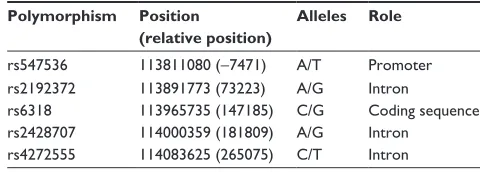
SNP Genotyping Assay obtained from Applied Biosystems. We followed the manufacturer’s genotyping protocol. We selected five single-nucleotide polymorphisms (SNPs) of the HTR2C gene found in the promotor and introns of the gene (Table 1).
statistical analysis
First, the Hardy–Weinberg equilibrium for the HTR2C vari-ants was determined using Pearson’s goodness of fit χ2 test. For
female controls, the genotype frequencies of rs6318, rs2428707, and rs4272555 did not deviate from Hardy–Weinberg
Table 1 hTr2c variants considered in the present case–control study in a Mexican population
Polymorphism Position (relative position)
Alleles Role
rs547536 113811080 (-7471) a/T Promoter
rs2192372 113891773 (73223) a/g intron
rs6318 113965735 (147185) c/g coding sequence
rs2428707 114000359 (181809) a/g intron
rs4272555 114083625 (265075) c/T intron
Note: Data from snpper.chip.org.25
Neuropsychiatric Disease and Treatment downloaded from https://www.dovepress.com/ by 118.70.13.36 on 25-Aug-2020
Dovepress HTR2C gene in a Mexican population
equilibrium (P.0.05); however, the genotype frequencies of rs547536 and rs2192372 did deviate from Hardy–Weinberg equilibrium (P,0.05). The observed deviations were not likely to be due to laboratory error. Random blind duplicates of up 30% of the samples were used as a quality control measure, and we obtained consistent results.
Then, χ2 and Fisher’s exact tests were used to compare the
genotype and allele frequencies between cases and controls. Finally, the Haploview 4.2 (Broad Institute, Cambridge, MA, USA)23 was employed to calculate the linkage disequilibrium
(LD) of the markers. The level of significance was set at 0.05. For multiple comparisons, the significance level was set at
P=0.016 (0.05/5) using Bonferroni correction. We included five SNPs in the analysis.
Results
sNP association analysis
The demographic characteristics of the cases (mean age: 25.96 years, standard deviation [SD]: 9.26 range: 14–56 years) and comparison group (mean age: 31.95 years, SD: 13.03 range: 14–61 years) in this Mexican population are presented in Table 2.
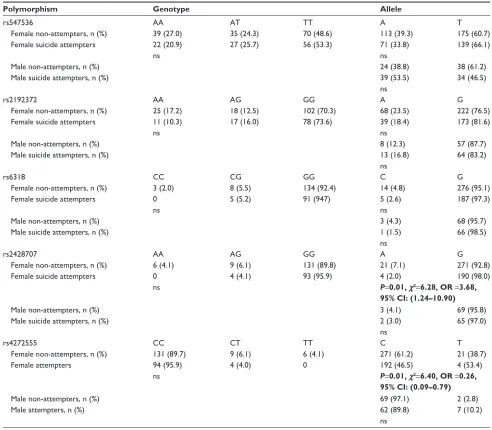
Table 3 shows the genotype and allele frequencies of the HTR2C variants rs547536, rs21923372, rs6318, rs2428707, and rs4272555 in the suicide attempters and control groups. The HTR2C variants rs4272555 and rs2428707 were signifi-cantly associated with suicide attempt in this Mexican popu-lation. In the female group, the G allele of the SNP rs2428707 was associated with an increased risk of suicide attempt (P=0.01, odd ratio [OR] =3.68, 95% confidence inrterval [CI]: 1.24–10.90), while the C allele of the SNP rs4272555 was associated with a decreased risk of suicide attempt
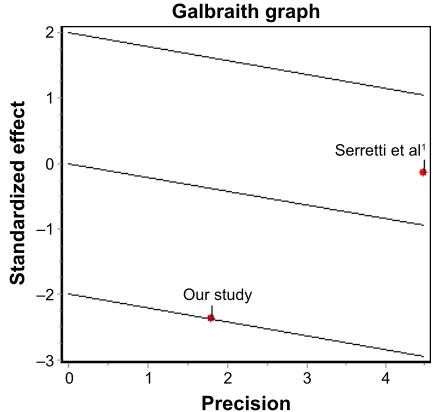
(P=0.01, OR =0.26, 95% CI: 0.09–0.79). The distributions of the HTR2C variants rs547536, rs21923372, and rs6318 were not significantly different between the subjects with suicidal behavior and the control group (Table 3). Subsequently, for the SNPs that showed a significant association, we summarized the evidence and performed a meta-analysis. The results of the meta-analysis (Supplementary materials) showed a nonsignificant association for the rs2428707 (fixed effects: OR: 1.21, 95% CI: 0.80–1.82, P(Q)=0.03) and for the rs4272555 (fixed effects: OR: 0.56, 95% CI: 0.16–1.94,
P(Q)=0.03) (Figures S1–S4 and Tables S1 and S2).
haplotype association analysis
The LD (linkage disequilibrium) in this Mexican popula-tion was measured for all markers examined in this case– control study (rs547536, rs2192372, rs6318, rs4272555, and rs2428707). Block 1 (Figure 1) shows the LD measure-ments. We conducted a haplotype analysis of the same five markers and did not find a significant association between suicide attempt and any of the examined haplotypes (P.0.01, Table 4).
Discussion
The aim of the present study was to assess the association between the HTR2C variants rs547536, rs2192372, rs6318, rs2428707, and rs4272555 and suicide attempt in a Mexican population. To our knowledge, this is the first association analysis between HTR2C polymorphisms and suicidal behavior performed in a Latin American population. We found that the G allele of rs2428707 was associated with an increased risk of suicidal behavior in females; however, this is not similar to the results of previous studies.14,20
Table 2 sociodemographic features of controls and suicide attempters in a Mexican population
Sociodemographic features Controls (%) Cases (%) χ2 df P-value
gender (n [%])
Males 77 (34.5) 77 (41.1) 1.91 1 0.16
Females 146 (65.5) 110 (58.9) – – –
Marital status (n [%])
single 100 (44.8) 94 (50.3) 2.12 3 0.54
Married 104 (46.7) 79 (41.2) – – –
separated/divorced 9 (4.0) 9 (4.8) – – –
Widowed 10 (4.5) 5 (2.6) – – –
socioeconomic level (n [%])
high 3 (1.3) 6 (3.3) 8.72 2 0.01*
Middle 142 (63.7) 93 (49.7) – – –
low 78 (35.0) 88 (47.0) – – –
Average (SD) Average (SD) t F P-value
age (in years) 31.95 (13.03) 25.96 (9.26) -4.04 52 ,0.001*
Note: *P-value: statistical significance (,0.05).
Abbreviation: sD, standard deviation.
Neuropsychiatric Disease and Treatment downloaded from https://www.dovepress.com/ by 118.70.13.36 on 25-Aug-2020
Dovepress
Molina-guzman et al
This discrepancy could be due to differences of the sample sizes used. The number of control subjects used in those previous studies and our study were similar; however, the number of cases in our study were fewer than what the Ger-man and Italian populations used in previous studies.14,20
Another possible explanation for this discrepancy is the heterogeneity between the studies. In our study, the absence of the A allele of rs2428707 and the T allele of rs4272555 in the female group, could be ethnic-dependent because the allelic and genotypic distributions we observed were different from those reported in the literature.14,20 Third, the
“positive results” of this study are modest because we did not exclude the presence of false positives, even when the results were corrected by Bonferroni’s. For major evidence,
we performed a meta-analysis that included studies that have been reported up to date and observed a no-association. However, we considered that the low number of studies, the low number of samples, and the presence of heterogeneity in the analysis reduced the statistical power to detect a pos-sible association between the HTR2C polymorphisms and suicidal behavior. In consequence, more studies that analyze this association are needed.
Our analysis also showed an opposite effect for the rs4272555 and suicide; we observed that in females, the C allele of the rs4272555 is a protective allele against suicidal behavior. It is fundamental to consider these findings with caution for the following reasons: First, the LD analysis indicated stronger linkage disequilibrium for
Table 3 genotype and allele distributions of hTr2c variants in a Mexican population
Polymorphism Genotype Allele
rs547536 aa aT TT a T
Female non-attempters, n (%) 39 (27.0) 35 (24.3) 70 (48.6) 113 (39.3) 175 (60.7)
Female suicide attempters 22 (20.9) 27 (25.7) 56 (53.3) 71 (33.8) 139 (66.1)
ns ns
Male non-attempters, n (%) 24 (38.8) 38 (61.2)
Male suicide attempters, n (%) 39 (53.5) 34 (46.5)
ns
rs2192372 aa ag gg a g
Female non-attempters, n (%) 25 (17.2) 18 (12.5) 102 (70.3) 68 (23.5) 222 (76.5)
Female suicide attempters 11 (10.3) 17 (16.0) 78 (73.6) 39 (18.4) 173 (81.6)
ns ns
Male non-attempters, n (%) 8 (12.3) 57 (87.7)
Male suicide attempters, n (%) 13 (16.8) 64 (83.2)
ns
rs6318 cc cg gg c g
Female non-attempters, n (%) 3 (2.0) 8 (5.5) 134 (92.4) 14 (4.8) 276 (95.1)
Female suicide attempters 0 5 (5.2) 91 (947) 5 (2.6) 187 (97.3)
ns ns
Male non-attempters, n (%) 3 (4.3) 68 (95.7)
Male suicide attempters, n (%) 1 (1.5) 66 (98.5)
ns
rs2428707 aa ag gg a g
Female non-attempters, n (%) 6 (4.1) 9 (6.1) 131 (89.8) 21 (7.1) 271 (92.8)
Female suicide attempters 0 4 (4.1) 93 (95.9) 4 (2.0) 190 (98.0)
ns P=0.01, χ2=6.28, OR =3.68,
95% CI: (1.24–10.90)
Male non-attempters, n (%) 3 (4.1) 69 (95.8)
Male suicide attempters, n (%) 2 (3.0) 65 (97.0)
ns
rs4272555 cc cT TT c T
Female non-attempters, n (%) 131 (89.7) 9 (6.1) 6 (4.1) 271 (61.2) 21 (38.7)
Female attempters 94 (95.9) 4 (4.0) 0 192 (46.5) 4 (53.4)
ns P=0.01, χ2=6.40, OR =0.26,
95% CI: (0.09–0.79)
Male non-attempters, n (%) 69 (97.1) 2 (2.8)
Male attempters, n (%) 62 (89.8) 7 (10.2)
ns
Note: Statistically significant values are presented in bold (P,0.05).
Abbreviations: ns, nonsignificant; OR, odds ratio; CI, confidence interval.
Neuropsychiatric Disease and Treatment downloaded from https://www.dovepress.com/ by 118.70.13.36 on 25-Aug-2020
Dovepress HTR2C gene in a Mexican population
rs2428707 and rs4272555 than for the other HTR2C vari-ants. Second, the small sample size of our study may have resulted in a weaker statistical association than other studies with a larger study population. Therefore, it is necessary to analyze other populations and increase the sample size, without the presence of the heterogeneity, in order to have conclusive results.
The HTR2C Cys23Ser (rs6318) polymorphism is per-haps the most extensively studied for a possible association with suicidal behavior11,13,14,17–20 and self-injury.24 The
pres-ent study did not find an association between the HTR2C Cys23Ser (rs6318) and suicidal behavior. However, this finding is in accordance with previous studies14,20 performed
in Caucasian and Chinese populations.18,19 In contrast, in a
recent study by Karanovic et al,11 an association between
the C allele of HTR2C rs6318 and suicide attempt was observed. Karanović et al11 included 165 suicide attempters
and 188 controls, which is similar to what we used in the present study; however, their controls were subjects with psychiatric diseases other than suicidal behavior and our controls were subjects without any psychiatric disorders. Hence, these findings need to be replicated before any strong conclusions can be drawn.
The results of our study should be interpreted in the context of its limitations. Studies using larger samples are necessary to identify small effects related to these polymor-phisms. Second, although we perform a Bonferroni correc-tion and performed a meta-analysis, the small sample size and the small number of the studies (respectively) do not ensure the absence of false positives. Finally, we did not analyze the clinical features of suicide attempters that may predispose them to this behavior.
Conclusion
Our results suggest an association between the rs2428707 and rs4272555 polymorphisms of HTR2C in Mexican females with suicidal ideation. Future research must examine the potential mediating effects of the HTR2C gene variants to highlight the importance of the serotonin system in suicidal behavior, with special focus on the receptor gene HTR2C.
Acknowledgment
The data collection and the genotyping of the individual samples were performed with the support from CONACYT (CB-2012-177459).
Disclosure
The authors report no conflicts of interest in this work.
References
1. Antypa N, Serretti A, Rujescu D. Serotonergic genes and suicide: a systematic review. Eur Neuropsychopharmacol. 2013;23(10): 1125–1142.
2. Mandelli L, Serretti A. Gene environment interaction studies in depres-sion and suicidal behavior: an update. Neurosci Biobehav Rev. 2013; 37(10 Pt 1):2375–2397.
3. Nordstrom P, Samuelsson M, Asberg M, et al. CSF 5-HIAA predicts suicide risk after attempted suicide. Suicide Life Threat Behav. 1994; 24(1):1–9.
4. Roy A, Agren H, Pickar D, et al. Reduced CSF concentrations of homo-vanillic acid and homohomo-vanillic acid to 5-hydroxyindoleacetic acid ratios in depressed patients: relationship to suicidal behavior and dexamethasone nonsuppression. Am J Psychiatry. 1986;143(12):1539–1545.
5. Oquendo MA, Galfalvy H, Sullivan GM, et al. Positron emission tomo-graphic imaging of the serotonergic system and prediction of risk and lethality of future suicidal behavior. JAMA Psychiatry. 2016;73(10): 1048–1055.
6. Gonzalez-Castro TB, Juarez-Rojop I, Lopez-Narvaez ML, Tovilla-Zarate CA. Association of TPH-1 and TPH-2 gene polymor-phisms with suicidal behavior: a systematic review and meta-analysis.
BMC Psychiatry. 2014;14:196.
Figure 1 lD in hTr2c markers (rs547536, rs2192372, rs4272555, rs6318, and rs2428707) in suicide attempters and controls in a Mexican population.
Abbreviation: lD, linkage disequilibrium.
UV UV UV UV UV
%ORFNNE
Table 4 haplotypes for hTr2c markers rs547536 (a/g), rs2192372 (a/T), rs4272555 (c/T), rs6318 (c/g), and rs2428707 (a/g) in controls and suicide attempters
HTR2C haplotypes
Frequencies Cases, controls ratios
χ2 P-value
Tacgc 0.57 0.56, 0.59 0.49 0.48
Tgcgc 0.19 0.19, 0.18 0.001 0.97
aTcgc 0.15 0.14, 0.16 0.59 0.44
aTgaT 0.01 0.02, 0.007 3.41 0.06
aacgc 0.01 0.02, 0.006 2.95 0.08
Neuropsychiatric Disease and Treatment downloaded from https://www.dovepress.com/ by 118.70.13.36 on 25-Aug-2020
Dovepress
Molina-guzman et al
7. Cavarec L, Vincent L, Le Borgne C, et al. In vitro screening for drug-induced depression and/or suicidal adverse effects: a new toxicogenomic assay based on CE-SSCP analysis of HTR2C mRNA editing in SH-SY5Y cells. Neurotox Res. 2013;23(1):49–62.
8. Iwamoto K, Kato T. RNA editing of serotonin 2C receptor in human postmortem brains of major mental disorders. Neurosci Lett. 2003; 346(3):169–172.
9. Gonzalez-Castro TB, Tovilla-Zarate C, Juarez-Rojop I, et al. Association of the 5HTR2A gene with suicidal behavior: case-control study and updated meta-analysis. BMC Psychiatry. 2013;13:25.
10. Beden O, Senol E, Atay S, et al. TPH1 A218 allele is associated with suicidal behavior in Turkish population. Leg Med (Tokyo). 2016;21: 15–18.
11. Karanović J, Šviković S, Pantović M, et al. Joint effect of ADARB1 gene, HTR2C gene and stressful life events on suicide attempt risk in patients with major psychiatric disorders. World J Biol Psychiatry. 2015;16(4):261–271.
12. Finder SG. SNPper – Gene Finder, 2016. Available from: http://snpper. chip.org/bio/snpper-enter-gene. Accessed 31 August 2016.
13. De Luca V, Tharmaligam S, Strauss J, Kennedy JL. 5-HT2C receptor and MAO-A interaction analysis: no association with suicidal behav-iour in bipolar patients. Eur Arch Psychiatry Clin Neurosci. 2008; 258(7):428–433.
14. Serretti A, Mandelli L, Giegling I, et al. HTR2C and HTR1A gene variants in German and Italian suicide attempters and completers.
Am J Med Genet B Neuropsychiatr Genet. 2007;144B(3):291–299.
15. Turecki G, Sequeira A, Gingras Y, et al. Suicide and serotonin: study of variation at seven serotonin receptor genes in suicide completers.
Am J Med Genet B Neuropsychiatr Genet. 2003;1(1):36–40.
16. Judy JT, Seifuddin F, Mahon PB, et al. Association study of serotonin pathway genes in attempted suicide. Am J Med Genet B Neuropsychiatr
Genet. 2012;159B(1):112–119.
17. Videtic A, Peternelj TT, Zupanc T, Balazic J, Komel R. Promoter and functional polymorphisms of HTR2C and suicide victims. Genes Brain
Behav. 2009;8(5):541–545.
18. Zhang J, Shen Y, He G, et al. Lack of association between three sero-tonin genes and suicidal behavior in Chinese psychiatric patients. Prog
Neuropsychopharmacol Biol Psychiatry. 2008;32(2):467–471.
19. Stefulj J, Buttner A, Kubat M, et al. 5HT-2C receptor polymorphism in suicide victims. Association studies in German and Slavic populations.
Eur Arch Psychiatry Clin Neurosci. 2004;254(4):224–227.
20. Serretti A, Calati R, Giegling I, Hartmann AM, Moller HJ, Rujescu D. Serotonin receptor HTR1A and HTR2C variants and personality traits in suicide attempters and controls. J Psychiatr Res. 2009;43(5): 519–525.
21. First M, Spitzer R, Gibbon M, Williams J. Structured Clinial Interview
for DSM-IV-R Axis I Disorders (SCID-I), Clinican Version, Users Guide.
Arlington, TX: American Psychiatric Press, Inc.; 1996.
22. Gonzalez-Castro TB, Tovilla-Zarate CA, Juarez-Rojop I, et al. Associa-tion of 5HTR1A gene variants with suicidal behavior: case-control study and updated meta-analysis. J Psychiatr Res. 2013;47(11):1665–1672. 23. Barrett JC, Fry B, Maller J, Daly MJ. Haploview: analysis and visu-alization of LD and haplotype maps. Bioinformatics. 2005;21(2): 263–265.
24. Pooley EC, Houston K, Hawton K, Harrison PJ. Deliberate self-harm is associated with allelic variation in the tryptophan hydroxylase gene (TPH A779C), but not with polymorphisms in five other serotonergic genes. Psychol Med. 2003;33(5):775–783.
25. Bioinformatics Tools. CHIP Bioinformatics Tools. Available from http://snpper.chip.org/. Accessed February 17, 2017.
Neuropsychiatric Disease and Treatment downloaded from https://www.dovepress.com/ by 118.70.13.36 on 25-Aug-2020
Dovepress HTR2C gene in a Mexican population
Figure S1 Or and forest plot for the meta-analysis of rs2428707.
Note: g allele vs a allele with heterogeneity.
Abbreviations: OR, odds ratio; CI, confidence interval.
Q
:HLJKW
2GGVUDWLR&,
±
25&,
±
±
± 6HUUHWWLHWDO
)L[HGHIIHFWV
5DQGRPHIIHFWV 2XUVWXG\
6WXG\\HDU
Figure S2 egger’s funnel plot indicating publication bias for studies included in the meta-analyses.
Note: g allele vs a allele with heterogeneity.
±
±
2XUVWXG\
6HUUHWWLHWDO
*DOEUDLWKJUDSK
3UHFLVLRQ
6WDQGDUGL]HGHIIHFW
Figure S3 Or and forest plot for the meta-analysis of rs4272555.
Note: T allele vs c allele with heterogeneity.
Q
:HLJKW
2GGVUDWLR&,
±
25&,
±
±
± 6HUUHWWLHWDO
)L[HGHIIHFWV
5DQGRPHIIHFWV
6WXG\\HDU
Supplementary materials
Neuropsychiatric Disease and Treatment downloaded from https://www.dovepress.com/ by 118.70.13.36 on 25-Aug-2020
Neuropsychiatric Disease and Treatment
Publish your work in this journal
Submit your manuscript here: http://www.dovepress.com/neuropsychiatric-disease-and-treatment-journal
Neuropsychiatric Disease and Treatment is an international, peer-reviewed journal of clinical therapeutics and pharmacology focusing on concise rapid reporting of clinical or pre-clinical studies on a range of neuropsychiatric and neurological disorders. This journal is indexed on PubMed Central, the ‘PsycINFO’ database and CAS,
and is the official journal of The International Neuropsychiatric Association (INA). The manuscript management system is completely online and includes a very quick and fair peer-review system, which is all easy to use. Visit http://www.dovepress.com/testimonials.php to read real quotes from published authors.
Dovepress
Dove
press
Molina-guzman et al
Figure S4 egger’s funnel plot indicating publication bias for studies included in the meta-analysis of rs4272555.
Note: T allele vs c allele with heterogeneity.
±
±
±
2XUVWXG\
6HUUHWWLHWDO
*DOEUDLWKJUDSK
3UHFLVLRQ
6WDQGDUGL]HGHIIHFW
Table S1 Descriptive characteristics of two studies analyzing the role of the hTr2c gene variant rs2428707 in suicide attempt
Study Sample size, female (cases-controls)
Population Diagnoses Alleles controls
Alleles cases
A G A G
serretti et al1 (2007) 174 controls german and italian suicide attempt 51 297 43 253
Our study 146 controls 97 cases Mexican suicide attempt 21 271 4 190
Table S2 Descriptive characteristics of two studies in the meta-analysis of the hTr2c gene variant rs4272555 in suicide attempt
Study Sample size, female (cases-controls)
Population Diagnoses Alleles controls
Alleles cases
C T C T
serretti et al1 (2007) 174 controls german and italian suicide attempt 296 52 253 43
Our study 146 controls 97 cases Mexican suicide attempt 271 21 192 4
Reference
1. Serretti A, Mandelli L, Giegling I, et al. HTR2C and HTR1A gene variants in German and Italian suicide attempters and completers. Am J Med Genet B Neuropsychiatr Genet. 2007;144B(3):291–299.
Neuropsychiatric Disease and Treatment downloaded from https://www.dovepress.com/ by 118.70.13.36 on 25-Aug-2020