Original Research Article
Mental health status: a cross sectional study on rural economically
productive population of field practice area of a tertiary medical care
institute in Ujjain, Madhya Pradesh
Vibha Arjaria
1*, Badri Narayan Mishra
2, Dharampal Singh Chouhan
2INTRODUCTION
The World Health Organization (WHO) Global Burden of Disease Study has revealed the worrisome scenario of mental health and related disorders all over the world and the growing danger is going to increase in upcoming years. However these projections are based grossly on review of available literature, and population based
surveys is the need of the time.1,3 They affect both the economic aspects and quality-of-life of the people.1-3
Various social, psychological, and biological factors ascertain the level of mental health of a person at any point of time. WHO estimated that globally over 450 million people suffer from mental disorders.1 At present mental and behavioral disorders account for about 12
ABSTRACT
Background: The World Health Organization (WHO) Global Burden of Disease Study has estimated that psychiatric disorders emerging all around the globe and are increasing at a high pace. They have an impact on both the economic aspects and quality-of-life of the people. Present study was conducted to broaden our knowledge regarding mental health status in terms of prevalence of mental health disorders in the rural population, constituting 64% of the total population in India. Present study aims to estimate the prevalence of mental health disorders in the selected area and study the association of each disorder with various socioeconomic variables of individuals. Objectives of the study were to assess and associate the prevalence of study population for major mental health disorders under the headings –overall probability of any mental health disorder, internalizing disorders and externalizing disorders as broad categories.
Methods: A cross-sectional study was conducted among 430 participants residing in six selected villages of rural field practice area of native college in Ujjain district. Statistical methods which applied are: percentage and proportion, mean and standard deviation and chi-square analysis for assessing the association.
Results: Present study showed 44.2% participants scored in the category of high probability of having diagnosis of any mental health disorder. On testing each subgroup disorder probability of getting diagnosed with internalizing disorder emerged with prevalence of almost 50% while probability of externalizing disorder was found in 30.4% population.
Conclusions: The present study revealed that nearly half of study participants had the probability of suffering from some kind of mental health disorder and association found with gender, family type, and occupation of the individual.
Keywords: Internalizing disorders, Externalizing disorders, Mental health
Department of Community Medicine, 1LN Medical College, Bhopal, 2RD Gardi Medical College, Ujjain, Madhya Pradesh, India
Received: 31 August 2018 Revised: 03 November 2018 Accepted: 13 November 2018
*Correspondence: Dr. Vibha Arjaria,
E-mail: [email protected]
Copyright: © the author(s), publisher and licensee Medip Academy. This is an open-access article distributed under the terms of the Creative Commons Attribution Non-Commercial License, which permits unrestricted non-commercial use, distribution, and reproduction in any medium, provided the original work is properly cited.
percent of the global burden of diseases.1This is likely to increase to 15 percent by 2020. Significant proportions of mental disorders come from low and middle income countries.1
The socio- demographic changes, epidemiological transition, media revolution, and transforming lifestyles has brought new challenges of lifestyle–related problems. The social, biological and psychological strength of the previous era are slowly being substituted by a fragile new lifestyle of people, making them more prone toward various social, mental, and behavioral problems than before.4 Epidemiological studies are standard requirement as they provide pivotal facts on prevalence of disorders which eventually helps in making public healthcare policies for prevention and treatment in upcoming future. Contrast to the need, only a few epidemiological studies on mental and behavioral disorders have been published till time from India.4
Mental health is a vital component of health without which ideal health could not be achieved.1 For Indian population epidemiological studies on psychiatric disorders reported that about 10% of the total population suffers from mental and neurological problems requiring professional intervention at any point of time. Several studies from India have documented that psychiatric disorders contribute to considerable amount of morbidity at primary care facility and thus there is a need to attend individuals having these disorders at primary care level.
5-7
Assessment of extent and pattern of such disorders is vital because of its potential of identifying individual with disorder and providing related care at this level. Most often the psychiatric disorders at primary care level remain undiagnosed because patients present with
physical disorders or somatic complaints
predominantly.8,9
Taking into account the sub groups of mental health disorder current study used the two broad categories of mental health disorders for study purpose as Internalizing disorders and externalizing disorders. It is documented that internalizing disorders are directed inward and correspond to troubles such as anxiety, depression and psychosomatic problems, whereas in the case of externalizing problems, emotional responses are directed away from the self and are characterized by aggression and rule-breaking behavior.10 Although differentiating
between internalizing and externalizing problem
behaviors, a great variety of measures of these constructs can be found in the literature– from specific scales and questionnaires for assessing different symptoms (e.g., aggressive behavior and delinquency for externalizing problems, and depression, low self-esteem and anxiety for internalizing problems), to a single questionnaire for assessing mental health status on the whole. Present study is based on GAIN-SS 2.0.3 version questionnaire developed by Chestnut foundation.11
Despite all honest efforts there are lacunae in psychiatric epidemiology due to complexity related to defining a case, sampling methodology, under reporting, stigma and taboo, lack of adequate funding and trained manpower and low priority of mental health in the health policy.2 Hence, this study was conducted to broaden our knowledge regarding prevalence of psychiatric disorders in the rural population, which constitutes 68% of the total population in India.12 Current study aims to estimate the prevalence of psychiatric disorders in the selected area and study the association of each psychiatric disorder with various socioeconomic variables and physical health profile of individuals.
METHODS
The present study needed a defined population with all the basic details (age, gender, education, SES etc.) available at the time of data collection as the study was an interview based study. In order to fulfill this purpose six villages from the Demographic Surveillance Site of R. D. Gardi Medical College, District Ujjain, Madhya Pradesh, India (originally has a spread over sixty villages around three blocks of native district) was chosen. Study was conducted from April 2015 to November 2015. Selected individuals in 15-59 yr age group both male and female of 6 villages selected in DSS Palwa. Only those who were permanent resident of selected six villages and available at the time of data collection were included, while excluding those individuals belonging to migratory population, physically ill, or on prolonged psychiatric medication.
Sample size was calculated using formula N=Z
1-alpha/22 PQ/L2with presumed prevalence as 50%
including probable errors came as 430.With the help of Random number application to the excel sheet of the surveillance site population data, 430 individuals were selected from total study population. After taking written informed consent from each individual the questionnaire was administered using direct interview method.
Study tool
Licensed version of Global Appraisal of Individual Needs – Short Screener version 2.0.3 (GAIN-SS 2.0.3) was used which was developed and timely revised by Chestnut foundation.11
Indian national language was done by a research scholar in Hindi.
Two sub categories for mental health assessment were used in present, Internalizing disorders (somatic
disorders, depression, suicidal tendency, anxiety
disorders) and Externalizing disorders (attention-deficit/hyperactivity disorder, conduct disorder).
Overall the experiences felt during past year were included in study for scoring and interpretation. For individual sub screener the scoring pattern is according to Moderate/high scores on the Internalizing Disorder Screener (1+ on IDScr) which suggest the need for mental health treatment related to somatic complaints, depression, anxiety, trauma, suicide, and, at extreme levels, more serious mental illness (e.g., bipolar, schizoaffective, schizophrenia).
Moderate/high scores on the Externalizing Disorder Screener (1+ on EDScr) suggest the need for mental
health treatment related to attention deficits,
hyperactivity, impulsivity, conduct problems, and, in rare cases, for gambling or other impulse control disorders.
A result of moderate to high problem severity in any single area or overall suggests the need for further assessment or referral to some part of the behavioral health treatment system.11
Data was entered and analyzed by using percentage and proportion, mean and standard deviation, association between mental health status and demographic factors was estimated by confidence interval, significance level, Chi square analysis by using software SPSS Version 20.0
Ethical clearance was taken from ethical committee of R.D. Gardi Medical College, Ujjain, MP before starting the study.
RESULTS
As per the Report on Fourth Annual Employment – Unemployment Survey (2013-14) the economically productive population age group was taken as 15 to 59 yrs.13,14 Maximum numbers of participants were in the age group 30-39 yrs (27.4%) and around 81% participants were male rest were participants were female. Around 62.5% participants were living in joint family.
Overall 76% participants were literate with different levels of education rest were illiterate. The proportion of unemployed individuals was only 4.2% while rests of the participants were employed. Farming is the predominant employment among study participants. Socio economic class distribution was done with the help of modified B.G. Prasad classification according to which maximum numbers of study participants were in class-V SES of B.G Prasad classification.15
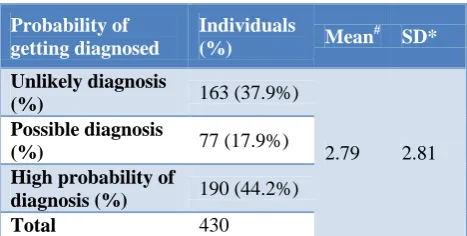
Table 1: Overall possibility of mental health disorder using GAIN-SS version 2.0.3 questionnaire (n=430) in
study population.
Probability of getting diagnosed
Individuals
(%) Mean
# SD*
Unlikely diagnosis
(%) 163 (37.9%)
2.79 2.81
Possible diagnosis
(%) 77 (17.9%)
High probability of
diagnosis (%) 190 (44.2%)
Total 430
#=Mean of obtained scores; *SD= Standard deviation of obtained scores.
Table 1 shows the descriptive analysis of study participants in terms of overall possibility of any mental health disorder in which 44.2% participants scored in the category of high probability of having diagnosis of any mental health disorder.
17.9% participants were in the category which showed possibilities of diagnosis of any mental health disorder while 37.9 % participants scored as having unlikely diagnosis in terms of mental health disorder. Mean (±SD) of the scores obtained was 2.79±2.81.
Table 2 shows the distribution of study participants in terms of presence or absence of probability of subscale diagnosis of mental health disorder.
For the subscale internalizing disorders 49.8% study participants scored in the category Probable diagnosis present on further screening. In the subscale externalizing disorders out of the total 430 participants 30.5% showed probabilities of diagnosis.
Table 3 shows higher percentage within the females found to have probability of diagnosis of any mental disorder (63%) while lesser percentage of males have shown such probability (39%). The association between such probability and gender was found to be statistically significant.
Within the category of different family type maximum percentage of participants were belonged to nuclear family. Least percentage of participants with high probability of diagnosis belonged to joint family type. This association is statistically significant on chi square analysis.
Table 4 shows out of the total female almost 75% have shown probability of getting diagnosed with internalizing disorder while out of the total almost 66% male have shown such probability.
On testing association of family type with probability of diagnosis of internalizing disorder within the categories maximum percentage of participants belonged to nuclear family.
Association between probability of diagnosis of IDSCr with gender and family type is statistically significant on chi square analysis.
More number of participants belonging to category farmer was found to have probability of diagnosis of internalizing disorder and this was found to be statistically strongly associated.
Table 2: Study participants in terms of probability of getting diagnosed with subcategories of mental health disorder according to the score obtained using GAIN-SS version 2.0.3 questionnaire.
Disorders Unlikely diagnosis (%) Probability of diagnosis present (%) Total
Internalising disorder (IDSCr) 216 (50.2) 214 (49.8) 430
Externalising (EDSCr) 299 (69.5) 131 (30.5) 430
Table 3: Association of overall possibility of any mental health disorder with various socio demographic variables.
Unlikely diagnosis (%)
Possible diagnosis (%)
High probabilities of
diagnosis (%) Total χ
2
P value
Gender
Male 146 (42.2) 64 (18.5) 136 (39.3) 346
33.53 0.01*
Female 18 (21.4) 13 (15.5) 53 (63.1) 84
Family type
Nuclear 34 (23.8) 24 (16.8) 85 (59.4) 143
38.16 0.00*
Three generation 7 (38.9) 1 (5.6) 10 (55.6) 18
Joint 122 (45.4) 52 (19.3) 95 (35.3) 269
Total 164 77 189 430
Employment
Unemployed 10 (52.6) 5 (26.3) 4 (21.1) 19
28.85 0.000*
Farming on own
land 75 (32.5) 44 (19.0) 112 (48.5) 231
Labour 37 (35.2) 14 (13.3) 54 (51.4) 105
Job 8 (38.1) 8 (38.1) 5 (28.8) 21
Others 33 (61.1) 6 (11.1) 15 (27.8) 54
Total 163 77 190 430
Figures in the parenthesis indicates the percentage of row total; p<0.05 (sig). *Results was statistically significant by chi square analysis.
Table 4: Association of probability of diagnosis of internalizing disorder with socio demographic variables.
Internalising disorders
Gender Male Female χ2 P value
Unlikely diagnosis 195 (56.4%) 21 (25%)
26.59 0.00*
Probable diagnosis 151 (63.6%) 63 (75%)
Total 346 84
Family type Nuclear Three generation Joint χ2 P value
Unlikely diagnosis 52 (36.6%) 7 (38.9%) 159 (59.1%)
22.16 0.00*
Probable diagnosis 91 (63.3%) 11 (61.1%) 112 (41.6)
Total 143 18 269
Employment Unemployed Farming on own land Labour Job Other χ2 P value Unlikely
diagnosis 13 (68.4%) 103 (56.3%) 51 (48.6%) 13 (61.9%) 36 (66.7%)
12.55 0.01*
Probable
diagnosis 6 (31.6%) 128 (55.4%) 54 (51.4%) 8 (38.1%) 18 (33.3%)
Total 19 231 105 21 54
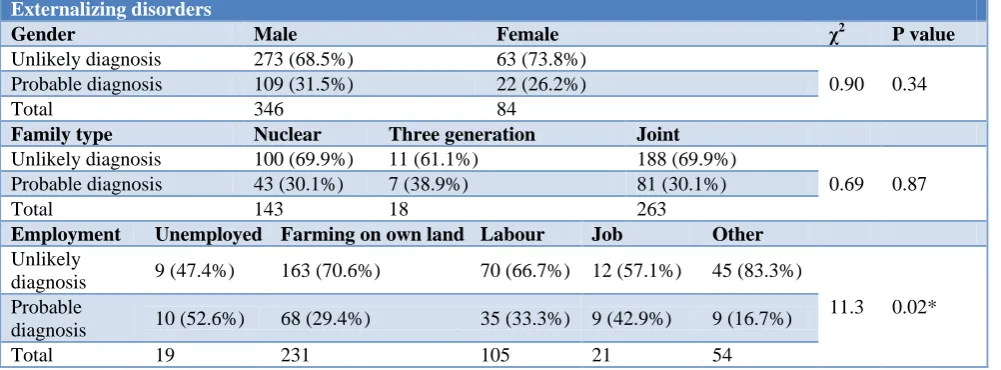
Table 5: Association of probability of diagnosis of externalizing disorders with socio demographic variables.
Externalizing disorders
Gender Male Female χ2 P value
Unlikely diagnosis 273 (68.5%) 63 (73.8%)
0.90 0.34
Probable diagnosis 109 (31.5%) 22 (26.2%)
Total 346 84
Family type Nuclear Three generation Joint
Unlikely diagnosis 100 (69.9%) 11 (61.1%) 188 (69.9%)
0.69 0.87
Probable diagnosis 43 (30.1%) 7 (38.9%) 81 (30.1%)
Total 143 18 263
Employment Unemployed Farming on own land Labour Job Other Unlikely
diagnosis 9 (47.4%) 163 (70.6%) 70 (66.7%) 12 (57.1%) 45 (83.3%)
11.3 0.02*
Probable
diagnosis 10 (52.6%) 68 (29.4%) 35 (33.3%) 9 (42.9%) 9 (16.7%)
Total 19 231 105 21 54
*p<0.05 (sig) Results was statistically significant by chi square analysis.
Table 5 shows that within the category almost 31.5% male participants have shown probability of getting diagnosed with EDSCr while 26.2% female participants have shown such probability but this association was not statistically significant. Within the category those less participants from nuclear and joint family have shown probability of EDSCr but this association is not significant on chi square analysis. More number of participants belonging to category unemployed was found to have probability of diagnosis of externalizing disorder and this was found to have a strong statistical association.
DISCUSSION
According to a meta-analysis done by Math et al in 2010 inclusive of epidemiological studies from 1965-2001 and various other epidemiological studies reported prevalence rates for psychiatric disorders from 0.95% to 37% in India.4,16
Based on uniform and standardized data collection procedures from a nationally representative population, excluding tobacco use disorders, mental morbidity of individuals above the age of 18 years currently was 10.6%. The life time prevalence in the surveyed population was 13.7%. This proportion of the population currently suffering from a mental disorder requires an active intervention. This estimate includes a range of mental disorders F10–F49 categories within the Summary 15 NMHS 2016 International Classification of Disorders (ICD -10). Translated to real numbers (based on weightage for different levels), nearly 150 million Indians are in need of active interventions.17
The differences in the different subcategory prevalence (IDSCr, EDSCr and overall probability of any mental health disorder) from current study may be due to large sample size and different tool used in other studies. In the present study author studied the probability rather than
the actual diagnosis, this might be the reason for such differences.
According to Badrakalimuthu et al among symptoms of mental illness, body pain was the most frequently reported (41.8%), followed by depression (25.5%). Depressive disorders were the most frequently reported mental disorders (52.2%), followed by anxiety disorders (20.4%).18
Above study did not provided cumulative percentage of different internalizing disorders as a whole leading to low prevalence of depression, anxiety disorders etc as subcategories while the current study gathered the common mental disorders to form two major categories so that the related problems would appear as whole.
Out of the total participants in the present study 30.5% showed probabilities of diagnosis of prevalence of externalizing disorders which is inclusive of like attention-deficit/hyperactivity disorder, conduct disorder.
Similar results regarding gender have found in other studies too and most studies have concluded that female adolescents have more internalizing problems and boys more externalizing problems.19,20
Externalizing disorders typically onset in childhood, there is increasing recognition that they extend well into adulthood.21 Sethi et al observed "the prevalence rate of 67/1000 found for psychiatric illnesses in urban scenario of their study setting.22
Among people in the community with psychiatric and substance disorders, multiple co-occurring diagnoses are the norm.23–28
likely to experience problems with treatment and
medication adherence, shorter lengths of stay,
administrative discharges, functional status, community adjustment, quality of life, and worse outcomes following treatment for their disorder.29–36 This might be the reason similar individuals have shown probability for different types of mental health disorders. Unfortunately, it is estimated that one- to two-thirds of people with serious disorders do not access treatment.37
People with more serious mental illness were less likely to report full time employment than people without full time employment, similarly in the current study labor category which is not a full time employment have shown highest percentage of possibility of any mental health disorder.38
CONCLUSION
Nearly 50% participants had probability of diagnosis of
internalizing disorders like depression, obsessive
compulsive disorder; somatic disorders etc. while 31% showed probabilities of diagnosis of externalizing disorders.
Taking into account the probability of diagnosis of subgroup internalizing disorders, it was more common in female gender, farmers, and participants living in nuclear family.
It was observed that mental health disorders with subgroup internalizing disorders were statistically significantly associated gender, employment category and nuclear family type is statistically significant on chi square analysis.
Stigma related to mental disorders, lack of awareness in people, delayed treatment seeking behavior, lack of low cost diagnostic test and lack of easily available treatment are the main hurdles in combating the problem of mental health in India. In addition factors related to traditional medicine and beliefs in supernatural and paranormal powers in society delays diagnosis and treatment. India had focused its attention mainly to maternal and child health and communicable diseases. This leads to lack of political commitment to non-communicable diseases further supporting the slow epidemic of mental disorders.39
Funding: No funding sources Conflict of interest: None declared
Ethical approval: The study was approved by the Institutional Ethics Committee
REFERENCES
1. World Health Organization. The world health report
2001 - Mental Health: New Understanding, New Hope. World Health Organization 2001, Geneva.
2. Kessler RC. Psychiatric epidemiology: selected
recent advances and future directions. Bull World Health Organ. 2000;78(4):464-74.
3. Tiwari S. Prevalence of psychiatric morbidity
amongst the community dwelling rural older adults
in northern India. Indian J Med Res.
2013;138(4):504-14.
4. Math SB, Srinivasaraju R. Indian Psychiatric
epidemiological studies: Learning from the past. Indian J Psychiatry. 2010;52:95-103.
5. Pothen M, Kuruvilla A, Philip K, Joseph A, Jacob KS. Common Mental Disorders Among Primary Care Attendees in Vellore, South India: Nature, Prevalence and Risk Factors, Int J Soc Psychiatry. 2003;49:119-25.
6. Patel V, Pereira J, Coutinho L, Fernandes R,
Fernandes J, Mann A. Poverty, psychological disorder and disability in primary care attenders in Goa, India. Br J Psychiatry. 1998;172:5337.
7. Chatterjee S, Chowdhary N, Pednekar S, Cohen A, Andrew G, Andrew G, et al. Integrating evidencebased treatments for common mental disorders in routine primary care: feasibility and acceptability of the MANAS intervention in Goa, India. World psychiatry. 2008;7(1):39-46.
8. Nambi SK, Prasad J, Singh D, Abraham V,
Kuruvilla A. Jacob KS. Explanatory models and common mental disorders among patients with unexplained somatic symptoms attending a primary care facility in Tamil Nadu. Natl Med J India. 2002;15:331-5.
9. Kisely SR, Goldberg DP. Physical and psychiatric co-morbidity in general practice. Br J Psychiatry 1996;169:236-42.
10. Bask, M. Externalising and internalising problem behaviour among Swedish adolescent boys and girls. International Journal of Social Welfare 2015;24(2):182–92.
11. Dennis M, Chan Y, Funk R. Development and
Validation of the GAIN Short Screener (GSS) for Internalizing, Externalizing and Substance Use Disorders and Crime/Violence Problems Among
Adolescents and Adults. Am J Addict.
2006;15(1):80-91.
12. "Indian States Census 2011". Census Organization of India. 2011. Accessed on 1 January 2014.
13. Labor bureau of India.Report on Fourth Annual
Employment & Unemployment Survey 2013-14. Chandigarh: Government of India Ministry of Labor & Employment Labor Bureau; 2015.
14. Premrajan KC, Danabalan M, Chandrasekhar R,
Srinivasa DK. Prevalence of psychiatric morbidity in an urban community of Pondicherry. Indian J Psychiatry. 1993;35:99–102.
15. Sharma R. Revision of Prasad’s social classification and provision of an online tool for real-time updating. South Asian J Cancer. 2013;2:157. 16. Park K. Preventive and Social Medicine. Jabalpur,
17. Gururaj G, Varghese M, Benegal V, Rao GN, Pathak K, Singh LK, et al. National Mental Health Survey of India, 2015-16: Summary. Bengaluru, NIMHANS Publication No. 128, 2016.
18. Badrakalimuthu VR, Sathyavathy VR. India Mental
health practice in private primary care in rural India: a survey of practitioners, World Psychiatry. 2009;8:2.
19. Moylan CA, Herrenkohl TI, Sousa C, Tajima EA, Herrenkohl RC, Russo MJ. The effects of child abuse and exposure to domestic violence on adolescent internalizing and externalizing behavior problems. J Family Violence. 2010;25(1):53–6.
20. Roussos A, Francis K, Zoubou V, Kiprianos S,
Prokopiou A, Richardson C. The standardization of Achenbach’s Youth Self-Report in Greece in a national sample of high school students. European Child Adolesc Psychiatry. 2001;10(1):47–53.
21. Kessler R, Chiu W, Demler O, Walters E.
Prevalence, Severity, and Comorbidity of 12-Month DSM-IV Disorders in the National Comorbidity
Survey Replication. Arch Gen Psychiatry.
2005;62(6):617.
22. Sethi BB, Gupta SC, Mahendru RK, Kumari P.
Mental health and urban life: A study of 850 families. British J Psychiatry. 1974;124:243-6. 23. Angst J, Sellaro R, Ries MK. Multimorbidity of
psychiatric disorders as an indicator of clinical severity. European Arch Psychiatry Clin Neurosci. 2002;252:147–54.
24. Kandel DB, Johnson JG, Bird HR, Weissman MM,
Goodman SH, Lahey BB, et al. Psychiatric comorbidity among adolescents with substance use disorders: Findings from the MECA study. J Am Acad Child Adolesc Psychiatry. 1999;38:693–9.
25. Kessler RC, Nelson CB, Mc Gonagle KA, et al. The
epidemiology of co-occurring addictive and mental disorders: Implications for prevention and service utilization. Am J Orthopsychiatry. 1996;66:17-31. 26. Kessler RC, Chiu WT, Demler O, Merikangas KR,
Walters EE. Prevalence, severity, and comorbidity of 12-month DSM-IV disorders in the National
Comorbidity Survey Replication. Arch Gen
Psychiatry. 2005;62:617–27.
27. Krueger RF, Markon KE. Reinterpreting
Comorbidity: A Model-Based Approach to
Understanding and Classifying Psychopathology. Annu Rev of Clin Psychol. 2006;2:111–3.
28. Regier DA, Farmer ME, Rae DS, Locke BZ, Keith SJ, Judd LL, et al. Comorbidity of mental disorders with alcohol and other drug abuse: Results from the Epidemiologic Catchment Area (ECA) study. JAMA. 1990;264:2511–8.
29. Brooner RK, King VL, Kidorf M, Schmidt CW Jr, Bigelow GE. Psychiatric and substance use
comorbidity among treatment-seeking opioid
abusers. Arch Gen Psychiatry. 1997;54:71–80
30. Cornelius JR, Maisto SA, Martin CS, Bukstein OG,
Salloum IM, Daley DC, et al. Major depression associated with earlier alcohol relapse in treated teens with AUD. Addict Behav. 2004;29:1035–8.
31. McLellan AT, Luborsky L, Woody GE, O'Brien CP,
Druley KA. Prediction response to alcohol and drug
abuse treatments. Arch Gen Psychiatry.
1983;40:620–8.
32. Mueser KT, Drake RE, Miles KM. The course and treatment of substance use disorder in persons with severe mental illness. In: Onken LS, Blaine JD, Genser S, Horton AM, eds. Treatment of Drug-Dependent Individuals with Comorbid Mental Disorders. National Institute on Drug Abuse; 1997.
33. Hien DA, Nunes E, Levin FR, Fraser D.
Posttraumatic stress disorder and short-term outcome in early methadone treatment. J Subst Abuse Treat. 2000;19:31–7.
34. Project MATCH Research Group. Project MATCH
secondary a priori hypotheses. Addiction.
1997;92:1671–1698
35. Rounsaville BJ, Kosten TR, Weissman MM, Kleber
HD. Prognostic significance of psychiatric disorders in treated opiate addicts. Arch Gen Psychiatry. 1986;43:739–45.
36. Shane P, Jasiukaitis P, Green RS. Treatment
outcomes among adolescents with substance abuse problems: The relationship between comorbidities and post-treatment substance involvement. Eval Prog Plann. 2003;26:393–402.
37. Bijl RV1, de Graaf R, Hiripi E, Kessler RC, Kohn R, Offord DR, et al. The Prevalence of Treated and Untreated Mental Disorders in Five Countries. Health Afs. 2003;22:122–33.
38. Mechanic D, Bilder S, McAlpine DD. Employing
persons with serious mental illness. Health Affairs. 2002;21(5):242–53.
39. Reddy BV. Mental Health issues and challenges in India: A Review. Int J Sci Res Pub. 2013;3(2).