DISCERNING QUALITY EVALUATION IN ONLINE GRADUATE DEGREE PROGRAMS IN AGRICULTURAL SCIENCES AND ENGINEERING
BY
HOLLY A. DOWNS
DISSERTATION
Submitted in partial fulfillment of the requirements
for the degree of Doctor of Philosophy in Educational Psychology in the Graduate College of the
University of Illinois at Urbana-Champaign, 2011
Urbana, Illinois Doctoral Committee:
Professor Lizanne DeStefano, Chair Professor Nicholas Burbules
Professor Jennifer Greene Professor Thomas Schwandt
Abstract Enormous demands for online degrees in higher education have increased the pressure on
universities to launch web courses and degrees quickly and, at times, without properly attending to the quality of these ventures. There is scarce research that defines which quality indicators are used to assess cyberlearning environments, how different stakeholders view the relative
importance of these quality indicators in online graduate degree programs from fields like science and engineering that have a historical preference for formal program accreditation, and what practices are used in evaluating completely online graduate degree programs in higher education. This mixed methods study examined current practices in three established online degree programs in agriculture and engineering at the University of Illinois, identifying quality indicators and evaluation practices used with cyberlearning environments in these fields and comparing myriad stakeholder views regarding the value of these practices.
Data collection in this study used a mixed-methods approach, including a combination of surveys (n = 107) and interviews (n = 27) with program administrators, faculty, and students, as well as a document review from the different programs. While most of the evaluation occurring in the programs is informal, analysis of the surveys, interviews, and documents collected from the programs revealed four key themes related to current evaluation practice including the use of: (a) informal feedback from the students and faculty, (b) student satisfaction surveys (i.e., ICES student feedback and department-specific and created satisfaction surveys), (c) student grades and performance information, and (d) the Committee on Extended Education and External Degrees (CEEED) process. There were a several challenges reported in using these strategies to evaluate quality, including lacking structured collection and reporting mechanisms, differing implementation levels in traditional and online courses, varying availability of data and student
evident from study was that the implementation of these evaluation practices is occurring at varying levels which were categorized on a four-stage continuum of evaluation. The programs in this study are at or beginning to move out of the first evaluation stage of preservation, meaning that the administrators have an evaluation system that is focused on efficiency and on collecting student satisfaction ratings. In this evaluation stage, small improvements are made periodically in hopes of getting more efficiency out of the current system, but little is done to explore quality beyond student satisfaction. Thus, the evaluation is incomplete as it overlooks important issues like student learning outcomes, the teaching and learning process, faculty support, course structure, and others.
A factor analysis was done to explore the dimensionality of the 72 items related to quality evaluation and science, technology, engineering, and mathematics (STEM) program
accreditation, from the 2009 National Research Council Study on the Quality of Traditional Programs, Institute for Higher Education Policy (IHEP) Online Benchmark Study, and ABET Criterion Three Items for STEM programs, which resulted in 12 common quality indicators to determine program quality of STEM online programs. These 12 quality indicators included (a) diversity of students and faculty, (b) professional and scholarly productivity of faculty, (c) presence, accessibility, and articulation of evaluation activities, learning outcomes, and support information, (d) student knowledge of current practice, ethics, impact, and professional conduct in STEM, (e) student production of STEM capstone research projects, (f) customer service provided by the program, (g) student training in conducting scholarly research and access to university resources, (h) interaction between students with each other and the faculty,
preparation to transition from traditional to online environments, (k) student persistence to degree completion, and (l) student success beyond graduation.
Differences between stakeholders revealed that online students placed a statistically significant higher emphasis than faculty on the presence, accessibility, and articulation of evaluation activities, learning outcomes, and support information. Interviews revealed that the online students considered themselves to be “consumers” of the degree program, thereby increasing the need for identification of clearly defined “outcomes” or “competencies” that online students should be able to produce or demonstrate as a result of participation in the courses and degree program overall.
The study concludes with implications on how online programs and evaluators can use the quality indicators to identify the strengths and weaknesses of the current evaluation system and to define and develop their own evaluation procedures for richer understanding within and between institutions and departments.
Dedicated to my children, Morgan Kaylee and Andrew “Drew” James, and my husband, Matt. Thank you for your love, laughter, spirit, sacrifice, and support.
Acknowledgments
In finishing this dissertation, I was often reminded of the quote, “You’ll always miss one hundred percent of the shots you do not take.” I cannot tell you how many times I wanted to quit this degree and specifically this dissertation. It is because of many individuals who encouraged me to keep taking shots even when I did not want to do it anymore that this paper was produced. To my advisor and dissertation director, Dr. Lizanne DeStefano, I greatly appreciate your example, pushing, and mentorship. I have learned a great deal from you; thank you, Dr. DeStefano. To Dr. Jennifer Greene, Dr. Thomas Schwandt, and Dr. Nicholas Burbules, truly rounding out the “dream team” of dissertation committees, I thank you for your phenomenal examples of scholarship and integrity, extraordinary support, and for your extra time and efforts on my behalf. To the administrators, faculty, and students of the ACES and Engineering
programs, who allowed me to invade your space to do this study, I appreciate your time, efforts, and candor.
To my peers, coworkers, mentors, and friends who helped me to move forward and complete this degree, a simple “thank you” seems so insufficient, but I hope you know I truly mean it. I would like to specifically thank Ali, Ayesha, Becky, Betsy, Dr. Stake, Cathy, the I-STEM Team, Karen, Leanne, Linda, Lisa, Maria, the Merit team, Nicki, the TNT crew, Victoria, and many more who deserve to be named individually but who shall remain nameless. Thanks for not giving up on me and accepting, and sometimes ignoring, my excuses of “I have to work.” To all of my students, past and present, thank you for reminding me why I ventured into this discipline in the first place, for motivating me to be better, and for teaching me so much.
Finally, to my family, I cannot express my gratitude enough to all of you. Thank you to my grandmother, who encouraged me to move forward with this degree after she read a paper I
memory and spirit near and dear to my heart throughout this process and was often reminded of what a privilege I have been given to pursue this degree. Thank you to my parents for
encouraging me to finish this journey and for loving me regardless of the outcome. Your assistance, Illinois tailgate therapy, and unwavering faith have meant the world to me. To my mother-in-law, Bonnie, thank you for your encouraging words when I really needed them. To Ryan, Lyndsey, Mimi, Lyndsay, Grandpa Pence, Grandma Harbaugh, Paul, Jo, Birdie and kids, and Jason and kids, thank you for making me laugh, encouraging me to keep going, and for forgiving me for not being on the ball with birthdays. To Jodi and Steve, thank you for being such an instrumental part of our family by helping us to care for our kids. To my grad school babies, Morgan and Drew, thank you for your support and sacrifice that allowed your mommy to finish this goal and to chase her dreams. I feel so blessed to know you both, and I am so excited to see where you go in this life. I love you both, and I know you already realize that I will never accept hollow excuses for doing less than your best, for not striving for your dreams, and for not finishing your homework. To my husband and very best friend, Matt, I thank you for taking the brunt of my graduate school frustration with humor and love and for following through with your promises. I hope that you know that I would not have stepped foot into or finished this graduate school game without you.
Table of Contents
List of Tables ...x
List of Figures ... xii
Chapter 1 Investigating Evaluation and Quality Indicators in Online Graduate Degrees ...1
Statement of the Problem ...2
Research Questions ...4
Significance...4
Chapter 2 Review of the Literature ...6
Defining Online Learning and Quality ...6
Quality Differences Between Traditional and Online Degree Programs: Considering the “No Significant Difference” Debate ...9
History of Program Quality Monitoring in STEM Undergraduate Degree Programs ...11
Program Quality Monitoring from Traditional and Online Graduate Degree Programs ...13
Program Quality Monitoring of Graduate Degree Programs at the University of Illinois ...18
Considerations for Developing Common Quality Indicators ...19
Seven Common Quality Indicator Categories to Determine Program Quality ...23
The Call for Improved Program Quality Indicator Development and Evaluation ...27
Defining Program Evaluation ...28
The Need for Identifying Quality Indicators for Evaluation ...31
Chapter 3 Methodology ...35
Research Design ...36
Data Analysis ...67
Chapter 4 Findings ...74
Current Practice ...74
Category and Rating Comparisons ...94
Combining Findings for Quality Indicators and Rating Comparisons ...135
Chapter 5 Quality Indicators for Evaluation of Online Programs ...146
Analysis of Quality Indicators by the Evaluation Purposes ...147
Conclusion ...148
Chapter 6 Discussion ...151
Summary and Implications of the Main Findings ...151
Conclusion ...155
Limitations ...155
Future Research ...156
References ...157
Appendix A Administrator Interview Protocol ...166
Appendix B Faculty Survey ...168
Appendix C Student Survey...184
Appendix D Faculty Interview Protocol ...203
Appendix E Student Interview Protocol ...205
Appendix F Administrator Survey ...207
Appendix G Descriptive Statistics for the Quality Items by Stakeholder Group, Department, and College ...228
List of Tables
Table Page
1 Research Questions and Methods ...38
2 Inclusion Criteria for This Study ...42
3 Coefficients of Internal Consistency for the Seven Common Quality Indicators ...53
4 Response Rates for Faculty and Student Surveys ...55
5 Demographic Information of Faculty Survey Respondents ...56
6 Years of Teaching Experience Reported by Faculty ...58
7 Demographic Information of Student Survey Respondents as of Spring 2010 ...59
8 Time to Completion Reports on Surveys From Current Students and Graduates as of Spring 2010 ...60
9 Number of Faculty and Student Interview Participants ...61
10 Gender of the Faculty and Student Interview Participants ...63
11 Analysis by Related Data Source, Research Questions, and Phase ...68
12 Summary of Current Evaluation Practice Finding ...75
13 Stages of Evaluation ...92
14 Analysis of Variance Results for the Institutional Support and Structure Survey Items ...97
15 Analysis of Variance Results for the Course Development and Structure Survey Items ...100
16 Analysis of Variance Results for the Teaching and Learning Process Items ...104
19 Analysis of Variance Results for the Evaluation and Assessment Items ...109
20 Analysis of Variance Results for the Student Learning Outcomes in STEM Items ...111
21 Descriptive Statistics of the Seven Original Categories of Quality ...113
22 Rotated Factor Matrix for the Analysis for Items Across the Quality Indicators ...114
23 Descriptive Statistics of the Twelve Quality Indicators from the Factor Analysis ...133
24 Summary of Significant Differences Between the Stakeholder Groups and the Related Quality Indicators from the Factor Analysis ...136
25 Summary of Significant Differences Between the Departments and the Related Quality Indicators from the Factor Analysis ...141
26 Summary of Significant Differences between the Colleges and the Related Quality Indicators from the Factor Analysis ...143
G.1 Descriptive Statistics by Stakeholder Group ...228
G.2 Descriptive Statistics by Department ...252
G.3 Descriptive Statistics by College ...276
H.1 Correlations Matrix of the Original Seven Categories ...294
List of Figures
Figure Page
1 Common quality indicator categories to determine program quality ... 23 2 Depiction of the five-phased, sequential data collection strategy adapted from
Creswell’s mixed-methods designs ...36 3 An example of an online lecture in engineering at http://online.engineering.
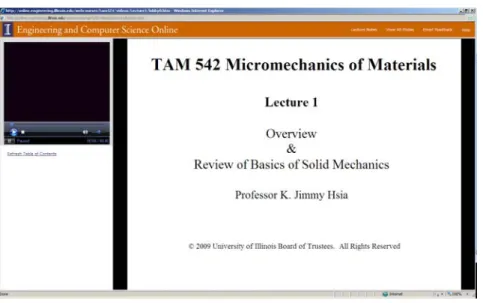
illinois.edu/webcourses/tam524/videos/Lecture1/lobby0.htm ...44 4 An example of an ACES online communication mechanism provided by the
Elluminate program (from the ACES Elluminate and Compass Orientation
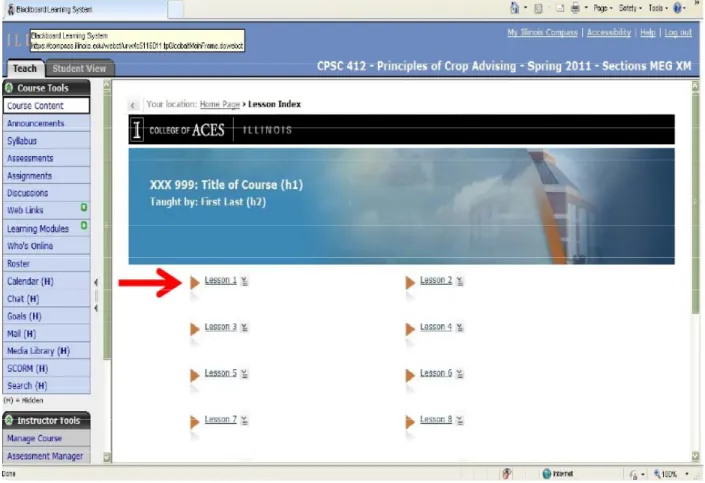
Slides). ...45 5 An example of an ACES course management system provided by the Illinois
Compass program (from the ACES Elluminate and Compass Orientation Slides) ...46 6 Administrator (n = 2) responses to item B4 regarding the frequency that they use
the listed data sources to evaluate their online program’s quality, sorted by
averages. Each bar represents two responses ...77 7 Framing the quality indicators by the evaluation purposes ...146
CHAPTER 1
INVESTIGATING EVALUATION AND QUALITY INDICATORS IN ONLINE GRADUATE DEGREES
Introduction
Online learning practices have become ubiquitous in higher education, with 89 percent of public institutions using networked computing and communication technologies to serve the estimated 3 million U.S. higher education students who have taken at least one online course since 2007 (Allen & Seaman, 2008; Borgman et al., 2008; Parsad & Lewis, 2008; Sprague, Maddux, Ferdig, & Albion, 2007; U.S. Department of Education, Office of Innovation and Improvement, 2008). Demands to provide online learning have been further augmented by economic factors, such as the increase in gas prices and layoffs and the increased interest, promotion, and delivery of education on a global scale (Allen & Seaman, 2008; Altbach, 2004; Dillon, 2008; Miller, 2002; Sprague et al., 2007; Taylor, 2001). While online education has been present in nearly all public universities since 2000, the way to rigorously evaluate the question of, “How can a teaching/learning process that deviates so markedly from what has been practiced for hundreds of years embody quality education?” (Phipps & Merisotis, 2000, p.7) still remains unanswered, particularly for graduate degree programs offered entirely online.
Additionally, a greater emphasis in online learning has emerged specifically in the areas of science, technology, engineering, and mathematics (STEM). The National Science Foundation (NSF) released a report in August 2008 that stressed the urgent importance of offering and researching cyberlearning, specifically in the STEM fields. This NSF report stated:
our population. Advances in technology are poised to meet these educational demands. Cyberlearning offers new learning and educational approaches and the possibility of redistributing learning experiences over time and space, beyond the classroom and throughout a lifetime. We also believe that this moment could be fleeting because, without deliberate efforts to coordinate cyberlearning approaches, we will miss the opportunity to provide effective support for the convergence of learning and technology. (Borgman et al., 2008, p. 5)
While students and funding agencies like NSF are pressuring higher education for immediate implementation and adoption of online learning, researchers like Hosie and Schibeci who investigate online learning quality contend, “Despite the large investment in information and communications technology, there is still scant evidence to support the proposition that the new technologies have led to significant learning gains for students. This lack of impact may be the result of many factors, including a lack of funding to support such research and a reticence of technology ‘evangelists’ to subject their work to rigorous evaluation” (2005, p. 541).
Statement of the Problem
Due to the demands and widespread growth of the implementation of online degree programs, particularly in STEM, it is vital to investigate how online programs are evaluating their programs and what quality indicators are being used. Currently, there is limited literature that defines what practices are used in evaluating online learning graduate degree programs in higher education, which quality indicators are used to assess quality in cyberlearning
environments for different programs, and how different stakeholder audiences view the relative importance of these quality indicators in online graduate degree programs from different fields (Chapman, 2006; Hosie & Schibeci, 2005; Law, Hawkes, & Murphy, 2002; Merisotis, 2001; Tallent-Runnels et al., 2006). This gap between the demands for cyberlearning and impact research with rigorous evaluation has presented a challenge for evaluators, faculty,
practices in evaluation of cyberlearning environments, particularly for programs in the STEM fields that have shown a historical preference for formal program accreditation.
This study is in accord with others that have emphasized the need for more systematic evaluation and identification of quality indicators that are and could be used in these widespread online degree programs in higher education, particularly in STEM fields. To meet that end, the study adapted and used Creswell’s mixed methods, sequential exploratory design (Creswell, 2009). There were five stages in this mixed methods study. First, the study investigated the evaluation practices and quality indicators currently used by three University of Illinois at Urbana-Champaign (Illinois) STEM departments in their online Master’s programs in Natural Resources and Environmental Sciences, Crop Sciences, and Mechanical Engineering. First, data were collected via a review of documents from the programs and interviews with program administrators. This helped determine what current evaluation practices, purposes, and
instrumentation and common indicators of quality are used within and across these top-ten, U.S- News-&-World-Report-ranked and visible departments at a large, land-grant institution like the University of Illinois at Urbana-Champaign.
Next, the study probed how the stakeholder groups of faculty and students ranked the relative importance of these quality indicators in online graduate degree programs from these three STEM departments. Data for this portion of the study were collected from surveys and interviews. As a result, the study identified the commonalities and differences in stakeholders’ perceptions of the use and the importance of evaluation practices and quality indicators
associated with the online Master’s degree programs in STEM at Illinois. The third phase of the study included an administrator survey to probe current practices and to gauge administrators’ feedback on the use, presence, and importance of the quality indicators as well.
After identifying these shared practices and quality indicators, this information was organized to develop a list of quality indicators from the graduate online STEM programs in this study. This work organized the quality indicators revealed by the factor analysis under the \purposes of evaluation. The quality indicators can be used in to inform evaluation practices of these online Master’s degree programs in STEM at Illinois and other online programs as well.
Research Questions
In order to study the evaluation processes probing the quality of the online graduate degree programs at the University of Illinois, the following research questions were proposed:
1. What are the evaluation practices and quality indicators being used within and across online graduate programs from the various STEM fields?
2. How do these evaluation practices and quality indicators compare with those
recommended and used by professional organizations and on-campus traditional STEM graduate programs?
3. How do varying stakeholder groups rank the relative importance of these evaluation practices and quality indicators?
4. How would a comprehensive set of quality indicators be framed to effectively structure future evaluation in online STEM graduate programs?
Significance
According to the most recent NSF statistics on graduate studies in STEM, enrollment for 2006 graduate degree programs declined in agricultural sciences, one of the nine major STEM fields (National Science Foundation, Division of Science Resources Statistics, 2006).
increased by 3.1% (National Science Foundation, Division of Science Resources Statistics, 2006). Because of the availability of these Master’s programs offered entirely online at Illinois, these were chosen as the focus of the study. This study investigated the evaluation practices and quality indicators used by the three programs at Illinois, including the Department of Natural Resources and Environmental Sciences (NRES), Crop Sciences (CRSC), and Mechanical Science and Engineering (MechSE).
The significance of the study was in identifying current practices in evaluation and determining the quality indicators used in STEM cyberlearning graduate programs. Moreover, the study used data from different sources to probe the extent to which varying stakeholder groups involved in the program used and ranked the importance of quality indicators drawn from those used by traditional on-campus, online, and STEM accreditation programs. A factor
analysis revealed common \quality indicators employed by these STEM Master’s degree programs at Illinois. Thus, the study developed quality indicators that can be used with similar online STEM programs at large research institutions like Illinois. Moreover, because the quality indicators came from traditional, online, and STEM settings, use of the quality indicators can also extend to other programs from any of these settings.
The remainder of this dissertation first includes a review of literature that was used to organize the current study, including definitions of key concepts and reviews of empirical literature about the roots of program accreditation in STEM programs, quality frameworks for online and traditional program quality monitoring, and about program evaluation. This literature review is followed by a description of the methods, an overview of the data analysis, and a discussion of the findings and implications resulting from this study.
CHAPTER 2
REVIEW OF THE LITERATURE
Online Learning, Evaluation, and Quality Indicators in STEM Graduate Programs
This chapter defines the central concepts and explores the theoretical basis for this study. It begins by defining online learning and quality as they are understood in this paper and
discusses the debate of quality differences between traditional and online program quality monitoring. Next, the literature was reviewed to look at the roots of program accreditation in STEM programs, followed by a discussion of program quality monitoring of graduate programs. The next section of this chapter outlines the common categories that are used to discern program quality in STEM, traditional, and online programs. The chapter then discusses and defines program evaluation and specifically program evaluation’s main pillars of merit, worth, and value. The chapter concludes with a discussion about the need for this study for the evaluation of online graduate degree programs in STEM.
Defining Online Learning and Quality
Online learning. Online learning is defined as classes with at least 80% of the content delivery done online (Allen & Seaman, 2008). Ideally, these online courses are characterized by distributed control, with the instructor sharing control with the students (i.e., the students may review the lectures and content in the order they choose and/or the content is adapted depending on the student understanding displayed on transmission approach assessments) utilizing web-based, multiple media (i.e., wikis, Moodles, Fliker, multiuser domains [MUDs], multiuser domain-object oriented [MOOs], streaming audio and video [i.e., podcasts], tutorial simulations, adaptive media [i.e., simulations, virtual environments, educational games]) to facilitate
knowledge building and interaction via synchronous (i.e., simultaneous conversations such as electronic chats via computer-mediated conferencing, audio-/video-conferencing, and Instant Messaging) and asynchronous (i.e., delayed-transmission like email, electronic bulletin boards, and digital document discussion environments) communication tools (Collison, Tinker, Elbaum, & Haavind, 2000; Dabbagh & Bannan-Ritland, 2005; Laurillard, 2002; Turkle, 1994). There are typically no face-to-face meetings during a course fully utilizing the online learning environment (Allen & Seaman, 2008; Hosie & Schibeci, 2005). Synonyms for the term “online learning environments” include: asynchronous learning networks, computer-based training,
cyberlearning, web distance education, e-learning, telelearning, web-based learning, or virtual learning environments (Borgman et al., 2008; Dabbagh & Bannan-Ritland, 2005; Larreamendy-Joerns & Leinhardt, 2006; Mason & Rennie, 2006). Online instruction and cyberlearning used in this study refer to any formal instruction that occurs in an electronic environment, mediated or facilitated via the use of single or multiple technologies and course management systems. Thus, this view is similar to that of Hiltz and Turoff, who assert that, “Online learning is a new process that is beginning to act as a complete substitute for both distance learning and the traditional face-to-face class” (Hiltz & Turoff, 2005, p.60).
Quality. “Quality” is a conflict-ridden term because of its amorphous nature. Robert M. Pirsig in his book Zen and the Art of Motorcycle Maintenance: An Inquiry into Values describes this struggle: “I think that there is such a thing as Quality, but that as soon as you try to define it, something goes haywire…But even though Quality cannot be defined, you know what Quality is” (Pirsig, 2005, p. 207-208). Nevertheless, definitions have been attributed to “quality,” and this becomes especially important in evaluation. Scholars on evaluation theory, Robert Stake and Thomas Schwandt, assert that “Quality is a broad term that encompasses notions of merit, worth,
and significance” (Stake & Schwandt, 2006, p.404). Moreover, a commonly accepted definition of evaluation, discussed in greater detail later in this paper, is the investigation of an object in order to judge the merit (i.e., a program’s intrinsic quality) and worth (i.e., a program’s extrinsic quality) in order to assist in decision making (Fitzpatrick et al., 2004; Mertens, 1998; Patton, 1997; Scriven, 1991).
In addition to merit and worth, Michael Scriven emphasizes the external judgment of “consumers” on quality by stressing the need for evaluation focus on the impact of the evaluand from the viewpoint of the primary recipients of the program (Scriven, 1991). Scriven, who is credited with contributing greatly to the professionalization of the evaluation field and who is a proponent of the consumer-oriented approach, also adds a third area of value in his definition of evaluation and likens evaluation reports of quality to Consumer Reports in that evaluators must draw evaluative conclusions about the value for the consumers (Fitzpatrick et al., 2004; Mark et al., 2000; Mertens, 1998). Within this notion of consumer reports, Scriven emphasizes the external judgment of evaluation clients or recipients on quality by stressing the need to assure that “the product, when it reaches the consumer, will be highly satisfactory from the consumer’s point of view” (Scriven, 1991, p. 295). Scriven’s view is similar to quality management literature from engineering and business, which emphasizes product testing, quality and process control, quality assurance, and total quality management (Bennett, 1996; Dale, 2003). Thus, this study views evaluation as involving the three pillars of merit, worth, and value, as a vehicle used by programs and various stakeholders (including “consumers”) to discern quality of that particular program.
Quality Differences Between Traditional and Online Degree Programs: Considering the “No Significant Difference” Debate
While these definitions regarding quality commonly include an emphasis on evaluating a product or outcome, scholars also warn that assigning indicators of quality based on stakeholder performance outcomes in education (i.e., achievement test scores) can lead to arbitrary
generalizations that can be detrimental to education and social inquiry (Greene, 1999; Linn, 2000; Ryan, 2002; Schwandt, 1996). Stake cautions, “I consider categorizing primarily a quantitative task and often a task leading to stereotyping” (Stake, 2007). Linda Darling-Hammond adds that standards coupled with “accountability” systems have “often had
unintended consequences that undermine access to education for low-achieving students rather than enhancing it” (Darling-Hammond, 2004, p. 1047). These consequences can be either negative or positive (Messick, 1989a, 1989b).
However, within education, establishing common indicators of quality is a necessity because “historically, quality holds the key to academic acceptance” (Larreamendy-Joerns & Leinhardt, 2006, p. 579). This acceptance is especially important to online learning environments because of the trepidation among some in higher education that online education is jeopardizing the quality of higher education (Burbules & Callister, 2000; Larreamendy-Joerns & Leinhardt, 2006; Rovai, 2003). This uneasiness about inferior quality has been further perpetuated by the research that has pitted “traditional” (i.e., on-campus, face-to-face) against “online” (i.e., web-based) learning environments and thus resulted in a stalemate dubbed the “no significant difference” debate (Bernard et al., 2004; Caywood & Duckett, 2003; Christopher, Thomas, & Tallent-Runnels, 2004; Johnson & Aragon, 2003; Merisotis, 2001; Peterson & Bond, 2004; Swan, 2003). According to Larreamendy-Joerns and Leinhardt, the lack of significant results
evidence that online and in-classroom instruction are of equivalent quality, or that at least no harm is done in using online instruction; second, as evidence of the lack of innovation and pedagogical edge of online initiatives, and finally, as evidence of comparable mediocrity” (Larreamendy-Joerns & Leinhardt, 2006, p. 594).
While higher education has been embroiled in this debate, negative consequences have ensued, including expanding diploma mills and gaps between faculty use and student
expectations. One consequence has been the rapid expansion of diploma mills (Council for Higher Education Accreditation, 2006). These diploma mills, which promise secondary
education degrees in as few as five days for inordinate fees, threaten to “undermine the value of learning and the educational standards by treating degrees as commodities, harming both academia and the public” (Ruhe & Zumbo, 2008, p. 5). Nancy Parker, who penned a chapter on quality control issues in The Theory and Practice of Online Learning Settings, cautions, “The appetite for allowing the marketplace to determine the outcomes in a wide-open, for-profit model is not large. Simply stated, it does not seem either ethical or efficient to leave students to bear the full risks for the product testing of online education ventures” (Parker, 2007, p. 393).
Another consequence of the “no significant difference” debate is the potential gap
between faculty use and student expectations. Faculty, like Michael Rappa, professor from North Carolina State University, have warned, “We have to expect that, with each academic year, students will come to us with the mindsets that have been increasingly shaped by the
Internet…more will wonder why faculty aren’t taking advantage of the technology as much as they could” (Bisoux, 2007, p.25). Thus, once technologies are present, consequences for education will ensue regardless of the attitude toward and the use of technology by the
Thomas Callister (2002) state, educational instructors and institutions “can no longer choose whether these technologies are educationally relevant or not. If they neglect them, that too becomes a decision with consequences” (p. 2).
In addition, attending to issues of educational quality is especially appealing and important to STEM programs, as they have a lengthy history with and desire for monitoring program quality and formal program accreditation.
History of Program Quality Monitoring in STEM Undergraduate Degree Programs
While higher education quality assurance has received increased scrutiny under the shadow of reports from the U.S. Department of Education on academia, including 1) A Test of Leadership: Charting the Future of U.S. Higher Education from the Commission on the Future of Higher Education (U.S. Department of Education, 2006b); 2) the Action Plan for Improvement from the former U.S. Secretary of Education, Margaret Spellings (U.S. Department of Education, 2006a); and 3) the most recent additions to the Higher Education Opportunity Act (U.S.
Department of Education, 2008), program accreditation in traditional STEM programs is commonplace and is widely discussed in the literature. Quality monitoring within the STEM fields extends from the “quality management” traditions, which originated in manufacturing because of the desire and need to monitor product quality resulting from production increase and worker decrease during World War II (Bennett, 1996; Merna, 2008). As a result, this “quality management” emphasis in industry extended into engineering education. As Prados and his associates explain, engineering education in the United States developed from “the formal mathematical-scientific, school-based system developed in France and the apprenticeship system
emerged as institutions in higher education tried to balance quality monitoring from these competing views of formal schooling and practical experience.
As a result, several engineering organizations, along with the Council of State Boards of Engineering Examiners, joined together to form an accreditation body known as the Engineers Council for Professional Development (ABET, 2009b; Prados, Peterson, & Lattuca, 2005). In 1980, the Engineers Council for Professional Development became the Accreditation Board for Engineering and Technology (ABET) that is now known simply by the acronym (ABET, 2009b). The ABET sought to revamp the accreditation criteria to emphasize criteria for learning
outcomes, objectives, and continuous program improvement. To meet that end, ABET adopted the Engineering Criteria 2000. Engineering programs must demonstrate proficiency for ABET accreditation in nine areas related to students, program educational objectives, program
outcomes and assessment, professional component, curriculum, faculty, facilities, support, and other program criteria (ABET, 2009a).
Through the ABET accreditation process, educational institutions and programs
voluntarily undergo a review every six years to determine if these nine criteria are attained by the program (ABET, 2009b; Prados et al., 2005). Most postsecondary undergraduate programs, including the programs at Illinois in agriculture and engineering, comply with the ABET requirements. While these nine criteria are equally important to the overall process, criterion three (program outcomes and assessment) is often cited as the most challenging and important in program quality monitoring and subsequent accreditation (Dick & Deborah, 2003; Estes & Ressler, 2007; Felder, 2003; Kwok-Bun, 2007).
While most undergraduate programs, including the STEM programs like engineering and agriculture at Illinois, desire to secure accreditation by ABET, the same formal accreditation
process has not transferred to graduate programs. Moreover, some in higher education have highlighted ABET’s criterion three as important to carryover to graduate programs and online programs (Bourne, Harris, & Mayadas, 2005; Rugarcia, Felder, Woods, & Stice, 2000). While there have been recommendations to carry this particular criterion forward into graduate
programs, it has not happened at this time. Consequently, monitoring the quality and establishing quality indicators for STEM graduate programs falls squarely on the institutions and often the administrators of the traditional and online graduate programs.
Program Quality Monitoring From Traditional and Online Graduate Degree Programs
In general, the assessment of undergraduate and graduate courses has consisted of results drawn from surveys of student satisfaction and a self-assessment of learning via
post-participation surveys administered immediately following course post-participation or upon degree completion (Bath, Smith, Stein, & Swann, 2004; Hansen & Jackson, 1996; Johnson, Aragon, Shaik, & Palma-Rivas, 2000; Richardson & Swan, 2003). The process of program quality monitoring at any institution of higher education is complicated, but some literature does exist about commonly used frameworks and quality indicators for quality monitoring for institutions’ traditional and online learning graduate programs.
Quality indicators for traditional learning graduate programs. As previously stated, the reauthorization of the Higher Education Opportunity Act (U.S. Department of Education, 2008) pushed the interest in quality and development of formal accountability standards in higher education back into the spotlight (Lederman, 2008). In light of this desire for
what universities use to assess themselves traditionally beyond reputational rankings used by popular media like the U.S. News & World Report. In an attempt to move away from the problems of the “soft” criterion from measures like these of scholarly quality, the National Research Council (NRC) completed their 2009 survey on assessing research-doctorate programs (Ostriker, Kuh, & Voytuk, 2003).
In 2009, the National Research Council (NRC) administered an assessment of doctoral programs, which replicated and expanded the 1995 study from the NRC. The 2009 study gathered data about institutional characteristics, program characteristics, program faculty
characteristics, and student education and outcomes (Ostriker et al., 2003). The study included an all-faculty survey from which a random sample was drawn and rated to represent data from their particular fields. The University of Illinois at Urbana-Champaign participated in the 1995 and the 2009 NRC studies (Ostriker et al., 2003; University of Illinois at Urbana-Champaign, 2009). While the NRC study was aimed at doctorate programs, the measures and quality indicators used to generate data on reputation, faculty research, and student experiences are often used in studies of quality in graduate education regardless of the level of degree (Brooks, 2005; Perry, 1994). In fact, some literature from agriculture and engineering suggests that reputational and quality rankings are more dependent on the highest degree offered by the institution (that being the Ph.D. at Illinois) rather than rankings of undergraduate or Master’s degree programs (Mark, Lusk, & Daniel, 2004; Perry, 1994; Zhang, 2005).
The 2009 study collected data about the most important program quality indicators from a list of 21 quality indicators. These quality indicators were drawn from previous research and the previous NRC study and are the most commonly cited in the literature for all graduate
education (Ostriker et al., 2003). In particular, the quality indicators included topics separated into three categories, including faculty, student, and program characteristics.
Faculty quality indicator questions were related to issues of the number of publication and citations, amount of extramural research grants, experience with interdisciplinary work, percentages of diversity in terms of racial/ethnic and gender groups, and the number and types honors and awards awarded by peers. Student quality indicator questions were related to issues of the median Graduate Record Examination (GRE) scores; percentages of students having financial support and fellowships; numbers of publications and presentations; and percentages of diversity in terms of racial/ethnic, gender, and international groups. Finally, overall program quality indicator questions were related to the number of degrees granted, percentages of
students completing a degree, time to degree, logistics of student job placement after graduation, percentages of students with work space, health insurance, and the number of student support and activities provided by the institution or program (Ostriker et al., 2003).
To study the presence of these 21 quality indicators, the NRC asked associated program faculty and students to rank the three most important quality indicators and then narrow their lists to the top two categories (Ostriker et al., 2003). Thus, these NRC studies have been cited as having one of the most rigorous designs and complete listings of the quality indicators as they relate to graduate degree programs situated in the traditional learning setting (Brooks, 2005; Ostricker et al., 2003).
Quality indicators from online learning graduate programs. As discussed previously in this paper, the establishment of quality indicators for online programs is especially important for legitimacy and moving past the “no significance difference” debate (Phipps & Merisotis, 2000; Ruhe & Zumbo, 2008; Seok, 2007). Prior literature suggests that norms for online
programs must be created before outcomes can be asserted, and this is commonly done by using quality indicators or benchmarks from an institution’s traditional learning programs or using established quality frameworks for online learning environments (Larreamendy-Joerns & Leinhardt, 2006; Rovai, 2003). Currently, there are no formal standards or quality indicators in the field of traditional or online learning in graduate studies, but a number of quality frameworks commonly referenced in the literature have been used to monitor quality of online learning (Phipps & Merisotis, 2000; Ruhe & Zumbo, 2008; Seok, 2007). The most commonly referenced frameworks in the literature include: (a) Quality on the Line from Institute for Higher Education Policy (Phipps & Merisotis, 2000), (b) Quality Matters from the University of Maryland
(MarylandOnline, 2008; Sener & Shattuck, 2006), and (c) The Elements of Quality Online Education and the Five Pillars from the Sloan-Consortium (Bourne & Moore, 2003, 2004; Moore, 2005). These online frameworks are briefly described in the narrative below.
First, the Quality on the Line document was one of the first documents of its kind that delineated common quality indicators specifically for online education (Phipps & Merisotis, 2000). To establish these quality indicators, the Institute for Higher Education Policy (IHEP) conducted a case study in three phases. Phase one included a literature review to compile the 45 quality indicators. These quality indicators were then dispersed into several categories dealing with institutional support, course development, student and faculty support, and evaluation and assessment (Phipps & Merisotis, 2000). The study then identified six institutions with
“substantial experience in distance education,” and conducted institutional site visits and survey administration for the final two stages of the case study. The University of Illinois at Urbana-Champaign was one of the six institutions selected and used in this case study (Phipps & Merisotis, 2000).
The next framework widely discussed in the literature is the Quality Matters (QM) project from the University of Maryland. This framework outlined by the QM project plays more of a “self-evaluation” role than the other two frameworks in this section (MarylandOnline, 2008; Sener & Shattuck, 2006). The QM project, sponsored by a consortium of community colleges and institutes known as MarylandOnline, seeks to help programs measure course quality. The program touts a “faculty-centered, peer review process that is designed to certify the quality of online and blended courses” (MarylandOnline, 2008). To evaluate the quality of online
programs, the QM project sets forth eight parts in their evaluation rubric for individual
instructors and programs to rate their degree of efficiency and quality. These eight parts include items related to the quality of the course materials, learning objectives, assessment, resources and materials, interaction, technology, support, and accessibility.
Finally, the Sloan Consortium (Sloan-C) framework has been used in exploring the potential of online education and has been used in the STEM fields like engineering (Bourne, Harris, & Mayadas, 2005). Within the Sloan-C framework, there are five overarching categories that are used to look at quality in online learning. Referenced as the Five Pillars, these included (a) faculty satisfaction, (b) student satisfaction, (c) cost effectiveness, (d) access, and (e) student learning effectiveness (Bourne et al., 2005; Sloan Consortium, 1997). Similar to the two
previously discussed frameworks from IHEP and the QM program, the Five Pillars can be used to explore programs at the macro level of the overall program or at the micro level of individual courses. This makes it particularly appealing for programs like those from the STEM fields that have a traditional preference for accreditation. In fact, Bourne and his colleagues from the Sloan Consortium recently highlighted how criterion three in the ABET competencies can be satisfied by online educational offerings and organized by the Five Pillars (Bourne et al., 2005).
Obviously, this is of particular interest to graduate programs because of the reported movement of using criterion three with graduate degree programs, and the problems programs reported regarding covering this particular criterion (Dick & Deborah, 2003; Estes & Ressler, 2007; Felder, 2003; Kwok-Bun, 2007). Therefore, using online learning to fulfill the requirements of criterion three, particularly as programs look to expand the criterion from undergraduate to graduate programs, seems forthcoming.
While some studies and recent dissertations have summarized either one or all of these aforementioned frameworks from different learning environments, there are no set standards or quality indicators in use or evaluation of these processes particularly in online degree graduate programs (Law et al., 2002; Rovai, 2003; Tallent-Runnels et al., 2006). Therefore, to emphasize the distinctiveness and complexity of the context of the study, it was important to understand the organization that houses the programs. For this purpose, program quality monitoring processes of graduate degree programs at the University of Illinois were explored.
Program Quality Monitoring of Graduate Degree Programs at the University of Illinois
The University of Illinois graduate degree programs in engineering and agriculture are highly ranked, with the graduate engineering programs at Illinois ranked in the top six nationally in the U.S. News & World Report in 2009 and individual program rankings of six in mechanical engineering and three in agriculture (U.S. News & World Report, 2009). As previously
mentioned, no formal information or quality indicators are available about how online programs in engineering and agriculture at the University of Illinois are monitored. However, according to the administrators of online programs associated with these engineering and agriculture
programs, undergraduate and graduate quality monitoring methods for the STEM programs at Illinois are similar to the methods discussed above.
First, the undergraduate STEM programs at Illinois, including agriculture and Mechanical Engineering, currently participate in and are accredited by the ABET program. Moreover, at the graduate level, the University of Illinois participated in the aforementioned NRC surveys in 1995 and 2009 (Ostriker et al., 2003; University of Illinois at Urbana-Champaign, 2009). Further, as previously mentioned, Illinois was one of six institutions selected for the IHEP benchmark study (Phipps & Merisotis, 2000). In addition, for both traditional and online “off-campus degree programs” (defined as programs with more than one half of the graduate units being
administered off-site), there is a five-year review process which the Graduate College Committee on Extended Education and External Degrees (CEEED) oversees (University of Illinois at
Urbana-Champaign, 2002a, 2002b).
While the CEEED review at Illinois call for programs to identify their program
evaluation, no formal guidance is provided on what constitutes program evaluation and/or what quality indicators or measures are used to assess these programs. Moreover, the online programs involved in this current study provided data drawn from the CEEED review over the last three years. The surveys were inconsistent, thereby requiring this research to develop common quality indicators from the literature and from the commonly used resources associated with program monitoring in STEM degrees in online and traditional learning settings.
Considerations for Developing Common Quality Indicators
While some studies and recent dissertations have summarized either one or all of these aforementioned frameworks and investigated them with student satisfaction rates (Clawson,
universities (Flowers, 2000), none have referenced them in conjunction with quality indicators used in traditional learning environments or with STEM programs. This section of the literature review will discuss the process commonly used in developing indicators of quality, the
limitations of using the previously discussed traditional and online program quality indicators in isolation, and the justification for using and combining the quality indicators from the ABET, NRC, and the online frameworks to guide this particular study.
First, it is important to explore the process commonly used in developing quality indicators in order to develop a richer understanding of the factors which can contribute to, or thwart, the development of programs (Scrivens & Iasiello, 2008). The Organisation for Economic Co-Operation and Development (OECD) defines an indicator as a “quantitative or qualitative factor or variable that provides a simple and reliable means to measure achievement, to reflect the changes connected to an intervention, or to help assess the performance of a development actor” (OECD, 2002, p. 25). One of the most commonly used processes to identify indicators of quality is benchmarking, which is a process of defining best practices in an industry to assist in performance (Francis & Holloway, 2007; Voss et al., 1997).While benchmarking is commonly used in engineering and business as an optimization tool for management, more educational researchers and institutions have used it as well, specifically for quality control issues (Phelps, 2001; Resnick et al., 1995). For instance, Richard Phelps used benchmarking to discuss quality control in curricular processes with Third International Mathematics and Science Study (TIMSS) and to underscore his conclusion that “quality control must be more difficult in the absence of common standards” (Phelps, 2001, p. 426). Before developing these categories for common quality indicators, it was important to consider the limitations and benefits of using the frameworks and quality indicators previously discussed in the literature.
There were some limitations for using the quality indicators in isolation from the ABET, NRC, and the online frameworks. The ABET and NRC programs are aimed at probing the perceived program quality of undergraduate and doctorate programs of traditional learning programs, which obviously does not directly align with evaluating online Master’s degree programs proposed in this study. The IHEP, Quality Matters, and Sloan-C frameworks did focus on online practices, but these were not focused specifically in the STEM fields and failed to probe some specific questions related to quality indicators used in traditional learning
environments. Therefore, it became apparent that using and combining these quality indicators from traditional and online sources would be better than isolating the frameworks.
There were three advantages to using and combining some of the quality indicators from the ABET, NRC, and the online frameworks in order develop the quality indicators for this study. First, while the ABET criteria were established for the undergraduate programs, some researchers have suggested that there is significant value in extending these ABET criteria into graduate programs and specifically for those online (Bourne et al., 2005). For instance, Bourne and associates point to the competency quality indicators outlined in Criterion Three, “Student writing abilities should be enhanced [through online], since writing is a critical element in communicating online; further, lifelong learning abilities should be enhanced since online education should be available throughout graduates’ lifetimes” (Bourne et al., 2005, p. 24).
Secondly, while it is true that the NRC study was targeting doctorate programs, the measures and quality indicators used to generate data on reputation, faculty research, and student experiences are often used in studies of quality in graduate education regardless of the level (Brooks, 2005; Perry, 1994). Moreover, some literature particularly from STEM fields like agriculture and engineering suggest that reputational and quality rankings are dependent on the
highest degree offered by the institution (that obviously being the Ph.D. at Illinois) rather than the curricular program (Mark et al., 2004; Perry, 1994; Zhang, 2005). In addition, because of the importance of online programs establishing quality indicators similar to their traditional
counterparts, the strength of the NRC study was that it offered a credible source for higher education quality indicators that was “widely accepted, quoted, and utilized as an authoritative source of information on the quality of [graduate] programs” (Ostriker et al., 2003, p. 1).
Finally, the online frameworks (including the IHEP, Quality Matters, and Sloan-C) are widely used in the field to explore the quality indicators. These frameworks were developed by groups commissioned by such organizations as the National Education Association; Blackboard, Inc.; and Sloan Consortium; they were charged with investigating the quality indicators in online learning. However, as previously mentioned, it is insufficient to solely concentrate on quality indicators from the online or traditional learning environments. Further, there is great trepidation in the field that online education is compromising the quality of higher education. Therefore, it is important to collect data about quality indicators from both environments to establish common indicators of quality in order to truly extend beyond the no significant difference debate. Specifically, the quality indicators from the IHEP study were deemed appropriate because they concentrated on quality indicators in online learning of an overall program. Consequently, it was important to explore quality indicators from all three of the areas of STEM, traditional, and online learning programs.
Seven Common Quality Indicator Categories to Determine Program Quality
Empirical research suggests that there are seven common quality indicator categories that are used to discern program quality in STEM, traditional, and online programs (depicted in Figure 1 below): (a) institutional support and structure, (b) course development and structure, (c) teaching/ learning process, (d) student support and characteristics, (e) faculty support and
characteristics, (f) evaluation and assessment, and (g) student learning outcomes in STEM. These categories frame this study to provide a more comprehensive understanding of the intersection of the different quality indicators that organize an online program (Bourne et al., 2005; Dick & Deborah, 2003; Phipps & Merisotis, 2000; Martinez et al, 2006; Ruhe & Zumbo, 2008; Seok, 2007; Sloan Consortium, 1997; Sener & Shattuck, 2006; Sherry, 2003).
For institutional support and structure, this quality indicator category references activities done to facilitate the online experience, including the online technological
infrastructure, security, and support in the use of these activities referenced in the IHEP (Phipps & Merisotis, 2000) and Sloan 5-Pillars documents (Sloan Consortium, 1997). In addition, from the NRC studies, degree programs situated in the traditional learning setting are needed to cover more policy-oriented concerns, and these should be included within this category. Other NRC items also related to time to degree, numbers of online degrees, and student completion rates are also included in this quality indicator category (Ostriker, Kuh, & Voytuk, 2003).
For course development and structure quality indicator category, courseware mechanisms and material produced by faculty, field experts, or commercial entities to facilitate online
learning are included in the IHEP and Quality Matters documents. Also included are items regarding periodic course review to ensure people meet the instructional strategies recommended by the Quality Matters document. Course information regarding the expectations between the program, faculty, and students are also covered under this quality indicator category, as this was included in the NRC study. In addition, course structure includes items related to the policies and procedures that are in place to support online students (i.e., course objectives, library and online support resources, and response time). Finally, items are added that were encompassed within all of the online frameworks. These items explore reactions to access to supplemental course
information, library resources, and pre-participation counseling.
The teaching and learning process quality indicator category references the pedagogical activities done to promote teaching and learning (i.e., interactivity, collaboration, and structure of learning opportunities). Prior literature suggests that students’ learning in the online setting is particularly influenced by the quality of instruction and by the interaction facilitated by the
course (Aragon, 2003; Rovai, 2002b; Rovai & Downey, 2009; Tallent-Runnels et al., 2006). This interaction should encompass both teacher-to-student and peer-to-peer connectedness and
collaboration (Tallent-Runnels et al., 2006). This feeling of connectedness is said to have significant impact in causing programs to have higher student retention rates, which is credited as a critical piece of the success of an online learning program (Aragon, 2003; Rovai, 2002b; Rovai & Downey, 2009). In addition to the interaction piece, IHEP included quality indicator items related to the facilitation and availability of technology to provide the means for direct feedback from the instructors regarding student questions and assignments.
For student support and characteristics, student support refers to quality indicators about university resources and expectations which are equally accessible and understood by students (i.e., admissions and financial and technical assistance), as referenced in the IHEP. However, pre-admission personal student achievement, student financial support, and demographic information are left out of this quality indicator category in the online frameworks. Student support issues from the NRC study regarding degree completion and student placement include items related to the number of degrees granted over the last three years, the percentage of completion, time to degree, student placement post-graduation, and the number of student support activities at either the institution or program level (Ostriker et al., 2003). Additionally, quality indicators related to students from the NRC study were also added and included the median of GRE scores, percentage of students receiving full financial support, percentage of students with portable fellowships, number of student publications and presentations,
racial/ethnic diversity of the student population, gender diversity of the student population, and the percentage of international students (Ostriker et al., 2003).
The quality indicator category associated with program faculty support and
characteristics includes two parts. For faculty support, included from IHEP are items associated with program support activities offered for faculty development (i.e., available support and training for faculty transitioning to online environments). In addition, faculty characteristics include the volume of scholarly work (i.e., number of publications, funded grants) and the demographic personal quality indicator categories probed by the NRC studies. The seven quality characteristics in the NRC study related to faculty characteristics include questions about the importance of the number of publications, number of citations, receipt of extramural research grants, interdisciplinary work, racial/ethnic diversity, gender diversity, and reception by peers of a faculty member’s work as measured by honors and awards (Ostriker et al., 2003; University of Illinois at Urbana-Champaign, 2009).
The quality indicator category of evaluation and assessment includes characteristics related to policies and procedures addressing how evaluation and assessment is conducted at the institutional and program level (i.e., outcomes assessment and data collection). From the IHEP study, this quality indicator category includes items related to an explicit evaluation plan on the teaching and learning process, and student learning outcomes are outlined and shared with multiple audiences at periodically. Finally, information on data collection and communication of data regarding enrollment, costs, student achievement, and faculty sharing of
successful/innovative uses of technology are included within this quality indicator category. Finally, the quality characteristics associated with the student learning outcomes in STEM quality indicator category specifically deal with Criterion 3 from ABET from the STEM fields. Criterion three (related to program outcomes and assessment) is often cited as the most
undergraduate programs and has been widely discussed as being moved to the graduate programs (Dick & Deborah, 2003; Estes & Ressler, 2007; Felder, 2003; Kwok-Bun, 2007). Items related to this quality indicator category are about students’ learning outcomes attained that are related specifically to the STEM fields resulting from program participation. Hence, the quality indicator category specifically reviews students’ ability to apply knowledge, design and conduct
experiments, interpret data, and understand professional and ethical responsibility in STEM. While all or some of these quality indicator categories are commonly understood and explored in the literature, the way to evaluate the attainment of these quality indicator categories has not been fully developed. Therefore, there is a critical need for this type of information (Law et al., 2002; Rovai, 2003; Tallent-Runnels et al., 2006).
The Call for Improved Program Quality Indicator Development and Evaluation
Most scholars report a dire need for improved evaluation and assessment, particularly in online learning, because few higher education institutions have written guidelines or policies on online learning (Law et al., 2002; Rovai, 2003; Tallent-Runnels et al., 2006). Law and associates contend, “While many researchers describe similar outcomes for on-line classes and, by
extension, entire on-line degree programs, their analyses often call for further investigation and development of a clearly articulated set of criteria for consistent evaluation across programs” (Law et al., 2002, p. 83). Further, this lack of attention to program evaluation and quality
indicator development within higher education is one of the key factors which contributes to the failure of some online programs nationally and globally (Rovai & Downey, 2009).
In a meta-analysis of the research on online learning and teaching, Tallent-Runnels and her colleagues concluded, “Clearly, more well-designed research is needed on online
Runnels et al., 2006, p. 117–118). They also noted that most of the studies in their review were focused on student and faculty preferences and self-reports. This widespread lack of information on evaluation is further supported by Jamie P. Merisotis (2001), one of the co-authors of the widely used Quality on the Line document from the Institute on Higher Education Policy. He concluded that most of the literature on online distance education had four primary weaknesses:
First, much of the research does not control for extraneous variables and therefore cannot show cause and effect. Second, most of the studies do not use randomly selected subjects. Many of the published studies reviewed used intact groups (such as an entire class of students) for purposes of comparison. Third, the validity and reliability of the instruments used to measure student outcomes and attitudes, such as questionnaires and surveys, are questionable. And fourth, many studies do not adequately control for the feelings and attitudes of the students and faculty—what educational research refers to as ‘reactive effects’—which can sometimes skew the findings by providing short-term or temporary benefits that are not sustained over the span of the educational programme. (Merisotis, 2001, p. 591)
This lack of quality evaluation and reporting is where the field of program evaluation becomes important, because as Bob Stake asserts, “The basic content question for all program evaluation, explicit or tacit, is: What is the quality of this program?” (Stake, 1997, p. 56). However, there is very limited information about what practices are being employed or which quality indicators are being used in program evaluation of online learning degree programs. Therefore, it is important to define program evaluation in order to probe the study questions posed for this study and create quality indicators for the evaluation.
Defining Program Evaluation
Most experts cite the increase in attention to modern program evaluation as resulting in response to the expansion of applied social science research during World War II (Fitzpatrick, Sanders, & Worthen, 2004; Lagemann, 2002). It is important to define program evaluation and explore the three purposes in evaluation, including merit, worth, and value.
A commonly accepted definition of evaluation is the investigation of an object in order to judge the merit and worth in order to assist in decision making (Fitzpatrick et al., 2004; Mertens, 1998; Patton, 1997; Scriven, 1991). Patton distinguishes these terms as:
Merit refers to the intrinsic value of a program, for example, how effective it is in meeting the needs of those it is intended to help. Worth refers to the extrinsic value to those outside the program, for example, to the larger community or society. (Patton, 1997, p. 65)
In addition to investigating the merit and worth of a program, Michael Scriven adds a third area of value in his definition of evaluation, which refers to the cost of a program (Scriven, 1993). Obviously, these three pillars are related, but there are differences that distinguish them as well, including overarching questions posed, process, and factors.
Merit. First, in exploring the merit or intrinsic quality indicators, it is important to collect data for an evaluation in order to address how well a program is meeting the needs of the
intended recipients. In the online context, data would be collected to probe the rudimentary question of, “How well does the online program serve the needs of the students who are the primary recipients of the program?” While collecting data to document merit is indeed important, standards for comparison are particularly important for assessing this pillar for a program
(Weiss, 1998). Weiss states, “Once having collected evidence on process and outcomes, the evaluation assesses the merit of the program by comparing the evidence to some set of
expectations” (Weiss, 1998, p. 5). For instance, if student achievement data collected regarding an online program indicate that the students are knowledgeable about and can produce projects with the engineering content covered by the online degree program, we could assume that the program according to these quality indicators indeed has merit. Therefore, factors possibly associated with the term of merit could include the quality indicators related to student learning
Worth. Secondly, in exploring the worth or external quality indicators, it is vital to look at the contribution of the program to a wider audience beyond the immediate users (i.e., the students). Donna Mertens offers that a program or evaluator wanting to probe the issue of worth might ask “Is what your program does important?” (Mertens, 1998, p. 220). For example, if the institution which houses the online program has an overall mission to produce students who are competent in the learning objectives, then this would signify that the program also has worth to the institution. However, if the faculty, STEM community, or society in general view that the learning objectives are inadequate or obsolete or that their growth as instructors as undervalued, the worth of the program would be lacking to this audience or stakeholder group. Therefore, questions related to gauging the worth in the online context would include, “What does the online program accomplish for the wider institution beyond the students? What is this
importance or worth, and to whom?” While these more extrinsic value factors would be clearly related to the intrinsic quality indicators, they are nevertheless distinct. In this online context, quality indicators could include institutional support and structure, course development and structure, and faculty support and characteristics.
Value. Finally, in exploring the value or cost indicators of program quality, it is helpful to first look at what is meant by the term “value.” Scriven, who believes that evaluators must draw evaluative conclusions about the value for the consumers, focuses on the assessment of value as cost. This is evident from his statement about a proposed evaluation of the Radnor Middle School Humanities Curriculum:
It’s not enough that they have some value; the key question is whether they have enough value to compete with a direct approach…do it directly or competently or let them read about it and save yourself $100000 a year (Scriven, 1981, p. 36–37, emphasis in