Evaluating disaster response management
stemming from war operations and
terrorism in Iraq : a methodological
approach
AlDahash, HF and Kulatunga, U
Title Evaluating disaster response management stemming from war operations and terrorism in Iraq : a methodological approach
Authors AlDahash, HF and Kulatunga, U
Type Conference or Workshop Item
URL This version is available at: http://usir.salford.ac.uk/43853/
Published Date 2017
USIR is a digital collection of the research output of the University of Salford. Where copyright permits, full text material held in the repository is made freely available online and can be read, downloaded and copied for noncommercial private study or research purposes. Please check the manuscript for any further copyright restrictions.
466 ID 034
EVALUATING DISASTER RESPONSE MANAGEMENT STEMMING
FROM WAR OPERATIONS AND TERRORISM IN IRAQ: A
METHODOLOGICAL APPROACH
H. Al-Dahash and U. Kulatunga
School of the Built Environment, University of Salford, Salford, M5 4WT, UK
Email: [email protected]
Abstract: Iraq is exposed to numerous types of natural and man-made disasters. Because of economic sanctions, conflict, and war over the last few decades, the people of Iraq have suffered the consequences of economic stagnation and reduced access to essential services. One of the essential services that is crippled by war and post-war conflicts is disaster response management. As the institutional capacities to respond in an efficient manner were affected by the post war transitions, this paper is based on an ongoing PhD research, which aims to evaluate disaster response management stemming from war operations and terrorism in Iraq, as a method of enhancing disaster response management in Iraq. This paper will focus, particularly, on the methodological design of the above study and it will also elaborate on the philosophical stance taken and methodologies assumed to achieve the above aim.
Keywords: Disaster Response Management, Research Methodology, Terrorism, War Operations.
1.
INTRODUCTIONRecent decades have seen significant increases in the number, complexity and scope of disasters and incidents (Alexander, 2005). A key feature of contemporary understandings of disaster management is that they aim to assure prompt and appropriate assistance to victims of disaster, avoid the potential losses from hazards, reduce vulnerability, and achieve rapid and effective recovery (Bang, 2012). Therefore, disaster management is considered one of the modern humanities and its importance has increased significantly in the present climate of increased terrorist incidents. Furthermore, it is considered a vital field that needs to be prioritized in order to reduce the impact on human lives, property damage and national economies (Al-Dahash, Kulatunga, & Amaratunga, 2014). Interestingly, Baharin, Shibghatullah, and Othman (2009) saw the response phase not as one of the main phases of the Disaster Management life cycle but as one of the critical phases in the Disaster Management life cycle. This might be due to the deviant and chaotic behaviour during the immediate response in a disaster (Fischer III, 1998a, 1998b), or due to the very altruistic nature of the behavioural response (Fischer, 2005). Madry (2015) noted that response is influenced by different factors, including the level of development, local culture, historical context, and the national readiness to respond. An efficient response to a disaster plays an important role in reducing its impact on affected victims (Muaafa, Concho, & Ramirez-Marquez, 2014).
467
that comprehensive and coordinated disaster management is lacking in Iraq, which includes a risk analysis based on an examination of hazards, vulnerabilities, capacities of populations’ local community, and the first responders charged to assist at the time of the emergency. Further, with an extensive list of human-made hazards to address, Iraq is ill equipped at this time to encounter all these challenges without external support. As a result, the need for stronger infrastructural and technical capabilities within the Government of Iraq and other disaster risk reduction stakeholders is imperative to plan for effective response to potential disasters in the future. Based on international best practice, an efficient and effective response to disasters needs a national perspective. Yet a coordinating body to ensure an integrated response is lacking among the multiple agencies working on Disaster Risk Reduction (DRR) in Iraq. This could contribute to a fragmented response capacity (Humayun & Al-Abyadh, 2014).
This paper highlights the methodological design and discusses the rationale and justifications for the design of the study. The structure of the paper is as follows: Firstly, it describes the research methodology strategy, secondly, the research methodology choices are discussed, and thirdly, the research methodology techniques are explained. Finally, the data analysis process is discussed and conclusions drawn.
2.RESEARCH METHODOLOGICAL DESIGN
It is widely agreed that a research methodology should be prepared prior to conducting any research. According to Blessing and Chakrabarti (2009, p. vii) a design research methodology “should help identify research areas and projects, and in selecting suitable research methods to address the issues”. Blessing and Chakrabarti (2009, p. 9) also defined design research
methodology as “an approach and a set of supporting methods and guidelines to be used as a framework for doing design research”. Despite the risk and uncertainty in the research
468 2.1 Research Philosophy
Saunders et al. (2016) expressed the philosophy of research as an overarching term that relates to the development of knowledge and the nature of that knowledge. Easterby-Smith, Thorpe, and Jackson (2008) noted that having an understanding of philosophical issues is very important for at least three reasons:
To clarify research design
To recognise which design is most appropriate
To identify, and even create, a design that may be outside the researcher’s past experience.
Most literature classified research philosophy into three main perspectives, namely, ontology
“the assumption that the researcher makes about the nature of reality”, epistemology “a
general set of assumptions about the best ways of inquiring into the nature of the world or in other words, an assumption about how researchers acquire and accept knowledge about the world” and axiology “assumptions about the nature of values the researcher places on the
study” (Creswell, 2009; Saunders et al., 2016).
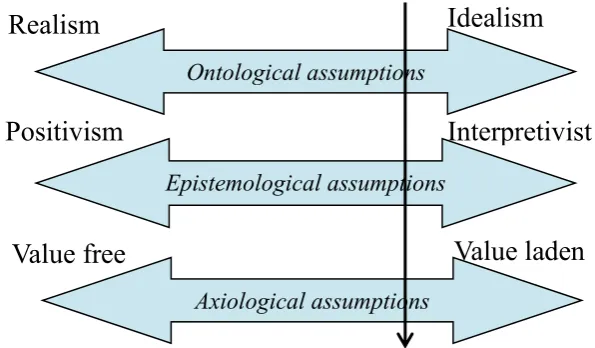
Within the context of an ontological position, there are two aspects; objectivism and subjectivism. This research seeks to evaluate and explore the current disaster response management system in Iraq. Furthermore, due to the involvement of different experts in this process and the fact that their “subjective” perceptions and decisions collectively “socially construct” what is seen as the response to disaster “phenomena”, the research falls mainly within the ontological stance on the subjectivism continuum.
Epistemological stance, on the other hand is divided, by Saunders et al. (2016), into positivism and interpretivism. The authors in this paper, adopted an interpretivistic epistemological position in order to gain an in-depth understanding of social reality through studying peoples’ attitudes and behaviours when responding to disaster events.
[image:4.595.146.444.503.677.2]
Figure 1 Philosophical Stance Pertaining to the Study
With regard to axiology, the main emphasis in this philosophical branch is whether research assumptions are made in a value-laden or value-free environment (Collins & Hussey, 2009). As this research is of an exploratory nature and the interpretation of interviewees (experts) forms a major component of understanding the reality, combined with the expertise of the
Ontological assumptions
Realism
Idealism
Epistemological assumptions
Positivism
Interpretivist
Axiological assumptions
469
researcher in this particular field, it is value-laden, since value is added from both parties. Hence, a social constructionist approach is adopted. The philosophical stance pertaining to this paper is illustrated in Figure 1.
2.2 Research Approach
As reported by Saunders et al. (2016), whilst the research approach relates to theory development, the selected approach will enable the researcher to answer the research questions and meet the objectives of the study. A research approach consists of three types; deductive, inductive, and abductive. The researcher, in the deductive approach, develops a hypothesis or several hypotheses. Hypotheses are normally expressed in operational terms to explain the relationship between variables. The hypotheses are tested prior to examining the specific outcomes and, if necessary, the theory will be modified according to the findings. Conversely, in the inductive approach, there is no development of the theory prior to data collection. Researchers, in following an interpretive approach, start with the evidence and then build up a theory based upon it. Within the inductive approach, according to Pathirage, Amaratunga, and Haigh (2008), the theory would follow the data rather than vice versa as with deduction. The third approach is the combination of deduction and induction which is called an abductive approach (Saunders et al. (2016).
In this research, the authors used secondary data to review the significance of disaster management and deduce principles in building appropriate data collection tools. As such, the data collected are partly theory loaded. In addition, this research attempted to build a theory on improving disaster response management in Iraq. Therefore, this research used a combination of deductive and inductive approaches.
2.3 Research Strategy
Many strategies used in business and management to collect real data can be adopted by the researcher. For any study, an appropriate research strategy choice is based on the research questions, objectives, the amount of time, the extent of existing knowledge and other resources available, as well as the philosophical underpinnings (Saunders et al., 2016). Accordingly, research strategies commonly employed by researchers are an experiment, survey, case study, action research and ethnography (Easterby-Smith et al., 2008; Remenyi, 1998; Saunders et al., 2016). Yin (2014), on the other hand, included five major ways of undertaking social science research, namely, experiment, survey, archival analysis, history and case study, of which, the selection is based on the type of research question posed, the extent of control an investigator has over actual behavioural events and the degree of focus on contemporary (as opposed to historical) events. Yin (2014) did not include action research and ethnography in his division of research strategies. In fact, each strategy can be used for all three research purposes; exploratory, descriptive and explanatory. However, the most important issue is whether the selected strategy will enable the researcher to answer the research questions and meet the objectives of the study (Saunders et al., 2016).
470
relationships through observing the effect of the dependent variable by controlling the independent variable. Likewise, with experiments, surveys are also related to the deductive approach (Saunders et al., 2016). A collection of large amounts of data is facilitated by surveys in an economical way.
As this research falls within the interpretivism and subjectivism stance, and to answer the research questions and meet the objectives of the study, the authors examined three different strategies: action research, ethnography, and the case study approach.
Firstly, an action research strategy is an iterative process involving researchers and practitioners acting together on a particular cycle of activities. Such a strategy is unique in the way it associates to research and practice (Avison, Lau, Myers, & Nielsen, 1999). This process forms a continuing action of planning, diagnosing, taking action and evaluating. Involving employees (as research objects) throughout the research process is very important to implement changes they have helped to create (Saunders et al., 2016). Despite providing an in-depth understanding of a specific phenomenon, this strategy is inappropriate to achieve research objectives due to the lack of the required access to perform the intervention in the Iraqi disaster response management system.
Saunders et al. (2016), stated that an ethnography strategy is one which “is very time consuming and takes place over an extended time period as the researcher needs to immerse herself or himself in the social world being researched as completely as possible”. Therefore,
the second point is that because of the aforementioned factors, it was not practically possible for the authors to immerse themselves deeply into the actual environment. The ethnography strategy was, therefore, not suitable for this study.
Since the other possibilities were not appropriate for this paper, a case study strategy was adopted. Because of the open-ended inquiry used in case studies, it is suitable for building theory and generating hypotheses (Amaratunga, Baldry, Sarshar, & Newton, 2002). Further, due to the exploratory nature of the research, this paper collected data as part of a case study, as this was the most appropriate strategy for answering the research questions and verifying the research findings. A case study has been defined by Yin (2014, p. 18) as an “empirical inquiry that investigates a contemporary phenomenon within its real-life context, especially when the boundaries between phenomenon and context are not clearly evident”. Both ‘what’
type of exploratory questions and ‘why’ type explanatory research is covered by this approach. He added, that in the natural setting, such an approach can assist researchers to investigate the phenomenon. Denscombe (2010) declared that by using a case study, researchers can examine the studied phenomena or the real-life situation. Moreover, it allows them to gain an in-depth picture of the relationships and processes within the phenomenon. The case study approach, as a result, is more common in qualitative studies when compared with quantitative studies. Miles and Huberman (1994), in contrast, noted that the combinations of both quantitative (questionnaires) and qualitative (interviews and documents) data can be conducted in case studies to accomplish different aims and to serve different purposes. Yin (2014, p. 11) also supports this argument, he contends that “ the case study’s unique strength is its ability to deal with a full variety of evidence: documents, artefacts, interviews, questionnaires and observations”. Therefore, the case study research
strategy is capable of adopting different data collection methods and is usually used when it is required to obtain in-depth knowledge about a particular phenomenon.
471
Nor does it intend to study physiology or behavioural patterns of the participants as in the case of ethnographical approaches. So the case study approach was suitable for this research to explore the current practices related to disaster response management in Iraq.
2.4 Case Study Design
An exploration of the current practices related to disaster response management was required. Different views of individuals will be identified regarding the criteria of best practice disaster response management, challenges, strengths, and weaknesses facing disaster response process managers in different administrative functions. Therefore, this research requires a strategy which gathers experts’ opinions and in-depth analysis. An in-depth analysis of the phenomenon under consideration is possible by case study (Gerring, 2007). Moreover, the views of the “actors” of the case under consideration could be incorporated by carrying out case study research (Zonabend, 1992). Further, according to the definition of a case study, stated by Collis and Hussey (2013), it is “a methodology that is used to explore a single phenomenon in a natural setting using a variety of methods to obtain in-depth knowledge”. It
is therefore normally used when obtaining in-depth knowledge on a particular phenomenon and is useful to accommodate different research techniques. Both qualitative and quantitative data also can be accommodated in case study research (Gerring, 2007; Yin, 2014). Although case study research presents many advantages to a research study as mentioned above, it is often criticised for bias, lack of rigour, use of incomplete evidence, and for being expensive and time-consuming (Remenyi, 1998; Yin, 2014). So far, it can be argued that, despite the fact that a case study can take time and can be expensive, the time and budget could be minimised by using careful design. Likewise, many drawbacks can be compensated by having a number of advantages. A variety of evidence is embraced by case study research, such as that obtained from interviews, observation, and document reviews (Saunders et al., 2016; Yin, 2014). The richness of the collected data will be increased while creating the prospects for data triangulation.
Accordingly, the case study approach appears to be the most suitable method for this study, which cater for ‘What’ and ‘How’ type research questions about a contemporary set of events, without differentiating between phenomena and context, where the researcher tends not to interfere with what is being studied.
Yin (2014) suggested four choices to design a case study, namely, a single case study (holistic), a single case study (embedded), a multiple case (holistic), and multiple case (embedded). Such choices depend on the number of cases; single (one case) or multiple (more than one case) and the number of units of analysis, holistic (one unit of analysis) or embedded (more than one unit of analysis). According to Yin (2014), “a single case study approach is suitable when investigating critical, unusual, common, revelatory or longitudinal case”. A critical case is used when it challenges, confirms or extends a theory while the
unusual case represents a rare situation. Conversely, a common case captures a typical or a representative project or case. Therefore, studying one case is adequate to get an understanding about the other cases. A revelatory case can be applied to study a phenomenon which was inaccessible previously. The phenomenon, as a longitudinal case, will be studied over a long period of time.
472
Al-Abyadh, 2014), especially when the situation was triggered by war operations and terrorism in Iraq. There are a number of stakeholders involved during the disaster response stage, namely, the General Directorate of Civil Defence, the Health Department, NGOs, and the Iraqi Red Crescent Society. The General Directorate of Civil Defence (working under the Federal Ministry of Interior) can rightly be termed as the focal response agency (Humayun & Al-Abyadh, 2014) and it is the main administrative directorate during the disaster response stage. Consequently, based on the critical view of experts involved in the disaster response activity, the extracted concepts were assessed. As a result, a valid theory which contributes to knowledge was developed after revising the extracted concepts. Hence, in accordance with Yin’s rationale for doing a single case study design and the nature of the research objects, the opportunity to get better research outcomes was acquired in this paper because a single case study approach was adopted.
Regarding the unit of analysis, Miles and Huberman (1994, p. 25) stated that the unit of analysis of a study is a “phenomenon of some sort occurring in a bounded context”. Based on
Collis and Hussey (2013) it is the focal point where the research problem, phenomena and the variables refer to and about which the data is collected and analysed. Due to its importance, Miles and Huberman (1994) considered the unit of analysis as the “heart” of the research. According to Yin (2014), there is a relation between the chosen unit of analysis and the research objectives. The unit of analysis might help in shaping the scope of data collection in the later phase. In this paper, the unit of analysis was disaster response management.
Based on Yin (2014) opinion, a single case study has two variants, a holistic design and embedded design. Because the General Directorate of Civil Defence has the same administrative system in all its branches or subunits distributed in all Iraqi provinces, the research boundary takes the General Directorate of Civil Defence as a case study boundary, and this paper therefore focuses on the single (holistic) unit of analysis, being “disaster response management”.
2.5 Research Choices
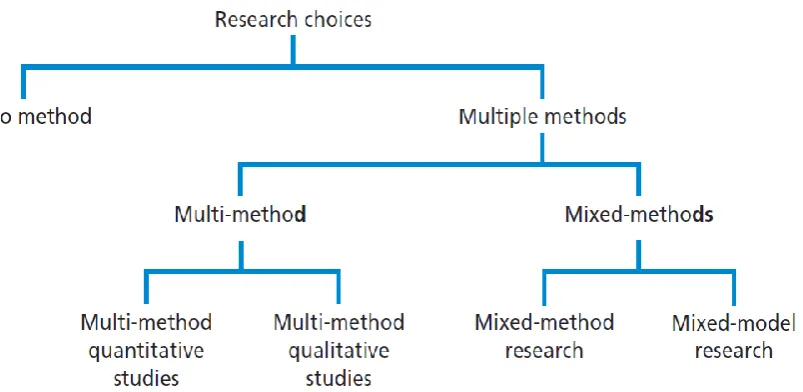
There are two main categories for research choices according to Saunders et al., (2016), the mono method and the multiple method. The mono method points to using a single data collection technique and its corresponding data analysis procedures, whereas multiple methods are where more than one data collection technique and analysis procedure is used to answer the research questions of a study. In addition, multiple methods have been divided into mixed-method and multi-method studies. Mixed-methods is defined as using both qualitative and quantitative data collection techniques and analysing procedures in one research design. Meanwhile, multi-methods is defined as using more than one method, either qualitative or quantitative, in a single study and analysing them in accordance with their relevant procedures (Saunders et al., 2016). Figure shows the two main categories for research choices.
473
[image:9.595.105.507.175.371.2]qualitative research that might cause biases, if used in isolation. Therefore, in order to reduce the current gaps in each approach, the combination of both approaches in one main mixed approach was considered as beneficial. As a result, the validity of the findings was enhanced. Bryman (2012) noted that in the mixed research approach positive benefits can be brought by using different methods to collect data since the weaknesses of any one method can be ‘offset’ by the strengths of another method.
Figure 2: Research Choices (Saunders et al., 2016, p. 152)
Accordingly, more than one data collection technique and analysis procedure was used in this paper. The mixed-methods research choice was most suitable for this paper in order to address the research question. As a result of the complexity of disaster response processes and to understand the real situation of the phenomenon, one single technique would not have been adequate. A better understanding of the phenomenon was therefore obtained from mixed-methods and thus both qualitative and quantitative approaches were applied. The findings of one method were used to clarify the results created by the other.
2.6 Research Techniques
474
Data Collection Techniques
Various data collection techniques can be employed during a case study research strategy and that is considered one of the main advantages of it. Six sources of evidence can be obtained by a case study strategy, namely, documents, archival records, interviews, direct observation, participant observation and physical artefacts (Dooley, 2002; Yin, 2014), by using multiple sources of evidence, it makes the study more robust. Thus, an investigator can address a broader range of behavioural, historical and attitudinal issues, which lead to the development of a converging line of inquiry and a more accurate and convincing conclusion (Yin, 2014). Using multiple sources of evidence also encourages creating a case study database as well as maintaining a chain of evidence.
In agreement with the aforementioned argument, making records of all relevant evidence and creating a database may help the researcher to meet the study purposes. Such purposes can be obtained further by using a combination of both qualitative and quantitative research i.e. mixed methods research. Moreover, by triangulating the methods as such, a personal understanding of the phenomenon will be enhanced. In this paper, a general picture of the current situation regarding Iraqi disaster response management was gained by using a quantitative method. This provided the answer to the research question “What is the status of disaster response management in Iraq?” In addition, in order to get a fuller picture, an in-depth understanding of the quantitative results was obtained by exploring experts’ perspectives using the qualitative method of interviews. In order to triangulate, some significant and related documents were analysed to help build a more in-depth understanding, and further support the findings that were derived from questionnaires and interviews.
A wealth of information was therefore obtained from both primary and secondary data. In this paper, the resources of secondary data were articles, books, past theses, archival records, legislations, and relevant websites, while primary data were collected through questionnaires, interviews, and documents.
475
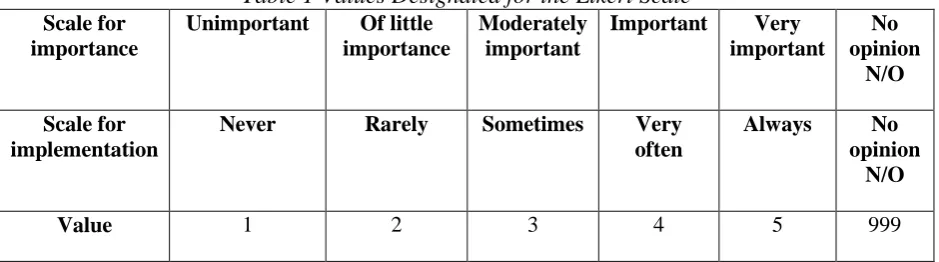
Wilson, 2013). Error! Reference source not found. represents the values designated for the Likert scale.
[image:11.595.64.534.247.378.2]The questionnaires were distributed to the staff who were executives responsible for disaster response in the Iraqi General Directorate of Civil Defence. The respondents to the questionnaire were of Captain military rank and above. 53 questionnaire surveys were conducted. All the respondents, for both the questionnaire and the interview, were selected based on the experts’ rank, knowledge, experience, and involvement with disaster response teams. The questionnaire was designed to identify the best practice and any gaps in every stage of disaster response management in Iraq. The extent of such gaps acts as a good indicator of the weaknesses and the best practice highlights the strengths of current disaster response management.
Table 1 Values Designated for the Likert Scale
Scale for importance
Unimportant Of little importance
Moderately important
Important Very important
No opinion
N/O
Scale for implementation
Never Rarely Sometimes Very
often
Always No
opinion N/O
Value 1 2 3 4 5 999
Regarding the interviews, Amaratunga et al. (2002) stated that this tool is deemed to be favourable in different research areas when in-depth data is required. It is widely considered as one of the common sources of evidence for case studies, as it generates data which is meaningful, through the possibility of probing questions. The authors were able to clarify any unclear answers (Kumar, 2011) and access sensitive information which might not have been achievable through other means. Further, because this research contains an in-depth study on the current practices related to disaster response management, a semi-structured interview gave flexibility in responses from various viewpoints with the consistency coming from similar themes. The interview was designed and translated to elicit the weaknesses and the strengths of the disaster response management and the recommendations to enhance the current disaster response practices. 28 intensive semi-structured interviews were conducted with Lieutenant Colonel military rank and above. The following are examples of the types of questions that the semi-structured interviews included:
Planning stage
•What are the weaknesses of disaster response at planning stage? •Why do you think proper planning is needed for disaster response? •Who are the stakeholders involved?
•What are the strengths of disaster response at planning stage?
•How can we further improve the disaster response at planning stage?
476
In this paper, the archival records and documents that were analysed were identified and provided by the interviewees. Documents such as studies, reports, statistics, follow-up, and legislation were gathered from the IGDCD and other organisations related to disaster response, such as the Iraqi Ministry of Health.
To sum up, by triangulating such techniques, rich and meaningful sets of data have been obtained for analysis, contributing to a more robust study.
3.CONCLUSION
This paper adopted a single holistic case study approach, maintained with the triangulated methods of data collection (questionnaires, semi-structured interviews and document analyses) to explore the current practices related to disaster response management in Iraq. By using a combination of both qualitative and quantitative research i.e. mixed methods research, sets of rich and robust data, including weaknesses, strengths, and recommendations to enhance the current disaster response practices were obtained. Such sets of data were useful to fulfil the authors’ information needs towards meeting the aim and the objectives, and answering the research questions in an on-going PhD study. It can be concluded that the use of case study research, combined with triangulated data collection tools and content analysis, facilitated a meaningful in-depth study, which had high reliability and validity, to explore the current response practices within disaster management in Iraq.
4.ACKNOWLEDGMENTS
The authors would like to acknowledge the Iraqi Ministry of Higher Education, who supported this work. In addition, the financial support received from the Centre for Disaster Resilience, University of Salford, enabled the publication of this paper. Special thanks to Maggie Hardman, of the University of Salford, who supported the English language development.
5.REFERENCES
Al-Dahash, H., Kulatunga, U., & Al-Dehesh, A. (2015). Disaster Response Management Stemming From War Operation and Terrorism in Iraq. In 12th International Post-Graduate Research Conference, 10-12 June 2015, MediaCity, UK. (pp. 432-444).
Al-Dahash, H., Kulatunga, U., & Amaratunga, D. (2014). Evaluation of the System of Disaster Management Resulting from War Operations and Terrorism in Iraq. In 4th International Conference on Building Resilience, Incorporating the 3rd Annual Conference of the ANDROID Disaster Resilience Network, 8th – 11th September 2014, Salford Quays, United Kingdom. (pp. 900-907).
Alexander, D. (2005). Towards the development of a standard in emergency planning. Disaster Prevention and Management: An International Journal, 14(2), 158-175.
Amaratunga, D., Baldry, D., Sarshar, M., & Newton, R. (2002). Quantitative and qualitative research in the built environment: application of “mixed” research approach. Work study, 51(1), 17-31.
Avison, D. E., Lau, F., Myers, M. D., & Nielsen, P. A. (1999). Action research. Communications of the ACM, 42(1), 94-97.
Baharin, S. S. K., Shibghatullah, A. S., & Othman, Z. (2009). Disaster Management in Malaysia: An
Application Framework of Integrated Routing Application for Emergency Response Management System.
477
Bang, H. N. (2012). Disaster management in Cameroon: the Lake Nyos disaster experience. Disaster Prevention and Management, 21(4), 489-506.
Blessing, L. T., & Chakrabarti, A. (2009). DRM, a design research methodology. London: Springer. Collis, J., & Hussey, R. (2013). Business Research: A Practical Guide for Undergraduate and Postgraduate
Students. New York: Palgrave Macmillan.
Creswell, J. W. (2009). Research Design: Qualitative, Quantitative, and Mixed Methods Approaches (3rd ed.). London: Sage.
Denscombe, M. (2010). The Good Research Guide: For Small-Scale Social Research Projects: For small-scale social research projects. Maidenhead: McGraw-Hill International.
Dooley, L. M. (2002). Case Study Research and Theory Building. Advances in developing human resources, 4(3), 335-354. doi: 10.1177/1523422302043007
Easterby-Smith, M., Thorpe, R., & Jackson, P. (2008). Management Research: Theory and Practice (3rd ed.). London: Sage.
Fischer, H. W. (2005). The Danger in Over-Reacting to Terrorism: Has the US Embarked upon a Road that Should Have Remained Less Traveled? Disaster Prevention and Management, 14(5), 657-665. Gerring, J. (2007). Case study research: principles and practices. New Yourk, USA: Cambridge University
Press.
Goodyear, E. J. (2009). The State of Disaster Risk Reduction In Iraq (pp. 94): UNDP/OCHA.
Humayun, S., & Al-Abyadh, I. R. (2014). Iraq: Country Case Study Report - How Law and Regulation Support Disaster Risk Reduction United Nations Development Programme (pp. 40): International Federation of Red Cross and Red Crescent Societies (IFRC).
Kulatunga, U. (2008). Influence of Performance Measurement Towards Construction Research and Development. (PhD Thesis), The University of Salford, Salford, UK.
Madry, S. (2015). Space Systems for Disaster Warning, Response, and Recovery. New York: Springer. Miles, M. B., & Huberman, A. M. (1994). Qualitative data analysis : an expanded sourcebook (2nd ed.).
London: SAGE.
Muaafa, M., Concho, A. L., & Ramirez-Marquez, J. (2014). Emergency Resource Allocation for Disaster Response: An Evolutionary Approach. SSRN, 2848892.
https://papers.ssrn.com/sol3/papers.cfm?abstract_id=2848892
Onwuegbuzie, A. J., & Teddlie, C. (2003). A framework for analyzing data in mixed methods research. Thousand Oaks, California, USA: Sage.
Pathirage, C., Amaratunga, R., & Haigh, R. (2008). The role of philosophical context in the development of research methodology and theory. The Built and Human Environment Review, 1(1), 1-10.
Remenyi, D. (1998). Doing research in business and management: an introduction to process and method. London: Sage.
Saunders, M., Lewis, P., & Thornhill, A. (2016). Research methods for business students (7th ed.): New York: Pearson Education.
Walliman, N. (2006). Social Research Methods. London: SAGE Publications Ltd.
Wilson, C. (2013). Credible Checklists and Quality Questionnaires: A User-Centered Design Method. Burlington: Elsevier Science.
Yin, R. K. (2014). Case study research: Design and methods. London: Sage.