Information Processing:
Controlling and Using their
Environment
Martin J. A. Sch¨utz
Information Processing:
Controlling and Using their
Environment
Martin J. A. Sch¨utz
Dissertation
an der
Ludwig-Maximilians-Universit¨
at
M¨
unchen
vorgelegt von
Martin J. A. Sch¨
utz
aus Starnberg, Deutschland
Zweitgutachter: Prof. J. von Delft
Electron spins confined in quantum dots (QDs) are among the leading contenders for imple-menting quantum information processing. In this Thesis we address two of the most significant technological challenges towards developing a scalable quantum information processor based on spins in quantum dots: (i) decoherence of the electronic spin qubit due to the surrounding nuclear spin bath, and (ii) long-range spin-spin coupling between remote qubits. To this end, we develop novel strategies that turn the unavoidable coupling to the solid-state environment (in particular, nuclear spins and phonons) into a valuable asset rather than a liability.
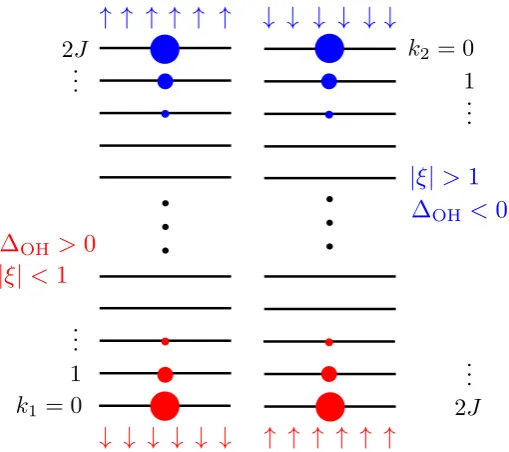
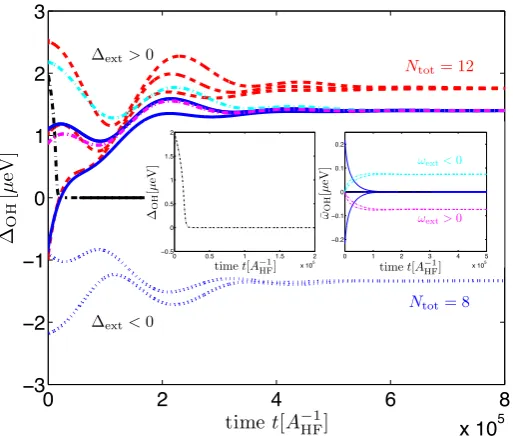
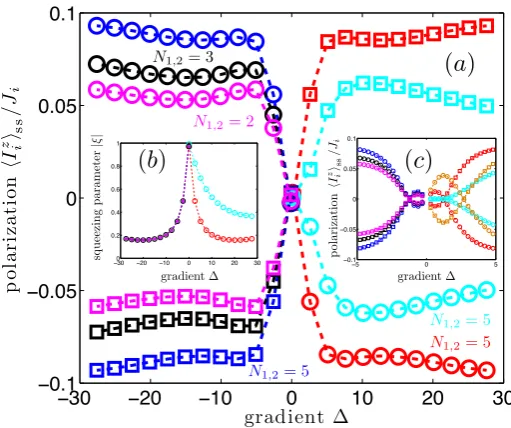
In the first part of this Thesis, we investigate electron transport through single and double QDs, with the aim of harnessing the (dissipative) coupling to the electronic degrees of freedom for the creation of coherence in both the transient and steady-state behaviour of the ambient nuclear spins. First, we theoretically show that intriguing features of coherent many-body physics can be observed in electron transport through a single QD. To this end, we first develop a master-equation-based formalism for electron transport in the Coulomb-blockade regime assisted by hyperfine (HF) interaction with the nuclear spin ensemble in the QD. This general tool is then used to study the leakage current through a single QD in a transport setting. When starting from an initially uncorrelated, highly polarized state, the nuclear system experiences a strong correlation buildup, due to the collective nature of the coupling to the central electron spin. We demonstrate that this results in a sudden intensity burst in the electronic tunneling current emitted from the QD system, which exceeds the maximal current of a corresponding classical system by several orders of magnitude. This gives rise to the new paradigm of electronic superradiance. Second, building upon the insight that the nuclear spin dynamics are governed by collective interactions giving rise to coherent effects such as superradiance, we propose a scheme for the deterministic generation of steady-state entanglement between the two nuclear spin ensembles in an electrically defined double quantum dot. Because of quantum interference in the collective coupling to the electronic degrees of freedom, the nuclear system is actively driven into a two-mode squeezedlike target state. The entanglement buildup is accompanied by a self-polarization of the nuclear spins towards large Overhauser field gradients. Moreover, the feedback between the electronic and nuclear dynamics is shown to lead to intriguing effects such as multistability and criticality in the steady-state solutions.
the surface in phononic cavities and guided in acoustic waveguides. We show that this type of surface acoustic excitations can be utilized efficiently as a quantum bus, serving as an on-chip, mechanical cavity-QED equivalent of microwave photons and enabling long-range coupling of a wide range of qubits.
Elektronenspins in Quantenpunkten geh¨oren zu den vielversprechendsten Ans¨atzen f¨ur die erfolgreiche Implementierung von Quanteninformationsverarbeitung. Diese Arbeit behandelt zwei der gr¨oßten Herausforderungen f¨ur die Entwicklung eines skalierbaren Quanteninforma-tionsprozessors auf Basis von Spins in Quantenpunkten: (i) die Kontrolle der Dekoh¨arenz des elektronischen Spins aufgrund der Wechselwirkung mit dem umliegenden Kernspin-Bad, und (ii) die Realisierung einer langreichweitigen Spin-Spin Kopplung zwischen entfernt liegenden Qubits. Zu diesem Zweck entwickeln wir neue Strategien, die die unvermeidliche Kopplung an die Festk¨orperumgebung (insbesondere Kernspins und Phononen) zu ihrem Vorteil ausnutzen. Im ersten Teil dieser Arbeit untersuchen wir den Elektronentransport durch Einzel- und Doppel-Quantenpunkte, mit dem Ziel die dissipative Kopplung an die elektronischen Frei-heitsgrade zur Erzeugung von koh¨arenter Kernspindynamik auszunutzen. Dies gilt sowohl f¨ur das kurzfristige wie auch das langfristige Verhalten der Kernspins. Zun¨achst zeigen wir theoretisch, dass faszinierende Eigenschaften koh¨arenter Vielteilchenphysik im Elektronen-transport durch einen einzelnen Quantenpunkt beobachtet werden k¨onnen. Dazu entwickeln wir zun¨achst einen auf Master-Gleichungen basierenden Formalismus f¨ur den Elektronentrans-port im Coulomb-Blockade Regime, der die Hyperfeinwechselwirkung mit dem Kernspin-Ensemble im Quantenpunkt ber¨ucksichtigt. Dieses allgemeine theoretische Werkzeug wird anschließend verwendet, um den Strom durch einen einzelnen Quantenpunkt in einem Trans-portszenario zu studieren. Sind die Kernspins anf¨anglich in einem unkorrelierten, hoch polar-isierten Zustand, so bauen sich aufgrund der kollektiven Wechselwirkung mit dem zentralen Elektronenspin starke Korrelationen zwischen den Kernspins auf. Wir zeigen, dass dies zu einem pl¨otzlichen, starken Anstieg im Tunnelstrom durch den Quantenpunkt f¨uhrt, welcher den maximalen Strom in einem analogen klassischen System um mehrere Gr¨oßenordnungen ¨
ubersteigt. Dieses Verhalten begr¨undet das neue Paradigma von elektronischer Superradianz. Ausgehend von der Einsicht, dass die Kernspindynamik von kollektiven Wechselwirkungen bestimmt wird, welche wiederum zu koh¨arenten Effekten wie Superradianz f¨uhren k¨onnen, schlagen wir im n¨achsten Schritt ein Modell zur deterministischen Verschr¨ankungserzeugung zwischen den beiden Kernspinensembles in einem elektrisch definierten Doppelquantenpunkt vor. Aufgrund von Quanteninterferenz in der kollektiven Kopplung an die elektronischen Freiheitsgrade wird das Kernspinsystem aktiv in einen gequetschten zwei-Moden Zustand gepumpt. Der Aufbau von Verschr¨ankung wird durch einen Polarisationsprozess der Kern-spins hin zu großen Overhauser-Feldern begleitet. Dar¨uber hinaus wird gezeigt, dass die R¨uckkopplung zwischen elektronischen und Kernspin- Freiheitsgraden zu interessanten Effek-ten wie zum Beispiel Multistabilit¨at und kritischem Verhalten in den station¨aren L¨osungen f¨uhrt.
vor, der auf akustischen Oberfl¨achenwellen in piezo-aktiven Materialen beruht und direkt auf Chips aufgebracht werden kann. Aufgrund der piezo-elektrischen (und/oder magnetostrik-tiven) Eigenschaften des Materials bietet unser Ansatz eine universelle Platform f¨ur eine ganze Reihe von Qubits; dazu geh¨oren Quantenpunkte, Ionen, Stickstoff-Fehlstellen-Zentren (NV-Zentren) oder auch supraleitende Qubits. Die quantisierten Moden der akustischen Oberfl¨achenwellen haben typische Frequenzen im Gigahertz-Bereich, k¨onnen stark in der N¨ahe der Oberfl¨ache in phononischen Resonatoren lokalisiert werden und entlang akustischer Wellenleiter geleitet werden. Wir zeigen, dass diese Art der akustischen Oberfl¨achenanregung effizient als Quanten-Bus verwendet werden kann, der als mechanisches Analogon zu Mikro-wellen-Photonen in der Resonator-Quanten-Elektrodynamik fungiert und langreichweitige Kopplung zwischen entfernt liegenden Qubits erm¨oglicht.
Abstract v
Zusammenfassung vii
Publications xiii
0 Introduction 1
0.1 Quantum Optical Review . . . 3
0.2 Semiconductor Quantum Dots . . . 5
0.3 Outline of this Thesis . . . 14
1 Superradiance-like Electron Transport through a Quantum Dot 17 1.1 Introduction . . . 17
1.2 Executive Summary: Reader’s Guide . . . 18
1.3 Main Results . . . 19
1.4 The System . . . 22
1.5 Generalized Quantum Master Equation . . . 24
1.5.1 Superoperator Formalism - Nakajima-Zwanzig Equation . . . 24
1.5.2 Markov Approximation . . . 26
1.5.3 General Master Equation for Nuclear Spin Assisted Transport . . . . 29
1.6 Superradiance-like Electron Transport . . . 30
1.7 Analysis and Numerical Results . . . 35
1.7.1 Experimental Realization . . . 35
1.7.2 Superradiant Electron Transport . . . 36
1.8 Conclusion and Outlook . . . 42
1.A Supplementary material 1 . . . 43
1.A.1 Microscopic Derivation of the Master Equation . . . 43
1.A.2 Adiabatic Elimination of the QD Electron . . . 46
2 Nuclear Spin Dynamics in Double Quantum Dots 49 2.1 Introduction . . . 49
2.2 Executive Summary: Reader’s Guide . . . 52
2.3 Main Results . . . 52
2.4 The System . . . 53
2.4.1 Microscopic Model . . . 53
2.4.2 Master Equation . . . 56
2.5.1 Adiabatic Elimination of Electronic Degrees of Freedom . . . 62
2.5.2 Low-Gradient Regime: Random Nuclear Diffusion . . . 63
2.5.3 High-Gradient Regime: Entanglement Generation . . . 65
2.6 Dynamic Nuclear Polarization . . . 67
2.7 Steady-State Entanglement Generation . . . 71
2.7.1 Extended Nuclear Master Equation in the High-Gradient Regime . . . 71
2.7.2 Holstein-Primakoff Approximation and Bosonic Formalism . . . 73
2.8 Criticality . . . 77
2.9 Implementation . . . 79
2.10 Conclusion and Outlook . . . 85
2.A Supplementary material 2 . . . 86
2.A.1 Spin-Blockade Regime . . . 86
2.A.2 Quantum Master Equation in Spin-Blockade Regime . . . 87
2.A.3 Transport-Mediated Transitions In Fast Electronic Subspace . . . 91
2.A.4 Electronic Lifting of Pauli-Blockade . . . 92
2.A.5 Effective Nuclear Master Equation . . . 97
2.A.6 Effective Nuclear Dynamics: Overhauser Fluctuations . . . 100
2.A.7 Ideal Nuclear Steady State . . . 101
2.A.8 Numerical Results for DNP . . . 103
2.A.9 Effective Nuclear Master Equation in High-Gradient Regime . . . 105
2.A.10 Diagonalization of Nuclear Dissipator . . . 108
2.A.11 Nonidealities In Electronic Quasisteady State . . . 109
3 Universal Quantum Transducers based on Surface Acoustic Waves 111 3.1 Introduction . . . 111
3.2 Executive Summary: Reader’s Guide . . . 113
3.3 Main Results . . . 113
3.4 SAW Properties . . . 114
3.5 SAW Cavities & Waveguides . . . 115
3.6 Universal Coupling . . . 117
3.7 State Transfer Protocol . . . 121
3.8 Conclusion and Outlook . . . 124
3.A Supplementary material 3 . . . 125
3.A.1 Classical Description of Nonpiezoelectric Surface Acoustic Waves . . 125
3.A.2 Surface Acoustic Waves In Piezoelectric Materials . . . 130
3.A.3 Mechanical Zero-Point Fluctuation . . . 134
3.A.4 Zero-Point Estimates . . . 136
3.A.5 SAW Cavities . . . 137
3.A.6 Charge Qubit Coupled to SAW Cavity Mode . . . 138
3.A.7 SAW-Based Cavity QED with Spin Qubits in Double Quantum Dots 140 3.A.8 Generalized Definition of the Cooperativity Parameter . . . 148
3.A.9 Effects due to the Structure Defining the Quantum Dots . . . 152
3.A.10 State Transfer Protocol . . . 153
4 Outlook 157
1. Superradiance-like electron Transport through a Quantum Dot
M. J. A. Schuetz, E. M. Kessler, J. I. Cirac, and G. Giedke Phys. Rev. B 86, 085322 (2012).
See chapter 1. Acronym: SET.
2. Steady-State Entanglement in the Nuclear Spin Dynamics of a Double Quantum Dot
M. J. A. Schuetz, E. M. Kessler, L. M. K. Vandersypen, J. I. Cirac, and G. Giedke Phys. Rev. Lett. 111, 246802 (2013).
See chapter 2. Acronym: DQD.
3. Nuclear Spin Dynamics in Double Quantum Dots: Multistability, Dynamical Polariza-tion, Criticality, and Entanglement
M. J. A. Schuetz, E. M. Kessler, L. M. K. Vandersypen, J. I. Cirac, and G. Giedke Phys. Rev. B 89, 195310 (2014).
See chapter 2. Acronym: DQD.
4. Universal Quantum Transducers based on Surface Acoustic Waves
M. J. A. Schuetz, E. M. Kessler, G. Giedke, L. M. K. Vandersypen, M. D. Lukin, and J. I. Cirac
Introduction
Quantum mechanics describes our world at the microscopic level. Once seen as inaccessible to direct observation and irrelevant to any direct practical application, quantum physics has matured from a merely fundamental discipline to a vibrant research area where nowadays genuine quantum effects can be observed routinely in the lab. Over the past decades the quantum mechanical framework has been used extensively to explain and predict quantum phenomena of increasingly subtlety and complexity [1]. At the same time, it has also be-come the backbone for novel, revolutionary technological applications. Some early examples of quantum mechanical technology include: (i) the transistor [2], paving the way to mod-ern electronics, (ii) the laser [3, 4], enabling diverse applications such as laser printers or laser surgeries, and (iii) superconducting magnets [5, 6], routinely used for example in MRI machines in hospitals.
gener-alized in a seminal work by David Deutsch [10], where he introduced the idea of a universal quantum computer, a device making direct use of quantum-mechanical phenomena, such as superposition and entanglement, to perform operations on data. These considerations, how-ever, were largely considered a conceptual curiosity until the mid-1990s, when Peter Shor devised a quantum algorithm by which a quantum computer could factorize large numbers in a time exponentially faster than any known classical algorithms [11]. If implemented, Shor’s algorithm would have profound implications in cryptography as it allows to crack today’s stan-dard cryptographic codes such as RSA [12] for which the difficulty of factoring constitutes the essential working principle. This breakthrough result was the starting signal for a worldwide sustained endeavor searching for feasible physical realizations of a quantum computing device. While similar technologies allowing (for example) for unconditional secure cryptography or ultra-sensitive measurements in the field of quantum metrology have become mature fields by now [13, 14], close to reaching the commercial level, the development of actual quantum computers is still in a very early stage of its development cycle.
The complexity of building a fully-fledged quantum computer is a fantastic challenge [15, 16]. The quantum computer has to be very well protected from its environment in or-der to suppress unwanted information leakage, a process called decoherence, which tends to corrupt and wash out the characteristic quantum properties that give rise to the power of quantum computation. At the same time, the building blocks of the device (quantum bits, in short qubits) typically need to be actively manipulated and read out at the end of the com-putation. Therefore, one arrives at the fundamental ambiguity that on the one hand isolation from the surrounding and on the other hand strong coupling to some classical control inter-face is required. In practice, no physical system is free of decoherence, but small amounts of information leakage may be tolerated thanks to various techniques subsumed under the name of quantum error correction [17, 18, 19]. Quantum error correction detects and corrects weak interactions with the environment or small quantum gate errors through redundant encoding of qubits. Therefore, experiments need not be perfect, and quantum computation is still feasi-ble in the presence of noise, provided that the decoherence rate per qubit and qubit-operation is below a certain threshold. While more and more sophisticated quantum error correction schemes have been developed over the years [20, 21, 22, 23], pushing this threshold to more practical values, decoherence is arguably still the strongest adversary to quantum informa-tion processing. This challenge together with some other general prerequisites for quantum computers has been identified by David DiVincenzo early on as follows1 [24]: The target
system should be controllable, i.e., it can be initialized, manipulated, and read out to achieve a computation. Moreover, it must be correctable (inevitable errors can be detected and com-pensated). Lastly, it should be scalable, meaning that a linear increase in effective system size should not require a corresponding exponential increase of required resources. Achieving these conditions for quantum computation has turned out to be extremely demanding. Nev-ertheless, as of today a whole plethora of physical systems has been put forward as possible candidate platforms for the realization of quantum information processing (QIP), spanning a truly fascinating range of systems [25] from elementary (quasi-)two level systems such as hy-perfine levels in ions [26] and electron spins [27, 28], to more complex macroscopic structures like superconducting devices [29]. While each approach has its own benefits and a full com-parison of the relative merits goes beyond the scope of this Thesis, broadly speaking, one can
1Relatively new, complementary strategies based on engineered dissipation will be introduced in detail in
identify two different categories: Some systems comprise natural candidates, such as single atoms or ions, for which the manipulation of quantum states has a relatively long and rich history [8, 15]. Others are based on artificial, engineered systems such as phosphorus donors in silicon [30], superconducting circuits [31], or—in the focus of this Thesis—the promising systems of semiconductor quantum dots [27, 32]. While the former has served as prototypical quantum information testbeds, with unprecedented control of individual quantum systems, the latter candidates hold the promise of an automatized, large-scale manufacturing, using the well-established fabrication techniques of existing semiconductor industry [15, 16].
This Thesis investigates QIP related problems in concrete, experimentally accessible phys-ical settings, with a primary focus on single localized electron spins in semiconductor quantum dots coupled to their naturally occurring nuclear spin environment. Against the background outlined above, we address two of the most significant challenges towards developing a scal-able, solid-state spin based quantum information processor [33, 28]: (i) nuclear spin induced decoherence of the electronic spin qubit, and (ii) long-range coupling between remote spin qubits. Methodologically, our approach heavily relies on ideas, systems and techniques well-known in the context of quantum optics (such as atomic ensembles, cavity QED and quantum optical master equations) which turn out to be very useful in the theoretical description of this particular solid-state system. Therefore, to set the stage, the remainder of this Chapter is structured as follows: In Sec.0.1 we first touch upon quantum optical models and ideas (such as collective effects and quantum data buses) that serve as common background and inspirational resource for the research reported in this Thesis. Knowledge and experience already acquired in the realm of quantum optics will be actively transferred to the domain of semiconductor quantum dots throughout this Thesis. Furthermore, we also shed more light on the ambiguous relation between quantum coherence and dissipation and report on novel strategies that turn the unavoidable coupling to the environment into a resource rather than a liability. This relatively new paradigm in the quantum information toolbox will help to reverse the standard perception of nuclei in quantum dots, stimulating original insights into the role of nuclear spin dynamics in quantum dots. In Sec.0.2 we then present a de-tailed theoretical and experimental account of this particular physical system in the focus of this Thesis. Its importance and prospects in the field of quantum physics, as well as the experimental state of the art are discussed. With this background knowledge established, Sec.0.3 shortly outlines the particular research projects reported in this Thesis as well as the interdependencies between them.
0.1
Quantum Optical Review
interaction between system and environment.
Coherent Engineering
The research area of atomic physics and quantum optics is home to some of the most advanced candidates for QIP [1]. Prominent realizations include trapped ions [34] and atoms in cavities [39]. These kind of systems share the feature that long-lived internal atomic states, such as atomic hyperfine ground states or metastable states, serve as quantum memory to store quantum information. Single qubit rotations can be performed by coupling the internal atomic levels to laser light for an appropriate period of time; this requires that single atoms can be addressed individually by laser light [13, 14]. Various schemes have also been developed for the realization of two-qubit gates. Here, one particularly promising approach relies on the concept of a quantum data bus: By coupling the qubits to a collective auxiliary quantum mode, entanglement of the qubits can be achieved by swapping qubits to excitations of the collective mode [13, 14]. For trapped ions, a single normal mode of the collective crystal motion serves as a quantum bus, allowing quantum information to be transferred between remote qubits in the crystal via the exchange of phonons, which is controlled by directing laser beams to each of the ions [26]. Similarly, photons constitute another natural candidate as carrier of quantum information [44, 45, 46, 47], since they are highly coherent and can mediate interactions over very large distances [48, 49]. In order to create a photon-based quantum bus, the most common strategy is based on cavity QED techniques [50], where an atom interacts with a single, confined cavity mode only [39]. In the so-called strong coupling regime [50], this allows for the transfer of quantum information between an atom and a single photon. Formally, there is a strong connection between trapped ions and cavity QED, where the role of collective phonon modes of trapped ions is essentially taken by photons in high-quality cavity modes [13, 14]. Therefore, on the one hand, schemes developed for the entanglement generation in ion traps can readily be translated to their cavity QED counterparts. On the other hand, cavity QED provides a natural interconnect between stationary atomic qubits and photons as carriers of qubits for quantum communication, since photons (once they leave the cavity) can be guided in optical fibers to transport quantum information between remote locations [39, 49, 51]. In this way, small quantum computers can be wired together to make larger ones, allowing (for example) to spatially separate sensitive quantum memories from specific measurement hardware [15, 46]. Today, first experimental steps towards such a quantum network include the successful mapping of quantum information contained in an atomic superposition state onto the photon state (and vice versa) [52], quantum state transfer and entanglement generation between two quantum bits using both optical and microwave photons as intermediary [53, 54, 55, 56, 57, 58].
im-portantly, collective effects stemming from many-body coherence between the individual constituents allow for a strongly enhanced signal-to-noise ratio, that is the ratio between the rates of coherent information processing and of decoherence processes. For example, to achieve a high signal-to-noise ratio in cavity QED, commonly referred to as strong-coupling regime, one needs to place the atoms in high-finesse cavities [50]. By encoding quantum information into some collective excitations of the ensembles, however, QIP can be made possible with much more simplified experimental systems [8], such as atomic ensembles in weak-coupling cavities or even free space. This constitutes a critical improvement for the implementation of some quantum information applications [13, 14], such as quantum cryptography [67], quantum teleportation [68], and quantum memories [69, 70, 71, 62, 64].
Dissipative Engineering
The strategies outlined above rely on a high degree of isolation of the quantum system from its environment, in order to suppress decoherence. In this context, dissipative coupling to the environment appears exclusively as a malicious mechanism which tends to corrupt the genuine quantum properties of a quantum state, such as entanglement. As a consequence, for a long time the prime objective in the QIP community has been to develop more and more sophisticated methods to shield quantum systems from any environmental influence. However, with the advent of novel approaches such as engineering of dissipation [72], a new trend of actually harnessing dissipation has emerged in recent years. Here, the key idea is to properly engineer the continuous interaction of the system with its environment in order to create and utilize quantum coherences. In this way, dissipation—previously often viewed as a liability from a QIP perspective—can turn into a highly valuable asset and become the driving force behind the emergence of coherent quantum phenomena. For instance, theoretical and experimental works put forward their use for quantum state preparation [73, 74, 75, 76, 77, 78, 79, 80, 81, 82, 83], quantum computation [84], quantum memories and error correction [85, 86], as well as for open-system quantum simulators [87, 88]. The idea of actively using dissipation rather than relying on coherent evolution only extends the traditional DiVincenzo criteria [24] (which list pure, almost perfectly isolated qubits among the requirements for quantum computing; see the discussion above) to settings in which no unitary gates are available; also, it comes with potentially significant practical advantages, as dissipative methods are unaffected by timing and preparation errors and inherently robust against weak random perturbations [89, 90], allowing, in principle, to stabilize entanglement for arbitrary times. For example, in the case of quantum state engineering, the system is actively pumped into a (for instance highly entangled) steady state [91]. Recently, these concepts have been put into practice experimentally in different QIP architectures, namely atomic ensembles [92], trapped ions [87, 93] and superconducting qubits [94].
0.2
Semiconductor Quantum Dots
the promise of miniaturization and large-scale integration based on the well-established fab-rication processes of our modern-day semiconductor industry [28, 16]. Furthermore, these on-chip devices typically operate at ultra-high clock speeds, much faster than their natural cousins, without the need for sophisticated cooling and trapping schemes [97, 15]. The spins of individual electrons and nuclei, in particular, have turned out to offer a promising combi-nation of controllability and environmental isolation [28, 16]. One specific system that falls into this category are semiconductor quantum dots (QDs). In what follows, we first give an introduction to quantum dots and then briefly review recent progress towards full control of single and coupled spins in QDs [33], before turning the focus on the (ambiguous) role of nuclear spins in this context [98]. Finally, we outline the major challenges and goals ahead.
Quantum Dots
Quantum dots are nanoscale semiconductor heterostructures, which are able to confine charge carriers (conduction-band electrons or valence-band holes) in all three spatial dimensions, ultimately forming zero-dimensional boxes [16]. Due to strong confinement to length scales small compared to the particle’s wavelength the energy spectrum is quantized. Many well-known atomic properties, such as shell structure and optical selection rules, have analogues in QDs; hence the informal nickname ”artificial atom” [33]. Since a QD is such a general kind of system, there exist QDs of many different sizes and materials; compare for example Refs. [33, 97] and references therein. One of the most prominent examples are electrostatically defined quantum dots (EDQDs), also referred to as lateral quantum dots2. Lateral GaAs3 quantum
dots are fabricated from heterostructures of GaAs and AlGaAs grown by molecular beam epitaxy [33, 98]. With this method, semiconductor structures can be grown layer by layer, allowing to stack materials with different band gaps. Free charge carriers can be introduced into the system via doping, optical excitation or current injection. They accumulate at the GaAs/AlGaAs interface, typically ∼ 50−100nm below the surface [33], leading to the formation of a two-dimensional electron or hole gas (2DEG, 2DHG), respectively, a thin ∼10nm sheet of charge carriers that can move only along the interface. Surface gates on top of the heterostructure—so-called Schottky contacts—can then be used to locally deplete small regions of the 2DEG (typical dimensions of the resulting QD are ∼ 40nm in the plane and ∼10nm in the growth direction [98]) with an electric field, which facilitates control over both the electron number in the QDs and the tunnel-coupling between the QD and the adjacent reservoirs via by purely electrostatic means.
The electronic properties of QDs are governed by two basic effects [33]: First, as mentioned above, strong confinement in all three directions leads to a discrete energy spectrum. Second, the Coulomb repulsion between electrons on the dot leads to an energy penalty for adding an extra electron to the dot. Due to this charging energy tunneling of electrons to or from the reservoirs can be strongly suppressed at sufficiently low temperatures; this effect is referred to as Coulomb blockade (CB). To access the quantum regime, GaAs gated QDs have to
2
Yet another promising and actively pursued candidate for QIP are self-assembled quantum dots (SAQDs) [32, 97, 98]. They form spontaneously at random locations during the epitaxial growth process due to a lattice mismatch between the dot and substrate materials. Since they typically feature very large single-particle level spacing, they can be operated at elevated temperatures of ∼4K. In contrast to EDQDs, SAQDs allow for coherent optical manipulation, since they can trap both electrons and holes.
3
be cooled down to temperatures well below 1K; using dilution refrigerators, nowadays base temperatures of∼20mK can be realized routinely in the lab [33]. In the CB-regime the charge on the QD is conserved, since no electrons can tunnel onto or off the dot. By applying gate voltages, the number of trapped electrons can then be controlled very well starting with 0, 1, 2 etc. Similarly, to study transport through the QD structure, one tunes the gate voltages to the boundary between two charge configurations such that electrons can be exchanged with the surrounding 2DEG via tunneling [99, 100]. Electron transport through the QD (or a series of several dots) can be used to probe the QD; alternatively, the charge state of the QD can be detected directly using a nearby electrometer, such as a quantum point contact (QPC).
Just like two (or more) atoms can form molecules, multiple near-by QDs with large tunnel-coupling (i.e., strong overlap of their electronic wavefunctions) can form ”artificial molecules” [28]. Due to this covalent bonding, single-dot orbitals hybridize into molecular-like orbitals spanning multiple QDs. The best-studied QD molecule is the double quantum dot (DQD), which has served as the workhorse for many ground-breaking experiments with QDs [33]. It consists of just two EDQDs which are coupled by coherent tunneling. When operated in the (1,1) charging region (that is, with a single electron on each dot) tunnel-coupling leads to an effective exchange interaction lifting the degeneracy in the four-dimensional subspace by splitting off the singlet from the triplet states [33]. As discussed in more detail below, this mechanism can be used to implement ultra-fast quantum gates in this system [101].
In what follows, we focus on single and coupled QDs in the few-electron regime, that is QDs containing only one or two electrons. These systems are of particular importance as they have been proposed as the basic building blocks of electron spin-based quantum information architectures to be discussed below.
QIP with Quantum Dots
One of the earliest theoretical proposals to turn quantum computing into reality dates back to the seminal work of Loss & DiVincenzo in 1998 [27]. They suggested to use single elec-tron spins confined to EDQDs in order to encode quantum information. While single-qubit gates could be performed by locally controllable magnetic fields, two-qubit interactions were proposed to be realized by all-electrical control using the effective Heisenberg exchange in-teraction between neighbouring spins (the spins can be moved closer or further apart from each other simply by varying the tunnel barrier between the dots). Importantly, the proposal demonstrates that an array of EDQDs allows (in principle) for universal and scalable quantum computing, at ultrahigh clockspeed [97].
Within a few years, in a series of ground-breaking experiments, all major building blocks of the Loss-DiVincenzo proposal have been demonstrated in proof-of-principle experiments: initialization of the qubit, all-electrical single-shot read-out of spin states [102], coherent control of single spins [103], and two-qubit gates between two electron spins in a double dot system [104]. Within the past few years, the field of EDQD-based quantum computing has seen further tremendous progress. In the following we outline some of the most important theoretical and experimental achievements following Ref. [27] in more detail.
Qubit—In the original Loss-DiVincenzo proposal, the qubits are stored in the spin degree
#
·
-15 -10 -5 0 5 10 15
0.0 0.2 0.4 0.6 0.8 1.0
#
·
·
#
·
#
#
·
#
·
·
#
*
HHF
~
S
"
"
⇥
(
a
)
(
b
)
µres µres
Figure 1: (a) Spin-to-charge conversion: The energy difference between the spin states can be used to convert spin-state information into charge. In the configuration shown, an electron can tunnel from the dot to the reservoir only if it is in the spin-down state. Measurement of the charge on the dot yields the spin state. (b) An electron spin S~ confined in a GaAs EDQD interacts with ∼106 nuclear spins (shown in blue) via the hyperfine interaction (H
HF).
electron g-factor in GaAs [33] andµB the Bohr-magneton. Yet another prominent encoding
scheme, typically referred to as singlet-triplet qubit, employs two-electron encoded qubits in DQD structures, in which logical qubits are encoded in a two-dimensional subspace of a four-dimensional two-electron spin system [105]. Within this approach, the qubit energy splitting is provided by the effective exchange coupling.
Single-shot read-out—Direct measurement of the electron spin is very challenging
be-cause of its tiny magnetic moment [33]. The standard approach to circumvent this problem very efficiently is based on spin-to-charge conversion [27]: Broadly speaking, the spin state is detected by correlating the spin states with different charge states and subsequently measur-ing the charge. The latter can be done with a nearby QPC, whose conductance changes due to the electric field provided by the electron charge on the EDQD [106, 107]. Several schemes have been proposed for spin-to-charge conversion [27, 30, 108, 109, 110, 111]. Here, we shortly outline one particular method which was demonstrated first to work in a single-shot mode [102]: If the Zeeman splitting ωZ exceeds well the thermal energy kBT, with the Boltzmann
constant kB, the difference in energy between the two spin states can be used to make the
tunneling rates of the electron from the dot strongly spin-dependent. For a schematic illustra-tion, compare Fig. 1(a). In this so-called energy-selective read-out scheme [33], for read-out the spin levels are pulsed to a position around the chemical potential of the electron reservoir
µres, such that an electron with spin↓ can tunnel off the dot, whereas an electron with spin
↑ is trapped. Therefore, if the charge measurement shows a change in occupation number, the state was spin ↓, and spin ↑ otherwise. This procedure allows for single-shot read-out, with demonstrated fidelities already exceeding 90% [33]. We note that, with this setup, spin relaxation times T1 of up to a second have been measured at magnetic fields of a few tesla
[112]. For the singlet-triplet qubit in a DQD, adiabatic tuning of the gate voltages can be used to read-out information stored in the singlet-triplet basis [113, 104].
Initialization—At low temperatures and sufficiently high magnetic fields, the spin can
until energy relaxation will cause the spin on the dot to relax to the ground state |↑i. This procedure is known to be relatively slow (∼10ms), as the spin relaxation timeT1 can be very
long [102, 112]. Very efficient initialization can be achieved, however, by placing the dot in the read-out configuration shown in Fig. 1(a), where a spin-up electron will stay on the dot, whereas a spin-down electron will be replaced by a spin-up electron on a typical timescale set by the tunneling rate to the reservoir, which can be much faster than the energy relaxation time T1 [33, 102, 114]. For initialization in the singlet-triplet qubit scheme, adiabatic tuning
of the gate voltages can be used, similarly to read-out [113, 104].
Coherent control of single qubits—A broad range of techniques allows for
coher-ent transitions between the Zeeman-split levels of a single electron; compare Ref. [33] and references therein. The most prominent one is electron spin resonance (ESR), whereby a ro-tating magnetic fieldB⊥is applied perpendicular to the static fieldB along ˆz, at a frequency
ν =gµBB/hmatched to the spin-flip transition. ESR has been demonstrated first in a DQD
device, tuned to the spin-blockade regime, where current through the device is blocked as soon as the DQD is occupied by two electrons with parallel spins (one in each dot) [103]. As shown in Ref. [103], the blockade can be lifted via ESR, resulting in periodic Rabi oscillations in the measured current through the dot as a function of the rf burst length. Here, already in this very first experimental demonstration of ESR, a fidelity of ∼75% has been achieved for intended π-rotations. Alternatively, rotations can also be induced electrically via spin-orbit coupling [115, 116] or inhomogeneous magnetic fields [117, 118, 119]. This technique is referred to as electric-dipole-induced spin resonance, in short EDSR. For typical GaAs QDs, EDSR allows for spin manipulation on a ∼ 10ns timescale in state-of-the-art experiments [116], with the great advantage that spins can be addressed individually, since electric fields are much easier to confine to small regions than magnetic fields [28]. In the case of the singlet-triplet qubit, single qubit rotations can be performed using inhomogeneous magnetic fields [105, 120].
Coherent control over two-qubit states—Two-qubit operations can be performed all
electrically by pulsing the electrostatic tunnel barrier between two adjacent spins in a DQD [27]. When the inter-dot barrier is high, the two spins are decoupled. When it is low, the two-electron wave functions overlap, resulting in a Heisenberg exchange coupling, described by the Hamiltonian H(t) =J(t)SL·SR, with Si referring to the spin in dot i =L, R [121].
If the exchange Hamiltonian is turned on for a time τ such that R dtJ(t)/~ = J0τ /~ = π,
the states of the two spins get exchanged. This is the so-called SWAP operation. Pulsing the exchange on for a time τ /2 generates the√SWAP-operation, which can be used together with single-qubit gates in order to implement the controlled-NOT gate [27]. Typical gate operations times are extremely short, less than a nanosecond [28]. In the singlet-triplet encoding schemes, capacitive coupling due to the relative charge distributions of triplet and singlet states can be used in order to implement two-qubit gates [122, 123].
Quantum Dot Environment
Every experimental implementation aiming for QD-based quantum information processing will be (to some extent) subject to noise. Broadly speaking, one can distinguish between two types of noise sources [121]: (i)extrinsicnoise sources, such as fluctuating magnetic fields and voltages, which may be seen as artifacts of a given experimental setup and may be mitigated with improved electronics, and (ii) on a more fundamental level,intrinsic noise sources, which warrant an in-depth analysis, since they cannot be unwound simply by improved electronics. For electron spins in semiconductor quantum dots, the most important intrinsic noise sources have been identified as the interactions with the environment via spin-orbit coupling and hyperfine coupling with the nuclei in the host environment [33, 97, 121].
Before we discuss these mechanisms in more detail, some short remarks on nomenclature are in order, since, throughout the following discussion, we will repeatedly refer to three characteristic timescales [124]: (i) Energy relaxation processes (i.e., random spin flips of the form |↓i |↑i) are characterized by the spin relaxation time T1. (ii) Phase randomization,
describing the decay of a coherent superposition α|↓i+β|↑i, is characterized by the spin coherence timescale T2; by definition, T1 sets a bound on T2 such that T2 ≤ 2T1. (iii)
If a measurement samples many different environmental configurations, leading to random phase variations between successive measurements, the averaged result is characterized by the ensemble-averaged transverse spin decay time T?
2, which captures additional decoherence
beyond that described by T2.
Spin-orbit interaction and phonons—Spin-orbit interaction (SOI) couples the orbital
motion of a charge to its spin [97]. This SOI mixes spin eigenstates by coupling states that contain both different orbital and different spin parts [125]; therefore, strictly speaking, what we usually call electronic spin-up and spin-down in a QD, are admixtures of spin and orbital states [125, 33]. Still, SOI on its own does not cause decoherence [124]. The character of the ground-state doublet, however, does change, since orbital and spin components get admixed. As a consequence, any fluctuations that couple to the orbital degree of freedom can lead to decoherence in combination with spin-orbital coupling [126, 124]. Here, the dominant contribution is due to phonons, while other processes are typically negligible [125, 126, 127, 128, 129, 97]. A large number of theoretical studies have shown that the resulting relaxation and dephasing times are of the same order (in contrast to the naively expected relation T2 T1), due to the strong confinement extremely long and strongly suppressed
for decreasing magnetic fields; see for example Refs. [130, 125, 126, 33]. These theoretical findings have been verified experimentally, with relaxation times ranging from ∼ 120µs at 14T to ∼ 170ms at 1.75T and following nicely the expected dependence on magnetic field strength (T−1
1 ∼ B5) over the applicable magnetic-field range [131, 132, 33]. Subsequently,
the focus of the community turned towards the hyperfine interaction between electronic and nuclear spins as the remaining intrinsic source of noise [124].
Hyperfine interaction with nuclear spins—In analogy to the spin of an electron
in an atom that interacts with its atomic nucleus through hyperfine coupling, an electron spin confined in a QD may interact with many (about 105 −106 for typical GaAs EDQDs
[98, 33]) nuclear spins in the host material. The dominant spin-spin coupling for this type of dot arises from the Fermi contact hyperfine interaction [133]. For a schematic illustration, compare Fig. 1(b). The effect of the nuclear spins on the electron spin can be understood as an effective magnetic fieldBN, commonly referred to as Overhauser field (OF) [98, 33]. If the
in a systematic and known way [33]. In this case, there would be no nuclear contribution to the decoherence of the electronic spin [33]. However, both the orientation and magnitude ofBN
fluctuate over time as a result of the redistribution of nuclear spin polarization due to dipolar coupling among the nuclei and/or virtual excitations of the electronic spin [98, 33]. The randomness in the nuclear field BN directly translates to randomness in the time evolution
of the electron spin via the hyperfine interaction [33]; therefore, during free evolution, the electron spin will pick up a random phase according to the random value of the OF, leading to a decay of the electronic spin coherence. In analogy to N coin tosses, in the limit of a large number of nuclei N, this effect may be accounted for by sampling the OF from a Gaussian distribution [134, 135, 98] with standard deviation σnuc = A/
√
N, where the material-dependent parameterAgives the maximum hyperfine interaction strength for a fully polarized ensemble of nuclei4; for GaAs,A≈100µeV. For an electron confined in a GaAs QD
that interacts with a typical number of ∼106 nuclei of spin-3/2, this results in a
root-mean-square width of σnuc ≈0.1µeV. Note that both the maximum A and the typical interaction
strength A/√N are often expressed in terms of the equivalent magnetic field strength which amount to A/(gµB)≈4T and A/(gµB
√
N)≈4mT [136, 137, 138, 33, 98], respectively. The latter causes the phase of the electron spin to change by π in about 10ns [28]. However, a measurement takes comparatively long, typically tens of seconds [28], during which time the nuclear spin reconfigure themselves many times5. One time-averaged measurement of the
electron spin precession therefore contains a spread of precession rates, yielding a decay of the envelope on a characteristic timescale T?
2 ∼1/σnuc ≈~
√
N /A ≈15ns [104, 27, 134, 135, 141, 98]. This rapid dephasing, resulting from the uncertainty in the nuclear field, has been verified experimentally; see for example Refs. [113, 142].
Broadly speaking, three main strategies to mitigate decoherence by the nuclear spin bath and therefore boost electronic spin coherence are actively pursued:
(1) Dynamical decoupling—Dephasing due to inhomogeneous broadening can be largely unwound via spin-echo pulses [104, 141, 143, 120, 144, 145]. In its simplest form, the Hahn echo, the random evolution of a certain time interval τ is reversed during a second time interval of the same duration by applying a π-pulse in between the two intervals [33]. This echo technique removes random dephasing due to the (quasi-static) OF to the extent that the random field is constant for the duration of the entire echo sequence [33]. The nuclear spin dynamics are sufficiently slow [98, 146] to allow for strongly prolonged electron coherence times in the presence of echo pulses, with experimentally demonstrated electronic dephasing times exceeding 200µs [120].
(2)State preparation via polarization or measurement—A common strategy to freeze the nuclear field fluctuations is to sharpen the OF distribution. One approach—referred to as dynamical nuclear polarization (DNP)—is to polarize the nuclear spins using the hyperfine interaction with the electron spin together with electrical or magnetic control over the elec-tronic degrees of freedom [101, 98]. In this approach the electron spin is strongly polarized and the hyperfine coupling is used to transfer spin angular momentum from the electron to the nuclear spin. The basic motivation for this approach is that internuclear flip-flop processes can no longer take place [134, 147, 148], if all spins were aligned, which should result in a
4
Since the magnetic moment of a single nuclear spin is extremely small, nuclei are typically in an al-most maximally mixed state with negligible thermal polarization even at the lowest temperatures and largest magnetic fields available in state-of-the-art experiments [28].
5The nuclei evolve on a typical timescale set by the dipolar correlation time∼0.1ms [139], as determined
reduction of nuclear hyperfine field fluctuations. However, for this method to be effective, the nuclear spin polarization must be extremely close to unity [148]. Under the assumption that the nuclear ensemble is in a product state of individual spins with polarizationp, polarizations above 99% are required in order to achieve an improvement of coherence time by a factor of ten [97]. Since state-of-the-art experiments achieve nuclear polarizations 50% < p <80% [149, 150, 151, 98], nuclear polarization on its own presently cannot contribute to a signifi-cant reduction of electron spin decoherence. However, besides polarizing, another attractive approach for lifetime prolongation is to narrow the nuclear spin distribution using either indi-rect measurement [152, 153, 154], or built-in feedback mechanisms in DNP schemes [155, 156], that lead to a narrow steady-state OF even at low nuclear polarizations. Here, nuclear spin induced dephasing is suppressed by preparing the nuclear spin bath in a narrowed, less noisy state [97]. Ultimately, in a finite magnetic field (where flip-flops between electron and nuclear spins are detuned), the coherence times can be improved by several orders of magnitude by preparing the system initially in an eigenstate to the field Bz
N, whereby the coherence times
scales ∼N rather than ∼√N [157, 158, 134, 147, 159, 160]. In this limit, one recovers the (hyperfine-induced) electron decoherence time T2 ∼~N/A [134, 147, 133] which arises from
fluctuations of the OF due to the inhomogeneity of the hyperfine coupling constants αj in
BN =PjαjIj, wherej = 1, . . . , N labels the nuclear spinsIj.
(3) New materials—In order to avoid decoherence due to hyperfine interaction with the nuclear spins, (isotopically purified) materials with smaller hyperfine interaction strength and/or low nuclear spin concentration have been proposed. A prominent example are silicon-based systems such as SiGe QDs [161, 162, 163], for which extremely long coherence times, with T?
2 exceeding 100µs and T2 ≈ 30ms, have recently been demonstrated experimentally
[164, 165].
Beyond the active research into a quiescent and controllable magnetic environment for electron spins, nuclear spins themselves have been suggested as a useful resource that takes on an active role in quantum information processing [166]. The main motivation for this line of research are the strong coupling of the nuclei to the electron (but otherwise very good environmental isolation) and their ultra-long life- and coherence times [98]. Generally speaking, two ways of actively harnessing nuclear spins in QDs for QIP have been explored so far: First, nuclear spins can be used to perform quantum gates on the electron spin qubit, since they can provide a stable and localized effective magnetic field. The controlled, time-dependent application of strong magnetic fields acting on individual spin qubits in QDs is a pre-requisite to many single-qubit gates. This can be done by moving the electrons (via electrical control) in the inhomogeneous magnetic field generated by a close-by micro or nanomagnet [118, 149, 167, 119]. Alternatively, one may use the Overhauser field generated by polarized nuclear spins, since already a 10% polarization difference between two dots in a GaAs DQD amounts to a few hundreds of milli-Tesla in effective field difference, much larger than typical OF fluctuations [168, 97]. Then, in order to implement a single-qubit gate, a spin qubit may be moved into a partially polarized QD for a suitable time period, while for singlet-triplet qubits OF gradients are routinely used to induce rotations between the computational states [168]. Moreover, OF gradients may also be used to realize individual addressing of single electrons by resonant microwave radiation [117]. This approach requires only a sufficiently narrow OF distribution and a sufficiently long nuclear relaxation time T1;
analogy to existing QIP proposals with atomic ensembles, nuclear spin ensembles in QDs have been considered as a quantum memory for the quantum information stored in the electron spin [169, 170, 171]. In contrast to our discussion so far, which can largely be understood in terms of an apparent semiclassical magnetic field BN, this approach involves the actual
quantum mechanical degrees of freedom of the nuclear spin ensemble in order to coherently exchange a qubit state between the QD electron spin and a collective degree of freedom associated with the nuclear spin bath [170]. The nuclear spin state may live as long as the dipole-dipole correlation time ∼0.1ms (in GaAs) or possibly even longer, if NMR pulses are applied in order to suppress the dipole-dipole interaction [166, 172, 121, 98].
Challenges and Opportunities
At the time of the first proposal for spin-based quantum computing in 1998 [27], the ex-perimental situation was not very encouraging: single electrons had not been trapped in QDs, let alone the successful demonstration of single spin detection or manipulation [33]. Thanks to major theoretical and experimental breakthroughs in the field (such as advances in qubit design, nuclear spin preparation and the use of dynamical decoupling techniques), however, this has changed dramatically; for an extensive up-to-date review on the prospects of QD-based quantum computing compare Ref. [97]. Today, all standard building blocks for a quantum computer (single- and two-qubit gates, state preparation and measurement) have been demonstrated in a single device for both (all-electrical) spin-qubit [173] and singlet-triplet qubit designs [123]. The fidelities achieved to date are still moderate (for example,
F = 72% for Bell state generation [123] and read-out fidelities of ∼ 86% in Ref. [114]), yet calling for further significant improvements in order to approach the regime required for fault-tolerance. At present, the state of the art is still at the level of single and double QDs [33]. Large-scale quantum computers, however, need to reach a system size of several thousands of qubits or more [97]. Since the interactions between EDQDs are very short-range, enabling quantum computing architectures with nearest-neighbour interactions only, this poses serious architectural challenges, because a large amount of wiring and control electronics need to be accommodated on a very small scale. Therefore, a truly scalable design is likely to require coupling over distances of several micrometers [174, 16]. Accordingly, on a intermediate to long time scale, the major challenges towards QD-based QIP are believed to be (i) coherence and (ii) scalability [33]. With existing strategies to establish coherence as outlined above, the focus of the QD community is expected to shift from single-spin control towards the creation and manipulation of entangled states of two and more states over longer and longer distances [28]. The technological progress of the field has by far not come to an end yet and with ever improving control of electronic and nuclear degrees of freedom further thrilling breakthroughs can still be expected.
0.3
Outline of this Thesis
(2) Quantum network level:
Usephononenvironment.
[SAW]
photons atoms
electrons nuclear spins
interconnect
(1) Single-node level:
Usenuclearenvironment.
[SET] and [DQD]
photons atoms
SAW phonons (artificial) atoms
Figure 2: The research goals of this Thesis can be grouped into two blocks. The first block investigates electron transport through single and double QDs, with the aim of harnessing the (dissipative) coupling to the electronic degrees of freedom for the creation of coherence in both the transient (see Chapter 1 [SET]) and steady-state (see Chapter 2 [DQD]) behaviour of the ambient nuclear spins. In Chapter 1 [SET] we show that superradiance, i.e. spontaneous emergence of coherence, can be observed in EDQDs in a transport setting. The signatures of nuclear coherence are imprinted on the electronic current through the dot, giving rise to the new paradigm of electronic superradiance. In Chapter 2 [DQD] we propose a scheme for the deterministic generation of (steady-state) entanglement between the two nuclear spin ensembles of a DQD in the Pauli-blockade regime. On a qualitative level, one can understand the main results of the first block within the following analogy between mesoscopic solid-state physics and quantum optics: The nuclear spins surrounding a QD are identified with an atomic ensemble, individual nuclear spins corresponding to the internal levels of a single atom and the electrons are associated with photons. In the second block we turn our focus towards the question of how to interconnect individual qubits over large distances. To this end, we propose surface acoustic waves (SAWs) in piezo-active materials as a universal quantum bus. In close analogy to cavity QED, the main results of Chapter 3 [SAW] can be understood by identifying SAW phonons with photons and artificial atoms with natural atoms.
quantum system coupled to an electronic environment with an exceptional degree of tunability. With this perspective, our framework provides novel insights into the complex, nonequilibrium many-body dynamics of localized electronic spins interacting with a mesoscopic number of nuclear spins. On the one hand, this may lead to a better quantum control over the nuclear spin bath and therefore improved schemes to coherently control electron spin qubits. On the other hand, our work may pave the way towards novel nuclear-spin-based information storage and manipulation protocols. (2) Second, on a broader quantum network level, we propose and analyzephonon modes associated with surface acoustic waves (SAWs) in piezo-active materials as a universal mediator for long-range coupling between remote qubits. Our approach involves qubits (as provided by quantum dots) interacting with a localized SAW phonon mode, defined by a high-quality resonator, which in turn can be coupled weakly to a SAW waveguide serving as a quantum bus. We show that the piezo-electric coupling between qubit and SAW phonon mode enables a controlled mapping of the qubit state onto a coherent phonon superposition, which can then be converted to an itinerant SAW phonon in a waveguide, opening up the possibility to implement on-chip many quantum communication protocols well known in the context of optical quantum networks.
The individual chapters of this Thesis are written in a self-contained style that allows the reader to study different chapters individually. In this introduction, the general context of the following chapters has been established. Each chapter provides an individual introduction into the specific topic, an executive summary of the main results and is supplemented by further concluding remarks and outlooks. The individual chapters of this Thesis are related by the focus on quantum information processing (QIP) in concrete, experimentally accessible physical systems and by the active transfer of methods and ideas from quantum optics to the solid-state system which is in the focus of this Thesis, namely single localized electron spins in semiconductor QDs coupled to their naturally occurring nuclear spin environment. In the following, we give a detailed overview over the individual chapters:
InChapter 1 [SET]we present an experimentally feasible scheme where superradiance,
i.e. spontaneous emergence of coherence, can be observed in the tunnel current through a single quantum dot, due to the build-up and reinforcement of strong inter-nuclear correlations. The key experimental signature is a strong, sudden peak in the electronic current emitted form the quantum dot, giving rise to the new paradigm of electronic superradiance. Our scheme is based on a general, theoretical framework for the description of electron transport in the presence of hyperfine coupling to the ambient nuclear spins. The underlying connection between the fields quantum optics with atoms, where superradiance has been described first, and solid-state physics acts as a pivotal element for this research block.
sys-tem, making the proposed scheme inherently robust against weak random perturbations. We show that the nuclear spins are actively driven into an entangled state of the EPR (Einstein-Podolsky-Rosen) type, which is known to play a key role in continuous variable quantum information processing, quantum sensing and metrology. With this quantum control at hand, the nuclear spin bath could be turned from the dominant source of decoherence into a useful resource for manipulating an electron spin qubit. Our results may not only pave the way for improved schemes to coherently control electron spin qubits, but also, due to very long nuclear decoherence time scales, open up a new route towards nuclear spin based information storage and manipulation.
In Chapter 3 [SAW] we put forward a novel strategy based on phonon modes
asso-ciated with surface acoustic waves (SAWs) in order to realize long-range spin-spin coupling between remote qubits. SAWs occupy a middle ground between previously investigated elec-tromagnetic (transmission lines) and mechanical (fixed resonators) coupling mechanisms and naturally combine the advantageous properties of these systems. In piezo-active materials SAWs provide electromagnetic coupling but being mechanical, they can propagate in the substrate and are naturally coupled to charges/spins attached to or embedded in the ma-terial. Our setup opens up the route towards a novel sound-based quantum information architecture and comes with several compelling features: (1) Due to the plethora of physi-cal properties associated with SAWs, our approach is accessible to a broad class of systems such as quantum dots, trapped ions, NV centers or superconducting qubits and is thus in-herently universal. (2) We show that the proposed system bears striking similarities with the established fields of cavity- and circuit-QED, opening up the possibility to implement on-chip many quantum communication protocols well known from the context of optical quantum networks. (3) Since SAWs propagate elastically on the surface of a solid within a depth of approximately one wavelength, the mode volume is intrinsically confined in the direction nor-mal to the surface. We show that further surface confinement yields large zero-point quantum fluctuations, enabling strong coupling on the single-phonon level. (4) Typical SAW frequen-cies lie in the gigahertz range, closely matching transition frequenfrequen-cies of artificial atoms and enabling ground state cooling by conventional cryogenic techniques. (5) Since SAW devices have been fabricated for decades and are ubiquitous in today’s classical electronic devices, our scheme is built upon a well-established technology, where lithographic fabrication techniques provide almost arbitrary geometries with high precision, as evidenced by (for example) the experimental realization of high-quality SAW cavities and SAW waveguides. (6) For a given frequency in the gigahertz range, due to the slow speed of sound of approximately 103m/s
for typical materials, device dimensions are in micrometer range, which is convenient for fab-rication and integration with semiconductor components, and about 105 times smaller than
Superradiance-like Electron
Transport through a Quantum Dot
In this Chapter we theoretically show that intriguing features of coherent many-body physics can be observed in electron transport through a quantum dot (QD). We first derive a master equation based framework for electron transport in the Coulomb-blockade regime which includes hyperfine (HF) interaction with the nuclear spin ensemble in the QD. This general tool is then used to study the leakage current through a single QD in a transport setting. We find that, for an initially polarized nuclear system, the proposed setup leads to a strong current peak, in close analogy with superradiant emission of photons from atomic ensem-bles. This effect could be observed with realistic experimental parameters and would provide clear evidence of coherent HF dynamics of nuclear spin ensembles in QDs.
1.1
Introduction
In Quantum Optics, the concept of superradiance (SR), describing the cooperative emis-sion of photons, is a paradigm example for a cooperative quantum effect [179, 198, 199]. Here, initially excited atoms emit photons collectively as a result of the buildup and reinforcement of strong interatomic correlations. Its most prominent feature is an emission intensity burst in which the system radiates much faster than an otherwise identical system of indepen-dent emitters. This phenomenon is of fundamental importance in quantum optics and has been studied extensively since its first prediction by Dicke in 1954 [198]. Yet, in its original form the observation of optical superradiance has turned out to be difficult due to dephas-ing dipole-dipole van der Waals interactions, which suppress a coherence buildup in atomic ensembles.
As briefly sketched in the Introduction, this chapter is built upon analogies between mesoscopic solid-state physics and Quantum Optics: the nuclear spins surrounding a QD are identified with an atomic ensemble, individual nuclear spins corresponding to the internal lev-els of a single atom and the electrons are associated with photons. Despite some fundamental differences – for example, electrons are fermions, whereas photons are bosonic particles – this analogy stimulates conjectures about the potential occurence of related phenomena in these two fields of physics. Led by this line of thought, we will address the question if superradiant behaviour might also be observed in a solid-state environment where the role of photons is played by electrons. To this end, we analyze a gate-based semiconductor QD in the Coulomb blockade regime, obtaining two main results, of both experimental and theoretical relevance: First, in analogy to superradiant emission of photons, we show how to observe superradiant emission of electrons in a transport setting through a QD. We demonstrate that the proposed setup, when tuned into the spin-blockade regime, carries clear fingerprints of cooperative emis-sion, with no van der Waals dephasing mechanism on relevant timescales. The spin-blockade is lifted by the HF coupling which becomes increasingly more efficient as correlations among the nuclear spins build up. This markedly enhances the spin-flip rate and hence the leakage current running through the QD. Second, we develop a general theoretical master equation framework that describes the nuclear spin mediated transport through a single QD. Apart from the collective effects due to the HF interaction, the electronic tunneling current is shown to depend on the internal state of the ambient nuclear spins through the effective magnetic field (Overhauser field) produced by the hyperfine interaction.
1.2
Executive Summary: Reader’s Guide
Figure 1.1: Schematic illustration of the transport system: An electrically defined QD is tunnel-coupled to two electron reservoirs, the left and right lead respectively. A bias voltage
eV =µL−µRis applied between the two leads in order to induce a current through the QD.
An external magnetic field is used to tune the system into the sequential-tunneling regime and the QD effectively acts as an spin-filter. The resulting spin-blockade can be lifted by the HF interaction between the QD electron and the nuclear spins in the surrounding host environment.
nuclear spin ensemble, the leakage current through the QD is shown to exhibit a strong peak whose relative height scales linearly with the number of nuclear spins, which we identify as the characteristic feature of superradiant behaviour. In Sec. 1.8 we draw conclusions and give an outlook on future directions of research.
1.3
Main Results
In this section we provide an intuitive exposition of our key ideas and summarize our main findings.
HF assisted electron transport.—We study a single electrically-defined QD in the Coulomb-blockade regime which is attached to two leads, as schematically depicted in Fig. 1.1. Formally, the Hamiltonian for the total system is given by
H=HZ+HB+HT +HHF. (1.1)
Here, HZ describes the electronic level structure inside the QD in presence of an external
magnetic field. Next, HB refers to two independent reservoirs of non-interacting electrons,
the left and right lead respectively. The coupling between these and the QD is described in terms of a tunneling Hamiltonian HT and HHF models the collective hyperfine interaction
between an electron confined inside the QD and an ensemble of N proximal nuclear spins surrounding the QD. Note that the specific form of H will be given later on in Sec. 1.4.
leads we derive an effective equation of motion for the density matrix of the QD system ρS –
describing the electron spin inside the QD as well as the nuclear spin ensemble – irreversibly coupled to source and drain electron reservoirs. In addition to the standard assumptions of a weak system-reservoir coupling (Born approximation), a flat reservoir spectral density, and a short reservoir correlation time (Markov approximation), we demand the hyperfine flip-flops to be strongly detuned with respect to the effective magnetic field seen by the electron throughout the dynamics. Under these conditions, the central master equation can be written as
˙
ρS(t) = −i[HZ+HHF, ρS(t)] (1.2)
+ X
σ=↑,↓
ασ(t)
dσρS(t)d†σ−
1 2
n
d†σdσ, ρS(t)
o
+ X
σ=↑,↓
βσ(t)
d†σρS(t)dσ−
1 2
n
dσd†σ, ρS(t)
o
,
where the tunneling rates ασ(t) and βσ(t) describe dissipative processes by which an
elec-tron of spin σ tunnels from one of the leads into or out of the QD, respectively. Here, the fermionic operatord†σ creates an electron of spinσ inside the QD. While a detailed derivation
of Eqn.(1.2) along with the precise form of the tunneling rates is presented in Sec. 1.5, here we focus on a qualitative discussion of its theoretical and experimental implications. Essentially, our central master equation exhibits two core features:
Nuclear-state-dependent electronic dissipation.—First, dissipation only acts on the elec-tronic subsystem with rates ασ(t) and βσ(t) that depend dynamically on the state of the
nuclear subsystem. This non-linear behavior potentially results in hysteretic behavior and feedback mechanisms between the two subsystems as already suggested theoretically [187, 190, 195, 196] and observed in experiments in the context of double QDs in the Pauli-blockade regime; see, e.g., Refs. [188, 189, 193]. On a qualitative level, this finding can be understood as follows: The nuclear spins provide an effective magnetic field for the electron spin, the Over-hauser field, whose strength is proportional to the polarization of the nuclear spin ensemble. Thus, a changing nuclear polarization can either dynamically tune or detune the position of the electron levels inside the QD. This, in turn, can have a marked effect on the transport properties of the QD as they crucially depend on the position of these resonances with respect to the chemical potentials of the leads. In our model, this effect is directly captured by the tunneling rates dynamically depending on the state of the nuclei.
SR in electron transport.—Second, the collective nature of the HF interactionHHF allows