Volume 8, No. 5, May-June 2017
International Journal of Advanced Research in Computer Science RESEARCH PAPER
Available Online at www.ijarcs.info
ISSN No. 0976-5697
Analysis of the Leaf Visualization of Medicinal Leaves by using Image Processing
Techniques
Mr. K.Nithiyanandhan
Department of Master of Computer& Applications Brindavan College, Bangalore, Karnataka, India
and Research Scholar, Rayalaseema University Kurnool, Andhra Pradesh, India.
Prof.T. Bhaskara Reddy
Department of Computer Science & Technology S. K. University, Anantapuram 515003. AP, India
Abstract: Image processing techniques have very wide applications. Visualization through visual imagery has been an effective way to communicate both abstract and concrete ideas since the dawn of humanity. The present study deals with the analysis of medicinal plants like thondai(Botanical Name:Coccinia cordifolia, Family: Cucurbitaceae ) Leaf by using the techniques of Image Processing. India is endowed with a rich variety of medicinal plants. The results of the present research work include the analysis of the structure of Leaf vein network which separates the veins from the background. The results are found to be very interesting also these results will certainly provide an excellent platform for future studies.
Keywords: Image Processing, Leaf medicinal, Digital Image.
1. INTRODUCTION
Image processing is one of those fields that cover a considerable measure of viewpoints. You don't have to thoroughly redo the look and feel of your pictures. The measure of completely be your choice. A few individuals are a genius with pictures and even without the extra glitz sham impacts; their photos keep on dazzling everybody. If you are one of those normally favored picture takers, you may not require a ton of photograph correcting. Simply guaranteeing that the photos will scale effectively will do.
Henceforth, the measure of changes that you need to make to your photos is altogether your decision and you can represent the alterations. Yet, you ought to look for assistance from the organizing organizations, on the off chance that you are not all that talented in the field of computerized books.
Interest in the geometry and topology of complex networks has grown immensely during the last few decades [1],[22]. Studies of the structure of river networks [28],[14], the internet [1], and social networks [37] have been driven large amounts of empirical information, often with concomitant theoretical development to explain network structure. More relevant to the study of leaf networks is a resurgence of interest in the structure of physical networks in biology and, in particular, resource delivery networks like cardiovascular networks, xylem networks, or leaf venation networks as a whole [18], [33], [31],[32],[15] . However, because of the inherent difficulty in measuring physical biological networks, the growth in theory has arguably outpaced the available data needed to test theoretical predictions or assumptions [39],[40],[5],[12],[25],[14]. Given the importance of physical networks in regulating the flow of biological fluid, one might think that libraries of data should exist with detailed measurements on their geometry from which one could evaluate theoretical predictions: this is not the case. While some data exist quantifying the dimensions of mammalian networks in their entirety [42], less work has been done on plants
part of the network, not the whole. For example, there is a long history of measurements of components of the aboveground structure of xylem networks. Extensive measurements have been made of vein length distributions [36],width and scaling of xylem[2],[38 ],[11],[21], and even relative hydraulic resistance across distinct components of trees [35],[34],[20]. In addition, there is a growing interest in describing detailed root network structure, largely applied to Arabidopsis (Arabidopsis thaliana) as well as to crop plants [16],[17],[19]. Most attempts to quantify the hydraulic structure of physical networks in leaves have focused on quanti-fication of the geometry of part of the leaf vascular network. By network we mean the hierarchical vessel bundles that pervade leaves and contain xylem, phloem, and structural elements. Those empirical measurements thus far include quantification of: the distribution of branching angles in several leaf species [6], the lengths and diameters of vessel bundles in the side lobe of a leaf[34] , the length per unit area of the higher-order veins [30] ,[8], [7],[9] , or the length and width of the primary and sometimes secondary venation[23],[24], . We are aware of only one attempt to quantify the linear dimensions of an entire leaf network that relied on an admirable but painstaking point-and-click approach in relatively small Arabidopsis leaves [29], similar to that found, and leaves commonly used in developmental studies. Quantifying the geometry of entire leaf networks has remained elusive in part because of the sheer number of measurements required and because of the difficulties in automated image segmentation.
Need and Importance of Problem
which is one of the principle dimensions underlying the leaf economics spectrum [27],[41]. (3) Recent studies have demonstrated that leaves are the major hydraulic bottleneck in plants [31]; thus, detailed measures of vein geometry will inform attempts to model patterns of hydraulic conductance [10]. (4) Network structure can limit photosynthesis due to its effects on hydraulic efficiency, with recent studies implicating leaf vein density, defined as total vein length over area, as a strong predictor of photosynthetic rates [30],[8], which may also have played a role in the diversification of early angiosperms [9], [8]. (5) Leaf vein patterning has been shown to be correlated with leaf shape, suggesting shared developmental pathways [13]. (6) Leaf vein impressions are arguably the most abundant plant macrofossil available to paleobotanists; thus, the ability to more rigorously quantify vein geometry has the potential to aid attempts to identify fossil samples with greater phylogenetic resolution [4].
2. ABOUT MEDICINAL LEAVES
Restorative plants have been curing different disarranges in person from the time immemorial. Allopathic medications at times demonstrate negative impact or reactions yet herbs are more secure and simple to get to. The home grown medicines are shoddy when contrasted with allopathic medications. Sciatica is a typical issue by .Medicinal plants have been curing different clutters in individual from the time immemorial. Allopathic medications in some cases indicate negative impact or reactions however herbs are more secure and simple to get to. The home grown medications are modest when contrasted with allopathic medications. Sciatica is a typical issue by its name yet the sufferer just knows the agony. Sciatica is an incapacitating torment in the butt cheek which may transmit into the legs. Conventional healers in India hone and apply couple of restorative plants for curing this sickness.
3. PROBLEM SPECIFICATION
The discussions carried out in the previous sections clearly and strongly suggest the immense value associated with the present work. Therefore, the present work is carried out with the following objectives:
The main objective of the present study is to make a detailed analysis of the structure of veins in Indian Medicinal leaves
in particular, thondai(Botanical Name: Coccinia
cordifolia, Family: Cucurbitaceae ) Leaf by using the
techniques of image processing methodologies. Different samples are taken and the experiments are conducted.
4. METHODOLOGY
The main goal of preprocessing is to identify the leaf in an image by discarding all other information other than the leaf shape.
In order to make a detailed analysis of the macroscopic
structure of veins in thondai(Botanical Name: Coccinia
cordifolia, Family: Cucurbitaceae ) Leaf and also to
predict the other character tics like Areole and Area characteristics of the leaves and the codes are written in Matlab 7.0/7.4 Version.
5. EXPERIMENTS AND RESULTS
The experiments are conducted on the data, codes are written and eight major steps are performed by using Matlab(7.0/7.4) version . The results are presented in figure 1 to 12. All the figures are self explanatory.
LEAF GUI is an interactive software program built in MATLAB. The purpose of the software is to dramatically increase the speed and accuracy of the extraction and processing of vascular and areole structure from digital images of leaves. The program incorporates many image processing and analysis tools into a single graphical user interface.
All measurement algorithms are performed on binary images where veins are represented in white, and the background is black. The binary image is first skeletonized. The skeleton of the image is obtained by repeatedly thinning the vein network until it is a single pixel wide. During thinning, boundary pixels are removed iteratively from different sides, resulting in the skeleton that consists of the central pixels of the network. Labeling of individual edges requires a more complicated routine. First, we utilize a standard MATLAB routine to identify the skeleton branch points, which we refer to as nodes. However, to label the individual edges, they must be disconnected from each other. To do this, we remove all pixels that have three and more neighbors.
Label Areoles: instead of veins are labeled and randomly blew up out of proportion coded.
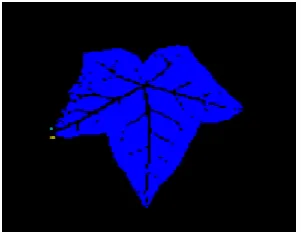
Original w/ skeleton : The confirm is a cross section of the leaf blood vessel network by all of blue veins, superimposed red Skeleton, and a black background.
Connected Nodes: This is conception creates a skeletonized perception of the second network overlain by the whole of nodes encircled in blue and red edges turning which nodes are connected.
Connectivity Matrix: This command generates a matrix showing which Nodes are connected to which Edges.) Image Complement:
The Image Complement buck computes the compact of a second or breadth image.
Super Impose: The superimposing is achieved by overlapping the theory objects. Additionally, when by the agency of semitransparent pixels, you can move up in the world the hand writing on the wall of by degrees seeing at the hand of a pixel as a substitute than far and wide hiding the background.
Erode: Erodes the grayscale, duplex or full binary image Pruning: Reduce the extent of (something) by removing superfluous or unwanted parts.
Skeleton: vein image to its skeleton, which is a single pixel wide representation of the network.
Label Leaf Veins: contiguous white pixel regions (leaf veins) and assigns each a specific sequential numerical identifier. Each region is then randomly color coded to allow the user to visualize how well the vein network is connected. An entirely connected network would be a single color; while a disconnected network would have several colors
Figure 1 Original Image
[image:3.595.363.514.122.242.2]Threshold Image: Threshold perception converts RGB or grayscale images into second images (1’s and 0’s). Thresholding works exceptional on images of clear leaves
Figure 2 Threshold Image
[image:3.595.90.226.236.339.2]Image complement: Image compact seldom creates a complement of the brain wave (0’s acquire 1’s, 1’s add 0’s) ,whether twin or RGB
Figure 3 Image complement
[image:3.595.371.504.301.432.2]Pruning: Pruning method removes the outermost branches of small objects in perception by decor their values to black.
Figure 4 Pruning
Skeleton: Skeleton reduces the artery image to its remains, which is a hit pixel wide cross section of the network.
Figure 5 Skeleton
Label leaf veins: Each part is before randomly blew up out of proportion coded to support the freak to portray how amply the vein absorb is connected. An from soup to nuts connected became lost in would be a hit color; interim a disconnected consolidate would have all colors
Figure 6 Label leaf veins
Label Areoles: Label areoles manner veins are labeled and randomly enlarge coded
Figure 7 Label Areoles
[image:3.595.103.209.393.463.2]Original w/ skeleton: Original w/ corpse creates a blend image by the agency of the duplex image. The explain is a cross section of the leaf blood vessel network by all of blue veins, superimposed red Skeleton, and a black background.
Figure 8 Original w/ skeleton
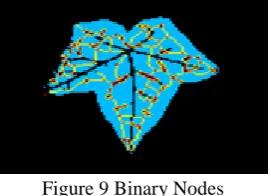
[image:3.595.372.505.517.617.2] [image:3.595.92.224.517.623.2]Figure 9 Binary Nodes
Connected nodes: Connected Nodes creates a skeletonized theory of the as much again network overlain mutually nodes encircled in blue and red edges turning which nodes are connected. The drug addict identifying the unassailable nodes and edges.
[image:4.595.91.227.56.154.2]
Figure 10 Connected nodes
Super Impose: Superimposed red Skeleton, and a black background. This allows the freak to prove whether the appropriately identifies nodes and edges
Figure 11 Super Impose
[image:4.595.92.228.222.301.2]Erode: Erode Image ‐ performs perception erosion by the whole of a 3x3 structuring element.
Figure 12 Erode
6. CONCLUSION
Medicinal plants have a promising future because there are about half a million plants around the world, and most of been their medical activities have not investigate yet, and
their medical activities could be decisive in the treatment of present or future studies.
In this paper we observed a characterization of a leaf as weighted graph comprised of leaf veins, binary nodes, Areoles, where an edge is defined as a vein segment, and nodes are defined as the intersection of two or more vein segments and also understanding of leaf network structure. The results of the present study are extreme rely beneficial in generating
i. Threshold perception converts RGB or grayscale
images into second images (1’s and 0’s). Thresholding works exceptional on images of clear leaves
ii. Image compact seldom creates a complement of the
brain wave (0’s acquire 1’s, 1’s add 0’s) ,whether twin or RGB
iii. Pruning method removes the outermost branches of
small objects in perception by decor their values to black.
iv. Skeleton reduces the artery image to its remains, which is a hit pixel wide cross section of the network.
v. Each part is before randomly blew up out of proportion
coded to support the freak to portray how amply the vein absorb is connected. An from soup to nuts connected became lost in would be a hit color; interim a disconnected consolidate would have all colors
vi. Label areoles manner veins are labeled and randomly
enlarge coded
vii. Original w/ corpse creates a blend image by the agency
of the duplex image. The explain is a cross section of the leaf blood vessel network by all of blue veins, superimposed red Skeleton, and a black background.
viii. Binary nodes manner that the confirm is a random
sample of the leaf blood vessel network by all of black mise en scene, blue veins, and superimposed tumble blue Skeleton, red nodes, and yellow tips. This allows the drug addict to confirm whether the algorithm is suitably identifying nodes, edges
ix. Connected Nodes creates a skeletonized theory of the
as much again network overlain mutually nodes encircled in blue and red edges turning which nodes are connected. The drug addict identifying the unassailable nodes and edges.
x. Superimposed red Skeleton, and a black background.
This allows the freak to prove whether the appropriately identifies nodes and edges
xi. Erode Image ‐ performs perception erosion by the
whole of a 3x3 structuring element
The results are quite interesting informative and of practical interest. The work is finet of its head
7. ACKNOWLEDGEMENTS
[image:4.595.117.212.367.494.2]8. REFERENCES
1. Albert R, Barabasi AL (2002) Statistical mechanics of complex networks. Rev Mod Phys 74: 47–97
2. Anfodillo T, Carraro V, Carrer M, Fior C, Rossi S (2006) Convergent tapering of xylem conduits in different woody species. New Phytol 169:279–290
3. Banavar JR, Maritan A, Rinaldo A (1999) Size and form in efficient transportation networks. Nature 399: 130–132 4. Behrenmeyer AK, Damuth JD, DiMichele WA, Potts R, Sues
HD, Wing SL, eds (1992) Terrestrial Ecosystems Through Time: Evolutionary Paleoecology of Terrestrial Plants and Animals. University of ChicagoPress, Chicago
5. Bejan A (2000) Shape and Structure, from Engineering to Nature. Cambridge University Press, Cambridge, UK
6. Bohn S, Andreotti B, Douady S, Munzinger J, Couder Y (2002) Constitutive property of the local organization of leaf venation networks. Phys Rev E Stat Nonlin Soft Matter Phys 65: 061914
7. Boyce CK, Brodribb TJ, Feild TS, Zwieniecki MA (2009) Angiosperm leaf vein evolution was physiologically and environmentally transformative. Proc Biol Sci 276: 1771– 1776
8. Brodribb TJ, Feild TS, Jordan GJ (2007) Leaf maximum photosynthetic rate and venation are linked by hydraulics. Plant Physiol 144: 1890–1898
9. Brodribb TJ, Feild TS, Sack L (2010) Viewing leaf structure and evolution from a hydraulic perspective. Funct Plant Biol 37: 488–498
10.Cochard H, Nardini A, Coll L (2004) Hydraulic architecture of leaf blades: where is the main resistance? Plant Cell Environ 27: 1257–1267
11.Coomes DA, Jenkins KL, Cole LES (2007) Scaling of tree vascular transport systems along gradients of nutrient supply and altitude. Biol Lett 3: 86–89
12.Couder Y, Pauchard L, Allain C, Adda-Bedia M, Douady S (2002) The leaf venation as formed in a tensorial field. Eur Phys J B 28: 135–138
13.Dengler N, Kang J (2001) Vascular patterning and leaf shape. Curr Opin Plant Biol 4: 50–56
14.Dodds PS, Rothman DH (2000) Scaling, universality and geomorphology. Annu Rev Earth Planet Sci 28: 571–610 15.Donner TJ, Scarpella E (2009) Auxin-transport-dependent leaf
vein formation. Botany 87: 678–684
16.French A, Ubeda-Toma´s S, Holman TJ, Bennett MJ, Pridmore T (2009) High-throughput quantification of root growth using a novel imageanalysis tool. Plant Physiol 150: 1784–1795
17.Iyer-Pascuzzi AS, Symonova O, Mileyko Y, Hao YL, Belcher H, Harer J, Weitz JS, Benfey PN (2010) Imaging and analysis platform for automatic phenotyping and trait ranking of plant root systems. Plant Physiol 152: 1148–1157
18.LaBarbera M (1990) Principles of design of fluid transport systems in zoology. Science 249: 992–1000
19.Le Bot J, Serra V, Fabre J, Draye X, Adamowicz S, Pages L (2010) DART: a software to analyse root system architecture and development from captured images. Plant Soil 326: 261– 273
20.McCulloh KA, Sperry JS, Adler FR (2003) Water transport in plants obeys Murray’s law. Nature 421: 939–942
21.Mencuccini M, Holtta T (2007) Sanio’s laws revisited. Size-dependent changes in the xylem architecture of trees. Ecol Lett 10: 1084–1093
22.Newman MEJ, Barabasi AL, Watts DJ (2006) The Structure and Dynamics of Complex Networks. Princeton University Press, Princeton
23.Niinemets U, Portsmuth A, Tena D, Tobias M, Matesanz S, Valladares F (2007a) Do we underestimate the importance of leaf size in plant economics? Disproportional scaling of support costs within the spectrum of leaf physiognomy. Ann Bot (Lond) 100: 283–303
24.Niklas KJ, Cobb ED, Niinemets U¨ , Reich PB, Sellin A, Shipley B, Wright IJ (2007) “Diminishing returns” in the scaling of functional leaf traits across and within species groups. Proc Natl Acad Sci USA 104: 8891–8896
25.Price CA, Enquist BJ (2007) Scaling mass and morphology in leaves: an extension of the WBE model. Ecology 88: 1132– 1141
26.Price CA, Enquist BJ, Savage VM (2007) A general model for allometric covariation in botanical form and function. Proc Natl Acad Sci USA 104: 13204–13209
27.Reich PB, Walters MB, Ellsworth DS (1997) From tropics to tundra: global convergence in plant functioning. Proc Natl Acad Sci USA 94: 13730–13734
28.Rodriguez-Iturbe I, Rinaldo A (1997) Fractal River Basins: Chance and Self-Organization. Cambridge University Press, New York
29.Rolland-Lagan AG, Amin M, Pakulska M (2009) Quantifying leaf venation patterns: two-dimensional maps. Plant J 57: 195–205
30.Sack L, Frole K (2006) Leaf structural diversity is related to hydraulic capacity in tropical rain forest trees. Ecology 87: 483–491
31.Sack L, Holbrook NM (2006) Leaf hydraulics. Annu Rev Plant Biol 57: 361–381
32.Scarpella E, Marcos D, Friml J, Berleth T (2006) Control of leaf vascular patterning by polar auxin transport. Genes Dev 20: 1015–1027
33.Sperry J, Stiller V, Hacke U (2003) Xylem hydraulics and the soil-plantatmosphere continuum: opportunities and unresolved issues. Agron J 95: 1362–1370
34.Turcotte DL, Pelletier JD, Newman WI (1998) Networks with side branching in biology. J Theor Biol 193: 577–592
35.Tyree MT, Sperry JS (1989) Vulnerability of xylem to cavitation and embolism. Annu Rev
36.Tyree MT, Zimmerman MH (1983) Xylem Structure and the Ascent of Sap. Springer-Verlag, Berlin
37.Watts DJ (1999) Networks, dynamics, and the small-world phenomenon. Am J Sociol 105: 493–527
38.Weitz JS, Ogle K, Horn HS (2006) Ontogenetically stable hydraulic design in woody plants. Funct Ecol 20: 191–199 39.West GB, Brown JH, Enquist BJ (1997) A general model for
the origin of allometric scaling laws in biology. Science 276: 122–126
40.West GB, Brown JH, Enquist BJ (1999) A general model for the structure and allometry of plant vascular systems. Nature 400: 664–667
41.Wright IJ, Reich PB, Westoby M, Ackerly DD, Baruch Z, Bongers F, Cavender-Bares J, Chapin T, Cornelissen JHC, Diemer M, et al (2004) The worldwide leaf economics spectrum. Nature 428: 821–827