Open Access
Review of interventions
Reducing stillbirths: interventions during labour
Gary L Darmstadt
1, Mohammad Yawar Yakoob
2, Rachel A Haws
1,
Esme V Menezes
2, Tanya Soomro
2and Zulfiqar A Bhutta*
2Address: 1Department of International Health, The Johns Hopkins Bloomberg School of Public Health, Baltimore, Maryland, USA and 2Division of Maternal and Child Health, The Aga Khan University, Karachi, Pakistan
Email: Gary L Darmstadt - [email protected]; Mohammad Yawar Yakoob - [email protected]; Rachel A Haws - [email protected]; Esme V Menezes - [email protected]; Tanya Soomro - [email protected]; Zulfiqar A Bhutta* - [email protected] * Corresponding author
Abstract
Background: Approximately one million stillbirths occur annually during labour; most of these stillbirths occur in low and middle-income countries and are associated with absent, inadequate, or delayed obstetric care. The low proportion of intrapartum stillbirths in high-income countries suggests that intrapartum stillbirths are largely preventable with quality intrapartum care, including prompt recognition and management of intrapartum complications. The evidence for impact of intrapartum interventions on stillbirth and perinatal mortality outcomes has not yet been systematically examined.
Methods: We undertook a systematic review of the published literature, searching PubMed and the Cochrane Library, of trials and reviews (N = 230) that reported stillbirth or perinatal mortality outcomes for eight interventions delivered during labour. Where eligible randomised controlled trials had been published after the most recent Cochrane review on any given intervention, we incorporated these new trial findings into a new meta-analysis with the Cochrane included studies.
Results: We found a paucity of studies reporting statistically significant evidence of impact on perinatal mortality, especially on stillbirths. Available evidence suggests that operative delivery, especially Caesarean section, contributes to decreased stillbirth rates. Induction of labour rather than expectant management in post-term pregnancies showed strong evidence of impact, though there was not enough evidence to suggest superior safety for the fetus of any given drug or drugs for induction of labour. Planned Caesarean section for term breech presentation has been shown in a large randomised trial to reduce stillbirths, but the feasibility and consequences of implementing this intervention routinely in low-/middle-income countries add caveats to recommending its use. Magnesium sulphate for pre-eclampsia and eclampsia is effective in preventing eclamptic seizures, but studies have not demonstrated impact on perinatal mortality. There was limited evidence of impact for maternal hyperoxygenation, and concerns remain about maternal safety. Transcervical amnioinfusion for meconium staining appears promising for low/middle income-country application according to the findings of many small studies, but a large randomised trial of the intervention had no significant impact on perinatal mortality, suggesting that further studies are needed.
Conclusion: Although the global appeal to prioritise access to emergency obstetric care, especially vacuum extraction and Caesarean section, rests largely on observational and population-based data, these interventions are clearly life-saving in many cases of fetal compromise. Safe, comprehensive essential and emergency obstetric care is particularly needed, and can make the greatest impact on stillbirth rates, in low-resource settings. Other advanced interventions such as amnioinfusion and hyperoxygenation may reduce Published: 7 May 2009
BMC Pregnancy and Childbirth 2009, 9(Suppl 1):S6 doi:10.1186/1471-2393-9-S1-S6
<supplement> <title> <p>Stillbirths – the global picture and evidence-based solutions</p> </title> <editor>Zulfiqar A Bhutta, Gary L Darmstadt, Joy E Lawn. Guest review editor: Robert L Goldenberg.</editor> <sponsor> <note>Review and publication were supported by the Saving Newborn Lives programme of Save the Children-US through a grant from the Bill & Melinda Gates Foundation.</note> </sponsor> <note>Systematic reviews</note> <url>http://www.biomedcentral.com/content/pdf/1471-2393-9-S1-info.pdf</url> </supplement> This article is available from: http://www.biomedcentral.com/1471-2393/9/S1/S6
© 2009 Darmstadt et al; licensee BioMed Central Ltd.
perinatal mortality, but concerns about safety and effectiveness require further study before they can be routinely included in programs.
Introduction
Stillbirths, or late fetal deaths, account for more than half of the world's 6 million perinatal deaths that occur in low-/middle-income countries each year. While stillbirth rates are commonly as low as 3 to 5 per 1000 births in some high-income countries, their incidence is estimated to be five to ten times greater in many low-/middle-income countries. These higher stillbirth rates are believed to be attributable to poor baseline maternal health (especially nutritional status), poor prevention and treatment of maternal conditions and infections during pregnancy, and inappropriate management of complications during pregnancy and childbirth.
There are two kinds of intrauterine fetal deaths: those that occur prior to the onset of labour (antepartum stillbirths), and those that occur during labour (intrapartum still-births). The major causes of antepartum stillbirths are pregnancy complications that lead to fetal asphyxia and/ or infection, including maternal infections, hypertensive disorders, placental dysfunction and haemorrhage, and fetal or placental abnormalities. The specific causes of many antepartum stillbirths, however, are difficult to ascertain. In low-/middle-income countries, approxi-mately one-third of stillbirths are estimated to occur intra-partum, and these are caused primarily by complications arising during labour and childbirth, such as prolonged or obstructed labour or umbilical cord accidents [1,2].
Intervention strategies to prevent antepartum and intra-partum stillbirths differ because they have largely different causes. Where women receive quality intrapartum care, as in many high-income countries, the proportion of intra-partum stillbirths is less than 10% of all stillbirths [2], indicating that a substantial proportion of intrapartum stillbirths are preventable with quality intrapartum care. Yet half of the world's women give birth at home, in the absence of a skilled birth attendant. Globally, the intra-partum stillbirth rate is estimated to be between 7 and 9 per 1000 births [2-4], but this figure obscures wide
dispar-ities both within and among countries, including substan-tial urban-rural and rich-poor divides. The risk of an intrapartum stillbirth in low and middle-income coun-tries is more than 14 times that in high-income councoun-tries; the risk is 17 times higher in low-income than in middle-income countries. When women in low-/middle-middle-income countries do give birth in health facilities, their care and their pregnancy outcomes are frequently compromised by absent or overburdened health care providers; deficiencies in training and supervision; insufficient supplies, drugs, and equipment; and substandard hygienic practices.
This paper focuses on interventions delivered during childbirth, primarily care provided at secondary- and ter-tiary-level large teaching and research hospitals with sur-gical capacity, that are of potential benefit for perinatal health and prevention of stillbirths.
Methods
Detailed methods undertaken to assemble and assess the evidence for the interventions in this paper are given in the first paper in this series [5]. Each study was given a level of evidence (LOE) according to the SIGN grading sys-tem. Grade of evidence, (i.e. A, B, C, D) was determined and then the interventions were classified under clear evi-dence, some evievi-dence, uncertain evidence or evidence of no or negative impact, as detailed in paper 1 [5]. We included 8 obstetric care interventions in our analysis (Table 1).
Results
Instrumental delivery (vacuum and forceps-assisted)
Background
Instrumental vaginal deliveries, which make up a subset of operative deliveries, are procedures involving traction applied to the fetal head, for indications including mater-nal exhaustion or other compromise (e.g., matermater-nal heart disease), fetal distress or heart rate abnormalities (often associated with prolonged second stage of labour), and fetal malposition [6]. Rates of instrumental deliveries
Table 1: Interventions to prevent intrapartum stillbirth reviewed in this paper
• Instrumental delivery (vacuum and forceps-assisted) • Emergency obstetric care, including Caesarean section • Induction of labour versus expectant management • Drugs for cervical ripening and induction of labour • Planned Caesarean section for breech presentation
• Magnesium sulphate for treatment of pre-eclampsia/eclampsia or pre-term labour • Maternal hyperoxygenation for suspected impaired fetal growth
range from 5–20% in high-income countries [6]. Before an instrumental delivery should be attempted, the fetal head must be engaged and its position known, the cervix fully dilated, and the membranes ruptured. Traction is generally applied to the fetal head with either forceps or a vacuum extraction device (also called a ventouse). The use of these devices poses the potential for injury to the mother or the baby. Forceps have long been associated with birth trauma, particularly when used for rotational procedures, but low overall morbidity rates are reported for well-trained forceps practitioners [7]. While the associ-ation with birth injury is fairly well established, whether forceps use or vacuum extraction is preferable for prevent-ing stillbirth or perinatal mortality is unclear.
Literature-based evidence
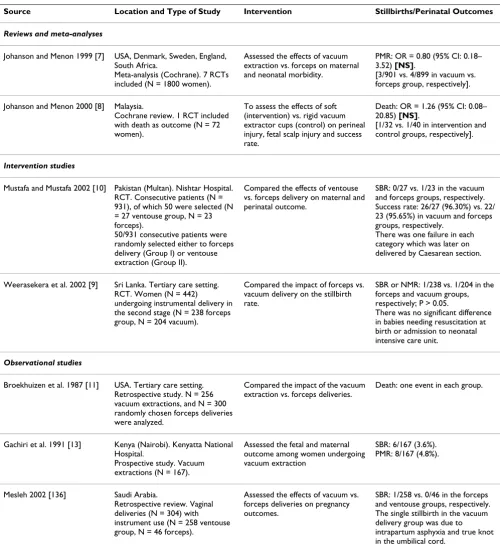
Our systematic review included 2 Cochrane reviews and 5 other observational and intervention studies (Table 2). No studies were found that compared stillbirth outcomes with versus without instrumental vaginal delivery. One Cochrane review by Johanson et al. [7] compared the impact of vacuum extraction to forceps delivery, and included 7 trials reporting perinatal mortality outcomes (Additional file 1). Vacuum extraction compared to for-ceps delivery was associated with significantly less mater-nal trauma (OR = 0.41, 95% CI: 0.33–0.50) and less general and regional anaesthesia. Additionally, the risk of Caesarean section showed a trend towards being lower among the vacuum extractor group than the forceps group (OR = 0.56, 95% CI: 0.31–1.02 [NS]). Vacuum extraction was more likely to fail when used for assisted vaginal delivery than forceps (OR = 1.69, 95% CI: 1.31–2.19). Perinatal mortality rates were not statistically significantly different between the two instrumental methods (7 trials, N = 1800, OR = 0.80, 95% CI: 0.18–3.52 vacuum extrac-tion vs. forceps, respectively). The vacuum extractor was associated with an increase in neonatal cephalhaemoto-mas and retinal haemorrhages, but serious neonatal injury was uncommon with either instrument and Apgar scores at 1 and 5 min were comparable [LOE: 1+]. The other Cochrane review, also by Johanson et al. [8], com-pared the impact of use of soft versus rigid vacuum extrac-tor cups; only one trial (N = 72) in Malaysia reported perinatal death as an outcome but found no significant difference between soft and hard cups (OR = 1.26, 95% CI: 0.08–20.85 [NS]) [LOE: 1+] (Additional file 2).
An RCT by Weerasekera et al. [9] not included in the above reviews compared the outcomes associated with vacuum and forceps deliveries (N = 442 women) in the second stage of labour. There were no significant differ-ences between the two methods in the incidence of third-degree perineal tears, postpartum haemorrhage or rup-tured uterus, but cervical tears were slightly higher in the forceps group. Cephalhaematoma incidence was higher
among the vacuum extraction group, but there were no significant differences between the groups in babies need-ing resuscitation at birth, admission to neonatal intensive care unit, stillbirth or neonatal death rates [LOE: 2+]. Another RCT from Pakistan reported similar success rates with both instruments [10].
Multiple observational studies have evaluated the compli-cations and outcomes related to vacuum deliveries either alone or in comparison with alternative methods of instrumental deliveries [11,12]. In a prospective study of 167 vacuum extractions (6.3% of total deliveries) at the national hospital in Kenya, Gachiri et al. [13] docu-mented perinatal morbidity and mortality rates of 16.2% and 4.8% respectively [LOE: 3]. Lurie et al [14] conducted a decision-to-delivery time analysis and found that it was faster to undertake forceps deliveries compared to vacuum extractions. While some studies suggested higher rates of vaginal tears with forceps [15], in general no differences in complication rates were found in other studies [16], and no studies found differences in stillbirth incidence.
New meta-analysis
We identified 7 trials comparing vacuum extraction versus forceps-assisted deliveries that reported stillbirth inci-dence (N = 632 vacuum, N = 611 forceps). Our meta-anal-ysis found no evidence of differential impact of either method on stillbirths (OR = 0.60, 95% CI: 0.07–5.00) (Figure 1).
Conclusion
the purchase of vacuum extractors and quality training to capacitate practitioners to perform the procedure may be prohibitive for certain low-resource settings. Relatively inexpensive manual vacuum extractors are available that may require less training to use than forceps and may be a useful alternative to forceps to facilitate rapid delivery in
the presence of signs of fetal distress in the second stage of labour; however, these require further evaluation.
Table 2: Comparison of impact of vacuum extractor versus forceps on stillbirths and perinatal mortality
Source Location and Type of Study Intervention Stillbirths/Perinatal Outcomes
Reviews and meta-analyses
Johanson and Menon 1999 [7] USA, Denmark, Sweden, England, South Africa.
Meta-analysis (Cochrane). 7 RCTs included (N = 1800 women).
Assessed the effects of vacuum extraction vs. forceps on maternal and neonatal morbidity.
PMR: OR = 0.80 (95% CI: 0.18– 3.52) [NS].
[3/901 vs. 4/899 in vacuum vs. forceps group, respectively].
Johanson and Menon 2000 [8] Malaysia.
Cochrane review. 1 RCT included with death as outcome (N = 72 women).
To assess the effects of soft (intervention) vs. rigid vacuum extractor cups (control) on perineal injury, fetal scalp injury and success rate.
Death: OR = 1.26 (95% CI: 0.08– 20.85) [NS].
[1/32 vs. 1/40 in intervention and control groups, respectively].
Intervention studies
Mustafa and Mustafa 2002 [10] Pakistan (Multan). Nishtar Hospital. RCT. Consecutive patients (N = 931), of which 50 were selected (N = 27 ventouse group, N = 23 forceps).
50/931 consecutive patients were randomly selected either to forceps delivery (Group I) or ventouse extraction (Group II).
Compared the effects of ventouse vs. forceps delivery on maternal and perinatal outcome.
SBR: 0/27 vs. 1/23 in the vacuum and forceps groups, respectively. Success rate: 26/27 (96.30%) vs. 22/ 23 (95.65%) in vacuum and forceps groups, respectively.
There was one failure in each category which was later on delivered by Caesarean section.
Weerasekera et al. 2002 [9] Sri Lanka. Tertiary care setting. RCT. Women (N = 442)
undergoing instrumental delivery in the second stage (N = 238 forceps group, N = 204 vacuum).
Compared the impact of forceps vs. vacuum delivery on the stillbirth rate.
SBR or NMR: 1/238 vs. 1/204 in the forceps and vacuum groups, respectively; P > 0.05.
There was no significant difference in babies needing resuscitation at birth or admission to neonatal intensive care unit.
Observational studies
Broekhuizen et al. 1987 [11] USA. Tertiary care setting. Retrospective study. N = 256 vacuum extractions, and N = 300 randomly chosen forceps deliveries were analyzed.
Compared the impact of the vacuum extraction vs. forceps deliveries.
Death: one event in each group.
Gachiri et al. 1991 [13] Kenya (Nairobi). Kenyatta National Hospital.
Prospective study. Vacuum extractions (N = 167).
Assessed the fetal and maternal outcome among women undergoing vacuum extraction
SBR: 6/167 (3.6%). PMR: 8/167 (4.8%).
Mesleh 2002 [136] Saudi Arabia.
Retrospective review. Vaginal deliveries (N = 304) with instrument use (N = 258 ventouse group, N = 46 forceps).
Assessed the effects of vacuum vs. forceps deliveries on pregnancy outcomes.
Emergency obstetric care, including Caesarean section
Background
The vast majority of the world's one million intrapartum stillbirths each year occur in low-/middle-income coun-tries marked by high rates of unmet obstetric need [18,19], suggesting that many of these deaths could be prevented with improved obstetric care [20,21]. The avail-ability of comprehensive essential obstetric care (EOC), supported by emergency transport, skilled providers, and aftercare, is regarded as critical for effective maternal health services in obstetric emergencies [22]. Essential obstetric care (EOC) refers to elements of obstetric care needed for the management of normal and complicated pregnancy, delivery and the postpartum period. Basic EOC can be performed in primary health care facilities, and includes administration of anti-biotics, oxytocics, anti-convulsants including magnesium sulfate, manual removal of the placenta, treatment for incomplete miscar-riage, post-abortion care, and instrumental vaginal deliv-ery with forceps or vacuum extractor. Comprehensive EOC includes all basic EOC functions plus Caesarean sec-tion, anaesthesia, and blood transfusion, and generally requires a secondary or higher-level health facility. The subset of comprehensive EOC interventions used to respond to unexpected intrapartum complications such as haemorrhage and obstructed labour is referred to as emer-gency obstetric care (EmOC) [23], and includes some ele-ments of basic EOC such as manual removal of the placenta and medical treatment in labour, as well as all anaesthesia, blood transfusion, and Caesarean section.
Non-availability of EmOC, especially Caesarean section, in resource-poor settings has been implicated as a risk fac-tor for intrapartum stillbirths, particularly those
associ-ated with prolonged labour and its associassoci-ated fetal asphyxia, infection, and birth trauma [24-28]. Reductions in intrapartum stillbirth rates observed in the UK have been attributed to more liberal use of Caesarean section [20], though this is controversial. There is evidence to sug-gest that the optimal Caesarean section rate to reduce the number and proportion of intrapartum stillbirths lies between 5 and 10 percent [3]. Recent data from global estimates of Caesarean section availability at population level indicate that many countries fall far short of this range, while others exceed this, to the possible detriment of maternal health outcomes [29]. Some studies have shown that it can be comparatively safe to deliver in rural hospitals even if they lack Caesarean section capability [30].
Quality of EmOC is also critical. These issues have been documented in high-income countries, particularly among rural populations [26,31,32], but the data associ-ating quality of EmOC with stillbirth or perinatal mortal-ity rates has not been compiled.
Because the components of EmOC are by definition life-saving interventions, RCTs of EmOC versus no EmOC would be unethical, so the evidence base for improving access to and quality of EmOC, especially Caesarean sec-tion, consists largely of observational studies.
Literature-based evidence
The literature on EmOC considered two primary issues: availability and optimal rates of Caesarean section (and associations with intrapartum stillbirth rates); and the impact of quality of obstetric care on perinatal outcomes. We identified 40 studies reporting stillbirth or perinatal
Results of new meta-analysis of impact of vacuum versus forceps delivery on stillbirths
Figure 1
Results of new meta-analysis of impact of vacuum versus forceps delivery on stillbirths. Study or Subgroup
Peto, Fixed, 95% CI
Not estimable
Vacuum Forceps Odds Ratio Odds Ratio
Peto, Fixed, 95% CI
0.01 0.1 1 10 100
mortality outcomes that reviewed or implemented inter-ventions to provide EmOC (Table 3).
Availability and practice of Caesarean section
In low-/middle-income countries, prolonged and/or obstructed labour complicated by fetal asphyxia, fetal or placental infection, and birth trauma is a major cause of stillbirth, often arising from a small maternal pelvis due to childhood malnutrition, which subsequently leads to cephalopelvic disproportion during delivery [33]. Timely delivery, often by Caesarean section or instrumental vagi-nal delivery, can reduce associated intrapartum stillbirth, and is largely credited for the relatively low rates of intra-partum stillbirth in high-income countries [3].
Using regression analysis of data from WHO and other sources to examine the association between stillbirth rates and obstetric care, Goldenberg et al. [3] and McClure et al. [21] observed that Caesarean section availability in low-/ middle-income countries was associated with reductions in intrapartum stillbirths (Figures 2, 3 and 4). They [3] reported that intrapartum stillbirths dropped by 1.61 per 1000 births for every one percentage point increase in Caesarean section from 0 to 8 percent. Thereafter, they observed a small, non-significant increase in intrapartum stillbirths for each percent increase in Caesarean section. Intrapartum stillbirth rates correlated more closely with the measures of obstetric care in the regression analysis than did antepartum stillbirth rates, corroborating the theory that obstetric care availability and quality improve-ments will impact intrapartum stillbirth incidence more than antepartum stillbirth incidence. There was no rela-tionship between Caesarean section and intrapartum still-births in high-income countries, which all had rates of Caesarean section of 15 percent or more. The WHO rec-ommends Caesarean section rates of 10 to 15 percent, although they also note that 'countries with some of the lowest perinatal mortality rates in the world have a Cae-sarean rate of less than 10 percent,' and that perinatal mortality declines are steep until Caesarean section rates reach approximately 8 percent of deliveries, after which point the relationship becomes less clear [34]
Using data from the early 1980s in Australia, Alessandri et al. [35] performed a case-control study of intrapartum stillbirths, and could not identify any specific antenatal risk factors that predicted these demises. However, they did suggest that because the odds of emergency Caesarean section were significantly higher among stillbirth cases than live born controls, prompt Caesarean section might reduce intrapartum stillbirths, the risk of which was strongly associated with placental abruption or other pla-cental problems, fetal distress, umbilical cord prolapse, and vaginal breech delivery. Other studies have confirmed that in many high-income country settings, liberal
poli-cies of Caesarean section are associated with positive effects on fetal survival, even when performed well before term [36-39].
While Caesarean section can be a life-saving intervention for both mother and child, its liberal use exposes some proportion of mothers and babies who do not need the procedure to unnecessary risks of morbidity. Additionally, in some low-/middle-income countries, particularly in low-resource areas, there is some evidence that the prac-tice of Caesarean section may be associated with an
increased risk of perinatal mortality [40,41], suggesting that Caesarean section may be performed too late or by inadequately skilled practitioners in these settings. Addi-tionally, the elevated risk of uterine rupture in subsequent pregnancies after a Caesarean section should be a consid-eration in providing the procedure in remote areas. In addition to the risk of uterine rupture, the data are con-flicting about whether vaginal labour after previous Cae-sarean is associated with increased risk of perinatal mortality [42-46]. Because of the known risk of uterine rupture, particularly among women whose prior Caesar-ean incision was classical rather than lower-segment, it is recommended that women who have had prior classical Caesarean section have immediate access to EmOC in subsequent pregnancies to reduce the risk of maternal mortality and stillbirth.
Quality of obstetric care
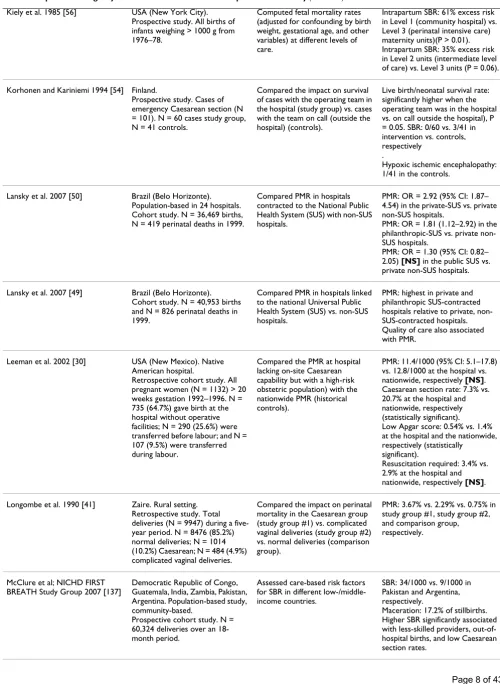
Table 3: Impact of emergency obstetric care on stillbirths and perinatal mortality
Source Location and Type of Study Intervention Stillbirths/Perinatal Outcomes
Quality and availability of obstetric care
Abdel-Latif et al; NICUS Group 2006 [57]
Australia (New South Wales and Australian Capital Territory). 10 neonatal intensive care units; stillbirth analysis done from other regional data.
Retrospective analysis. Infants (N = 8654) < 32 wks' gestation born 1992–2002 (N = 1879 rural areas, N = 6775 urban). Regional SB analysis: N = 14,707 births.
Compared the impact of rural vs. urban residence and associated differentials in access to higher-level emergency obstetric care on perinatal mortality measures.
NMR (in NICU): adj. OR = 1.26 (95% CI: 1.07–1.48, P = 0.005) in rural vs. urban group.
SBR: OR = 1.20 (95% CI: 1.09– 1.32; P < 0.001).
[727/3530 (20.6%) vs. 1991/11177 (17.8%) in rural and urban infants, respectively].
Cameron 1998 [25] Australia (Far North Queensland). Atherton Hospital.
Descriptive study. N = 2883 deliveries from 1981–1990 (N = 1974 public confinements, N = 909 private confinements).
Assessed annual obstetric audit data from 1981–1990 to compare publicly versus privately funded facilities.
PMR: 5.1/1000 vs. 5.5/1000 in public and private confinements, respectively.
PMR (corrected): 9.6/1000 vs. 13.5/1000 vs. 16.9/1000 in public patients, Queensland (1987) and the Far North Statistical Division (1987), respectively.
Gaffney et al. 1994 [48] UK (Oxford). National Perinatal Epidemiology Unit.
Case control study. N = 573 participants, of whom N = 141 cerebral palsy group (N = 257 controls) and N = 62 perinatal deaths (N = 119 controls).
Compared the frequency of events during labour and delivery, and the suboptimal care among cases (with perinatal deaths) vs. controls.
Intrapartum haemorrhage: OR = 5.3 (95% CI: 1.4–20.1) in cases of deaths vs. controls.
Meconium stained amniotic fluid: OR = 12.3 (95% CI: 3.6–41.4) in cases of deaths vs. controls. Failure to respond to signs of severe fetal distress: OR = 26.1 (95% CI: 6.2 – 109.7) in cases of deaths vs. controls.
Goldenberg et al. 2007 [3] Review. Data from 51 countries (WHO and other sources).
Logistic regression analysis of measures of antenatal and obstetric care with perinatal outcomes.
Intrapartum SB: for each 1% increase in the percentage of women with at least 4 antenatal visits, the intrapartum SBR decreased by 0.16/1000 births (P < 0.0001).
Intrapartum SB: as Caesarean section rates increased from 0 to 8%, for each 1% increase, the intrapartum SBR decreased by 1.61/1000 births. No relationship between Caesarean section and SBR in high-income countries. Stronger relationship between various measures of care with intrapartum versus antepartum SBR.
Grzybowski et al. 1991 [59] British Columbia (Queen Charlotte Islands). 21-bed hospital and medical clinic.
Descriptive study. All women (N = 286) >20 wks' gestation delivering from 1984–88. 33% were primiparous, 20% native. N = 192 (67%) delivered locally, N = 33 (12%) transferred after admission for complications, N = 61 (21%) delivered elsewhere.
Assessed the PMR among women delivering at a small hospital without Caesarean section capability delivering <50 infants per year.
PMR: 20.8 (95% CI: 4.4–37.2); N = 6.
Kiely et al. 1985 [56] USA (New York City). Prospective study. All births of infants weighing > 1000 g from 1976–78.
Computed fetal mortality rates (adjusted for confounding by birth weight, gestational age, and other variables) at different levels of care.
Intrapartum SBR: 61% excess risk in Level 1 (community hospital) vs. Level 3 (perinatal intensive care) maternity units)(P > 0.01). Intrapartum SBR: 35% excess risk in Level 2 units (intermediate level of care) vs. Level 3 units (P = 0.06).
Korhonen and Kariniemi 1994 [54] Finland.
Prospective study. Cases of emergency Caesarean section (N = 101). N = 60 cases study group, N = 41 controls.
Compared the impact on survival of cases with the operating team in the hospital (study group) vs. cases with the team on call (outside the hospital) (controls).
Live birth/neonatal survival rate: significantly higher when the operating team was in the hospital vs. on call outside the hospital), P = 0.05. SBR: 0/60 vs. 3/41 in intervention vs. controls, respectively
.
Hypoxic ischemic encephalopathy: 1/41 in the controls.
Lansky et al. 2007 [50] Brazil (Belo Horizonte). Population-based in 24 hospitals. Cohort study. N = 36,469 births, N = 419 perinatal deaths in 1999.
Compared PMR in hospitals contracted to the National Public Health System (SUS) with non-SUS hospitals.
PMR: OR = 2.92 (95% CI: 1.87– 4.54) in the private-SUS vs. private non-SUS hospitals.
PMR: OR = 1.81 (1.12–2.92) in the philanthropic-SUS vs. private non-SUS hospitals.
PMR: OR = 1.30 (95% CI: 0.82– 2.05) [NS] in the public SUS vs. private non-SUS hospitals.
Lansky et al. 2007 [49] Brazil (Belo Horizonte). Cohort study. N = 40,953 births and N = 826 perinatal deaths in 1999.
Compared PMR in hospitals linked to the national Universal Public Health System (SUS) vs. non-SUS hospitals.
PMR: highest in private and philanthropic SUS-contracted hospitals relative to private, non-SUS-contracted hospitals. Quality of care also associated with PMR.
Leeman et al. 2002 [30] USA (New Mexico). Native American hospital.
Retrospective cohort study. All pregnant women (N = 1132) > 20 weeks gestation 1992–1996. N = 735 (64.7%) gave birth at the hospital without operative facilities; N = 290 (25.6%) were transferred before labour; and N = 107 (9.5%) were transferred during labour.
Compared the PMR at hospital lacking on-site Caesarean capability but with a high-risk obstetric population) with the nationwide PMR (historical controls).
PMR: 11.4/1000 (95% CI: 5.1–17.8) vs. 12.8/1000 at the hospital vs. nationwide, respectively [NS]. Caesarean section rate: 7.3% vs. 20.7% at the hospital and nationwide, respectively (statistically significant).
Low Apgar score: 0.54% vs. 1.4% at the hospital and the nationwide, respectively (statistically
significant).
Resuscitation required: 3.4% vs. 2.9% at the hospital and nationwide, respectively [NS].
Longombe et al. 1990 [41] Zaire. Rural setting. Retrospective study. Total deliveries (N = 9947) during a five-year period. N = 8476 (85.2%) normal deliveries; N = 1014 (10.2%) Caesarean; N = 484 (4.9%) complicated vaginal deliveries.
Compared the impact on perinatal mortality in the Caesarean group (study group #1) vs. complicated vaginal deliveries (study group #2) vs. normal deliveries (comparison group).
PMR: 3.67% vs. 2.29% vs. 0.75% in study group #1, study group #2, and comparison group, respectively.
McClure et al; NICHD FIRST BREATH Study Group 2007 [137]
Democratic Republic of Congo, Guatemala, India, Zambia, Pakistan, Argentina. Population-based study, community-based.
Prospective cohort study. N = 60,324 deliveries over an 18-month period.
Assessed care-based risk factors for SBR in different low-/middle-income countries.
SBR: 34/1000 vs. 9/1000 in Pakistan and Argentina, respectively.
Maceration: 17.2% of stillbirths. Higher SBR significantly associated with less-skilled providers, out-of-hospital births, and low Caesarean section rates.
Rautava et al. 2007 [51] Finland. 14 level II (central) and 5 level III (university) hospitals. Retrospective national medical birth-register study. N = 2291 very pre-term infants (gestational age <32 weeks at birth or birth weight of ≤ 1500 g) born from 2000– 2003.
Compared PMR between level II (central) and level III (university) hospitals.
IMR + SBR: 494/2291 infants (21.6%).
IMR: 224/2021 (11.1%) among live-born infants.
Both the total 1-year mortality and the 1-year mortality of live-born infants were higher in level II hospitals compared with level III hospitals.
Steyn et al. 1998 [58] South Africa. Hospital records. Retrospective analysis. N = 174,713 deliveries during 1975– 1994), of which N = 22,773 were by Caesarean.
To describe trends in Caesarean section and PMR over the study period.
PMR: 34.7/1000 vs. 18.4/1000 in 1975 vs. 1994, respectively. The Caesarean section rate stayed constant at about 13% during this period.
Practice of Caesarean section and impact on perinatal mortality
Bottoms et al. 1997 [37] USA. Academic referral centers with neonatal intensive care units. Prospective observational study. Singleton extremely low birth weight (LBW) infants (N = 713) over a one-year study period (N = 482 study group, N = 231 controls).
Compared the impact on PMR of provider willingness to perform Caesarean delivery at 24 weeks for indications of fetal distress (intervention) vs. provider unwillingness to provide early Caesarean for these indications (controls).
Neonatal survival: adj. OR = 3.7 (95% CI: 2.3–6.0); P = 0.0001 in the study vs. control group, respectively.
Survival without serious neonatal morbidity: OR = 1.8 (94% CI: 1.0 = 3.3) [NS] in the study vs. control group, respectively.
SB: 19.5% vs. 0% for 21 weeks vs. > 28 weeks, respectively. NMR: 78% vs. 3.3% in 21 weeks and 30+ weeks, respectively.
De Muylder and Amy 1993 [40] Zimbabwe (the Midlands Province). 12 hospitals.
Prospective study. Deliveries from 1985–1986 in 12 hospitals (N = 19,363 deliveries/year), with Caesarean section rates ranging from 2.2–16.8%.
To assess the impact of high versus low Caesarean section rates on perinatal outcome.
PMR: 51.9/1000 vs. 39.7/1000 births in 6 hospitals with high rate of Caesarean section vs. 6 hospitals with high rate of instrumental delivery, respectively. Statistically significantly higher in hospitals with
instrumental:Caesarean section ratio < 0.2.
Caesarean section and PMR positively correlated: R2 = 0.429 (P = 0.021).
Hankins et al. 2006 [36] USA. Review.
To assess the impact on neonatal morbidity and mortality in a high-income country setting of allowing women to opt for delivery by elective Caesarean section at 39 weeks of gestation.
Extracted findings from reviewed studies:
SBR: steady from 23–40 wks gestation, 5% of all stillbirths occurring at each week of gestation (Copper).
SBR: 0.6/1000 vs. 1.9/1000 live births at 33–39 wks vs. >39 wks' gestation (Yudkin).
SBR: 1.3–4.6/1000 live births from 37–41 wks' gestation (Fretts). Estimated prevention of SB associated with elective Caesarean for all births at 39 wks: 2/1000 living fetuses (6000 SBs prevented in the US each year).
Iffy et al. 1994 [38] Ireland (Dublin) and USA (Newark, New Jersey). 2 large hospitals.
Observational study. N = 68479 births (excluding malformations). Caesarean section rates: 6% in Ireland hospital, 17.5% at USA hospital.
Compared the PMR associated with different Caesarean section rates at 2 different hospitals.
PMR: 611/50768 (12.0/1000) vs. 343/17711 (19.8/1000) in Newark vs. Dublin, respectively; P < 0.01. NMR: No impact.
Ilesanmi et al. 1996 [47] Nigeria (Ibadan). Oluyoro Catholic Hospital.
Descriptive study. Breech singleton deliveries (N = 441 of 21,243 deliveries).
Compared the intrapartum stillbirth rate associated with breech (study group) vs. cephalic deliveries (controls).
Fresh SBR: 7.8% vs. 1.2% for breech and cephalic, respectively over the same time period. Caesarean section performed for 15.7% of breech singleton deliveries (indicatioN = fetal distress).
McClure et al. 2007 [21] 188 developed and developing countries. WHO data. Regression analysis.
To analyze correlation between SBR and multiple measures of antenatal and obstetric care (Caesarean section rates, skilled delivery attendance, and complete ANC).
SBR and MMR: strongly correlated, ~5 SBs for each maternal death. Ratio: 2:1 in least developed countries vs. 50:1 in the most developed countries. SBR: Decreased sharply as Caesarean section rates increased from 0 to about 10%, (same for MMR).
SBR: No significant reductions associated with skilled attendance until coverage rates ~40%. SBR: No reductions associated with complete ANC until 60% coverage was achieved (modest reduction).
Mekbib and Teferi 1994 [138] Ethiopia (Addis Ababa). Hospital-based study.
Retrospective review of hospital records. N = 11,657 consecutive deliveries 1987–1992). N = 645 Caesarean sections (5.5%).
Compared the impact PMR of deliveries by Caesarean section vs. all deliveries (controls).
PMR: 153.5/1000 (N = 99) vs. 67.5/1000 live births in Caesarean section group vs. rate for all deliveries respectively (P < 0.01).
O'Driscoll et al. 1988 [39] USA (Dallas, TX) and Ireland (Dublin).
Retrospective analysis of hospital records from 1982–84. Pregnant women admitted to hospital (N = 24441 at Dublin; N = 22580 women in Dallas).
Compared the impact on PMR between a low Caesarean section rate hospital (Dublin) vs. a high Caesarean section rate hospital (Dallas).
CS rates: 482/8068 (6.0%) vs. 2001/10988 (18.0%) in Dublin vs. Dallas, respectively in 1983. [330/7782 (4.2%) vs. 2022/11592 (17.3%) in Dublin vs. Dallas, respectively in 1984.] PMR: 148/8199 (17.9/1000) vs. 161/11098 (14.5/1000) in Dublin vs. Dallas, respectively in 1983. [119/7879 (15.1/1000) vs. 207/ 11716 (17.8/1000) at Dublin and Dallas, respectively in 1984.] Intrapartum SB: 7-fold lower in Dallas compared to Dublin in 1983. Including 1982 & 1984, no significant difference in overall PMR despite 4 times as many Caesareans in Dallas as Dublin.
Wright et al. 1991 [139] Nigeria. Jos University Teaching Hospital (high-risk population). Descriptive study. N = 757 patients undergoing Caesarean section.
Assessed PMR among a case series of Caesarean section.
PMR: 235/1000 (N = 69 stillbirths and N = 107 early neonatal deaths).
Management of risk factors for stillbirth
Abate et al. 2006 [140] Ethiopia (Addis Ababa). Two teaching hospitals.
Retrospective study. Eclamptic cases (N = 216) diagnosed, admitted and managed from October 1994 to September 1999.
To assess the stillbirth rate (SBR) and perinatal mortality rate (PMR) among women admitted to hospital who presented with or who developed eclampsia.
SBR: 44/216.
Early neonatal deaths: 25/216. PMR: 312.2/1000 deliveries.
Alessandri et al. [35] Australia (Western Australia). Matched case-control study. Intrapartum stillbirths ≥1000 g (cases) and live born infants (controls) matched for year of birth (1980–1983), plurality, sex, birth weight, and race of mother.
To determine antenatal and intrapartum risk factors for intrapartum stillbirths at the population level.
Placental abruption: OR = 9.55 (95% CI: 2.09–43.69) in cases versus controls, respectively. Fetal distress: OR = 4.64 (95% CI: 1.92–11.19) in cases versus controls, respectively.
Cord prolapse: OR = 10.00 (95% CI: 1.17–85.60)
Placental problems (OR = 2.26, 95% CI: 1.13–4.52)
Vaginal breech delivery: OR = 3.51 (95% CI: 1.40–8.80) and
Emergency Caesarean section: OR = 2.15 (95% CI: 1.13–4.10). No antenatal risk factors predicted deaths.
Basso et al. 2006 [141] Norway. Population-based using data from the Medical Birth Registry.
Longitudinal study. Singleton firstborn fetuses (N = 804,448) with Norwegian-born mothers born 1967–2003.
Compared the impact on perinatal outcomes of being born to preeclamptic (exposed) vs. non-preeclamptic (unexposed) mothers in the period from 1991– 2003 vs. 1967–1978.
SBR: OR = 1.3 (95% CI: 1.1–1.7) in exposed vs. unexposed group, respectively from 1991–2003 vs. adj. OR = 4.2 (95% CI: 3.8–4.7) in exposed vs. unexposed group from 1967–78.
Induction before 37 weeks for preeclampsia: 20% vs. 8% in 1991– 2003 vs. 1967–78, respectively.
Bhattacharyya et al. 1979 [142] India.
Prospective study. Patients (N = 60) with previous stillbirths. A majority (75%) had a history of repeated stillbirths, and responsible pathology was detected in 55% of the cases.
To assess the impact of active antepartum, intrapartum, and early postnatal care in women with previous stillbirths.
Live birth: 75%.
Cruikshank and Linyear 1987 [53] USA (Virginia).
Perinatal audit. N = 108 term fetal deaths in 1983.
Assessed circumstances and management of term fetal deaths occurring in Virginia to determine potential preventability.
Preventable fetal death: 52/108 (48%)
Risk factors for antepartum fetal death: maternal hypertension, diabetes, inadequate fetal surveillance, post-term pregnancy Major cause of intrapartum fetal death: delay between obvious fetal compromise onset and delivery. Incidence of preventable term stillbirth lower in larger hospitals.
Onyiriuka 2006 [143] Nigeria (Benin City). Retrospective, observational study. All babies born weighing > 4000 g.
Compared the fetal outcome in high birth weight babies (study group) vs. normal weight babies (controls).
Risk of fetal death higher in high birth weight babies (full text not available).
Risk of Caesarean section higher in high birth weight babies (full text not available).
Management and mortality of twin delivery, including impact of Caesarean section
Ananth et al. 2004 [144] USA.
Retrospective cohort study. Twin live births and stillbirths between 1989–91 and 1997 = 99 (N = 1,102,212).
Compared the changes in the SBR (≥22 weeks), labour induction, and Caesarean rates among twin births from 1989–91 and 1997–99.
SBR: RR = 0.52 (95% CI: 0.49– 0.55) [13.9/1000 vs. 24.4/1000 in 1999 vs. 1989, respectively (48% decrease).]
SBR excluding births weighing < 500 g and adjusting for changes in labour induction and Caesarean delivery: RR = 0.75 (95% CI: 0.72– 0.79)(25% decrease).
Labour induction: 13.8% vs. 5.8% in 1997–99 vs. 1989–91, respectively (138% increase).
Caesarean delivery: 55.6% vs. 48.3% in 1997–99 vs. 1989–91, respectively (15% increase).
Fakeye 1988 [145] Nigeria (Ilorin). University of Ilorin Teaching Hospital.
Descriptive study. Consecutive twin pairs (N = 622). N = 146 twin-1 and N = 192 twin-2 breech births.
Compared PMR between first and second twin breech infants.
SB and asphyxia (Apgar 1,2, or 3) high in both first and second twin breech infants.
PMR: 13.7% vs. 18.8% for twin-1 and twin-2 breech, respectively. Corrected PMR: 9.3% vs. 12.4% for twin-1 and twin-2 respectively among infants weighing 2.0 kg or more. Twin-specific breech PMR lowest in 2.5–2.9 kg group (higher for smaller and larger twins). Breech-breech or primary breech managed by Caesarean section: lower PMR than vaginally delivered breech twin pairs.
Rydhstrom and Ingemarsson 1991 [146]
Sweden (Stockholm). The National Medical Birth Registry.
Matched case-control twin study. N = 273 twin pregnancies delivered 1973–1983 weighing 1500–2499 g. N = 91 pregnancies (cases), N = 182 controls.
To compare the Caesarean section rates between the cases where one or both twins died vs. controls with similar birth weight (+/- 100 g) and year of delivery (+/- 1 year).
Caesarean section rate: 20% vs. 50–65% in 1973–76 vs. 1981–83 respectively, with an increase for both cases and controls. No significant difference between groups [NS]
Smith et al. 2005 [147] UK (Scotland).
Retrospective cohort study. All twin births (N = 8073) ≥36 weeks of gestation, excluding antepartum stillbirths and perinatal deaths due to congenital abnormality, 1985– 2001; of which N = 1472 deliveries by planned Caesarean section.
To determine PMR among twins born at term in relation to mode of delivery.
PMR (2nd twin vs. 1st): OR = 5.00 (95% CI: 2.00–14.70)
[6 vs. 30 deaths in first vs. second twins, respectively].
PMR (either twin): OR = 0.26 (95% CI: 0.03–1.03) [NS]. [2/1472 (0.14%) vs. 34/6601 (0.52%) deliveries in either twin by planned Caesarean section vs. other means, respectively; P = 0.05]. No association of birth order and PMR among those delivered by planned Caesarean section.
Smith et al. 2007 [148] UK (England, Northern Ireland and Wales).
Retrospective cohort study. N = 1377 twin pregnancies with one twin dying perinatally (excluding malformations) and one surviving, 1994–2003.
To assess PMR based on birth order in twin pregnancies.
Birth order and the risk of death overall: OR = 1.0 (95% CI: 0.9–1.1) for the second twin [NS]. However, there was a highly significant interaction with gestational age (P < 0.001). PMR among 2nd twins born at term: OR = 2.3 (95% CI: 1.7–3.2, P < 0.001). Higher risk for vaginal birth (OR = 4.1, 95% CI: 1.8 to 9.5) compared with Caesarean section (OR = 1.8, 95% CI: 0.9 to 3.6); P = 0.10.
PMR among 2nd twins at term associated with intrapartum anoxia or trauma (OR = 3.4, 95% CI: 2.2 – 5.3).
VBAC vs. repeat Caesarean section
Bahtiyar et al. 2006 [149] USA. Perinatal mortality data (1995 to 1997).
Cross-sectional study. Deliveries of singleton term pregnancies (N = 11,061,599) in women 15–44 years collected 1995–97. Caesarean delivery rate was 19.6%.
Compared the impact on SBR among pregnant women with a prior Caesarean delivery (intervention) vs. women with no prior Caesarean delivery (control).
Crude fetal death
(miscarriage+SB): 1.3/1000 vs. 1.5/ 1000 births in intervention vs. control groups, respectively. Adjusted fetal death
(miscarriage+SB): 0.4/1000 vs. 0.6/ 1000 births in intervention vs. control groups, respectively.
Subset of women with only 1 prior delivery:
Fetal death (miscarriage+SB): RR = 0.90 (95% CI: 0.76–1.06) [NS]. [0.7/1000 vs. 0.8/1000 births in intervention vs. control groups, respectively].
Kumar et al. 1996 [42] Western Australia.
Retrospective study. Women (N = 79) with prior Caesarean section. N = 33 (41.8%) women agreed to a trial of vaginal birth. N = 29 women had labour induced and 26 (89.7%) of them had a successful vaginal delivery.
To assess the PMR in women attempting vaginal birth after Caesarean section (VBAC).
PMR: 0/79.
Vaginal delivery rate: 87.9% in women undergoing a trial of vaginal birth.
Caesarean section for fetal distress: 4/33 (12.1%).
Caesarean section rate: fell from 32.2% to 11% in hospital during the study period.
Meehan et al. 1989 [43] Ireland (Galway). Regional Hospital.
Retrospective analysis. N = 27,072 babies born 1972–1982. N = 1498 patients with prior Caesarean section, including N = 654 (44%) with repeat elective Caesarean section and N = 844 (56%) with VBAC.
Compared the impact on PMR among women with prior Caesarean section according to the mode of delivery: elective Caesarean section, VBAC, and emergency Caesarean section).
PMR: 30.3/1000 (N = 46) vs. 22.5/ 1000 in all women with prior Caesarean section vs. overall hospital population, respectively. PMR: 10.6/1000 vs. 90.3/1000 in those delivered by elective Caesarean section vs. those by emergency Caesarean section (statistically significant) Successful vaginal delivery occurred in 702 (83%) patients and 142 (17%) had emergency repeat operations. Corrected PMR was twice as high in the trial of scar group.
Mock et al. 1991 [45] West Africa. Rural hospital based. Descriptive study. Women (N = 220) with prior Caesarean section delivering 1987–1990. N = 169 patients given a trial of labour, of whom vaginal delivery was achieved in 111 (66%).
Compared the impact on maternal and fetal outcome between women given a trial of labour and those given elective repeat Caesarean section.
PMR: [NS]
Nyirjesy et al. 1992 [44] Northeastern Zaire. Rural referral hospital.
Descriptive study. Women (N = 33) with previous Caesarean given trial of labour in 1989–1990, of which 22 (67%) had successful vaginal deliveries.
Assessed the PMR in women given a trial of labour (study group) vs. the overall rate for the institution (controls).
PMR: 60.1/1000 (study group) [NS] compared to controls.
van Roosmalen 1991 [46] Tanzania. 2 rural hospitals. Observational study. N = 134 women with a history of previous Caesarean section, of which N = 87 had a vaginal delivery after a trial of labour.
Compared PMR in women with a previous Caesarean birth in relation to the indication of the previous operation, a history of previous vaginal delivery and the number of previous operations.
PMR: 9/64 (14%) vs. 4/45 (9%) vs. 0/25 (0%) where the indication for previous Caesarean was CPD vs. nonrecurrent vs. unknown, respectively [NS].
PMR: 3/43 (7%) vs. 10/91 (11%) in women without previous vaginal birth vs. with previous vaginal respectively [NS].
PMR: 10/114 (9%) vs. 3/20 (14%) in women with one previous Caesarean vs. more than one Caesarean, respectively [NS]. Table 3: Impact of emergency obstetric care on stillbirths and perinatal mortality (Continued)
Jehan et al. [55] recently reviewed stillbirths in rural Sindh Province, Pakistan, and found that a large proportion of these stillbirths occurred in facility settings with ostensi-bly skilled care providers. Because the rate of fetal mortal-ity in labour seems to be reduced with adequate care, Kiely et al [56] have proposed using fetal deaths in labour as an
epidemiologic measure of the quality of obstetric care. They found that delivery in a level 1 (primary care) hospi-tal was associated with a 60% increase in intrapartum still-birth compared to a level 3 facility (equipped for perinatal intensive care). Similarly, a retrospective analysis [57] found that rural residence was associated with elevated stillbirth rates (OR = 1.20; 95% CI: 1.09–1.32, P < 0.001) and neonatal death in hospital (adjusted OR = 1.26; 95% CI: 1.07–1.48) compared to urban residence, which granted women better access to higher-level emergency obstetric care.
There is some limited evidence that Caesarean section capability is not the only component of EmOC with the potential to reduce perinatal mortality. Advances in labour management and perinatal care have also contrib-uted to significant declines in perinatal mortality. Steyn et al [58] observed that over a 20-year period in South Africa, the Caesarean section rate remained constant, but perina-tal morperina-tality decreased by 50 percent. In a remote area of the US in a high-risk Native American obstetric popula-tion, Leeman et al [30] documented a Caesarean section rate one-third of the national average without any adverse impact on perinatal mortality rate (PMR), which was the same as the national average. Even in remote areas with-out Caesarean section capability, intrapartum stillbirths and perinatal deaths can be significantly reduced with improved quality of obstetric and perinatal care alone.
Source: Goldenberg et al. 2007
Figure 2
Source: Goldenberg et al. 2007.
0 2 4 6 8 10 12 14 16 18 20
0 5 10 15 20 25 30 35
Percentage of births by Cesarean section
In
tra
p
ar
tu
m
st
ill
bi
rt
hs
p
er
1,
000
bi
rt
hs
Source: McClure et al. 2007
Figure 4
Source: McClure et al. 2007.
Relationship between Cesarean sections and intrapartum stillbirths
Figure 3
Relationship between Cesarean sections and intra-partum stillbirths. Source: Goldenberg et al. 2007.
0 2 4 6 8 10 12 14 16 18 20
0 5 10 15 20 25 30
Percentage of births by Cesarean section
Intra
p
a
rtum sti
llb
irths pe
r 1,00
0 bir
th
s
Grzybowski [59] undertook a prospective study to deter-mine whether a small, isolated hospital without Caesar-ean section capability and which handled fewer than 50 births annually could provide safe obstetric and perinatal care. Over the 5-year study period, there were 6 perinatal deaths, for a perinatal mortality rate of 20.8 per 1000 (95% CI: 4.4–37.2 per 1000); however, the wide confi-dence intervals indicate the study was underpowered to measure perinatal mortality, and the perinatal mortality rate was still more than double that of many high-income countries, including the US [60].
Conclusion
While varied in design and lacking the rigor of RCTs, evi-dence from available, largely observational studies, taken together, indicates that availability of facilities capable of providing EmOC with trained care providers who are able to undertake safe and timely Caesarean section for appro-priate indications is critical for reducing the risk of intra-partum stillbirths. It is not possible, however, based on the available data to ascertain the relative contribution of various components of EmOC to the mortality reductions observed. The need for Caesarean section capacity in rural settings is apparent from the data. The risk of uterine rup-ture and placental invasion of the uterine scar, and the higher rate of stillbirth in subsequent pregnancies after Caesarean section [61] suggests that liberal Caesarean sec-tion policies are unjustifiable, especially where access to emergency obstetric care is limited or home birth is com-mon. Medically unnecessary Caesarean sections would place a large group of women at risk of uterine rupture if they do not or cannot access EmOC in subsequent preg-nancies. A Caesarean section rate of 10–15% as recom-mended by WHO appears appropriate, particularly in resource-constrained settings; it is paramount that the procedure is performed for indications of fetal distress or other standard indications, rather than for the
conven-ience of the provider or on maternal request. Additionally, several studies reported significant improvement in peri-natal mortality rates in facilities without Caesarean sec-tion capability, and others demonstrated that Caesarean section provided too late or in too remote a setting increased perinatal mortality, suggesting that quality of obstetric care, rather than mere availability of Caesarean section, is key in preventing stillbirths and perinatal deaths. Despite the obvious lack of RCTs, the evidence in support of increased emergency Caesarean section availa-bility to reduce stillbirths is strong (Grade B); EmOC is needed in all low-/middle-income country health sys-tems.
Induction of labour (versus expectant management)
Background
deliv-ery is felt to be the appropriate route of delivdeliv-ery. Many dif-ferent agents and methods can be used to induce and augment labour, including drugs such as oxytocin or pros-taglandins, and physical interventions including sweep-ing the membranes or early amniotomy. Little is known about the impact of induction for different indications on stillbirth and perinatal outcomes.
Literature-based evidence
Our literature search identified 5 Cochrane reviews and 3 other interventional/observational studies (Table 4).
Post-term pregnancy/prevention of obstructed labour due to cephalo-pelvic disproportion
Considering the merits of induction in post-term preg-nancies, Gülmezoglu et al. [64] reported a non-significant reduction in stillbirth risk (RR = 0.28, 95% CI: 0.05–1.67, 12 trials, N = 5939 women), but a statistically significant reduction in perinatal mortality (RR = 0.30, 95% CI: 0.09–0.99, 12 trials, N = 5939 women), in induced versus expectantly managed groups [LOE: 1+] (Additional file 3).
Irion et al. [63] (Additional file 4) reviewed three trials involving 372 non-diabetic women who underwent induction of labour for suspected fetal macrosomia. Com-pared to expectant management, induction of labour for suspected macrosomia did not reduce risk of Caesarean section (RR = 0.96, 95% CI: 0.67–1.38) or instrumental delivery (RR = 1.02, 95% CI: 0.60–1.74) [LOE: 1++]. Boulvain et al. [65] (Additional file 5) conducted a review of elective delivery, either by induction of labour or by elective Caesarean section, compared to expectant man-agement, and included one trial [66] which compared a policy of active induction of labour at 38 weeks to expect-ant management until 42 weeks. The risk of Caesarean section was not statistically different between groups (RR = 0.81, 95% CI: 0.52–1.26), but the risk of fetal macro-somia was reduced in the active induction group (RR = 0.56, 95% CI: 0.32–0.98). No other perinatal morbidity was reported [LOE: 1-].
Premature rupture of membranes (PROM)
Dare et al. [67] conducted a Cochrane review to assess the effects of induction of labour versus expectant manage-ment among women with premature rupture of mem-branes (PROM) at term (12 RCTs, N = 6814 women) (Additional file 6). They found that planned management generally involved induction with oxytocin or prostaglan-din; one trial used homoeopathic caulophyllum. Signifi-cantly fewer women in the induced compared with the expectant management groups developed chorioamnio-nitis (RR = 0.74, 95% CI: 0.56–0.97; 9 trials, 6611 women) or endometritis (RR = 0.30, 95% CI: 0.12 to 0.74; 4 trials, 445 women). There was a non-significant trend
toward lower perinatal mortality (OR [fixed]: 0.46, 95% CI: 0.13–1.66) and neonatal infection incidence (RR = 0.83, 95% CI: 0.61–1.12; 9 trials, 6406 infants) in the induced versus the expectantly managed groups. There was no difference between the two groups in Caesarean section rates (12 trials, N = 6814 women, RR = 0.94, 95% CI: 0.82–1.08) or operative vaginal birth (7 trials, N = 5511 women, RR = 0.98, 95% CI: 0.84–1.16) [LOE: 1+]. Another Cochrane review on induction of labour for pre-term PROM (prior to 37 weeks of gestation) is in progress [68]. An intervention study from Brazil [69] not included in the above Cochrane review reported no difference in fetal deaths among a group of women with PROM at term (N = 150) given vaginal misoprostol vs. those managed expectantly for 24 hours, then given intravenous oxytocin [LOE: 1+].
Multiple pregnancy
Dodd et al. [70] investigated the optimal timing of elec-tive induction of labour after 37 weeks in twin pregnancy (N = 72 women) and reported no statistically significant differences between a group electively induced at 37 weeks versus an expectantly managed group; the study was underpowered to detect true differences in perinatal mortality rates [LOE: 1-] (Additional file 7).
Grand multiparity
Several other intervention and observational studies not included in the Cochrane reviews addressed the impact of induction of labour on perinatal outcomes. In Saudi Ara-bia among a group of grand multiparas at term, Chatto-padhayay et al. [71] reported a lower stillbirth rate in a group receiving intracervical prostaglandin E2 tablets compared to a group in which labour was managed expectantly (SBR: 0/150 vs. 4/150 in prostaglandin versus expectantly managed groups, respectively; no statistical significance data given).
New meta-analysis
We conducted a meta-analysis of trials (3 RCTs, N = 1770 women) of planned induction of labour using prostaglan-dins versus expectant management in women with PROM. No significant decrease in perinatal mortality was found (OR = 0.50, 95% CI: 0.05–5.53) in the planned induction versus expectantly managed groups, respec-tively (Figure 5).
Conclusion
Table 4: Impact of elective induction of labour versus expectant management on stillbirths and perinatal mortality
Source Location and Type of Study Intervention Stillbirths/Perinatal Outcomes
Reviews and meta-analyses
Dare et al. 2006 [67] Canada, Scotland, Netherlands, Israel, other countries.
Meta-analysis (Cochrane). 5 RCTs included (N = 5870 participants).
To assess the effects of planned early birth (intervention) vs. expectant management (controls) for women with term pre-labour rupture of membranes on fetal, infant and maternal wellbeing.
Fetal death (miscarriage + SB)/PMR: OR = 0.46 (95% CI: 0.13–1.66) [NS].
[3/2946 vs. 7/2924 in intervention and control groups, respectively].
Dodd et al. 2003 [70] Japan (Tokyo).
Cochrane review. 1 RCT included (N = 72 participants).
To assess a policy of elective delivery from 37 weeks' gestation
(intervention) vs. an expectant approach (controls) for women with an otherwise uncomplicated twin pregnancy.
PMR: RR not estimable.
[0/34 vs. 0/38 in intervention and control groups, respectively].
Gülmezoglu et al. 2006 [64] Thailand, USA, Turkey, Norway, Canada, UK, India, Finland, China. Meta-analysis (Cochrane). 12 RCTs included (N = 5939 women).
To assess the impact of a policy of labour induction at term or post-term (intervention) vs. awaiting spontaneous labour or later induction of labour (controls).
SBR: RR = 0.28 (95% CI: 0.05–1.67) [NS].
[0/2986 vs. 4/2953 in intervention and control groups, respectively]. PMR: RR = 0.30 (95% CI: 0.09– 0.99).
[1/2986 vs. 9/2953 in intervention and control groups, respectively].
Irion et al. 1998 [63] USA, unknown.
Meta-analysis (Cochrane). 2 RCTs included (N = 99 women).
To assess the effects of a policy of labour induction (intervention) vs. expectant management (controls) for suspected fetal macrosomia on method of delivery and maternal or perinatal morbidity.
PMR: RR not estimable.
[0/49 vs. 0/50 in intervention and control groups, respectively].
Boulvain et al. 2001 [65] USA.
Cochrane review. 1 RCT included (N = 200 women).
To assess the effect of a policy of elective delivery (intervention) vs. expectant management (controls) in term diabetic pregnant women, on maternal and perinatal mortality and morbidity.
PMR: RR not estimable.
[0/100 vs. 0/100 in intervention and control groups, respectively].
Intervention studies
Chattopadhyay et al. 1986 [71] Saudi Arabia.
Prospective, controlled study. Grand multiparae (N = 300) between 38 and 42 weeks' gestation (N = 150 intervention group, N = 150 controls).
To compare the impact on labour characteristics and outcome in women where labour was electively induced by intracervical
prostaglandin E2 tablets
(intervention) vs. women who went into labour spontaneously.
SBR: 0/150 vs. 4/150 in intervention and control groups, respectively. Mean duration of the active phase of labour: 2.1 +/- 0.79 h vs. 2.8 +/- 0.47 h vs. 4.7 +/- 2.2 h in women who delivered on the first day of induction vs. on the second day vs. the controls.
Similarly, the mean duration of the second and third stage was longer in the controls.
da Graca Krupa et al. 2005 [69] Brazil (Campinas City). Public university hospital.
RCT. N = 150 pregnancies, half of them allocated to each group.
To compare the effectiveness of immediate induction of labour with vaginal misoprostol (intervention) vs. expectant management for 24 hours followed by oxytocin induction (controls) in women with premature rupture of membranes at term (term PROM).
Induction of labour for suspected fetal macrosomia in non-diabetic women has not been shown to alter the risk of maternal or neonatal morbidity, but the power of the included studies to show a difference in rare events is lim-ited. Large trials are ongoing to address this question. Induction of labour appears to be an appropriate inter-vention in post-term pregnancy at 41 completed weeks of gestation or later. The Cochrane review by Gülmezoglu et al. [64] comparing elective induction of labour with expectant management showed a statistically significant reduction in perinatal mortality and meconium aspira-tion syndrome. Although increasingly more common-place, elective inductions are not advised before 39 weeks gestation given the potential, albeit low, for complica-tions associated with prematurity. Even in cases of post-term pregnancy, 500 inductions may be required to pre-vent one perinatal death. The reduction in stillbirth inci-dence noted in the Gülmezoglu review was not statistically significant, likely because the number of still-births was too small.
Larger RCTs are needed to address the impact of induction of labour on stillbirth and perinatal mortality for the fol-lowing indications: suspected macrosomia in
non-dia-betic mothers, multiple pregnancy, and mild pre-eclampsia.
Drugs for cervical ripening and induction of labour
Background
There are a variety of drugs, including oxytocin and a number of prostaglandins and prostaglandin analogues, and many different administration methods including intracervical, vaginal, oral, and intravenous (IV) routes, for the induction of labour. Drugs to induce labour can have adverse side effects, fail to induce labour, or cause dysfunctional labour or hyperstimulation of the uterus leading to fetal distress and Caesarean section. Fetal and possibly maternal death is possible if Caesarean section is not available or delayed when these drugs are used. The state of cervical ripening and favourability for induction should be assessed before a regimen is selected, as oxy-tocin induction, in particular, often fails unless the cervix is ripe. In women with unfavourable cervical ripening, dif-ferent prostaglandin drugs, including prostaglandin F2-alpha, prostaglandin E2 (dinoprostone), and prostaglan-din E1 (misoprostol) promote cervical ripening and initi-ation of labour [74]. Misoprostol is the only prostaglandin analogue that is effective in inducing labour without gastrointestinal side effects when given as
Results of new meta-analysis of impact of planned versus expectant management for pre-labour rupture of membranes at term (by use of prostaglandin) on fetal/perinatal mortality
Figure 5
Results of new meta-analysis of impact of planned versus expectant management for pre-labour rupture of membranes at term (by use of prostaglandin) on fetal/perinatal mortality.
Study or Subgroup
da Graca Krupa 2005 Hannah 1996 Mahmood 1995
Total (95% CI)
Total events
Heterogeneity: Not applicable
Test for overall effect: Z = 0.57 (P = 0.57)
Events
0 1 0
1
Total
75 1259 50
1384
Events
0 2 0
2
Total
75 1261 50
1386
Weight
100.0%
100.0%
Peto, Fixed, 95% CI
Not estimable 0.50 [0.05, 5.53] Not estimable
0.50 [0.05, 5.53]
Planned Expectant Odds Ratio Odds Ratio
Peto, Fixed, 95% CI
0.01 0.1 1 10 100
Favours experimental Favours control Observational studies
Duff et al. 2000 [150] Ireland. Northern Ireland Maternity System (NIMATS). Retrospective comparative study. N = 3262 women who delivered during 1994 – 96 (N = 1008 intervention group, N = 2254 controls).
Compared the impact on Caesarean section rates and Apgar scores in women who had labour induced (intervention) vs. those in whom the labour commenced spontaneously (controls).
Caesarean section rate: 12.2% vs. 7.06% in intervention and control groups, respectively [NS] (Chi sq = 4.39, p <= 0.2).
an oral preparation. It is inexpensive and stable at room temperature, making it an easily administered interven-tion appealing for use in low-resource settings, though the risk of uterine hyperstimulation at high doses may pro-duce increased risk of maternal or perinatal death [75]. Insertion of a Foley catheter has also been shown to be as effective as prostaglandin E2 for stimulating preinduction cervical ripening, potentially providing an effective, safe, non-pharmacological mechanical method of preinduc-tion cervical ripening [76-78].
Given the use of induction for certain indications includ-ing post-term pregnancy, pre-eclampsia, and PROM in which the fetus is at higher risk of perinatal death, as well as the potential for drugs used to induce labour to cause fetal distress, an assessment of the evidence of impact of specific drugs available for induction of labour on perina-tal outcomes is warranted.
Literature-based evidence
Our literature search identified 8 Cochrane reviews and 11 other studies (Table 5) assessing the impact of different drugs for cervical ripening and/or induction of labour. The trials identified are grouped below by the drugs being compared and the route of administration.
Oral misoprostol versus placebo, other prostaglandins, or vaginal misoprostol
Alfirevic et al. [75] (Additional file 8) conducted a Cochrane systematic review of all trials (41 trials, N = 8606 women) comparing oral misoprostol with various other drugs for induction of labour. No studies comparing oral misoprostol to placebo reported perinatal outcomes. Comparing oral misoprostol with vaginal prostaglandin E2, there was no significant reduction in risk of perinatal mortality (5 trials, N = 2249, RR = 0.60, 95% CI: 0.08– 4.50); risk of Caesarean section (9 trials, N = 2627 partic-ipants) reached statistical significance only in the sub-group with intact membranes (RR = 0.78, 95% CI: 0.66– 0.94). Uterine hyperstimulation was more common after oral misoprostol (RR = 1.63, 95% CI: 1.09–2.44) although this was not associated with any adverse fetal events. Comparing oral misoprostol versus vaginal miso-prostol preparations, the meta-analysis found no differ-ence in perinatal outcomes (16 trials, N = 3645 participants) [LOE: 1++].
Vaginal misoprostol versus placebo, other prostaglandins, or oxytocin
A Cochrane review by Hofmeyr et al. [79] (Additional file 9) evaluated 70 RCTs to determine the impact of vaginal misoprostol for cervical ripening or induction of labour. Compared to placebo, vaginal misoprostol was associated with increased success in achieving vaginal delivery within 24 hours (RR = 0.36, 95% CI: 0.19–0.68), but the risk of uterine hyperstimulation without fetal heart rate changes
was increased (RR = 11.66, 95% CI: 2.78–49). Only one study reported perinatal mortality and uterine rupture as outcomes, risk ratios were not determined. The findings were similar when vaginal misoprostol was compared with vaginal prostaglandin E2, intracervical prostaglandin E2, and oxytocin, though none of these interventions had any differential impact on perinatal outcome. Many stud-ies were small and reported no perinatal deaths in either group. Compared with vaginal or intracervical prostaglan-din E2, oxytocin augmentation was less common and meconium-stained liquor more common with misopros-tol [LOE: 1+].
Our literature search identified additional RCTs and a cohort study not included in the above-mentioned Cochrane review comparing vaginal misoprostol with vaginal prostaglandin E2; all indicated no significant dif-ferences in neonatal outcomes, and none specifically reported stillbirth rates. RCTs by Garry et al [80][LOE: 1-] and Lokugamage et al. [811-][LOE: 1-1-] compared vaginal misoprostol versus vaginal prostaglandin E2 inserts for cervical ripening and labour induction, finding no signif-icant differences in perinatal outcomes. A similar RCT by van Gemund et al [82] comparing vaginal misoprostol with prostaglandin E2 for induction of labour found sim-ilar rates of adverse neonatal outcome in both groups: 21% in the misoprostol and 23% in the prostaglandin E2 groups [LOE: 1+]. An RCT by Rowlands et al. [83] com-paring vaginal misoprostol and vaginal prostaglandin E2 for cervical priming prior to the induction of labour found no differences between the groups in low cord pH, Apgar score at delivery, or admission to the neonatal special care nursery [LOE: 1-]. An RCT in Greece by Papanikolaou et al. [84] reported no statistically significant difference in perinatal mortality in babies born to women receiving vaginal misoprostol versus vaginal prostaglandin E2 (0/ 80 vs. 1/83 [1.2%], respectively) [LOE 1-].