ISSN 2286-4822 www.euacademic.org
Impact Factor: 3.4546 (UIF)
DRJI Value: 5.9 (B+)
On the effect of stress on cognitive failures in
everyday life: A look into prospective memory
errors
SARA PLUVIANO Suor Orsola Benincasa University, Naples, Italy University of Edinburgh, UK NADIA GAMBOZ Suor Orsola Benincasa University, Naples, Italy MARIA A. BRANDIMONTE Suor Orsola Benincasa University, Naples, Italy
Abstract:
model revealed that, besides stress, variance in prospective memory errors was also explained by age and individual differences in both negative symptoms and use of memory strategies. Moreover, these latter moderated the relationship between stress and prospective memory. These findings reinforce the view that everyday stress can be highly disruptive for prospective memory functioning and highlight the potential relevance of individual factors in modulating the harmful consequences associated to daily stress.
Key words: daily stress, prospective memory errors, cognitive
failures, moderating variables
Introduction
This seems particularly important for practical reasons, as prospective memory errors can cause serious problems in effectiveness and efficiency or be even devastating. For instance, non-adherence to prescribed medication schedules due to a prospective memory failure can be somewhat problematic for patients with asymptomatic conditions like hypertension (Insel and Cole 2005), leading to severe health problems. Direct and pervasive consequences of prospective memory errors are also evident in work contexts. Reason (1990), in his classic book on human error, underlined that human frailty is one of the main causes of work accidents, also stressing that “failures of prospective memory…are among the most common forms of human fallibility” (p. 107). Yet, in spite of its relevance and implications for real-world functioning, thus far empirical literature on prospective memory has been somewhat inconsistent (Woods et al. 2014). For instance, it seems surprising that the effectiveness of prospective memory functioning has only recently attracted research with respect to experiencing stress, a fairly pervasive condition in daily life which may affect how we perform, how we feel, and many of our bodily functions (Bourne and Yaroush 2003).
performance (Bourne and Yaroush 2003). Indeed, stress is a strong modulator of memory functioning but it is also well-know that memory is not a unitary process and, therefore, stress can exert different effects depending on the memory type under study (Luethi, Meier, and Sandi 2008).
stress might enhance time- (but not event-) based prospective memory.
Conceivably, the inconsistency in the available evidence is due, among other things, to the different classes of stressors each time at stake as well as to the diverse cognitive performances examined and their objective or subjective evaluation. It should also be noted that the threshold level at which stress begins to have an impact on cognitive performance is likely to vary with several individual factors that are often overlooked in the literature (Rӧnnlund et al. 2013).
For instance, consider how the simple use of compensatory strategies to meet cognitive challenges under stress and support everyday habitual performance and competence can enhance memory performance. In addition, there are specific personality factors that seem to play an important role in determining resistance to stress. In this regard, resilience has increasingly become a focus of research in the behavioural and medical sciences, conceived as a universal coping ability to bounce back or recover from stress, to adapt to stressful circumstances, and to function in spite of stress or adversity by virtue of a positive engagement with the world (Carver 1998; Caprara, Steca, and De Leo 2003). Indeed, its buffering effect in relation to the adverse impact of stress on psychological functioning is well-established (e.g., Beasley, Thompson, and Davidson 2003) but there is not substantial empirical evidence supporting its protective effect as referred to cognitive functioning. Additionally, there seem also to exist particular individual mood factors, such as depression or anxiety, that are associated not only with stress but also with memory performance (Rönnlund et al. 2013; Eysenck et al. 2007), even though their relevance for prospective memory is still to establish.
explore the potential moderating effect of individual factors (i.e., compensatory memory strategies, resilience and mental health) on the above relationship.
Method
Participants
The sample comprised 52 (56.5%) men and 40 women (43.5%) and included 4 subjects (4.3%) aged under 26 years, 16 (17.4%) aged between 26 and 35 years, 36 (39.1%) aged between 36 and 45 years, 21 (22.8%) aged between 46 and 55 years, and 15 (16.3%) aged over 55 years. The great majority of the participants (n = 48, 52.5%) had a degree or a post degree (n = 21, 22.8%), while 23 (25%) subjects had a high school degree.
Measures
After collecting a brief demographic profile (sex, age, educational level), participants were administered several self-report questionnaires and an objective test of prospective memory. These instruments are described below.
Self-reported everyday cognitive failures were assessed via the Cognitive Failure Questionnaire (CFQ; Broadbent et al. 1982; Di Fabio, Giannini, and Martelli 2004) (Cronbach’s α = .95; M = 45.63, SD = 18.07) which examines the level of slips of action, inattentiveness, and forgetfulness in daily life. The scale comprises 25 items on a five-point Likert format (from 0 = never to 4 = very often). A sample item is: “Do you read something and find you haven’t been thinking about it and must read it again?”. All questions are worded in the same direction. CFQ scores are obtained summing across all items and it is possible to obtain a range of scores ranging from 1 to 100. Higher scores indicate more self-reported cognitive failures.
Self-reported prospective and retrospective memory failures were evaluated using the Prospective and Retrospective Memory Questionnaire (PRMQ; Smith et al. 2000) which is a 16-item questionnaire assessing the frequency of memory failures on two main subscales: the Prospective Memory subscale (PRMQ ProM; sample item: “Do you fail to mention or give something to a visitor that you were asked to pass on?”) (Cronbach’s α = .88; M = 19.4, SD = 6.44) and the Retrospective Memory subscale (PRMQ RetM; sample item: “Do you forget something that you were told a few minutes before?”) (Cronbach’s α = .91; M = 19.59, SD = 6.7). Respondents rate the frequency of their ProM and RetM failures on a five-point Likert scale (from 1 = never to 5 = very often), resulting in minimum and maximum scores on either scale of 8 and 40, respectively. Higher scores indicate more self-reported memory failures.
Participants were instructed to circle all occurrences of a
prospective memory cue while filling the various
questionnaires. The prospective memory cue appeared four times in an increasingly intrusive visual form and location (e.g., increased font size, vertical lift, and horizontal spacing). The first prospective memory cue circled was used as an index of prospective memory ability; participants who circle the 1st
occurrence of the prospective memory cue will receive 4 points, 3 points if the first circled cue is the 2nd cue, 2 points if it is the
3rd cue, 1 point if it is the 4th cue, and lastly 0 points if
participants will not circle any cues. In the present study the cue word was “punto” and it appeared in the following visual form and spatial location: 1) in lower case, normal font, non-prominent location, embedded in the last question of the PSS; 2) in lower case, normal font, more prominent location, as part of question #3 in the MCQ; 3) in lower case, bold, more prominent location, appearing as part of question #11 of the Ego-Resiliency scale (this question was added for this purpose but was not included in the scoring of the scale); 4) in capitals, bold, more prominent location, appearing as part of the instruction of the GHQ-12.
imagery and rehearsal) for promoting effective memory performance. A sample item is: “Do you repeat telephone number to yourself in order to remember them well?”. Finally, the Reliance scale (Cronbach’s α = .81; M = 2.02, SD = .85) consists of 5 items concerning the extent to which the respondent recruits or uses other people as memory aids. A sample item is: “When you want to remember an important appointment do you ask somebody else (e.g., spouse or fiend) to remind you?”. Responses are based on a five-point Likert scale (from 0 = never to 4 = always), with higher scores representing more frequent use of the indicated compensatory behaviour.
Resilience was assessed via the Ego-Resiliency scale (Block and Kremen 1996; Caprara et al. 2003) (Cronbach’s α = .92; M = 4.6, SD = 1.07) whose items tap the ability to recover from stress and return to individual’s ego-control after the temporary stressing influence is no longer acutely present. A sample items is: “I get over anger with someone reasonably quickly”. The scale comprises 14 items on a four-point Likert scale (from 1 = never to 7 = always). Higher scores mean higher individual resilience.
Data analysis
First, following the procedure by Gupta and Pande (2015), independent sample t-tests and correlations between study variables were conducted to account for results. Then, multiple hierarchical regression was used to identify possible predictors of prospective memory. Next, variables were standardized and, subsequently, prospective memory and a single moderator at a time were entered into the second step of the regression equation (after control variables inserted at the first step), while the interaction term was added at the third step. When the interaction term was statistically significant, that is provided additional significant variance, Jeremy Dawson’s Excel worksheet (2014) was used to graphically represent the interaction.
Results
Independent sample t-tests
Table 1. Median of perceived stress scores
Variable Median Perceived Stress 20
Table 1 shows the median value of perceived stress scores. The perceived stress scores were divided into two groups ( low-perceived stress group and high-perceived stress group) by using median split technique. The median was found to be 20.
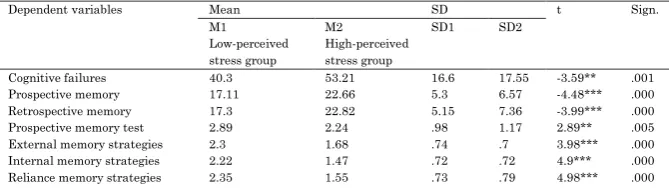
Table 2. Means, standard deviations and t-values of low- and high-perceived stress groups on study variables
Dependent variables Mean SD t Sign.
M1 Low-perceived stress group
M2 High-perceived stress group
SD1 SD2
Resilience 4.94 4.11 .88 1.13 3.99*** .000 Mental health 10.3 15.18 6.63 7.13 -3.37** .001
Note:*** p < .001, ** p < .01
Table 2 presents the independent sample t-tests between low- and high-perceived stress groups. When the two groups were compared, several significant differences emerged.
When it comes to cognitive failures, individuals experiencing high perceived stress reported more cognitive errors. Indeed, there was a significant difference in the scores for the low- (M = 40.13, SD = 16.6) and high-perceived stress (M = 53.21, SD = 17.55) groups; t (90) = -3.59, p < .01.
Likewise, as regards self-reported prospective memory, individuals experiencing high perceived stress reported more prospective memory errors. In fact, there was a significant difference in the scores for the low- (M = 17.11, SD = 5.3) and highperceived stress (M = 22.66, SD = 6.57) groups; t(90) = -4.48, p < .01. Similarly, high-stressed participants also reported more retrospective memory errors. Again, there was a significant difference in the scores for the low- (M = 17.3, SD = 5.15) and high-perceived stress (M = 22.82, SD = 7.36) groups; t (90) = -3.99, p < .01. In fact, we further remember that, according to the scoring pattern of the Prospective and Retrospective Memory Questionnaire (PRMQ), the lower the score, the better the memory for both subscales.
Afterward, referring to the paper and pencil prospective memory test, the performance of individuals experiencing low perceived stress was slightly better than the one of high-stressed participants. Indeed, there was a significant difference in the scores for the low- (M = 2.89, SD = .98) and high-perceived stress (M = 2.24, SD = 1.17) groups; t (90) = 2.89, p < .01.
in the scores for the low- (M = 2.3, SD = .74) and high-perceived stress (M = 1.68, SD = .7) groups; t (90) = 3.98, p < .01. Similarly, regarding internal memory strategies, there was a significant difference in the scores for the low- (M = 2.22, SD = .72) and high-perceived stress (M = 1.74, SD = .72) groups; t (90) = 4.9, p < .001. Again, as concerns reliance memory strategies, there was a significant difference in the scores for the low- (M = 2.35, SD = .73) and high-perceived stress (M = 1.55, SD = .79) groups; t (90) = 4.98, p < .001
Next, in respect to resilience, low-stressed participants were slightly more resilient than high-stressed ones. In fact, there was a significant difference in the scores for the low- (M = 4.94, SD = .88) and high-perceived stress (M = 4.11, SD = 1.13) groups; t (90) = 3.99, p < .001.
Finally, low-stressed individuals’ mental health was remarkably better than high-stressed ones. Indeed, there was a significant difference in the scores for the low- (M = 10.3, SD = 6.63) and high-perceived stress (M = 15.18, SD = 7.13) groups; t (90) = -3.37, p < .01.
Correlations
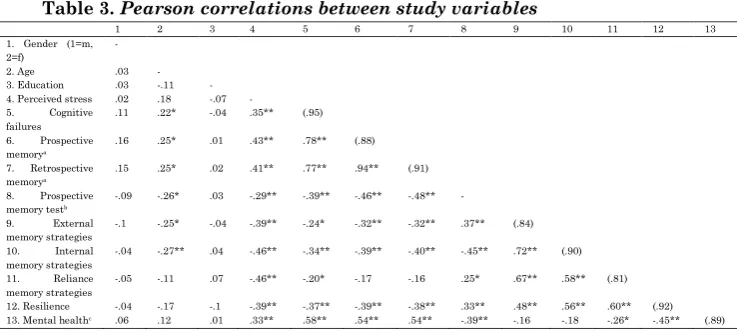
Table 3 depicts Pearson correlations between study variables.
Table 3. Pearson correlations between study variables
1 2 3 4 5 6 7 8 9 10 11 12 13 1. Gender (1=m,
2=f)
-
2. Age .03 - 3. Education .03 -.11 - 4. Perceived stress .02 .18 -.07 - 5. Cognitive
failures
.11 .22* -.04 .35** (.95)
6. Prospective memorya
.16 .25* .01 .43** .78** (.88)
7. Retrospective memorya
.15 .25* .02 .41** .77** .94** (.91)
8. Prospective memory testb
-.09 -.26* .03 -.29** -.39** -.46** -.48** -
9. External memory strategies
-.1 -.25* -.04 -.39** -.24* -.32** -.32** .37** (.84)
10. Internal memory strategies
-.04 -.27** .04 -.46** -.34** -.39** -.40** -.45** .72** (.90)
11. Reliance memory strategies
-.05 -.11 .07 -.46** -.20* -.17 -.16 .25* .67** .58** (.81)
Note: Internal consistencies (Cronbach alphas) between brackets on the diagonal; a In both cases, lower scores indicate better memory; b Higher scores
indicate better memory; c Lower scores mean better mental health while
higher scores mean worse mental health; ** p < .01, * p < .05
Age positively correlated with cognitive failures (r = .22, p < .05), prospective (r = .25, p < .05) and retrospective memory (r = .25, p < .05), and negatively with prospective memory test (r = -.26, p < .05), external (r = -.25, p < .05) and internal memory strategies (r = -.27, p < .01).
Perceived stress positively correlated with cognitive failures (r = .35, p < .01), mental health (r = .33, p < .01), prospective (r = .43, p < .01) and retrospective memory (r = .41, p <.01), while it negatively correlated prospective memory test (r = -.29, p < .01), resilience (r = -.39, p <.01), external (r = -.24, p < .01), internal (r = -.34, p < .01) and reliance memory strategies (r = -.20, p <.01).
Cognitive failures positively correlated with mental health (r = 58, p <.01), prospective (r = .78, p <.01) and retrospective memory (r = .77, p <.01), and negatively with prospective memory test (r = -.39, p <.01), resilience (r = -.37, p <.01), external (r = -.24, p <.01), internal (r = -.34, p <.01) and reliance memory strategies (r = -.20, p <.01).
Prospective memory positively correlated with
retrospective memory (r = .94, p < .01) and mental health (r = .54, p < .01), and negatively with prospective memory test (r = -.46, p < .01), external (r = -.32, p < .01) and internal memory strategies (r = -.39, p < .01), and resilience (r = -.39, p < .01).
Retrospective memory positively correlated with mental health (r = .54, p < .01), and negatively with prospective memory test (r = -.48, p < .01), external (r = -.32, p < .01) and internal memory strategies (r = -.40, p < .01), and resilience (r = -.38, p < .01).
correlated with internal memory strategies (r = -.45, p < .01) and mental health (r = -.39, p < .01).
In respect to memory compensation strategies, external memory strategies positively correlated with resilience (r = .48, p < .01), internal (r = .72, p < .01) and external memory strategies (r = .67, p < .01). Instead, internal memory strategies positively correlated with reliance memory strategies (r = .58, p < .01) and resilience (r = .56, p < .01). Moreover, reliance memory strategies positively correlated with resilience (r = .60, p < .01) and negatively with mental health (r = -.26, p < .05).
Finally, resilience negatively correlated with mental health (r = -.45, p < .01).
Hierarchical regression and moderation
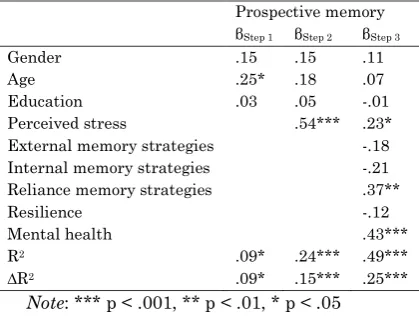
Table 4. Hierarchical regression analysis for prospective memory as criterion variable
Prospective memory βStep 1 βStep 2 βStep 3
Gender .15 .15 .11
Age .25* .18 .07
Education .03 .05 -.01
Perceived stress .54*** .23* External memory strategies -.18 Internal memory strategies -.21 Reliance memory strategies .37**
Resilience -.12
Mental health .43***
R2 .09* .24*** .49***
∆R2 .09* .15*** .25***
Note: *** p < .001, ** p < .01, * p < .05
strategies (i.e., internal, external, and reliance), resilience and mental health were inserted at step 3.
As regards control variables, only age showed a positive association (β = .25, p < .05) at step 1, but its beta coefficient lost statistical significance after the insertion of perceived stress (β = .54, p < .001) at step 2. At step 3, after the insertion of the other predictors, the beta coefficient of perceived stress decreased. A significant positive association emerged for both reliance memory strategies (β = .35, p < .01) and mental health (β = .34, p < .01) at step 3, while resilience, internal and external memory strategies did not show any significant association. Total R2 was equal to 49% (p < .01). Age explained 9% (p < .05) of prospective memory, while 15% of variance (p < .001) was attributable to perceived stress and, ultimately, 25% (p < .001) to both mental health and reliance memory strategies.
The decrease in age beta coefficient between step 1 and 2 could be an indicator of a potential moderation effect by perceived stress towards the relationship between age and prospective memory. Similarly, the decrease in perceived stress beta coefficient between steps 2 and 3 could be an indicator of a potential moderation effect by mental health and reliance memory strategies towards the relationship between perceived stress and prospective memory. In an exploratory way, other hierarchical regressions were conducted to check for these interactions.
Table 5. Hierarchical regression results for the effect of perceived stress and reliance memory strategies on prospective memory
Variable Model 1 Model 2 Model 3
β β β
Step 1: control variables
Gender .15 .15 .17
Age .25* .18 .16
Education .03 .05 .05
Step 2: main effects
Perceived stress .42*** .45***
Step 3: interaction effect
Perceived stress x Reliance memory strategies .21*
R2 .09* .24*** .28***
∆R2 .09* .15*** .04*
Note: *** p < .001, ** p < .01, * p < .05
Table 5 shows the only significant interaction detected, namely those between perceived stress and reliance memory strategies on prospective memory (β =.21, p < .05). Perceived stress indicated a significant association (β = -.41, p < .01) but reliance memory strategies did not (β = .03, p < .77), while the interaction term was significant (β = .21, p < .05). The interaction term explained an additional R2 equal to .04 (p < .05; overall R2 = .28). In order to analyse this relationship properly, a graphic representation was made (see Figure 1). Perusal of this interaction suggested that individuals with high resilience reported less prospective memory errors only in the condition of low stress. Indeed, individuals experiencing a higher level of stress reported more prospective memory errors when using more reliance memory strategies.
Discussion
Although for a long time has received scarce attention by memory researchers, prospective memory is essential for a wide array of everyday activities and its breakdown may be as disruptive as the impairment in retrospective memory (Graf and Uttl 2001). Drawing on a fairly inconclusive debate about its decline under stress conditions, the main objective of the current study was to examine the adverse effects of perceived stress on prospective memory errors.
The present results showed that high-stressed individuals reported a substantial higher frequency of both general cognitive failures and prospective memory errors compared to low-stressed ones. Therefore, the detrimental impact of stress also applies to proper prospective memory functioning. Confirmatory evidence of this negative effect was also provided by the association between perceived stress and both objective and subjective prospective memory measure. Indeed, to achieve a comprehensive assessment of prospective memory, this study evaluated both prospective memory as reported subjectively by the participants and objectively via a self-made test, observing a high concordance between the two measures.
Besides these cognitive performance discrepancies between high- and low-stressed individuals, pronounced differences were also found regarding the use of compensatory memory strategies, as it clearly appears that they were more frequent among less stressed individuals, and mental health, because participants who reported higher level of stress also complained about greater negative symptoms. Also resilience negatively related to perceived stress, suggesting that higher levels of resilience matched with lower levels of stress.
subjectively evaluated). Moreover, mental health (e.g., negative symptoms as anxiety and depression) and reliance memory strategies, combined, explained the 25%. In addition, consistently with the literature suggesting that memory complaints are common among the elderly or increase with age (e.g., Jonker, Geerlings, and Schmaud 2000; Reid and MacLullich 2006; Vestergren and Nilsson 2011), also age related to prospective memory failures, accounting for the 9% of variance. Instead, nor resilience nor external and internal memory strategies were associated with prospective memory.
An interaction effect between perceived stress and reliance memory strategies on prospective memory was also detected, indicating that, in the case of moderate stress, leaning on reliance memory strategies might help in reducing prospective memory errors. However, the same did not seem true in high-stress situations, in which other more useful resources might come into play. Clearly, further research on the buffer effects of individual factors is overdue, in particular referring to these situations where persistent stressors linger.
Among the limitations of the current investigation, it is worthwhile highlighting that the nature of the study was cross-sectional, meaning that no reliable conclusions can be drawn regarding the casual directions of the effects. Second, we use self-report measures for all the study variables except prospective memory, which may increase the risk of misinterpret relationships owing to common method variance. However, this is not likely to give rise to false interactions as common method variance tends to attenuate rather than to inflate interactions (Spector 2006).
overcome potential memory failures. Future population-based studies on this issue could benefit from longitudinal designs to take into account casual chains effects and, as the current study may be considered only a first contribution for a more exhaustive examination of the moderation effects of individual factors, future research should also address in more depth the buffering role of other variables (i.e., personality traits) that may weaken the disruptive effect of stress on memory.
REFERENCES
Arnsten, Amy F. T. 2009. “Stress signalling pathways that impair prefrontal cortex structure and function.” Nature Reviews Neuroscience 10:410‒422.
Beasley, Margaret, Ted Thompson, and John Davidson. 2003. “Resilience in response to life stress: the effects of coping
style and cognitive hardiness.” Personality and
Individual Differences 34:77‒95.
Block, Jack, and Adam M. Kremen. 1996. “IQ and ego-resiliency: conceptual and empirical connections and
separateness.” Journal of Personality and Social
Psychology 70:349‒361.
Bourne Jr, Lyle E., and Rita A. Yaroush. 2003. Stress and cognition: A cognitive psychological perspective. NASA
grant NAG2-1561.
http://ntrs.nasa.gov/archive/nasa/casi.ntrs.nasa.gov/2004 0034070.pdf
Brandimonte, M. Antonella 2006. “Memory for future actions.” In Foundations of Interaction Design. Hillsdale, edited by Sebastiano Bagnara, and Gillian Crampton Smith. Nj: Lawrence Erlbaum.
Questionnaire (CFQ) and its correlates.” British Journal of Social and Clinical Psychology 21:1‒16.
Caprara, Mariagiovanna, Patrizia Steca, and Gaetano De Leo. 2003. “La misura dell’ego-resiliency.” Ricerche di psicologia 2: 7‒23.
Carver, Charles S. 1998. “Resilience and thriving: Issues,
models, and linkages.” Journal of Social Issues
54:245‒266.
Cohen, Sheldon, and Gail M. Williamson. 1988. “Perceived stress in a probability sample of the United States.” In
The social psychology of health: Claremont Symposium on applied social psychology, edited by Shirlynn Spacapan, and Stuart Oskamp. Newbury Park, CA: Sage.
Cohen, Sheldon, Denise Janicki-Deverts, and Gregory E. Miller. 2007. “Psychological stress and disease.” Journal of American Medical Assoiciation 298:1685‒1687.
Dawson, Jeremy F. 2014. “Moderation in management research: What, why, when, and how.” Journal of Business and Psychology 29:1‒19.
Di Fabio, Annamaria, Marco Giannini, and Massimiliano Martelli. 2004. “Il cognitive failures questionnaire (CFQ): Proprietà psicometriche della versione italiana.”
Risorsa Uomo 10:101‒112.
Dixon, Roger A., and Lars Bäckman. 1992. “The concept of compensation in cognitive aging: The case of prose processing in adulthood.” The International Journal of Aging and Human Development 36:199‒217.
Eysenck, Michael W., Nazanin Derakshan, Rita Santos, and Manuel G. Calvo (2007). “Anxiety and cognitive
performance: Attentional control theory.” Emotion
7:336‒353.
Graf, Peter, and Bob Uttl. 2001. “Prospective memory: A new
focus for research.” Consciousness and Cognition
10:437‒450.
Gupta, Sandhya, and Navya Pande. 2015. “Perceived stress as a predictor of attentional lapses, memory impairment and negative emotion among university teachers.”
European Academic Research 2:13061‒13086.
Hammen, Constance. 2005. “Stress and depression.” Annual Review of Clinical Psychology 1:293‒319.
Insel, Kathleeen C., and Cole, Lois. 2005. “Individualizing memory strategies to improve medication adherence.”
Applied Nursing Research 18:199‒204.
Jonker, Cees, Mirjam I. Geerlings, and Ben Schmand. 2000. “Are memory complaints predictive for dementia? A review of clinical and population‐based studies.”
International Journal of Geriatric Psychiatry
15:983‒991.
Kendler, Kenneth S., Laura M. Karkowski, and Carol A. Prescott. 1999. “Causal relationship between stressful life events and the onset of major depression.” American Journal of Psychiatry 156:837–841.
Lazarus, Richard S., and Susan Folkman. 1984. Stress,
appraisal, and coping. New York: Springer.
Luethi, Mathias, Beat Meier, and Carmen Sandi. 2008. “Stress effects on working memory, explicit memory, and implicit memory for neutral and emotional stimuli in healthy men.” Frontiers in Behavioral Neuroscience
15:1‒9.
Marin, Marie-France, Chaterine Lord, Julie Andrews, Robert-Paul Juster, Shireen Sindi, Geneviève Arsenault-Lapierre, Alexandra J. Fiocco, and Sonia J. Lupien. 2011. “Chronic stress, cognitive functioning and mental
health.” Neurobiology of Learning and Memory
McDaniel, Mark A., and Gilles O. Einstein. 2000. “Strategic and automatic processes in prospective memory retrieval: A multiprocess framework.” Applied Cognitive Psychology
14:S127‒S144.
McDaniel, Mark A., and Gilles O. Einstein. 2007. Prospective memory: An overview and synthesis of an emerging field. Thousand Oaks, CA: SAGE Publications, Inc.
Nater, UrsM., Ukaegbu Okere, Rolf Stallkamp, Carolinr Moor, Ulrike Ehlert, and Matthias Kliegel. 2006. “Psychosocial stress enhances time-based prospective memory in healthy young men.” Neurobiology of learning and memory 86:344‒348.
Neupert, Shevaun D., David M. Almeida, Daniel K. Mroczek, and Avron Spiro III. 2006. “Daily stressors and memory failures in a naturalistic setting: findings from the VA
Normative Aging Study.” Psychology and aging
21:424‒429.
Neupert, Shevaun D., David K. Mroczek, and Avron Spiro III. 2008. “Neuroticism moderates the daily relation between stressors and memory failures.” Psychology and aging
23:287‒296.
Piccinelli, Marco, Giulia Bisoffi, Maria Giovanna Bon, Laura Cunico, and Michele Tansella. 1993. “Validity and test-retest reliability of the Italian version of the 12-item General Health Questionnaire in general practice: a
comparison between three scoring methods.”
Comprehensive psychiatry 34:198‒205.
Ramos, Brian P., and Amy F. T. Arnsten. 2007. “Adrenergic pharmacology and cognition: focus on the prefrontal cortex.” Pharmacology & Therapeutics 113:523‒536. Reason, James. 1990. Human error. New York: Cambridge
University Press.
Reid, Louise M., and Alasdair M. J. MacLullich. 2006.
impairment in older people.” Dementia and Geriatric Cognitive Disorders 22:471‒485.
Rönnlund, Michael, Anna Sundström, Daniel Eriksson Sörman, and Lars-Göran Nilsson. 2013. “Effects of perceived long-term stress on subjective and objective aspects of memory and cognitive functioning in a middle-aged
population-based sample.” The Journal of Genetic
Psychology: Research and Theory on Human Development 174:25‒41.
Schnitzspahn, Katharina, Franziska Plessow, Clemens Kirschbaum, and Matthias Kliegel. 2014. “Psychosocial stress effects on prospective memory in young and older adults.” Poster session presented at the 4th International Conference on Prospective Memory, Suor Orsola Benicasa University, Naples, Italy, May 26–30. Smith, Geof, Sergio Della Sala, Robert H. Logie, and Elizabeth
A. Maylor. 2000. “Prospective and retrospective memory in normal ageing and dementia: A questionnaire study.”
Memory 8:311‒321.
Spector, Paul E. 2006. “Method variance in organizational
research truth or urban legend?.” Organizational
Research Methods 9:221‒232.
Staal, Mark A. 2004. Stress, cognition, and human performance: A literature review and conceptual framework. NASA Technical Memorandum, 212824.
Uttl, Bob, and Mekale Kibreab. 2011. “Self-report measures of prospective memory are reliable but not valid.”
Canadian Journal of Experimental Psychology 65:57‒68. Uttl, Bob, Joy M. Hodgson, and Carmela A. White. 2014. “Measurement of Prospective Memory.” Poster session presented at the 4th International Conference on
Prospective Memory, Suor Orsola Benicasa University, Naples, Italy, May 26–30.
Vestergren, Peter, and Lars-Göran Nilsson. 2011. “Perceived
population‐based sample aged 39–99.” Applied Cognitive
Psychology 25:641‒646.
Walser, Moritz, Rico Fischer, Thomas Goschke, Clemens Kirschbaum, C., and Franziska Plessow. 2013. Intention retrieval and deactivation following an acute psychosocial stressor. PloS one 8:e85685.
Woods, Steven Paul, Katie Doyle, Erika Weber, Yu-Ting Kao, Y., Florin Vaida, and Matthias Kliegel. 2014. “Implications of prospective memory for real-world functioning: A meta-analysis.” Poster session presented at the 4th International Conference on Prospective
Memory, Suor Orsola Benicasa University, Naples, Italy, May 26–30.
NOTE ON THE AUTHORS:
SARA PLUVIANO: Ph.D. student of the International Ph.D. in
Experimental Psychology and Cognitive Neuroscience at Suor Orsola Benincasa University – Naples, in agreement with the University of Edinburgh (UK). Ph.D. thesis concerns memory errors and reconstruction of information. Some of the latest publications:
Lo Presti, A., & Pluviano, S. (2015). Looking for a route in
turbulent waters: Employability as a compass for career
success. Organizational Psychology Review, 1-20.
doi:10.1177/2041386615589398
Pluviano, S., & Della Sala, S. (2015). Valicare le barriere
inamovibili del pensiero: gli stratagemmi della
demistificazione. Query, 22(Estate), 45-48.
Pluviano, S., & Della Sala, S. (2015). Si possono correggere le
false credenze sui vaccini? In Armando De Vincentiis (Ed.),
Vaccini, complotti e pseudoscienza (pp. 33-44). Roma: C1V Edizioni.
NADIA GAMBOZ: Associated professor in General Psychology.
ergonomics, cognitive neuroscience at Suor Orsola Benincasa University, Naples, and member of the academic committee of the International Ph.D. in Experimental Psychology and Cognitive Neuroscience at Suor Orsola Benincasa University – Naples, in agreement with the University of Edinburgh (UK). Main research interests include: memory, episodic future thinking, aging, and executive functions. Some of the latest publications:
Neroni, M. A., Gamboz, N., & Brandimonte, M. A. (2014). Does
episodic future thinking improve prospective
remembering?. Consciousness and Cognition, 23, 53-62.
de Vito, S., Gamboz, N., & Brandimonte, M. A. (2012). What
differentiates episodic future thinking from complex scene
imagery? Consciousness and Cognition, 21, 813-23.
Gamboz, N., de Vito, S., Brandimonte, M. A., Pappalardo, S.,
Galeone, F., Iavarone, A., & Della Sala, S. (2010). Episodic
future thinking in amnesic mild cognitive
impairment. Neuropsychologia, 48, 2091-2097.
MARIA A. BRANDIMONTE: Full professor at Suor Orsola
Benincasa University – Naples, and Head of the Laboratory of Experimental Psychology (Naples). Attained a Ph.D. at the University of Trieste – Italy in 1993. Main research interests include: memory, imagery, and visual cognition. Some of the latest publications:
Neroni, M. A., Gamboz, N., & Brandimonte, M A. (2014). Does
episodic future thinking improve prospective remembering?
Consciousness & Cognition, 23, 53-62.
Nigro, G., Brandimonte, M. A., Cicogna, P. C. , & Cosenza, M.
(2013). Episodic future thinking as a predictor of children’s
prospective memory. Journal of Experimental Child
Psychology, 127, 82-94.
de Vito, S., Gamboz, N. & Brandimonte, M. A. (2012). What
differentiates episodic future thinking from complex scene