i
An Original Survey Assessing E-Cigarette
Regulation and Perceptions in all North Carolina Hospitals:
A Research Design Proposal
By
Daniel Dunlap
A Master‟s Paper submitted to the faculty of the University of North Carolina at Chapel Hill
in partial fulfillment of the requirements for the degree of Master of Public Health in
the Public Health Leadership Program
Chapel Hill
2014
____________________________________
Advisor and First Reader
____________________________________
Date
____________________________________
ii
Abstract
Introduction
: E-cigarettes are devices that heat a liquid solution, typically containing nicotine, to generate a vapor and simulate the act of smoking. Since first marketed in 2004 as a potential smoking cessation tool, use has become increasingly controversial, as data on safety and efficacy are limited. A movement toward establishing tobacco-free campuses has emerged among U.S. hospitals, but the extent to which e-cigarettes have been included in such policies has not been systematically researched. This master‟s paper offers a research design proposal for an online survey containing questions on tobacco and e-cigarette policy and perceptions which would be distributed to administrators in all North Carolina Hospitals.Background:
The literature on e-cigarettes is quickly expanding, but is still markedly limited. In lieu of federal regulatory policy, many states, such as North Carolina, have adopted their own policies, most commonly to prohibit the sale of e-cigarettes to minors. In April, 2014, the FDA declared its intent to make e-cigarettes subject to a series of stronger regulations; however, the proposed regulatory activity may not take effect for several years, if at all. On local levels, some hospitals, workplaces, and schools are beginning to include electronic cigarettes in tobacco-free campus policies, but the pervasiveness of this trend has not been systematically researched.Purpose
: This survey will examine what percentage of hospitals in N.C. have created policy regulating the use of electronic cigarettes on campus, where e-cigarette use is prohibited for those hospitals with existing policy (e.g. indoors only, indoors and on grounds), and which factors are motivators for and barriers to the creation of policy regulating use of e-cigarettes.Methods
: A 30-item online questionnaire that will be distributed via e-mail to administrators in all N.C. hospitals by the North Carolina Hospital Association in July-August, 2014. The survey contains questions on hospital tobacco policies and e-cigarette policies, motivators for and barriers to e-cigarette policy development, perceptions of e-cigarette safety, and how policies are communicated by hospital administration to hospital staff, patients, and visitors.Anticipated Findings
: We hypothesize that despite the tobacco-free campuses established by all N.C. hospitals, a majority of hospitals have not yet included any regulations prohibiting the use of electronic cigarettes on campus. A secondary hypothesis is that hospitals with stronger tobacco use treatment programs will have advanced regulations on the use of e-cigarettes more than those without strong treatment programs.iii
Acknowledgements
In the completion of this master‟s paper, I have received help from a number of
individuals and organizations. In particular, I want to express my sincere gratitude to Dr. Sue-Tolleson Rinehart, Assistant Chair for Faculty Development in the UNC Department of
Pediactrics and Associate Director of the MD-MPH Program, who has served as my faculty advisor, and Dr. Adam Goldstein of the UNC Department of Family Medicine, who originally proposed this project and has supported my participation. Both have been instrumental in the development and refining of the survey, and have given numerous hours of their own time to ensure the progression and success of the project. I‟d also like to thank the North Carolina
Hospital Association for their interest, and particularly for their willingness to help with distributing the survey to all North Carolina hospitals.
I‟d also like to thank all the SPH faculty that made this MPH year such an amazing
experience, particularly Drs. Tolleson-Rinehart, Viera, and Harris, who invest so much of their own time and energy to make the dual MD-MPH degree possible for UNC medical students. This year has provided an important shift in perspective that will influence the way I approach patient care going forward, and has helped develop some interests, such as health policy, that I have not previously explored with any sustainable rigor. Thank you for an amazing year – the
iv
Table of Contents
Introduction………....1
Background………2
Brief Overview of Existing Literature………..2
Regulation of E-Cigarettes………...7
Hypothesis and Specific Aims………..8
Methods………..9
Rationale………...10
Developing the Web-Based Questionnaire……….11
Distribution, Completion, and Data Collection………....11
Limitations……….12
Anticipated Findings……….14
Frequency Distributions………..15
Chi-Square Analysis………16
Discussion and Conclusions………..17
References………21
Tables and Figures……….23
Figure 1: E-Cigarette Functionality………..23
Table 1: A Potential Univariate Frequency Distribution for Q5………...24
Figure 2: A Potential Pie Chart for Q8 Response Data………25
Table 2: Frequency Distribution Data for Section 1 – Hospital Tobacco Policies………26
Table 3: Chi-square Test Example 1………..27
Table 4: Chi-square Test Example 1………..28
Appendix A: A Limited Systematic Review Provider Awareness and Perceptions of E-Cigarettes………..29
Appendix B: Methods Methods……….………42
An Original Survey Assessing E-Cigarette Regulation and Perceptions
in all North Carolina Hospitals: A Research Design Proposal
Introduction
Electronic cigarettes (also called e-cigarettes, e-cigs, or electronic nicotine delivery systems) are battery-powered devices that heat a liquid solution, typically containing nicotine, to generate a vapor and simulate the act of smoking. E-cigarettes were first marketed in China in 2004 as a potential new tool for smoking cessation, and less than a decade later their use is exploding worldwide, with sales expected to approach $2 billion in 2013. E-cigarette use is controversial, though, as information on safety and efficacy is limited, and regulation of E-cigarettes is in a state of flux (Pepper & Brewer, 2013). There is also concern among public health officials that e-cigarettes may serve as a „gateway‟ product to future smoking, particularly
among adolescents who have never tried traditional cigarettes (Pepper, McRee, & Gilkey, 2013). Some also contend that electronic cigarettes may actually prevent smokers from quitting by continuing to perpetuate nicotine addiction, or deterring users from using tools already proven to be effective for cessation (Grana, 2013).
Over the last decade, a movement toward establishing tobacco-free campuses has emerged among U.S. Hospitals (Goldstein, 2009). The Joint Commission reported in 2009 that 45% of hospitals had adopted “smoke-free campus” policies by February 2008, with another
15% reporting that they would soon implement similar policies (Williams, Hafner, Morton et al., 2009). The American Nonsmokers‟ Rights Foundation reported in January 2014 that at least
3,810 local and/or state/territory/commonwealth hospitals, health care systems, and clinics had adopted 100% smoke-free campus grounds policies, “including but not limited to facility
buildings, outdoor areas, and parking lots” (Accessed online, no page number available).
2 electronic cigarettes, or added e-cigarettes to existing tobacco-free campus policies, is lacking. Additionally, it is unclear what factors motivate the development of such policy or serve as barriers to development, how policies may have been communicated to staff, patients and visitors, and what level of success hospitals have had in implementing regulations on e-cigarette use.
This master‟s paper offers a research design proposal for an online survey containing
questions on tobacco and e-cigarette policy and perceptions that would be distributed to hospital administrators in all North Carolina Hospitals.
Background
The “smokeless non-tobacco cigarette” was invented by Herbert A. Gilbert in 1963, and the device heated a nicotine solution to produce steam (“Smokeless non-tobacco Cigarette”,
2014). Despite receiving a patent in 1967, the device was never commercially manufactured, and a Chinese pharmacist named Hon Lik is actually credited with inventing the modern
electronic cigarette in 2003 (Demick, 2009). A graphic representation of an electronic cigarette is provided below in Figure 1, outlining the main components and functionality. There is
dramatic variation in the way E-cigarettes have been regulated worldwide, ranging from no restrictions on producers or consumers to wholesale bans of use and distribution (Bullen et al., 2013). Here, I will review the most pertinent existing literature on e-cigarettes, as well as how they have been regulated in the United States.
A Brief Overview of Existing Literature on E-Cigarettes
3 (CBC), effects of secondary exposure to “vapor,” and others. Researchers have also attempted
to analyze the contents of various e-cigarettes, or whether indoor air quality is affected by their vapor. One large randomized control trial concluded that “E-cigarettes…were modestly
effective at helping smokers to quit, with similar achievement of abstinence as with nicotine patches, and few adverse events,” but ultimately stated that more research was needed for
evidence-based guidelines to be developed (Bullen, Howe, McRobbie et al., 2013, p 269). Overwhelmingly, the largest amount of existing literature on e-cigarettes pertains to users‟ preferences, beliefs on safety and efficacy, experience, and awareness, and a systematic
review of this literature was published in November 2013 (Pepper and Brewer, 2013). Forty-nine studies published between 2006 and July 1, 2013 were ultimately included by the authors Exclusion criteria included articles not published in English, articles unrelated to electronic nicotine delivery systems (ENDS), dissertation abstracts and articles without original data on prespecified outcomes. Based on the data synthesis from three large national surveys,
awareness of e-cigarettes in the United States more than tripled from 2009 to 2011, increasing from 16% to 58%, and use of E-cigarettes increased from 1% to 6%. Current smokers, men, those of younger age, and whites were more likely to have heard of e-cigarettes. The
International Tobacco Control (ITC) Four-Country Survey (from 2010-2011) of current and former smokers reported that awareness was higher in the USA (73%) and UK (54%) than in Canada (40%) or Australia (20%), likely because e-cigarettes can be legally marketed and purchased in the USA and UK (Adkison, O‟Connor, Bansal-Travers et al., 2013). A Polish survey suggested that e-cigarettes serving as a “gateway” to cigarettes may be a real concern.
In a survey of 179 Polish users of E-cigarettes in 2009, 25 were reportedly non-smokers prior to trying an E-cigarette, and 5 of these (20%) were regularly smoking cigarettes by 2013
4 positive changes in their health after beginning use of an e-cigarette. Many reported improved breathing, reduced coughing, fewer sore throats, and improved overall health and fitness (presumably vs. conventional cigarette smoking). Some negative side effects have also been reported. As of early 2012, 47 case reports of adverse events have been received by the FDA, with 8 classified as serious adverse events (e.g. pneumonia, chest pain.) (Chen, 2013). In an online e-cigarettes forum, 326 of the 405 total health effects reported were ultimately negative, and the most frequently reported problems involved the mouth, throat, respiratory system, and neurological system (Hua, Alfi, and Talbot, 2013). In pooled data, the majority of reported side effects were minor, and included cough, mouth or throat irritation/dryness, vertigo, headaches, and nausea. Many of the side effects reported at baseline (often at the initiation of e-cigarette use) had resolved completely by the end of the respective study periods. The majority of people using e-cigarettes with a goal of smoking cessation reported that e-cigarettes either helped them quit or “reduce” use of traditional tobacco products, though Pepper and Brewer feel that a
5 Concerns were sometimes reported about the quality of e-cigarettes, including
broken/malfunctioning components and leaky cartridges. The vast majority of users reported that they enjoyed the taste of e-cigarettes. Many also reportedly commented that they enjoyed the similarity of use of e-cigarettes to regular cigarettes, and that they used them much in the same way (e.g. after a meal). Overall, about two-thirds found e-cigarettes equally or more satisfying than traditional cigarettes. Most current and former smokers reported that e-cigarettes helped reduce their urge to smoke as well as some withdrawal symptoms. The majority of users believe that e-cigarettes are healthier for both themselves and others than regular cigarettes, and use them at least in part for this reason. Only a vast minority of users appear to be concerned about potential negative health effects or toxicity of e-cigarettes. The majority of users also believe that e-cigarettes can help people to quit or reduce smoking, and this is another major factor in motivation for use. Most using e-cigarettes for smoking
cessation/reduction reported that they would recommend them to friends or family for the same purpose. Most users believe that e-cigarettes are less addictive than smoking. A majority of current smokers who have never tried e-cigarettes believe that e-cigarettes could satisfy their desire to smoke. Pepper and Brewer report three important additional themes observed regarding beliefs of users. First, many users are concerned about personal appearance (e.g. yellow teeth, odors/not smelling like smoke). Next, e-cigarette users actually feel a sense of camaraderie with each other – online forums are exploding, and many reportedly attend
6 Providers‟ beliefs and perceptions of e-cigarettes have been less studied. One study
conducted a state-wide survey in Minnesota of 567 primary care physicians and nurse
practitioners providing care for adolescents aged 11-17 years (Pepper, McRee, & Gilkey, 2013). 3923 providers were invited to participate in April 2013, and a total of 615 completed the online, cross-sectional survey (adjusted response rate of 28%). Questions were developed based on researchers previous work with adolescents, and piloted with 5 physicians prior to the study. Questions were aimed at assessing physicians‟ awareness of e-cigarettes, comfort level in
discussing them with adolescent patients, risk beliefs, communication, and desire to receive further education on e-cigarettes. The participants also provided demographic and practice characteristics, provider type, year of training completion, and number of adolescent patients. Ultimately, 561 survey responses were included in the analysis – 46% were family medicine
physicians, 20% pediatricians, and 34% nurse practitioners. Almost all providers were aware of cigarettes (92%), and 11% had previously treated an adolescent who admitted having used e-cigarettes. Most providers obtained their knowledge on e-cigarettes from places other than professional sources, such as news stories, patients, and advertisements. Family medicine physicians knew relatively more about e-cigarettes than pediatricians and nurse practitioners, and also described being more comfortable discussing them with patients (both p < 0.05). Almost universally, providers reported an interest in learning more about e-cigarettes (92%). A similar study was conducted by researchers from the University of North Carolina‟s Tobacco
Prevention and Evaluation Program (TPEP). This study collected data on the attitudes of North Carolina physicians toward e-cigarettes via an online survey (Ranney, Kandra, Lee, and
7 recommend e-cigarettes to patients, 13% believe e-cigarettes are FDA-approved for smoking cessation, and only 12% “frequently” ask patients about e-cigarettes (“sometimes “ = 36%, “rarely” = 31%, “never” = 20%).
Regulation of E-Cigarettes
In the United States, the FDA initially classified e-cigarettes as drug delivery devices, which would make them subject to regulation under the Food, Drug, and Cosmetic Act (FDCA) prior to importation and sale in the U.S., but this was ultimately overruled by a Federal District Court Judge in January 2010, who stated, “the devices should be regulated as tobacco products rather than drug or medical products” (Duff, 2010). The FDA appealed, citing the right to
regulation of e-cigarettes based on their previous ability to regulate nicotine replacement
therapies such as nicotine gum or patches, but the appeals court ruled against the FDA in a 3-0 unanimous decision (Duff, 2010). The FDA has therefore only been able to regulate
e-cigarettes as tobacco products, and has no power to block their import (Duff, 2010).
In the absence of federal regulation, many states have adopted their own policies, most commonly to prohibit the sale of e-cigarettes to minors. New Jersey took a strong stance early on against E-cigarettes, deciding to include them in their Smoke-Free Air Act in 2009 (Livio, 2010). The legislation was sponsored by Assemblywoman Connie Wagnor, who claimed, "…
young people who use these things will get hooked on the nicotine and eventually move onto the real thing” (Livio, 2010). In 2013, Mayor Bloomberg signed similar practice into law for New
York City, mandating that electronic cigarettes be regulated in the same way as traditional cigarettes (Winsor, 2013). On local levels, some hospitals, workplaces, and schools are beginning to include electronic cigarettes in previously-established “smoke-free campus”
policies, though the pervasiveness of this trend has not been well-researched.
8 a minimum age of 18 years to purchase cigarettes, a requirement for health warnings on all e-cigarette packaging, and a banning of the sale of e-e-cigarettes in vending machines (Young, 2013). The recommendations also include mandates on manufacturers requiring all products and ingredients be registered with the FDA, an FDA review process prior to any marketing being permitted, and the provision of scientific evidence prior to any claims of risk reduction (Young, 2014). Implementation of this (or similar) legislation is unlikely to occur immediately following the 75-day public comment period, and most agree that a move in this direction is likely several years away from being put into practice (Young, 2013).
Some challenge the immediate need for tighter regulation, citing mounting evidence for therapeutic benefits and potential harms to public health if e-cigarettes are „over-regulated,‟ and
calling for officials to use caution in determining the appropriate balance (Saitta, Ferro, Pelosa, 2014). FDA commissioner Margaret Hamburg contends, “It‟s really the wild, wild West out there…they‟re coming in different sizes, shapes and flavors…and there‟s very worrisome data that show that young people in particular are starting to take up e-cigarettes…and that might be a gateway to other harmful tobacco products…but until we can really regulate them, we can‟t have all the information we need and we can‟t take all the actions that we might want to, to be able to best address the public health issues associated with them” (Young, 2013 – accessed
online, no page number available).
Hypothesis and Specific Aims of this Research Proposal
A number of states, including North Carolina, have 100% smoke-free hospital
9 hypothesis is that hospitals with stronger tobacco use treatment programs will have more
advanced regulatory policy governing the use of e-cigarettes on their campuses than will those without strong treatment programs.
The survey has the following aims:
1. To determine what percentage of hospitals in North Carolina have created policy explicitly regulating the use of e-cigarettes on campus.
2. To examine where e-cigarette use is prohibited for those hospitals with existing policy (e.g. indoors only, indoors and on grounds)
3. To examine which factors are motivators for and barriers to the creation of policy regulating use of e-cigarettes.
The proposed questionnaire will aid us as we seek to understand: Perceptions of
10
Methods
Rationale
Many people misunderstand survey research, assuming that it is “easy” or “simplistic,”
when it is neither. A rigorous web-based survey of hospital administrators offers a number of advantages. Surveys can yield a large amount of empirical data in a short time, and at a very low cost (Kelly, Clark, Brown, and Sitzia, 2003, p. 262). Standardized measurement is
consistent across respondents – that is, all participants are asked the same questions in exactly the same phrasing and format – making surveys are a reliable method of inquiry when
constructed appropriately (Blackstone, 2012, accessed online – no page number provided).
Surveys are also versatile, and can meet analytical needs by enabling data collection on all desired variables (Fowler, 2002, p. 3).
Specific to this project, there are a number of reasons why an online questionnaire made sense. Within the framework of a 1-year master‟s program, a central concern has obviously been the time required to complete a proposed master‟s project. The first author, a medical
student, had no resources for a larger project. After developing an interest in e-cigarettes, and specifically with how they are being regulated in North Carolina‟s hospitals, I strongly
considered two approaches for data collection: In-depth interviewing, or the creation of a web-based survey. In-depth interviewing has the potential advantage of introducing a strong qualitative element to the study, but there are several potential barriers to this approach.
The first is the sample size – there are over 120 hospitals in North Carolina, and
11 number available). To meet the goal of generating a large amount of data in a short time at low to zero cost, and providing a clear picture of how e-cigarettes are being treated by NC hospitals at present, a web-based survey was the most appropriate research design.
Developing the Web-Based Questionnaire
Using the University of North Carolina‟s survey development software, Qualtrics, I
created a 30-item online questionnaire with the help of my faculty advisor, Dr. Sue-Tolleson Rinehart of the Department of Pediatrics, School of Medicine, and the Gillings School of Global Public Health. Dr. Adam Goldstein of the UNC Department of Family Medicine, Director of UNC Tobacco Programs, is sponsoring my research, and has also assisted with creation of the survey. We created the survey to address the specific aim of determining whether hospitals have, or are creating, policies to regulate e-cigarette use. The survey contains questions on hospital tobacco policies and e-cigarette policies, motivators for and barriers to e-cigarette policy development, perceptions of e-cigarette safety, and how policies are communicated by hospital administration to hospital staff, patients, and visitors. A version of the online survey exported to Microsoft Word has been included in Appendix B.
Distribution, Completion, and Data Collection
The sample will include hospital administrators in North Carolina with knowledge of current tobacco use policies. One administrator per hospital will receive an e-mail message requesting participation in the survey. The North Carolina Hospital Association (NCHA) is supporting the project, and has agreed to distribute the survey to all hospitals because it, too, is interested in the results. The NCHA will distribute the invitation to participate in the survey in 3 rounds of e-mails. Each e-mail from the NCHA will include a custom introductory letter
12 more detailed explanation of the project will also be included with each message as an
attachment. Each of these documents can be viewed in Appendix B.
The survey respondents will complete the survey anonymously, and no respondent will be identified by name or by hospital. The initial invitation will be sent to hospital administrators in July, 2014. The second and third invitations will be sent at 7 and 14 days following the initial invitation, respectively. Data collection will end one month after the initial invitation to participate. After opening the survey, the user will be provided additional introductory information, and will be given the opportunity to opt in or opt out of completing the questionnaire, as can be seen in the first screen of the web survey. Because the primary investigator is a medical student, and the survey is going to senior hospital administrators, we will not offer incentives or rewards of any kind for survey completion. We will offer any participating hospital a copy of our results, which they may request by e-mail as desired.
I will perform the primary data analysis, including frequency distributions and chi-square analysis for categorical variables, with Stata, under the guidance of my Faculty Advisor, Dr. Tolleson-Rinehart, as well as Dr. Goldstein in the UNC Department of Family Medicine. Data analysis will conclude in August. We intend to submit a version of this master's paper, updated to include results after data analysis, for publication.
Limitations
According to Kelly, Clark, Brown, and Sitzia, an appropriately executed questionnaire requires significant prior effort to plan the content of the research tool, questionnaire layout, question formatting and wording, piloting, and the covering letter (2003, p. 263). In planning the content of this questionnaire, Dr. Goldstein‟s expertise has been instrumental. His previous
tobacco-related research, and focus on North Carolina Hospitals as they universally
13 survey research. Her methodological expertise has been a tremendous resource in refining the layout of the questionnaire, and ensuring that questions are appropriately worded and ordered. We also meticulously drafted a series of accompanying letters to be e-mailed along with the survey, including 3 introductory letters specific to each of the three respective rounds of dissemination, and a longer, more detailed explanation of the project and its goals. Experts suggest that piloting be performed on a small sample of the target population, to help identify whether all questions are easily understood, whether sufficient response categories are included, and whether any questions are systematically missed by respondents (Kelly, Clark, Brown, and Sitzia, 2003, p. 263). In our case, time constraints and the need to preserve the entire respondent population for the survey itself rather than reducing it by drawing a pilot sample, have prevented extensive piloting. Ultimately, piloting was limited to 5 classmates from my cohort in the School of Public Health, who took the survey and provided feedback.
Insufficient piloting could threaten the validity of our results, though the survey has content validity and my advisors have extensive experience in methods and content specific to this survey.
For all the advantages a web-based questionnaire presented for this project, there are a number disadvantages and limitations inherent to survey research. Despite the versatility of surveys in that many types of questions on many topics can be asked, they are rather inflexible in the sense that the research relies on a single survey instrument – the questionnaire
(Blackstone, 2012 – accessed online, no page number available). For instance, if it becomes
14 Brown, and Sitzia, 2003, p. 264). The involvement of the North Carolina Hospital Association (NCHA) in the distribution of the survey is expected to enhance participation, but if we are unable to meet participation goals (ideally >80%, but >60% at minimum to achieve acceptable internal validity), a significant potential for biases may result.
Additionally, some degree of response bias seems inevitable in this study. Even without any apparent bias in the survey itself, with a perfectly constructed questionnaire, the
respondents – hospital administrators – are still facing a larger climate, where many of their
biggest stakeholders are demanding action on e-cigarettes. Because e-cigarettes are currently such a public health focal point, despite whatever efforts have been made to maintain the best survey practices in this project, we will still likely „have our thumb on the scale‟ to some degree
because of this external pressure respondents may already be facing. The presumption, when answering this survey, is almost certainly against e-cigarettes, and survey respondents may therefore not feel entirely free in presenting their views.
Anticipated Findings
As a primary goal in our analysis, we seek to better understand what percentage of hospitals have created policy regulating e-cigarette use, the details of existing policies, and what factors may serve as barriers or motivators to the development of these policies. Additionally, we will look for associations between the existence of policy for e-cigarettes and hospital-specific characteristics – for instance, are those hospitals more advanced in their tobacco
regulation policies more likely to have policy specific to e-cigarettes? Accordingly, frequency distributions and measures of association, including Pearson‟s chi-square test, will be central to
15 Frequency Distributions
A frequency distribution is used to provide a summarized grouping of data divided into individual classes and the number of occurrences in each class. Our proposed questionnaire, which is available for reference in Appendix B, requires the respondent to choose an answer(s) from a limited set of possible answers. Hence, pooled responses will be operationalized as categorical variables during data analysis. Categorical variables, however, are actually a qualitative method of scoring data, and we will use of coding systems to allow the desired quantitative data analysis. For example, Question 5 from the survey asks respondents, “Does your hospital currently have a program to help employees quit smoking?” There are 2 possible responses, “Yes” and “No.” In our analysis, a response of “No” would be coded as 0, and “Yes”
as 1. Analysis could include a simple univariate frequency table on the responses to this question, as depicted in Table 1. Depending on the number of response categories and the type of question being asked, it may be intuitive to present data in histograms, line charts, bar charts, or pie charts, as frequency distributions are commonly presented in all of these ways. As an example, Question 8 asks respondents, “Which of the following best describes your current policy regulating the use of e-cigarettes?”, and requires the choice of 1 of 4 potential
16 Measures of Association
In addition to examining the frequency distributions, our analysis will also search for associations, or non-independence, among categorical variables using Pearson‟s Chi-square test. Pearson‟s Chi-square tests examine whether a difference between “observed” and “expected” frequencies due to chance, or whether such differences represent actual
non-independence between variables. To perform a Chi-square test, a dependent variable (the outcome of interest, Y) and an independent variable (which might influence outcomes, X) are designated.
For example, suppose we are interested in examining whether an association exists between a hospital‟s use (or lack of use) of the Voluntary Joint Commission Tobacco Set
(VJCTS) and the manner in which e-cigarette use is currently being regulated in the hospital. These data will stem from questions 4 and 8 in the proposed survey. Here, we designate the type of e-cigarette regulation policy as the dependent variable (Y), and the choice of whether or not to use the VJCTS as the independent variable (X). Table 3shows representative table for this potential Chi-square analysis, including null and alternative hypothesis. Here, the null hypothesis (H0) is that e-cigarette regulation policy type is not related to whether or not a
hospital is using the Voluntary JC Tobacco Set, and the alternative hypothesis is that e-cigarette regulation policy type is related to whether or not a hospital is using the VJCTS. The p value for this Chi-square analysis will simply tell us whether or not there is an overall association between use of the VJCTS and type of e-cigarette regulation.
17 Here, we can create a new variable in the Stata data analysis software which lumps responses from each of policy types 1-3 into a single response, to be compared with policy type 4 in a Chi-square analysis. In this case, we‟ve essentially reduced the Chi-Chi-square analysis to a 2x2 table
looking for associations between a Yes/No response to using the VJCTS to a Yes/No response to having a policy which regulates e-cigarette use. Table 4 shows a representative table for this second Chi-square analysis. Here, the null hypothesis (H0) is that hospitals using the VJCTS are not more likely to have a policy regulating the use of e-cigarettes, and the alternative hypothesis (H1) that hospitals using the VJCTS are more likely to have a policy regulating the use of e-cigarettes.
After performing Chi-square testing to examine all potential associations of interest, results could potentially be presented in summary tables. An example of this might be to create a table entitled “Factors Associated with an Increased Likelihood of having an Existing Policy Regulating the Use of E-Cigarettes,” which sequentially lists the variables with significant
associations and their associated p values. After doing frequency distributions to provide a snapshot of how NC hospitals are currently regulating e-cigarettes, measures of association such as Chi-square analysis will allow us to begin to examine why e-cigarettes are regulated as they are.
Discussion and Conclusions
18 North Carolina Hospital Association, which has agreed to distribute the survey, will help address both these issues. However, our collaborative efforts have presented a number of hurdles in addition to the potential advantages. While seemingly obvious, allowing much more time than expected is a valuable lesson for those new to collaborative research. Collaborative efforts can be difficult to execute when time constraints exist, and collaborators and the primary
researchers may or may not be operating on a similar timeline. Returning to the issue of
participation, if we are unable to meet response rate goals (ideally >80%, but >60% at minimum to achieve acceptable internal validity), a significant potential for biases may result. Additionally, even with a perfectly-constructed questionnaire and a very high level of participation, there is still a great potential for response bias in this project.
Respondents in many NC hospitals are likely under external pressure from a number of stakeholders to address e-cigarettes in their smoke-free campus policies, and therefore may not feel completely free in their answers as they complete the questionnaire. Prevention Partners, which has worked closely with North Carolina hospitals in establishing tobacco-free campus policies, is supporting this project, and has been advocating for tighter inclusion of e-cigarettes in these policies for some time. Dr. Melva Fager Okun, DrPH and Senior Program Manager at Prevention Partners, has even provided feedback on the online questionnaire. Regarding Prevention Partners‟ e-cigarette policy efforts, Dr. Fager Okun has explained, “Over the last five years, I have encouraged all hospitals to specify that the „tobacco-free campus policy‟ includes the prohibition of e-cigarettes. I know several (hospitals) have done such, and it‟s still an issue…at one academic hospital in NC, legal staff held it up for 6 months, saying (e-cigarettes) couldn‟t be included because they are a legal product...I also think there is great confusion among hospital staff – whether these products are allowed, and if not, what to do. I encourage the enforcement for them should be the same as for cigarettes and other tobacco products.”
North Carolina‟s 14 State Operated Healthcare Facilities for mental health and
19 policies. Jim D. Martin, Director of Policy and Programs for the Tobacco Prevention and Control Branch of the NC Department of Health and Human Services, explains the 14-point rationale for this decision. He says that e-cigarettes have the potential to interfere with support of recovery concepts and allowing individuals to achieve a healthier lifestyle, an effect of coercion and conflict, disruption of efforts to focus on diagnostic or therapeutic activities, interference with medication effects and other treatment, nicotine interference with medication levels, cycling of withdrawal, a conflict with the mission to support individuals in all addictions, health risks for staff and patients in breathing “vapor” from e-cigarettes, inconclusive literature on user safety, a
lack of evidence for e-cigarettes as an effective smoking cessation tool, and that other NRT and medications for smoking cessation are available which do not propose the above concerns. Returning to the concern about response bias in this survey, it is important to
acknowledge that our survey respondents are likely feeling pressure from a number of
channels, such as Prevention Partners and the NC Department of Health and Human Services, to establish regulations for e-cigarette use on hospital campuses. This is the air our
respondents are breathing, regardless of whether we have been able to minimize biases intrinsic to the questionnaire itself, and so our use of best practices cannot obviate possible challenges to validity and reliability.
Nonetheless, if the NCHA is able to identify the appropriate respondents and secure a high participation rate, the results of this proposed study may be of real value. The literature on e-cigarettes is quickly expanding, but is still markedly limited. E-cigarettes are being prescribed and utilized as a viable smoking cessation tool across the United States in the absence of substantial evidence for this indication. Many physicians report limited knowledge of
20 “rnormalize” the act of smoking, or that regular smokers have begun dual use with
e-cigarettes to allow them to circumnavigate restrictions on smoking in certain public places. Additionally, information on safety and efficacy is limited, regulation of E-cigarettes is in a state of flux, and public interest continues to increase.
In the absence of federal regulation, many states have adopted their own policies for regulating e-cigarettes, though in most states e-cigarettes are not subject to nearly the regulation of traditional tobacco products. Despite the mission of state mental health and substance abuse facilities, it is unclear how North Carolina hospitals are approaching e-cigarettes. The FDA has recently issued a new proposed set of recommendations that again call for tighter regulation of E-cigarettes, but it may be years before any such regulations are put into practice, leaving states to arrive at their own conclusions in the meantime.
This research proposal is therefore significant in its potential to provide a snapshot of current e-cigarette regulation by North Carolina hospitals, and to begin to probe for explanations for hospital perceptions and actions regarding e-cigarette use. On the road to establishing uniform guidelines for e-cigarette regulation, much as state-wide directives were established for tobacco-free campus policies several years ago, this research proposal offers our state
21
References
Adkison SE, O‟Connor RJ, Bansal-Travers M, et al. Electronic nicotine delivery systems: international tobacco control four-country survey. Am J Prev Med 2013;44:207–15. Blackstone, Amy. “8.2 Pros and Cons of Survey Research.” Principles of Sociological Inquiry:
Qualitative and Quantitative Methods. Flat World Knowledge, 2012. N. pag. Web. 01 July 2014. <http://2012books.lardbucket.org/books/sociological-inquiry-principles-qualitative-and-quantitative-methods/s11-02-pros-and-cons-of-survey-resear.html>.
Bullen, C., Howe, C., Laugesen, M., McRobbie, H., Parag, V., Williman, J., & Walker, N. (2013). Electronic cigarettes for smoking cessation: a randomised controlled trial. Lancet,
382(9905), 1629–37. doi:10.1016/S0140-6736(13)61842-5
Chen I. FDA summary of adverse events on electronic cigarettes. Nicotine Tob Res 2013;15:615–16.
Dawkins L, Turner J, Roberts A, et al. „Vaping‟ profiles and preferences: an online survey of electronic cigarette users. Addiction 2013;108:1115–25.
Demick, Barbara. "A High-tech Approach to Getting a Nicotine Fix." Los Angeles Times, 25 Apr. 2009. Web.
Etter JF, Bullen C. Electronic cigarette: users profile, utilization, satisfaction and perceived efficacy. Addiction 2011;106:2017–28.
Foulds J, Veldheer S, Berg A. Electronic cigarettes (e-cigs): views of aficionados and clinical/public health perspectives. Int J Clin Pract 2011;65:1037–42.
Fowler, Floyd J. Survey Research Methods. Sage, 2002.
Grana RA. Electronic Cigarettes: A New Nicotine Gateway? J Adoles Health 2013; 52: 135-6. Goldstein AO, Steiner J, McCullough A, Kramer KD, Okun MF (2009). State Adoption of 100%
Smoke-Free Acute Non Federal Hospital Campus Policies. Int. J. Environ. Res. Public Health 2009, 6(11), 2793-2799
Goniewicz ML, Lingas EO, Hajek P. Patterns of electronic cigarette use and user beliefs about their safety and benefits: an Internet survey. Drug Alcohol Rev 2013;32:133–40.
Hua M, Alfi M, Talbot P. Health-related effects reported by electronic cigarette usersin online forums. J Med Internet Res 2013;15:e59.
22 Livio, S. K. "N. J. Assembly Approves E-Cigarette Ban". North Jersey Star, December 2009.
Retrieved 20 April 2014.
Ozer EM, Adams SH, Orrell-Valente JK, et al. Does delivering preventive services in primary care reduce adolescent risky behavior? J Adolesc Health, 2011; 49:476-82.
Pepper, J. K., & Brewer, N. T. (2013). Electronic nicotine delivery system (electronic cigarette) awareness, use, reactions and beliefs: a systematic review. Tobacco Control, 1–10. doi:10.1136/tobaccocontrol-2013-051122
Pepper, J. K., McRee, A.-L., & Gilkey, M. B. (2013). Healthcare Providers‟ Beliefs and Attitudes About Electronic Cigarettes and Preventive Counseling for Adolescent Patients. The Journal of Adolescent Health : Official Publication of the Society for Adolescent Medicine, 10–15. doi:10.1016/j.jadohealth.2013.10.001
Ranney L, Kandra K, Lee JGL, Goldstein AO. Physician Use of E-cigarettes as Cessation Devices North Carolina 2013. Tobacco Prevention and Evaluation Program, UNC Department of Family Medicine, 2014.
"Smokeless non-tobacco cigarette". Google.com. Retrieved 22 April 2014. Available: http://www.google.com/patents/US3200819#v=onepage&q&f=false
Williams, S C., J M. Hafner, D J. Morton, A L. Holm, S M. Milberger, R G. Ross, and J M. Loeb. “The Adoption of Smoke-free Hospital Campuses in the United States.” BMJ (2009): N. pag. Web.
Wilson, Duff. “Judge Orders F.D.A. to Stop Blocking Imports of E-Cigarettes From China”. The New York Times, 15 January 2010.
Winsor, Morgan. “Bloomberg signs his last 22 bills; one regulates e-cigarette use”. CNN, December 31, 2013. Retrieved 31 March 2014.
23
Tables and Figures
(By Order of Appearance in Text)
Figure 1: A Graphic Representation of E-Cigarette Functionality
24
Table 1: A Potential Univariate Frequency Distribution for Q5
Response Frequency Percent Cumulative
0: No ? ? ?
1: Yes ? ? 100
Total 50 1.00
*
Q5 Does your hospital currently have a program to help employees quit smoking? Yes
No
25
Figure 2: A Potential Pie Chart for Q8 Response Data
* Q8 Which of the following best describes your current policy regulating the use of e-cigarettes?
Use is not allowed indoors or on the grounds (1)
Use is not allowed indoors, and use outdoors is limited to certain areas (2) Use is not allowed indoors, but there are not any restrictions on outdoor use (3)
There are currently no restrictions on E-CIGARETTES indoors or outdoors at our hospital(s) (4)
Policy Type
26
Table 2: Frequency Distribution Data for Section 1 – Hospital Tobacco Policies
Question Responses (n) Percentage (%) Mean (S.D.)
(1) Current policy regulating the use of tobacco products
No use allowed indoors or on grounds
No use indoors, outdoors limited to certain areas No use indoors, but no restrictions on outdoor use
(2) Extent use of cigarettes and other tobacco products on campus by the groups below currently a problem (0 = not a problem, 10 = major problem)
Hospital Staff 0-2 3-5 6-8 9-10 Patients 0-2 3-5 6-8 9-10 Visitors 0-2 3-5 6-8 9-10 X (S.D.) X (S.D.) X (S.D.)
(3) Extent to which litter from cigarettes and tobacco products is currently a problem
(0 = not a problem, 10 = major problem)
0-2 3-5 6-8
9-10 X (S.D.)
(4) Hospital currently using the voluntary Joint Commission Core Measure Tobacco Treatment Set
Yes No
(5) Hospital currently has a program to help employees quit smoking
Yes No
(6) Hospital currently has a program to help inpatients quit smoking
Yes No
(7) Hospital currently has a program to help outpatients quit smoking
27
Table 3: Is Hospital Use of the Joint Commission Tobacco Set Associated with
the Type of E-Cigarette Regulation Policy in the Hospital?
E-Cig Regulation Policy Type
Using JC Tobacco Set Total
0: No 1: Yes 0: E-Cig Policy Type 1
1: E-Cig Policy Type 2 2: E-Cig Policy Type 3 3: E-Cig Policy Type 4
Total
Pearson’s
X
2= ______
p (
X
2≠ ____) = _______
Null Hypothesis (H
0):
E-cigarette regulation policy type is not related to whether or not
a hospital is using the Voluntary JC Tobacco Set.
Alternative Hypothesis (H
1):
E-cigarette regulation policy type is related to whether or
28
Table 4: Are Hospitals Using the Joint Commission Tobacco Set more likely to
have a Policy Regulating the Use of E-Cigarettes?
E-Cig Regulation Policy Type
Using JC Tobacco Set Total
0: No 1: Yes 0: E-Cig Policy Type
1, 2, or 3
1: E-Cig Policy Type 4
Total
Pearson’s
X
2= ______
p (
X
2≠ ____) = _______
Null Hypothesis (H
0):
Hospitals using the Voluntary JC Tobacco Set are not more
likely to have a policy regulating the use of e-cigarettes.
Alternative Hypothesis (H
1):
Hospitals using the Voluntary JC Tobacco Set are more
29
Appendix A: A Limited Systematic Review of Provider Awareness
and Perceptions of E-Cigarettes
Introduction
Electronic cigarettes (also called E-cigarettes, E-cigs, or electronic nicotine delivery systems) are battery-powered devices which heat a liquid solution, typically containing nicotine, to generate a vapor and simulate the act of smoking. E-cigarettes were first marketed in China in 2004 as a potential new tool for smoking cessation, and less than a decade later their use is exploding worldwide. In the United States, E-cigarette use is highly controversial. Information on safety and efficacy is limited, regulation of E-cigarettes is in a state of flux, and public interest continues to increase (Pepper & Brewer, 2013). There is also tremendous concern among public health officials that E-cigarettes may serve as a „gateway‟ product to future smoking,
30 Despite the overall relatively small number of existing studies on E-cigarettes, the literature on electronic cigarettes is rapidly expanding, and a recent systematic review was conducted to analyze user awareness, use, reactions, and beliefs. However, no similar systematic review has been conducted on literature pertaining to health care providers. This review seeks to increase the understanding of provider awareness and beliefs regarding electronic cigarettes, to identify any relevant gaps in existing research, and to provide directions for future research.
Background
The “smokeless non-tobacco cigarette” was invented by Herbert A. Gilbert in 1963, and the device heated a nicotine solution to produce steam (“Smokeless non-tobacco Cigarette”,
2014). Despite receiving a patent in 1967, the device was never commercially manufactured, and a Chinese pharmacist named Hon Lik is actually credited with inventing the modern
electronic cigarette in 2003 (Demick, 2009). There is dramatic variation in the way E-cigarettes have been regulated worldwide, ranging from no restrictions on producers or consumers to whole sale bans of use and distribution (Bullen et al., 2013).
A Brief Overview of Existing Literature
A small number of studies have been conducted to examine acute health effects of E-cigarettes such as cardiovascular risk, short term pulmonary effects, changes in complete blood count (CBC), effects of secondary exposure to “vapor,” and others. Researchers have also
attempted to analyze the contents of various E-cigarettes, or whether indoor air quality is affected by their vapor. One large randomized control trial concluded that, “E-cigarettes…were
31 nicotine patches, and few adverse events,” but ultimately stated that more research was needed
for evidence-based guidelines to be developed (Bullen, Howe, McRobbie et al., 2013).
Overwhelmingly, the largest amount of existing literature on E-cigarettes pertains to users‟ preferences, beliefs on safety and efficacy, experience, and awareness, and a systematic
review of this literature was published in November 2013 (Pepper and Brewer, 2013). 49 studies published between 2006 and July 1, 2013 were ultimately included. Exclusion criteria included articles not published in English, articles unrelated to electronic nicotine delivery systems (ENDS), dissertation abstracts and articles without original data on prespecified outcomes. Based on the data synthesis from three large national surveys, awareness of E-cigarettes in the United States more than tripled from 2009 to 2011, increasing from 16% to 58%, and use of E-cigarettes increased from 1% to 6%. Current smokers, men, those of younger age, and whites were more likely to have heard of E-cigarettes. The International Tobacco Control (ITC) Four-Country Survey (from 2010-2011)of current and former smokers reported that awareness was higher in the USA (73%) and UK (54%) than in Canada (40%) or Australia (20%), likely because e-cigarettes can be legally marketed and purchased in the USA and UK (Adkison, O‟Connor, Bansal-Travers et al., 2013). A Polish survey suggested that E-cigarettes serving as a “gateway” to E-cigarettes may be a real concern. In a survey of 179 Polish
users of E-cigarettes in 2009, 25 were reportedly non-smokers prior to trying an E-cigarette, and 5 of these (20%) were regularly smoking cigarettes by 2013 (Goniewicz, Lingas, Hajek, 2013). Data on the perceived cost of E-cigarettes among users are limited and often conflicting, though most dedicated users seem to believe they are cheaper than conventional cigarettes. In
32 reports of adverse events have been received by the FDA, with 8 classified as serious adverse events (e.g. pneumonia, chest pain.) (Chen, 2013). In an online e-cigarettes forum, 326 of the 405 total health effects reported were ultimately negative, and the most frequently reported problems with in the mouth, throat, respiratory system, and neurological system (Hua, Alfi, and Talbot, 2013). In pooled data, the majority of reported side effects were minor, and included cough, mouth or throat irritation/dryness, vertigo, headaches, and nausea. Many of the side effects reported at baseline (often at the initiation of e-cigarette use) had resolved completely by the end of the respective study periods. The majority of people using e-cigarettes with a goal of smoking cessation reported that e-cigarettes either helped them quit or “reduce” use of
traditional tobacco products, though Pepper and Brewer feel that a reduction may not actually be a positive public health outcome, as this could represent dual use of E-cigarettes and traditional cigarettes. While it is unclear whether a large number of people use E-cigarettes to circumnavigate smoking restrictions, 36% of users in one survey said they frequently use e-cigarettes in areas where smoking is banned (Dawkins, Turner, Roberts et al., 2013). In a survey at a convention of E-cigarette enthusiasts (n = 104), 90% said they were able to use cigarettes where smoking was banned (Foulds, Beldheer, and Berg, 2011). In a survey in cigarette users from a number of countries, a large number of people reported using
33 e-cigarettes to regular cigarettes, and that they used them much in the same way (e.g. after a meal). Overall, about two-thirds found e-cigarettes equally or more satisfying than traditional cigarettes. Most current and former smokers reported that e-cigarettes helped reduce their urge to smoke as well as some withdrawal symptoms. The majority of users believe that e-cigarettes are healthier for both themselves and others than regular cigarettes, and use them at least in part for this reason. Only a vast minority of users appear to be concerned about potential negative health effects or toxicity of E-cigarettes. The majority of users also believe that e-cigarettes can help people to quit or reduce smoking, and this is another major factor in
motivation for use. Most using E-cigarettes for smoking cessation/reduction reported that they would recommend them to friends or family for the same purpose. Most users believe that E-cigarettes are less addictive than smoking. A majority of current smokers who have never tried E-cigarettes believe that e-cigarettes could satisfy their desire to smoke. Pepper and Brewer report three important additional themes observed regarding beliefs of users. First, many users are concerned about personal appearance (e.g. yellow teeth, odors/not smelling like smoke). Next, E-cigarette users actually feel a sense of camaraderie with each other – online forums are
exploding, and many reportedly attend conventions. Last, some users express concern that E-cigarettes will be banned (though Pepper and Brewer state that they found no arguments by users that E-cigarettes should be exempt from smoke-free indoor air laws). Ultimately, the authors conclude that with E-cigarette use exploding despite potential concerns, more research is needed on perceived risk, effective public health messages, validity of self-reported
cessation, and on different types of E-cigarettes (Pepper and Brewer, 2013).
34 In the United States, the FDA initially classified E-cigarettes as drug delivery devices, which would make them subject to regulation under the Food, Drug, and Cosmetic Act (FDCA) prior to importation and sale in the U.S., but this was ultimately overruled by a Federal District Court Judge in January 2010, who stated, “the devices should be regulated as tobacco products rather than drug or medical products” (Duff, 2010). The FDA appealed, citing the right to
regulation of E-cigarettes based on their previous ability to regulate nicotine replacement
therapies such as nicotine gum or patches, but the appeals court ruled against the FDA in a 3-0 unanimous decision (Duff, 2010). Hence, the FDA has therefore only been able to regulate E-cigarettes as tobacco products, and has no power to block their import (Duff, 2010).
In lieu of federal regulation, many states have adopted their own policies, most
commonly to prohibit the sale of E-cigarettes to minors. New Jersey took a strong stance early on against E-cigarettes, deciding to include them in their Smoke-Free Air Act in 2009 (Livio, 2010). The legislation was sponsored by assemblywoman Connie Wagnor, who claimed, "…
young people who use these things will get hooked on the nicotine and eventually move onto the real thing". In 2013, Mayor Bloomberg signed similar practice into law for New York City, mandating the electronic cigarettes be regulated in the same way as traditional cigarettes (Winsor, 2013). On local levels, some hospitals, workplaces, and schools are beginning to include electronic cigarettes in previously-established “smoke-free campus” policies, though the
pervasiveness of this trend has not been well-researched.
In April 2014, the FDA stormed back into the spotlight, issuing a new set of
35 prior to any claims of risk reduction (Young, 2014). Implementation of this (or similar) legislation is unlikely to occur immediately following the 75-day public comment period, and most agree that a move in this direction is likely several years away from being put into practice (Young, 2013). Some challenge the immediate need for tighter regulation, citing mounting evidence for therapeutic benefits and potential harms to public health if E-cigarettes are „over-regulated,‟ and
calling for officials to use caution in determining the appropriate balance (Saitta, Ferro, Pelosa, 2014). FDA commissioner Margaret Hamburg contends, “It‟s really the wild, wild West out there…they‟re coming in different sizes, shapes and flavors…and there‟s very worrisome data that show that young people in particular are starting to take up E-cigarettes…and that might be a gateway to other harmful tobacco products…but until we can really regulate them, we can‟t have all the information we need and we can‟t take all the actions that we might want to, to be able to best address the public health issues associated with them” (Young, 2013 – accessed
online, no page number available).
The Role of Health Care Providers
Under existing regulations – or the lack thereof – physicians play not only an important
role in counseling those patients interested in smoking cessation, but an active role in
preventive efforts through tobacco use screening and education on the harms of tobacco use. It is unclear whether a national minimum age requirement of 18 years would have a dramatic effect on minors‟ ability to acquire E-cigarettes, though this is unlikely to completely solve the
36 As the use of E-cigarettes balloons in the United States, an arms race between
manufacturers and health policy officials is quietly unfolding. There is reasonable data on the subjective experience of E-cigarette users, but no systematic approach has been taken to better understand the experience of health care providers. As the landscape continues to shift, it is important to examine health care providers‟ level of awareness of electronic cigarettes, their
perceptions of the safety and efficacy of these products, and whether and how they approach discussing e-cigarettes with patients across a variety of health care settings. Such an analysis is important in establishing how different types of providers are treating E-cigarettes with patient groups across a variety of clinical settings, particularly because the scarcity of data from well-conducted randomized control trials on E-cigarettes as smoking cessation devices makes establishing evidence-based guidelines for practice essentially impossible at this stage.
In spite of all the unknowns, though, several factors seem relatively certain. First, there has been a significant increase in public interest in E-cigarettes in recent years, and use has increased in a number of groups, including many not using them as smoking cessation aids. Second, that whether or not they are currently allowed to be marketed as such in the United States, E-cigarettes are still being utilized by many as smoking cessation devices. Third, that for as long as E-cigarettes are used for smoking cessation, health care providers can be reasonably expected to play some role in their utilization. In addition to these conditions, there is evidence to suggest that brief, preventive counseling sessions with a primary care provider can decrease risky behaviors in adolescents, including smoking (Ozer, Adams, & Orrell-Valente, 2011). Though E-cigarettes are not explicitly mentioned in any current guidelines, knowledge about all nicotine-containing devices is important for practitioners seeking to deliver
comprehensive tobacco-related counseling to their patients (Pepper et al., 2013) Thus, a systematic review is necessary for examining health care providers‟ awareness, attitudes, and
37
Methods
This review aims to increase understanding on health care providers‟ awareness of
electronic cigarettes, attitudes toward them, and perceptions of their safety and efficacy as tobacco cessation devices. The focus is the subjective experience of providers, as this has important implications for clinical practice. Accordingly, articles that will not be reviewed include those focused on the experience of E-cigarette users, and all other intervention trials, studies, and reports on E-cigarettes which do not include components related to physician experience.
Article Search
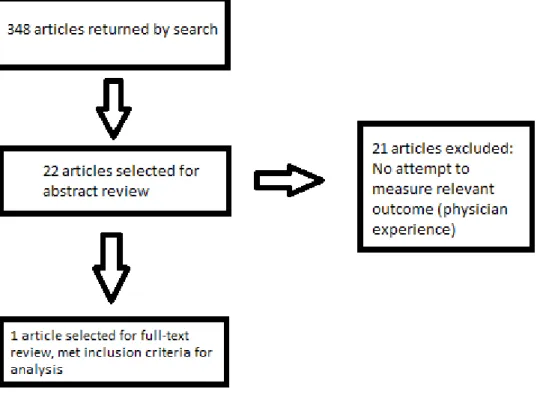
A single investigator searched Pubmed for articles published between January 1, 2004 – April 22, 2014 using the search terms “electronic cigarette” OR “electronic cigarettes” OR “e-cigarette” OR “e-cigarettes” OR “e-cig” OR “e-cigs” OR “electronic nicotine delivery device.”
This search returned a total of 348 articles. The start date for article inclusion was chosen with respect to the invention of the E-cigarette in China in late 2003, and should include all relevant literature from the United States, as E-cigarettes did not begin to be imported and used until several years later. Articles excluded were those not published within the specified time frame, and those not published in English. Prior to the article search, discussions with experts on E-cigarette policy indicated that literature on the subject of this review would be very limited. This, in addition to the relative dearth of all literature pertaining to E-cigarettes, influenced the
38 Multiple policy experts confirmed that this study was the only published study to their knowledge attempting to examine the physician experience with E-cigarettes, and the literature search was subsequently not expanded to databases other than Pubmed. One expert was part of a
research group which recently conducted a similar study now being reviewed for publication, but only the single published article will be included for analysis in this review.
Results
Figure 1: Inclusion and Exclusion Process for Articles
11-39 17 years (Pepper et al., 2013). A total of 3923 providers were invited to participate in April 2013, and a total of 615 completed the online, cross-sectional survey (adjusted response rate of 28%). Questions were developed based on researchers previous work with adolescents, and piloted with 5 physicians prior to the study. Questions were aimed at assessing physicians‟
awareness of E-cigarettes, comfort level in discussing them with adolescent patients, risk beliefs, communication, and desire to receive further education on E-cigarettes. The participants also provided demographic and practice characteristics, provider type, year of training completion, and number of adolescent patients. Ultimately, 561 survey responses were included in the analysis – 46% were family medicine physicians, 20% pediatricians, and 34%
nurse practitioners. Almost all providers were aware of E-cigarettes (92%), and 11% had previously treated an adolescent who admitted having used E-cigarettes. Most providers obtained their knowledge on E-cigarettes from places other than professional sources, such as news stories, patients, and advertisements. Family medicine physicians knew relatively more about E-cigarettes than pediatricians and nurse practitioners, and also described being more comfortable discussing them with patients (both p < 0.05). Almost universally, providers reported an interest in learning more about E-cigarettes (92%).
Discussion and Directions for Future Research
40 and experiences of physicians treating an adolescent population may not be generalizable to all primary care physicians in the United States, for instance. Of additional concern is the low response rate to the survey – about 28% after being adjusted based on the American
Association for Public Opinion Research formula. A low response rate can increase the odds of a number of threats to internal validity, and namely for selection bias, as those responding may be more informed on E-cigarettes, or more passionate about the policy implications surrounding them, for example. The authors contend that the respondents did not differ from
non-respondents based on demographic or practice characteristics, but these factors are not sufficient to rule out selection bias. Building off the approach taken by Pepper et al, though, there are some logical next steps for future research efforts.
A cross-sectional, web-based survey is an appropriate study design, but the population of health care providers (N) must be scaled up to increase the statistical power of results. The population should also be broadened to include (at very least) a representative sample of all primary health care providers – including family practice physicians, internal medicine physicians, pediatricians, physicians assistants, and nurse practitioners – as primary health
providers are the principal source of tobacco cessation counseling, preventive care, and education for most patients. This population should be drawn from a national sample to improve the external validity of results. Next, steps must be taken to increase response rate in order to avoid introducing selection bias and other potential confounders. Ideally, a response rate of 80% or greater would be achieved, with 60% as the minimum rate acceptable. These rates are based on previous discussions with experts on survey methodology from the UNC Department of Family Medicine‟s Tobacco Prevention and Evaluation Program (TPEP), and
41 smoking prevalence), and provider type and date of completion of training should all be
recorded.
The survey should aimed at eliciting information on providers‟ previous awareness of
and experience with E-cigarettes, the sources from which providers have obtained information on E-cigarettes, provider attitudes toward the safety and efficacy of E-cigarettes, comfort level for discussing E-cigarettes with patients, how often E-cigarettes are discussed with and recommended for patients interested in smoking cessation, how populations are screened for use of tobacco products and cigarette use, how counseling is provided to those using E-cigarettes for smoking cessation, and how counseling is provided to those who have used or may use E-cigarettes for purposes other than smoking cessation. The survey should be of reasonable length (i.e. to permit completion in less than 10-15 minutes), and constructed in a logical flow with questions formatted in accordance with established principles of survey methodology.
With use of electronic cigarettes continuing to gain momentum, and numerous
physicians encouraging them as a viable smoking cessation tool, research in a number of areas is paramount. Clinical data from well-constructed randomized control trials on E-cigarette safety and efficacy is almost completely lacking, particularly with regard to long-term health outcomes. With benefits and harms largely unknown, and unlikely to be available in the near future, data from other types of studies can play an important role. A cross-sectional, online survey administered to a representative national sample of at least 5000 primary care providers of all types could be of great value, particularly in the near-term. Such a study is relatively
42
Appendix B: Methods
Methods