4738
DETERMINANTS OF USERS’ INTENTION TO USE
SMARTWATCH
NURA MUHAMMAD BABA1, AHMAD SUHAIMI BAHARUDIN2, 3ALI SAEED ALOMARI
1 Department of Office Technology and Management, School of Management Studies, Kano State
Polytechnic, Kano, Nigeria.
2School of Computer Science, Universiti Sains Malaysia, USM, Malaysia
3Faculty of Computer, Umm Al Qura University, AL Qunfudah , Saudi Arabia
Email: 1[email protected], 2[email protected], 3[email protected]
ABSTRACT
The rapid advancement of information and communication technologies in recent years has enabled the design and production of compact mobile devices with robust computing power. These advances have resulted in a plethora of wearable devices, including smartwatches. In particular, smartwatches are highly hyped in the information and communications technology industry for multiple functions that appeal to a broad range of user interests, fitness, health monitoring, and connect to smartphones to extend their functionality with the goal of simplifying users’ lives, reducing distractions, and letting them experience the world without fussing with their phones. Despite these benefits and hypes, the smartwatch market has been declining continuously, and current sale estimates are still relatively low. Thus, this study aims to investigate the level of Malaysian individuals’ intention to use a smartwatch and to identify and assess their impacts. Therefore, the study will assess the impacts of perceived usefulness, perceived ease of use, cost, privacy, and health risk on user’s behavioural intention to use smartwatch. A total of 501 collected data was used to test the study hypotheses using structural equation modelling technique. The results revealed the high level of Malaysian individuals’ intention to use a smartwatch. Moreover, perceived usefulness and perceived ease of use have a significant positive effect whereas cost, privacy, health risk did not negatively affect users’ intention to use a smartwatch. The extended technology acceptance model explains 34 per cent of the variance in the intention to use a smartwatch. The findings of the study will help future researches and smartwatch developers by providing a guideline for the development of the smartwatch devices.
Keywords:Wearable DEVICES, Smartwatch, Tam, User Adoption, Intention TO Use
1. INTRODUCTION
The quick advancement of high-tech information and communication technologies (ICTs) lately has permitted the design and massive production of compacted mobile gadget with strong computing power. Subsequently, the sizes of these devices have reduced significantly so that individual can wear them in form of smart watches, smart glasses, or smart clothing rather than being carried, thus literally leading to wearable computing [1]. Lately, the popularity of wearable computing devices are on the rise and their usage is also increasingly extended. The technological
4739 Interestingly, unlike the smartphone interface, smartwatches enable the wearer to have hands free that allowed unhindered access to information [2]. In spite of their benefits, smartwatches also have many challenges such as design [3, 4], product complexity [5], privacy, security, battery life, price, aesthetics, convenience, accessibility, and social acceptability [6-9]. These challenges needs to be tackled to inspire adoption and use of these products. In addition, if smartwatch aesthetics challenges are not addressed, it will continue to face marketing challenges and affect the product’s sale [10].
Furthermore, as smartwatches have been widely accepted as the ‘next big thing’ that will have a significant impact on our daily lives [11, 12]. However, the smartwatch market has been declining continuously. Report from International Data Corporation shows that the year-over-year market growth of smartwatch has declined to 51.6% [13]. Similarly, it was forecasted that 373 million smartwatches are unlikely to be sold before the end of 2020 [14]. Yet, the highest proliferation of wearable devices are currently smartwatches [12, 15-17] and their demand are increasingly estimated to be high [18]. However, the current sale estimates are still relatively low [15]. Furthermore, little is known about what impacts these differences in forecasts and sales and subsequently research is needed to comprehensively understand this gap of technology that is still at the early stages of product lifecycle and commercialisation [19]. In particular, the question of what drives the adoption of smartwatches remain unanswered and only few empirical researches have been conducted on user acceptance and behaviours concerning them [17, 19].
Furthermore, most studies on smartwatches have focused on overview descriptions, concepts, challenges, and technical aspects [20] and how they can be utilized for various purposes: healthcare, fitness tracking, biometric sensors, etc. [12, 21]. This implies that empirical studies on smartwatches have been more ‘technology driven’ instead of ‘audience-centred’. Meanwhile, scholars have argued that attempts to understand the actual audience’s perceptions and intentions should be pivotal, especially when IT innovation is in the early stages coupled with obscure knowledge of the needs of consumers [11, 12, 22]. Likewise, Wu, Wu, and
Chang (2016) add that it is essential to explore both technological and potential adopters’ perceptions of smartwatches [20]. Therefore, this study intends to fill the aforementioned research gaps, to identify important factors affecting users intention to use smartwatches (ITU SW), since scholars [10, 12] assert that the adoption of new products remains an important issue for researchers and practitioners. In doing so, the study attempt to answer the following research questions: What is the level of users’ intention to use smartwatch? Do innovation characteristics affect users’ intention to use smartwatch?.
Therefore, this study is expected to contribute to existing body of literatures in many aspects. First, the study intends to provide insights on users’ intention to use smartwatches. Therefore, this study will reveal the influence of the three additional innovation characteristics on users intention to use smartwatch. Thus, findings from the additional construct can be used by smartwatch developers to identify individuals’ needful needs and could be considered in future designs of smartwatch devices so as to increase product sales. Secondly, the study will also link the factors of perceived usefulness (PU), perceived ease of use (PEOU), cost (CT), privacy (PRV), and health risk (HR), to the TAM theories. The above research question will be answered through the lens of the famous Technology adoption model with important additional constructs reviewed from the literature.
The reminder of the paper is structured as follows. Section 2 describe the past and current related work, section 3 discusses the theoretical background with the hypotheses and research model while section 5 presents the research methods. Finally, the paper ends with the discussion of findings, followed by limitation and future work suggestions.
2.1Overview of Wearable devices
4740 devices is to simplify people’s daily life and free up the arms [23]. Previously, wearable devices was mainly used in the field of military [24]. Nowadays, combined with aesthetics and fashion design, demand of wearable devices continues to grow in various fields [24]. They are used in many areas such as finance, education, gaming, enterprise, and healthcare and medicine.
2.1. Overview of Smartwatch
After several decades of technological development from the initial conception of strapping a computing device to one’s wrist, the smartwatch has finally become a viable device that extends the functions of smartphones to a more intimate level [12, 25]. In the mobile device industry, smartwatches, have been widely accepted as the ‘next big thing’ that will have significant impact on our daily lives [11]. These devices can measure our heartbeat, energy consumed, steps taken and distance travelled [26]. Thus, this study defined smartwatch based on the definition of Cecchinato, Cox, and Bird as a wrist-worn device with computational power, that can connect to other devices via short range wireless connectivity; provides alert notifications; collects personal data through a range of sensors and stores them; and has an integrated clock [11, p.2136].
2.2 Individual Adoption Theories
Individual adoption and use of information technologies is one of the most mature streams of information system researches [27]. As today’s technological products such as wearable devices and its related technologies are developing at a fast rate. Thus, a great effort has been made to develop a more reliable and comprehensive model that can explain and predict users’ acceptance and use of information technology. The simplicity of TAM and the recent empirical support it has garnered has made TAM widely popular with information system researchers [12, 28]. Thus, this study chooses to use TAM as the basic theoretical model for investigating the potential user acceptance of the smartwatch product for a number of reasons. The first being that TAM has a simple and solid structure that can explain an individual’s key considerations of technological product acceptance [20, 29]. As such, it has been proven to be quite reliable in the prediction of user acceptance of several new technology products and services. Additionally, researchers have indicated
that the main constructs employed in TAM (i.e. PU and PEOU) have been proven to be accepted as the most powerful variable for predicting technology usage intention and acceptance [27, 30] and they are fundamentally a subset of perceived innovation characteristics [20, 28].
Although not without criticism, researchers have indicated that the constructs of TAM alone cannot fully explain user’s technology acceptance, thus many scholars have suggested that TAM needs to be extended with other constructs to provide a stronger theoretical model [31, 32]. As an example, the study of [12] and [15] extended TAM to study the adoption of smartwatch devices. In this research, we take the postulate that TAM needs to be completed to gather more efficiently the factors of smartwatch adoption and combine it with other constructs from the literature. Furthermore, this will provides a complete account of the causal mechanisms underlying the relationships as well as unique insights that cannot be obtained with just using the original TAM’s constructs [19]. Finally, consumer acceptance of a new technology is a complicated phenomenon that needs an extended robust model [20, 33].
2.2.1 Empirical Studies Related Wearable Technologies
4741 consumer adoption of this innovation is a major disappointment for the smartwatch industry.
[36] combine three models of TTF, DOI, and new product adoption model to investigate the factors that affect user's intention to adopt smartwatch. They argued that smart device manufacturers have a strong interest to understand those factors and to explore different ways to increase users’ intention. To examine the factors affecting the intention of non-users of smartwatches, [15] integrate TAM with visibility construct. A total of 226 responses were collected from Malaysian university student through self-administered questionnaire. The author asserts that currently, little is known about what impacts the relatively low sales of smartwatches. In another study on a smartwatch, [16] apply TAM to determine the influential psychological constructs of smartwatch users’.
Also, [12] carried out research to determine factors affecting consumers intention to accept smartwatches. They suggest that users’ studies on smartwatches by academician is now at a very nascent stage and most of the studies did not use specific smart wearable devices as the subject of the study and concentrated on the specific function of the devices. Equally, [20] integrate three theories of UTAUT, TAM, and DOI to explore antecedents of consumer intention to accept smartwatch. The authors opined that certain factors of willingness, necessity, and social factors had not been explored adequately by past smartwatch studies. In a quantitative approach based on purposive sampling, [37] investigate how individual's innovativeness affects consumer smartwatch purchase. The author argued that there’s still exists little scientific understanding on consumer's perceptions to accept or purchase smartwatch devices. Moreover, [19] determined the antecedents of wearable devices and its perceived value with regards to consumers'. They mention that only few studies were carried out on factors affecting user acceptance and behaviours’ of smartwatches.
[10] examines the effect of user innovativeness and their relationship among innovative attributes and investigates their effects on user purchase intention of wearable devices. The author mentioned that little is known on why certain individuals are more likely to accept wearable devices. Likewise, [38] investigated Apple
smartwatch behavioural intention from the perspectives of users in Germany. They infer that smartwatch manufacturers need to emphasise the usefulness and enjoyment of their devices and tackle or reduce users' perceived risk of the device. [3] conducted a study to compare US and Indian consumers perceptions, preferences, attitudes, and behavioural intentions toward wearable trackers. The author mentioned that little research has been conducted on the relationship among the factors that affects consumers intention to use wearable devices. To find the factor that affect users purchase intention, [36] develops a rich framework that consists of design aesthetic, software, and hardware attributes. Results indicate that design aesthetics significantly influence smartwatch purchase intention. Equally, [39] investigated the vital factors affecting smartwatch adoption behaviours. They mentioned that in order to expand the smartwatch industry, more studies are needed to comprehend the factors that affect users intention to use smartwatch.
Several international recognised research firm conducted surveys to find the perception of consumers on smartwatch. For example, the Acquity Group survey 28000 consumers from 28 countries to investigated the purchase intent of five IoT products [40]. The study revealed that to ignite growth from user's adoption perspective within the next five years, the smartwatch manufacturers must offer a compelling customer value proposition, ensure a superior customer experience. Another investigation by Gartner shows that only 12%, 9% and 7% from the 9,592 online respondents of U.S., U.K., and Australia currently use smartwatch [41]. From the Malaysian region, the 2016 survey by the Digital Nations’ revealed that only 7% of individuals currently use smartwatch from the 1018 surveyed responders [42].
4742 perceptions and personality traits. Also, these studies failed to include a more vivid product characteristics that can inform the smartwatch vendors on how they can increase the product sales so as to increase the diffusion of these devices among the individuals.
Although, there are few smartwatch studies that uses students’ as their population samples’, however these studies tend to only focus on student sample from only a particular faculty or departments, which tends to limits the generality of the findings. For example, the study of Chuah et al. (2016) uses students from only business department of Malaysian university and that of Liew et al. (2016) also collected data from only one Malaysian university. Still, a more holistic picture for the findings from these studies (i.e. Chuah et al., 2016 and; Liew et al., 2016) could not be obtained since they used fewer respondents of less than 250. Likewise, the reviews above have shown that most of the studies have not included product characteristics such as health risk, that could inform the smartwatch vendors on how they can further expand their market by knowing the risk associated with the usage of the devices. Thus, the examination of these unique smartwatch characteristic would enable the comprehension of the factors that may possibly influence the acceptance decisions.
A more closer look at the reviewed literature of smartwatch adoption studies shows that the mainstream of academic researchers have employed the TAM model for their study e.g. [12, 15, 16, 34, 43]. However, many of these researchers have deemed it necessary to extend TAM model by incorporating external variables such as perceived enjoyment, trust, and availability in order to improve the explanatory power of the model. In particular, smartwatch devices have different characteristics that can influence user adoption behaviour; therefore, it is important to identify appropriate external variables that can fully explain user’s decision in adopting these products [44]. Prominent authors have inferred that incorporating context-specific constructs to the TAM model will make it more applicable to diverse technological contexts [45, 46]. As such, this study has identify those vital construct that could fully explain how to understand and increase the smartwatch diffusion among the potential consumers.
In spite of the fact that [15] and [34] studies do contribute to the some understanding of smartwatch adoption in Malaysian context, there is still a need to conduct more studies to cover important aspects related to individuals’ cost, risk, and privacy, to see how these dimensions could shape the Malay individuals’ behavioural intention to use smartwatch. Hence, this study will serve to narrow the research gap found by examining the determinants of smartwatch adoption from the extended TAM model. However, past studies failed to incorporate few of the most important innovation characteristics in a more holistic model. Therefore, the current study integrates these variables into one model and investigate their influence on the intention to use smartwatch.
3. Research Model and Hypotheses Development
Based on the literature reviewed, this study has identified various variables and dimension for the main constructs of the study, which are the relationship between innovation characteristics, and the dependent variable as shown in Figure 1.
3.1 Relationship Between Perceived Usefulness and Intention to Use
4743 consumer will be inclined to adopt it. Hence this study hypothesis that:
H1: Perceived usefulness will have a positive impact on the user’s behavioural intention to use smartwatch.
3.2 Relationship Between Perceived Ease of Use and Intention to Use
Many of the previous studies have state that PEOU is a significant determinant of behavioural intentions to use [47, 48]. TAM and UTAUT stated that both PEOU and EE were positively related to intention to use [27, 48]. This relationship was also reported from the studies of [15] on smartwatch acceptance. Prior researchers have found that individuals need more time to comprehend and use product that are more complex [49]. The complexity of smartwatch is reduced with easy to understand graphics that would enable the user to simply tap the graphics icon to trigger an action. For example, a user can simply tap a ‘music’ icon to directly listen to music that will enable the user to spend less time to understand and familiarise themselves with the operational procedures of the devices. Moreover, the operations of smartwatch devices are generally more complicated, since users are required to continuously wear them and use with other smart devices like smartphone at the same time. Thus, the easier a technology product is to use, the more that the user form a positive intention toward using that technology [48]. Therefore, the study hypothesise that:
H2: Perceived ease of use will have a positive impact on user’s intention to use smartwatch.
3.3 Relationship Between Cost and Intention to Use
Cost is one of the inhibiting factors that hinders the acceptance of technology product [50, 51]. Before users decide to purchase a product, they usually compares the benefits and the cost of that product or service. If the perceived fee exceeds the perceived benefits, it is then viewed as expensive, and users will be less likely to adopt it [1]. As a result, the majority of the scholars suggested a negative association between the cost and intention to use while only few scholars hypotheses cost to positively affect users’ intention behaviour. For example, the study of [16] on smartwatch, [1] on healthcare wearable devices and on m-commerce all hypothesis cost to negatively affect user’s intention whereas those of [52] on media tablets and that of [35] on smartwatch hypotheses positively.
Subsequently, other studies found that users do not consider the cost of the product as long as the products bring benefits and value to the user [53, 54]. For example, the studies on wearable devices’ of [10], on multimedia message service of ([55], and on smart meter by [53] all found cost not to affect users intention. Thus, in view of these contradicting findings, this study hypothesis that:
H3: Cost will have a negative impact on users intention to use smartwatch.
3.4 Relationship Between Privacy and Intention to Use
Privacy concern is one of the biggest challenges that hinder the used of new technology product especially those that involve the use and sharing of data. Users are generally concern about how their data were gathered secretly and constantly without their permission [56]. The fear over the misuse of personal data by the consumers have become one of the biggest challenges facing online businesses [57]. Researchers believe that these concerns will increase with the development of smart products [35, 58] and smart services [59, 60]. As wrist worn wearable devices interact daily with the end user and they encompasses ubiquity, invisibility, pervasiveness, and invasiveness as their characteristic [35, 58].
Furthermore, as smartwatches collect and store sensitive data, users’ privacy could be PU
PEOU
CT
PRV
ITU SW
HR
4744 endangered since users do not have any control over what the service providers or firms might do with the data [38, 61]. Moreover, third parties and or hackers could intercept the data while users are synching the data to other connected devices such as smartphone. Such concerns represent an increase in non-monetary effort, and will thus negatively impact the users’ intention [62]. Firms should inform users about how collected information will be used prior to collection. Such information will allow consumers to assess better the risks of disclosing personal data [59] and might reduce the difficulties of users experienced in knowing where and how their information is stored and who is authorised to access and use them [35]. Thus, consumers who are concerned about their privacy might deter to use smartwatch. Previous studies have empirically shown that privacy has a negative impact on user adoption behaviour [53, 57, 63, 64]. Thus, this study hypothesis that:
H4: Privacy will have a negative impact on user intention to use smartwatch.
3.5 Relationship Between Health Risk and Intention to Use
Health risk is a physical risk that users might associate with the adoption of a new product [65] that could deter users intention to the use of the wearable devices. In the context of smart products, the use of smartwatch devices may increase such perceived risk. In a recent study conducted by McKinsey Global Institute, leading industry experts noted that security breaches in the wearable devices exposes consumers to significant health threats [66]. As the use of smartwatch devices requires the user to always attached it to ones’ wrist and the continuous exchange of data between the smartwatch and connected devices, many specialists have pointed out that this could give rise to health hazards to the wearer [67]. As such, wearable devices’ are suspected of producing radiation harmful to some part of the human body [68], and recently, the World Health Organisation cautioned that this kind of radiation could even cause cancer. Users are particularly concerned about exposure to electromagnetic radiation due to prolonged use of smartwatch devices [69-71].
Moreover, wearers are increasingly concerned about the accuracy and reliability of the data gathered from the smartwatch sensors [70, 72].
Such concerns about the hazards of smartwatch devices might lead users to associate them with a health risk related to their health and can delay potential user’s intention [70, 73]. Prior studies found the relationship between users’ health concern and intention to be negative. For instance, the work of [35] found health risk to affect consumers use of smart services. Thus, this study hypotheses that:
H5: Health risk will have a negative impact on user intention to use smartwatch
4.1 Research Methods and Design
A self-administered questionnaire was administered to the students of the designated five Malaysian research Universities. The study target student because they are more open to the adoption of new technology products [10, 74, 75] and represent the largest groups of modern technology users’ [47, 76]. Furthermore, the use of students would provide a vivid description of the characteristics of the general population in Malaysia, thus would allow for the findings of the study to be generalisable [10]. The students are only selected for the study if they satisfied all the three inclusion criteria as written in the instruction part of the questionnaire. The study collected a total of 501 data through quota sampling, which is a non-probability sampling technique. All the measurement items were measured on a 7-Point Likert Scale with a multi scale items adjusted specifically to fit smartwatch context as shown in Table 1.
4.1.1 Common Method Bias
This study collected all its data from a single source for both the endogenous and exogenous variable, thus might prompt for the occurrence of common method bias [77]. Harman’s Single Factor was used to check the response bias. The percentage of variance explained in this study is 24.436%, which is below the threshold value of 50%, indicating that there is no significant common method bias [78, 79].
4.1.2 Demographic Profiles of the Respondents
4745 than half of the populace are Malay, followed by Chinese with 23% while only 44 respondents are Indians with 7.9% representation. This finding revealed almost the true representative of the ethnicity of the Malaysian citizens.
4.2 Research Model Analysis
The study uses partial least square method to test the research model and analysed the data using SmartPLS version 3.2.8 The study follows a two stage process by assessing the measurement model and the analysis of the structural model. Measurement model extracts information on the validity and reliability of the items of the indicators whereas, structural model measures the relationship between the latent constructs besides testing the hypotheses of the study.
4.2.1 Measurement Model
The measured model was assessed through four criteria’s. As the first stage of PLS analysis, measurement model was evaluated regarding their reliability (individual item reliability determined by the indicator’s outer loadings and internal consistency reliability which is determine by composite reliability) and validity.
Individual item reliability is determined by indicator’s outer loadings. Indicators with outer loadings below 0.708 are deleted [80, 81]. After running the PLS algorithm, all items values were above the threshold value and ranges from 0.710 to 0.983, thus none were deleted. Next, the internal consistency of the indicators items were assessed through convergent validity. Based on the recommended criteria as suggested by [80, 81], the composite reliability values of all constructs as shown in Table 1 are well above 0.70 which demonstrate high level of internal consistency reliability. Additionally, the convergent validity was evaluated through average variance extracted. An AVE value of 0.50 or higher indicates that the construct explains on average or more than half of the variance of its indicators as recommended by [80, 81]. As shown in Table 1, all of the AVE values were well above the required minimum level of 0.50. Thus, the measures of all the construct of the path model have high levels of convergent validity.
Finally, the discriminant validity was assessed through heterotrait-monotrait ratio of
correlations (HTMT) as the dominant past approached like Fornell-Larcker criterion (Fornell & Larcker, 1981) and cross loading (Chin, 1998) were inadequately sensitive to detect discriminant validity in the variance-based PLS-SEM as argued by [80]. The threshold values suggested in the literature are 0.85 [82, 83] whereas others suggest 0.90 [84, 85]. As shown in Table 1 all computations yielded values of below the threshold value of 0.85. In addition, bootstrapping procedure was run to check whether the HTMT inference criteria has been met. The result in the confidence intervals indicate that the values in the upper confidence interval limit were all below the values of one. Thus, the HTMT inference criteria indicates that all HTMT values are significantly difference from one. Henceforth, this provided support for the measures’ discriminant validity [80, 81]. Overall, all measurement criteria had been met and provided support for the measures’ reliability and validity.
4.2.2 Assessment of the Structural Model
After the measurement model were confirmed as reliable and valid, the analysis proceed to assess the structural model. Before testing the relationship between the latent variables, collinearity issues in the structural model need to be addressed to test the bias of the path coefficient in case the estimation involves significant level of collinearity among the predictor constructs. All the predictor constructs yielded the values of 1.067 to 1.363, thus satisfied the variance inflation factor (VIF) value of less than 5, which indicates that they is no collinearity problems among the constructs of the study.
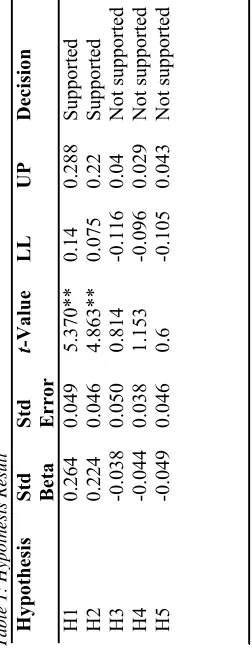
Next, determine the significance of path coefficients, a nonparametric bootstrapping technique with 5000 re-sample [80] was applied to obtained t-value with the critical values for one tail with significance level of 5%. The results of the structural model estimation are summarised in Table 1. From the results, three out of the six hypotheses are supported.
4746 value of 0.336 was obtained, which indicate that 34% of variance can be explained in the intention to use smartwatch by the constructs of the study.
5.1 Discussion of Study Findings
This study investigated the level and determinants of students’ intention to use smartwatch. Thus, the study examined the effects of perceived usefulness, perceived ease of use, cost, privacy, and health risk on user’s behavioural intention to use smartwatch. In view of these objectives, a research model was developed from the theory of TAM and existing literature. The study focused on five innovation characteristics (perceived usefulness, perceived ease of use, cost, privacy, and health risk) as determinants of students’ intention to use smartwatch due to their possible influence.
Based on the results, the studied verified that perceived usefulness has positive impact on
users’ intention to use smartwatch. This implies that higher PU will increase users’ intention to use smartwatch. This result is consistent with the TAM theory and existing literature [39, 47, 86], even though the result contrasted with some studies on smartwatch adoption. For example, the study of [15] on student smartwatch adoption and that of [20] on Taiwanese smartwatch acceptance. This results implies that students in Malaysia perceived smartwatch as a task-oriented smart device used for utilitarian usefulness that they can use to increase work productivity and
quickly accomplish certain tasks. Also, PEOU showed a positive impact on intention to use smartwatch and this implies PEOU is an essential factor of users’ intention to use smartwatch. This finding suggests that enhancing and improving individuals’ intention to use smartwatch is positively associated with the improvement of PEOU of smartwatch devices and is consistent with the TAM [47] and other past studies on wearable devices [e.g. 36].
Results from the unverified relationship of the study showed that cost, privacy, and health risk did not negatively affect users intention to use smartwatch. This implies that higher cost would not hinder users’ intention to use smartwatch and that potential users considered the cost of adopting the smartwatch devices as negligible when they compare the anticipated benefits arising from using the devices. Furthermore, result for the privacy entails that the increase of privacy of smartwatch devices will not lead to decrease in the intention to use smartwatch. Equally, the health risk findings implies that users’ perceived health risk perception would not deter their intention to use smartwatch devices.
5.1.1 Theoretical Contributions
[image:9.612.99.225.179.505.2]This study proposed three additional innovation characteristics on the intention to use smartwatch context. These findings extended the scope of intention to use, especially in the context of smartwatch adoption. Therefore, the study added novelty to the TAM [47] by proposing cost, privacy, health risk as additional variables in the context of studies on smartwatch adoption. Thus, this study extended the scope of TAM research in terms of innovation characteristics by investigating the impact of these variables on the intention to use
Table 1: Hypoth
esis Result
Hyp
othesis
S
td Beta
Std Error
t -V alue LL UP D ecisio n H1 H2
H3 H4 H5
0. 26 4 0. 22 4 -0 .038 -0 .044 -0 .049 0. 04 9 0. 04 6 0. 05 0 0. 03 8 0. 04 6 5. 370* * 4. 863* * 0. 81 4 1. 15 3 0. 6 0. 14 0. 07 5 -0 .116 -0 .096 -0 .105 0. 28 8 0. 22 0. 04 0. 02 9 0. 04 3 Su pp ort ed Su pp ort ed N ot sup por ted N ot sup por ted N ot sup por ted *
4747 smartwatch. This finding contributed to future researches to focus on other factors as a determinant of users’ intention when future researches want to study in smartwatch contexts. Finally, the study provided a better understanding of the important innovation characteristics as the determinants of individuals’ intention in the context of studies on smartwatch adoption.
5.1.2 Practical Contributions
The finding of this study showed the level of individuals’ intention to use smartwatch is very high. It implies that Malaysian individuals’ desire to use smartwatch in their daily life. The findings of this study are useful for the following developments: Firstly, the study provides a guideline for smartwatch developers. It revealed the determinants of Malaysian individuals’ intention to use smartwatch. The findings also indicated that PU followed by PEOU were the most important determinant of Malaysian individuals’ intention to use smartwatch. Therefore, smartwatch developers should ensure that these devices offer more benefits to potential users in their daily life, and they can increase the simplicity of these devices by providing more attractive and consistent screen design regarding the menus, navigations and contents.
On the contrary, the results from the cost implies that smartwatch vendors do not necessarily need to reduce the cost of these devices. However, in order to ensure wider adoption among individuals, especially among those with lower income, there is a need to still reduce their prices. This will not only increase the sales of the product but will also bring more employment and revenue to the relevant stakeholders. Overall, the results of this study provide a useful insight that can be used by smartwatch manufacturers and other practitioners in building and developing better strategies and policies based on individuals’ viewpoints.
5.1.3 Limitations and Future Research
The research design for the current study was explicitly developed to achieve its objectives, but this study had some limitation. The first limitation is the sample of the study which consisted of students from only Malaysian research universities. Thus, this sample may not represent the
entire populace and sufficient to generalize to the whole populace. Therefore, future researches can cover a large sample size, which can include all segments of the Malaysian populace. Secondly, this study only investigated smartwatch in general and did not investigate one specific smartwatch brand. Thus, future studies can study a specific brand such as Apple watch and can include other factors in the model such as brand influence and brand loyalty. Third, this study only investigated only a one-product category; smartwatch devices, which potentially limited the generalizability to other wearable devices. Therefore, this study confined its findings to smartwatch products only and the results cannot be used to generalize other wearable devices. Hence, future researches can investigate other types of wearable devices like smart glasses.
6. ACKNOWLEDGEMENT
This research is partially supported by Universiti Sains Malaysia through the School of Computer Science, KPI Fund 2019.
REFERENCES
[1] Park, E., et al., Understanding the emergence of wearable devices as next-generation tools for
health communication. Information Technology
& People, 2016. 29(4): p. 717-732.
[2] Chang, H.S., S.C. Lee, and Y.G. Ji, Wearable device adoption model with TAM and TTF.
International Journal of Mobile Communications, 2016. 14(5): p. 518-537. [3] Koo, S.H., Consumer Differences in the United
States and India on Wearable Trackers. Family
and Consumer Sciences Research Journal, 2017. 46(1): p. 40-56.
[4] Page, T., A forecast of the adoption of wearable
technology. 2015.
[5] Sharifi, S.S. and M. Palmeira, Customers' reactions to technological products: The impact
of implicit theories of intelligence. Computers in
Human Behavior, 2017. 77(Supplement C): p. 309-316.
[6] Adapa, A., et al., Factors influencing the adoption of smart wearable devices.
International Journal of Human–Computer Interaction, 2018: p. 1-11.
[7] Rajanen, D. and M. Weng. Digitization for fun or reward?: a study of acceptance of wearable
devices for personal healthcare. in Proceedings
of the 21st International Academic Mindtrek
4748 [8] Sultan, N., Reflective thoughts on the potential
and challenges of wearable technology for healthcare provision and medical education.
International Journal of Information Management, 2015. 35(5): p. 521-526.
[9] Wright, R. and L. Keith, Wearable technology:
If the tech fits, wear it. Journal of Electronic
Resources in Medical Libraries, 2014. 11(4): p. 204-216.
[10]Jeong, S.C., et al., Domain-specific innovativeness and new product adoption: A
case of wearable devices. Telematics and
Informatics, 2016.
[11]Cecchinato, M.E., A.L. Cox, and J. Bird.
Smartwatches: the Good, the Bad and the Ugly?
in Proceedings of the 33rd Annual ACM
Conference extended abstracts on human
factors in computing systems. 2015. ACM.
[12]Choi, J. and S. Kim, Is the smartwatch an IT product or a fashion product? A study on factors affecting the intention to use smartwatches.
Computers in Human Behavior, 2016. 63: p. 777-786.
[13]IDC, Smartwatch Market Declines 51.6% in the Third Quarter as Platforms and Vendors
Realign, IDC Finds. 2016, IDC.
[14]Ha, T., et al., Examining user perceptions of smartwatch through dynamic topic modeling.
Telematics and Informatics, 2017. 34(7): p. 1262-1273.
[15]Chuah, S.H.-W., et al., Wearable technologies: The role of usefulness and visibility in
smartwatch adoption. Computers in Human
Behavior, 2016. 65: p. 276-284.
[16]Kim, K.J. and D.-H. Shin, An acceptance model for smart watches: implications for the adoption
of future wearable technology. Internet
Research, 2015. 25(4): p. 527-541.
[17] Taib, S., R. De Coster, and E. Sabri Tekantape,
Market Adoption Study for Wearable Mobile
Computing. 2017.
[18]IDC, Worldwide Smartwatch Market Will See Modest Growth in 2016 Before Swelling to 50
Million Units in 2020, According to IDC. 2016:
International Data Corporation.
[19]Yang, H., et al., User acceptance of wearable devices: An extended perspective of perceived
value. Telematics and Informatics, 2016. 33(2):
p. 256-269.
[20]Wu, L.-H., L.-C. Wu, and S.-C. Chang,
Exploring consumers’ intention to accept
smartwatch. Computers in Human Behavior,
2016. 64: p. 383-392.
[21]Chong, A.Y.-L., F.T. Chan, and K.-B. Ooi,
Predicting consumer decisions to adopt mobile
commerce: Cross country empirical examination between China and Malaysia.
Decision Support Systems, 2012. 53(1): p. 34-43.
[22]Juniper Research, Smart Wearable Devices – Fitness, Healthcare, Entertainment &
Enterprise 2013–2018. 2015.
[23]Weng, M., The acceptance of wearable devices
for personal healthcare in China. 2016.
[24]Tehrani, S.R. and F. Shirazi. Factors influencing the adoption of cloud computing by
small and medium size enterprises (SMEs). in
International Conference on Human Interface
and the Management of Information. 2014.
Springer.
[25]Rawassizadeh, R., B.A. Price, and M. Petre,
Wearables: Has the age of smartwatches finally
arrived? Communications of the ACM, 2015.
58(1): p. 45-47.
[26]Vu, T. and A. Khoa, Wearable Smart
Technologies: New Ear of Technology. 2015.
[27]Venkatesh, V., et al., User acceptance of information technology: Toward a unified view.
MIS quarterly, 2003: p. 425-478.
[28]Dutot, V., Factors influencing near Field Communication (nFC) adoption: An extended
TAM approach. The Journal of High
Technology Management Research, 2015. 26(1): p. 45-57.
[29]Davis, F.D., User acceptance of information technology: system characteristics, user
perceptions and behavioral impacts. 1993.
[30]Featherman, M. and M. Fuller. Applying TAM to e-services adoption: the moderating role of
perceived risk. in System Sciences, 2003.
Proceedings of the 36th Annual Hawaii
International Conference on. 2003. IEEE.
[31]Gao, S., J. Krogstie, and Z. Zang, The effect of flow experience and social norms on the adoption of mobile games in China.
International Journal of Mobile Human Computer Interaction (IJMHCI), 2016. 8(1): p. 83-102.
[32]Gao, S., X. Zhang, and S. Peng. Understanding the Adoption of Smart Wearable Devices to
Assist Healthcare in China. in Conference on
e-Business, e-Services and e-Society. 2016.
Springer.
[33]Shen, Y.-C., et al., A benefit–cost perspective of the consumer adoption of the mobile banking
system. Behaviour & Information Technology,
2010. 29(5): p. 497-511.
[34]Liew, C.S., et al., Factors Influencing Consumer Acceptance of Internet of Things
4749 Leveraging Consumer Psychology for Effective Customer Engagement. 2016: IGI Global, 2016. 186.
[35]Mani, Z. and I. Chouk, Drivers of consumers’
resistance to smart products. Journal of
Marketing Management, 2017. 33(1-2): p. 76-97.
[36]Hsiao, K.-L. and K.-L. Hsiao, What drives smartwatch adoption intention? Comparing
Apple and non-Apple watches. Library Hi Tech,
2017. 35(1): p. 186-206.
[37]Hong, J.-C., P.-H. Lin, and P.-C. Hsieh, The effect of consumer innovativeness on perceived value and continuance intention to use
smartwatch. Computers in Human Behavior,
2017. 67: p. 264-272.
[38]Ernst, C.-P.H. and A.W. Ernst, The Influence of
Privacy Risk on Smartwatch Usage. 2016.
[39]Cho, I. and H. Park, The influential factors on the diffusion of smartwatches in Korea.
International Journal of Technology Management, 2016. 72(1-3): p. 230-251.
[40]The Acquity Group, Igniting Growth in
Consumer Technology. 2016: United States.
[41]Gartner, Gartner Survey Shows Wearable
Devices Need to Be More Useful. 2016, Gartner:
Gartner.
[42]EY, Decoding the Malaysian digital DNA: from
smart to savvy. 2016: EYGM Limited. p. 56.
[43]Nasir, S. and Y. Yurder, Consumers’ and physicians’ perceptions about high tech
wearable health products. Procedia-Social and
Behavioral Sciences, 2015. 195: p. 1261-1267. [44]Tom Dieck, M.C. and T. Jung, A theoretical
model of mobile augmented reality acceptance
in urban heritage tourism. Current Issues in
Tourism, 2018. 21(2): p. 154-174.
[45]Ayeh, J.K., N. Au, and R. Law, Towards an understanding of online travellers’ acceptance of consumer-generated media for travel planning: Integrating technology acceptance
and source credibility factors, in Information
and communication technologies in tourism 2013. 2013, Springer. p. 254-267.
[46]Kalantari, M., Consumers' adoption of wearable technologies: literature review, synthesis, and
future research agenda. International Journal of
Technology Marketing, 2017. 12(3): p. 274-307.
[47]Davis, F.D., Perceived usefulness, perceived ease of use, and user acceptance of information
technology. MIS quarterly, 1989: p. 319-340.
[48]Davis, F.D., R.P. Bagozzi, and P.R. Warshaw,
User acceptance of computer technology: a
comparison of two theoretical models.
Management science, 1989. 35(8): p. 982-1003. [49]Son, J.-Y. and I. Benbasat, Organizational buyers' adoption and use of B2B electronic marketplaces: efficiency-and
legitimacy-oriented perspectives. Journal of management
information systems, 2007. 24(1): p. 55-99. [50]Luarn, P. and H.-H. Lin, Toward an
understanding of the behavioral intention to use
mobile banking. Computers in human behavior,
2005. 21(6): p. 873-891.
[51]Sathye, M., Adoption of Internet banking by Australian consumers: an empirical
investigation. International Journal of bank
marketing, 1999. 17(7): p. 324-334.
[52]Yu, J., et al., User acceptance of media tablets: An empirical examination of perceived value.
Telematics and Informatics, 2017. 34(4): p. 206-223.
[53]Chen, C.-f., X. Xu, and L. Arpan, Between the technology acceptance model and sustainable energy technology acceptance model: Investigating smart meter acceptance in the
United States. Energy Research & Social
Science, 2017. 25: p. 93-104.
[54]Chong, A.Y.-L., et al., Determinants of 3G adoption in Malaysia: A structural analysis.
Journal of Computer Information Systems, 2010. 51(2): p. 71-80.
[55]Chiyangwa, T.B. and P.T. Alexander, Rapidly co-evolving technology adoption and diffusion
models. Telematics and Informatics, 2016.
33(1): p. 56-76.
[56]Winston, T.G., S. Paul, and L. Iyer. A Study of Privacy and Security Concerns on Doctors' and Nurses' Behavioral Intentions to Use RFID in
Hospitals. in System Sciences (HICSS), 2016
49th Hawaii International Conference on. 2016.
IEEE.
[57]Hallam, C. and G. Zanella, Online self-disclosure: The privacy paradox explained as a temporally discounted balance between
concerns and rewards. Computers in Human
Behavior, 2017. 68: p. 217-227.
[58]Slettemeås, D., RFID—the “Next Step” in Consumer–Product Relations or Orwellian Nightmare? Challenges for Research and
Policy. Journal of Consumer Policy, 2009.
32(3): p. 219.
[59]Hsu, C.-L. and J.C.-C. Lin, Exploring Factors Affecting the Adoption of Internet of Things
Services. Journal of Computer Information
Systems, 2016: p. 1-9.
4750
and managers. Journal of Services Marketing,
2015. 29(6/7): p. 442-447.
[61]Barcena, M.B., C. Wueest, and H. Lau, How
safe is your quantified self. Symantech:
Mountain View, CA, USA, 2014.
[62]Hsu, C.-L. and J.C.-C. Lin, An empirical examination of consumer adoption of Internet of Things services: Network externalities and concern for information privacy perspectives.
Computers in Human Behavior, 2016. 62: p. 516-527.
[63]Li, H., et al., Examining individuals’ adoption of healthcare wearable devices: An empirical study from privacy calculus perspective.
International Journal of Medical Informatics, 2016. 88: p. 8-17.
[64]Sun, Y., et al., Location information disclosure in location-based social network services: Privacy calculus, benefit structure, and gender
differences. Computers in Human Behavior,
2015. 52: p. 278-292.
[65]Ram, S. and J.N. Sheth, Consumer resistance to innovations: the marketing problem and its
solutions. Journal of Consumer Marketing,
1989. 6(2): p. 5-14.
[66]66. Jon, B., et al., The Internet of Things: Five
critical questions. 2015.
[67]Damien, G., Is cancer risk the reason Google Glass does not feature a built-in phone? Health fears over gadget that would be equivalent to
holding a mobile to your head all day 2013,
Associated Newspapers Ltd.
[68]Burgess, A., Comparing national responses to perceived health risks from mobile phone masts.
Health, risk & society, 2002. 4(2): p. 175-188. [69]Ferguson, T., et al., The validity of
consumer-level, activity monitors in healthy adults worn in free-living conditions: a cross-sectional study.
International Journal of Behavioral Nutrition and Physical Activity, 2015. 12(1): p. 42. [70]Marakhimov, A. and J. Joo, Consumer
adaptation and infusion of wearable devices for
healthcare. Computers in Human Behavior,
2017. 76: p. 135-148.
[71]Piwek, L., et al., The rise of consumer health
wearables: promises and barriers. PLoS
Medicine, 2016. 13(2): p. e1001953.
[72]Erdmier, C., J. Hatcher, and M. Lee, Wearable device implications in the healthcare industry.
Journal of medical engineering & technology, 2016. 40(4): p. 141-148.
[73]Mills, A.J., et al., Wearing safe: Physical and informational security in the age of the
wearable device. Business Horizons, 2016.
59(6): p. 615-622.
[74]Leong, L.-Y., et al., Predicting the determinants of the NFC-enabled mobile credit card acceptance: A neural networks approach.
Expert Systems with Applications, 2013. 40(14): p. 5604-5620.
[75]Yang, K.C., Exploring factors affecting the adoption of mobile commerce in Singapore.
Telematics and informatics, 2005. 22(3): p. 257-277.
[76]Hanafizadeh, Behboudi, and Abedini, Mobile-banking adoption by Iranian bank clients.
Telematics and Informatics, 2014. 31(1): p. 62-78.
[77]Simonin, B.L., Ambiguity and the process of knowledge transfer in strategic alliances.
Strategic management journal, 1999: p. 595-623.
[78]Podsakoff, P.M. and D.W. Organ, Self-reports in organizational research: Problems and
prospects. Journal of management, 1986. 12(4):
p. 531-544.
[79]Podsakoff, P.M., et al., Common method biases in behavioral research: a critical review of the
literature and recommended remedies. Journal
of applied psychology, 2003. 88(5): p. 879. [80]Hair Jr, J.F., et al., A primer on partial least
squares structural equation modeling (PLS-SEM). Second Edition ed. 2017: Sage
Publications.
[81]Hair, J.F., et al., A Primer on Partial Least Squares Structural Equation Modeling
(PLS-SEM). 2014.
[82]Clark, L.A. and D. Watson, Constructing validity: Basic issues in objective scale
development. Psychological assessment, 1995.
7(3): p. 309.
[83]Kline, R.B., Convergence of structural equation
modeling and multilevel modeling. 2011: na.
[84]Gold, A.H., A. Malhotra, and A.H. Segars,
Knowledge management: An organizational
capabilities perspective. Journal of
management information systems, 2001. 18(1): p. 185-214.
[85]Teo, T.S., S.C. Srivastava, and L. Jiang, Trust and electronic government success: An
empirical study. Journal of management
information systems, 2008. 25(3): p. 99-132. [86]Hsiao, K.-L. and C.-C. Chen, What drives
smartwatch purchase intention? Perspectives from hardware, software, design, and value.