Neuropsychiatric Disease and Treatment
Dovepress
R e v i e w
open access to scientific and medical research
Open Access Full Text Article
The role of the serotonergic system
in suicidal behavior
Marta Sadkowski1,*
Brittany Dennis2–4,*
Robert C Clayden2
wala elSheikh5
Sumathy Rangarajan5
Jane DeJesus5
Zainab Samaan3–6
1Arts and Sciences Program, 2Faculty of Health Sciences, 3Department of Clinical epidemiology and Biostatistics, 4Population Genomics Program, McMaster University, Hamilton, ON, Canada; 5Population Health Research institute, Hamilton, ON, Canada; 6Department of Psychiatry and Behavioral Neurosciences, McMaster University, Hamilton, ON, Canada
*These authors contributed equally to this work
Correspondence: Zainab Samaan Department of Psychiatry and Behavioral Neurosciences, Mood Disorders Program, Centre for Mountain Health, St Joseph’s Healthcare Hamilton, 100 west 5th, Hamilton, ON, Canada, L8N 3K7 Tel +1 905 522 1155 ext 36372 Fax +1 905 575 6029
email [email protected]
Abstract: Serotonin is a widely investigated neurotransmitter in several psychopathologies,
including suicidal behavior (SB); however, its role extends to several physiological functions involving the nervous system, as well as the gastrointestinal and cardiovascular systems. This review summarizes recent research into ten serotonergic genes related to SB. These genes – TPH1, TPH2, SLC6A4, SLC18A2, HTR1A, HTR1B, HTR2A, DDC, MAOA, and MAOB – encode proteins that are vital to serotonergic function: tryptophan hydroxylase; the serotonin transporter 5-HTT; the vesicular transporter VMAT2; the HTR1A, HTR1B, and HTR2A receptors; the L-amino acid decarboxylase; and the monoamine oxidases. This review employed a systematic search strategy and a narrative research methodology to disseminate the current literature investigating the link between SB and serotonin.
Keywords: serotonin, suicide, genetic
Introduction
The serotonergic system has been studied extensively since the discovery of serotonin in the early 1950s. The isolation of the serum vasoconstrictor, 5-hydroxytryptamine (5-HT), from beef serum was first reported in 1948.1 This factor released from platelets
during blood clotting was aptly named “serotonin,” as a result of its tonic effect on smooth muscle contraction in serum.1 Subsequently, colorimetric assays determined
that this compound was identical to enteramine, another indole substance identified two decades earlier in preparations from enterochromaffin cells (ECs) of the gastrointestinal (GI) tract.2 One year later, Twarog and Page3 demonstrated the presence of serotonin
in the mammalian brain. Along with the previous two locations, the high concentra-tion of serotonin in the brainstem and its moderate distribuconcentra-tion throughout the entire mammalian brain sparked interest in the role of serotonin as a neurotransmitter. The three experimental sites of serotonin emphasized the possible roles for serotonergic signaling in intestinal motility, platelet aggregation, and neurotransmission. As a result of these initial findings, research into the precise role of serotonin in human physiology exploded. Of particular interest to the research community is the role serotonin plays as a mediating factor in psychiatric disorders.
Human behavior is governed by a complex interplay of genetic and environmental factors, which may work in concordance to increase the incidence of specific psychiatric behaviors.4 One such behavior, suicidal behavior (SB), has been the subject of much
etiological research. This investigation seeks to understand the role of serotonergic genetics in the context of SB by summarizing the recent research on the possible
Neuropsychiatric Disease and Treatment downloaded from https://www.dovepress.com/ by 118.70.13.36 on 25-Aug-2020
For personal use only.
Number of times this article has been viewed
This article was published in the following Dove Press journal: Neuropsychiatric Disease and Treatment
Dovepress Sadkowski et al
associations between SB and polymorphisms of genes that encode key proteins in the serotonergic system.
Objectives
The purpose of this study is to perform a thorough narrative review to investigate the serotonergic genetic determinants and their association with SB. For the purpose of this review, we will determine the association of ten genes involved in different aspects of the serotonergic system.
This review summarizes research into polymorphisms (genetic variants) of ten serotonergic genes in relation to SB. These genes – TPH1, TPH2, SLC6A4, SLC18A2, HTR1A,
HTR1B, HTR2A, DDC, MAOA, and MAOB – encode proteins
vital to serotonergic function: tryptophan hydroxylase (TPH); the serotonin transporter 5-HTT; the vesicular transporter VMAT2; the HTR1A, HTR1B, and HTR2A receptors; the L-amino acid decarboxylase (AAAD); and the monoamine oxidases (MAOs). Before discussing the methodology and results of this narrative review, we will first provide a thorough background on both the serotonergic system and SB.
After outlining both the background and systematic search strategy, this review seeks to provide a comprehen-sive overview on the available literature evaluating the role of serotonergic genes in SB, doing so through an evaluation of all serotonergic system components and their associated genetic polymorphisms separately.
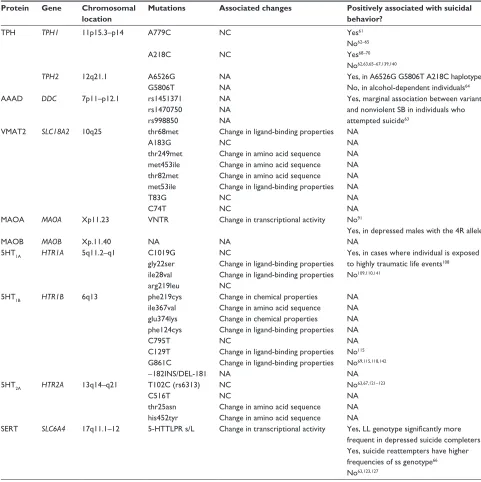
See Table 1 for the genes and specific single-nucleotide polymorphisms (SNPs) related to SB that have been selected for this review. The objectives of the review are to:
1. Determine the genes and polymorphisms that have been studied in relation to both serotonin and SB.
2. Determine whether or not there is an association between the genes involved in serotonergic synthesis or processing and SB.
3. Evaluate where the gaps in the current literature are in an effort to determine the important questions that need be answered in future research.
Background
The serotonergic system
Almost all of the serotonin in the blood is stored within intracellular platelet vesicles, and initially, platelet aggrega-tion was deemed to be its primary role within the blood.5
However, over the past 60 years, the various roles for serotonin in maintaining cardiovascular homeostasis have since expanded to monitoring vascular tone, abnormalities in cerebrovascular function, and normal cardiac functions (such as heart rate, contractility, and cardiac output).5 At the
platelet level, experiments with TPH1-deficient mice have indicated that serotonin release increases platelet adhesive-ness, aggregation, and thrombosis development.5,6 Vascular
tone is partially controlled by the activation of serotonin receptors (5-HTR) in the vascular endothelial and smooth muscle cells.7,8 Serotonin has either a contractile or dilatory
function based on the receptor subtype and site of action.7
In terms of cardiac function, serotonin interacts with the 5-HT4 receptor on cardiac myocytes, thereby having posi-tive chronotropic, inotropic, and lusitropic effects that may mediate atrial rate and rhythmicity.5,9 The majority of ectopic
serotonin is created in the GI system.10 Serotonin is produced
in the bowel by ECs and by enteric neurons at the myentric plexus.10 It is derived from the amino acid, tryptophan
(TRP), and requires inactivation in order to cross membrane barriers.10 A large concentration of serotonin is released into
the submucosa due to the relatively large distance between the basolateral membrane of ECs and the neuron.10 The precise
action of serotonin in the gut is dependent on the expression of various subtypes of 5-HTR.11–16 For instance, Bulbring and
Crema17 postulated that serotonin stimulates intrinsic
neu-rons to initiate peristaltic movement and secretory reflexes. In addition, serotonin release elicits the sensation of nausea and discomfort through the central nervous system (CNS) via primary afferent neurons.10 Altogether, serotonin plays
an intimate role within the GI tract by transmitting signals within the enteric neurons and CNS.
The most frequently studied function of serotonin is within the brain and CNS. CNS production of serotonin occurs primarily in the raphe nucleus, a group of serotonergic neurons located in the posterior region of the pons.18 These
neurons are believed to project into areas of the CNS that contain 5-HTR, including the cerebral cortex, cerebellum, suprachiasmatic nucleus, ventrolateral geniculate body, amygdala, and hippocampus, amongst others.19 A large
number of 5-HTR subtypes are distributed widely throughout the brain and CNS.19 As a result, serotonergic transmission
is believed to mediate a variety of physiological functions including temperature regulation, mood, anxiety, emesis, sleep, appetite, blood pressure, and the perception of pain.19
Pharmacologic interventions of the serotonergic system play an important role as first-line medications for the management of depression, and are also used in cases of anxiety disorder, obsessive-compulsive disorder, and eating disorders.20 The
strong correlation between emotion, behavior, and serotoner-gic transmission provides a basis for investigating serotonin in relation to a variety of psychological impairments and psychiatric disorders and, more specifically, suicide.
Neuropsychiatric Disease and Treatment downloaded from https://www.dovepress.com/ by 118.70.13.36 on 25-Aug-2020
Dovepress Serotonin and suicide
Table 1 Summary of ten serotonergic genes and associated mutations
Protein Gene Chromosomal location
Mutations Associated changes Positively associated with suicidal behavior?
TPH TPH1 11p15.3–p14 A779C
A218C
NC
NC
Yes61
No62–65
Yes68–70
No62,63,65–67,139,140
TPH2 12q21.1 A6526G
G5806T
NA NA
Yes, in A6526G G5806T A218C haplotype73 No, in alcohol-dependent individuals64
AAAD DDC 7p11–p12.1 rs1451371
rs1470750 rs998850
NA NA NA
Yes, marginal association between variants and nonviolent SB in individuals who attempted suicide63
vMAT2 SLC18A2 10q25 thr68met
A183G thr249met met453ile thr82met met53ile T83G C74T
Change in ligand-binding properties NC
Change in amino acid sequence Change in amino acid sequence Change in amino acid sequence Change in ligand-binding properties NC
NC
NA NA NA NA NA NA NA NA
MAOA MAOA Xp11.23 vNTR Change in transcriptional activity No91
Yes, in depressed males with the 4R allele90
MAOB MAOB Xp.11.40 NA NA NA
5HT1A HTR1A 5q11.2–q1 C1019G
gly22ser ile28val arg219leu
NC
Change in ligand-binding properties Change in ligand-binding properties NC
Yes, in cases where individual is exposed to highly traumatic life events108
No109,110,141
5HT1B HTR1B 6q13 phe219cys
ile367val glu374lys phe124cys C795T C129T G861C -182iNS/DeL-181
Change in chemical properties Change in amino acid sequence Change in chemical properties Change in ligand-binding properties NC
Change in ligand-binding properties Change in ligand-binding properties NA
NA NA NA NA NA No115
No69,115,118,142
NA
5HT2A HTR2A 13q14–q21 T102C (rs6313)
C516T thr25asn his452tyr
NC NC
Change in amino acid sequence Change in amino acid sequence
No63,67,121–123
NA NA NA
SeRT SLC6A4 17q11.1–12 5-HTTLPR s/L Change in transcriptional activity Yes, LL genotype significantly more frequent in depressed suicide completers139 Yes, suicide reattempters have higher frequencies of ss genotype66
No63,123,127
Abbreviations: TPH, tryptophan hydroxylase; NC, no change; NA, not available; AAAD, L-amino acid decarboxylase; DDC, dopa decarboxylase (aromatic L-amino acid decarboxylase); SB, suicidal behavior; MAO, monoamine oxidase; vNTR, variable number of tandem repeats; 4R, 4 repeat; 5HT, 5-hydroxytryptamine; SeRT, serotonin transporter; s, short allele; L, long allele; MAOA, monoamine oxidase A; MAOB, monoamine oxidase B; HTR, gene encoding 5-hydroxytryptamine (serotonin) receptor 1B.
Suicidal behavior
Suicide is not only a devastating event to the close network of friends and family of the deceased; it is a phenom-enon that seriously disrupts the wider society it occurs within. Suicide has a significant impact on the world’s population, as close to 1 million people die from suicide every year.21 One should note that the prevalence of suicide
varies among different age groups. For individuals aged 15–44 years, suicide ranks as one of the top three leading causes of death.21
Often less documented when discussing suicide is the issue of attempted suicide; the World Health Organization notes that the rate of attempted suicide is 20 times greater than that of suicide mortality.21 As stated earlier, the ill effects
of suicide extend beyond those individuals who are directly affected. Families, communities, and whole societies may be weakened by emotional and economic losses. In 2004, for example, suicide and intentional injuries accounted for an approximate loss of $3.3 billion, which was 17% of injury costs for the Canadian economy.22
Neuropsychiatric Disease and Treatment downloaded from https://www.dovepress.com/ by 118.70.13.36 on 25-Aug-2020
Dovepress Sadkowski et al
The psychiatric assessment for evaluating SB can be quite complex and variable. Suicidal attempt, defined most com-monly as a self-directed injurious act with some intent to end one’s own life, resides on a continuum of SB that commences with suicidal ideation and ends with suicide completion.23
Clinically, suicidal ideation is classified according to the
American Psychiatric Association Guidelines as “thoughts
of serving as the agent of one’s own death”, whereas suicidal intent is described as “subjective expectation and desire for a self-destructive act to end in death.”24 The distinction between
these two definitions, although diagnostically important, may be clinically difficult to attain based on the varying depth of information obtained upon patient evaluation and the established relationship with the patient. In addition, very few studies recognize a difference between ideation and intent. This clinically relevant distinction may increase the predictive value in subsequent studies which, up to this point, have shown limited predictive value based on the 100-fold lower prevalence of suicide attempts compared to suicidal ideation.24 Furthermore, researchers have attempted to design
assessment scales to provide an objective measure of SB for use in genetic and proteomic association studies (see Fowler25
for examples). However, these suicide assessment scales provide insufficient predictive validity for future suicide attempts. They are limited by the willingness of some patient to share information, the ability of a clinician to properly and consistently develop an assessment, and their limited positive predictive value and high rate of false positives.25 Despite
the current limitations in connecting clinical and research assessments, the importance of using research to establish broad and predictive risk factors for SB is paramount.
The established link between mood disorders and SB has been reported extensively over the past 40 years. Initially in 1970, Guze and Robins26 reported a significant link
between bipolar affective disorder and suicide completions. Subsequent studies supported the associated risk between bipolar disorder and SB and, in 1989, additional evidence of a link between various psychiatric disorders and adolescent suicide risk was published.27 Major depression, adjustment
disorder, dysthymia, schizophrenia, and borderline per-sonality disorder all exhibited a prevalence of at least 14% in a group of suicide victims.27 In 1996, Beautrais et al28
demonstrated that those patients who made serious suicide attempts also had high rates of mood disorders, substance use disorders, conduct disorder, or antisocial personality disor-der, and nonaffective psychosis. Since then, multiple studies have linked suicide attempts to anxiety disorder, bipolar disorder, and obsessive-compulsive personality disorder.29–31
As a result, research into the psychobiology of psychiatric disorders and SB has increased substantially over the past two decades. In 2003, Mann23 proposed a stress diathesis
model of suicidality, which explained that SB could result from a complex combination of genetic and environmental factors. Environmental factors have been largely implicated in the influence of suicidal ideation.32 One study by Paykel33
illustrated how environmental factors such as adversity during childhood, employment stress, acute/chronic stress, inadequate social support, loss/separation, and family adver-sity can influence an increase in the incidence of suicidal behavior or major depression.
SB is defined in this review as self-injurious actions with the intent to end life. Like many psychiatric disorders, SB is complex in etiology. Propensity for SB is mitigated by a multitude of risk factors including the presence of co-occurring psychiatric disorders, social stresses such as a history of abuse, minimal access to mental health services, increased access to methods for attempting suicide, and complex gene–environment interactions.34 Several lines of
evidence inform our current understanding of SB. Research into the genetic component of SB is supported by family and twin studies. These studies have noted a high rate of SB in the relatives of individuals with a history of attempted or completed suicide.35–38 Subsequent adoption studies, which
investigated children who have been adopted, have provided evidence that the influence of social factors alone cannot account for SB.39 Such results may suggest that heritable
factors play a key part in mediating SB risk.
establishing a link between
serotonin and suicidal behavior
Many studies have provided evidence of a strong link between depression and SB, and research into the biochemical founda-tion of mood disorders has fuelled a number of studies that link the serotonergic system to suicidality.40 Serotonin is a
monoamine neurotransmitter that is synthesized from the hydroxylation of TRP by the enzymes TPH1 and TPH2.19 In
the process of neurotransmission, vesicles of the presynaptic neuron release serotonin into the synaptic cleft due to an increase in intracellular calcium concentration.19 Free
sero-tonin binds to receptors on the postsynaptic neuron to illicit downstream intracellular signaling events that ultimately lead to its metabolism into 5-hydroxyindoleacetic acid (5-HIAA) by the enzyme, MAOA.19 A serotonin transporter (5HTT)
resides in the presynaptic membrane allowing reuptake of excess hormone from the synaptic cleft.19 Serotonin
receptors on the pre-synaptic neuron are also capable of
Neuropsychiatric Disease and Treatment downloaded from https://www.dovepress.com/ by 118.70.13.36 on 25-Aug-2020
Dovepress Serotonin and suicide
binding serotonin in the synapse and inhibiting further neurotransmitter release.19 Stemming from two initial studies
in the early 1980s by Stanley and Mann, as well as by Stanley et al,41–43 alterations in the serotonergic system have been
extensively implicated in the psychopathology of SB. These initial studies identified a difference in the quantity of 5-HTR in the pre- and postsynaptic membranes of the frontal cortex of suicide victims.42,43 Most of the studies that have followed
can be grouped into three broader categories involving pro-tein/receptor, genetic/polymorphic, and hormone/metabolite differences. All of these components may play a role in alter-ing the impulsivity and response to stressors in the minds of suicidal individuals. While some studies have investigated the role of TRP depletion and suicidal ideation, many have shown no association.44 However, some studies have shown
that TRP depletion increases self-aggressive behavior.45 A
new area of research in the field of serotonergic pathways associated with suicidal behavior includes the exploration of inflammatory processes related to serotonin processing. Kynurenine (KYN) is formed from its precursor, TRP, if KYN levels are associated with TRP concentrations, these KYN pathways are argued to have the ability to influence levels of the TRP metabolite serotonin. The cytokine-stimulated production of KYN from TRP is an inflammatory process that has been investigated among suicide attempters and other individuals with a history of psychiatric illness, where KYN production was higher among individuals with a history of suicide attempts.46
Drug-induced alterations
in serotonergic signaling
A variety of pharmacological agents target the serotoner-gic system for use as antiemetics, and in mood disorders as antidepressants and anxiolytics.47,48 During the past 10
years, concerns have developed that medications interfering with serotonergic system function may precipitate SB in susceptible patients.49 Selective serotonin reuptake inhibitors
(SSRIs) are the most extensively used in the treatment of depression, and they are studied in relation to their influence on SB. These medications are used to block the reuptake of serotonin into the presynaptic neuron by selectively inhibiting 5HTT. Initially, the US Food and Drug Adminis-tration reported a risk of suicidal effect of antidepressants in a retrospective review in pediatric patients.49 In 2005, a
retrospective, pooled analysis of over 40,000 individuals from the UK Medicines and Healthcare Products Regula-tory Agency database of randomized control trials reported 177 episodes of suicidal ideation, 172 episodes of nonfatal
self-harm, and 16 suicides.50 In all, there was no evidence of
a significant associated risk of suicide with SSRIs in adults.50
More recently, a Cochrane review by Hetrick et al51 provided
evidence of an increased risk for suicide-related activity in adolescents on antidepressants (relative risk of 1.58; confi-dence interval [CI] =1.02–2.45) compared to controls. Other psychopharmacological drugs have shown a protective effect on suicidal risk. Lithium, for instance, enhances serotonin release and may reduce suicidal risk by limiting impulsive and aggressive behavior.52 As a result of these studies, clinicians
are advised to provide information to patients and family on the efficacy and safety of antidepressant medication for depression.51
It is difficult to hypothesize the mechanisms by which SSRIs may increase suicidal risk in a specific age group while keeping the previously discussed relationship between the serotonergic system and SB, as well as the existing psycho-pathology for which these SSRIs were prescribed, in mind. The issue of methodological quality remains a challenge to analyzing the effects of antidepressants on SB risk. The ethical and long observational periods required to perform adequate assessments are two major barriers to experimental design.53 The majority of the experimental studies conducted
thus far have taken data retrospectively from clinical trials and not analyzed longitudinal datasets with placebo effects, for obvious ethical reasons. Contrary to experimental retro-spective studies, some observational studies in several large populations and countries have shown a relative decrease in fatal and nonfatal suicide attempts with greater use of antide-pressants.54,55 With the relatively new implication of suicidal
risk with short-term antidepressant usage, future studies should aim to uncover more data regarding the long-term and short-term implications of antidepressants in various at-risk suicidal populations.
In an effort to adequately evaluate how genetic factors may mediate a relationship between the serotonergic sys-tem and SB, a syssys-tematic search strategy was employed to identify genes relevant to this investigation. The findings of this search are summarized in a narrative manner in the sections to follow.
Methodology
This investigation employed a systematic process for searching predefined databases with the intent of acquiring related literature to investigate the topic. No date restrictions were placed on the search strategy, which was performed from January–March 2012. The PubMed (National Center for Biotechnology Information, US National Library of
Neuropsychiatric Disease and Treatment downloaded from https://www.dovepress.com/ by 118.70.13.36 on 25-Aug-2020
Dovepress Sadkowski et al
Medicine, Bethesda, MD, USA), PsycINFO® (American
Psychological Association, Washington, DC, USA), and Web of Knowledge® (Thomson Reuters, Philadelphia, PA,
USA) databases were searched for articles with the key terms “(serotonin OR serotonin system) AND (suicide OR suicidal behavior)” and “(serotonergic genes OR serotonin genes) AND (suicide or suicidal behavior).” Articles were excluded if they were: 1) not in English; 2) not available electronically; or 3) had abstracts that suggested that the paper did not relate to the search terms. The resulting articles were then evaluated for content. This search strategy allowed for the identification of ten serotonergic genes – TPH1, TPH2, SLC6A4, SLC18A2,
HTR1A, HTR1B, HTR2B, DDC, MAOA, and MAOB – which
had been studied in the context of SB. With this informa-tion, a subsequent second search was conducted using the gene name or gene product as key search terms. In cases where .300 papers were retrieved, the terms “AND (poly-morphism or mutation)” were added to the search criteria to improve the relevance of the search results. All searches were filtered using the described exclusion criteria. The resulting articles were then analyzed to construct a thematic overview of our current understanding of the role of serotonergic genes in SB.
Results
The results of the systematic search procedure described in the Methodology section are summarized in Table 1, where the gene, mutations, and studies supporting or refut-ing the association findrefut-ings are presented. In addition, we have provided a second table (Table 2) that outlines all of the studies ascertained for this review. In Table 2, we have outlined each included study, illustrating the genes, SNPs, ethnicities, number of participants, outcome definitions, and association findings. As described in the Methodology section, the studies investigating each genetic variant will be critiqued and discussed in organized sections by serotonergic system components in conjunction with the SNPs of interest.
TPH (
TPH1
and
TPH2
)
Many key proteins and metabolites involved in the neu-rotransmission of serotonin have been investigated in relation to the brains of suicidal victims (see Bach and Arango56 for
an extensive review). The biochemical synthesis of serotonin in neurons of the raphe nucleus begins with the conversion of L-tryptophan into 5HT by the enzyme, TPH.19 Two isoforms
of this enzyme, TPH1 (tph1, 11p15.3–p14) and TPH2 (tph2, 12q21.1), are expressed in the CNS; however, TPH2 levels are 2.5-fold higher than TPH1.57,58
The TPH genes are among the most thoroughly studied of the SB candidate genes, with a number of well-characterized polymorphisms. Polymorphisms are changes in a deoxyribo-nucleic acid sequence (at an individual or population level). Distinct polymorphisms can arise in particular arrangements, which are termed haplotypes.59 Two such polymorphisms are
SNPs located in intron 7.60 The two SNPs, consisting of A to
C substitution at nucleotide 779 (A779C) and 218 (A218C) are found in strong linkage disequilibrium, where the two aforementioned genotypes at the two described loci are not independent of one another.60 The A779C polymorphism’s
location is known to be up the polypyrimidine stretch, which is upstream from the 3′ acceptor splice site, and this stretch additionally forms a known consensus sequence recog-nized by proteins when in pre-messenger ribonucleic acid (mRNA).60 In addition, Nielsen et al60 noted that the A218C
site is found in a plausible GATA transcription factor bind-ing site. These polymorphisms have not been found to alter splicing of the TPH pre-ribonucleic acid or influence TPH gene expression.60
Studies examining possible associations between the A779C and A218C polymorphisms and SB have yielded conflicting results. A landmark study conducted by Nielsen et al61 in 1994 reported a significant association between TPH
genotype and SB in violent offenders (P=0.16).
However, subsequent studies utilizing samples from various ethnicities did not yield consistent results. Several studies failed to show an association between SB and A779C, suggesting that the polymorphism is not a major contributor to SB.62–65 While some studies show an association between
A218C and SB, several have failed to show such an associa-tion.47,62,63,65–67 A study conducted by Tsai et al,68 found that
the A218C genotype was significantly associated with SB in depressed patients (P=0.001). Another study performed by Rujescu et al69 noted a weak yet significant increase in the
frequency of the A218 allele (odds ratio [OR]: 1.33; 95% CI =1.17–1.50; P=0.00002) in Caucasian suicide attempters/ victims (n=147) as compared to controls (n=326), providing evidence for an association between the A218 polymorphism and SB. A meta-analysis of nine studies examining the A218C polymorphism and SB performed by Bellivier et al,70 revealed
a significant association using the fixed effect method (OR
=1.62; 95% CI =1.26; 2.07) and the random effect method (OR =1.61; 95% CI =1.11; 2.35). These results support the theory that the A allele has a dose-dependent effect on the presence of SB, where a homozygous AA genotype pool has a larger frequency of SB.70 Some evidence has been
offered to suggest reasons why variances continue to be
Neuropsychiatric Disease and Treatment downloaded from https://www.dovepress.com/ by 118.70.13.36 on 25-Aug-2020
Dovepress Serotonin and suicide
Table
2
Summary of selected studies for narrative review
Author last name
Year
Number of participants
Ethnicity Genes reviewed Single n ucleotide pol ymorphism r evie w ed Outcome measurement Association Nielsen 61 1994 90 Caucasian TPH1 A779C
Patient history of serious suicide attempts
Yes, among violent offenders with a past history of suicide attempts
Bennett 62 2000 47 Caucasian TPH1, TPH2 A779C, A218C
Patient history of suicide, comparison of the frequency of specific polymorphisms among suicide completers and healthy controls
No associations were found
Geijer
63
2000
264
Caucasian
TPH1, TPH2, DDC, HTR2A
A779C, A218C, rs1451371, rs1470750, T102C (rs6313) Patient medical histories of suicide; comparison of risk alleles frequencies among healthy controls to suicide attempters No associations were found for the TPH1 or TPH2 genes and SNPs reviewed; however, a marginal association was found when comparing the frequency of the DDC SNPs among those with nonviolent suicidal behavior and controls
Koller
64
2005
321
Caucasian
TPH1, TPH2, HTR2A
A779C, G5806T, T102C (rs6313) Comparison of alcoholic suicide attempters to alcoholic controls without a history of suicide attempts
No association found
Saetre
65
2010
2,310
Caucasian
TPH1, TPH2, HTR2A
A779C, A218C, T102C (rs6313) Comparison of patients with a history of schizophrenia who also have attempted suicide against patients with no history of suicide attempts
No associations were found
Tsai 68 1999 351 Asian, Taiwan TPH2 A218C
Comparison of suicide attempts among patients with a history of mood disorders to healthy controls A positive association between TPH polymorphism and suicidal behaviors among depressed patients when compared to health controls, but not in bipolar patients
Rujescu 69 2003 2,550 Caucasian TPH2, HTR1B A218C, G861C in ad
dition to liv
e r ecruitment, the resear chers compar ed A218 single-nucleotide pol ymorphism fr equency among
suicide attempters and health
y contr
ols.
Ther
e was no association f
ound when
comparing the fr
equency of the HTR1B
SNP among the comparator gr
oups
A significant association was found in the meta-analysis, where suicide attempters
showed
a
higher
frequency
of the A218 SNP
Bellivier 70 2004 146 Caucasian TPH2 A218C
Comparison of patients with severe bipolar disorder with a history of suicide attempts to healthy controls A significant association was reported when analyzing the frequency of the TPH A218C polymorphism
Zalsman 140 2001 161 Ashkenazi Jews TPH2 A218C Co m pa ris on o f t he fr eq ue nc y of th e TP H A 21 8C p ol ym or ph ism in s ui ci da l a do le sc en ts
to healthy controls (adolescents)
No association was found
(
Continued
)
Neuropsychiatric Disease and Treatment downloaded from https://www.dovepress.com/ by 118.70.13.36 on 25-Aug-2020
Dovepress Sadkowski et al
Table
2
(
Continued
)
Author last name
Year
Number of participants
Ethnicity
Genes reviewed
Single n
ucleotide
pol
ymorphism r
evie
w
ed
Outcome measurement
Association
Yoon
67
2008
384
Asian, Korean
TPH2, HTR2A
5HTR2A 102T/C, A218C, T102C (rs6313) Comparison of the SNP frequencies among participants with severe depression who have attempted suicide against healthy controls
No association found
Du
139
2000
119
Caucasian
TPH2
A218C
Comparison of postmortem results from 34 depressed suicide victims and 84 healthy controls
No association found
Turecki
73
2001
230
Caucasian
TPH2
A6526G and G-5806T
Comparison of the frequency of preselected SNPs and haplotypes in suicide completers against healthy controls One haplotype (–6526G –5806T 218C) was significantly more frequent among suicide cases than in normal controls
Ono
91
2002
317
Asian, Japanese
MAOA
v
NTR
Comparison of the frequency of the
v
NTR
SNP among completed suicide victims and healthy controls
No association found
Lung
90
2011
1,022
Asian, Taiwan
MAOA
v
NTR
Comparison of the frequency of the vNTR allele among community controls, patients with depressive disorders who had not attempted suicide, community subjects without mental disorders who had attempted suicide, and patients with major depressive disorder who had attempted suicide The MAOA 4R allele is associated with enhanced vulnerability to suicide in depressed males
w
asserman
108
2006
272
Caucasian
HTR1A
C1019G, rs6295
The involvement of the implicated G-allele of the 5-HTR1A C(–1019)G polymorphism (rs6295) was analyzed with the transmission disequilibrium test An association was found in cases where the individual is exposed to highly traumatic life events
Serretti
141
2007
854
Caucasian, european
HTR1A, HTR2C
rs547536, rs2192372, rs6318, rs2428707, rs4272555, rs1801412, rs1423691, rs878567, and rs6295 Comparison of SNP frequency among suicide attempters, suicide completers, and healthy volunteers
No association found
v
idectic
143
2009
513
Caucasian
HTR1A
1019C
.
G
Comparison of the 1019C
.
G SNP
frequency among suicide victims and healthy controls, taking into account sex, suicide method, and in the case of suicide victims, also stressful life events
No association found
Huang
115
1999
178
Not reported; study in the USA
HTR1B
C129T, G861C
Comparison of the frequency of polymorphisms in suicide completers and healthy controls with DNA isolated from postmortem human brain tissue
No association found
Neuropsychiatric Disease and Treatment downloaded from https://www.dovepress.com/ by 118.70.13.36 on 25-Aug-2020
Dovepress Serotonin and suicide
Nishiguchi
118
2001
326
Asian, Japanese
HTR1B
G861C
examined the association between suicide victims who completed suicide and the 5HT1B receptor gene G861C polymorphism in comparison to healthy controls
No association found
Stefulj
142
2005
444
Caucasian
HTR1B
G861C
examined the frequency of the risk allele (G861C) among suicide victims in comparison to healthy controls
No association found
Abbreviations:
TPH,
tryptophan;
DDC,
dopa
decarboxylase
gene;
SNP,
single-nucleotide
polymorphism;
5-HT,
5-hydroxytryptamine;
MAO,
monoamine
oxidase;
vNTR,
variable
number
of
tandem
repeats;
DNA,
deoxyribonucleic
acid;
MAOA, monoamine oxidase A; HTR, gene encoding 5-hydroxytryptamine (serotonin) receptor 1B.
shown between studies examining the association between these polymorphisms and SB. For example, Du et al71 claimed
that these variances are due to: largely different phenotypic baseline characteristics between study populations (some studies look at individuals who have engaged in suicide attempts, who had completed suicide, and individuals with vague descriptions of SB); different sample populations with varying comorbid psychiatric disorders; and the method-ological fall-backs of case-control studies (differing sampling pools for cases and controls). After an extensive review of the current literature, one can begin to note that while there is evidence supporting the link between SB and the A218C or A779C polymorphisms, there is still contention among the research community and a lack of well-sampled participant data to provide evidence supporting the association between SB and the A218C or A779C polymorphisms across differ-ent ethnicities. As such, it is pertindiffer-ent that further research be done to produce a stronger and more vivid picture of the phenomena under study.
To provide further insight into the need for future research, one should note the 1999 Rotondo et al72 study in which they
investigated two common SNPs in the TPH promoter region: the A6526G and G5806T polymorphisms. However, further research examining these two polymorphisms in the context of SB has not yielded conclusive results.64 While some studies
have found that certain haplotypes of these SNPs are more frequent among suicide cases as compared to controls, these results have not been replicated by studies sampling other populations.64,73 Koller et al,64 for instance, did not find an
association between the A6526G (χ2=2.248; degrees of
free-dom [df] =2; P=0.325), G5806T (χ2=1.477; df =2; P=0.478)
or A779C (χ2=0.813; df =2; P=0.666) polymorphisms and SB
in alcohol dependent individuals (n=321). In addition, a study conducted by Turecki et al,73 which compared the genotypes
of suicide completers (n=101) to controls (n=129) found that the (–6526G –5806T 218C) haplotype was considerably more recurrent among suicide cases (χ2=11.30; df =2; P=0.0008;
OR =2.0, CI: 1.30–3.6). However, the study did not find any meaningful discrepancy in genetic variation at a single locus.73
As such, more research is required to understand the influence of the A6526G and G5806T polymorphisms on SB. It is also necessary to examine the possible effects of ethnic variations in allele frequencies.
AAAD (
DDC
)
AAAD is the enzyme that converts 5-HTP to serotonin. Research investigating mutations associated with the gene coding for this enzyme concluded that abnormalities in the
Neuropsychiatric Disease and Treatment downloaded from https://www.dovepress.com/ by 118.70.13.36 on 25-Aug-2020
Dovepress Sadkowski et al
gene sequence for the enzyme AAAD can lead to a serious deficiency for both serotonin and catecholamines, often resulting in severe neurological dysfunction in infancy, which may be characterized by vegetative symptoms.73 This enzyme
is encoded by the dopa decarboxylase gene (DDC). The DDC gene is located on the short arm of chromosome 7 (7p12.1– p12.3).75 Research into DDC gene polymorphisms in relation
to SB has proved limited. While recent research has identi-fied several mutations in DDC, many such mutations have yet to be characterized on a transcriptional or translational level.74,76 The DDC gene has been most commonly studied in
relation to impulsive aggression and violence; few research-ers have attempted to explore the DDC gene in relation to suicidal behavior. However, in 2007, Giegling et al77 studied
three gene variants in DDC (rs1451371, rs1470750, and rs998850) in a sample of German suicide attempters (n=167), Caucasian suicide attempters (n=92), and German control subjects (n=312). Among suicide attempters, rs1451371 and rs1470750 were found to be marginally associated with nonviolent suicide methods. More research is required to corroborate these findings.
vMAT2 (
SLC18A2
)
The vesicular transporter, VMAT2, shuttles serotonin into storage vesicles in the presynaptic neuron. The VMAT2 is encoded by the SLC18A2 gene, located on the long arm of chromosome 10 (10q25).78,79 A 2001 study
con-ducted by Glatt et al80 identified four relatively frequent
polymorphisms. Two of these polymorphisms, located in exons 3 and 15, respectively, result in changes to the amino acid sequence (T82M and M53I). The other two, found in exons 3 and 5, are synonymous SNPs (T83G and C74T). A subsequent study by Burman et al81 examined the
bio-chemical properties of the VMAT2 receptors expressed the T68M, A183G, T249M, and M453I polymorphisms. Interestingly, the VMAT2 vesicular transporters possess-ing the T68M polymorphism were found to have slightly higher 3H-serotonin uptake than wild-type transporters.81
In contrast, the M453I polymorphism was associated with slightly lower 3H-serotonin uptake as compared to wild
type VMAT2 transporters.81 Such results indicate that the
M453I polymorphism significantly alters the apparent affinity of VMAT2 for serotonin. VMAT2 inhibition can lead to a depletion of 5-HT and other monoamines such as dopamine, noradrenaline, and histamine, and has been observed to cause a growth reduction in mice.82 Although the
relationship between these polymorphisms and SB has not yet been examined, such results have exciting implications
for future studies into the effects that the M453I and T68M polymorphisms may have on SB treatment.
MAOA and MAOB
(MAOA
and
MAOB
)
MAOA and MAOB are enzymes responsible for metabolizing serotonin. In addition, these monoamine enzymes are often found in the outer mitochondrial membrane, where they are in charge of the degradation of biogenic amines.83 It is important
to note that these enzymes have important implications in the clinical setting. MAOA, the enzyme that metabolizes the conversion of serotonin into 5-hydroxyindole acetaldehyde, has also been investigated as a potential source for variances associated with SB and mood disorders. Two recent meta-analyses of the variable number of tandem repeats (VNTR) polymorphism of the MAOA enzyme in suicide victims reported no significant association with SB.84,85 Few genetic
polymorphisms have been explored in relation to SB, and even fewer studies have examined the relationship between SB and MAOA concentration or activity. Although, Mann and Stanley demonstrated that MAOA activity in postmortem prefrontal cortex samples of suicide victims did not differ significantly from controls, there was significantly increased activity of MAOA in the hypothalamus of suicide victims in one study.86,87
Abnormal levels of these enzymes have been found in individuals with neuropsychiatric disorders such as bipolar disorder and X-linked intellectual disability.88 These enzymes
are encoded by two tightly linked genes that are arranged tail-to-tail on the short arm of the X chromosome between bands Xp11.23 and Xp21.2.83,88 Analysis has shown that these
genes are 73% homologues and have identical intron–exon organization.89 Research into polymorphisms of the MAOA
and MAOB genes is limited. While polymorphisms in the two genes have been identified, little is known about their effects on a protein-level or in relation to SB.
Perhaps the only well-studied MAO polymorphism is a functional polymorphism in the promoter region of the MAOA gene. In 1998, Sabol et al89 identified a
poly-morphism located 1.2 kb upstream of the MAOA coding sequences, encompassing 30 bp VNTR present in three, 3.5, four, and five copies. This has been termed the uVNTR polymorphism. This discovery has proved to be significant with regards to transcription efficiency. For example, MAO transcription is 2–10 times more efficient for alleles with 3.5 or four copies of the repeat in comparison to those with three or five copies.89 Such results indicate an
opti-mal length for the regulatory region, and suggest that the uVNTR variant alleles are associated with different levels
Neuropsychiatric Disease and Treatment downloaded from https://www.dovepress.com/ by 118.70.13.36 on 25-Aug-2020
Dovepress Serotonin and suicide
5-HTT
5-HT
5-HT1
5-HT1A
5-HT1B
5-HT2A
5-HT2B
5-HT2C Encoded by HTR2A gene 5-HT2
5-HT3
5-HT4
5-HT5
5-HT6
5-HT7 Encoded by SLC6A4 gene
The serotonin transporter
SERT
Encoded by HTR1A gene
Encoded by HTR1B gene
Figure 1 Serotonin receptor family.
Abbreviations: 5-HT, 5-hydroxytryptamine; SeRT, serotonin transporter; HTT, 5-hydroxytryptamine; HTR, 5-hydroxytryptamine receptor; SLC, solute carrier family.
of transcriptional activity.89 This may result in variable
MAOA expression.
Phenotypic studies into the uVNTR polymor-phism have tried to determine the relationship between uVNTR-associated alleles and behaviors consistent with psychiatric disorders. The MAOA 4 repeat allele has been linked with an increased susceptibility to SB among males diagnosed with major depression.90 A 2002 study,91 however,
found no associated between the uVNTR polymorphism and completed suicide. This contention suggests that further research into the association between the uVNTR polymor-phism and SB is required.
5-HiAA
Serotonin is converted to 5-HIAA through the combined efforts of two enzymes, MAO and aldehyde dehydrogenase.19
Asberg et al first displayed evidence of low cerebrospinal fluid (CSF) 5-HIAA levels in depressed suicides almost 40 years ago and since then, several studies have provided evidence that this metabolite is found in lower concentrations in the CSF of suicide victims.92,93 For instance, Mann and Currier94
report that over 20 retrospective studies have investigated an association between low CSF 5-HIAA levels and SB. Of these studies, several reported a significant association between SB and low 5-HIAA levels.95–98 These authors provide further
evidence of prospective studies that also convey an elevated incidence of SB in follow-up amongst those with low CSF 5-HIAA, and they propose that serotonergic abnormalities in suicide attempters are distinctly localized to parts of the prefrontal cortex.93,99,100 This information contrasts the more
diffuse abnormalities in the postmortem tissue of patients with mood disorders, and may hint at a more localized depression of 5-HIAA in the brains of suicide victims.101 As
a result, the analysis of serotonergic function in the brains of suicide victims may require a more specific in vivo marker than total-body 5-HIAA concentrations due to the complex-ity or large numbers of physiological variables involved in modifying serotonergic signaling.
5-HT receptor family and associated
polymorphisms
Upon the arrival of an action potential in the presynap-tic serotonergic neuron, serotonin is released into the synaptic cleft where it may interact with both pre- and post-synaptic receptors. The activity of serotonin in the post-synaptic cleft is controlled by a group of 5-HTR embedded in the pre- and postsynaptic cell membranes, and in a transporter located in the presynaptic cell membrane.19 The phenotypic
and genotypic differences in the 5-HTR family of proteins and genes have been extensively studied in relation to many psychiatric disorders. Figure 1 presents an outline of the 5-HTR family.
As an example, dysfunction of the 5-HTR1A receptor, which is believed to play a role in mood regulation, thermo-regulation, and food intake, is suggested to interfere with signaling in the progression of major depression, anxiety, and suicide.23,102,103 Multiple studies have examined the
quantity and activity of serotonergic receptors in the post-mortem tissue samples and, more recently, they have provided sequencing data to uncover pertinent point mutations asso-ciated with SB (see Bach and Arango56 for a review). With
regards to SB, the quantity, location, and activity of each receptor subtype may contribute to mechanisms responsible for altered mood, impulsivity, or behavior. Examination of the gene expression levels of these receptors in the serotonergic neurons of the raphe nucleus and cerebrum have shown sig-nificant differences in the brains of suicide victims.
5HT
1Areceptor
The 5HT1A receptors are responsible for mediating serotonin action and are encoded by the HTR1A gene located on the long arm of chromosome 5.104–106 In 1998, Göthert et al107
identified three HTR1A polymorphisms that induce changes
Neuropsychiatric Disease and Treatment downloaded from https://www.dovepress.com/ by 118.70.13.36 on 25-Aug-2020
Dovepress Sadkowski et al
to amino acid sequence (gly22ser, ile28val, arg219leu). The ile28val variant was studied for binding properties and found to not differ significantly from the wild-type. However, the binding properties of the gly22ser variant were found to be altered in a way that suggests that individuals with the variant may experience altered sensitivity to antidepressants. This is due, in part, to the relationship between SSRIs and the 5-HT autoreceptor.107
The C1019G polymorphism may be associated with SB in cases where individuals were exposed to highly traumatic life events.108 However, general SNP studies have not shown
associations between SB and other HTR1A variants.109,110
HT
1Breceptor (
HTR1B
)
The 5HT1B receptors, which function as presynaptic autoreceptors, are encoded by the HTR1B gene located on chromosome 6 at 6q13.111 Several HTR1B polymorphisms
have been identified. For example, a 2001 study conducted by Sanders et al112 detected 12 HTR1B polymorphisms
through denaturing gradient gel electorophoresis, database comparisons, and an analysis of previously published assays of HTR1B coding regions. Four such SNPs were found to induce amino acid substitutions: T655C (phe219leu); A1099G (ile367val); G1120A (glu374lys); and T371G (phe124cys). Thus, carriers of these mutations could expe-rience a modified drug response. Of these mutations, the G1120A and T371G variants were found to be chemically conservative; thus, they can alter chemical properties of the resultant protein.112 Alterations to the chemical properties of
resultant proteins can sometimes impede the regular func-tioning of normal biological processes. The T371G muta-tion, which is located in the third transmembrane domain, may modify ligand-binding properties by interfering with disulphide bridge formation between the cysteine residues at 122 and 199.112 Tests of binding properties found that
the variant (T371G) is associated with significantly higher serotonin and sumatriptan binding affinities, as compared to the wild-type.113 In addition, one should note that a review
of family based case control studies by Sanders et al114
found preliminary evidence to suggest a link between the
HTR1B variant G861C with obsessive compulsive disorder.
Such findings have major ramifications for the treatment of psychiatric patients with this HTR1B variant. Identifying genetic associations for psychiatric disorders allows us to personalize medicine; monitor patients better, and increase the standard and delivery of care through better surveillance methods. Other HTR1B polymorphisms include the C705T, C129T, and G861C variants, and an insertion/deletion
between positions 181 and 182 (–182INS/DEL-181).112
There is some evidence to suggest that the 129T and 861C alleles may be associated with decreased 5-HT1B binding.115
When consulting the literature, one may notice that the primary focus of research on the HTR1B polymorphisms and SB has been on the G861C and C129T polymorphisms. Studies investigating these variants individually have yet to report a significant positive association between the variants and SB.115–118 As such, it is not yet known how these
poly-morphisms may affect SB.
5HT
2Areceptor (
HTR2A
)
The 5HT2A receptors are expressed postsynaptically throughout the limbic and cortical regions.119 They are
encoded by the HTR2A gene located at 13q14–q21.120
A distinct characteristic of the 5HT2 receptors is the two or three introns they possess in their coding sequence.120 In
1998, Göthert et al107 identified two HTR2A polymorphisms
that induce changes in amino acid sequence (thr25asn, his452tyr). These variants did not alter responsiveness to the antipsychotic clozapine, suggesting that the pharmacogenetic properties of the 5HT2A receptors are not significantly altered by the amino acid changes. Research into HTR2A poly-morphisms in the context of SB has focused on the T102C SNP. It is important to note that the association between the T102C polymorphism and SB has been refuted in the current literature.107 Results suggest that this variant is not associated
with SB, with the majority of studies finding no significant differences in allele frequencies between suicidal patients and controls.63,67,121–123
5-HTT (
SLC6A4
)
The serotonin transporter, 5-HTT, is encoded by the SLC6A4 gene, located on the long arm of chromosome 17 (17q11.1– 17q.12).124 A 2001 study by Glatt et al80 identified 15
poly-morphisms in the coding regions of SLC6A4. Of these 15 polymorphisms, six were synonymous (C164T, C7T, T87C, C73T, G53A, and G113A) and nine induced changes to the amino acid sequence (T133A, G292A, E165K, S41F, P44L, L8M, I69V, K166N, and P43S).80 These
polymor-phisms have yet to be investigated in relation to SB. Perhaps one of the best studied polymorphisms of the serotonergic system is a 44 bp deletion/insertion polymor-phism (5-HTTLPR), which is present in the 5′ flanking regulatory region of SLC6A4.125 The corresponding alleles,
termed the “L” or long allele, and the “s” or short allele, exhibit a dominant–recessive effect.126 There are important
Neuropsychiatric Disease and Treatment downloaded from https://www.dovepress.com/ by 118.70.13.36 on 25-Aug-2020
Dovepress Serotonin and suicide
implications for carriers of the L allele; these implications are that the basal transcription activity of 5-HTT promoters containing this L variant is more than twice that of promoters with the s form.126 In lymphoblast cell lines, cells
homozy-gous for the L allele produced concentrations of 5-HTT mRNA that were 1.4 to 1.7 times higher than those of cells containing one or two copies of the s variant.126 In addition,
Lesch et al126 noted that “H-serotonin uptake in cells
homozy-gous for the l allele was 1.9 to 2.2 times that in cells carrying one or two endogenous copies of the s variant.”
Several studies have investigated the association between the 5-HTTLPR s/L polymorphism and SB. The frequency of the LL genotype has been found to be significantly higher in depressed suicide victims as compared to controls.71
Individuals who reattempted suicide have been shown to have significantly higher frequencies of the homozygous (ss) genotype.66 However, one should not that other studies have
failed to replicate these findings,63,123,127 thus highlighting the
importance of further research into this area.
Discussion
Since the discovery of serotonin almost 60 years ago, a great amount of research has amassed, implicating a role for the serotonergic system in the neurobiology of SB. The measure-ment of CSF serotonin metabolites in the 1970s and postmor-tem receptor binding studies in the 1980s opened the gate to a vast proteomic and genomic analysis of the serotonin system in the brains of suicide victims. Recent genome-wide linkage studies and meta-analyses of genetic association studies have implicated a variety of genes involved in neurotransmission, including those within the noreadrenergic, dopaminergic, and gamma-aminobutyric acid systems not discussed here. Clarified definitions of the spectrum of suicide behavior will help uncover greater trends in genetic associations, and will reduce heterogeneity amongst pooled results. Future proteomic studies within the serotonergic system will focus on eliminating confounding variables, such as sex and medi-cation use, and aid in identifying the link between genetic polymorphisms and the functional activity of receptors in pre- and postsynaptic membranes.
These studies will hopefully elucidate both the local and global differences between serotonin neurotransmission in the prefrontal cortex of suicide victims and controls. In addition, longitudinal studies on the effects of antidepres-sants on suicidal risk will help clarify the proper use of psycho pharmacology in adolescent mood disorders and depression. Research regarding the serotonergic system remains an extremely promising field of study that will
undoubtedly become more prominent in the study of SB in the future.
The serotonergic system is instrumental in mood regulation. As such, it follows that deregulated serotonergic function is associated with various psychiatric disorders including depression and generalized anxiety disorder.128,129
These psychiatric disorders have a significant impact on the lives of the populations that suffer from them, highlighting the importance of research needed in this field. While several studies have noted an association between altered seroton-ergic function and SB, this review has taken an approach to extensively explore this topic at a chemical and cellular level. Low CSF serotonin and 5-HIAA levels have been detected in postmortem studies of suicide victims.130 In addition,
increased densities of 5-HT2A receptors have been found in brain tissues of depressed suicide victims.131–133 In light of
this evidence, it is possible that the mutations that impede serotonin production may contribute to a suicidal phenotype. Polymorphisms that alter transcriptional activity (5-HTTLPR s/L in SLC6A4; uVNTR in MAOA) may contribute to irregular serotonin levels insofar as the genes encoding serotonergic enzymes or receptors may be atypically expressed. However, more research into this area is required.
Gene variants associated with altered ligand-binding properties (gly22ser and ile28val in HTR1A; phe124cys, C129T, and G861C in HTR1B; thr68met and met453ile in SLC18A2) may alter sensitivity to serotonin and certain medications. For instance, phe124cys has been found to increase affinity for sumatriptan (a 5-HT1B agonist that is similar in structure to serotonin).Such findings have implica-tions for the pharmacological treatment of SB.
Differences that could be found in protein levels and mRNA levels coding for a particular protein are particularly important when investigating the influence of serotonergic genes on SB. Several polymorphisms have been found to alter amino acid sequence (thr68met, thr249met, met453ile, thr82met, and met53ile in SLC18A2; gly22ser, ile28val, and arg219leu in HTR1A; phe219cys, ile367val, glu374lys, and phe124cys in HTR1B; thr25asn and his452tyr in HTR2A). Subsequently, several of these variants have been associated with alterations to chemical and ligand-binding properties. More research is required to elucidate the effects that DDC polymorphisms (rs1451371, rs1470750, and rs998850),
TPH polymorphisms (A6526G and G5806T), and the HTR1B (-182INS/DEL-181) may have on protein function or expression.
Associations have been made between certain genes and SB types. After consulting the literature, one is better able to
Neuropsychiatric Disease and Treatment downloaded from https://www.dovepress.com/ by 118.70.13.36 on 25-Aug-2020
Dovepress Sadkowski et al
differentiate between the genes that are currently accepted as having a positive association with SB, and certain genes that do not share this same correlation. Currently, we know the polymorphisms A779C, A218C, A6526G, and G5806T (TPH), 5-HTTLPR s/L (SLC6A4), C1019G (HTR1A), rs1451371, rs1470750, rs998850 (DDC), and uVNTR (MAOA) have been found to be associated with SB in some studies. We also know that the polymorphisms gly22ser, ile28val, arg219leu (HTR1A), C129T, G861C (HTR1B), and T102C (HTR2A) have not been found to be associated with SB. Meta-analyses of SB candidate gene studies yield many inconsistent results.134,135 Several studies noting positive
associations between candidate genes and SB have failed to be replicated. A number of factors may contribute to the lack of consensus in study results, including the heterogeneous nature of SB and any methodological shortcomings.
There are many methodological differences in the selected studies for this review, which arguably has a serious influ-ence on the inconsistent results presented. For example, the Bellivier et al70 study exclusively investigated patients with
bipolar affective disorder in the SB group; this is a stark dif-ference to other studies that included suicidal patients with various psychiatric diagnoses.17 It is important to look at
all psychiatric diagnoses when evaluating different patients engaging in suicidal behavior.
A major impediment to research into the genetics of SB is the lack of consistency in how “suicidal behavior” is defined. As with many psychiatric disorders, SB falls on a spectrum. SB phenotypes may range from suicidal ideation to suicide attempts, through to completed suicide. Many studies choose to limit their focus to a certain SB “phenotype”, such as violent or nonviolent suicide. As such, it is difficult to draw appropri-ate comparisons between study results. A relappropri-ated issue is the absence of a universal system for classifying polymorphisms. Several of the polymorphisms summarized in this review were associated with multiple identifiers, which hinder the meta-analysis. A uniform definition for SB and a universal system for classifying polymorphisms are recommended.
Research into SB is complicated by the condition’s mul-tifaceted nature. Current research is guided by the under-standing that susceptibility to SB is mediated by a complex interplay between genes and the environment. Recent reviews have addressed the innate difficulties of studying SB and other etiologically complex conditions.68,136,137 One of these
innate difficulties is the problem of methodological com-plexities in SB genetic studies. A 2009 workshop convened by the American Foundation for Suicide Prevention, the Department of Psychiatry at Columbia University, and the
National Institute of Mental Health136 identified strategies for
circumventing methodological difficulties associated with SB genetic studies. One such strategy is the implementation of an endophenotype approach, which is aimed at identifying genes associated with heritable intermediate phenotypes such as aggression/impulsivity and early-onset major depression. This approach may assist in mitigating gene–gene interac-tions and other confounding factors inherent to candidate gene research.
Research into the genetics of SB may also benefit from the genome-wide association studies measuring linkage dis-equilibrium, or nonrandom association, of key SB alleles.138
Gene expression arrays may offer insights into the epige-netics of SB. Epigenetic events such as deoxyribonucleic acid methylation or chromatin remodeling may alter gene expression, possibly resulting in phenotypic changes relevant to SB. Epigenetic events can be altered by environmental factors, and they may provide insights into the mechanics of gene–environment interactions.136 While gene expression
arrays are prone to type 2 statistical errors, secondary assay methods such as in situ hybridization histochemistry and modified statistical methods may compensate for potential methodological shortcomings.136
Conclusion
This review sought to investigate the role of genetic variants in the serotonergic system on the pathophysiology of SB. A search of the PubMed, PsycINFO®, and Web of Knowledge®
databases revealed ten key serotonergic genes (TPH1, TPH2,
SLC6A4, SLC18A2, HTR1A, HTR1B, HTR2B, DDC, MAOA,
and MAOB), and over 30 associated polymorphisms, which have been studied in the context of SB. After extensive inves-tigation into the topic, no conclusive findings could be drawn from the studies reviewed. Inconsistencies between study results suggest that alternate research approaches may help bridge our current gaps in knowledge. The implementation of an endotype or epigenetic approach in future studies is recommended.
Acknowledgments
This work is supported by the Brain and Behavior Research Foundation, New Investigator Funding, grant award number 19058.
Disclosure
The authors report no conflicts of interest in this work.
References
1. Rapport MM, Geen AA, Page IH. Serum vasoconstrictor, serotonin; isolation and characterization. J Biol Chem. 1948;176(3):1243–1251.
Neuropsychiatric Disease and Treatment downloaded from https://www.dovepress.com/ by 118.70.13.36 on 25-Aug-2020