NURSES' PERCEPTIONS OF TEAMWORK CLIMATE IN HOSPITAL: THE IMPACT ON
1,*
Gehan Mohammed
Department of Nursing Administration, Faculty of Nursing,
ARTICLE INFO ABSTRACT
Safety climate and teamwork are two variables that might be considered as satisfying factors and might affect retention levels as well as patients’ and nurses’ outcomes. Understanding such
will help in designing economic interventions to retain more professional and expert nurses, and in preventing extra costs for recruitment and orientation of new nurses. The aim of this study was to examine the relationships between safety climate
hospitals’ nurses. Design:
Setting: Shebien El Subjects:
nurses available at the time of the study. Tool:
parts: Socio demographic data, safety climate scale, and Results
climate had high level of safety climate.
had moderate level of team work climate had moderate level of safety climate. They were highly statistically significant, strong positive correlation between nurses’ overall perception level of safety climate from one side and their overall perception level of team work climate
Conclusion: among nurses. Recommendations:
improve nurses satisfaction and retention as well as patient outcomes in hospitals, nurse educators should increase the involvement of the concepts of safety climate and teamwork in nursing curricula for improving nurses appreciation of collaboration and team spirit, further studies are needed for examining the relationships between perception of nurses
of nurses working in general wards in two dimensions. And further in is recommended to study an effect teamwork
nurses,
Copyright © 2015 Gehan Mohammed Diab and Faten
License, which permits unrestricted use, distribution, and reproduction in any medium, provided the original work is properly cited.
INTRODUCTION
Understanding work environmental factors that need improvement such as safety and teamwork climates could help in maintaining a satisfying hospital environment and, as a result, might retain the qualified nurses and enhance their intent to stay levels (Kotzer et al., 2006). Patient safety climate (PSC) is an important work environment factor determining patient safety and quality of care in healthcare organizations (Dietmar Ausserhofer et al., 2013). Safety climate is important for the occupational health status, and is vital for the staff satisfaction levels and the quality of care the customers receive (MacPheeet al., 2009).
*Corresponding author: Gehan Mohammed Diab,
Department of Nursing Administration, Faculty of Nursing, University, Egypt.
ISSN: 0975-833X
Vol.
Article History:
Received 23rd December, 2014
Received in revised form 26th January, 2015 Accepted 30th January, 2015
Published online 26th February,2015
Key words:
Nurse's
Perceptions Safety climate Teamwork.
RESEARCH ARTICLE
NURSES' PERCEPTIONS OF TEAMWORK CLIMATE IN HOSPITAL: THE IMPACT ON
PATIENT SAFETY CLIMATE
Mohammed Diab and
2Faten Abdelghani Ahmed
Nursing Administration, Faculty of Nursing, Menoufia University, Egypt
ABSTRACT
Safety climate and teamwork are two variables that might be considered as satisfying factors and might affect retention levels as well as patients’ and nurses’ outcomes. Understanding such
will help in designing economic interventions to retain more professional and expert nurses, and in preventing extra costs for recruitment and orientation of new nurses. The aim of this study was to examine the relationships between safety climate and teamwork as perceived by Shebien El hospitals’ nurses.
Design: This study demonstrates a non-experimental, descriptive co Setting: The study was conducted at two hospitals, namely Shebien El Shebien El-Kom Teaching Hospital, in Menoufiya Governorate, Egypt.
Subjects: A convenience sample of 140 nurses was taken from the two hospitals. It consisted of all nurses available at the time of the study.
One tool was used to collect the necessary data: the study’s questionnaire consists of three parts: Socio demographic data, safety climate scale, and teamwork scale.
Results: Indicates that the highest percentages of nurses (92.2%) who had high level of team work climate had high level of safety climate. Conversely, the highest percentages of nurses (81.8%) who had moderate level of team work climate had moderate level of safety climate. They were highly tatistically significant, strong positive correlation between nurses’ overall perception level of safety climate from one side and their overall perception level of team work climate
Conclusion: This study concluded that teamwork climate has an effect on patient among nurses.
Recommendations: Developing strategies that create a culture of safety and teamwork climate to improve nurses satisfaction and retention as well as patient outcomes in hospitals, nurse educators ould increase the involvement of the concepts of safety climate and teamwork in nursing curricula for improving nurses appreciation of collaboration and team spirit, further studies are needed for examining the relationships between perception of nurses working in critical care units and perception of nurses working in general wards in two dimensions. And further in
is recommended to study an effect teamwork climate on patient safety climate from the , head nurses and physicians in selected hospitals.
and Faten Abdelghani Ahmed. This is an open access article distributed under the Creative Commons Att use, distribution, and reproduction in any medium, provided the original work is properly cited.
Understanding work environmental factors that need improvement such as safety and teamwork climates could help in maintaining a satisfying hospital environment and, as a result, might retain the qualified nurses and enhance their intent . Patient safety climate (PSC) is an important work environment factor determining patient safety and quality of care in healthcare organizations . Safety climate is important for the occupational health status, and is vital for the staff satisfaction levels and the quality of care the customers
Administration, Faculty of Nursing, Menoufia
Healthcare organizations have started to consider safety climate as a vital issue in the success of the organization, and there is a major interest in measuring the attitude and perception of healthcare providers toward safety climate
2006). Safety climate has a significant impact on safety practices inside the hospitals, which directly might affect the quality and patient safety levels, and patients' safety is a core value of healthcare service (Singer
among healthcare providers is important for quality of patient care and nurses’ satisfaction
Previous studies have demonstrated that teamwork is a critical element in assuring patient safety and quality of care
J. Kalisch and Kyung Hee Lee, 2010
important in emergency situations. A rescue team must assemble quickly, communicate clearly and collaborate
Available online at http://www.journalcra.com
International Journal of Current Research
Vol. 7, Issue, 02, pp.12553-12561, February, 2015
INTERNATIONAL
z
NURSES' PERCEPTIONS OF TEAMWORK CLIMATE IN HOSPITAL: THE IMPACT ON
Abdelghani Ahmed
University, Egypt
Safety climate and teamwork are two variables that might be considered as satisfying factors and might affect retention levels as well as patients’ and nurses’ outcomes. Understanding such concepts will help in designing economic interventions to retain more professional and expert nurses, and in preventing extra costs for recruitment and orientation of new nurses. The aim of this study was to and teamwork as perceived by Shebien El-Kom
experimental, descriptive co-relational design.
The study was conducted at two hospitals, namely Shebien El-Kom University Hospital and Kom Teaching Hospital, in Menoufiya Governorate, Egypt.
A convenience sample of 140 nurses was taken from the two hospitals. It consisted of all
One tool was used to collect the necessary data: the study’s questionnaire consists of three eamwork scale.
rcentages of nurses (92.2%) who had high level of team work Conversely, the highest percentages of nurses (81.8%) who had moderate level of team work climate had moderate level of safety climate. They were highly tatistically significant, strong positive correlation between nurses’ overall perception level of safety climate from one side and their overall perception level of team work climate (r = 0.492 , p<0.001).
mate has an effect on patient safety climate
Developing strategies that create a culture of safety and teamwork climate to improve nurses satisfaction and retention as well as patient outcomes in hospitals, nurse educators ould increase the involvement of the concepts of safety climate and teamwork in nursing curricula for improving nurses appreciation of collaboration and team spirit, further studies are needed for
working in critical care units and perception of nurses working in general wards in two dimensions. And further in-depth exploration in this issue climate on patient safety climate from the perspective of
is an open access article distributed under the Creative Commons Attribution use, distribution, and reproduction in any medium, provided the original work is properly cited.
Healthcare organizations have started to consider safety climate as a vital issue in the success of the organization, and there is a major interest in measuring the attitude and perception of healthcare providers toward safety climate (Sexton et al.,
. Safety climate has a significant impact on safety practices inside the hospitals, which directly might affect the quality and patient safety levels, and patients' safety is a core Singer et al., 2003). Teamwork among healthcare providers is important for quality of patient care and nurses’ satisfaction (Estryn-Béhar et al., 2007). Previous studies have demonstrated that teamwork is a critical element in assuring patient safety and quality of care (Beatrice J. Kalisch and Kyung Hee Lee, 2010). Team performance is important in emergency situations. A rescue team must assemble quickly, communicate clearly and collaborate
effectively to avoid needless morbidity or mortality (Simpson K. Failure to rescue 2005). Effective team performance is demonstrated in a willingness of team members to work together toward a common goal such as improving patient safety culture and creating an environment free from medical errors. In addition, effective teamwork depends on effective communications with the team, along with adequate organizational resources and support. Overall, teamwork requires a shared acknowledgement of each team member’s roles and abilities (Baker et al., 2005). Organization that is teamwork and development oriented are better aligned for quality improvement and safe climate (Seren and Baykal, 2007; Speroff et al., 2010).
Significance of the study
Research on teamwork across industries is extensive but, within healthcare and nursing, is much more limited (Owens
et al., 2001; Beatrice J. Kalisch and Kyung Hee Lee, 2010).
Safety climate and teamwork are two variables that might be considered as satisfying factors and might affect retention levels as well as patients’ and nurses’ outcomes. Understanding such concepts will help in designing economic interventions to retain more professional and expert nurses, and in preventing extra costs for recruitment and orientation of new nurses (Nedd, 2006). So, our study focuses on examining the relationship between teamwork climate and patient safety climate as perceived by nurses. The study is important because when nursing teamwork and patient safety are concerned; the costs of error will be decreased and productivity will be increased “the quality of care will be high”.
Aim of the study
This study examined the relationship between safety climate and teamwork as perceived by Shebien El-Kom hospitals’ nurses. The following research questions were developed to conduct this study:
What are the levels of teamwork and safety climate as perceived by Shebien El-Kom hospitals nurses?
Are there differences in levels of teamwork and safety climate as perceived by Shebien El-Kom hospitals nurses in regard to their profile (age, education ...)?
What is the impact of teamwork orientation on patient safety climate as perceived by Shebien El-Kom hospitals nurses?
MATERIAL AND METHODS
Design
This study demonstrates a non-experimental, descriptive, co-relational design.
Study variables
Dependent variable: Patient safety climate Independent variable: Teamwork climate
Setting
The study was conducted at two hospitals, namely University Hospital and Shebien El-Kom Teaching Hospital, in
Menoufiya Governorate, Egypt. It was carried out at high-risk areas in the previous two hospitals, namely the emergency department, the operating room, intensive care unit, premature unit, kidney dialysis unit, and burn unit.
Subjects
A convenience sample was taken from the aforementioned units of the two hospitals. It consisted of all nurses available at the time of the study. Their total number was 140 nurses. They have all fulfilled the eligibility criterion of a working experience of not less than one year in the study settings.
Tools
In order to fulfill the aim of the study, one tool was used for data collection and consists of three parts:-.
Part I
First part was developed by the researcher to collect data related to personal identification and demographic characteristics of the study subjects such as hospital name, work department, age, nursing qualification, years of experience in nursing, and years of experience in current unit.
Part II
Patient safety climate questionnaire sheet was developed by (Sexton et al., 2006), modified by the researcher based on literature review. It consists of (13 questions) using a (3-point) Likert scale. Participants could answer (1) meaning disagree, (2) meaning neutral, and (3) meaning agree. Total score was ranged from (13 – 39). Negative items were reversely coded before the actual calculation that for Q4, Q9, andQ10. Score ranged from (13 to 23) low level nurses’ responses to patient safety climate, from (24 to 27) moderate level and from (28 to 39) high level nurses’ responses to patient safety climate.
Part III
Teamwork questionnaire sheet was developed by (Sexton
et al., 2006; Sexton et al., 2006), and modified by the
researcher based on literature review. It consists of (14 questions) using a (3-point) Likert scale. Participants could answer (1) meaning disagree, (2) meaning neutral and (3) meaning agree. Total score was ranged from (14 – 42). Negative items were reversely coded before the actual calculation that for Q2, andQ6. Score ranged from (14 to 25) low level nurses’ responses to teamwork climate, from (26 to 29) moderate level and from (30 to 42) high level nurses’ responses to teamwork climate.
METHODS
An official letter clarifying the purpose of the study was obtained letters from the faculty of nursing clarifying the aim of the study to the two hospitals directors to conduct the study and collect the necessary data.
The tool was tested for reliability and validity using Cronbach’s coefficient alpha (0.91). The tools were clear, comprehensive, and applicable.
The data was collected from 1/7/2012 to 30/8/2012.
Consent was obtained from the participants. The researcher explained to nurses the objectives of the study orally, informed confidentiality and anonymity being assured.
A pilot study was carried out with 5 nurses from each hospital who not included in the present study. It was done to test the clarity of the study tools. The necessary modification was done. The average time needed to complete the questionnaires (Part II) ranged between (5-10) minutes and questionnaire (Part III) ranged between (5-10 minutes).
Statistical analysis
Analysis was performed using SPSS, version 16.0.
Proportions were used for categorical variables. Number and percentage distribution were used to determine the highest responses. Chi-square test (χ2): was used to study association between two or more qualitative variables. Pearson correlation (r): is a test used to measure the association between two quantitative variables. Level of significance was set as P-value <0.05 and highly significant at P- value <0.001
RESULTS
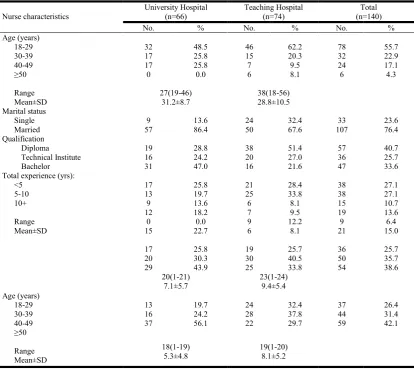
Table (1) Revealed socio-demographic characteristics of the studied nurses, where the main age of studied nurses were (31.2±8.7and 28.8±10.5) in University Hospital and Teaching Hospital respectively. The highest percentages (76.4%) of studied nurses were married. The majority (40.7%) of studied nurses were diploma nursing and 33.6% of them were bachelor degree. The least percentage (25.7 %) of them was technical institutes. The highest percentage (38.6% and 42.1%) of studied nurses had more than 10 years of experience in profession and in the current unit respectively.
Table (2) Descriptive statistics showed that the total mean of safety climate as perceived by nurses was 30.70±2.71. The highest percentage of safety climate items was (81%) related to answered agree regarding the item “receiving appropriate feedback about performance" In addition the lowest percentage of safety climate items was (49%) related to answered agree regarding the item “the levels of staffing in this area are sufficient to handle the number of patients.”
[image:3.595.90.505.402.773.2]Table (3) Descriptive statistics showed that the total mean of teamwork climate as perceived by nurses was 35.6±3.75. The highest percentage of teamwork climate items was (89%) related to answered agree regarding the item “know the first name of all the staff I worked with during my last shift.”
Table 1. Demographic characteristics of studied nurses in university and teaching hospitals
Nurse characteristics University Hospital (n=66) Teaching Hospital (n=74) Total (n=140)
No. % No. % No. %
Age (years) 18-29 30-39 40-49 ≥50 Range Mean±SD 32 17 17 0 48.5 25.8 25.8 0.0 46 15 7 6 62.2 20.3 9.5 8.1 78 32 24 6 55.7 22.9 17.1 4.3 27(19-46) 31.2±8.7 38(18-56) 28.8±10.5 Marital status Single Married 9 57 13.6 86.4 24 50 32.4 67.6 33 107 23.6 76.4 Qualification Diploma Technical Institute Bachelor 19 16 31 28.8 24.2 47.0 38 20 16 51.4 27.0 21.6 57 36 47 40.7 25.7 33.6 Total experience (yrs):
<5 5-10 10+ Range Mean±SD 17 13 9 12 0 15 25.8 19.7 13.6 18.2 0.0 22.7 21 25 6 7 9 6 28.4 33.8 8.1 9.5 12.2 8.1 38 38 15 19 9 21 27.1 27.1 10.7 13.6 6.4 15.0 17 20 29 25.8 30.3 43.9 19 30 25 25.7 40.5 33.8 36 50 54 25.7 35.7 38.6 20(1-21) 7.1±5.7 23(1-24) 9.4±5.4 Age (years) 18-29 30-39 40-49 ≥50 Range Mean±SD 13 16 37 19.7 24.2 56.1 24 28 22 32.4 37.8 29.7 37 44 59 26.4 31.4 42.1 18(1-19) 5.3±4.8 19(1-20) 8.1±5.2
Table 2. Nurses responses percent to safety climate items
Items Disagree% Neutral % Agree%
1 The levels of staffing where I work are sufficient to handle the number of patients 42% 9% 49%
2 I would feel safe being treated as a patient in this service 25% 13% 62%
3 I am encouraged by my colleagues to report any patient safety concerns I may have 26% 8% 66% 4 Staff frequently disregard rules or guidelines (e.g. hand‐washing, treatment
protocols/clinical pathways, sterile field, etc) that are established for the area where I work
44% 23% 33%
5 The culture where I work makes it easy to learn from the errors of others 4% 20% 76%
6 I receive appropriate feedback about my performance 10% 9% 81%
7 Medical errors are handled appropriately here 19% 9% 72%
8 I know the proper channels to which I should direct questions regarding patient safety
16% 14% 70%
9 Where I work, it is difficult to discuss errors 56% 20% 24%
10 Hospital management does not knowingly compromise the safety of patients 72% 12% 16% 11 This organization is doing more for patient safety now than it did one year ago 14% 20% 66%
12 Leadership is driving us to be a safety centered organization 12% 19% 69%
13 My suggestions about safety would be acted upon if I expressed them to management
16% 19% 65%
Total mean Score of safety climate Range
Mean±SD
[image:4.595.49.549.83.283.2]13(24-37) 30.70±2.71
Table 3. Nurses responses percent to teamwork climate items
Items Disagree % Neutral % Agree %
1 Nurse input is well received where I work. 14% 10% 76%
2 Where I work, it is difficult to speak up if I perceive a problem with patient care 72% 12% 16%
3 Decision making where I work uses input from relevant staff 9% 7% 84%
4 The doctors and nurses here work together as a well coordinated team 27% 9% 64%
5 Disagreements where I work are resolved appropriately (i.e. not who is right, but what is best for the patient)
18% 8% 74%
6 I am frequently unable to express disagreement with the senior clinical staff here 76% 6% 18% 7 It is easy for staff here to ask questions when there is something that they do not understand 16% 7% 77%
8 I have the support I need from other staff to care for patients 12% 8% 80%
9 I know the first and last names of all the staff I worked with during my last shift/period of work 6% 5% 89% 10 Important issues are well communicated at shift changes/between periods of work 13% 6% 81% 11 Briefing staff on handovers between shifts/periods of work (i.e. to plan for possible contingencies)
is important for patient safety.
8% 11% 81%
12 Briefings are common where I work 10% 11% 79%
13 I am satisfied with the quality of collaboration that I experience with staff physicians where I work 21% 28% 51% 14 I am satisfied with the quality of collaboration that I experience with nurses where I work 4% 8% 88%
Total mean Score of teamwork climate Range
Mean±SD
[image:4.595.67.555.316.509.2]16 (26-42) 35.6±3.75
Table 4. Frequency Distribution of the studied sample according to their levels of safety climate and team work climate (no = 140)
Items Frequency Percent
Safety climate level:
High safety climate 121 86.4
Moderate safety climate 19 13.6
Team work climate level:
High teamwork climate 129 92.1
Moderate teamwork climate 11 7.9
Table 5. Comparison between nurses’ teamwork, and safety climate levels
Total Safety climate level Total Teamwork level X2 test P value
Moderate (no=11)
High (no=129)
No % No %
Moderate High
9 2
81.8 18.2
10 119
7.8
92.2 47.71 <0.001*
[image:4.595.152.447.543.612.2]Table 6. Comparison between levels of safety climate regarding demographic characteristics
Personal characteristics Safety climate level X2 test P value
Moderate (no=19)
High (no=121)
No % No %
Age (years) 18-29 30-39 40-49 ≥50 10 4 4 1 52.6 21.1 21.1 4.1 68 28 20 5 56.2 23.1 16.5 4.1
0.31 0.96
Marital status Single Married 5 14 26.3 73.7 28 93 23.1 76.9
0.09 0.76
Qualification Diploma Technical Institute Bachelor 10 4 5 52.6 21.1 26.3 47 32 42 38.8 26.4 34.7
1.29 0.52
Name of hospital University Teaching 4 15 21.1 78.9 62 59 51.2 48.8
6.01 0.01*
Department Intensive care unit Operating room unit Premature unit Emergency unit Burn unit
Kidney dialysis unit
11 4 1 0 1 2 57.9 21.1 5.3 0.0 5.3 10.5 27 34 14 19 8 19 22.3 28.1 11.6 15.7 6.6 15.7
11.89 0.04*
Total experience (yrs): <5 5-10 10+ 0 9 10 0.0 47.4 52.6 36 41 44 29.8 33.9 36.3
7.62 0.02*
Experience in current unit yrs): <5 5-10 10+ 2 4 13 10.5 21.1 68.4 35 40 46 28.9 33.1 38.0
6.46 0.04*
(*)Significant difference at p<0.05
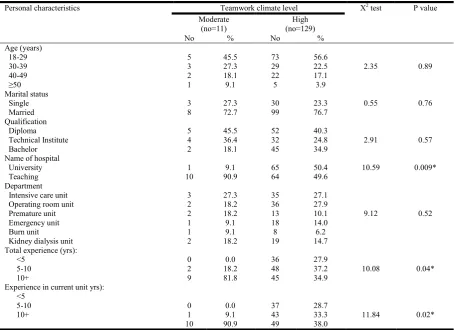
Table 7. Comparison between levels of teamwork climate regarding demographic characteristics
Personal characteristics Teamwork climate level X2 test P value
Moderate (no=11)
High (no=129)
No % No %
Age (years) 18-29 30-39 40-49 ≥50 5 3 2 1 45.5 27.3 18.1 9.1 73 29 22 5 56.6 22.5 17.1 3.9
2.35 0.89
Marital status Single Married 3 8 27.3 72.7 30 99 23.3 76.7
0.55 0.76
Qualification Diploma Technical Institute Bachelor 5 4 2 45.5 36.4 18.1 52 32 45 40.3 24.8 34.9
2.91 0.57
Name of hospital University Teaching 1 10 9.1 90.9 65 64 50.4 49.6
10.59 0.009*
Department Intensive care unit Operating room unit Premature unit Emergency unit Burn unit
Kidney dialysis unit
3 2 2 1 1 2 27.3 18.2 18.2 9.1 9.1 18.2 35 36 13 18 8 19 27.1 27.9 10.1 14.0 6.2 14.7
9.12 0.52
Total experience (yrs): <5 5-10 10+ 0 2 9 0.0 18.2 81.8 36 48 45 27.9 37.2 34.9
10.08 0.04*
Experience in current unit yrs): <5 5-10 10+ 0 1 10 0.0 9.1 90.9 37 43 49 28.7 33.3 38.0
11.84 0.02*
(*)Significant difference at p<0.05
[image:5.595.72.528.452.782.2]In addition the lowest percentage of teamwork climate items was (51% and 64%) respectively related to answered agree regarding the item “satisfied with the quality of collaboration with staff physicians," and " doctors and nurses work together as coordinated team"
Table (4) shows staff nurses' perception level of safety climate. The highest percentage of staff nurses had a high perception level of job safety climate (86.4%). Regarding staff nurses' perception level of team work climate, the highest percentage of staff nurses had a high perception level of team work climate (92.1%).
Table (5) indicates that the highest percentages of nurses (92.2%) who had high level of team work climate had high level of safety climate. Conversely, the highest percentages of nurses (81.8%) who had moderate level of team work climate had moderate level of safety climate. They were highly statistically significant, p<0.001.
Table (6) presents that there were statistical significant differences between nurses' perception level of patient safety climate and most of their socio-demographic characteristics. Where, the highest percentages of nurses who were working at University Hospital, who were working in intensive care unit, had total years of experience more than 10 years and those also those who had more than 10 years of experience in current unit representing 78.9%, 57.9, 52.6%, and 68.4% respectively, had highly statistically significant moderate perception of Safety climate level than other categories of nurses groups (X2=6.01, p= 0.01; X2=11.89, p= 0.04; X2=7.62, p= 0.02; and X2=6.46, p= 0.04) respectively.
Table (7) demonstrates that the highest percentage of nurses who were working at Teaching Hospital, had total years of experience more than 10 years and those also those who had more than 10 years of experience in current unit representing 90.9%, 81.8%, and 90.9% respectively, had highly statistically significant moderate perception level of team work climate than other categories of nurses groups (X2=10.59, p= 0.009; X2=10.08, p= 0.04; and X2=11.84, p= 0.02) respectively.
Table (8) points to statistical significant strong positive correlation between nurses’ overall perception level of safety climate from one side and their overall perception level of team work climate (r = 0.492 , p<0.001).
DISCUSSION
In recent years, the issues of patient safety have become important topics in health policy and healthcare practice in several countries. Rapid change in healthcare has mandated greater attention to safety, which is essential to the efficient, competent delivery of quality care (Nieva and Sorra, 2003).
The Institute of Medicine (IOM, 2004), reported that leaders and managers committed to promote a safety culture at all levels of the organization and empowers employees to be helpful and observant of potential problems that need to be addressed. The present study assessed the relationship between nurses' perception of teamwork and patient safety climates. One hundred and forty respondents participated in the study. The results of this study are consistent with the idea that patient safety outcomes are associated with the teamwork characteristics within which nurses’ practice. The teamwork environment has been linked to patient safety outcomes through previous research studies (Laschinger and Leiter, 2006; Friese et al., 2008; Aiken et al., 2012; El-Hosany and Araef, 2012). The first and most important result in the present study was that the majority of nurses perceived both high level of safety and teamwork climate. This finding is reassuring because teamwork behaviors are crucial for providing optimal and safe patient care especially in specialty units. One explanation of this finding could be attributed to the fact that strong multidisciplinary teams in specialty units is central to improving patient safety where in these units nurses are more experienced and skillful to think critically and to make decisions related to the safety environment. This can achieved through utilization of resources and participation in conferences and meetings about safety culture.
Results regarding teamwork also received the highest positive responses by nurses suggesting that these are the areas of strength and might reflect the evidence of effective team collaboration in the study hospitals. These findings were supported by (Singer et al., 2009), they identified that strengthening critical care teams involves structuring formal, informal communications and team building activities that focus on safety. Results regarding teamwork climate level at university hospital were higher than teaching hospital. Also teaching hospital has moderate level of teamwork climate level that due to university hospital environment is providing a model of collaboration and teamwork. This finding is supported by (Ahmed et al., 2011). Also in agreement with these present study findings (JCAHO) (Joint Commission on Accreditation of Healthcare Organizations, 2010), has reported that effective collaboration and teamwork is essential in providing safe and effective hospital care. Meanwhile, the lowest percentage of teamwork climate items was (51% and 64%) respectively related to answered agree regarding the item “satisfied with the quality of collaboration with staff physicians," and " doctors and nurses work together as coordinated team". These findings were supported by (Makary
et al., 2006; Thomas et al., 2003), which have shown that
nurses are often dissatisfied with the quality of communication and collaboration with physicians. (Davenport et al., 2007; Wheelan et al., 2003), have claimed that higher ratings of collaboration and teamwork have been associated with better patient outcomes in observational studies. Also (Martin et al.,
Table 8. Pearson correlation between total safety climate level score and total team work climate level score
Parameters Total safety climate level score
r P value
Total team work climate level score 0.492 <0.001**
2010), suggest good inter professional relations and communication among RNs and physicians, essential for high levels of patient safety and quality of care.
Regarding nurses perception level of safety climate, the present study has revealed highest positive responses by nurses for safety climate level suggesting that high level in nurses' perception might reflect to nurses spent more time in contacting and communicating with patients, so they had more opportunity to deal with patient safety issues. This result is constant with (Ahmed et al., 2011), who found that nurses
perceive patient's safety culture more positively, and (Nie
et al., 2013), show that amongst the health care workers
surveyed in China there was a positive attitude towards the patient safety culture within their organizations.
Moreover, this might be demonstrated by (Carmel et al., 2006; Moore, 2004), who found that nurses are committed professionals in a unique position to improve patient safety because of their proximity to the patient and their critical role in healthcare delivery. This position gives nurses the needed insight to identify and address errors as the most highly ethical and honest group of professionals. Thus, nurses and the nursing profession play a distinctive role to advocate for patient safety and contribute to the overall efforts to reform healthcare promoting positive change that will ultimately benefit patients. On the same line (Sexton et al., 2006), had reported that healthcare organizations have started to consider safety climate as a vital issue in the success of the organization, and there is a major interest in measuring the attitude and perception of healthcare providers toward safety climate. Safety climate has a significant impact on safety practices inside the hospitals, which directly might affect the quality and patient safety levels (Singer et al., 2003).
Concerning levels of safety climate regarding demographic characteristics, the present study reported that the highest percentages of nurses have high safety climate level who were working at university hospital was higher than who were working at teaching hospital also the highest percentages of nurses have moderate level of safety climate level at teaching hospital, and who were working in operating room unit and who had 10 years of experience in current unit have high level of safety, and intensive care unit have moderate level of safety, highly statistically significant moderate perception of Safety climate level than other categories of nurses groups. This finding is supported by (Ahmed et al., 2011), who concluded that, highest percentage of nurses working in critical care units perceived supervisor/ manager expectations and actions promoting safety culture dimension more positively than those working in general wards did. These results may be attributed to that, the critical care units' work which needs more supervision and compliance to safety standards because of the critical condition of patients. As well, this finding could be due to that, the environment of a critical area necessitates the supervision to be stronger and harder than in the general units.
Regarding the relation between safety climate level and nurses’ qualification, the present study results have not statistically significant. The findings of this study didn't support the associations in previous literature between higher nurse
education levels and improved patient safety outcomes (Estabrooks et al., 2005; Bruyneel et al., 2009). And supported by (El-Hosany and Araef, 2012), who found the majority of the nurses (81.7%) included in their study had educational attainment of Baccalaureate degree. This result might be due to the highest percentage of nurses in teaching Hospital are diploma nurses and also they usually have limited resources when compared to university hospital where the highest percentage of nurses are bachelor degree nurses and have more access to resources. So teaching hospital specialty units' nurses are not well prepared both with education and resources to strongly support safety principles and so their engagement in the appropriate behaviors is not enough.
Regarding the relation between patient safety climate level and nurses’ age, the present study results have not statistically significant. The findings of this study didn't agree with (Hassan and Ahmed, 2012), who stated that there were statistically significant differences between nurse’s age, qualification and patient safety level. Worth mentioning (Kitch, 2005), identified that perception of safety culture dimensions among nurses were differ significantly in accordance with age group and level of education. It is interesting to notice that ICU nurses and those who had 10 years of experience in current unit tended to have significantly moderate perception of safety climate. This result could be attributed to the fact that, nature of work environment of ICU, where care for patients crosses many disciplines with high patient mortality itself may lead to personnel burnout and stress. Many nurses worry about reporting near-miss events to reporting systems for fear of consequences from colleagues who are working with them for more than 10 years. Moreover they fear from punishment from senior management if they report for near- miss events (Abdou and Saber, 2011).
Concerning levels of teamwork climate regarding demographic characteristics, the present study reported that the highest percentages of nurses who were working at Teaching Hospital and who had total years of experience more than 10 years had highly statistically significant moderate perception of team work climate level than other categories of nurses groups. Again, this result might be attributed to the highest percentage of nurses in teaching hospital are diploma nurses when compared to university hospital where the highest percentage of nurses are bachelor degree nurses. So nurses in Shebin El-kom Hospital are less equipped with the strategies for building effective team. Regarding the relation between teamwork climate level and nurses’ area or units of work, the present study results have not statistically significant. The findings of this study didn't agreement with (Guise and Sigel, 2008), emphasized that good team work is essential for the delivery of effective and efficient care in any clinical setting. Also (Nathanson et al., 2011), reported that amount of collaborative teamwork that occurs in the ICU between nurses and junior doctors were inadequate.
The present study has pointed to highly statistical significant positive correlation between nurses’ overall perception of team work climate and their overall perception of safety climate (r = 0.492, p<0.001). This result is similar to(Li and Ai-Tzu, 2013), who reported that teamwork climate is the most important
determinant for patient safety attitudes among nurses. And also (Raeda et al., 2012), showed that there was a strong positive correlation between safety climate and teamwork; (r = .841, p
< .01). Also (El-Hosany and Araef, 2012), reported that patient safety is showing significant positive correlations with teamwork characteristics, specifically at ward and unit level. (Molloy, Patricia 2012), has also added that nurses reported higher patient safety grades associated with better perceptions of teamwork, management support, communication. Also this finding is in total agreement with (Beatrice et al., 2010), who demonstrated that teamwork is a critical element in assuring patient safety and quality of care.
Conclusion
This study concluded that the studied sample had a high teamwork climate level and there was a strong positive correlation between patient safety climate level scores and teamwork climate level scores. There was statistical significant differences was found between nurses' perception level of patient safety climate and their hospital, department, total years of experience, and their years of experience in current unit. Also, There was statistical significant differences was found between nurses' perception level of teamwork climate and their hospital, total years of experience, and their years of experience in current unit. Finally, teamwork climate has an effect on patient safety climate as perceived by nurses.
Recommendations
The study recommended the following
Developing strategies that create a culture of safety and teamwork climate to improve nurses' satisfaction and retention as well as patient outcomes in hospitals.
Nurse educators should increase the involvement of the concepts of safety climate and teamwork in nursing curricula for improving nurses' appreciation of collaboration and team spirit.
Further studies are needed to examine the relationships between perception of nurses working in critical care units and Perception of nurses working in general wards in two dimensions.
Further in-depth exploration in this issue is recommended to study the effect of teamwork climate on patient safety climate from the perspective of nurses, head nurses and physicians in selected hospitals
Further studies are needed for testing the influence of safe work environment on nurses' performance and productivity.
REFERENCES
Abdou, H. A. and Saber, K. M. 2011. A Baseline Assessment of Patient Safety Culture among Nurses at Student University Hospital. World Journal of Medical Sciences, 6 (1): 17-26.
Ahmed, N. G, Adam, S .A. and Abd Al-Moniem I. I. 2011. Patient Safety: Assessing Nurses' Perception and Developing an Improvement Plan. Life Science Journal,
8(2):53-64.
Aiken, L. H., Sermeus, W., Van den Heede, K.W. et al. 2012. Patient safety, satisfaction, and quality of care: cross sectional surveys of nurses and patients in 12 countries in Europe. British Medical Journal, 344, p. e1717.
Baker, D.P., Gustafson, S., Beaubien, J.M., Salas, E. and Barach, P. 2005. Medical team training programs in healthcare. In: Henriksen K, Battles JB, Marks ES, Lewin DI, eds. Advances in Patient Safety: From Research to Implementation. Volume 4: Programs, Tools and Products. Rockville, MD: Agency for Healthcare Research and Quality; 253-267.
Beatrice, J. Kalisch and Kyung Hee Lee 2010. The impact of teamwork on missed nursing care Nurs Outlook, 58:233-241.
Beatrice, J. Kalisch and Kyung Hee Lee 2010. The impact of teamwork on missed nursing care Nurs Outlook, 58:233-241.
Bruyneel, L., Van den Heede, K. and Diya, L. 2009. Predictive validity of the international hospital outcomes study questionnaire: an RN4CAST Pilot Study. Journal of Nursing Scholarship, 41 (2), pp. 202–210.
Carmel, M., S. Hughes and K. L. Lapane, 2006. Nurses’ and nursing assistants’ perceptions of patient safety culture in nursing homes. International Journal Quality Health Care, 18: 281-286.
Davenport, D. L., Henderson, W. G., Mosca, C. L., Khuri, S. F. and Mentzer, R. M. Jr. 2007. Risk-adjusted morbidity in teaching hospitals correlates with reported levels of communication and collaboration on surgical teams but not with scale measures of teamwork climate, safety climate, or working conditions. J Am Coll Surg., 205(6): 778–84.
Dietmar Ausserhofer, A., Maria Schubert, A., Mario Desmedt B, Mary, A., Blegen, C., Sabina De Geest A. and Rene´ Schwendimann A. 2013. The association of patient safety climate and nurse-related organizational factors with selected patient outcomes: A cross-sectional survey,
International Journal of Nursing Studies, 50, 240–252 El-Hosany, W. A. and Araef, S. M. 2012. Teamwork
Characteristics, Communication Structures, Supervision and Patient Safety in Special Care Units and General Wards in El-Minia University Hospital. Life Sci J., 9(4): 5398-5406.
Estabrooks, C. A., Midodzi, W. K. and Cummings, G. G. 2005. The impact of hospital nursing characteristics on 30 day mortality. Nursing Research, 54, pp. 74–84.
Estryn-Béhar, M., Ogin´ ska, H., Camerino, D., Le Nézet, O., Conway, P., Fry, C. et al. 2007. The impact of social work environment, teamwork characteristics, burnout, and personal factors upon intent to leave among European nurses. Journal of Medical Care, 45, 939–950.
Friese, C. R., Lake, E. T. and Aiken, L. H. 2008. Hospital nurse practice environments and outcomes for surgical oncology patients. Health Service Research, 43 (4), pp. 1145–1163.
Guise, J. and Sigel, S. 2008. Teamwork in obstetric critical care. Best practice and Research Clinical Obstetrics and Gynacology, 22 (5): 937-951.
Hassan, R. M. and Ahmed, S. T. 2012. Patient Safety:
Institute of Medicine (IoM), 2004. Keeping Patients Safe: Transforming the Work Environment of Nurses. The National Academies Press, Washington, DC.
Joint Commission on Accreditation of Healthcare Organizations 2010. Sentinel Event Statistics. http://www.jointcommission.org/SentinelEvents/
Statistics/Accessed March 22.
Kitch, B. T. 2005. Patient safety culture: a review of survey instruments. Presented at: National Patient Safety Congress; Orlando.
Kotzer, A., Koepping, D. and LeDuc, K. 2006. Perceived nursing work environment of acute care pediatric nurses.
Journal of Pediatric Nursing, 32, 327–323.
Laschinger, H. K. and Leiter, M. P. 2006. The impact of nursing work environment on patient safety outcomes. The Journal of Nursing Administration, 36 (5), pp. 259–267. Li AT. and Ai-Tzu Li 2013. Teamwork climate and patient
safety attitudes: associations among nurses and comparison with physicians in Taiwan., Journal of Nursing Care Quality, 28(1):60-67
MacPhee, M., Espezel, H., Clauson, M. and Gustavson, K. 2009. A collaborative model to introduce quality and safety content into the undergraduate nursing leadership curriculum. Journal of Nursing Care Quality, 24, 76–82. Makary M. A., Sexton J. B., Freischlag, J. A. et al. 2006.
Operating room teamwork among physicians and nurses: teamwork in the eye of the beholder. J Am Coll Surg., 202(5):746–52.
Martin, J. S., Ummenhofer, W., Manser, T. and Spirig, R. 2010. Interprofessional collaboration among nurses and physicians: making a difference in patient outcome. Swiss Med Wkly. 140:w13062
Molloy, Patricia A. 2012. Examining the relationship between work climate and patient safety among nurses in acute care settings, ProQuest, UMI Dissertations Publishing 2012. ISBN : 9781267269829, http://search.proquest. com/docview/1009735806
Moore, D. W. 2004. Nurses top list in honesty and ethics poll. The Gallup Organization. Available at http://www. gallup.com/ Accessed December, 2010.
Nathanson, B. H1, Henneman, E. A., Blonaisz, E. R., Doubleday, N. D., Lusardi, P. and Jodka, P.G. 2011. How much teamwork exists between nurses and junior doctors in the intensive care unit?, J Adv Nurs.
,
Aug; 67(8):1817-23.Nedd, N. 2006. Perception of empowerment and intent to stay.
Journal of Nursing Economics, 24, 13–18.
Nie Y1, Mao X, Cui H, He S, Li J, Zhang M. 2013. Hospital survey on patient safety culture in China. BMC Health Serv Res.
,
24;13:228.Nieva, V. F. and J. Sorra, 2003. Safety culture assessment: a tool for improving patient safety in healthcare organizations. Quality Safety Health Care, 12: ii17-ii23. Owens, K., Mundy, M., Guild, W., Guild, R. 2001. Creating
and sustaining the high performance organization. Management and Service Quality. Vol. 11. No. 1. pp 10-21.
Raeda F. et al. 2012. The Relationships Between Safety Climate, Teamwork, and Intent to Stay at Work Among
Jordanian Hospital Nurses, Nursing Forum Volume 47, No. 1, pp 65- 75
Seren, S. and Baykal, U. 2007. Relationship between change and organizational culture in hospitals. Journal of Nursing Scholarship, vol 39, issue(2): 191-197
Sexton, J. B., Helmreich, R. L., Neilands, T. B. et al. 2006. The Safety Attitudes Questionnaire: psychometric properties, benchmarking data, and emerging research.
BMC Health Serv Res., 6:44.
Sexton J. B., Makary, M. A., Tersigni, A. R. et al. 2006. Teamwork in the operating room: frontline perspectives among hospitals and operating room personnel.
Anesthesiology, 105(5):877–84.
Sexton, J., Holzmueller, R., Pronovost, V., Thomas, E., McFerran, S. and Nunes, J. (2006). Variation in caregiver perceptions of teamwork climate in labor and delivery units. Journal of Perinatology, 26, 463–470.
Simpson, K. Failure to rescue 2005. Implications for evaluating quality of care during labor and birth. J Perinat Neonat Nurs; 19(1): 24–34.
Singer, S., Gaba, D., Geppert, J., Sinaiko, A., Howard, S. and Park, K. 2003. The culture of safety: Results of an organization-wide survey in 15 California hospitals.
Journal of Quality and Safety in Health Care, 12, 112– 119.
Singer, S., S. Lin and A. Falwell, 2009. Relationship of safety climate and safety performance in hospitals. Health Services Res., 44: 399-421
Speroff, T. Nwosu, S. and Greevy, R. 2010. Organizational culture : variation across hospitals and connection to patient safety climate. QualSaf Healthcare, 19: 592-596 Thomas, E. J., Sexton, J. B. and Helmreich, R. L., 2003.
Discrepant attitudes about teamwork among critical care nurses and physicians. Crit Care Med., 31(3):956–9. Wheelan, S. A., Burchill, C. N. and Tilin, F., 2003. The link
between teamwork and patients' outcomes in intensive care units. Am J Crit Care, 12 (6):527–34.