A Rule Adaptive Trust Evaluation Method to
Provide Safe Communication in MANET
Jaiti Arora
1, Paru Raj
21
Research Scholar,Department of Computer Science, PPIMT, Haryana, India 2
Assistant Professor, Department of Computer Science, PPIMT, Haryana, India
ABSTRACT
To provide the coverage over various deficiencies over the mobile network, a rule adaptive trust evaluation method is provided. At the first level of this model, the stability, coverage and directional analysis is applied to divide the network path in zones. For each zone, the trust evaluation is performed under communication loss, communication delay and response time parameters. These parameters are collectively used to generate the trust weight for each node. At the final stage, the most trust node is elected from each zone to generate the effective route. The comparative results show that the method has reduced the communication loss and communication delay.
Keywords: Trust Weighted, Rule Based, Safe Routing, Mobile Network
1. INTRODUCTION
Mobile network[1][2] suffers from various deficiencies because of its open and dynamic nature. The network has various challenges [3] [4] [5] including the architecture, communication environment, communication behavior and security. Safe and reliable communication is the key requirement of the mobile network. The network provides the cooperative route formation by electing the intermediate nodes dynamically. The node selection can be done based on parameters evaluation defined under different methods or protocols. The network is able to provide the effective communication against node failure and communication loss. The general usage specific analysis and constraint mapping is provided to generate the effective communication links. The cooperative connectivity[10][11][12], environmental consideration and usage analysis are required to provide effective network communication.
Mobile network able to provide different forms of communication based on the environment and communication responsibilities. The network needs to verify the associated diversities and to achieve the relative technology specification. The scenario analysis and constraint adaptation are also applied to achieve the highest performance communication. Different traffic modes, different communication channels and the associated protocols are involved to affect the communication. Mobile network provides the multihop communication by forming the route adaptive to the environment. The trust or safe communication is the prior requirement of this network as it provide communication including the voice, text and video data. The high speed and different form communication increases the communication challenges. The safety challenges and requirements to the network are shown in figure 1.
Here figure 1 is showing the various security[4][5][6][7][8][9][10] aspects required to provide the reliable and safe communication in mobile networks. The communication reliability in mobile network depends on three main factors called Privacy, Trust and Security. The characterization of these three security processes also includes the various preventive, detection oriented and authentication driven methods. The attack detection methods are specific to the attack. Some of these attacks include Blackhole attack, Sybil attack etc. The preventive measures include the analysis under collaborative fairness analysis and social fairness analysis. The communication mapping is also provided under different access controls at user level and group level. The policy, application and process driven sharing is also provided under authorization method. The identity analysis and the location preserved communication also provided to ensure the communication reliability. The confidentiality in mobile network can be achieved using encoded data communication. The encryption methods can be applied on dataset to control the communication. The trust evaluation over a node depends on various factors including selfishness analysis, cooperative enforcement and trust awareness. The cooperative node evaluation underweight vectors can be applied to generate the trust. The trust is managed in the form of integrated property which can be used to select a node as the safe communication node. Based on this trust and collaborative fairness evaluation is provided in figure 2.
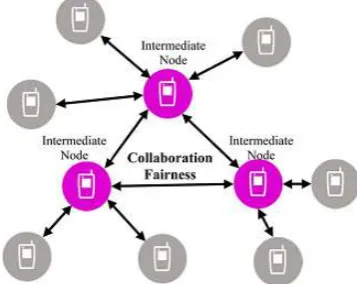
Figure 2 : Safe and Trust Adaptive Communication[7]
Figure 2 is showing the communication over the mobile network by identifying the safe intermediate nodes. These intermediate nodes are identified based on collaborative fairness evaluation and trust evaluation. After assigning the weights, the safe intermediate node can be selected as the next communication hop. The safe and adaptive route can be generated for reliable communication over the mobile network.
The presented work is defined to provide the safe communication over the trusted nodes in the mobile network. A zone based rule specification method is defined under multiple parameters to assign the trust weights on mobile nodes. The method is able to provide the safe communication in attacked or the disrupted network. In this section, various communication and security challenges exist in mobile network are identified. These challenges are divided in three main categories called detection methods, prevention methods and authentication methods. In section II, the proposed research model is presented and discussed. In section III, the comparative results under different parameters are identified. In section IV, the conclusion from the work is provided.
2. RESEARCH METHODOLOGY
parameter adaptive communication is applied over the zone nodes. The parameters considered in terms of communication loss, communication delay and response time. Based on these parameters, the rules are defined to generate the weights on each node. The route formation is done on the trust nodes. The communication model is shown in figure 3.
Figure 3 : Proposed Model
Generate a Mobile network with mobility and communication constraint specification
Set the source and destination node Start
Set source as the current node
Divide the network in smaller zones for the current node based on Response Time Analysis
Identify the zone nodes as possible effective neighbors
Capture the Features of each feasible neighbor under delay, response time and communication loss
parameters
Apply the trust evaluation based on parameter analysis and assign trust priority
If some trustful node is identified set it as next current node
Generate the communication route over these zone trust nodes
Perform the Communication over the route
Figure 3 shows the model to evaluate the trust and to generate the communication. The high weighted nodes are the first choice to identify the intermediate routing node in each zone. If no such node is identified, then the blockage analysis is performed based on the data communication analysis in each zone. The analysis is here performed based on the cooperative communication with other nodes. If node is not blocked, then the weightage level of the node will be increased by one level. In this way, the non-blocked node will be identified as the high weighted nodes. If a zone is not having any high rated node as well as not having any block node, then the evaluation on the zone nodes will done to recognize the node with higher data rate.
In this section, the algorithmic model to perform the communication over the trust nodes is defined. The presented work is simulated on a random network. The comparative results are shown in next section.
3. RESULTS
In this present work, an effective rule adaptive trust evaluation method is provided to generate the effective route in mobile network. The safe communication model is applied to generate the trust route over the network. To evaluate the work effectiveness, the simulation is done in NS2 environment. The parameters relative to the work are listed in table 1
Table 1 : Simulation Parameters
Parameters Values
Network Area 500x500
Number of Nodes 25
Routing Protocols AODV
MAC Protocol 802.11
Packet Size 512 Bytes
Channel Wireless Physical
Node Placement Random
Mobility Random
Source Node 17
Destination Node 19
First Level Evaluation Measure Zone Division
Second Level Parameters Response Time, Delay and Data Loss
Third Level Parameters Weighted Trust
Simulation Time 10 sec
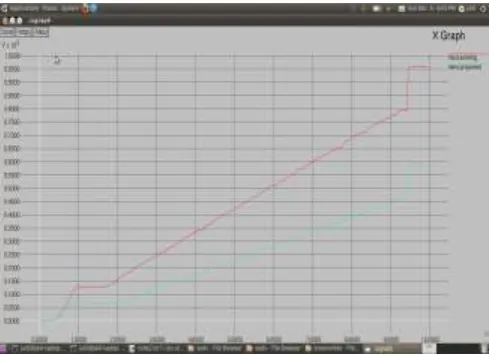
Table 1 is showing the simulation parameters, the evaluation of the work is done in terms of communication loss and communication delay parameters. The comparative evaluation under these parameters is shown in figure 4 and figure 5.
Figure 4 is showing the packet loss evaluation of existing and proposed approach. Here x axis showing the simulation time and y axis representing the packet loss. The simulation result in figure shows that the routing method has reduced the communication loss.
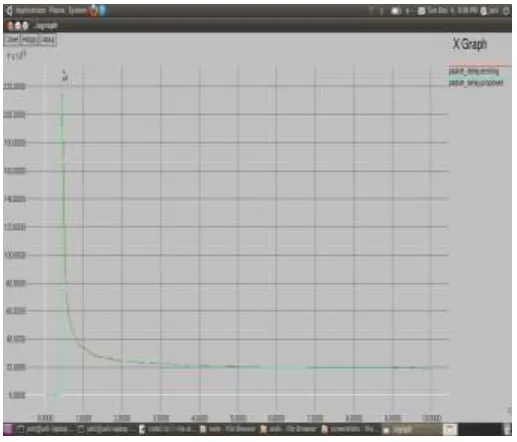
Figure 5 : Communication Delay Analysis
Figure 5 is showing the communication delay evaluation for existing and proposed approach. Here x axis showing the simulation time and y axis representing the communication delay. The simulation result in figure shows that the routing method has reduced the communication delay.
4. CONCLUSION
In this paper, a rule adaptive trust evaluation model is provided to generate the safe communication in mobile network. At first level of this model, the node level evaluation is applied on stability, coverage and direction parameters. Based on this analysis, the zones are generated over the network path. In second stage, the each zone is analyzed under packet loss, response time and delay parameters. Based on these parameters, the trust weights are assigned. Finally, 27 rules are applied to generate the effective route over the network. The simulation results shows that the method has reduced the communication delay and communication loss.
REFERENCES
[1]. Y. Najaflou, B. Jedari, F. Xia, L. T. Yang and M. S. Obaidat, "Safety Challenges and Solutions in Mobile Social Networks," in IEEE Systems Journal, vol. 9, no. 3, pp. 834-854, Sept. 2015.
[2]. N. Raj, P. Bharti and S. Thakur, "Vulnerabilities, Challenges and Threats in Securing Mobile Ad-Hoc Network," 2015 Fifth International Conference on Communication Systems and Network Technologies, Gwalior, 2015, pp. 771-775. [3]. Y. Wang, T. Jing, Q. Jin and J. Ma, "Overview Mobile Social Networking in Proximity (MSNP): Applications,
Characteristics and Challenges," 2013 IEEE 10th International Conference on High Performance Computing and Communications & 2013 IEEE International Conference on Embedded and Ubiquitous Computing, Zhangjiajie, 2013, pp. 2112-2119.
[4]. M. Conti and S. Giordano, "Mobile ad hoc networking: milestones, challenges, and new research directions," in IEEE Communications Magazine, vol. 52, no. 1, pp. 85-96, January 2014.
[5]. C. Ghosh, D. Jana and B. B. Bhaumik, "Security challenges in reactive Mobile Ad Hoc Network," 2011 Annual IEEE India Conference, Hyderabad, 2011, pp. 1-6.
[6]. S. Djahel, F. Nait-abdesselam and Z. Zhang, "Mitigating Packet Dropping Problem in Mobile Ad Hoc Networks: Proposals and Challenges," in IEEE Communications Surveys & Tutorials, vol. 13, no. 4, pp. 658-672, Fourth Quarter 2011.
[7]. S. K. Dhurandher, M. S. Obaidat, Karan Verma, Pushkar Gupta and Pravina Dhurandher, "Friend-based secure routing through challenges in mobile ad hoc networks," Performance Evaluation of Computer and Telecommunication Systems (SPECTS), 2010 International Symposium on, Ottawa, ON, 2010, pp. 280-286.
[9]. Y. Liu, X. Li, S. Chen and Z. Qin, "Link Congestion Control Mechanism Based on Multi-Topology," 2010 6th International Conference on Wireless Communications Networking and Mobile Computing (WiCOM), Chengdu, 2010, pp. 1-4.
[10]. K. T. Girry, S. Ohzahata, C. Wu and T. Kato, "A Circuit Switching Method for Improving Congestion of Tor Network," Broadband and Wireless Computing, Communication and Applications (BWCCA), 2014 Ninth International Conference on, Guangdong, 2014, pp. 416-421.
[11]. Somchai Lekcharoen, "Performance and evaluation of adaptive backoff schemes in traffic shaping over high speed network," 2007 Asia-Pacific Conference on Communications, Bangkok, 2007, pp. 241-245.