IJPAR |Vol.7 | Issue 3 | July - Sep -2018
Journal Home page: www.ijpar.com
Research article Open Access
Formulation and evaluation of dabigatran fast dissolving tablets by using
polyplasdone xl-10 and primellose
Ausaf Butool*
2, Bibi Fareesa Banu
2, Tuba khan
2, Rufaida Farheen
2, Dr. Y Rajesh
11
Associate Professor Dept. of Pharmaceutical chemistry, Sultan-ul-uloom College of Pharmacy
2
Sultan-ul-uloom College of Pharmacy, Banjara Hills, Hyderabad-500034, T.S
*Corresponding Author: Ausaf Butool Email: [email protected]
ABSTRACT
Dabigatran is an oral anticoagulant drug requiring rapid onset of action to exert desired pharmacological effect. It is a lipophilic (BCS Class-II) with little/no aqueous solubility, its absorption is dissolution rate limited. Increase in solubility of the drug is required to get rapid action. It has the half life of 14 hours and bioavailability in the body is 65% due to first pass metabolism. The purpose of this investigation is to develop fast dissolvimg tablet of Dabigatran to improve oral bioavailability for its immediate action for the treatment of stroke prevention in atrial fibrillation, the fast dissolving tablet was formulated by wet granulation technique using hydrophilic carrier like PEG-400 as solubilizer and POLYPLASDONE XL-10 and PRIMELLOSE used as super-disintegrant. The pre and post compression parameters were evaluated. From the dissolution profile it was concluded the tablet prepared by wet granulation technique, the formulationF6 containing 4% of PEG 4000 and 7.5% PRIMELLOSE showed 85.46% drug release due to its increase in porosity and wettability. From the DSC and FTIR study it was concluded that there was no possible drug and polymer interactions.
Keywords: Dabigatran, Hydrophilic carriers, Fast Dissolving tablets, Super-disintergants.
INTRODUCTION
A tablet is a pharmaceutical dosage form of a medicament. It comprises a mixture of active substances and excipients usually in powdered form, pressed or compacted from a powder into a
The excipients can include diluents, binders or granulating agents, glidants and lubricants to ensure efficient tableting; disintegrants to promote tablet breakup in the digestive tract; sweeteners or flavor’s to enhance taste; and pigments to make the tablets visually attractive.
A fast dissolving tablet dissolves or disintegrate in the oral cavity without the need of water or chewing. Most fast dissolving tablets must include substance to mask the taste of the active ingredients. [1] This masked active ingredient is then swallowed by the patients saliva along with the soluble and insoluble excipients. These are also called melt-in –mouth tablets, repellents, porous tablets, oro-dispersible, quick dissolving or rapid disintegrating tablets.[2]
Requirements
Having a pleasing mouth feel.
Have an acceptable taste masking property. Be harder and less friable.
Leave minimal or no residue in mouth after administration.
Not affected by drugs properties.
Properties of dabigatran
Structure
Chemical Name
Ethyl
N-{[2-({[4-((E)-Amino{[(hexyloxy)carbonyl]imino}methyl)phenyl]a mino}methyl)-1-methyl-1H-benzimidazole-5-yl]carbonyl.
Molecular Formula C34H41N7O5
Molecular Weight 627.75gms/moles Category
Stoke prevention in atrial fibrillation. Protein Binding
34-35%
Biological half life 14 hours
Absorption
Peak plasma concentration were achieved in 6hrs.[3]
MECHANISM OF ACTION
PROPERTIES OF POLYPLASDONE XL-10
Structure
IUPAC name:
1-ethenylepyrrolidine-2-one Molecular weight:
111.143g/moles Solubility:
Insoluble in water, though it Still absorbs water and swells very rapidly generating a swelling force. Functional category:
Disintegrant and stabilizer.
PROPERTIES OF PRIMELLOSE
Structure
Molecular formula: C28H30NagO27 Molecular weight: 982.4470 Physical state:
White to off white powder Melting point:
More than 300 Boiling point: More than 300 Solubility:
Slightly soluble in water. [4]
OBJECTIVE
Dabigatran is an oral anticoagulant drug requiring rapid onset of action to exert desired
pharmacological effect. It is a lipophilic (BCS Class-II) drug with little/no aqueous solubility.
The purpose of this investigation is to develop fast dissolving tablets of dabigatran to improve oral bioavailability for its immediate action.
PLAN OF WORK
1. Preparation of calibration curve Dabigatran by spectrophotometrically.
2. Development of formulation. a. Compatibility studies.
b. Evaluation of physical properties of powder mass.
c. Preparation of fast dissolving tablets using super-disintegrants
a. In-vitro dissolution studies of fast dissolving tablets.
b. Evaluation of post compression parameters.
4. Characterization of prepared dabigatran tablets
a. Fourier Transform Infrared Spectroscopy (FTIR).
b. Differential scanning calorimetry(DSC) 5. Stability study of optimized formulation.
Table 1: Instruments used S.no Instruments Company made
1. Hardness tester Monsanto hardness tester. 2. Friability test apparatus Roche friabilator
3. Tablet dissolution tester Rolex 4. Tablet disintegrating tester Rolex 5. Bulk density apparatus SECOR
6. UV Shimazdu
7. FTIR Shimazdu
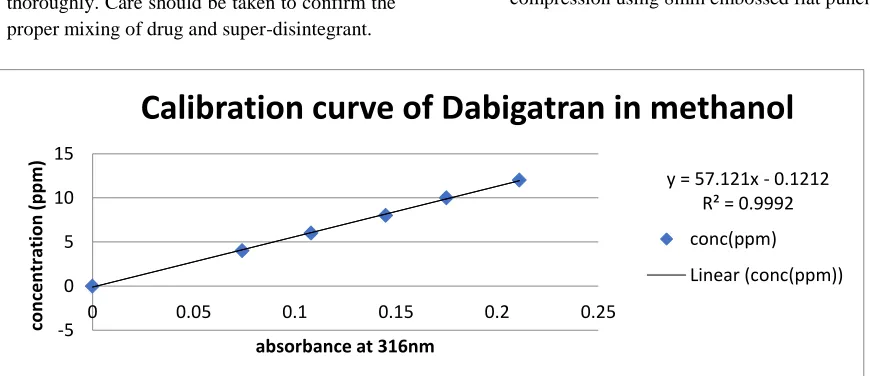
Calibration Curve of Dabigatran in methanol
Determination of ƛmax
The UV spectrophotometer was set to zero and the standard solution was scanned to obtained the maximum wavelength absorption against bank between wavelength of 200-400nm.The standard solution was scanned for absorbance maxima against blank.The maximum absorbance was found to be 330nm for methanol which was fixed as a wavelength for drug analysis. [5]
Procedure for calibration curve
2mg of Dabigatran was accurately weighed and dissolved in 50ml of methanol to make 400ppm. From this 4,6,8,10,12ppm aliquots were prepared and the absorbance was measured at ƛ max of 316nm which follows linearity and obeys Beer-Lamberts Law.
Linearity graph of Dabigatran in methanol
From the calibration curve it was found that its shows linearity in the range of 4-12µg/ml with regression 0.999
Table 2: Calibration curve of Dabigatran in methanol Conc.(ppm) Abs at 316nm
0 0
4 0.074
6 0.108
8 0.145
10 0.175
12 0.211
CALIBRATION
CURVE
OF
DABIGATRAN IN 0.01N HCL
Determination of ƛmax
The UV spectrophotometer was set to auto zero and the standard solution was scanned to obtain the maximum wavelength absorption absorbance against blank between wavelength of 200-400nm. The standard solution was scanned for absorbance maxima against blank. The maximum absorbance was found to be 360nm in 0.01N HCl, which was fixed as a wavelength for in vitro drug release.
Procedure for calibration curve
Linearity graph of Dabigatran in 0.01N HCl
From the calibration curve it was found that it shows linearity in the range of 4-12µg/ml with regression 0.999
Table 3: Calibration curve of dabigatran in 0.01N HCl Conc(ppm) Abs at 360nm
0 0
4 0.077
6 0.111
8 0.44
10 0.176
12 0.209
DEVELOPMENT OF FORMULATION
Procedure for wet granulation method of
formulation F1 –F6
Preparation of binder solution
Take pvpk-30 (binder) and dissolve in required volume of distilled water (10ml) the binder solution is prepared.
Take drug and hydrophilic carrier PEG-4000 in a motor and pistil and triturate for 10 minutes, then add diluents like MCC, pearlitol SD-200 and half quantity of super-disintegrant mix thoroughly. Care should be taken to confirm the proper mixing of drug and super-disintegrant.
Pour binder solution in that above solution to make wet or dough mass. The mass was passed through sieve no 10 to obtain wet granules.
The wet granules were dried at 600c for 15mins, then dried granules was passed through sieve no.20 to break the aggregates. And again dried at 600c for 15min.
Now add remaining half quantity of superdisintegrants and lubricants (talc and magnesium stearate) were passed through sieve no 80 dry and blended for 3mins.
The prepared granules were subjected for compression using 8mm embossed flat punch.
Fig. 1, Table2: Calibration curve of Dabigatran in methanol
y = 57.121x - 0.1212 R² = 0.9992
-5 0 5 10 15
0 0.05 0.1 0.15 0.2 0.25
co
n
ce
n
tr
ation
(p
p
m
)
absorbance at 316nm
Calibration curve of Dabigatran in methanol
conc(ppm)
Fig. 2, Table3: Calibration curve of Dabigatran in 0.01N HCl
Table 4: Composition of sublingual tablets from formulation F1 to F6 Drugs and Excipients(mg) F1 F2 F3 F4 F5 F6
Dabigatran 50 50 50 50 50 50
Avicel PH102 40 50 60 70 80 100
Perlitol SD200 82 70 55 49 37 12
PVPK-30 10 10 10 10 10 10
PEG 4000 5 5 5 8 8 8
Crospovidone 8 10 15 - - -
Primellose - - - 8 10 15
Magnesium stearate 3 3 3 3 3 3
Talc 2 2 2 2 2 2
Evaluation of physical properties of drug
excipient mixtures
Angle of Repose
Angle of repose was determined by fixed height method to characterize the flow property of powder. A funnel with 10mm diameter of stem was fixed at a height of 2cm. over the platform. About 10gm of sample was slowly passed along the wall of the funnel till the tip of the pile formed touches
the stem of the funnel. A rough circle was drawn around the pile base and the radius of the powder cone was measured.
Angle of repose was calculated from the average radius using the following formula.
)
Where,
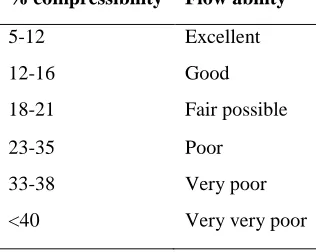
Table 5: Relationship between % compressibility and flow ability % compressibility Flow ability
5-12 Excellent
12-16 Good
18-21 Fair possible
23-35 Poor
33-38 Very poor
<40 Very very poor
0 0.05 0.1 0.15 0.2 0.25
0 2 4 6 8 10 12 14
ab
sor
b
an
ce
at
239nm
concentration in ppm
Calibration curve of Dabigatran in 0.01N Hcl
abs at 239 nm
Linear (abs at 239 nm)
Linear (abs at 239 nm)
Bulk Density
Bulk density is determined by pouring gently 25gm of sample through a glass funnel into a 100ml graduated cylinder. The volume occupied by the sample was recorded. Bulk density was calculated.
Bulk density (g/ml)= weight of sample /volume occupied by the sample.
Tapped density
The tapped density was determined by pouring 25gm sample through a glass funnel into a 100ml graduated cylinder. The cylinder was tapped from the height of 2 inches until a constant volume was obtained. volume occupied by the sample after tapping was recorded and tapped density was calculated.
Tapped density (g/ml) = weight of sample / volume occupied by the sample
Compressibility (%)
It is also one of the sample methods to evaluate flow property of a powder by comparing the bulk density and tapped density. Useful empirical guide is given by the Carr’s index.
Carr’s Index= Tapped density – Bulk density/Tapped density x 100
Hausner ratio
It provides an indication of the degree of densification which could result from vibration of feed hopper.
Hausner ratio = tapped density / bulk density Lower hausner ratio Better flowability Higher Hausner ratio Poor flowability
Friability
Twenty tablets were weighed and placed in the roche friabilator test apparatus, the tablets were exposed to rolling and repeated shocks. Resulting from free falls within the apparatus. After 100 revolution, the tablets were dedusted and weighed again. The friability was determined as the percentage laws in weight of the tablets.
Friability (%) = 1-[weight of tablets after test/weight of tablet before test] x 100
Hardness
Hardness of tablets was measured using the Monsanto hardness tester.
Drug content
Three tablets from each formulation batch were powdered in a quantity equivalent to 5 mg of Dabigatran was transferred to 100ml of volumetric flask and diluted to 100ml with methanol. 15ml of the solution was taken and diluted to 100ml with methanol and absorbance was measured at 330nm. Concentration of Dabigatran in methanol is determined by using calibration curve.
Wetting Time
A piece of tissue paper (12cm x 10.75 cm) folded twice was placed in a small petridish (i.d. = 6.5cm) containing 6ml of 0.01N Hcl. A tablet was placed on a paper , and the time for the complete wetting was measured.
In-vitro disintegration time
The tablet was placed in each tube, and the basket rack was positioned in a 1 litre beaker of 0.01N HCl at 350 c ± 20c. the time required for complete disintegration of tablet was noted.
Weight variation
20 tablets were selected randomly from each formulation, weighed individually and the average weight and % variation of tablet weight was calculated. [7]
CHARACTERIZATION
OF
DRUG
AND EXCIPIENTS
Fourier Transform Infrared Spectroscopy
(FT-IR)
Differential Scanning Calorimetry (DSC):
The DSC measurement were performed on a Pyris Diamond TG/DTA differential scanning
calorimeter with thermal analyzer. All accurately weighed samples about 5mg were placed in sealed aluminum pans. An empty aluminum was used as reference. [9]
Table 6: Physical properties of the tablets of formulations F1 to F6 Formulation
Batches
Angle of repose(θ) Bulk density (g/ml)
Tapped density(g/ml) Compressibility (%) Hausners ratio
F1 27.92 0.54 0.56 3.57 1.03
F2 25.17 0.52 0.54 3.70 1.03
F3 28.76 0.51 0.60 12 1.17
F4 28.17 0.57 0.62 8.06 1.08
F5 25.44 0.52 0.56 7.14 1.07
F6 25 0.51 0.60 12 1.17
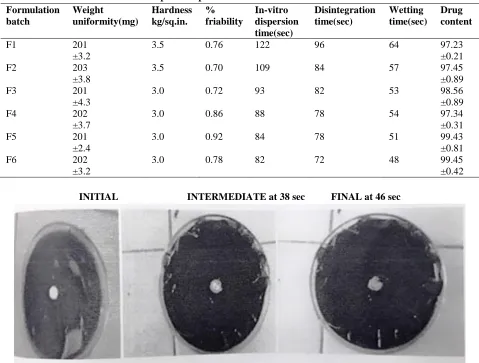
Table 7: Post compression parameters of tablets of formulations F1 to F6 Formulation
batch
Weight
uniformity(mg)
Hardness kg/sq.in.
% friability
In-vitro dispersion time(sec)
Disintegration time(sec)
Wetting time(sec)
Drug content
F1 201
±3.2
3.5 0.76 122 96 64 97.23
±0.21
F2 203
±3.8
3.5 0.70 109 84 57 97.45
±0.89
F3 201
±4.3
3.0 0.72 93 82 53 98.56
±0.89
F4 202
±3.7
3.0 0.86 88 78 54 97.34
±0.31
F5 201
±2.4
3.0 0.92 84 78 51 99.43
±0.81
F6 202
±3.2
3.0 0.78 82 72 48 99.45
±0.42
INITIAL INTERMEDIATE at 38 sec FINAL at 46 sec
Fig 4: Evaluation of in-vitro dispersion time for optimized batch F6
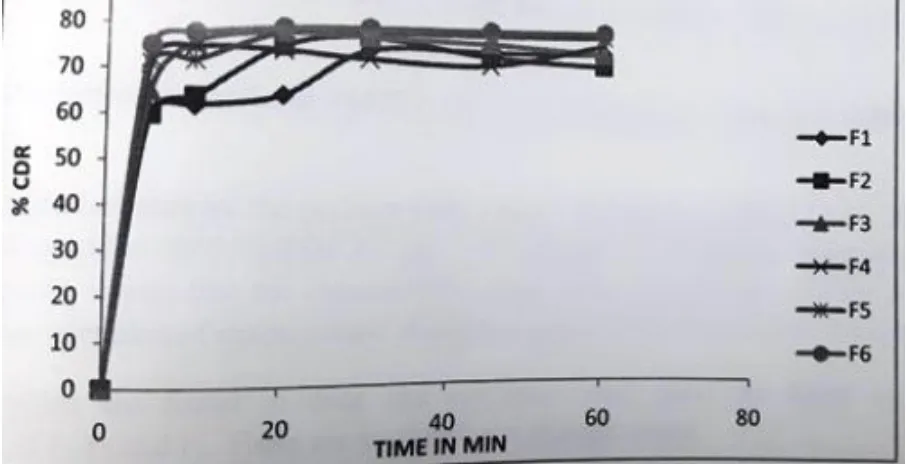
Table 8: Comparative dissolution profiles of formulations F1 to F6
S.No. Formulation batch 5 min 10 min 20 min 30 min 45 min 60 min
1. F1 60.23±
0.03 62.25± 0.42 65.70± 0.26 76.52± 0.21 77.33± 0.13 78.33± 0.13
2. F2 60.34±
0.08 64.57± 0.10 75.02± 0.07 79.21± 0.41 76.02± 0.07 75.98± 0.17
3. F3 65.78±
0.07 76.67± 0.01 79.10± 0.17 79.29± 0.41 79.69± 0.09 78.68± 0.15
4. F4 72.10±
0.06 75.74± 0.09 75.34± 0.22 74.73± 0.14 74.53± 0.12 80.10± 0.06
5. F5 71.34±
0.22 72.96± 0.09 79.41± 0.05 80.45± 0.03 81.26± 0.03 82.46± 0.17
6. F6 75.56±
0.03 78.97± 0.21 80.78± 0.19 81.33± 0.13 82.26± 0.03 85.46± 0.17
From the dissolution profile it was concluded that the tablet prepared by wet granulation technique, the formulation F6, containing 4% of
Fig 5: In-vitro release of Dabigatran from formulations F1 to F6
CHARACTERIZATION
OF
DRUG
AND EXCIPIENTS
FT-IR spectroscopy
In order to characterize possible interactions between the drug and the polymeric carrier in the solid state, infrared spectra were recorded. In drug spectra, strong absorption bands were seen in the region 900 to 650 cm-1 indicating the presence of substituted benzene which is characteristic peaks for aromatic rings. [9]
The C=O stretching bands of acids are more intense and showed absorption bands at 1680-1760cm-1.The spectra showed characteristics peaks for aliphatic C-H stretching for CH3 at 3000cm-1 3100cm-1 and aromatic C-H stretch at 3083cm-1. The aromatic C=C stretching band was seen at 1450 to 1600cm-1. The NH stretching bands were seen at 3300 to 3500cm-1 and NH bending band at 1555cm-1.
The important absorption peaks of drug in formulation remained at same position without significant change in peak intensity. No major distinctive alterations of absorption peaks of the drug were seen. [10]
In case of MCC: C-H stretching band is seen at 4270.40cm-1 C-H bending band is seen at 1435.04cm-1. In case of crosscarmellose sodium the characteristic peak for NH bending at 1429.31cm-1. In case of crosspovidons the characteristic peak for NH stretching at 3398.72cm-1 to 3457.55cm-3398.72cm-1. In case of magnesium stearate the peaks at 1541.12cm-1 NH bending,2920.23cm-1 ,2850.79cm-bending,2920.23cm-1 C-H stretching and at 2850.79-2920.23cm-1, 1471689cm-1 C-H banding.[11] Magnesium strearate with drug spectra reveals that the characteristics peaks of the formulation and the polymer are retained and no alteration of characteristic absorption peaks of the formulations are seen.
Fig: 6 FTIR spectra of Dabigatran.
Fig: 7 FTIR spectra of formulation F6
Fig: 9 FTIR spectra of MCC
Fig: 10 FTIR spectra of PEG 4000
Fig: 12 FTIR spectra of croscarmellose sodium
Fig: 13 FTIR spectra of crospovidone
Fig: 15 FTIR spectra of Talc
Fig: 16 DSC thermogram of Dabigatran
Fig: 17 DSC thermogram of formulation F6
SUMMARY AND CONCLUSION
From the studies the following conclusions
have been drawn
The fast dissolving tablets, when compared to other conventional dosage form have increased bio-availability, which may be attributed to direct absorption of drug into systemic circulation. The
requiring rapid onset of action to exert desired pharmacological effect. It is a lipophilic (BCS class-II) drug with little/no aqueous solubility, its absorption is dissolution rate limited and few reports are available in literature in support of this, increase in solubility of the drug is required to get rapid action. It has the half- life of 14. The total daily dose of Dabigatran is 50mg bid.
The purpose of this investigation was to develop fast dissolving tablets of Dabigatran to bypass first pass metabolism and to improve oral bio-availability for its immediate action for the treatment of stroke prevention in atrial fibrillation ; the fast dissolving tablets was formulated by wet granulation technique using hydrophilic carrier like PEG 4000 as solubilizer and POLYPLASDONE XL-10 (crospovidone) and PRIMELLOSE (croscarmellose) used as super disintegrants with suitable concentration for quick dissolving tablets, allowing the API to be absorbed quickly to systemic circulation to show its immediate action.
All the pre compression and post compression parameters were evaluated and found to be within the limit and meet the standard evaluation parameters with a slight deviation within a prescribed limit.
superdisintegrants were compared, it was concluded that the tablets prepared by wet granulation technique with PRIMILLOSE (7.5%) showed faster disintegration as compared to the other formulations.
From the dissolution profile it was concluded that the tablet prepared by wet granulation technique technique, the formulation F6 containing 4% of PEG 4000 and 7.5% PRIMELLOSE showed maximum percentage (85.46%) drug release due to its increase in porosity, wettability and dispersibility as compared to other formulations.
From the DSC and FTIR study it was concluded that there was no possible drug and polymer interaction.
From the above said it is concluded that the fast dissolving tablets of Dabigatran prepared with PRIMELLOSE and PEG 4000 by wet granulation method.
However, further studies are needed to comment. Further it is advised that the same work should be confirmed for its therapeutic efficacy where the in-vivo studies in human volunteers are required to correlate in vitro release data and clinical trials.
REFERENCES
[1]. Weber and McCormack PL. Asenapine CNS drugs 23(9), 2009, 781-792
[2]. Citrome L. Asenapine for schizophrenia and bipolar disorder. A review of the efficacy and safety profile. [3]. For this newly approved sublingually absorbed second generation anti-psychotic Int J Clin Pract 3(!@),2009,
1742-1784.
[4]. W. Meltzer HY, Dritselis A, Yasothan U, et al, Asenapine nature Reviews 8, 2009, 843-844. [5]. European Directorate for quality of medicines, pharmaeuropa 104, 1998, 547
[6]. http://www.pheur.org. Accessed 2007.
[7]. Seager H.Drug delivery products and zydis fast dissolving dosage forms. J pharm pharmacol. 50, 1998, 375-382.
[8]. Bradoo R, Shahani S, dewan B, sudarshan S fast dissolving drug delivery system. J Am Med Assoc India, 4(10), 2001, 27-31.
[9]. Mizumoto T, Masuda Y. Takeshi Y, Estuo Y, katsuhide T, formulation design of a novel fast disintegrating tablet. Int Jpharm, 306(1-2), 2005, 83-90.
[10]. G. Sandri, M.C. Bonferoni, F, Ferrari, s.Rossi,C. Caramella, Differentiating factors between oral fast dissolving technologies, Am. J. Drug deliv. 4(4), 2006, 249-262.
[11]. Pharmaceutical and medical aspects of bioadhesive system for drug administration. Drug Dev. Ind. Pharm 14, 1988, 283-318.
[13]. International journal drug development and research October to 3(4), 2011, 36-44.
[14]. Hiral brahmbhatt, FORMULATION AND EVALUATION OF SUBLINGUAL TABLET FOR NARATRIPTAN journal of drug delivery and therapeutics. 4, 2014, 19-23.
[15]. N.R Sramika et al FORMULATION AND EVALUATION OF SU LINGUAL TABLETS OF TERAZOSIN HYDRO-CHLORIDE, IJPSR, 5(2), 2014, 417-427.
[16]. Divya vishwakarma formulation anf evaluation of metoprolol tartrate fast dissolving tablet, AJPTR 3(5), 2014 , 58-73.