The effect of numeracy and affect on adherence to
rational choice principles in decisions under risk
A thesis submitted in partial fulfilment of the requirements of the University of Bolton for the degree of Doctor of Philosophy
January 2012
i
Abstract
The question of how affective state effects decision making has, in recent years, come to prominence in the field of decision research. The relationship between numeracy and choice, reasoning and judgement has also started to receive an increasing amount of attention. The series of studies reported here investigate the effect of numeracy and affect on the violation of rational choice principles. Preference reversal and violations of
(transparent) dominance in decisions under risk are investigated in Study 1, using a lottery choice paradigm, while Study 2 examines the relationship between numeracy and these violations of rationality. Study 3 concerns the development and reliability and validity testing of a numeracy scale designed for use in decision research. Study 4 investigates the extent to which more and less numerate individuals attend to probabilistic and outcome value information, using a think aloud methodology. In Studies 5 and 6 the effect of endogenous and exogenous affect on choice and response time is examined, with Study 6 also investigating whether the effect of affect on dominance violation is mediated by numeracy or propensity to engage in cognitive reflection. Key contributions to theory made by this programme of research included the findings that: 1) probability neglect is a widespread phenomenon that can lead to violations of transparent dominance; 2) those lower in numeracy are more prone to probability neglect than those who are more
ii
Acknowledgements
Now that this thesis has reached completion, there are number of people to whom I wish to express my gratitude.
I would first like to take the opportunity to thank my supervisor, Professor Rob Ranyard for the invaluable guidance, encouragement and support he has provided throughout my time as a research student at the University of Bolton. I would also like to thank second supervisor, Dr. John Charlton, for the help and advice he had rendered. In addition, gratitude is owed to Susan Taylor (MPhil), for acting as my second coder, and to Mark Gallamore and Ian Harrison for their assistance in technical matters.
A special thank you must also go to my family, for the emotional support they have provided throughout the writing of this thesis.
A Note Regarding Study 1
iii
Contents
Chapter 1
1. General Introduction... 1
Chapter 2 2. Literature Review... 5
2.1. The Dominance Principle: Predictions of Normative and ‗As-If‘ Models of Choice... 5 2.2. Information Processing and Dual-Process Models of Choice and Judgement... 17
2.3. Cognitive Ability... 27
2.4. Numeracy... 30
2.5. Choice, Judgement and the Effect of Affect.... 38
2.6. In Summary... 47
Chapter 3 3. Study 1... 49
3.1. Introduction... 49
3.2. Method... 64
3.3. Results... 70
3.4. Discussion... 80
Chapter 4 4. Study 2... 92
4.1. Introduction... 92
4.2. Method... 103
4.3. Results... 107
4.4. Discussion... 117
Chapter 5 5. Study 3... 126
5.1. Introduction... 126
5.2. Method... 134
5.3. Results... 136
5.4. Discussion... 144
Chapter 6 6. Study 4... 152
6.1. Introduction... 152
6.2. Method... 156
6.3. Results... 164
iv Chapter 7
7. Study 5... 184
7.1. Introduction... 184
7.2. Method... 189
7.3. Results... 197
7.4. Discussion... 213
Chapter 8 8. Study 6... 224
8.1. Introduction... 224
8.2. Method... 231
8.3. Results... 237
8.4. Discussion... 252
Chapter 9 9. General discussion... 260
References... 276
Appendix A: Predictions of the TAX and RAM Configural Weighting Models... 290
Appendix B: The Expanded Numeracy Scale... 292
Appendix C: Knowledge Quiz (Study 2)... 295
Appendix D: Think Aloud Instructions (Study 4)... 298
Appendix E: Coding Examples (Study 4)... 299
Appendix F: Screenshot of demonstration game (Study 5)... 303
Appendix G: Task Understanding Questions (Study 5)... 304
Appendix H: Screenshot of Post-Affect Elicitation Mood Rating (Study 5)... 307
Appendix I: Debriefing Sheet (Study 5)... 308
Appendix J: Expanded Numeracy Scale with CRT... 309
Appendix K: Hedonic versus Utilitarian Items: A Supplementary Investigation... 312
Appendix L: Debriefing Sheet (Study 6)... 315
1
Chapter 1: General Introduction
As the title indicates, the overarching goal of this programme of research was to investigate the relationship between numeracy, affect and the violation of certain rational choice principles in decisions under risk. The rational choice principles in question are transitivity and dominance, both of which should be adhered to if a decision maker is making choices in accordance with the normative model set out in subjective expected utility theory (axiomised by von Neumann & Morgenstern, 1944 and Savage, 1954). The axiom of transitivity states that when A is preferred to B and B is preferred to C then A should invariably be preferred to C. The principle of dominance states that when an alternative is superior to others on at least one attribute and equal in all other respects, this alternative should be selected. Both of these axioms would appear to be intuitively
obvious. One would – barring indifference or a change in circumstance – anticipate preference to remain transitive and stable. One would also expect people to select superior alternatives over inferior alternatives. Of these two principles dominance is, of course, the most fundamental. To violate transitivity is to demonstrate inconsistency of preference. To violate dominance on the other hand is to fail to act in accordance with preference.
However, violations of both principles have been recorded. Intransitivities have been observed in various choice scenarios (e.g. Starmer, 1999; Tversky, 1969 amongst many others), while Tversky and Kahneman (1981, 1986) observed that dominance may be violated when the existence of a dominant alternative is rendered non-transparent (i.e. in multi-stage gambles and scenarios where alternatives feature a large number of potential outcomes). Nonetheless, when these principles of rational choice are violated one is prompted to ask why this might occur. This is especially true for violations of dominance. Indeed, in scenarios where dominance is systematically violated despite the fact that the existence of a dominant alternative should be transparent, the question of why this should happen has both theoretical and practical importance.
In the series of studies reported here, the question of why a large number of
participants should violate dominance when presented with choices in which the existence of a dominant alternative should be transparent forms the central focus of investigation. While this may at first seem a somewhat narrow focus, the wider implications for theory of the findings obtained are not. In Studies 2, 4 and 6 a clear link between numeracy,
2
happiness is found to have a very different relationship with rate of dominance
violation/adherence (and thus mode of thought) than exogenous happiness. These findings indicate that, even amongst relatively well educated populations, probabilistic information is often inconsistently attended to.
The relationship between numeracy and choice is one that has, during the last five years, received an increasing amount of interest. In the modern world numeric choice information is ubiquitous. However, there is increasing awareness that many adults are lacking in basic mathematical ability. In the UK, the 2003 Skills for Life survey demonstrated that 47% of British adults lacked the skill required to obtain a bare pass (Grade G) in GCSE mathematics, with 75% failing to reach the equivalent of a good pass (Grade C or above). Similar findings have been obtained in the USA; with many well educated individuals lacking adequate understanding of numeric risk information (see Reyna, Nelson, Han & Dieckmann. 2009 for further summary and discussion). Hence, the question of how more and less numerate individuals may differ in manner in which they process and utilise numeric choice information has great theoretical and practical
importance. Peters, Vastfjall, Slovic, Mertz, Mazzocco and Dickert (2006) found that those lower in numeracy tended to be more prone to certain violations of rationality (i.e. denominator neglect and certain framing effects) than those higher in numeracy. These findings were attributed by Peters et al. to less numerate individuals being more susceptible to the influence of objectively irrelevant but affectively salient attributes. Subsequent research has lent further support to this postulation (see for instance Peters & Levin, 2008; Peters, Dieckmann, Vastfjall, Mertz, Slovic & Hibbard, 2009), while the findings of
Dieckmann, Slovic and Peters (2009) indicate that more and less numerate individuals differ in manner in which they use qualitative and quantitative information. In the present programme of research, the relationship between numeracy and probability usage and neglect is examined, with several key conclusions being drawn as to nature of this relationship.
In addition to examining the relationship between numeracy, probability neglect and the violation of rational choice principles, the effect of endogenous and exogenous affect on choice process is investigated in the last two studies in this series. As
3
nuanced picture has emerged. Evidence has emerged to indicate that affect is a necessary component of choice (see for instance Bechara, Damasio, Tranel & Damasio, 1997; Bechara, Tranel, Damasio & Damasio, 1996; Damasio 1994) and that it acts in itself as a source of information (see Finucane, Alhakami, Slovic & Johnson 2000; Slovic, Finucane, Peters & MacGregor, 2004). With respect to choice, judgement and reasoning processes (and mode of thought more generally), it has also been posited that positive affective states facilitate reliance on intuitive, associative top down processes, while ‗sad‘ affective states promote utilisation of deliberative, bottom up processes (see for example Bless, Clore, Schwarz, Golisano, Rabe & Wolk, 1996; Bless & Schwarz, 1999; de Vries Holland & Witteman, 2008a, 2008b). Hence, the exact nature of the relationship between emotion and the processing of choice information is of some interest in the field of decision research. In one recent paper Zeelenberg, Nelissen, Breugelmans and Pieters (2008) postulate that emotion serves to motivate goal directed behaviour and, as such, the effects of endogenous and exogenous emotional states on judgement and decision making may differ in some instances. In Studies 5 and 6 the effect of endogenous and exogenous affect on adherence to the dominance principle (along with other markers of task performance) is thus
investigated. The results of these two studies indicate that task induced happiness does indeed appear to have a different relationship with task performance (and thus choice process) than incidental happiness.
What follows will be a systematic report of the studies that comprise this
programme of research, the theoretical basis for undertaking them and the key conclusions that can be drawn from their findings. In the literature review (Chapter 2), the theoretical background to the present programme of research is fully detailed. Studies 1 and 2 (Chapters 3 and 4) investigate violations of transitivity and dominance in a simple lottery choice task, with Study 2 examining the relationship between numeracy and these
4
5
Chapter 2: Literature Review
As outlined in the general introduction to this thesis, the primary aim of this programme of research is to investigate the impact of numeracy and affective state on choice process and the violation of certain rational choice principles. What follows will be a discussion of theoretical context within which the series of investigations reported in this thesis takes place. The dominance principle and its centrality to the notion of ‗rational choice‘ will be outlined in the first section of this literature review, along with the role that dominance violation/adherence and preference reversal play in various structural models of choice. While the focus of this thesis is on cognitive process rather than the mathematical modelling of rationality and behaviour, it is felt that such an overview is necessary in order to put the findings of the studies reported here in context. This summary will then be followed by a discussion of cognitive models of choice, with emphasis placed on dual-process models, which are central to the series of investigations reported here. This, in turn, will be followed by overviews of research in the fields of numeracy and choice and emotion and choice, upon which the investigations reported here in this thesis aim to build.
2.1. The Dominance Principle: Predictions of Normative and ‘As-If’ Models of Choice
The axioms of subjective expected utility theory.
The dominance principle holds that when one alternative is equal to all other alternatives in all ways apart from one, in which it is superior, this dominant alternative should be chosen. It is one of the four principles of rational choice set out in Savage‘s (1954) axiomisation of subjective expected utility theory.
6
The term predictive model will be used here to describe models that endeavour to predict choice. Such models, whilst aiming to accurately predict the choices that decision makers will make, given a particular set of inputs, do not necessarily aim to describe the cognitive or neurological processes involved in choice. Examples include cumulative prospect theory (Tversky & Kahneman, 1992) and Birnbaum‘s Configural Weighting Models (e.g.
Birnbaum & Macintosh, 1996; Birnbaum & Chavez, 1997). These are sometime dubbed ‗as-if‘ models (e.g. Johnson, Schulte-Mecklenbeck & Willemsen, 2008). The term ‗descriptive model‘, as one might imagine, will be used to refer to models that endeavour to describe and identify the processes underlying choice. Hence, a model can be both descriptive and predictive or merely predictive (a model that was descriptive without having any predictive component would be insupportable as such would be impossible to test).
The normative model set out in SEU is central to this particular program of research, in that it provides a point of comparison. That is to say, individuals‘ actual choices can be compared to those that would be made by the idealised, rational decision maker using the utility maximisation process set out in SEU.
The first formulation of SEU was proposed in the 17th century by mathematician Bernoulli and later expounded upon and axiomised by von Neumann and Morgenstern (1944) and Savage (1954). It holds that the rational decision maker should make choices by calculating the subjective expected utility of each available alternative and selecting that alternative with the greatest subjective expected value. An alternative‘s subjective
expected utility is calculated by multiplying the (subjective) value of each possible outcome by the corresponding (perceived) probability of said outcome occurring. Unlike expected value, which is derived by multiplying objective linear valuations by objective probabilities, subjective expected utility is based upon subjective valuations (i.e. subjective utility). Observing that people tended to be risk averse (in the domain of gains at least), Bernoulli proposed that the utility function was concaved, with a certain gain of x usually being preferred of a .5 probability of winning 2x. However, despite the subjectivity of utility/disutility valuations (i.e. how ‗good‘ or ‗bad‘ a potential outcome would be), the SEU model frames decision making as an essentially rational activity, in which
7
In Savage‘s (1954) axiomisation of SEU, four central axioms of rational choice were established: dominance, invariance, transitivity and independence.
Dominance: As detailed above, the principle of dominance holds that when an alternative is superior to all others in at least one respect and equal in all others, it should be chosen.
Invariance: The principle of invariance essentially holds that the manner in which a choice is framed or presented should have no impact upon the decision made as long all choice attributes (i.e. outcome values and probabilities) remain objectively constant.
Transitivity: The notion that order of preference should remain consistence. Essentially, that if alternative A is preferred to alternative B and alternative B is preferred to alternative C, then alternative A should logically be preferred to alternative C.
Independence: That if an outcome (or potential outcome) is common to all available alternatives then it should not influence choice.
Needless to say, violations of each of these axioms have been observed in various choice scenarios. The Allais and Ellsberg paradoxes demonstrate that the majority of people demonstrate preference patterns inconsistent with the axiom of independence when presented with certain problems (see Baron, 2008, for an outline of the Allais and Ellsberg paradoxes). Systematic violations of transitivity have been observed and reported (e.g. Starmer, 1999; Tversky 1969) as have violations of invariance; with the Asian Disease problem (Tversky & Kahneman, 1981) being perhaps the most famous example of the latter.
8
would appear to be a matter of adhering to one‘s preference. Yet once again, in their seminal body of research on the subject of rational choice principles and the adherence to/violation thereof, Tversky and Kahneman (1981, 1986) found that many individuals violate the dominance principle when the existence of a dominant alternative (or set of alternatives) is rendered intransparent by: a) the fact a choice task has been broken down into multiple stages; or b) alternatives having a large number of difficult to compare outcomes.
Prospect theory, cumulative prospect theory and configural weighting models.
9
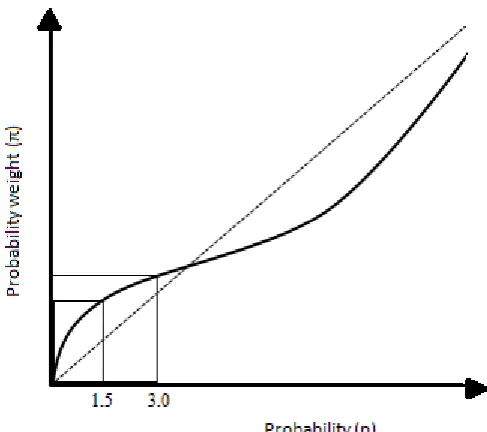
Figure 2.1.1: Example of a weighting function.
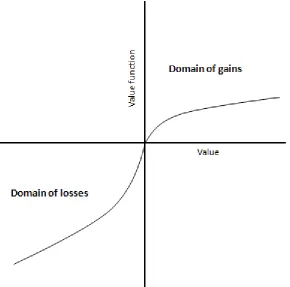
As one can see, the gradient of the curve is far steeper with regard to very small probabilities than it is with regard to moderate probabilities. For instance, the difference in ‗weight‘ between .01 and .02 is far greater than the difference in weight between .46 and .47, despite the fact that the difference is .01 in each instance. In addition to postulating that probabilities are transformed into decision weights, prospect theory also holds that the value function is concaved in the domain of gains and convex in the domain of losses. This means that – as is the case with SEU – linear increments in value (usually defined in monetary terms) are not matched by linear increments in utility and disutility. As Figure 2.1.2 below illustrates the value function is steeper for losses than for gains, reflecting an apparent tendency for losses to loom larger than equivalent (in value) gains. This, it is asserted, predicts higher loss aversion than gain seeking. The concave value function for gains and convex value function for losses also predicts risk seeking in the domain of losses and risk aversion the domain of gains. Diminishing marginal sensitivity to
10
smaller chance of losing a higher amount (and thus a larger chance of losing nothing) being favoured over a higher chance of losing a smaller amount.
Figure 2.1.2: Example of a value function.
The original formulation of prospect theory conceptualises choice as a two stage process consisting of an editing phase and an evaluation phase. In the editing phase the decision information is restructured in order to simplify the choice task (thus making the evaluation phase less cognitively taxing). The evaluation phase, as the name suggests, refers to the phase in which subjective outcome valuations are weighted by their
corresponding decision weights. Tversky and Kahneman do not, of course, propose that people actually make choices by consciously transforming outcome values and
11
probability, but the evaluation phase of prospect theory is not theorised to reflect the actual cognitive process(es) by which these measures are utilised in choice.
Of course, while the evaluation phase is not put forward as a descriptive model of process, the editing phase is. Thus, prospect theory in its original form is part descriptive cognitive theory and part predictive utility model. It was proposed by Kahneman and Tversky (1979) that the editing phase involves the application of simple heuristics such as rounding, cancellation (i.e. of outcomes common to all alternatives), combination (i.e. of identical outcomes within an alternative) and the dismissal of potential outcomes that possess a very low chance of occurring. It is also posited that dominance detection occurs in this phase of the choice process; with the choice process ending should a dominant alternative become evident.
Within the model set out in original prospect theory, divergences from ‗normatively correct‘ choice (i.e. that which SEU would dictate) are explained variously in terms of the valuation function, the weighting function and the application of the editing heuristics. In the example given above for instance, the systematic violation of the dominance principle observed by Tversky and Kahneman (1986) is explained by the weighting function. As Camerer (2000) points out, this formulation of prospect theory can account for various ‗real world‘ choice phenomena. For instance, the disposition effect, a phenomenon formally identified and named by Shefrin and Statman (1985), holds that decision makers will tend to hold on to losing prospects (e.g. stocks that are decreasing in value relative to their purchase price) rather than accept a certain loss, and sell winning prospects (e.g. stocks that are increasing in value relative to their purchase price) early in order to ensure a certain gain. The effect has, as Camerer (2000) points out, been observed in various
experimental (Weber & Camerer, 1998) and real world (Odean, 1997, 1998) contexts. Original prospect theory predicts the existence disposition effect due to the fact that the model holds that people will be risk seeking in the loss domain (i.e. eager to avoid a certain loss) and risk averse in the gains domain (i.e. eager to ensure a certain gain).
12
procedure (or order) by which the editing heuristics are applied means that many choice phenomena could be explained post-hoc by suggesting some combination of editing heuristics, whether said heuristics were actually being employed or not. Despite the
obvious problems with the conceptualisation of the editing phase however, the existence of some kind of dominance detection function would seem plausible if one is to presuppose the existence of an evaluation phase. As stated above, Tversky and Kahneman do not hold that people actually multiply subjective valuations by decision weights. However, in order for probabilities and outcome values to jointly influence choice some kind of evaluation must take place. It would seem plausible therefore that if the existence of a dominant alternative was rendered salient then the dominant alternative should be selected without any further evaluation of outcome values and probabilities. Indeed, a study conducted by Starmer (1999) supports both the existence of a dominance detection process and a probability weighting function consistent with that suggested by original prospect theory. As will be reported following chapter, the first investigation in the series reported in this thesis was prompted by findings of Starmer‘s (1999) study.
13
Lottery A
20 80
Lottery B
0 30 31 100
£8:00 0
30 70
Lottery C
0 15 16 30 31 100
£8:00 £7:75 0
15 15 70
Figure 2.1.3: Illustration of the three lotteries used by Starmer (1999).
If one prefers A to B then one should logically, in accordance with SEU, prefer A to C. Alternative B dominates alternative C due to the fact that, while both offer the same probability (30%) of incurring a win, one of C‘s potential win amounts is lower than that offered by B. Original prospect theory however predicts that the pattern of intransitivity described above will result from the overweighting of the two 15% chance of obtaining a win offered by C comparative to the single 30% chance of winning a potentially slightly greater amount offered by B. The overweighting of .5y comparative to y (where y is a moderate probability) predicted by original prospect theory‘s weighting function, means that the difference in decision weight between the probabilities of obtaining a non-zero outcome in C and B may be enough to offset the small difference in outcome value
between C and B. Of course, the dominance detection process that original prospect theory holds will occur prior to evaluation means that people should not select C over B when the two alternatives are presented jointly. However, it does predict that the preference reversal A > B, C > A will occur amongst individuals whose preference for the higher risk
alternative A over the lower risk alternative B is marginal.
0 20 21 100
14
Starmer (1999) obtained evidence supporting the existence of the predicted preference reversal. On presenting a sample of over 200 participants with the lotteries depicted above in pairs of A versus B, B versus C and A versus C, Starmer found that few participants violated the dominance principle when required to choose between B and C. A large number of participants did however demonstrate the preference reversal A > B, C > A. Had this reversal of preference been the result of indifference between alternatives, then one would expect the counter reversal B > A, A > C to occur with equal frequency. This was not found to be the case. The number of participants demonstrating the reversal of preference predicted by original prospect theory was found to be significantly greater than the number of participants demonstrating the counter reversal. Hence, Starmer‘s findings appear to suggest that while the presence of a saliently dominant alternative in joint evaluation is enough to offset the ‗subadditive‘ nature of any probability weighting function, such a subadditive weighting function does appear to influence choice in scenarios where no dominant alternative exists. As the first investigation in the series reported in this thesis will reveal, Starmer‘s findings vis-a-vis adherence to dominance have not been universally replicated. However, at the very least, the study indicates a clear effect of ‗number of potential outcomes‘ on choice.
15
combined was re-formulated in such a manner as to avoid predicting the dominance violation described.
In original prospect theory an overall valuation of an alternative (or ‗prospect‘) is derived by multiplying the subjective value of each potential gain and loss (i.e. how ‗good‘ or ‗bad‘ said outcome is perceived to be) by its corresponding decision weight and
summing the resultant values. In cumulative prospect theory subjective valuations of outcomes are also weighed by decision weights. However, in this version of prospect theory the manner in which this is done is markedly different. In this model gain outcomes and loss outcomes are first segregated. They are then evaluated in terms of their ranked order with regard to other gains or losses, with each outcome‘s place in the rankings determined by its perceived value. While original prospect theory was formulated so that each individual outcome valuation was multiplied by a decision weight assigned
independently to the outcome‘s probability, in cumulative prospect theory outcome values are weighed by cumulative decision weights. This is to say that the subjective value assigned to the probability of a particular gain outcome occurring, equals the cumulative decision weights for all gains equal or inferior to outcome in question. For losses this is reversed, with the subjective value assigned to the probability of an individual loss outcome equalling the cumulative decision weights for all losses equal or worse than the outcome in question. The way in which these weightings are derived ensures that
dominance cannot be violated in a single stage gamble in which one alternative
transparently dominates all others. Although, cumulative prospect theory does of course allow for the occurrence of dominance violation in multi-stage gambles, where the existence of a dominant alternative would only be revealed were the various stages to be integrated. A set of studies by Tversky and Kahneman (1992) along with a series of experiments conducted by Fennema and Wakker (1997) indicated that this new formulation of prospect theory was better at predicting choice than was the original version‘s evaluation phase. However, as Starmer (1999) points out, the cumulative weighing function is structured in such a manner as to predict that the particular violation of transitivity observed in Starmer‘s own study will not occur.
16
has proposed two configural weighting models: the rank applicative multiple weighting model (RAM) and the transfer of attention model (TAX), they each hold that individual probabilities are weighted based on the number of possible outcomes an alternative option has. In these models individual outcomes are represented as ranked ‗branches‘, with weight (in terms of probability value) being passed from lower branch outcomes to higher branch outcomes. Additionally, if multiple outcomes have identical outcome values then they are not, according to the configural weighting models, amalgamated (e.g. if an alternative offers a 20% chance of winning £100 and a 10% chance of winning £100 then these outcomes are not combined into a single 30% chance of winning £100). Instead, they are weighted as separate branches. Hence, as is the case with the original form of prospect theory when the dominance detection editing function is removed, the configural weighting models allow for violations of dominance in instances where an asymmetric number of outcomes exist. In a series of experiments conducted by Birnbaum (2008) the configural weightings models were found to outperform cumulative prospect theory in terms of predicting choice. It should be noted however that Starmer‘s (1999) findings did not coincide with the predictions of either TAX or RAM (see Chapter 3).
17
2.2. Information Processing and Dual-Process Models of Choice and Judgement
Information processing accounts.
In the preceding sub-section dominance was discussed within the context of predictive ‗as-if‘ models of decision making. In this sub-section focus will be shifted to cognitive considerations and information processing accounts of choice; with emphasis placed upon dual-process conceptualisations of thought.
With regard to what might be termed the cognitive psychology of decision making, numerous theories, frameworks and models have been proposed with the aim of
describing, explaining and predicting a multitude of decision phenomena in terms of cognitive process. As such, a fully comprehensive account of the area is beyond the scope of this literature review. However, it is intended that this sub-section will provide a clear summary of the theories and frameworks most central to the investigations reported in subsequent chapters.
One of the earlier critiques of the use of utility maximisation as a descriptive or predictive model of choice came from Simon (1957), who pointed out that the consistent application of expected utility calculations to all decision making scenarios would be a) completely unfeasible given the limits of human cognition; and b) extremely wasteful with regard to both time and cognitive resources. Simon therefore proposed that in most
everyday decision scenarios simpler processes such as satisficing or merely acting in accordance with habit are relied upon by decision makers. Since then the notion that choice is not a matter of applying a unitary, utility maximisation process has been largely
accepted amongst those researchers studying the psychology of decision making.
18
cognitively demanding heuristics are more likely to lead to certain biases and violations of rational choice principles, while more time consuming and cognitively demanding
processes are more likely to lead to unbiased and normatively correct responding. Of course, while the latter are more likely to yield normatively correct choices that adhere to rational choice principles, and may thus at first glance appear universally superior, there are many situations in which the benefit of such a process is far outweighed by the cost in terms of time and effort. The application of a utility maximisation calculation to all choices would, as Simon (1957) states, be both impossible and grossly inefficient.
19
processed is consistent across alternatives and the overall amount of processing required. In the present work, the attribute versus alternative classification dimension along with the notion that various choice heuristics and strategies require varying amounts of information processing are raised as key points with regard to the investigations reported.
In addition to identifying and classifying several choice processes on the dimensions listed above, Payne, Bettman and Johnson (1993) proposed that different
decision contexts and contingencies serve to influence the type of decision process utilised. Task complexity for instance, is proposed to be a main determinant of the choice process. Payne, Bettman and Johnson cite a number of studies conducted in the 1970s and 1980s (see Payne, Bettman and Johnson, 1993, pp34-37) as evidence for the (quite logical) position that increasing or decreasing the number of attributes and/or alternatives (and thus increasing task complexity) amongst a decision set leads to a change in processing. For example, there is evidence to suggest that increasing the number of alternatives in a set reduces the use of compensatory strategies (e.g. Biggs, Bedard, Gaber, & Linsmeier, 1985; Payne, 1976; Payne and Braunstein, 1978; Shields, 1980). Factors such as time pressure and cognitive ability (to be discussed in further detail below) are also cited as variable likely to influence choice process, as is manner in which information is presented. As one might expect, there is ample evidence to suggest that reducing the amount of time an individual has to spend on a decision affects how that decision is made (see for example Ben Zur & Breznitz, 1981; Evans & Curtis-Holmes, 2005; Huber & Kunz, 2007; Rieskamp & Hoffrage, 2008; Payne, Bettman & Johnson, 1988, amongst numerous others). There is also a body of research to support the notion that the manner in which information is presented influences the choice process. Jarvenpaa (1990) for instance obtained findings to suggest that, for graphical information presentation formats, visual salience is a main determinant of information acquisition. Similarly, Stone, Yates and Parker (1994) and Chua Yates and Shah (2004) found that presenting relative risk reduction information in graphical format increased the amount of money participants stated they would be willing to pay for risk reduction measures. With regard to sequential versus simultaneous
20
to account for certain observed reversals of preference in joint and separate evaluation conditions.
It is felt, in the context of the present research, that the method(s) of classifying choice processes outlined above provide a useful framework in which to identify the kind of processes that may lead to the preference reversals and violations of dominance
investigated. Also pertinent to the present programme of research is Payne, Bettman and Johnson‘s (1993) suggestion that choice processes can broken down into a series of EIPs (elementary information processes). These EIPs, it is proposed, take the form of simple cognitive operations such as weighting one value by another, comparing two alternatives on a single attribute and adding attribute values in working memory (see Payne, Bettman and Johnson, 1993, pp77). This conceptualisation is rooted in the work of Newell & Simon (1972) and Huber (1980, 1989), all of whom have identified such elementary processes or ‗operators‘ with regard to problem solving (Newell & Simon, 1972) and decision making (Huber, 1980). Especially relevant to the current research is Huber‘s (1982, though see Huber 1989 for a summary in English) observation that these operators may be combined in ways that lead to violation of the dominance principle. For instance, Huber (1989) reports a think aloud study in which one participant‘s verbalisations indicated that part of his choice strategy involved summing outcome values for each alternative, with no consideration given to outcome probabilities.
In a similar vein to the adaptive decision maker framework (Payne, Bettman and Johnson, 1993), Gigerenzer and colleagues (see for example Gigerenzer, 2001; Gigerenzer & Goldstein, 1996; Gigerenzer & Selten, 2001; Gigerenzer & Todd, 1999; Selten 2001) propose that human decision makers make use of an adaptive toolbox. The adaptive toolbox can be roughly defined as a set of processes and heuristics which can be applied to choice scenarios. It is argued that these heuristics and processes are the result of
21
Gigerenzer, 2001). This is due to the fact that for most choice scenarios encountered by humans the available alternatives, their potential outcomes and the probabilities of each outcome occurring are not clearly defined, and often need to be generated by the decision maker. Hence, rather than comparing the choice made in a given situation against an ‗optimal‘ or ‗maximised‘ choice, it is suggested that bounded rather than absolute rationality would more useful focus. In essence, that rather comparing seemingly non-rational choice behaviour to a non-rational ideal, focus could – according to this framework – be directed to the manner in which the choice behaviour (and the processes underlying the choice behaviour) may be adaptive in the environment in which humans evolved.
This position with regard to maximisation and optimisation is certainly a
compelling one when it comes to ill-defined decision problems. The cognitive resources required to a) determine an optimal outcome (or set of outcomes); b) identify possible alternative course of action that might lead to said outcomes; and c) apply a complex utility weighting procedure to maximise one‘s chances of obtaining them in all decision situations would be immense (see Gigerenzer‘s, 2001, discussion on the problem of infinite regress in deciding how to decide in Gigerenzer & Selten, 2001). However, it is felt that within the case of the present research the concepts of normativity and rationality are useful. It is true that the environment in which humans evolved probably contained relatively few situations in which all available alternatives and their corresponding outcomes could be neatly
mapped out. In the modern world however a great deal of choice information is presented in a clearly defined format. Though the information in question may not be exhaustive in terms of possible alternatives and outcomes, in domains such health decision making and financial decision making information is frequently presented in what might be termed ‗a well defined manner‘. That is to say that a set of alternatives may be presented in a format similar to that traditionally used in many decision making experiments; with each
22
reversals. Similarly, when the dominance principle is violated in a scenario where the existence of a dominant alternative would seem to be salient (i.e. in a situation where there are a limited number of well defined alternatives featuring well defined outcome values and probabilities are presented together) it would seem important to ask why. The question of what constitutes a ‗good decision‘ is not one that can be easily answered, given that – as Simon (1957, 1983), Gigerenzer (2001) and numerous others have pointed out – utility maximisation in every decision situation would be a) impossible and b) an ineffective use of cognitive resources. However, it is felt that adherence to the principle of dominance in instances where dominance is seemingly transparent would seem to be a perquisite for good decision making.
Dual-process models.
As stated above, dual-process conceptualisations of choice, judgement and reasoning are central to the program of research reported in this thesis. The notion that humans possess two models of thought: the intuitive and the analytic (dubbed System 1 and System 2 by Stanovich, 1999) has attained some prominence in the field of decision research (and the related field of reasoning research) during the last fifteen years (see Epstein, 1994; Evans, 2006; Kahneman & Frederick, 2002; Sloman, 1996 and Stanovich and West, 2000 amongst others). Though elements of proposed theories may differ, all dual-process models in this vein hold that human‘s have two modes of thought. System 1 (also known as the ‗intuitive‘, ‗affective‘, ‗experiential‘ or ‗heuristic‘ system) processes are generally characterised as being intuitive, affect-driven, largely unconscious, fast, cognitively undemanding and prone to certain biases. System 2 (also known as the ‗analytic‘, ‗cognitive‘ or ‗deliberative‘ system) processes by contrast are characterised as deliberative, conscious, slow, cognitively taxing and driven by the task information at hand. An effort/accuracy tradeoff is, of course, implied by this conceptualisation. System 1, while apt to cue appropriate responses in many situations, is characterised more prone to cuing ‗biased‘ and normatively incorrect responses in others. System 2, on the other hand, is held to be cognitively demanding yet more likely to provide normatively correct
23
In his 1994 paper, Epstein made the case for the postulation that humans possess two systems of thought: the cognitive (or ‗rational‘) and the experiential, each possessing the characteristics outlined above. Though the notion that human‘s separate two such modes of thought had been proposed prior to this (see Epstein 1994 for a summary), Epstein was one of the first researchers to explicitly relate this conceptualisation of thought to heuristics and biases in decision making. Holding that (evolutionarily ancient)
experiential and (evolutionary more recent) cognitive modes of thought constitute separate and parallel (though not disconnected) processes, Epstein posited that the workings of the experiential system could account for phenomena such as the ratio bias effect and the conjunction fallacy.
The ratio bias effect, identified by Miller, Turnbull and McFarland (1989), refers to a tendency to judge an event as less likely if the probability of its occurrence is presented as a smaller ratio (e.g. 1 in 10) than an objectively identical larger ratio (e.g. 10 in 100). Denes-Raj & Epstein (1994) posited the ratio bias effect was the result of concrete absolute values having greater affective impact via the experiential mode of thought than more abstract ratios. Observing that if this postulation was true then it should possible to engineer a situation in which dominance is violated as a result of the dominant alternative being presented as a smaller ratio than the dominated alternative, Denes-Raj & Epstein presented participants with the now famous ‗jelly beans task‘. The task involved participants being given a series of choices in which they asked to choose between alternative 1: a 1 in 10 chance of a win or loss outcome occurring and alternative 2: a 5 in 100 to 9 in 100 chance of a win or loss outcome occurring (these draws were presented in the form of jelly beans in a bowl in which red beans corresponded with a win/loss and a white bean with a null outcome). It was found that most participants (82%) made at least one sub-optimal choice (i.e. they chose the dominated alternative), with a greater
proportion of sub-optimal choices being made in the gains domain than the losses domain. When asked to explain their choices after taking part in the experiment, many of the participants in Denes-Raj & Epstein‘s study who had selected one or more non-optimal choices, stated that they knew that the ‗1 in 10‘ chance bowl represented a higher chance of a non-zero outcome, but that they ‗felt‘ better disposed towards the (dominated) larger ratio win and/or less well disposed towards the (dominant) larger ratio loss. Some
24
objectively inferior alternative. Denes-Raj & Epstein concluded that this was evidence of an affect-driven, experiential mode of thought overriding a rational, cognitive mode of thought that operated in parallel. Of course, as will be discussed further in the next sub-section of this introduction, Denes-Raj & Epstein took no measure of participants‘ level of numeracy, a factor that may have had a strong influence on whether participants
demonstrated the ratio bias effect (also known in this context as ‗denominator neglect‘) or not.
Though none of the studies reported here seek to specifically replicate the ratio bias effect, the pattern of dominance violation observed can, as will become clear, be related back to Denes-Raj & Epstein‘s findings.
Of course, while the notion that humans possess two modes of reasoning – one slow and effortful and one fast yet prone to certain biases – could explain many violations of rational choice principles, the mere existence of choice, judgement and reasoning biases does not in itself constitute proof of such a split. However, a body of evidence does exist to support the dual-process conceptualisation of choice, judgement and reasoning. It is to be hypothesised that if humans do possess two modes of thought and one is fast and bias prone and the other cognitively demanding and more likely to produce normatively correct responses, then reliance on the former will be increased when the availability of cognitive resources is decreased. If System 2 processes require deliberation and access to working memory resources, then one would predict that reducing the time available for deliberation would increase reliance on System 1 processes. Hence, in tasks where reliance on System 1 processes is thought to lead to biased responding (and the utilisation of System 2 processes to increase the likelihood of a normatively correct response) one would expect imposing a strict time limit on the task to increase biased responding. Similarly, one would also predict that burdening working memory with a concurrent task would reduce an individual‘s capacity for conscious, effortful System 2 thought and increase reliance on System1 processes.
25
that participants placed under time pressure were more likely to accept invalid but believable statements as true and reject valid but unbelievable statements as false, than were those in a control group. No difference in response accuracy was found between the two groups when it came to statements that were valid and true and statements that were invalid and false. As the belief-bias effect has been linked to reliance on automatic, associative processes, this finding supports the existence of two modes of reasoning.
On a similar note, De Neys (2006) found that the response times of participants who committed the conjunction fallacy when presented with variations on the Linda problem had faster response times than participants who provided the normatively correct response. De Neys also found that burdening the executive function of participants‘ working memories with concurrent tasks increased the rate at which the conjunction fallacy and matching bias were demonstrated on variations on the Linda Problem and the Wason Card Selection task respectively.
26
As stated above, some differences exist between different dual-process accounts of choice, reasoning and judgement. Epstein (1994) conceptualises the two modes of thought as experiential and cognitive and suggests that the two modes of thought operate in
parallel. Sloman (1996, 2002) also posited the existence of two parallel systems of reasoning: the ‗associative‘ and the ‗rule-based‘. In this account the associative system operates as a connectionist network in which similarity associations cue response, while the rule-based system involves the application of symbolically represented (and context independent) rules. Unlike Epstein‘s account however, Sloman‘s does not specify a role for affect.
More recently Evans (2006) and Stanovich & West (2008) have posited that the two modes of thought do not compete in parallel, but rather operate in what Evans (2006, 2007) terms a ―default-interventionist‖ manner. As one might deduce from the name, default-interventionist accounts hold that System 1 constitutes a default response and System 2 acts to monitor System 1 output and intervene if and when an ‗error‘ is detected. Stanovich & West (2008) have presented what is, to date, perhaps the most highly
specified ―default-interventionist‖ model of how System 1 and System 2 may operate. The model holds that in reasoning and judgement scenarios an intuitive, System 1 response is automatically generated, but that said response may be overridden by System 2 if a need to override is detected. Within this model failure to override a ‗biased‘ or situationally
inappropriate System 1 response can result from one of three things: a lack of knowledge as to how to generate a normatively correct response (dubbed a ‗mindware gap‘ by
Stanovich & West, 2008), failure to detect that an override is necessary or failure to sustain inhibition of the prepotent response.
27
2.3.Cognitive Ability
While the relationship between general cognitive ability and choice is not in itself a central focus of this series of investigations, it does have direct relevance; with respect to both dual-process models of thought generally and the findings of Study 6 specifically. Hence a brief discussion of certain key pieces of research in this area will be presented here.
As noted in the previous subsection, Stanovich and West (1998a, 1998b, 1998c, 2000, 2008) have presented a sizable body of evidence to support the existence of a link between higher cognitive ability and the avoidance of certain choice, reasoning and
28
than high SAT score participants in the ‗Linda is a bank teller‘ condition. This stands in contrast to Stanovich and West‘s (1998b) earlier finding that those committing the conjunction fallacy on the standard (i.e. repeated measures) version of the Linda problem had a significantly lower average SAT score than those who did not.
Based upon these findings Stanovich and West (2008) postulated that those higher in cognitive ability possess greater cognitive capacity and are thus more able to sustain the inhibition of erroneous System 1 responses when the need to override is detected. As mentioned in the previous sub-section, Stanovich and West propose that in order for an erroneous System 1 response to be overridden by a normative System 2 response a person must: 1) have the ‗mindware‘ to produce the normatively correct response; 2) detect the need to override; and 3) have the capacity to sustain inhibition of the erroneous intuitive response until the normatively correct System 2 response can be produced. It is the third of these that Stanovich & West suggest is influenced by cognitive ability/capacity. It is posited that as the between participants version of the Linda problem (along with the other between participants tasks listed above) did not contain any explicit cue that the automatic, prepotent response was non-normative (e.g. that the likelihood of Linda being a feminist bank teller must be lower than that of Linda being a bank teller) the need to override it was not detected. Hence, participants did not detect the need to engage in sustained inhibition and those higher in cognitive ability performed no better than those lower in cognitive ability. By contrast, problems such as the jelly beans task (see Denes-Raj & Epstein, 1994) and the standard form of the Linda Problem (see Tversky & Kahneman, 1983), do contain cues to prompt ‗override detection‘.
While this thesis is concerned with decisions involving risk and not reasoning in a general sense, the hypothesis that inhibition of non-normative intuitive responses is largely contingent on the presence of a ‗cue‘ to signal a need to override is directly relevant to Studies 1 & 2. The notion that cognitive ability/capacity and the related but distinct ability of numeracy facilitate ‗rational‘ choice only when some salient cue exists as to the non-normativity of a particular choice is also of great interest.
While of some relevance to the series of investigations reported here general, cognitive ability is not, as previously stated, a central focus on this thesis in itself.
29
the series (see Chapter 8) is that of cognitive reflection. Cognitive reflection is defined by Frederick (2005) as: “–the ability or disposition to resist reporting the response that first comes to mind” (p 35). Frederick proposes that cognitive reflection constitutes a distinct
sub-component of cognitive ability; a postulation that is supported by the fact that score on the three item cognitive reflection test has a moderately strong correlation with various measures of general intelligence and mathematical ability without being collinear with any of them.
The three questions that comprise the cognitive reflection task are listed below. The correct answers to the three questions are 5 cents, 5 minutes and 47 days respectively. However, the answers that spring intuitively to mind for most respondents are 10 cents, 100 minutes and 24 days. Indeed, these are the responses most commonly given. It seems that these incorrect responses are associatively cued by content of the questions and that in order to provide the correct answer many respondents have to inhibit the first.
A bat and a ball cost $1.10 in total. The bat costs $1.00 more than the ball. How much does the ball cost?
_____ cents
If it takes 5 machines 5 minutes to make 5 widgets, how long would it take 100 machines to make 100 widgets?
_____ minutes
In a lake, there is a patch of lily pads. Every day, the patch doubles in size. If it takes 48 days for the patch to cover the entire lake, how long would it take for the patch to cover half of the lake?
_____ days
The cognitive reflection test: reproduced from Frederick (2005) pp 27.
30
might be imagined, Frederick draws an association between performance on the CRT and the utilisation of deliberative ‗System 2‘ processes, suggesting that those scoring higher on the task are more prone to utilising deliberative System 2. Thus, in instances where cues exist to signal that one‘s intuitive response is erroneous, one would anticipate those scoring higher on the CRT to demonstrate fewer System 1 linked thought biases than those scoring lower on the CRT. Additionally, if performance on the CRT is not solely determined by numeracy, then one would predict that CRT score will continue to associate with performance on task known to induce such thought biases when a general measure of numeracy is controlled for.
In Study 6 such an investigation is made and relationship between CRT score, score on a numeracy scale expanded from that of Lipkus, Samsa and Rimer (2001) and
propensity to violate the principle of dominance is examined (see Chapter 8). The results of this study reveal that while numeracy score and CRT score correlate both positively with one another and negatively with rate of dominance violation they do not appear to measure identical abilities.
2.4. Numeracy
While cognitive ability per se is not central to this programme of research,
numeracy is one of its central foci. Numeracy, which is defined by Reyna et al. (2009) as ‗quantitative literacy‘, is an individual differences factor that has, in recent years, started to receive some attention in the field of decision research. It is an area that is of both great theoretical and great practical interest. On a theoretical level, any individual difference factor that influences the manner in which numeric (especially probabilistic) information is understood and utilised by decision makers is of considerable importance to the
formulation of information processing theories of decision making under risk. With respect to practical considerations, much of the choice information with which people are
presented in day to day life is quantitative, proportional and probabilistic in nature. This is especially true in domains such health and personal finance/insurance where choices made can have considerable impact on the lives of decision makers. However, despite the fact that a great deal of information is presented using frequencies, percentages and
31
and consistently. Base rate neglect has been observed amongst physicians presented with Bayesian reasoning problems (e.g. Hoffrage & Gigerenzer, 1998), as have deviations from normative probabilistic reasoning with regard to much simpler problems. Slovic, Monahan and MacGregor (2000), for example, found that even qualified psychiatrists tended to rate a psychiatric patient described as having a 20 in 100 chance of committing a violent
offence as more dangerous than an a patient described as having a 20% chance of doing so.
Interest in how humans interpret and utilise probabilistic information is not, of course, a new theme in judgement and decision research. Prospect theory‘s weighting function is, after all, posited to reflect actual psychophysical properties of probability perception (Tversky & Kahneman, 1979). In the 1990s meanwhile, Gigerenzer and
Hoffrage (see; Gigerenzer & Hoffrage, 1995; Hoffrage & Gigerenzer, 1998) proposed that the widespread poor performance traditionally observed when educated participants are presented with Bayesian reasoning problems, is a result of said problems being delivered in percentage or standard probability formats. Arguing that humans evolved in an
environment in which quantitative information takes the form of experienced natural frequencies, Gigerenzer and Hoffrage along with Cosmides and Tooby (1996) postulate that humans are more easily able to reason with frequency information. Indeed, Gigerenzer and Hoffrage found that the performance of participants was more likely to be consistent with Bayes‘ theorem when problems were presented in frequency format than standard probability/percentage format. This position has been critiqued by Barby and Sloman (2007), who posit that presenting problems in frequency format serves to render the underlying set structure of the problem transparent. Nonetheless, one commonality
between the theories of probabilistic understanding postulated by all of these researchers is that they implicitly assume that people both understand and are capable of utilising simple frequency based probabilities. As shall now be discussed however, there is a growing body of research to indicate that this is not always the case. What proceeds will be a summary and discussion of some of the key pieces of research featuring in the growing body of literature on the subject of numeracy and choice. This will be followed by an outline of this programme of research‘s goals with regard to numeracy.
32
intelligence (for which SAT score was used as a proxy). In this series of studies, numeracy was measured using an eleven item scale devised by Lipkus, Samsa and Rimer (2001). A median split was then performed to divide the sample into more and less numerate participants. More numerate participants were found to be: 1) less susceptible to simple positive/negative framing effects (e.g. tended to be more consistent in their ratings of a piece of work described as 74% correct or 26% incorrect); 2) more consistent across probability representations when asked to judge the danger posed by a psychiatric patient (i.e. 1 in 10 chance of committing a violent offence versus a 10% chance of committing an offence); and 3) less prone to denominator neglect on the jelly beans task. With regard to the jelly beans task, Peters et al. also found that, when asked to rate the clarity of their feelings towards the two alternatives, as a group less numerate participants tended to report less precise feelings (i.e. rated their feelings as being more ‗unclear‘) towards the
dominated alternative than more numerate participants. Peters et al. concluded that those higher in numeracy tend to have more precise affective feelings towards quantitative information than those lower in numeracy. It was also concluded that less numerate participants were more likely to be influenced by irrelevant – but affectively salient – information, such as frame and numerator divorced from denominator.
With respect to Peters et al. (2006) findings regarding numeracy and denominator neglect, it also is worth noting that at least one other study has replicated the relationship. Garcia-Retamaro and Galesic (2009) found that less numerate participants tended to overestimate the risk of death from a hypothetical cholesterol treatment when ‗deaths amongst those treated‘ were represented using a higher denominator than ‗deaths amongst those not treated‘ more than did more numerate participants. Conversely, when ‗deaths amongst those treated‘ was represented using a lower denominator, less numerate participants demonstrated greater underestimation of the risk associated with treatment. The study in question also found that presenting the information in pictorial format lessened denominator neglect amongst those lower in numeracy.
33
asked to rate a gamble offering a 7/26 chance to win $9 and a 19/26 chance of losing 5 cents. The two lotteries are very similar, but the latter is dominated by the former as the latter features a very small potential loss. It was found, however, that more numerate participants who were presented with the lottery featuring the small loss gave it a higher rating than those more numerate participants who were presented with the lottery featuring no loss. Those lower in numeracy on the other hand gave the lotteries a similar rating. Peters et al. suggest that this is evidence that more numerate participants tended to draw greater affective meaning from the magnitude of difference between win amount and loss amount than from the absolute value of the win.
In terms of the dual-process accounts of choice and judgement discussed in the previous section, the findings of Peters et al. (2006) are of great interest. The conclusion that more numerate participants seem to derive greater affective meaning from numeric information, could suggest that the affect driven, System 1 responses of more numerate individuals may – in certain tasks – be consistent with the normatively correct response. For instance, in the case of the jelly beans task, it would seem plausible that if more numerate individuals are better able to draw precise affective meaning from probabilities then they will be less likely to have a more positive affective reaction to the high
34
Further evidence to support the postulation that less numerate individuals are more likely to be influenced by irrelevant but affectively salient information and less likely to utilise quantitative data comes from various subsequent studies. Peters et al. (2009) found that when provided with quantitative information about a hypothetical hospital and asked rate the hospital‘s quality, less numerate participants reporting that they were in a good mood tended to give the hospital a better rating than those reporting that they were in a bad mood. On a similar note, Peters and Levin (2008) found that while both more and less numerate participants were susceptible to framing effects on the Asian Disease Problem, the choices of numerate participants were more consistent with their ratings of the alternatives in separate evaluation. This, Peters & Levin posit, is an indication that the choices and judgements of more numerate participants tended to be based on the numeric information provided. By contrast, the lack of consistency between separate evaluation and choice on the part of less numerate participants is postulated to be the result of these participants processing the numeric data in a more superficial manner and being more influenced by frame and the existence a ‗sure thing‘ alternative. With respect to the usage of quantitative versus qualitative information, Dieckmann, Slovic and Peters (2009) found evidence of a difference between more and less numerate participants. When presented with both narrative and probabilistic evidence, less numerate individuals tend make more use of the former and more numerate individuals the latter.
Differences in performance between more and less numerate individuals have also been observed in various other recently published choice and judgement studies. These include findings that numeracy corresponds with physicians‘ comprehension of Medicare plans (Hanoch, Miron-Shatz, Cole, Himmelstein & Federman 2010); the comprehension of probabilistic information of the kind presented following genetic testing by both women who had and had not undergone such testing (Hanoch, Miron-Shatz & Himmelstein, 2010); and uptake of colorectal cancer screening (Ciampa, Osborn, Peterson & Rothman., 2010).
35
draw more precise affective meaning from numeric information, is set out by Peters et al. (2006) and Peters, Slovic, Västfjäll & Mertz (2008). As discussed above, Peters et al. (2006) found that more numerate participants were less susceptible to certain framing effects and rated themselves as having clearer feelings towards the dominated alternative in the jelly bean task than less numerate participants. This consistency and clarity, it was posited, is indicative of those higher in numeracy being more able to draw precise affective meaning from the probabilistic information presented. In another study, Peters et al. (2008) obtained evidence to suggest that more numerate individuals tend to have more precise intuitive representations of the mental number line than less numerate individuals. Intuitive representations of the mental number line are defined by Peters et al. (2008) as:
“...nonverbal representations of numerosity that are spontaneously activated in the presence of numeric information regardless of format.” (p 619). This intuitive mental
number line is proposed to operate in accordance with Weber‘s Law; with linear
increments in magnitude producing ever diminishing increments in perception, and ease of discriminability being determined by ratio rather than absolute difference (see Dehaene, 1989, Link, 1990; Parkman, 1971 amongst others for evidence to support the existence this phenomenon in the domain of numerosity).
Peters et al. (2008) presented more and less numerate participants with a series of pairs of numbers and asked them to indicate which of each pair was higher. Response times were plotted for number pairs that were closer together versus further apart (distance effect slopes). It was found that the distance effect slopes of less numerate individuals tended to be steeper than those of more numerate individuals, with response times for pairs closer in value being substantially higher than pairs more distant in value. This would seem to indicate that more numerate individuals are better able to discriminate between numbers that are closer in value than less numerate individual. Peters et al. thus posit that this is evidence for the postulation those higher in numeracy possess more precise intuitive representations of number and ratio.
36
verbatim and gist. Verbatim representations constitute precise but superficial
representations of the information presented, while gist representations represent the meaning of said information at the simplest level available (i.e. categorical followed by ordinal and then interval). For instance, one might encode the essential gist meaning of ‗alternative A offers 10% chance of winning a prize and alternative B offers a 5% chance of winning a prize‘ as ‗more chance of winning with alternative A‘. Though Reyna et al. (2009) define this as a dual-process model, it stands in contrast to traditional dual-process models of the sort discussed in the previous section, in that the ‗gist‘ representation of information is held to be more a more ‗advanced‘ process than precise ‗verbatim‘ representations. In contrast to Denes-Raj & Epstein (1994), who hold that denominator neglect in the jelly beans task is the result of reliance on an affect driven, experiential mode of thought, Reyna & Brainerd (2008) posit that it is the result of an erroneous ‗gist‘ being formed. This model does not however account for certain findings that have been cited in support of traditional ‗System 1, System 2‘ dual-process models, such as the links between thought biases and time pressure (Evans & Curtis-Holmes, 2005), response time (De Neys, 2006), secondary task interference (De Neys, 2006) and performance on the cognitive reflection test (Fredericks, 2005). Although it should be mentioned that Reyna & Brainerd (2008) explicitly state that this model concerns mental representation not
inhibition, which is held to be a separate process. Nonetheless, the question of whether numeracy is related to precision or gist is a compelling one. Peters et al.‘s (2008) findings regarding the number lines of those higher in numeracy would seem to suggest the former. However, Reyna (e.g. Reyna, 2005; but see also Reyna, 2008) has obtained evidence to indicate that recall for verbatim information is separate from that of gist (i.e. essential meaning). These two points of view are not however necessarily incompatible. It is possible that a greater ability to make precise distinctions between numeric values and ratios may facilitate the extrapolation and encoding of essential gist meaning. With respect to the lottery choice task developed for use in this programme of research, the question of whether more numerate individuals are more or less likely than less numerate individuals to make quantitative or qualitative references to numeric information when asked to think aloud, is one of the matters investigated in Study 4 (see Chapter 6).
37
incorporating items from Lipkus, Samsa and Rimer‘s (2001) scale is tested. In Studies 2, 4 and 6 (see Chapters 4, 6 and 8 respectively) the possible relationship between numeracy and dominance violation is examined in detail.
With regard to measurement, there are three methods of gauging numeracy: objective, subjective and proxy. Each of these has its attendant advantages and