Science and Mathematics Education Centre
Science Teacher Knowledge of Physics Concepts in School-Based
Assessment of Practical Work: A Solomon Islands Case Study
Lionel Cliff Kakai
This thesis is presented for the Degree of Doctor of Philosophy
of Curtin University
ii
DECLARATION
To the best of my knowledge and belief this thesis contains no material previously published by any other person except where due acknowledgment has been made. This thesis contains no material which has been accepted for the award of any other degree or diploma in any university.
The research presented and reported in this thesis was conducted in accordance with the National Health and Medical Research Council National Statement on Ethical Conduct in Human Research (2007) – updated March 2014. The proposed research study received human research ethics approval from the Curtin University Human Research Ethics Committee (EC00262), Approval Number SMEC-35-14.
Signature: ______________________________ Date : _____1st June 2018_______________
iii
ABSTRACT
Informed by a theoretical model of phases of the school curriculum, this study sought to explore and document Solomon Islands teacher trainees’ and practising science teachers’ views and experiences about teaching, learning and assessment of physics concepts in practical work that was assessed in the high schools. In particular, this study used a conceptual framework integrating key research areas to explore and understand the participants’ level of pedagogical content knowledge to teach and assess physics concepts. The interest and motivation for this study arose from a review of the science education literature as well as the researcher’s personal experiences and reflections pertaining to the quest to improve the nexus between what is intended for and what was attained by learners. Subsequently, this study focused on teacher trainees’ and practising science teachers’ perceptions and classroom practices as a pivotal facet in minimising the gap between the intended and attained curriculum. Guided by a case study design, this study employed a triangulation mixed methods approach. As such, bounded by the phenomenon investigated and the geographical context of this study, both qualitative and quantitative data were concurrently collected and generated from participants’ views and experiences. The data were comprised of 124 survey responses, seven practising science teacher interviews and seven trainee science teachers in a focus group interview. Findings from both data sources were complementary and their inferences were triangulated and discussed as a coherent account in relation to the literature review, the conceptual framework and the researcher’s sociocultural perspectives. Subsequently, the findings for this study provide a context and guidelines to improve science teachers’ pedagogical content knowledge for teaching, learning and assessment of scientific concepts in the school-based assessment of practical work in science education.
This study found that the majority of participants perceived science education as an important avenue for developing learners’ understanding of scientific concepts, skills and attitude for use in their everyday livelihood. Besides, the findings suggested that developing learners’ understanding of scientific concepts and skills would also benefit
iv
them in their future careers as well as for nation building and economic development. The findings also indicated that the majority of participants perceived they had knowledge about teaching, learning and assessment of scientific concepts. However, there were inconsistencies regarding the participants’ perceived physics content knowledge as well as their knowledge of learners’ preconceptions and misconceptions in physics concepts. Consequently, there were indications of a mismatch between participants’ perceptions and practice, and between the prescribed aims and participants’ perceived aims for the school-based assessment curriculum. This mismatch presents an obstacle to closing the gap between what is intended and what is attained in the science curriculum. Furthermore, the findings for this study indicated considerable challenges that seemed to impede the implementation of a school-based assessment of practical work. The main obstacles, which are also common to other similar sociocultural and geopolitical contexts are the lack of resources and basic logistics as well as crowded classrooms.
Apart from addressing these obstacles, this study has placed emphasis on the importance of enhancing science teachers’ perceptions and practice in order to minimise the gap between intended and attained school-based assessment of practical work. As such, this study recommended that teacher training and ongoing professional learning programs for science teachers should provide the teaching, learning and assessment knowledge as well as practice that integrates the key research areas such as: the understanding of scientific concepts, nature of practical work, school-based assessment and pedagogical content knowledge. That said, while this study had limitations on the sample size, time and geographical location, the framework developed from this study can be used to inform and develop future research in science education in and beyond Solomon Islands. Specifically, the results and information from this study can be used to frame an intervention study that aims to improve the effectiveness of science teaching, learning and assessment in the school-based assessment of practical work. This would in turn enhance learners’ achievement as well as the quality of science education.
v
DEDICATION
This thesis is dedicated to the memory of my beloved father The late Peter Kakai (Senior)
who encouraged me to pursue a Doctor of Philosophy. Although, he passed on eight years before I started this academic journey, I will forever be grateful for his vision.
And to my mother Mary Palmer Kakai
vi
ACKNOWLEDGEMENT
On the very outset, I would like to express my humble gratitude to the Almighty Creator of life for His continuous providence and sustenance throughout my academic journey. To God be the glory
and honour.
Indeed I feel indebted to extend my heartfelt acknowledgement and gratitude to many remarkable persons who have supported and kept me on track in making this thesis possible.
I am inexpressibly thankful to my principal supervisor, Dr Kok-Sing Tang for his invaluable guidance, high level of critique, constructive feedback and effort throughout the writing process of this thesis. His insights have enlightened as well as motivated me to richly engage in articulating my study in this thesis.
I pay respect and gratitude to my co-supervisor, Professor David Treagust for his vast experience and knowledge in science education research which was ineffably crucial in fine-tuning this thesis.
I extend my sincere acknowledgement and appreciation to Dr Tony Rickards for his effort, friendship and support in crafting my study and this thesis in the initial stages. I also acknowledge the staff and other scholars at the Science, Technology, Engineering and Mathematics Education Research Group at Curtin University for creating an environment which made my study and collegial interactions pleasurable and enriching as well as the staff and other student colleagues in the Humanities Postgraduate hub in Building 209.
I am grateful for the Australia Scholarship Award from the Australian Government through the Department of Foreign Affairs and Trade as well as, the International Sponsored Students Unit staff at Curtin University for facilitating this prestigious
vii
award. I also thank Curtin University administration and Graduate Studies Research School for extra financial support for consumables and conferences.
I take this opportunity to acknowledge and thank the Government of Solomon Islands through the Ministry of Public Service as well as the Ministry of Education and Human Resources Development (MEHRD) for granting approval for me to pursue this study. I would like to acknowledge the MEHRD Research Committee for permitting me to carry out my research in Solomon Islands. In addition, I thank the Principals of secondary schools and Chairpersons of the education authorities in Solomon Islands for allowing me to involve science teachers from their secondary schools.
I would like to acknowledge the Solomon Islands National University (SINU) Research Committee for their unanimous approval for me to involve their trainee science teacher participants. In addition, I would like to thank the Head of the Science Department in 2015 for his generosity and willingness to administer the survey for my study at SINU.
I am extremely grateful to my study participants for their genuineness and willingness to share their views and experiences on a voluntary basis. It was their participation that made this thesis socio-culturally and contextually unique as well as authentic. I extend my gratitude to the Solomon Islands Western Australia Community (SIWAC) for providing an environment of a home from home in Perth during the process of this study. I would also like to acknowledge my close relatives in Solomon Islands for their moral encouragement and for sharing the pride of my achievement in our tribe. Last but not least, I would like to sincerely acknowledge and express my love and appreciation to my brothers, sisters and the rest of my family in Solomon Islands as well as my spouse in Perth for their moral support throughout my study. Most importantly, I am deeply indebted to my father, the late Peter Kakai senior for his vision and encouragement as well as to my mother, Mary Kakai for her continuous love and prayers.
viii
CONFERENCE PRESENTATIONS
Part of this thesis have been shared as papers and oral presentations in the following conferences:
• School-Based Assessment of Physics Concepts in Science Education: A Case Study in Solomon Islands. A stand-alone paper presented at the Vaka Pasifiki Education Conference – ‘Education for What? Revisited’. 5 – 6 June, 2016, Kukum Campus, Solomon Islands National University, Honiara, Solomon Islands.
• A Solomon Islands Study of School-Based Assessment and Teacher Pedagogical Content Knowledge. A stand-alone paper presented at the 2017 NARST Annual International Conference – ‘Glocalization and Sustainability of Science Education Research and Practice’. 22 – 25 April, 2017, Grand Hyatt, San Antonio, Texas, United States of America.
• A Solomon Islands Study of Teacher Pedagogical Content Knowledge and School-Based Assessments of Physics Concepts. A stand-alone paper presented at the 9th International Conference on Science, Mathematics and Technology
Education – ‘Sustaining Science, Mathematics, and Technology Education for Future Generations’. 7 – 10 November, 2017. Universiti Malaysia Sabah, Kota Kinabalu, Malaysia Sabah.
ix
TABLE OF CONTENTS
DECLARATION ... ii ABSTRACT ... iii DEDICATION ... v ACKNOWLEDGEMENT ... viCONFERENCE PRESENTATIONS ... viii
TABLE OF CONTENTS ... ix
LIST OF TABLES ... xv
LIST OF FIGURES ... xvi
LIST OF ABBREVIATIONS... xvii
CHAPTER ONE Introduction ... 1
1.1 Organisation of this Thesis ... 1
1.2 Overview of Chapter One... 2
1.3 Motivation for this Study ... 2
1.4 Background to this Study ... 5
1.5 Theoretical Framework for this Study ... 9
1.6 Purpose for this Study ... 12
1.6.1 Research Questions ... 13
1.7 Context of this Study ... 14
1.7.1 Solomon Islands Geopolitical Context ... 14
1.7.2 Demography and Human Resources Development ... 15
1.7.3 Educational Structure in Solomon Islands ... 16
1.7.4 Science School-Based Assessment in Solomon Islands ... 17
1.8 Significance of this Study ... 19
1.9 Synopsis of the Research Design for this study ... 20
1.10 Summary of Chapter One ... 21
CHAPTER TWO Literature Review ... 22
x
2.2 Conceptual Framework for this Study ... 22
2.3 Understanding of Scientific Concepts ... 25
2.3.1 Concept and Conception in Science Education ... 26
2.3.2 Representation Framework of Concept and Conception ... 30
2.3.3 Nature of Science ... 32
2.4 Nature of Practical Work ... 36
2.4.1 Definition of Practical Work ... 36
2.4.2 Purposes of Practical Work ... 39
2.4.3 Teaching Strategies for Different Learning Outcomes ... 44
2.5 Nature of School-Based Assessment ... 51
2.5.1 Assessment for Summative Purpose ... 53
2.5.2 Assessment for Formative Purpose... 57
2.5.3 Quality of School-Based Assessment of Practical Work ... 60
2.6 Nature of Pedagogical Content Knowledge ... 64
2.6.1 Models of Pedagogical Content Knowledge ... 65
2.6.2 Enhancing Teacher Pedagogical Content Knowledge ... 72
2.7 Summary of Chapter Two ... 76
CHAPTER THREE Research Design ... 79
3.1 Chapter Overview ... 79
3.2 Introduction ... 79
3.3 Purpose and Objectives ... 80
3.4 Research Perspectives ... 81
3.5 A Case Study Design ... 84
3.5.1 Embedded Multiple Cases ... 87
3.5.2 Explorative Focus ... 88
3.6 Mixed Methods Approach ... 89
3.6.1 Triangulation Mixed Methods ... 91
3.7 Data Generation Procedures ... 93
3.7.1 Selection of the Whole Sample ... 94
3.7.2 Invitation to Participants ... 98
3.7.3 Collection of Quantitative Data ... 101
3.7.4 Collection of Qualitative Data ... 109
3.7.5 Data Recording ... 117
3.7.6 Diary and Field Notes ... 118
xi
3.8.1 Quantitative Data Analysis ... 119
3.8.2 Qualitative Data Analysis ... 121
3.9 Ensuring Validity and Reliability ... 126
3.9.1 Validity ... 127
3.9.2 Trustworthiness ... 129
3.10 Moral and Ethical Concerns ... 131
3.10.1 Permission and Participant Information ... 131
3.10.2 Privacy and Confidentiality ... 132
3.10.3 Potential Harm and Dispute Resolution... 133
3.10.4 Other Ethnical Concerns ... 133
3.11 Summary of Chapter three ... 134
CHAPTER FOUR Quantitative Findings ... 136
4.1 Chapter Overview ... 136
4.2 Chapter Introduction ... 136
4.3 Results from Quantitative Data ... 137
4.3.1 Knowledge of Teaching Physics Concepts ... 138
4.3.2 Knowledge of Learners’ Understanding of Physics Concepts ... 142
4.3.3 Knowledge of Content and Purpose of Physics Concepts ... 145
4.3.4 Pedagogical Content Knowledge of Physics Concepts ... 147
4.3.5 Understanding of Newtonian Force Concepts ... 150
4.4 Summary of Chapter Four ... 155
CHAPTER FIVE Qualitative Findings ... 157
5.1 Chapter Overview ... 157
5.2 Chapter Introduction ... 157
5.3 Perceptions on Importance of Science Education ... 158
5.3.1 Develop Knowledge, Understanding and Skills in Science for Everyday livelihood ... 158
5.3.2 Develop Ability to Solve Problems ... 160
5.3.3 Develop Understanding about Technology ... 162
5.3.4 Develop for Future Careers and Nation Building ... 163
5.3.5 Develop Attitude for Science and Citizenship ... 165
5.4 Perceptions on Teaching and Learning of Physics Concepts ... 166
5.4.1 Explain with Real Life Examples ... 167
xii
5.4.3 Theory with Whole Class Demonstration ... 170
5.4.4 Theory with Multiple Representations ... 171
5.4.5 Theory then Exercises, Tests and Short Quizzes ... 172
5.4.6 Use of Analogy and Stories ... 173
5.4.7 Group and Class Discussion ... 173
5.5 Perceptions on School-Based Assessment of Physics Concepts ... 175
5.5.1 Assess Understanding and Application of Specific Concepts ... 175
5.5.2 Assess Problem Solving Skills in Science ... 177
5.5.3 Assess General Knowledge and Practical Skills ... 179
5.5.4 Assess More Topics (Scientific Concepts) ... 181
5.5.5 Assess Topics Relevant to the Country and for Use in Daily Livelihood ... 183
5.5.6 Completing the Curriculum ... 184
5.5.7 Use both Formative and Summative Assessments ... 185
5.6 Perceptions on Pedagogical Content Knowledge of Physics Concepts ... 190
5.6.1 Knowledge of Content and Application ... 190
5.6.2 Ability to teach and knowing teaching methods ... 192
5.7 Perceptions on Science Teacher Enhancement ... 195
5.7.1 Views from Trainee Science Teacher Participants ... 196
5.7.2 Views from Practising Science Teacher Participants ... 202
5.8 Perceptions about Other Improvements ... 206
5.8.1 Lack of Resources for Teaching and Practical Work ... 206
5.8.2 Crowded Classrooms ... 208
5.8.3 Manipulate Assessment and False Marking ... 209
5.8.4 Teacher Uniformity and Collaboration ... 210
5.8.5 Incompetent Science Teachers ... 210
5.8.6 Encourage Learners to do Physics and Speak English ... 211
5.9 Summary of Chapter Five ... 212
CHAPTER SIX Discussion of Key Findings ... 213
6.1 Chapter Overview ... 213
6.2 Introduction for this Chapter ... 213
6.3 Understanding Scientific Concepts and Importance of Science Education (Response to Research Question One) ... 215
6.3.1 Understand Scientific Concepts for Use in Everyday Livelihood ... 215
xiii
6.3.3 Develop Inquiry Skills to Solve Science Problems and
Socio-Scientific Issues ... 222
6.3.4 Motivate and Develop Interest for Future Career and Economic Development ... 225
6.4 Findings from Trainee Science Teachers’ Perceptions (Response to Research Questions Two and Four) ... 227
6.4.1 Not Enough Physics Content Knowledge and Confidence to Teach Senior High School Physics ... 227
6.4.2 Not Enough Training on Conducting Practical Work ... 230
6.4.3 Less Understanding and Skills for Formative Assessment ... 232
6.5 Findings from Practising Science Teachers’ Perceptions (Response to Research Question Three and Five) ... 234
6.5.1 Mismatch between Curriculum Design and Availability of Resources and Logistics ... 234
6.5.2 Not Enough Teaching and Assessment for Conceptual and Procedural Understanding in Science ... 236
6.5.3 Not Enough Formative Assessment Practice ... 238
6.5.4 Enhance Pedagogical Content Knowledge in Physics ... 241
6.6 Similarities and Differences between Trainee and Practising Science Teacher Participants’ Views and Experiences ... 243
6.6.1 Key Similarities ... 243
6.6.2 Key Differences ... 244
6.7 Summary of Chapter Six ... 246
CHAPTER SEVEN Conclusion of this Study ... 248
7.1 Chapter Overview ... 248
7.2 Summation of the Outcome of this Study ... 248
7.2.1 Summation of the Theoretical Basis for this Study ... 248
7.2.2 Key Findings in Relation to the Research Questions and Conceptual Framework ... 251
7.3 Implications of this Study ... 254
7.3.1 Improving School-Based Assessment of Practical Work ... 254
7.3.2 Enhance Science Teachers Pedagogical Content Knowledge ... 255
7.3.3 Influence on Science Education Policies in Pacific Island Nations .... 257
7.3.4 Contribution to Science Literature ... 258
7.4 Limitations of this Study ... 259
7.5 Considerations for Future Research ... 261
xiv
LIST OF REFERENCES ... 264
APPENDICES ... 293
Appendix A: School-Based Assessment for Solomon Islands School Certificate 2010 – 2015 ... 293
Appendix B: Sample of a Physic Practical Work for SBA ... 311
Appendix C: Data Collection Instruments ... 317
C1 – Survey Form for Practising Science Teachers ... 317
C2 – Survey Form for Trainee Science Teachers ... 321
C3 – Practising Science Teachers Interview Schedule ... 325
C4 – Trainee Science Teacher Interview Schedule ... 326
Appendix D: Research Permits ... 327
D1 – Curtin University Protocol Approval ... 327
D2 – Research Permit from Solomon Islands Ministry of Education and Human Resources Development ... 328
D3 – Research Permit from Solomon Islands National University ... 329
D4 – Research Permit from the Church of Melanesia ... 330
Appendix E: Letters Seeking Permissions ... 331
E1 – Ministry of Education and Human Resources Development ... 331
E2 – Solomon Islands National University (SINU) ... 332
E3 – Chief Education Officer ... 333
E4 – Principals ... 334
Appendix F: Participant’s Information and Informed Consent ... 335
F1 – Participant’s Information Sheet ... 335
F2 – Participant’s Informed Consent Form ... 336
Appendix G: Detailed Context of Solomon Islands ... 337
Appendix H: Tables for Item –Total Statistics ... 345
xv
LIST OF TABLES
Table 3.1 A Brief Summary of the Philosophical Assumptions of the
Three Research Perspectives ... 83
Table 3.2 The Whole Sample Including, Types of Schools and Number of Participants ... 97
Table 3.3 Number of Trainee Science Teacher Participants and Their Programs of Study ... 99
Table 3.4 Number of Practising Science Teachers and Their Level of Qualifications ... 100
Table 3.5 Examples of the Rephrased Statements from the Adapted Surveys ... 104
Table 3.6 A Brief Summary of Advantages and Limitations of Semi-Structured Interviews ... 112
Table 4.1 Reliability Statistics for Scales One to Four...………..……….138
Table 4.2 Frequency of Responses for Scale One (N = 124) ... 139
Table 4.3 Frequency of Responses for Scale Two (N = 124) ... 143
Table 4.4 Frequency of Responses for Scale Three (N = 124) ... 146
Table 4.5 Frequency of Responses for Scale Four (N = 124) ... 148
Table 4.6 Four FCI Multiple Choice Problems ... 151
Table 4.7 Frequency of Responses for Scale Five (N = 123) ... 152
Table 4.8 Comparison between practising and trainee science teacher responses Newtonian Force Concepts ... 155
xvi
LIST OF FIGURES
Figure 1.1 The process from the ideal and formal curriculum to experiential
and attained curriculum. ... 10
Figure 2.1. Model of conceptual framework for this study...………..23
Figure 2.2 “Stages in the development and evaluation of a teaching and learning activity – and their relationship to two senses of effectiveness” (Millar & Abrahams, 2009, p. 60). ... 50
Figure 2.3 Seven categories contributing to PCK (Morine-Dershimer & Kent, 1999, p. 22). ... 66
Figure 2.4 Two models of teacher knowledge, = knowledge needed for classroom teaching (Gess-Newsome, 1999, p. 12). ... 68
Figure 2.5 The structure of physics teacher knowledge (Etkina, 2010, p. 020110-2). ... 70
Figure 3.1 Triangulation mixed methods design (Creswell, 2008, p. 557)………91
Figure 3.2 An overview of the research design. ... 92
Figure 3.3 Photo of the SINU School of Education Campus, Honiara. ... 95
Figure 3.4 Photo of one urban National Secondary School (NSS). ... 95
Figure 3.5 Photo of one urban Community High School (CHS). ... 96
Figure 3.6 Photo of one rural Community High School (CHS). ... 96
Figure 4.1 Bar graphs showing percentage of responses to four Newtonian Force Concepts…………..………..153
Figure 7.1 The relationship between the theoretical framework and conceptual framework for this study….……….250
xvii
LIST OF ABBREVIATIONS
AL Advanced Level ... 54
CEO Chief Education Officer ... 99
CHS Community High School ... 17
CIA Central Intelligence Agency ... 15
CK Content Knowledge ... 105
DFAT Department of Foreign Affairs and Trade ... 16
EA Education Authority ... 99
ECE Early Childhood Education ... 17
ESIRP Education Sector Improvement and Reform Programme ... 16
FCI Force Concept Inventory ... 71
HSD Head of Science Department ... 98
IMTPG Interconnected Model of Teachers Professional Growth ... 74
JSE Jounior Secondary School ... 17
MEHRD Ministry of Education and Human Resources Development... 2
NCB National Curriculum Board ... 25
NEAD National Education Assessment Division ... 18
NEAP National Education Action Plan ... 3
NoS Nature of Science ... 32
NSS National Secondary Education ... 17
NSTA National Science Teacher Association ... 33
OBE Outcome Based Education ... 2
PCK Pedagogical Content Knowledge ... 3
PEDF Pacific Education Development Framework ... 20
PIFS Pacific Islands Forum Secretariat ... 3
PISA Program for International Assessment ... 54
PK Pedagogical Knowledge ... 105
PS Primary School ... 17
PSS Provincial Secondary School ... 17
xviii
QSA Queensland Studies Authority ... 25
RAMSI Regional Assistance Mission to Solomon Islands ... 16
SBA School-Based Assessment ... 1
SCORE Science Community Representing Education ... 37
SINF6SC Solomon Islands National Form 6 School Certificate ... 79
SINU Solomon Islands National University ... 8
SISC Solomon Islands School Certificate ... 6
SOE School of Education ... 97
SPA Science Practical Assessment ... 53
SPBEA South Pacific Board for Educational Assessment ... 3
SPSS Statistical Package for the Social Science... 119
SSE Senior Secondary Education ... 17
TAS Teacher Assessment Schemes ... 53
TCK Technology Content Knowledge ... 105
TK Technology Knowledge ... 105
TPACK Technological Pedagogical Content Knowledge ... 68
TPK Technological Pedagogical Knowledge ... 105
TT Trainee Teacher ... 158
TVET Technical and Vocational Education and Training ... 17
UK United Kingdom ... 26
USA United States of America ... 26
1
CHAPTER ONE
Introduction
1.1 Organisation of this Thesis
This thesis reports on a study which explored and documented both trainee and practising science teacher participants’ views and experiences about teaching, learning and assessment of physics concepts in the school-based assessment (SBA) of practical work in Solomon Islands. This thesis consists of seven chapters and eight appendices. Chapter One presents the introduction which describes the motivation, background, purpose, context, theoretical framework, significance and a synopsis of the research design employed for this study.
Chapter Two reviews the key research areas in the science education literature that form the conceptual framework of this study as well as identifies the gap and novelty of the knowledge that this study contributes to the existing body of knowledge in science and physics education.
Chapter Three reiterates the purpose and research questions, details the research design employed as well as describes the sample size and measures used for this study. In particular, Chapter Three describes the case study design and triangulation of the mixed methods employed and highlights the ethical considerations for this study. Chapter Four reports the quantitative findings for this study according to the five scales or knowledge components as outlined in the survey instrument used.
Chapter Five reports the qualitative findings for this study under pre-guided and emerging themes generated from interviews and focus group discussion.
Chapter Six presents the discussion which synthesises the findings of this study in relation to the literature review discussed in Chapter Two, the research questions for this study as well as the researcher’s sociocultural and contextual reflections.
2
Finally, Chapter Seven presents the key summary, details the implications and limitations, suggests future directions for related research and provides the researcher’s concluding remarks for this study.
This thesis introduces the study in Chapter One using a first person approach, which is considered more reflexive and humanistic (Oliver, 2014). This approach is favoured in order to provide a personal and constructivist perspective underpinning the motivation, background and fitness for purpose of this study. Thereafter, Chapter Two to Chapter Seven are written using a third person approach, which is widely used in many other theses (Oliver, 2014). Finally, Section 7.6 in Chapter Seven is also written in the first person to present the researcher’s own reflections and concluding remarks pertaining to the process and outcome of this study.
1.2 Overview of Chapter One
Firstly, the explanation for the motivation for this study is presented in Section 1.3 followed by the background to the study in Section 1.4. The underlying theoretical framework for the study is outlined in Section 1.5 followed by the statement of the purpose and research questions for this study in Section 1.6. Next, the sociocultural and geopolitical context for this study is described in Section 1.7. Then the significance of this study is highlighted in Section 1.8 followed by a synopsis of the research design in Section 1.9. Finally, a summary of this chapter is presented in Section 1.10.
1.3 Motivation for this Study
Education reform in Solomon Islands since 2004 has included a major shift from Objective-Based Education to Outcome-Based Education (OBE) (Ministry of Education and Human Resources Development [MEHRD], 2011). This recent shift to OBE has placed “emphasis on school-based continuous and formative assessment needs to be supported by changes in teaching methodology. Teaching methodology must ensure that methods used are appropriate. Teaching methods are central to the realisation of the learner-based OBE” (MEHRD, 2015, p. 46). This is similar to another educational undertaking driven by the notion of utilising SBA curriculum for multiple assessment purposes as promoted by the South Pacific Board for Educational
3
Assessment (SPBEA) (Pacific Islands Forum Secretariat[PIFS], 2009). These kinds of undertakings have provoked and motivated me to undertake this study. Whenever I have the privilege to participate or be involved in any educational undertaking as mentioned, I have always had this concern about the impact of the science teachers’ teaching qualities. How can teachers utilise and implement these new changes in order to provide effective teaching, learning and assessment which in turn should improve learner achievements? I was concerned with the nexus between the intentions and the actual attainment of the changes in the education curriculum.
The Solomon Islands government is striving to provide a quality education system and curriculum. The objectives of the National Education Action Plan (NEAP) for 2016 – 2020 focuses on three main strategic goals to achieve a quality education. The three goals are “access, quality and management” (MEHRD, 2017, p.i). According to the MEHRD (2007a, 2017), one of the essential ingredients to achieve these goals is to ensure that there are enough well-trained, qualified and motivated teachers to deliver a quality education. In this regard, I was motivated to explore and document science teachers’ views and experience in order to identify ways to enhance science teachers’ pedagogical content knowledge (PCK) in science and physics. As generally accepted, enhanced PCK has a positive impact on science teachers’ ability to deliver quality science teaching, and in turn contributes to a quality education with the goal to improve learners’ achievements in science and physics subjects (Evens, Elen & Depaepe, 2015; Kind, 2009). Hence, this study sought to enhance the capacity of science teachers to effectively implement what is intended and envisioned in the science education curriculum in Solomon Islands. In essence, a key component of the goal to achieve quality education in Solomon Islands is to strive for excellence in science education. Science education in Solomon Islands aims for scientific literacy, encompassing the notion that learners should be prepared for further tertiary studies as well as for life-long learning in everyday life after high school (MEHRD, 2007b, 2010). Such an aim is essential for learners’ development in science education since many of them would either continue into higher tertiary education or start their civic lives in their own communities. Wieman and Perkins (2005) claimed that with such an aim the “physics community should take the lead in providing effective and relevant science education for all students” (p. 36). Wieman and Pekins (2005) claimed that general physics
4
concepts are more appropriate to science education because of their relevance to the physical world where learners would eventually live their civic lives. As such, I was motivated to focus this study on exploring the importance of science education, particularly physics as a subject in science education.
It was promoted that one of the facets in improving the quality of education in Solomon Islands and other Pacific Island nations is to refocus on assessment strategies in schools (Fasi, 2005; Lingam & Lingam, 2016). In particular, it is imperative to focus “in the area of school-based assessment, which is a relative newcomer on the regional stage” (Lingam & Lingam, 2016, p. 92). The SBA curriculum is one of the assessment strategies promoted by the SPBEA since it can be utilised for multiple assessment purposes (Fasi, 2005); specifically, assessment purposes such as the assessment of learning (summative purpose) and assessment for learning (formative purpose) (Bell, 2007; Fasi, 2005). For summative purposes, assessment is conducted after learning has taken place, whereas for formative purposes, assessment is for learning during the learning process (Bell, 2007). This notion of utilising SBA for multiple purposes and the change from Objective-Based Education to learning outcomes in OBE are significant concepts that motivated me to carry out this study.
I was specifically motivated to explore and document science teachers’ views and experiences on teaching, learning and assessment of scientific and physics concepts in the SBA of practical work curriculum. I wanted to involve the main facilitators within the implementation phase, those who are responsible to translate what is intended to what is attained in the science SBA curriculum. The responsible people at this pivotal phase are the science teachers. As such, I wanted to involve both the trainee and practicing science teachers. I believe their perceptions based on their knowledge, understanding, beliefs and experiences in physics and science education are vital for my quest. What they provide would form the basis to develop informed sociocultural and contextual improvements within the context of utilising SBA to enhance teaching, learning and assessment in physics and science education as a whole. In this regard, my primary motivation was to explore and document alternative ways to bridge the gap between what is intended and what should take place in the classroom to achieve the expected outcomes.
5
1.4 Background to this Study
Science education influenced by developing and progressive learning philosophies and theories has gone through many major reforms over the years (Christou, 2016; De Jong, 2007). Predictably, the underlying philosophies, theories and strategies in science education will continue to evolve over time (Bell, 2007). The major science reforms over the past decades in most western countries like the United States of America, United Kingdom, Australia and New Zealand were also felt or trickled down to small Island nations in the South Pacific (Gray, 1999; Scaglion, 2015). Although later than other developed countries, Solomon Islands is one of the small island nations and a developing economy in the South Pacific that had also felt the trends and waves of reforms in science education as well as education as a whole.
The waves of reforms in science education also influenced the SPBEA to revisit educational strategies in all levels of education in the South Pacific region. The Solomon Islands government with assistance from consultants in education from Australia, New Zealand and the SPBEA have also opted to reform the country’s education system. The ongoing educational reform, which started in 2004 in Solomon Islands, is based on the learning ideologies that underpin the concept of OBE. According to Spady (1988), OBE puts the emphasis on learning outcomes and not teaching objectives. Instructions and the process of teaching, learning and assessment are based on the outcomes that are intended to be achieved. Emphasis is also placed on the use of formative assessment or assessment for learning more than summative assessment which is the assessment of learning. In this regard, teaching, learning and assessment is an ongoing process during learning and is measured by the learners’ ability to demonstrate the intended learning outcomes.
Previous changes in Solomon Islands education and particularly in science education were based on foregoing learning theories such as, the discovery and personal constructivist theories (De Jong, 2007). Added to that, these changes were also influenced by a study conducted by Fradd and Crawford (1986). The two authors were from England but as science teachers in Solomon Islands in the early 1980s, they investigated why local learners had difficulty coping with science courses at tertiary education level, particularly, at the University of the South Pacific (USP) in Fiji. Fradd
6
and Crawford (1986) found that Solomon Islands learners were lacking in self-directed study skills and were practically incompetent in many science practical subjects, especially physics. Their findings along with support from learning theories influenced change in the Solomon Islands science education that eventually led to the introduction of the SBA in Year 10 and Year 11 in the 1990s. More appropriately, that change was in line with and also influenced by the assessment strategies promoted by the education providers in the South Pacific region, namely, SPBEA and USP, who respectively provided Year 12 and Year 13 courses.
The SBA is seen as a more progressive and formative approach than one-shot examinations at the end of a school term (MEHRD, 2007b, 2010). This was similar to previous SBA implementations in Queensland and New South Wales, Australia (Broadfoot, 1994; Maxwell, 2004), New Zealand (Crooks, 2002), Zambia (Kapambwe, 2010), Fiji (Thimmappa & Sharma, 2003) and Hong Kong (Yip & Cheung, 2005). In Solomon Islands, the SBA is compulsory in science for all Year 10 and Year 11 learners, who would sit for their SISC at the end of Year 11. Further to that, the MEHRD in Solomon Islands has plans to have a combination of SBA and external examinations for all subjects at Form three level (Year nine) (MEHRD, 2007b, 2016). In this regard, SBA will also be an important component for all subjects at Year nine in Solomon Islands education. Therefore, this study is timely in providing researched information with regards to the use of SBA for teaching, learning and assessment in science education.
Previous studies in Solomon Islands within the field of education and educational assessment, such as Walani (2008), Sade (2009), Daudau (2010), Kakai (2010) and F, Rodie (2014), indicated that many teachers have minimal understanding, skills and knowledge of educational assessment. Additionally, a study by Lingam and Lingam (2016) in Solomon Islands suggested that even school leaders need professional up-skilling in “matters pertaining to improving the practices of assessment, which would ultimately provide the benefit of a higher quality of education” (p. 103). Likewise, from their respective intervention studies, Sade (2009) and F. Rodie (2014) asserted that Solomon Islands teachers need to enhance their understanding, skills and knowledge about the different types of assessment. F. Rodie (2014) created a professional development (PD) module to enhance Year nine science teachers’ skills
7
and confidence in summative assessment practices. Prior to that, Sade (2009) also developed a PD module to assist technology education teachers in Solomon Islands to implement the new technology education curriculum. Both Sade (2009) and F. Rodie (2014) claimed that their interventionswith teacher professional development modules produced positive outcomes. This was reflected in their participants’ post intervention responses and teaching practices.
This study focused more on identifying ways to enhance science teachers’ PCK. Studies indicated that science teachers’ PCK is a pivotal factor in carrying out effective teaching, learning and assessment (Moreland, Jones & Cowie, 2006; Shulman, 1986). Besides, learners must trust their teachers as the experts in scaffolding and providing effective feedback as well as feed-forward when implementing formative assessments (Bell, 2007; Cowie, 2000). In fact, a study conducted by P. Rodie (2011) in Solomon Islands indicated that, many beginning high school teachers were not adequately prepared for some aspect of their teaching roles. She found that while they were not well prepared to teach, they were also placed in difficult classroom environments. And, that there was a “general lack of teaching resources, crowded classrooms, and lack of specialised classroom facilities and equipment for subjects such as Science” (p. iv). Even experienced practicing science teachers have similar difficulties (Kakai, 2010). Given such a difficult environment, science teachers’ PCK is pivotal in finding improvising ways to make teaching, learning and assessment effective in the classroom (Shulman, 1987). However, one challenging factor is that not all science teachers have similar teacher training or ongoing professional learning.
On the one hand, although some science teachers have appropriate subject content knowledge, they may lack pedagogical knowledge with insights to teach and assess scientific concepts, skills and other affective aspects of learning. For example, after teaching for 14 years, Hoban (2002) admitted that, although he knew the subject content, it was an awakening for him to realise the complexity of learning underpinned by different teaching, learning and assessment theories. This was similar to my own teaching experience before I learnt about different teaching, learning and assessment theories. Although I developed confidence with my content knowledge I was not aware of the appropriate pedagogical knowledge. Being aware of the pedagogical knowledge is significant for effective teaching, learning and assessment (Loughran, 2011). This
8
aspect was one of the background factors that influenced this study, and for me to explore and document science teachers’ views and experiences regarding their PCK for use in the SBA of practical work.
On the other hand, some science teachers who graduate from institutions that focus more on pedagogy may have less subject content knowledge to teach science at high school level. Such was indicated in studies by Isak and Mohamed (2008), and Halim, Meerah and Buang (2010) with Malaysian physics teachers. Similar to these studies, Kasanda (2008) also found that science teachers in Namibia lack the content knowledge because of their teacher training background. Besides, Saleh (2011) found that even third year Bachelor of Science Education trainee teachers in Malaysia who were about to teach science, had the same level of conceptual understanding of Newtonian force concepts as their Year 10 science learners. In saying that, in Solomon Islands, the Bachelor of Teaching program at the Solomon Islands National University (SINU) focuses more on classroom pedagogy (Solomon Islands National University Handbook [SINU], 2017). This aspect was another background factor that influenced this study, and for me to explore and document the views and experiences of the trainee science teachers at the SINU.
Furthermore, like many other developing economies Solomon Islands has a large number of untrained teachers who may lack both the content and pedagogical knowledge as well as other knowledge components for teaching, learning and assessment (MEHRD, 2007a, 2017). This is a challenge not only for Solomon Islands but for other Pacific island nations as well (PIFS, 2009). This challenge is associated with the notion that science teachers should be seen as trusted experts with developed and appropriate PCK to teach and assess scientific concepts and skills (Cowie 2000). In this regard, this study is novel since it sought to address the challenge by employing a conceptual framework which integrates the understanding of scientific concepts, practical work, SBA and PCK into a more coherent platform to effect the process of teaching, learning and assessment in science education.
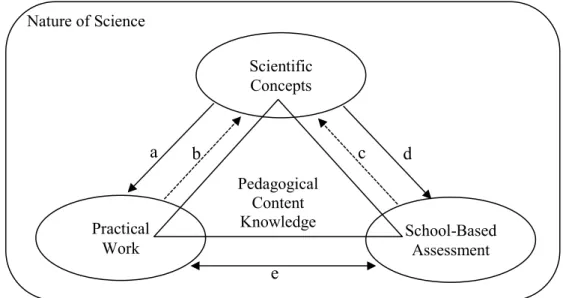
For the purpose of this thesis, the conceptual framework for this study embodies a coherent relationship of key research areas that are premised to address a gap identified in the existing theoretical framework presented in Section 1.5. In this regard, the theoretical framework is an existing theory that has been validated while the
9
conceptual framework is the logical and coherent integration of key research areas that guides this thesis (Grant & Osanloo, 2014). As such, the conceptual framework for this study is presented in Section 2.2 in Chapter Two while the theoretical framework is outlined next.
1.5 Theoretical Framework for this Study
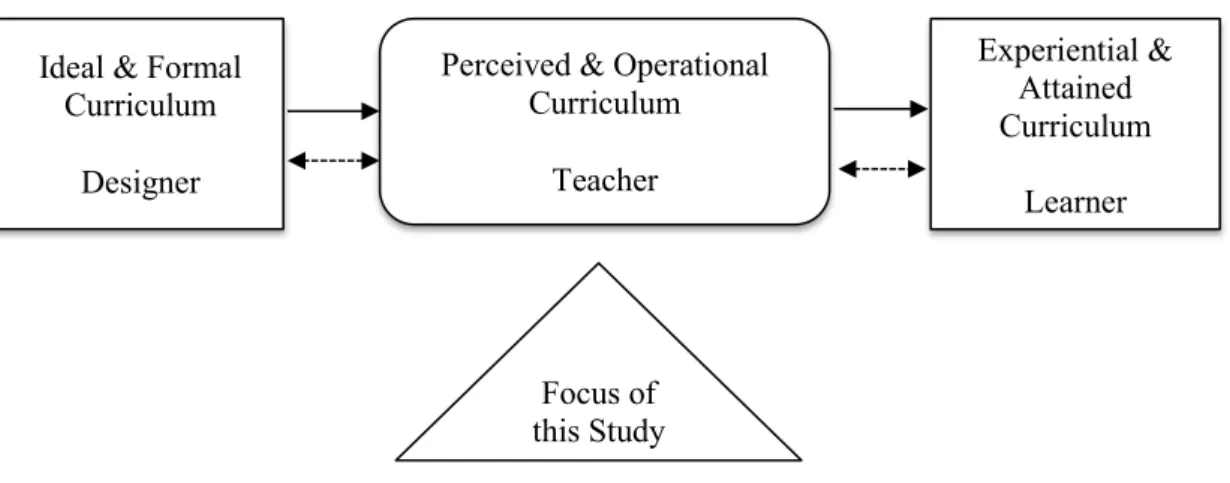
This study is underpinned by a theoretical framework that postulates a gap between the intended curriculum and attained curriculum (Goodlad, 1979; Rosier & Keeves, 1991; Van den Akker, 1998). This theoretical framework was initially developed by Goodlad (1979) and modified by Rosier and Keeves (1991). Subsequently, based on his longitudinal review on different curriculum reforms in many different countries, Van den Akker (1998) summarised and highlighted the distinctions between the curriculum representations from ideals to outcomes. He distinguished and termed the curriculum representations in an order of a process from: ideal curriculum to formal curriculum, perceived curriculum, operational curriculum, experiential curriculum and finally attained curriculum. The first two curriculum representations, ideal and formal comprised the guiding philosophy, rational and mission along with the documents that underlie and further elaborated the curriculum vision. The main players here are the curriculum designers while teachers can also participate. The last two curriculum representations, experiential and attained, represented what the learners actually experience during their learning and the “resulting learning outcomes” (p. 422). While teachers play an important role, the main subjects in these two curricula are the learners’ achievements.
The theoretical focus for this study lies within the perceived and operational curriculum, which represents teachers’ perceptions and interpretations of the curriculum, as well as their “actual instructional process in the classroom” (p. 422). The main players here are the teachers themselves. Perceived and operational curricula are imperative to the theoretical basis of this study since they are pivotal in the process of bridging the gap between the ideal curriculum and the attained curriculum as depicted in figure 1.1. According to Van den Akker (1998), the perceived and operational curricula are the essential facets in the process of minimising the gap between the ideal and formal curriculum to the experiential and attained curriculum.
10
This theoretical framework posits that teachers play an imperative role in translating what is intended to what is attained in any curriculum reform.
Figure 1.1. The process from the ideal and formal curriculum to experiential and attained curriculum. The focus of this study is on the perceived and operational curriculum.
According to Van den Akker (1998), the effectiveness of constructing the bridge depends very much on teachers’ perceptions; knowledge and understanding of their subject content; knowledge of ideal and formal curriculum; knowledge of pedagogy and the underlying learning theories; knowledge of learners and their environment. These knowledge components and understandings can be transformed and translated into teachers’ teaching practice which in turn should enhance the attained curriculum (Van den Akker, 1998). In this regard, the challenge of enhancing teachers’ appropriate knowledge and skills is crucial within this theoretical gap. To address this challenge in science, many recent studies have put a lot of emphasis on the significance of improving science teachers’ PCK in science education in general (Cheung, 2016; Hodson, 2014; Osborne, 2014). Subsequently, based on this theoretical basis, this study premised that science teachers should enhance their PCK in the SBA of practical work curriculum.
In essence, PCK is a key knowledge that distinguishes an effective teacher from someone who is a specialist with either content or pedagogical knowledge and it is crucial to learners’ achievements (Shulman 1987). Out of his seven categories of teaching knowledges, Shulman (1986) conceptualised two main components that are vital for PCK. One is a teacher’s knowledge for representing subject content and
Ideal & Formal Curriculum Designer Experiential & Attained Curriculum Learner Perceived & Operational
Curriculum Teacher
Focus of this Study
11
specific topics in plausible ways. The other is a teacher’s knowledge about learners’ learning difficulties, conceptual interpretations and misconceptions. Shulman (1999) proposed that “those who use these ideas now and in the future will give more attention… to the connection between teachers’ knowledge and the ultimate consequences for students’ learning and development” (p. xi). Indeed, apart from other factors that influence learners’ learning and development, recent studies had found that teacher quality has become the most important factor (Knight & Duschl, 2015). As such, science teachers’ PCK was explored in this study.
This study was also based on the notion that science teachers should be able to make connections between teaching, learning and assessment of scientific concepts using the SBA of practical work. It is important to note that practical work is not theory free (Hodson, 1998; Wellington, 1998). Learners need to have a conceptual understanding in order to make informed decisions while conducting practical work in science, let alone using practical work for formative and summative assessment purposes. Besides, Hodson (1998) claimed that learning scientific concepts from practical work can be confusing and demotivating for learners. As such, science teachers should know and understand how to teach and assess scientific concepts using practical work. This involves the notion that SBA curriculum can be used for formative and continuous summative assessment purposes.
Formative assessment is woven into the process of teaching and learning of content, context and skills while summative assessment is the assessment of what had been learnt and developed (Bell, 2007; Green & Johnson, 2010). Hence, on the one hand, formative assessment involves effective scaffolding and feedback as well as feedforward to assist learners to link and construct the intended understanding of scientific concepts from their preconception during the learning process (Green & Johnson, 2010). On the other hand, summative assessment is embedded in the notion of “fitness for purpose” (Stobart, 2006, p.34). That is, summative assessment activities are constructed in a way that learners should be able to demonstrate what they are assessed on (Harlen, 2005). As such, summative assessment activities and instructions should be familiar to both learners and their science teachers and similar activities should have been used during the teaching and learning process (Green & Johnson, 2010). Given these different aspects of assessment processes, science teachers’
12
understanding of scientific concepts, formative assessment and summative assessment are essential for the implementation of the SBA of practical work as well as for the theoretical basis for this study.
In sum, given this theoretical framework, this study premised that science teachers’ PCK is an essential ingredient in bridging the gap between ideals and attained curriculum. In saying that, I have been using the terms ‘ideal’ and ‘intended’ curriculum interchangeably. However, for the purpose of this thesis the term ‘intended’ curriculum is used dominantly to represent the curriculum ideals, visions, materials and assessments (Cornbleth, 1990; Grundy, 1987).
1.6 Purpose for this Study
This study was purposely designed to explore and document the trainee and practising science teachers’ perceptions, experiences, beliefs and understanding of scientific and physics concepts in the SBA of practical work. These two cohorts were imperative to this study since the trainee science teachers were on training and yet to practice while practising science teachers already had real classroom experiences. Thus, it was significant to identify and understand the similarities and differences of the participants’ PCK in relation to teaching, learning and assessment of physics concepts in the SBA of practical work. The data from these two cohorts were integrated, analysed and synthesised with the underlying conceptual framework for this study, specifically, to develop a set of guidelines that can provide information for teacher training and ongoing professional learning programs. This set of guidelines can also be used to inform the development of PCK for other subjects in science as well as other subjects in high school education.
The purpose of this study was underpinned by the notion that, both trainee and practicing science teachers have the onus to implement a new curriculum or the existing curriculum in science classrooms. This is represented within the perceived and operational curriculum in the theoretical framework for this study. Hence, science teachers have the responsibility to bridge what is intended to what is attained in the SBA of practical work curriculum. Subsequently, this study has provided an opportunity for me to further explore and understand the science teacher participants’ views and experiences pertaining to the premise of improving their PCK on the SBA
13
of physics concepts. Although their views and experiences are socially and culturally contextual to Solomon Islands science education, the information from this study can provide a framework for improving similar aspects of science education in other sociocultural and geopolitical contexts.
On the whole, this study premised that science teachers should enhance their PCK in order to bridge the gap between what is intended and what is attained in the teaching, learning and assessment of physics concepts in the SBA of practical work in Solomon Islands science education. It is hoped that the interest of this study is fully realised, especially when it comes to addressing the gap between intended and attained curriculum. It was on this basis that this study was sought to improve what is actually taking place in the science classrooms.
1.6.1 Research Questions
The purpose for this study was addressed by exploring the following research questions:
1. What do trainee and practising science teachers know and understand about scientific and physics concepts in science SBA?
The first question sought to explore both trainee and practicing science teachers’ perceptions, experience, beliefs and understanding about the importance of teaching, learning and assessment of physics concepts as well as scientific concepts in general within the context of science education and the SBA of practical work.
2. How do trainee science teachers’ view and experience their learning and assessments of physics concepts?
The second question sought to explore specifically the perceptions, beliefs, experiences and understanding of training science teachers about their learning and assessment of physics concepts within the context of the SBA of practical work.
3. How do practising science teachers view and experience their teaching and assessing of physics concepts?
14
The third question specially sought to explore the perceptions, beliefs, experience and understanding of practicing science teachers with respect to their own teaching and assessment of physics concepts within the context of the SBA of practical work.
4. What do trainee science teachers suggest as ways to improve their learning, understanding and assessment of physics concepts?
The fourth question is asked to explore suggestions from trainee science teachers about what, why and how they perceive as improvements to their learning and assessment of physics concepts in the SBA of practical work.
5. What do practising science teachers suggest as ways to improve their understanding, teaching and assessment of physics concepts?
Finally, the fifth question is specifically tailored to elicit suggestions from practicing science teachers about what, why and how they perceive as improvements to their teaching and assessment of physics concepts in the SBA of practical work.
The outcome of these research questions were sought to provide indications regarding both trainee and practising science teacher participants’ level of PCK that are relevant to the effective implementation of the SBA of practical work curriculum in Solomon Islands.
1.7 Context of this Study
The context of this study frames the setting and environment that surrounds as well as influences the perceptions and experiences of the study participants and the phenomenon explored (Creswell, 2008; Vygotsky, 1986). Hence, the following section briefly presents the geopolitical, demographic, sociocultural environment as well as the educational system and science SBA curriculum for high schools in Solomon Islands (see Appendix G for maps and other details of the study context).
1.7.1 Solomon Islands Geopolitical Context
This study involved trainee and practising science teacher participants from Solomon Islands, a sovereign island nation in the Western Pacific region. Solomon Islands has
15
a total land area of 27,986 square kilometres with a coastline that stretches 5,313 kilometres (Central Intelligence Agency [CIA], 2016). The land area comprises six large islands and 992 smaller chains of islands, out of which only 347 islands are inhabited (Jones, 2001). Although small boats and ships are the main form of transportation, travelling between the islands is challenging due to poor infrastructure and geographical remoteness. For instance, when collecting data for this study, I had to travel a distance of just 114 km for six hours by boat from Honiara, Guadalcanal to Auki, Malaita. Then I had to travel another 108 km by truck for almost five hours to the school that is situated on the north-eastern side of Malaita. This experience is typical to what education officers, teachers and learners in schools around most of the remote and rural regions in Solomon Islands experience on a regular basis. Given this context, this study only involved participants from high schools and the SINU which are located in and around the capital city, Honiara on Guadalcanal as well as two schools on the island of Malaita. These two locations are geographically convenient given the limited time and finance to do this study under my Doctor of Philosophy program at Curtin University.
Solomon Islands is still a developing country. In 1893, Solomon Islands was declared a British Protectorate by the United Kingdom until 1978, when it gained its independence and remains part of the Commonwealth with a Governor General who represents the British Monarch (Moore, 2010). Solomon Islands has a democratic government with a constitution that was mostly influenced by the Westminster form of one legislative national parliament and nine provincial governments. The national parliament is comprised of 50 elected members who by a simple majority elect the Prime Minister to lead the Executive government for every four years (Moore, 2010). As such, educational policies may also change according to the Executive government of the day. This political context is significant since the outcome of this study can be used to inform and influence future improvements in education policies in Solomon Islands, as presented later in subsection 7.3.3.
1.7.2 Demography and Human Resources Development
This study explored an educational phenomenon that impacts the 20 percent of the population in Solomon Islands who attend high school. It was estimated that the population of Solomon Islands was about 600,052 in 2016, and is increasing by 36
16
persons daily (Countrymeter, 2016). The population comprises a mixture of about 95.3 percent Melanesians, 3.1 percent Polynesians, 1.2 percent Micronesians, and 0.3 percent of other races (CIA, 2016). With such a mixture of races there are about 86 different native languages and 120 dialects. However, English is the official language which is recommended as the language for instruction in schools and in the formal sector (Honan & Harcombe, 1997). The widely spoken and most common language for communication in everyday life is Pidgin, also known as broken English (CIA, 2016). While most people in Solomon Islands can speak more than one language there is a challenge for language transitions in classroom learning, teaching and assessment in formal schooling (Lotherington, 1998). Consequently, this context is imperative to the development of science teachers who would also teach and assess learners with diverse sociocultural backgrounds in Solomon Islands.
Solomon Islands has a growing and mostly dependent population who are gradually drifting to the urban areas (CIA, 2016). This poses a challenge for education in the urban centres along with the issue of nearly 50 percent of learners dropping out of their formal education at the end of the external examination classes (Department of Foreign Affairs and Trade [DFAT], 2014). One main challenge is to provide the learners with adequate knowledge and skills for life-long learning that they would use in their everyday civic lives after leaving formal education. Furthermore, education in Solomon Islands was further scrutinised after an ethnic tension between militia factions’ from Guadalcanal and Malaita broke out into a civil crisis in 1999 (UNICEF, 2014). However, in 2003, an intervention by the Regional Assistance Mission to Solomon Islands (RAMSI) finally restored law and order (DFAT, 2014). Subsequently, the “Education Sector Improvement and Reform Programme (ESIRP)” (MEHRD, 2011, p. 1) was developed with more emphasis placed on “education for life” (p. 1) resulting in a shift of the education curriculum to OBE beginning in 2004. The changes in education in Solomon Islands were still in progress when this study was carried out and written up.
1.7.3 Educational Structure in Solomon Islands
The education restructure and reform in Solomon Islands are imperative to the context of this study. Prior to the introduction of formal education in the western context, Solomon Islands indigenous production of knowledge and its “transmission in
17
traditional forms of Solomon learning and teaching was not strictly egalitarian” (Watson-Gegeo & Gegeo, 1992, p. 11). Generally, the transmission of knowledge and understanding in Solomon Islands was socially and culturally constructed. Knowledge and skills were passed on through practical social interaction between the novices and the expert in situ or real life contexts. Learners or novices were practically prepared for real life and life-long learning through their livelihoods. Although different in nature, the concepts of real life and life-long learning resonate with the sociocultural and constructivist ideas that underpin the introduced OBE approach in Solomon Islands (MEHRD, 2011). That is, the OBE focuses more on the abilities of learners to construct and demonstrate the intended learning outcomes and life-long learning skills. Currently, there are six levels of formal education in Solomon Islands. The six levels include Early Childhood Education (ECE), Primary School (PS), Junior Secondary Education (JSE), Senior Secondary Education (SSE), Vocational or Technical Education (TVET) and Tertiary Education (TE) (MEHRD, 2011). This study focused on the three types of schools within the JSE and SSE levels. In 2014, the three types of schools comprised of 223 Community High Schools (CHS), 15 Provincial Secondary Schools (PSS) and 12 National Secondary Schools (NSS). In addition, there are 43 TVET institutions and one National University (MEHRD, 2015). Although different in nature, the three types of high schools within the JSE and SSE levels have the same science SBA curriculum (MEHRD, 2011, 2016). However, the number of learners enrolled at JSE level was nearly twice that of the enrolment at SSE level. For instance, in 2016, there were 33, 474 learners enrolled at the JSE while only 18,557 were enrolled at the SSE. Additionally, only 18 percent of learners at SSE levels continue on to complete Year 13 (MEHRD, 2017). This reduction in enrolment within the three types of schools at JSE and SSE poses a challenge to enhance the science SBA curriculum, especially in the context of OBE and pragmatic learning of life skills as well as for life-long learning.
1.7.4 Science School-Based Assessment in Solomon Islands
As outlined in Section 1.4, the science SBA is often promoted as a way to improve the constructivist and pragmatic approach in assessment for learning (formative assessment) and assessment of learning (summative assessment). Currently, in Solomon Islands, the science SBA curriculum is predominantly used for continuous
18
summative assessments at Year 10 through to Year 13 (Kakai, 2010, MEHRD, 2010). The science SBA for Year 13 is designed and influenced by regional education providers like the SPBEA and the USP. Hence, this present study involved trainee and practising science teacher participants who were more familiar with the science SBA curriculum in Year 10, 11 and 12. In this regard, the science SBA curriculum for Year 10 and 11 was used in the context of this study. This is part of the SISC curriculum that learners undertake at the beginning of Year 10 and complete at the end of Year 11 the following year.
The SISC program is comprised of four core subjects which are compulsory for all learners and five elective subjects, with an option for learners to choose any two. The core subjects include English, Mathematics, Science and Social Studies while the elective subjects include Agriculture, Business studies, Home Economics, Technology Education and Christian Education (MEHRD, 2015). The subjects that have SBA as a component towards the SISC are Science, English, Home Economics, Agriculture and Technology. However, the weightings of assessment components for each subject vary. For example, Science has 70 percent from the final external written examination at the end of Year 11 and 30 percent from continuous summative assessment from SBA in Year 10 and 11 (MEHRD, 2010). Besides, in Year 12, the SBA of practical work makes up 40 percent of the 100 percent. This context is significant for this study since the science SBA component contributes almost half of the total assessment results towards the learners’ final grades.
The science SBA curriculum for Year 10 and Year 11 consists mainly of practical works which are used as assessment activities. Learners are required to carry out the practical works and present their written reports for marking and assessment. However, the reports are marked and assessed by learners’ respective science teachers in each school. Although marking rubrics are provided uniformly, the reliability of the science SBA result is not guaranteed since the actual marking depends primarily on the ability of each science teacher. This poses a concern since the science SBA component makes up 30 percent of the final marks that would determine the learner’s grade in science for the SISC. A learner’s aggregate for the SISC is crucial for selection by the National Education Assessment Division (NEAD) in Solomon Islands. Learners with the highest aggregates may go on to do Year 12 the following year. Those who
19
are not selected have to find alternative pathways into tertiary or vocational studies. Some may have to start their civic lives after attaining the SISC. This context of the science SBA is important for this study as well as for the Year 10 and Year 11 learners in Solomon Islands.
Although the science SBA for SISC has a booklet that contains practical work designs as well as guidelines for science teachers, the content is reviewed every two years (see Appendix A for 2010 - 2015 SBA booklet for details). Hence, it is hoped that the outcome of this study can be used to inform as well as enhance the review process in the future. Currently, the intended purpose of the science SBA is to assess learners’ performed skills and abilities in science that are not possible to assess through written examinations. These include the ability to: follow instructions; use apparatus correctly; observe, record and analyse data; and draw scientific conclusions (MEHRD, 2010). However, while these performed skills and abilities are intended to be assessed, learners are assessed using their written reports that focus more on conceptual and procedural understandings (see Appendix B for a sample of physics practical work). Hence, this study is more concerned with the SBA of scientific concepts and procedures that learners are supposed to explain and describe in their written reports. Given these contexts, this study sought to explore and document the trainee and practising science teachers’ perceptions, experiences, beliefs and understanding of scientific and physics concepts in the SBA of practical work. Participants’ views and experiences are imperative to the purpose of bridging the gap between what is intended and attained in the science SBA curriculum. In particular, the purpose of enhancing science teachers’ PCK to teach and assess scientific and physics concepts in the SBA of practical work. This leads to the significance of this study which is presented next in Section 1.8.
1.8 Significance of this Study
This study is not only significant to the context of Solomon Islands and other South Pacific island nations but it would also be applicable to other sociocultural and geopolitical contexts globally. It is argued that one of the main ways of monitoring the multiple facets surrounding the concept and context of quality education in schools is by the level of learners’ achievement (Fasi, 2005; Harlen, 2005). This is the outcome