ScholarWorks @ Georgia State University
English Dissertations Department of English
8-13-2019
Rhetoric of Public Crises: Constructing
Communication Networks in Transcultural
Contexts
Lin Dong
Follow this and additional works at:https://scholarworks.gsu.edu/english_diss
This Dissertation is brought to you for free and open access by the Department of English at ScholarWorks @ Georgia State University. It has been accepted for inclusion in English Dissertations by an authorized administrator of ScholarWorks @ Georgia State University. For more information, please [email protected].
Recommended Citation
Dong, Lin, "Rhetoric of Public Crises: Constructing Communication Networks in Transcultural Contexts." Dissertation, Georgia State University, 2019.
TRANSCULTURAL CONTEXTS
by
LIN DONG
Under the Direction of Baotong Gu, Ph.D
ABSTRACT
This study explores public crisis communication related to multinational corporations
through a high-profile case, Apple’s after-sale policy crisis that happened in China in 2013.
Defining public crisis as a rhetorical contest in Ulrich Beck’s postmodern, world risk society,
this project constructs a public crisis communication model based on Manuel Castells’ network
society theory and further investigates the rhetorical structure using Kenneth Burke’s
pentad/hexad model. My purpose is to investigate the transcultural rhetoric of public crisis in the
age of global information through careful description of communication components, contexts,
argue that in corporation-related public crisis, participants’ roles shift compared with those in
traditional corporate crisis. The semantic network research methods in computational science is
adopted to extract textual data and draw the intuitive semantic networks for 17 variables (the
<agent-agency-scene> tuple as the independent variables and the <act-attitude-purpose> tuple as
depend variables) in the corpus of 120,354 words from print media and 7568 social media posts.
Based on the quantitative results, this study examines the semantic relationship of
<agent-agency-act-attitude-purpose-scene> hexad and uses this hexad as rhetorical grammar to build
rhetorical networks of public crisis communication. The rhetorical networks of the Apple case
demonstrate its failure to identify the conditions of accusation, a fundamental mistake
contributing to the crisis aggravation. Surrounding the rhetorical networks of this case,
contextual elements in cultural, economic, and political aspects playing in the local market and
global situation also underlie the crisis initiation and development.
It concludes that the rhetorical network of public crisis is an intricate ecosystem during
which participants pluralize their identities, increase their dependence and mutuality, and
transform crisis roles while contesting for and collectively architecting the meaning of crisis and
finally negotiating solutions for the crisis. It also suggests practitioners to pay close attention to
the shifting power dynamics in global and local business, politics, and society and act proactively
to intentional agency acts in the media.
TRANSCULTURAL CONTEXTS
by
LIN DONG
A Dissertation Submitted in Partial Fulfillment of the Requirements for the Degree of
Doctor of Philosophy
in the College of Arts and Sciences
Georgia State University
Copyright by Lin Dong
TRANSCULTURAL CONTEXTS
by
LIN DONG
Committee Chair: Baotong Gu
Committee: George Pullman
Elizabeth Sanders Lopez
Electronic Version Approved:
Office of Graduate Studies
College of Arts and Sciences
Georgia State University
DEDICATION
To my son, Michael, whose smiles and unconditional love empowered me to go
ACKNOWLEDGEMENTS
This dissertation was a long time in the making, even though it came together recently. I
have been thinking, and living, transnational culture and identity since I started my doctoral
study seven years ago. This project is a distillation of that thought. My interest of crisis
communication stemmed from Dr. Holmes’ class of Contemporary Rhetorical Theories in 2013,
when I learned Burkean Rhetoric and in the course final paper, applied it to the analysis of
Apple’s crisis in China. Since then, I followed the rhetorical approach (such as the narrative
method) to study the multidisciplinary and transcultural topic of crisis communication. Portions
of these previous studies were presented in conferences such as NCA (National Communication
Association) and RSA (Rhetoric Society of America). Along the way to explore this topic, I
gradually felt that the rhetorical perspective has limited power when dealing with large amount
of information generated in the process of a transnational crisis. A computational or
computer-assisted method is highly necessary for the big data analysis to extract the linguistic
characteristics, which would lead to a fuller rhetorical analysis in the next step.
Taking this theoretical shift was not quick or easy. I was concerned if the combined
computational and rhetorical methods was too experimental to be accepted. I was fortunate to
have mentors to support and help me whenever I needed. My first word of thanks goes to
Baotonng Gu, the chair of committee, who completely believed in the acceptability of this
research methodology and encourage me to undertake challenging work. Not only has Dr. Gu’s
broad knowledge of the subject and always insightful comments guided me through the dark
phases of bewilderment and uncertainty in research design, his has given me generous support in
every way imaginable to elevate my academic and professional skills. My second word of thanks
patience, for their prompt response and in-depth comments to my prospectus, as well as for
helping tremendously in the development of this project.
I also benefited greatly from scholarly conversations with my colleagues and friends at
the Department of English: Beth Topping, Hannah Doyle, and Xiaobo Wang. From them, I could
always get wisdom, comfort, and confidence to continue writing. My student, Zijun Chai, a
computer science major, also helped me test software and clean data. Without him, I could not
complete the semantic analysis in this study.
Finally, I thank my family members for their boundless love, patience, and
encouragement all along the way. My son, Michael, who I owe the most, patiently waited for
mommy to return home soon. His smiles and delightful talk light up my days after long hours of
TABLE OF CONTENTS
ACKNOWLEDGEMENTS ... V
LIST OF TABLES ... XI
LIST OF FIGURES ... XII
1 CHAPTER 1. INTRODUCTION: CRISIS COMMUNICATION IN THE
NETWORK SOCIETY ... 1
1.1 Problems with the Organization-Centric Paradigm ... 2
1.2 Project Goals, Methodologies, and Significance... 5
1.3 Crisis Case ... 8
2 CHAPTER 2. CRISIS COMMUNICATION STUDIES—HISTORY AND TRENDS ... 9
2.1 Crisis Communication and the Organization-Centric Paradigm ... 9
2.2 Crisis Communication: Toward a Theoretical and Process-Oriented Study ... 16
2.3 New Contexts for Crisis Communication: Cosmopolitanism, Transculturality, and Social Media Meditation ... 18
2.4 (Con)textual Approaches to Global Crisis Communication ... 23
3 CHAPTER 3. THE NETWORK SOCIETY AND BUILDING CRISIS COMMUNICATION NETWORK ... 29
3.1 The Definition of Crisis in a Risk Society: A Rhetorical Contest among Concerned Parties ... 29
3.3 Network Analysis: Research Traditions, Approaches, and Subjects ... 33
3.4 Public Crisis Communication Network ... 36
3.4.1 The Constitution of Public Crisis Communication Network ... 36
3.4.2 Network Architecture Ι: Properties of Nodes and Participant Roles ... 43
3.4.3 Network Architecture Ⅱ: Properties of Ties and The Extent of Information Flow 43 3.4.4 Network Architecture Ⅲ: Content of Linkages ... 44
4 CHAPTER 4. SEMANTIC NETWORK ANALYSIS AND RESEARCH DESIGN 45 4. 1 Research Subjects of Semantic Network Analysis ... 47
4.1.1 Semantic Grammar ... 47
4. 2 Semantic Network Analysis in Public Crisis Communication Studies ... 48
4.2.1 Rhetorical Network of Public Crisis: Rhetorical Grammar on the Hexad Model . 49 4.3 Textual Data Collection ... 50
4.4 Analytic Framework and Variables ... 57
4.5 Measuring Tools ... 60
4.5.1 Wordij—Construct Semantic Networks ... 60
4.5.2 Gephi—Visualize Semantic Networks ... 62
4.6 Data Analysis Procedures ... 64
5 CHAPTER 5. SEMANTIC NETWORK OF PUBLIC CRISIS: CONTENT, STRUCTURE, AND TRANSFORMATION ... 65
5.1.1 The State Media Reporters-Scene 1 Semantic Network ... 69
5.1.2 The Consumers-Scene 1 Semantic Network ... 72
5.1.3. The Professionals-Scene 1 Semantic Network ... 75
5.1.4 The NGO-Scene 1 Semantic Network ... 77
5.1.5 The Apple-Scene 1 Semantic Network ... 80
5.2 Rising Action— “Defeating Apple’s Unparallel Arrogance”... 83
5.2.1 The State Media Reporters-Scene 2 Semantic Network ... 83
5.2.2 The Professional-Scene 2 Semantic Network ... 86
5.2.3. The NGO-Scene 2 Semantic Network ... 86
5.2.4. The Government-Scene 2 Semantic Network ... 90
5.2.5. The Consumers-Scene 2 Semantic Network ... 92
5.3 Crisis Climax, Falling, and Resolution— “If Apple Could Have Apologized Earlier” ... 96
5.3.1 The Apple-Scene 3 Semantic Network ... 96
5.3.2. The State Media Reporters-Scene 3 Semantic Network ... 99
5.3.3. The Professional-Scene 3 Semantic Network ... 101
5.3.4 The NGO-Scene 3 Semantic Network ... 103
5.3.5 The Government-Scene 3 Semantic Network ... 103
5.3.6 The Consumers-Scene 3 Semantic Network ... 107
6 CHAPTER 6. RHETORICAL NETWORK OF PUBLIC CRISIS: PATTERN,
CONTEXTS, AND DYNAMICS ... 112
6.1 Constructing the Rhetorical Network of Public Crisis ... 112
6.2 Rhetoric of Identification: Failure, Success, and Significance ... 119
6.3 Contextual Elements in Rhetorical Network ... 122
6.3.1 Apple as Symbol of Historical and Modern Western Culture ... 122
6.3.2 Nationalism as Protection against Transnational Competition ... 124
6.3.3 Political Environment as a Hidden Factor for Crisis ... 126
7 CHAPTER 7. CONCLUSION: STUDYING AN INTRICATE COMMUNICATION ECOSYSTEM OF PUBLIC CRISES ... 128
7.1 Rethinking “Public Crisis” ... 128
7.2 Contributions ... 130
7.3 Limitations ... 132
7.4 Practitioner’s Takeaway ... 133
LIST OF TABLES
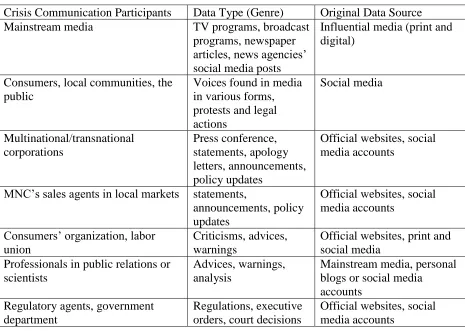
Table 1 Crisis Communication Participants, Data Type, and Data Source ... 51
Table 2 Apple’s Case—Participants and Their Data Type, Source, and Size ... 52
Table 3 The Analytic Framework and Variables for the Apple Case ... 58
Table 4 Data Distribution in Scenes ... 59
Table 5 The Tipping Points in Apple After-sale Crisis ... 65
Table 6 Semantic Network Statistics of All Periods ... 111
LIST OF FIGURES
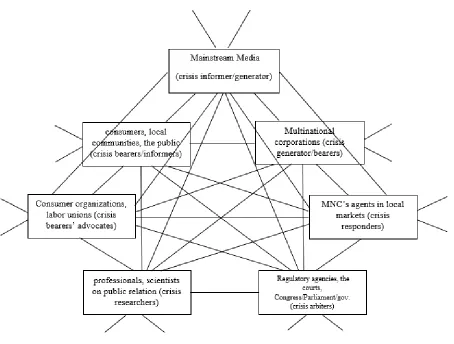
Figure 1 Traditional, corporate-centric crisis communication network... 38
Figure 2 The Prototype Network of Public Crisis Communication ... 39
Figure 3 The Transformation of Crisis Roles—Corporate Crisis versus Public Crisis ... 40
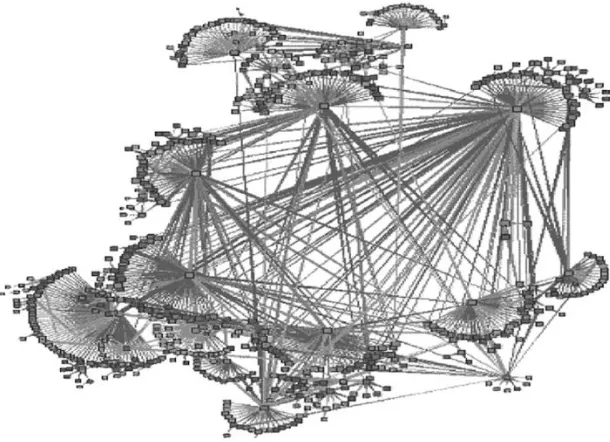
Figure 4 Network of clusters (van Dijk, 2012, p. 36) ... 42
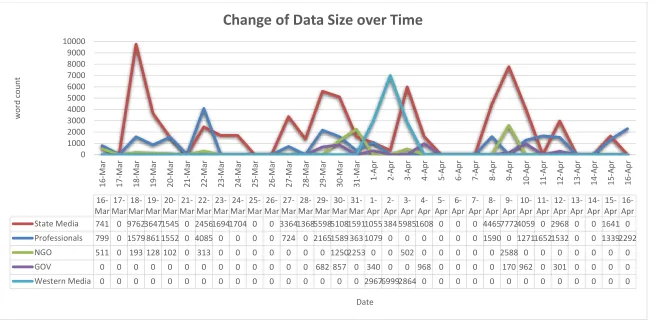
Figure 5 Change of Data Size over Time—State Media, Professionals, NGO, GOV, and Western Media ... 55
Figure 6 Social Media Data Size—Number of Weibo Posts from the General Public ... 56
Figure 7 Data Size of Apple’s Responses During Crisis ... 56
Figure 8 A Screenshot of Wordij 3.0 ... 62
Figure 9 A Screenshot of Gephi 0.9.2 ... 63
Figure 10 The Flow Chart of Data Analysis Process ... 64
Figure 11 The Plot of Apple Case... 66
Figure 12 The State Media Reporter-Scene 1 Semantic Network ... 71
Figure 13 The Consumers-Scene 1 Semantic Network (two layouts) ... 74
Figure 14 The Professionals-Scene 1 Semantic Network ... 76
Figure 15 The NGO-Scene 1 Semantic Network ... 79
Figure 16 The Apple-Scene 1 Semantic Network ... 81
Figure 17 The State Media-Scene 2 Semantic Network ... 85
Figure 18 The Professionals-Scene 2 Semantic Network ... 88
Figure 19 The NGO-Scene 2 Semantic Network ... 89
Figure 20 The Government-Scene 2 Semantic Network ... 91
Figure 22 The Apple-Scene 3 Semantic Network ... 98
Figure 23 The State Media-Scene 3 Semantic Network ... 100
Figure 24 The Professionals-Scene 3 Semantic Network ... 102
Figure 25 The NGO-Scene 3 Semantic Network ... 105
Figure 26 The Gov-Scene 3 Semantic Network ... 106
Figure 27 The Consumers-Scene 3 Semantic Network ... 108
Figure 28 The Western Media-Scene 3 Semantic Network... 110
Figure 29 The Rhetorical Network of Crisis Exposition ... 116
Figure 30 The Rhetorical Network of Crisis Rising ... 117
Figure 31 The Rhetorical Network of Crisis’ Climax, Falling, and Resolution ... 118
1 CHAPTER 1. INTRODUCTION: CRISIS COMMUNICATION IN THE NETWORK
SOCIETY
No corporations will be immune from crisis, and no corporate crisis will remain local.
Crises involving multinational corporations (MNCs, also called transnational corporations, or
TNCs) in home countries and the global market usually make the news headlines. Recent
examples include Toyota product failures and recalls across the U.S. from 2009-2012,
Starbucks’s Race Together campaign encountering consumer backlash in the U.S. in 2015,
Samsung Galaxy Note 7 battery explosions worldwide in 2016, Facebook user profile leak
related to 2016 presidential election and its other massive data breaches, among many other
notable cases that received massive public attention worldwide. Each of these cases suggests that
in a “world risk society” (Beck, 1999), corporate crises seem to become more frequent, intense,
unpredictable, and unpreventable. Once happened, such MNCs crises are tough to manage and
very likely cause unmeasurable damage to corporations’ finance and reputation if their crisis
communication to stakeholders fails.
Different from major transgression cases we may have heard a lot like those mentioned
above, the number of “public crises”—the non-routine, media-exposed events accusing MNCs
regardless of their misdeeds—is increasing especially in emerging markets (Zhao, 2013, p. 492).
Accusers in these cases usually claim that the corporation they are against “has caused or will
potentially make a loss of their interests due to the perceived (not necessarily actual) unethical
behavior” (Zhao, 2013, p. 491-492). In other words, stakeholders’ perceptions of the corporate
misdeed, rather than the actual occurrences related to the corporation, will contribute to a public
such an accusation is proved valid. A typical example of public crisis involves Johnson &
Johnson. In March 2009, the Campaign of Safe Cosmetics, an NGO in the U.S, reported finding
toxic chemicals formaldehyde and 1,4-dioxane in Johnson & Johnson baby bath products (“No
More Toxic Tub”, 2009). About the same time in China, an online article titled “Johnson &
Johnson almost Disfigured My 18-Month-Old” went viral in a Chinese BBS news outlet, Tianya,
receiving more than 29 thousand views and thousands of comments. Days later, a large-scale
consumer survey conducted by an influential news portal, Fenghuang, showed that 75.2% online
users would not purchase Johnson & Johnson products. Although Chinese Quality Inspection
Administration and CFDA announced that a complete examination of Johnson & Johnson baby
products only found one problematic wash that contained little dioxane under the legal amount,
sales immediately dropped 70% in some markets and dropped 7.4% nationwide (“Four recalls
within a year”, 2010).
The rising public crises provoked by the media-empowered stakeholders are beyond a
game of punishing bad apples. The ongoing rapid change of social, political, and market
environments and the complicated stakeholder dynamics aided by new media all bring serious
challenges to MNCs encountering crises in emerging markets. In this sense, public crises
targeting MNCs in global context can be rather seen as a clash of foreign and local cultures, as
well as a rivalry among capital forces, political power, and social interests at global,
transnational, state, and communal levels.
1.1 Problems with the Organization-Centric Paradigm
Although it is urgent to unpack increasingly public crises in a global market and
communication researchers and practitioners. On the one hand, the exigency of a public crisis
demands strategic communication over a problem (whether it relates to product quality, service,
labor, environment, or other aspects); it also indicates that through effective communication, a
positive change to the status quo of a problem can be made within an expected time period.
Thus, public crises suggest a favorable opportunity to examine the way professional and
technical communication operated transnationally and/or globally, to uncover perennial problems
existing in such processes, and to explore effective communication strategies. On the other hand,
current scholarship of crisis communication could only offer limited support for this type of
research. Main problems in this area exist in the following aspects:
Although theoretically and practically valuable, the well-established paradigm—
organization/institution-centered crisis studies largely built on image restoration (Benoit, 1995,
1997) and situational crisis communication theory (SCCT) (Coombs, 1995, 2004, 2007)—has
seriously narrowed scholars’ scope of research subjects within internal organizational variables
(such as products, services, and organizational culture), excluding many extra-organizational
elements (works of this type such as Bowen & Zheng, 2015; Choi & Chung, 2013; Haigh &
Brubaker, 2010; Maiorescu, 2016; Pace, Feduik, & Botero, 2010 and many more). This
organization-centered crisis communication paradigm usually isolates a crisis from its societal,
economic, political, and external cultural environments. It is commonly recognized that these
contextual conditions could shape crisis development (Ding, 2007, 135-136). For MNC crises,
examining greater contextual elements beyond their home culture should be as important, if not
more, as studying the institutional elements. Therefore, the traditional organization-centered
In addition, few MNC crisis communication studies address the emerging issues along
with the advent of a global information network. A new communication mode has changed the
imbalanced producer-consumer relation in the era of social networking communication. Social
media creates a participative public sphere, a virtual place/means that empowers consumers to
have voices and become active stakeholders. A global information network with greater
accessibility and intense connection has changed the power dynamic of corporate crisis and
facilitated abruption of public crisis. However, in academia, studies about corporate crisis
communication in social media has arisen just since recent years (works such as Etter &
Vestergaad, 2015; Liu et al, 2011; Ngai & Jin, 2016; Romenti et al 2014; Wang, 2016; Yin et al,
2015; Zhao, 2017; Zhu et al, 2017 etc.), but many still cannot jump out of the narrow confines of
the aforementioned institutional framework. More than one decade after the birth of social media
(in 2004 when Facebook was founded), questions about how corporate crisis communication has
been constructed in the electronically based networks and many other significant issues are still
waiting clearer answers.
These problems have caused severe theoretical, contextual, and methodological
disfigurements in corporate crisis communication scholarship. As MNCs deeply integrate into
the global chain of production and consumption and thus encounter more challenges, conflicts,
and crises in the new information age, studies of corporate crisis communication in the contexts
of trans-culture and digital media is imperative and insightful for scholars in many disciplines
1.2 Project Goals, Methodologies, and Significance
This dissertation aims to narrow the gap in the field of crisis communication, as well as to
respond to critical professional challenges and keep up with new academic trends. To this end,
this project will define a crisis as a rhetorical exigence that prompts concerned parties to attend
to for positive changes (which could be, for example, saving reputations for corporations, solving
problems for stakeholders, etc.) through communication. This definition comes from such a
premise that despite the occurrence of a concrete event, communication plays a central role in the
process of crisis management as communicative actions taken to define and describe a crisis will
fundamentally influence crisis development (Hearit & Courtright, 2004). Admittedly, crisis
episodes are subject to different people’s understandings of what has happened, is happening,
and will happen. Thus, the rhetorical construction about communication process, in which people
form their narratives about the crisis event, become a necessity. For MNC crisis, a rhetorical
approach means to create a conceptual map of the crisis event, depict the “whole story,” decode
the complexities in the communication process between a corporation and its stakeholders and
among stakeholders, highlight the contextual influences on a crisis, and trace the fundamental
reasons of crisis creation, development, and mitigation. In short, this study will construct a
transcultural rhetoric of corporate crisis in the age of global information to fully depict the crisis
communication process and deeply analyze the mechanism of corporate crisis in this context.
Acknowledging that globalization and information technology have fundamentally
broken old modes of individual and organizational communication and have been restructuring
the nature and form of social relations today (van Dijk, 2012, p. 34; Inglis, 2012, p. 267; Monge
& Contractor, 2003, p. 6), I adopt Manuel Castells’ “network society” theory and his network
5-15), to mathematically represent the relations of the involved actors in a crisis event, visually
describe the information flow between different actors in their communication, and try to reveal
the full picture of the complexities and dynamics in crisis communication processes that exist in
communal, national, transnational, and global contexts. I would treat the network as a
measurable depiction (in matrices, graphs, etc. with data) of crisis rhetoric as well as a systematic
architecture or a broad ecosystem of crisis communication about a case. The network serves to
describe the transcultural rhetoric architecture of public crises and helps to explain the
emergence or formation of a specific type of network related to a crisis event and its
communication.
To construct a transcultural rhetoric of corporate crisis in the age of global information
based on communication network will pose a series of research questions. Considering the scope
of this study, I ask the following research questions and situate them in the current context of
global digital media and information network era:
1. What is the general pattern of the communication network for multinational
corporation related public crises that happened in transnational or global context?
What elements constitute this communication network: such as what actors can be
identified, what are their relations, what messages have been created, and what
contexts underlie this crisis event?
2. How is the flow of messages among communicators? How does crisis information
move from one point to another or be cocreated by network members as such
message circulates locally, globally, or in between? Is any message transformed in the
3. If situating the crisis communication network in larger contexts, how do historical,
cultural, political, economic, ideological, media elements interact with crisis
messages and shape crisis rhetoric through time and space?
4. What individual, collective, institutional, or contextual reasons can help to explain the
emergence or formation of a typical communication network?
5. What methods can be incorporated into crisis management to better prepare future
professionals for challenges they may encounter in such complicated and dynamic
events in global information era?
Given the prospect of the unpredictable and detrimental pubic crises becoming more
complex and frequent in the globalized networking and “world risk society” (Beck, 1999), my
study is both historically significant and highly relevant to contemporary events. This study will
contribute to the largely untapped topic of transcultural/transnational public crisis
communication in many fields: public relations, cultural studies, rhetorical studies, and
particularly in professional and technical communication. To be specific, the contributions lie in
three aspects. First, theorizing crisis communication in a network logic reflects the historical
trend that communication processes, information flows, and cultural exchanges increasingly take
place around networks and thus reshape the power dynamics in crisis communication. The
network model is an ecosystem that includes agents, messages, flows, context, and draws
connections with larger social contexts, which together will promise a thorough and profound
analysis toward rhetoric of crisis. This framework will not only help to break the traditional
institution-centric paradigm in crisis communication scholarship, but also offer ideas for
transnational theories and approaches to rhetoric, which scholars suggest as a new direction of
representation, statistical measurement, graphic visualization of the complexities and dynamics
of crisis communication is a meaningful endeavor to renovate the rhetorical analysis tradition
that heavily relies on textual description and narrative interpretation. The computed, statistical
method does not deny the value of discursive analysis for a crisis event, nor does it serve as a
complete substitution of textual interpretation; rather, it works as an empirical basis and a
necessary complement for more valid rhetorical constructions of any cases. Besides the
theoretical and methodological significances, this study will also explore possible means to
effective crisis engagement for both corporations and stakeholders. Such a research design will
not only meet the urgent needs in workplace, but also will help discover the “underexamined
issues such as power politics, access and exclusion, ethics and social justice” in transcultural
professional communication (Ding & Savage, 2013, p. 1). At last, I hope this study could be a
significant attempt, as Grabill advocates, that pushes the humanities, especially the field of
technical and professional communication, away from being the “handmaiden to technology and
science” but instead toward a direction to “focus on rhetorical problems with a particular
emphasis on domains of technical and scientific complexity” (2009).
1.3 Crisis Case
As the world’s largest emerging market, China has a wide range of stakeholders who are
craving quality goods and services from world brands yet also becoming aggressive in
questioning MNCs. MNC crises in China probably involve the most complexities in the eyes of
westerners due to the state quo of this red star state: the burgeoning middle class with expanding
need and power of consumption, a deluge of MNCs seeking benefits in this socialist market
economy, a communist party that has control over economic policy and media outlets, among
for developing the field of corporate crisis communication. I select Apple’s after-sale crisis, a
high-profile public crisis event that happened in 2013 in China. This crisis was initiated by a
state media platform of CCTV on March 15, 2013 and immediately attracted diverse
stakeholders’ strong concerns. It lasted about two weeks and had a dramatic process. At the
dawn of social media becoming the information center of public opinions (Liu, Lu, & Qiu,
2014), the Apple crisis provides sufficient evidence for us to examine the transition from
traditional corporate crises to emerging public crises largely propelled by the advent of social
media networking. Through this case, this study aims to illustrate the architecture of public crisis
communication and explore the driving mechanism rooted in the changing power dynamics and
cultural conflicts in the global risk and information age.
2 CHAPTER 2. CRISIS COMMUNICATION STUDIES—HISTORY AND TRENDS
2.1 Crisis Communication and the Organization-Centric Paradigm
Crisis communication is an applied communication field originated in the 1980s
(Coombs, 2015, p.147). Corporate crisis communication has been among the most frequently
studied research topics and had the most significant increase in the recent decades (see Meadows
and Meadows, 2014). Studies of corporate crisis communication are naturally interdisciplinary
(Gilpin & Murphy, 2006). Scholars from public relations, communication, business, etc. have
contributed influential crisis management theories and significant bodies of work that describe
crisis cases and offer prescriptive strategies for industry and beyond. Meta-analytic reviews of
literature on crisis communication (Avery et al., 2010; Ha & Boynton, 2014; Ha and Riffle,
2015; Diers-Lawson, 2017) prove that the image repair theory (Benoit, 1995, 1997, 2014) and
frequently used theories in crisis communication. The latest and broadest meta-analysis by
Dier-Lawson (2017) reviews 690 articles in crisis communication from 1953 to 2015 and concludes
that near one third apply image repair and SCCT as their principle theory.
The Image Repair Theory (originally referred to as Image Restoration) appears in
Benoit’s (1995, 2014)) Accounts, Excuses, and Apologies, in which he uses rhetorical (frequently
called apologia, self-defense) and sociological (“accounts” and “excuses”) perspectives to
analyze image repair/restoration discourses in corporate, political, entertainment context of crisis
communication (2014, p. ix). Defining image repair as a defensive rhetorical act that responds to
attacks or suspicions and aims for persuasion and reputation maintenance (p. 10, 14, 16), Benoit
proposes five image repair strategies: denial (simple denial, shift blame), evasion of
responsibility (provocation, defeasibility, accident, good intentions), reducing offensiveness
(bolstering, minimization, differentiation, transcendence, attack accuser, compensation),
corrective action, and mortification (p. 22). In the chapter of corporate image repair, Benoit
employs these strategies to analyze the image repair messages in two corporate crisis cases: BP
and the Gulf oil spill, and Grunenthal Group’s apology for thalidomide drug birth defects.
Essentially, the image repair theory is a series of crisis response strategies that serves the
attacked in a crisis for the most effective persuasive outcome.
Similarly, Coombs also deems “crisis communication was primarily corporate apologia”
(2013, p. 263). Holding the basic premise that situations influence the selection of
communication strategies (Coombs, 2013, p. 263; Coombs & Holladay, 1996, p. 281), a
long-held assumption shared by many rhetoricians (such as Bitzer, 1968; Black, 1965; Metts &
crisis communication theory (SCCT) to “link the crisis situation and crisis response strategies”
(2013, p. 263). SCCT draws on attribution theory to develop this connection. Through measuring
the attributions of the organizations’ ability to control the crisis event (together with other two
variables: severity and crisis history), crisis managers can then determine the crisis responsibility
of the accused party and further choose a crisis response strategy appropriate to the level of crisis
responsibility (Coombs & Holladay, 2002, p. 167-169). The basic logic behind the SCCT model
is to evaluate crisis responsibility for the purpose of deciding a matching response strategy for
that situation. Crisis types are descriptions of crisis situations and affect attributions of crisis
responsibility. Coombs pairs clusters of crisis types with degrees of crisis responsibility: victim
crisis cluster-very low attributions of crisis responsibility, accidental crisis cluster-minimal
attributions of crisis responsibility, intentional (or preventable) crisis cluster-strong attributions
of crisis responsibility. According to different crisis types, crisis managers can select proper
crisis response strategies from an accommodation continuum, from denial to diminish to rebuild
(additionally, bolstering as a supplemental strategy) in order to maximize reputational protection.
Although the image repair theory and SCCT are two different approaches to crisis
communication (descriptive vs. predictive; qualitative vs. experimental), they share fundamental
sameness in terms of purpose: to offer effective crisis response strategies for crisis managers to
repair or protect organizational reputation (Benoit, 1995, 2013, 2014; Coombs, 2013, p. 264;
Coombs & Holladay, 2002, p. 166). Admittedly, both are theoretically and practically beneficial
(recent works such as Bowen & Zheng, 2015; Choi and Chung, 2013; Haigh & Brubaker, 2010;
Pace, Feduik, & Botero, 2010; Maiorescu, 2016; and many more). but they are not flawless
theories, especially if examined in the changed contexts nowadays. To be specific, I have several
First, Benoit emphasizes the importance of audience analysis for a successful image
repair effort, arguing that “understanding the accusations expressed to the audience…may
provide insights into potential image repair messages” (2014, p. 30). However, it needs attention
here that rather than explicitly referring to the audience’s actual perceptions, Benoit suggests
understanding the rhetor’s perceptions of the audience’s accusations, an argument that first
appears in his first elucidation of the image repair theory in 1995. Benoit differentiates these two
versions of perceptions, noting that they “may or may not correspond” (p. 82). While he admits
the differences, Benoit insists analyzing the rhetor’s perceptions of the audience’s reaction to
attacks since “[they] are all the rhetor has available to prompt and guide image restoration
efforts” (p. 82). Benoit’s excuse is no longer valid in the context of social media and Internet
where the audiences’ perceptions can be instantaneously available for the interested parties.
Benoit details audience analysis in his 2008 book Persuasive Messages, but unfortunately, he
just suggests not only focuses on factors of audience’s size, homogeneity, history with the
persuader but also on their knowledge about, interest in, and attitude toward the persuasive
messages without offering an empirical basis. The purpose of conducting audience analysis,
however, is not for the stakeholders’ good but for the accused organizations. Benoit also
acknowledges the wide array of audience’s perceptions, arguing that “audiences can be different,
so messages that might be persuasive for one audience could be a disaster for another audience”
(2013, p. 218). However, Benoit does not propose any audience-specific crisis-response
strategies.
Second, like the image repair theory, SCCT also does not address audiences’ actual
perceptions about crises. However, unlike Benoit’s incongruence between his preach and
situation (crisis type) dictates what defensive response to be chosen. Coombs points out that the
nature of SCCT is “a set of prepositions” that “predict how much crisis responsibility
stakeholders are likely to attribute to an organization during a crisis” (2013, p.272). The
situational variables constitute a relation model to determine the degree of crisis responsibility.
Audiences’ perceptions about crises are not considered in this model.
The preposition in SCCT—crisis situation (type) as the only factor influencing the
selection of crisis response strategies—is a priori and static view of “organization” and “crisis
communication.” Scholars commonly accept that messages are socially constructed, not pre-and
sole-determined by one element like crisis type. The strategic turn starting this decade
(Holtzhausen and Zerfass, 2015) argues that organizations are communitive entities “established,
composed, designed, and sustained” through human communication (Cooren, Kuhn, Cornelissen
& Clark, 2011, p.1150). Communitive entities are with purposes to fulfill their missions
(Hallahan, Holtzhausen, Ruler, Verčič & Sriramesh, 2007, p3). This new definition of
organization requires crisis communication practitioner and researchers not merely focus on
what an organization says or with which it communicates, but also the words from anyone who
is affected or will be potentially affected by its existence or activity. This is to say, as Torp
(2009) suggests, stakeholders should become the targets of strategic communication within the
organization’s communicative universe.
Third, the matching relationship between crisis type and the degree of crisis
responsibility attributions is a fallacy and cannot be applied to many public crises—especially
the ones emerged in developing markets that accuse MNCs. Coombs claims that crisis type,
of crisis responsibility (2013, p. 264). One typical case of public crisis happened to the Italian
luxury fashion brand Dolce & Gabbana (D&G) on November 19, when it posted commercial
videos that featured a Chinese female model well-dressed in D&G luxuries struggled to eat
typical Italian food with chopsticks. These “Eating with Chopsticks” ads were widely seen as
offensive due to the obvious trivialization and unflattering stereotypes of Chinese culture. The
D&G public crisis does not support Coombs’ assumption since this brand had a clean crisis
history and good performance history (endorsed by many celebrities, enjoyed large share of high
fashion market). Yet, D&G was fully responsible for assaulting Chinese people and culture. In
addition, according Coombs’ clusters of crisis types, D&G case falls into the type of
“challenges”, a subcategory of accidental crisis cluster that is assigned with minimal attributions
of crisis responsibility—another false principle that contradicts with the facts.
Fourth, Coombs and Holladay’s experimental study (2002) that initially tests SCCT and
develop this theory has serious limitations besides the artificial manner per se. Their study
enrolled 130 undergraduate students in communication courses at a midwestern and a
southeastern university to identify and measure situational factors through surveys. Students are
not typical targets for crisis communication but Coombs claims that former studies proved that a
student population was no difference from a crisis manager or consumer population (2013, p.
270). The limited empirical evidence for SCCT’s predication reduces this model’s reliability. In
fact, Claeys, Cauberghe, and Vyncke’s study (2010) finds that “matching crisis types and crisis
responses does not lead to more positive perception of firm reputation than nonmatches” (p.
A fifth concern is that although Coombs acknowledges that media reports play a pivotal
role in influencing stakeholders’ opinions when making reputation judgements (2013, p. 271),
the problem of agenda-setting in communication study, he does not further analyze media effects
on the public opinion towards the corporation under discussion. Instead, Coombs only explains
the function of media reports, saying that media messages “become part of the indirect
experience used to construct a corporate reputation” (p. 271).
Overall, Benoit’s image repair theory and Coombs’ SCCT share the basic perspective
about crisis communication that both theories view it as apologia, persuasive or defensive
discourses and take rhetorical approaches to image repair and reputation protection. My analysis
above has pointed out some fundamental flaws with these two theories. Furthermore, if
examined using a classic rhetoric frame, neither theory guides a complete rhetorical analysis of
all components, namely, author, audience, texts, purposes, and context. Benoit points out the two
key assumptions underlying the theory of image repair strategies are first, “communication is
best conceptualized as a goal-directed activity” and two, “maintaining a positive reputation is
one of the central goals of communication” (1995, p. 63). His image repair theory is based on
analyses of the nature of attacks and defenses, not on actual audience or context analysis. Same
as Bitzer’s rhetorical situation theory, which declares the situation “dictates the significant
physical and verbal responses” (1968, p.5) and “prescribes its fitting response” (p. 11), SCCT
also argues that the only factor that should influence selection of crisis response strategy is crisis
situation type. An effective crisis response should not rule out many other factors or merely
focus on the persuader’s purpose or situational factors. In addition, crisis communication should
formation, internal (institutional) and external (social) contexts, the evidence for a crisis response
message, etc. in order to generate studies with valid, persuasive results.
In the scholarship of crisis communication, however, the well-established
organizational/institutional-centric paradigm based on these two influential theories has long
orientated this field as being industry/profession-faced, focusing on organizational variables
(such as the situational variables in SCCT) to pursue effective crisis response strategies for
reputational protection. Doing so unjustifiably excludes actual and potential stakeholders outside
the foci of crisis communication. Doing so also vacuumizes crisis communication from an
actual, larger situation with complex societal, economic, political, or cultural contexts where the
crisis is born and raised. These wrong doings have led to severe contextual and methodological
disfigurements in corporate crisis scholarship.
2.2 Crisis Communication: Toward a Theoretical and Process-Oriented Study
Facing the problems in crisis communication (such as heavy application of the image
repair theory and SCCT, overemphasis on the effectiveness of crisis strategies, etc.),
meta-analytic reviews of literature on crisis communication (Avery et al., 2010; Diers-Lawson, 2017;
Ha & Boynton, 2014; Ha and Riffle, 2015) generally suggest more diverse contextual and
methodological applications in this field, including: 1) broadening our subjects of research to
previously neglected things, such as outcomes and goals beyond reputation maintenance,
cross-cultural crises, relationships with publics in a crisis, the pre-crisis and post-crisis stages,
pedagogy, and so forth, 2) broadening the use of a diverse range of applicable theoretical
perspectives, incorporate more “outside-the-discipline” theories, and/or more theoretical
approaches to better reflect the multidisciplinary nature of crisis communication. As Ha and
Boynton (2014) suggest, crisis communication research has been practical and result-oriented; to
develop our field, a theoretical and process-oriented approach that focuses just beyond the
practical effects of crisis management is urgently needed (p. 40).
The call for a theoretical and process-oriented approach echoes with the linguistic turn in
the twentieth century and the strategic turn in recent years (Holtzhausen and Zerfass, 2015).
Everything is not only communication, but to be accurate, strategic communication. In the
organizational context, this does not only mean that organizations are communitive entities
“established, composed, designed, and sustained” through human communication (Gooren,
Kuhn, Cornelissen & Clark, 2011, p.1150), but also emphasizes that organizations are also
communitive entities with purpose to fulfill its mission (Hallahan, Holtzhausen, Ruler, Verčič &
Sriramesh, 2007, p3).
Another emerging opinion in strategic communication is the “rejection of linearity in the
communication process” (Holtzausen & Zerfass, 2015, p. 7). “Linearity” refers to the way of
communication in Shannon and Weaver’s (1949) transmission model from one point to another,
with the assumption that communication can be controlled or regulated. On the contrary,
influenced by postmodernism (in the writing of Michel Foucault for example), the constitutive
model of communication asks the question of how the shared meanings are shaped and
co-created through the communication process itself and what actual changes or actions happen in
the process of communication (Holtzausen & Zerfass, 2015, p. 8).
Converging these new understandings about communication and organization and
framework (more details in next chapter): 1) Crisis communication studies should value the
voice of every stakeholder, especially non-traditional stakeholders (such as social media users),
since they shape and co-create meanings with other communicative entities; 2) The
communication path in crisis communication is not linear between the organization and its
stakeholders. Corporates are no longer the container within which or from which to circuit crisis
information; media are not merely the channels of communication; customers are not only
receivers. A static model of crisis communication fails to reflect the complex interactions and
information exchanges among different players in crisis communication. I would rather treat
each player in the crisis communication process as a strategic communicative being and part of
the complex, dynamic, and interrelated network of crisis.
2.3 New Contexts for Crisis Communication: Cosmopolitanism, Transculturality, and
Social Media Meditation
Renewing theories and methodologies of crisis communication requires a close and
subtle examination of current contexts aforehand. Compared with the contexts where the
organization-centric paradigm situates in, nowadays crises are significantly impacted by three
contextual challenges: cosmopolitanism, transculturality, and the popularity of social media.
Unlike globalization, cosmopolitanism does not imply an epistemology of the West
(global) and the Rest (local) distinction, nor does it carry the negative connotation of
uniformization in globalization. Featherstone (1990) notes that globalization would inevitably
make uniform world cultures preferably following the Western model. This homogenizing
effects on world cultural traditions is later identified as “cultural globalization” (Palmer, 2013).
the contrary, cosmopolitanism breaks the West-Rest dichotomy to embrace the diversity of world
cultures and value their uniqueness. More broadly, it includes all forms of social and cultural
transformation in both global and local level, as well as the products (such as identity, lifestyle,
artifacts, or discourse strategies, etc.) created in the process (Delanty, 2006).
The term of cosmopolitanism requires a matching word for the scene where cultural
transformation and diffusion process simultaneously in multiple dimensions. In this case, neither
interculturality nor multiculturality is proper since both premise culture as an entity, having clear
sphere and thus, natural gap to cross when communicating with another culture. Wolfgang
Welsch (1999) proposes the concept of “transculturality” to refer to the altered cultural
constitution, in which cultures are entangled both at society’s macrolevel and at individual’s
microlevel. Welsch points out the fact that “cultural determinants today…have become
transcultural” (199) or in other words, “everything is transculturally determined” (198) in a
cosmopolitanism context. Transculturality can also be viewed as an analytical method for
cultural studies, as Beck (2006) advocates, “a single phenomenon, transnationality, for example,
can, perhaps even must, be analyzed both locally and nationally and transnationally and
translocally and globally” (p.82). MNC crisis is also a phenomenon involving complex
communication network with global, transnational, national, regional, communal, and personal
dimensions but unfortunately, our scholarship contributes very few theories, methods, or case
analysis about this transcultural problem.
Few cosmopolitan products have comparable transcultural influences on facilitating
dialogue and shaping public discourse as social media do. Falkheimer & Heide (2015) attribute
two-way communication, this multiple-way communication is non-linear and co-created, both of
which are the characteristics of strategic communication (which we have discussed before). With
social media members directly participating in public debate without going through those
mediated channels such as traditional media, the participatory communication makes the public
sphere into a “communication sphere” where everyone matters (Holtzhausen & Zerfass, 2015, p,
6). This is to say, social media, like other new communication technologies, has a democratizing
effect (Heath, 1998) largely led by the historically excluded publics, a group who nowadays has
gained increasing mobilizing power for initiating social movements and generating influential
opinions.
Given the participatory and democratic traits of social media, more empirical studies
emerged these years to explore what role social media play in crisis communication field.
Research discovered social media’s role as a rapid information exchange channel to mass
audiences in government crisis (Graham, Avery, & Park, 2015), as information sharing resources
for the publics to accumulate data, validate information, and curate knowledge in natural and
human-made disasters (Potts, 2014; Antony & Thomos, 2010). For organizational crisis,
according to Coombs (2014), social media comments have two functions: checking if the public
accepts the organization’s crisis response message and shaping organizational reputation (p. 44).
Social media also helps to avert crisis escalation in the initial phrase of organizational crisis (ver
der Meer & Verhoeven, 2013) or sometimes does the opposite—to trigger or escalate
organizational crisis (Mei, Bansal, & Pang, 2010; Hassan & Chong, 2014). For corporate crises,
social media provides emotional support for the stakeholders (Johansen, Johansen & Wechesser,
2016; Ngai & Jin, 2016); it also enables corporates to monitor the ongoing public conversations,
2015; Romenti, Murtarelli, & Valentini, 2014). Some also argue that social media have the
potential to set the frames for traditional news media (Antony & Thomas, 2010; Meyers, 2012;
Pang et al, 2014) and this “inter-media agenda-setting relationship” is proved by some crisis
communication studies (e.g. Sung & Hwang, 2014 on a single crisis case), but this effect has not
been supported by other empirical real-crisis analyses in corporate communication (e.g. Etter &
Vestergaard, 2015).
The burgeoning literature on crisis in the context of social media prove social media’s
function as a new “rhetorical arena” (a term in Johansen and Frandsen’s rhetorical arena theory
raised in 2007, 2009, 2018) for corporations and stakeholders to mediate crisis communication.
This shift from a previous focus of stakeholders being managed by corporations to a new focus
of corporation-stakeholders interaction marks a theoretical advance in crisis communication
scholarship (Coombs, 2014, p. 40). Although research on corporation-stakeholders interaction on
social media (e.g. Etter & Vestergaard, 2015; Ngai & Jin, 2016; Romenti et al., 2014; Wang,
2016; Ye & Ki. 2016; Yin et al 2015) or publics’ framing of corporate crisis on social media
(e.g. Johansen et al, 2016; Zheng et al., 2018) remarkably update corporate crisis communication
studies to new contexts, limitations still exist in the following aspects:
First, the corporation-stakeholders interaction process is abstracted into a two-direction
communication—how stakeholders, usually the general public, address the crisis on social media
and how the corporate reacts to the public). It is also common that many studies overemphasize
the publics’ framing of a corporate crisis. Neither of these models constructs a nonlinear,
multipoint-connected communication network to represent the actual communication process.
organizational discourses from their dependent communicative network, in which discourses are
co-created by all participants, including but not limited to corporates, employees, customers,
shareholders, suppliers, community, government, environment and other contextual factors.
Second, the simplified two-way or one-way communication model eliminates lots of
communicative beings surrounding a crisis, which is a static analysis of crisis information that
flows among all participants during crisis development. This static model idealizes the
information as something controllable under human regulations, no matter from corporation to
the public or vice versa. An authentic crisis communication network, on the contrary, is dynamic,
with an unsettled source center and ever-changing power relations among all parties.
Third, the current mainstream scholarship has done little research on various social media
tools except Facebook, particularly being inattentive to many regionally popular tools in some
countries that are inaccessible to global social media. For example, Facebook, Twitter, YouTube
are all censored in China; whereas, Weibo, WeChat are among the dominant social media
networkings. As Etter and Vestergaard (2015) noted that their findings about Facebook cannot
simply be generalized since social media tools vary in many significant ways. Besides, local
social media platforms (such as Weibo, WeChat, and Zhihu in China) have cultural-adapted
forms and features (Men & Tsai, 2013) that deserve in-depth examination in the native contexts.
Last, most of the corporate crisis communication on social media are heavily text-based,
focusing on online discourses but overlooking significant contextual factors. This narrow focus
on text over context is not a holistic view about crisis communication, nor is applicable for MNC
crisis analysis since MNCs generally face contextual challenges in emerging markets with
Thus, situating corporate crisis communication research in cosmopolitan, transcultural,
and social media-mediated contexts, and conceptualizing it as a dynamic network could 1)
provide an opportunity to break the limitations above in current scholarship, 2) synthesize these
burgeoning yet fragmented streams of crisis research in different disciplines (public relations,
professional communication, social media studies, etc., and 3) offer a more integrative
identification of the increasing corporate crisis in a global scene.
2.4 (Con)textual Approaches to Global Crisis Communication
Crisis communication researchers have long been crying for studying “the dynamics,
complexity, and in some cases, conflictuality created by the ongoing process of globalization”
(Frandsen & Johansen, 2010, p. 362) and “the effects of the international context on crisis
communication” (Coombs, Frandsen, Holladay, & Johansen, 2010, p. 343). The call origins from
the defects of the dominant theories—Benoit’s Image Restoration Theory, Coombs’s Situational
Crisis Communication Theory, or Shin and Cameron’s Contingency Theory since they are “more
receiver oriented” (Coombs et at. 2010, p. 343), or in other words, “focusing on a single
organization”, and thus “less useful if we wish to include the interorganizational dimension”
(Frandsen & Johansen, 2018, p. 93). These theories also fail to “pay enough attention to the high
degree of complexity and dynamics characterizing most crises” (Frandsen & Johansen, 2007,
p.11). More recently, Coombs and Laufer (2018) calls for studies of global crisis management
by comparing crisis across countries instead of conducting contextual crisis communication
research in one country. Although scholars are eager to see works on crisis communication in a
global setting and some even describe the status of our field as in “state of emergency” since it
“fails to reflect the needs and global reality of crisis communication today” (Diers-Lawson,
Laufer. Frandsen and Johansen’s Rhetorical Arena Theory, Huiling Ding’s Critical
Contextualized Methodology, and Lisa Potts’ social web experience architecture based on Actor
Network Theory are among the most valuable ones that shed lights on global crisis
communication.
Frandsen and Johansen (2010) apply Hearit’s (2006) rhetorical model of apologizing and
apologetic ethics to analyze three statements from Vatican and/or Pope Benedict XVI after the
Pope’s lecture at a German university in 2006. The lecture received accusations from various
Muslim countries due to the Pope’s disputed quotation about the Islamic prophet Muhammad.
Their research results show that Hearit’s rhetorical model and the ethical standards in it do not
justify the Pope’s apologies. The Pope’s case reflects the global contexts, such as more
opportunities to offend and apologize, increasing sociocultural differences, challenging linguistic
and rhetorical obstacles, media’s accelerating role as the “agents provocateurs”, and the growing
number of third parties, and more and more people who “stand on their rights”. Thus, it becomes
easier to transgress a sociocultural order by wrongdoings and meanwhile more difficult to
apologize for wrongdoings. Hearit does not take these contexts into account, so his model fails to
explain this case. Frandsen and Johansen propose the “rhetorical arena,” a multivocal approach
to deal with crisis communication in global settings. Their rhetorical arena theory can address the
popular situation that “we have to apologize for something that we normally do not need to
apologize for according to our own sociocultural order, but which is considered a kind of
wrongdoing within other sociocultural orders” (p. 362) as the Pope’s case illustrated.
To be specific, the rhetorical arena model of crisis communication advances our
Johansen, 2018, p. 94) from two aspects. First, it is based on a multi-vocal approach that takes
into consideration of many crisis-related responses in the social space where both senders and
receivers meet or compete, collaborate or negotiate during a crisis. This approach emphasizes
that the interaction between communicators are diverse, unstable, and chaotic, in which the
sender’s production of a text and the receiver’s active interpretation take place in synchronic
dimension. The concept of voice, according Frandsen and Johansen, has a focus on complexity
rather than on power (2018, p. 94). Second, this model conceives crisis communication as
mediated through four parameters—context, media, genre, and text, which together guarantee a
complete analysis including both textual and contextual analysis. These four parameters also
guide researchers to examine the diachronic dimension of crisis communication, namely the
periods before, during, and after a crisis. Notably, the concept of “context” in this theory is much
wider than that in Coombs’ SCCT: in addition to crisis type, crisis situation, crisis evolution, and
relational history (all of which together constitute the “context” in SCCT), Frandsen and
Johansen’s “context” also considers the “different actors, structures, and processes, and other
pertinent phenomena connected to culture, organization, and society” (2005, p. 14). Frandsen
and Johansen argue that their rhetorical arena model is “an elaboration” and “an extension of the
text-oriented model of Benoit and the context-oriented model of Coombs” (2007, p.13), and “an
appropriate choice” for a crisis involving two or more organizations (2018, p. 94).
Although the rhetorical arena theory has significant advantages compared with the
traditional models, it is not a theory with a systematic analytical framework to study
interorganizational crisis communication, nor has it been tested in substantial empirical studies.
It is an approach that could guide us to critically examine the research tradition of our field, jump
Huiling Ding (2014) proposes a new conceptual framework and a set of operational
theoretical tools for the study of transcultural professional communication in her book Rhetoric
of a Global Epidemic: Transcultural Communication about SARS. Ding constructs SARS as a
social/cultural disease (in addition to a media disease) and as a global risk. She constructs a
critical contextualized methodology to examine the transcultural rhetoric of this global epidemic
in its full complexity. Departing from the research tradition in intercultural professional
communication that conceptualizes culture as a stable substance and equated with nationality,
Ding defines culture as differences or contrasts and investigates the complex “global cultural
flows” from ethnical, media, technological, economic, political, and ideological perspectives.
Her framework studies the complexities of transcultural communication in different cultural sites
(for example, where international, national, institutional, extra-institutional, and transcultural
actors communicated about SARS). What constitute the transnational networks, according to
Ding, are the so-called “transnational connectivities” (p. 19) that refer to any technological,
ethnical, cultural, linguistic, or personal connections. Emphasizing transnational connectivities
and cultural flows in a crisis, she constructs a medial-cultural-rhetorical model for global
epidemics based on her critical contextualized methodology. The critical contextualized
methodology consists five dimensions—key players, time-space axes, tipping point, interaction
analysis, and power-knowledge relations, and an additional dimension of context outside. Ding
emphasizes that these dimensions are not placed in a specific order and can be approached in
different ways or through various combinations. This model is not only operational but has
theoretical advantages: it solves the common problem in intercultural communication that
essentialize or homogenize non-Western cultures; it also expands arenas of crisis communication
constructions. This point can be seen, for example, in the conclusion about the nuanced
investigation of the viral discourses about SARS, where she states that this epidemic was
“rhetorically transformed from a medical epidemic into epidemics of communist and
anti-immigration ideologies, infrastructural inadequacy, and technological backwardness” (p. 239).
Ding’s study offers an insightful conceptual and operational framework (which is illustrated
through a pioneering case study) to tackle the complexity, interactivity, and richness of
transcultural communication.
Liza Potts (2014) studies how emerging social web tools accumulate data, validate
information, and curate knowledge to facilitate communication during times of disaster. In
technical communication, sociotechnical usability studies usually focus on interface and
structure but neglect important issues such as culture and participation (p.113). To narrow the
gap, Potts adopts a participant-centered perspective to study the “experience architecture”—the
interaction among content, context, and users in a disaster. Different from early researchers who
view participants exchange and transform content “within a vacuum of computer-based
interactions” (p.20) and without considering the social contexts in which users exist, Potts uses a
rhetorical approach to examine all disaster-communication-related elements, including
participation (audience), events (exigency), and architecture (form and context) (p.24). Such a
rhetorical approach to social web experience could help pinpoint the moves of content,
understand the social contexts, and appreciate the participatory culture on social web. As to the
specific techniques to model social web systems, Potts uses actor-network theory (ANT). ANT
visualizes an ecosystem of disaster communication, which include human, technology,
organization, event, and so on (p.26, 27). This ecosystem is established through a process called
ANT diagrams help researchers visualize the actors, their relationships, and shifts in cultural
practices. With the aid of visualizations, our discussions about systems, processes, and policies
of disaster communication could become more in-depth, comprehensive, and constructive for
fostering more participatory culture in social web. Potts’ participant-centered experience
architecture framework is insightful for technical communication and crisis communication
researchers to think of the integration of science and humanity to address sociotechnical
problems. However, Potts’ frameworks is macroscopical and thus need more application to more
disaster or crisis cases to make it practical and substantial.
To summarize, Frandsen and Johansen’s rhetorical arena theory, Ding’s critical
contextualized methodology, and Potts’ social web experience architecture framework focus on
communication process (information transmission) and products (discourses), aiming to identify,
depict, and evaluate the communicative beings from two interrelated systems of subjects—text
and context. These theories explore problems like what/how an
organization/institution/individual communicates in a crisis (questions about on text), and
when/where/ to whom their communication takes place (questions about context). However,
some fundamental problems that none of these theories have explored or fully answered are:
“Why does a crisis happen, develop, and cease?” “What mechanism propels or determines its
birth, growth, and death?” “Can we abstract some regularities behind the seemingly
unpredictable crisis outbreak and its chaotic, complex, and complicated situation?” Besides these
questions related to the mechanism of global crisis, it is also necessary to examine crises in the
changing context—emerging era of Web. 3.0 with social media. A common problem with these
approaches mentioned above are their inability to systematically/quantitatively deal with big data