University of South Carolina
Scholar Commons
Theses and Dissertations
2015
U.S. Collegiate Athletics: International Student
Athletes Recruiting Process
Evelyn S. Jara
University of South Carolina - Columbia
Follow this and additional works at:https://scholarcommons.sc.edu/etd Part of theSports Management Commons
This Open Access Thesis is brought to you by Scholar Commons. It has been accepted for inclusion in Theses and Dissertations by an authorized administrator of Scholar Commons. For more information, please [email protected].
Recommended Citation
U.S.
C
OLLEGIATEA
THLETICS:
I
NTERNATIONALS
TUDENTA
THLETESR
ECRUITING PROCESSby
Evelyn Susana Jara
Bachelor of Arts University of Michigan, 2002
Submitted in Partial Fulfillment of the Requirements
For the Degree of Master of Sport and Entertainment Management in
Sport and Entertainment Management
College of Hospitality, Retail and Sport Management
University of South Carolina
2015
Accepted by:
Tom Regan, Director of Thesis
Richard Southall, Reader
D
EDICATIONThis thesis is dedicated to my husband, Ciro Pazmino, who has been a constant
source of support and encouragement during the challenges of graduate school and life.
Thank you for being a firm believer of women’s professionalism and excellence. I
dedicate this thesis to my daughter Samantha, who is a source of inspiration for me
everyday. To my parents, German and Rocío Jara, and my brother Germán A. who have
always loved me and support me unconditionally, and whose good examples and vision
have taught me to work hard for the things that I aspire to achieve. Without all of you this
A
CKNOWLEDGEMENTSI take this opportunity to express my sincere thanks to Dr. Tom Regan, Director
of the Master of the Sport and Entertainment Management Program, for providing me
with guidance and constant encouragement through the completion of graduate school. I
would also like to thank Dr. David Cardenas for his guidance and for promoting the
University of South Carolina in other countries and especially in Ecuador. I would like to
thanks all the faculty and staff of the Sport and Entertainment Program of the University
of South Carolina for sharing the passion and knowledge of the many dimensions of the
sport industry.
Finally, I would like to thank Dr. Gangotena, Dr Montufar and Dr Quiroga from
A
BSTRACTThe pressure to win has grown as a result of the billions of dollars invested in
collegiate athletics and the increasing national media attention, and coaches and
administrators are searching for an athletic edge (Wieberg, 2008). There are a limited
number of American athletes that have the skills to impact the collegiate level.
Competition to attract the top domestic players is high, so coaches turn to larger,
international recruiting arenas with less competition (Riley, 1997). The National
Collegiate Athletic Association (NCAA) regulates collegiate Sports in the United States,
which is the only place in the world that provides the opportunity to participate in elite
athletic competition while attaining a college degree.
According to statistics from the NCAA, over 17,653 International Student
Athletes (ISAs) participated in Divisions I, II and III during 2009-2010. This represents
10.24% of the total number of student-athletes participating in Division I, II, and III
during 2009-2010. The ISAs’ participation has been constantly increasing through the
years. The present study will examine the recruiting process of ISAs by exploring the
following three questions:
• Do coaches mainly use their personal Network to recruit ISAs?
• Does the Network have an influence on the recruitment success rate?
In this study, I used the qualitative research technique of in-depth interviews with
12 coaches and 10 ISAs of selected Division I and II NCAA member institutions in the
state of South Carolina. I found common trends in the ISA recruiting process, grouped by
level of competition. Based on the results I created a structure that describes the
recruiting process of ISAs from the perspective of the Coaches and the ISAs. Results
indicated that there are at least 8 methods used by coaches to identify elite ISAs;
however, the coach’s personal-Network is the main one. Previously known as the “talent
pipeline”, personal connections have evolved and expanded to become a Network.
Depending on the level of competition there is a distinction in the use of the Network.
Major Division I programs have better recruiting resources and prefer to do
personal-recruitment of ISAs by attending International Tournaments. These coaches use the
Network as an evaluating tool. On the contrary, Division I-AA and AAA and Division II
coaches rely heavily on their network during the ISA recruiting process.
The other methods for ISA recruiting are: direct contact through email, agencies,
academies, showcases, U.S. college transfers and U.S. high schools. Additionally, the
experience of the coach also had an influence on how the Network was used. Older
coaches tend to rely greatly on their well-established Network as opposed to younger
coaches who used academies, agencies, and showcases as alternative ways to identify
ISAs while they build their network.
Next, the recruiting success rate, usually a 5 to 1 ratio, is the same for
international and domestic athletes according to the information provided by coaches
recommended by the coach’s personal network; then the probability of that ISA
committing to the institution is close to a 1 to 1 ratio.
Finally, coaches search for athletes everywhere. The network usually brings
together athletes from the same country or same background; nonetheless Networks
extend beyond one country’s limits and can easily cover zones of the world. Currently,
the majority of ISAs in South Carolina originate from 6 countries including but not
limited to Canada, Germany, England, Brazil, France and Australia.
New trends were found in regards to the large increase in ISAs’ participation in
Division II institutions in South Carolina. Further research should be conducted to
determine if the new trend presents itself nationwide. It will also be interesting to study
the athletic and economic impact that ISAs have in NCAA Collegiate Athletics.
Furthermore, it would be important to examine the effectiveness of the Network in
creating successful athletic programs and compare it with the effectiveness of the
T
ABLE OFC
ONTENTSDEDICATION ... iii
ACKNOWLEDGEMENTS ... iv
ABSTRACT ... v
LIST OF TABLES ... x
LIST OF FIGURES ... xi
LIST OF ABBREVIATIONS ... xii
CHAPTER 1:INTRODUCTION ... 1
1.1OVERVIEW OF ISAS’ PARTICIPATION IN THE NCAA ... 2
1.2PURPOSE OF THE STUDY ... 4
1.3RESEARCH QUESTIONS ... 4
CHAPTER 2:REVIEW OF LITERATURE ... 6
2.1HISTORICAL DESCRIPTION OF ISAS’ PARTICIPATION IN NCAA ... 6
2.2COACHES’ PERSPECTIVE ON ISAS RECRUITING AND PARTICIPATION ... 7
2.3ISAS’ MOTIVATIONS TO PARTICIPATE IN USCOLLEGE SPORTS ... 9
2.4THEORETICAL JUSTIFICATION ... 14
CHAPTER 3:METHODOLOGY ... 18
3.1RESEARCH METHOD ... 18
3.2INSTRUMENTATION ... 19
CHAPTER 4:RESULTS ... 24
4.1FIRST RESEARCH QUESTION ... 25
4.2SECOND RESEARCH QUESTION ... 29
4.3THIRD RESEARCH QUESTION ... 34
4.4STRUCTURE OF THE RECRUITING PROCESS OF ISAS ... 37
CHAPTER 5:CONCLUSIONS,LIMITATIONS, AND FUTURE RESEARCH ... 50
5.1CONCLUSIONS ... 50
5.2LIMITATIONS ... 53
5.3FUTURE RESEARCH ... 53
REFERENCES ... 55
APPENDIX A– INTERVIEW QUESTIONS ... 58
L
IST OFT
ABLESTable 1.1 Larger increases of ISA’s participation in NCAA form 99-00 to 08-09 ... 3
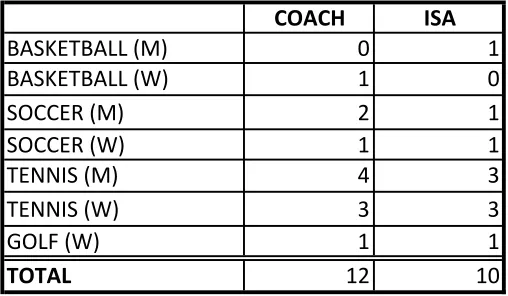
Table 3.1 Gender Distribution ... 21
Table 3.2 Public / Private Distribution ... 21
Table 3.3 Sports Distribution ... 21
Table 3.4 Country of Origin ... 22
Table 3.5 Competition Level Distribution ... 22
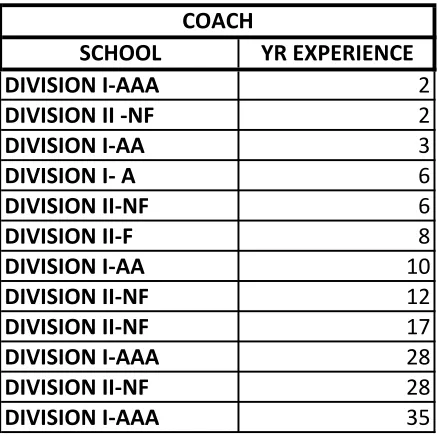
Table 3.6 Years of Coaching Experience ... 22
Table 4.1 Recruiting-Success Ratio Division I & II ... 31
Table 4.2 Main Recruiting Methods used by Coaches ... 46
L
IST OFF
IGURESFigure 2.1 ISA’s influencing factors ... 12
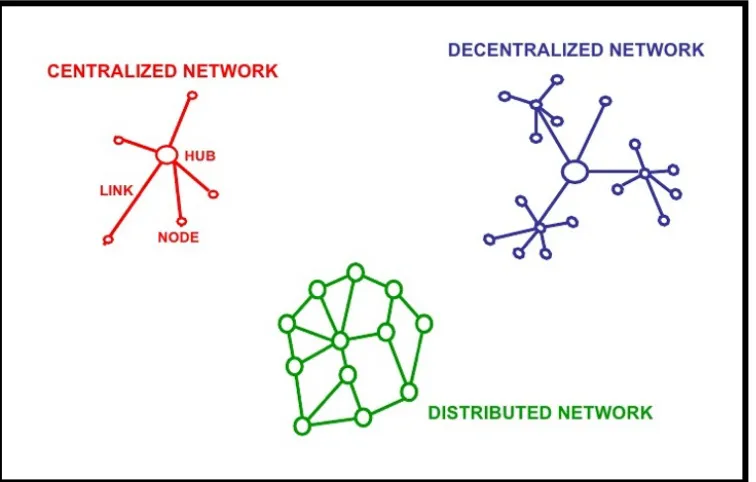
Figure 2.2 Elements of the Network and Types of Network ... 17
Figure 4.1 ISA Recruiting-Success Ratio ... 31
Figure 4.2 Structure of Recruiting Process of ISAs ... 38
Figure 4.3 ISAs Influencing Factors ... 40
Figure 4.4 Coaches’ Influencing Factors ... 40
Figure 4.5 Methods IA used to Promote Themselves ... 41
Figure 4.6 Coaches’ Personal Network ... 45
Figure 5.1 Country of Origin Distribution Division I ... 52
L
IST OFA
BBREVIATIONSEC ... Eligibility Center
F ... With Football Team
ISA ... International Student Athletes
IA ... International Athlete
NCAA ... National Collegiate Athletic Association
NF ... Non Football Team
CHAPTER
1
I
NTRODUCTIONUS Intercollegiate Athletics
One of the most popular topics nowadays is globalization and its socioeconomic
impact. One of the factors that produce globalization is “mass migration and people
moving.” Globalization offers huge potential benefits for society and economies;
nevertheless, it is also a complex topic because of the differences in culture, values, and
expectations throughout the world (Kahanec & Zimmermann, 2008).
Globalization has also influenced the sports industry. As a consequence of
globalization, athlete’s migration has largely increased in the past 50 years. The topic
becomes more complex depending on the level of play amateur or professional; and
depending on the real purpose/motivation of the athlete’s migration. The
purpose/motivation varies depending on many variables such as gender, the nature of the
sport (individual or team), amateur or professional, school-based or club-base system, the
place of origin, and the destination. Migration in general involves more expenses;
therefore, it is important to understand each situation in order to make more productive
investments and better decisions at the management level. The International Athlete (IA)
migration phenomenon has evolved over time. Athlete’s migration can be divided in
three clear steps: the recruitment process, the performance process, and the post
The main objective was to find similar patterns between schools’ recruiting
process of International Student-Athletes (ISAs) and to create a descriptive structure of
the recruiting process.
The United States is the only place where an athlete can compete at an elite level
while studying to obtain a college degree. The National Collegiate Athletic Association
(NCAA) is the governing body and focuses on the pursuit of excellence both
academically and athletically (NCAA, 2014). The level of competition has driven
colleges to invest in equipment, state of the art facilities, top coaching staff, scholarships
for elite athletes, and many supporting services, such as tutoring, academic guidance, and
medical care. Every year, billions of dollars are spent on collegiate athletics (Mayyasi,
2013). As a consequence of the dollars invested in collegiate athletics, and the increasing
national media attention, the pressure to win has grown overwhelmingly. Coaches and
administrators are always searching for an athletic edge (Wieberg, 2008). There are only
a limited number of American athletes that have the skills to have an impact at the
collegiate level. Competition to attract the top domestic players is high, so coaches turn to
larger, international recruiting arenas with less competition (Riley, 1997).
1.1 OVERVIEW OF ISAs’ PARTICIPATION IN THE NCAA
Over 16,000 student athletes from countries outside the United States were
playing for NCAA member institutions in 2006-07 (NCAA, 2008). According to
statistics from the NCAA Ethnicity Report, the number of ISAs’ participation increases
every year. The percentage variation between 1999-2000 and 2008-2009 school years for
4.3 percent of the total student-athlete population (including Division I, II and III)
(NCAA, 2010). Note that the NCAA Ethnicity Report defines the ISAs as nonresident
alien student-athletes, which requires the athlete to have a temporary visa that will expire
at a specific point in time.
The following chart shows the largest increase of ISAs’ participating in Division
I, II and III in each sport between 1999-2000 to 2008 – 2009 school year.
Table 1.1 Larger increases of ISA’s participation in NCAA between 99-00 to 08-09.
It is important to point out that all of the sports mentioned above are non-revenue
sports. However this is not the case with football and men’s basketball, which are central
to colleges’ revenues. As we might expect, the percentage of ISAs’ participation in
2008-2009 in football was 0.5%, and in men’s basketball was 3.9% (NCAA, 2010). These
numbers confirm a greater market size of talented players in the U.S. for football and
basketball. It is not surprise that on these sports U.S. is a dominant country worldwide.
“The competitive success of ISAs – both men and women – is gaining the
attention and in some cases, the concern of college coaches, players, parents of junior
players, member institutions, fans, and commentators” (Weston, 2006). There are three
SPORT %'ISAs %'INCREASE %'ISAs %'INCREASE
ICE'HOCKEY 22.9% +14.0% 22.7% +16.6%
TENNIS 20.6% +10.1% 17.3% +11.1%
SQUASH 17.6% 0% 17.1% +12.0%
GOLF 7.2% +4.5% 10.7% +6.7%
SKIING 12.5% +9.6% 11.0% +8.5%
SOCCER 9.3% +4.9% 3.3% +2.1%
main controversial points about the participation of ISAs in U.S. collegiate athletics: ISA
amateur eligibility, fewer opportunities for American athletes whose families are
taxpayers, and a concern about whether ISAs’ participation undermines U.S. sports by
training future opponents (Hoffer, 1994). On the contrary, other stakeholders view the
participation of ISAs as beneficial for home grown Olympic hopefuls who will have to
compete in a higher levels of play in amateur divisions (Ridinger & Pastore, 2001).
Based on the increase of ISAs’ participation in U.S. Collegiate athletics, and after
mentioning three controversial issues of ISAs' participation, it is necessary to understand
various aspects of ISA recruiting in order to make more productive investments and
better decisions at the management level.
1.2 PURPOUSE OF THE STUDY
The purpose of this study is to define a general structure of the Recruiting Process
of International Student Athletes. In addition, I will identify and describe the main factors
that influence the recruiting of ISAs.
1.3 RESEARCH QUESTIONS
• Do coaches mainly use their personal Network to recruit ISAs?
• Does the Network have an influence on the recruitment success rate?
• Where do coaches go to recruit internationally?
First, it is important to know if coaches use their personal Network in order to
recruit ISAs? Then, how influential is their personal network in the recruiting process?
Are there other ways that coaches use to recruit ISAs? John Bale, a pioneer researcher on
Network. He statedthat coaches used their personal connections in order to recruit ISAs.
In 1991, when Bale published his book, The Brwan Drain, the traveling conditions and
communications were not as sophisticated as in today’s world. Technological tools such
as Skype, Face Time, email, Facebook and Tweeter have improve instant communication
substantially. Therefore the old model of the “talent pipelines” has been transformed or
substituted.
Second, does the Network have an influence on the recruitment success rate? In
average, how many ISAs should be recruited to ensure that one ISA commits to a
program? And most importantly, how many committed ISAs successfully adapt and
have an impact on their new teams? Current research suggest that ISA adapt better to the
collegiate level because of their personal maturity, playing experience and
professional-like discipline towards academics and athletics (Duchesne, Bloom & Sabiston, 2011).
Third, where do coaches go to recruit internationally? Is the recruiting done
through personal contacts, important events, well-know locations or others? Are coaches
recruiting from a limited market or are they really getting access to all the best
international athletes? It is imperative to know if the coaches are recruiting the best ISAs
CHAPTER 2
L
ITERATURER
EVIEWThe existing literature on the recruitment process of ISAs is very limited. Various
studies have been conducted on the participation of ISAs in U.S. Collegiate Athletics.
Although continuing to emerge these studies had examined different topics such as:
historical description of the ISAs migration phenomenon; the coaches’ perspective and
their strategies when recruiting and coaching ISAs, the ISAs perspective and their
motivation to participate in US collegiate athletics.
Even though the previously mentioned areas of study do not focus specifically on
the process of recruiting of ISAs, they point out very important factors that influence the
way in which schools and coaches have established their ISA recruiting processes. I
summarized and pointed out the main ideas of each topic of study as well as the
relationship of this information with further research needed.
2.1 HISTORICAL DESCRIPTION OF ISAs’ PARTICIPATION IN NCAA
John Bale is one of the pioneer academics to research about athletes’ migration. In
his book The Brawn Drain, he focused on the migration of athletes to American
universities. He referred back to the origins of the unique U.S. Collegiate Sports system
when he mentioned: “Sports and community were intimately linked to the growth of the
American system of higher education” (Bale, 1991, p. 13). Thus the presence of a college
support. Then, the pressure to build a visible sports program led to recruiting. When the
NCAA regulated recruiting, it gave every school the possibility to recruit athletes from
anywhere in the country or the world. Bale also stated that it was only since the
legalization of athletic scholarships in the 1950s that the influx of foreign student athletes
became significant (Bale, 1999).
Bale identified a recruitment pattern that he called the “Talent Pipeline,” which
was a strong link between national sources and college destinations. Some universities
were well known for recruiting athletes from a specific country. Coaches built
connections in a specific country through a current or ex ISA from that country.
2.2 COACHES’ PERSPECTIVE ON ISAs RECRUITING AND PARTICIPATION
Some studies have been done on the topic of coaches’ perspectives about ISA
recruiting. Ridinger & Pastore studied the situation of coaches within the ideological
basis “win at all cost” of U.S. intercollegiate athletics. In this scenario coaches needed to
recruit the best players regardless of national origin. Smaller schools usually recruited
internationally because they could not convince top U.S. athletes to look their way.
Usually the top programs attracted the top domestic players (Ridinger & Pastore, 2001).
Some coaches view ISA recruiting as a quick fix. They also claim that ISAs bring
maturity, work ethic, and a goal-seeking attitude not always seen in U.S. youth. ISAs are
usually more appreciative of the training facilities, coaching, academic support and other
benefits they receive. ISAs can enhance an athletic program, both athletically and
culturally. Coaches also acknowledge that recruiting ISAs is complex and controversial;
Ridinger and Pastore, pointed out three issues and concerns about recruiting
internationally and the participation of ISAs in U.S. Collegiate Sports:
• Expenditure of U.S. tax-dollars in the education and training of international
athletes.
• Diminished number of scholarships available for U.S. athletes.
• Effects of world class athletes on collegiate competitions.
To counteract these concerns, the authors mentioned, “the international
student-athlete is a foreign investment that gives back to the community by helping his/her team
win games, while fostering local pride for the university” (Ridinger & Pastore, 2001, p.
10).
Bale also presents the view of the coach in the topic of recruiting ISAs. He quoted
Tom McLaughlin, track coach in Dallas, “my job is to win for our school, not develop
U.S. Olympic athletes,” in reference to a concern that the participation of ISAs in the
NCAA might be undermining U.S. teams for future Olympic competitions. Another view
was stated by Roy Benson a Florida track-and-field coach, “those who want desperately
to win at all costs will go for foreigners.” Nevertheless, this might not be as bad as it
sounds when we take a look at an example of “instant help” as a strategy used by
Clemson University soccer coach, who built a NCAA soccer championship team out of
foreign talent. He later stated, “in essence we used our recruiting and scholarships to
build a program American players would recognize and find attractive enough to play
for” (Bale, 1991). In reference to the costs and expenses of recruiting ISAs Don
foreign recruits are actually cheaper than domestic talent” (Bale, 2001, pg. 98).
2.3ISAS’MOTIVATIONSTOPARTICIPATEINUSCOLLEGESPORTS
Researchers such as Garant-Jones, Love and Kim, Popp, Hums and Greenwell,
and Gaston-Gayles, have provided an insight on the topic of foreign athletes in U.S.
collegiate sports. According to Love & Kim, the existent studies on this topic can be
grouped into two general categories: first, those focusing on the experiences of
international athletes on American university campuses (e.g. Love & Kim; Popp, Pierce
& Hums, 2010); and second, motivations of international athletes in coming to American
universities (e.g., Berry, 1999; Grant-Jones, Koo, Kim, Andrew, & Hardin, 2009).
Outside of these areas a lot of research still needs to be done.
The past decade has seen a nearly threefold increase in the number of
international athletes coming to the United States for the purpose of participating in
collegiate sports (Love, 2011). The motivation for international athletes to participate in
American universities varies depending on gender and place of origin. The main
motivational factors identified in previous studies are: receiving an education with a an
athletic scholarship, the high level of competition in U.S. collegiate sports, the quality of
training facilities located on America college campuses and the United States itself (Love
& Kim, 2011).
It is interesting to point out that Love & Kim based their research upon interviews
with 12 individuals who migrated to the United States in order to participate in collegiate
sports. This methodology gives the advantage of being able to express individual
an academic degree and others were not so defined when they said, “this door opened, I
had to take the opportunity, and wherever it leads me is where I’m meant to be” (Love &
Kim, 2011, pg. 96).
The study done by Love & Kim uses typologies to qualify migrant athletes such
as: mercenary, those athletes whose experience will be financially beneficial for them in
the long run; cosmopolitan, athletes interested in seeing different cultures and learning
the language; settler, migrants athletes who stayed more than two years after they
graduated; returnee, those who go back to their place of origin; exile, those athletes that
migrated due to threats to their career, liberty, or their life; and ambitionist, those who
have a desire to achieve a sport career anywhere. The findings on this study indicated that
depending on the country of origin and gender, the motivation to become an immigrant
athlete is different.
In other study Andrew Guest (2007) compares two soccer teams, one from U.S.
and one from Malawi. He found that U.S. team members tended to view sports
participation as a competitive ground, expressive outlet, and a site for self-improvement.
On the other hand for the team members of Malawi, sports were viewed as a
demonstration ground, a pastime, and a site for innate self-actualization. The
socioeconomic situation of Malawi influenced the way the athletes view sports. (Guest,
2007).
An important study by Grant-Jones, Motivational factors influencing
International Student-Athletes to participate in the NCAA, reveals that ISAs are
competitive leagues. Stephanie Grant-Jones also mentions the economic impact of
international students coming to U.S. masters and doctoral programs and the added
benefits of their presence in U.S. institutions such as: increasing the credibility of the
institution, and opening the communication among countries around the world for future
purposes. Grant-Jones cited, “in the United States, international students contribute more
than $12 billon to the U.S. economy each year” (Altbach, 2004). Grant-Jones used factor
analysis to assess which factors influence most the process of selection of international
student-athletes. The questionnaire composed of multiple-choice answers and 7-point
Likert scale, revealed the results summarized on Figure 2.1.
In addition to the motivations of ISAs to participate in sports, it is also important
to know how each athlete viewed sports and its purpose. The study revealed that ISAs
rated the competition aspect of college sports significantly lower than domestic
student-athletes. ISAs from Western European nations rated good citizenship significantly lower
than student-athletes from Eastern Europe, Central and South America and the United
States (Popp, Hums, Greenwell, 2009). This study introduced the concepts of
geographical regions, economic and political systems, and national sport policies as
MOTIVATION ASPECT
Figure 2.1 Influencing Factors of the ISAs’ decision to participate in U.S. Collegiate Sports.
Athletic Motivations
Academic Motivations
Influence of Others
Social/Environmental Motivations
!
- Coaches
- Training Facilities - Past Championships - Level of competition
- Choice of Major
- Academic Support Programs - Scholarship Opportunity
- Parental Influence - Influence of athletes from same country - Influence of friends
- Living in America - Climate
- Size of campus - Geographical location
The athlete’s dream of using intercollegiate sports experience as a stepping-stone
to a professional sport career was other motivating factor introduced in this study. I
expect this factor to grow among the future generations of ISAs while professional sports
become a more lucrative industry.
Popp, Hums & Greenwell on their study Do International Student-Athletes view
the Purpose of Sport Differently than United States Student-Athletes at NCAA Division 1
Universities? mentioned other important facts such as: Over 16,000 international
student-athletes during 2006-2007 participated in collegiate sports. 70% of this number of
athletes participated in Division I. These numbers are still on the rise, and the number of
variables that influence foreign athletes make the topic more complex. There are many
areas still in need of research. This study mentioned the following areas: academic
achievement, social adjustment, graduation rates, retention rates, post athletic careers,
assimilation back into home culture, university selection and recruiting process.
Another important piece of information in this process is the selection process that
athletes go through in order to decide what American university to attend. Popp, Pierce &
Hums wrote A comparison of the college selection process for international and domestic
student-athletes at NCAA Division 1 Universities, which presents factors that influence
the athlete decision process such as: knowledge and awareness of host country, level of
personal recommendations influential to the student, cost of attendance issues, physical
and educational environment or climate of the institution, geographic proximity to the
home country, and social links in the host country. It is very typical that the only contact
between the ISA and the university is the head coach, thus the coach becomes extremely
recruited had more than one school as options during their decision process.
Additionally, other important aspect to take into account and worth researching as
part of the phenomena is, the coach of the home country and his/her willingness to help
their top performers land a U.S. college scholarships (Popp, Pierce & Hums, 2011). The
information produced in the suggested research will be extremely important to the NCAA
governing body and the regulations they impose on international athlete participation. At
the moment, the NCAA regulations limit the recruitment of international student-athletes
to a certain number in Division II and III. For Division I there is no a limit on the number
of ISAs that can be recruited. In addition to these regulations, the NCAA has to moderate
the consideration of professionalism outside the states. Since international athletes grow
up in a club-based system, most of them are exposed to some level of professionalism.
There are a lot of areas that my research can help to clarify and put into
perspective, regarding international athletes in American universities. The goal is to build
a structure where all the actors involved in U.S. Collegiate Sports benefit from the
experience. The answer to the three-research question that I previously stated can create
new insight to more effective ways to recruit ISAs, who will contribute to the
development of U.S. Collegiate Sports.
2.4 THEORETICAL JUSTIFICATION
Due to the nature of the ISA recruiting process I used Network Theory, also
known as network analysis as the underlining theory in the progression of defining an
ISA recruiting process. Barnes (1954) is credited with coining the notion of Social
social structure of relationships around a person, group or organization affects beliefs or
behaviors.
Social networks and the analysis of their structures are an interdisciplinary
academic field where social psychology, sociology, statistics and graph theory are
involved. Social network analysis is a major paradigm in contemporary sociology. In
general, social networks are self-organizing, emergent, and complex. The Social Network
is a structure made up of a set of social actors (nodes) and a set of ties between these
actors. The Network can be used to determine the social capital of individual actors. The
Network of relationships can also have some important consequences in the success or
failure of the actors involved. Evidence suggests that the types of Networks we form
around ourselves affect everything from our health, to our career success, to our very
identities (Kilduff & Tsai, 2003).
The Social Network approach to organizations and individuals can be analyzed at
different stages, from micro, meso or macro levels. The analysis also includes the
strength of the ties and how much they influence each node. Other key elements of the
network analysis are the defining units of observation, individual, team, organization, etc.
As Kilduff and Tsai mention in their book, Social Networks and Organizations, orienting
concepts include: the embeddedness of work-related and economic transactions in
patterns of social relations, social capital as a set of resources inherent in an actor’s set of
Network ties, and structural holes as gaps between actors or groups of actors that share no
direct ties. At the level of the whole Network, important concepts include: the density of
ties, the centralization of the network, the reachability of actors in the network, and the
important concepts include strength, and reciprocity.
The Network ties are always changing, and with time the connections migrate and
move, which produces the development of the Network. When the number of ties from a
node increases then that node becomes a hub, which brings together many nodes.
The social network theory was the basic structure around which I identified key
elements that interact during the recruiting process, influential factors, and tools used
during the recruiting process. The main objective of this study was to build a structure
that describes the process of recruiting ISAs, but additionally identifies the actors (nodes)
and the relationships (ties) they have created during this process. The study also
identified hubs, which are nodes with great number of ties. For the purpose of this study a
hub is formed by hundreds of ties as oppose to a node that has tens of ties.
Further studies should analyze the effects of the Network during the recruiting
process of ISAs. It will be important to explore the impact and influence of the Network
on the actor’s behavior and what kind of influence a social Network has in the success or
failure of an athletic program. If the influence of the Network is significant then each
coach’s Network might be a valuable element to consider when hiring coaches. The
Agencies service act as Network hubs, however it would be interesting to analyze the
strength of these ties and the influence on the entire Network.
The following Figure 2.2 represents the elements of the Network and the
differences between nodes and hubs. The links between the nodes and hubs are the
relationships built between coaches, ISAs and other actors of the recruiting process such
The figure also shows three types of Networks: Centralized, Decentralized and
Distributed.
CHAPTER
3
M
ETHODOLOGYDuring the past 30 years, ISA recruiting and ISAs’ participation in US Collegiate
athletics have been increasing during the past 30 years. Even though, the number of ISAs
participating in NCAA Division I, II and III athletics is less than 10% of the total number
of SAs, their participation is perceived to have a big impact on their teams. There are
many stakeholders in NCAA sports, but in this study I focused on the information from
selected coaches and ISAs only.
ISA recruiting processes are different from one university to the other, because of
the differences in recruiting strategies, coaches’ experience, budget, and other factors. It
is probable that the particular processes would also be different from one sport to the
other. However, I found general trends and similar reasons why coaches look at the
international market of athletes while building their teams.
3.1RESEARCHMETHOD
This research was conducted as a Qualitative Study with the following three
assumptions:
• First, coaches use their personal Network in order to recruit ISAs. John Bale
however the “Talent Pipeline” as he defined it, has developed into a more
complex system.
• Second, the ISA recruiting-success rate should be higher than the Domestic
recruiting-success rate. The U.S. Collegiate Athletics system is very attractive to
international athletes because it gives them the opportunity to study towards a
degree while competing at an elite athletic level. Therefore, the ISA
recruiting-success rate should be near 100%.
• Third, since coaches use their personal Network to recruit, the location of their
personal contacts determines where coaches can look to recruit internationally.
Based on this assumption, the international recruiting market will be limited to the
size and location of the coach’s Network.
3.2 INSTRUMENTATION
The instrument used for this study was semi-structured, in-depth interviews (see
Appendix I and II). “In-depth interviewing is a qualitative research technique that
involves conducting intensive individual interviews with a small number of respondents
to explore their perspectives on a particular idea, program or situation” (Boyce & Neale,
2006, pg. 3). This instrument offers the primary advantage of providing more detailed
information about the ISA recruiting process. It is also the instrument that best fits the
respondent’s availability. The interviews were conducted with coaches and ISAs, who are
very busy and difficult to reach. Coaches and ISAs have very little time outside of
classes, practices, games, traveling, planning, and other responsibilities they have to
attend. Therefore, I scheduled individual interviews at their convenience and sometimes
On the other hand, this instrument was limited in a number of ways: it is prone to
bias, time intensive and not generalizable. Nevertheless, I counteracted the bias limitation
by “using effective interview techniques, such as avoiding yes/no and leading questions,
using appropriate body language, and keeping personal opinions in check” (Boyce &
Neale, 2006, pg. 4). The study aimed to find a common trend among ISA recruiting
processes, a description of the current practices, rather than qualify them as good or bad.
Having this objective in mind helped me to counteract the bias limitation.
The study also used secondary data to build the demographics of the ISAs in
Division I and II schools in South Carolina. This data also served to compare and relate
the results collected from the interviews. The secondary data was obtained from the
rosters of each school athletic web page, the NCAA Ethnicity Report and the Equity in
Athletics Website from the U.S. Department of Education.
3.3 RESEARCH SAMPLE
The instrumentation was applied to 12 coaches and 10 ISAs, who could not be
used to generalize the process to the 1,281 NCAA’s institutional members The selected
institutions were: University of South Carolina, Coastal Carolina University, Winthrop
University, Newberry College, Limestone College, Lander University, and Coker
College. I intended to have a large variety of backgrounds and state or private institutions
in order to have a wider range of responses.
The interviewed subjects were selected from a list of Universities in South
Carolina that are members of the NCAA and participate in Division I and II (these
our interviewed subjects and the characteristics of the institution that they represent. The
subject’s demographics are an approximate reflection of the general population in U.S.
Collegiate Athletics.
Table 3.1 Gender Distribution.
Table 3.2 Public / Private Distribution.
Table 3.3 Sport Distribution.
COACH ISA
MALE 9 5
FEMALE 3 5
TOTAL 12 10
GENDER.DISTRIBUTION
COACH ISA
PUBLIC 8 7
PRIVATE 4 3
TOTAL 12 10
PUBLIC,vs.,PRIVATE
COACH ISA
BASKETBALL((M) 0 1
BASKETBALL((W) 1 0
SOCCER((M) 2 1
SOCCER((W) 1 1
TENNIS((M) 4 3
TENNIS((W) 3 3
GOLF((W) 1 1
TOTAL 12 10
Table 3.4 Country of Origin.
Table 3.5 Competition Level Distribution.
COACH ISA
USA 9 0
AUSTRALIA 2 1
BRASIL 1 0
ENGLAND 1
GERMANY 1
MEXICO 1
NEW7ZEALAND 1
NORWAY 1
QATAR 1
SERBIA 1
SPAIN 1
VENEZUELA 1
TOTAL 12 10
COUNTRY-OF-ORIGIN
COACH ISA
DIV$1$A 1 2
DIV$1$AA 2 2
DIV$1$AAA 3 2
DIV$2$NF 4 3
DIV$2$F 2 1
TOTAL 12 10
Table 3.6 Years of Coaching Experience.
SCHOOL YR(EXPERIENCE
DIVISION(I0AAA 2
DIVISION(II(0NF 2
DIVISION(I0AA 3
DIVISION(I0(A 6
DIVISION(II0NF 6
DIVISION(II0F 8
DIVISION(I0AA 10
DIVISION(II0NF 12
DIVISION(II0NF 17
DIVISION(I0AAA 28
DIVISION(II0NF 28
DIVISION(I0AAA 35
CHAPTER 4
R
ESULTSP
RIMARY DATA ANALYSISThe content of the interviews were grouped as: coaches and ISAs. The
information they provided was used to find patterns and recurrent themes to answer the
three research questions:
• Do coaches mainly use their personal Network to recruit ISAs?
• Does the Network have an influence on the recruitment success rate?
• Where do coaches go to recruit internationally?
Recurring information provided by the interviewed subjects was presented in
quotes in which they referred to the particular question. The answers of the interviewed
subjects were based on their own experiences and the characteristics of their institution,
such as the level of competition, the conference in which the schools participate, and the
budget that they allocated to international recruiting.
After the analysis of the primary data, I built a general structure of the Recruiting
Process of ISAs and identified various actors (nodes) involved in the recruiting process.
Finally, I showed the relationships between each actor as links (ties). Additionally I
!
4.1
D
O COACHES MAINLY USE PERSONAL NETWORK TO RECRUITISA
S?
T
RANSCRIPTIONInterviewer: Tell me about the recruiting process of International Student-Athletes?
COACH DIVISION IAA M-TENNIS:A lot of the time it is through a former player who is
working at an Academy. I don’t deal with Agencies, they are in the business of making
money by placing their players, and I am not so sure unless you have a personal
relationship with that person; that you get what you think you are going to get.
COACH DIVISION IAA M-TENNIS:A lot of the times it is through a former player who is
working at an Academy. Very rarely we get the reach out of an ISA, in that case I’ve got
some common contacts to provide a reference for how good the player is.
COACH DIVISION IAA W-TENNIS:All of us get emails from agencies, but maybe one of
my girls we got through an agency. A lot of my former players and former teammates
from X University, so I can talk to them in all this countries and ask them would she play
on your team. Just for being in the business for so long I have decent contacts.
COACH DIVISION IAAA M-TENNIS:At the moment I work with agencies, or people that I
know, connections. Multiple Showcases. Sometimes coaches, agencies, academies, it is
always different. I am trying to get into the job, get new contacts.
COACH DIVISION IINF W-SOCCER:There are agencies out there and they send you a lot
of good stuff but I’ll be honest with you, it is about making relationships and
!
COACH DIVISION II F W-BASKETBALL: I am Australian, so I just go back to my
connections and my ties in Australia. In lower Division I there are a lot of Australians.
COACH DIVISION II NF M-TENNIS: I have to use former players; I have many contacts
especially in southern countries. I am originally form Australia so I have contacts in
Australia and New Zealand, Sweden, Germany, France and Bolivia. Generally I won’t
recruit an international person unless they are recommended by somebody that I know.
95% of the time I have more success when I know the person that recommends these
ISAs.
COACH DIVISION II F W/M-TENNIS: One of the ways I find most people is through
recruiters. There is a website online call universal rating. This is a worldwide ranking, so
if they play in Mexico or Russia, it shows, they are all in the same point system. I have a
database of people that normally send me stuff and they are pretty reliable.
COACH DIVISION II NF M-SOCCER: I have built up a network in my 40 years of
experience. In the last 10 years, it has become highly sophisticated in recruiting services;
there are around 30 or 40 agencies. You might have ISA who played here in the U.S. and
went back to France or Germany wherever he is from and then he’ll start an agency,
because he knows the system.
COACH DIVISION IAAA W-TENNIS:I go to Brazil once a year, because I am from there.
And besides the tickets it costs very little to recruit there.
COACH DIVISION II NF W-SOCCER: It is about developing a network. You got to have
people that you trust. You got to lean on your network. You really have to trust some
!
COACH DIVISION II NF M-SOCCER: Former players help you recruit internationally.
Students always recruit for the university.
COACH DIVISION IINF M-TENNIS:We are not going to invest tons of money on it, just
because we do not have it. That is why I say it is so important to have that network and
develop those relationships with people that you trust and they trust you. Someone
familiar with what you have.
COACH DIVISION I W-GOLF: I will pick 2 – 3 tournaments each year where national teams
or the most elite players internationally are going to be. I am making an evaluation on
them first. I have seen them at a young age and finding their talent first, and then kid of
following them as they progress their young career until they get to the point at which
they are at the recruit able age.
A
NALYSISBased on the coaches’ responses there is a clear distinction between the ISA
recruiting processes of top Division I programs and any other program. Top Division I
programs have greater recruiting resources, thus these programs exhibit the following
characteristics during their ISAs recruiting process:
• Search for the “best” amateur international athlete.
• Do personal international recruiting by visit international tournaments where elite
athletes from many countries compete at the same place.
• Began recruiting the elite international athlete at an earlier age.
!
• Rely less on their personal Network and more on constant research and personal
evaluation of the athletes.
On the other hand, Division I AA, AAA and Division II F and NF have very
restricted budgets and they do not allocate a lot of resources to the ISA recruiting process.
However, they exhibited the following patterns:
• Search for the “best fit” international athlete. These programs have a different
level of competition than the top Division I programs, therefore they search for a
talent unique to their reality. They have to have a mix of athletic and academic
skills in addition to financial resources. Additionally, these schools usually have a
smaller campus, lower level of competition, and do not always offer a full
scholarship.
• These programs rely heavily on their personal Network in order to find
international athletes. They also use their Network to evaluate recruits.
• The older and more experienced coaches have built strong and trustworthy
Networks. Their “connections” know their needs and realities and are more
effective in identifying international athletes that will match the program’s needs.
• The older coaches usually do not work with agencies, because they are very
impersonal and do not effectively match international athletes with athletic
programs in such a way that both actors would be successful in the future.
• Younger coaches are beginning to build their Network, and they do not rely solely
on their Network. They tend to work with agencies, academies, and showcases
!
• Younger coaches look to build a personal Network including agencies, academies,
showcases, recruiters, and international ranking organizations.
• International coaches bring in additional value with a strong Network in their
home country and some neighboring regions as well.
• Former ISAs become an important part of the coaches’ network.
Based on Network theory, agencies and academies are defined as hubs. On the
other hand, former ISAs and personal connections are defined as nodes. The relationships
that coaches have with the nodes and hubs are the ties. Further studies should look at the
quality and effectiveness of hubs and nodes in providing successful ISA-U.S. College
matches.
4.2
D
OES THEN
ETWORK HAVE AN INFLUENCE ON THE RECRUITMENT SUCCESSRATE
?
T
RANSCRIPTIONInterviewer: How many ISAs have you recruited vs. how many have committed to come
to your school?
COACH DIVISION I A W-GOLF:It depends on the year. You start out recruiting; you are
looking between 5 and 10. So you are probably looking at 5 you really want for 1
scholarship you are willing to give. The first week I’ll send out 40 or 50, and then start to
narrow down.
COACH DIVISION I AA M-TENNIS: I have 11 potential athletes and ended up getting the
!
COACH DIVISION IAA W-TENNIS:They are all the same. I wouldn’t say that an American
or International is any easier or any harder; it just depends on what their decision is, what
their experience is. I have 10 – 15 in the mix for 2 spots.
COACH DIVISION I AAA M-SOCCER: Almost all international players we recruit end up
coming. Many of our international players are passed onto us through contacts and
former players, so they are pretty much locked in from the start.
COACH DIVISION IIF W-BAKETBALL:5 to 1 or 4 to 1. I am in a different spot than other
people. Most American coaches, when they are recruiting Australian kids, they get an
email from someone they know, with me is more direct, because I am Australian, I have
worked there. My recruiting from that standpoint is a little more specific.
COACH DIVISION IINF M-SOCCER:Per position, 3 to 1. Rank them in order of options. It
is a process where you try not to put all your eggs in one basket. I put a lot of time into a
recruit and nothing happens, and then you do nothing and they fold in your lap. There is
no recipe that we all follow and it all works. They are all over the place.
COACH DIVISION II NF M-TENNIS: First of all, you have to know that they are really
wanting to come somewhere in the USA, then convince them to come to X University.
Generally, I recruit from a former player or contact. If the contact is highly
recommending them then I have a good chance. Then it might come down to what you
are offering. How much can they afford? Are you close with the other schools? Then
usually you got a pretty good chance of landing the kids.
COACH DIVISION IINF W-SOCCER:It is very easy. It comes down to the dollar and what
!
COACH DIVISION IINF M-TENNIS:It depends. So with that, I can focus on maybe three
and then get one of those. That is other thing that depends, the skill level. If I am looking
for a number 1 or 2, I probably need to get in touch with six. I’ll find six that I can really
recruit hard because I know that they have a lot of options. If I am looking for a 5 or 6,
then I can look at three and get one of them.
A
NALYSISAll of the interviewed coaches mentioned that the recruiting success ratio (getting
an ISA to commit vs. the number of athletes recruited) depends on various factors. From
the 7 coaches that gave a specific ratio, the average calculated was approximately 5. On
average, coaches recruit 5 ISAs in order to commit one. The following table shows the
calculations.
Table 4.1 Recruiting –Success Ratio Division I and II
ISA$RECRUITED SCHOLARSHIPS$#$
AVAILABLE RATIO = SCHOLARSHIPS+AVAILABLE
5 1 20% ISA+RECRUITED
11 3 27%
15 2 13%
5 1 20%
3 1 33%
3 1 33%
6 1 17%
AVERAGE 23%
ISA+RECRUITING+ SUCCES+RATIO
SCHOLARSHIPS*AVAILABLE ISA*RECRUITED
!
The interview responses yield the following similarities and conclusions:
• Whether a recruited ISA commits or not depends on various factors such as
likability of the coach, scholarship offers, and school characteristics (campus,
urban, rural, weather, etc.).
• The athletic level of the ISA recruited also determines how many options the ISA
has. When the level is high, the recruit has more options to choose from.
Regarding the same variable, the institution’s needs (top / medium talent, athletic
position) also determine how many athletes the coach needs to recruit specifically
for one available scholarship.
• If the ISA has been recommended by a trustworthy contact, the athlete will tend
to commit easily.
• If the coach has some kind of previous/current connection with the athlete, the
ISA will also commit easily. For example in the case of international coaches, it is
easier for them to commit ISAs from their own countries.
• Especially for Division II, where scholarships are not offered in full, the total
financial aid offered is a very important factor that ISAs consider when choosing
what school to commit to.
• The recruiting success ratio of domestic athletes and that of international athletes
is similar, unless a close contact or former player has recommended the ISA. In
this situation, the ISA is more likely to commit.
• When recruiting ISAs, the previous athletic/academic history of the institution
and other characteristics, such as campus, conference association, and popularity,
!
characteristics of the universities that recruit them, placing all of the institutions at
the same level. At this point, the ability of the coach to sell his/her program and
establish a strong relationship with the ISA becomes the main factor that will
influence the ISAs decision to commit.
These statements are supported by the responses from ISAs that follow:
ISA DIVISION I A W-GOLF: I had a goal to become a professional after college. So I
looked for a good coaching staff. The program was up and coming. I liked that it was on
the east coast so it was close to Europe. Most of the girls that look for an American
University does not know anything about them. I was a little more focus, I wanted to
come to a SEC or Pac-12 school.
ISA DIVISION I A M-BASKETBALL: [The Coach] has Latin blood. He is very clear and
professional in his work. I decided to come here the first day that he called me.
ISA DIVISION I AA M-TENNIS: I contacted coach and he got me a visit. I love X
University and I like coach he is a great person. It is a great place to be in.
ISADIVISION IAA W-TENNIS:The coach here was really approaching. I was lead by the
best impression.
ISA DIVISION II NF M-TENNIS: They contacted me, or I was in contact with them,
initially seven or eight. And X University was right for me and it was the best fit for me.
!
4.3
W
HERE DO COACHES GO TO RECRUITISA
S?
T
RANSCRIPTIONInterviewer: Where do you go to recruit international athletes?
COACH DIVISION IA W-GOLF:I go to Europe a lot, two or three summer tournaments a
year. Some tournaments are: The European Girls Team Championship, The British Girls
Championship. Also other National Amateur Championships at each country that you can
look at results. They are held every year at different places. In golf there is a lot of major
events, tournaments where the major countries in golf go and play each summer, and I
can look at them as a whole. And if there is another tournament that I need to go to
follow up the internationals I’ll go. A lot of international golfers also come here to play.
So it is a mix of a little bit of both where I can see some players over here, but I also have
gone over there and have seen them play over there.
COACH DIVISION IAA M-TENNIS:We get a lot of transfers ISAs. I do get some freshman.
The process is kids come they don’t really know where they are going; they don’t really
like where they are. The transfer is coming because of the word of mouth, they have
visited, they have been here the have played here. We have a nice location, longevity
with the coach, so I have a real strength with that and I use that.
COACH DIVISION IAA W-TENNIS: They are all tennis players no matter where they are
from.
COACH DIVISION IAAA M-TENNIS:We have had players from all over the world. Mostly
!
COACH DIVISION IINF M-SOCCER:It goes in cycles, for a a while we had Scandinavian
players; we still do but not as many. Then we had a lot of English, then some French, so
it kind of goes in cycles. Mainly continental Europe.
COACH DIVISION II NF W-TENNIS: I am recruiting to the level of player; I am not
discriminating against South Carolina, or out of state, or international. It is all about the
level. I need a certain level to be as competitive as we are.
COACH DIVISION II NF M-TENNIS: So it really depends, but you do in the past 3 or 5
years. You have a major increase of high school players coming to America and then
what they try to do is get into the American ranking system, so that way it is easier for the
coaches.
On the other hand, the ISAs exhibited the following patterns:
ISADIVISION IA W-GOLF:I played a tournament that is called the British Girls, popular
tournament in Europe, where a lot of college coaches were.
ISADIVISION IA M-BASKETBALL:I played for my country at the tournament under-16. I
played really well, and I met a player from U.S. He told me if I wanted to play in the
States. I went to high school in Maryland, where a lot of the NBA players went.
ISADIVISION IAA M-TENNIS:I graduated down in Florida, from a tennis X Academy. A
former player was my coach at X Academy and he told me there is a great school down
!
ISA DIVISION IAA W-TENNIS:I made a video and post it on YouTube. Then I send an
email to 100 coaches and got about 4 replies. The funny thing is that I didn’t email X
University. Somebody else referred me to them.
ISADIVISION IAAA W-TENNIS:I went through an agency. They help me take a video of
me playing and put it up on the Internet.
ISADIVISION IAAA W-TENNIS:I had friend that came here before and told me that here I
can study and keep playing sports. I went to an agency in Spain and I paid about $4,000
and they guarantee at least 25 offers from universities and full scholarships.
ISA DIVISION II NF M-SOCCER: I Google how to study in America and found an
organization that had a showcase in Florida, 150 guys were there. We played for five
days, and at the end the coaches could go and talk to you. I had around 10 offers.
ISA DIVISION II NF W-SOCCER: I went to a trial in the north of England. An English
coach recruited me; he played professional football. He is a coach over here.
ISADIVISION IINF M-TENNIS:I got recruited through an agency. In New Zealand a lot
of people go through the agency. I pay about $2500 and they tried to contact coaches
every day.
A
NALYSISFrom the interviews I identified two perspectives in the ISA recruiting process:
the ISAs and the Coaches perspective. Nowadays, the ISAs are taking a proactive
approach to promote themselves to U.S. Coaches. Based on the personal experience of
!
ISAs. Of the ten ISAs, three went through an agency and pay $2,500 to $4,000 to get
recruited by U.S. Colleges. Two promoted themselves through direct email to the
coaches. On the other hand, the coaches select their personal network as their primary
recruiting and evaluating tool. From the interviews only two of the ISAs were recruited
directly through the network. The complexity of this system requires expansion in order
to find the most efficient ISA recruiting method used by coaches.
4.4
S
TRUCTURE OF THER
ECRUITINGP
ROCESS OFISA
SBased on the responses obtained during this study the Recruiting Process of
International Athletes can be described in the following general and identifiable steps:
• Identify: A Coach uses various methods to search for international athletes.
• Evaluate: after identifying ISAs the coach evaluates them based on the
Institution’s needs.
• Select: from a large recruiting pool, the coach selects 40-50 international athletes.
• Contact: the coach contacts the IA through various methods. His/her main goals
are building a personal relationship and selling the high qualities of their program.
• Clearing House: all prospects have to pass varoius requirements established by
the NCAA to be eligible to participate in US Collegiate Athletics.
• Select: the coach selects the top 5 eligible international athletes
• Scholarship Offer: the coach presents a scholarship or financial aid offer to the IA
• ISA Decision: the IA decides among 5 to 10 options where to commit.
• Sign NLI: The IA signs a National Letter of Intent with the Institution of their