Copyright 0 1988 by the Genetics Society of America
Adaptive Evolution That Requires Multiple Spontaneous Mutations.
I. Mutations Involving an Insertion Sequence
Barry G .
Hall
Molecular and Cell Biology U-44, University of Connecticut, Storrs, Connecticut 06268 Manuscript received July 18, 1988
Revised copy accepted September 7 , 1988
ABSTRACT
Escherichia coli K12 strain x342LD requires two mutations in the bgl (@-glucosidase) operon, bglRo + bglR+ and excision of IS103 from within bglF, in order to utilize salicin. In growing cells the two mutations occur at rates of 4 X lo-* per cell division and <2 X 10”‘ per cell division, respectively. In 2-3-week-old colonies on MacConkey salicin plates the double mutants occur at frequencies of lo-’ per cell, yet the rate of an unselected mutation, resistance to valine, is unaffected. T h e two mutations occur sequentially. Colonies that are 8-12 days old contain from 1% to about 10% IS103
excision mutants, from which the Sal+ secondary bglRo + bglR+ mutants arise. It is shown that the excision mutants are not advantageous within colonies; thus, they must result from a burst of independent excisions late in the life of the colony. Excision of IS103 occurs only on medium containing salicin, despite the fact that the excision itself confers no detectable selective advantage and serves only to create the potential for a secondary selectively advantageous mutation.
A
DAPTIVE evolution is an active, dynamic proc- ess that is presumed to be subject to biological constraints, and it is usually assumed that evolutionary processes can ultimately be understood in terms of those constraints. T h e initial event in evolutionary processes is the generation of genetic variation by mutation; thus, an understanding of evolutionaryprocesses depends upon an accurate understanding of the nature of spontaneous mutations and spontaneous mutation rates.
Base pair substitutions have been studied very thor- oughly, but there is still relatively little precise infor- mation on the rates at which these events occur. Studies on the molecular basis of substitutions have focused on errors that occur during DNA synthesis or during repair of damaged DNA. That focus, in part, has led to an infrequently stated general assump- tion that replication errors are the primary source of spontaneous mutations and virtually all studies of spontaneous mutation rates in bacteria have been conducted on exponentially growing cultures under conditions that are almost never found in nature.
Although we usually think of mutations in terms of base pair substitutions, mutations include any changes in the structure of the genome. It is becoming increas- ingly clear that mobile genetic elements play impor- tant roles in creating genetic variation in a wide vari- ety of organisms (PFEIFER et al. 1983; FEDEROFF 1983; MCCLINTOCK 1965; CIAMPI, SCHMID and ROTH 1982; SCORDILIS, REE and LFSSIE 1987; PRENTKI et al. 1986; BARSOMIAN and LESSIE 1986; SAEDLER et al. 1980; MILLER et al. 1984; MILLER, DYKHUIZEN and HARTL 1988; BRECLIANO and KIDWELL 1983; HARTL et al.
Genetics 1 2 0 887-897 (December, 1988)
1986). This study focuses on adaptive mutations that result from the movement of mobile genetic elements. Molecular evolutionists and molecular systematists make certain assumptions about the ultimate source of genetic variation. First, it is assumed that sponta- neous mutations arise randomly. They may be fixed into populations by selection or by chance events, but their occurrence is presumed to be random and to be relatively unaffected by normal environmental con- ditions.
Because mutations are rare events, it is usually assumed that multiple mutations are the result of temporally separate, and therefore independent, events. This assumption underlies most methods for constructing phylogenies on the basis of molecular data. Therefore, if some phenotype requires multiple mutations in order to be exhibited, then each of these mutations is expected to be sequentially fixed into the population either by drift or by selection. This study provides evidence suggesting that both of these as- sumptions need to be critically reexamined.
888 B. G. Hall
tor plates that contained a novel sugar which the cells were incapable of utilizing. On MacConkey plates the cells form colonies by utilizing small peptides in the medium, and the colonies reach a maximum size of about 10’ cells in two to three days. (Colony size is presumably limited by local exhaustion of the primary growth resource, peptides, from the medium.) These colonies are white because they are unable to ferment the novel sugar, but after a period of seven to 30 days (depending upon the specific new function being se- lected), outgrowths or papillae appear on the surface of many colonies. T h e papillae are red, indicating sugar fermentation, and it is easy to streak out their cells on identical medium to obtain single red colonies, and thus to isolate pure cultures of cells that have evolved the ability to utilize a novel sugar.
This approach is particularly relevant to the ques- tion of the nature of spontaneous mutations because it has permitted the isolation of mutants that cannot be obtained by direct selection on minimal medium. One of the most thoroughly studied experimental evolution systems is the evolved &galactosidase (EBG) system in which E. coli strains bearing a deletion for the major portion of the lac2 gene were forced to evolve a new system, the ebg operon, for catabolism of lactose and other 0-galactoside sugars (reviewed in HALL 1982a, 1983). Several years ago we showed that all of the ebg mutants, isolated as single-step papillae on MacConkey lactose medium, had to carry two spontaneous mutations, one in the structural gene ebgA and one in the regulatory gene ebgR, in order to grow on lactose (HALL and CLARKE 1977). I later pointed out that these spontaneous double mutants occurred some 108-fold more frequently than ex- pected on the basis of independent mutations (HALL
1982a).
Some recent observations with another system have again suggested that double mutants may occur sev- eral orders of magnitude more frequently than ex- pected.
T h e bgl operon is cryptic in E . coli and cannot be expressed unless a mutation in a site or short region designated bglR activates the operon (PRASAD and SCHAEFLER 1974). When it is activated, the operon is inducible and permits utilization of the P-glucoside sugars salicin and arbutin. The bglF gene specifies a @-glucoside transport protein that both transports and phosphorylates its substrates, and the bgZB gene spec- ifies a phospho-P-glucosidase (PRASAD and SCHAEFLER
1974). T h e wild-type allele of bglR is designated bglRo and can be activated to the bglR+ state either by point mutations (REYNOLDS et al. 1985; L. L. PARKER and B. G. HALL, unpublished results) or by insertion of the mobile DNA elements IS1 or IS5 into the bglR site (REYNOLDS, FELTON and WRIGHT 1981; REY- NOLDS et al. 1985; SCHNETZ, TOLOCZYKI and RAK
T-7
IS103
I I I
bglR I bglG I bglF I bg lB
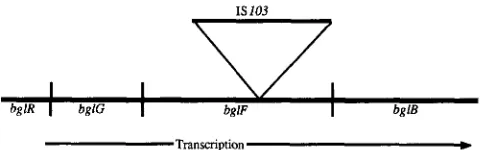
FIGURE 1.-Structure of the bgl operon in strain ~ 3 4 2 . IS103 is inserted into the bglF gene.
1987). We recently reported that the x342 line of E. coli carries a 1.4-kb foreign DNA fragment inserted into the bgEF gene (PARKER, BETTS and HALL 1988) (Figure 1). Recent results (B. G. HALL, unpublished data) show that this foreign DNA is a newly discovered insertion sequence now designated IS 103. Since strain x342 carries the wild-type bglR’ allele (PARKER, BETTS and HALL 1988), two events (excision of IS103 from within bglF and activation of bglR) are required to permit the strain to grow on salicin. Since we had measured the spontaneous rate of bglR’ + bglR+ as 2-6 X lo-’ per cell division, and had shown that the rate of excision of IS103 from within bgZF was
<2
X10”’ per cell division (PARKER, BETTS and HALL 1988), it seemed unlikely that strain x342 colonies consisting of about l o 9 cells would generate salicin- utilizing (Sal+) papillae.
In this paper I show that after less than 2 weeks of incubation, 60% of the x342 colonies on MacConkey salicin medium generate Salf papillae. T h e source of these double mutants is determined, and the evolu- tionary implications of the results are discussed.
MATERIALS AND METHODS
Genetic nomenclature for the bgl operon: Until recently “bglC” was used to designate the gene specifying the @-
glucoside transport system and “bgls” to designate the gene specifying a positive regulatory locus (PRASAD and SCHAE- FLER 1974). T w o recent papers (MAHADEVAN, REYNOLDS and WRIGHT 1987; SCHNETZ, TOLOZYKI and RAK 1987) reversed those definitions. In order to avoid further confu- sion, BARBARA BACHMANN, curator of the E. coli Genetic Stock Center, has renamed these loci (B. BACHMANN, per- sonal communication). In this paper we use the new desig- nations as they will appear in the next edition of the linkage map of E. coli. bglF now designates the @-glucoside-specific enzyme I1 of the phosphotransferase system, i e . , the trans- port protein. bglG now designates the gene encoding the positive regulator of expression of the bgl operon. bglB, whose definition is unchanged, specifies phospho-o-glucosi- dase B.
Multiple Spontaneous Mutations 889
requirement would have compromised salicin selection ex- periments. The lacZA4680 allele was introduced at the same time for the purposes of another study. As a result of this manipulation, strain x342LD is HfrC lacZA4680 metBl relA
SPOT X- bglF::ISl03. Strain XSWl is bglRo bglF+ and is a spontaneous Sal- IS103 excision mutant of x342LD (see Figure 3) whose selection is described in the text. Strain x342LDC is a derivative of strain x342LD that was made resistant to chloramphenicol by the introduction of Tn9. Strains XSW 1 s and XSWlN are, respectively, streptomy- cin-resistant and nalidixic acid-resistant mutants of strain XSW 1 selected by plating strain XSW 1 onto antibiotic me- dia. The streptomycin and nalidixic acid resistance alleles were transduced by phage P1 into strain x342LD to produce strains x342LDS and x342LDN, respectively. Strain CSH62T is HfrH thi Abgl-pho201 tna::TnlO (KRICKER and HALL 1984).
Culture media and conditions: Liquid cultures were grown at 37" with aeration either in L-broth (MILLER 1972) or in 0.01-0.05% (w/v) glucose minimal medium. Minimal medium consisted of a phosphate-buffered mineral salts solution (HALL and BETTS 1987). Solid media included 1.5% agar. Salicin was used at a concentration of 0.1 % (w/v) and methionine at 100 pg/ml. MacConkey salicin indicator plates contained 1% (w/v) salicin and were prepared from MacConkey agar base according to the manufacturer (Difco). MacConkey base plates contained no added sugar.
Molecular techniques: Methods for the preparation of genomic and plasmid DNAs, isolation and labeling of probe DNA, and DNA/DNA hybridizations were previously de- scribed (HALL and BETTS 1987).
Physical manipulation of bacterial colonies: Colonies to be manipulated were inoculated from 0.5-pl drops contain- ing 10-20 cells unless otherwise specified. In some experi- ments colonies were inoculated onto the surface of agar medium in 48-well microtiter plates so that there was a single colony in each well. Those colonies were resuspended by pipetting sterile buffer up and down on the surface of the medium using a Pipetman automatic micropipette. In other experiments colonies were inoculated onto the surface of sterile Millipore HAWG 0.45-p filters resting on the surface of medium in 60-mm Petri dishes. Such filters could subsequently be transferred intact to other media. Colonies were resuspended by slicing the filter into sections contain- ing single colonies and vortexing the slice in 1 ml of sterile medium.
Fluctuation tests: Spontaneous mutation rates were meas- ured in growing cells by the fluctuation test method (LURIA and DELBRUCK 1943). Briefly, a large number of cultures (usually 60) were grown from small inocula (10-20 cells) to a final density that was limited by the concentration of glucose in the minimal medium. The entirety of each culture was plated onto selective medium, and the number of mu- tations (as contrasted with the number of mutants) in the culture was estimated from the proportion of cultures that contained no mutants (Po). Several (usually 10) identical cultures were diluted appropriately to determine the total number of cells in each culture plated. The mutation rate (mutations per cell) was calculated as (-ln2)(lnPo/(total cells per culture) (LURIA and DELBRUCK 1943). In experiments where the mutation rate was so high that there were no cultures without mutants, the method of LEA and COULSON (1949) was employed using the graphic method described by KOCH (1 982).
RESULTS AND DISCUSSION
Strains XSWl (bglRo bglF+, i.e., wild type for the bgl operon), 101 1A (bglR+ ISIO3::bglF) a n d x342LD
g
1 . 0 --
-
-
n5
5
(RP 0 . 8
-
0 . 6 -
-
C0
0 0 0 . 4 -
O
-
.I-
.'"
0 XSWl
A
1011AX342LD
0 2 4 6 8 1 0 1 2 1 4 16
D a y
FIGURE 2.-Time course of Sal' papillae formation on Mac- Conkey salicin medium. Strain X S W l requires only a bglRo +
bglR+ mutation to form Salf papillae, strain 101 1A requires only excision of IS103 from within bglF to form Sal+ papillae, while strain x342LD requires both mutations.
(bglR' ISIO3::bglF) were plated onto MacConkey sal- icin medium at about 50 cells per plate and incubated a t 30". T h e plates were observed daily through a dissecting microscope and the proportion of colonies with Sal+ papillae was recorded (Figure 2). To be sure that the papillae were actually the results of mutations a t t h e bgl operon, the map positions of nine independ- e n t Sal+ mutants isolated from papillae on the surface of x342LD colonies were determined. Strain
CSH62T carries T n I O in t h e tna (tryptophanase) gene adjacent to a deletion of the bgl operon and the tetracycline-resistance determinant of T n I O co-trans- duces about 98% of the time with the bgl deletion
(KRICKER a n d HALL 1984). T h e n i n e Sal+ mutants were transduced with bacteriophage P1 lysates from strain CSH62T a n d tetracycline-resistant transduc- tants were selected and scored for salicin fermenta- tion. In each case, 298% of the Tet' transductants were Sal-. This indicates that the Sal+ mutants of x342LD were indeed the result of mutations in t h e bgl operon, and were therefore spontaneous bglR+ bglF+ double mutants.
Basis of spontaneous double mutants: Based upon t h e previously measured mutation rates (PARKER, BETTS a n d HALL 1988), the expected probability of a double mutation is (6 x lo-')
(<2
x 10"') or <1.2 X890 B. G . Hall
TABLE 1
Mutation rates
Permits
Strain Genotype Mutation required growth on: during growth' in coloniesb Mutation rate Mutation rate
HfrC bglR" b g l P bglR'+bglR+ Salicin 4 x
101 1A bglR+ bglF:IS103 bglF:ISlO3+bglF+ Salicin <2 x l O " 2
~ 3 4 2 L D bglRobglF:IS103 BOTH Salicin <1 x 10-11 1 x
~ 3 4 2 L D Wild type Vaine resistance High valine 2 X 10⁻⁷ 3 X
Estimated from LURIA-DELBRUCK fluctuation tests as described in MATERIALS AND METHODS.
The rates estimated in colonies are not directly comparable to rates estimated during growth. Rates estimated during growth are mutations per cell division. Since the cells in colonies are not dividing rapidly, the rate in colonies is simply mutations per cell. The difference, however, is only a factor of In2 = 0.7-fold.
Estimated from the proportion of colonies that contained no Sal+ mutants as described in the text.
Estimated from the frequency of valine-resistant mutants in colonies by the method of LEA and COULSON (1 949). tation alone could provide the additional growth re-
quired to condition the second mutation. Excision of IS103 from within bglF would simply restore a wild- type genotype in which the bgl operon still cannot be expressed. By itself, a mutation from bglRo to bglR+ would not permit transport of P-glucosides because the bglF gene would still contain IS103. One would therefore have to postulate the unlikely case that the first mutation conditioned a special time-dependent, replication-independent mutation process for the sec- ond mutation. The first explanation, an increased mutation rate, thus seemed more likely.
Measurement of spontaneous mutation rates: To establish a basis of comparison, spontaneous mutation rates were measured in growing cultures by the LU- RIA-DELBRUCK fluctuation test (Table 1). T h e muta- tion rate for bglRo + bglR+ was very similar to that previously determined (PARKER, BETTS and HALL 1988), and the rate for excision of IS 103 from within bglF remained too low to detect.
In order to determine whether any changes in mu- tation rates at the bgl operon were specific to that operon, or whether they were accompanied by changed mutation rates at unrelated loci, the rate of mutation to valine resistance was also determined. E . coli K12 is sensitive to inhibition by high concentra- tions (40 &ml) of valine which acts as a false feedback inhibitor of isoleucine biosynthesis. Mutations at sev- eral loci eliminate this sensitivity, and the mutation rate to valine resistance reflects all types of mutations. Measuring the frequency of valine-resistance muta- tions has an advantage over measuring mutations that confer resistance to antibiotics because newly arisen mutants that are plated onto valine medium before they have had a chance to divide are not killed by the inhibitor and eventually form colonies. In contrast, newly arisen antibiotic resistance mutants must undergo several cell divisions before they become phenotypically resistant (phenotypic lag).
T o compare the mutation rates in growing ~ 3 4 2 L D cells with rates in x342LD colonies on MacConkey salicin medium, individual 20-day colonies were sus-
pended in 1 ml of sterile buffer and plated onto salicin minimal medium. A 10-pl aliquot of each suspension was diluted and plated onto rich medium to determine the number of cells per colony. Seven of the 27 colonies tested contained no Sal+ mutants and the mean number of viable cells in these colonies was 6.7
X lo', while the mean number of viable cells in colonies containing Sal+ cells was 2.5 X 10'. On the assumption that the larger value represents Sal+ mu- tants that grew at the expense of salicin, the lower value was used to estimate the mutation rates within colonies shown in Table 1 according to the equation
p = -lnPo/(cells per colony). T h e results show that conditions present in aged colonies on MacConkey salicin plates do not increase the general mutation rate as estimated from mutations to valine resistance. On the other hand, the frequency of the Sal+ double mutants is about 12 orders of magnitude higher than expected on the basis of the mutation rates measured during growth.
Do the two mutations in the bgl operon occur simultaneously or sequentially? Despite our current understanding of the bgl operon, we know very little about the conditions that obtain within a colony on a plate containing a mixture of resources. It is certainly possible that, although neither mutation alone permits growth on salicin minimal medium, one or both of the mutations might allow sufficient growth to permit the Sal+ phenotype to arise via sequential mutations. If this were the case, then within those colonies that have Sal+ papillae, a significant portion of the Sal- cells should have one of the two required mutations.
Multiple Spontaneous Mutations 89 1
1
2
3
45
6
7
8
9 1 0 1 1 1 2 1 3
3.1
kb-
1.7
kb-
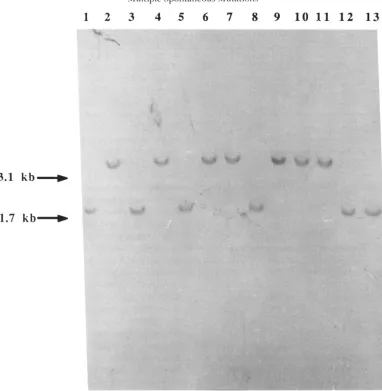
FIGURE 3,"Excision of I S 1 0 3 from within 6gfF in some Sal- derivatives of x342LD. Genomic D N A was digested with NciI, electropho- resed, transferred to blotting membranc, and hybridired to a PuuII-HpaI fragment o f the 6gl operon. Lane 1: HfrC (wild-type 6gl operon). Lane 2: x 3 4 2 (IS 103::bglF). Lanes 3-6: XSW 1, XSW2, XSW4, XSW5 (Sal- isolates obtained from colony A that had formed papillae on MacConkey salicin medium). Lanes 7-1 1: XSW6, XSW7. XSWA, XSWS, XSWlO (Sal- isolates obtained from colony B that had formed papillae on MacConkey salicin medium). Lane 12: XSR 1 (a Sal' isolate from colony A). Lane 13: XSR2 (a Sal+ isolate from colony B). Strains XSM'I , XSW4 and XSW7 all have experienced excision of IS 103 and are genetically wild type at the 6gl operon.
digested, subjected to agarose gel electrophoresis, blotted, and probed with a fragment of bgl operon DNA (Figure 3). IS103 had excised from within the bgl operon in t w o of the four Sal- isolates from colony A and in one Sal- isolate from colony B. As expected, IS 103 had excised from within the bgl operon in both of the Sal+ isolates.
These results suggest that the t w o mutations arise sequentially rather than simultaneously. To obtain a clearer picture of the dynamics of this process, indi- vidual ~ 3 4 2 L D colonies growing on MacConkey sali- cin medium were isolated on a daily basis for 13 days following inoculation, 5% of the colony suspension was plated onto salicin minimal medium in order to estimate the number of Sal+ cells in each colony, and another 1 % was diluted and plated in order to esti- mate the total number of viable cells in the colony (Figure 4). The remainder of each colony was stored frozen at -70 O
.
892 B. G. Hall
1 0 1 0 7
109
.
...
.. .
.
.
108
!
.
I.
,
.
].
I.
].
I.
].
0 2 4 6 1 0 8 12 1 4
Day
FIGURE 4.-Viable cells in ~ 3 4 2 L D colonies growing on Mac- Conkey salicin medium. T h e abscissa shows the age of the colonies in days.
TABLE 2
Kinetics of appearance of IS103 excision mutants Days Colonies Sal- excision Sal+ excision plating sions" after
with exci- Cells in cells in colony colonyb
cells in
colony'
8 1 6.5 X l o 8 5.2 X lo6 9 1 3.4 x 10' 4.9 x lo6
ND ND 1 1 1 1.8 X 10' 2.3 X lo6 N D 12 3 3.8 x 10' 3.4 x 10' 9.9 x lo6
1.8 X 10' 3.1 X 10⁷ ND 2.0 X 10⁸ 6.5 x 10⁷ ND
3.5 X 10⁸ 1.6 X 10⁷ 1.9 X 10⁸ 2.1 X 10⁸ 7.9 x 10⁷ 1.5 X l o 5 1 3 6 8.6 X 10' 4.3 X 10' 5 . 5 X lo7
1.3 X 10' 2.1 X IO6 ND 1.7 X 10' 3.1 X lo7 N D 1.9 x l o H 1.2 x 10⁷ ND
Six colonies were assayed on each day.
N o excisions or Sal+ mutants were detected in samples from days 1 through 7 . T h e lower limit of detection was 2 X lo6 cells with excisions in a colony.
' ND, none detected. T h e lower limit of detection was 20 Sal+ cells in a colony.
first Sal+ mutant was detected on day 12.
Fitness of excision mutants within
~342LD
colo- nies: T h e excision mutants present within a colony could either be siblings descended from a single mu- tant cell (model A of Figure 5), or could represent a large number of mutants that arose independently late in the life of the colony (model B of Figure 5).T h e time required for strain 10 1 1A (bgZR+ IS Z03::bglF) to form papillae (Figure 2) suggests that excisions do not begin to occur prior to five days after inoculation, ie., after colony growth has stopped. In order for an excision mutant that arose on day 3 to reach a density of 5 X l o 6 cells by day 8, the excision mutant (ie., a wild-type cell) would have to achieve a doubling time of 5.4 hr within a colony. In order to measure the growth rate of an excision mutant within a colony, a reconstruction experiment was conducted.
"Mixture" colonies were prepared by inoculating 0 .5- p1 drops onto filters on the surface of MacConkey salicin plates containing chloramphenicol. Each drop contained about 1 O5 x342LDC (chloramphenicol-re- sistant) cells and about 50 streptomycin-resistant or nalidixic acid-resistant cells. Four such mixtures were prepared in which the minority population was x342LDS (Strr), x342LDN (Nal'), XSWlS (Strr), or XSWlN (Nay), and filters were inoculated with 6 drops of each mixture spaced at even intervals about its circumference. T h e plates were incubated for 4 days during which time the x342LDC cells formed colonies of about 10' cells, but the minority chlor- amphenicol-sensitive population did not increase in number. After 4 days the filters were transferred to spent MacConkey salicin plates without chloramphen- icol. (Spent plates were prepared by inoculating drops containing x342LDC onto filters on the surface of MacConkey salicin plates and incubating those plates in parallel with the chloramphenicol plates.) At this point the colonies were the equivalent of 4-day old colonies in which a few excision mutations had oc- curred. Daily thereafter, colonies from one filter from each set were suspended and plated onto L agar containing either streptomycin or nalidixic acid as appropriate. T h e number of XSWl (IS103 excision mutant) cells within a colony was equivalent to the number of colonies on the plates containing strepto- mycin or nalidixic acid. Mixtures in which the minor- ity streptomycin-resistant or nalidixic acid-resistant mutants were x342LDS or x342LDN served as con- trols. Figure 6 shows that XSW 1 cells did not increase in number over the period of the experiment. Their failure to do so cannot be attributed to the drug- resistance mutations that were used to monitor their frequency, since the drug-resistant mutants of x342LD were, if anything, slightly fitter than the XSW 1 mutants. Furthermore, when two papillae that had formed on the surface of colonies containing XSWlN were tested, the Sal+ mutants were chlor- amphenicol-resistant and nalidixic acid-sensitive, showing that they had arisen from the majority x342LDC population rather than from the preexist- ing XSW 1 N minority population in the colonies.
Since excision mutants like XSWl do not grow within a colony consisting primarily of x342LD cells, the excision mutants that are present in an 8-12-day colony must be the result of independent excision events as shown in model B of Figure 5.
Multiple Spontaneous Mutations
A
I
I
II
4
3 Days 1 2
I
II
3 Days
B O 0
0 XSWlN
H X342LDN
A XSWlS
A x342LDS
,
Total Cells x 1 0
0
4 0 0
3 0 A 0
10
2 4 6 8 1 0 1 2 1 4 1 6
D.Y
FIGL'RE 6.-Change i n frequency of IS103 excision mut;mts within ~ 3 1 2 1 . I ) C colonies over time. XSW'l N and SSM'IS are nalr and str'. rcspectively, mutants of SSM'I: x3421.DN and x342I.DS are control strains bearing the same nal' a n d str' mutations. excision mutants provides a population of wild-type cells sufficiently large that a replication-independent bglR" += bglR+ mutation occurs in one of them and generates a Sal+ cell that grows by utilizing salicin to form a papilla.
An alternative explanation is that the majority of Sal+ cells arise from those IS103 excisions that occur in the bglR+ mutants present within the colony as a result of mutations that occurred during the growth
1 2
FIGURE 5 , " T w o models for the appear- ance o f IS103 excision mutants within x3421.D colonies o n MacConkev salicin me- dium. T h e stippled area represents the pop- ulation of ~ 3 4 2 1 ~ 1 ) cells in the colony over timc. T h e white area represents the popt11;l-
t i o n of excision mutants. T h e gray area rep- resents the population of !%I+ mutants that forms a papill;l. In model A, an excision mu- tation occurs shortly after the colony has stopped growingantl theexcision mutant con- tinues to grow. so that a l l excision mutants are descended from the original mutant. In model R, ;I large number of excision mutants arisc independently larc in the life of the colony, so that excision mutants are n o more closely related to each other than they are to other cells in the colonv.
894 B. G. Hall
0
0 0
I I 1 I I 1
0 5 10 15 20 25 30
Days
FIGURE 7.-Viable cells per colony in colonies growing on MacConkey base medium.
makes it unlikely that it is the usual sequence of events. IS 103 is never observed to excise in growing. cells, and within colonies the excision probability seems to depend on time rather than cell divisions. This is not particularly surprising, in that the activities of trans- position and excision proteins of IS103 could well respond to the physiological conditions that exist within a colony that has depleted its environment of nutrients. What is surprising is that an event that is so rare in growing cells (<2 X 10"' per cell, Table 1) should occur so frequently (in 1-89% of the cells, Table 2) in aged colonies.
Salicin has been tacitly assumed to play no role in generating Sal+ papillae, only in the selection that favors Sal+ double mutants and leads to papillae. To test this reasonable expectation, x342LD cells were inoculated onto MacConkey agar base medium, which is identical to MacConkey salicin except that no sugar is present. Colonies were suspended periodically to determine the number of viable cells (Figure
7)
and, after 28days of incubation, 20 colonies were suspended and the entirety of each suspension was plated onto salicin minimal medium in order to detect any Sal+ mutants that might have arisen. None were detected. If, at 13 days, each colony contained on average one Sal+ mu- tant and no additional mutants were generated, then the Sal+ mutants would be subject to cell death at the same rate as the other cells in the colony and by 28 days there would be an average of about 0.13 Sal+ cells per colony. In that case, from the Poisson distri- bution the proportion of colonies with no mutants would be e-"'' or 0.878 and the probability of failing to detect any Sal+ mutants in 20 colonies would be 0.87820 or 7.4%.
Even if the Sal+ mutants were missed by chance alone, the excision mutants should still constitute about 10% of the cells in colonies on MacConkey base. Thirty-two days after inoculation onto MacConkey agar base, 18 colonies were suspended, diluted, and plated onto MacConkey salicin medium to detect ex-
cision mutants by their ability to form papillae within 3 days. A minimum of 200 colonies were screened from each of the original 18 colonies and no excision mutants were detected. If excision mutants consti- tuted as little as 0.002 of the population in these colonies, then there would be an average of 0.4 exci- sion colonies (0.002 X 200) per suspension plated and only 67% of the suspensions would be expected to contain no excision colonies. Thus, the probability that no excisions would have been detected is 0.67" or 0.00074.
From these experiments it is concluded that the excision of IS103 from within bglF does not occur in the absence of salicin in the medium.
CONCLUSIONS
T h e results presented here warrant consideration from a variety of perspectives.
First is the observation that mutation rates meas- ured in growing cultures need not, and probably do not, reflect mutation rates under other conditions. This is of particular importance in considering muta- tion rates in adaptive evolution. It is clear that bacteria spend little time in exponential growth conditions. E . coli are estimated to double once or twice a day in nature, rather than once or twice an hour. It seems likely that conditions within old colonies on nutrition- ally depleted solid surfaces are more representative of typical natural conditions than are conditions in well aerated liquid media with nutrients in gross excess and the temperature held at an optimal 37". There have been almost no studies of mutation rates under these suboptimal conditions, and those that have been done suggest that mutation rates are different from those measured in growing cells (RYAN 1955; RYAN et al. 1959).
Second is the surprising observation that, within a colony, a usually stable insertion sequence can excise from within a gene in over lo6 individuals in a short time. For the population, the result of these precise excisions (the only ones detected) is the generation of genetically identical but independently derived mu- tants. This contravenes a basic assumption in con- structing phylogenies, that a set of indistinguishable mutants within a population reflects a single event that occurred earlier in the history of the population, all the mutants descending from a single ancestor. In this case the mutants are no more closely related to each other than they are to any other randomly chosen member of the population.
Multiple Spontaneous Mutations 895
within bglF has been observed only on MacConkey salicin medium, and not on MacConkey medium with- out sugar. Excision itself is not advantageous. Even on MacConkey salicin medium, an advantage is real- ized only when a second mutation (bgZRo + bglR+) occurs. This has the appearance of anticipatory evo- lution, a phenomenon that would itself be strongly selected, but for which it is very difficult to imagine a molecular mechanism (but see CAIRNS, OVERBAUGH and MILLER 1988). Despite appearances, it is not necessary to invoke anticipatory evolution to explain these results. Physiological regulatory feedback loops could modulate the probabilities of mutations at spe- cific loci when the cell is under stress, and thereby produce results similar to these. We now take for granted the notion that gene expression is regulated,
ie., subject to modulation by environmental condi- tions, but this notion was not always in mind (KELLER
1983). We now have to examine the notion implied by these results, that mutation, like other biological processes, is subject to regulation by environmental factors.
There are two reasons to believe that these obser- vations are not simply reflections of the unusual biol- ogy of a particular mobile DNA element, ISI03, which have no real relevance to evolution or to mu- tation rates in general.
First, DNA rearrangements mediated by and in- cluding the transpositions of mobile DNA elements are a significant portion of the mutational repertoire of cells. That repertoire also includes base pair substi- tutions, large and small deletions, large and small additions, inversions, and (in higher organisms) trans- locations. All of these forms of mutation can either increase or decrease the effectiveness of a particular gene. In higher organisms, rearrangements that move genes between euchromatic and heterochromatic re- gions can dramatically affect levels of expression (SPOFFORD 1976; RUSHLOW and CHOVNICK 1984; RUSHLOW, BENDER and CHOVNICK 1984). Major re- arrangements are often seen when comparing genetic structures of closely related species (discussed in ALEXANDER 1976 and HESS 1976) and have been implicated in speciation mechanisms (WHITE 1978). All of these evolutionarily important rearrangements can be mediated by mobile DNA elements. Insertion sequences are best known for mutating genes by dis- rupting coding sequences (JORDAN, SAEDLER and STARLINGER 1968; SHAPIRO 1969; SAEDLER et al. 1972), but many other effects have been demon- strated. Insertion sequences can provide promoters for other genes (CIAMPI, SCHMID and ROTH 1982; PRENTKI et al. 1986), they can activate cryptic genes by inserting into upstream regions (REYNOLDS, FEL- TON and WRIGHT 1981; REYNOLDS et al. 1985; L. L. PARKER and B. G . HALL, unpublished results), they
can promote replicon fusions (BARSOMIAN and LESSIE 1986), and they can reduce the level of expression of genes by topological regulation when they are as far away as 5 kbp from the affected coding region (STOKES and HALL 1984). Insertion sequences can generate both inversions and deletions (CRAIG and KLECKNER
1987; KLECKNER 1981), both of which can lead to gene fusions and thereby potentiate novel genetic functions. In one case, excision of IS5 generated a short deletion that has been shown to increase the expression of a nearby gene and thereby to alter fitness (MILLER, DYKHUIZEN and HARTL 1988). Al- though we do not yet know the extent to which the phenomena reported here can be generalized to other mobile elements and other genes, it is clear that trans- position of mobile DNA elements is evolutionarily important and particularly warrants investigation when that transposition is related both to adaptation and to environmental conditions.
Second, the phenomena reported here are not unique. Several years ago SHAPIRO (1 984) pointed out that in a strain in which excision of another mobile element, bacteriophage Mu, fused the arabinose and lactose operons to permit growth on lactose-arabinose medium, the excision did not occur in growing cells. In striking similarity to this study, the excision of Mu occurred only several days after the cells had been plated onto selective medium, and did not occur dur- ing the same period when the cells were plated onto medium that did not contain both lactose and arabi- nose. J. CAIRNS has been studying similar phenomena with several genetic systems in E . cola, and has con- cluded that there is an entire class of mutations that occur only when they are advantageous to the cell (CAIRNS, OVERBAUGH and MILLER 1988; J. CAIRNS, personal communication). Indeed, this entire study, begun as a study of apparently simultaneous multiple mutations, was stimulated by discussion with CAIRNS. The results of SHAPIRO (1984) and CAIRNS, OVER- BAUGH and MILLER (1988) can no longer be classed as anomalies uniquely associated with Mu.
896 B. G . Hall
have ignored the possibility that mutation rates might be highly variable and subject, like other cellular processes, to environmental modulation. These re- sults suggest that spontaneous mutation is a more complex process than we have believed, that mutation rates are not biological constants, and that probabili- ties of mutation are modulated by normally encoun- tered environmental factors.
T h e second lession is that evolutionary biologists need to critically examine the assumptions that un- derlie methods of deducing evolutionary rates and of constructing phylogenetic trees. If the same mutation can, under appropriate selective conditions, occur in a large number of independent individuals (as occurs with excision of IS103 from within bglF), then indi- viduals that share derived characters are not necessar-
ily more closely related to each other than they are to other members of the population. If the probabilities of particular mutations are subject to environmental modulation, then the number of observed differences between two sequences may be completely unrelated to the time since they diverged.
This study was supported by U . S. Public Health Service grant GM 371 10. I am grateful to P. W. BETTS for his expert technical assistance. I am particularly grateful to J. CAIRNS whose ideas stimulated this study, and to CHUNG-I WU who suggested a critical experiment. I am grateful to K. HOLSINCER and S. PACALA for their encouragenlent. I am indebted to E. F. KELLER for mentioning feedback loops to me in the context of thinking about mutation rates.
LITERATURE CITED
ALEXANDER, M. L., 1976 T h e genetics ofDrosophilavirilis. Genet. Biol. Drosophila 1: 1366-1427.
BARSOMIAN, G., and T. G. LESSIE, 1986 Replicon fusions pro- moted by insertion sequences on Pseudomonas cepacia plasmid pTGL6. Mol. Gen. Genet. 204: 273-280.
BREGLIANO, J. C., and M. G. KIDWELL, 1983 Hybrid disgenesis determinants. pp. 363-410. In: Mobile Genetic Elements, Edited by J . SHAPIRO. Academic Press, New York.
CAIRNS, J., J. OVERBAUCH and S. MILLER, 1988 T h e origin of mutants. Nature 335: 142-145.
CIAMPI, M. S., M. B. SCHMID and J. R. ROTH, 1982 Transposon T N l O provides a promoter for transcription of adjacent se- quences. Proc. Natl. Acad.Sci. USA 79: 5016-5020.
CLARKE, P. H., 1984 Amidases of Pseudomonas aeruginosa. pp. 187-254. In: Microorganisms as Model Systems for Studying Ewo- lution, Edited by R. P. MORTLOCK. Plenum Press, New York. CRAIG, N., and N. KLECKNER, 1987 Transposition and site-specific
recombination. pp. 1054-1070. In: Escherichia coli and Salmo- nella t ~ p h i m u ~ u ~ , Cellular and Molecuiar Biology, Edited by F. C. NEIDHARDT. American Society for Microbiology, Washing- ton, DC.
FEDEROFF, N., 1983 Controlling elements in maize. pp. 1-63. In:
Mobile Genetic Elements, Edited by J. SHAPIRO. Academic Press, New York.
HALL, B. G., 1982a Evolution on a petri dish. Evol. Biol. 15: 85- 150.
HALL, B. G., 1982b Chromosomal mutation for citrate utilization in Escherichia coli K12. J. Bacteriol. 151: 269-273.
HALL, B. G . , 1983 Evolution of new metabolic functions in labo- ratory organisms. pp. 234-257. In: Evolution of Genes and
Proteins, Edited by M . NEI and R. K. KOEHN. Sinauer Assoc., Sunderland, Mass.
HALL, B. G., and P. W. BETTS, 1987 Cryptic genes for cellobiose utilization in natural isolates of Escherichia coli. Genetics 115: 431-439.
HALL, B. G., and N. D. CLARKE, 1977 Regulation of newly evolved enzymes. 111. Evolution of the ebg repressor during selection for enhanced lactase activity. Genetics 85: 193-201.
HARTL, D. L., 1986 Evolution and tinkering: the molecular ge- netics of bacterial adaptation. pp. 161-175. In: Evolutionary Perspectives and the New Genetics, Edited by H. GERSHOWITZ, D. L. RUCKNAGEL and R. E. TASHIAN. Alan R. Liss, New York. HARTL, D. L., M. MEDHORA, L. GREEN and D. E. DYKHUIZEN,
1986 T h e evolution of DNA sequences in Excherichia coli.
Phil. Trans. R. SOC. Lond. B 312: 191-204.
HESS, O . , 1976 Genetics of Drosophila hydei Sturtevant. Genet. Biol. Drosophila 1: 1343-1363.
JORDAN, E., H. SAEDLER and P. STARLINGER, 1968 0' and strong polar mutations in the gal operon are insertions. Mol. Gen. Genet. 102: 353-363.
KELLER, E. F., 1983 A Feeling f o r the Organism. W. H. Freeman, KLECKNER, N., 1981 Transposable elements in prokaryotes. KOCH, A. L., 1982 Mutation and growth rates from Luria-Del-
KRICKER, M., and B. G. HALL, 1984 Directed evolution of cello- biose utilization in E . coli K12. Mol. Biol. Evol. 1: 171-182. LEA, D. E., and C . A . COULSON, 1 9 4 9 T h e distribution of the
numbers of mutants in bacterial populations. J. Genet. 49: LURIA, S. E., and M. DELBRUCK, 1943 Mutations of bacteria from
virus sensitivity to virus resistance. Genetics 28: 491-51 1. MAHADEVAN, S., A. E. REYNOLDS and A. WRIGHT, 1987 Positive
and negative regulation of the bgl operon of Escherichia coli. J. Bacteriol. 169: 2570-2578.
MCCLINTOCK, B., 1965 The control of gene expression in maize. Brookhaven Symp. Biol. 18: 162-184.
MILLER, J. H., 1972 Experiments in Molecular Genetics. Cold Spring Harbor Laboratory, Cold Spring Harbor, N.Y.
MILLER, R. D., D. E. DYKHUIZEN and D. L. HARTL, 1988 Fitness effects of a deletion mutation increasing transcription of the 6- phosphogluconate dehydrogenase gene in Escherichia coli. Mol. Biol. Evol. 5: 691-705.
MILLER, R. D., D. E. DYKHUIZEN, L. GREEN and D. L. HARTL, 1984 Specific deletion occurring in the directed evolution of 6-phosphogluconate dehydrogenase in Escherichia coli. Genetics 108: 765-772.
MORTLOCK, R. P. (Editor), 1984 Microorganisms as Model Systems f o r Studying Evolution. Plenum Press, New York.
PARKER, L. L., and B. G. HALL, 1988 A fourth E . coli gene system with the potential to evolve 6-glucosidase utilization. Genetics 1 1 9 485-490.
PARKER, L. L., P. W. BETTS and B. G. HALL, 1988 Activation of
a cryptic gene by excision of a DNA fragment. J. Bacteriol. 1 7 0 218-222.
PFEIFER, F., M. BETLACH, R. MARTIENSSEN, J. FRIEDMAN and H. BOYER, 1983 Transposable elements of Halobacler halobium.
Mol. Gen. Genet. 191: 182-188.
PRASAD, I., and S. SCHAEFLER, 1974 Regulation of the 8-glucoside system in Escherichia coli K-12. J. Bacteriol. 1 2 0 638-650. PRENTKI, P., B. TETER, M. CHANDLER and D. J. GALAS,
1986 Functional promoters created by insertion of transpos- able element I S I . J. Mol. Biol. 191: 383-393.
REYNOLDS, A. E., J. FELTON and A. WRIGHT, 1981 Insertion of DNA activates the cryptic bgl operon of E. coli K-12. Nature
REYNOLDS, A. E., S. MAHADEVAN, J. FELTON and A. WRIGHT,
San Francisco.
Annu. Rev. Genet. 15: 341-404.
briick fluctuation tests. Mutat. Res. 95: 129-143.
264-285.
Multiple Spontaneous Mutations 897
1985 Activation of the cryptic bgl operon: insertion se- quences, point mutation and changes in superhelicity affect promoter strength. pp. 265-277. In: Genome Rearrangement
(UCLA Symposium on Molecular and Cellular Biology-New Series, Vol. 20), Edited by M. SIMON and 1. HERSKOWITZ. Alan R. Liss, N.Y.
RUSHLOW, C. A , , and A. CHOVNICK, 1984 Heterochromatic posi- tion effect at the rosy locus of Drosophila melanogaster: cytolog- ical, genetic and biochemical characterization. Genetics 108: RUSHLOW, C. A,, W. BENDER and A. CHOVNICK, 1984 Studies on the mechanism of heterochromatic position effect at the rosy locus of Drosophila melanogaster. Genetics 108: 603-61 5. RYAN, F. J., 1955 Spontaneous mutations in non-dividing bacte-
ria. Genetics 40: 726-738.
R Y A N , F. J., R. RUDNER, T. NACATA and Y. KITANI, 1959 Bacterial mutation and the synthesis of macromolecules. 2. Verebungsl. 9 0 148-158.
SAEDLER, H., J. BESEMER, B. KEMPER, B. ROSENWIRTH and P. STARLINCER, 1972 lnsertion mutations in the control region of the Gal operon of E. coli. Mol. Gen. Genet. 115: 258-265. SAEDLER, H., G. CORNELIS, J. CULLUM, B. SCHUMACHER and H .
SOMER, 1980 IS I-mediated DNA rearrangements. Cold Spring Harbor Symp. Quant. Biol. 45: 93-98.
589-602.
SCHNETZ, K., C. TOLOCZYKI and B. RAK, 1987 &glucoside ( B g l )
operon of Escherichia coli K-12: nucleotide sequence, genetic organization, and possible evolutionary relationship to regula- tory components of two Bacillus subtilis genes. J. Bacteriol. 169 SCORDILIS, G. E., H. REE and T. G. LESSIE, 1987 Identification of transposable elements which activate gene expression in
Pseudomonas cepacia. J. Bacteriol. 169: 8-13.
SHAPIRO, J. A., 1969 Mutations caused by the insertion of genetic material into the galactose operon of Escherichia coli. J. Mol. Biol. 40: 93-105.
SHAPIRO, J. A . , 1984 Observations on the formation of clones containing araB-lacZ cistron fusions. Mol. Gen. Genet. 194 79-90.
SPOFFORD, J. B., 1976 Position-effect varigation in Drosophila.
Genet. Biol. Drosophila 1: 955-1018.
STOKES, H . W., and B. G. HALL, 1984 Topological repression of gene activity by a transposable element. Proc. Natl. Acad. Sci. USA 81: 6115-6119.
WHITE, M. J. D., 1978 Modes of Speciation. W. H. Freeman, San 2579-2590.
Francisco.