Verbs and (sub)Event Structure: A Case Study from Italian
∗
Francesca Strik Lievers
Department of Chinese and Bilingual Studies, The Hong Kong Polytechnic University, Hung Hom, Kowloon, Hong Kong
Dipartimento di Linguistica, Università di Pisa, Via Santa Maria 36, Pisa, Italy [email protected]
Abstract. In this paper, I try to show the advantages of analyzing events in terms of subevent structure, by taking into consideration the case of a specific class of verbs: transitive and intransitive verbs which obligatorily require the presence of a predicative complement (e.g., English seem, consider). The proposed analysis is exemplified with data from Italian. Two verbs are described in detail: rimanere, ‘remain’ and rendere, ‘make’. It is shown that subevent structure representation is useful for the description of the different uses and meanings of these verbs. This type of description can also be the basis for an accurate treatment in computational semantic lexica.
Keywords: event structure, Italian, predicative complement, verbs, Generative Lexicon.
1
Introduction
The relationship between events1 and verbs is notoriously strong, since in most cases verbs lexicalize event predicates, and event predicates are lexicalized by verbs. However, the class of verbs is not uniform (although at least in Italian and in other European languages it is easily defined on the basis of morphological criteria). And, at the same time, it is not exclusively verbs that can be used to code events. A brief overview of some cases of mismatch between verbs and (lexicalizations of) events will be useful for defining the class of verbs with predicative complement in Italian.
2
The place of verbs with predicative complement in the verbal lexicon
The most relevant distinction is that between predicative verbs and verbs that are used to support other predicative elements. The label “predicative verbs” refers to verbs that function as nucleus of simple sentences (e.g., sleep, eat). Support (or “light”) verbs, on the contrary, do not have the role of predicative nucleus of the sentence, but they can supply event nouns with the verbal morphology they lack, thus allowing the noun to act as predicative nucleus. Verbs can function as support to other predicative elements in at least two other cases: auxiliaries and the copula. In both cases the verb functions as the “skeleton” of a process, and “[a]n adjective, preposition, participle, or infinitive puts ‘flesh’ on the skeleton” (Langacker 1987: 77). Auxiliary and semi-auxiliary verbs occur with predicative verbs in non-finite form, contributing morphological information and eventually additional information such as modality or aspect. The copula essere (‘to be’) is also non-predicative: it enables a non-verbal predicate to function
∗ This work was supported by Erasmus Mundus Action 2 Strand 2 Lot 4 MULTI programme / agreement number
2009-5259/005-001-EMA2.
Copyright 2011 by Francesca Strik Lievers.
1 As it is well known, the term “event” has been used in many different ways. In what follows, it has a meaning
similar to what elsewhere in the literature is often called “eventuality” (after Bach 1986), that is, it refers to all types of situation (cf. Levin and Rappaport Hovav 2005).
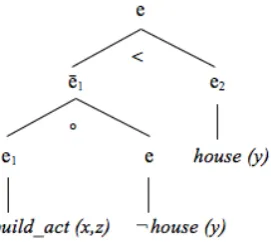
Figure 1: Structure of the event to build a house in GL.3
This representation accounts for the function (gating function)of the verb build in bringing into existence the referent of its direct object, house. Subevent e3 (the non-existence of the object) is the precondition for the event to be true. The gating function can have four different consequences on the arguments of predicates (Pustejovsky 2000: 468):
1. The argument persists: A man sat on a bench.
2. The head of the argument does not persist: Mary ate a cookie.
3. The head of the argument persists, but there are properties of the head introduced by predication that do not persist: Mary cleaned the table.
4. The head of the argument persists, but there are properties of the head expressed in the referring expression that do not persist: Mary fixed the flat tire.
As it will emerge from the analysis below, depending on the type of the predicative complement that combines with the verb, the scope of the opposition introduced by the verb can be different: it may concern the head or a property of the argument the predicative complement applies to.
4
Case study 1:
rimanere
(‘remain’)
At a first glance, the verb rimanere (‘remain’) may appear as the ‘prototypical’ stative verb, therefore characterized by the simplest event structure. However, at a closer look the situation shows to be more complex. When it is used with a predicative complement, the contribution of the verb rimanere is mainly aspectual in nature. However, the aspectual properties of the predication are determined compositionally, depending also on the characteristics of the predicative complement. Let us consider the following examples:4
(2) Ha ottant’anni ma è rimasta affascinante. ‘She is 80 years old, but she remained attractive’. (3) È rimasto ferito durante una sparatoria.
‘He was wounded during a firefight’.
It can immediately be noted that these two phrases are aspectually different one from the other. While the first one describes a lasting state, in the second one the state described by the predicative complement is seen as the result of an event that is “dynamic” (i.e., non-stative).
The question is then: what triggers one interpretation or the other? Considering the two examples given above, a first hypothesis could be that adjectives are related to the stative sense, while past participles are related to the dynamic sense. Although it is often so, things show to be more complex. For instance, it appears that: a) some adjectives allow a dynamic interpretation:
3 “Gating will be defined as the introduction of termination or initiation conditions for the sort or properties of an
argument” (Pustejovsky 2000: 457).
4 Some examples are extracted from the La Repubblica corpus (http://sslmit.unibo.it/repubblica).
(4) È rimasto sordo in seguito a un incidente.
‘He went deaf due to an accident’.
and b) some past participles allow a stative interpretation, as in:
(5) Il traffico è rimasto bloccato per due ore.
‘The traffic remained blocked for two hours’.
There is therefore need for a more fine-grained analysis of the different predicative complements that can occur with the verb rimanere.
Rimanere
: Adjectives
Let us start with adjectival predicative complements. The relevant distinction here is that between individual-level (IL) and stage-level (SL) adjectives. Looking at data, it comes out that when the adjective is classifiable as IL, the event is stative5, as in this example:
(6) Anna è rimasta bella come quando era giovane
‘Anna remained beautiful as when she was young’.
Stative predications are uniform (cf. Binnick 1991). However, rimanere has a complex event structure, at the level of presupposition. Following the representation proposed by Schlücker (2004) for German bleiben (‘remain’), ‘rimanere + IL Adj’ can be described as follows: it is asserted that state P (expressed by the adjective) holds at event time t, and it is at the same time presupposed6 that P holds for time t’ preceding t.7
Figure 2: ‘rimanere + IL Adj’
Event structure for <rimanere + IL Adj> can be thus represented by modifying GL event structure representation to include also presupposed subevents, that are indicated by dotted lines.
Figure 3: Rimanere: stative sense
5 This is confirmed by the traditional stativity tests, such as the impossibility to occur with “in x time” adverbials
(*Anna è rimasta bella in tre giorni, ‘Anna remained beautiful in three days) andaspectual operators like ‘finish’
(*Anna ha appena finito di rimanere bella, ‘Anna has just finished remaining beautiful’).
6 It is a semantic (vs. pragmatic) presupposition, holding under negation: Anna è rimasta bella presupposes that Anna
was beautiful before event time; the same holds for Anna non è rimasta bella.
7 Schlücker (2004) notes that German bleiben (‘remain’) appears in a context where the counterstate (
¬P) would be expected to occur, instead of the asserted state. The same holds for rimanere, so that a sentence like Anna è rimasta bella would be interpreted as ‘Anna did not become ugly’.
Only the state in e2 is asserted. How do we account, then, for the difference between Anna è
bella and Anna è rimasta bella? In both cases it is only asserted the state P expressed by the predicative complement (bella). In the sentence with rimanere, however, it is also presupposed a subevent preceding the event time, where the same state P holds.
The event structure represented in Figure 3 could also be applied to nominal predicative complements.
The event is in most cases stative also with SL adjectives. However, there are some differences that are worth mentioning. IL and SL adjectives behave differently with respect to some aspectual tests. For example, SLs can occur as complement of force/persuade, or can occur as imperative, as it is shown in (7a) and (7b). ILs usually cannot occur in these contexts, as shown in (8a) and (8b):
(7) a. Lo hanno convinto a rimanere zitto
‘They persuaded him to remain silent’. b. Non rimanete svegli ad aspettarmi!
‘Don’t stay awake to wait for me!’
(8) a. ?? Ho convinto Anna a rimanere alta / intelligente …
‘I persuaded Anna to remain tall / intelligent /…’ b. ??Anna, rimani alta / intelligente / …!
‘Anna, remain tall / intelligent /...!’
These tests are traditionally used to identify states (cf. Lakoff 1966), which usually cannot occur in these contexts. However, with reference to verb aspect, it has been noted (among others, by Dowty 1979: 183-184, Levin-Rapppaport Hovav 2005: 89) that classical stativity tests should instead be used to individuate non-agentive verbs. This fits well with Pustejovsky’s interpretation of SL adjectives: “What distinguishes stage-level from the general class of stative predicates is the inherent reference to that factor that brings this state about; […] there is reference to the “coming into being” factor, the AGENTIVE role in the qualia.” (Pustejovsky 1995: 225). To summarize, then, ‘rimanere + Adj’ is stative8, but it is agentive with SL adjectives and non-agentive with IL adjectives.
Temporal adverbials such as ‘for x time’, ‘from x time to x time’ are usually odd with IL adjectives, since temporal restrictions can hardly apply to (in principle) permanent predicates. These adverbials can occur, and do frequently occur, with SL adjectives. Interestingly, temporal restrictions apply only to the asserted state, canceling at the same time the presupposition (in this case rimanere is thus almost equivalent to the copula essere, except for the presupposition that a counterstate would have been more likely to occur, see footnote 7).
(9) I treni sono rimasti fermi dalle 8 alle 20.
‘The trains remained standing from 8 to 20’.
Rimanere
: Past Participles
As it has been noted above, past participles can code both stative and dynamic events. Is it possible to identify different classes of past participles that can be associated to one or to the other sense?
8 A dynamic interpretation is available only with a small number of SL adjectives (as in the following example: La
capitale è rimasta priva di elettricità.‘The capital remained lacking electricity’). These adjectives are usually qualifying the subject as lacking something, and the subject is interpreted as a patient in the event, as it is the case with past participles of highly transitive verbs described in what follows (they are also receiving a dynamic interpretation).
The first distinction that shows to be relevant is that between Target-states and Resultant-states (Parsons, 1990: 234-235), i.e., between (in principle) reversible Resultant-states and Resultant-states holding forever after the event that brings them about.
The stative sense occurs only when the participle is a Target state:
(10) La pistola è rimasta nascosta nel cassetto.
‘The gun remained hidden in the drawer’.
The reason for that is that in the stative sense we find reference to a counterstate and, as Schlücker (2008: 362) notes, reference to a counterstate can obviously not be possible if the state expressed by the participle is not reversible, i.e., if there is no possibility of change.
The dynamic sense occurs with Resultant states. More specifically, it occurs with two subclasses of Resultant states: past participles of highly transitive verbs9, and past participles of psychological verbs. These two subclasses are linked to two partially different dynamic senses.
The first class includes past participles of verbs such as uccidere (‘kill’), colpire (‘hit’), etc.
(11) Per fortuna, nessun agente è rimasto ferito.
‘Fortunately, any policeman remained injured’.
The second class contains past participles of verbs such as scioccare (‘shock’), affascinare
(‘charm’):
(12) Anna è rimasta scioccata dal film.
‘Anna remained shocked by the film’.
It is now possible to describe the event structure of the dynamic sense of rimanere. It is a transition, since, as it has been pointed out, it describes a change of state. More precisely, aspectual tests10 show that it behaves like achievements, i.e., it is a right-headed transition. Figure 4 highlights also the opposition introduced by the event: a property of the subject is modified from ¬P to P:
Figure 4: Rimanere: “dynamic” sense.
In the Qualia Structure, a Formal role corresponds to the state in e2.
5
Case Study 2:
Rendere
(‘make’)
‘Rendere + predicative complement’ is found in phrases like the following:
9 Prototipical transitive verbs can be defined as ‘those verbs which describe an action that not only impinges on the
patient but necessarily creates a change in it’ (Tsunoda 1985: 387).
10
For example, it does not allow verbs like cominciare (‘to start’): *Ha cominciato a rimanere ucciso (‘He started remaining killed’).
(13) Fortissime e ripetute emicranie gli rendevano la vita impossibile.
‘Very strong and recurrent migraines made life impossible for him’.
It is a causative event, that can be represented as in Figure 5:
Figure 5: Rendere: event and opposition structure.
The structure is composed by two subevents e1 and e2, where e1 is a process that temporally precedes, and is the cause of, the resulting state e2. In the Qualia Structure, an Agentive role corresponds to e1 and a Formal role corresponds to e2. The event described by ‘rendere P’ can be defined as a direct causative accomplishment11 (Pustejovsky 1995: 187).
Unlike what happens with rimanere, with rendere different predicative complements are not associated to different event structures. They are instead associated to different opposition structures. It has been shown above that the event introduces an opposition between P and ¬P with respect to the direct object. When the predicative complement is adjectival, the culmination of the event implies a change in a property of the referent of the direct object. The changing property can be introduced by the predicative complement (opposition type 3), or it can be that explicitly expressed on the direct object (opposition type 4):
(14) Hanno reso accogliente la stanza.
‘They made the room comfortable’.
(15) Nessuna donna può rendere intelligente un uomo stupido.
‘Any woman can make intelligent a stupid man’.
When the predicative complement is a NP, what changes is not a property but the head of the direct object itself (opposition type 2):
(16) Hanno reso l’informazione spettacolo.
‘They made information a show’.
In (16), when the event culminates, the referent of the direct object is not classified as ‘information’ any more, but as ‘show’.
6
Concluding remarks: subevents and lexicographic description
Transitive (e.g., rendere) and intransitive (e.g., rimanere) verbs have been here considered as describing a single event together with the predicative complement they combine with. We focused on complex events, i.e., events composed by two subevents: it was shown that the first subevent is lexicalized by the verb, while the second subevent is lexicalized by the predicative
11 The accomplishment interpretation is confirmed by aspectual tests (it can for example occur in imperative mood, it
can be introduced by cominciare, etc.). Direct causative accomplishments are left-headed events, as it is the case for
rendere.
complement. These verbs can thus be interpreted as the realization of an analytical strategy to lexicalize events, since the ‘skeleton’ of the event structure already emerges at the expression level.
The proposed interpretation can also give instruments to improve lexicographic description. Dealing with these (often semantically “light”) verbs in computational lexica has proven to be difficult. Even in the SIMPLE lexicon (see Lenci et al. 2000), which is based on the GL model, the description that is provided for them appears to be problematic, since the event type that should be attributed to the “verb + predicative complement” complex is usually attributed exclusively to the verb (e.g., diventare ‘become’ is described as a transition, while it is actually ‘diventare + predicative complement’ that denotes a transition; diventare is responsible only for the process subevent). Thanks to subevent analysis it is possible to isolate, and thus to represent, the contribution of the verb. This is in line with recent proposals drawing attention to the importance of marking subevent structure (Im and Pustejovsky 2010), which could possibly be extended to all eventive entries of computational lexica.
References
Bach, E. 1986. The Algebra of Events. Linguistics and Philosophy 9, pp. 5-16. Binnick, R. 1991. Time and the Verb. Oxford. Oxford University Press.
Dowty, D. R. 1979. Word Meaning and Montague Grammar. Dordrecht. Kluwer.
Goldberg, A. 2010. Verbs, Constructions and Semantic Frames. In M. Rappaport Hovav et al.
(eds.). Syntax, Lexical Semantics and Event Structure. Oxford University Press, pp. 39-58. Grimshaw, J. 1990. Argument Structure. Cambridge, MA. MIT Press.
Hengeveld, K. 1992. Non-verbal Predication. Theory, Typology, Diachrony. Berlin / New York. Mouton de Gruyter.
Im, S. and J. Pustejovsky. 2010. Annotating Lexically Entailed Subevents for Textual Inference Tasks. In Proceedings of FLAIRS 2010, pp. 204-209.
Lakoff, G. 1966. Stative Adjectives and Verbs in English. Computation Laboratory, Harvard University Report No. NSF-17.
Langacker, R. 1987. Nouns and Verbs. Language 63, pp. 53-93.
Lenci, A. et al. 2000. SIMPLE. Linguistic Specifications, Deliverable D2.1.
Levin, B. and M. Rappaport Hovav. 2005. Argument Realization. Cambridge. Cambridge University Press.
Parsons, T. 1990. Events in the Semantics of English. Cambridge, Mass. MIT Press.
Pustejovsky, J. 2000. Events and the Semantics of Opposition. In C. Tenny and J. Pustejovsky (eds.). Events as Grammatical Objects. Stanford. CSLI Publications, pp. 445–482.
Pustejovsky, J. 1995. The Generative Lexicon. Cambridge, MA. MIT Press. Pustejovsky, J. 1991. The syntax of event structure. Cognition 41, pp. 47-81.
Schlücker, B. 2008. Warum nicht bleiben nicht werden ist: Ein Plädoyer gegen di Dualität von
werden und bleiben. Linguistische Berichte 215, pp. 345-371.
Schlücker, B. 2004. On the Event Structure of German bleiben. In C. Meier and M. Weisgerber (eds.). Proceedings of the Conference “sub8 – Sinn und Bedeutung”. Arbeitspapier Nr. 117. Universität Konstanz, FB Sprachwissenschaft, pp. 259-272.
Tsunoda, T. 1985. Remarks on transitivity. Journal of Linguistics 21(2), pp. 385-96.