IMPROVING THE PUBLIC-PRIVATE-PARTNERSHIP SYSTEM IN
MONGOLIA: A COMPARATIVE STUDY OF THE REPUBLIC OF KOREA
AND MONGOLIA
By
BANZRAGCH, Undrakh
THESIS
Submitted to
KDI School of Public Policy and Management In Partial Fulfillment of the Requirements
For the Degree of
MASTER OF PUBLIC POLICY
IMPROVING THE PUBLIC-PRIVATE-PARTNERSHIP SYSTEM IN
MONGOLIA: A COMPARATIVE STUDY OF THE REPUBLIC OF KOREA
AND MONGOLIA
By
BANZRAGCH, Undrakh
THESIS
Submitted to
KDI School of Public Policy and Management In Partial Fulfillment of the Requirements
For the Degree of
MASTER OF PUBLIC POLICY
2018
IMPROVING THE PUBLIC-PRIVATE-PARTNERSHIP SYSTEM IN
MONGOLIA: A COMPARATIVE STUDY OF THE REPUBLIC OF KOREA
AND MONGOLIA
By
BANZRAGCH, Undrakh
THESIS
Submitted to
KDI School of Public Policy and Management In Partial Fulfillment of the Requirements
For the Degree of
MASTER OF PUBLIC POLICY
Committee in charge:
Professor Jongyearn LEE, Supervisor
Professor Kang Soo KIM
Professor Sherzod SHADIKHODJAEV
0
Abstract
The concept of a Public-Private-Partnership (PPP) is an attractive, yet ambiguous one. It is a mechanism that has been widely welcomed and used to address huge infrastructure gaps and to reduce excessive government roles in public infrastructure development and provision in Mongolia. However, issues related to qualities of PPPs, fiscal problems, corruption, social disapprovals, manipulation - i.e. unknown risks - that are harmful to the society, have started to come up after 7 years of experience of actively promoting the PPP system.
This paper based on empirical and comparative analyses, discusses that, the main causes of failures of PPPs have been that: 1) the flexibility and ambiguity of the PPP concept is not balanced against its accountability and efficiency; 2) that there is a lack of political will to nurture genuine partnership and a lack in the capability of the public sector; and 3) an uncompetitive private sector and immature environment. These factors have together created the maneuvering space for the manipulation of the PPP concept, its types, applicable infrastructures, institution as well as combined to promote fake procurement, management, economic analysis of PPPs, tendering, in general artificially legitimizing distorted partnerships in Mongolia.
These distortions have enabled PPPs to be used in a socio-economically unbalanced way and have influenced the promotion of PPPs in an inefficiently allocative way at the expense of public interest. To eliminate confusions, instabilities and opportunisms within the PPP system, the paper proposes several must-implement policy recommendations by comparing the failure factors of Mongolian PPPs with success factors of the Republic of Korean PPPs. These are: to clarify all the existing confusions, to promote the check and balance mechanisms along with a fiscal safeguarding measures of various budget ceilings approaches, to enhance the accountability mechanism that is based on performance indicators for both public and private sectors as well as to shift from the ‘artificial’ PPPs procurement practice to the ‘proper’ and competitive procurement practice by taking various state-led deliberate measures. The paper concludes that if Mongolia could not take at least these must-implement measures, the PPP system might more harm the public interest than benefit it, due to the nature of infrastructure PPPs that are prone to rents.
Key words: Public-Private-Partnership, causes of PPPs failures, success and failure factors, public interest
1
Acknowledgements
I would like to express my deepest gratitude to my supervisors Professor Jongyearn Lee and Professor Kangsoo Kim for their time, valuable comments and generous support to this thesis. I am also thankful to NG Xiuyan Sophie from the Writing Center, for her wonderful English editing.
2
Table of Contents
List of figures ... 3
List of tables ... 4
List of appendixes ... 4
ANNEX I A detailed list of signed agreements as of 2017, retrieved from the web page of the National Development Agency of Mongolia ... 4
Abbreviations ... 4
Introduction ... 6
Background and problem definition ... 6
Purpose and research questions ... 7
Thesis hypothesis ... 7
Contributions and limitations ... 8
Methodology ... 8
Expected outcome ... 9
Composition of the paper ... 9
Literature review on rationales, success and failure factors of PPPs ... 10
Rationales and criticisms of PPPs ... 10
PPPs in different contexts: success and failure factors of PPPs ... 12
Success factors of the Republic of Korean PPPs system ... 15
Literature review of Mongolian PPPs system ... 17
A Brief Introduction to Mongolian Context and Rationales for improvement of the PPP system ... 19
Key infrastructure gaps in Mongolia ... 21
Road transport ... 21
Rail transport ... 22
Social infrastructure ... 23
Electricity ... 23
The financial gap in Mongolia for infrastructure development ... 24
PPPs experiences in Mongolia: Identification of failure factors ... 25
Legal and policy framework ... 26
Lack of clearly-defined priority PPPs and too many types of PPPs ... 26
Lack of clarity of the best applicable PPP types and PPPs ... 27
3
A direct contracting and a lack of competition enhancing procurement process ... 27
Lack of proper ex ante analysis ... 29
Lack of contract validation and execution ... 31
Institutional framework ... 31
Lack of integrated registration database of PPPs due to constant institutional changes and lack of human resources ... 31
Lack of proper planning of Concessions based on analyses and evaluations ... 32
Lack of methodological, expert assistances and human capacity building for PPPs ... 32
Lack of monitoring of quality of PPPs ... 33
The current practice of PPPs based on 39 signed concession contracts ... 34
Summary of the PPPs failure factors in Mongolia ... 37
A comparative analysis of PPPs practice and policy of the Republic of Korea and Mongolia ... 40
Case analysis ... 40
Comparison of BTL of the Republic of Korea v. BT, DBT etc. of Mongolia ... 40
Comparison of BTO of the Republic of Korea v. BOT, BOO, DBOO, DBOT etc. of Mongolia ... 44
Conceptual and policy analysis ... 53
Institutional framework analysis ... 62
Centralized PPPs policy under the National Development Agency ... 63
PPP Decentralization and Financial Centralization policy /ongoing/ ... 64
Procurement framework analysis ... 68
Fiscal framework analysis ... 71
Conclusions and recommendations ... 74
A summary of context-specific causes of failures of PPPs in Mongolia ... 74
Conclusions and recommendations ... 79
Limitations ... 83
Reference ... 83
ANNEX I A detailed list of signed agreements as of 2017, retrieved from the web page of the National Development Agency ... 88
List of figures
Figure 1 Structure of the Mongolian Financial Sector Figure 2 Government Bonds
Figure 3 Sovereign Credit Rating History of Mongolia
4
Figure 5 Concessions in the Concession List of Mongolia by procurement types Figure 6 PPPs procurement process of Mongolia
Figure 7 Signed concession contracts as of 2017 of Mongolia
Figure 8 Signed contracts by sectors and types as of 2017 of Mongolia Figure 9 PPPs types of 39 concession contracts as of 2017 of Mongolia
Figure 10 Procurement and PPP types of 39 concession contracts as of 2017 of Mongolia Figure 11 A comparison of BTL and BT
Figure 12 Operational system of PPPs
Figure 13 A new risk sharing mechanism of the Republic of Korea Figure 14 Flowcharts of a VFM Test and PFS Analyses
Figure 15 Procurement steps of the Republic of Korea
List of tables
Table 1 Criteria for measuring a PPP project success
Table 2 Key measures to prevent problems in developing countries for PPP procurement Table 3 General facts of the Republic of Korea and Mongolia
Table 4 A short SWOT analysis of PPPs market in Mongolian context Table 5 Key risks and challenges of Mongolian PPP system
Table 6 Macroeconomic data of Mongolia
Table 7 Projects that were given nonmonetary grants of Mongolia
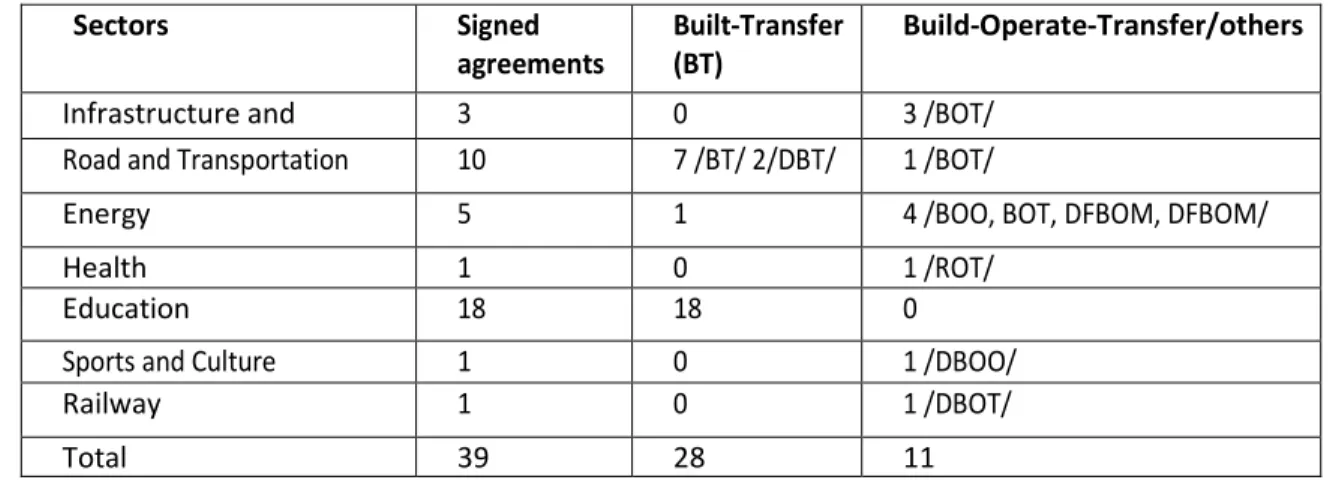
Table 8 Signed concession contracts by types and sectors as of 2017 of Mongolia
Table 9 A comparative snapshot and short analysis of Anhwa High School and 73th School concessions
Table 10 Payment of investment of 73th School
Table 11 Result of Value for Money Test and Monitoring of Operations at Anhwa High School Table 12 A short description of 8 PPPs that apply the State involved price setting
Table 13 A comparative snapshot and short analysis of Korean BTO v. Mongolian BOT, DBOO, DBOT
Table 14 Characteristics of procurement types of the Republic of Korea Table 15 Institutional changes driven by political changes
Table 16 A summary table of the main findings
List of appendixes
ANNEX I A detailed list of signed agreements as of 2017, retrieved from the web page of the National Development Agency of Mongolia
Abbreviations
5 BOO Build own operate
BOT Build operate transfer BT Build transfer
BTL Build transfer lease BTO Build transfer operate CBA Cost benefit analysis DBLT Design build lease transfer DBOO Design build own operate DBOT Design build operate transfer DBT Design build transfer
DemBT Demolish build transfer DemDBT Demolish design build transfer DevOT Develop operate transfer
DFBOO Design finance build own operate DFBOT Design finance build operate transfer DRT Design renovate transfer
FOT Finance operate transfer GOM Government of Mongolia
ICL Assessment of the Implementation of Concession Law by the Mongolian National Audit
Office
IMF International Monetary Fund
MER Monitoring and Evaluation Report by the National Development Agency of Mongolia MNT Mongolian national tugrik
MOF Ministry of Finance of Mongolia
MOSF Ministry of Strategy and Finance of the Republic of Korea MRG Minimum revenue guarantee
NDA National Development Agency of Mongolia NPM New public management
ODA Official development assistance PFS Preliminary feasibility assessment PIM Public Investment Management
PIMAC Public and Private Infrastructure Investment Management Center of Republic of Korea POO Purchase own operate
PSC Public sector comparator RLOT Renovate lease operate transfer SOEs State owned enterprises
SPV Special purpose vehicle
SWOT Strengths, weaknesses, opportunities and treats
6
Introduction
Background and problem definition
As a typical representative of a developing country, Mongolia faces a huge infrastructure gap due to increased urbanization, industrialization and population development but a financial shortage to fill it. In that vein, PPPs have become the main solution to that. However, recently the efficiency and accountability of PPPs have been questioned due to several serious problems mentioned below.
The Parliament of Mongolia approved the Resolution on the Resignation of the Prime Minister J.Erdenebat and his leading Government in September 2017. This Government was selected and formed after the Parliamentary Election in 2016 and the resignation happened only after one year. One of the main reasons or as according to media information, could be said that there was an illegality of concession agreements which had conflicts of interests. Mainly, MNT 60 billion of concession agreements had been given to ministries, with further concessions given to people with conflicts of interest. According to Parliament Member Mr. B.Purevdorj, one concession was given to a company called “Zasag Chandmani Mins” whose owner has a conflict of interest, to build a paved road of more than 100 km from the mining site to the border of the Republic of China (hereinafter referred to as China) for the transportation of iron ore to China in 2017. The Parliament member further claimed that “…this paved road is not widely used by the ordinary people as well as does not have any social, industrial and economic importance for a society as a whole, but for the mining company” (Video by news.zasag.mn, 2017). On the other hand, the Head of the PPP Unit of the National Development Agency Mr. O.Munkhtur, officially said that, “…this road has been decided to be built through the concession contract, because the mining companies together proposed to build this road by their own expense and investment (Interview with the Head of PPP Unit of the National Development Agency Mr. O.Munkhtur, news.mn, 2017). In 2017, Mongolia received an IMF debt package and in connection to that, the IMF required the GOM to conduct an audit of PPPs due to PPPs’ potential for a high level of burden on the budget. Moreover, there have been various media news and public disapproval concerning the low quality of new
7
paved roads that were built through concession agreements. Overall, it could be understood that issues related to qualities of PPPs, fiscal problems, social disapprovals, manipulation - i.e. unknown risks - that are harmful to the society have started to come up after 7 years of experience in actively promoting the PPP system in Mongolia.
Purpose and research questions
In general, the use of PPPs has been accepted as a panacea at the introduction of the PPP system in Mongolia due to the various government failures and negative attitudes of the private sector concerning too much government intervention in a market economy. Currently, there are issues concerning PPPs in Mongolia because of various scandals related to rent seeking, budget problems and qualities on the one hand, and huge infrastructure gaps and financial incapability of the government to effectively handle the issues on the other hand. Consequently, the main purpose of the study is to clarify the inherent problems that have caused the failures of PPPs in Mongolia.
In line with that, the main research question would be: What have been the main causes of failures of PPPs in Mongolia? What have been the most vital aspects that have negatively influenced the PPPs’ performance and inefficiency of management? Various sub-research questions are also contemplated and asked, in order to better understand and reason out the main research questions, such as what are the failure factors behind these problems; how and why have these failures occurred?; and what conducive factors and situations have influenced the occurrence of the failures of PPPs in Mongolia?
Thesis hypothesis
In response to the research questions – “What have been the main causes of failures of PPPs in Mongolia? What have been the most vital aspects that have negatively influenced the PPPs’ performance and inefficiency of management?”, this paper predicts that the highly complex and ambiguous nature of PPPs have led to political and private parties taking advantage, which has further led to socio-economically unbalanced PPP practices that were detrimental to the public interest in Mongolia.
8
Contributions and limitations
The current literature both in English and Mongolian greatly ignores empirical and normative analyses of causes of failures of Mongolian PPPs. Therefore, a narrower analysis of the failures, ground causes of failures and recommending principle directions and discussions would help to make a considerable contribution to improve the PPPs system of Mongolia.
Moreover, this paper contributes to the existing literature on experiences with PPPs of developing countries, by focusing on the Mongolian case for evidence-based learning. Importantly, the paper could have implications for other developing countries to formulate factors that could influence the performance of their own PPPs since the paper compares and analyzes the failure factors of Mongolian PPPs from a developing country perspective, using the success factors of Korean PPPs from a developed country perspective in a context-driven and analytic way. Finally, currently due to the globalization of the PPP market, this paper is crucial in enabling further research to be made from a cross-country perspective as well as to enable international PPP players to be informed of the risks, challenges, problems and opportunities in the contexts of Mongolian PPPs.
The monitoring and evaluation of PPPs has so far, not been conducted, nor has an integrated database for PPPs been created since the implementation of the PPP system. Consequently, the main limitation of the paper is that there is a limited analysis driven by the lack of data and evaluation reports about PPPs in Mongolia. It should be also mentioned that the relevant parts that define the costs, investments and fees of PPPs have been omitted from the publicly-available concession contracts, which has greatly hindered making a proper quantitative analysis of individual as well cumulative projects. This issue of lack of transparency should be addressed for better accountability and monitoring from independent scholars, researchers and the civil society.
Methodology
This paper uses research methods, such as empirical analysis, case analysis, comparative and deductive analysis, document analysis in order to develop reasonable comments and conclusions for the proper PPP system and practice in Mongolia. The discussion of the
9
theoretical foundation for the paper mostly relies on the relevant scholarly literature and case studies.
The part on the identification of failure factors of PPP practice is based on descriptive statistics, PPPs contracts, various government reports, media and yellow news. Also, more specific comparative case, legal and policy-based, institutional, procurement and fiscal framework analyses of the South Korean success factors and Mongolian failure factors are made to help for better understanding of the causes of failures and gaps in PPPs policies in Mongolia. This comparison is done to the extent to emphasize the gaps in Mongolia and the differences in contexts, but does not attempt to cover the PPP system in Korea in descriptive or critical ways. Finally, the paper would conclude and provide recommendations on the future direction of PPP policy in Mongolia.
Expected outcome
Based on the comparative analysis and scholarly literature, a recommendation would be proposed regarding the proper measures to take in order to address the current failure factors. This would help create a better PPP policy that is suitable for the level of social and economic development of Mongolia.
Composition of the paper
The remainder of the paper is organized as follows: Section I provides the existing literatures on the infrastructure PPPs around the world, specifically evaluation of implementations, identified failure and success factors.
Section II provides general information about Mongolia that should be taken in to consideration in the development of a proper PPP system as well as briefly provides information on the infrastructure gap and current financial incapability of Mongolia, as rationales for implementing an effective PPPs system in Mongolia.
Section III makes statistical, document, contracts and yellow news analyses to reveal the failure factors behind PPP practices.
Section IV focuses on comparative case, policy and legal, institutional, procurement and fiscal analyses in the framework of Korean success factors and Mongolian failure factors in order to
10
create the basis for understanding the causes of failures of PPPs in Mongolia for further policy recommendations.
Section V summarizes key causes of context specific failures for Mongolia and proposes recommendations and future perspectives of the PPP policy in Mongolia.
Section VI reflects the limitations of the paper.
Literature review on rationales, success and failure factors of
PPPs
The literature review concentrates on existing research concerning analysis of rationales, criticisms of PPPs and critical analyses of experiences of PPPs in different contexts with the focus of failure and success factors of PPPs implementation. Also, the literature review briefly reviews the success factors behind PPPs in Korea specifically. At the end of the section, a literature review of PPPs solely for Mongolia is elaborated. In that way, theoretical and practical backgrounds are analyzed, which would further enable a critical analysis of causes of failures of PPPs in Mongolia to be made.
Rationales and criticisms of PPPs
The rationale behind the use of PPPs are based on various economic theories and practical justifications such as meta-theories; government regulation of business theory; regional and urban dynamics theory; public choice theory; principle agent theory; NPM; economics of collaborative behavior; learning and dynamic capabilities; concepts of relational contracting from transaction cost economics; complex adaptive systems perspective; resource dependency perspective; and neo-institutional theory etc. where the main conceptual bases and normative rationales of use of PPPs are increased efficiency over the life cycle of the project and enhanced social welfare (Ball, R., 2009; Carmeli et all., 2006; Child, 2005; Christensen, 2007; Flinders, 2006; Rosenau, 2000, Graeme A Hodge et all., 2010; Henry A Davis, 2008; Stefano Gatti, 2008; World Bank, 2004, 2006, 2009, 2011; OECD, 2009; IMF, 2008).
Particularly, the 1980s’ insights of NPM has shifted the government responsibility to a more managerial direction by intensifying the use of market and quasi-market competition mechanisms; and by unbundling public services, so that only the ‘public interest’ component of
11
services could remain for public authorities; but that the other components could be provided by the competitive and innovative private sectors for the sake of improving quality of services and reducing costs. By bringing various groups that have mutual goals together and by enabling them to deal efficiently with complex problems as a single decision-making entity, PPPs could internalize externalities and reduce transaction costs between their activities and achieve more added value, which should to a sufficient extent, attract the interests of public and private sectors.
Moreover, PPPs enable projects to have a single point of responsibility and this is a strong feature of PPPs in delivering better accountability, especially for large projects. Grimsey and Lewis emphasized that accountability and a regard for the public interest are most important as they assist in legitimizing and acceptance of contractual arrangements. They investigated the PPP relationship and concluded that a high dependency makes the risk of opportunistic behaviors problematic and challenging. Also, Erik-Hans Klijin expressed managerial efforts make a PPP work more efficiently rather than through an organizational form (Graeme A Hodge et all., p.77, 2010). Indeed, increased information-sharing among PPP project teams makes projects more flexible to changing business environments. For instance, PPP contracts usually last 20-30 years; in that way private parties have incentives to come up with more innovative designs, use more sustainable materials for construction and make the maintenance less costly and profitable. Consequently, efficiency increases for both building and operating the PPP more under the use of bundling than unbundling, leading to higher social welfare.
From a practical stand-point the following advantages of PPPs have been highlighted: PPPs are technically efficient; PPPs are able to take advantage of economies of scope since activities are bundled together; PPPs are able to postpone government cash outlay at least in the short-run since a government is able to pay a relatively small part of the cost upfront; the use of PPPs may improve governments’ net cash flow; users are more willing to pay a toll or at least a higher toll to a private sector than to a government - although this may be costly as governments would be transfering risks to the private sector -; better punctuality and on budget delivery; political risk may be lower with PPPs since risks related to construction cost
12
overruns are transferred to private sectors and other similar factors. (Ball, R., 2009; Carmeli et all., 2006; Child, 2005; Christensen, 2007; Flinders, 2006; Rosenau, 2000, Graeme A Hodge et all., 2010).
Critiques of PPPs
Various criticisms from political economy, governance, postmodern theory and public-sector accounting perspectives concerning PPPs have been raised, such as those stating that PPPs have brought about debt that has to be paid by future generations. In some instances, a VfM assessment favors private finances especially when ‘arm’s length’1 organizations lack; the appraisal process undermines transaction and externality costs; PPPs reduce governments’ policy flexibility through term contractual obligations; the monopolistic character of long-term contracts are against market ideology; incomplete contracts could take place where parties may behave strategically to the benefit of themselves; unbundling does not necessarily lead to efficient outcomes due to profit-seeking private parties and public sector players with unclear motives; the issue of an improper discount rate application may occur; there is a possibility of ruling out SMEs as well as third parties due to the front-loaded high bid prices - although risks are transferred to the private sector -; the government should pay high risk adjustment costs and other similar reasons such as where the main argument is PPPs are not panacea, but PPPs are a very complex phenomenon and there are ‘no free lunches’ when it comes to PPPs (PPIAF, 2014; Hodge, 2004; Shaoul, J et all., 2008; Shaoul, J et all., 2008; Heller, Pete, 2005; World Bank, 2004, 2006, 2009, 2011; NAO, 2007a, b; Graeme A Hodge et all., 2010; Henry A Davis, 2008; Stefano Gatti, 2008).
PPPs in different contexts: success and failure factors of PPPs
In general, PPPs have been considered as a more novel and efficient way of delivering public services and infrastructures in comparison to other traditional approaches all around the world (Fobil et al., 2008; Miraftab, 2004; Ke, 2014). The studies that concern the most recent international experiences of PPPs concluded that PPPs have already become the part of the
1 In this paper, ‘arm’s length’ generally refers to an independent, check and balance institution. For more
information: Harry Hillman Chartrand & Claire McCaughey, The arm's length principle and the arts: an international perspective - past, present and future, American Council for the Arts, N.Y.C, 1989.
13
government policy and the key institutional form for the cooperation of the public and private sectors around the world during the last few decades (Graeme A Hodge et all., 2010). Particularly, PPPs have been extensively used in developing countries than in developed countries, to help with reducing infrastructure gaps, poverty and promoting socio-economic growth (Harris. C, 2003; Graeme A Hodge et all., 2010).
Nevertheless, less than impressive initial empirical results have expressed caution towards PPPs, thus different criticisms concerning PPPs have been actively raised not only in developing but also in developed countries based on the recent experiences of PPPs (PPIAF, 2014; Hodge, 2004; Shaoul, J et all., 2008; Shaoul, J et all., 2008; Heller, Pete, 2005; World Bank, 2004, 2006, 2009; 2011; OECD, 2009; IMF, 2008; NAO, 2007a, b; Graeme A Hodge et all., 2010). Particularly, there are concerns about the actual financial sustainability of PPPs in various contexts in the medium to long-term due to the current short-term oriented fiscal analysis of PPPs.
Dr. Paul Noumba-Um concluded based on the PPPs experiences of developing countries: “PPPs face a wide variety of obstacles in developing countries. These range from a weak policy and regulatory environment; lack of a pipeline of viable and bankable projects; and weak capacity of public institutions to process PPPs; underdeveloped domestic financial and capital markets. In general, establishing a robust PPP policy and legal framework has proven to be challenging in most countries as it entails in-depth institutional reform in the way government operates and performs. In many countries in the developing world, there remains a gap between written policies and enacted legislations, and their implementation or enforcement on the ground.”
Further “…First, in many cases governments failed to understand that not all of their infrastructure projects should be undertaken as PPPs. ...Third, in many cases, unfortunately, governments failed to ensure consistency between their capital development programs in infrastructure and the pipeline of PPP projects…”.
Source: (Graeme A Hodge et all., p.470, 2010)
In developing countries, the implementation of PPPs has not been successful in all instances (Sirtaine et al., 2005). In addition, there have been various failure cases in developed countries (Soomro and Zhang, 2013; Tam, 1999; Kumaraswamy and Zhang, 2001; Monsalve, 2009; Liu et al., 2016, Graeme A Hodge et all., 2010). Although, the failure factors have differed to some extent in both developed and developing countries, the following failure factors of PPPs could be summarized: there is a weak institutional structure and human capacity; a lack of
14
proper support from government authorities; a lack of transparency and accountability; opportunism corruption, high level of rent-seeking behaviors; a lack of competitiveness or lengthy bidding process; a lack of coordination; a low level of public interest behind project decisions; huge rents for private operators; a complexity of lengthy contracts and negotiation; delayed finalization of contracts and negotiation; a problem of asset-currency mismatch; a lack of sophisticated equity and debt financing markets for long-term equity and debt financing needs; excess high level of use of unsolicited projects and so on. (Lossa and Martimort, 2013, 2015; Hoppe and Schmitz, 2013, Graeme A Hodge et all., 2010; Guillermo Takano, 2017).
A series of factors required for successful PPPs
Based on a thorough review of earlier literature, Osei-Kyei et al. developed a comprehensive set of criteria for measuring PPP project success (Osei-Kyei et al., 2017). These factors contributing to successful PPPs are as summarized below:
Table 1 Criteria for measuring a PPP project success
Success Criteria Descriptions
Profitability A continuous income/profit is received by parties during project operation Long-term relationship and
partnership Cordial relationship and well-established coordination are instituted among stakeholders. Satisfying the need for public
facility and/or service An implemented PPP project fully satisfies the need for a public facility and/or service. Adherence to time Project is constructed on and/or before time schedule for commissioning. Adherence to budget Project is constructed according to the estimated cost and is without any
operational cost overruns. Reduced litigations and
disputes Contract litigations and disputes are minimized throughout the project life cycle. Reduced public sector
administrative cost Lower cost is incurred by the public sector in the administration of the project because major project risks are allocated to the private sector. Effective technology transfer
and innovation Technical knowledge and innovation are effectively shared among stakeholders, particularly with local practitioners. Local economic development The project contributes to the economic development of the community
within which the project is developed.
Environmental performance The project does not affect the health and safety of residents or the environment.
Reduced project life cycle cost Lower life cycle cost is realized, which enhances the project’s value for the money.
Reliable and quality service
Operations Continuous and uninterrupted project services are provided and according to the satisfaction of users. Meeting output specifications The project meets the expected output standards and/or requirements and
delivery.
Effective risk management Risks are properly identified. The risk sharing and transfer mechanisms are agreed on and effectively implemented by the public and private parties.
15 Reduced public and political
Protests There are reductions in agitation and protests, which often arise due to increases in tariffs, lack of transparency, corruption, and so forth. Source: Osei-Kyei et al., 2017
Moreover, 14 critical success factors have been determined based on an empirical study conducted in Nigeria. These are: government involvement by providing guarantees; political support; competitive procurement process; transparency in the procurement process; availability of suitable and adequate financial market; project economic viability; commitment and responsibility of public and private sectors; appropriate risk allocation and risk sharing; appropriate project identification; technical innovation and technology transfer; thorough and realistic assessment of the cost and benefits; project technical feasibility; strong and good private consortium; and favorable legal framework (Solomon Olusola Babatunde, 2015).
Also, scholars extensively mention the following detailed failure factors and key measures to prevent problems in developing countries for PPP procurement.
Table 2 Key measures to prevent failures for PPP procurement in developing countries Planning stage An inadequate feasibility study, distorted risk sharing
Revenue and cost estimates An improper or lack of detailed financial and economic analysis, inadequate forecasting demands
Compliance with contractual
agreement Both government and private sector compliance Strong institutional
arrangements A lack of coordination between public organizations, between public and private sectors, unclear or unsustainable rules and regulations that increase transaction costs and information asymmetries, unskilled human resources
Value of competitive
procurement A lack of competitive bidding which enables the private sector to take advantage of its position Source: Graeme A Hodge et all., p.543, 2010
Overall, it could be understood that on the one hand, there are still so many challenges and problems that could easily lead to failure of PPPs and, on the other hand, creating an environment for successful implementation of PPP policy is a challenging task. Specifically, in developing countries, not only multi-dimension, multi-stakeholder and multi-level efforts and measures need to be taken, but also that there needs to be the nurturing of well-established institutions, social and human capitals for a PPP policy to be successful.
Success factors of the Republic of Korean PPPs system
The PPP market of the Republic of Korea has over 20 years of experience and now the country has become one of the most advanced countries with a stable and highly profitable PPP
16
market (Jay-Hyung Kim et all., 2011; Kangsoo Kim, 2017). The following were mentioned as success factors: solid foundation of legal and institutional system; elaborated analytical tool and implementation guidelines; fair and transparent procurement system; and mature PPP projects market (Kangsoo Kim, 2017).
Here it must be mentioned that social capital, institutions, unwritten norms are critical in order for a collaboration between public and private sectors to be successful. For instance, Chris Skelcher claims “…societal norms and the underling attitudes towards the way in which business should be conducted are important determinants” for successful collaboration. As an outstanding example could be Hong Kong’s great urban projects where the solidity and success depend on not only on their written norms and official institutions but also their interpersonal, inter-organizational and institutional embeddedness (Graeme A Hodge et all., 2010). Basically, it is claimed that, a collaboration based on more reliable governance structures and processes might significantly improve the efficiency of the overall production system. These findings critically indicate the importance of contexts for a successful partnership to take place between the public and private sectors.
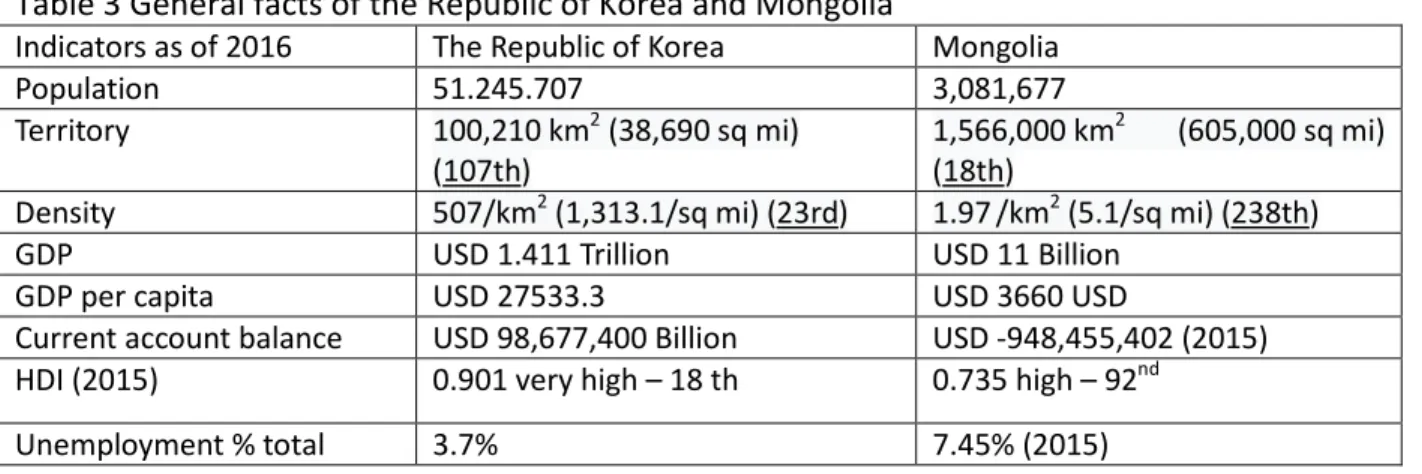
Table 3 General facts of the Republic of Korea and Mongolia
Indicators as of 2016 The Republic of Korea Mongolia Population 51.245.707 3,081,677 Territory 100,210 km2 (38,690 sq mi)
(107th) 1,566,000 km
2 (605,000 sq mi)
(18th)
Density 507/km2 (1,313.1/sq mi) (23rd) 1.97/km2 (5.1/sq mi) (238th)
GDP USD 1.411 Trillion USD 11 Billion GDP per capita USD 27533.3 USD 3660 USD
Current account balance USD 98,677,400 Billion USD -948,455,402 (2015) HDI (2015) 0.901 very high – 18 th 0.735 high – 92nd
Unemployment % total 3.7% 7.45% (2015)
Source: World Bank, World Economic Outlook Database; K-Developedia, Key development data for Korea, 2017 In that vein, it should be emphasized that, in addition to formal PPP success factors, in Korea, the necessary social capitals and culture have been nurtured in the past through its rich history, culture, and well-developed public policies. Korea has not only already well-developed fundamental infrastructure such as the accumulation of human and material capitals, but also the embedded, accountable, vision oriented state and well-developed mechanisms of collaboration with market players (Joseph E. Stiglitz, 1996; Danil Rodrik, 2008). Therefore, a
17
very careful consideration of contexts is required for a comparative policy analysis of PPPs of two countries, due to the relative immature socio-economic environment and low social capital of Mongolia.
Table 4 A short SWOT analysis of PPPs market in Mongolian context
STRENGTHS
A fast-growing economy due to the growing export of natural resources
A favorable policy and legal environment for the support of private sector participation in the infrastructure development
A favorable and stable legal environment for foreign investment and companies
Low input and labor costs
A growing competitive private sector
A high level of political will to reduce huge infrastructure gaps
WEAKNESSES Lack of proper knowledge about PPPs
Lack of incapable public and private sectors
Lack of financial ability of public and private sectors
Lack of technological innovation
Lack of institutional stability and accountability mechanism
Lack of political embeddedness
Lack of development of financial markets
Lack of implementation of laws
Lack of social capitals
OPPORTUNITIES
A high willingness of the Government to support the participation of the private sector in the infrastructure development
A high and urgent demand for various kinds of economic and social infrastructures
Urgent needs for public sectors to apply PPPs
Rapidly developing and growing PPPs market
A favorable business environment and a wide Government supports
THREATS Political instability
Fiscal shortfalls
Unclear legal framework for PPPs
Corruption
Inflation risks
Currency risks
Lack of PPPs professionals
Lack of accountability measures for public and private sectors
Literature review of Mongolian PPPs system
There are two vital studies that specifically focus on the PPP policy of Mongolia. The first one entitled, the “Public-Private Infrastructure Investment and Deposit Insurance in Mongolia” was conducted within the framework of Knowledge Sharing Program in 2011. This study was conducted right after the Adoption of the Concession Law of Mongolia in 2010, and a
18
comparative study with the Korean PPP system was made concerning the PFS system, legal framework, procedural guidelines and introduction of the limited deposit protection scheme in Mongolia (KDI, 2011).
The other study titled, the “Green Public-Private partnership for Public infrastructure in Mongolia: PPP Model and Technical Guidelines for Green Education Buildings” (hereinafter referred to as Green PPP study) was conducted in 2016, by the Global Green Growth Institute. This study mainly concerns the Mongolian PPP system in a general way and the study specifically focuses on PPPs for construction of eco-friendly educational buildings in Mongolia. The main findings concerning the key risks and challenges of the Green PPP study were divided into three categories: legal/institution, operational, and financial.
Table 5 Key risks and challenges of Mongolian PPP system
Area Key Risks and Challenges
Legal/
Institutional Weak legal framework for PPPs (the Concession Law, other associated laws); Lack of coordination among government stakeholders (between the central PPP authority and line
ministries and between the central and local governments, etc.); Lack of contract enforcement power;
Change in government policies on concessions and the focal agency affecting investor confidence;
Lack of planning/screening and rigorous project assessment in project preparation; Underdeveloped procurement system;
Lack of government emphasis on environmental sustainability in concession projects; Operational Lack of technical guidelines for project preparation and procurement;
Lack of competition in bidding;
No mechanism for performance evaluation for performance-based model PPP projects;
Technical risk of inappropriate technical schemes or poor technical design for green education projects;
Lack of incentives for green technologies;
Weak government capacity to manage complex PPP deals;
Lack of qualified private companies to undertake large-scale infrastructure projects; Financial Lack of long term finance in the local financial market;;
Financial risk relating to interest rate and foreign exchange rate fluctuation;
Limited state budget to meet long term payment obligations and/or to fill viability gap; Lack of incentives for green technologies;
Source: Global Green Growth Institute, p. 5, 2016.
Consequently, the policy recommendations given by the two studies are:
Legal/institutional Aspect: linking between the Law on Concession (PPP law) and other relevant laws; providing a clear definition of PPP; regulating performance-based payment or service contract PPP model as a PPP type; clarifying roles and responsibilities of concerned parties; PPP
19
project planning has to be in accordance with mid-to long-term infrastructure plans of the government and national investment priorities; involvement of the Ministry of Finance in the early stage of project development and approval, especially for service contract type PPP projects; setting up a consistent and transparent procurement process by law, supporting regulations and guidelines.
The Operational Aspect: creation of adequate databases; developing assessment guidelines and methodologies; avoiding direct contracting to increase market competition and ensure VFM; promoting participation of foreign companies and investors; establishing a performance evaluation (PE) system for performance-based model PPP projects.
Financial Aspect: introduction of ex ante evaluation system such as PFS, simplified PFS, Ex Officio Selection, as well as intermediate evaluation frameworks such as TPCM, RDF and RSF; and developing investments and risk sharing measures.
This study makes references for supporting arguments from these two studies where relevant. In general, the main distinguishing character of this paper would be to find out the causes of failure factors from the empirical data and cases analysis; analyzing the experiences and current problems of PPPs from a normative perspective; and proposing policy recommendations based on empirical and normative analyses that is suitable for the level of socio-economic development of Mongolia.
A Brief Introduction to Mongolian Context and Rationales for
improvement of the PPP system
Mongolia is a land-locked country in the North-East Asia and borders with the People’s Republic of China and the Russian Federation. Traditionally, Mongolia has been a nomadic country with a history of over 2000 years and, from 1930-1990eMongolia had been a socialist country. Most of the foundations of its cities and other infrastructure were initiated and built during 1960-1985 with the technical and financial support of the Soviet Union. However, starting from the 1990s, the country has made its transition to a market economy and with a new economic environment, the processes of economic liberalization, urbanization, industrialization, market privatization and open trade have started in Mongolia. Since the start
20
of the transition, the government has been the main player in the provision of infrastructure, with the private sector playing a limited role in sharing the burden in infrastructure development. In other words, since the transition, the collaboration between the private and public sectors has been underexplored. Therefore until very recently, no specific policies and regulations have been promoted by the Government of Mongolia (GOM) in the sphere of private sector support, development and collaboration, due to the promotion of a noninterventionist liberal market policy. Specifically, collaboration and partnership between the GOM and the private sector have remained unexplored in the area of infrastructure construction and provision. This fact might also be connected with the absence of competitive private companies, and a lack of human and knowledge capitals in the economy after the transition to the market economy. However, after a more than a decade of promoting a market economy, it has become clear that the state is incapable of successfully taking care of infrastructure development and provision. At the same time, the spread of globalization and NPM around the world as well as the appearance of national companies have come together to change policy perspective from being about state-led infrastructure provision to one that is partnership-oriented. As Mitchell-Weaver and Manning found out in the 1980s, the NPM paradigm driven by ‘market discipline’ had facilitated the quick promotion of PPPs amongst the Third World countries. (Graeme A Hodge et all., 2010). Overall, it could be understood that, in Mongolia, both the GOM and the private sector still have had very limited experiences in collectively and effectively working together, particularly in the area of infrastructure development and provision, which is one of the basic things to consider for the successful implementation of PPP policies in Mongolia.
In 2008, the Parliament adopted the National Development Strategy based on the Millennium Development Goals, where the importance of development and provision of various infrastructure in order to increase economic competitiveness and eliminate poverty, was strongly highlighted (National Development Strategy of Mongolia; Global Green Growth Institute, 2016). With the adoption of the National Development Strategy, public policy has been shifted towards the new direction of the promotion of a strong private sector, a high collaboration between public and private sectors, decentralization of government roles by
21
promoting the innovation and competition in public affairs, and so on. In particular, the National Strategy reflects ambitious aims for the infrastructure development such as: 1) to become a key electricity exporting country; 2) to develop and renew the intra- and intercity paved roads of the whole country; 3) to develop the transportation system (paved road and railway) in order to become a country that effectively ‘bridges’ Asia and Europe; 4) to develop railways so that mining products could be exported with fewer costs; and 5) while doing so, highly emphasizing in all spheres, the promotion of collaboration and partnership with the private sector.
Based on the National Development Strategy, the Private Sector Development Strategy was adopted in 2008. Based on the Private Sector Development Strategy, the State Policy on PPP and the Concession Law of Mongolia2 was adopted in 2009 and 2010 respectively. All of these policy documents explicitly express the strong will of the State to promote the private sector and to reduce the burden of the GOM for developing infrastructure, providing social services and reducing infrastructure gaps. The reason for mentioning all of these initiatives is that one would be able to get the impression that the country would really be able to solve its various infrastructure problems efficiently if the private sector would be significantly involved through mutual collaboration and promotion. In other words, the state-led policy of infrastructure development has now, significantly shifted to favoring a high level of private sector participation.
Key infrastructure gaps in Mongolia
The National Development Strategy has assigned ambitious goals for its infrastructure developments to address huge gaps in various infrastructures in the country due to its increasing population, urbanization and industrial needs (mainly the export of mining products).
Road transport
Mongolia’s paved road network is extensively underdeveloped. In 2015, paved roads that connect the main provinces, the capital and other small cities in the whole country have reached 44.7% of total road coverage (Interview with D.Ganbat, Minister of Roads,
2
Mongolia has taken technical assistance to set up PPP frameworks and to develop an institutional capacity for PPPs from IBRD/IDA (Graeme p.472).
22
Transportation, Construction and Urban Development, 2016). Mongolia’s National Development Strategy considers road infrastructure to be a key instrument in fostering regional development. It targets an ambitious goal to pave the entire national road network (11,250 km) by 2021 (Government of Mongolia Action Plan 2016-2020, 2016). Certainly, in order to achieve this ambitious plan, huge road projects would be required and that would certainly demand more advanced technologies, human skills, and management processes, which in many cases the private sector possesses. It should also be highlighted that the detailed implementing policy documents expressly reflect that certain paved road projects should be accomplished through PPPs (The Detailed Implementing Plan of the Action Plan 2016-2020, 2016).
Overall, together with Ulaanbaatar’s urban development plans, this would require building about 1,000 km of new paved roads each year (ADB, 2016). Moreover, the periodic maintenance of paved roads which had been ignored during the past years, would further raise the development and improvement of the paved roads of the country significantly (ADB, 2016). In 2016, MNT 55 billion was proposed to be allocated by the relevant Ministry for the repair and maintenance of roads, but only MNT 8 billion was approved by the Parliament (Interview with D.Zagdradnaa, 2016). This shows the insufficient budget of Mongolia to take care of the public infrastructure.
Rail transport
Mongolia has a large mineral resource export-oriented economy. In the past, railroads that crossed over big mining deposits to the Soviet Union were built with the assistance of the Soviet Union in order to export mineral, agricultural, and other products to the Soviet Union. Currently, new huge mining deposits are being explored and there is great demand to build railways from these deposits to the border of the Republic of China for transportation. However, currently, both paved and to a larger extent, unpaved roads are used for exporting these minerals, which is causing many environmental and social issues such as high costs of exportation, resulting dust, pollution, including conflicts with the local people and so on. Even nomadic people who have been living in the area for a long time, have had to leave the area due to the side effects and the impossibility of continuing a traditional way of living (Mining and Human Rights, National Human Rights Commission of Mongolia, 2012). Therefore, there is a
23
great demand to build new railways. For instance, some of these new railway projects are “Tavan tolgoi” a huge mining site is located 240 km from the north of the Chinese border and “Oyu tolgoi” is located 150 km from the “Tavan Tolgoi” railway project. This shows the extent of land area that would be affected.
Social infrastructure
The demand for social infrastructure is also an example of demand for educational facilities in Mongolia. The current capacity of educational facilities is overused due to a deficit of educational facilities in a country that has been driven by a rapid urbanization, population growth but a lack of a proper supply of new educational facilities during recent years. Therefore, decreasing the study shift of secondary schools from three to two was emphasized in the Government Action plan (Government of Mongolia Action Plan 2016-2020, 2016). Currently, secondary schools take 3-4 study shifts and classes enroll many more children than are the established standards and norms.
As of October 2015, children of kindergarten age and school age amount to 776,614; whereas the current capacity of educational facilities is able to host 472,082 children (Construction Development Center of Mongolia, Construction Need and Demand for Secondary School and Kindergarten in Mongolia, 2015). From this, although there are 505,343 school age children, the current capacity is only able to host 358,930 school age children. In other words, there is a need to build additional secondary schools for the surplus 146,413 children. For the kindergarten level, the current capacity is 113,15 whereas the total number of kindergarten age children is 271,251. In total MNT 1,758,282.8 million worth of investment is required in filling in the gap in education facilities (Global Green Growth Institute, 2016).
Electricity
In Mongolia, the need and demand for electricity rises about 7-8% each year. Mongolia imports the electricity from the Russian Federation, in total up to UD$ 40 million each year (Mongolian National Broadcasting, 2017). The Government Action Plan aims to fully supply its own electricity needs domestically, and then exporting to foreign countries, particularly to the Republic of China due the fact that the country has great potential in producing renewable electricity, particularly in wind, water and solar (Government of Mongolia Action Plan 2016-2020, 2016).
24
The financial gap in Mongolia for infrastructure development
In the past several years, Mongolia’s GDP growth has been decreasing due to fluctuations of mineral prices in the international market and due to an implementation of improper public policies which consist of extensive expenditure.
Table 6 Macroeconomic data of Mongolia
2011 2012 2013 2014 2015
GDP Growth Rate (%) 17.3 12.3 11.6 7.9 2.3
GDP per capita (USD) 3736.1 4329.0 4365.4 4168.9 3951.9
Total invest (%, GDP) 58.2 55.9 53.3 35.2 26.2
Average Inflation (%, CPI) 7.7 15.0 8.6 13.0 5.9
Current Account (%, GDP) -26.5 -27.4 -25.4 -11.5 -4.8
Capital Account (%, GD P) -3.7 -8.3 -7.5 -8.8 -5.1
Gross External Debt (USD
million) 9,627.5 15,386.5 19,022.1 20,942.3 21,829.5
Sovereign credit rating
(Moody’s) B1 B1 -> B2 B2 B2 -> Caa1 Caa1
Public debt, total (%, GDP) 32.7 51.3 67.3 76.5 N/A
External debt ratio 23.5 39.0 46.3 54.9 N/A
Domestic debt ratio 9.1 12.3 21.1 21.6 N/A
Ratio of actual spending over initial budget of the capital account in the budget law (%)
28.8 -18.1 -19.2 N/A N/A
Sources: IMF, World Bank, World Economic Outlook Database, EIU, Country Report Mongolia, Bank of Mongolia. Cross referenced from KDI School, 2017.
It should also be emphasized that the Mongolian capital market is underdeveloped and does not play a big role in long-term investments and financing. While the banking sector dominates on one hand, on the other hand, the capital, stock and bond markets remain greatly underdeveloped. For instance, GOM bonds account for 98% of the total bond market, which directly indicates the imbalanced development of the bond market of Mongolia.
Figure 1 Structure of the Mongolia Financial Sector Figure 2 Government Bonds
0% 20% 40% 60% 80% 100% 2009 2010 2011 2012 2013 2014 Banks Non Banks
MNT billions
25 Source: World Bank, World Economic Outlook Database, 2017
Currently, the Mongolian economy is considered to be in recession with a GDP growth rate of 2.3% in 2015. In 2017, the IMF approved UD$ 5.5 billion financial package for Mongolia to support the country in resolving its financial crises by 2021. In 2016, the government debt of Mongolia had risen rapidly to 90% of the GDP in 2016 (IMF, year). Overall, it could be analyzed that the financial capability of the government to effectively decrease its infrastructure gaps in the coming years looks to be quite gloomy.
Figure 3 Sovereign Credit Rating History of Mongolia
Source: Moody’s Investor Service, 2017
PPPs experiences in Mongolia: Identification of failure factors
This part makes analyses of relevant government reports, documents, PPPs statistics, contracts and yellow news, in order to find out factors contributing to the failures of PPP practices in Mongolia. 0 5 10 15 20 25 30 35 40 45 19 96 19 97 19 98 19 99 20 00 20 01 20 02 20 03 20 04 20 05 20 06 20 07 20 08 20 09 20 10
Govt Bond Corp. Bond
20 05 20 06 20 07 20 08 20 09 20 10 20 11 20 12 20 13 20 14 Jul -1 4 20 15 20 16 Au g-16 N ov-16 20 17 B1 B3 Ba
26
Legal and policy framework
Lack of clearly-defined priority PPPs and too many types of PPPs
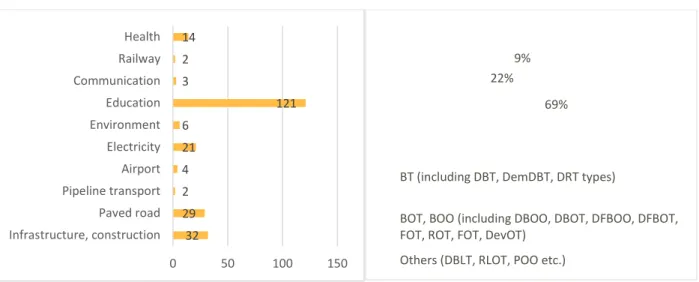
Resolution No. 317 of the GOM that approved the Concession List was adopted in 2010, and then amended in 2013 and 2015. The approved List of Concessions includes 234 projects consisting of 29 road and transportation, 121 education, 32 infrastructure, 21 energy, 6 environment, 14 health, 2 rail, 3 communications , 2 pipelines, and 4 airport projects. The GOM Resolution consists of two PPP procurement types; namely competitive tendering and direct agreement types. According to the Government Resolution, overall, 117 direct agreement (without competitive tendering) projects should be implemented. So far, 99 of these have been concluded without going through a competitive procurement process (Monitoring and Evaluation Report of Projects of Concessionaires, Tendering and Contract Implementation, Monitoring, Evaluation and Internal Audit Unit of National Development Agency of Mongolia, November, 2016 (hereinafter referred to as MER, 2016).
Figure 4 Concessions in the Concession List of Mongolia by types and by sectors
Various PPP types are also used for various projects in the Concession List such as build transfer types of BT, DBT, DRT, DDBT projects which are over 151; build operate transfer type of BOT, BOO, DBOO, DBOT, DFBOO, DFBOT, FOT, DevOT and other projects which are over 48, and the rest which are lease and other types of projects such as DBLT, RLOT, POO and so on. It could be seen that there are too many types of PPPs which might create a confusion, especially when there is a lack of proper guidelines and limited specialized human capacity to handle them. Moreover, DFBOT, DBOT or BOT has been used by indicating the same obligations of
32 29 2 4 21 6 121 3 2 14 0 50 100 150 Infrastructure, construction Paved road Pipeline transport Airport Electricity Environment Education Communication Railway Health 69% 22% 9%
BT (including DBT, DemDBT, DRT types)
BOT, BOO (including DBOO, DBOT, DFBOO, DFBOT, FOT, ROT, FOT, DevOT)
27
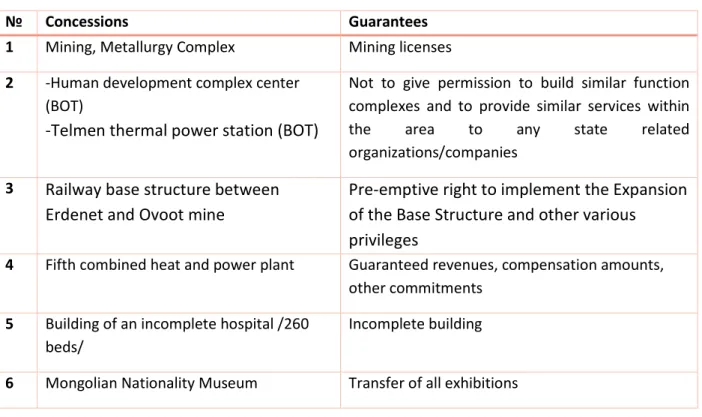
concessionaires notwithstanding their differing types of PPPs. The obligations to design, finance, operate and transfer were exactly same in DFBOT concession contract for the power station electricity transmission line at ‘Uvs province’ and the BOT concession contract for Telmen thermal power station (Power station electricity transmission line at Uvs province DFBOT, 2016; Telmen thermal power station BOT concession contract, 2013). In other words, concessionaires had the same responsibility to design and finance their own cost for building concession items in both BOT and DFBOT contracts. Importantly, it could be seen that there were no policies concerning priority PPP types depending on infrastructure types and public interest, based on the current application of PPP types and from the Concession Law which generally lists PPP types with simple definitions.
Lack of clarity of the best applicable PPP types and PPPs
The PPP Unit, line ministries and other relevant local governments had to conduct studies on necessary projects that could be implemented through PPPs arrangements and propose policy on the proper types of PPPs for the implementation. However, in practice, for any policy priorities and related projects on which government functions could be delegated and implemented by PPPs, the desirable and proper types of concessions have not yet been determined by the PPP Unit, line ministries, central and local governments. All in all, it is evidenced that the current integrated policy concerning PPPs, priority areas for PPPs implementation, and analysis how to better make use of the budget and relevant necessary research to do so, have been ignored since the implementation of PPP policy in Mongolia (ICL, 2015).
Procurement framework
A direct contracting and a lack of competition enhancing procurement process
Half of the concession projects included in the Resolution (117 out of 234) have been implemented without any competitive procurements process. According to the Concession Law of Mongolia, there are only a limited number of circumstances where a project could be implemented through the use of the direct contracting method such as: when it concerns national security; when one or several entities have a common interest with their own intellectual and related property; when no proposal was submitted in response to the tender
28
announcement; or when no proposals have met the requirements of the tender; in those cases the authorized entity would issue an opinion to conclude a direct agreement and submit it to the government or the respective Citizens’ Representatives Assembly (Concession Law of Mongolia, Article 17, 2010) for approval. However, many of the direct contracting type of projects are roads, educational facilities and other constructions that do not seem to be part of the exceptional cases as listed in the Concession Law. Consequently, this massive application of direct contracting are mainly connected to the exception of no proposals at all or no proposals that meet the requirements of tenders. There might be various reasons for this, such as an immature socio-economic development, less developed private sector competitiveness and so on, but for purposes of this paper, policy issues related to the application of direct contracting would be focused upon.
Figure 5 Concessions in the Concession List of Mongolia by procurement types
In terms of the timeframe, the bulk of RFPs were announced in the same time period given to accept bids for RFPs, which is approximately 2 months. For instance, 2 projects for construction of substations, and high voltage power transmission air lines between Baganuur-Choir (178 km) and Baganuur-Ulaanbaatar (130 km); 25 projects for construction of schools, kindergartens, sport complexes all around the country; again 9 huge education projects to build dormitories, kindergartens, schools, cultural centers; 8 projects to build agricultural production and technology parks were announced simultaneously in one announcement, all in 2016 (Invitation to participate in the tender process for the concessions of electricity projects, January, 2016; Invitation to participate in the tender process for the concessions for educational facilities, March, 2016; Invitation to participate in the tender process for the concessions for educational facilities, April, 2016; Invitation to participate in the tender process for the concessions for agricultural and technology parks, April, 2016). It is impossible to have a true and genuine competition in such a tight timeframe, given the level of private sector development in electricity, construction and other fields. Moreover, in most
Direct contractin g 117 projects … Competeti ve tendering 102 projects …
29
cases powerful companies have to some extent, oligopolistic characteristics whose participation in one project restricts further participation in other projects, according to the requirements stipulated by the Concession Law of Mongolia. In other words, the tendering practice could not promote competition for projects properly.
Furthermore, it has been established that, in general, there has been a very low level of participation of private parties in competitive bidding due to the unclear PPP procurement process that does not help the private sector to understand the benefits, the support from the government of Mongolia, guarantees, risks, costs, payments of each projects (The Assessment of the Implementation of Concession Law, Mongolian National Audit Office, 2015 (hereinafter referred to as ICL, 2015). This is obviously linked to an absence of proper ex ante CBAs of concession projects by the public sector. Consequently, this lack of ex ante analysis further leads to overly-generalized RFPs that do not give clear information to private parties for their informed decision making and active participation in bidding processes. For instance, no private partner had expressed their interest in bidding for 5 projects and only one unqualified bidder expressed their interest for 1 project out of 16 projects that were announced RFPs in 2014 (ICL, 2015).
Lack of proper ex ante analysis
It is the practice of procurement in Mongolia that a private party submits its general capability information along with technical and financial proposals. Based on that, the public sector would simply choose the best proposal and conclude a concession contract with the winner, without necessarily knowing what is the best proposal due to the lack of their own CBAs.
Only after the conclusion of a concession contract, would the relevant council of line ministries approve the design and the detailed technical and economic analysis of a concessionaire.
30
Consequently, it is clear that the public sector is poorly-equipped in choosing the best proposals due to the lack of their own analysis which could create information asymmetry and cause them a disadvantage in negotiations. It also could lead to biased decision-making that is based on a sole private party’s proposal. Also, agreeing on the amount of investment or the concession cost in the concession contract beforehand with private parties, restricts the public sector party in having flexibility to make various changes and amendments to the design and technical and economic analysis. This is not effective and such an illogical procurement process might mean that the public sector does not really much care about the cost efficiencies and to increase added value except to merely proceed with projects. Indeed, the study of the Global Green Growth Institute says, (Global Green Growth Institute, 2015)
“While MDBs and donor agencies have provided technical support and capacity development for evaluating the suitability of proposed PPP projects, pre-feasibility studies have not been commonly used in these assessments. Instead, selection by way of political haggling followed by post-selection justifications for the chosen projects have been more the norm. Moreover, though cost benefit analyses are legally required, their implementation has been limited due to lack of capacity and resources.”
Finally, it is questionable whether it is desirable to predetermine the procurement types in an inflexible manner, according to the approved Concession List of 2013 and 2015 from the beginning. As of October 2017, there are many projects that have not even announced tendering but are listed as direct contracting procurement projects. This logic and perspective are not compatible with the fast-changing capability of business environment and mobility of
An announcement of a Request to bid by the PPP Unit
Submission of instersts of participation by private parties
Selection based on general capability, financial and technical proposals of private parties by the PPP Unit
Negotiation and conclusion of a contract arranged by the PPP Unit
Submission of a design, technical and economic analysis by a concessionaire for approval, amendemnet to line ministries
31
the private sector. So, it is very difficult to analyze the logic and intention of the inclusion of the procurement type in the Concession list. An inflexible predetermined way – with exception for national security purposes - would only impede competition and create rent seeking and private sector excess profit-seeking behaviors that are detrimental to the public interest.
Lack of contract validation and execution
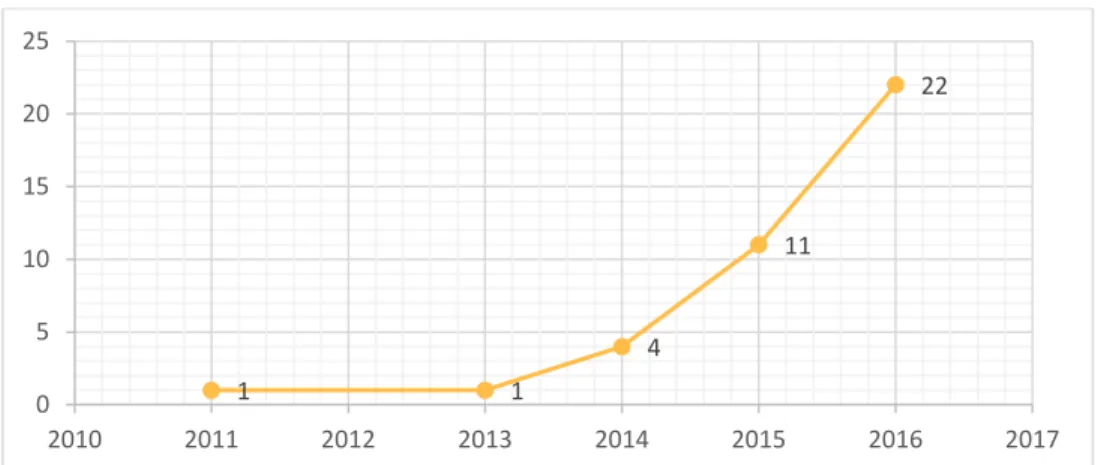
As of 2016, a competitive tendering has been announced for 58 projects out of 102 competitive tendering projects, and in total 121 contracts have been concluded out of 234 projects (MER, 2016). Out of 121 contracts, only 26 contracts are currently in force, 15 contracts were not validated and 80 were cancelled (MER, 2016). That means 95 projects out of 121 projects did not go into force although 80 projects were concluded and finalized and 15 to some extend went through the procurement process. In other words, approximately 21-22% of the projects have been successfully concluded in practice, which is too low in comparison to the efforts made by the contracting parties. There could be many reasons behind that such as lack of proper study, research and evaluation of potential concessionaries, lack of accountability and transparency, lack of trust, conflicts of interest, lack of institutional and human capacity and so on. Probably, all of them to some extent, have contributed to the failures.
For instance, as mentioned before, many projects were announced at the same time, thus this fact has greatly influenced the workload of the PPP Unit, which has only 4 specialists in total. Therefore, due to the increased workload, concession documents were not registered properly, reports were not properly written by working groups and overall, the quality of the tendering process such as management of tendering, evaluation, contract drawing, negotiating and so on, were negatively affected by this tendering management (ICL, 2015). The risk assessment of the performance of PPP Unit was calculated as highly risky at 80.7%, according to the risk assessment based on 13 indicators (ICL, 2015). Consequently, it is clear that the workload of the PPP Unit is not proportional to its workforce.
Institutional framework
Lack of integrated registration database of PPPs due to constant institutional changes and lack of human resources
No integrated registration systems nor electronic databases about concessions have been created at the local or even central levels, which again, does not comply with the
32
Concession Law. Due to the lack of database information, some of the local and national projects have ended up coinciding (ICL, 2015). The PPP Unit was not able to archive all documents and materials related to the tenders and keep them in a database as required by the Law. The Monitoring report explains that this problem of poor documentation and achieving was dir