Task Assignment and Migration in Wireless Sensor Networks via Task Decomposition
Heemin Park
Department of Computer Science, Yonsei University 134 Shinchon-dong, Sudaemoon-ku, Seoul 120-749, Korea
Jae Won Lee*
School of Computer Science, Sungshin Women’s University 34-da Bomun-ro, Seongbuk-gu, Seoul 136-742, Korea
e-mail: [email protected]
Abstract. Energy consumption of sensor networks are largely affected by task assignments to the nodes in the network. In this paper, a task assignment method to improve the performance of wireless sensor networks, which exploits task de-composition and transformation, is presented. The task assignment is formulated as an optimization problem by providing a cost function incorporating the task decomposition and transformation at the same time. To show feasibility of our proposed method, simulated annealing approach is adopted. We also provided a distributed task migration method to support run-time of the given task on the network. While executing tasks in a node, if the remaining energy is less than pre-defined thresh-old level, the tasks in the node will be migrated into a healthier neighbor node. The simulation results show that elaborate assignments and task decomposition can significantly improve performance of sensor networks.
Keywords:Wireless Sensor Networks, Task Decomposition, Task Allocation, Task Migration
1. Introduction
Many of the monitoring applications of Wireless Sensor Networks (WSN) such as fire detection, traffic monitoring and wildlife habitat monitoring often re-quire aggregation (or fusion) tasks like average, sum-mation, minimum and maximum. These aggregation functions can be performed at the base station node (or user node) after collecting data from all sensors or at the network nodes. The latter is preferred because it can save energy with less communications of which cost is higher than that of computation in wireless net-works [1].
Tasks of monitoring applications can be de-scribed as DAGs (Directed Acyclic Graphs), or task graphs which consist of a set of nodes (i.e. tasks) and arcs representing data transmission paths. Energy consumption of WSN is determined by the amount of communications and computations which are de-cided by the structures of task graphs and each task’s assignment to nodes in the network. So far, many re-searches have been done to optimize the tasks’ assign-ment for improving WSN’s performance. However, to our best knowledge, none of the previous works did try to change or modify the structure of task graphs
the techniques [9] that we applied to task assignment to WSN.
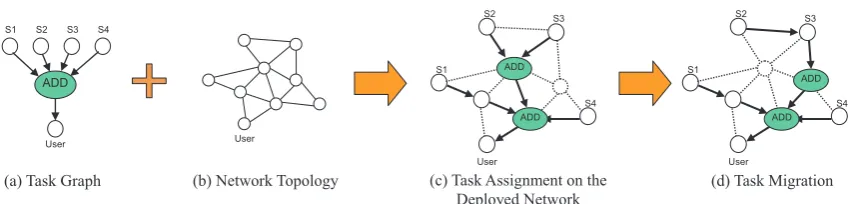
In many cases of WSN applications, there are opportunities to improve performances by modifying the structures of the given task graphs while maintain-ing their functionalities. Therefore, we propose a way to decompose given tasks into sub-tasks and trans-form them for better pertrans-formances in energy con-sumption. For instance, a four-input ADD operator can be decomposed into two smaller ADD operators and transformed into a tree as shown in Fig. 1 (c). Since the four-input ADD task was broken into two sub-tasks, there are more flexibility in assigning the task and the data transmissions could be done with shorter communications. The decomposed and trans-formed task graph must have the same functionality with that of the original one. How to deal with the task transformation and assignment at the same time is not a straightforward problem. For this, we formu-late the task assignment as an optimization problem of which cost function includes energy consumption and latency while taking into account the task de-composition and transformations in the optimization framework.
In addition to the task assignment via task de-composition and transformation, we further investi-gated the following. One of important characteristics of WSN is that if some of nodes dies by depletion of battery, then the entire network would no longer be functional. Therefore, each node itself needs to decide if tasks inside the node are better to be transferred to other nodes to make the entire network survive longer. Since this task migration procedure is hard to be managed in central servers, there should be some distributed mechanism to supportrun-timeof sensor networks. Even after depleting energy of some nodes which conducted computation and/or communication intensive jobs, there would be still healthy neighbor nodes nearby that have enough energy to continue do-ing the jobs. Then, if nodes of low energy could trans-fer their tasks to other healthier nodes, the lifetime of the network would be extended further. In Fig. 1 (d), it shows the case that when one of nodes of ADD task depletes its battery, the ADD task migrates to neigh-bor (right one) node and continues the task.
The remainder of this paper is organized as fol-lows. In section 2, we present the problem formula-tion and Secformula-tion 3 presents an implementaformula-tion of pro-posed task assignment and migration. Experimental results using an illustrative example are shown in Sec-tion 4. Then, we conclude in SecSec-tion 5.
2. Problem Formulation
A task for sensor networks is represented as a DAG (Directed Acyclic Graph) where nodes repre-sent functions to be performed in the sensor nodes and arcs represent data transmissions between the nodes. One of the nodes serves as a user node which will store the final results. A task graphG= (V, E)and a deployment of sensor nodesS ={si|i= 1,2, ..., n}
are given, wheren is the number of deployed sen-sor nodes. Let V = {vi|i = 1,2, ..., m} be a set
of tasks wheremis the number of tasks in the task graph. There are arcs(u, v) ∈ E iff data are trans-mitted from nodeuto nodev. Then the task assign-ment problem for wireless sensor networks can be defined as following. The problem is tofind a task transformation (including decomposition)T : G → G = (V, E) and a mapping (or assignment) of tasksA : V →S to the sensor nodes such that the total cost is minimized. The transformationTis a kind of synthesis from decomposable tasks to transformed task graphs. If the function of a task is commutative and associative, such as the summation, maximum, minimum and average, then the task can be decom-posed into tree structures. This can be done by split-ting an operator with large number of inputs into op-erators with smaller number of inputs. This decom-position process can be continued until the operator becomesatomic. The task which cannot be decom-posed nor transformed is called an atomic task in this paper. Once the tasks are decomposed and trans-formed into tree structures, there are more opportuni-ties to minimize the total energy consumption thanks to increased flexibility and shorter communications. When the tasks of large number of inputs are decom-posed into several sub tasks with less number of in-puts, the distance of communication links between tasks tend to be shorter than before. Then, there would be more chances to optimize the total energy con-sumption of the network by exploiting the fact that energy consumption of communication is much ex-pensive than that of computation. Multi-hops with short-range transmissions are more energy efficient than single hops with long-range transmissions.
3. Implementations
!#! ! $'
' \!
Figure 1. An Example of Task Decomposition, Transformation, and Migration: ADD Operator
various forms of combinations (e.g. modifications) in the solution space. For implementing simulated an-nealing, four things are required to be prepared: ini-tial solution, cost function, neighborhood solutions, and temperature scheduling [10]. As a conventional way of temperature scheduling is used, cost function and neighborhood solutions are mainly explained in this section.
3.1. Cost Function
We propose a cost function that can accommo-date decomposition, transformation, and assignment of the task graphs at the same time. The cost function should indicate which result is better when hopping different combinations of task assignments from the search space. We defined the cost function of trans-formed task graphGand its assignmentAas follows in order to accommodate various trade-offs:
Cost(G, A) =
vi∈V
Ecomp(vi)
+
(u,v)∈E
Ecomm(u, v)
+wE×vmax
i∈V{E(vi)} +wL×L(G, A).
(1)
In Equation (1),Ecomp(vi)is the energy consumed
for computation inside the sensor nodevi,Ecomm(u, v)
energy consumed at u for transmitting data to v, E(vi)the energy consumption at sensor nodevi, and
wEandwLare parameters to provide weights to
max-imum energy consumption and latency, respectively. The L(G, A)is the maximum time delay between the user node to sensor nodes and L(G, A) is de-fined to be the time of the longest path from all sen-sor nodes to the user node. It includes time for pro-cessing at each node and transmission of data be-tween nodes. The total cost is the summation of en-ergy consumption for communication and computa-tion for all tasks, and weighted summacomputa-tion of latency
and maximum energy consumption from all nodes. The meanings ofwE andwL are weights to adjust
the priorities of maximum energy consumption for each node and maximum latency of the assignment, respectively. Therefore, users just need to increase the weight that they want to set higher priority. In gen-eral, the life time of a network is the duration of the alive time of the node that dies first. Therefore, the en-ergy consumption of the node that consumes the most is necessary to be minimized. Assigning large val-ues towEcan force to minimizemaxvi∈V{E(vi)}.
When maxvi∈V{E(vi)} is supposed to be
mini-mized, there would be many nodes which consume just less energy than maxvi∈V(E(vi)). Therefore,
the total energy consumption also has been included in the cost function. By adjustingwE andwL, users
can adjust the cost function to meet the requirements of their applications.
All nodes are assumed to be time synchronized and have control knobs for shutdown and transmis-sion power control. This means that each node will sleep when it is idle. Also, if the distance between nodes is short, the transmission power can be adjusted so as to reduce energy for communication. Another assumption is that program code of task is portable like Java and thus it can be ported to all the types of node in the network. Energy consumption for com-putation of taskvi,Ecomp(vi), can be calculated as
follows.
Ecomp(i) =din(vi)× N(vi)
f(A(vi))×I(A(vi)) (2)
wheredin(vi)is the number of arcs coming to taskvi
(in-degree),A(vi)the sensor node at which taskviis
currently assigned,N(vi)the number of CPU cycles required to execute taskvi,f(n)CPU frequency of
noden, andI(n)active CPU current per second in noden. The term N(vi)
f(A(vi)) means execution time of
the taskvi. Thus, termfN(A((vvii)))×I(A(vi))represents
the energy consumption for computation of taskviat
\^`~ '!! ! #' '! '!! ! # ^! ' ! !' ' ' \~~ '! ! #' ! ! 8VHU 0$; 6SOLWWDVN 0$; 6
6 6
6 0$; \^`~ # # ! ! !' 8VHU 0$; 0HUJHWZRWDVNV LQWRRQH 0$; 6
6 6
6 0$; 0$; 8VHU 0$; 0RYHWKHWDVNWR RWKHUQRGH 0$; 6
6 6
6
8VHU
0$; GHVWLQDWLRQRI&KDQJHWKH WKHDUF
0$; 6
6 6
6
Figure 2. Neighborhood Solutions for Simulated Annealing
data only once from each sender node at a time in wireless networks, the task should be performed tiple times in order to receive multiple data from mul-tiple senders; to accommodate this,din(vi)is
multi-plied. Likewise, energy consumption for communica-tion is,
Ecomm(u, v) =Dw(u)×Etrans(A(u), A(v)) (3)
where(u, v)∈E,Dw(u)is the word size of output
data from tasku,Etrans(a, b)consumed energy to
transmit 1-bit from sensor nodeato sensor nodeb. Energy consumption to transmit data between two nodes is dependent on the underlying routing protocol implemented in the network layer. If a spe-cific routing protocol is adopted, it is enough to mod-ify Etrans(a, b) function according to the value of expected energy consumption to transmit data over routes between nodea tob using that specific pro-tocol. Although our method does not rely on any spe-cific routing protocol, we assume that the routes of the minimal energy consumption are used when assign-ing tasks. The routes of minimal energy consumption for all pair of nodes are obtained by Dijkstra short-est path algorithm [11] in the beginning of the as-signment program. For the nodes within radio ranges, the following general formula is used to calculate en-ergy consumption for data transmission between sen-sor nodesaandb.
Etrans(a, b) =α+β×d(a, b)γ (4)
Here,d(a, b)is the Euclidean distance between nodes aandb. The termsαandβare dependent on the radio hardware used in sensor nodes. The termγrepresents path loss coefficient which is normally from 2 to 4. Since the cost function we propose can be modified for various types of node, our task assignment frame-work can be applied to various kinds of platforms.
3.2. Neighborhood Solutions
Simulated annealing is an iterative improve-ment method which selectively adopts neighbor-hoods of current solutions based on the probabili-ties [10]. We devised four kinds of neighborhood so-lutions that can cover task assignments, decompo-sition, and transformations at the same time, which are MOVE_TASK, SPLIT_TASK, MOVE_ARC and MERGE_TASK. SPLIT_TASK, MOVE_ARC and MERGE_TASK are used for task decomposition and transformations. The four neighborhood solutions and their brief explanations are shown in Fig. 2. 3.3. Distributed Task Migration
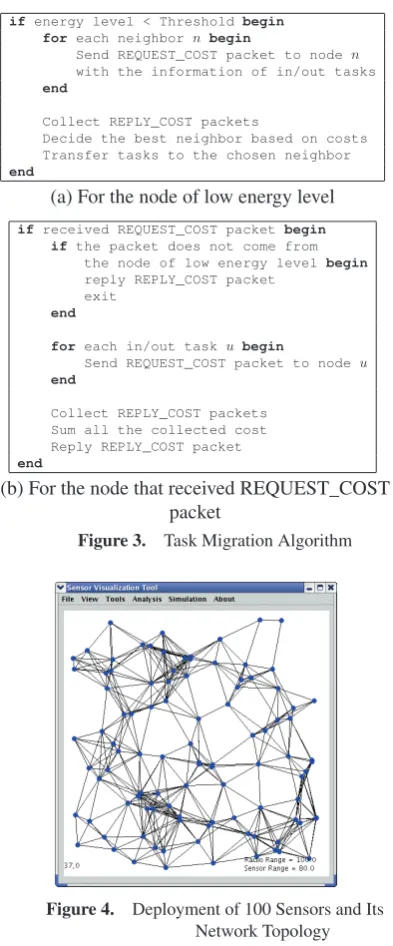
For run-time support of the sensor networks, a distributed task migration algorithm is developed. Ba-sically, nodes that have low energy level have respon-sibilities to migrate their tasks to healthier neighbor nodes before they die. To guarantee for the nodes to have time before they die, the nodes start search-ing neighbors for transferrsearch-ing task when they reach a certain level of energy (e.g. 5% remaining energy). Pseudo code of the algorithm is shown in Fig. 3. As shown in Fig. 3 (a), the node that reached low energy level initiates task migration process by sending RE-QUEST_COST packets to its neighbors. Neighbors will respond with the cost when the tasks would be migrated to that node. After collecting all the costs from neighbors, the node can determine which neigh-bor node is the best for the tasks to be transferred. If the neighbors receive REQUEST_COST packet, they calculate cost when tasks are transferred to those nodes by requesting cost to incoming and outgoing tasks of the originator task. Thus, determining the node for task migration is done in two phases.
4. Experimental Results
4.1. Experimental Setup
if energy level < Thresholdbegin
for each neighbor n begin
Send REQUEST_COST packet to node n
with the information of in/out tasks end
Collect REPLY_COST packets
Decide the best neighbor based on costs Transfer tasks to the chosen neighbor end
(a) For the node of low energy level
if received REQUEST_COST packet begin
if the packet does not come from
the node of low energy level begin
reply REPLY_COST packet exit
end
for each in/out task u begin
Send REQUEST_COST packet to node u
end
Collect REPLY_COST packets Sum all the collected cost Reply REPLY_COST packet end
(b) For the node that received REQUEST_COST packet
Figure 3. Task Migration Algorithm
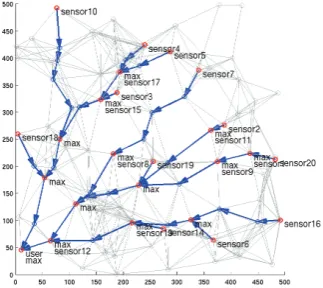
Figure 4. Deployment of 100 Sensors and Its Network Topology
with C language in Linux environment. Then we eval-uated the distributed task migration method using Sensorsim [12]. The Sensorsim is an enhanced ver-sion of the ns-2 network simulator [13]. The aggre-gation functions and distributed task migration algo-rithm are implemented inside the sensor application layer.
To generate a field of sensor network, 100 sen-sor nodes are randomly deployed on500m×500m area as shown in Fig. 4. Sensor node’s maximum ra-dio range is100m. The links between nodes represent that two nodes are within radio range each other. This means the communication is assumed to be symmet-ric.
Sensor1
MAX
User
Sensor2 Sensor3 Sensor20
256 - bit
256 - bit
Figure 5. Task Graph of Maximum of 20 Nodes Table 1. Parameters for Estimating Energy
Consumption
Item Value
α 100 nJ/bit β 0.07 nJ/bit/m2 γ(path loss coefficient) 2
Batter depletion model linear
Active CPU current in a node 42.23 mA
Current for radio transmission 79.14 mA
Current for radio reception 41.41mA
The sensor node used in the experiment is WINS node used in [14]. It equips 133MHz StrongARM S1100 processor and100mrange radio. Fig. 1 shows the parameters used in calculating energy consump-tion during task assignment. The termαincludes the energy consumption in electronics part in radio, and also includes the energy consumption of CPU when forwarding packets.
4.2. Evaluation of Proposed Task Assignment
The example we used for evaluation of proposed task assignment is to get a maximum value from 20 sensors out of 100 deployed sensors. The task graph is shown in Fig. 5. Since MAX operator is commutative and also associative, it can be decomposed and trans-formed whenever needed. For experimental purpose, 20 sensors are randomly chosen and their locations are fixed. The node at the left lower corner serves as a user node. We compared the estimated energy con-sumption for four cases: initial assignment, ment along minimal energy routes, optimized assign-ment for minimal energy consumption (wE = 0and
wL = 0), and optimized assignment for minimizing
(a) Initial Task Assignment without Task Decomposition and Transformations
(b) Task Decomposition and Transformation along Minimal Energy Routes
(c) Optimized Task Assignment for Minimal Energy Consumption (wE= 0andwL= 0)
(d) Optimized Task Assignment for Minimizing Maximum Energy Node (wE = 10andwL= 0)
Figure 6. Results of Task Assignments
Table 2. Estimated Energy Consumption [uJ] for Each Assignment Options
Part of Energy Consumption Initial Assignment Assignment along Optimized Assignments
Minimal Energy Routes wE= 0andwL= 0 wE= 10andwL= 0
Computation 6.4 10.5 10.2 10.2
Communication 14224.6 6807.7 4883.0 5205.6
Maximum 1184.4 205.4 178.3 147.8
Total 14231.0 6818.2 4893.1 6693.2
At the initial assignment, the task graph was not de-composed nor transformed. So, the MAX operations are assigned to the user node as shown in Fig. 6 (a). In this case of initial assignment, the user node
Obviously, even though data transmissions were done through minimal energy routes, this naive task assign-ment would spend much more communication cost because every sensor node needs to send data to the user node through long routes, and there would be heavy traffic near the user node.
It is easy to notice that if we decompose the MAX operator and place them at every intermedi-ate nodes which have more than one input arcs along minimal energy routes, the traffic would be reduced. This is a straightforward way of task decomposition and transformation as shown in Fig. 6 (b). We adopted this assignment as an initial task assignment (solu-tion). However, this is still not the optimal task as-signment for minimal energy consumption.
In Fig. 6 (c), the optimized task assignment for minimal energy consumption by our framework is shown. This result is obtained by settingwEandwL
to zero. So, the objective of cost function is to mini-mize the total energy consumption of the entire net-work. When any of the network nodes die, the entire network may not work properly, therefore it is desir-able for every node to have similar battery levels to extend the network lifetime. This can be achieved by minimizing the maximum of each node’s energy con-sumption. IfwEis increased, we can achieve this
pur-pose of minimizing the maximum energy consump-tion among nodes. In Fig. 6 (d), we get an optimized assignment to maximize the network lifetime by set-tingwE = 10andwL= 0.
As shown in Table 2, the total energy consump-tion and nodes’ maximum energy consumpconsump-tion could be significantly reduced by elaborate task assign-ments. The amount of consumed energy is for one sampling period, and it is assumed that dynamic shut-down control for CPU and radio, and power control for radio are available. The fourth column, “wE = 0
andwL = 0”, shows that the total energy consump-tion was reduced by more than 65% and 28% from that of the initial assignment and the straightforward assignment, respectively. Moreover, as shown in the last column of the table, “wE = 10andwL= 0”, al-though the total energy consumption increased a little bit, but still the nodes’ maximum energy consumption were reduced by more than 87% and 28% from those of the initial assignment and straightforward assign-ment, respectively.
4.3. Run-time Support: Distributed Task Migra-tion
To demonstrate task migration feature, we made an artificial example that has atomic tasks and the output sizes are different according to the operations. The task is “beamforming” to calculate line of bearing
U ser 32 - bit
Compress Compress Compress Compress Compress Compress
256 - bit 1024 - bit
BEAM
1024 - bit
FFT FFT FFT FFT FFT FFT Sensor1 Sensor2 Sensor3 Sensor4 Sensor5 Sensor6
Figure 7. Task Graph of Beamforming
0 100 200 300 400 500 600 700 800 900 1000 0
100 200 300 400 500 600 700 800 900 1000
sensor1
sensor2
sensor3
sensor4 sensor5
sensor6
fft1
fft2
fft3
fft4 fft5 fft6
beam
user
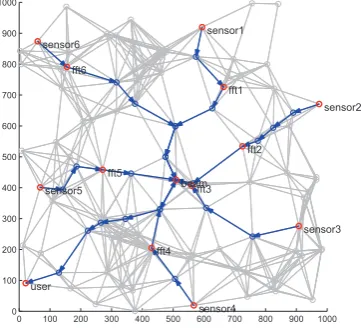
Figure 8. Optimized Assignments of Beamforming
(LOB) estimation from six sources. The task graph is shown in Fig. 7. We putcompresstask to reduce the output data size after FFT operations. Since beam-forming operation (BEAM) andcompress (COMP) task are computation intensive, the nodes at which BEAM and COMP are assigned would consume en-ergy rapidly. The size of output data of sensors and output of FFT operation are 1024-bit, and 256-bit and 32-bit after COMP and BEAM tasks, respectively. In this case, all the tasks are atomic, and the sensors and user node have fixed locations. Because of the big size of the tasks, no more than two tasks can fit into a node. With our energy-efficient task assignment method, we get an optimized task assignment as shown in Fig. 8.
as-48 71
18 7 65
47 58
49
25 36
42 8 76
4
13 54
80
10
Figure 9. Migration Paths of BEAM and COMP Task
signed to node 48 at first and the battery of node 48 is depleted at 97.5 mins. At 91 mis, node 48 reached below of 5% of energy level and migration of tasks to other node is required before its battery is entirely de-pleted. BEAM task migrates from node 48 through 71, 7, 18, 65 47 as battery reaches threshold level (5%). Since COMP task is also computation-intensive task COMP tasks also migrate to their neighbor. Thanks to task migration feature, user task can get in-formation until 136.5 mins which is 40% longer time than that without task migration feature. In Fig. 10, remaining energy of the nodes that BEAM task goes through are shown. As shown in Fig. 10, the battery in node 48 is consumed the first, then the battery in node 71 and node 7 and so on.
5. Conclusions
In this paper, task assignment for wireless sen-sor networks for minimal energy consumption has been presented. Task assignment should address not only communication and computation trade-offs, but it should also address task decomposition to enable flexible task assignments to network deployments. We propose a systematic approach to do task decom-position and transformation in conjunction with min-imization of the total energy consumption. The pro-posed method formulates the problem in an optimiza-tion framework and shows improvements in estima-tion by more than 28% for total energy consump-tion and maximum energy consumpconsump-tion in all nodes. For run-time support, a distributed task migration has been suggested. A network simulation with an illus-trative example showed that distributed migration of tasks at run-time can extended 40% longer the life-time of network.
Figure 10. Remaining Energy in Nodes for Task Migration of BEAM
References
[1] V. Raghunathan, C. Schurgers, S. Park, M. B. Sri-vastava. Energy-Aware Wireless Microsensor Net-works.IEEE Signal Processing Magazine, 2002, 19, pp. 40–50.
[2] M. Kafil, I. Ahmad.Optimal task assignment in het-erogeneous distributed computing systems, Concur-rency, IEEE [see also IEEE Parallel & Distributed Technology], 1998, 6, pp. 42–50.
[3] B. J. Bonfils, P. Bonnet. Adaptive and Decentral-ized Operator Placement for In-Network Query Pro-cessing.Information Processing in Sensor Networks (IPSN03), 2003, pp. 47–62.
[4] R. Kumar, M. Wolenetz, B. Agarwalla, J. Shin, P. Hutto, A. Paul, U. Ramachandran. DFuse: A Framework for Distributed Data Fusion,Proceedings of the 1st international conference on Embedded net-worked sensor systems, 2003, pp. 114–125.
[5] Y. Yu, V. Prasanna.Energy-Balanced Task Alloca-tion for Collaborative Processing in Wireless Sensor Networks.Mobile Networks and Applications, 2005, 10, pp. 115–131.
[6] B. Zhao, M. Wang, Z. Shao, J. Cao, K. C. C. Chan, J. Su.Topology Aware Task Allocation and Schedul-ing for Real-Time Data Fusion Applications in Net-worked Embedded Sensor Systems. 14th IEEE In-ternational Conference on Embedded and Real-Time Computing Systems and Applications, RTCSA ’08, 2008, pp. 293–302.
Wireless Sensor Networks. Mobile and Ubiquitous Systems: Networking & Services, MobiQuitous, 2009, pp. 1–6.
[8] M. Sensoy, T. Le, W. W. Vasconcelos, T. J. Norman, A. D. Preece.Resource Determination and Allocation in Sensor Networks: A Hybrid Approach.The Com-puter Journal, 2011, 54, pp. 356–372.
[9] G. D. Micheli.Synthesis and Optimization of Digital Circuits,McGraw-Hill, 1994.
[10] S. Devadas, A. R. Newton.Algorithms for hardware allocation in data path synthesis,IEEE Transactions on Computer-Aided Design of Integrated Circuits and Systems, 1989, 8, pp. 768–781.
[11] T. H. Cormen, C. E. Leiserson, R. L. Rivest, C. Stein.Introduction to Algorithms, The MIT Press, McGraw-Hill, 2001.
[12] S. Park, A. Savvides, M. B. Srivastava.Simulating networks of wireless sensors.Winter Simulation Con-ference, 2001, pp. 1330–1338.
[13] The Network Simulator - Ns-2, http://www.isi.edu/nsnam/ns/.
[14] A. Savvides, S. Park, M. B. Srivastava.On Mod-eling Networks of Wireless Micro Sensors. SIGMET-RICS 2001, 2001, 318–319.