San Jose State University
SJSU ScholarWorks
Dissertations Master's Theses and Graduate Research
Spring 2017
Exploring the Role of Mentor Teaching, Through a
Co-Teaching Model, in Secondary Teachers’
Beliefs, Practices, and Self-Efficacy Toward English
Learners: A Multiple-Case Study
Terry E. Flora
San Jose State University
Follow this and additional works at:https://scholarworks.sjsu.edu/etd_dissertations
This Dissertation is brought to you for free and open access by the Master's Theses and Graduate Research at SJSU ScholarWorks. It has been accepted Recommended Citation
Flora, Terry E., "Exploring the Role of Mentor Teaching, Through a Co-Teaching Model, in Secondary Teachers’ Beliefs, Practices, and Self-Efficacy Toward English Learners: A Multiple-Case Study" (2017).Dissertations. 7.
DOI: https://doi.org/10.31979/etd.4bp6-b882 https://scholarworks.sjsu.edu/etd_dissertations/7
EXPLORING THE ROLE OF MENTOR TEACHING, THROUGH A CO-TEACHING MODEL, IN SECONDARY TEACHERS’ BELIEFS, PRACTICES, AND
SELF-EFFICACY TOWARD ENGLISH LEARNERS: A MULTIPLE-CASE STUDY
A Dissertation Presented to
The Faculty of the Educational Doctoral Program in Educational Leadership San José State University
In Partial Fulfillment Of the Requirements for the Degree
Doctor of Education
by Terry E. Flora
© 2017 Terry E. Flora ALL RIGHTS RESERVED
The Designated Dissertation Committee Approves the Dissertation Titled
EXPLORING THE ROLE OF MENTOR TEACHING, THROUGH A CO-TEACHING MODEL, IN SECONDARY TEACHERS’ BELIEFS, PRACTICES, AND
SELF-EFFICACY TOWARD ENGLISH LEARNERS: A MULTIPLE-CASE STUDY by
Terry E. Flora
APPROVED FOR THE EDUCATIONAL DOCTORAL PROGRAM IN EDUCATIONAL LEADERSHIP
SAN JOSÉ STATE UNIVERSITY May 2017
Mark K. Felton, Ph.D. Professor, Teacher Education Department Rocío Dresser, Ed.D. Professor, Teacher Education Department Mary Streshly, Ed. D. Assistant Superintendent, Campbell Union
ABSTRACT
EXPLORING THE ROLE OF MENTOR TEACHING, THROUGH A CO-TEACHING MODEL, IN SECONDARY TEACHERS’ BELIEFS, PRACTICES, AND
SELF-EFFICACY TOWARD ENGLISH LEARNERS: A MULTIPLE-CASE STUDY by Terry E. Flora
This dissertation presents the findings of an exploratory, multiple-case study in which eight public secondary school teachers engaged in a professional development (PD) program centered on improving teacher instruction for English learners (ELs). The participants worked as co-teachers with teacher credential candidates, serving as both mentors and collaborators in professional development. The PD program focused on improving participants’ instructional practices with ELs as a way to support the high numbers of ELs enrolled in California public schools. The PD included cycles of inquiry, collaborative dialogue within a professional learning community, working with a
university consultant, ongoing reflection, and collaborating with a teacher candidate as a way to improve their own teaching practices. This study explores changes in mentor teachers’ beliefs, practices and self-efficacy toward working with ELs over the course of a seven-month professional development project. This research was viewed through the framework of Mezirow’s Transformative Learning Theory. Findings suggest that all participants entered the PD experience with positive beliefs toward the academic
capabilities of ELs and the desire to improve their own instructional practices. Data from this research reflects the need for PD programs to include differentiated, or
individualized, activities that help to reach the professional growth needs of participants who are in various stages of transformative learning.
ACKNOWLEDGEMENTS
My favorite movie character, Marty McFly, from my favorite childhood movie, Back
to the Future, once said, “If you put your mind to it, you can accomplish anything.” This
idea was one that I have always found to be true throughout various points in my life. Never has this idea been truer than with the process of writing this dissertation.
There are multiple people that must be acknowledged and thanked for being sources of strength, encouragement, inspiration, and/or support for my learning efforts. The first person that I must thank is my wife, Dr. Elissa Cruz: Your love and support during my journey throughout graduate school helped to carry me through, especially during the toughest times. To my daughters, Jessalyn, Kalliana, and Mariella: You girls were my source of inspiration. Thank you for giving me your unconditional love, even during the times when I had to work late or spend the weekend writing. I enjoyed taking breaks from school and work to attend softball games, coach soccer practice, attend dance recitals, participate in art classes, and help out with various school events. Being your dad continues to be the greatest privilege of my life. I look forward to supporting your life goals and helping you all to pursue your dreams. You three make your mom and I happy and proud every day. To my father-in-law and mother-in-law, John and Emma
Cruz: I cannot count the number of times that you both cooked for our family and took
care of the kids while I was in class, finishing a class assignment, or working on my research. Our family couldn't have made it through this experience without you both, and I am eternally grateful. To my mom, Barbara Povio: Your love and support throughout my life has helped me to pursue my goals. Thank you for your consistent help with the
kids, especially at key points of the dissertation-writing process. To my dad, Larry
Flora, the lessons that you have taught me on the golf course helped me to stay patient
throughout this research process. Thank you for teaching me to focus on “one shot at a
time.” Thank you to Travis and Jennifer Flora, Tricia Flora, Alana, Brian, and Miles for
your ongoing love and support at various points of my life. To my aunt and uncle,
Florentina and Irenio Ciriales, thank you both for supporting our family throughout my
time in graduate school. To The Luvara Family, thank youfor acting as my second family throughout various points of my life. I always have appreciated your family’s hospitality. Thank you to Jim and Katie Leadbetter (Team KLB), for being supportive friends, especially during pivotal moments of this research process. Thank you to the
Goodger and Padilla Families, for your sustained friendship, especially throughout the
duration of this program. Thank you to Dr. Arnold Danzig, Maria Muñoz, and my “First
Sixteen” cohort members for your collective support and inspiration during these last
three years. Thank you to Dr. Katya Aguilar forproviding me with the opportunity to work as a researcher during this past year. I have gained so much from this opportunity. Thank you to Dr. Lara Erving-Kassab, for her dependable support throughout this research process and for always giving me “ten minutes” whenever I needed someone to talk through my dissertation ideas. Thank you to Dr. Mary Streshly, for providing me with ongoing professional support throughout the entirety of the doctoral program. This support included the professional support she gave to me when I first applied to the program, her ongoing mentorship throughout the program, and her service on my dissertation committee. Thank you to Dr. Rocío Dresser for working with me as I
developed my research ideas, and for serving on my committee. Many of the ideas for this research emerged from our talks during our cohort’s time in Costa Rica. Finally, thank you to my advisor, Dr. Mark Felton, for taking me under his wing during the final year of this program. His guidance, patience, and wisdom inspired me to dig deeper into my research and to keep striving to do my best. He has made a positive difference in my life, and I am both a better educator and scholar as a result of our work together.
Dedication
This dissertation is dedicated to the memories of my grandmother, uncle, and friend: Margaret L. Flora, Michael J. Luvara, and Douglas R. Bourn
TABLE OF CONTENTS
List of Tables.……… xiv
List of Figures.……….. xv
List of Abbreviations.……… xvi
Chapter 1. Introduction.………. 17
Research Question………... 19
Purpose of Study……….. 19
Scope of the Study………... 20
Beliefs, Practices, and Self-Efficacy………... 21
Beliefs ………... 21
Practices………... 22
Self-Efficacy……….. 22
Problem of the Study: Achievement Gap………... 22
Background of the Problem………. 25
Immigration Patterns……….. 25
Teachers’ Experiences with a Diverse Student Population………... 26
Legislation: Impact of ELs……….. 29
United States Judicial Branch……… 29
United States Executive and Legislative Branches……… 31
No Child Left Behind (2002): Increased School Accountability.…….... 33
Every Student Succeeds Act (2015): Changes in School Accountability……….. 34
California Legislation: Impact on ELs………... 36
Challenges California Educators Face As They Support ELs….…………...37
Teacher Credentialing……… 37
Bilingual Programs……… 38
Bilingual Student Recognition………... 38
Summary……… 39
Significance of the Study………. 40
Background and Role of the Researcher………. 41
Frames of Reference……… 41
Positionality………. 44
Chapter 2. Literature Review………. 46
The Increased Need for Teacher Professional Development………... 46
Potential Benefits of Professional Development Participation……… 47
Professional Development Opportunities……… 48
Elements of Effective Professional Development………... 48
Components of Effective PD………... 49
Potential Benefits of Effective PD………. 51
Summary of Effective PD Elements……….. 52
Mentoring as Professional Development………. 56
Mentorship………... 56
Mentor Teaching……… 56
Gap in Mentoring Literature……….... 57
Coaching as Professional Development……….. 58
Elements of Instructional Coaching……….. 59
Benefits of Instructional Coaching……… 59
Building Trust with an Instructional Coach………... 62
Transformative Learning………. 62
Mezirow’s Transformative Learning Theory………. 63
Changing a Frame of Reference Through Transformative Learning……… 64
Beliefs……….. 65
Asset vs. Deficit Beliefs………. 65
Beliefs and Practices……… 67
Inquiry Practices………... 68
Cycles of Inquiry………... 68
Reflection and Collaboration………... 68
Summary……… 69
Instructional Practices……….. 70
Academic Language………... 70
Changing Instructional Practices………..………... 71
Self-Efficacy……… 71
Factors Influencing Self-Efficacy……….. 71
Impact of Self-Efficacy……….. 72
Gap in Self-Efficacy Literature ……….. 74
Chapter Summary……… 74
Chapter 3. Methodology……… 75
Purpose of Research………. 75
Research Design……….. 76
Timeline for Research……….. 77
Setting and Participating School Districts………... 77
Research Participants………... 79 Teacher #1: Ms. Portillo……….. 80 Teacher #2: Ms. Tuscano………... 81 Teacher #3: Ms. Johnson………... 82 Teacher #4: Ms. Barbera……….. 83 Teacher #5: Ms. Margaret……… 84 Teacher #6: Ms. Douglas………... 85 Teacher #7: Mr. Lorenzo………... 85 Teacher #8: Ms. Barnes………... 86 Data Collection……… 87 Survey Data………...88 One-on-One Interviews……… 88
Focus Group Interview……… 90
Coding of Data………. 92
Survey……… 92
One-on-One Interviews……….………... 93
Focus Group Interview………... 94
Inter-Rater Reliability………..……… 94
Cohen’s Kappa... 95
Ethical Considerations………. 95
Process of Informed Consent………... 96
Chapter 4. Research Findings……… 97
Survey Data Analysis: Whole Group……….. 97
Whole-Group Patterns: Beliefs……… 97
Cumulative Results………... 97
General Trends……….. 99
Adapting Instruction and Creating Academic Success for ELs………... 100
Student Connections and Collaboration………... 101
Adequate Amount of Time to Address Needs of ELs………... 101
Modifying Lessons for ELs………... 102
Increased Teacher Workloads When Teaching EL Students…………... 102
Changing Beliefs from The AL Project... 103
Summary of Survey Data: Beliefs………... 103
Whole-Group Patterns: Practices……… 104
General Trends………... 104
Mentor Teaching……… 105
Co-Teaching……….. 105
PLC Participation………... 106
Working with a University Consultant………... 106
Summary from Survey Data: Practices……… 106
Whole-Group Patterns: Self-Efficacy……….. 107
General Trends………... 107
Adapting Instruction for ELs………... 108
Using EL Data to Increase EL Learning……… 109
Addressing Needs of ELs with Increased Resources………... 109
Items with Mixed Responses………... 109
Summary of Survey Data: Self-Efficacy………... 111
Collective Summary: All Survey Data……….……... 111
Whole Group Trends: One-on-One Interviews……….………..……… 112
Collective One-on-One Interview Data Trends: Beliefs…….……..…..….. 113
Perceived Skills/Abilities of ELs………... 114
Positive Themes………... 114
Negative Themes………... 115
Summary………... 116
Positive Themes………... 116
Negative Themes………... 116
Summary………... 117
Views of the Teaching Profession………... 117
Positive Themes………... 118
Negative Themes………... 118
Summary……...………... 119
Collective One-on-One Interview Summary: Beliefs……….………. 119
Collective One-on-One Interview Data Trends: Practices………... 120
Co-Teaching……….………..……… 121
Making Changes During Instruction………... 122
Student-Teacher Ratio………... 122
Co-Planning………... 123
Summary….………... 124
Supporting Students in the Classroom………... 124
Instructional Support Strategies………... 124
Student Engagement Strategies………... 126
Summary………... 127
School Supports for ELs: Support Courses………... 127
Lack of Support for ELs……...………... 128
Teacher as EL Support………... 129
Summary……...………... 129
Reflective Dialogue………... 130
Increased Student Academic Support………... 130
Collaboration………... 131
Self-Improvement………... 131
Summary……...………... 132
Supporting Students in the Classroom: Scaffolds……….. 132
Content-Specific Scaffolds………... 132
Skill-Building Scaffolds………... 133
Summary……...………... 135
Collective One-on-One Interview Data Summary: Practices……….. 135
Collective One-on-One Interview Data Trends: Self-Efficacy…………... 136
Two Teachers in the Room……… 136
Student-Teacher Ratio………... 137
New Perspectives………... 137
Increased Student Support………... 138
Summary……...………... 139
Time to Implement Practices………... 140
Teaching Alone………... 140
Co-Teaching….………... 141
Time for Professional Growth .………... 142
Summary……..………... 143
External Challenges………... 144
Self-Efficacy in Teaching ELs………... 144
Ongoing Struggles………... 145
Summary……… 146
Collective One-on-One Interview Data Summary: Self-Efficacy……... 146
Individual Trends: One-on-One Interviews……… 146
Mezirow’s Theory of Transformative Learning……… 146
Learning Categories………. 148
Overview……… 148
Categorizing the Participants………. 149
Entering Transformation……… 150
Refining Transformation……… 150
Transformed………... 150
Group One: Entering Transformation……….. 151
Ms. Barbera……… 151
Ms. Barnes……….……… 154
Ms. Portillo……….………... 159
Group Two: Refining Transformation………... 161
Ms. Douglas………... 161
Ms. Johnson………... 164
Ms. Tuscano………... 167
Group Three: Transformed………... 170
Mr. Lorenzo………... 170
Ms. Margaret………... 174
Chapter 5. Conclusions and Recommendations……… 179
Research Question………... 179 Discussion……….……….. 179 Beliefs……… 179 Practices………. 180 Self-Efficacy………... 181 Transformative Learning………... 182
Stages of PD Participant Transformation……….…………... 183
Entering Transformation………... 183
Refining Transformation………... 184
Transformed…..………... 185
Summary ……….……… 187
Transformative Learning Implications……… 188
Limitations of the Study……….. 190
Participants………. 190
Use of Interviews………... 191
Research Implications……….. 192
Recommendations for Further Study………... 193
School District Administrators ………. 195
Secondary School Site Administrators ………. 197
Conclusions……….. 199
References……….. 201
Appendices………. 212
Appendix A-Survey-Beliefs and Self-Efficacy Toward ELs……….. 212
Appendix B- One-on-One Interview Questions……….. 224
Appendix C- Focus Group Questions and Script………... 226
Appendix D- Research Consent Form………... 229
Appendix E- One-on-One Interview Coding System……….. 231
LIST OF TABLES Table 1.
Table 2.
Frequency Table of Survey Responses: Positive Beliefs ………... Frequency Table of Survey Responses: Negative Beliefs...
98 99 Table 3. Frequency Table of Survey Responses: Practices... 105
Table 4. Frequency Table of Survey Responses: Self-Efficacy………. 108
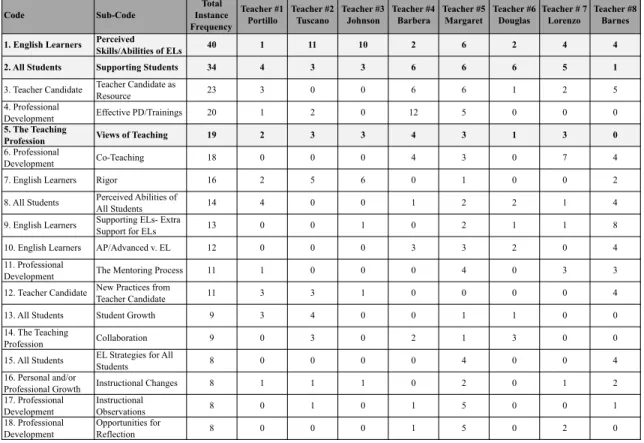
Table 5. One-on-One Interview Frequency Table: Beliefs... 114 Table 6.
Table 7.
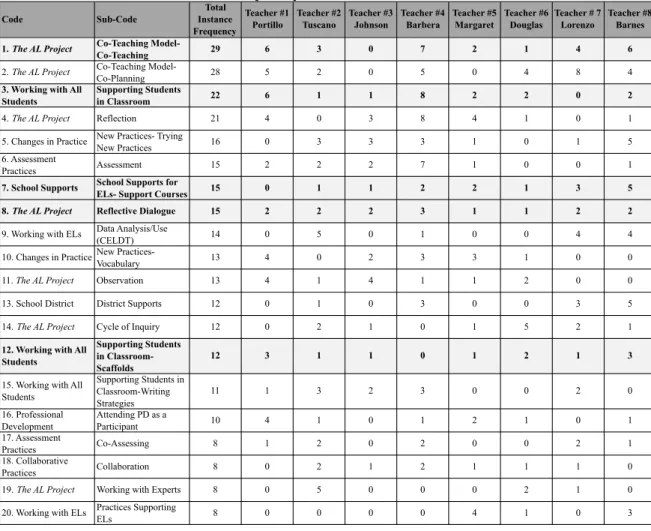
One-on-One Interview Frequency Table: Practices………. One-on-One Interview Frequency Table: Self-Efficacy………..
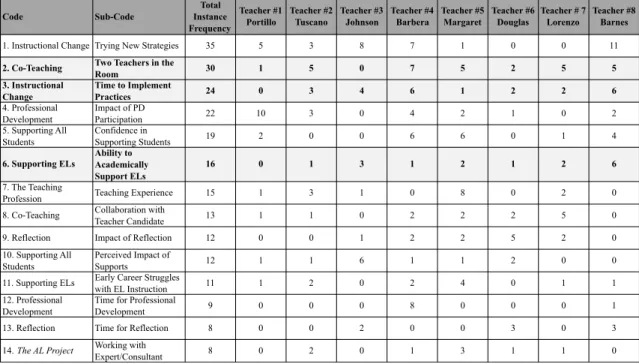
121 136
LIST OF FIGURES
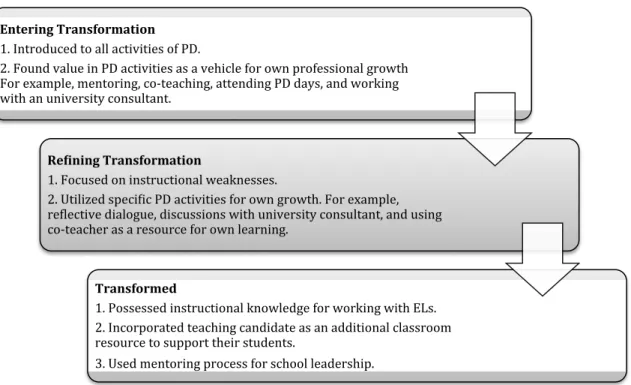
Figure 1. Schematic representation of the stages of PD participant
LIST OF ABBREVIATIONS AL – Academic Language
AP – Advanced Placement
API – Academic Performance Index
AVID – Advancement Via Individual Determination AYP – Annual Yearly Progress
BICS – Basic Interpersonal Communication Skills CALP – Cognitive Academic Language Proficiency CCSS – Common Core State Standards
CELDT – California English Language Development Test EL – English Learner
ELA – English Language Arts
ELD – English Language Development EO – English-Only
ESEA – Elementary and Secondary Education Act (1965) ESSA – Every Student Succeeds Act (2015)
K – Kindergarten
NCLB – No Child Left Behind (2002) PD – Professional Development
PLC – Professional Learning Community RFEP – Redesignated Fluent English Proficient
SDAIE – Specially Designed Academic Instruction in English SEI – Structured English Immersion
SFUSD – San Francisco Unified School District STAR – Standardized Testing and Reporting System U.S. – United States
CHAPTER 1
Introduction
Public school teachers are faced with the daily task of instructing every student that walks through their classroom doors. All students enter their classrooms with a wide range of academic needs, and it is the job of public school teachers to meet the needs of all students. These needs are especially prevalent for students who are English learners (ELs). Teachers arrive to their classrooms with a variety of skillsets. These skillsets may not always match to the academic needs of their students. To better reach the needs of the students, it may be necessary for teachers to engage in some type of professional development (PD). Research has shown some elements of PD to be more helpful than others. The researcher of this exploratory, multiple-case study takes an in-depth look at a semester-long PD program that is centered on mentor teaching and co-teaching as a form of PD for secondary public school teachers. The researcher views this study through the lens of EL support, and designed the study to add to the existing research on effective PD. Additionally, the researcher explores the ways in which mentor teaching serves as a context for promoting the beliefs, practices, and self-efficacy associated with student learning outcomes in ELs and native English-speakers. More specifically, the researcher investigates the experiences of eight mentor teachers as they participated in a PD
experience that contains elements of co-teaching that follows the work of Dieker and Murawski (2003). These teaching elements include: a) planning lessons, b) co-instructing lessons, and c) co-assessing student work. During this study, the mentor teachers were co-teaching with a teacher candidate as part of the clinical model
component of the single-subject teaching credential program at a local university. The researcher explores the ways that mentoring, through a co-teaching experience,
influences the mentors’ beliefs, practices, and self-efficacy when working with ELs. Jack Mezirow’s Transformative LearningTheory is utilized as the framework for exploring the effect that PD experiences had on the participants (Mezirow, 1991; Mezirow, 1997). Mezirow’s theory offers relevant insight on the research participants’ points of view, habits of mind, and a set of previous assumptions that Mezirow calls “frames of
reference.” This theory is explained in more depth in Chapter 2 and is used to categorize some of the research findings in Chapter 4 and to frame the discussion in Chapter 5. More specifically, this theory frames the discussion of the relationship between the PD experience, and the mentor teachers’ beliefs, practices and self-efficacy toward their work with ELs.
The researcher specifically designed this study to investigate the PD participants who were working within a public secondary school containing high numbers of ELs. During the PD experience, the mentor teachers continued to work at the school in which they were already serving. The mentor teachers who participated in this study were volunteers from a larger group of mentor teachers who volunteered to take part in the PD program. Data analyzed in Chapter 4 were obtained through the collection of individual surveys, one-on-one interviews, and a focus group discussion comprising of all eight participants. The data obtained through the course of this study were used to address the research question components for this study.
Research Question
What is the relationship between mentoring, in a professional development program focused on co-teaching, and the mentors’ professional growth in the following areas?
a) Beliefs about the academic capabilities of English learners. b) Practices toward English learners.
c) Self-efficacy in their work toward English learners.
Purpose of the Study
The purpose of conducting this multiple-case study is to explore the PD experiences of the eight participating mentor teachers as a way to learn more about how to best support their professional growth toward teaching linguistically diverse students.
Changing teachers’ instructional practices and increasing self-efficacy are not easy to achieve. Research has shown that teachers with low levels of self-efficacy toward teaching ELs tend to feel unprepared in teaching ELs and may be hesitant to change their classroom practices (Guskey, 2002). Whitworth and Chiu (2015) found that teachers maintained low feelings of self-efficacy when they previously participated in a PD program, but failed to experience positive results in their own instruction or the achievement levels of their students. These findings demonstrate the difficulty in changing teacher practices and the importance of increasing levels of teacher self-efficacy.
The findings from this study can be used for the following outcomes: a) To bring light to people involved in mentoring programs in order to find what is working in mentoring programs; b) To help disseminate the information on what is working in mentoring programs so that other educators involved in mentoring programs can use
these strategies for future PD programs; c) To provide feedback to educators designing mentoring programs for more impactful teacher PD experiences; and d) To help teachers understand the importance of PD as a way to enhance instruction practices, promote positive beliefs, and increase self-efficacy toward working with ELs.
Scope of the Study
The scope of this study occurred within the sponsoring university’s semester-long co-teaching PD program called, The Academic Language Project (The AL Project). This PD program, grant-funded through the U.S. Department of Education, worked in partnership with the sponsoring university to provide participants with a co-teaching experience that focused on multiple areas. The first area, “co-planning,” occurred when both the mentor and the teacher candidate collaborated on the planning of each class lesson. The second area, “co-teaching,” occurred during the co-instruction of each classroom lesson. The third area, “co-assessment,” occurred as the mentor and teacher candidate analyzed their students’ quizzes and/or exams. The final area was the participants’ engagement with multiple, student-outcomes focused, cycles of inquiry. Cycles of inquiry afforded the participants the opportunity to take an in-depth look at students’ work, to see what practices worked best on students and which students were academically struggling.
The data collected in this study were used to examine the various co-teaching and PD experiences of the eight participating mentor teachers during their participation in The AL Project. Additional areas that were examined during this study include the role that the relationship between the mentor teacher and the teacher candidate played in the overall PD experience, and the participant impact of engaging in ongoing professional
learning community (PLC) meetings. There were other mentors in The AL Project who participated in the full PD experience but did not wish to participate in this study. All project participants attended four PLC meetings throughout the fall, 2016 semester. The PLC meetings included all co-teaching partners and university professors leading The AL Project. Chapter 3 includes specific details on data collection and the participants.
Beliefs, Practices, and Self-Efficacy
In the scope of this research, the terms “beliefs,” “practices,” and “self-efficacy” pertain to participating teachers’ perception of how well they can promote ELs’ academic skills.
Beliefs. In this study, the term “beliefs” refers to Richardson’s (1996) definition of a teacher’s overall outlook or general disposition toward a particular group of students. For this study, “beliefs” is used in relation to the participating teachers’ dispositions toward teaching ELs in their mainstream classroom. According to research from Youngs and Youngs (2001), positive teacher dispositions toward ELs can have a positive impact on overall student learning. The same could be said for the negative impact that occurs when a teacher holds negative dispositions toward ELs. Additionally, research findings from Reeves (2006) indicate that teachers may carry a negative disposition toward teaching ELs because of the increased workload in providing appropriate academic supports. Examples of “beliefs” in this study include whether or not ELs should be provided with language support, rigorous curriculum, and an academic schedule consisting of mainstream, English-only classes. Additionally, “beliefs” refers to the
teachers’ overall outlook that ELs can academically achieve at high levels given the appropriate academic supports.
Practices. The term “practices” refers to a variety of inquiry and evidence-based
pedagogy that will lead to increased learning for students. According to the research of Timperley, Wilson, Barrar & Fung (2008), these practices include the analysis of student achievement, engagement in content-specific PD, teachers’ abilities to assess student skills, collaborative learning opportunities with colleagues, working with external content experts, multiple opportunities to model teaching practices, and opportunities to engage as an instructional coach. According to Timperley, Wilson, Barrar & Fung (2008), these practices must be integrated through sustained PD to support both the learning and instructional practices of teachers.
Self-efficacy. The term “self-efficacy” refers to the strength of people’s convictions
in their own effectiveness toward a given situation (Bandura, 1977). Factors that influence self-efficacy include past accomplishments, experiences of others, verbal persuasion from others, and emotions aroused from a given situation (Bandura, 1977). For this study, self-efficacy refers to the belief held by the teacher that he or she can positively impact student learning.
Problem of the Study: Achievement Gap
The “Standardized Testing and Reporting System,” known as STAR, was developed by California state legislators as a result of the federal accountability measures imposed by the No Child Left Behind Act of 2002. The purpose of creating STAR was to measure student progress in mathematics and English language arts (ELA). The results for the
yearly STAR test were used to calculate each school’s performance, known as the Annual Performance Index (API). The API scoring system used ELA and mathematics STAR test scores to generate a school’s API score. The API scoring system could range from as low as 200, to as high as 1000, and were used to report the students’ performance to both state and federal accountability mandates (www.cde.ca.gov).
Student performance data from 2013, the most recent API data, were obtained from the California Department of Education website on November 21, 2016. These data reflect a large achievement gap between California’s ELs and their English-proficient counterparts. In 2013, the average overall combined API score for all California students in all grades was 790. California’s Asian student population averaged a score of 906, White students averaged 852, Hispanic/Latina/o students averaged 743, ELs averaged 717, African-American students averaged 707, and students with disabilities averaged 616 (dq.cde.ca.gov/dataquest).
These data points, collected from grades two through six, seven through eight, and nine through 11, suggest that White and Asian students significantly outperformed all of their peers, including ELs. The same data, when broken down by grade level, reflect large-scale academic challenges of California’s ELs attending school at the secondary grade levels. While all subgroups showed a decline in API scores through elementary, middle, and high school, no group showed a larger score decline than ELs.
For example, a snapshot of all Asian students attending California’s public schools shows scores of 906 (grades two through six), 927 (grades seven through eight), and 876 (grades nine through 11). These data represent a 30-point drop between Asian students
attending elementary school in 2013 and Asian students attending high school in 2013. Additionally, White students scored 874 (grades two through six), 855 (grades seven through eight), and 819 (grades nine through 11), which is a 55-point drop. In contrast, ELs scored 758 (grades two through six), 700 (grades seven through eight), and 651 (grades nine through 11). These data represent a 107-point drop between ELs attending elementary school in 2013 and ELs attending high school in 2013, a significant difference when compared to other subgroups. This is the second largest discrepancy in API scores out of all subgroups in California’s public schools, with students with disabilities
showing a 137-API point drop. Additionally, test scores from African-American students showed a 73-API point drop, and Hispanic/Latina/o students showed a 57-API point drop (dq.cde.ca.gov /dataquest).
The API scores mentioned above demonstrate that the academic achievement gap vastly widens for ELs as they move up from elementary to middle and later to high school. This is the reason why it is essential that teachers in the upper grades receive effective PD so that they can in turn increase the academic performance of ELs. Equally important to this discussion is the size of the EL population enrolled in California public schools. In 2013, there were over 1.46 million ELs accounted for in the API data. This is a large portion of all students enrolled in California’s public schools when compared to the approximately 407,000 Asian students, roughly 1.2 million White students,
approximately 2.44 million Hispanic/ Latina/o students, roughly 507,000 students with disabilities, and approximately 298,000 African-American students. These 2013 API data not only suggest a widening achievement gap for ELs, but also a widening
achievement gap for one of the largest student subgroups in the California public school system (dq.cde.ca.gov/dataquest).
Background of the Problem
Immigration patterns. Changes in globalization and immigration patterns have led
to sustained increases in the K-12 enrollment of ELs throughout the United States (Fix & Passel, 2003; Huntington, 2004). These changes have impacted California schools more than most other states (Fix & Passel, 2003; Gándara & Rumberger, 2009). Statistics from the California Department of Education database support Fix & Passel, 2003; Gándara & Rumberger, 2009 findings that show sustained enrollment trends for ELs in California public schools. In 1997, California had over 1.38 million ELs enrolled in grades K-12. These numbers spiked in 2004 when California served nearly 1.6 million ELs in grades K-12. Data from 2015 show that EL enrollment held steady at 1.39 million students. These data show consistent increased EL enrollment trends dating back to the late 1990s. Since 2002, California’s overall student enrollment has stayed relatively steady at
roughly 6.2 million students, making EL enrollment, which has fluctuated between 1.3 and 1.5 million students, a large percentage of California’s 6.2 million K-12 student population (dq.cde.ca.gov/dataquest).
Providing academic and linguistic support for ELs has become an important responsibility for California teachers due to the changing levels of language diversity within California’s public schools (Gándara & Rumberger, 2009). As recorded in the data last reported by the California Department of Education database, there are over 60 languages spoken in homes in California, with Spanish being the most commonly spoken
second language. For example, 1.1 million students speak Spanish at home, making Spanish speakers the largest group of second-language learners in California. This is a large percentage of the EL population, given that there are approximately 30,000 Vietnamese-speaking ELs in California schools, the second most commonly spoken language (dq.cde.ca.gov/dataquest).
Teachers’ experiences with a diverse student population. Long-serving secondary
education teachers are likely to have encountered increases in student language diversity during their career. In contrast, newer teachers may have entered the profession with high levels of language diversity already existent in California classrooms. The ongoing increases in language diversity within California public schools have left many teachers struggling to meet the academic needs of ELs in their classroom (Ballantyne, Sanderman, and Levy, 2008). Research has shown that teachers who struggle, because they are unprepared to help students meet their academic needs, often feel frustrated,
disillusioned, and can leave the profession (Ballantyne, et al., 2008). The academic delivery and support for ELs has increasingly fallen on the shoulders of California teachers, many who are ill equipped to meet these challenges. This trend highlights the importance of engaging California teachers in a well-structured PD so that they become knowledgeable toward academically supporting ELs. In doing this, they can increase the opportunities for ELs in school.
Due to the increasing number of California’s ELs who are being placed in
mainstream classrooms, it is imperative that teachers be well versed in strategies that promote second-language acquisition (Dresser, 2013; Gándara, Rumberger,
Maxwell-Jolly, & Callahan, 2003; Hakuta, 1974; Krashen, 1981). Teachers not familiar with best practices on second-language acquisition tend to focus on teaching students lower-level skills such as spelling and form, rather than higher-level skills such as synthesizing and analyzing (Hakuta, 1974). This leaves many ELs unprepared to meet the academic challenges they will face in the upper grades (Cummins, 1980; Dresser, 2013). One of the challenges students face is reading comprehension, because as students get older, the language in the textbooks becomes more complex. ELs often lack the necessary
vocabulary and reading comprehension strategies to work in academic settings, creating the need for increased academic support at the secondary school level (Bunch, Abram, Lotan, & Valdéz, 2001). This is why it is essential that teachers teach students not only how to convey ideas but also how to understand messages in their second language (Cummins, 1980; Krashen, 1981).
The increasing numbers of ELs, and the large numbers of unprepared teachers, have left California public schools with a shortage of teachers who are able to face the challenges of academically and linguistically supporting California’s EL students (Dabach, 2015; Gándara, et al., 2003).
The fact that there is a shortage of teachers who are trained to teach in a linguistically diverse classroom creates a challenge for educators in charge of universities’ teaching credential programs. Thus, university educators must discover ways to adequately prepare new teachers to meet the academic needs of ELs while also offering PD support programs for veteran teachers struggling to teach ELs. Professional development programs can range in duration and content focus (Guskey & Yoon, 2009). According
to the work of Guskey and Yoon (2009), some of the more effective qualities of PD programs include: a) opportunities for teacher collaboration, b) opportunities to work with an outside expert, c) a sustained PD experience over a long period of time, and d) content-specific collaboration. According to the work of Garet, Porter, Desimone, Birman, and Yoon (2001), other elements of effective PD include: a) collaboration, b) opportunities for reflection, and c) group dialogue. Elements of effective PD are discussed in more detail in Chapter 2.
Even though the amount of PD programs offered to teachers has increased in recent years, there are large numbers of teachers who do not participate in these opportunities (Rumberger & Gándara, 2004). To further complicate matters, despite best efforts, many teachers who do participate in various PD programs do not end up integrating the new instructional strategies into their daily classroom practices (Smith & Gillespie, 2007; Whitworth & Chiu, 2015). It is important that PD programs be refined to contain more research-based practices. Doing so increases the likelihood that the practices teachers learn in PD programs find their way to the intended students (Darling-Hammond & Richardson, 2009; Whitworth & Chiu, 2015).
One component of effective PD that has shown to create professional growth is through the process of teachers mentoring other teachers. The professional growth of both participants is likely to occur because of the sustained opportunities to engage in elements of PD that research has shown to be effective (Garet, et al., 2001; Guskey & Yoon, 2009; Huling & Resta, 2001). Professional growth is also likely to occur when the mentor and mentee receive ongoing support from an expert (Guskey & Yoon, 2009;
Huling & Resta, 2001). In addition, research has shown that professional growth is likely to occur when the PD program focuses on the instructional needs of the participant. These needs can include participants’ instruction of academic language, as well as the various academic needs of a specific group of students, such as ELs (Bunch et al. 2001; Harper, & de Jong, 2009).
Legislation: Impact on ELs
United States judicial branch. Minimum expectations for supporting ELs in
American public schools have been influenced by several pieces of legislation, and rulings from both the federal circuit courts and the U.S. Supreme Court. Prior to the mid-1900s, American public schools operated under the parameters set forth by the Supreme Court case, Plessy v. Ferguson (1896). The ruling upheld state rights for legal
segregation of public facilities based on race. The Supreme Court ruled that states that practiced racial segregation in public facilities, including public schools, were not in violation of the 14th Amendment of the United States Constitution, which granted all citizens equal protection of all laws, as long as they provided equal facilities to both groups (Kauper, 1954). The Plessy v. Ferguson (1896) ruling set the precedent for the legalization of racial segregation in U.S. public schools. It was not until the mid-1900s that new court cases emerged challenging the Plessy v. Ferguson (1896) segregation ruling.
Westminster v. Mendez (1946) was a class action lawsuit filed on behalf of nearly five thousand Mexican students attending school in Orange County, California. The U.S. Ninth Circuit Court of Appeals ruled that the rights of Mexican students were being
violated if they were being segregated in California public schools (Valencia, 2005). Even though the U.S. Supreme Court did not rule on this case, Westminster v. Mendez (1946) laid the groundwork for the Supreme Court case, Brown v. The Board of Education (1954).
In 1951, a small group of parents filed a class action lawsuit against the Board of Education in Topeka, Kansas. The plaintiffs in this case filed the lawsuit on behalf of their students with the intent of making the Topeka School Board reverse its policies on racial segregation in their schools. The U.S. Supreme Court eventually took the Brown v. Board of Education case in 1954, after long legal battles in the lower courts (Bell, 1980). The Supreme Court ruled unanimously in favor of the plaintiffs, and outlawed racial segregation in American public schools (Bell, 1980). States throughout the country stopped the practices of racial segregation in U.S. public schools and over a short span of time integrated students throughout the U.S. public school system. The integration created a variety of other issues including increased racism, and issues surrounding language support for non-native English speakers (Gándara, Moran, and Garcia, 2004).
In the early 1970s, there were roughly 2,800 Chinese-American students attending schools in San Francisco Unified School District (SFUSD). These students were receiving insufficient support, and therefore could not understand what they were learning. To ensure students’ academic achievement, a group of Chinese-American parents filed a class action lawsuit against the president of SFUSD. The goal of the class action lawsuit was to improve the quality of support ELs were receiving in San
defeated the plaintiffs under the notion that all students were being treated equally under the 14th Amendment. The U.S. Supreme Court selected to take on the case, and Lau v. Nichols (1974) was ruled unanimously in favor of the plaintiffs. The Supreme Court Justices argued that U.S. public schools accepting federal monies needed to provide equal opportunities and access to all students (Berenyi, 2008). The result of this ruling was the increase in funding for The Bilingual Education Act (1968), and the passing of The Equal Educational Opportunities Act (1974). The Equal Opportunities Act (1974) mandated that public schools take appropriate actions to overcome educational barriers for students and faculty (Berenyi, 2008). Lau v. Nichols (1974) was influential in preventing the denial of a proper education to ELs in U.S. public schools. The case was also
instrumental in establishing support mandates, such as increased funding, for schools where ELs made up at least 5% of their school’s student population (Calderon, Slavin, & Sánchez, 2011).
These cases paved the way for increases in both state and federal accountability measures for ELs in U.S. public schools (Gándara & Rumberger, 2009), while also changing the trajectory in the way ELs are served in U.S. public schools. These cases expanded the national education dialogue to include supporting ELs, which influenced legislative and executive action throughout the second half of the1900s and into the early 2000s.
United States executive and legislative branches. In 1965, as part of the “War on
Poverty,” President Lyndon Johnson pushed for the passing of influential legislation in support of low socio-economic students and the public school system (Thomas & Brady,
2005). President Johnson associated poverty with inequitable education, and under his vision for a “Great Society,” pushed for the passing of The Elementary and Secondary Education Act (1965). The Elementary and Secondary Education Act (ESEA) paved the way for school districts across the country to receive varying degrees of federal funding depending on the socioeconomic levels of their students. For example, in 1965, ESEA provided nearly $1 billion in direct funding to American public schools containing high numbers of students living in poverty (Thomas & Brady, 2005), making the ESEA the primary funding source for addressing inequity in public schools.
In the following few years, ESEA was modified to create additional accountability and funding mandates that supported specific subgroups, including ELs. For example, Title VII of the ESEA became The Bilingual Education Act (1968). This law highlighted the needs of ELs and provided opportunities for increased levels of support for bilingual students (Curiel, Rosenthal, & Richek, 1986). As a result of the passing of The Bilingual Education Act (1968), bilingual programs throughout American public schools increased (Curiel, et al., 1986).
During the early 1980s, President Ronald Reagan pushed for increased state powers, and the federal government’s role in education began to subside. The publishing of the 1983 landmark report titled, “A Nation at Risk,” highlighted areas of concern within the U.S. education system. This report outlined the need for increased academic standards (Goldberg & Harvey, 1983), and created increased momentum for the federal
During the early 1990s, President George H.W. Bush pushed for national academic standards and increased national standardized testing (Thomas & Brady, 2005). Even though his efforts did not result in federal legislation, President Clinton continued these efforts and was successful in passing the Goals 2000: Educate America Act (1994). This legislation increased the attention on academic achievement levels, academic rigor through the use of content standards, and increased use of standardized testing to monitor the academic progress of students (Thomas & Brady, 2005).
No Child Left Behind(2002): Increased school accountability.The federal government began the push for increased student accountability during the late 1990s. This push was occurring at the same time that California passed Proposition 227, severely limiting support for bilingual programs, and almost eliminating bilingual programs
altogether. During the early 2000s, President George W. Bush was influential in creating legislation that increased academic performance accountability for all students attending public school in the United States. In 2002, Congress passed the No Child Left Behind Act (NCLB). NCLB expanded the federal government’s role in America’s public schools and created the largest amount of federal oversight in public education since the 1960s (McGuinn, 2005). According to McGuinn (2005), states who accepted federal funds were mandated to comply with the following statutes: a) the implementation of academic standards that guide course curriculum, b) the adoption of a testing system that aligns with the state’s academic standards, c) ensuring that all public school teachers possessed a bachelor’s degree, state teaching credential, and demonstrated competence within the
content area they are instructing, and d) the implementation of statewide standardized testing to generate student performance data.
NCLB created a nation-wide system of increased accountability, standards-based curriculum, and high-stakes testing (McGuinn, 2016). According to McGuinn (2016), NCLB increased state responsibilities in the following areas of accountability: a) the establishment of a system of accountability that determines student proficiency levels, b) the identification of methods in discovering schools that contained large numbers of students who were not “proficient,” and c) the institution of specific measures toward a school/district that failed to make “adequate yearly progress” (AYP), which was moving toward the target goals of the state.
The mandates from NCLB that were placed on states receiving federal education funding created increased student accountability measures throughout the nation’s school system. The increased accountability measures strained school resources and had an inequitable impact on schools serving high levels of ELs (Gándara & Rumberger, 2009).
Every Student Succeeds Act(2015): Changes in school accountability. During the mid 2000s, President Obama faced heavy political gridlock and struggled to move forward with a federal education policy (McGuinn, 2016). Much of the Obama
administration’s early education reforms took the shape of federal grants such as 2009’s
Race to the Top (Weiss, 2016). Race to the Top awarded federal monies to districts that
showed large increases in student improvement, but it was criticized by some educators for inequitably awarding monies to schools that had the existing needed resources, such as technology, which is viewed as a tool for academic growth (Weiss, 2016).
By 2014, it was clear that the states were not achieving the levels required by NCLB that called for 100% student proficiency in ELA and mathematics. It was also clear that President Obama’s Race to the Top initiative was not achieving the desired impact of large-scale public school improvements. As a result, Congress and President Obama began working together on new federal education legislation.
In 2015, Congress passed The Every Student Succeeds Act (ESSA). According to McGuinn (2016), ESSA reduced the number of state accountability pressures created by NCLB, and instituted the adoption of the Common CoreState Standards (CCSS). The CCSSshifted the focus of instruction away from existing state content standards, and toward the creation of skills such as critical thinking, creativity, communication, and collaboration. ESSA also created changes in state accountability systems by focusing state assessments on measuring progress with academic skills, instead of measuring content knowledge. Finally, ESSA reduced the role of the federal government in the education system and gave more control to state and local education agencies.
The shift toward more state and local control has created new types of accountability measures for the state of California. According to Klein (2015), these accountability measures include increasing the language proficiency levels for ELs, and increasing academic growth among all subgroups of students. These subgroups include African-American and Latina/o students, students from low socioeconomic backgrounds, and ELs. These areas of growth are measured yearly by computer adaptive tests that have recently taken the place of the STAR tests that were used during the NCLB era.
The nation’s ever-changing student accountability measures have created an education climate where public educators needed to find new ways to academically support ELs. The increased enrollment of ELs in California’s public schools, coupled with the current climate of student accountability, have left teachers with no option but to acquire the necessary skills to ensure that students become linguistically and
academically proficient.
California Legislation: Impact on ELs
In 1998, California voters passed Proposition 227. This proposition severely
restricted the use of bilingual programs in California public schools. According to Matas & Rodríguez (2014), Proposition 227 impacted ELs attending California’s public schools in the following ways. First, the law began the dismantling of most of the state’s
bilingual programs. Second, schools were required to place ELs in “Structured English Immersion” classes (SEI) for a period of time. These were English-only classes that only contained ELs. The instruction of English grammar was the focal point of SEI lessons, and the SEI classes tended to lack academic rigor. Third, Proposition 227 led to
increased mainstreaming of ELs into classes with their English-proficient counterparts. The increased practice of mainstreaming often took ELs away from the most highly qualified bilingual teachers and into classes with little to no language support (Mora, 2002). Finally, Proposition 227 created education inequities statewide. These inequities occurred as some communities had the resources to advocate for maintaining their existing bilingual programs, while communities without the appropriate resources often experienced the dismantling of their school’s bilingual program.
The impact of Proposition 227 created a ripple effect of education inequities for ELs throughout California’s public schools. Since 1998, large numbers of parents and educators worked to reverse the impact of Proposition 227 by creating statewide
momentum for a law that would overturn the state law. The sustained momentum led to the creation of Proposition 58 that was put on the state ballot during the 2016 election. Proposition 58 was designed to overturn the education restrictions of Proposition 227, and was designed to allow public schools to decide how to teach ELs in their district (Citrin and DeCamillo, 2016).
California voters approved Proposition 58 during the 2016 election by a 73% voter approval rate (L.A. Times, 2017). California school districts now have the option to do away with English-only programs that were a direct result of Proposition 227. In
addition, Proposition 58 has created the opportunity for immigrant students to retain their home languages while also learning English (S.F. Public Press, 2017).
Challenges California Educators Face As They Support ELs
Teacher credentialing. The residual effects of NCLB and the current measures from
ESSA, such as increases in accountability measures, have created additional challenges for California lawmakers in ensuring that all students receive a quality education. California lawmakers have been working to meet these challenges through the state’s rigorous teacher certification process. In fact, California educators have greater
credentialing requirements and certification requirements than most other states (Gándara & Rumberger, 2009). These requirements were put in place to ensure that all students are meeting their academic goals. To meet these goals, students need to be placed in
classrooms taught by highly qualified teachers (Gándara & Rumberger, 2009). California teachers need a bachelor’s degree, a teaching credential, and must complete a series of courses in second-language acquisition. Aside from these certifications, bilingual teachers must pass the proper state exams to add the bilingual authorization (California Education Code; EC Section 44001, EC Section 44830(a), EC Section 44831, EC Section 44253.1). Even though the bilingual authorization is only for bilingual teachers, English-only teachers need to take a series of courses in second-language acquisition.
Bilingual programs. The passing of Proposition 58 during the 2016 election has
created school staffing challenges throughout California as that state looks to increase their bilingual education efforts. Authorized bilingual teacher shortages around the state are one of the remaining negative impacts of Proposition 227. For example, the number of authorized bilingual teachers dropped 46% between 2010 and 2015, and the number of emergency bilingual permits increased by 19% (www.ctc.ca.gov). These data show that there is a need to quickly increase the number of authorized bilingual teachers, so that we can rebuild bilingual programs throughout California’s public schools.
California will likely experience bilingual teacher shortages due to the fact that it takes teacher candidates several years to meet the state requirements. One way that California is addressing this shortage is through the recruitment of authorized bilingual teachers from other states (Bakersfield.com, 2017).
Bilingual student recognition. Despite past setbacks and current challenges to
bilingual education programs, California educators have found alternative means of recognizing the academic achievements of bilingual students. One way of doing so is
through the promotion of the Seal of Biliteracy offered by many public schools. The Seal of Biliteracy is a national program that not only honors students who are biliterate, but also encourages students to become biliterate (Edwards, Ander, & Herda, 2015). In 2011, California educators showed support for ELs by becoming the first state in the nation to adopt this recognition for bilingual students (O’Rourke, Zhou, & Rottman, 2016). This has been a significant step in the process of academically supporting ELs attending California public schools.
Summary. Even though legislation has changed to support second-language
instruction, California teachers remain in need of PD and other forms of support. Those teachers who feel unprepared to meet the needs of ELs may experience prolonged levels of low self-efficacy, which could lead to increases in teacher turnover and low student success (Dove & Honigsfeld, 2010; Johnson, Berg, & Donaldson, 2005). As they work to improve instruction, teachers need to remain optimistic about their individual potential in creating a positive impact on their students’ academic success (Nieto, 2015). In doing this, it is imperative that teachers receive the necessary tools they need to be effective educators in their work with ELs. For this reason, it is necessary to put in place well-structured PD programs that can increase teacher knowledge, which can result in student success.
Teachers from a variety of experience levels can benefit from specific PD
experiences, especially those in programs serving the linguistic and academic demands of their diverse students (Gándara & Rumberger, 2009). Guskey (2002) argues that PD programs can offer the teacher the support needed in order for teachers to make changes
to their practices. For example, through PD, teachers can learn how to make
modifications to a lesson, how to effectively collaborate, techniques for direct instruction, and effective assessment practices are all important ways to better support the academic efforts of their students (Guskey, 2002; Guskey & Yoon, 2009). With these ideas in mind, it is essential to provide ongoing PD to California’s educators, which can increase EL support and prevent teacher turnover.
Significance of the Study
The significance of this study is to bring light to the many challenges that teachers face in order to meet the academic and linguistic needs of ELs. While well-intentioned, current legislation has created a push for standardized testing, which makes teaching even more difficult (McGuinn, 2016; Weiss, 2016). Teachers work hard to help their students meet the state and federal requirements. However, many of them understand that most tests only assess lower-level skills. As a result, teachers find themselves struggling to find time to teach higher-skills content and academic language, which are essential for students to master in order to succeed in high school (Ballantyne, Sanderman, & Levy, 2008; Bunch, et al., 2001). Teachers, therefore, need to receive ongoing PD support so that they learn not only how to assist students to increase their test scores, but also how to provide high levels of content-language learning. The intent for conducting this study was to uncover factors that afford or constrain the impact of PD on participating teachers. In addition, the researcher hopes that findings from this multiple-case study will add to the existing body of research on effective PD, mentoring, and co-teaching as ways to improve teacher self-efficacy toward academically supporting their EL students.
Background and Role of the Researcher
The researcher’s experiences in teaching ELs, as an administrator, and as a child who experienced language loss are some of the events that propelled the idea for this study. Many generations ago, the researcher’s family spoke English and Spanish. Throughout the years and many generations receiving English-only instruction, the Spanish language disappeared and his family became monolingual. After growing up without the full knowledge of a second language. The researcher would like to see all California students afforded with the opportunity to become bilingual and biliterate. Strides can be made toward achieving this goal through increased teacher participation in PD programs centered on English learners, and increases in academic success for ELs.
Frames of Reference
This section describes various personal and professional experiences that have influenced the assumptions of the researcher going into this study, also known as frames of reference (Mezirow, 1997). The following paragraphs discuss the researcher’s beliefs on the following topics: a) potential benefits of participating in PD focused on supporting ELs, b) potential long-term negative impact on ELs when teachers do not provide proper academic support, and c) the academic implications that are at stake for individual students who do not receive such support.
The researcher’s beliefs on the academic abilities of ELs have been shaped by his time as a classroom teacher. The researcher received an assignment to teach ELs in a “SDAIE” class during his fifth year of teaching. SDIAE, or “Specially Designed Academic Instruction in English,” is an instructional process that includes teaching
content and English language development simultaneously to ELs, often in a mainstream class setting (Cline & Necochea, 2003). As the school year began, the researcher worked quickly to build relationships with his students, while also building a positive classroom culture. After a few weeks of teaching, he realized that his lessons were not providing the linguistic support nor the academic rigor needed to help his students achieve at high levels. The researcher sought advice from colleagues and searched for outside PD with the goal of increasing support and rigor for the ELs in his class. He eventually pursued the services of an instructional coach and worked with the coach throughout four class sessions. During these sessions, they planned and practiced multiple teaching strategies. Some of these strategies were borrowed from Dove & Honigsfeld’s (2010) work, which they describe as elements of co-teaching. These strategies included “one person teaches, the other one observes,” “one person teaches, the other one assists,” and “co-instruction” of an entire lesson. A reflective dialogue between the coach and the researcher followed each session, and it was through these reflections that the researcher was able to see the impact of the new instructional practices he was using. For example, the researcher found an increase in student engagement. With further analysis of his students, it became evident that aside from an increase in engagement, there was an increase in student achievement. In the end, the researcher became confident that the changes in behavior and practices would lead to positive academic achievements for his students.
The researcher’s second frame of reference for this research comes from three years of serving as a high school administrator. Working as an assistant principal gave the researcher the experience to work as both a disciplinarian for students and as an
instructional evaluator for teachers. In this role, he saw first-hand how the academic limitations of ELs could lead to personal conflict with their teachers. The researcher noticed that often times these student-teacher conflicts resulted in an increased number of discipline referrals sent by the teacher toward a particular student. Many of the students who were sent to him for discipline-related issues were ELs, and most of the referrals written for these students were for acts of “disruption” or “defiance.”
Through dialogue with the referred students, the researcher found that many of the problems the students were experiencing stemmed from their frustration caused from their inability to master subject matter-related material. Conversing with the referring teachers, the researcher often heard statements such as, “They don’t care about my class,” and “They are just being lazy.” These experiences gave the researcher first-hand
experience with classrooms where students are failing because teachers do not have the necessary preparation to effectively support their students. The researcher believes that teachers should improve their understanding of the struggles ELs encounter when learning a second language, learn research and theory-based practices, and increase their sense of self-efficacy as a key to not only decreasing the number of discipline referrals for ELs, but also decreasing teacher frustrations, which more likely will result in student success.
The researcher’s third frame of reference comes from an influential conversation that he had in the fall of 2015 with an 11th grade EL who was born in the African country of Eritrea. Thisparticular student moved to the United States during the spring 2015 semester. One day, during the lunch period, the researcher saw the student sitting on a
bench looking uncharacteristically sad. The researcher asked the student what was the matter and the student proceeded to share the cause of his frustrations. The student explained that he was used to taking advanced courses in his home country and was placed in a pre-college program. When the student arrived in the United States, he had to take lower-level English courses. The student felt that taking the lower-level courses would negatively impact his ability to attend college in the United States. After the researcher listened to the student’s concerns, he responded by saying, “I’m sorry you are going through this. It must be hard attending classes that are being taught in your second language.” The student looked up at the researcher, cracked a half-smile, and said, “Mr. Flora . . . English is my fifth language.” This conversation reminded the researcher of the assets that many ELs bring to public school classrooms. It was also made clear that this student’s language skills were not assessed properly as a result of not being academically challenged. This conversation motivated the researcher to learn ways to help teachers to provide increased academic support for their EL students.
Positionality
The researcher served as the project manager of The AL Projectthroughout the research study process. The researcher’s primary duties as project manager were to organize the PD training days at the participating university. Additionally, the researcher facilitated communication between the university professors and the PD participants, and made sure that the participants were provided with all PD materials. The researcher’s position as project manager did not give him any authority over the participants whom he researched. He did not have any contact with the administrators of the participating
teachers, nor was he able to impact their status as mentors in the university’s credential program. The participants for this research were volunteers and could cease their participation at any time.