Color Image Reduction using Genetic Algorithm
Er. Navneet Kaur
Email: [email protected]Er. Sukhpreet Kaur
Email: [email protected]Abstract – Image reduction is one of the well known field which continually exploring new algorithms and techniques to reduce image, image reduction has many techniques RGB, HSV and many more images. One of the best known techniques is to reduce image using penalty functions, here in this research work image is reduced using penalty functions with the help of genetic algorithm, here GA is used to predict higher order equation for curve fitting to get reduced color image. Image reduction consists in reducing the dimension of the image while keeping as much information as possible. Image reduction can be used to accelerate computations on an image, or just to reduce the cost of its storage or transmission. This work present an RGB color image reduction which is based on genetic algorithm by approximating the value using a set of possible averaging functions component wise. This carry out an experimental study comparing different penalty functions and aggregation functions and analyzing the stability of the algorithms to different noises in the images. The methodology of the study is to take an image and compare that with the five previous algorithms:alg1, alg2, alg3, sub and arith with proposed work using genetic algorithm . Then reconstruct (enlarge) the image to its original size and compare the similarity between the original and reconstruction. Finally PSNR is calculated to measure the similarity between two images. PSNR is calculated after adding 10% of salt and pepper noise and 10% of gaussian noise to original image one by one.
Keywords – Genetic Algorithm, Color Image Reduction, MSE, PSNR.
I.
I
NTRODUCTIONA color image is a digital image that includes color information for each pixel. For visually acceptable results, it is necessary (and almost sufficient) to provide three samples for each pixel, which are interpreted as coordinates in some color space. The RGB color space is commonly used in computer displays. A color image has three values per pixel and they measure the intensity and chrominance of light. The actual information stored in the digital image data is the brightness information in each spectral band.
Color images provide more and richer information for visual perception than that of the gray images [5].
Image reduction consists in reducing the dimension of the image while keeping as much information as possible. Image reduction can be used to accelerate computations on an image, or just to reduce the cost of its storage or transmission [1].Image reduction is a process that reduces the number of distinct colors used in an image, usually with the intention that the new image should be as visually similar as possible to the original image. Reducing the number of colors required to represent a digital image makes it possible to reduce its file size.
Color is one of the most important properties for object detection. Color Reduction of Image (CRI) is an important
factor for segmentation, compression, presentation and transmission of images. The main purpose of CRI is to cut off the image storage spaces and computation time [3].Technology today allows color images that are able to represent colors in ‗truecolor‘ mode (24-bit color – 16 million colors) [6]. In the color reduction process, representative colors are selected by considering color distribution of the input image so that the error between the approximated image and the original one becomes minimum [7]. This generation of set of color displays with increasing contrast enhancement allows us to gradually distinguish the different existing materials in this scene, particularly between those that have very similar spectral signatures, thus making easier and more reliable the
interpretation and quick overview of such
multidimensional hyperspectral Images [2]. When the images are in color, i.e., typically coded as discrete RGB, CMY, or HSL values, then it is customary to average the values in the respective channels. It is not immediately clear that this is appropriate and what are the other ways to average color values [4]. Imagesegmentation is an important preprocessing step which consists of dividing the image scene into spatially coherent regions sharing similar attributes [8].
The most usually used techniques for color reduction in a digital image are Color Quantization and Multi-Thresholding. The color quantization techniques group similar colors and replace them with only a single ―quantized‖ color [6]. Quantization, involved in image processing, is a lossy compression technique achieved by compressing a range of values to a single quantum value. When the number of discrete symbols in a given stream is reduced, the stream becomes more compressible. For example, reducing the number of colors required to represent a digital image makes it possible to reduce its file size.
Multi-thresholding approach generalizes the image thresholding by finding multiple thresholds which aim to separate multiple objects. Multi-thresholding is one of the most powerful techniques for image segmentation. The application of multi-thresholding techniques is based on the assumption that object and background pixels in a digital image can be distinguished by their gray-level or color values [6]. Multi-thresholding approach generalizes the image thresholding by finding multiple thresholds which aim to separate multiple objects. Color is one of the most important properties which humans use for object discrimination. Most current digital image compression standards arebased on a lossy discrete cosine transform (DCT) block-based coding technique and introduce reconstruction artifacts in the compressed sequences[9].
and penalty functions in product lattices. It show how the arithmetic mean and the median can be obtained by minimizing specific penalty functions.
In general, aggregation functions on product lattices do not coincide with the cartesian product of the corresponding aggregation functions. [1]
II.
G
ENETICA
LGORITHMA Genetic Algorithm is an optimization technique that is based on the evolution theory. Instead of searching for a solution to a problem in the "state space" (like the traditional search algorithms do), a GA works in the "solution space" and builds (or better, "breeds") new, hopefully better solutions based on existing ones. The general idea behind GA is that it can build a better solution if it somehow combine the "good" parts of other solutions (schemata theory), just like nature does by combining the DNA of living beings.
Algorithm is started with a set of solutions (represented by chromosomes) called population. Solutions from one population are taken and used to form a new population. This is motivated by a hope, that the new population will be better than the old one. Solutions which are selected to form new solutions (offspring) are selected according to their fitness - the more suitable they are the more chances they have to reproduce. This is repeated until some condition (for example number of populations or improvement of the best solution) is satisfied.
The first thing to do is to provide the fitness function, that is, the function that calculates the quality of each member of the population (or in plain mathematics, the function to optimize).
The performance of a GA is affected by the diversity of the initial population. If the average distance between individuals is large, the diversity is high; if the average distance is small, the diversity is low.
The Selection panel in Options controls the Selection Function, that is, how individuals are se-lected to become parents.
Outline of the Algorithm
The following outline summarizes how the genetic algorithm works:
1. The algorithm begins by creating a random initial population.
2. The algorithm then creates a sequence of new populations. At each step, the algorithm uses the individuals in the current generation to create the next population. To create the new population, the algorithm performs the following steps:
a. Scores each member of the current population by computing its fitness value.
b. Scales the raw fitness scores to convert them into a more usable range of values.
c. Selects members, called parents, based on their fitness. d. Some of the individuals in the current population that have lower fitness are chosen as elite. These elite individuals are passed to the next population.
e. Produces children from the parents. Children are produced either by making random changes to a single
parent—mutation—or by combining the vector entries of a
pair of parents—crossover.
f. Replaces the current population with the children to form the next generation.
3. The algorithm stops when one of the stopping criteria is met.
III.
W
ORKINGP
RINCIPLEThe main emphasis of color image reduction using genetic algorithm is to check which penalty function is best for each pixel. An attempt will be made to reduce image with one of the best known techniques using penalty functions, with the help of genetic algorithm. Genetic Algorithm (GA) is used to predict higher order equation for curve fitting to get reduced color image. So keeping all this in mind design objective consist of following :
1) Measure the Peak signal to noise ratio (PSNR). PSNR depends on Mean squared error (MSE). A higher PSNR generally indicates that the reconstruction is of higher quality.
2) Reduce the image by comparing each pixel with different penalty functions.
3) To check the stability of the algorithms with different noises in image.
It present a color image reduction algorithm based on the minimization of penalty functions. The algorithm is based on dividing the image into disjoint blocks. Then, apply an averaging aggregation function to the pixels in each block by minimizing the penalty function. Also fix a number of k different averaging aggregation function. Now apply the aggregation functions to each of the blocks of the image (component wise) obtaining a set of k possible solutions. The pixel in the reduced image corresponds to the solution with minimum penalty with respect to the inputs.
Take a set of k averaging aggregation functions given by: minimum (min), arithmetic mean (arith), median (med) and maximum (max). Apply these functions to the block (component wise) obtaining a set of k possible solutions.
Algorithm 3.1 Color image reduction algorithm Input: Q of dimension N ×M
Output: Q′ of dimension N N
n n
1: Divide the image Q in disjoint blocks of dimension
n n . If N or M are not multiples of n eliminate the necessary number of rows and/or columns to satisfy this condition.
2: Choose a penalty function P.
3: Take k averaging aggregation functions
4: for each block x in Q do
…
,
6: Calculate the penalties ) for each
with i = 1, . . . , k.
7: Assign the value with the smallest penalty to the
corresponding pixel of the reduced image.
8: end for
IV.
E
XPERIMENTALR
ESULTIn this section an experimental study of the performance of Algorithm 3.1 with 3 different penalty functions: taking K(x) = |x| (alg1), taking K(x) = x2 (alg2) and taking K(x) = |x3| (alg3); and 2 other reduction algorithms: classical sub sampling (sub) is compared with proposed algorithm. The methodology of the study is to take an image and reduce it by the six algorithms:alg1, alg2, alg3, sub, arith and proposed algo. Then reconstruct (enlarge) the image to its original size and compare the similarity between the original and reconstruction. Finally PSNR is calculated to measure the similarity between two images.
The methodology of the study is the following: take an image of dimension 321 × 480 pixels and reduce it to 107×160 pixels (taking n = 3) by the six algorithms studied:alg1, alg2, alg3, sub and arith. Then reconstruct (enlarge) the image to its original size (321 × 480) and compare the similarity between the original and the reconstruction.
Finally, measure the similarity between two images taking the PSNR, since it is the most used and popular measure in the literature.
The formula of the PSNR is given by:
Let A and B be two RGB images of dimension N ×M
PSNR (A,B) = with
MSE (A,B) =
When the pixels are represented using 8 bits per sample, this is 255.
Original Image
Fig.1. (a) Original image to reduce with GA
Noisy Image
Fig.1. (b): Image after adding noise
Reduced Image
Fig.1. (c) : Image after reduction with GA
Reconstruction of Reduced Image
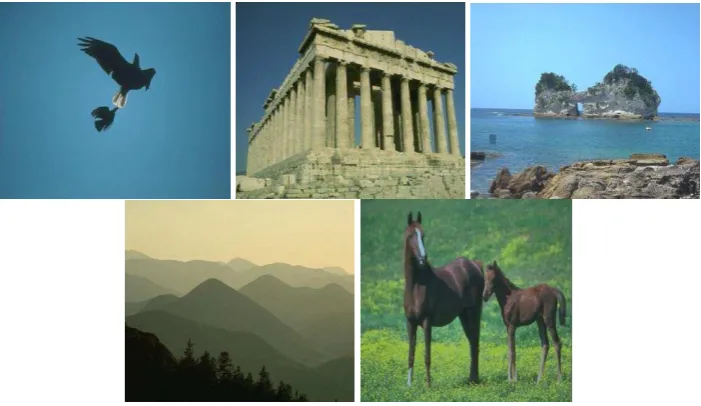
Fig.2. Set of original images used in the experimental study
Table 4.1: PSNR of the original image with and reconstruction after adding 10% of salt and pepper noise to original image
Proposed Algo1 Algo2 Algo3 Sub arith
Im1 24.6272 23.4343 22.6209 21.9416 14.6701 21.3733
Im2 26.3877 25.0471 23.5167 22.3168 14.5178 21.7449
Im3 36.5080 36.1647 27.1392 24.9765 14.8780 23.4846
Im4 35.1791 33.9061 28.3872 25.9676 15.5453 24.3319
Im5 26.6014 22.3758 21.6776 21.1308 21.1308 14.3721
Table 4.2: PSNR of the original image with and reconstruction after adding 10% of gaussian noise to original image
Im1 24.4789 23.5128 23.9547 23.9698 21.3478 24.0410
Im2 26.2064 25.0471 25.4148 25.4302 22.5206 25.4939
Im3 34.7069 33.3510 33.837 34.0965 27.5104 34.4620
Im4 33.7841 32.0463 32.6079 32.7568 26.9464 33.0377
Im5 26.3872 22.4417 22.7943 22.8080 20.2316 22.8674
Fig.3. Comparison between proposed technique and existing techniques with 10% salt & pepper noise
V.
C
ONCLUSIONThe objective of color image reduction is to reduce irrelevance and redundancy of the image data in order to be able to store or transmit data in an efficient form. Color image reduction may be lossy or lossless. Lossless reduction is preferred for archival purposes and often for medical imaging, technical drawings, clip art, or comics. Lossy reduction methods, especially when used at low bit rates, introduce compression artifacts. Lossy methods are especially suitable for natural images such as photographs in applications where minor (sometimes imperceptible) loss of fidelity is acceptable to achieve a substantial reduction in bit rate. The lossy reduction that produces imperceptible differences may be called visually lossless. The proposed work of this thesis achieves the objective stated for this research work as it reduce the image with best penalty function for each pixel of the image. Genetic algorithm ensure that the penalty function going to reduce image is best from the other penalty functions for that particular pixel. This led us to propose very good results. It is also robust to different types of noises present in the image.
R
EFERENCES[1] D. Paternain, A. Jurio, J. Fernandez and H. Bustince, G. Beliakov, ―Color Image Reduction by Minimizing Penalty Functions‖, WCCI , June2012.
[2] M. Mignotte, ―A Bicriteria-Optimization-Approach-Based Dimensionality-Reduction Model for the Color Display of Hyperspectral Images‖, VOL. 50, NO. 2,p.p. 501-513 February 2012.
[3] G. Cheng, J. Yang, K. Wang, X. Wang, ―Image Color Reduction based on Self-organizing Maps and Growing Self-Organizing Neural Networks‖, 2006 IEEE.
[4] G. Beliakov, H. Bustince, and D. Paternain, ―Image reduction using means on discrete product lattices,‖ IEEE Transactions on Image Pro- cessing, vol. 21, pp. 1070–1083,2012.
[5] F. Xiao , M. Zhou , G. Geng, ―Detail Enhancement and Noise Reduction with True Color Image Edge Detection Based onwavelet multiccale‖, p. p. 1061-1064, 2011 IEEE.
[6] N. Papamarkos, Antonis E. Atsalakis and Charalampos P. Strouthopoulos, ―Adaptive Color Reduction‖, p.p. 44-56 , February 2002.
[7] M. Sadohira, A. Saito, H. Aguirre and K. Tanaka, ―A Color Palette Reduction Method Using Multi objective Evolutionary Clustering Algorithm‖, p.p. 238-243, 2011.
[8] M. Mignotte, ―MDS-Based Multi resolution Nonlinear Dimensionality Reduction Model for Color Image Segmentation‖, p.p. 447-460, March 2011.
[9] François-Xavier C., M. Gazalet and P. Corlay, ―An Adaptive Postprocessing Technique for the Reduction of Color Bleeding in DCT-Coded Images‖, p.p. 114-121, January 2004.
A
UTHOR'
SP
ROFILENavneet Kaur
received the B.Tech. (Bachelor‘s degree) in Computer science engineering from Bhai Maha Singh College of Engineering Muktsar, Punjab in 2006 under Punjab Technical University Jalandhar. Now she is pursuing her part time Master‘s degree in Computer Science and Engineering from SUSCET Tangori ,Punjab Under Punjab technical university.
She worked as a computer Engineering Lecturer in polytechnic college under Punjab State Board of Technical Education and Industrial Training, Mohali, Punjab from June 2006 to November 2013. Her current research interest include color image reduction using genetic algorithm with a high PSNR values. So that image after reduction of colors is of good quality.
Sukhpreet Kaur
is pursuing Ph.D. with the specialization of Digital Image Processing from Punjab Technical University. She received her Master‘s degree in Computer Science and Engineering from GNDEC, Ludhiana and Bachelor‘s degree from BBSBEC, Fatehgarh Sahib.