University of New Orleans Theses and
Dissertations Dissertations and Theses
5-8-2004
Knowing in Childbirth
Knowing in Childbirth
Jane Savage
University of New Orleans
Follow this and additional works at: https://scholarworks.uno.edu/td
Recommended Citation Recommended Citation
Savage, Jane, "Knowing in Childbirth" (2004). University of New Orleans Theses and Dissertations. 176.
https://scholarworks.uno.edu/td/176
This Dissertation is protected by copyright and/or related rights. It has been brought to you by ScholarWorks@UNO with permission from the rights-holder(s). You are free to use this Dissertation in any way that is permitted by the copyright and related rights legislation that applies to your use. For other uses you need to obtain permission from the rights-holder(s) directly, unless additional rights are indicated by a Creative Commons license in the record and/ or on the work itself.
A Dissertation
Submitted to the Graduate Faculty of the University of New Orleans
in partial fulfillment of the requirements for the degree of
Doctor of Philosophy in
The Department of Curriculum and Instruction
by
Jane Staton Savage
BS, University of Southern Mississippi, 1972 MS, University of Southern Mississippi, 1977
Copyright 2004, Jane Staton Savage
I extend my sincere appreciation to my dissertation committee for their guidance,
support, and critique throughout this process. Dr. Cory Buxton and Dr. Renee’ Casbergue
co-chaired the committee and provided direction, insight, and wisdom to this endeavor to make it a
reality. Dr. Patricia Austin, Dr. Madelon Powers, and Dr. April Bedford invested their time,
effort, encouragement, and feedback.
Appreciation is also extended to Dr. Kathy Moisiewicz who gave large doses of
encouragement by serving as mentor, role model, and friend throughout course work and the
dissertation project.
Next to my family-- Steve, Jennifer, and Kelley-- I extend my heartfelt thanks for your
untiring support, love, and forgiveness of my diminishing presence in your lives throughout the
birth of the investigative effort. To Maxx and Molly, my perpetual babies, who never
complained about a delayed walk or meal and constantly stood vigil to offer tranquilizers in the
form of a warm tummy to rub or a head to pet. Thank you all for helping me keep my life and
goals in perspective.
My gratitude is extended to everyone for encouraging words that served to keep me on
track. To all the expectant mothers who have shared their pregnancy and birth, and most
especially the participants, I consider it a privilege.
TABLE OF CONTENTS
LIST OF TABLES...vii
LIST OF FIGURES ...viii
ABSTRACT...ix
CHAPTER 1: STATEMENT OF THE PROBLEM...1
Introduction...1
Research Problem ...3
Statement of Purpose ...3
Significance of Study to Childbirth Education ...7
Summary ...7
CHAPTER II: REVIEW OF THE LITERATURE AND CONCEPTUAL FRAMEWORK ...8
Introduction...8
Learning about childbirth...8
Cultural and Social Contexts of Learning: Vygotsky ...9
Language and Human Interaction: Bruner...9
Hermeneutic Phenomenology: van Manen...10
Review of Relevant Literature ...14
Summary ...20
CHAPTER III: METHODOLOGY ...23
Research Design: Phenomenology ...24
Hermeneutics ...27
Feminist Knowing...28
Researcher Standpoint ...31
Participants...35
Setting and Sampling ...35
Data Gathering...36
Data Treatment...38
Reducing Bias ...38
Ethical Considerations ...39
Rigor and Trustworthiness...39
Delimitations...40
Summary...41
CHAPTER IV: PRESENTATION OF DATA ...42
Description of Participants...43
Demographics ...46
Findings...49
Knowing: Responding to Pregnancy ...52
Unknowing: Disquieting Intuition ...57
Expecting Birth: Hopefulness ...70
Expecting Birth: Conflict...72
Expecting Birth: Confidence...76
Connecting and Disconnecting: Mother ...82
Knowing: Birth Story...85
Knowing: Other Sources...90
Knowing: Barriers...96
Summary ...100
CHAPTER V: FINDINGS, CONCLUSIONS, AND RECOMMENDATIONS ...103
Limitations ...103
Discussion...105
Conclusion ...116
Implications for Childbirth Education and Research...117
Nursing Research...118
REFERENCES ...120
APPENDIXES Appendix A Consent Form ...136
Appendix B Introduction Letter...139
Appendix C Interview Questions and Demographic Form...141
VITA ...143
LIST OF TABLES
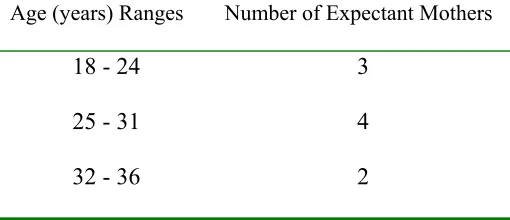
Table 1: Age Distribution of Expectant Mothers...46
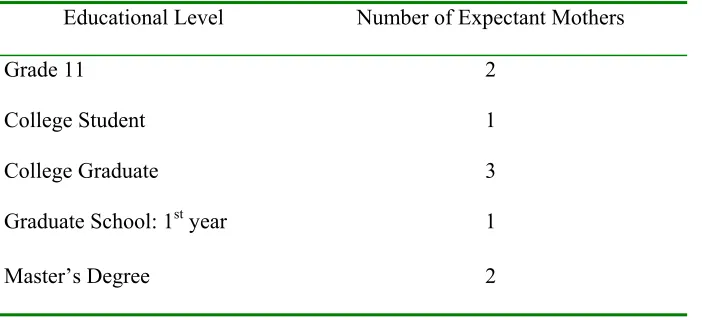
Table 2: Years of Education of Expectant Mothers...47
Table 3: Reported Weeks Gestation at Time of First Interview ...48
LIST OF FIGURES
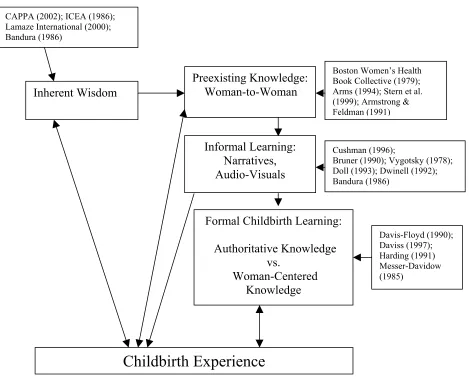
Figure 1: Knowing in Childbirth...22
Figure 2: Derivation of Themes from Expectant Mothers’
Lived Experiences of Knowing in Childbirth...51
ix
Research on knowing in childbirth has largely been a quantitative process. The purpose
of this study was to better understand the ways nine, first-time mothers learn about birth. A
phenomenological approach using a feminist view was used to analyze two in-depth
interviews and journals to understand first time expectant mothers’ experiences of knowing
in childbirth. The findings demonstrated a range of knowledge that contributed to issues of
control, confidence, hope, and conflict. The participants also described an increased
dependency on their mothers and a lack of intuition contiguous to the birth process. These
findings contribute understanding as to how expectant mothers know birth, suggesting that
their knowing does not diminish conflict surrounding and may even exacerbate it. Childbirth
educators may want to include instruction on negotiating power differential in relationships
encountered during childbirth, and to assess the expectant mother’s view of birth and her
expectations for birth. Schools of nursing should consider the inclusion of women-centered
care curricula in schools of nursing at both the undergraduate and graduate levels. Clearly,
the politics surrounding birthing remain in place and must be removed to provide a
CHAPTER ONE
STATEMENT OF THE PROBLEM
Introduction
“The things we know best are the things we have not been taught.” --Lae de Claipers Vauvenargues
The sources of our knowledge surrounding childbirth are manifold. How do women, in
particular, come to experience learning about birth? Kneller (1971) identified a trajectory of
knowing that includes: 1) knowledge from a higher power that reveals truth and spirituality; 2)
knowledge from within, insight or, intuition that is derived from experience; 3) knowledge from
logical, rational thinking that evolves from abstraction; 4) knowledge from information that is
tested and factual; and 5) knowledge from experts that is considered authoritative. All sources of
knowledge are fruitful and vital to life experiences (Munhall, 2001).
Belenky, Clinchy, Goldberger, and Tarule (1997) profess that giving birth is a major life
event for many women often accompanied by an “epistemological revolution” (p. 35) that is
initiated by listening to others. Throughout time, knowledge about childbirth has been a measure
of a woman-to-woman legacy (Boston Women’s Health Book Collective, 1979). For most
women this traditional communication has been an influential way women learn about giving
birth. We have a need to share real life experiences, our wisdom, and we have a need to learn
from others (Broussard & Weber-Breaux, 1994; Dwinell, 1992; Zwelling, 1996).
The value of this type of personal knowledge has been critiqued by scientists who claim a
inferior categories, thus fracturing traditional knowledge systems and accelerating their
replacement by technology (Nakashima, Prott, & Bridgewater, 2000). Authoritative knowledge
invariably supercedes personal knowing. In that process, a woman’s knowledge of her own
bodily functioning is often minimized and not valued (Hanson, VandeVusse, & Harrod, 2001).
As modern women unwittingly distrust their intuition regarding ability to give birth, they begin
the process of embracing authoritative, medical knowledge.
While women may possess a diverse array of medical information, they do not all
necessarily know it in the same fashion. Experiential knowledge is gained from specific
circumstances and from responses to symptoms and treatments. Responsively, knowledge filters
and guides experiences. Medical knowledge exists within a specific context and is embedded
within social relationships and interactions. Because there is inconsistency among knowers,
issues of control and power are inherent in the childbirth process (Lazarus, 1997). Arguably, a
feminist perspective of taking control of one’s life and body should play a major role in
decision-making related to birthing. One explanation for the rise of a middle-class, technocratic model of
birthing, the medical model, is that feminist writing has limited itself to natural childbirth in
opposition to technocratic birth (Lazarus, 1997, Nelson, 1986; Oakley, 1986; Romalis, 1981).
While story telling illuminates the subtlety and emotional components of birthing
(Boykin & Schoenhofer, 1991), often it is not recognized as a source of legitimate knowledge
(McHugh, 2001). Belenky et al. (1997) contend that motherhood profoundly and intricately
connects the human experience. Inherent within this connection is knowledge, albeit a subculture
of knowledge (McHugh, 2001). The distinctive emotional and spiritual essence of birthing has
often been found lacking in formal childbirth education, therefore, its significance is even more
(Negussie, 2001). Tritten (1992) describes women’s wisdom surrounding birth as evolutionary.
It is wisdom without voice until elicited by another woman. Confidence in one’s ability to birth
encourages sisters and daughters to share stories of celebration, strength, and wisdom (Noble,
1999; Tritten, 1991).
The purpose of this research is to better understand the ways first-time mothers learn
about birth. The research problem I will focus on is: What are the experiences of learning
(knowing) about birth for women? A brief history of childbirth education sets the stage for
understanding the political and historical evolution of the dominant epistemology surrounding
childbirth as it embodies prevailing cultural beliefs and thus serves to frame much of the research
on the topic (Walrath, 2003). My review of literature and research evolve from this research
problem as it relates to childbirth education, feminism, anthropological thinking, and applied
educational theory with foundational concepts borrowed from Vygotsky and Bruner. The
concept of phenomenology is discussed using van Manen’s philosophy and theory.
A Brief History of Childbirth Education
Before the seventeenth century in Europe, men were legally barred from attending
childbirth. Women surrounded the laboring woman, giving her support and a non-interventionist
environment. Evidence of medical management began in the seventeenth century with the
introduction of forceps (a well-kept Chamberlen family secret) and bloodletting to control
hemorrhage. These interventions changed the tide of birthing as the experience, for the first time,
came to be considered an illness (Ondeck, 2000; Phillips, 1999).
The environment of birth was again altered with the introduction of much needed asepsis
and the use of chloroform in the 1850s and Fanny Longfellow’s use of ether for childbirth in
Eve’s defiance in the Garden, the event signified the dilemma surrounding the moral role of pain
in childbirth and the humane care of the expectant mother. Symptoms of economic changes that
accompanied the industrial revolution in the nineteenth and early twentieth centuries included
urbanization and separation of women from their families, communities, and midwives. To give
birth in cleaner, safer environments, women moved their birth experience to hospitals. Hospital
births dramatically increased from 10 percent in 1900 to nearly 99 per cent in 1979 (Zwelling,
1996). The medical field developed obstetrics as a specialty as women’s confidence in their
ability to birth declined. Now every birth was viewed as suspect and potentially life threatening
(Ondeck, 2000).
Though the midwife had traditionally been seen as an integral part of community support
for the expectant mother, from 1900 to 1930 midwifery almost died. At this time, women were
having fewer babies and affluent women sought medical care, leaving midwives to care mostly
for the poor. Moving to the hospital produced a sterile, lonely, controlled birth experience. With
the turn of the century, anesthesia was widely accepted. One remedy for birthing in such a lonely
environment with interventions that often included enema, episiotomy, and forceps was twilight
sleep. From the point of administration, such a combination of drugs caused the mother to have
amnesia of her labor and birth. Ironically, although women did not remember their experience,
their response to the pain of labor was overt and often bizarre. To provide a safe environment for
the over-medicated laboring woman, she was strapped in bed. Ironically, organizations were
formed to force physicians to administer twilight sleep to their patients to stop maternal anguish.
Although misguided, these organizations were considered the first advocacy group formed by
feminist leaders to pressure doctors to change medical care (Pitcock & Clark, 1992).
care. While visiting in the Soviet Union, Dr. Fernand Lamaze, a French physician, observed
women giving birth without anesthesia. By Soviet dictum, women were trained to use relaxation
and breathing patterns in response to their contractions. With a colleague, Pierre Vellay, Dr.
Lamaze adapted these principles to the French culture. The French model of Psychoprophylaxis
Method (PPM) included a series of paced breathing patterns that corresponded to labor
progression. Focal points were used to enhance concentration. Lamaze’s book, Painless
Childbirth, was published in 1965 (Livingston & Dennedy, 2002). Simultaneously, the childbirth
education movement was launched as different methodologies gained recognition (Bradley,
1965; Dick-Read, 1979; Kitzinger, 1981).
Even though little if any scientific evidence existed in the medical community as to the
validity of these childbirth methodologies, mass communication introduced the ideas to the
public to satisfy their desire for information on health care. Lamaze childbirth preparation was
well received as women’s groups began to examine the role of women in birth (Phillips, 1999).
American Marjorie Karmel, a former patient of Dr. Lamaze, was frustrated trying to have a
similar birth experience in the United States. She and Elisabeth Bing, the mother of American
childbirth education, founded the American Society for Psychoprophylaxis in Childbirth
(ASPO). The hope was that Lamaze would have long-lasting, positive effects on birthing
(Karmel, 1959).
Social, political, and feminist issues shaped the adoption of the childbirth education
movement largely by white, middle-class women. The supportive educational environment
surrounding the teacher and learner in childbirth education may be ascribed to Alice Walker
(1984). Walker’s concept is derived from womanism, an African-American folk expression
describes the responsibilities of a womanist to seek out the voices, wisdom, and experience of
those women who are transparent in a male-dominated, technocratic society. It is in this attribute
of feminine wisdom that Walker’s concept womanism is most applicable to childbirth education.
Childbirth education should be based on best evidence about current health care
practices. The Lamaze philosophy of birth claims belief in the wisdom of nature’s plan for birth
and women’s inherent, instinctive ability to give birth that is evidenced-based (Lothian, 2001).
Interestingly, the “best evidence” from research has given us a deeper understanding of nature’s
(woman’s) wisdom and the impact of many current practices when it comes to birthing. Lothian
(2001) defines best evidence as:
Best evidence has come to mean the specific effects, beneficial or harmful, of the various
elements of care that may be carried out during pregnancy and childbirth—many of
which reflect the medicalization of pregnancy and birth that has occurred over the last
century. (p. 3)
Given that most studies have conflicting results and none recognized the impact of
pre-existing knowledge, clearly this indicates the need for further investigation of how women
informally learn about birth before attending formal childbirth education classes. Because the
concept of formalized learning is so well documented in the nursing literature, few new studies
have emerged and none of those has uncovered the role of informal learning. Therefore, informal
learning as pre-existing knowledge about childbirth is the major focus of this study
The legacy of communication by women to women of their wisdom of the natural,
normal process of labor and birth has now been assumed by formal childbirth classes. Childbirth
educators have an ethical obligation to present a complete and accurate foundation to enhance a
perceptions of their knowing in childbirth. It is this knowing that the current legacy of childbirth
education must embrace in order to understand and to support expectant mothers as they
negotiate a major life event.
Summary
The purpose of this study is to investigate the lived experience of expectant mother’s
perceptions of learning about childbirth. Within a historical perspective, I have introduced the
concept of a feminist standpoint as it relates to birthing. There are four remaining chapters in this
document. In Chapter II, I explore the literature as it relates to learning about birth from a variety
of theoretical constructs. This qualitative research study is deeply rooted in nursing and
education literature. In Chapter III, methodology is described with a rationale for the qualitative
approach with a feminist standpoint. In Chapter IV, I will present the sample of participants and
the study findings. In Chapter V, I will discuss the findings, the significance of the study, and
CHAPTER TWO
REVIEW OF LITERATURE AND CONCEPTUAL FRAMEWORK
Introduction
The purpose of this study is to determine first-time mothers’ knowing about childbirth.
The literature abounds with research related to formalized methods of childbirth education
intended to physiologically and to psychologically prepare women for birth. Outcome studies to
determine effectiveness began to appear in the literature as early as the 1940s (Triolo, 1987).
The review of current literature on women’s experiences of learning about childbirth is
mainly concerned with evaluation of formal learning environments from a descriptive design.
Because of the methodology used, subjects were limited to the choices provided by the
researchers. The few qualitative studies explore informal knowledge acquisition as it relates to
authoritative knowledge. Categories of the review include outcomes broadly connected to formal
and informal childbirth learning environments.
A Conceptual Framework: Learning about Childbirth
To formulate a foundation for the acquisition of knowledge that women possess
surrounding the uniquely feminine perspective of giving birth, I rely on concepts derived from
knowledge transfer from narratives, social interaction, and feminine culture. Telling stories of
birth is an essential, traditional element that transcends time and culture. Through birth stories,
perspective and intimate knowledge are shared. Often there is a window of opportunity to
surrounding birth. Storytelling relies greatly on interpersonal communication to connect women
and their shared history (Lindesmith & McWeeny, 1994).
Livo and Ruitz (1986) contend that during the narrative exchange, the learner
reconstructs knowledge gleaned from the story and that this provides a powerful vicariously
learned experience. Dialogue about the meaning of the exchange is an essential part of learning
through storytelling. Expectant mothers’ willingness to share their stories is an expression of the
universal need to explain the unknown. In this way, knowledge is actively sought to lessen fear
and to obtain a sense of control over childbirth (Zwelling, 2000).
Cultural and Social Contexts of Learning: Vygotsky
The work of Lev Vygotsky (1978), a Russian social psychologist, can contribute to a
paradigm of learning for this study. Two of Vygotsky’s assumptions can be related to social and
cultural aspects of learning about childbirth from others: 1) Knowledge must have meaning for
the expectant mother as learner; and 2) The expectant mother must command the tools for
cognitive development that include significant others, culture, and language. This relevant
exchange must occur within the context of her environment, thus making the knowledge transfer
logical. The people sharing the stories have a great influence on how the expectant mother
incorporates that information into her world. The intimate culture of sisterhood associated with
childbirth communicates what must be learned to make sense of the experience. Birth chronicles
play a significant role in this process because the dialogue and connection bring life to the
learning each time the story is told. This social interaction is fundamental to the expectant
mother’s cognitive development.
Language and Human Interaction: Bruner
suggested that culture gives knowledge meaning through language and communication patterns
of logic and narrative. All cultures possess folk knowledge. This theory of learning in its social
context relates the development of narratives from folk knowledge to explain the range of
common beliefs surrounding childbirth in American society. In other words, when events are
cohesive, stories or narratives to explain those events are not necessary. With the history of
interventions used in the name of modern medicine, it is little wonder that childbirth mythology,
often demonized, is passed from one generation to the next.
Bruner describes a conflict between an inner and outer world that threatens perceived
control. He minimizes the significance of purpose for the fictional in opposition to the factual
story. “Stories achieve their meaning by explaining deviations from the norm” (p. 47). Stories
explain the unexplainable in human action and human purpose. While emphasizing the norms of
society, stories provide a basis for rhetoric with confrontation. This confrontation encourages the
teller and listener to process the information as sense and personal relevance is individually
determined. Stories have the power to remove chaos from the world and provide an environment
of sympathetic memory. Each time a birth story is shared its characters and plot are either
silenced or escalated.
Hermeneutic Phenomenology: van Manen
Van Manen (1990) contends that the scientist comes to the investigation with a prior
knowledge, in this case human science. The better method for investigations is describing,
interpreting, and self-reflection. The goal of human science is to illuminate the meaning
underlying the human experience and to understand what that lived experience entails.
Phenomenology describes how one orients to the lived experience, hermeneutics
practical writing or linguistic approach to the method of phenomenology and
hermeneutics (p. 4).
With philosophical roots, hermeneutic phenomenology concerns understanding people in
their daily lives, viewing that life experience as a whole. Phenomenology is the examination of
the lived experience, the lifeworld. This methodology is a retrospective attempt to discover the
underpinnings of the lived experience in question. In striving to mindfully express the meaning
underlying an experience with depth and richness, phenomenology is existential in nature.
Unlike other research, there is no result or conclusion in phenomenology. The connection to the
results cannot be teased apart without losing meaning (van Manen, 1990).
In hermeneutical phenomenology, complete interpretive images of the human lived
experience are attempted. These interpretive images center on the lifeworlds, lived space, lived
time, lived body, and lived human relation. The researcher understands that complete distillation
is impossible and that full descriptions are not viable, yet the phenomenologist attends to this
process with strength of force in order to uncover hidden meanings in daily living. This
description however incomplete should resonate with the sense of the lived world. Inherent in
this reciprocity, is the process of validation. In van Manen’s words (p 27) “a good
phenomenological description is collected by lived experience and recollects lived experience—
is validated by lived experience and it validates lived experience.” Thus, phenomenology is the
use of language and mindfulness to meaningfully describe a specific aspect of lived experience
(van Manen, 1990).
Woman-to-Woman Legacy: Davis-Floyd
Robbie Davis-Floyd (1992), an anthropologist, interviewed more than 100 expectant
rituals. Davis-Floyd described a pregnancy/childbirth rite of passage as a phenomenon known as
“transformation in the peer domain.”(p. 34). It is a unique bond shared by those who pass
through the process together. First time mothers investigate a means to cope with their
developmental crisis. It is a common occurrence that the sisterhood chooses to discuss
pregnancy, birth, and children, despite who is present or what is taking place. Such engagement
in serious, purposeful matters serves to socialize each other into the shared culture of their
pregnancies. This knowledge is passed on in story, symbol, and example. Such personal
narratives especially include the trauma of the whole pregnancy experience. As the formation of
mothers-to-be becomes cohesive and solidifies, these accounts become the repertoire of the
group.
Because birth stories contain vast amounts of information and are grounded in real-life
experience, they offset the technology-driven model of birthing as the educational ideal. Sargent
and Stark (1989) confirm the significance of these exchanges within the sisterhood of friends and
family. When women share their birth stories, they decide which aspects of the narrative to
share. This selection process constructs a new essence of their experience; other less significant
aspects of the story fade into that part of the memory that holds it hostage. Hearing another
woman’s story may trigger those memories into consciousness and a mother’s birth experience is
subject to reinterpretation (Davis-Floyd, 1992). When positive birth stories are shared, they
convey messages of strength and power of women as birth givers, of the integrity of the birth
process, of the sanctity of the family, of the beauty and delicacy of the maternal-newborn
interactions. They have the potential to change the beliefs of those who become a vicarious part
of the story (Davis-Floyd, 1992).
medically managed system. As a result, there is a generation of women who are bystanders in
their own stories of birth. Grandmothers, the traditional keepers of the story, are often without an
active voice. The medical establishment has succeeded in compartmentalizing birth from its
origin, the mother. Penny Armstrong, Certified Nurse Midwife (CNM) and Sheryl Feldman
(1990) believe that women today take this stance for granted. Perhaps all mothers do not know of
other times when birth traditions brought forth, at the least, support, verbal instruction, caring,
and nurturance thus shaping the life purpose of every woman at that point in time. With the
acceptance of birth as needing intervention, these oppressed women were chemically isolated by
general anesthesia and twilight sleep from their birth experiences (Armstrong & Feldman, 1990).
As birth practices have been rigidly shaped, people have strong opinions about their
protocol and their subsequent meanings. Such practices are absolutes in obstetrical culture and
mother and infant are in jeopardy if anything else is considered. However, giving birth is not just
about having babies. It is about women’s lives, women’s work, and about who owns women’s
bodies (International Childbirth Education Association, 1986; Lamaze International, 2002;
Livingston & Dennedy, 2002; Lothian, 2000; Ward, 1996). To this end, women have
traditionally taught each other about childbirth.
Suzanne Arms (1994) believes that before the medicalization of childbirth, girls heard
stories about strength and power in birthing, not about difficulty and suffering. This is a
distinction from the past and the present attributable to a loss of familiarity with the birth
process, the loss of community with other women, and the loss of traditional feminine wisdom.
As a culture, we have accepted and embraced medical technology. For example, many
middle-class women look to technology to help them achieve pregnancy when they experience
technological advances whenever possible. This acceptance improves the medical community’s
ability to control the biological behavior into comparable patterns of social behavior. This
translates into medical control of conception, pregnancy, labor, and birth. Should a woman not
avail herself of the offerings of technology, the consequences are then her sole responsibility.
The blame for less than a perfect birth rests squarely on her shoulders (Lazarus, 1997).
In the interest of avoiding disaster, the legacy of childbirth may be lost. As women
forsake their inner strength and inherent wisdom in favor of the need for medical intervention,
birth knowledge is nonexistent, extinct. The absence of this knowing confirms the inadequacies
of the female surrounding the complexities of childbearing (Armstrong & Feldman, 1990; Stern
& Bruschweiler-Stern, 1999).
Formal Childbirth Learning Environments
McCraw and Abplanalp (1982) quantitatively investigated the reasons women attend
Lamaze class. They interviewed seventy-seven women having babies for the first time.
Forty-three per cent of the participants cited the desire to gain information. The remaining top Forty-three
reasons for motivation to attend class included decreasing anxiety (14.3%); decreasing use of
medication (24.7%); and having husband present and involved (20.8%). The investigators did
not discuss the implications of preexisting knowledge or assessment of the participant’s inherent
wisdom.
Crowe and von Baeyer’s study (1989) examined variables including fear and locus of
control as a predictor for a positive birth experience. Self-reported data from 30 primiparas
(woman having babies for the first time) was quantitatively analyzed. Of the 21 women
participating in post-delivery assessment, it was determined that those who displayed greater
experience. The authors believed their findings supported the emphasis in prenatal education on
imparting knowledge, giving confidence, and dealing with fear related to childbirth. The impact
of preexisting birth knowledge is not assessed; however, the indication for additional research on
informal sources of information about pregnancy and birth is cited.
Knapp (1996) investigated the relationship between childbirth satisfaction, personality
characteristics, and perceived control. A significant positive correlation between perceived
control and childbirth satisfaction was determined. The data showed no relationship between
internal locus of control and childbirth satisfaction. Perceived control explained the greatest
amount of variance in childbirth satisfaction. These outcomes are in direct opposition with
current obstetrical health care that supports the view of birth as illness and controlled by the
physician. Even though support from childbirth educators is cited as a logical intervention to
assist a prepared mother in becoming involved more actively with her birth, the role of informal
learning is not addressed.
Mackey (1990), in reporting results from her qualitative investigation of previously
pregnant women’s formal preparation for childbirth, found that the majority of participants
(95%) who attended classes felt the information about birthing was helpful. The participants
(59%) also reported feelings of confidence to handle labor. Participant’s preparation also
included reviewing their previous birth experience to evaluate their behaviors during birth.
However, the impact of pre-existing knowledge was not measured.
To understand the interrelatedness of factors surrounding health-related, goal-oriented
behaviors and the development of confidence for labor, Broussard and Weber-Breaux (1994)
formulated the Childbirth Belief-Efficacy Model (CBEM). The framework was intended to be
self-efficacy to achievement of behaviors, vicarious experience, verbal persuasion, and motivation.
In discussing Bandura’s concept of vicarious experience, Broussard and Weber-Breaux cite the
phenomena of women hearing horror birth stories, the prevalent cultural view, from women who
have entered childbirth with high levels of fear and anxiety.The source of this anxiety and fear,
however, is not described.
Lazarus (1997) interviewed women about their pregnancy and childbirth experiences and
obstetricians, midwives, residents, and medical students and nurses about their views on
childbirth. She determined that women have unequal access to knowledge and differing degrees
of desire for such knowledge. The participants also believed that no matter what they knew, it
did not empower them to negotiate the health care system. Many women did not feel comfortable
questioning authoritative knowledge and control and chose to remain silent. Unfortunately,
silence was often equated with satisfaction.
Bennett, Hewson, Booker, and Holliday (1985) investigated the relationships between
childbirth preparation, perception of support, and birth outcomes. Their results were consistent
with previous research in determining that no relationship existed between formal preparation
and birth outcomes, e.g. length of labor or complications. The role of pre-existing knowledge
about childbirth was not entertained.
Using an enablement theoretical framework, Stamler (1998) examined childbirth
education from the stance of the participants. Seven women were interviewed three times
comparing data pre and post birth. The qualitative results that supported enablement were the
participants feeling prepared, knowing what to expect, practicing techniques, and a class
atmosphere conducive to asking questions.
Strzelecki, and Crockoft (1996) surveyed attendees. Most participants were Caucasian, college
educated, married, and having their first child (93%). A significant relationship between
information and overall satisfaction with birth was shown. Another finding revealed that
although coping strategies for labor were being taught, they were not being used.
Schmied, Myors, Wills, and Cooke (2002) investigated the relationship between
satisfaction and antenatal education programs using mixed methodology. Descriptive statistics
were used to evaluate the differences between participants in two different programs. The
qualitative data came from written comments on a post birth questionnaire. Significant results
included the benefits of using adult education principles and gender-specific groups as they
related to women’s reports of satisfaction with parenting.
To summarize the reported research, most have been descriptive in design (Bennett et al.,
1985; Broussard and Weber-Breaux, 1994; Crowe & von Baeyer, 1989; Knapp, 1996;Lazarus,
1997; Mackey, 1990; McCraw & Abplanalp, 1982; Schmied et al., 2002; Slaninka, et al., 1998)
and concern the impact of formal childbirth learning environments. From these investigations, a
wide range of reasons for women attending class has been reported. Although the range included
gaining more information, to lower anxiety, and to increase confidence, there are many
participants who did not use the strategies they learned. Even more women did not have access
to the formalized knowledge, so we do not have an appreciation of what formalized learning
meant to those participants. What role does an expectant mother’s pre-existing knowledge play
as a factor in her birth experience? How can childbirth educators capture that knowledge and
build on it?
Informal Learning Environments and Authoritative Knowledge
determined that childbirth has presented the American culture with eight dilemmas that must be
dealt with. The dilemmas for birthing within the American society are: (1) A society
conceptually grounded in technology; (2) A society with a strong need to control nature,
specifically birth; (3) A society that needs to generalize the individualized experience of birth;
(4) A society that needs to control the “dangers” associated with the birth process; (5) A society
that needs to enculturate an infant who is essentially culture-less; (6) A society that needs to
make birth appear to sanction patriarchy when it is a powerfully female occurrence; (7) A society
that needs to remove sexuality from the process of birth; and (8) a society that needs to get
women to accept a belief system that minimizes them. Davis-Floyd elaborates and substantiates
her dilemmas with numerous examples from her qualitative investigations. She concludes that
the need exists to replace the current technocratic model with one that “honors both the birth
process and the female body” (p. 187).
Sargent and Bascope (1996) interviewed and observed women from three different
cultures, Mayan, Jamaican, and Texan, to investigate the connections between the distribution of
knowledge about birthing within the community and the use of technology in birth. Their
conclusions were that authoritative knowledge varied dependent on the culture studied. For the
Mayan participants, authoritative knowledge was not highly distinguishable. The sample of the
Texas participants demonstrated that control of technology and authoritative knowledge were
consistent. Jamaican birthing participants verified that cultural authority of medicine might
persist without technological support.
VandeVusse (1999) analyzed the birth stories of fifteen women in a qualitative study.
The traditional nursing educational model was challenged by the results as the birth stories
investigation concluded that nurses were in a profound position to effect change by supporting
women to assume more control of their birth experiences. The impact of hearing and learning
from other women was not identified as a source of birth knowledge.
Simkin (1991) conducted an ethnological and phenomenological study of the long-term
impact of the birth experience. During the interview process, she noted, “As I watched and
listened to the women, I felt they were not merely recalling, but almost reliving the experience.
Nine of them wept, either from joy or remorse” (p.209). Simkin concluded that birth has the
potential for long-term negative or positive impact dependent on the support the health care
provider gives. Certainly, this long-term impact will influence the knowledge that women
informally impart.
From their investigation of 84 couples, Sargent and Stark (1989) established the
importance of listening to birth stories for expectant mothers. In contrast, formal childbirth
classes were less influential than preexisting beliefs, values, and expectations. The researchers
concluded (1) that previous investigations on the technocratic model of birth has hidden the
significance of socialization about birth within the framework of family and friends, and (2)
there is indication for additional research on informal sources of information about pregnancy
and birth.
In review, the impact of authoritative knowledge on American, Mayan, and Jamaican
women has been documented as to its significance in each of the respective cultures. Each study
(Davis Floyd, 1990; Sargent & Bascope, 1996; Simkin, 1991; VandeVusse, 1999) acknowledged
the potential of role played by health care providers in aiding women in viewing their birth
experience as a positive one. Sargent and Stark’s (1989) investigation called for further study of
how and what American women learn about birthing and their perceived role within that context
is critical to implementing an effective childbirth education program.
Summary
Although the importance of formalized learning about birthing has been validated
(Hanson, et al., 2001; Simkin, 1991, 1992; VandeVusse, 1999), many of these studies have
omitted investigating the impact of pre-existing knowledge. What influences women to seek
informal information, to whom do they turn, and what is the lived experience of obtaining that
knowledge, that wisdom? Most recent childbirth education research lacks a strong theoretical
base and connection to the concept and impact of the how women impart knowledge with one
another on an informal base. Little is known about enabling women to embrace their inherent
wisdom and to reclaim their role in the birth of their children. There is a dire need for
investigation of the impact of this culturally repressed phenomenon in America.
Traditional, formalized childbirth education curricula are strongly science based and are
evaluated accordingly. In an effort to teach all that must be taught, informal knowledge as a
critical way of knowing is often overlooked or sacrificed for a scientific, measurable outcome.
Failure to recognize the importance of informal learning is a risk for the educator and the learner.
For example, Enkin (1990, p. 91) states, “Prenatal classes may or may not be the best way for
women to get that information.”
William Doll (1993) further explains true knowledge: “while control and authority are
important, at a deeper level the underlying concept is that precision in observation and in
thought–the realm that lies beyond our personal experiences, that realm that holds true
knowledge” (p. 168). Without dialogue there is no metamorphosis, no interpretation, no
created from the discussion. The experience of dialoging enables the participants to co-mingle
history, language and place in ways that change the trajectory of their experience beyond its
immediate context. It is phenomena such as these that I plan to study using the following
research questions: What are the experiences of learning (knowing) about birth for women? The
research sub-questions to be explored are:
• What role does an expectant mother’s pre-existing knowledge play in becoming a
factor in her birth experience?
• How can childbirth educators capture that knowledge and build on it?
• What influences women to seek informal information, to whom do they turn, and
what is the lived experience of obtaining that knowledge, that wisdom?
The methodological approaches that will be used to address these questions will be
discussed in the following chapter.
In addition to the research problem, and research questions, a concept map, as shown in
Figure 1. Knowing in Childbirth
Boston Women’s Health Book Collective (1979); Arms (1994); Stern et al. (1999); Armstrong & Feldman (1991)
Inherent Wisdom
Preexisting Knowledge: Woman-to-Woman
Informal Learning: Narratives, Audio-Visuals
Formal Childbirth Learning:
Authoritative Knowledge vs.
Woman-Centered Knowledge
Davis-Floyd (1990); Daviss (1997); Harding (1991) Messer-Davidow (1985)
Cushman (1996);
Bruner (1990); Vygotsky (1978); Doll (1993); Dwinell (1992); Bandura (1986)
CAPPA (2002); ICEA (1986); Lamaze International (2000); Bandura (1986)
CHAPTER THREE
METHODOLOGY
Introduction
Phenomenological methodology was used in the investigation to better understand the
issues surrounding expectant mother’s lived experiences of preparing for childbirth. Preparing
for childbirth is defined as any experience in which a woman acquires knowledge about the birth
process. Gender is an inherent organizing tenet that shapes the exclusively feminine phenomena
of childbirth and the absence of acknowledgement of the significance of feminine knowledge by
traditional science.
Phenomenology is the investigation of the lived experience. The lived experience is
multi-layered with meaning. Phenomenology describes rather than explains the search for such
meaning (Creswell, 1998; Heidegger, 1962; Husserl, 1952; Merleau-Ponty, 1956; Moustakas,
1994; van Manen, 1990).
Human beings are distinguishable in the manner in which they are understood. Humans
have emotions, purpose, values, and plans. Patton (1980) explains that understanding evolves
from behavior observation and interpersonal interaction. Thus, identification with one another is
a derivative of subjective states, experiences, and behavior. Despite individual variations in
knowing about birth, there are identifiable commonalities that necessitate understanding.
In this chapter, I review the research methodology and the purpose of the study. The
and data collection. The procedures used as a guide for hermeneutical analysis are briefly
described. Finally, issues related to trustworthiness, authenticity, and protection of research
participants are addressed.
Research Design
Phenomenology Methodology
This tradition of qualitative research is both a philosophy and a methodology grounded in
the initial work of Husserl and Heidegger. While the scientists of the Descartes era held
scientific process in high regard, the philosophers of the time challenged that notion and believed
the scientific method to be overly mechanistic. Thus, phenomenology evolved as the preferred
method to learn about life experiences (Polit, Beck, & Hungler, 2001).
Husserl is regarded by some as the "father of phenomenology in the twentieth century"
(Byrne, 2001; Groenewald, 2004). The German philosopher believed that validity existed in
internal experience, personal consciousness. Reality was the pure phenomena to behold and the
origin of absolute data. He named his philosophical method “phenomenology”, the science of
pure “phenomena” (Eagleton, 1983, p. 55).
Husserl (1952), credited with the development of descriptive phenomenology, focused on
uncovering what we know as humans. With a philosophical stance reflected in rich descriptions
of the meaning, the essence of the human experience unfolded. Husserl contended that
bracketing of one’s preconceived ideas must occur to objectively investigate the experience.
Such bracketing separated the researcher’s personal experiences from the phenomena at hand
(Byrne, 2001; Polit, Beck, & Hungler, 2001).
Heidegger (1962), a junior colleague of Husserl, reconceptualized many descriptive
interwoven experiences: being human, life experiences, background, and the current
environment. He thought it impossible for the researcher to bracket her assumptions about the
phenomena under investigation; however, authentic reflection would serve to bring the
researcher’s assumptions into awareness (Byrne, 2001; Hammersley, 2000). The essence of
phenomenology for Heidegger was in the interpretation of the lived experience, sometimes
referred to as hermeneutics (Moules, 2002).
Reality and truth evolve from the lived experience. Phenomenology involves revisiting a
specific experience to obtain descriptions that form the foundation for an analysis that elucidates
the fundamental nature of the experience. The human scientist determines the infant structure of
an experience by analyzing the original description of the experience. The purpose of
phenomenology is to reveal what a particular experience means for those persons who have had
the experience and to describe it in full (Groenewald, 2004; Husserl, 1952).
Martin as cited in Sadala and Adorno (2002) and van Manen (2000) refer to
phenomenology as a method of human science study, a deeply thoughtful inquiry into human
meaning. The very essence of phenomenology explores and examines a variety of sources of
meaning from the people involved. Such research attempts to expose the meaning attributed to
everyday life experiences rather than explain them (Welman & Kruger, 1999).
Using a philosophical stance, all components of knowledge conform to experience.
Knowledge is embedded in everyday life. Such personal knowing is located within the subjective
self. In phenomenological investigation, the researcher does not make suppositions, but views
the area of study with fresh eyes, develops a question to steer the study, and develops findings as
impetus for further investigation. Moustakas (1994) further explains, “Phenomena are the
A relationship always exists between external perception of natural objects and internal
perceptions, memories, and judgments. Perception is the primary source of knowledge in
phenomenology. Intentions coupled with sensation generate the perception (Moustakas, 1994).
Often described as a philosophy, methodology, and a method, phenomenology is a good
fit because of its application to the experience of acquiring and contributing to knowledge
(Byrne, 2001). Inherent in this tradition of qualitative inquiry is a rich understanding, an intimate
knowing of, a specific life experience, learning about childbirth. Moustakas describes the role of
the learner.
As a learner, to know initially what something is and means, I listen to my
inner dialogue, purified as much as possible from other voices, opinions,
judgments and values. This is a challenging task because we are too often
taught the reverse in our homes, schools, and society. We are expected to
tend to and repeat what other people think, believe, and say regarding
what is true. (Moustakas, 1994, p. 62).
Phenomenological descriptions, expressions of a participant’s conscious experience,
begin with data collection from interviews and observations (Cohen, Kahn, & Steeves, 2000;
Sadala & Adorno, 2002). Such interviews and follow-up interviews, as needed, are usually long,
casual, and reciprocal, and they employ open communication. Although method should not be
imposed on phenomenology, a list of questions may be used to prompt the researcher, especially
the novice researcher. However, these questions may be omitted or revised as the participant
shares her lived experience. Data organization and analysis sets the stage for the development of
each textural and structural account, composite descriptions, and synthesis of meanings.
Hermeneutics
Hermeneutics, the textual interpretation of phenomenology, was used to discover the
meaning within the narrative. Philosophers who embrace phenomenology posit that knowing and
understanding are entrenched in the totality of acts from daily living. Truth, meaning, and
knowledge evolve from life experiences. (Byrne, 2001). Emphasis is on understanding rather
than explaining. As a research strategy, phenomenology is clearly linked to the research question
as it mirrors a participant’s conscious experience (Cohen, et al., 2000; Sadala & Adorno, 2002)
Hermeneutics is used to decipher the meanings attributed to the expectant mothers’ experience of
learning about childbirth. The goal of the phenomenological study is understanding through the
examination of the lived experience. Meanings associated with the lived experience are found in
the written word (Byrne, 2001; Munhall, 2001). As the researcher reads the transcribed text, the
analysis process is initiated, keeping in mind that the narrative text is exploratory and
time-limited.
Hermeneutics as delineated in phases by Lenonard (1994), include the initial, broad
examination to achieve four objectives: to identify a stream of investigation from themes and the
theoretical background; to develop a plan of analysis and criteria for coding; to code the
interviews; and to identify basic groupings that lay the foundation for the research findings.
Narrative analysis of human action gives meaning in that example by examining that
person within the context of her environment thus confining the meaning of the experience.
Now, everything about the specific situation and the participant’s responses to it are coded, thus
encapsulating the meaning within the lived experience (Munhall, 2001).
In the third and final phase of hermeneutics, analysis moves to understand what the
(Benner, 1985, p. 10) by which other, less obvious, but similar cases may be recognized. This
case or paradigm functions to give understanding to a person’s actions and interpretations that
arise from her situational experience (Munhall, 2001). Another consideration of hermeneutics is
offered by van Manen (1990). He describes phenomenology as how one orients to the lived
experience while hermeneutics describes how one interprets the narratives of life.
Feminist Knowing
The study of knowledge, its acquisition, how one comes to the realization that one
possesses knowledge is epistemology. Feminist epistemology emerged from research within
such disciplines as sociology, psychology, and political science. The research from these
disciplines has begun to delineate what comprises “feminist knowledge,” what is implied by
women’s ways of knowing, and research from women’s lives (Durna, 1991; Johnson, 1995).
Alcoff and Potter (1993) contend that the term “feminist epistemology” is a means of
summarizing and thereby integrating women’s knowledge and experiences. Multiplicity, in the
postmodern sense, is a focus of feminist research. A feminist researcher must examine manifold
truths in the oppressed existence of women (Ardovini-Brooker, 2002).
Using a feminist analysis, as identified by Harding (1986), three specifics are addressed.
Women’s experiences are rich sources for investigation. Uncovering the variations in how
women learn about childbirth could alter the current thinking in childbirth preparation. Using a
feminist perspective and a phenomenological tradition, meanings uncovered in those specific life
experiences should enhance one’s understanding of learning in childbirth.
Harding (1987) also recommends that the feminist researcher explore experiences that
facilitate a better understanding of women as opposed to previous methodologies that either
feminist researcher position herself within the same playing field as her participants (who are
often viewed as co-researchers). This also means that the researcher “is an active presence, an
agent in research, and she constructs what is actually a viewpoint, a point of view that is both a
construction or version and is consequently and necessarily partial in its understandings”
(Stanley & Wise, 1993, p 6). This process mandates that all aspects of the researcher that in any
way may relate to the experience under investigation be open for scrutiny. Ardovini-Brooker
(2002) cautions that in such a research endeavor, “We must not assume the generalizability of
our knowledge and experiences” (p. 2).
Harding (1991) further describes the complex process of knowing in relation to the
invisibility of “women’s work.” While knowledge is achieved even as a woman interacts with an
oppressor, the process is indirect as it seeps from the interaction. Harding contends that feminist
politics embraces feminist research in order to see beneath obvious limitations. The meaning and
importance women give to their work influences their knowing. Because men do not give birth,
there is the distinction of giving birth as a clear line of demarcation and merit for many women.
Jayaratne (1983) suggests that most social science research has been used to uphold
sexist and elitist values with little consideration given to exploring issues that are important to
women. Feminists contend that researchers must become more involved and concerned about the
people they study; more involved than most methods of quantitative research permit. Objective
qualitative research does not mandate detachment and disinterest. Sound methodology
safeguards against bias. The most effective way to initiate change within a sexist structure is to
utilize qualitative investigation informed by feminist perspectives. A feminist approach increases
awareness of relationships of power (Pugh, 1990).
much of a woman’s knowledge is hidden, not valued, not even recognized. If knowledge is
evidenced through conversation, as some scholars would have us to believe, then women’s
voices must be heard in the dialogues from which knowledge is formed and communicated
(Boxer, 1998).
Oakley (1999) advises that when a researcher using a feminist framework interviews
women, she must be mindful that the researcher is the vehicle for communicating the voice of
women from an extremely intimate work of being female in a male-dominated society. Women
are affected by the interview process. In researching women’s transition to motherhood, Oakley
cites the impact of the interview process on her participants: reflecting on their experiences,
lowering anxiety, and verbalizing feelings. She explains further the positive impact of
interchange that occurs during the interview process, “personal involvement is more than
dangerous bias – it is the condition under which people come to know each other and to admit
others into their lives” (p. 58).
Philosophers who embrace phenomenology posit that knowing and understanding are
entrenched in the totality of acts from daily living. Truth, meaning, and knowledge evolve from
life experiences (Byrne, 2001). Emphasis is on understanding rather than explaining. As a
research strategy, phenomenology is clearly linked to the research question as it mirrors a
participant’s conscious experience (Sadala & Adorno, 2002; Cohen; Kahn & Steeves, 2000).
My investigation of women’s experiences of learning about giving birth included
methodology consistent with the tenets of hermeneutic phenomenology. This tradition is
applicable to uncovering the lived experiences of expectant mothers. A feminist perspective in
addition to the hermeneutical process influenced the interview dialogue. The interviews were
learning about childbirth in order to gain a comprehensive understanding. These data were
obtained from two, in-depth interviews conducted within a six-to-sixteen-week period for each
of nine expectant mothers who were having babies for the first time. Every effort was made to
maintain the level of authenticity, intensity, and richness consistent with real life experience
(Merleau-Ponty, 1962).
The narrations were safeguarded to ensure that the intricate details of speech, symbols,
metaphors, and multiple meanings of the spoken word within a cultural context were included.
The multifaceted layers of knowing inherent in phenomenology and interpreting hermeneutics
were uncovered from the interviews with participants. These narratives were thought to have the
potential to reveal the nuances that existed between personal knowing and authoritative knowing.
My hope was that by listening to women share their understanding, an essential to childbirth
education, I and eventually other childbirth educators would hear the lived experience and
validate the worth in that unique experience (Anderson, 1998).
My Standpoint as it Relates to the Study
The study of phenomenology requires that the phenomenologist be aware of her own
lived experiences. It is from those experiences that meaning is formed and understanding of the
common experience unfolds (van Manen, 1990).My own experiential account of coming to have
knowledge about childbirth most likely has stronger roots in feminist ownership than as a
biological process. Growing up Southern, middle-class, white, female, the youngest of three
children, in a traditional, mildly dysfunctional family had its limitations. Somewhere along the
way, I learned that reading enriched my understanding. Self- learning had its own rewards;
I remember hearing very little about childbirth. A close family friend of my mother’s was
pregnant. I simply remember seeing pictures of a woman before baby and after. What comes to
mind is riding in the back seat of our car and listening to my mother and her friend talk about a
certain woman who lost a baby. I remember being terrified at that thought---that meant that my
mother could lose me! I would always ask my mother about it and she would quiet me by saying
we would discuss it later. I learned not to bring it up again. At one point, I must have been about
six; I remember finding my brother’s baby book in her drawer. I recognized my mother’s
handwriting and photographs of my oldest brother as a baby. I was fascinated and tried to
duplicate the photo demonstrations with my own dolls.
Whenever I begged my mother, she would tell the story of my birth. She made it sound
very exciting, just getting to the hospital in time with my brothers and the dog in the car as well
as my father. Barriers were my own inability to ask comprehensive questions of the person who
had the best answers. I do not remember reading any books on the subject, until finding a book
on human sexuality when I was nineteen. After all, nice girls did not need to know about such
things.
Being a freshman in college was liberating. There were organized protests of every
imaginable sort so that even the most conservative could participate. Clearly, learning that was
more interesting was occurring outside the classroom! Nursing education was oppressing. I
challenged my instructors at every conventional point. From nursing courses came an
understanding of how the body functioned. This knowledge was liberating, especially when most
of my friends did not have this information. Knowledge, formalized and experiential, was
empowering and having it was better than not having it. I felt wise beyond my years and
Nursing school provided plenty of new knowledge related to women’s heath and
childbirth. Taking care of women giving birth is where I learned the most, especially about what
women did not know and for what they were or were not willing to take responsibility.
As for my own pregnancy, I loved every minute of it. It was a wonderfully introspective
and powerful time. I was very comfortable with the medical model of delivery and it provided
the familiar background for my first child’s birth. I expected interventions and I got them. My
husband Steve and I had gone to Lamaze classes. They provided a wonderful bonding experience
for us. Steve was a great coach and I came away feeling very grateful that he was by my side.
And more important, he was actively involved in bringing our daughter, Jennifer, into this world.
When Jennifer was three months old, I became a certified childbirth educator. Two years
and 9 months later, our second daughter was born. Kelley was born in a birthing room with
minimal intervention. Again, with the support of Steve, Kelley’s birth was a positive experience.
I did not care how my knowledge was going to be received by my health care providers. I
went into that experience with the feeling toward the other nurses “go ahead, try to show me
something I do not already know.” I felt I would have to defend my birth preferences and knew
that much of their motivation for care would be based on convenience for them. I had been in
their shoes, but I was different now. I do not think I really valued their knowledge.
I took an active role with the births of both my children. Moving to stay comfortable and
ignoring the ritualistic chants of the nurses, “Don’t do that, you might hurt the baby. You don’t
want to hurt the baby, do you?” I do believe that women have an intuitive sense that guides them.
However, this voice of knowing may be overshadowed by their insecurities or the passiveness
that takes place for women during labor. Something has to happen that makes them feel that their
My first birth experience with a woman who was “self-taught” was exhilarating. She
changed my nursing care perspective from “hospital routine” to woman-centered. After
introduction, Janet told me she was going to have a Lamaze delivery. I nodded as I recalled my
knowledge of Lamaze to be a matching question from an obscure test. She assured me that she
would need nothing for pain because breathing techniques, her focal point of a hot air balloon
poster, and relaxation would be all that she would need. After all, she had read the book; what
more could she need? Oh, there would be one more thing- a coach. Her husband was offshore
working and she needed me to fill in for him. It was thrilling! When labor was over, I wheeled
her back to delivery. Legs in stirrups, sterile drapes in place, everything looked the same as
usual, except for one major thing: we had a mother who was awake, aware, and talking
coherently. When her baby was born, Janet reached out for him. I had never seen that before. I
immediately gave her the baby. As he lay on her chest, I completed the assessment. The baby
was fine; Mother Janet was fine. The physician was angry because Janet had not been medicated.
He was certain she had suffered. The nursery nurse was upset because Janet did not want to give
her the baby. This birth was safe, joyous, and powerful. From that point onward, practicing
nursing by the technocratic model became increasingly harder to do.
Although I was a willing participant in Janet’s birth experience, I did not suggest any of
these interventions to her. I co-existed during this experience of her birth. van Manen (1990)
professes that self-evidence evolves from life experience. Participating in Janet’s birth
experience made a fundamental difference for me as her nurse and for the woman I was at that
point in time.
Participants
initial goal of eight participants was targeted. However, data saturation and redundancy was not
reached with eight participants and another expectant mother was included which produced
saturation. Hermeneutic inquiry is validated by the fullness of examination of the topic and depth
and breadth to which the analysis expands understanding, not by numbers of participants
(Moules, 2002). Two certified nurse midwives, one serving those women who qualify for public
assistance or private pay and the other who serves those with private health insurance and those
with public assistance were to serve as gatekeepers for referrals of women having babies for the
first time (primigravida) and who have recently had their pregnancies confirmed.
Setting and Sampling
The setting of the study is a metropolitan area in the West South region of the United
States. The culture of the identified area is cosmopolitan in nature. To increase the range of
experiences and demographics, I interviewed referred clients from two midwifery practices, as
the majority of women in the area utilize physicians as health care providers, Because the
phenomenological experience mandates the method and participants, my sampling method was
both purposive and one of non-probability (Cohen et al., 2000; Groenewald, 2004; Hycner,
1999)
Perhaps the uniquely female nature of experience would contribute to the feminist
standpoint by including many perspectives of the lived experience and determining the
differences and similarities of meaning of these events as they related to women’s lives
(Harding, 1991). I was ever mindful of the need to give voice to those who needed to be heard as
a major point in phenomenological research (Cohen et al., 2000).
Data Gathering