University of South Carolina
Scholar Commons
Theses and Dissertations
12-14-2015
Hydroxy Polybenzimidazoles for High
Temperature Fuel Cells and the Solution
Polymerization of Polybenzimidazole
Kayley FishelUniversity of South Carolina - Columbia
Follow this and additional works at:https://scholarcommons.sc.edu/etd Part of theChemistry Commons
This Open Access Dissertation is brought to you by Scholar Commons. It has been accepted for inclusion in Theses and Dissertations by an authorized administrator of Scholar Commons. For more information, please [email protected].
Recommended Citation
Fishel, K.(2015).Hydroxy Polybenzimidazoles for High Temperature Fuel Cells and the Solution Polymerization of Polybenzimidazole.
HYDROXY POLYBENZIMIDAZOLES FOR HIGH TEMPERATURE FUEL CELLS AND THE SOLUTION POLYMERIZATION OF POLYBENZIMIDAZOLE
by
Kayley Fishel
Bachelor of Science
University of Pittsburgh at Greensburg, 2011
Submitted in Partial Fulfillment of the Requirements
For the Degree of Doctor of Philosophy in
Chemistry
College of Arts and Sciences
University of South Carolina
2015
Accepted by:
Brian Benicewicz, Major Professor
Chuanbing Tang, Committee Member
Hui Wang, Committee Member
John Weidner, Committee Member
ii
iii
D
EDICATIONiv
A
CKNOWLEDGEMENTSFirst and foremost I would like to thank my research advisor, Dr. Brian
Benicewicz, for all of his guidance and support on my research projects. His knowledge
and enthusiasm for polymer science and chemistry has greatly inspired me and I am
sincerely grateful for all of the opportunities I have had while working in his group.
I would like to thank the chair of my committee, Dr. Chuanbing Tang, for his
guidance and for taking an interest in my research over the last 4.5 years. I have also
enjoyed being a part of his group’s many fun outings. Next, I would like to thank Dr. Hui
Wang and Dr. John Weidner for being a part of my committee and for providing me with
guidance and valuable suggestions on my research.
I would like to thank the Benicewicz group members, both past and present, for
all of their help, suggestions, and friendship. I would especially like to thank Max, Xin,
Guoqing, and Alex for taking me under their wings when I first joined the group. I will
never forget the many fun times we’ve had. I’d also like to thank Andrew Pingitore for
being a great lab mate and friend. I can’t imagine having to “brute force” a project like
that with anyone else and I’ll remember the laughs we had throughout the process. I’d
like to thank the Tang group members for their support and help along the way. I look
forward to continuing our friendships in the future.
Next, I would like to thank my husband who has been my greatest competition
v
appreciate you listening to my practice-talks many times over. I’d like to thank my
parents, brother, and aunt for always supporting and encouraging me and my dogs, Holly
and Benji, who took turns keeping my lap warm as I wrote.
Finally, I would like to acknowledge the funding support and collaboration with
vi
A
BSTRACTIn this dissertation, two different hompolymers of polybenzimidazole (PBI)
containing hydroxyl functional units were synthesized via the PPA Process to produce gel
membranes. These polymers and their phosphoric acid doped membranes were
characterized to further explore structure-property relationships in functionalized PBI's.
Fuel cell performance of the doped membranes was evaluated and compared to
previously reported PBI membrane chemistries. Copolymers of p-OH PBI and para-PBI
were prepared at five different copolymer compositions to examine the effects of hydroxy
content on membrane properties and compared to the respective homopolymers. The
reactivity of the hydroxy groups and the formation of phosphate bridges were important
in the final properties of the doped membranes.
A new method for producing high inherent viscosity (IV) PBI directly in organic
solution was studied. Initially, small molecule studies were performed in order to find
appropriate chemical functionalities that allow for the formation of benzimidazole in
dimethyl acetamide (DMAc). Once appropriate chemical functionalities were identified,
polymerization studies were conducted to determine the critical variables for the
synthesis of high molecular weight polymers. Insights on the mechanism of
polymerization and complete benzimidazole ring closure were important for developing a
method to produce PBI at high molecular weight and at high polymer concentrations that
vii
analogs containing an ether linkage was explored. These polymers were synthesized via
the new solution polymerization method to demonstrate the utility of the method for
different monomer and polymer structures. Thermal studies were performed on the
ether-PBI analogs to understand the effect of the ether linkage on the potential processability of
viii
T
ABLE OFC
ONTENTSDEDICATION ... iii
ACKNOWLEDGEMENTS ... iv
ABSTRACT ... vi
LIST OF TABLES ... xi
LIST OF FIGURES ... xii
LIST OF SYMBOLS ...xv
LIST OF ABBREVIATIONS ... xvi
CHAPTER 1GENERAL INTRODUCTION ...1
1.1FUEL CELLS ...2
1.2PROTON EXCHANGE MEMBRANE FUEL CELLS (PEMFC) ...3
1.3POLYBENZIMIDAZOLES ...6
1.4SYNTHESIS OF POLYBENZIMIDAZOLE ...7
1.5METHODS OF MEMBRANE PREPARATION ...9
1.6VARIATIONS IN PBICHEMISTRY ...15
1.7RESEARCH OBJECTIVES ...18
1.8REFERENCES ...20
CHAPTER 2SYNTHESIS AND CHARACTERIZATION OF TWO NOVEL MONOHYDROXY POLYBENZIMIDAZOLES FOR HIGH TEMPERATURE POLYMER ELECTROLYTE MEMBRANE FUEL CELL APPLICATIONS ...23
2.1ABSTRACT ...24
ix
2.3 EXPERIMENTAL SECTION...28
2.4CHARACTERIZATION TECHNIQUES ...30
2.5RESULTS AND DISCUSSION ...32
2.6CONCLUSION ...44
2.7ACKNOWLEDGEMENT ...45
2.8REFERENCES ...45
CHAPTER 3SYNTHESIS AND CHARACTERIZATION OF A COPOLYMER SERIES OF P-OH PBI AND PARA-PBI FOR HIGH TEMPERATURE POLYMER ELECTROLYTE MEMBRANE FUEL CELL APPLICATIONS……….47
3.1ABSTRACT ...48
3.2INTRODUCTION ...48
3.3EXPERIMENTAL SECTION ...50
3.4 CHARACTERIZATION TECHNIQUES ...52
3.5 RESULTS AND DISCUSSION ...54
3.6CONCLUSION AND FUTURE DIRECTIONS ...62
3.7REFERENCES ...63
CHAPTER 4SOLUTION POLYMERIZATION OF POLYBENZIMIDAZOLE…..………...64
4.1ABSTRACT ...65
4.2INTRODUCTION ...65
4.3EXPERIMENTAL SECTION ...68
4.4CHARACTERIZATION TECHNIQUES ...70
x
4.6THERMAL ANALYSIS ...80
4.7CONCLUSIONS ...82
4.8ACKNOWLEDGEMENTS ...83
4.9REFERENCES ...83
CHAPTER 5ETHER POLYBENZIMIDAZOLES VIA SOLUTION POLYMERIZATION ...86
5.1ABSTRACT ...87
5.2INTRODUCTION ...87
5.3EXPERIMENTAL ...89
5.4CHARACTERIZATION TECHNIQUES ...93
5.5RESULTS AND DISCUSSION ...95
5.6CONCLUSION ...103
5.7FUTURE WORK ...103
5.8REFERENCES ...103
CHAPTER 6SUMMARY AND OUTLOOK ...105
6.1SUMMARY AND OUTLOOK……….106
6.2CONCLUSION ...110
6.3REFERENCES ...111
xi
L
IST OFT
ABLESTable 1.1 Properties of Various Chemistries of PBI Prepared Through the PPA
Process……….………...16
Table 2.1 Inherent Viscosities of Powders Before and After Hydrolysis………...37
Table 2.2 Elemental Analysis of Polymer Powders in Weight %….… ...37
Table 2.3 Summary of Membrane Composition for p-OH PBI and m-OH PBI…...……39
Table 2.4 Tensile Properties of p-OH PBI and m-OH PBI……….…………...41
Table 3.1 Monomer Ratios and Monomer/Polymer Concentrations for p-OH PBI and Para-PBI Copolymers……….…………...55
Table 3.2 Inherent Viscosities of p-OH/Para Copolymers……….…………...56
Table 3.3 Copolymer Membrane Compositions……….…………...57
Table 3.4 Tensile Properties of p-OH PBI/Para-PBI Copolymers……….………...58
xii
L
IST OFF
IGURESFigure 1.1The basic operation of a fuel cell using hydrogen as fuel and air as oxidant ...4
Figure 1.2 Fuel cell components ...5
Figure 1.3 General structure of polybenzimidazole ...6
Figure 1.4 Meta-PBI ...7
Figure 1.5 Conventional imbibing process of PBI membranes with PA ...11
Figure 1.6 Imbibing process of porous PBI with PA ...11
Figure 1.7 The Sol-Gel state diagram ...13
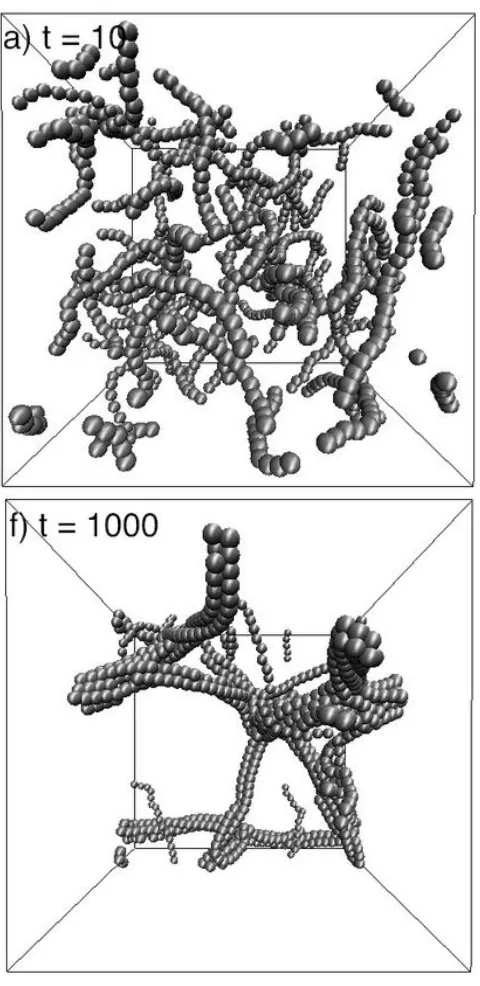
Figure 1.8 Simulation of a.) isotropic homogenous solution of polymer chains and f.) dynamically arrested network of nematic-like bundles after thermally quenching the system ...14
Figure 2.1 Structure of 2-OH PBI ...27
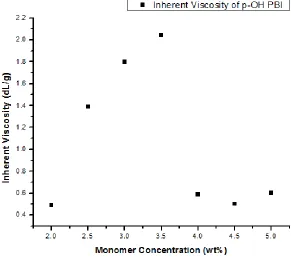
Figure 2.2 Inherent viscosity as a function of monomer concentration for p-OH PBI ...34
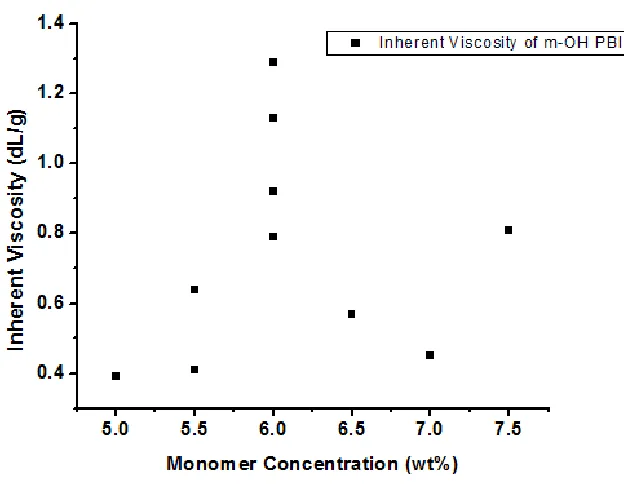
Figure 2.3 Inherent viscosity as a function of monomer concentration for m-OH PBI ...35
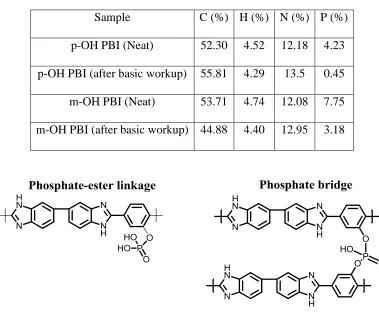
Figure 2.4 Phosphate-ester linkage and phosphate bridge structures ...38
Figure 2.5 TGA of p-OH and m-OH PBI in nitrogen ...38
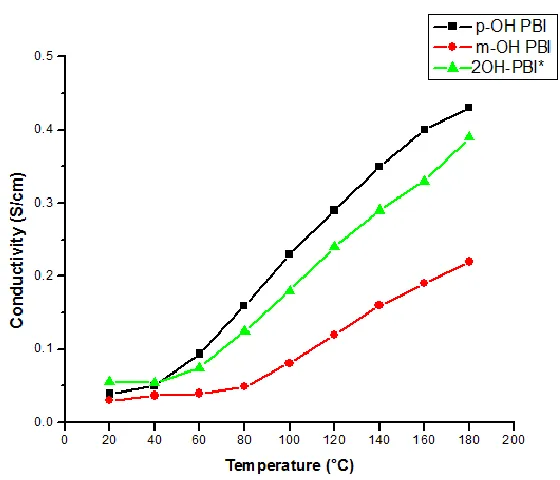
Figure 2.6 Conductivities of hydroxy PBIs ...40
Figure 2.7 Compliance data of p-OH PBI and m-OH PBI ...42
Figure 2.8 Polarization curves of a.) p-OH PBI and b.) m-OH PBI ...43
Figure 3.1 Copolymer films appearance………....55
xiii
Figure 3.3 Compliance of p-OH PBI and 50/50 p-OH-r-para PBI ...60
Figure 3.4 Polarization curves for a.) 25/75 p-OH/para PBI membrane b.) p-OH homopolymer ...62
Figure 4.1 Chemical functionalities evaluated for the synthesis of 2-phenyl benzimidazole in DMAc ...71
Figure 4.2 GC/MS analysis for the reaction of benzaldehyde and o-diaminobenzene in DMAc at 160˚C……….72
Figure 4.3 GC/MS analysis for the reaction of the bisulfite adduct of benzaldehyde and o-diaminobenzene in DMAc at 160˚C………..73
Figure 4.4Optimization study for the synthesis of m-PBI in DMAc with and without the presence of LiCl……….75
Figure 4.5 Inherent viscosity as a function of time: A.) 18 wt % polymer B.) 22 wt% polymer C.) 24 wt% polymer……….77
Figure 4.6 1.) Reported literature for the 1H-NMR of m-PBI2.) 1H-NMR of solution polymerized m-PBI………79
Figure 4.7 Polymerization trials with and without the addition of sodium metabisulfite for SO2 generation in situ………80
Figure 4.8 Modulated DSC analysis for the solution polymerized m-PBI and commercially produced m-PBI………..81
Figure 4.9 TGA analysis of the solution polymerized m-PBI and commercially produced m-PBI……….82
Figure 5.1 Ether-PBI Chemistries………..89
Figure 5.2 1H-NMR of 3-(4-formylphenoxy)benzaldehyde in DMSO-d6 ………...95
Figure 5.3 1H-NMR of 4,4’-oxydibenzaldehyde in DMSO-d6 ………....…96
Figure 5.4 1H-NMR of M,P-Ether Bisulfite Adduct in DMSO-d6………97
xiv
Figure 5.6 TGA of PBI Analogs Prepared Via Solution Polymerization Method……99
xv
L
IST OFS
YMBOLSTg glass transition temperature
xvi
L
IST OFA
BBREVIATIONSAFC ... Alkaline Fuel Cell
DMAc ... N,N-dimethylacetamide
DMF ... N,N-dimethylformamide
DMSO ...Dimethylsulfoxide
DPIP ... Diphenylisophthalate
DSC ... Differential Scanning Calorimetry
HTPEMFC ... High Temperature Polymer Electrolyte Membrane Fuel Cell
IV ... Inherent Viscosity
MEA ... Membrane Electrode Assembly
NMP ... N-methyl-2-pyrrolidone
NMR ... Nuclear Magnetic Resonance
PA ... Phosphoric Acid
PAFC... Phosphoric Acid Fuel Cell
PA/PRU... Phosphoric Acid/Polymer Repeat Unit
PBI ... Polybenzimidazole
PEEK...Polyetheretherketone
PEM ... Proton Exchange Membrane
PPA ... Polyphosphoric Acid
SOFC...Solid Oxide Fuel Cell
TAB... 3,3’,4,4’-Tetraaminobiphenyl
xvii
1
CHAPTER
1
G
ENERALI
NTRODUCTIONR
EPRINTED IN PARTIAL WITH PERMISSION FROMS
PRINGERI
NTERNATIONALP
UBLISHING.
2
1.1 Fuel Cells.
The need for energy has exponentially increased as technology continues to
evolve and the world population continues to grow. Due to the ever-rising demand for
energy and the finite resources available, it is no surprise that alternative energy sources
are needed.As costs have risen for developing and converting fossil resources to power
and fuel, non-fossil options have become more attractive and economically competitive
for their potential renewable and environmental benefits.1 Alternative energy sources are
considered to be energy sources that have no harmful consequences associated with them
unlike fossil fuels and nuclear energy. British Petroleum and Royal Dutch Shell, two of
the world’s largest oil companies, estimate that by 2050, one-third the world’s energy
will need to be produced from alternative energy sources due to the growing population
and the limited quantities of fossil fuels.2 Several types of alternative energy sources such
as solar energy, biomass energy, wind energy, geothermal energy, and hydroelectric
energy, are currently being employed, however; they only account for the production of a
small portion of the world’s energy. One major area of interest for energy generation is
from fuel cells.
In 1801, Humphry Davy first discussed the concept of a fuel cell and by 1839,
William Grove, a lawyer and scientist, had developed the first fuel cell.3 Fuel cells are
electrochemical devices that convert chemical energy from fuel into electrical energy
with the use of an oxidant.4 These devices offer many advantages over other energy
conversion devices, such as batteries and combustion engines. These advantages include
no environmental risks, such as pollution, a broad selection of fuels, no need for
recharging, and a high energy conversion efficiency (no Carnot cycle limitations).5-7 Due
3
Though fuel cell technology is constantly evolving, Grove’s model is still the
basis for the electrochemical reactions. A typical hydrogen fuel cell consists of an
electrolyte layer sandwiched between anode and cathode electrodes.6 Hydrogen is split at
the anode into protons and electrons. The electrons travel around an external circuit and
the protons travel through the electrolyte layer. At the cathode side, the protons and
electrons react with oxygen to form water. The reactions are shown below:
Anode: 2H2 →4H+ + 4e
-Cathode: O2 + 4e- + 4H+→2H2O
Overall: 2H2 + O2→ 2H2O
Many types of fuel cells have been developed based on various factors, such as,
electrolyte materials, side reactions, and target applications. Fuel cells can be categorized
based on electrolyte materials as follows: proton exchange membrane fuel cell (PEMFC),
alkaline fuel cell (AFC), phosphoric acid fuel cell (PAFC), molten carbonate fuel cell
(MCFC), and solid oxide fuel cell (SOFC). Detailed descriptions and discussions on these
fuel cells can be found elsewhere.4,8-10
1.2 Proton Exchange Membrane Fuel Cells (PEMFC).
Proton exchange membrane fuel cells, also known as, polymer electrolyte
membrane fuel cells, were first invented in the late 1950s by Willard Thomas Grubb at
General Electric (GE). Another researcher at GE, Leonard Niedrach, refined the PEMFC
by using platinum as a catalyst on the membrane.8 PEMFCs have since gained much
attention as promising candidates for portable power, transportation, and residential
4
complex which gives many advantages over fuel cells that do not, such as, AFCs and
PAFCs. Some of the advantages include: higher conductivities, a suppressed corrosion
effect, and prevention of reactant gas crossover compared to liquid electrolytes. One
advantage PEMFCs offer over other high temperature fuel cells, like SOFCs and MCFCs,
is a fast startup time, making them suitable for applications like portable devices and
automobiles.6
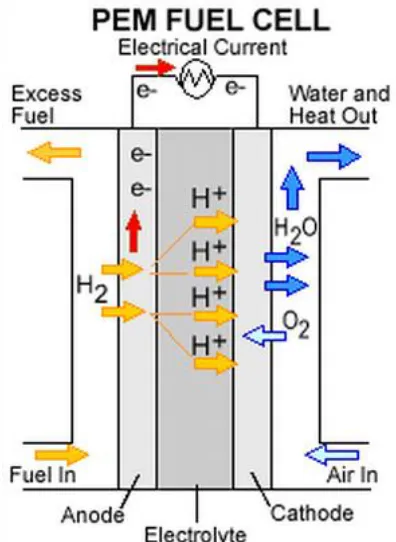
Figure 1.1 demonstrates the operational scheme of a PEMFC. Similar to the
hydrogen fuel cell previously described, the hydrogen is split into protons and electrons
at the anode. The electrons travel through an external circuit and the protons are
transported through the polymer electrolyte membrane. Protons and electrons combine
with oxygen at the cathode to produce water and heat.
5
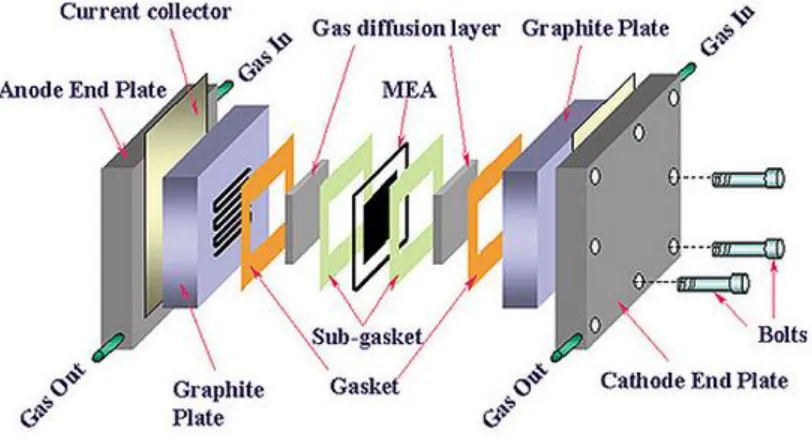
The heart of the PEMFC is the membrane electrode assembly (MEA), which consists of
the anode electrode, the polymer electrolyte membrane, and the cathode electrode. The
MEA is then built into the fuel cell with other components such as: graphite plates, gas
diffusion layers, gaskets, and endplates, as seen in Figure 1.2.
Figure 1.2: Fuel cell components
The efficiency of a PEMFC is largely dependent on the materials and their arrangements
within the cell. Various types of catalysts, membranes, electrodes, and dopants can all be
used under different operational conditions within the fuel cell.
The components of the fuel cell largely affect the temperature at which the fuel
cell operates. Cells that use membranes containing low boiling point electrolytes, such as
water, typically operate at 60-80 °C and large heat exchangers are required to ensure the
electrolyte is not boiled off. This results in a complex system consisting of extra
components and controls to maintain operation. Another issue associated with fuel cells
that operate at low temperatures is the need for an extremely pure fuel source. If
6
irreversibly bind to and poison the catalyst. Once the catalyst is poisoned, fuel cell
performance drops dramatically.
Some of the disadvantages associated with operating PEMFCs at low
temperatures can be overcome when operating at high temperatures (120-200 °C). To
operate at high temperatures, electrolytes with high boiling points, such as phosphoric
acid and sulfuric acid, are employed. Smaller heat exchangers can be used since there is
less risk of boiling off the electrolyte resulting in a less complex design than seen with
low temperature PEMFCs. A large advantage of high temperature operation is the
reversible binding of reformate impurities to the catalyst. For this reason, less pure fuel
sources can be used without risking the performance of the fuel cell. Having the ability to
use less pure fuel sources leads to lower costs associated with reformation. Faster
electrode kinetics and operating abilities of the fuel cell also improve at high
temperatures.16 The research reported herein will focus on polybenzimidazole-based high
temperature PEMFCs.
1.3 Polybenzimidazoles.
Polybenzimidazoles (PBI) are a class of heterocyclic polymers that were first
invented in 1959.17 The general structure of PBI can be seen in Figure 1.3. Since then a
variety of polybenzimidazoles has been synthesized, however, aromatic
polybenzimidazoles have gained the most attention due to their thermal stability and
chemical resistance.
7
In the early 1960s, polybenzimidazole fibers were synthesized in a joint effort of the
United States Air Force Materials Laboratory with Dupont and the Celanese Research
Company. Poly(2,2’-m-phenylene-5,5’-bibenzimidazole), or meta-PBI, as seen in Figure
1.4, was one of the first PBI chemistries to be heavily investigated. This polymer is not
only thermally stable, chemically resistant, and non-flammable, but can be spun into
fibers, which has led to its use in fireman coats and astronaut space suits.
Figure 1.4: Meta-PBI
Acid-imbibed polybenzimidazoles are excellent membranes to be used in high
temperature PEMFCs. These membranes are efficient proton conductors and are able to
withstand the high operating temperatures. The thermal stability of these PBIs is
attributed to the rigid, aromatic structure of the backbone.18 The acid acts as the
electrolyte allowing the protons to be transported from the anode to the cathode and the
membrane acts as a barrier that prevents gas crossover. The acid electrolyte and the PBI
membrane interact through the proton donor and acceptor sites along the backbone of the
polybenzimidazole. This complex forms a network through which protons can be
transported. The phosphoric acid transports protons using a Grotthuss-type mechanism
which enables the protons to “hop” from the anode to cathode. The high conductivity and
thermal stability of phosphoric acid and sulfuric acid make them great electrolytes for use
in high temperature applications. It is vital for PBI to be doped with electrolyte as PBI
8
1.4 Synthesis of Polybenzimidazole.
Polybenzimidazoles are synthesized through a polycondensation reaction. A
variety of methods to synthesize PBI has been reported; however, two are commonly
employed and industrially used. The reaction of 3,3’,4,4’-tetraaminobiphenyl (TAB) and
terephthalic acid monomers are polymerized in PPA to produce para-PBI, as shown in
Scheme 1.1. Polyphosphoric acid acts as both an acid catalyst and the solvent for the
reaction.16 This synthetic route is used by BASF to produce Celtec-P, a polymer
electrolyte membrane. Polymerizations conducted in PPA have shown excellent results
for fuel cell membrane synthesis and will be discussed in depth later.
Scheme 1.1: Synthesis of Para-PBI via Polycondensation of TAB and Terephthalic Acid
Scheme 1.2 shows the method used by PBI Performance Products to synthesize meta-PBI
by the condensation of TAB and diphenylisophthalate (DPIP) which is subsequently used
to produce fibers. The polymerization is conducted through a two-step melt/solid process
which generates phenol and water as byproducts.19 The solid polymer can then be
dissolved in a dimethyl acetamide/ lithium chloride mixture and spun into high
performance fibers. Though these two methods are the most commonly utilized, other
synthetic pathways to PBI have been reported.
The synthesis of benzimidazole and its derivatives are well-known and can be
9
aromatic chains needs to be taken into account. PBI contains both donor and acceptor
sites that allow for specific interactions with polar solvents, however, PBI is practically
insoluble in most organic solvents. In 1974, meta-PBI was synthesized through a mixed
solvent system of sulfolane and phenyl sulfone. The product was confirmed and inherent
viscosities up to 0.69 dL/g were achieved, however, polymerizations were performed at
low concentrations.20 In another report, ortho-esters were reacted with a tetra-amine in
dimethyl sulfoxide (DMSO) at 100 °C to produce polybenzimidazole, however, only low
molecular weight polymer could be achieved.21 The synthesis of PBI has also been
performed in Eaton’s Reagent22
(phosphorous pentoxide in methane sulfonic acid) and
through Higashi phosphorylation,23 though neither of these methods is as commonly used
as the first two methods.
Scheme 1.2: Synthesis of Meta-PBI via Melt/Solid Polymerization
1.5 Methods of Membrane Preparation.
Polyphosphoric acid (PPA) has long been used as a polymerization solvent. Its
ability to be used at high temperatures and lack of side reactions and tar formation in the
presence of organics has proven useful in polymer syntheses that require high
temperatures for condensations, ring closure and aromaticity formation24. Thermally
stable polymers, such as polybenzothiazoles, polyquinazolines, and polybenzimidazoles,
have all been successfully synthesized in PPA.25,26 PBI polymer and fibers have typically
been produced through a two-step melt/solid polycondensation processes and spun from
10
Conciatori et al.25,27 Although the solubility of PBI in PPA would not allow for this high
wt % of polymer to be dissolved for fiber production, PBI has sufficient solubility in PPA
in order to produce films. For this reason, PPA is used as the polymerization solvent in
both the conventional method of film formation and in the PPA Process. The methods
through which polybenzimidazole membranes are processed have been found to greatly
affect the properties and morphology of the membrane. Differences in acid loading,
conductivity, mechanical properties, inherent viscosity, and fuel cell performance have
been shown to vary depending on the synthesis and processing method. Two methods of
processing have been shown to produce greater conductivity than the conventional
imbibing method. Recent reviews by Savinell, Bjerrum, Li, Benicewicz, and Schmidt
discuss polybenzimidazole membranes for fuel cells prepared by many different
methods.28,29 Though all methods will be briefly covered, the work presented hereafter
will focus on the preparation, properties and fuel cell performance of acid-doped
membranes made by a unique sol-gel method termed the PPA Process.
1.5.1 Conventional Method.
The conventional acid imbibing method consists of a multi-step process in which
the polymerization takes place in an organic solvent such as dimethyl acetamide (DMAc)
that may contain lithium chloride (LiCl). The solution is then cast as a film and the
solvents are allowed to evaporate. Once solvent has evaporated, the PBI film is washed
with water to remove residual DMAc and LiCl and is then doped with phosphoric acid
11
Figure 1.5: Conventional Imbibing Process of PBI Membranes with PA
1.5.2 Porous PBI.
Another method of imbibing PBI with PA was published in 2004. In this method,
a porous PBI film is created by casting a solution containing PBI and a porogen
(phthalates or phosphates) onto a glass plate. The film is dried and the porogen-plasticizer
is removed by soaking the membrane in methanol.31 The membrane is then removed from
the methanol and completely dried. Once dried, the porous membrane is immersed in a
concentrated phosphoric acid solution for four days and is dried via blotting, as shown in
Figure 1.6. This process is both tedious and time consuming.
Figure 1.6: Imbibing Process of Porous PBI with PA31
Although PBI membranes were imbibed with PA through these methods, the
12
doping levels. Due to the substandard properties of these membranes, they exhibited high
rates of PA loss during fuel cell operation, poor mechanical properties, or failed to
operate altogether.16,31
1.5.3 The Sol-Gel Process.*
In 2005, Benicewicz et al. (in cooperation with BASF Fuel Cell GmbH) reported
a new method for producing polybenzimidazole films imbibed with phosphoric acid.16
This process, termed the PPA Process, represents a sol-gel process that utilizes
polyphosphoric acid (PPA) as both the polymerization medium and the casting solvent
for PBI polymers. In the PPA Process, dicarboxylic acids and tetramines such as
3,3’,4,4’-tetraaminobiphenyl (TAB) (or AB type monomers) are polymerized in PPA
between 195 and 220 °C to produce high molecular weight PBI polymers. After
polymerization, the PPA solution containing PBI is directly cast onto glass plates or other
suitable substrates. Since both PBI and PPA are hygroscopic, moisture from the
surrounding environment readily hydrolyzes the PPA to phosphoric acid (PA). A
sol-to-gel transition can occur which is attributed to the change in the nature of the solvent, i.e.,
many PBIs show higher solubility in PPA and poorer solubility in phosphoric acid. This
process encompasses many favorable attributes. For example, high molecular weight
polymer (typically determined through inherent viscosity measurements) can be readily
produced using the PPA Process. Since the process does not use organic solvents for the
polymerization or casting steps, the PPA process eliminates the cost of such solvents,
worker exposure, and solvent recovery and disposal costs. Also, separate unit operations
for imbibing are not needed as the solvent is transformed into the dopant as part of the
13
demonstrate greater mechanical properties with greater acid loadings and higher
conductivities than membranes formed through other methods.16
Figure 1.7: The Sol-Gel State Diagram16
Figure 1.7 provides a summary of the multiple chemical and physical
transformations that occur in the PPA process. Preliminary simulations by Padmanabhan
and Kumar of the phase behavior and formation of a physical gel from semiflexible
polymer chains provides some insights into the process.32,33 Increases in chain stiffness of
semiflexible polymer chains will increase chain association in solution and are likely to
play a role in the formation of reversible gels with liquid crystalline-like order.
Molecular dynamics simulations have also indicated that chain stiffness, depth and rate of
the temperature change, and the additional quench provided by the solvent quality (via
PPA hydrolysis) result in the transformation of a homogeneous solution into a trapped,
14
Figure 1.8. Many of the predictions from these simulations are consistent with the
observations made over the past 10-15 years.
15
1.5.4 Direct Acid Casting.
Researchers at Case Western Reserve University reported a method for casting
PBI films directly from acid solutions.34 This Direct Acid Casting method was performed
by initially dissolving PBI in trifluoroacetic acid (TFA). Phosphoric acid was then added
to create a single-phase solution which was filtered and cast onto untreated glass plates.
The film was heated at 140 °C for 15 minutes in air. Finally, the film was removed from
the glass plate and heated in a vacuum oven overnight to produce a dry film. Just as PBI
prepared through the PPA Process exhibits different properties than PBI prepared through
the conventional imbibing method, PBI films produced from Direct Acid Casting also
display unique properties. It was commonly observed that PBI films prepared through
conventional imbibing are tougher and stronger than those prepared by Direct Acid
Casting.35 It was reported that PBI of high inherent viscosity must be used for films cast
from TFA to produce films of reasonable strength.35
1.5.5 Conductivities and Acid Content.
Since the processing method greatly affects the properties of the PBI films,
differences in phosphoric acid content and conductivities vary among the PPA Process,
Direct Casting, and traditional casting from DMAc even with identical PBI chemistry.
When meta-PBI was cast from DMAc and doped in PA baths, conductivities ranged from
0.01-0.05 S/cm.30,34 Savinell et al. found that by casting from trifluoroacetic acid rather
than DMAc, conductivities for meta-PBI membranes could reach as high as 0.083
S/cm.34 This is a significant increase from the traditional casting/imbibing method and
demonstrates the influence the processing method has on the membrane properties, such
as conductivity. Conductivities for meta-PBI can be significantly increased when
16
meta-PBI membranes made via the PPA Process of 0.13 S/cm.30 This is nearly a 3-fold
improvement from films cast from DMAc and almost double the conductivity of films
cast from trifluoroacetic acid. The PPA Process produces membranes that contain more
acid than those prepared from conventional imbibing. Acid loadings of 14-26 moles PA/
moles polymer repeat unit (PRU) were reported for meta-PBI membranes prepared
through the PPA Process and 6-10 moles PA/PRU when prepared by conventional DMAc
casting and PA imbibing.36 Additionally, the membranes prepared by the conventionally
imbibed technique and PPA Process exhibited fundamentally different responses of ionic
conductivity on acid doping level.
1.6 Variations in PBI Chemistry.
The properties of the polymer gel film are not only affected by processing and
morphology, but also by the chemistry of the PBI polymers. The chemistry of the
polymer affects acid doping levels, conductivities, mechanical properties, and the
polymer solids content. Many PBI chemistries can be synthesized through the PPA
Process by varying the chemistry of the monomers and the combination of monomers
used. The ability to prepare and process many different PBI chemistries using the PPA
Process is a great advantage because it is less restricted by polymer solubility issues. The
properties of these PBI membranes have been thoroughly studied to evaluate
structure-property relationships and ultimately to enhance their properties for use in HT-PEM fuel
cells. Table 1.1 shows the properties of various chemistries of homopolymers prepared
16
Table 1.1: Properties of various chemistries of PBI prepared through the PPA Process.
PBI chemistry
Structure of Polymer Repeat Unit Monomer Charges (wt %) Tested via PPA Process Inherent Viscosity ranges (dL/g) ~Membrane Acid loading (mols PA/mol PRU) Conductivity (S/cm) @ 180 °C Ref
Meta-PBI 2-12 0.8-2.3 14-26 0.13
37
Para-PBI 1-5 0.3-2.9 30-40 0.25 38
Sulfonated-PBI
2.48-7.4 1.03-1.71 28-53 0.33 39
AB-PBI N/A ≤ 10.0 22-35 N/A 40
17
2,5-pyridine
PBI
4-18* 0.8-3.1 15-25 0.22 42
3,5-pyridine
PBI
4-20* 0.6-3.1 N/A N/A 42
2,6-pyridine
PBI
~7* 0.2-1.3 8-10 0.1 42
2,4-pyridine
PBI
~7* 0.3-1.00 N/A N/
A
42
18
1.7 Research Objectives.
The objectives of the projects discussed in this dissertation focus on new
chemistries of polybenzimidazole, as well as a new method to synthesize high molecular
weight PBI's in an organic solvent. New PBI polymers were synthesized and
characterized in order to form structure-property relationships and to better understand
how to prepare polymers with specific properties. A new synthetic approach that allows
for the polymerization of high molecular weight PBI's under commercially relevant
conditions is also reported.
1.7.1 Hydroxy-PBI Homopolymers and Copolymers.
It is well known that by altering the chemistry of a polymer, you can greatly
change the polymer’s properties. In previous work, a PBI chemistry containing hydroxyl
functional units along the backbone had demonstrated interesting properties compared to
PBIs of other chemistries, such as high conductivity and low compliance creep.43 Chapter
2 discusses two novel hydroxy-PBI analogs that were synthesized in order to further
explore structure-property relationships in hydroxyl containing PBI's that had the
potential to be used in high temperature PEMFCs. These new hydroxyl functionalized
PBI chemistries contained only one hydroxy group per repeat unit and also examined the
role of chain stiffness on properties. The formation of phosphate bridges and
phosphate-ester linkages during the polymerization in polyphosphoric acid and in the final cast
membranes was also investigated. Characterization of the polymers and cast membranes
was conducted to establish structure-property relationships and fuel cell performance was
evaluated to determine if these new chemistries would be good candidates as the
19
PBI copolymer systems have shown interesting properties in the past and have
been used as a convenient method to modify membrane properties. For this reason,
Chapter 3 focuses on the preparation and characterization of a copolymer series of p-OH
PBI and para-PBI at five different ratios and was compared to each homopolymer. The
films’ properties were assessed to correlate copolymer composition with the mechanical
properties, conductivity, and overall fuel cell performance. By performing this study at a
constant monomer concentration but varying copolymer composition, the isolated effects
of copolymer composition on membrane properties were studied.
1.7.2 Solution Polymerization of PBI.
Many polymerization methods for polybenzimidazole have been previously
reported; however, a synthetic technique to produce high molecular weight PBI directly
in an organic solvent had not been reported. Chapter 4 discusses a method to produce
high IV meta-PBI directly in DMAc solutions. This is an important advancement in the
synthesis of this polymer, as PBI fibers are spun commercially from DMAc. This work
discusses the synthetic approaches that were taken to develop monomers with proper
functionalities to produce benzimidazole directly in DMAc. Several key variables were
explored in these polymerizations studies. In the first part of this chapter, small molecule
studies were performed in order to determine the chemical functionalities that could
successfully produce benzimidazole directly in DMAc in a reasonable amount of time
and with little or no side products. Once monomers with appropriate functionalities were
identified, the polymerization concentration was carefully studied to determine the
20
were conducted to identify reaction conditions that affected ultimate molecular weight
and were explained in terms of a polymerization mechanism for this polymerization.
Since the previously discussed solution polymerization method is not limited to
the synthesis of just meta-PBI, this method was used to produce PBI analogs that contain
ether linkages. PBI's containing an ether linkage were of great interest due to the
increased backbone flexibility. As previously discussed, fully aromatic PBIs have
excellent thermal properties which leads to many advantages in high temperature
applications, however, fully aromatic PBIs are extremely difficult to process due to their
high Tg's. Chapter 5 discusses the synthesis of novel monomers to produce two ether PBI
chemistries via the new solution polymerization method. The resulting ether-PBIs were
then characterized with a specific focus on their thermal properties and compared to
meta-PBI also produced via the solution polymerization.
1.8 References.
(1) In Hard Truths: Facing the Hard Truths about Energy; National Petroleum Council: 2007, p 89.
(2) In http://www.altenergy.org/ 2015.
(3) Grove, W. R. London and Edinburgh Philosophical Magazine and Journal of Science1839, 14, 127.
(4) Hirschenhofer, J. H., Stauffer, D.B., Engleman, R.R., Klett, M.G., In Fuel Cell Handbook; 4 ed.; EG&G Technical Services, I., Ed.; Parsons Corporation: Reading, PA, 1998; Vol. 4, p 1.
(5) Yeager, E. Science1961, 134, 1178.
(6) Larminie, J., Dicks, A., McDonald, M., In Fuel Cell Systems Explained; Wiley Chichester: Hoboken, NJ, 2003; Vol. 2, p 433.
(7) Srinivasan, S. From Fundamentals to Applications; 1 ed.; Springer, 2006. (8) Carter, D., Ryan, M., Wing, J. The Fuel Cell Industry Review. Fuel Cell Today: History [Online Early Access]. Published Online: 2012. http://www.fuelcelltoday.com/about-fuel-cells/history.
(9) Appleby, A. J. Journal of Power Sources1990, 29, 3. (10) Bacon, F. T. Electrochimica Acta1969, 14, 569.
21
(12) Costamagna, P., Srinivasan, S., Journal of Power Sources2001, 102, 253. (13) Costamagna, P., Srinivasan, S., Journal of Power Sources2001, 102, 242. (14) NIST www.NIST.com.
(15) White, D. M., Takekoshi, T., Williams, F. J., Relles, H. M., Donahue, P. E., Klopfer, H. J., Loucks, G. R., Manello, J. S., Matthews, R. O., Schluenz, R. W. Journal of Polymer Science: Polymer Chemistry Edition1981, 19, 1635.
(16) Xiao, L., Zhang, H., Scanlon, E., Ramanathan, L. S., Choe, E., Rogers, D., Apple, T., Benicewicz, B.C., Chemistry of Materials2005, 17, 5328.
(17) Brinker, K. C., Cameron, D. D., Robinson, I. M., U.S. Patent #2904537, 1959.
(18) Wainright, J. S., Wang, J. T., Weng, D., Savinell, R. F., Litt, M., Journal of The Electrochemical Society1995, 142, L121.
(19) Sandor, R. B. PBI (Polybenzimidazole): Synthesis, Properties, and Applications1990, 2, 25.
(20) Hedberg, F. L., Marvel, C. S. Journal of Polymer Science: Polymer Chemistry Edition1974, 12, 1823.
(21) Dudgeon, C. D., Vogl, O. Journal of Polymer Science: Polymer Chemistry Edition1978, 16, 1831.
(22) Jouanneau, J., Mercier, R., Gonon, L., Gebel, G., Macromolecules 2007, 40, 983.
(23) Yamazaki, N., Higashi, F., Journal of Polymer Science: Polymer Letters Addition1974 12, 185.
(24) Popp, F., McEwen, W., Chemical Reviews1959, 58, 321.
(25) Yang H Aromatic high-strength fibers; John Wiley and Sons: New York, 1989.
(26) Cassidy P Thermally stable polymers; Marcel Dekker, Inc.: New York, 1980.
(27) Conciatori A, Buckley A, Stuetz D, Polybenzimidazole fibers; Marcel Dekker: New York, 1985.
(28) Molleo, M., Schmidt, T., Benicewicz, B.C. In Encyclopedia of Sustainability, Science and Technology; Meyers, R. A., Ed.; Springer Science + Business Media LLC: New York, 391-431, 2013.
(29) Li Q, Jennsen J, Savinell R, Bjerrum, Progress in Polymer Science2009, 34, 449.
(30) Perry, K. A., More, K.L, Payzant, A., Meisner, R.A., Sumpter, B.G., Benicewicz, B.C. Journal of Polymer Science Part B: Polymer Physics2014, 52, 26.
(31) Mecerreyes, D., Grande, H., Miguel, O., Ochoteco, E., Marcilla, R., Cantero, I., Chemistry of Materials2004, 16, 604.
(32) Padmanabhan, V., Kumar, S., Yethiraj, A., The Journal of Chemical Physics2008, 128.
(33) Padmanabhan, V., Kumar, S., The Journal of Chemical Physics2011, 134. (34) Savinell, R., Litt, M., US Patent #6,099,988, 2000.
(35) Ma, Y., Wainright, J., Litt, M., Savinell, R., Journal of The Electrochemical Society2004, 151, A8.
22
(37) Mader, J., Xiao, L., Schmidt, T., Benicewicz, B.C., In Fuel Cells II; Scherer, G., Ed.; Springer Berlin Heidelberg: 2008; Vol. 216, p 63.
(38) Yu, S., Zhang, H., Xiao, L., Choe, E. W., Benicewicz, B. C. Fuel Cells
2009, 9, 318.
(39) Mader, J., Benicewicz, B.C., Macromolecules2010, 43, 6706.
(40) Yu, S. In Ph. D. Thesis, Rensselaer Polytechnic Institute; Doctor of Philosophy: 2006.
(41) Gulledge, A., Gu, B., Benicewicz, B. Journal of Polymer Science Part A: Polymer Chemistry2012, 50, 306.
(42) Xiao, L., Zhang, H., Jana, T., Scanlon, E., Chen, R., Choe, E., Ramanathan, L., Yu, S., Benicewicz, B.C., Fuel Cells2005, 5, 287.
23
CHAPTER 2
S
YNTHESIS ANDC
HARACTERIZATION OFT
WON
OVELM
ONOHYDROXYP
OLYBENZIMIDAZOLES FORH
IGHT
EMPERATUREP
OLYMERE
LECTROLYTE24
2.1 Abstract.
Two novel polybenzimidazole (PBI) homopolymers,
poly(2,2’-(2-hydroxy-1,4-phenylene)5,5’-bibenzimidazole (p-OH PBI) and
poly(2,2’-(5-hydroxy-m-phenylene)-5,5-bibenzimidazole (m-OH PBI), each containing a single hydroxyl group per repeat
unit, were synthesized and characterized. Previous work investigated a para-oriented PBI
analog that contained two hydroxyl groups per repeat unit. This polymer demonstrated
high conductivity but had limited solubility in polyphosphoric acid (PPA) due crosslinks
formed by phosphate bridges between hydroxyl units. These new hydroxy-containing
PBIs were evaluated to determine if high conductivities could be maintained while
simultaneously increasing the solubility of the polymer by lowering the number of
potential phosphate bridges. Polymer films were tested for acid content, conductivity,
mechanical properties, and overall fuel cell performance. From the data,
structure-property relationships were formed and membranes were evaluated for use in high
temperature fuel cell applications.
2.2 Introduction.
Through the evolution of technology and with the rapid increase in global
population, the demand for energy has exponentially increased. High-Temperature
Polymer Electrolyte Membrane Fuel Cells (HTPEMFCs) have gained increasing
attention due to their abilities to efficiently produce clean energy without many of the
problems observed with low temperature devices. Faster electrode kinetics, reduced
catalyst poisoning due to reversible binding, and simplified design are all benefits seen
in high temperature devices (>120 °C).1 Polybenzimidazoles (PBI) imbibed with
25
electrolyte membrane in HTPEMFCs due to their affordability and excellent
performance. These gel membranes demonstrate high ionic conductivities, thermal and
oxidative stability, and relatively no osmotic drag.2-4
Polybenzimidazole films imbibed with phosphoric acid have been produced
through various methods. The traditional method of film formation involves dissolving
the PBI in an appropriate solvent, typically dimethyl acetamide (DMAc) with LiCl or
trifluoroacetic acid, and casting the film.3,5,6 The PBI film can then be placed in a
phosphoric acid (PA) bath for imbibing. Meta-PBI is the most commonly synthesized
chemistry of polybenzimidazole produced through the traditional method due to the
commercial availability of the polymer and the solubility limitations associated with
these solvents.7 Meta-PBI films doped with PA produced via this method have reportedly
demonstrated conductivities ranging from 0.01-0.05 S/cm.8,9
A new method of synthesizing PBI films imbibed with PA was reported by
Benicewicz et al. in 2005.10 This process, termed the Sol-Gel Process or PPA Process,
polymerizes PBI directly in polyphosphoric acid (PPA) at high temperatures
(195-220°C). The hot solution is taken and cast directly onto glass plates using a Gardner
blade. The PPA (an excellent solvent for PBI) is hydrolyzed to PA (a poor solvent for
PBI) from the moisture in the air, thereby, inducing the solution to gel transition. The
result is a PBI membrane already imbibed with phosphoric acid. This method has many
benefits compared to the traditional method of synthesis, such as, fewer steps and less
solvent exposure for workers. Not only is the process beneficial, the resulting membranes
prepared through the PPA Process demonstrate better properties than those prepared via
26
mechanical properties are all a result of the PPA Process.8,10 One of the greatest
advantages this method has over the traditional method is the ability to produce new
chemistries of PBI since the solubility limits associated with PBI in DMAc and
trifluoracetic acid do not apply to this process. For this reason, many chemistries of PBI
have been synthesized via this method in order to form structure-property relationships to
target property improvements.11-13
In 2009, Yu et al. reported the synthesis of
Poly(2,2’-(2,5-dihydroxy-1,4-phenylene)5,5’-bibenzimidazole) (2OH-PBI) via the PPA Process.7
These membranes
demonstrated interesting properties attributed to the chemistry of the polymer. Previous
reports have suggested that rigid-rod polymers containing hydroxyl units and
nitrogen-containing heterocycles can strongly hydrogen bond and form network structures.14-17
These 2OH-PBI films had higher acid loadings and demonstrated significantly higher
conductivity than traditional para-PBI prepared via the PPA Process (0.35 S/cm vs 0.27
S/cm).7,10 Though this new chemistry led to improvement in conductivity and an overall
good fuel cell performance, the 2OH-PBI demonstrated a lower solubility in PPA than
para-PBI, leading to membranes with lower polymer solids and lower tensile properties.
The low solubility is attributed to the formation of the phosphate bridges which cause
crosslinking between chains which are formed during polymerization at high
temperatures in PPA.7 The hydroxyl units along the backbone can form phosphate
bridges between hydroxyl units, thereby, crosslinking the chains. Small molecule studies
and other reports of polymerizations done in PPA have confirmed the formation of
27
This new work focuses on the synthesis and characterization of two novel PBI
homopolymers, each containing one hydroxyl unit per polymer repeat unit, in order to
form structure-property relationships. Since 2OH-PBI, shown in Figure 2.1, demonstrated
high conductivities but low solubilities in PPA, the properties of polymers containing one
less hydroxyl unit per polymer repeat unit were investigated to understand how
conductivity and solubility would be affected. Polymer membranes were characterized
through various methods to determine if they are suitable candidates for polymer
electrolyte membranes in HTPEMFCs. These novel polymers,
poly(2,2’-(2-hydroxy-1,4-phenylene)5,5’-bibenzimidazole (p-OH PBI) and
poly(2,2’-(5-hydroxy-m-phenylene)-5,5-bibenzimidazole (m-OH PBI), are shown in Scheme 2.1.
Figure 2.1: Structure of 2OH-PBI
28
2.3 Experimental Section.
2.3.1 Materials. TAB (3,3’,4,4’-tetraaminobiphenyl, polymerization grade) was obtained
from Celanese Ventures, GmbH. Polyphosphoric Acid (PPA, 116%) was donated by
BASF. 5-hydroxyisophthalic acid (97%) and 2-bromoterephthalic acid (95%) were
purchased from Sigma Aldrich. Ammonium hydroxide, sulfuric acid, hydrochloric acid,
acetic acid, sodium hydroxide, n-methyl-2-pyrrolidone (NMP), dimethyl sulfoxide
(DMSO), and sodium acetate were purchased from Fisher Scientific. Copper powder
(98%, 160 mesh) was purchased from Acros. All chemicals were used as received unless
otherwise stated.
2.3.2 Synthesis of 2-hydroxyterephthalic acid. Sodium acetate (25.3g, 0.308mol),
sodium hydroxide (7.87g, 0.197mol), 2-bromoterephthalic acid (20.42g, 0.083mol),
copper powder (0.49g, 0.77mmols) and distilled water (250mL) were charged to a
500mL 3-neck round bottom flask equipped with a stir bar, a nitrogen inlet, a reflux
condenser, and a glass stopper. The reaction was allowed to heat at reflux for 4 days.
Upon cooling to room temperature, copper powder was removed by vacuum filtration.
Filtrate was collected and acidified to a pH of 2 by adding hydrochloric acid drop-wise.
Upon acidification, white precipitate began to crash out. Precipitate was collected
through vacuum filtration and washed with acetic acid. Product was recrystallized in
NMP, washed with water, and dried under vacuum at 150°C. The yield was 12.9 g (85%
yield). Product was confirmed through 1H-NMR (300 MHz, DMSO-d6) δ 13.1 (s, 1H),
8.1 (d, 1H), 7.9 (d, 1H), 7.5 (d, 1H), 4.0 (s, 1H) and elemental analysis C=53.02%,
29
2.3.3 Polymer and Membrane Preparation. Synthesis of p-OH PBI. TAB
(3,3’,4,4’-tetraaminiobiphenyl) (1.892g, 8.83mmol) and 2-hydroxyterephthalic acid (1.609g,
8.83mmol) were placed in a 250 mL resin kettle in a nitrogen atmosphere glove box
followed by the addition of 96.5g of PPA. The resin kettle was equipped with a nitrogen
inlet, a mechanical stirrer, and a nitrogen outlet. Using a programmable temperature
control with ramp and soak features and a silicone oil bath, the polymerization was
conducted at 195-220°C for 3-9 hours. During this time, the monomer dissolved and later
a dark, viscous polymer solution had formed. A small amount of the polymer was poured
into water and isolated as a brown solid. The solid was then chopped using a blender,
then neutralized using ammonium hydroxide. Residual salts from the neutralization were
then removed by washing the polymer powders with water. Powders were then placed in
the vacuum oven to dry at 180°C for 24 hours.
2.3.4 Synthesis of m-OH PBI. TAB (3,3’,4,4’-tetraaminobiphenyl) (3.235g, 15.1mmol)
and 5-hydroxyisophthalic acid (2.750g, 15.1mmol) were placed in a 250 mL resin kettle
in a nitrogen atmosphere glove box followed by the addition of 94.0g of PPA. The resin
kettle was equipped with a nitrogen inlet, a mechanical stirrer, and a nitrogen outlet.
Using a programmable temperature control with ramp and soak features and a silicone oil
bath, the polymerization was conducted at 195-220°C for hours 20-30 hours. During this
time, the monomer dissolved and later a dark, viscous polymer solution had formed. A
30
solid was then chopped using a blender and neutralized using ammonium hydroxide.
Residual salts from the neutralization were then removed by washing the polymer
powders with water. Powders were then placed in the vacuum oven to dry at 180°C for
24 hours.
2.4 Characterization Techniques.
2.4.1 Inherent Viscosity. Inherent viscosities (IV) of the polymer powders were
measured at a concentration of 0.2 g/dL in concentrated sulfuric acid (96%) at 30°C using
a Cannon Ubbelohde viscometer. Samples were prepared by dissolving the dried polymer
powders in sulfuric acid using a mechanical shaker. Reported IV values are an average of
three separate measurements and were calculated as previously reported.19
2.4.2 Thermal Analysis. Thermal gravimetric analysis (TGA) of dried polymer samples
was conducted using a TA Instruments Q5000 with nitrogen flow rates of 25mL/min and
a heating rate of 10 ˚C/min.
2.4.3 Elemental Analysis. All samples were sent to Midwest Microlabs for elemental
testing. The workups of the samples sent out for testing are discussed in the results.
2.4.4 Titrations. The composition of acid-doped PBI membranes was determined by
measuring the relative amounts of polymer solids, water, and acid in the film. The
phosphoric acid (PA) content was determined by titrating a sample of membrane with
standardized sodium hydroxide solution (0.1 N) using a Metrohm 716 DMS Titrino
autotitrator. The sample was washed with water and dried under vacuum at 180°C
31
the membrane. The amount of water was calculated by subtracting the weights of
polymer and PA from the initial PBI membrane sample weight.
2.4.5 Conductivity. Ionic conductivities were measured using a four-probe through-plane
bulk measurement using an AC Zahner IM6e impedance spectrometer that scanned a
frequency range from 1 Hz to 100 KHz. A rectangular sample of membrane was placed
in a polysulfone cell with four platinum wire current collectors. Two outer electrodes set
6.0 cm apart supplied current to the cell, while the two inner electrodes 2.0 cm apart on
opposite sides of the membrane measured the voltage drop. To ensure a through-plane
bulk measurement of the membrane ionic conductivity, the two outer electrodes were
placed on opposite sides of the membrane and the two inner electrodes were arranged in
the same manner. The membrane sample was heated over 100°C for over 2 hours to
ensure water was removed before reporting conductivity data. Conductivity was
calculated from the recorded resistance using the equation: σ = D/ (LBR) where D is the
distance between the two test current electrodes, L and B are the thickness and width of
the film, respectively, and R is the resistance value measured.
2.4.6 Tensile Testing. The tensile properties of the membranes were tested at room
temperature using an Instron Model 5543A system with a 10 N load cell and crosshead
speed of 5 mm/min. Dog-bone shaped specimens were cut according to ASTM standard
D683 (Type V specimens) and preloaded to 0.1 N prior to testing.
2.4.7 Compression Creep Testing. Compression creep testing was performed using a
dynamic mechanical analyzer (TA Instruments, model RSAIII) using the testing method
32
2.4.8 Membrane Electrode Assembly. The membrane electrode assemblies (MEA)
were prepared by hot pressing the acid-doped membrane between an anode electrode and
a cathode electrode at 150 °C for 90-150 seconds using 4500 lbs of force and
compressing to 80% its original thickness. Electrodes were received from BASF Fuel
Cell, Inc. with 1.0 mg/cm2 platinum (Pt) catalyst loading. Anode electrodes contained
only Pt as the catalyst, while the cathode electrodes contained a BASF Fuel Cell standard
cathode Pt alloy. The active area of the electrodes was 45.15 cm2.
2.4.9 Fuel Cell Testing. Fuel cell fabrication was conducted by assembling the cell
components as follows: end plate: anode current collector: anode flow field: MEA :
cathode flow field: cathode current collector: end plate. Gaskets were used on both sides
of the MEA to control compression. Following assembly, the cell was evenly clamped to
50 inlbs of pressure. Fuel cell performance was measured on 50 cm2 (active area 45.15
cm2 ) single stack fuel cells using test stations obtained from Plug Power or purchased
from Fuel Cell Technologies. Polarization curves were obtained at various temperatures
(120-180 °C) with hydrogen and air at a constant stoich of H2 (λ=1.2) /air (λ=2.0) with no
external humidification. Fuel cells were operated for at least 100 hours (break-in period)
at 0.2 A/cm2 at 180 °C before measurement of polarization curves.
2.5 Results and Discussion
Both the p-OH PBI and the m-OH PBI were synthesized in polyphosphoric acid
(PPA) via the PPA Process. The p-OH PBI was synthesized at a range of monomer
concentrations, 2-5 wt%, in order to determine the optimal concentration to obtain high
33
resulted in stable films that were easily characterized. The polymerization performed at 4
wt% monomer charge quickly became viscous and was casted after a short time at the
final polymerization temperature. The film easily cracked and was unstable for
characterization which can be attributed to the low IV of the polymer. The
polymerization conducted at 5 wt% monomer charge was too viscous to cast after only a
few hours at final temperature. The IV of the polymer was tested and was found to be
low, 0.59 dL/g, even though the solution was very viscous at 220 °C. This is commonly
seen in PBI polymerizations as they approach their solubility limits. The highest IV
obtained, 2.04 dL/g, was found at a monomer charge of 3.5 wt%, making this the ideal
concentration to perform polymerizations targeting high IVs. Monomer concentrations
higher than 3.5 wt% resulted in solubility issues, even at high temperatures. Inherent
viscosities for p-OH PBI are shown in Figure 2.2. Polymerizations were conducted in a
ramp/soak method and held at a final temperature of 195-220 °C for 3-9 hours. Viscosity
had to be closely monitored for casting as the solution quickly became viscous and
difficult to cast. Upon casting the hot solution, films were placed the humidity chamber
where the polyphosphoric acid was hydrolyzed to phosphoric acid, thereby inducing the
solution to gel transition. Resulting stable films were strong and red in color. The p-OH
PBI was able to be polymerized at a slightly higher monomer concentration than 2-OH
PBI (3.5 wt% vs 3.0 wt%). Though p-OH does not demonstrate a great difference in
solubility compared with 2-OH PBI, the slight difference could be due to fewer
cross-links between chains since the polymer repeat unit contains only one hydroxyl unit rather
34
Figure 2.2: Inherent viscosity as a function of monomer concentration for p-OH PBI
m-OH PBI. Polymerizations were also conducted at a range of monomer
concentrations, 5.0-7.5 wt%, to determine optimal concentration to obtain high IV PBI as
shown in Figure 2.3. Polymerizations conducted at 5.0 and 5.5 wt% monomer charge
initially resulted in low IV, non-film forming, polymer. A polymerization at 5.5 wt%
monomer charge was redone, this time for a longer time, and resulted in a higher IV
polymer that formed a stable film. Polymerizations were conducted at 6.0 wt% for
varying times to ultimately increase IV. Polymerizations conducted with monomer
charges higher than 6.0 wt% demonstrated solubility issues and had low IVs at an
appropriate casting viscosity. The ideal monomer charge was found to be 6.0 wt% at
which the highest IV was obtained. Polymerizations were performed using a ramp/soak
temperature profile and held at a final polymerization temperature, 195-220°C, for 10-30
hours before casting. The resulting high-IV films were mechanically stable and red in
2-35
OH PBI. This is to be expected as the meta-oriented backbone is less rigid than the
oriented backbone. This is also supported by previously reported data on meta and
para-PBI synthesized via the PPA Process which suggests meta-para-PBI can be polymerized with
nearly double the monomer concentration as para-PBI.12,21
Figure 2.3: Inherent viscosity as a function of monomer concentration for m-OH PBI
Basic workup of polymer powders. To better understand the phosphate-ether
linkages and phosphate bridges which were believed to be contributing to the high
viscosity of the polymer solution, polymer powders of both p-OH PBI and m-OH PBI
were used for investigation. Since polymer powders are obtained by heating the chopped
polymers in water to kick out phosphoric acid, followed by neutralization with
ammonium hydroxide as previously stated in the experimental section, all free
36
phosphorous would be the phosphorous that is covalently bound as phosphate bridges or
phosphate-esters between hydroxyl units along the PBI backbone. Phosphate bridges
would also lead to a higher inherent viscosity due to the increased rigidity of the
cross-linked structure and a higher Mark-Houwink coefficient. To test for phosphate bridges, a
sample of each of the polymer powders was heated at reflux in a DMSO/water mixture
with 0.02M of sodium hydroxide for 24 hours to hydrolyze any phosphate bridges as
previously reported.7 Upon washing and drying the samples, inherent viscosities were run
on both the neat polymer powders and the powders that went through the basic workup.
These results are shown in Table 2.1. The inherent viscosities of both polymers decreased
slightly but not as much as one might expect if many phosphate bridges were present. To
further characterize the polymer powders, both the neat powders and the powders that
were hydrolyzed were tested using elemental analysis to determine the amount of
phosphorous present within the samples. The results of the elemental analysis are shown
in Table 2.2. In the p-OH PBI samples, the amount of phosphorous seen in the neat
sample was significantly higher than the amount seen in the sample after the basic
workup. The neat sample was found to have a ratio of 31.14 equiv. carbon to 1.0 equiv.
phosphorous. After hydrolysis of phosphate bridges and phosphate esters, the ratio of
carbon atoms to phosphorous atoms was found to be 332.14 to 1.0 indicating there was a
large amount of covalently bound phosphorous. The m-OH PBI powders roughly saw a
50% decrease in the amount of phosphorous after basic workup. The neat powders had a
ratio of 17.88 equiv. carbon to 1.0 equiv. phosphorous. Upon the basic workup, the ratio
of carbon to phosphorous changed to 35.5 equiv. carbon to 1.0 equiv. phosphorous. The
37
initially there is much phosphorous in the sample, however, since IV did not drastically
change after the basic workup, it can be hypothesized that there are many phosphate-ether
linkages and few phosphate bridges. The difference in these structures are shown in
Figure 2.4.
Table 2.1: Inherent Viscosities of powders before and after hydrolysis
Polymer sample I.V. of neat powder (dL/g) I.V. of powder after basic workup (dL/g)
p-OH PBI 2.04 1.95
m-OH PBI 0.72 0.67
Table 2.2: Elemental analysis of polymer powders in weight %
Sample C (%) H (%) N (%) P (%)
p-OH PBI (Neat) 52.30 4.52 12.18 4.23
p-OH PBI (after basic workup) 55.81 4.29 13.5 0.45
m-OH PBI (Neat) 53.71 4.74 12.08 7.75
m-OH PBI (after basic workup) 44.88 4.40 12.95 3.18