Interpreting public sentiments variation by using FB-LDA technique
Nandkumar Kewat
1, Pooja Dehankar
2, Bhavesh Kshirsagar
3, Prof. Kunal Purohit
4,
Prof. Mahvash Khan
51,2,3,4Student, Information Technology, NIT(NAGPUR),RTMNU University, Maharashtra, India
5Professor, Information Technology, NIT(NAGPUR),RTMNU University, Maharashtra, India
---***---Abstract -
Social media have received more attentionnowadays; public and private opinions about a wide variety of subject are expressed and spread continually by numerous social media. Twitter is one of the social media that is gaining popularity. It provides a fast and effective way for people to express their views on a big platform. Hence we find a need to analyze tweets based on positive, negative and neutral responses. Therefore we are developing a web application that will help to analyze public sentiments based on the type of tweets. Developing a program for twitter sentiment analysis is an approach to be used to computationally measure customer perceptions. This paper first extract the large amount of tweets from social media sites and applies sentiment analysis on tweets and classifies them. Results classify customer perspective tweets into positive, negative and neutral polarity that is represented in a pie chart and graph chart.
Key Words: Sentiment, Sentiment Analysis, Twitter, Public Sentiments, Latent Dirichlet Allocation (LDA), Data sets Sentiment, Data mining, Tools, Sentiment classification, Opinion mining.
1. INTRODUCTION
The social networking sites are used by millions of user to express their emotions, opinion and views about their daily lives. The online communities provide an interactive forum where consumers inform and influence others. Moreover, social media provides an opportunity for business that gives a platform to connect with their customers such as social mediator advertise or speak directly to customers for connecting with customer’s perspective of products and services. In contrast, consumers have all the power when it comes to what consumers want to see and how consumers respond.
The Sentiment analysis is also known as opinion mining. It plays extremely important role in determining the sentiments involved in various Social media content. Analyzing the opinions and sentiments of public is very important for making decisions whether it is positive or negative.
Sentiment Analysis in the area of Natural language processing used to compute the polarity of subject and is concerned with analysis of sentiments that are understood by human beings for machines use. The Sentiment Analysis extracts the public opinions, emotions and sentiments from text and analyzes them.
Sentiment classification in three levels:
1. Document level 2. Sentence level 3. Feature levels
1.1 Document level
Document level classification aims to automate the task of classifying a textual review, which is given on a single topic, as expressing a positive or negative sentiment.
The document can be classified into two classes of sentences:
(1) Positive and
(2)Negative Based on overall sentiment expressed by its writer.
1.2 Sentence level
Sentence level classification is a machine learning method to determine the sentiment polarity of a sentence at first, then designs statistical algorithm to compute the weight of the sentence in sentiment classification of the whole document and at last aggregates the weighted sentence to predict the sentiment polarity of document.
Sentence level sentiment analysis classified in two ways:
1) Subjectivity Classification and 2) Sentiment classification.
Information in a sentence can be of two types,
(1)Subjective information & (2)Objective information.
1.3 Features level
The Sentiment analysis is done on the basis of Document, Sentence and feature levels. But the first two levels didn't consider object features that have been commented in a sentence. So the feature level sentiment analysis is more appropriate compare to both. Different types of tools and approaches have been used by the researchers for pre-processing, tagging, semantic orientation, and finally for calculating scores for deriving sentiments of the reviews.
Features level classification divided in three major tasks:
(1)First Step is to identify and extract the features. (2)Second step determines whether the opinions on features are neutral, positive or negative.
(3)Final Task is to group the feature synonyms.
A Conventional clustering algorithm can be used to divide the adjectives into the two small sets, first set contains positive adjectives and second set contains the negative ones.
2.
LITERATURE SURVEY
1] Twitter mood predicts the stock market (2011)
Johan Bollen, Huina Mao, Xiao-Jun Zeng has proposed the technique based on Opinion Finder and opinion mining, Go ogle-Profile of Mood States (GPOMS) for Public mood analysis from Twitter feed on the other hand offers an automatic, fast, free and extensive addition to this toolkit that may in addition be optimized to calculate a variety of dimensions of the public mood state. Propose the same system using location as a factor to analysis the Public Mood.
2] Target-dependent Twitter Sentiment Classification (2011)
Long Jiang ,Mo Yu , Ming Zhou , Xiaohua Liu , Tiejun Zhao has proposed the technique related to Subjectivity Classification and confidence, Polarity Classification and confidence, Graph Based Optimization to improve target dependent sentiment classification of tweets by using both target-dependent and context-aware approaches. Specifically, the target-dependent approach refers to incorporating syntactic features generated using words syntactically connected with the given target in the tweet to decide whether or not the sentiment is about the given target.
3] Modeling Public Mood and Emotion: Twitter Sentiment and Socio-Economic Phenomena (2011)
Johan Bollen, Huina Mao, Alberto Pepe has described the technique related to Profile of Mood States (POMS) which does not requires training learning and machine learning. But machine learning yield accurate Classification results when subjectivity and sufficiently large data is available for testing and training.
4] Twitter Sentiment Classification using Distant Supervision (2009)
Alec Go, Richa Bhayani, Lei Huang Pepe has described with technique Naive Bayes, Maximum entropy, and Support vector machines to progress accuracy using domain specific tweets, handling neutral tweets, Internationalization, Utilizing emoticon data in the test set.
5] Examine sentiment analysis on Twitter data (2002)
Apoorv Agarwal, Boyi Xie, Ilia Vovsha, Owen Rambow, Rebecca Passonneau[2], The anthers scan sentiment analysis on Twitter data. The contributions of this paper are: (1) Introduce POS-specific prior polarity features. (2) Explore the use of a tree kernel to obviate the need for tedious feature engineering. The new features in conjunction with previously proposed features and the tree kernel perform approximately at the same level, both outperforming the state-of-the-art base-line.
6] Classification the sentiment of Twitter messages (2003)
A.Go, R. Bhayani, and L. Huang [3], introduce a novel approach for automatically classifying the sentiment of Twitter messages. These messages are classified as positive, negative or neutral with respect to a query term. This is useful for consumers who want to research the sentiment of market products before purchase, or companies that want to monitor and measure the public sentiment of their brands.
3. PROBLEM DEFINITION
Despite the availability of software to extract data regarding a person’s sentiment on a specific product, service, organizations and other data works still face issues regarding the data extraction.
Sentiment Analysis of Web Based Applications Focus on Single Tweet Only.
With the speedy growth of the World Wide Web, people are using social media such as Twitter which generates vast volumes of opinion texts in the form of tweets which is available for the sentiment analysis. This tweet translates to a huge volume of information from a human viewpoint which makes it difficult to extract a sentence, read them, analyze tweet by tweet, summarize them and organize them into reasonable format in a timely manner.
Difficulty of Sentiment Analysis with inappropriate English
Human emotions are a pictorial representation of facial expressions, which in the absence of body language and manner of speaking serve to draw a receiver's attention to the sense or temper of a sender's nominal verbal communication, improving and changing its understanding.
For example,
☺ indicates a happy state of mind. Systems at this time in place do not have sufficient data to allow them to draw feelings out of the emoticons. As humans frequently turn to emoticons to properly express what they cannot put into words. Not being able to analyze this position the organization at a loss. Short-form is broadly used even with short message service (SMS). The usage of short-form will be used more frequently on Twitter so as to help to minimize the non-meaning characters used. This is because Twitter has put a limit on its characters to 140. For example, ‘Tab’ refers to be announced.
4. PROPOSED SYSTEM
In the Proposed System, we propose Two Latent Dirichlet Allocation (LDA) based models, Foreground and Background LDA (FB-LDA) and Reason Candidate and Background LDA (RCB-LDA). The FB-LDA model can filter out background topics and then extract foreground topics to disclose possible explanation. To give a more sensitive representation, the RCB-LDA model can rank a set of reason candidates expressed in natural language to provide sentence-level explanation.
After classification of all the tweets using LDA algorithm, it will find out sentiment variation between foreground and background tweets and also transforms them. The twitter data set used to analyze the tweets and results into evaluation of public sentiment variations and extract possible reasons behind variations.
5. RESULT AND DISCUSSION
The final application will look like as shown below:
Fig 1: Login page
[image:3.595.323.543.127.289.2]Figure 1 is a login form of our application. The required authentic user name and password for login.
[image:3.595.104.220.466.670.2]Fig 2: Main form
Figure 2 is a Main form of our application, where sentiment analysis by text on single sentence will be done and Twitter sentiment analysis will be done based on complete datasets of user tweets.
[image:3.595.307.569.603.753.2]Figure 3 comes under the “Sentiment analysis by text” where it provides the single sentence sentiment analysis. It gives single sentence Polarity, Polarity confidence value, Subjectivity and Subjectivity confidence value.
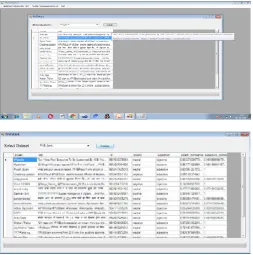
Fig 4: Multiple Sentence Sentiment analysis
Figure 4 perform the analysis on multiple sentences.
The dataset is selected topic wise, then click on the analyze button to perform online sentiment analysis operation on multiple sentences, then the result will be shown in tabular format into polarity, polarity confidence, subjectivity and subjectivity confidence.
6. CONCLUSION
Sentiment analysis is in special demand because of its effectiveness. They are progressively used in social media monitoring, survey responses, competitors also in practical use for public opinions in business and marketing. The Large number of text documents can be processed for analysis of sentiment in limited seconds, compared to hours that would take a team of people to manually complete.
In social media sentiment analysis plays a vital role for most of the decision making situations where public opinion is needed to be considered. Sentiment outlines the three methods for feature selection such as (1-First Step is to identify and extract the features. 2-Second step stop determines whether the opinions on the features are neutral, positive or negative.3-Final Task is to group the feature synonyms) as well as sentiment classification task.
This paper describes FB-LDA techniques of sentiment analysis of public from social networking site. The proposed technique analyzes tweets and find out the results in
positive, neutral and negative response on sentiment variations among various tweets.
7. REFERENCES
[1] M. Rambocas, and J. Gama, “Marketing Research: The Role of Sentiment Analysis”. The 5th SNA-KDD Workshop’11. University of Porto, 2013.
[2] A. K. Jose, N. Bhatia, and S. Krishna, “Twitter Sentiment Analysis”. National Institute of Technology Calicut, 2010.
[3] P. Lai, “Extracting Strong Sentiment Trend from Twitter”. Stan ford University, 2012.
[4] Y. Zhou, and Y. Fan, “ A Sociolinguistic Study of American Slang,” Theory and Practice in Language Studies, 3(12), 2209–2213, 2013.
[5] D. Boyd, S. Golder, & G. Lotan, “Tweet, tweet, re-tweet: Conversational aspects of re-tweeting on twitter,” System Sciences (HICSS), 2010
[6] T. Carpenter, and T. Way, “Tracking Sentiment Analysis through Twitter,”. ACM computer survey. Villanova : Villanova University, 2010.
[7] D. Osimo, and F. Mureddu, “Research Challenge on Opinion Mining and Sentiment Analysis,” Proceeding of the 12th conference of Fruct association, 2010, United Kingdom
[8] H. Saif, Y. He, and H. Alani, “Semantic Sentiment Analysis of Twitter,” Proceeding of the Workshop on Information Extraction and Entity Analytics on Social Media Data. United Kingdom: Knowledge Media Institute, 2011.
[9] A. Agarwal, B. Xie, I. Vovsha, O. Rambow, and R. Passonneau, “ Sentiment Analysis of Twitter Data,” Annual International Conferences. New York:Columbia University, 2012.
[10] M.Taboada, J. Brooke, M. Tofiloski, K. Voll, and M. Stede, “Lexicon Based Methods for Sentiment Analysis,” Association for Computational Linguistics, 2011.
[11] M. Annett, and G. Kondrak, “A Comparison of Sentiment Analysis Techniques: Polarizing Movie Blogs,” Conference on web search and web data mining (WSDM). University of Alberia: Department of Computing Science, 2009.
[12] P. Goncalves, F. Benevenuto, M. Araujo and M. Cha, “Comparing and Combining Sentiment Analysis Methods”, 2013.
[13] E. Kouloumpis, T. Wilson, and J. Moore, “Twitter Sentiment Analysis : The Good the Bad and theOMG!”, (Vol.5). International AAAI, 2011.
[image:4.595.36.290.139.395.2][15] P. Lai, “Extracting Strong Sentiment Trend from Twitter”. Stan ford University, 2012.
[16] D. Boyd, S. Golder, & G. Lotan, “Tweet, tweet, re-tweet: Conversational aspects of re-tweeting on twitter,” System Sciences (HICSS), 2010
[17] J. Spencer and G. Uchyigit, “Sentiment or: Sentiment Analysis of Twitter Data,” Second Joint Conference on Lexicon and Computational Semantics. Brighton:University of Brighton, 2008.
[18] H. Saif, Y. He and H. Alani, “Alleviating Data Scarcity for Twitter Sentiment Analysis”. Association for Computational Linguistics, 2012.
[19] A. K. Jose, N. Bhatia, and S. Krishna, “Twitter Sentiment Analysis”. National Institute of Technology Calicut, 2010.
[20] Y. Zhou, and Y. Fan, “ A Sociolinguistic Study of American Slang,” Theory and Practice in Language Studies, 3(12), 2209–2213, 2013.