© 2017, IRJET | Impact Factor value: 6.171 | ISO 9001:2008 Certified Journal | Page 495
Non-Linear Static (Pushover) Analysis of Irregular Building Systems
Irfan Sha D.S.
1, Rama Krishna
21
M tech (student),Civil Department, GOLDEN VALLEY COLLEGE OF ENGINEERING, Chittoor, AP, INDIA.
2Assistant professor, Civil Department, GOLDEN VALLEY COLLEGE OF ENGINEERING, Chittoor, AP, INDIA.
---***---Abstract - The examination introduces the system for
seismic execution estimation of awry R C outline structures with ground delicate story in light of an idea of the limit range strategy. Past late seismic tremors in many parts of India and globe have uncovered the issue in regards to the defenselessness of existing structures. The current building structures which were outlined and built by before code arrangements don't fulfill necessity of current seismic code and configuration rehearse. Many strengthened solid structures in urban districts lying in dynamic seismic zone may endure direct to extreme harms amid future ground movement. Accordingly it is fundamental to moderate inadmissible perils to property and life of inhabitant. Structures might be considered as topsy-turvy in design or in rise in light of the circulation of mass and solidness along every story all through the tallness of the structures. Structures of skyscraper are contrasting from other short structures. Because of changed arrangements of tall structures in seismic ranges requires fundamental powerlessness against dislodging, story floats and misshaping. Structures additionally with delicate story are significantly more defenseless against seismic impact. The execution of structures amid past seismic tremors has demonstrated that working with topsy-turvy in design are particularly helpless against quake harm. Consequently, various examinations in the past have explored the tremor conduct of hilter kilter design structures. It is an endeavor to examine the execution of multistoried strengthened solid building outline because of impact/arrangement of brick work infill's and shear divider, six (6) building models (13 story each) with indistinguishable building design and asymmetry in height were ponder and investigated.
From the underneath contemplates it has been watched that non-direct sucker examination give great gauge of worldwide and in addition neighborhood inelastic twisting requests and furthermore uncovers plan shortcoming that may stay covered up in a flexible investigation and furthermore the execution level of the structure. Parallel relocation and day and age of infill outlines are significantly less contrast with exposed edge. Story floats are found inside the utmost as determined by code (IS: 1893-2002 section 1) in Equivalent static and non-direct static examination.
Key Words: Irregular Building Systems, Soft storey, Shear walls, Seismic effect, Pushover analysis.
1.INTRODUCTION
Earthquake had dependably been one of the immense regular catastrophes trust upon the humankind since time immemorial and acquiring its wake untold agonies and hardship to the general population influenced. Indian subcontinent has been knowledgeable about probably the most extreme tremor on the planet.
Fortified solid edges with brick work infill's are a famous type of development of tall structures in urban and semi urban territories around the globe. The term infill outline is utilized to indicate a composite structure shaped by the blend of a minute opposing plane edge and infill dividers. The workmanship can be of block, solid units, or stones. The conduct of brick work in filled casing structures has been contemplated over the most recent four decades in endeavors to build up a discerning methodology for outline of such edges (Al-Chaar, 2002). It can be comprehended that if the impact of infill is considered in the examination and outline of edge, the subsequent structures might be altogether unique. Accordingly, an investigation is embraced which will include the limited component examination of the conduct of fortified cement (RC) outline with block stone work infill. Again when a sudden change in firmness happens along the building stature, the story at which this radical difference in solidness happens is known as a delicate story. A delicate story is the one in which the parallel solidness is under 70% of that in the story above or under 80% of the normal firmness of the three stories above. Social and utilitarian needs like vehicle stopping, shops, gathering and so forth are convincing to give delicate storey in elevated structure. Delicate story can shape at any level of a tall structure to satisfy required practical need and fill different needs.
In the present examination, seismic execution of 3D building outline with infill edges and shear divider at different positions was considered. Execution of R.C. outline was assessed with ground delicate story and unbalanced working with various arrangement.
© 2017, IRJET | Impact Factor value: 6.171 | ISO 9001:2008 Certified Journal | Page 496 Disentangled methodologies for the seismic assessment of
structures, which represent the inelastic conduct, for the most part utilize the consequences of static fall investigation to characterize the worldwide inelastic execution of the structure. As of now, for this reason, the nonlinear static technique (NSP) which is portrayed in FEMA-273/356 and ATC-40 (Applied Technology Council, 1996) reports are utilized. Seismic requests are processed by nonlinear static examination of the structure subjected to monotonically expanding horizontal powers with an invariant stature insightful circulation until the point that a foreordained target dislodging is come to.
Nonlinear static (sucker) examination can give a knowledge into the auxiliary perspectives, which control execution amid serious seismic tremors. The examination gives information on the quality and pliability of the structure, which can't be gotten by flexible investigation. By weakling investigation, the base shear versus top dislodging bend of the structure, typically called limit bend, is gotten. To assess whether a structure is satisfactory to support a specific level of seismic burdens, its ability must be contrasted with the necessities relating with a situation occasion.
Execution Based Engineering (PBE) in relationship with existing ideas of quake safe plan requires nonlinear investigation to get appraisals of distortions for harm evaluation for various levels of tremors. In the execution based strategy, the coveted levels of seismic execution for a working for determined levels of quake ground movement are indicated. The execution is checked as far as post flexible distortions. ATC-40 gives the Capacity Spectrum Method for actualizing PBE for structures. It utilizes Nonlinear Static Pushover (NSP) investigation to build up the limit bend (a plot of base shear versus rooftop uprooting).
SEISMIC ANALYSIS PROCEDURES
The investigation systems can be isolated into straight methodology (direct static and direct powerful) and nonlinear strategies (nonlinear static and nonlinear dynamic). The investigation strategies considered in this examination are talked about underneath.
1.1 LINEAR STATIC ANALYSIS
In direct static techniques the building is demonstrated as a proportionate single-level of opportunity (SDOF) framework with a straight static firmness and a comparable thick damping. The seismic info is displayed by an equal horizontal power with the target to deliver an indistinguishable anxieties and strains from the quake it speaks to. In view of a gauge of the primary principal recurrence of the building utilizing observational connections or Rayleigh's technique, the ghastly quickening Sa is resolved from the fitting reaction range,
which, increased, by mass of the building M, brings about the equal parallel power V;
The coefficient Ci considers issues like request impacts, firmness debasement, yet in addition drive diminishment because of foreseen inelastic conduct. The sidelong power is then dispersed over the tallness of the building and the relating inner powers and removals are resolved utilizing straight versatile examination.
These direct static techniques are utilized essentially for configuration purposes and are joined in many codes. Their use is somewhat little. In any case, their pertinence is limited to consistent structures for which the primary method of vibration is noticeable.
1.2 LINEAR DYNAMIC ANALYSIS
Because of late advancements in desktop figuring capacities and seismic examination programming, there has been a move among rehearsing engineers toward the standard use of direct powerful investigation as opposed to straight static investigation for multistoried structures. The utilization of direct powerful investigation is supported because of its capacity to unequivocally represent the impacts of various methods of vibration. Besides, the aftereffects of direct unique investigation can be utilized to decide if critical inelastic conduct is probably going to happen and in this way can be utilized to decide if more mind boggling static or dynamic nonlinear examination is justified.
In a straight powerful strategy the building is demonstrated as a multi-level of flexibility (MDOF) framework with a direct versatile solidness grid and a comparable thick damping network. The seismic information is displayed utilizing either modular ghostly investigation or time history examination. Modular phantom examination expect that the dynamic reaction of a building can be found by considering the autonomous reaction of every common method of vibration utilizing direct flexible reaction spectra. Just the modes contributing significantly to the reaction should be considered. The modular reactions are analyzed utilizing plans, for example, the square-root-total of-squares (SRSS). Time-history investigation includes a period well ordered assessment of building reaction, utilizing recorded or manufactured quake records as a base movement input. In the two cases the comparing inner powers and removals are resolved utilizing again direct flexible investigations.
© 2017, IRJET | Impact Factor value: 6.171 | ISO 9001:2008 Certified Journal | Page 497 unpredictable structures. Notwithstanding, again they
depend on direct flexible reaction and subsequently their appropriateness diminishes with expanding nonlinear conduct, which is approximated by worldwide power decrease factors.
2. NONLINEAR STATIC PUSHOVER ANALYSIS
Weakling examination is a nonlinear static strategy for investigation. This examination strategy, otherwise called successive yield investigation or just "Sucker" examination has increased noteworthy ubiquity amid recent years. It is one of the three investigation strategies suggested by FEMA 273/274 and a principle segment of Capacity Spectrum Analysis strategy (ATC-40). The static weakling examination is turning into a well-known device for seismic execution assessment of existing and new structures. The desire is that the weakling examination will give sufficient data on seismic requests forced by the outline ground movement on the basic framework and its segments.
2.1 Necessity of non-straight static weakling investigation (NLSA)
The current building can turn out to be seismically lacking since seismic plan code prerequisites are always overhauled and headway in designing learning. Further, Indian structures worked over recent decades are seismically insufficient in light of absence of mindfulness with respect to seismic conduct of structures. The across the board harm particularly to RC structures amid quakes uncovered the development works on being received the world over, and produced an extraordinary interest for seismic assessment and retrofitting of existing building stocks. The accompanying are the definitions which are most generally utilized as a part of Pushover Analysis.
Execution Point: It is where limit range meets the proper request range (limit breaks even with request). To have wanted execution, each structure must be intended for this level of powers.
Building Performance Levels: Building execution is a mix of the execution of both basic and nonstructural segments. Distinctive building execution levels, used to depict the execution of structures in sucker examination are portrayed underneath.
Operational level (OL): Buildings meeting this execution level are required to maintain no perpetual float and the structure generously holds unique qualities and solidness. Minor splitting of veneers, allotments and roofs and auxiliary components are seen. All frameworks essential to ordinary operation are utilitarian. Nonstructural parts are relied upon to support immaterial harm. Power and different utilities are accessible, perhaps from standby source.
Figure-2.1 Determination of performance point
Figure-2.2 Hinge property
3. ANALYTICAL MODELLING
Most construction regulations recommend the technique for examination in view of whether the building is standard or unpredictable. All the codes recommend the utilization of static examination for symmetric and chose class of normal structures. For structures with unpredictable designs, the codes recommend the utilization of dynamic examination methodology, for example, reaction range technique or time history investigation.
Seismic codes give distinctive strategies to do horizontal load investigation, while doing this examination infill dividers show in the structure are regularly considered as non-auxiliary components and their essence is generally disregarded while investigation and plan. However despite the fact that they are considered as non-basic components, they have a tendency to associate with the edge when the structures are subjected to horizontal burdens.
In the present examination sidelong load investigation according to the seismic code for the uncovered structure, infill structure and solid center divider structure is completed and an exertion is made to think about the impact of seismic loads on them and in this way survey their seismic defenselessness by performing weakling investigation. The examination is completed utilizing ETABS investigation bundle.
3.1. DESCRIPTION OF THE SAMPLE BUILDING
© 2017, IRJET | Impact Factor value: 6.171 | ISO 9001:2008 Certified Journal | Page 498 addition to wall masses the other load like floor finish and
imposed live load is also considered in all stories.
Model 2: Building has no walls in the first storey and one full brick infill masonry walls (230mm thick) in the upper storeys. Stiffness and mass of the walls are considered in addition to the wall masses other loads like floor finish and imposed live load is also considered in all stories.
Model 3: Building has no walls in the first storey and one full brick infill masonry walls (230mm) thick in the upper stories and also a structural concrete shear wall (230mm) thick is provided in both longitudinal and transverse direction at the exterior panel, in addition to wall masses other load like live load and floor finish is also considered in all stories.
Model 4: Building has no walls in the first storey and full brick infill masonry walls (230mm thick) in upper stories. The building is enhanced by a structural concrete wall of thickness (230mm) provided along x-direction the mass and stiffness of walls is considered. In addition to the wall masses other loads like floor finish and imposed live load is also considered in all stories.
Model 5: Building has no walls in the first storey and one full brick infill masonry walls (230mm) thick in the upper storey and also a structural concrete shear wall (230mm) thick is provided in transverse direction at all exterior corners, in addition to wall masses other load like floor finish is added to all stories.
Model 6: Building has no walls in the first storey and one full brick infill masonry walls (230mm) thick in the upper storey and also a structural concrete shear wall (230mm) thick is provided at center and all exterior corners in x and y direction, in addition to wall masses other load like floor finish is added to all stories.
4. RESULTS AND DISCUSSIONS
Most of the past studies on asymmetric building have adopted idealized structural systems without considering the effect of masonry infill’s and concrete core walls. Although these systems are sufficient to understand the general behavior and dynamic characteristics of Asymmetric building, it would be interesting to know how real building will respond to earthquake forces. For this reason a hypothetical building, located on a sloping ground having similar ground floor plan have been taken as structural systems for the study.
In this chapter, the results of the selected building studied are presented and discussed in detail. The results are included for building models and the response results are computed using the pushover analysis. The analysis and design of the different building models is performed by using ETABS analysis package.
The results of natural period of vibration, base shear, lateral displacements and storey drifts for the different building models for each of the above analysis are presented and compared. An effort has been made to study the effect of infill’s, concrete core wall, shear wall both at Centre and corners on exterior side in longitudinal & transverse direction and fully at corners along longitudinal and transverse direction respectively.
NATURAL PERIODS
All objects (including buildings and the ground) have a “natural period,” or the time it takes to swing back and forth, from point A to point B and back again. If you pushed the flag pole it would sway at its natural period.
As seismic waves move through the ground, the ground also moves at its natural period. This can become a problem if the period of the ground is the same as that of a building on the ground. When a building and the ground sway or vibrate at the same rate, they are said to resonate. When a building and the ground resonate it can mean disaster. One of the most important factors affecting the period is height. A taller building will swing back and forth more slowly (or for a longer period) than a shorter one. For example, a 4-story building might have a natural period of 0.5 seconds, while a 60-story building may have a period of as much as 7 seconds. Building height can have dramatic effects on a structure’s performance in an earthquake. A taller building often suffers more damage than a shorter one because the natural period of the ground tends to match that of buildings nine stories or taller. This explains why some buildings are severely damaged and others are not. The codal (IS 1893-2002) and analytical natural periods of the building models in longitudinal and transverse direction are shown in tables-4.1 and 4.2. From tables it is apparent that the time periods obtained by the codal and modal analysis, do not agree by little margin, for model-3 and model-6 the obtained and codal values are not very nearer to each other . It can be observed that the presence of infill’s and concrete core wall significantly affects the fundamental periods of vibration, which is a function of stiffness mass and damping characteristics of the building.
We have the following relations of natural period
© 2017, IRJET | Impact Factor value: 6.171 | ISO 9001:2008 Certified Journal | Page 499 Table 4.1: Codal and Analytical Fundamental natural
[image:5.595.311.565.101.231.2]periods for different building models
Figure 4.1: Fundamental natural time period for different building models
It can be observed from the above table natural period of bare frame (model1) is greater than other Five (5) cases of building models and while comparing models to each other, the model-2,3,4,5 and 6 time periods are 50%, 32.90%, 49.58%, 45.10 & 31.59% less compared to as model-1.
It can be clearly understand from above table that presence of brick infill reduces the natural period of buildings, and still the natural time period reduces in the building when the shear wall is provided and also the building with shear wall placed at center of exterior panel have smaller natural period than the other cases.
Table 4.2: Base shear and displacements along longitudinal direction for Asymmetric building models
[image:5.595.32.290.121.391.2]Fig 4.2: Base shear at first hinge for all building models.
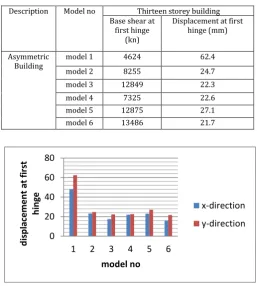
Table 4.3: Base shear and displacements along transverse direction for Asymmetric building models
Fig 4.3: Displacement at first hinge for all building models.
From the above tables and graph it can be observed that, the base shear and displacement at first hinge is larger for all models-2,3,4,5,6 than model-1 in longitudinal direction and transverse direction. The above table shows presence of infill reduces the displacement.
Fundamental natural time period
ETABS IS code 1893-2002 Sl. No Time in sec Longitudinal Transverse
Model 1 1.5176 1.5176 1.2461 1.2461
Model 2 0.757 0.757 0.778 0.853
Model 3 0.4994 0.4994 0.778 0.853
Model 4 0.7525 0.7525 0.778 0.853
Model 5 0.6845 0.6845 0.778 0.853
Model 6 0.4795 0.4795 0.778 0.853
Description Model no Thirteen storey building Base shear
at first hinge (kn)
Displacement at first hinge (mm)
Asymmetric
Building Model 1 5274 48.1
Model 2 10714 23.1
Model 3 12994 17.5
Model 4 13056 22.1
Model 5 9765 23
Model 6 13302 15.9
Description Model no Thirteen storey building Base shear at
first hinge (kn)
Displacement at first hinge (mm)
Asymmetric
Building model 1 4624 62.4
model 2 8255 24.7
model 3 12849 22.3
model 4 7325 22.6
model 5 12875 27.1
model 6 13486 21.7
0 5000 10000 15000
1 2 3 4 5 6
B
ase
sh
e
ar
at
fi
rst
h
in
ge
model no
x-direction
y-direction
0 20 40 60 80
1 2 3 4 5 6
d
isp
lac
e
m
e
n
t
at
fi
rst
h
in
ge
model no
x-direction
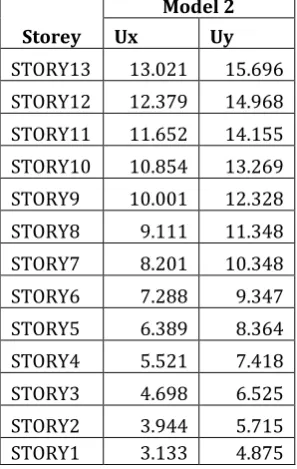
[image:5.595.310.568.294.581.2]© 2017, IRJET | Impact Factor value: 6.171 | ISO 9001:2008 Certified Journal | Page 500 Table 4.4: Lateral Displacement(mm) along Longitudinal
and Transverse direction for asymmetric building Model-2
5. SUMMARY
The present work endeavors to ponder the seismic reaction and execution level of unbalanced RC structures situated in seismic zone-IV. In this examination immensely imperative segments of the building that impact the mass, quality, firmness and deformability of the structure are incorporated into the explanatory model. To examine the impact of infill and solid divider on unbalanced building models, the infill divider is situated at all areas and solid center divider is situated at the focal point of the building. The diversions at various story levels and story floats are analyzed by performing Equivalent static strategy and also sucker technique for investigation. The seismic execution level of the building models are acquired by performing non-direct sucker examination. The investigation prompts the accompanying conclusions.
6. CONCLUSIONS
1. Fundamental common period diminishes when impact of infill divider and solid divider is considered.
2. Storey floats are found inside the utmost as determined by code (IS 1893-2002 Part-1) in both direct and non-straight static investigation. 3. Base shear at first pivot is less and relocation at
first pivot is more for lopsided exposed casing model and the other way around for different models.
4. IS 1893-2002 gives exact formulae for exposed casing and for completely infill outline yet it doesn't gives any observational relationship to
decide the key normal day and age for delicate story building, Therefore the product like ETABS must be utilized to decide the crucial era.
5. The nearness of brick work infill impacts the general conduct of structures when subjected to sidelong powers. Joint relocations and story floats are extensively diminished while commitment of infill block divider is considered.
6. The nearness of solid center divider at the inside has not influenced much on the general conduct of the structure when subjected to parallel powers, when contrasted with different models.
7. Ductility proportion is greatest for uncovered edge structure and it get lessened when the impact of infill divider is considered. It demonstrates that these structures will indicate sufficient cautioning before fall.
8. Bare edge structures are having most astounding reaction lessening factor when contrasted with infill outline structures. It demonstrates that exposed edge structures are fit for opposing the powers still after first pivot.
9. In instance of shear divider at outside corners the structure is subjected to less relocation in all bodies of evidence against the structure with center divider and shear divider at Center, however the nonlinear pivot is found at less uprooting and base shear.
10. From the above investigation we presume that model-6 I-e awry R C outline working with shear divider at focus of the outside board demonstrates better execution among the others for the given seismic parameters.
7. REFERENCES
1. Kabeyasawa, 1993; Eberhard and Sozen 1993. “The Effect of Concrete Core Wall”.
2. Murthy, C.V.R., and Jain, S.K., “The Beneficial Influence of Masonry Infill Walls on the Seismic Performance of RC Framed Buildings”, Indian Institute of Technology, Kanpur, 12th World
Conference on Earthquake Engineering, January 2000; Auckland, New Zealand.
3. Arlekar, N.J., Jain K.S., and Murthy, C.V.R. “Seismic Response of RC Frame Buildings with Soft First Storeys”, Proceedings of the CBRI Golden Jubilee Conference on Natural Hazards in Urban Habitat, New Delhi, 1997.
4. Mulgund G.V “seismic assessment of RC framed buildings with brick masonry infill’s”.
5. Krawinkler, H., and Seneviratna, G.D.P.K. (1998): Pros & Cons of Pushover Analysis of Seismic Performance Evaluation.
Storey
Model 2
Ux Uy
STORY13 13.021 15.696 STORY12 12.379 14.968 STORY11 11.652 14.155 STORY10 10.854 13.269
STORY9 10.001 12.328
STORY8 9.111 11.348
STORY7 8.201 10.348
STORY6 7.288 9.347
STORY5 6.389 8.364
STORY4 5.521 7.418
STORY3 4.698 6.525
STORY2 3.944 5.715
© 2017, IRJET | Impact Factor value: 6.171 | ISO 9001:2008 Certified Journal | Page 501 6. Applied Technology Council (1996): Seismic
Evaluation and Retrofit of Concrete Buildings, ATC-40, and Vol. 1.
7. Lee, H.S., and Woo, W.S., “Effect of masonry infill’s on seismic performance of a 3-storey RC frame with non-seismic detailing”, John Wiley & Sons Ltd., 2001.
8. Murthy, C.V.R., and Jain, S.K., “The Beneficial Influence of Masonry Infill Walls on the Seismic Performance of RC Framed Buildings”, Indian Institute of Technology, Kanpur, 12th World
Conference on Earthquake Engineering, January 2000; Auckland, New Zealand.
9. Kanitkar, R., and Kanitkar, V., “Seismic Performance of Conventional Multi-storey Buildings with Open Ground Storey for Vehicular Parking”, Indian Concrete Journal, February 2004.