REVIEW ARTICLE
METABOLIC BRAIN MAPPING
Metabolic Imaging of Ischemic Stroke: The Present and Future
K.A. Dani and S. Warach
ABSTRACT
SUMMARY: Measures of cerebral metabolism may be useful in the selection of patients for reperfusion therapies and as end points in clinical trials. However, there are currently no clinically routine techniques that provide such data directly. We review how imaging modalities in current clinical use may provide surrogate markers of metabolic activity. Promising techniques for metabolic imaging that are currently in the pipeline are reviewed.
ABBREVIATIONS:MR-COMI⫽cerebral oxygen metabolic index; CMRO2⫽cerebral metabolic rate for oxygen; OCI⫽oxygen challenge imaging; OEF⫽oxygen extraction fraction
O
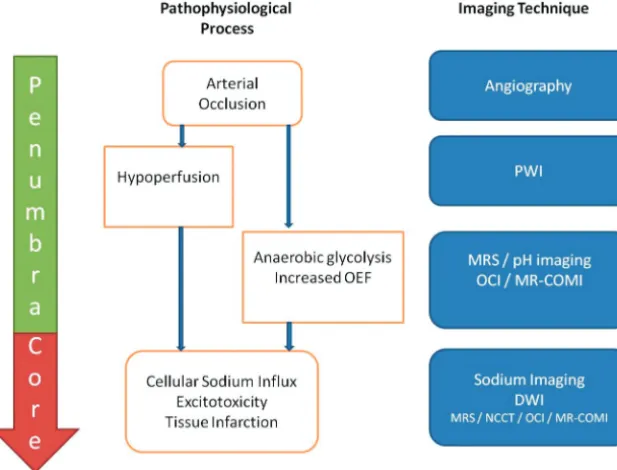
ver the past 2 decades, imaging markers that predict out-come after reperfusion therapies for acute ischemic stroke have continually been refined. Despite the promise offered by PWI and DWI MR studies to advance patient selection for reper-fusion therapies beyond noncontrast CT, there remains a thirst to develop further techniques that may potentially provide more information about the cerebral pathophysiology of an individual patient. This may be achieved by targeting any one of the plethora of pathophysiologic consequences of stroke, the end point of which is reduced or absent metabolic activity. We review how measures of metabolic activity may be inferred from current and promising techniques (Fig 1).Why Image Metabolism?
After arterial occlusion, CBF diminishes precipitously. However, tissue does not die immediately but enters a twilight state of elec-trical silence associated with maintained cerebral metabolic rate for oxygen (CMRO2)—the ischemic penumbra.1The first
adap-tation to hypoperfusion is rapid dilation of the precapillary arte-rioles, which increases CBV. The next is an increase in the pro-portion of oxygen extracted from the blood (oxygen extraction fraction, OEF), which occurs concomitantly with a switch from
aerobic to anaerobic metabolism. At the same time, however, a cas-cade of pathologic processes is set in motion including excitotoxicity, peri-infarct depolarization, oxidative stress, inflammation, and apo-ptosis. It is now appreciated that if there is reperfusion, tissue may be salvaged and infarction averted, and this is associated with clinical improvement.2The NINDS trial3was the first to show that
reperfu-sion therapy with rtPA is beneficial when administered to patients with ischemic stroke presenting within a restricted time window, after NCCT has excluded major established infarction. However, there are a number of acknowledged limitations, including the small but significant risk of intracerebral hemorrhage after alteplase ad-ministration, the observation that not all patients benefit, and the increasing recognition that some patients beyond the current time window also have penumbral tissue.4A goal of recent imaging
devel-opments has been to refine patient selection by not only identifying those patients with volumes of infarct core likely to predispose to hemorrhagic transformation but also by identifying those pa-tients with large volumes of ischemic penumbra. The advanced imaging techniques that are the subject of most attention measure perfusion parameters (PWI) and cytotoxic edema (DWI). How-ever, given that penumbra and core are defined by metabolic pa-rameters, the ability to image metabolic activity directly may fur-ther aid patient selection for fur-therapies. Ultimately, such imaging may be complementary to the use of the “time window” and PWI-DWI data. Metabolic imaging may also potentially guide future treatments in the subacute and chronic time periods and facilitate clinical trial end points.
PET: The Reference Standard
Although the use of PET in stroke remains a research tool, this tech-nique deserves special mention because PET data have clarified
im-Received August 8, 2013; accepted after revision August 27.
From the Institute of Neurosciences and Psychology (K.A.D.), University of Glas-gow, Institute of Neurological Sciences, GlasGlas-gow, United Kingdom; and Depart-ment of Neurology and Neurotherapeutics (S.W.), UT Southwestern, Dallas, Texas. Please address correspondence to Steven Warach, Department of Neurology and Neurotherapeutics, UT Southwestern, 5323 Harry Hines Blvd, Dallas, TX 75390-8813; e-mail: [email protected]
Indicates open access to non-subscribers at www.ajnr.org
portant principles regarding stroke pathophysiology.15O
multi-tracer PET can provide measures of not only CBV and CBF but also OEF and CMRO2. These PET techniques confirmed the
pres-ence of penumbral tissue in human acute ischemic stroke5and
facilitated the generation of operational PET criteria for pen-umbra identification characterized by a preserved CMRO2,
el-evated OEF, and a reduced CBF. Data from PET6 also
ce-mented the concept of tissue compartments after stroke, with small volumes of core and large volumes of penumbra being the favored pattern for reperfusion. These concepts have influ-enced clinical trial design ever since.
Recently, other PET ligands that aim to avoid some of the practical difficulties associated with15O multitracer PET have
been investigated. These include radio-labeled flumazenil, which was reported to show decreased binding in irreversibly infarcted tissue,7and radio-labeled fluoromisonidazole, which
was reported to bind to viable but hypoxic tissue.8However,
recent rodent studies have challenged the specificity of binding to specific tissue compartments, and further investigation is required.9,10
What Do Current Routine Imaging Techniques Tell Us About Metabolism?
NCCT simply provides data through the use of x-rays, with tissue attenuation decreasing in regions of cytotoxic edema. Parenchy-mal hypoattenuation has been associated with tissue destined for infarction on PET11and a “core” pattern of perfusion on CT
perfusion imaging.12In addition, sulcal effacement in the absence
of hypoattenuation has been shown to be associated with elevated CBV, suggesting a “penumbral” perfusion pattern.12However, it
lacks sensitivity for early ischemic changes and for penumbra and
cannot distinguish core from penumbra and from unaffected tissue in the hyper-acute setting.
MR Imaging
DWI can detect subtle perturbations in the Brownian motion of water and is therefore more sensitive for cytotoxic edema than is CT. It is⬎80% sensitive for ischemic stroke,13and lesions are often
considered to represent infarct core. However, back-to-back studies of MR imaging and PET show some voxels within the DWI lesion fulfill the PET cri-teria for penumbra.14 Observations of
DWI reversal after reperfusion further challenged the assumed equivalence of a DWI lesion to core.15 However, recent
data show that whereas there can be some reversal of very early lesions on DWI, such reversal is rarely complete16and a lesion
on DWI provides a reasonable, if not per-fect, measure of infarct core in the acute setting. DWI does not, however, provide measures of CMRO2but rather provides a
marker of cytotoxic edema occurring as a result of reduced CMRO2. Therefore it cannot, by itself, define
features of the penumbra such as hypoperfusion or OEF changes. FLAIR sequences are heavily T2-weighted sequences with nulling of signal from CSF. FLAIR sequences detect vasogenic edema associated with established infarction. Because they are not sensitive to early cytotoxic edema, these sequences are in-ferior to DWI for the detection of acute stroke lesions and do not define core in the first hours after stroke onset. Pilot stud-ies suggest that stroke lesions that carry a DWI-positive– FLAIR-negative signature are highly specific for the prediction of being⬍3 hours since onset,17and the WAKE UP18and MR
WITNESS (www.clinicaltrials.gov) trials are underway to eval-uate whether this imaging pattern may predict response to treat-ment in wake-up strokes. However, this imaging pattern aims to provide a surrogate marker of time rather than penumbra, and therefore FLAIR cannot provide direct measures of metabolic ac-tivity in the hyperacute setting.
A detailed critique of the use of PWI in acute ischemic stroke is beyond the scope of this article. Nonetheless, a number of key points should be noted. PWI data describe a dynamic signal in-tensity reflecting the perfusion of the tissue, including measures of CBF and CBV. Most studies have investigated MR-based PWI and have focused on regions with a larger PWI deficit compared with DWI deficit as being potentially salvageable—the PWI-DWI mis-match.19Initial studies used a variety of methodologies20and
def-initions21for this mismatch, but the field is rapidly converging to
agreement on the optimal imaging parameters that define this mismatch.22It should be noted that CT perfusion may also be
used to define tissue compartments using measures of hypoper-fusion to define both penumbra and core.23Although the explicit
aim of the use of such patterns is to identify imaging signatures of favorable response to reperfusion therapy, the implication is that
[image:2.594.60.369.49.284.2]patterns that predict a good response to reperfusion therapy have small volumes of core and large volumes of penumbra. Therefore, although the use of perfusion based measures does not define metabolic activity, they very clearly aim to identify different met-abolic compartments. However, even though ongoing clinical tri-als may prove the clinical utility of such techniques, there will still be unanswered questions. For example, should all strictly defined PWI-DWI mismatch regions be considered equally or could met-abolic imaging techniques further refine patient selection for treatment? For those with a matched PWI-DWI deficit, which (if any) patients will respond to reperfusion therapies within the time window?
The following sections discuss imaging techniques that may answer some of these questions.
What Are the Emerging Metabolic Imaging Research Techniques?
Proton MR Spectroscopy. MRS can be performed for in vivo human brain studies to measure metabolite concentrations de-rived from prespecified brain regions. Several nuclei can be stud-ied, but because of their high concentration,1H nuclei (proton
MRS) have been the focus. There are potentially a large number of metabolites that may be studied. However, for practical reasons, most studies have evaluated the concentrations of 4 main metab-olites. NAA may be considered to be a marker of neuronal integ-rity, total creatine a marker of energy metabolism, choline a cell membrane marker, and lactate a marker of anaerobic glycolysis. The time course of metabolite concentration after stroke has been well characterized.24,25After acute ischemic stroke, NAA falls
within the first hour after arterial occlusion and continued decline is seen for up to 1 week after ictus. Creatine levels also fall after stroke,
but changes in choline concentrations are more variable. Lactate concentration rises within minutes after stroke, and concentra-tions gradually decline after reperfusion.
One of the key questions of this tech-nique is, can it provide useful data com-pared with current MR techniques? There are signals in the literature that at least some of the metabolite concentrations may already be reflected by the routine stroke protocol MR. NAA concentrations in “possibly abnormal” voxels on DWI are higher than those in “definitely abnor-mal” voxels.26Higher concentrations of
lactate are seen in the DWI lesion com-pared with the PWI-DWI mismatch re-gion.27Indeed, up to 41% of the variance
of the metabolite concentration was pre-dicted by the routine stroke protocol MR.28However, although some of the
re-mainder of the unaccounted variance may have been caused by “noise,” it is likely that current MR protocols cannot provide us with as full a picture of meta-bolic activity as does MR spectroscopy. Indeed, we reported a case in which MRS demonstrated preserved NAA concentration with elevated lactate concentration in a DWI-negative patient imaged early after stroke, in a region that later further partially infarcted.28
How-ever, the sensitivity of the identification of the “preserved NAA and elevated lactate” profile for the identification of penumbral tissue was questioned in that study. If lactate sensitivity can be optimized, however, identification of raised lactate that reverses with transient hyperoxia may be another route by which poten-tially salvageable tissue may be identified.27,29MRS may also be
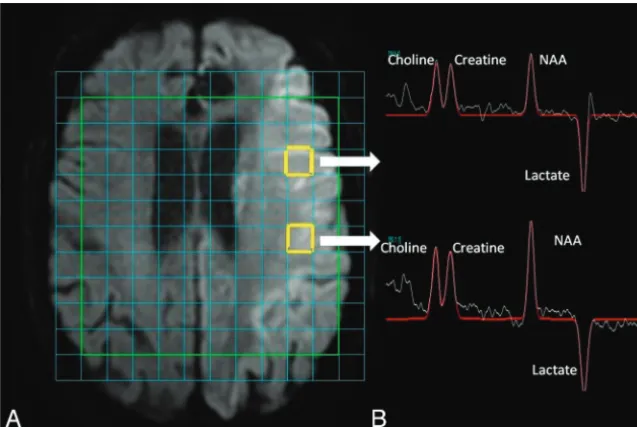
able to show differences in neuronal integrity across a DWI lesion (Fig 2).
A number of limitations have been identified with the use of a clinically applicable MRS sequence in acute ischemic stroke. The technique has a low SNR, and shortening the sequence duration in acute stroke further compounds these problems. Moreover, movement of patients with acute stroke will increase the chances of lipid contamination of signal.
Despite these limitations, MRS may still find a niche, and this may include its use in clinical trials. For example, our recent de-scription of the detection of elevated levels of reduced glutathione in a small number of patients with subacute stroke suggests that a repeatable in vivo marker of oxidative stress in stroke is now avail-able.30This could be used to confirm a tissue effect from
investi-gational medicinal products in clinical trials as a surrogate marker of outcome.
17O Imaging. Although most MRS studies have exploited proton
nuclei, some studies have focused on oxygen nuclei. Unlike the more abundant16O,17O has MR visibility. Although it is naturally
occurring, it is present in very low concentrations in human tis-sue.17O may be detected directly by use of MRS or indirectly by
detecting17O-labeled water by exploiting the principle of cou-FIG 2. Data from MRS.A, Acute stroke lesion of the left hemisphere on DWI. There is a
[image:3.594.54.373.47.260.2]pling between protons and17O by use of spin-echo MR images,
both after17O inhaled gas. The MR visibility makes assessment of
results fairly straightforward because17O is only detectable when
oxidative metabolism is complete and H2
17O is produced.
There-fore, confounds by signal from oxygen at other stages in the met-abolic pathway are avoided. CMRO2may be calculated if the
per-fusion-related clearance rate of water and recirculation characteristics are considered. In addition, Zhu et al31have
re-cently shown that the technique may also be used to determine CBF. The direction of changes in CMRO2, CBF, and OEF
re-ported from PET studies after stroke has also been described in a recent murine study by use of17O imaging.32Human imaging by
use of17O has been shown to be safe33and the production of
CMRO2maps to be feasible in human volunteers.
34Remaining
limitations for the translation of this technique into humans in-clude the different kinetics of17O in humans compared with small
animals and the requirement for high field strengths to optimize signal. Therefore, human studies remain limited.
Sodium Imaging. It is well established that as adenosine triphos-phate generation becomes insufficient to maintain cellular sodium-potassium adenosine triphosphatase pumps after ischemic stroke, there is influx of sodium into cells. Imaging tissue sodium therefore provides an attractive potential surrogate marker of so-dium-potassium adenosine triphosphatase pump dysfunction that occurs in infarct core. Although the SNR of sodium imaging techniques is low, the production of image maps of sodium inten-sity is now feasible. A number of animal studies have confirmed an increase in brain tissue sodium concentration occurring after stroke35-37by use of field strengths of between 3T and 9.4T.
Hus-sain et al38imaged 21 patients with stroke and demonstrated that
in the first 7 hours, there was only a very modest increase in tissue sodium (⬍10%), but this increased more rapidly after 7 hours and plateaued at 48 hours. The authors postulated that sodium imaging may be used as a tissue clock, with potential utility for evaluation of wake-up strokes. A further study confirmed that there were no sodium changes in the PWI-DWI mismatch re-gion.39Moreover, unlike the ADC derived from DWI, which was
statically low over the first few days of infarction, sodium intensity steadily increased through this time. This suggests that sodium imaging may provide additional information in comparison to DWI, even though both are measures of cytotoxic edema. The study authors postulated that a potential niche for sodium may be in pa-tient selection for reperfusion therapies, whereby the optimal imag-ing profile might be a PWI-DWI mismatch without any significant changes seen on sodium imaging.
Although it is an intriguing proposition, there are a number of potentially significant barriers to the widespread adoption of this technique. First, although feasible on 3T machines, higher field strengths would be advantageous, and these are not clinically rou-tine at present. Second, low SNR also necessitates long imaging times. Third, it is still far from clear the additional clinical utility sodium imaging would provide. Studies of DWI-FLAIR mis-match to provide a “tissue clock” are well underway, and these imaging techniques are already part of the stroke MR protocol. Perhaps sodium imaging may further refine the definition of core and distinguish regions of DWI lesions that are penumbral and are already core.
T2*-Weighted MR Imaging. The ability of PET to measure both CMRO2and OEF simultaneously, in addition to providing
mea-sures of CBF and CBV, has ensured its status as the reference standard research metabolic imaging technique. Recently, atten-tion has been paid to MR images sensitive to deoxyhemoglobin, because its concentration in the cerebral venous circulation changes as OEF varies in the presence of maintained CMRO2.
T2*WI sequences are sensitive to magnetic susceptibility differ-ences between blood and tissue parenchyma created by paramag-netic substances present in the tissue microcirculation, of which deoxyhemoglobin is one. As OEF and therefore venous deoxyhe-moglobin increases in the penumbra, one would expect paren-chyma and venous structures to appear dark. Indeed, Morita et al40reported such findings on T2*WI gradient-echo sequences,
which are routinely used to detect intracerebral hemorrhage. Sim-ilar findings have been reported on precontrast T2*-weighted PWI sequences in human and rodent studies.41,42However, in a
study that measured T2⬘ (T2* corrected for spin-spin effects), although differences in signal between core, penumbra, and healthy tissue were noted, wide confidence intervals precluded the determination of discriminative thresholds.43Indeed,
back-to-back PET and MR studies failed to confirm a correlation between T2*WI signal intensity on precontrast T2*-weighted PWI and OEF measures derived from PET imaging.44This may be in part
due to the fact that T2*WI signal is influenced by a number of factors including the increase in T2*WI signal occurring a num-ber of hours after onset of stroke caused by vasogenic edema.
Owing to the limitations of static measures of T2WI or T2*WI signal intensity to provide measures of metabolic activity, other MR imaging measures have been investigated, including oxygen challenge imaging (OCI) and also potentially quantitative mea-sures of CMRO2.
Oxygen Challenge Imaging. OCI uses transient hyperoxia during T2*-weighted MR images to demonstrate dynamic changes in deoxyhemoglobin concentration. The hypothesis of the tech-nique is that in healthy actively metabolizing tissue in which the OEF is approximately 0.3– 0.4, supplementary oxygen will aid the conversion of cerebral venous deoxyhemoglobin to oxyhemoglo-bin, which will be associated with a T2*WI signal intensity in-crease. In the penumbra, in which one would expect an increase in CBV, OEF, and therefore deoxyhemoglobin, an exaggerated in-crease in T2*WI signal intensity would be expected. In contrast, in infarct core, one would expect a diminished or absent response to OCI. Santosh et al45confirmed these results in a rat model of
MCA occlusion. With the use of [14C] 2-deoxyglucose
autora-diography, the group subsequently showed preserved metabolic activity in the T2*WI signal– defined penumbra, and the exagger-ated T2*WI signal was seen to normalize after reperfusion, con-sistent with the underlying hypothesis of the technique.46,47
Ro-dent studies by another group48 showed that the region of
exaggerated OCI response was larger than the PWI-DWI mis-match region, suggesting that the technique may also be able to detect potentially salvageable tissue within the DWI lesion. A pilot human study was broadly consistent with the results from animal studies49with diminished OCI response in DWI lesions
proof of exaggerated OCI penumbral response, though some en-couraging patterns were described.
Although studies of OCI are still at an early stage, further val-idation studies are required to answer remaining questions. For example, are different oxygen concentrations required to image different tissue compartments? Does impaired vascular autoreg-ulation affect results in humans? Which thresholds distinguish tissue compartments?
MR Measures of CMRO2. Whereas some groups have investi-gated T2*WI sequences by use of the oxygen challenge technique, others have modeled either the T2WI or T2*WI signal to calculate metabolic parameters. By exploiting the “static dephasing re-gime” of Yablonskiy and Haake,50which states that above a
par-ticular echo time a component of the T2*WI signal becomes de-pendent on OEF, the magnetic susceptibility of blood, venous CBV, hematocrit, and static magnetic field, An and Lin51used a
multiecho gradient and spin-echo sequence to provide measures of cerebral venous oxygen saturation and OEF. This measure can be combined with CBF measures to calculate the MR equivalent of CMRO2—the cerebral metabolic oxygen index (MR COMI).
The group has since validated their findings in animals and healthy volunteers, and in general results have been consistent with the PET literature. The first stroke study was completed a decade ago,52and in 7 patients imaged after an average of 7.5
hours post ictus, the putative core showed a diminished MR im-aging–COMI value, as expected. The group has recently described 41 patients with stroke with baseline imaging at 3 hours post ictus and defined MR-COMI thresholds to predict the inner and outer border of the ischemic penumbra,53with encouraging results.
Al-though optimistic, the authors concluded that a large multicenter study is required to determine the clinical utility of these sequences.
pH Imaging. Significant hypoperfusion precipitates a switch from aerobic to anaerobic metabolism with subsequent lactate produc-tion. One of the limitations of MRS for the detection of lactate is the limited spatial resolution, even with multivoxel MRS. There-fore, in an effort to identify the ischemic penumbra, other
modal-ities to identify the tissue that has switched to anaerobic glycolysis have been investi-gated. Chemical exchange processes be-tween amide protons of cellular peptides and proteins occurs in a pH-dependent fashion, and methods for detecting this chemical exchange have already been devel-oped54: chemical exchange saturation
transfer. Zhou et al55coined the term amide
proton transfer to describe the chemical ex-change saturation transfer effect between water and protons. Given that amide pro-ton transfer is pH dependent, measures of amide proton transfer may aid the measure-ment of pH. Most studies investigating this have been performed in rodents. Initial studies demonstrated the feasibility of de-tecting a reduced pH in the ischemic hemi-sphere,55and subsequent studies have
illus-trated a number of features of lesions on pH-weighted imaging that are consistent with penumbra. First, a strong correlation between tissue pH and lactate concentration has been observed.56Next, the
abnormalities precede lesions on ADC and are bigger or equal to the volume of ADC lesions but smaller or equal to the volume of perfu-sion deficits in all rats. Finally, regions with reduced pH proceeded to infarction.57These data suggest that the use of pH imaging may help
to define the ischemic penumbra whereby hypoperfused tissue with normal ADC and pH represents benign oligemia, and hypoperfused tissue with normal ADC and low pH may represent ischemic pen-umbra. A further study evaluated multimodal MR, including pH imaging, in a rodent model of stroke to predict tissue outcome.58The
authors concluded that the addition of pH-weighted imaging data to a model to predict tissue outcome was superior to the use of PWI-DWI data alone.
The use of pH-weighted imaging in human data has so far been scarce, largely slowed by technical complexities in the trans-lation of this technique to humans. However, study of a small number of volunteers and patients with stroke has confirmed the feasibility of this technique at 3T, in addition to the ability to detect low tissue pH in the stroke region.59
CONCLUSIONS
Imaging techniques included in current multimodal CT and MR protocols provide a wealth of information, including providing surrogate markers of metabolic activity. An immediate goal is to gain better understanding of how to use these techniques to make therapeutic decisions—several studies are ongoing in this regard. There are many techniques that are at an earlier stage of investi-gation for imaging penumbra and core (Figs 4 and 5); we have discussed some but not all of these here and have not discussed techniques which aim to image other processes such as inflamma-tion. While promising, the emerging metabolic imaging tech-niques require substantial validation to determine how they would fit into current imaging protocols and precisely what in-formation can be added that cannot already be inferred from ex-isting techniques. Many of these will require technical improve-ments before being feasible for use in hyperacute stroke. Despite
[image:5.594.54.371.48.194.2]many uncertainties surrounding these novel techniques, there is one thing for certain: we will see plenty more studies over the next few years.
Disclosures: Krishna Dani—UNRELATED: Grants/Grants Pending:Chief Scientists Office Scotland,* Neurosciences Foundation Glasgow,* Stroke Association,* Na-tional Health Service UK (NHS)* endowment funds, Comments: Numerous unrelated
grants in the field of neuroimaging;Payment for Development of Educational Pre-sentations:Later Life Learning, Comments: Basics of Stroke;OTHER RELATION-SHIPS:I am currently involved in studies of metabolic imaging.
REFERENCES
1. Astrup J, Siesjo BK, Symon L.Thresholds in cerebral ischemia: the ischemic penumbra.Stroke1981;12:723–5
2. Furlan M, Marchal G, Viader F, et al.Spontaneous neurological re-covery after stroke and the fate of the ischemic penumbra.Ann Neu-rol1996;40:216 –26
3. National Institute of Neurological Disorders and Stroke rt-PA Stroke Study Group.Tissue plasminogen activator for acute ischemic stroke.N Engl J Med1995;333:1581–7
4. Heiss WD, Huber M, Fink GR, et al.Progressive derangement of periinfarct viable tissue in ischemic stroke.J Cereb Blood Flow Metab
1992;12:193–203
5. Marchal G, Beaudouin V, Rioux P, et al.Prolonged persistence of substantial volumes of potentially viable brain tissue after stroke: a correlative PET-CT study with voxel-based data analysis.Stroke
1996;27:599 – 606
6. Marchal G, Serrati C, Rioux P, et al.PET imaging of cerebral perfu-sion and oxygen consumption in acute ischaemic stroke: relation to outcome.Lancet1993;341:925–7
7. Heiss WD, Kracht L, Grond M, et al.Early [(11)C]Flumazenil/H(2)O positron emission tomography predicts irreversible ischemic cor-tical damage in stroke patients receiving acute thrombolytic ther-apy.Stroke2000;31:366 –9
8. Read SJ, Hirano T, Abbott DF, et al.Identifying hypoxic tissue after acute ischemic stroke using PET and 18F-fluoromisonidazole. Neu-rology1998;51:1617–21
9. Rojas S, Martin A, Pareto D, et al.Positron emission tomography with C-11-flumazenil in the rat shows preservation of binding sites during the acute phase after 2h-transient focal ischemia. Neu-roscience2011;182:208 –16
10. Spratt NJ, Donnan GA, McLeod DD, et al. ‘Salvaged’ stroke isch-aemic penumbra shows significant injury: studies with the hypoxia tracer FMISO.J Cereb Blood Flow Metab2011;31:934 – 43
11. Grond M, Von Kummer R, Sobesky J, et al.Early x-ray hypoattenu-ation of brain parenchyma indicates extended critical hypoperfu-sion in acute stroke.Stroke2000;31:133–9
12. Muir KW, Baird-Gunning J, Walker L, et al.Can the ischemic pen-umbra be identified on noncontrast CT of acute stroke?Stroke
2007;38:2485–90
13. Chalela JA, Kidwell CS, Nentwich LM, et al.Magnetic resonance imaging and computed tomography in emergency assessment of patients with suspected acute stroke: a prospective comparison.
Lancet2007;369:293–98
14. Guadagno JV, Warburton EA, Jones PS, et al.How affected is oxygen metabolism in DWI lesions? A combined acute stroke PET-MR study.Neurology2006;67:824 –9
15. Kidwell CS, Saver JL, Mattiello J, et al.Thrombolytic reversal of acute human cerebral ischemic injury shown by diffusion/perfusion magnetic resonance imaging.Ann Neurol2000;47:462–9
16. Freeman JW, Luby M, Merino JG, et al.Negative diffusion-weighted imaging after intravenous tissue-type plasminogen activator is rare and unlikely to indicate averted infarction.Stroke2013;44:1629 –34 17. Thomalla G, Rossbach P, Rosenkranz M, et al.Negative fluid-atten-uated inversion recovery imaging identifies acute ischemic stroke at 3 hours or less.Ann Neurol2009;65:724 –32
18. Thomalla G, Ebinger M, Fiehler J, et al.EU-funded treatment study: WAKE-UP: a randomized, placebo-controlled MRI-based trial of thrombolysis in wake-up stroke.Nervenarzt2012;83:1241–51 19. Schlaug G, Benfield A, Baird AE, et al.The ischemic penumbra:
op-erationally defined by diffusion and perfusion MRI. Neurology
1999;53:1528 –37
20. Dani KA, Thomas RGR, Chappell FM, et al.Systematic review of perfu-sion imaging with computed tomography and magnetic resonance in acute ischemic stroke: heterogeneity of acquisition and postprocessing
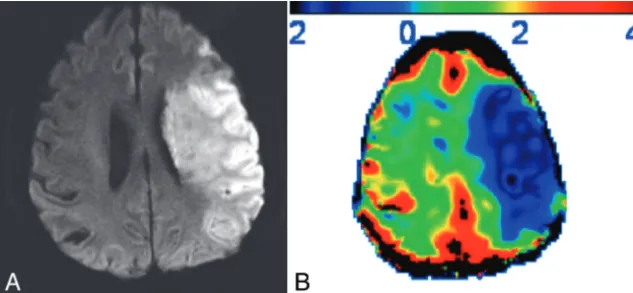
FIG 4. Current and potential markers of core.A, MR images of DWI (right) and FLAIR image (left) showing extensive established infarct core;B, list of potential imaging profiles that may refine definitions of core. OCI indicates oxygen challenge imaging; MR-COMI, MR cerebral oxygen metabolic index; CMRO2, cerebral metabolic rate for oxygen.
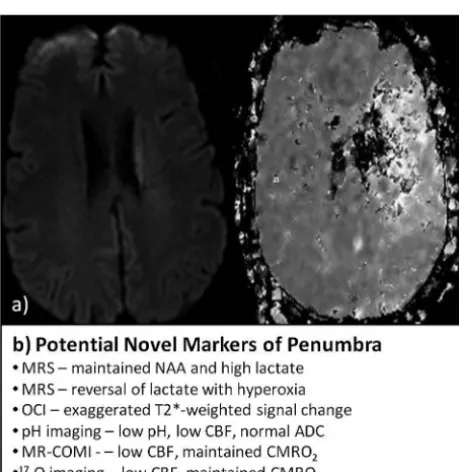
FIG 5. Current and potential markers of penumbra.A, MR images of DWI (right) and PWI (left) showing a region of PWI-DWI mismatch;B, list of potential imaging profiles that may refine definitions of pen-umbra. OCI indicates oxygen challenge imaging; MR-COMI, MR cere-bral oxygen metabolic index; CMRO2, cerebral metabolic rate for
[image:6.594.55.285.46.281.2] [image:6.594.55.285.347.583.2]parameters a translational medicine research collaboration multicen-tre acute stroke imaging study.Stroke2012;43:563– 66
21. Dani KA, Thomas RGR, Chappell FM, et al.Computed tomography and magnetic resonance perfusion imaging in ischemic stroke: def-initions and thresholds.Ann Neurol2011;70:384 – 401
22. Olivot JM, Mlynash M, Thijs VN, et al.Optimal Tmax threshold for predicting penumbral tissue in acute stroke.Stroke2009;40:469 –75 23. Wintermark M, Flanders AE, Velthuis B, et al.Perfusion-CT assess-ment of infarct core and penumbra: receiver operating characteris-tic curve analysis in 130 patients suspected of acute hemispheric stroke.Stroke2006;37:979 – 85
24. Gideon P, Henriksen O, Sperling B, et al.Early time course of N-acetylaspartate, creatine and phosphocreatine, and compounds containing choline in the brain after acute stroke: a proton mag-netic resonance spectroscopy study.Stroke1992;23:1566 –72 25. Saunders DE, Howe FA, van den Boogaart A, et al.Continuing
isch-emic damage after acute middle cerebral artery infarction in hu-mans demonstrated by short-echo proton spectroscopy. Stroke
1995;26:1007–13
26. Munoz Maniega S, Cvoro V, Chappell FM, et al.Changes in NAA and lactate following ischemic stroke: a serial MR spectroscopic imag-ing study.Neurology2008;71:1993–99
27. Singhal AB, Ratai E, Benner T, et al.Magnetic resonance spectroscopy study of oxygen therapy in ischemic stroke.Stroke2007;38:2851– 4 28. Dani KA, An L, Henning EC, et al.Multivoxel MR spectroscopy in
acute ischemic stroke comparison to the stroke protocol MRI.
Stroke2012;43:2962– 67
29. Holmes WM, Lopez-Gonzalez MR, Gallagher L, et al.Novel MRI detection of the ischemic penumbra: direct assessment of meta-bolic integrity.NMR Biomed2012;25:295–304
30. An L, Dani KA, Shen J, et al.Pilot results of in vivo brain glutathione measurements in stroke patients. J Cereb Blood Flow Metab
2012;32:2118 –21
31. Zhu X, Zhang Y, Wiesner H, et al.In vivo measurement of CBF using (17) O NMR signal of metabolically produced H(2) (17) O as a per-fusion tracer.Magn Reson Med2013;70:309 –14
32. Zhu X-H, Chen JM, Tu T-W, et al.Simultaneous and noninvasive imaging of cerebral oxygen metabolic rate, blood flow and oxygen extraction fraction in stroke mice.Neuroimage2013;64:437– 47 33. Atkinson IC, Sonstegaard R, Pliskin NH, et al.Vital signs and
cogni-tive function are not affected by 23-sodium and 17-oxygen mag-netic resonance imaging of the human brain at 9.4 T.J Magn Reson Imaging2010;32:82– 87
34. Atkinson IC, Thulborn KR.Feasibility of mapping the tissue mass corrected bioscale of cerebral metabolic rate of oxygen consump-tion using 17-oxygen and 23-sodium MR imaging in a human brain at 9.4 T.Neuroimage2010;51:723–33
35. Thulborn KR, Gindin TS, Davis D, et al.Comprehensive MR imag-ing protocol for stroke management: tissue sodium concentration as a measure of tissue viability in nonhuman primate studies and in clinical studies.Radiology1999;213:156 – 66
36. Wetterling F, Ansar S, Handwerker E.Sodium-23 magnetic reso-nance imaging during and after transient cerebral ischemia: multi-nuclear stroke protocols for double-tuned Na-23/H-1 resonator systems.Physics Med Biol2012;57:6929 – 46
37. Heiler PM, Langhauser FL, Wetterling F, et al.Chemical shift sodium imaging in a mouse model of thromboembolic stroke at 9.4 T.J Magn Reson Imaging2011;34:935– 40
38. Hussain MS, Stobbe RW, Bhagat YA, et al.Sodium imaging intensity increases with time after human ischemic stroke. Ann Neurol
2009;66:55– 62
39. Tsang A, Stobbe RW, Asdaghi N, et al.Relationship between sodium
intensity and perfusion deficits in acute ischemic stroke.J Magn Reson Imaging2011;33:41– 47
40. Morita N, Harada M, Uno M, et al.Ischemic findings of T2*-weighted 3-Tesla MRI in acute stroke patients. Cerebrovasc Dis
2008;26:367–75
41. Tamura H, Hatazawa J, Toyoshima H, et al.Detection of deoxygen-ation-related signal change in acute ischemic stroke patients by T2*-weighted magnetic resonance imaging.Stroke2002;33:967–71 42. Wardlaw JM, von Heijne A.Increased oxygen extraction
demon-strated on gradient echo (T2*) imaging in a patient with acute isch-aemic stroke.Cerebrovasc Dis2006;22:456 –58
43. Geisler BS, Brandhoff F, Fiehler J, et al. Blood-oxygen-level-depen-dent MRI allows metabolic description of tissue at risk in acute stroke patients.Stroke2006;37:1778 – 84
44. Donswijk ML, Jones PS, Guadagno JV, et al.T2*-weighted MRI ver-sus oxygen extraction fraction PET in acute stroke.Cerebrovasc Dis
2009;28:306 –13
45. Santosh C, Brennan D, McCabe C, et al.Potential use of oxygen as a metabolic biosensor in combination with T2*-weighted MRI to define the ischemic penumbra.J Cereb Blood Flow Metab2008;28:1742–53 46. Robertson CA, McCabe C, Gallagher L, et al.Stroke penumbra
de-fined by an MRI-based oxygen challenge technique, 1: validation using [(14)C]2-deoxyglucose autoradiography.J Cereb Blood Flow Metab2011;31:1778 – 87
47. Robertson CA, McCabe C, Gallagher L, et al.Stroke penumbra de-fined by an MRI-based oxygen challenge technique, 2: validation based on the consequences of reperfusion.J Cereb Blood Flow Metab
2011;31:1788 –98
48. Shen Q, Huang S, Du F, et al.Probing ischemic tissue fate with BOLD fMRI of brief oxygen challenge.Brain Res2011;1425:132– 41 49. Dani KA, Santosh C, Brennan D, et al.T2*-weighted magnetic reso-nance imaging with hyperoxia in acute ischemic stroke.Ann Neurol
2010;68:37– 47
50. Yablonskiy DA, Haacke EM.Theory of NMR signal behavior in mag-netically inhomogeneous tissues: the static dephasing regime.
Magn Reson Med1994;32:749 – 63
51. An H, Lin W.Quantitative measurements of cerebral blood oxygen saturation using magnetic resonance imaging.J Cereb Blood Flow Metab2000;20:1225–36
52. Lee JM, Vo KD, An H, et al.Magnetic resonance cerebral metabolic rate of oxygen utilization in hyperacute stroke patients.Ann Neurol
2003;53:227–32
53. Lin W, An H, Ford AL, et al.MR imaging of oxygen extraction and neurovascular coupling.Stroke2013;44:S61– 64
54. Ward KM, Aletras AH, Balaban RS.A new class of contrast agents for MRI based on proton chemical exchange dependent saturation transfer (CEST).J Magn Reson2000;143:79 – 87
55. Zhou JY, Payen JF, Wilson DA, et al.Using the amide proton signals of intracellular proteins and peptides to detect pH effects in MRI.
Nat Med2003;9:1085–90
56. Sun PZ, Cheung JS, Wang E, et al.Association between pH-weighted endogenous amide proton chemical exchange saturation transfer MRI and tissue lactic acidosis during acute ischemic stroke.J Cereb Blood Flow Metab2011;31:1743–50
57. Sun PZ, Zhou J, Sun W, et al.Detection of the ischemic penumbra using pH-weighted MRI.J Cereb Blood Flow Metab2007;27:1129 –36 58. Jokivarsi KT, Hiltunen Y, Tuunanen PI, et al.Correlating tissue out-come with quantitative multiparametric MRI of acute cerebral ischemia in rats.J Cereb Blood Flow Metab2010;30:415–27 59. Zhao X, Wen Z, Huang F, et al.Saturation power dependence of