Case Study
Glioma is the general term for a brain tumor, and within that is the classification of glioblastoma, also called a grade IV glioma, which is the most aggressive. It is characterized by necrotic cells and can be composed of several different types of brain cells. Thus, glioblastomas are especially difficult when it comes to implementing the most effective treatments. The prognosis of patients diagnosed with a glioblastomas is poor, with treatment options often being uncertain and ineffective. Glioblastomas are the most commonly diagnosed type of glioma, making up over half of brain tumor cases in the U.S. Most glioblastoma patients do not survive beyond 15 months after diagnosis, with a 5 year survival of less than 3%. Therefore, it is critical to consider alternatives for managing this specific type of tumor due to its aggressive nature and dismal outcomes. Since the majority of glioma patients are directed to palliative care, implementing a restricted ketogenic diet can be a final, non-toxic option. However, studies are also showing that the diet in combination with standard therapies, particularly radiation, improves the effects of the treatment as the tumor cells are in a more ‘vulnerable’ state (1).
Case Presentation:
In September 2011, Mr. K, a 71 year-old man, was admitted to a community hospital when his family noticed a significant decline in his mental status. He was suffering from disorientation, weakness, and facial drooping. A CT scan was performed that found a lesion in his brain. An MRI scan was followed by an extraventricular drain placement in his brain to alleviate high intra-cranial pressure. Subsequently, he underwent a
Management:
After being discharged, the patient was put on home palliative care. Searching for alternative options via the internet and personal research, his two sons found
information on the restricted ketogenic diet for managing glioblastomas. Shortly after, they consulted some of the leaders in the field including Dr. Adrienne Scheck at the Barrow Institute, Dr. Thomas Seyfried at Boston College, and Dr. D’Agostino at the University of South Florida. Once the sons had detailed guidance and
recommendations, they began to implement the diet in November 2011.
By November of 2011, the patient’s status was reported by family members to have been tremendously improved, as he was able to walk unassisted and was somewhat able to speak. It was at this point the radiation oncologist suggested a full radiotherapy and chemotherapy treatment since he felt that the patient would be able to complete it. In December 2011, another MRI scan was performed. The family consulted with a neurosurgeon who had significant experience and success with complete brain tumor resections. The patient consented to having the second surgery, which was performed in mid-December of 2011. More than 95% of the tumor was successfully removed. After surgery, the patient continued following a strict ketogenic diet until spring of 2012, at which point the intake became less restrictive. During the following two years, MRI scans have been completely clear with no tumor growth. To date, the patient continues to follow a high-fat, moderate protein, low-carbohydrate regimen.
Discussion:
Given the circumstances of this case, it is difficult, if not impossible, to draw any conclusions between the patient’s diet and his outcome. His second surgery was the most substantial in terms of affecting the status of the tumor. However, some qualitative improvements, like his mood and demeanor, were observed by his family that motivated them to continue with the diet. They felt that implementing the diet had “some effect” on his status, though no one can say how or to what extent. Furthermore, since the diet was implemented by family members rather than a physician or dietitian, there is no record of the patient’s blood glucose, HbA1c, or ketones. These measures would have been useful for knowing his level of ketosis, blood sugar stability, and possible changes within those. It was, however, very helpful to have his dietary intake closely monitored and recorded by the family.
Historical Use of the ketogenic diet
The ketogenic diet has been primarily used in the medical setting to help control seizures in children with epilepsy. It was most widely used in the early 1900’s, with a significant decline once anticonvulsant drugs became more mainstream. Russell Wilder, who coined the term “ketogenic diet”, was of the first to carry out trials with epilepsy and diabetic patients in the early 1920’s (2). Since fasting had shown dramatic improvement in these patients, the goal of the diet was to maintain those effects longer term. The results of the trial showed that 95% of the children saw improvement in seizure control, and 60% became seizure-free (3). Research focus shifted for several decades toward medications, and interest in the ketogenic diet was not revived until the 1990’s, when the story of Charlie Abrahams went national. At two years of age, Charlie suffered from epilepsy, and his father Jim put him on a ketogenic diet after medications and
mainstream treatments had failed. The Abrahams family created the Charlie Foundation in an effort to increase awareness of the diet, to provide resources to the public, and improve funding for research (3). The ketogenic diet has also been implemented in children and adolescents with other disorders including Dravet syndrome, infantile spasms, and tuberous sclerosis complex.
More recently, adults have used the ketogenic diet to control blood sugar and achieve weight loss. It has been particularly effective in those who are dealing with metabolic issues such as type 2 diabetes, insulin resistance, and obesity (4-6). This is often called a “low-carb” ketogenic diet to differentiate it from the more restrictive approach used in a hospital setting. Dr. Robert Atkins created the Atkins Diet in the 1960’s based on the removal of starches and sugar from the diet. Although it promotes the high-fat low-carb mantra, it is less restrictive because limiting calories is not strongly emphasized. Some studies have shown better blood sugar control and weight loss when compared to high carbohydrate, low-fat diets as well as low glycemic index diets (5,6). Research on low-carb diets for managing blood sugar and body weight continues to provide supportive evidence that this type of diet can reduce medications and
What is the ketogenic diet?
The ketogenic diet, by simplest definition, is a high-fat, low carbohydrate diet. Absolute values for the macronutrients (protein, carbohydrate, fat) for this diet have not been established, however, there are typical ranges within which most individuals can reach a ketogenic state.
The percentage of calories from carbohydrates can range from less than 5% up to around 15%, depending on factors such as the body size and metabolic rate of the individual, his or her activity level, and the overarching goal of the diet. This equates to anywhere from 0 to 50 grams of carbohydrates, with occasional outliers that might include high performance athletes, who can consume more carbohydrate while maintaining ketosis. However, the general carbohydrate recommendation for a ketogenic diet is around 20-30 grams per day, or 5-10% of calories (10).
Protein intake is also an important consideration for the diet. If protein
consumption is too high, ketosis may occur to a lesser degree as the excess protein can be converted to glucose via gluconeogenesis. On the other hand, if protein consumption is inadequate for processes involving growth and repair, loss of lean tissue may be a concern. The ketogenic diet is considered a moderate protein diet, with typically 10-25% of daily calories coming from protein, or 0.8-1.2g/kg of bodyweight (11).
The percentage of calories from fat on the ketogenic diet is crucial; inadequate amounts will prevent the body from being in a ketogenic state, known as ketosis. Under-consuming fat in this situation will inevitably result in a very low calorie diet, which is not always the goal. The range of percent of calories from fat is typically from 65%-90%, with the higher fat percentage being more short-term due to the lower protein intake. One may temporarily implement a ketogenic diet that is around 90% fat in order to shift into ketosis faster, whether for weight loss or for therapeutic purposes. It is not
recommended to continue this past a five to seven-day span.
waste, and acetone is excreted via the breath; both of which can be measured to assess the level of ketosis.
Ketosis is also referred to as “nutritional ketosis” or “dietary ketosis” by to avoid confusion and the negativity surrounding ketoacidosis- the life threatening condition seen with poorly controlled diabetes (12).
Ketosis can be measured in several ways: via the blood, the urine, or the breath. Using urine strips to measure the level of ketones is the most common method because of the low cost and ease of use. However, the readings are highly dependent upon the hydration status of the individual and therefore not the most reliable (e.g., the more concentrated the urine, the greater the “ketosis”). Testing the blood for ketones, which specifically measures BOHB, is far more accurate but requires a blood draw and costs more to use. The at-home device, called a blood ketone monitor, is quite similar to a blood glucose monitor, using a small sample of blood from the finger for analysis. A single monitor can be purchased that can measure both blood glucose and ketones. The other less common method is the breath test, or more accurately, the acetone breath test, which directly measures the amount of acetone excreted in the breath to determine the degree of ketosis the body is in.
Metabolic Properties of Cancer Cells
In normal cells, the majority of cellular ATP is derived from oxidative
phosphorylation, which occurs within the mitochondria in the cytoplasm of the cell. Only a small part of a normal cell’s energy production will come from substrate level
phosphorylation, specifically, glycolysis and the tricarboxylic acid (TCA) cycle. Cancer cells, however, are markedly different.
production have been observed as compared with normal cells, even under aerobic (oxygen-rich) conditions. This metabolic characteristic of cancer cells has long been termed “The Warburg effect” (13-16).
Figure 1. Illustration of Warburg effect; anaerobic vs. aerobic glycolysis.
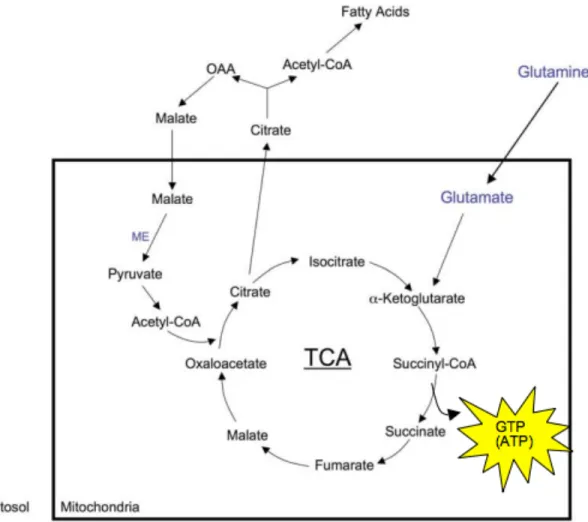
It has been more recently discovered that cells can effectively use glutamine, and perhaps other amino acids, for ATP production (20,21). Glutamine can help replenish metabolites in the TCA cycle, and is part of an energy producing reaction. ATP
production occurs as a result of the conversion of succinyl-CoA to succinate, generating a GDP followed by the addition of an inorganic phosphate. This is thought to be a
Figure 2. ATP Production in TCA cycle using glutamine
Many researchers who oppose Warburg’s theory point out that tumors are not lacking in oxygen (26,27). In fact, the oxygen consumption and carbon dioxide
production within tumors is not necessarily abnormal. It is true that oxygen and carbon dioxide levels do not always change; in fact, more malignant tumors often show higher oxygen consumption (22,23). Thomas Seyfried has referred to this as
“pseudo-respiration” and explains it as a defect in respiration; the expression of uncoupling proteins is upregulated, which ultimately produces more heat rather than usable energy. Clinically, tumors with higher thermal energy are associated with a poorer prognosis (24).
calcium regulation were all impaired in the mitochondria of tumor cells. In support of Warburg’s theory, Pederson had also shown that tumor mitochondria did not effectively oxidize pyruvate and supported that lactic acid production via fermentation could be caused by the respiratory insufficiency of the cell (25,28).
Another important aspect of eukaryotic cells is the retrograde (RTG) response, also known as the mitochondria-to-nuclear signaling within cells. In healthy cells, the RTG response is absent- it is only found within cells that are responding to an
interruption of respiratory energy production (33). Evolutionarily speaking, it acts as a safety net when cell viability is compromised, and sets off a series of activities within the cell to upregulate alternative pathways to oxidative phosphorylation for energy
production (e.g., glycolysis). When respiratory insufficiency ensues, possibly as a result of chronic inflammation, the genomic stability of the cell declines. This is thought to be the explanation for the theory that cancer is of genetic origin. Respiratory damage triggers the RTG response, which creates genomic instability that leads to
tumorigenesis. In yeast studies, respiratory damage alters the expression of several nuclear genes that play a role in energy metabolism. Impaired respiration has also been shown to increase the expression of specific oncogenes (21,29). In contrast, cells that are normal structurally and functionally show genomic integrity and stability (21,33).
The mitochondria theory of cancer remains a theory for several reasons, one being the lack of acknowledgement and wide acceptance in the field of cancer.
Furthermore, the focus of research and the protocols for standards of care have been treating cancer as a disease of genetic origination. However, the evidence thus far, even if inadvertently, has continuously supported Warburg’s original theory that cancer originates from insufficient cellular respiration.
How the Restricted Ketogenic Diet Targets Cancer Cells
The restricted ketogenic diet may work to target cancer cells based upon two essential components: total energy (calorie) restriction, and glucose (carbohydrate) restriction. Both elements work together synergistically, though calorie restriction appears to be more critical (35,36).
at the effects of energy restriction on tumors, findings show increased survival time, delayed tumor growth, and reduction in levels of reactive oxygen species, or ROS, which can be damaging to cells (38,39). Additionally, energy restriction creates several downstream effects that are important for managing tumor cells. A lack of energy in the microenvironment signals the up-regulation of catabolic (breakdown) pathways and the down-regulation of anabolic (growth) pathways, serving as an effective survival
mechanism. Since cancer cells require large amounts of energy and rapidly grow and proliferate, they experience significant detriment under energy-restricted conditions. Growth signals that have been implicated in tumor progression such as mammalian target of rapamycin (mTOR), Akt, PI3K, and IGF-1, are all inhibited when energy availability is low (38,40). DNA synthesis, lipid synthesis, and cell proliferation diminish while apoptosis (cell death) and autophagy (cell degradation) are enhanced (41). Furthermore, Sheck et. al. found that glioma cells had an improved response radiation therapy when energy restriction was implemented, making it a potent adjunct therapy (42).
The second piece to the restricted ketogenic diet is the restriction of dietary carbohydrates. The mechanisms and explanations for how this dietary manipulation affects cancer cells are vast, though not yet completely understood. Based upon the Warburg effect, cancer cells are characterized by mitochondrial dysfunction, and almost exclusively metabolize glucose via substrate level phosphorylation and fermentation despite aerobic conditions (13-16). Thus, tumor cells are highly dependent on glucose, while normal, healthy cells are able to adapt to use ketone bodies for energy when glucose is unavailable. Mouse models have shown that cancer cells express higher concentrations of glucose transporters as well as glycolytic enzymes, and as the tumor progresses, its dependence on glucose increases (38,40). Particularly in rapidly growing tumors, hypoxic areas form within the tumor due to poor vascularization, which further accelerates glycolytic activity. The presence of elevated levels of ketone bodies alone inhibits human brain tumor cell growth (49). Therefore, the logic follows that consuming a very low-carbohydrate, high-fat diet is a means of elevating ketones bodies more sustainably to limit the progression of the tumor.
Another potential mechanism for the effectiveness of a ketogenic diet that can be attributed to both energy and glucose restriction, is the significant reduction in
metabolic syndrome and obesity, which are also associated with an increased risk of cancer. Elevated insulin and glucose levels have been linked to decreased expression of tumor suppressors, an up-regulation of the glycolytic pathway, and an increase in inflammatory cytokines such as interleukin-6 (IL-6) and Nuclear Factor kappa B (NF-kB) (43-45).
When a 30% calorie restriction was applied to a mouse with a cerebral
astrocytoma, levels of inflammatory cytokines were greatly reduced in comparison to an ad libitum diet (46). With the addition of glucose restriction, serum glucose and insulin levels decrease initially then remain stable, avoiding further inflammation.
Overall, the purpose of the ketogenic diet for tumor therapy is to exploit the lack of metabolic flexibility of cancer cells. They require large amounts of cellular energy for processes such as vascularization, DNA synthesis, and lipid synthesis, and appear to do so successfully when glucose is plentiful (37,47,48). Theoretically, if cancer cells are deprived of their main source of energy, glucose, they will shift into a more “resistive” state, potentially reducing the rate of growth and size. By implementing a restricted-calorie, ketogenic diet, growth and vascularization of tumor cells will slow, inflammatory pathways will be reduced, and normal cells will shift to utilizing ketone bodies and fatty acids for energy production.
Considerations for the restricted ketogenic diet (RKD) in cancer patients
Although the restricted ketogenic diet is a potentially powerful non-toxic adjunct (or stand-alone) therapy, many aspects, especially regarding the patient, must be considered.
outcome since cachexia is generally characterized by equal losses of fat and lean mass.
Another crucial aspect to consider is the patient’s willingness and ability to comply with such a restrictive diet. Given that the patient is most likely experiencing significant physical and emotional stress, it can be a lot to ask of him or her.
Compliance requires adequate knowledge of nutrition, including appropriate calorie and macronutrient goals. Furthermore, due to the specificity of the diet, careful grocery shopping, planning, preparation, and cooking are essential. Obviously, this is a huge piece to consider when making recommendations to a cancer patient, and a strong family support system should be in place. Fatigue is also a prominent concern with cancer patients, and must be taken into account when discussing meal preparation.
It is also necessary to consider patient tolerance of the diet, taking into account whether he or she has received radiation which can often interfere with his or her ability to chew and swallow. If the patient has a feeding tube, foods will have to be liquefied or pureed in some way in order to avoid clogging the tube. Another option for patients who are tube fed is the supplement KetoCal, originally created for tube fed children with epilepsy. This product provides the ideal 4:1 macronutrient (fat to protein and
carbohydrate) ratio and is available as a powder that is mixed with water or as a pre-made liquid form.
Probably the most important piece is accurate implementation of the diet. Proper amounts of fat and protein are essential. If the fat content of the diet is not high enough, ketone body production will be not be maximized, and may not have the protein-sparing effect that is also desirable. If the protein consumption is too high, amino acids can be used for gluconeogenesis in the liver, thus raising serum glucose levels. Glutamine in particular has been implicated as an amino acid that can contribute to energy
production via fermentation in cancer cells. Therefore, the diet should have at least 65% calories from fat, but no more than 85%, when looking at long-term use. This allows for approximately 10-25% of calories from protein, with the other 5-10% coming from carbohydrates.
with continuation of the diet for some time afterwards (51,52). Mouse models have shown that switching back to a “standard” diet once the tumor was in remission, had no detrimental effect. In the case study previously presented, the patient is still adhering to the diet, though the diet is now less restrictive with calories and carbohydrate. At this point, the length of the adherence is a decision to be made by the patient and family members, and could be based upon progression, or lack thereof, of the tumor.
Vitamin and mineral supplementation must be addressed in the cancer patient who is following a restricted ketogenic diet. Specifically, supplementing micronutrients such as magnesium, potassium, calcium, phosphorous, and sodium will be warranted due to water losses and lack of certain foods in the diet. A significant loss of bodily water typically occurs as a result of a diet low in carbohydrates, thus water consumption must be adequate. Potassium and magnesium are also important to monitor since deficiencies can cause electrolyte imbalances, resulting in unwanted symptoms such as muscle cramps. A general recommendation is that the patients take a daily multivitamin with minerals in specified amounts, and consider other supplements such as fish oil and vitamin D (11,53).
Quite frequently, glioma patients, as well as patients with other cancers, are given a glucocorticoid medication to decrease tumor swelling and reduce nausea. It is important to know whether or not the patient is receiving this sort of medication as is can work against the efforts employed with a restricted ketogenic diet. One of the major effects of glucocorticoids is an increase in serum glucose, which may blunt the benefits of calorie and carbohydrate restriction. If the patient must receive these medications, efforts to implement a ketogenic diet may not be beneficial.
Future Steps
demand is also on the rise, and is important in order to bring more attention to this area, which will create new learning opportunities for both the patient and the medical
professional. At this point, it is still unclear if the diet will work equally in the various types of advanced tumors, therefore, more research is necessary to determine this. Freedland et. al. have conducted studies looking at the effects of carbohydrate restriction on prostate cancer with results of improved survival and reductions in the growth-promoting molecule IGF-1 (54-56).
Other options have surfaced as well that may prove beneficial to supplement alongside, or in place of, dietary changes. Metformin, commonly used to control blood sugar in diabetics and women with polycystic ovarian syndrome, is being studied in cancer patients as a means to lower blood glucose levels. Also, a compound called 2-deoxyglucose is a competitive inhibitor of glucose, and it is proposed that using this will block the uptake of glucose, reducing its availability to tumor cells (38). Supplementing the diet with ketone esters alone has resulted in decreases in blood glucose and increases in blood ketones. This suggests that the diet may not need to be as restrictive, making it more palatable and sustainable for those following it.
References
1. Abdelwahab MG, Fenton KE, Preul MC, Rho JM, Lynch A, et al. (2012) The Ketogenic Diet Is an Effective Adjuvant to Radiation Therapy for the Treatment of Malignant Glioma. PLoS ONE.
2. Wilder RM, Winter MD (1922) The Threshold of Ketogenesis. The Journal of Biological Chemistry. 52:393-401.
3. Wheless, JW. “Epilepsy and the Ketogenic Diet”. Chapter 2: History and Origin of the Ketogenic Diet. Pages 31-48.
4. Boden G, Sargrad K, Homko C, Mozzoli M, Stein TP. (2005) Effect of a low-carbohydrate diet on appetite, blood glucose levels, and insulin resistance in obese patients with type 2 diabetes.
5. Westman EC, Yancy Jr WS, Mavropoulus JC, Marquart M, McDuffie JR. (2008) The effect of a low-carbohydrate, ketogenic diet versus a low-glycemic index diet on
glycemic control in type 2 diabetes mellitus. Nutrition & Metabolism.
6. Yancy Jr WS, Foy M, Chalecki AM, Vernon MC, Westman EC. (2005). A low-carbohydrate, ketogenic diet to treat type 2 diabetes. Nutrition & Metabolism.
7. Foster GD, Wyatt HR, Hill JO, McGuckin BG, et. al. (2003). A Randomized Trial of a Low-Carbohydrate Diet for Obesity. The New England Journal of Medicine.
8. Samaha FF, Iqbal N, Seshadri P, Chicano KL, et. al. (2003). A Low-Carbohydrate as Compared with a Low-Fat Diet in Severe Obesity. The New England Journal of
Medicine.
9. Shai, I, Schwarzfuchs D, Henkin Y, Shahar DR, et.al. (2008). Weight Loss with a Low-Carbohydrate, Mediterranean, or Low-Fat Diet. The New England Journal of Medicine.
10. Westman EC, Feinman, RD, Mavropoulos JC, Vernon MC, Volek JS, Wortman jA, Yancy WS, Phinney SD. (2007) Low-carbohydrate nutrition and metabolism. The American Journal of Clinical Nutrition.
11. Seyfried, TN (2012). Chapter 18: Patient Implementation of Metabolic Therapies for Cancer Management . Cancer as a Metabolic Disease . New Jersey : Wiley.
12. Mannien AH. (2004) Metabolic Effects of the Very-Low-Carbohydrate Diets: Misunderstood “Villains” of Human Metabolism. Journal of International Society of Sports Nutrition.
13. Seyfried, TN (2012). Chapter 4: Energetics of Normal Cells and Cancer Cells. Cancer as a Metabolic Disease. New Jersey: Wiley.
15. Warburg, O. (1931) The metabolism of tumours. New York: Richard R. Smith
16. Warburg, O. (1969) The prime cause of cancer and prevention: Parts 1 & 2. Revised Lindau Lectures. Meeting of the Nobel-Laureates Lindau, Lake Constance, Germany: Burk D.
17. Seyfried, TN (2012). Chapter 8: Is Mitochondrial Glutamine Fermentation the Missing Link in the Metabolic Theory of Cancer? Cancer as a Metabolic Disease. New Jersey: Wiley Press.
18. Seyfried, TN (2011) Mitochondrial Glutamine Fermentation enhances ATP synthesis in murine glioblastoma cells. Orlando, Florida: Proceedings of the 102nd Annual Meeting of the American Association of Cancer Research.
19. Reitzer LJ, Wice BM, Kennel D. (1979). Evidence that glutamine, not sugar, is the major energy source for cultured HeLa cells. Journal of Biological Chemistry.
20. Schwimmer C, Lefebvre-Legendre L, Rak M, Devin A, et. al. (2005) Increasing substrate-level phosphorylation can rescue respiratory growth of an ATP-synthase deficient yeast. Journal of Biological Chemistry.
21. Seyfried TN, Shelton LM. (2010) Cancer as a Metabolic Disease. Nutrition & Metabolism.
22. Kresge N, Hanson RW, Simoni RD, Hill RL. (2005) Sidney Weinhouse and the mechanisms of ketone body synthesis from fatty acids. Journal of Biological Chemistry. 23. Weinhouse, S. (1956) On respiratory impairment in cancer cells. Science.
24. Seyfried TN. (2012) Chapter 6: The Warburg Dispute. Cancer as a Metabolic Disease. New Jersey: Wiley Press.
25. Pedersen, PL. (1978) Tumor mitochondria and the bioenergetics of cancer cells. Prog Exp Tumor Res.
26. Aisenberg AC. (1961) The Glycolysis and Respiration of Tumors. New York: Academic Press.
27. Colowick SP. (1961) The status of Warburg’s Theory of glycolysis and respiration in tumors. Q Rev Biol.
28. Seyfried TN. (2012) Chapter 7: Is Respiration Normal in Cancer Cells? Cancer as a Metabolic Disease. New Jersey: Wiley Press.
29. Erol A. (2005) Retrograde regulation due to mitochondrial dysfunction may be an important mechanism for carcinogenesis. Med Hypotheses.
31. Jazwinski, SM. (2005) The retrograde response links metabolism with stress responses, chromatin-dependent gene activation, and genome stability in yeast aging. Gene.
32. Butow RA, Avadhani NG. (2004) Mitochondrial signaling: the retrograde response. Mol Cell.
33. Seyfried TN. (2012) Chapter 10: Respiratory Insufficiency, the Retrograde Response, and the Origin of Cancer. Cancer as a Metabolic Disease. New Jersey: Wiley Press.
34. Hursting SD, Kari FW. (1999) The anti-carcinogenic effects of dietary restriction: mechanisms and future directions. Mutat Res.
35. Tannenbaum A. (1959) Nutrition and Cancer. Physiopathology of Cancer. New York: Paul B. Hober.
36. Tannenbaum A. (1942) The genesis and growth of tumors: II. Effects of calorie restriction per se. Cancer Res.
37. Seyfried TN, Sanderson TM, El-Abbadi MM, McGowan R, Mukherjee P. (2003) Role of glucose and ketone bodies in the metabolic control of experimental brain cancer. Br J Cancer.
38. Seyfried TN. (2012) Chapter 17: Metabolic Management of Cancer. Cancer as a Metabolic Disease. New Jersey: Wiley Press.
39. Tannenbaum A, Silverstone H. (1953) Effect of limited food intake on survival of mice bearing spontaneous mammary carcinoma and on the incidence of lung metastases. Cancer Res.
40. Marsh J, Mukherjee P, Seyfried TN. (2008) Akt-dependent proapoptotic effects of dietary restriction on late-stage management of a phosphatase and tensin
homologue/tuberous sclerosis complex 2-deficient mouse astrocytoma. Clinical Cancer Res.
41. Mukherjee P, Abate LE, Seyfried TN. (2004) Antiangiogenic and proapoptotic effects of dietary restriction on experimental mouse and human brain tumors. Clinical Cancer Res.
42. Abdelwahab MG, Fenton KE, Preul MC, Rho JM, Lynch A, et al. (2012) The Ketogenic Diet Is an Effective Adjuvant to Radiation Therapy for the Treatment of Malignant Glioma. PLoS ONE.
43. Karin M. (2006) Nuclear factor-kappaB in cancer development and progression. Nature.
45. Higami Y, Barger JL, Page GP, Allison DB, Smith SR, Prolla TA, et. al. (2006) Energy restriction lowers the expression of genes linked to inflammation, the cytoskeleton, the extracellular matrix, and angiogenesis in mouse adipose tissue. 46. MulrooneyTJ, Marsh J, Urits I, Seyfried TN, Mukherjee P. (2011) Influence of caloric restriction on constitutive expression of NF-kappaB in experimental mouse astrocytoma. PLoS One.
47. Seyfried TN, Mukherjee P (2005) Targeting energy metabolism in brain cancer: review and hypothesis. Nutrition & Metabolism.
48. Wittig R, Coy JF. (2007) The role of glucose metabolism and glucose-associated signaling in cancer. Persp Med Chem.
49. Skinner R, Trujillo A, Ma X, Beierle EA. (2009) Ketone bodies inhibit the viability of human neuroblastoma cells. J Pediatric Surg.
50. Volek JS, Westman EC. (2002) Very-low carbohydrate weight-loss diets revisited. Cleveland Clinic Journal of Medicine. Volume 69, #11.
51. Nebeling LC, Miraldi F, Shurin SB, Lerner E. (1995) Effects of a ketogenic diet on tumor metabolism and nutritional status in pediatric oncology patients: two case reports. J Am Coll Nutr.
52. Zuccoli G, Marcello N, Pisanello A, Servadei F, Vaccaro S, Mukherjee P, Seyfried TN. (2010) Metabolic management of glioblastoma multiforme using standard therapy together with a restricted ketogenic diet: Case Report. Nutrition & Metabolism.
53. Kalamian M. (2013) Get Started with the Ketogenic Diet for Cancer: A Step-by-step Guide to Implementation. Diet Therapies LLC.
54. Freedland SJ, Mavropoulos J, Wang A, et. al. (2007) Carbohydrate Restriction, Prostate Cancer Growth, and the Insulin-like Growth Factor Axis. Wiley-Liss Inc. 55. Masko EM, Thomas JA, Antonelli JA, et. al. (2010) Low-Carbohydrate Diets and Prostate Cancer: How Low Is “Low Enough”? Cancer Prevention Research.