15
Innovative Research in Engineering Sciences Vol 2(1), 15-22 (2016)
Journal of Innovative research in engineering sciences
Journal homepage :
www.Joires.com
The controlled release of Omeprazole from enteric coating pellet: Design and optimization
Karim MousavimarandiDepartment of Medical engineering, Amirkabir University of Technology, Tehran, Iran.
Abstract: The omeprazole coating enteric pellets including hydroxyl propyl methyl cellulose (HPMC) as a sub-coating layer and Eudragit L100-55 as an enteric coating layer were performed. Central Composite design (CCD) was applied to predict the effect of variables (HPMC and Eudragit coating percentages) on the release behavior and stability of omeprazole from prepared coating enteric pellets. By optimization of variables (HPMC percentage of 6.5 and Eudragit percentage of 22.0 ) based on CCD, the optimum release of omeprazole in the acid condition, buffer condition and omeprazole content stability were estimated to be 7.5, 78.0 and 92.0, respectively. These data were very close to the experimental values (6.5, 80 and 95%).In vitro omeprazole release study indicated a good acid-resistance in the acidic condition (stomach) and high potential of prepared pellet in the rapid omeprazole release in the buffer condition (proximal small intestine).Kinetic data of Omeprazole release was best described by Korsmeyer- Peppas model indicating Omeprazole release followed by mixed mechanism of diffusion and erosion.
Key words: Coating enteric pellet, Omeprazole, Central composite design, Release behavior, Stability test
1. Introduction
Omeprazole (5-methoxy-2-[[(4-methoxy-3,5-dimethyl-2- pyridinyl)methyl]sulphiyl]-1H-benzimidazole) is a proton pump inhibitors drugwhich has a short biological half-life. It is widely used in the treatment of duodenal ulcers and symptomatic gastro-oesophageal reflux [1]. Omeprazole is an alkaline-soluble powder with pKa1 4.2 and pKa2 9 which has low stability at lower pH values [2]. In the recent decade, due to the low bioavailability and short half time of omeprazole, different formulations of omeprazole such as enteric-coated granules and tablets have been developed [3-6].Enteric coating granules are solid dosage forms which preventdrug release in the acidic medium of the stomach andprotect the stomach from irritant compounds [7-10]. It is commonly used in the treatment of small intestinal diseases. Enteric coatings remain un-ionized in the lower pH values of the stomach. Then, these ionized in the higher pH condition of the small intestine, after that, the dissolution of the coating and drug release occurs [11-13]. On the other hand, hydrophilic polymer sub-coatings, such as cellulose esters and polymethacrylates are widely applied beneath enteric coatings to prevent the degradation of acid-labile drugs by the acidity of the enteric polymer [14-18]. To study the effect of multiple variables at the time during formulation development, response surface methodology (RSM) is an alternative method to optimize the formulation. Central Composite design (CCD) is a type of response surface methodology which has been widely used for the optimization of drug formulations [19-21].
The main purpose of this study is the optimization of enteric coated formulation of omeprazole. The enteric coated of omeprazole is consist of drug containing pellets, hydroxyl propyl methyl cellulose (HPMC) as sub-coating layer and Eudragit L100-55 as an enteric layer, respectively. CCD was used to investigate the combined effect of two formulation variables, the amount of HPMC (X1) and the amount of Eudragit L100-55 (X2) on the percentage of omeprazole release in the acid and buffer conditions.
2. Material and Methods 2.1 Materials
Sugar, Manitol, Lactose, Corn starch, microcrystalin cellulose( Soha Pharmaceutical Manufacturing Company, Iran), Omeprazole(Ra chem. Pharma, India), Di sodium hydrogen phosphate, Carbonate calcium, HPMC, Talc, Titanium dioxide, Ethylen Glycol 6000, Tween 80, EudragitL100-55 and NaOH(Merck, Germany) were purchased.
2.2 Preparation of Omeprazole pellets
16
Seed (NPS), 33.6mg; omeprazole, 20mg; Di sodium hydrogen phosphate, 2.5mg; SLS, 0.8mg; manitol, 50mg. Sugar, 45mg; carbonate calcium, 3.3mg and lactose, 3.3mg.2.3. Coating of Omeprazole pellets
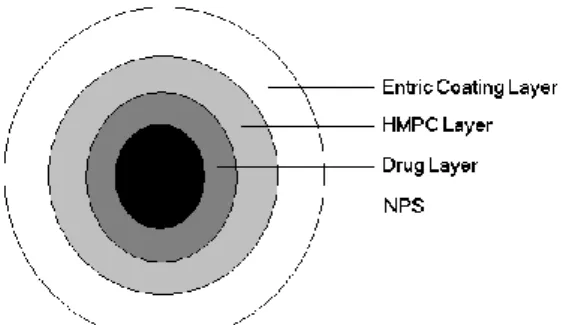
The pellets were coated with two successive layers: a HPMC as sub-coating layer and Eudragit L100-55 as an enteric-coating layer, respectively. The schematic of the Multi-layer Film Coated Pellet of Omeprazole is shown in Fig. 1.
Figure 1. Schematic of the Multi-layer Film Coated Pellet of Omeprazole
2.3.1 Preparation of HPMC sub-coating layer The pellets were prepared by spraying HPMC suspension onto NPS coated with drug layer (0.7-1mm) in pan. The coating levels of HPMC layer were 4 to 8% (w/w).
2.3.2 Preparation of enteric coating layer
The Eudragit L 100-55 enteric coating Layer was prepared as follows: First, 296g Eudragit L 100-55 was slowly added into 604 g water and stir for 5 minutes. After that, 100gNaOH was slowly added into Eudragit suspension and was stirred for 30 minutes. Then, 12.5g triethyl citrate (TEC) was dissolved in 508.3g water for 10 minutes. Then, 62.5g talk was added into the solution. The suspension was dissolved slowly into the Eudragit L 30 D-55 dispersion. Finally, the pellets
were prepared by spraying Euderagit L 30 D-55 suspension onto NPS coated with drug layer and HPMC layer (1-1.2mm) in pan. The coating levels of Eudragit layer were 15 to 25% (w/w).
2.4 Design of experiments using Central Composite design (CCD)
Two factor at three level of Central Composite design (CCD) was used to determine the relation between variables containing HMPC layer percentage (w/w) (X
1) and Enteric coating layer percent (w/w) (X2) on the release of omeprazole in the acid environment (Y 1) and release in the buffer condition (Y2).The statistical calculation levels associated with each variable were summarized
in Table 1.
Table 1. Different levels of factors in CCD
Levels
+1 0
-1 Factor
8 6
4 HPMC (%w/w)
25 20
15 Eudragit (%w/w)
The polynomial model for Omeprazole release percent with respect to the HPMC and enteric coating layers is expressed as follows in Eq. 1:
2 2 2 2 2
0 i 1 i i i 1 ii i i 1 j 1 ij i j
Y
x
x
x x (1)17
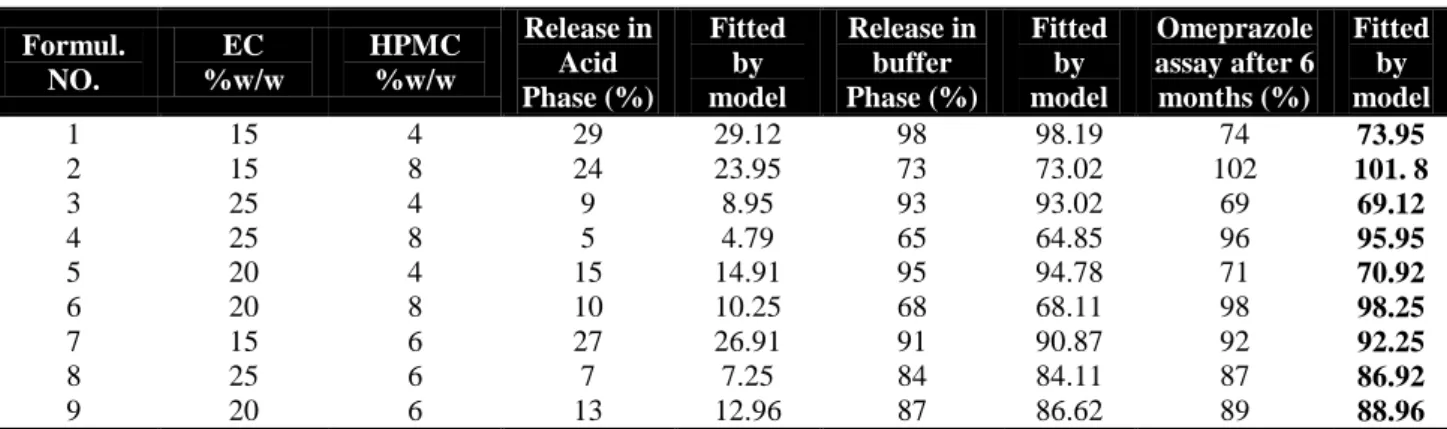
Table 2 The experimental design and results of omeprazole release and omeprazole assay percentages
Fitted by model Omeprazole
assay after 6 months (%) Fitted by model Release in buffer Phase (%) Fitted by model Release in Acid Phase (%) HPMC %w/w EC %w/w Formul. NO. 73.95 74 98.19 98 29.12 29 4 15 1 101. 8 102 73.02 73 23.95 24 8 15 2 69.12 69 93.02 93 8.95 9 4 25 3 95.95 96 64.85 65 4.79 5 8 25 4 70.92 71 94.78 95 14.91 15 4 20 5 98.25 98 68.11 68 10.25 10 8 20 6 92.25 92 90.87 91 26.91 27 6 15 7 86.92 87 84.11 84 7.25 7 6 25 8 88.96 89 86.62 87 12.96 13 6 20 9
2.5 In vitro drug release study and kinetic models In vitro omeprazole release from coated pellets was assessed by USP II paddle at a speed of 100 rpm. The samples were conducted in 900 mL of dissolution medium at 37±0.5°C. The amount of Omeprazole release percentage from coated pellets was determined at 5 min interval times using UV-line detector of HPLC at wavelength of 305 nm. The prepared samples were initially placed into the 0.1 N HCl for 2 hrs and then were transferred into the phosphate buffer (pH of 6.8) for 45 min.
Pharmacokinetic models including Zero-order (Eq. 2), First-order (Eq. 3), Higuchi (Eq. 4) [22] andKorsmeyer-Peppas (Eq. 5) [23] models were used to describe the Omeprazolerelease mechanism from the prepared coated pellets. The constants of the models were obtained by linear regression using Excel software.
0 0
Q Q K t (2)
0 1 log / 2.303
log Q Q K t (3)
1 2
H
Q K t (4)
/ n
t KP
M MK t (5)
where Q0 and Q are the initial amount of drug in the pellet and amount of drug released at time t, respectively. K0, K1, KH,and KKP are the Zero-order, First-order, Higuchi and Korsmeyer-Peppasconstant parameters. Mt/M∞ is the fractional release of the drug and ‘n’ is the release exponent indicating the type of drug release mechanism. For n ≤ 0.45; the release mechanisms Fickian. If ‘n’ value lies between 0.45 and 0.89; the mechanism is non- Fickian diffusion and n >0.89; indicates super case II type of release [23].
2.6 Stability Studies
Stability Studies provides evidence on how the quality of a drug substance or drug product varies (change in physical appearance, color, drug content and drug release characteristics) with time under the influence of
a variety of environmental factors. For this, the prepared coated pellets were carried out at temperature of 40 ± 2°C and relative humidity of 75% ± 5% for6 months. Then the formulations were tested for omeprazole content assay which results are presented in Table 2.
3. Result and discussion
3.1 Effect of coating levels on the release and stability of Omeprazole pellets
3.1.1 Effect of HPMC layer on the release and stability of Omeprazole pellets
18
(a)(b)
(c)
19
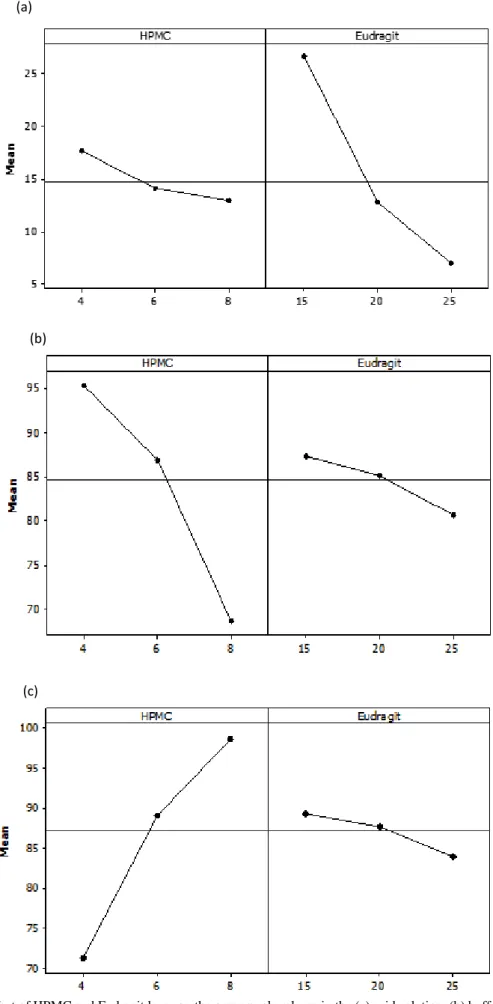
3.1.2 Effect of Eudragit layer on the release and stability of Omeprazole pelletsThe effect of Eudragit layer on the stability and release of Omeprazole is shown in Fig. 2. As shown,the release of Omeprazole from enteric coated pellets was decreased remarkably by increasing Eudragitlevels which indicated a good acid-resistance at higher enteric coating amounts. Therefore, since Omeprazole is degraded in the acid condition, Eudragit as enteric coating layer is essential to prevent the Omeprazole release from prepared pellets. In buffer condition, higher Eudragit levels had ano significant effect on the release of Omeprazole.Since the Eudragit layer has been converted to water soluble by neutralization during the process in the buffer condition, the Eudragit coating layer was dissolved quickly upon contact with the buffer solution. The release of Omeprazole was gradually decreased in the higher Eudragit concentrations. The obtained result of Omeprazole stability showed that the higher Eudragit levels had a lower negative influence on the Omeprazole release from prepared pellets (Fig. 2c). It can be attributed to the more migration of Omeprazole from the Omeprazole core into the Eudragit layer.
3.2 Statistical models based on central composite design
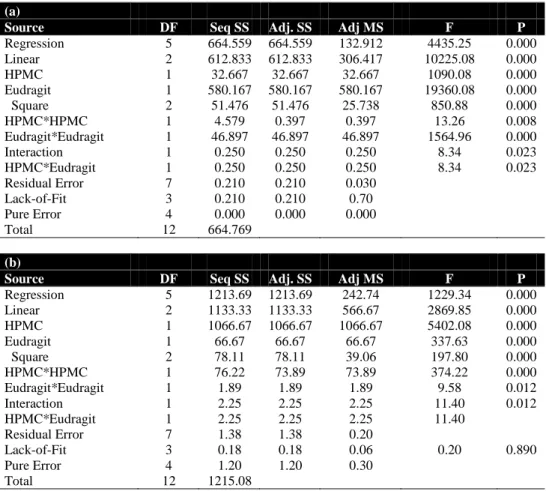
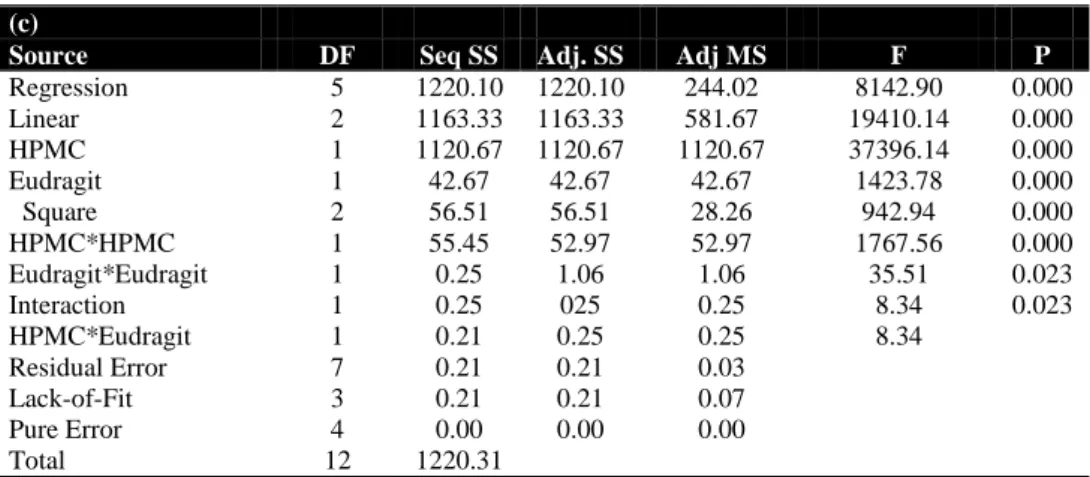
Analysis of variance (ANOVA) was performed to estimate the significance of the model and terms. The P values lower than 0.05 indicating the significant of the terms on the surface response analysis. Table 3 indicated that the all of the linear, quadratic and interaction terms affected on the release and stability of Omeprazole from prepared pellets. The polynomial equations for the Omeprazole release in the acid (Y1) and buffer conditions (Y2) and stability of Omeprazole (Y3) are shown as follows:
2 2
1(%) 124.81 0.52 8.70 0.09 0.16 0.25
Y A B A B AB (6)
2 2
2(%) 97.64 10.35 1.54 1.29 0.03 0.07
Y A B A B AB (7)
2 2
3(%) 26.14 20.47 1.37 1.09 0.02 0.02
Y A B A B AB (8)
The coefficient of determination (R2) was used to evaluate the accuracy of the full quadratic equation. The high values of R2 indicated a high reliability of the model in predicting the release percentage and stability of omeprazole.
Table 3. Analysis of Variance for Omeprazole release in (a)acid condition (b) buffer condition and (c) omeprazole stability
(a)
Source DF Seq SS Adj. SS Adj MS F P
Regression 5 664.559 664.559 132.912 4435.25 0.000 Linear 2 612.833 612.833 306.417 10225.08 0.000
HPMC 1 32.667 32.667 32.667 1090.08 0.000
Eudragit 1 580.167 580.167 580.167 19360.08 0.000
Square 2 51.476 51.476 25.738 850.88 0.000
HPMC*HPMC 1 4.579 0.397 0.397 13.26 0.008
Eudragit*Eudragit 1 46.897 46.897 46.897 1564.96 0.000
Interaction 1 0.250 0.250 0.250 8.34 0.023
HPMC*Eudragit 1 0.250 0.250 0.250 8.34 0.023
Residual Error 7 0.210 0.210 0.030
Lack-of-Fit 3 0.210 0.210 0.70
Pure Error 4 0.000 0.000 0.000
Total 12 664.769
(b)
Source DF Seq SS Adj. SS Adj MS F P
Regression 5 1213.69 1213.69 242.74 1229.34 0.000
Linear 2 1133.33 1133.33 566.67 2869.85 0.000
HPMC 1 1066.67 1066.67 1066.67 5402.08 0.000
Eudragit 1 66.67 66.67 66.67 337.63 0.000
Square 2 78.11 78.11 39.06 197.80 0.000
HPMC*HPMC 1 76.22 73.89 73.89 374.22 0.000
Eudragit*Eudragit 1 1.89 1.89 1.89 9.58 0.012
Interaction 1 2.25 2.25 2.25 11.40 0.012
HPMC*Eudragit 1 2.25 2.25 2.25 11.40
Residual Error 7 1.38 1.38 0.20
Lack-of-Fit 3 0.18 0.18 0.06 0.20 0.890
Pure Error 4 1.20 1.20 0.30
20
(c)Source DF Seq SS Adj. SS Adj MS F P
Regression 5 1220.10 1220.10 244.02 8142.90 0.000
Linear 2 1163.33 1163.33 581.67 19410.14 0.000
HPMC 1 1120.67 1120.67 1120.67 37396.14 0.000
Eudragit 1 42.67 42.67 42.67 1423.78 0.000
Square 2 56.51 56.51 28.26 942.94 0.000
HPMC*HPMC 1 55.45 52.97 52.97 1767.56 0.000
Eudragit*Eudragit 1 0.25 1.06 1.06 35.51 0.023
Interaction 1 0.25 025 0.25 8.34 0.023
HPMC*Eudragit 1 0.21 0.25 0.25 8.34
Residual Error 7 0.21 0.21 0.03
Lack-of-Fit 3 0.21 0.21 0.07
Pure Error 4 0.00 0.00 0.00
Total 12 1220.31
3.3 Surface plots
The simultaneous relation between the two parameters including HPMC layer percentage and Eudragit layer percentage on the Omeprazole release in the acid and buffer conditions and stability of Omeprazole as the 3D response surfaces are shown in Fig. 3. As shown in Fig. 3a, at different HPMC layer percentages, the higher Eudragit layer percentages had a positive effect on the decreasing of Omeprazole release percentage in the acid condition. Furthermore the results indicated that the effect of Eudragit layer percentages being much more prominent on the Omeprazole releases in
the acid environment in comparison to HPMC layer percentages. Fig 3b shows that the increase in the HPMC levels has more negative effect in comparison to Eudragit levels on the decreasing of Omeprazole release percentage in the buffer condition. Fig. 3c shows the relation between the HPMC and Eudragit layers on the stability of Omeprazole pellet at the time. As shown, the small change in the stability of Omeprazole was observed by increasing the Eudragit levels at different HPMC layer percentages. Also, decreasing of HPMC levels resulted in an extraordinary decrease in the Omeprazole content stability.
21
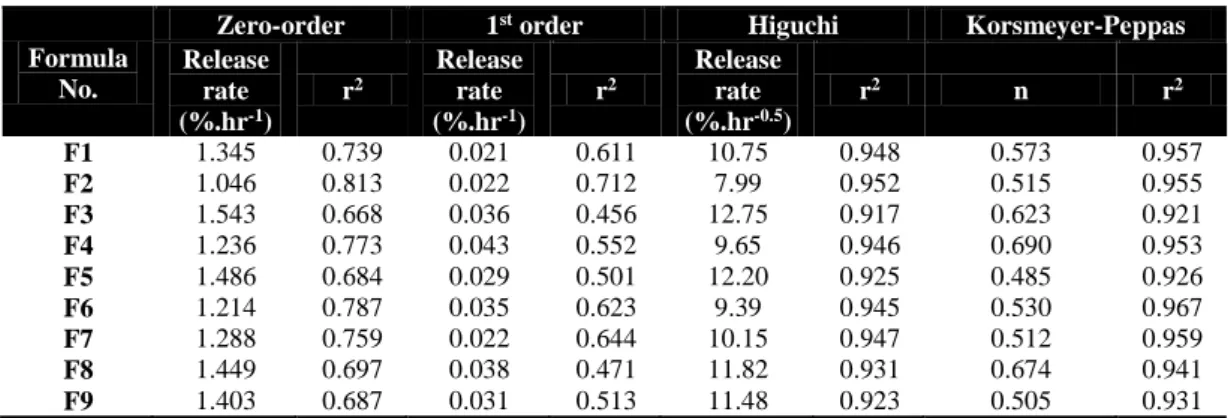
3.4 Kinetic studiesPharmacokinetic models includingZero-order, First-order, Higuchi and Korsmeyer-Peppaswere used to describe the Omeprazole release mechanism. The results are presented in Table 4. As shown, the Korsmeyer-Peppas model (R2> 0.921) described well the Omeprazole kinetic data of prepared enteric coating
pellet compared with pharmacokinetic models. The obtained n values (0.505<n<0.690) of Korsmeyer-Peppas equation indicated that the Omeprazole release mechanism from prepared pellets was non-Fickian diffusion transport. It wasdenotedthat the Omeprazole release was dependent on mixed mechanism of diffusion and erosion.
Table 4: Kinetic parameters of Omeprazole release from enteric coated pellets
Formula No.
Zero-order 1storder Higuchi Korsmeyer-Peppas
Release rate
) 1 -(%.hr
2 r
Release rate
) 1 -(%.hr
2 r
Release rate
) 0.5 -(%.hr
2
r n r2
F1 1.345 0.739 0.021 0.611 10.75 0.948 0.573 0.957
F2 1.046 0.813 0.022 0.712 7.99 0.952 0.515 0.955
F3 1.543 0.668 0.036 0.456 12.75 0.917 0.623 0.921
F4 1.236 0.773 0.043 0.552 9.65 0.946 0.690 0.953
F5 1.486 0.684 0.029 0.501 12.20 0.925 0.485 0.926
F6 1.214 0.787 0.035 0.623 9.39 0.945 0.530 0.967
F7 1.288 0.759 0.022 0.644 10.15 0.947 0.512 0.959
F8 1.449 0.697 0.038 0.471 11.82 0.931 0.674 0.941
F9 1.403 0.687 0.031 0.513 11.48 0.923 0.505 0.931
Conclusion
The coating enteric pellets of Omeprazole including HPMC as sub-coating layer and Eudragit L100-55 as an enteric coating layer were developed. 32 formulations of Omeprazole pellets were designed based on central composite design (CCD) to estimate the effect of variables (HPMC and Eudragit percentages) on the drug release and content stability of Omeprazole. The analysis of CCD response confirmed that linear, quadratic and interaction coefficients were found statically significant on the release and content stability of Omeprazole from prepared pellets. In vitro drug release and stability studies at different coating levels of HPMC and Eudragit indicated that the amount of HPMC and Eudragit for the optimization of Omeprazole release and conten stability at the time should have specific values. By optimization of variables, the experimentally results for the Omeprazole release in the acid and buffer conditions and content stability were found to be 6.43, 83.2 and 96.5%respectively. The stability studies indicated no changes in appearances andpercentage drug content of pellets.The Omperzole release mechanism was analyzed using zero order, first order, Higuchi and Korsmeyer-Peppaskinetic models. The results showed that the Omeprazole release from prepared pellets was best described by Korsmeyer-Peppas kinetic modelwhich indicated that the Omeprazole release mechanism from pellets followed by non-fickian diffusion.
References
[1]. He, W., Fan, L.F., Du, Q., Xiang, B., Li, C.L, Bai, M., Chang, Y.Z., Cao, D.Z. Design and in Vitro/in Vivo Evaluation of Multi-layer Film Coated Pellets for Omeprazole, Chem. Pharm. Bull, 2009.
[2]. Qaisi, A.M., F.Tutunji, M., F.Tutunji, L. Acid decomposition of omeprazole in the absence of thiol: a differential pulse polarographic study at the static mercury drop electrode (SMDE)J. Pharm. Sci.,2006.
[3]. Palummo, M., Cingolani, A., Dall, L., ,Volonte, M.J. Stability of capsules containing omeprazole in enteric coated pellets.Boll Chim Pham, 2000.
[4]. Turkuqlu, M., Varol, H., Celikok, M. Tableting and stability evaluation of enteric-coated omeprazole pellets, Eur. J. Pharm. Biopharm, 2004.
[5]. Islam, M.S., Trini, A.B., Shohag, H., Ahmed, M.U., Maruf, A.A., Hasnat, A. Bioavailability of omeprazole 20 mg capsules containing omeprazole 22.5% enteric coated pellets versus a reference product in healthy Bangladeshi male subjects: an open-label, single-dose, randomized-sequence, two-way crossover study.Int. J. Clin. Pharmacol. Ther, 2011.
[6]. Chakravarthy, K.K., Younus, M., Shaik, Pisipati, S.V.V. Formulation and Evaluation of Enteric Coated Pellets of Omeprazole, Int. J. Drug. Dev. Res, 2012.
22
of formulation and process parameters on tablet properties and in vivo evaluation, Eur. J.Pharm. Sci, 2004.[8]. Huyghebaert, N., Vermeire, A., Remon, J.P. Alternative method for enteric coating of HPMC capsulesresulting in ready-to-use enteric-coated capsules, Eur. J.Pharm. Sci, 2004.
[9]. Cole, E.T., Scott, R.A., Connor, A.L., Wilding, I.R., Petereit, H.R., Schminke, C., Beckert, T., Cade, D. Enteric coated HPMC capsules designed to achieveintestinal targeting, Int. J. Pharm, 2002.
[10].Stroyer A., McGinity J. W., Leopold C. S., Solid state interactions between the proton pump inhibitor omeprazole and various enteric coating polymers J. Pharm. Sci., 2006.
[11]. Bozdag, S., Çalis, S., Sumnu, M. Formulation and stability evaluationof enteric-coated omeprazole formulations, S.T.P. Pharm Sce. 1999.
[12]. Mostafavi, S.A., Tavakoli, N. Relative bioavailability of omeprazole capsules after oral dosing. Daru, 2004.
[13]. Thoma, K., Bechtold, K. Influence of queous coating on the stability of entric coated pellets and tablets. Eur.J.Pharm.Biopharm,1999.
[14].Shravania, D., Lakshmia, P.K., Balasubramaniam, Preparation and optimization of various parameters of enteric coated pellets using the Taguchi L9 orthogonal array design and their characterization, Acta Pharm.Sinica, 2011.
[15]. Bussemer, T., Dashevsky, A., Bodmeier, R. A pulsatile drug delivery systembased on rupturable coated hard gelatine capsules. J. Control. Release, 2003.
[16]. Van Savage, G., .Rodes, C.T. The sustained release coating of solid dosage forms:a historical review. Drug Dev. Ind. Pharm, 1995.
[17]. Kranz, H., Gutsche, S. Evaluation of the drug release patterns and long term stability of aqueous and organic coated pellets by using blendsof enteric and gastrointestinal insoluble polymers, Int. J. Pharm, 2009.
[18]. Dreu, R., Ilić, I., Srčič, S. Development of a multiple-unit tablet containingenteric-coated pellets, Pharm. Develop.Technol, 16(2011) 118– 126.
[19].Singh B., Pahuja S., Kapil R., Ahuja N. Formulation development of oral controlled release tabletsof hydralazine: Optimization of drug release and bioadhesivecharacteristics, Acta Pharm, 2009.
[20]. Abeolwa, A.A., Makhlouf, A.I.A. In vivo evaluation and application of central composite design in the optimization of Amisulpride self-emulsifying drug delivery system. American. J. Drug. Disc. Develop, 2012.
[21].V.Patel, N., Patel, J.K., Shah, S.H., Patel, J.N. Central composite design for the formulation and optimization of a multi-unit potential colonic drug delivery system of budesonide for ulcerative colitis, Pharmazi, 2011.
[22].Higuchi, T. Mechanism of sustained action medication. Theoretical analysis of rate of release of solid drugs dispersed in solid matrices. J Pharm Sci, 1963.