The Gogny-HFB+QRPA dipole strength function and its application to
radia-tive neutron capture cross section
StephaneGoriely1,,StephaneHilaire2,, andSophiePéru2,
1Institut d’Astronomie et d’Astrophysique, Université Libre de Bruxelles, CP-226, 1050 Brussels, Belgium 2CEA, DAM, DIF, F-91297 Arpajon, France
Abstract.Valuable theoretical predictions of nuclear dipole excitations in the whole chart are of great interest for different nuclear applications, including in particular nuclear astrophysics. Here we extend our large-scale
calculations of theE1 andM1 absorptionγ-ray strength function obtained in the framework of the axially-symmetric deformed quasiparticle random phase approximation (QRPA) based on the finite-range D1M Gogny force to the determination of the de-excitation strength function. To do so, shell-model calculations of the de-excitation dipole strength function as well as experimental data are considered to provide insight in the low-energy limit and to complement the QRPA estimate phenomenologically. We compare our final prediction of theE1 andM1 strengths with available experimental data at low energies and show that a relatively good agreement can be obtained. Its impact on the average radiative width as well as radiative neutron capture cross section is discussed.
1 Introduction
Radiative neutron capture cross sections play a key role in almost all nuclear applications. Despite a huge effort to measure such radiative neutron capture cross sections, theoretical predictions are required to fill the gaps, both for nuclei for which measurements are not feasible at the present time, in particular for unstable targets, and for en-ergies that cannot be reached in the laboratory. Some ap-plications, such as nuclear astrophysics, also require the determination of radiative neutron capture cross sections for a large number of exotic neutron-rich nuclei [1]. In this case, large-scale calculations need to be performed on the basis of sound and accurate models to ensure a reliable extrapolation far away from the experimentally known re-gion.
The neutron capture rates are commonly evaluated within the framework of the statistical model of Hauser-Feshbach, although the direct capture contribution plays an important role for very exotic nuclei [2]. The funda-mental assumption of the Hauser-Feshbach model is that the capture goes through the intermediary formation of a compound nucleus in thermodynamic equilibrium. In this approach, the (n,γ) cross section strongly depends on the electromagnetic interaction, i.e the photon de-excitation probability. In turn, it is well known that the photon strength function is dominated by the dipole contribution. The various multipolarities of the γ-ray strength func-tion are tradifunc-tionally modeled by the phenomenological Lorentzian approximation or some of its energy-dependent variants [3]. The reliability of theγ-ray strength
e-mail: [email protected]
tions can however be greatly improved by the use of mi-croscopic or semi-mimi-croscopic models. Such an effort can be found in Refs. [4–8] where a complete set ofE1 and M1γ-ray strength functions was derived from mean field plus quasiparticle random phase approximation (QRPA) calculations. When compared with experimental data and considered for practical applications, all mean field plus QRPA calculations need however some phenomenologi-cal corrections. These include a broadening of the QRPA strength to take the neglected damping of collective mo-tions into account as well as a shift of the strength to lower energies due to the contribution beyond the 1 particle -1 hole excitations and the interaction between the single-particle and low-lying collective phonon degrees of free-dom [9]. In addition, most of the mean field plus QRPA calculations assume spherical symmetries, so that phe-nomenological corrections need to be included in a way or another in order to properly describe the splitting of the giant dipole resonance in deformed nuclei [4–6].
Recently, axially-symmetric-deformed QRPA tions based on Hartree-Fock-Bogoliubov (HFB) calcula-tions using the finite-range Gogny interaction have been shown to provide rather satisfactory predictions of theE1 [7] andM1 strengths [8]. However, such QRPA calcu-lations only describe the photoabsorption and it is well known that the de-excitation strength function may dif-fer from the photoabsorption one, especially for low pho-ton energies [3, 10]. In particular, a non-zero limit of the dipole strength has been observed experimentally [11, 12] and confirmed by shell-model calculations [13–15].
In the present paper, we complement our previous HFB+QRPA study of the E1 andM1 strengths [7, 8],
© The Authors, published by EDP Sciences. This is an open access article distributed under the terms of the Creative Commons Attribution License 4.0 (http://creativecommons.org/licenses/by/4.0/).
EPJ Web of Conferences
178
, 04001 (2018) https://doi.org/10.1051/epjconf/201817804001
by correcting the low-energy limit on the basis of shell-model calculation. The paper is organized as follows. In Sect. 2, theE1 and M1 HFB+QRPA dipole
photoab-sorption strength functions are rapidly described together with the way corrections beyond QRPA are included phe-nomenologically. The de-excitation dipole strength func-tion is discussed in Sect. 3 and low-energy correcfunc-tions in-troduced to take into account the predictions of the shell model and available experimental data. In Sect 4, we com-pare measured average radiative width obtained with our D1M+QRPA strength and with Lorentzian-type models.
Finally, the impact of the newly calculatedγ-ray strength functions on the Hauser-Feshbach estimate of the radia-tive neutron capture cross section is discussed in Sect. 5. Conclusions are drawn in Sect. 6.
2 E1 and M1 photoabsorption strength
functions
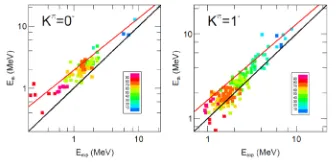
The QRPA formalism based on axially-symmetric-deformed HFB equations solved in a finite harmonic os-cillator basis in cylindrical coordinates has been described in details in Refs. [7, 8, 16, 17]. In the present study, the D1M Gogny force [18] is used. Previous studies [7] have shown that the centroid energy of theE1 strength is systematically larger by typically 2.5 MeV than the Giant Dipole Resonance (GDR) energy determined experimen-tally. Similarly, a study of the QRPA low-energy vibra-tional states shows that the first experimental energies [19] are overestimated by typically 500 keV, as shown in Fig. 1. For this reason, the effects beyond the 1 particle - 1 hole
QRPA can be empirically included by considering an en-ergy shift that increases with enen-ergy. In comparison with our previous study of theE1 QRPA strength [7], we have now adopted a simpler treatment of the renormalization procedure to reproduce both the experimental GDR prop-erties and low-energy vibrational states. More specifically, for theE1 andM1 QRPA strengths, we now apply an en-ergy shift of∆ =0.5 MeV forεγ≤0.5 MeV,∆ =2.5 MeV
forεγ=18 MeV and∆ =5 MeV forεγ≥21 MeV. For
energies in the 0.5≤εγ≤21 MeV range, the energy shift ∆is interpolated linearly between the anchor values at 0.5,
18 and 21 MeV.
Similarly, an empirical damping of the collective mo-tions is introduced in the QRPA strength by folding each E1 strength by a standard Lorentzian (SLO) function of widthΓthat has been adjusted on photoabsorption data and is assumed to be dependent on the atomic massAonly. We adopt the final expressionΓ[MeV]= 7−A/45 for A≤200, and 2.5 MeV otherwise. For theM1 strength, a constant value ofΓ =0.5 MeV is adopted.
With such a systematic renormalization of the HFB+QRPA calculations, experimental strength functions
based on photoabsorption measurements or nuclear reso-nance fluorescence can be rather well described, as already shown in Refs. [7, 8].
Figure 1.(Color online) Experimental – theoretical comparison
of the energy of the low-energy vibrational statesKπ=0−(left panel) andKπ=1−(right panel). The red curve corresponds to the energy shift applied to the HFB+QRPA strength. The colour code refers to the atomic mass range of the nuclei.
3 E1 and M1 de-excitation strength
functions
When considering the excitation strength function, de-viation from the photoabsorption strength can be expected, especially forγ-ray energies approaching the zero limit. In particular, a constantE1 strength of fE15 10−9MeV−3
at energiesεγ∼<5 MeV was found by the shell model
[15]. In addition, shell-model calculations [13–15] predict an exponential increase of theM1 de-excitation strength function at energies approaching zero. The upbend of the strength function observed experimentally [11, 12] has therefore been assumed to be ofM1 nature, though no ex-perimental evidence exists for the moment. Therefore, the de-excitation strength function can be consistently taken from the QRPA calculation (Sect. 2) provided corrections at low energies inspired from shell model predictions are included. These finally are expressed as
←−−f
E1(εγ)=fEQRPA1 (εγ)+f0U/[1+e(εγ−ε0)] (1) ←−−f
M1(εγ)=fMQRPA1 (εγ)+Ce−ηεγ[1+Fε3γ] (2)
where fQRPA
X1 is the D1M+QRPA strength at the
pho-ton energyεγ, U (in MeV) is the excitation energy of
the initial de-exciting state and f0 = 5 10−10 MeV−4,
ε0 = 5 MeV, C = 10−7 MeV−3, η = 2 MeV−1 and F =0.4 MeV−3are free parameters that have been
ad-justed on the shell model results [15] and available exper-imental data [11, 12, 21]. The impact of the low-energy limit applied to the D1M+QRPA strength is illustrated in
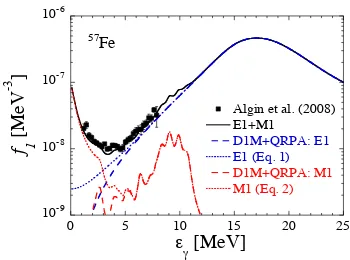
Fig. 2 for theE1 channel in44Ti and in Fig. 3 for both
theE1 and M1 contributions in57Fe. The total dipole
44Ti
10-11 10-10 10-9 10-8 10-7 10-6
Shell Model U=0
U=2MeV
U=5MeV
U=10MeV U=15MeV
0 5 10 15 20
f E1
[MeV
-3 ]
ε γ [MeV]
D1M+QRPA
fE1,0= 5 10-10U* / [1+exp(ε-5)]
Figure 2. (Color online) Illustration for44Ti of the low-energy
correction on theE1 strength function (Eq. 1) applied to the D1M+QRPA strength for various initial excitation energiesU,
as suggested by the shell-model calculations [15].
Algin et al. (2008) E1+M1 D1M+QRPA: E1 E1 (Eq. 1) D1M+QRPA: M1 M1 (Eq. 2)
10-9
10-8
10-7
10-6
0 5 10 15 20 25
f
1[MeV
-3
]
57Fe
ε
γ[MeV]
Figure 3.(Color online) Illustration for57Fe of the low-energy
correction applied to the E1 andM1 D1M+QRPA strengths (Eqs. 1-2) and comparison with the low-energy data [21].
4 Average radiative width
Among the various experimental data, the average radia-tive width is known to play a key role in reaction mod-elling. The average radiative width is defined as [3]
Γγ=D0 2π
X,L,J,π
Sn+En
0 TXL(εγ)×ρ(Sn+En−εγ,J, π)dεγ
(3) whereD0is the average resonance spacing for s-wave neu-trons,Snis the neutron separation energy,Enis the neutron incident energy,TXL=2πε2L+1
γ ←−−fXL(εγ) is the electromag-netic transmission coefficient (X =MorE) for a multi-polarityLandρis the energy-, spin- and parity-dependent nuclear level density.
It has been a long-standing problem that phenomeno-logical SLO models tend to overestimate the average
ra-Algin et al. (2008)
D1M+QRPA
10-9
10-8
10-7
10-6
f1
[MeV
-3] 57Fe
Siem et al. (2002) Carlos et al. (1974)
D1M+QRPA
10-9
10-8
10-7
10-6
0 5 10 15 20
f1
[MeV
-3]
εγ [MeV] 148Sm
Utsunomiya et al. (2013) Beil et al. (1974)
D1M+QRPA 98Mo
Guttormsen et al. (2014) Caldwell et al. (1980) Gurevich et al. (1976) Veyssiere et al. (1973)
D1M+QRPA
0 5 10 15 20 25 εγ [MeV] 238U
Figure 4.(Color online) The D1M+QRPA dipole strength func-tionf1=fE1+fM1given by Eqs. (1-2) is compared with
exper-imental photodata and Oslo measurements for57Fe [21],98Mo
[22, 23],148Sm [24, 25], and238U [26–29].
diative width significantly, while its improved and widely used version, the so-called Generalized Lorentzian (GLO) model [10], underestimatesΓγ. For this reason, the SLO model also tends to overestimate the radiative neutron cap-ture cross sections for low-energy (keV) neutrons, while the GLO model overestimates them (see also Ref. [30]). Such deviations are shown in Fig. 5 where the experimen-tal average radiative widths are compared with predictions for SLO, GLO and the present corrected D1M+QRPA (Eqs. 1-2). It can be seen that in contrast to the SLO and GLO models, the present D1M+QRPA strengths (includ-ing both theM1 andE1 contributions) reproduce globally rather well the experimental average radiative width.
5 Radiative neutron captures
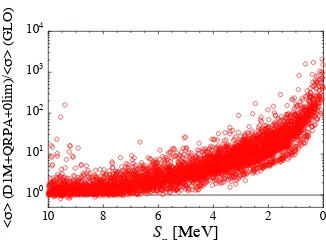
The radiative neutron capture cross sections and reaction rates of astrophysical interest have been calculated sys-tematically on the basis of the Hauser-Feshbach statisti-cal model described by the TALYS reaction code [31]. Both the widely used GLO model for the E1 strength function and the present D1M+QRPA models corrected at low energies are considered here. The HFB plus combi-natorial model of nuclear level densities [32] is adopted for the cross section calculations. Fig. 6 shows the ra-tio of the Maxwellian-averaged neutron capture cross sec-tions (MACS) at a temperatureT =109K obtained with the present corrected D1M+QRPA to those obtained with the GLOE1 model and SLOM1 model recommended in Refs. [3, 10].
When approaching the neutron dripline (Sn = 0), the MACS calculated with the corrected D1M+QRPA strength is seen to be a factor 100 to 1000 larger than the one obtained with the traditional GLO model. The most significant effects responsible for such an increase of the MACS arei)the low-energyE1 strength predicted for neutron-rich nuclei by the HFB+QRPA approach (as already discussed in Ref. [7]) andii)the low-energyM1
3
EPJ Web of Conferences
178
, 04001 (2018) https://doi.org/10.1051/epjconf/201817804001
10-3
10-2
10-1
100
101
50 100 150 200 250
Exp
D1M+QRPA+0lim
<
Γ γ
> [eV]
A
10-3
10-2
10-1
100
101
Exp
SLO
<
Γ γ
> [eV]
10-3
10-2
10-1
100
101
Exp
GLO
<
Γ γ
> [eV]
Figure 5. (Color online) Comparison between experimental (black circles) [3] and theoretical (coloured diamonds) average radiative widthΓγas a function ofA. The upper panel is
ob-tained with the SLO model [3] for both theE1 andM1 strengths and the middle panel with the GLO model for theE1 and the SLO model for theM1 [3, 10]. The lower panel corresponds to the present D1M+QRPA corrected by the low-energy limits
(Eqs. 1-2). The error bars illustrate the uncertainties associated with the use of different nuclear level density models.
upbend introduced in Eq. (2). In particular, theM1 up-bend can affect the MACS of exotic neutron-rich nuclei by a factor up to 100. In contrast, the low-energy limit of theE1 strength function included in Eq. (1) only af-fects the MACS by 20 to 50% due to theε3γdependence weighting theγ-ray strength function in the calculation of the transmission coefficientTE1(see Sect. 4). This is not the case for the M1 upbend, where the fast increase of theM1 strength at decreasing energies approaching zero is capable of counterbalancing theε3γeffect in the calcula-tion ofTM1. As far as the HFB+QRPA prediction of the M1 spin flip is concerned, it is almost always insignificant with respect to the strongerE1 contribution at the relevant energies of 8-9 MeV, so that its impact on the MACS is reduced to typically 10% in comparison with the MACS obtained with a SLOM1 strength [3]. However, the low-energyM1 scissors mode predicted in deformed nuclei by the HFB+QRPA can impact the MACS by a factor of 2. This extra strength is never included in cross section
cal-100
101
102
103
104
0 2 4 6 8 10
<
σ
> (D1M+QRPA+0lim)/<
σ
> (GLO)
Sn [MeV]
Figure 6. (Color online) Ratio of the MACS atT =109K
ob-tained with the present D1M+QRPA corrected by the low-energy
limits (Eqs. 1-2) to the one obtained with the GLO model for the E1 and SLO model for theM1 [3, 10]. The ratio is given for all nuclei with 8≤Z≤94 lying between the proton and neutron driplines as a function of the neutron separation energySn.
culations except recently through a phenomenological ap-proximation [30]. It affects the average radiative width as well as the neutron capture cross section of deformed nu-clei in a non-negligible way.
6 Conclusions
HFB+QRPA models are now available for applications and have shown their capacity to predict photoabsorption γ-ray strength functions. Contributions beyond the 1 par-ticle - 1 hole excitations and due to the interaction be-tween the single-particle and low-lying collective phonon degrees of freedom can be empirically taken into account by renormalizing the HFB+QRPA strength through an en-ergy shift and a damping width. Here we extend our HFB+QRPA calculations to the determination of the de-excitation strength function. To do so, shell-model cal-culations of the de-excitation dipole strength function as well as experimental data are considered to provide in-sight in the low-energy limit. We showed that, in a first approximation, the HFB+QRPA strength can be comple-mented by simple analytical expressions to account for the missing strength at low energies. These corrections have been shown to affect the calculation of the average radia-tive width as well as radiaradia-tive neutron capture cross sec-tions, so that future work will need to estimate them more systematically on the basis of microscopic models. The present QRPA prediction provides an alternative accurate and reliable way to estimate the dipoleM1 andE1 strength for a large set of nuclei with respect to the phenomenologi-cal and approximate Lorentzian-type description tradition-ally used in reaction codes.
Acknowledgments: We thank K. Sieja for valuable ex-changes. SG acknowledges the support of the FRS-FNRS.
4
EPJ Web of Conferences
178
, 04001 (2018) https://doi.org/10.1051/epjconf/201817804001
This work was performed within the IAEA CRP on “Up-dating the Photonuclear data Library and generating a Ref-erence Database for Photon Strength Functions” (F410 32).
References
[1] M. Arnould, S. Goriely, K. Takahashi, Phys. Repts. 450, 97 (2007)
[2] Y. Xu, S. Goriely, A. Koning, S. Hilaire, Phys. Rev. C90, 024604 (2014)
[3] R. Capote, M. Herman, P. Oblozinsky, P. Young, S. Goriely, T. Belgya, A. Ignatyuk, A. Koning, S. Hi-laire, V. Plujko et al., Nuclear Data Sheets110, 3107 (2009)
[4] S. Goriely, E. Khan, Nucl. Phys. A706, 217 (2002) [5] S. Goriely, E. Khan, M. Samyn, Nucl. Phys. A739,
331 (2004)
[6] I. Daoutidis, S. Goriely, Phys. Rev. C86(2012) [7] M. Martini, S. Péru, S. Hilaire, S. Goriely,
F. Lechaftois, Phys. Rev. C94, 014304 (2016) [8] S. Goriely, S. Hilaire, S. Péru, M. Martini, I.
Delon-cle, F. Lechaftois, Phys. Rev. C94, 044306 (2016) [9] S. Kamerdzhiev, V. Tkachev, Phys. Lett. B142, 225
(1984)
[10] J. Kopecky, M. Uhl, Phys. Rev. C41, 1941 (1990) [11] A. Voinov, E. Algin, U. Agvaanluvsan, T. Belgya,
R. Chankova, M. Guttormsen, G. Mitchell, J. Rek-stad, A. Schiller, S. Siem, Phys. Rev. Lett. 93, 142504 (2004)
[12] M. Guttormsen, R. Chankova, U. Agvaanluvsan, E. Algin, L.A. Bernstein, F. Ingebretsen, T. Lön-nroth, S. Messelt, G.E. Mitchell, J. Rekstad et al., Phys. Rev. C71, 044307 (2005)
[13] R. Schwengner, S. Frauendorf, A.C. Larsen, Phys. Rev. Lett.111, 232504 (2013)
[14] B.A. Brown, A.C. Larsen, Phys. Rev. Lett. 113 (2014)
[15] K. Sieja, Phys. Rev. Lett.119, 052502 (2017)
[16] S. Peru, H. Goutte, Phys. Rev. C77, 044313 (2008) [17] S. Peru, M. Martini, Eur. Phys. J. A50, 88 (2014) [18] S. Goriely, S. Hilaire, M. Girod, S. Péru, Phys. Rev.
Lett.102, 242501 (2009)
[19] S. Hilaire, M. Girod, S. Goriely, A. Koning, Phys. Rev. C86, 064317 (2012)
[20] J. Kopecky, S. Goriely, S. Peru, S. Hilaire, M. Mar-tini, Phys. Rev. C95, 054317 (2017)
[21] E. Algin, U. Agvaanluvsan, M. Guttormsen, A.C. Larsen, G.E. Mitchell, J. Rekstad, A. Schiller, S. Siem, A. Voinov, Phys. Rev. C78, 054321 (2008) [22] H. Utsunomiya, S. Goriely, T. Kondo, C. Iwamoto, H. Akimune, T. Yamagata, H. Toyokawa, H. Harada, F. Kitatani, Y.W. Lui et al., Physical review. C, Nu-clear physics88, 015805 (2013)
[23] H. Beil, R. Bergere, P. Carlos, A. Lepretre, A.D. Miniac, A. Veyssiere, Nucl. Phys. A227, 427 (1974) [24] S. Siem, M. Guttormsen, K. Ingeberg, E. Melby, J. Rekstad, A. Schiller, A. Voinov, Phys. Rev. C65, 0044318 (2002)
[25] P. Carlos, H. Beil, R. Bergere, A. Lepretre, A.D. Miniac, A. Veyssière, Nucl. Phys. A225, 171 (1974) [26] M. Guttormsen, L.A. Bernstein, A. Görgen, B. Ju-rado, S. Siem, M. Aiche, Q. Ducasse, F. Giacoppo, F. Gunsing, T.W. Hagen et al., Phys. Rev. C 89, 014302 (2014)
[27] J.T. Caldwell, E.J. Dowdy, B.L. Berman, R.A. Al-varez, P. Meyer, Phys. Rev. C21, 1215 (1980) [28] G. Gurevich, L. Lazareva, V. Mazur, G. Solodukhov,
B. Tulupov, Nucl. Phys. A273, 326 (1976) [29] A. Veyssiere, H. Beil, R. Bergere, P. Carlos, .
Lepre-tre, K. Kernbath, Nucl. Phys. A199, 45 (1973) [30] M.R. Mumpower, T. Kawano, J.L. Ullmann, M.
Kr-tiˇcka, T.M. Sprouse, Phys. Rev. C96, 024612 (2017) [31] A.J. Koning, D. Rochman, Nucl. Data Sheets113,
2841 (2012)
[32] S. Goriely, S. Hilaire, A. Koning, Phys. Rev. C78, 064307 (2008)