© 2014, IJCSMC All Rights Reserved
648
Available Online atwww.ijcsmc.comInternational Journal of Computer Science and Mobile Computing
A Monthly Journal of Computer Science and Information Technology
ISSN 2320–088X
IJCSMC, Vol. 3, Issue. 5, May 2014, pg.648 – 658
RESEARCH ARTICLE
Multiple Fault Detection in a Four Stroke
Engine Using Single Sensor System
Shankar N. Dandare
Associate Professor in Electronics & Tele. Engg. Electronics Department,
College of Engineering, Pusad, Maharashtra-State, India Email: [email protected]
S. V. Dudul
Professor & Head, Dept of Applied Electronics, Sant Gadge Baba Amravati University, Amravati,
Maharashtra-State, India Email: [email protected]
Abstract
The proposed system follows a model–based approach based on Digital Signal Processing and Artificial Neural Network. Fault Detection and Isolation (FDI) of an Automobile Engine’ have been carried out using acoustic signals which is captured from the engine. This method is based on parameter estimation, where a set of parameters is used to check the status of an engine and a model based approach is employed to generate several symptoms indicating the difference between faulty and non-faulty status.
In this work, experimentation is carried out on Hero Honda Passion Four Stroke (HHPFS) Engine. There are many more types of faults which may be developed because of wear and tear or lack of maintenance but, the database is generated only for five different types of faults and classification of the same is carried out. The signal normalization, signal conditioning, signal decompositions, analog to digital conversion and feature extraction were carried out by using the algorithm written in MATLAB R2010B. The paper describes the performance of statistical and Artificial Neural Network (ANN) based classifiers for individual and multiple faults and finally the optimal classifiers are proposed based on classification accuracy. It is observed from the experimental results that Artificial Neural Network (ANN) based classifiers are more appropriate than statistical classifiers. It is also observed that the magnitude of Mean Square Error (MSE) is under permissible limits and percentage Average Classification Accuracy (%ACA) is also reasonable.
Keywords: Digital Signal Processing Statistical Classifiers, Four Stroke Engine and ANN Based Classifiers
1. Introduction
© 2014, IJCSMC All Rights Reserved
649
The classical approaches are limited for checking of some measurable output variables because they do not give a deeper insight and usually do not allow a fault diagnosis. Model-based methods of fault detection were developed by using input and output signals and applying dynamic process models. These methods are based, on parameter estimation, parity equations or state observers, Rolf Isermann, (2005), suggested the model based approach. The goal is to generate several symptoms indicating the difference between nominal and faulty status. Based on different symptoms fault diagnosis procedures follow, determining the fault by applying classification or inference methods [1]. The fault can be isolated if the residual associated with the matched isolation estimator remains below its corresponding adaptive threshold, whereas at least one of the components of the residuals associated with all the other estimators exceeds its threshold at some finite time [2]. R. J. Howlett,(1996 &1999), a neural network technique was described for determination of air-fuel ratio in the engine. The voltage waveforms across the spark plug were used for monitoring the engine and for fault diagnosis or control [3, 4]. The soft computing (SC) methods were surveyed by R. J. Patton et.al. (2001), in this study, the use of SC methods was considered an important extension to the quantitative model-based approach for residual generation in FDI [5].
Wang Weijie
,
et.al (2004), proposed the engine vibration signals for fault diagnosis. A model of wavelet neural networks was constructed based on wavelet frame theory and neural networks technology [6].
The FDI system in dynamic data from an automotive engine air path using artificial neural networks was investigated by M. S. Sangha et.al. (2005). A generic SI mean value engine model was used for experimentation. Several faults were considered, including leakage, EGR valve and sensor faults, with different fault intensities. RBF neural networks were trained to detect and diagnose the faults, and also to indicate fault size [7]. Jian-Hua Zhang,
et. al. (2010), Proposed a fault diagnosis using Adaptive Neuro-Fuzzy inference system (ANFIS). ANFIS was applied to build a fault diagnosis model of automobile engine and induce cloud model of fan-out, outputting results were used to detect the performance parameter failure for the automobile engine [8].Zhe Wang, et. al. (2011), proposed a Fault Diagnosis Model for Automobile Engine using gradient descent genetic algorithm and optimization of system parameters have been carried out using neutral network learning algorithm [9]. Hamad A., et. al. (2012), proposed a RBF network to classify the faults. The performance of the developed scheme was assessed using an engine benchmark, the Mean Value Engine Model (MVEM) with Matlab/Simulink. Six faults have been simulated on the MVEM, including four sensor faults, one component fault and one actuator fault [10]. Sensor fault detection, isolation and accommodation has been investigated by M. S. Sangha, et.al. (2012), along with detection of unknown faults for an automotive engine. Radial basis function (RBF) neural networks were used for fault diagnosis [11]. Madain M.,et.al.(2010), proposed the fault diagnosis using the sound samples. The fault under test was compared with the faults in the database according to their correlation, normalized mean square error, and formant frequencies values and the best match was considered fault detection. The developed system can be useful for the inexperienced technicians as a training module for them [12].Based on the review of related literature the observation are made as under • The fault diagnosis is not standardized among vehicle manufacturers. • There is an uncertainty in scheduling vehicle.
• A complete diagnosis may need special equipments and trained technician’s help, which could make the diagnosis very expensive.
• Fault diagnosis is difficult because of hybrid control systems.
• Multiple sensors are required to detect the multiple faults and hence, the system may be complex. • Sensitive Sensors with high accuracy and precision are required.
• Maintenance of sensors is difficult.
By considering the different approaches for FDI system, the HHPFS Engine model is selected for experimentation. The specification of engine model is given in the Table 1. The proposed system follows a model– based approach based on Digital Signal Processing and Artificial Neural Network with single sensor system. The knowledge database is generated by recording the sound variation signals at different speeds and with each gear position in healthy and faulty conditions. The normalization, signal conditioning and analog to digital conversion were carried out by using the algorithm written in MATLAB R2010B. Statistical and ANN based classifiers are employed to classify the faults correctly.
© 2014, IJCSMC All Rights Reserved
650
microphone as a sensor to capture the acoustic signal, signal recording, signal conditioning and signal processing system. There are many more types of faults which may be developed in the automobile engine but, the database is generated for only five different types of faults that are Air Filter Fault (FF), Spark Plug Fault (SP), Rich Mixture Fault (RM), Insufficient Lubricants Fault (ISL) and Piston Ring Fault (PR).
It is worthwhile to notice that the proposed system may be designed and attached to every newly produced engine, so that the fault can be detected at an incipient level. It is also suggested that the proposed FDI system can be extended to detect any number of faults. The proposed FDI system can be used as one type of tool to know the status of the engine and will act as a guide for maintaining the vehicle in good condition that will save our time and inconvenience. By considering the necessity of FDI system the broad objectives of proposed FDI system are listed as under.
• It is possible to detect the faults at an incipient stage. • To improve productivity & reliability of an automobile.
• To facilitate unskilled or less skilled automobile staff to work more efficiently. • To reduce the maintenance cost and down-time of an automobile.
• To avoid vehicular accidents because of inadequate maintenance.
• To prevent the monetary loss of customer (in the event of a wrong diagnosis). • As a tool for training inexperienced people.
• To improve knowledge of driver in diagnosing the fault. • The proposed FDI system is simple, reliable and flexible. • It is single sensor system based on acoustic signal.
Table1: Specifications of Automobile Engines, Microphone and Sound Recorder
HHPFS Engine Microphone Sound Recorder
Displacement : 97.50cc Unidirectional Cardioid AD/DA conversion : 24 bits, 44.1 kHz
Maximum Power :7.37 HP (5.4 kW) @
8000 RPM Frequency : 50Hz -18KHz Format : WAV Engine Type :Single cylinder,
Four-stroke Impedance : 32 Ohm
Bit Rates : 64/96/128/ 160/192 /256/320 kbps
Gear Box :5- Speed Gear Sensitivity : 62 dB Frequency Response : 20 Hz to 20 kHz
Compression Ratio :8.8 : 1 Connector : 3.5 mm USB Interface
Maximum Torque : 7.95 NM,
@ 5000 RPM Impedance : 1K ohm Cylinder Bore : 50.0 mm
2. Methodology
Fig 1: Signal Capturing System Fig 2: Signal Decomposition Technique
X1
X2
X4
. . .
X5
. . .
X3
X6
. . .
© 2014, IJCSMC All Rights Reserved
651
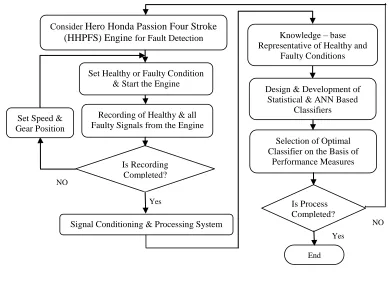
Fig 3: Working of Proposed FDI System
The unidirectional cardioid Microphone has been used as a sensor to acquire the sound variations from an automobile engine in normal and faulty conditions as shown in Fig 1. A unidirectional cardioid microphone is sensitive to sounds from only one direction, which it is facing only. These microphones are more commonly used for live vocal, speech & instrument performances as they are good at rejecting background sounds from other unwanted directions. The MP3 sound recorder is used to record the sound variations of an Automobile Engine in a wave format. The specifications of Microphone and MP3 recorder are also given in Table 1. Signal is divided into different frames by using the signal decomposition technique is shown in Fig 2.
Initially, the engine is started in healthy (normal) condition and signals are recorded at different speed and each gear positions. The HHPFS engine consists of five different gears including one neutral gear. The four signals were recorded in each gear position at 1200, 1500, 1800 and 2100 RPM. Therefore, there will be a collection of 140 recorded signals for five different faults and one neutral condition. The feature extraction is also carried out of each frame of the signal. These extracted features will be considered as a knowledge base for classification of different faults. The detail working of Fault Detection system is shown in Fig 3.
3. Observations of Recorded Signals and Pattern of Features
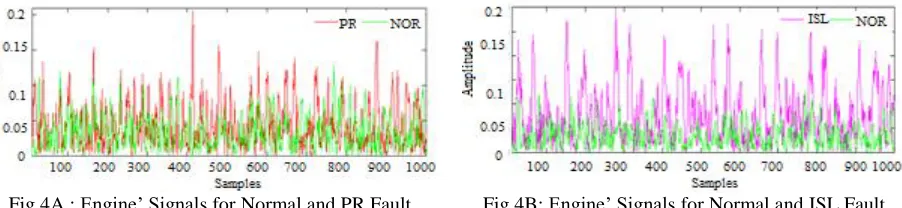
The nature of recorded signals is observed in time domain and features are extracted of each signal before and after decompositions of the signals. The recorded signals are plotted as shown in Fig 4A and Fig 4B. It is noticed from the signal plot that the most of the signals are overlapped and their nature is found to be highly complex and also the amplitude of the faulty signal is greater than that of the healthy condition signals.
Consider Hero Honda Passion Four Stroke (HHPFS) Engine for Fault Detection
Set Healthy or Faulty Condition & Start the Engine
Set Speed & Gear Position
Recording of Healthy & all Faulty Signals from the Engine
Signal Conditioning & Processing System
Knowledge – base Representative of Healthy and
Faulty Conditions
Design & Development of Statistical & ANN Based
Classifiers
Selection of Optimal Classifier on the Basis of
Performance Measures
Is Process Completed? Is Recording
Completed?
End NO
Yes
Yes
© 2014, IJCSMC All Rights Reserved
652
Fig 4A : Engine’ Signals for Normal and PR Fault Fig 4B: Engine’ Signals for Normal and ISL Fault The knowledge base is generated by extracting the features of healthy and faulty conditions signals. The extracted features are Mean, Energy, Maximum Value, Minimum Value, Standard Deviation, Variance and Mode for five different types of faults and out of which Minimum vs. Energy and Mean vs. Energy features are plotted as shown in Fig 5A & Fig 5B. After observing the overlapping nature of features and non separable decision boundaries, the decision is taken to employ the soft computing approach to classify the faults. At the beginning the statistical classifiers are employed to classify the faults which are explained in the subsequent section.
Fig 5A: Scatter Plot for Minimum Vs Energy Fig 5B: Scatter Plot for Mean Vs Energy
4. Classification of Faults Using Statistical Classifiers
© 2014, IJCSMC All Rights Reserved
653
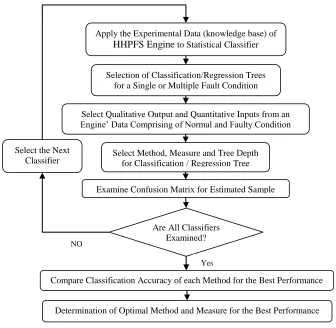
Fig 6: Process Flow Diagram for Statistical Classifiers
Table 2: Percent ACA for Individual Faults Using Statistical Classifiers Method Measure % ACA for
FF
% ACA for SP
% ACA for PR
% ACA for ISL
% ACA for RM
CHAID & Exh.
CHAID Pearson 82.5.00% 70.00% 80.00% 77.50% 85.00%
CHAID & Exh.
CHAID Likelihood 82.5.00% 70.00% 80.00% 77.50% 85.00%
C&RT Gini 85.00% 87.50% 80.00% 77.50% 85.00%
C&RT Towing 77.50% 70.00% 80.00% 77.50% 85.00%
Quest 50.00% 70.00% 80.00% 77.50% 85.00%
4.1 Classification of Multiple Faults in HHPFS Engine
The knowledge base of combined five different faults is applied to the Statistical Classifier for classification. The size of each feature matrix is 20×8 including seven inputs and one categorical output. Therefore, knowledge database consists of 120 rows and 8 columns. The performances of all statistical classifiers were observed and results are depicted in Table 3. It is observed that the percentage classification accuracy for C&RT Gini is found to be maximum amongst all statistical classifier and it is 63.33 % which is not reasonable. Therefore, the analysis is pursued by using ANN based Classifiers for possibility of improvement in performance and which is explain in subsequent section.
Table 3: Performance of Statistical Classifier for Combined Five Faults
Faults CHAID &Exh. CHAID C&RT Quest
Pearson Likelihood Gini Towing
FF 75.00% 80.00% 65.00% 75.00% 65.00%
Apply the Experimental Data (knowledge base) of HHPFSEngine to Statistical Classifier
Selection of Classification/Regression Trees for a Single or Multiple Fault Condition
Select Qualitative Output and Quantitative Inputs from an Engine’ Data Comprising of Normal and Faulty Condition
Select Method, Measure and Tree Depth for Classification / Regression Tree
Examine Confusion Matrix for Estimated Sample
Are All Classifiers Examined? Select the Next
Classifier
Compare Classification Accuracy of each Method for the Best Performance
Determination of Optimal Method and Measure for the Best Performance
NO
O
© 2014, IJCSMC All Rights Reserved
654
ISL 50.00% 65.00% 75.00% 65.00% 65.00%
NOR 35.00% 35.00% 75.00% 20.00% 25.00%
PR 85.00% 85.00% 60.00% 20.00% 20.00%
RM 35.00% 35.00% 65.00% 45.00% 70.00%
SP 30.00% 40.00% 40.00% 20.00% 20.00%
Total % ACA 51.67% 56.67% 63.33% 40.83% 44.17%
5. Classification of Faults using ANN Based Classifiers
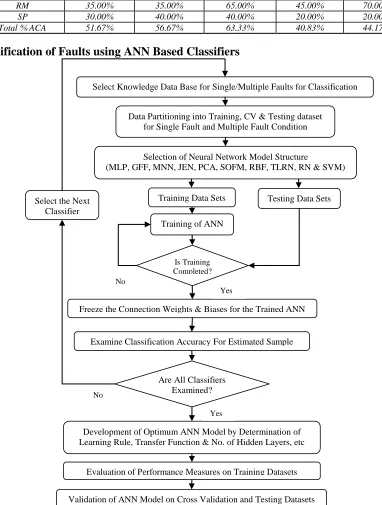
Fig 7: Working of ANN Based Classifiers for Classification of Faults in a HHPFS Engine
Subsequently, the analysis is continued using different configuration of ANN based classifiers such as
Multilayer Perceptron (MLP), Generalized Feedforward (GFF), Modular Neural Network (MNN), Jorden & Elman Network (JEN), Radial Basis Function (RBF), Self Organizing Feature Map (SOFM), Principal Component Analysis (PCA), Time Lagged Recurrent Network (TLRN), Recurrent Network (RN) and Support Vector Machine (SVM). The working of ANN based classifiers is shown in Fig 7. The %ACA has been observed for all ten types of ANN based classifiers. The input layer of the ANN contains seven neurons corresponding to seven inputs. One
Select Knowledge Data Base for Single/Multiple Faults for Classification
Data Partitioning into Training, CV & Testing dataset for Single Fault and Multiple Fault Condition
Selection of Neural Network Model Structure
(MLP, GFF, MNN, JEN, PCA, SOFM, RBF, TLRN, RN & SVM)
Training Data Sets Testing Data Sets
Training of ANN
Is Training Completed?
Freeze the Connection Weights & Biases for the Trained ANN
Examine Classification Accuracy For Estimated Sample
Are All Classifiers Examined?
Development of Optimum ANN Model by Determination of Learning Rule, Transfer Function & No. of Hidden Layers, etc
Evaluation of Performance Measures on Training Datasets
Validation of ANN Model on Cross Validation and Testing Datasets Select the Next
Classifier
Yes No
© 2014, IJCSMC All Rights Reserved
655
categorical output denotes a type of fault or healthy condition of an engine. As there are five different types of faults and one state indicating healthy condition, the number of neurons in the output layer must be six (five neurons corresponding to five different faults and one neuron corresponding to healthy condition). Three data partitions, namely, Training, Cross Validation (CV) and Testing were used with different tagging order. Every time, ANN is retrained three times with different random initialization of connection weights and biases with a view to ensure true learning and generalization.
5.1 Classification of Single Fault in a HHPFS Engine
Table 4: Performance of ANN Based Classifiers for Single Fault
ANN FF SP ISL RM PR
Testing CV Testing CV Testing CV Testing CV Testing CV
MLP 92.9 85.7 91.7 100.0 100.0 91.7 100.0 100.0 100.0 100.0
GFF 85.7 61.9 58.3 92.9 100.0 91.7 100.0 100.0 100.0 100.0
MNN 52.4 71.4 66.7 61.9 100.0 91.7 100.0 100.0 100.0 100.0
JEN 78.6 59.5 83.3 61.9 100.0 100.0 100.0 100.0 100.0 100.0
PCA 85.7 78.6 58.3 69.0 100.0 91.7 100.0 100.0 100.0 100.0
RBF 78.6 50.0 50.0 76.2 100.0 100.0 100.0 100.0 100.0 100.0
SOFM 52.4 71.4 87.5 85.7 100.0 100.0 91.7 62.5 100.0 100.0
TLRN 54.8 21.4 62.5 85.7 83.3 83.3 100.0 100.0 75.0 80.0
RN 38.1 69.0 45.8 66.7 100.0 100.0 100.0 100.0 100.0 100.0
SVM 59.5 57.1 83.3 76.2 100.0 100.0 100.0 100.0 100.0 100.0
The size of the feature matrix for a single fault with single frame is 40×8; i.e. 20×8 matrix for healthy (normal) signal and 20×8 matrix for each Faulty Signal. The feature matrix was fragmented into three parts in the ratio of 2:1:1 indicating training dataset: CV dataset: testing dataset. The classification accuracy of each faulty condition for testing and CV data set has been depicted in the Table 4. It is observed that the classification accuracy of MLP based classifier is better amongst all classifiers for FF and SP faults. Further it is also observed that classification accuracy for all ANN based classifiers is reasonably good for single fault. Therefore, the analysis is pursued by combining the multiple faults and it is explained in the subsequent sections.
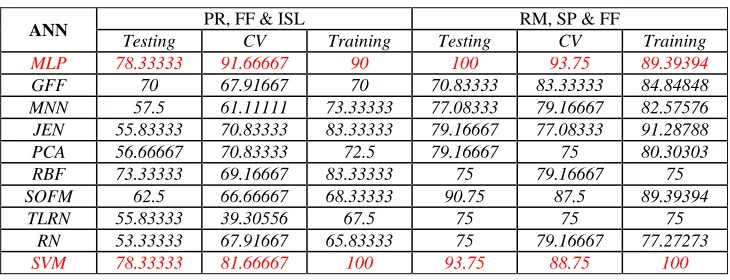
5.2 Classification of Combined Three Faults (PR, FF & ISL) and (RM, SP & FF)
Table 5: Classification of Combined Three Faults (PR, FF & ISL) and (RM, SP & FF)
ANN PR, FF & ISL RM, SP & FF
Testing CV Training Testing CV Training
MLP 78.33333 91.66667 90 100 93.75 89.39394
GFF 70 67.91667 70 70.83333 83.33333 84.84848
MNN 57.5 61.11111 73.33333 77.08333 79.16667 82.57576
JEN 55.83333 70.83333 83.33333 79.16667 77.08333 91.28788
PCA 56.66667 70.83333 72.5 79.16667 75 80.30303
RBF 73.33333 69.16667 83.33333 75 79.16667 75
SOFM 62.5 66.66667 68.33333 90.75 87.5 89.39394
TLRN 55.83333 39.30556 67.5 75 75 75
RN 53.33333 67.91667 65.83333 75 79.16667 77.27273
SVM 78.33333 81.66667 100 93.75 88.75 100
© 2014, IJCSMC All Rights Reserved
656
5.3 Classification of Combined Five Faults Using MLP Based ClassifierThe knowledge base is combined for five faults along with the healthy condition signal. The performance of MLP based classifier is observed for 1 to 128 frames. Classification Accuracy is plotted for 1 to 128 frames for test, CV and training datasets as shown in Fig 8. It is observed that the %ACA is found to be Maximum for eight numbers of frames for each signal and further increase in frame number does not seem to improve the performance. Therefore, further analysis is continued by considering the eight frames of each signal.
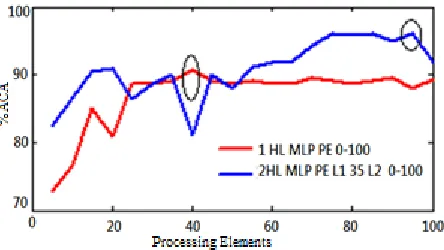
Fig 8: Performance of MLP Based Classifier Fig 9: Performance of #1 & #2HL-MLP
Fig 10A: Comparison of Transfer Functions Fig 10B: Comparison of Learning Rules Further analysis is continued by using MLP base classifier with 8 frames of each signal. As there are 20 signals recorded for each fault and normal signal, the size of the feature matrix will be (20 x 6 x 8) 960×8, i.e. 960 rows and 8 columns by considering the eight frames of each signal. The single hidden layer MLP NN was re-trained three times and tested for classification accuracy for test, cross validation, and training datasets. The process was repeated by varying the number of hidden layer PEs from 5 to 100 for default number of epochs set to 1000. The two hidden layer MLP based classifier was also retrained three times with different random weight initializations. The feature matrix was applied to the 2HL-MLP with the same type of data partitioning scheme. As the number of hidden layers in a neural network increases, the complexity of computation is also seen to increase. Here, the network was designed by keeping a number of Hidden layer #1 (L1) PEs fixed to 5 and by varying Hidden layer #2 (L2) PEs from 5 to 100 in step of 5. Then step-by-step, the number of L1 PEs was also varied from 5 to 100 in step of 5 by varying simultaneously the L2 PEs. After retraining the network three times with each set of PEs, the network was tested for test, cross validation and training dataset. The MLP based classifier is further investigated by changing the Learning Rule Algorithms such as STEP, MOM, CG, LMQ, QP and DBD. The performance of one & two hidden layer MLP NN has been shown in Fig 9, Fig 10A and Fig 10B. It is observed that the % ACA is Maximum at 4000 Epochs for 1HL-MLP and at 2000 Epochs for 2HL-MLP. The optimal transfer function is TANH-AXON, Learning Rule is Momentum and other optimal parameter for the one and two HL-MLP are also depicted in Table 6.
Table 6: Optimal Parameters for one and two Hidden Layer MLP Based Classifier
One-HL-MLP NN with Epochs - 4000 Two-HL-MLP NN with Epochs – 2000 Optimal Parameter HL Output Layer HL-1 HL-2 Output Layer
PE’s 40 5 35 95 5
Transfer Function TANH-AXON TANH-AXON TANH-AXON TANH-AXON TANH-AXON Learning rule Momentum Momentum Momentum Momentum Momentum
© 2014, IJCSMC All Rights Reserved
657
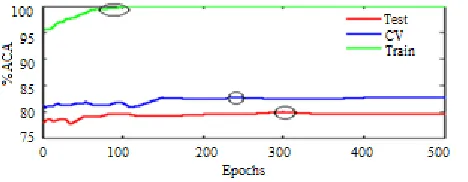
5.4 Classification of Faults in a HHPFS Engine Using SVM Based ClassifierThe detailed analysis is also carried out for Support Vector Machine using the Kernel Adatron algorithm. The Kernel Adatron algorithm transforms inputs into a higher dimensional feature space and then optimally separates data into their respective classes by isolating those inputs which fall close to the data boundaries. Therefore, the Kernel Adatron is especially effective in separating sets of data which share complex boundaries. Therefore, the performance of SVM based classifier is examined for different frames and the performance are plotted in Fig 11. The knowledge base for combined five faults with 8 frames comprising of 960x8 records was split into three parts in the ratio of 2:1:1. The first part of data was used for training the network, second one was used for cross validation and the third part was used for testing the network. A total dataset has a size 960 × 8 with 7 inputs and 1 categorical (symbolic) output (translated into 6 binary outputs). The SVM is retrained three times with healthy & faulty feature matrix derived from an automobile engine
.
The SVM based classifier is trained and tested by varying the no. of Epochs from 1 to 500. The performance of SVM based classifier is exhibited in Fig 11 and Fig 12. It is observed that at the 90th epoch, the classification accuracy on the training dataset is found to be reasonable and average MSE is also reasonably less.Fig 11: %ACA of SVM Based Classifier Fig 12: MSE of SVM Based Classifier
Conclusion
From the relative study and scrupulous comparison of all statistical and ANN based classifiers for automobile engine, it is concluded that the proposed FDI system can provide the best possible solution to early detection of faults in an automobile engine. The main advantage of this system is its simplicity, reliability, cost-effectiveness and compactness requiring a single sensor system. From the meticulous analysis using statistical and ANN based classifiers, it is inferred that ANN based classifiers are more appropriate for fault diagnosis. From the comparative analysis of all ten different types of ANN based classifiers, it is noticed that the Classification Accuracy of MLP and SVM based classifier is found to be reasonably acceptable amongst the group of ten ANN based classifiers used for the analysis. Also, the classification accuracy of two hidden layer MLP is found to be greater than that of a single hidden layer MLP. It is also seen that the 2HL-MLP NN and SVM can be used as reasonable classifiers for multiple faults detection in a HHPFS engine. However, MLP and SVM based classifier are seen to be more appropriate classifier for HHPFS Engines as its classification accuracy is higher than all other classifiers. In future, the work can be extended to any number of faults by generating the knowledgebase for respective faults.
References
1 Rolf Isermann, (2005), “Model-Based Fault Detection and Diagnosis Status and Applications” , Elsevier Ltd. , Annual Reviews in Control 29 (2005), pp. 71–85.
2 X. Zhang, M. M. Polycarpou, and T. Parisini (2002), “A Robust Detection and Isolation Scheme for Abrupt and Incipient Faults in Nonlinear Systems.”, IEEE Transactions on Automatic Control, 47 (4), 576 –593. 3 Howlett R. J. (1996), “ Condition Monitoring and Fault Diagnosis in a Domestic Car Engine Using a Neural
Network” , IEEE Artificial Intelligence in Consumer and Domestic Products (Digest No. 1996/212), IEE Colloquium Vol 5, pp.1-4.
4 R. J. Howlett,(1999), “Monitoring and Control of an Internal Combustion Engine Air-Fuel Ratio using Neural and Fuzzy Techniques” Moulsecoomb, Brighton, BN2 4GJ, U.K. Department of Electrical and Electronic Engineering, University of Brighton, International ICSC Symposium on Intelligent Industrial Automation (IIA), Genoa, Italy.
© 2014, IJCSMC All Rights Reserved
658
6 Wang Weijie, Kang Yuanfu, Zhao Xuezheng and Huang Wentao, (2004) “Study of Automobile Engine Fault Diagnosis Based on Wavelet Neural Networks”, IEEE- Intelligent Control and Automation, Volume: 2, pp. : 1766 - 1770.
7 M. S. Sangha, J. B. Gomm, D. L. Yu, G. F. Page (2005), “Fault Detection and Identification of Automotive Engines Using Neural Networks”, Proceedings of the 16th IFAC World Congress, pp. 1166-1166.
8 Jian-Hua Zhang, Li-Fang Kong, Zhang Tian and Wei Hao, ( 2010) , “The Performance Parameter Fault Diagnosis for Automobile Engine Based on ANFIS”, Web Information Systems and Mining (WISM) -IEEE International Conference on Volume 2, pp. 261 – 264.
9 Zhe Wang, Li Fang Kong, and Shi Song Zhu, ( 2011), “Fault Diagnosis Model for Automobile Engine Based on Gradient Genetic Algorithm”, IEEE Artificial Intelligence, Management Science and Electronic Commerce (AIMSEC), 2nd International Conference, pp. 1128 – 1131.
10 Hamad A., Dingli Yu, Gomm, J.B. and Sangha, M.S. (2012), “Fault Detection and Isolation for Engine Under Closed-Loop Control”, IEEE Xplore, Control (CONTROL), UKACC- Proceedings of IEEE International Conference, pp. 431 – 436.
11 M. S. Sangha, D. L. Yu and J. B. Gomm (2012), “Sensor Fault Detection, Isolation, Accommodation and Unknown Fault Detection in Automotive Engine Using AI”, International Journal of Engineering, Science and Technology, Vol. 4, No. 3, 2012, pp. 53-65.