INTERNATIONAL RESEARCH JOURNAL OF PHARMACY
www.irjponline.com
ISSN 2230 – 8407
Research Article
SELECTION OF MEDIUM FOR BIOPESTICIDES FERMENTATION PROCESS BY
Bacillus subtilis
AAF2 UAAC 20701
Akmal Djamaan
1*, Anthoni Agustien
2, Syukria Ikhsan Zam
3, Miftahul Jannah
2, Rika Sari Lalfari
4, Yufri Aldi
1,
Asiska Permata Dewi
5, Rizka Permata Suci
61
Department of Pharmaceutical Chemistry, Faculty of Pharmacy, Andalas University, Padang,
Indonesia
2Department of Biology, Faculty of Science, University of Andalas, Padang, Indonesia
3
Department Agrotechnology, Faculty of Agriculture and Animal Science, State Islamic University of Sultan Syarif
KasimRiau, Pekanbaru, Indonesia
4
Department of Chemistry, Faculty of Science, University of Andalas, Padang, Indonesia
5
Department of Pharmacy, Faculty of Medicine and Public Health, Abdurrab University, Pekanbaru, Indonesia
6Department of Chemistry, Faculty of Science, University of Indonesia, Jakarta, Indonesia
*Corresponding Author Email: [email protected]
Article Received on: 25/06/18 Approved for publication: 02/08/18
DOI: 10.7897/2230-8407.098158
ABSTRACT
Selection of the optimum medium type for biopesticide fermentation process by endophytic bacteria Bacillus subtilis AAF2 UAAC 20701 has been done. The medium type used were: Tryptic Soy Broth (TSB) medium, Luria Bertani (LB), Glucose Soybean Flour medium, and modified corn immersion. Erlenmeyer flask containing the medium to be used in the fermentation process. Then it was incubated at 270C with agitation of 120 rpm. Next step, inoculum was inoculated as much as 10% (v/v) into Erlenmeyer containing the fermentation medium and incubated at 270C with 120 rpm agitation. The parameters measured were pH fluctuation, bacterial cell count, growth inhibition zone of test bacteria and fungal growth inhibition measured every 24 hours for 72 hours. The results showed that the best fermentation condition for producing the highest biopesticide activity using
Bacillus subtilis AAF2 UAAC 2070 from four type of testing medium was found in Corn Immersion Medium. The inhibition zone towards Ralstonia solanacearum and Xanthomonascampestris wth inhibition towards Fusarium oxysporum was 64.3% while towards Schlerotium rolfsii was 67.1 % with 48 hours of incubation time and pH changes during fermentation range from 7.0 to 7.8.
Keywords: medium, biopesticide, fermentation, Bacillus subtilis AAF2 UAAC 20701
INTRODUCTION
US EPA (The United States Environmental Protection Agency) defines biopesticides as types of pesticides derived from natural materials such as animals, plants, bacteria and some minerals1. Based on the active composition, biopesticides are categorized as microbial pesticides, plant pesticides, and biochemical pesticides2. Djunaedy (2009) divides biopesticides into two groups based on the material sources: first, phytopesticides, is the result of extraction of certain parts of the plant either from leaves, fruit, seed or root3. These pesticides are commonly used to control pests (insecticidal) or disease (bactericidal or fungicidal). Second, biological pesticides, has formulations containing certain microbes either in the form of viruses, bacteria, or fungi that are antagonistic to other microbes (which caused the plant diseases) or produce certain compounds that are toxic to both insects and nematodes.
Endophytic bacteria were reported to have the ability to produce bioactive compounds. Such compounds may inhibit the growth of phytopathogen4,5. This ability is also demonstrated by the 14 strains used in the antibiotic test against Ralstonia solanacearum,
Xanthomonas campestris, Fusarium oxysporum, dan Sclerotium rolfsii. The 14 strains were Bacillus indicus BJF1, Bacillus indicus TCF1, Bacillus indicus MCF2, Bacillus pumilus CAF4, Bacillus sp. CAF1, Bacillus subtilis AAF2, Bacillus subtilis MCF1,
Bacillus subtilis CAF3, Bacillus subtilis MCF3, Pseudomonas psychrotolerans AAF1, Pseudomonas oryzihabitans AAF3, Pantoea agglomerans CAF2, Pantoea stewartii AAF4, and
Kocuria kristinae CSF1.
Bacillus subtilis AAF2 UAAC 20701 is a potential strain to be developed as a biopesticide producer from our previous research6. The strain has antibiotic activity against all test microbes and has high antibiotic activity, so the authors are interested to do the biopesticide fermentation process using the strain. Bacillus subtilis has been reported as endophytes and has the ability to inhibit soil phytopathogen7, as against Xanthomonas campestris,
Ralstonia solanacearum9, Fusarium oxysporum10,11 and
Sclerotium rolfsii12. Some research reported that Bacillus subtilis has potential in producing antibiotic, such as lipopeptide antibiotic13.
MATERIALS AND METHOD
Material used in this research were Bacillus subtilis AAF2UAAC 20701 isolate from UAAC Culture Centre, Laboratory of Biotechnology Biotan Sumatra, Universiy of Andalas, Padang, Indonesia, sterile aquadest, TSA medium, TSB medium, Luria-Bertani (LB) medium, NA medium, PDA medium, FeSO4, ZnSO4, MnSO4, MgSO4, CaCO3, NH4NO3, (NH4)2SO4, HCl, glucose, soybean flour, corn imersion liquid, and physiological saline (NaCl)0.85%. Tool used in this research were micropipette, Erlenmeyer flask, Petri dish, reaction tube, measuring pipette, Beaker glass, filter membrane, shaker incubation, and spectrophotometer.
Materials and Sterilization
The materials and heat-resistant tools used in this study were sterilized using an autoclave at 121°C at a pressure of 15 lbs for 15 minutes. The non-heat-resistant tools were sterilized using 90% alcohol15.
Inoculum Source Production
The preparation of the inoculum source was carried out by taking one Ose e and inoculated into an Erlenmeyer flask containing10 mL TSB medium. Then as much as 10% (v/v) inoculum was inoculated into Erlenmeyer flask containing a liquid TS medium with a final volume of 100 mL and incubated at 270C with agitation of 120 rpm for 24 hours16.
Determination of Growth Curve of Bacillus subtilis isolate AAF2 U01
Preparation of Bacillus subtilis AAF2 UAAC 20701 isolate growth curve of used in this study was conducted by taking 10% (v/v) inoculum source with cell number 106 cells/mL and inoculated into liquid medium to be used in the fermentation process (TSB, LB, glucose of soybean flour, and medium developed by Djamaan et al. (2012)17 then it was incubated at 27°C for 24 hours with agitation of 120 rpm. Sampling was done every 2 hours to calculate the total number of bacteria by the method of pour plate 18,19. From the data obtained growth rate constant (k) and generation time (g) was calculated using the formula by Willey et al. (2008)20. Growth rate constant:
𝑘 =𝑛 𝑡=
log 𝑁𝑡 − log 𝑁𝑜 0,301 𝑡
where:
No=starting population amount, Nt=population amount at t-time
Generation time was calculated by formula:
𝑔 =1 𝑘
Selection of Medium Fermentation Type
The selection of fermentation medium was done on four media, those were: TSB medium (17 g tripton; 3 g soypeptone; 2.5 g glukosa; 5 g NaCl; and 2,5 g K2HPO4 L-1 medium), LB medium g yeast extract, and 5 g NaCl L-1medium), Glucose Soybean Flour medium (15 g of soybean flour; 0.002 g FeSO4; 0,02 g ZnSO4; 0,02 g MnSO4; and 0,3 MgSO4 L-1 medium), and modified corn immersion medium (Djamaan et al., 2012)(30 ml of corn immersion liquid; 5 g CaCO3;1 g FeSO4; 2 g MgSO4; 0,1 g ZnSO4; 0,02 g MnSO4;0,9 g KH2PO4; and 5 g Na2HPO4 L-1 medium).
The fermentation process started by inoculating 10% (v/v) inoculum with cell concentration of 106 cells/mL into the Erlenmeyer flask containing the medium to be used in the fermentation process. Then it was incubated at 270C with agitation of 120 rpm corresponding to best inoculum age from growth curve. Next step, inoculum was inoculated as much as 10% (v/v) into Erlenmeyer containing the fermentation medium and incubated at 270C with 120 rpm agitation.
The parameters measured were pH fluctuation, bacterial cell count, growthinhibition zone of test bacteria and fungal growth inhibition measured every 24 hours for 72 hours21. Fluctuations in pH was measured by pH meters; the calculation of bacterial cell count was done by the method of pouring cups which refers to Cappucino & Sherman (1987) 18and Harley & Prescott (2002)19; the width of the inhibition zone produced was measured by the disc diffusion method and the fungal growth inhibition sing the food poisoning technique6.
RESULTS AND DISCUSSION
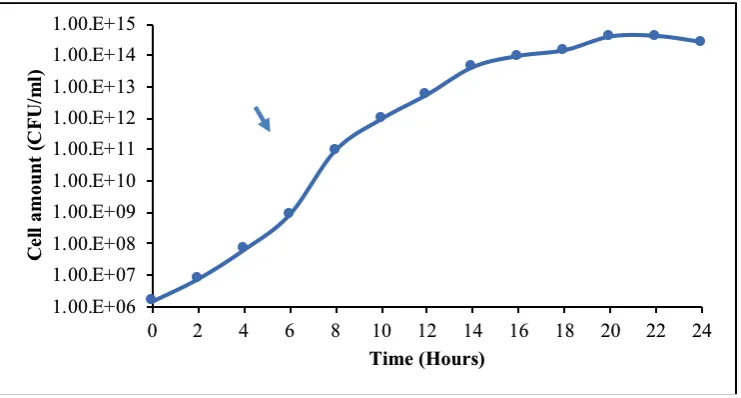
The results of the Bacillus subtilis AAF2 UAAC 20701 curve used in this study are presented in Figure 1.
Figure 1 shows no lag phase in Bacillus subtilis AAF2UAAC 20701. This happened because the strain has been activated before and the amount of inoculum is adequately inserted. Astuti (2003) stated that active inoculum conditions can minimize the length of the lag phase in the fermentation process22. The length of the lag phase is, among others, influenced by the amount of inoculum and physiological conditions. In addition, the inoculum should be available in sufficient quantities, so it is important to provide an optimum amount of inoculum.
The best inoculums age for Bacillus subtilis AAF2 UAAC 20701 was at 8 hours. The best inoculum age was determined by ½ log phase. Determination of the age of the best inoculum is necessary, because the age of inoculum is one important factor in the production success of antibiotic compounds23. The stationary phase of Bacillus subtilis AAF2 UAAC 20701 was started at 20 hours, so it can be assumed that the production of antibiotic bioactive compounds was done in the same time. This is supported by research by de Carvalho et al. (2010) that stated bioactive compounds only found in the stationary phase24. Black (1999)25;
Moat et al. (2002)26; and Madigan and Matinko (2006)27 added that generally secondary metabolite products are produced at the stationary phase and the secondary metabolites have antibiotic activity.
The stationary phase in each strain occurs at different inoculums ages. de Carvalho et al. (2010)24 reported that the stationary phase of Bacillus subtilis R14 was occurred from the age of inoculum 20 hours to 60 hours. The stationary phase was characterized by decreased growth when compared to the log phase. This condition occurred because the limitation of substrate concentration on the growth media of the three endophytic bacteria, in addition to the increase of toxic metabolism byproducts. This is supported by the opinion of Madigan and Martinko (2006) 27 which stated that bacterial growth was lower in the stationary phase. This can be the result of the limited substrate availability. Black (1999) 25 added that in the stationary phase there is an increase in metabolic byproduct concentration which is toxic to microorganisms, so the metabolism and growth of microorganism is lower.
Table 1: Cell amount, growth rate constant, and generation time of Bacillus subtilis AAF2 UAAC 20701 in growth curve production
No. Time (Hour) Cell amount (CFU/ml)
Growth rate constant (gen./hour)
Generation time (hour/gen.)
1. 0 . 1.76 0.57
2. 2 7.80 x 10⁶ 3. 4 6.50 x 10⁷ 4. 6 8.60 x 10⁸ 5. 8 9.30 x 10¹⁰ 6. 10 9.20 x 10¹¹ 7. 12 5.50 x 10¹² 8. 14 4.10 x 10¹³ 9. 16 9.20 x 10¹³ 10. 18 1.40 x 10¹⁴ 11. 20 3.80 x 10¹⁴ 12. 22 3.90 x 10¹⁴ 13. 24 2.50 x 10¹⁴
Table 2: pH changing, cell amount, inhibition zone and growth inhibition on selection of fermentation medium by Bacillus subtilis AAF2 UAAC 20701
No. Medium Type
Time (Hours)
pH Cell amount (CFU/ml)
Inhibition zone (mm) Inhibition growth (%) Ralstonia
solanacearum
Xanthomonas campestris
Fusarium oxysporum
Sclerotium rolfsii
1. Tryptic Soy Broth
0 7.0 2.10 x 10⁶ 0.0 0.0 0.0 0.0 24 6.8 3.80 x 10¹⁴ 3.0 2.0 60.0 58.8 48 7.3 2.90 x 10¹⁴ 3.0 3.0 64.3 64.7 72 8.2 4.50 x 10¹⁰ 2.0 2.0 47.1 42.4 2. Luria-Bertani 0 7.0 1.30 x 10⁶ 0.0 0.0 0.0 0.0
24 7.3 5.40 x 10¹⁴ 2.0 2.0 25.7 25.9 48 8.0 3.20 x 10¹² 2.0 2.0 28.6 29.4 72 8.4 5.80 x 10¹⁰ 1.0 1.0 27.1 26.9 3. Glucose -
Soybean 0 7.0 1.60 x 10
6 0.0 0.0 0.0 0.0
24 5.8 3.50 x 10¹⁴ 3.0 2.0 22.9 23.5 48 6.5 1.10 x 10¹⁴ 3.0 2.0 27.1 29.4 72 6.0 8.40 x 10¹² 3.0 1.0 24.3 25.9 4. Corn
immersion
0 7.0 2.20 x 10⁶ 0.0 0.0 0.0 0.0 24 8.0 7.50 x 10¹⁴ 3.0 3.0 57.1 56.5 48 7.8 1.20 x 10¹⁴ 3.0 3.0 64.3 67.1 72 8.4 3.80 x 10¹⁰ 0.0 2.0 57.1 49.4
The low growth in the stationary phase can also be caused by a decrease in the pH from the metabolism process by endophytic bacteria, thus it was interfering with bacterial cell metabolism. According to Black (1999)25, Madigan and Matinko (2006)27 pH greatly affects the enzymes activity. If the pH value is outside the minimum and maximum range, then the enzyme activity will be disrupted and resulted in disruption of activity inside the cell14.
The growth rate constant (k) of Bacillus subtilis AAF2 UAAC 20701 in this study was 1.76 gen./hour and its generation time (g) was 0.57 hours/gen. (Table 1). The generation time showed that
(g) 0.43 hours /gen., if it grown on a universal medium with a temperature of 400C.
Furthermore, in the selection process of fermentation medium to obtain the best results of Bacillus subtilis AAF2 UAAC 20701 has been done on four types of medium in this study. Ghribi et al.
(2012) stated that the success of secondary metabolite fermentation was influenced by several factors, such as the type of fermentation medium, carbon source, nitrogen source, inoculum concentration, nitrogen concentration, corn immersion concentration, pH, and agitation. The results proved that these factors play an important role in the success of the fermentation process, especially antibiotic activity against test microbes.
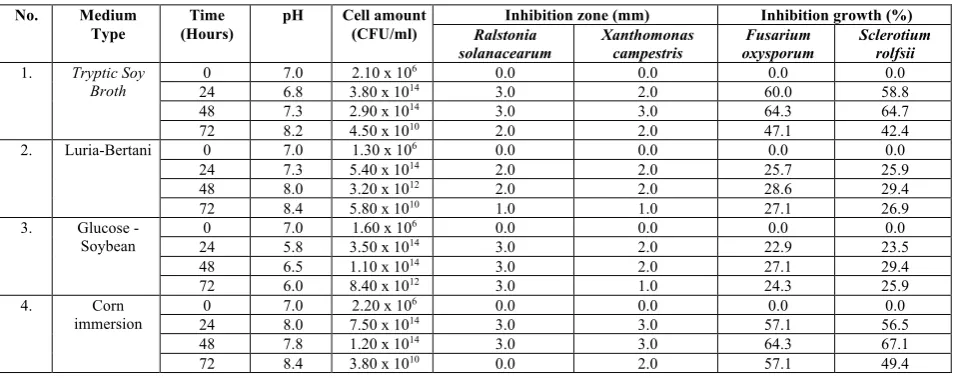
Table 2 shows the best fermentation for Bacillus subtilis AAF2 UAAC 20701 was found on modified corn immersion medium with glucose as carbon source. This was demonstrated by the high antibiotic activity especially for the fungi (inhibition zonefor
Ralstoniasolanacearum and Xanthomonas campestris was 3 mm, and the growth inhibition towards Fusarium oxysporum was 64.3% and 67.1% for Sclerotium rolfsii) at 48 hours fermentation.
High levels of antibiotic activity suggest that the medium provides the nutrients needed in the production of antibiotic biopesticides. When viewed from the composition, this medium provides the nutrients needed in the production of biopesticides, such as
carbon, N, P, Na, Mg, Fe, Zn, and Mn. Nutrition in the fermentation medium is known to play an important role in the metabolism of secondary metabolites28 and plays an important role in the attack and intensity of secondary metabolites 29. Cooper
et al. (1981) reported that Mn in some B. subtilis strains can increase the production of secondary metabolites, and Fe is necessary for cell growth30. Duffy & Defago (1999) 31 and Beltran-Garcia et al. (2017) stated that mineral content, oxygen pressure, osmotic conditions, phosphates, carbon, and nitrogen sources was is abiotic factor that can affect the secondary metabolite production of bacteria in invitro32.
High antibiotic activity on modified corn immersion medium showed that Bacillus subtilis AAF2 classified to synthetic medium-liking strain. According to Bashra et al. (2007) some
Bacillus subtilis strain prefer synthetic medium to produces antibiotic compound to universal medium33. This is due to universal medium does not the necessary nutrient for antibiotic compounds production. Some bacterial strain will be showed decreasing of antibiotic activity when inoculated in complex medium34 while Bacillus subtilis R14 is able to produce high antibiotic compounds in complex medium with limited oxygen 35. Elibol & Mavituna (1998) stated that there is relationship between growth and antibiotic biosynthesis36. This condition showed that antibiotic production was induced by specific nutrition in fermentation medium37.
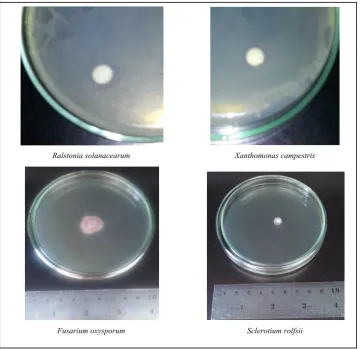
Figure 2: Profile of antibiotic activity from Bacillus subtilis AAF2 UAAC 20701 fermentation results towards several microbial test used in this research
Ralstonia solanacearum Xanthomonas campestris
Based on the data obtained in this research, the best fermentation time was 48 hours. Antibiotic activity found in 24 hour to 72 hour of inoculum age. Result from this research is corresponds with Demirkan & Usta (2013)38, which stated that generally strains from Bacillus genera has antibiotic activity ranged from 24-72 hour of incubation time39,40,41.
CONCLUSION
The best fermentation condition for producing the highest biopesticide activity using Bacillus subtilis AAF2 UAAC 2070 from four type of testing medium was found in Corn Immersion Medium. The inhibition zone towards Ralstonia solanacearum
and Xanthomonas campestris was 3.0 mm and fungal growth inhibition towards Fusarium oxysporum was 64.3% while towards
Schlerotium rolfsii was 67.1 % with 48 hours of incubation time and pH changes during fermentation range from 7.0 to 7.8.
AKNOWLEDGMENT
The author would like to say special thanks to The Rector of Andalas University for his support this research under Professor Research Grant Project, Andalas University 2018, with Contract Number: 17/UN.16.17/PP.RGB/LPPM/2018.
REFERENCES
1. Raudales R.E. and Gardener B.B.M. Microbial Biopesticides for the Control of Plant Diseases in Organic Farming. Fact Sheet Agriculture and Natural Resources, The Ohio State University, Ohio. 2008.
2. Gupta S. and Dikshit A.K. Biopesticides: An ecofriendly approach for pest control. Journal of Biopestides. 2010; 3(1), 186-188.
3. Djunaedy A. Biopestisida sebagai pengendali organisme pengganggu tanaman (OPT) yang ramah lingkungan. Embryo. 2009; 6(1), 88-95.
4. de Melo F.M.P, Fiore M.F, de Morales L.A, Silva-Stenico M.E, Scramin S, Teixeira M.A, and de Melo I.S. Antifungal compound produced by the cassava endophyte Bacillus pumilus MAIIIM4A. Science Agriculture. 2009; 66(5), 583-592.https://doi.org/10.1590/S0103-90162009000500002 5. Asraful S.M.A, Math R.K, Kim J.M, Yun M.G, Cho J.J, Kim
E.J, Lee Y.H, and Yun H.D. 2010. Effect of plant age on endophytic bacterial diversity of balloon flower (Platycodon grandiflorum) root and their antimicrobial activities. Current Microbiology. 2010; 61: 346-356.https://doi.org/ 10.1007/s00284-010-9618-1
6. Zam S.I, Syamsuardi, Agustien A, Jannah M, Aldi Y, Djamaan A. Isolation, characterization of endophytic bacteria from Citrus aurantifolia Swingle Leaves and testing of antifungal activity towards Fusarium Oxysporum. Der Pharmachia Lettre, 2016; 8(11), 83-89.
7. Ongena M, Duby J, Jourdan Beaudry T, Jadin V, Dommes J, and Thonart P. Bacillus subtilis M4 decrease plant susceptibility towards fungal pathogens by increasing host resistance associated with differential gene expression. Applied Microbiology and Biotechnology. 2005; 67, 692-698.https://doi.org/10.1007/s00253-004-1741-0
8. Issazadeh K, Rad S.K, Zarrabi S, and Rahimibashar M.R. Antagonism of Bacillus species against Xanthomonas campestris pv. Campestris and Pectobacterium corotovorum
subsp. corotovorum. African Journal of Microbiolology Research. 2012; 6(7), 1615-1620.
9. Ji X, Lu Gai Y, Zheng C, and Mu Z. Biological control against bacterial wilt and colonization of mulberry by an endophytic
Bacillus subtilis strain. FEMS Microbiololy and Ecology.
2008; 65(3), 565-573.https://doi.org/10.1111/j.1574-6941.2008.00543.x
10.Liu B, Huang L, Buchenauer H, and Kang Z. Isolation and partial characterization of an antifungal protein from the endophytic Bacillus subtilis strain EDR4. Pesticides Biochemistry and Physiololy. 2010; 98, 305-311.https://doi.org/10.1016/j.pestbp.2010.07.001
11.Souza A., Cruz J. C., Sousa N. R., Procopio A. R. L. and Silva G.F. Endophytic bacteria from banana cultivars and their antifungal activity. Genetics Moleculer Research. 2014; 13(4), 8661-8670.https://doi.org/10.4238/2014.October.27.6 12.Thasanaa N, Prapagdee B, Ramgkadilo K, Sallabhan R, Aye
S.L, Ruchirawat S, and Loprasert S. Bacillus subtilis SSE4 produces subtulene A, a new lipopeptide antibiotic possessing an unusual C15 unsaturated β-amino acid. FEBS Letters. 2010; 584, 3209-3214.https://doi.org/10.1016 /j.febslet.2010.06.005
13.Akpa E, Jacques P, Wathelet B, Paquot M, Fuchs R, Budzikiewics H, and Thonart P. Influence of culture condition on lipopeptide production by Bacillus subtilis. Applied Biochemistry and Biotechnology. 2001; 91, 537-547.https://doi.org/10.1007/978-1-4612-0217-2_47
14.Crueger W, Crueger A. Biotechnology: A Textbook of Industrial Microbiology. Sinauer Associates, Inc. Sunderland. 1984.
15.Sayuti I, Siregar Y.I, Amin B, Agustien A, Djamaan A. Identification of bacterial hydrocarbonoclastic in waste tanks, Petapahan, Riau, Indonesia, using 16s RNA, Journal of Pure and Applied Microbiology. 2018; 12(2), 671-677.https://doi.org/10.22207/JPAM.12.2.25
16.Rivai H, Asia A, Rina W, Alen Y, Handayani D, Aldi Y, Marlina and Djamaan A. Isolation of endophytic bacteria from bark, leaf, and pericarp of Mangosteen (Garcinia mangostana
L.) and testing of the antimicrobial activity, Research Journal of Pharmaceutical, Biological and Chemical Sciences, 2016; 7(1), 1910-1920.
17.Djamaan A, Noviza D, Septianingsih D, Suardi M, 2016. The use of purple sweet potato (Ipomoea batatas) starch as binder in manggosteen peel extract lozenges formulation, Der Pharma Chemica, 2016; 8(2), 410-414.
18.Capucino J.B., and Sherman N. Microbiology: A laboratory manual. Addison Wesley Publ. Co., Massachusetts. 1987. 19.Harley-Prescott. Laboratory exercises in microbiology, 5th
Edition. The McGraw−Hill Companies, New York. 2002. 20.Willey J.M., Sherwood L. M, and Woolverton C.J. Prescott,
Harley, and Klein's Microbiology. The McGraw-Hill Companies, Inc., New York. 2008.
21.Valicente F.H, Tuelher E.S, Leite M.I.S, Freire F.L, and Vieira C.M. Production of Bacillus thuringiensis biopesticide using commercial lab medium and agricultural by-products as nutrient sources. Revista Brasileira de Milho e Sorgo. 2010; 9(1), 1-11.https://doi.org/10.18512/1980-6477/rbms.v9n1p1-11
22.Astuti D.I. Pemanfaatan kultur campuran isolat mikroba lokal untuk degradasi minyak bumi dan produksi biosurfaktan. Disertasi Doktor, Institut Teknologi Bandung, Bandung. Indonesia. 2013.
23.Ghribi , Abdelkefi-Mesrati L, Mnif I, Kammoun R, Ayadi I, Saadaoui L, Maktouf S, and Chaabouni-Ellouze S. Investigation of antimicrobial activity and statistical optimization of Bacillus subtilis SPB1 biosurfactant production in solid state fermentation. Journal of Biomedical and Biotechnolology, 2012; 1-12.
25.Black J. Microbiology Principles and Explorations. Prentice Hall Upper Saddle River, New Jersey. 1999.
26.Moat A.G, Foster J.W, and Spector M.P. Microbial Physiology 4th edition. Jhon Wiley and Sons, Inc. Publication. New York. 2002.https://doi.org/10.1002/0471223867 27.Madigan, T. M., and Matinko, J. M. 2006. Brock Biology of
Microorganisms 11th edition. Pearsone Prentice Hall, London.
28.Kumar S, Rana M, Kumar D, Kashyap D, and Rana M. A mini review on the phytochemistry and pharmacological activities of the plant Toona ciliata (Meliaceae). International Journal of Phytotherapy and Research, 2012; 2(1), 9-18.
29.Sreerag R. S, Jacob J, Nisha G.V, Asha A, and Kumar S.N. Influence of six nitrogen sources with fructose on antimicrobial metabolite production by bacterium associated with entomopathogenic nematode. International Journal of Pharmacy and Pharmaceutical Sciences, 2012; 6(5), 299-304. 30.Cooper D.G, MacDonald C.R, Duff S.J.B, and Kosaric N. Enhanced production of surfactin from Bacillus subtilis by continuous product removal and metal cation additions. Applied Environment Microbiology, 1981; 42, 408-412. 31.Duffy B.K, and Defago G. Environmental factors modulating
antibiotic and siderophore biosynthesis by Pseudomonas flourescens biocontrol strains. Applied Environment Microbiology, 1999; 65, 2429-2438.
32.Beltran-Garcia E, Macedo-Raygoza E, Villafana-Rojas J, Martinez-Rodriguez A, Chavez-Castrillon Y.Y, Espinosa-Escalante F.M, Mascio P.D, Ogura T, and Beltran-Garcia M.J. Production of lipopeptides by fermentation processes: Endophytic bacteria, fermentation strategies and easy methods for bacterial selection. Fermentation Processes. InTech. 2017; 199-222.
33.Bashra J, Fariha H, Abdul H, and Safia A. 2007. Isolation of
Bacillus subtilis MH-4 from soil and its potential of polypeptidic antibiotic production. Pakistan Journal of Pharmaceutical Sciences, 2007; 20, 26-31.
34.Peighami-Ashnaei S, Sharifi-Tehrani A, Ahmadzadeh M, and Behboudi K. Interaction of different media on production and biocontrol efficacy of Pseudomonas flourescens P-35 and
Bacillus subtilis B-3 against grey mould of apple, Journal of Plant Patholology, 2009; 91(1), 65-70.
35.Monteiro L, Mariano R.L.R, and Souto-Maior A.M. Antagonism of Bacillus spp. against Xanthomonas campestris
pv. campestris. Brazilian Arc. Biology and Technology, 2005; 43, 23-29.https://doi.org/10.1590/S1516-891320050 00100004
36.Elibol M, and Mavituna F. Effect of sucrose on actinorhodin production by Streptomyces coelicolor A3 (2). Process Biochemistry, 1998; 33, 307-311.https://doi.org/ 10.1016/S0032-9592(97)00088-5
37.Haas D, and Keel C. Regulation of antibiotic production in root-colonizing Pseudomonas spp. and relevance for biological control of plant disease. Annual Rev. Phytopathology 2003; 41, 117-153.https://doi.org/ 10.1146/annurev.phyto.41.052002.095656
38.Demirkan E, and Usta A. The effect of growth parameters on the antibiotic activity and sporulation in Bacillus spp. isolated from soil. Journal of Microbiology, Biotechnology and Food Sciences, 2013; 2(5), 2310-2313.
39.Alen Y, Nufika Y, Suharti N, Nakajima S, Djamaan A, The determination of profenofos insecticide residue cabbage (Brassica oleracea), Der Pharmacia Lettre, 2016; 8(8), 137-140.
40.Djamaan A, Marjoni M.R, and Ismed F. The influence of pretreatment time, type and the concentration of yeast on ethanol production from rice straw. Research Journal of Pharmaceutical, Biological and Chemical Sciences, 2015; 6(3), 583-591.
41.Artasastra M.A, Yanwirasti, Djamaan A. Cytotoxic activity screening of ethyl acetate fungal extract derived from the marine sponge Neopetrosia chaliniformis AR-01. Journal of Applied Pharmaceutical Science, 2017; 7(12), 174-178.
Cite this article as:
Akmal Djamaan et al. Selection of medium for biopesticides fermentation process by Bacillus subtilis AAF2 UAAC 20701. Int. Res. J. Pharm. 2018;9(8):21-26 http://dx.doi.org/10.7897/ 2230-8407.098158
Source of support: Professor Research Grant Project, Andalas University, Conflict of interest: None Declared