Technology (IJRASET)
Influence of Curing Types on Properties of
Concrete Using Slag Replacement
Ismail Saleem1, Basil Sabu2
1
Dept. of Civil Engineering, Mar Athanasius College of Engineering, Kerala, India 2
Asst. Professor, Dept. of Civil Engineering, Mar Athanasius College of Engineering, Kerala, India
Abstract— The influence of curing types on properties of concrete along with different percentage of cement replacement is
studied. Air curing and accelerated curing are compared to water curing. Four types of mixes (i.e., with different cement replacements: 0% slag, 25% slag, 50% slag, and 75% slag) are used. The properties examined included compressive strength, tensile strength and permeability. Cubes of 150mm×150mm×150mm were used for compression test. Cylinders of 150mm diameter and 300mm height for split tensile test and cubes of 100mm×100mm×100mm were used for permeability test. Results showed that 25% cement replacement gave the maximum compressive strength. The strength reduced when the cement replacement was above 50%. Curing compound was used for air curing which gave strength slightly less than that for water
curing. Accelerated curing was done by heating the specimen at 1100C.
Keywords—Air curing, accelerated curing, permeability, curing compound, compressive strength
I. INTRODUCTION
Concrete is the most important element of the infrastructure and well-designed concrete can be a durable construction material. However, the environmental aspects of Portland cement are a growing concern, as cement manufacturing is responsible for about 2.5% of total worldwide emissions from industrial sources. One effective way to reduce the environmental impact is to use mineral admixtures, as a partial cement replacement. This strategy will have the potential to reduce costs, conserve energy, and reduce waste volumes. Mineral admixtures are silica-based materials, such as ground granulated blast furnace slag, fly ash, and silica fume, that react to form hydration products when introduced in Portland cement paste, so they can partially replace Portland cement. Mineral admixtures have been used more and more for concrete due to their benefits in terms of strength and durability. Slag-based blended cements are now marketable worldwide and slags have been incorporated in quantities up to 85% by weight in different mix designs.
II. EXPERIMENTALDETAILS
A. Cement
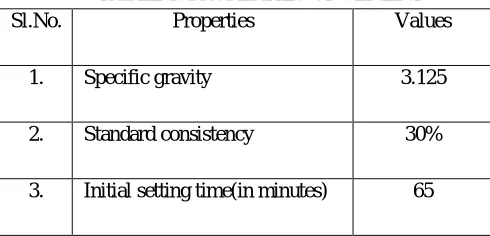
[image:2.612.183.428.532.650.2]The cement used for this project work is Ordinary Portland Cement of 53grade. The cement was tested for its specific gravity, standard consistency, initial time and final setting time are found according to relevant Indian Standard Code as shown in Table 1
TABLE 1: PROPERTIES OF CEMENT
Sl.No. Properties Values
1. Specific gravity 3.125
2. Standard consistency 30%
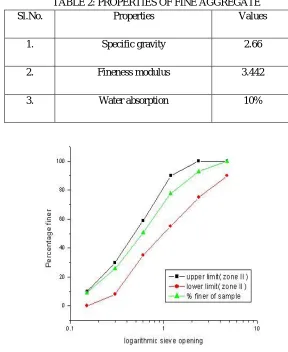
Sl.No. Properties Values
1. Specific gravity 2.66
2. Fineness modulus 3.442
[image:3.612.157.445.80.432.2]3. Water absorption 10%
Fig 1 Particle size distribution of fine aggregate
C. Coarse aggregate
20mm size aggregates were used for the work. The test was done as per the relevant IS codes.
TABLE 3: PROPERTIES OF COARSE AGGREGATE
Sl.No. Properties Values
1. Specific gravity 2.77
2. Fineness modulus 2.596
[image:3.612.156.458.506.658.2]Technology (IJRASET)
Fig 2 Particle size distribution of coarse aggregate
III.TESTONHARDENEDCONCRETE
A. Compressive strength test
The compressive strength is the capacity of a material or structure to withstand loads tending to reduce size. It can be measured by plotting applied force against deformation in a testing machine. Some material fracture at their compressive strength limit, others deform irreversibly, so a given amount of deformation may be considered as the limit for compressive load. Compressive strength is a key value for design of structures. The cube specimen was placed in the compression testing machine and load is applied gradually till the specimen fails. The maximum load is recorded.
B. Split Tensile strength test
The most common method for estimating tensile strength is split tensile test. The concrete cylinders of size 150 × 300 mm were cast. The test was carried out by placing a cylindrical specimen horizontally between the loading surfaces of a compression testing machine and the load is applied until failure of the cylinder, along the vertical diameter. The specimens were casted and tested on
the 28th day.
Spilt tensile strength =
Where,
P = compressive load on the cylinder L = length of the cylinder
D = diameter of the cylinder
C. Permeability test
A. Characterization of materials.
The materials like fine aggregate and coarse aggregate are tested according to the IS specifications and obtained their properties.
B. Mix design.
The mix design for M40 concrete was done according to IS 10262:2009 and the mix proportion was found out.
C. The properties of cement like specific gravity, standard consistency, initial and final setting time were obtained by
conducting tests according to IS specifications
D. Casting of cubes of sizes 100mm×100mm×100mm for permeability test, 150mm×150mm×150mm for compressive strength
and 150mm diameter and 300mm height cylinder for tensile test.
E. After casting, the specimens were cured by three different methods: air, water and accelerated curing.
F. Tests were conducted for determining compressive strength, split tensile strength and permeability test.
G. Results and discussion
V. RESULTSANDDISCUSSION
A. Compression test
[image:5.612.224.395.311.434.2]The specimens with varying dosages of GGBFS and with different curing conditions were tested for compressive strength at 7 and 28 days of curing and the result is shown below.
Fig 3 Compressive strength of concrete at 7th day
From fig 3, it can be observed that the maximum compressive strength value was obtained for the control mix. Air curing gives compression value slightly less than water curing.
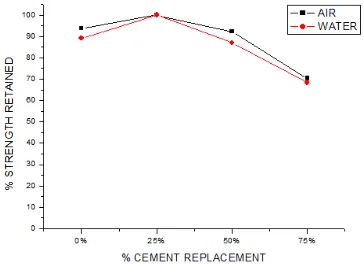
[image:5.612.213.395.502.634.2]Technology (IJRASET)
From fig 4, it can be found that as the curing period increases, the compressive strength also increases. The maximum compressive strength value was obtained for 25% cement replacement. Also 50% cement replacement has compression strength value slightly less than that of the control mix.
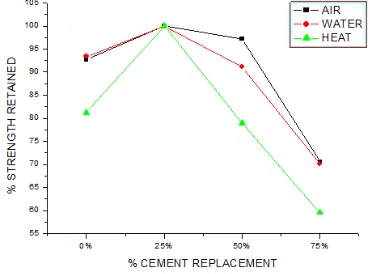
[image:6.612.219.383.158.284.2]1) Accelerated Curing: The specimens were heated in oven at 1100C for 5 hours. After that it was cooled at room temperature for some time. Then compression test was done.
Fig 5 Compressive strength of concrete with accelerated curing
From fig 5, it can be found that the compression strength of concrete obtained by accelerated curing gives 65% of the actual strength
obtained at 28th day. This is due to the faster hydration reaction of the cement.
B. Split Tensile test
The specimens with varying dosages of GGBFS and with different curing conditions were tested for split tensile strength at 28 days of curing and the result is shown below.
Fig 6 Split tensile strength of concrete at 28th day
From fig 6, it can be inferred that there is an increase in the split tensile strength upto 25% cement replacement. 50% cement replacement gives tensile strength slightly lower than the control mix. Beyond that the strength decreases regardless of the curing type used.
C. Permeability test
[image:6.612.215.400.385.522.2]Fig 7 Permeability values of concrete at 28th day
From fig 7, it can be noticed that the permeability values decrease with increasing percentage of cement replacement for both the curing types. This is due to the decrease in the pore diameter when ground granulated blast furnace slag is increased.
VI.CONCLUSIONS
The influence of curing types along with the use of ground granulated blast furnace slag was investigated. The following conclusions can be derived:
A. Workability of the concrete is increased as the % cement replacement is increased.
B. The compressive strength obtained for 25% cement replacement gave the highest value. So using GGBFS as a cement
replacement can help in reducing the cost of construction.
C. Concretes with 50% cement replacement showed compressive strength similar to that of the control mix. The compressive
strength of concrete decreased when cement replacement was above 50%.
D. It was found that the compressive strength obtained at the early stage by accelerated curing showed 65% strength of the
concrete achieved at 28th day.
E. The permeability of the cubes decreased as the percentage cement replacement increased.
VII. ACKNOWLEDGMENT
I thankfully acknowledge Prof. Mini M.I, Head of Department, Civil Engineering and Dr. Laju Kottalil, P. G. Coordinator, Department of Civil Engineering for their valuable support.
I express my deep and sincere gratitude to my guide, Mr. Basil Sabu, Asst. Professor, Dept. of Civil Engineering, for his valuable guidance and kind co-operation during my thesis work.
REFERENCES
[1] Xiaoyan Huang, Zhongjie Wang, Ying Liu, Wentao Hu, Wen Ni, On the use of blast furnace slag and steel slag in the preparation of green artificial reef
concrete, Construction and Building Materials Vol.112, 2016, pp 241–246
[2] Mike Otieno , Hans Beushausen, Mark Alexander, Effect of chemical composition of slag on chloride penetration resistance of concrete, Cement &
Concrete Composites Vol.46, 2014, pp 56–64
[3] How-Ji Chen , Shao-Siang Huang , Chao-Wei Tang , M.A. Malek , Lee- Woen Ean, Effect of curing environments on strength, porosity and chloride
ingress resistance of blast furnace slag cement concretes: A construction site study,Construction and Building Materials Vol.35, 2012, pp 1063–1070
[4] Qingtao Li , Zhuguo Li , Guanglin Yuan, Effects of elevated temperatures on properties of concrete containing ground granulated blast furnace slag as
cementitious material, Construction and Building Materials Vol.35, 2012, pp 687–692
[5] Othmane Boukendakdji , El-Hadj Kadri , Said Kenai, Effects of granulated blast furnace slag and superplasticizer type on the fresh properties and
compressive strength of self-compacting concrete, Cement & Concrete Composites Vol.34, 2012, pp 583–590
[6] Ali Nazari, Shadi Riahi, Splitting tensile strength of concrete using ground granulated blast furnace slag and SiO2 nanoparticles as binder, Energy and
Technology (IJRASET)
[7] Corina-Maria Aldea, Francis Young, Kejin Wang, Surendra P.Shah, Effects of curing conditions on properties of concrete using slag replacement,
Cement and Concrete Research Vol.30, 2000, pp 465-472
[8] Evi Aprianti, Payam Shafigh, Rodiah Zawawi, Zahiruddin Fitri Abu Hassan, Introducing an effective curing method for mortar containing high volume
cementitious materials, Construction and Building Materials Vol.107, 2016, pp 365–377
[9] Suchita Hirde and Pravin Gorse, Effect of addition of ground granulated blast furnace slag on mechanical properties of fiber reinforced concrete, Cement
and Concrete Research Vol. 5, 2015, pp 1677- 1682
[10] Elke Gruyaert, Philip Van den Heede, Nele De Belie, Carbonation of slag concrete: Effect of cement replacement level and curing on carbonation
coefficient – Effect of carbonation on pore structure, Cement & Concrete Composites Vol. 35, 2013, pp 39-48
[11] S. Arivalagan, Sustainable studies on concrete with GGBFS as a replacement material in cement, Energy and Buildings Vol.8, 2014, pp 1-8
[12] Shariq M., Prasad J and Ahuja A.K., Strength development of cement mortar and concrete incorporating GGBFS, Building and Housing, Vol. 9, 2008, pp
61-74
[13] A. Jaya Prithika, S.K. Sekar, Mechanical and fracture characteristics of eco-friendly concrete produced using coconut shell, ground granulated blast
furnace slag and manufactured sand, Construction and Building Materials Vol. 103, 2016, pp 1-7
[14] A.S. Al-Gahtani, Effect of curing methods on the properties of plain and blended cement concretes, Construction and Building Materials Vol. 24, 2010.