FORMULATION DEVELOPMENT AND EVALUATION OF
UBIDECARENONE CHEWABLE TABLETS
A dissertation submitted to
THE TAMILNADU DR. M.G.R. MEDICAL UNIVERSITY CHENNAI – 600 032
in partial fullfillment of the requirements for the award of degree of MASTER OF PHARMACY
IN
PHARMACEUTICS
Submitted by Reg. No. 26108304
under the guidance of
Mrs. S. Daisy Chellakumari M.Pharm., (Ph.D.)
Tutor in Pharmacy Department of Pharmaceutics
COLLEGE OF PHARMACY MADRAS MEDICAL COLLEGE
DEPARTMENT OF PHARMACEUTICS
COLLEGE OF PHARMACY
MADRAS MEDICAL COLLEGE
CHENNAI – 600 003
DATE:
This is to certify that the dissertation entitled “Formulation Development and
Evaluation of Ubidecarenone Chewable Tablets” submitted by the candidate bearingRegister No. 26108304 for The Tamil Nadu Dr. M.G.R. Medical University examinations.
Dr. A. Jerad Suresh, M.Pharm., Ph.D.
Principal
College of Pharmacy
Madras Medical College
Chennai - 03
CERTIFICATE
This is to certify that the dissertation entitled “Formulation Development
and Evaluation of Ubidecarenone Chewable Tablets” submitted by the candidate
bearing Reg. No. 26108304 in partial fulfillment of the requirements for the award of the
degree of MASTER OF PHARMACY in PHARMACEUTICS by The Tamil Nadu
Dr.M.G.R. Medical University is a bonafide work done by him during the academic year
2011-2012.
Place: Chennai
Prof. K. Elango, M.Pharm., (Ph.D.)
Professor and Head
Department of Pharmaceutics
College of Pharmacy
Madras Medical College
Chennai – 03
CERTIFICATE
This is to certify that the dissertation entitled “Formulation Development
and Evaluation of Ubidecarenone Chewable Tablets” submitted by the candidate
bearing Reg. No. 26108304 in partial fulfillment of the requirements for the award of the
degree of MASTER OF PHARMACY in PHARMACEUTICS by The Tamil Nadu
Dr.M.G.R. Medical University is a bonafide work done by him during the academic year
2011-2012.
Place: Chennai
Mrs. S. Daisy Chellakumari, M.Pharm., (Ph.D.)
Tutor in Pharmacy
Department of Pharmaceutics
College of Pharmacy
Madras Medical College
Chennai – 03
CERTIFICATE
This is to certify that the dissertation entitled “Formulation Development
and Evaluation of Ubidecarenone Chewable Tablets” submitted by the candidate
bearing Reg. No. 26108304 in partial fulfillment of the requirements for the award of the
degree of MASTER OF PHARMACY in PHARMACEUTICS by The Tamil Nadu
Dr.M.G.R. Medical University is a bonafide work done by him under my guidance during
the academic year 2011-2012.
Place: Chennai
ACKNOWLEDGEMENT
It is my privilege to express my gratitude and heartfelt thanks to my esteemed Principal Dr. A. Jerad Suresh, M.Pharm., Ph.D., College of Pharmacy, Madras Medical College, Chennai - 03.
I humbly show my gratitude and sincere regards to thank my Professor Mr.K.Elango, M.Pharm., (Ph.D.), Head, Department of Pharmaceutics, College of Pharmacy, Madras Medical College, Chennai, for his valuable suggestion and support.
I express my whole hearted thankfulness to my guide Mrs. S. Daisy Chellakumari M.Pharm., (Ph.D.), Tutor in Pharmacy, Department of Pharmaceutics, College of Pharmacy, Madras Medical College, Chennai-03 for providing indispensable guidance, tremendous encouragement at each and every step of this dissertation work.
I express my sincere thanks to Mr. J. Jayaseelan, B.Pharm, MBA, President, EDICT Pharmaceuticals Pvt. Limited (presently as PAR Formulations), Chennai for giving me an opportunity to work and learn in their organization.
I also take this opportunity to thank Mr. Muthusamy “Samy” Shanmugam, MS, R.Ph., Chief Executive Officer, EDICT Pharmaceuticals Pvt. Limited (presently as PAR Formulations), Chennai for giving me an opportunity to work and learn in their organization.
I owe my gratitude and sincere regards to Mr. J.M. Packiaraj, M.Pharm., (Ph.D.) Principal Scientist, EDICT Pharmaceuticals Pvt. Limited (presently as PAR Formulations), Chennai for providing guidance during my project work.
I express my beloved thanks to my industrial guide Mr. C.S. Venkateswaran, M.Pharm., (Ph.D.) Scientist, EDICT Pharmaceuticals Pvt. Limited (presently as PAR Formulations), Chennai for providing valuable suggestions during my project work. Without his critical advice and deep-rooted knowledge, this work would not have been a reality.
A special word of thanks goes to all the non-teaching staff members Mr. R.Marthandam R, Mr.G. Arivazhagan, Mrs. S. Subbulakshmi, Mrs.R. Shankari
and Mr.E. Lakshmipathy, Department of Pharmaceutics, College of Pharmacy, Madras Medical College, Chennai – 03.
Words can’t express my sincere gratitude and obligation to my dear X-Calibur
batchmates, Anglina Jeniffer Samy, M.Bhavani, P.Nithin kumar, S.Rekha, K.Saravanan, P. Subramani, A.Uma Maheswari, S.Vignesh Babu and my dear friends
for giving me constant encouragement and suggestions to complete my project.
I wish to extend my special thanks to my friend R.Saranya for her kind help to complete my project work.
I extend my cordial thanks to my seniors and to my PG and UG juniors who helped me in different ways and for their kind support and co-operation.
DEDICATED
DEDICATED
DEDICATED
DEDICATED TO
TO
TO
TO
MY PARENTS
MY PARENTS
MY PARENTS
MY PARENTS
&
&
&
&
LIST OF ABBREVIATIONS
UB Ubidecarenone
NC No Change
ASTM American Standards for Testing Materials
KF Karl Fischer
HDPE High Density Poly Ethylene
Min Minutes
Sec Seconds
RH Relative humidity
PP Polypropylene
NMT Not more than
NLT Not less than
SLS Sodium lauryl sulphate
cc Cubic Centimeter
Kp Kilopond
USP United States Pharmacopoeia BP British Pharmacopoeia JP Japanese Pharmacopoeia
mL Millilitre
SD Standard deviation
mg Milligram
RS Reference Standard
CoQ10 Coenzyme Q10
S.NO TABLE OF CONTENTS PAGE NO.
1 Introduction 1-15
2 Literature Review 16-25
3 Aim and Plan of the work 26
4 Marketed Formulations of Ubidecarenone 27
5 Drug Profile 28-34
6 Excipient Profile 35-45
7 Disease Profile 46-50
8 Materials and Methods 51-57
9 Formulation Development 58-67
10 Evaluation of Tablets 68-72
11 Results and Discussion 73-89
12 Summary and Conclusion 90-91
Department of Pharmaceutics, Madras Medical College Page 1
1. INTRODUCTION
1.1 SOLID ORAL DOSAGE FORMS
1Oral solid dosage forms such as tablets and hard gelatin capsules, which have been in existence since 19th century, remain the most frequently used dosage forms. Oral route of delivery is a route that the patient understands and accepts. For the manufacturer
solid oral dosage forms offer many advantages: they utilize cheap technology, are generally the most stable forms of drugs, are compact and their appearance can be modified to create brand identification.
Tablets and capsules are very versatile. When formulating any pharmaceutical dosage form, it is important to remember that there is equilibrium between the bioavailability of the product, its chemical and physical stability and the technical
feasibility of producing it.
Stability
Bioavailability Technical feasibility
Any change made to a formulation in an attempt to optimize one of these properties is likely to have an effect on the other two parameters, which must be considered. This is especially true of immediate-release solid dosage forms. Many of the
properties required to optimize the bioavailability through rapid disintegration and dissolution of the active constituent, for example small particle size must be balanced with the manufacturability, where the fluidity and compatibility of a powder will often be enhanced by an increase in particle size. Tablets and hard gelatin capsules form the vast majority of solid dosage forms on the market. While the actual processes involved of
Department of Pharmaceutics, Madras Medical College Page 2 1.2 TYPES OF SOLID DOSAGE FORMS 1
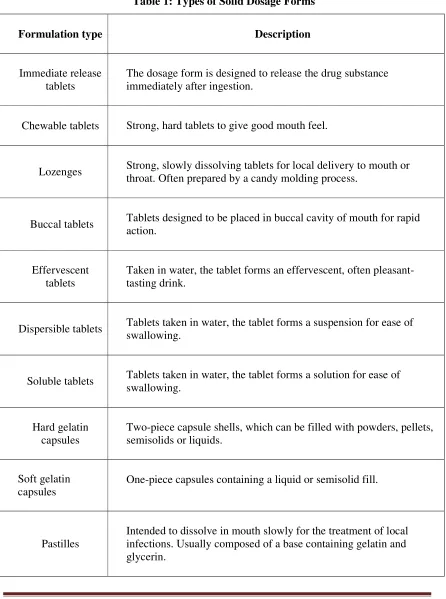
[image:13.612.88.534.136.735.2]There are many different types of tablets which can be designed to fulfill specific therapeutic needs.
Table 1: Types of Solid Dosage Forms
Formulation type
Description
Immediate release tablets
The dosage form is designed to release the drug substance immediately after ingestion.
Chewable tablets Strong, hard tablets to give good mouth feel.
Lozenges Strong, slowly dissolving tablets for local delivery to mouth or throat. Often prepared by a candy molding process.
Buccal tablets Tablets designed to be placed in buccal cavity of mouth for rapid action.
Effervescent tablets
Taken in water, the tablet forms an effervescent, often pleasant-tasting drink.
Dispersible tablets Tablets taken in water, the tablet forms a suspension for ease of swallowing.
Soluble tablets Tablets taken in water, the tablet forms a solution for ease of swallowing.
Hard gelatin capsules
Two-piece capsule shells, which can be filled with powders, pellets, semisolids or liquids.
Soft gelatin capsules
One-piece capsules containing a liquid or semisolid fill.
Pastilles
Department of Pharmaceutics, Madras Medical College Page 3
1.3 Advantages of solid oral dosage forms
2They are unit dosage forms and offer the greatest capabilities of all oral dosage forms
for the greatest dose precision and least content variability.
Low cost among all dosage forms.
They are lightest and most compact dosage forms.
They are easiest and cheapest to package and ship.
Product identification requires no additional processing steps when employing an
embossed or monogrammed punch face.
Easy large scale production.
They have the best combined properties of chemical, mechanical and microbiological stability among all dosage forms.
Drugs with bitter taste, objectionable odour, sensitivity towards oxygen or hygroscopic
nature may require encapsulation/entrapment prior to compression or coating of tablets is required. In such cases, the capsule could be prepared.
1.4 Disadvantages
Some drugs having resistance for compression into dense compacts owing to their
amorphous nature or flocculent and low density properties.
Drugs with bitter taste, objectionable odour, sensitivity towards oxygen or hygroscopic
nature may require encapsulation or coating of tablets.
Department of Pharmaceutics, Madras Medical College Page 4
Fig 1: Various Granulation Techniques
1.5 PROCESS INVOLVED IN MANUFACTURING OF ORAL SOLID DOSAGE
FORMS 3Tablet formulations have been prepared by one of two methods:
1. Direct compression2. Granulation.
1.5.1 DIRECT COMPRESSION
Direct compression is the term used to define the process where powder blends of the drug substance and excipients are compressed on a tablet machine. There is no mechanical treatment of the powder apart from a mixing process. It was only used for inorganic materials such as potassium bromide. Today, within the pharmaceutical industry,
Department of Pharmaceutics, Madras Medical College Page 5 1.5.2 Advantages
Simplicity and subsequent economy.
The omission of a drying step results in lower energy consumption.
No need of granulators, driers.
Savings in labour cost as well as time.
Stability of certain drugs can be improved by the elimination of a wetting and drying
process when formulating drugs that are thermolabile or moisture sensitive.
1.5.3 Disadvantages
It cannot be used for all drug substances.
The technique depends on the major components of the formulation having appropriate
flow and compaction properties.
Low-dose drugs by direct compression are related to achieving and maintaining a
homogeneous mix.
1.5.4. GRANULATION4
Granulation is the most widely used technique to prepare powders for compaction. A number of methods can be used to achieve the agglomeration.
Granulation is classified as
Wet granulation - where a liquid is used to aid the agglomeration process.
Dry granulation - where no liquid is used.
The purpose of granulating is to transform the powdered starting material into
granules that will run smoothly on a tablet machine. The granulation process usually involves the addition of a polymeric binder that sticks the individual particles together. The polymers used as binders are usually hydrophilic in nature. This can have a beneficial effect on the dissolution of hydrophobic drugs. During the granulation process, a film of hydrophilic polymer will form over the surface of hydrophobic drug particles, which will
aid wetting.
1.5.5 WET GRANULATION
Department of Pharmaceutics, Madras Medical College Page 6 process. In most cases, the liquid used is water, although in certain circumstances organic solvents such as ethanol or ethanol/water mixtures are used. Non aqueous granulation will be considered when the active substance is particularly unstable in the presence of water, when water will not wet the powder or possibly if the drug substance forms a significant portion of the granulate and demonstrates extreme solubility in aqueous media and control of the granulation process becomes difficult due to the occurrence of significant
dissolution.
There are a number of approaches to wet granulation used in the Pharmaceutical industry, they all share the following basic principles
Dry mixing
The starting materials are mixed together. Prior to mixing, the ingredients may be deagglomerated by a milling or sieving process. If the granulate has a low drug content, the active substance may be premixed with one of the ingredients prior to being added to the granulation vessel to ensure good content uniformity.
Addition of granulating liquid
The granulating fluid is added to the dry ingredients and mixed to form a wet mass. The mixing of the fluid with the dry ingredients leads to agglomeration of the powder. This agglomeration can be controlled by altering the amount of fluid added, the intensity of the mixing and the duration of the mixing. Depending on the state of
agglomeration achieved, this stage may be followed by a wet sieving process to break up the larger agglomerates.
Drying
The fluid is removed by drying process.
Milling
Department of Pharmaceutics, Madras Medical College Page 7 1.5.6 DRY GRANULATION 5
Dry granulation involves the aggregation of particles by high pressure to form bonds between particles by virtue of their close proximity. Two approaches to dry granulation are used in the pharmaceutical industry
Slugging
Roller compaction.
Slugging
Granulation by slugging is the manufacture of large compacts by direct compression. The slugs produced are larger than tablets and are often poorly formed
tablets exhibiting cracking and lamination. As with tablets, it may be necessary to add a lubricant to prevent the compacts sticking to the punches and dies. The compressed material is broken up and sieved to form granules of the appropriate size. The granules are then blended with disintegrant, lubricant and compressed on a normal tablet punching machine.
Roller compaction
In roller compaction, the powder is compacted by means of pressure rollers. It is fed between two cylindrical rollers, rotating in opposite directions. By means of a hydraulic ram forcing one of the rollers against the other, machine is capable of exerting known fixed pressures on any powdered material that flows between the rollers. Powdered
Department of Pharmaceutics, Madras Medical College Page 8 1.6 CHEWABLE TABLETS6
Chewable tablets are tablets that are required to be broken and chewed in-between the teeth before ingestion. These tablets are given to children who have difficulty in swallowing and to the adults who dislike swallowing. Chewable tablets are chewed and broken into smaller pieces prior to swallowing and are not to be swallowed intact. In this way, the time required for disintegration is reduced and the rate of absorption of the
medicament may increase. For the preparation of chewable tablets, mannitol is used as the base. These tablets should have acceptable taste and flavour. They should disintegrate in a short time and produce cool sweet taste.
Advantages
Better bioavailability through bypassing disintegration and perhaps enhancing
dissolution.
Patient convenience through the elimination of the need of water for swallowing
(chewable tablets can be taken at any places even if water is not available).
Possible use as a substitute for liquid dosage forms where rapid onset of action is
desired.
Minimized first pass effect.
Improved patient acceptance especially in paediatrics through pleasant taste and
product distinctiveness.
For both physiological and psychological reasons, children up to the young teens
usually have trouble in swallowing tablets and capsules. In such cases, chewable tablets are preferable because of their patient acceptability (palatability) and better stability.
Easily accessible for self-medication.
Possible to achieve an effective taste masking along with a pleasant mouth feel.
Disadvantages
Extremely bad tasting drugs cannot be formulated as chewable tablets.
Drugs that have extremely high dosage levels are difficult to formulate.
Department of Pharmaceutics, Madras Medical College Page 9 Requirements Less grittiness.
Creamier mouth feel.
Improved overall palatability (Good taste and mouth feel).
Acceptable bioavailability and bioactivity.
Acceptable stability and quality.
Economical formula and process.
1.6.1 FORMULATION TECHNIQUES 7
COATING BY WET GRANULATION
Microencapsulation
Microencapsulation is a method of coating drug particles or liquid droplets with edible polymeric materials, thereby masking the taste and forming relatively free flowing microcapsules of 5 – 5000µm size. The most common method for taste masking application is phase separation or coacervation technique. The resultant coated granules
not only mask the taste of a drug but also minimize the physical and chemical incompatibility between ingredients. However, this method is more expensive and requires specialized equipment and knowledgeable personnel. Coagulable water soluble egg albumin is used as coating medium for masking the taste of erythromycin.
Solid dispersions
Bad tasting drugs can be prevented from stimulating the taste buds by adsorption onto substrates capable of keeping the drugs adsorbed while in the mouth but releasing them eventually in the stomach or gastrointestinal tract.
ADSORBATE FORMATION TECHNIQUES Solvent method
Department of Pharmaceutics, Madras Medical College Page 10
Melting method
The drugs and a carrier are melted together by heating. The molten mixture is then cooled and rapidly solidified in an ice bath with vigorous stirring. The product is then pulverized and sized. Heat labile drugs, volatile drugs and drug that decompose on melting are unsuitable for this method. The method is simple with low cost and no problem of residual solvents as in solvent evaporation method.
Ion Exchange
In this technique, the ion exchange materials acts as a drug carrier that helps in binding of drugs into an insoluble polymeric matrix and can effectively mask the problems
of taste and odour in drugs to be formulated as chewable tablets.
Spray congealing and spray coating
The process of spray congealing involves cooling of melted substances in the form of fine particles during their travel from a spray nozzle into the spraying chamber held at a temperature below their melting point. If slurry of drug material insoluble in a
melted mass is spray-congealed, discrete particles of the insoluble material coated with the congealed substance is obtained. The process of spray coating involves the spraying of a suspension of the drug particles in a solution of the coating material through an atomizer into a high-velocity stream of warm air. The coarse droplets delivered by the atomizer consist of drug particles enveloped by coating solution. As the solvent evaporates, the
coating material encapsulates the drug particle.
Formation of different salts or derivatives
In this, an attempt is made to modify the chemical composition of the drug substance itself, to render it less soluble in saliva and thereby less stimulating for the taste buds or to obtain a tasteless or less bitter form.
Use of amino acids and protein hydrolysates
Department of Pharmaceutics, Madras Medical College Page 11
Inclusion complexesIn inclusion complex formation, the drug molecule (guest molecule) fits into the cavity of a complexing agent (host molecule) forming a stable complex. The complex is capable of masking the bitter taste of the drug. The most commonly used complexing agent is cyclodextrin.
Molecular complexesMolecular complex formation involves a drug and a complexing organic molecule. In this, masking of bitter taste or odour of drugs is achieved by forming complexes that would lower the aqueous solubility of the drug and thus the amount of drug in contact with the taste buds.
1.6.2 ORGANOLEPTIC CONSIDERATIONS 6
Taste
From the perspective of consumer acceptance, taste is almost certainly the most important parameter for the evaluation of chewable tablets. Taste is a combination of the perceptions of mouth-feel, sweetness and flavour. Taste is a sensory response resulting
from a stimulation of the taste buds on the tongue. There are four basic types of taste: salty, sour, sweet and bitter. Salty or sour taste is derived from substances capable of ionizing in solution.
Many organic medications exhibit a bitter response even though they may not be capable of ionizing in an aqueous medium. Substances incapable of producing a sensory stimulation of the taste buds are referred to as bland or tasteless. Sweetness at an
appropriate level is a necessary background to a flavour. The primary contributors to sweetness in a chewable tablet are the drug, natural sweeteners and artificial sweetness enhancers that may be incorporated in the formulation.
AromaPleasant smells are generally referred to as aromas.
Department of Pharmaceutics, Madras Medical College Page 12
Mouth feel
Mouth feel is affected by the heat of solution of the soluble components (negative heat preferable), smoothness of the combination during chewing and hardness of the tablet. These factors are directly and almost entirely related to the active ingredient and major excipients. The term mouth feel is related to the type of sensation or touch that a tablet produces in the mouth upon chewing. It has nothing to do with chemical stimulation
of olfactory nerves or taste buds. However, for a formulation to be successful, the overall effect in the mouth is important.
After effects
The most common after effect of many compounds is after taste. For example, some iron salts have a rusty after taste; saccharin in high amounts tends to leave a bitter after taste. Another common after effect is a sensation of numbness of a portion or the whole surface of the tongue and mouth.
Flavouring
The term flavour generally refers to a specific combined sensation of taste and smell (olfaction). Flavour is imparted in a chewable tablet formulation by the use of various synthetic and natural flavouring compounds. Flavours are available as either liquids or spray-dried, free-flowing, fine granules. Liquid flavour compounds can be added to dry granules obtained from wet granulation or to dry granulation blends as fine spray.
Spray-dried flavour granules can also be added directly to dry granules obtained from wet granulation or to direct compression blends.
Colouring
For aesthetic appeal and product differentiation, chewable tablets are often coloured. Colorants can also be used to mask unappealing natural colour, resulting from
Department of Pharmaceutics, Madras Medical College Page 13
Chewability
Acceptability of chewable dosage forms also depends on the chewability of the product. Chewability of a chewable dosage form may be defined as effortless chewing of the product with no desirable gumminess, stickiness, chalkiness or grittiness, yet coupled with a pleasant cooling sensation in the mouth. These properties are imparted by the use of excipients that have inherently good mouth feel and chewability characteristics. Excipients
with such properties include mannitol and blends of mannitol, sorbitol, fructose and sucrose.
1.6.3 Evaluation
Physical examination
Hardness
Friability
Dosage uniformity
Disintegration
Assay for drug content
Dissolution
Consumer acceptance simulation testing
1.6.4 Stability Testing 6
Stability testing of dosage forms or drug products is carried out to evaluate time dependent changes, if any occurring within the dosage forms. Stability testing may be
either accelerated or real time under ambient conditions. Accelerated storage conditions include high temperatures, high relative humidity and high light intensities. The stability testing of chewable tablets would include the following test:
Active drug content determination.
Changes in physical characteristics of the tablets.
Changes in tablet hardness, friability, dissolution rate/extent of dissolution and
increase in disintegration time.
Moisture content of tablets.
Department of Pharmaceutics, Madras Medical College Page 14
1.6.5 Special problems encountered with Chewable Tablets
Due to the particular attributes, chewable tablets present several special difficulties with respect to the formulation, manufacture, packaging and evaluation.
Formulation
The associated attributes of a pleasant taste with matching colour, smoothness,
mouth feel and chewability carry with them unusual formulation requirements compared to the tablets intended to be swallowed. The challenge of converting usually bad tasting (bitter, acidic or chalky) drugs into pharmaceutically elegant, good tasting dosage forms requires the application of highly specialized formulation skill. Flavour selection demands
care in determining whether to mask or enhance the taste of the drug. Additionally, flavours should rarely be used singly; rather flavour blends can be used. Colour incorporation in chewable tablet formulation may be either by the use of dyes in wet granulation or by the use of lakes in direct compression or as additions to wet granulated materials after drying. The use of light or pastel colours in low concentration appropriately incorporated is critical to the overall appearance and acceptability of the product.
Formulating for smoothness and mouth feel involves not only judicious excipient selection but also careful process development in establishing such parameters such as particle size, moisture content and compressional force. The importance of tablet hardness and friability cannot be over emphasized; minor changes in these variables may result in significant differences in perceived satisfaction during chewing. The tablets must be hard enough for
Department of Pharmaceutics, Madras Medical College Page 15
Manufacturing
The four important aspects of chewable tablet manufacture related to the following:
Proper incorporation of colouring agent.
Assurance of necessary particle size distribution.
Maintenance of correct moisture content.
Achievement of proper tablet hardness.
The method and timing for the addition of flavour and colour must be determined if wet granulation is being used. Because most flavour substances are volatile,
Department of Pharmaceutics, Madras Medical College Page 16
2. LITERATURE REVIEW
2.1
Literature Review for Chewable Tablets
Swati Jagdale et al.8 formulated the chewable tablets of levimasole to overcome the difficulty in swallowing for paediatric and geriatric patients. Chewable tablets were prepared by using lactose or mannitol along with sodium starch glycolate in varying concentrations. Sodium saccharin and vanilla were used as sweetening agent and flavouring agent respectively. From the disintegration studies, it was observed that the formulation having no or less concentration of sodium starch glycolate shows increase in disintegration time. It was observed that the formulation containing lactose shows less disintegration time than formulation containing mannitol.
Hiroyuki Suzuki et al.9 developed an oral acetaminophen chewable tablets with inhibited bitter taste. Various formulations were developed using corn starch/lactose, cacao butter and hard fat (Witepsol H-15) as matrix bases and sucrose, cocoa powder and Benecoat BMI-40 as corrigents against bitter taste. The bitter taste intensity was evaluated using volunteers by comparison of test samples with standard solutions containing quinine at various concentrations. As a result the tablets made of Witepsol H-15/Benecoat BMI-40/sucrose, of Witepsol H-15/cocoa powder/sucrose and of Witepsol H-15/sucrose best masked the bitter taste so that they were tolerable enough to chew and swallow. The dosage forms masked the bitter taste well and showed good drug release indicating little change in bioavailability by masking.
Kathiresan K et al.10 formulated the loratadine chewable tablet 5mg to improve the patient acceptance in children. In this, five batches of loratidine tablets were formulated and evaluated. Various parameters like thickness, weight variation, friability, hardness, content uniformity of all formulations were studied. In invitro dissolution study, formulation 5 showed comparable release with innovator. Three month stability study of formulation 5 showed that there was no significant change in physical parameters, drug content and dissolution profile. So this study concluded that formulation 5 containing Avicel CE 15 and starch paste showed better characteristics than all other formulations.
Department of Pharmaceutics, Madras Medical College Page 17
desk reference, IMS Health National Prescription Audit Plus. The results of this study showed that more than 60 chewable tablet formulations are approved for use in United States of America. The advantages of chewable tablets include palatability, stability, precise dosing, portability and ease of delivery. From the available literature suggests that chewable were safe, well tolerated alternative to traditional paediatric drug formulations and offer significant advantages in children 2 years of age and older.
Hiraku Onishi et al.12 developed acetaminophen chewable tablets with suppressed bitterness and improved oral feeling by examination of hard fats as the matrix base and of sweetening agents as corrigents. Witepsol H-15, W-35, S-55, E-75, E-85 and Witocan H/ Witocan 42/44 were used for improved oral feeling. Sucrose, xylitol, saccharin, saccharin sodium, aspartame and sucralose were used as sweetening agents and applied alone or with Benecoat BMI-40 or cocoa powder. As a result of this study it was concluded that Witocan H tablet with Sc1-B5 is suggested as the best acetaminophen chewable tablet, exhibiting suppressed bitterness, low sweetness, improved oral feeling and good drug release.
Matthew P Millarney et al.13 studied the powder flow compact mechanical properties of sucrose and three high-intensity sweeteners used in chewable tablets. Sucrose, acesulfame potassium, saccharin sodium and aspartame are common pharmaceutical sweeteners used in solid dosage forms. These sweeteners were evaluated to determine the particle size, shape and true density. Powder flow, cohesivity and other mechanical properties were measured. Among these sweeteners, sucrose and acesulfame potassium showed excellent flowability and marginal mechanical property whereas saccharin sodium and aspartame demonstrated poor flowability and superior compact strength than the other. The study concluded that the sweetener selection should be appropriate to the done according the tableting process.
Department of Pharmaceutics, Madras Medical College Page 18
was based on the determination of a CT dose that would provide an overall systemic exposure to montelukast in children similar to that in adults who receive a 10-mg FCT dose. A 5 mg chewable tablet yielded a comparable single-dose area under the plasma concentration-time curve profile to that of the adult 10-mg FCT dose and therefore it was selected as the paediatric dose for children aged 6 to 14 years with asthma. Subsequently, 2 studies of efficacy and tolerability validated the choice of the 5-mg CT dose.
Patsalos PN et al.15 compared the efficacy and tolerability of chewable carbamazepine to conventional carbamazepine in patiens with epilepsy. Thirty patients were studied. Duration of epilepsy was 21-68 years (median 34 years). Conventional and chew tablets were given and their serum concentration is measured from time to time. As a result of study it was concluded that chew tabs were essentially equivalent to the conventional formulation in efficacy and tolerability. After 12 weeks treatment, 19 patients preferred the chewable formulation.
Gary M Landsberg et al.16 studied the effectiveness of fluoxetine chewable tablets in the treatment of canine separation anxiety (SA) signs such as excessive salivation, inappropriate defecation, vocalization and urination. The study was carried as multi-center, placebo controlled, double blind, randomized parallel- arm study with 208 client owned dogs diagnosed with SA. As a result of this study it was conclude that fluoxetine chewable tablets at 1-2mg/kg/day showed some efficacy in improving overall separation anxiety severity scores in dogs. Fluoxetine chewable tablets represent a viable therapy for a condition that veterinary behaviourists rank as the second most common canine behavioural disorder.
Thomas J Nolan et al.17 studied the efficacy of an ivermectin/pyrantel pamoate chewable formulation against the canine hookworms, uncinaria stenocephala and ancylostoma caninum. This combination is for monthly use as a heartworm preventative and for treatment and control of canine hookworms. The formulation was found to be effective against both species of hook worms in experimentally infected dogs. No adverse effects was observed in any dog during the study by this drug combination.
2.2 Literature Review for Ubidecarenone
Department of Pharmaceutics, Madras Medical College Page 19
but it exhibited poor stability. Then solid dispersion of CoQ10, Poloxamer 407 and Aerosil 200 (colloidal silicon dioxide) in the weight ratio 1:5:6 was formulated which exhibited improved stability during one month stability test, also solid dispersion containing Aerosil 200 showed enhanced drug release as well as dissolution rate of CoQ10. From the study it was concluded that solid dispersion formulation of CoQ10 with poloxamer 407 and Aerosil 200 possess enhanced solubility and dissolution rate of CoQ10 with good flowability and cost effectiveness.
Kommuru TR et al.19 formulated a self emulsifying drug delivery systems (SEDDS) of Coenzyme Q10 and its bioavailability is compared with powder formulation of CoQ10. Four types of SEDDS were prepared using two oils (Myvacet9-45 and Captex-200), two emulsifiers (Labrafac CM-10 and Labrasol) and a cosurfactant (lauroglycol). In all the formulations the level of CoQ10 was fixed at 5.66% w/w of the vehicle and the formulations are evaluated by droplet size analysis and pseudo ternary phase diagrams were constructed to find out the efficient self-emulsification region. Then the optimized formulation containing Myvacet 9-45 (40%), Labrasol (50%) and lauroglycol (10%) was selected and its bioavailability is compared with powder formulation of CoQ10. SEDDS shown improved bioavailability than powder formulation.
Sun sang kwon et al.20 has done the preparation, characterization of Coenzyme Q10 loaded Poly (methyl methacrylate) nano particles by a new emulsification process based on microfluidization and solvent evaporation method. The mean diameter of nano particles was found out by dynamic light scattering and transmission electron microscopy. The size of the particles depend upon the surfactants used and the recycling number of the microfluidization process. By 1H NMR analysis the drug loading is estimated and it is found out to be above 95%. CoQ10 at its melting point 48°C formed a crystal structure within the polymer matrix and it was confirmed by differential scanning calorimetry. From the study it was concluded that polymer nanoparticles can be utilized as an effective means to stabilize chemically unstable drugs as well as to solubilise poorly soluble drugs.
Department of Pharmaceutics, Madras Medical College Page 20
with no appreciable changes in entrapment efficiency. Then the intestinal uptake of CoQ10 as a suspension in carboxymethylcellulose (CMC), a commercial formulation and the developed nano particulate formulation was studied comparatively. The results shown that the developed nanoparticulate formulation had improved efficacy at a 60% lowered dose as compared to CoQ10 suspension and superior efficacy than the commercial formulation at an equal dose.
Effat Sadat et al.22 formulated and evaluated CoQ10 loaded solid lipid nanoparticles (SLN) cream and done a comparison study between simple cream of CoQ10, solid lipid nanoparticle alone and CoQ10 loaded solid lipid nanoparticles. Solid lipid nanoparticles of CoQ10 were formulated using high pressure homogenization method. The best formulation of SLN dispersion consisted of 13% lipid (cetyl palmitate or stearic acid), 8% surfactant (tween 80) and water. Stability tests, particle size analysis, differential scanning calorimetry, transmission electron microscopy and release study were conducted to find the best formulation. . In vitro release profiles of CoQ10 from simple cream, SLN alone, and CoQ10-loaded SLN cream showed prolonged release for SLNs compared with the simple cream, whereas there was no significant difference between SLN alone and SLN in cream. In vitro release studies also demonstrated that CoQ10-loaded SLN and SLN cream possessed a biphasic release pattern in comparison with simple cream. In vivo skin hydration and elasticity studies on 25 volunteers suggested good dermal penetration and useful activity of CoQ10 on skin as a hydrant and antiwrinkle cream.
Weis M et al.23 has carried out the comparitive study for bioavailability of four oral Coenzyme Q10-over trial. The included formulations were: a hard gelatin capsule containing 100 mg of CoQ and 400mg of Emcompress. Three soft gelatin capsules containing : 100mg of CoQ with 400mg of soy bean oil (Bioquinon); 100mg of CoQ with 20mg of polysorbate 80, 100mg of lecithin and 280mg of soy bean oil; and 100mg of CoQ with 20mg of polysorbate 80 and 380mg of soybean oil respectively. The result suggests that the soya bean oil suspension of CoQ has highest bioavailability.
Department of Pharmaceutics, Madras Medical College Page 21
physicochemical characterization, CoQ10-loaded NE systems exhibited negatively charged and highly stable dispersion with submicron diameter when they were dispersed in water. In DE systems, CoQ10 existed mainly as an amorphous form, and this could be attributed to the higher solubility and dispersibility as compared to the crystalline form. Considering significant increment of both Cmax and AUC of CoQ10, NE methodology could be the most effective among all formulations tested for the improvement of oral absorption of CoQ10.
Pariya Thanatuksorn et al.25 formulated CoQ10 with fats and emulsifiers to improve the bioavailability of CoQ10 and it was compared with that of a standard commercial product. Five commonly used fats (olive oil, safflower oil, coconut oil, butter and cocoa butter) four types of emulsifier (lecithin, monoglycerids, calcium stearoyo-2-lactate (CSL) and diacetyl tartaric acid esters of monoglycerides and two types of aqueous phase (distilled water with or without 8g/100g w/w skim milk). From the results it was found that oral bioavailability of the emulsified product was slightly greater than that of as standard commercial product.
Sarah Molyneux et al.26 studied the concentration response to the Coenzyme Q10 supplement Q-gel in human volunteers to identify the most effective dose Q-gel for use in supplementation studies. In this randomized cross over design, 8 young healthy male volunteers involved and they received single doses of 60,150 and 300mg of CoQ10 via Q-gel soft gel capsules. Blood samples were collected and analyzed for CoQ10. As a result of this study it was concluded that most efficacious single dose of Q gel is 200 mg and higher absorption is obtained using multiple smaller capsules.
Department of Pharmaceutics, Madras Medical College Page 22 Michael V Miles et al.28 compared the bioavailability of Coenzyme Q10 from the over-the-counter supplements which are solubilized and non-solubilized in nature. The product A (LiQ-10), B(Q-Nol) and the reference product C (UbiQ gel) were given to nine healthy adults in single 180 mg doses of each Coenzyme Q10 formulation at two week intervals. ANOVA comparison for maximum plasma concentrations (Cmax), time of
maximum concentrations (tmax), areas under the concentration (AUC) were done. The
results of this study showed that LiQ-10 has increased bioequivalence compared to the reference product but did not reach statistical significance. Q-Nol has increased bioavailability compared to the reference product.
Choi CH et al.29 has studied the relative bioavailability of Coenzyme Q10 emulsion and three liposome formulations after a single oral administration (60mg/kg) into rats. Emulsion was prepared using phospholipon 85G as emulsifier and three liposome formulations (neutral, anionic and cationic) were prepared by thin film hydration technique using phospholipon 85G, cholesterol and charge carrier lipids. Bioavailability of CoQ10 in emulsion was 1.5 to 2.6 fold greater than liposome formulations in terms of AUC and tmax was 3h for emulsion while for liposomes it was more than 6h. From the study it is suggested that bioavailability is a primary concern in selecting CoQ10 product especially when high plasma level is required in treatment of heart failure and parkinson’s disease.
Karen M Smith et al.30 studied the dose ranging and efficacy study of high dose Coenzyme Q10 formulations in huntington’s disease in R6/2 transgenic mouse model.
CoQ10 resulted in a marked improvement in motor performance and grip strength, with
reduction in weight loss, brain atrophy, and huntington inclusions in treated R6/2 mice.
From the study it was demonstrated that high-dose administration of CoQ10 exerts a
greater therapeutic benefit in a dose dependent manner in R6/2 mice than previously
reported and suggest that clinical trials using high dose CoQ10 in Huntington Disease
patients are warranted.
Terao K et al.31 studied the enhancement of oral bioavailability of Coenzyme Q10 by complexation with cyclodextrin in healthy adults. In this study bioavailability of CoQ10
with microcrystalline cellulose (CoQ10-MCC) is compared with
cyclodextrin(CoQ10-CD) in twenty two volunteers. Single dose of 150mg capsule containing 30mg of CoQ10
Department of Pharmaceutics, Madras Medical College Page 23
volunteers could be significantly enhanced by complexation with cyclodextrin, suggesting the potential use of cyclodextrin as formulation aid for orally administered CoQ10.
Abdel-azim et al.32 has done investigation to compare the bioavailability of three Coenzyme Q10 formulations in dogs using an open, randomized, multiple-dose cross over design. The formulations included a powder filled capsule (A,control) and two soft gelatin formulations (Q gel as water miscible of CoQ10,B and Q-Nol as the water miscible form of ubiquinol, the redudced form of CoQ10,C). Blood samples were collected for 72hr and plasma CoQ10 concentrations were determined by HPLC. Various parameters like AUC, Cmax, Tmax were calculated and compared statistically. From the investigation it was concluded that soft gelatin capsules containing water miscible CoQ10 formulations B (Q gel) and C(Q-Nol) were superior to powder filled formulations with regard to their biopharmaceutical characteristics.
Jing Zhang et al.33 studied about the effects of the molecular weight (Mw) and concentration of trimethyl chitosan (TMC) on Coenzyme Q10-loaded liposomes coated with trimethyl chitosan in selenite induced cataract. Particle size distribution and zeta potential was studied by transmission electron microscopy (TEM) and the entrapment efficiency was investigated. Then the precorneal residence time was studied in comparison with control group. In conclusion, the physical properties and precorneal retention time of liposomes could be modified with TMC and ophthalmic instillation of Coenzyme Q10 is able to retard selenite-induced cataract formation.
Anna Rita Fetoni et al.34 compared the effectiveness of CoQ10 with water soluble Coenzyme Q10 formulation (Q-ter) in a guinea pig model in preventing the noise induced hearing loss. CoQ10 was given intraperitoneally 1 h before and once daily for 3 days after pure tone noise exposure (6 kHz for 1 h at 120 dB SPL). Functional and morphological studies were carried out to find out the signs of apoptosis. Treatments decreased active caspase 3 expression and the number of apoptotic cells, but animals injected with Q-ter
showed a greater degree of activity in preventing apoptosis and thus in improving hearing.
These data confirm that solubility of Coenzyme Q10 improves the ability of CoQ10 in
preventing oxidative injuries that result from mitochondrial dysfunction.
Stephen T Sinatra 35 studied about the Coenzyme Q10 supplementation in the management of congestive heart failure. CoQ10 adjunctive therapy results to improve the
Department of Pharmaceutics, Madras Medical College Page 24 failure. But dosing, clinical application, bioavailability and dissolution of CoQ10 should
be considered and based on that Q10 formulation should be supplemented to the patients.
Clifford W Shults et al.36 investigated about the safety and tolerability of high dosages of Coenzyme Q10 in 17 patients with Parkinson’s disease. Escalating dosage of
Coenzyme Q10 -1200,1800, 2400, 3400mg/day with a stable dosage of vitamin E 1200
IU/day was given and then plasma levels were noted. It was found that plasma level
reached plateau at 2400mg /day and did not increase further at the 3000mg/day dosage.
Thus from the study it was suggested that 2400mg/day is an appropriate highest dosage of
CoQ10 to be given in Parkinson’s disease.
Salvatore Pepe et al.37 made a review on role of Coenzyme Q10 in cardiovascular disease and given the following conclusions; 1.There is promising evidence of a beneficial effect of CoQ10 when given alone or in addition to standard therapies in hypertension and in heart failure, but less extensive evidence in ischemic heart disease. 2. Large scale multi-centre prospective randomised trials are indicated in all these areas but there are difficulties in funding such trials. 3. Presently, due to the notable absence of clinically significant side effects and likely therapeutic benefit, CoQ10 can be considered a safe adjunct to standard therapies in cardiovascular disease.
2.3 Literature Review for Excipients
Arnew Holzer and John Sjogren38 were studied the ability of sodium stearyl fumarate to reduce friction and adhesion to the punches and its influence on the tablet strength and disintegration time. The effect of lubricant concentration, particle size and mixing time was investigated using lactose and sodium chloride as tablet materials. Direct comparison of magnesium stearate with sodium stearyl fumarate was made. The friction and adhesion during ejection of tablets, disintegration time was studied and compared. As a result, it was concluded that Sodium stearyl fumarate was found to be a good alternative to magnesium stearate as a lubricant.
Department of Pharmaceutics, Madras Medical College Page 25 Jayadev Patil et al.40 worked on the formulation, design and evaluation of orally disintegrating tablets of loratidine using direct compression process. Loratidine tablets were formulated using suitable excipients like Maltodextrin, Mannitol, Micro crystalline cellulose, combination of Mannitol with starch, aspartame, croscarmellose sodium, citric acid, sodium bicarbonate along with Mint flavour. The tablets were evaluated for weight variation, hardness, friability, drug content, wetting time and disintegration time along with invitro dissolution. Finally it was concluded that the loratidine tablets formulated using commercial grades of excipients like combination of Mannitol with starch and Micro crystalline cellulose along with super disintegrants like croscarmellose sodium was found to be good.
Uday S Rangole et al.41 worked on formulation and invitro evaluation of rapidly disintegrating tablets by direct compression technology using hydrochlorthiazide as a model drug. Tablets were formulated using different concentration of superdisintegrants like croscarmellose sodium and crospovidone. Tablets were evaluated for disintegration time, wetting time, hardness, thickness, friability, uniformity of weight and dissolution study. As a result, it was found that crospovidone 4% gives disintegration in 16 sec and shows 100% drug release within 14 min is selected as the optimized formulation and its stability was found to be good for thirty days.
Department of Pharmaceutics, Madras Medical College Page 26
3. AIM AND PLAN OF WORK
Aim
To formulate Ubidecarenone chewable tablet containing 400mg and to evaluate
organoleptic characters such as taste and flavour along with invitro release studies.
Plan of the work
Pre-formulation studies
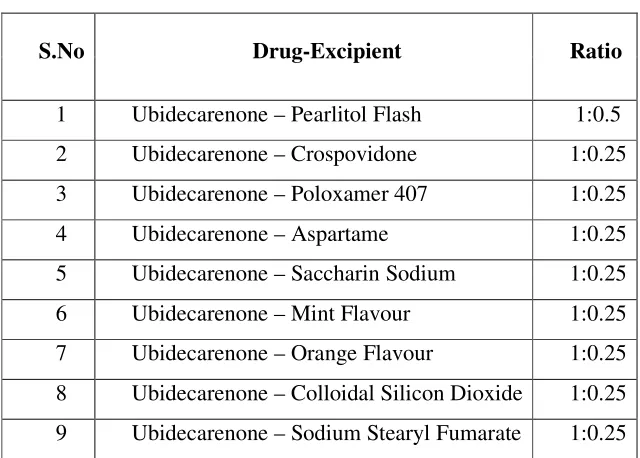
Drug- Excipent compatability studies Assay
Water content
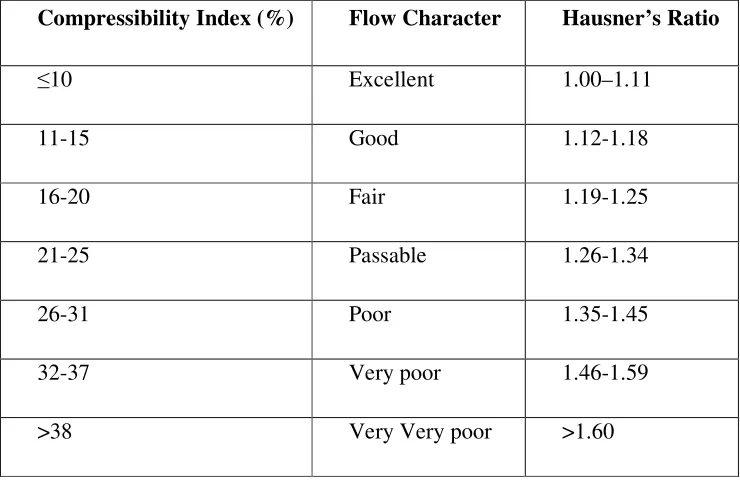
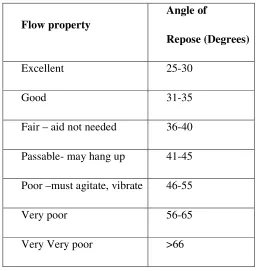
In process Quality Control Checks for derived properties like Bulk Density, Tapped Density, Compressibility Index, Hausner’s Ratio and Angle of Repose for drug and
blends to be determined.
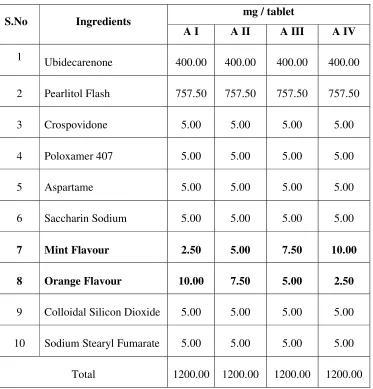
Optimization of concentration of ingredients such as Flavours, Sweeteners, Disintegrant, Wetting agent, Glidant and Lubricant.
Formulation of Chewable tablets with optimized ingredients.
Evaluation of chewable tablets for post compression parameters like Uniformity of Weight, Thickness, Hardness, Friability, Disintegration Time, Assay and in vitro drug
release characteristics to be studied.
Palatability test has to be done for the optimized batch.
Accelerated Stability Studies of the Ubidecarenone chewable tablets packed in 75 cc Amber coloured HDPE Bottle with 33 mm PP Child Resistant Cap with Induction
sealed having 1 g of 6 g / yard cotton as dunnage, and 2 no’s of 1 g Silica gel canister
as desiccant; shall be determined at 40 ± 2°C / 75 ± 5% RH at one month interval for
3 months and the following are used as raiders for evaluation while comparing with
Initial, Appearance
Uniformity of weight
Department of Pharmaceutics, Madras Medical College Page 27
3. MARKETED FORMULATIONS OF UBIDECARENONE
Table No.2: Marketed formulations of Ubidecarenone
S.No Brand Name Strength Dosage form Manufacturer
1 CoQ10
10mg,30mg,50mg, 100mg,200mg,
300mg
Soft gels Carlson labs,
USA.
2 Coenzyme Q10 30mg, 100mg, 200mg,
400mg Soft gels
Natural factors, Canada.
3 Coenzyme Q10 50mg Soft gels Roex, USA.
4 Coenzyme Q10
Sublingual 30mg, 60mg Tablets
Source naturals, USA.
5
CoenzymeQ10 (emulsified with lecithin soya)
200mg Soft gels
Douglas laboratories,
USA.
6 CoQ10 100mg Soft gels Zenith
Nutritions, India.
7 Ubi Q 30mg Soft gels Fourrts India
Department of Pharmaceutics, Madras Medical College Page 28
5. DRUG PROFILE OF UBIDECARENONE
43Drug name : Ubidecarenone
Synonym : Coenzyme Q10
CAS NO : 303-98-0
Formula : C59H90O4
Molecular weight : 863.34
Physical form : yellow to orange crystalline powder
Odour : characteristic
Taste : bland taste
Melting point : 48ºC
Structure :
Chemical Name : 2,3-Dimethoxy-5-Methyl-6-Decaprenyl benzoquinone
Solubility : Practically insoluble in water, soluble in acetone, very slightly
Department of Pharmaceutics, Madras Medical College Page 29
5.1 PHARMACOLOGY
44, 455.1.1 Pharmacodynamics
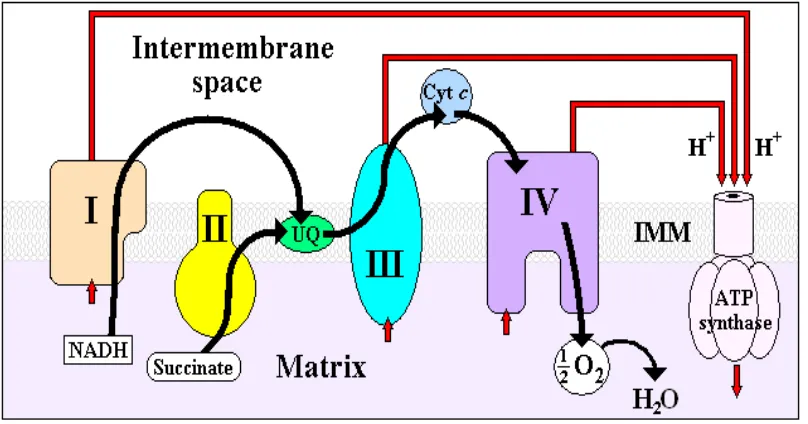
The primary role of Ubidecarenone is as a vital intermediate of the electron
transport system in the mitochondria. Adequate amounts of Ubidecarenone are necessary
for cellular respiration and ATP production. Due to its involvement in ATP synthesis,
Ubidecarenone affects the function of all cells in the body, making it essential for the
health of all tissues and organs. Ubidecarenone also functions as an intercellular
antioxidant at the mitochondrial level, perhaps accounting for its benefit in
neurodegenerative diseases, male infertility and periodontal disease.
[image:43.612.112.516.270.482.2]
Department of Pharmaceutics, Madras Medical College Page 31
5.1.2 Pharmacokinetics
46ABSORPTION
Ubidecarenone is absorbed from the small intestine, passes into the lymphatics, and
finally to the blood and tissues.
The absorption of Ubidecarenone is enhanced in the presence of lipids.
Secretions from the pancreas and bile facilitate emulsification and micelle formation
that is required for the absorption of fats.
About 95% of Ubidecarenone in circulation exists in its reduced form as ubiquinol in
human.
Ubidecarenone absorption and bioavailability varies greatly depending on the type of Ubidecarenone formulation.
DISTRIBUTION
Ubidecarenone level in body is estimated to be approximately 0.5–1.5 g in a normal adult.Sub cellular distribution of Ubidecarenone show a large portion (40–50%) of Ubidecarenone localized in the mitochondrial inner membrane, with smaller amounts in
the other organelles also in the cytosol.
Tmax 6 hours.
t 1/2 33 hours.
METABOLISM AND EXCRETION
Absorbed intact via the lymphatics and concentrated mainly in the liver.
Excreted via the bile.
Main metabolite was presumed to be a glucuronide of Q acid I [2, 3
dimethoxy-5-methyl-6-(30-methyl-50-carboxy-2-pentenyl)-1, 4-benzohydroquinone] formed in the
Department of Pharmaceutics, Madras Medical College Page 32
5.1.3 ADVERSE EFFECTS 47
Diarrhoea.
Loss of appetite.
Nausea.
Stomach upset.
Trouble sleeping.
Severe allergic reactions (rash, hives, itching, difficulty in breathing, tightness in the
chest, swelling of the mouth, face, lips or tongue).
5.1.4 PRECAUTIONS
Liquid forms, chewable tablets, dissolving forms of Ubidecarenone contain sugar, alcohol or aspartame. Patients having the history of diabetes, alcohol dependence, liver disease, Phenylketonuria (PKU) should take this medication with caution.
During pregnancy, this drug should be used only when clearly needed.
5.1.5 DRUG INTERACTIONS
Chemotherapy medications
Ubidecarenone’s anti oxidant effect might make some chemotherapy drugs
less effective.
Daunorubicin and doxorubicin
Ubidecarenone may help to reduce the toxic effects on the heart caused by
daunorubicin (cerubidin) and doxorubicin (Adiramycin).
Blood pressure medications
Ubidecarenone may work with blood pressure medications to lower blood pressure.
In a clinical study of people taking blood pressure medications, adding Ubidecarenone
supplements allowed them to lower the doses of these medications.
Blood thinning medications
Ubidecarenone, when it is given Warfarin (Coumadin) or Clopidigrel (plavix)
it reduces the blood thinning effect of blood.Ubidecarenone supplements when given with
Betaxolol drops (Betoptic), a beta blocker medication used to treat glaucoma, it reduces
Department of Pharmaceutics, Madras Medical College Page 33 Other medicationsthat can lower the level of Ubidecarenone in the body include
Statins for cholesterol, including Atorvastatin (lipitor), Lovastatin (Mevacor),
Pravastatin (Pravachol) and Simvastatin (Zocor).
Beta-blockers for high blood pressure, such as Atenolol (Tenormin), Labetolol
(Normodyne), Metoprolol (Lopressor or toprol) and Propranolol (Inderal).
Tricyclic antidepressant medications, including Amitriptyline (Elavil), Doxepin
(Sinequan) and Imipramine (Tofranil).
5.1.6 DOSAGE INFORMATION 44
For most disease and other neurological conditions found doses ranging from 400 to 1200mg daily in divided doses. For breast cancer 390mg daily.For Parkinson’s disease doses ranging from 400-1200mg daily to be effective.
For cardiovascular disease dosages range from 100 to 200mg/day.
Dosages of upto 15mg/kg/day are being employed in the case of mitochondrial cytopathy patients.
5.1.7 TOXICITY
Ubidecarenone appears to be quite safe, even at the highest doses cited in the
literature. Occasional reports of nausea, anorexia or skin eruptions have been reported
with Ubidecarenone supplementation.
5.1.8 USES 45, 48
Ubidecarenone supplements, either by themselves or in with other drug
therapies, may help to prevent or treat the following conditions:
After Heart Attack.
Heart failure (HF).
Hypertension.
Hyperlipidemia.
Department of Pharmaceutics, Madras Medical College Page 34
Heart damage caused by chemotherapy.
Heart surgery.
Gum (Periodontal) disease.
Preliminary clinical studies also suggest that Ubidecarenone may:
Improve immune function in people with HIV or AIDS.
Increase sperm motility, improving male fertility.
Used as part of the treatment for Parkinson's disease.
Improve exercise ability in people with angina.
Department of Pharmaceutics, Madras Medical College Page 35
6. EXCIPIENT PROFILE
6.1 MANNITOL
496.1.1. Non proprietary Names
BP : Mannitol
JP : D-Mannitol
PhEur : Mannitol
USP-NF : Mannitol
6.1.2. Synonyms
Cordycepic acid, E421, Emprove, manna sugar, D-mannite, mannite,
mannitolum, Mannogem, Pearlitol.
6.1.3. Functional Category
Sweetening agent, tablet and capsule diluent, tonicity agent, vehicle (bulking
agent) for lyophilized preparations.
6.1.4. Description
Mannitol is D-mannitol. It is a hexahydric alcohol related to mannose and is
isomeric with sorbitol. Mannitol occurs as a white, odourless, crystalline powder or
free-flowing granules. It has a sweet taste, approximately as sweet as glucose and half as sweet
as sucrose, and imparts a cooling sensation in the mouth.
6.1.5. Chemical Name : D-Mannitol
6.1.6. Empirical Formula : C6H14O6
6.1.7. Molecular Weight : 182.17
6.1.8. Applications in Pharmaceutical Formulation or Technology
Mannitol is widely used in pharmaceutical formulations and food products.
In pharmaceutical preparations it is primarily used as a diluent (10–90% w/w) in
tablet formulations.
Mannitol is commonly used as an excipient in the manufacture of chewable tablet
formulations because of its negative heat of solution, sweetness and ‘mouth feel’.
6.1.9. Typical properties
Department of Pharmaceutics, Madras Medical College Page 36
Density (Tapped) : 0.734 g/cm3 for powder 0.8 g/cm3 for granules.
Density (True) : 1.514 g/cm3
6.1.10. Stability and Storage Conditions
Mannitol is stable in the dry state and in aqueous solutions. In solution,
mannitol is neither attacked by cold, dilute acids or alkalis, nor by atmospheric oxygen in
the absence of catalysts. The bulk material should be stored in a well-closed container in a
cool, dry place.
6.1.11. Incompatibilities
Mannitol solutions, 20% w/v or stronger, may be salted out by potassium
chloride or sodium chloride.
6.1.12. Safety
After intravenous injection, mannitol is not metabolized to any appreciable
extent and is minimally reabsorbed by the renal tubule, about 80% of a dose being
Department of Pharmaceutics, Madras Medical College Page 37
6.2 CROSPOVIDONE
496.2.1. Non proprietary Names
BP : Crospovidone
PhEur : Crospovidone
USP-NF : Crospovidone
6.2.2. Synonyms
Crospovidonum, Crospopharm, crosslinked povidone, E1202,
Kollidon CL, Kollidon CL-M, Polyplasdone XL, PolyplasdoneXL-10,
polyvinylpolypyrrolidone, PVPP, 1-vinyl-2-pyrrolidinone homopolymer.
6.2.3. Functional category
Tablet disintegrant
6.2.4. Description
Crospovidone is a white to creamy white, finely divided, free flowing,
practically tasteless, odourless or nearly odourless, hygroscopic powder.
6.2.5. Chemical name
1-Ethenyl-2-pyrrolidinone homo polymer
6.2.6. Empirical formula : (C6H9NO)n
6.2.7. Molecular weight : >1 000000
6.2.8. Applications in Pharmaceutical Formulation or Technology
Crospovidone is a water-insoluble tablet disintegrant and dissolution agent
used at 2–5% concentration in tablets prepared by direct- compression or wet-
and dry-granulation methods.
Crospovidone can also be used as a solubility enhancer.
6.2.9. Typical properties
Acidity/Alkalinity : pH= 5.0–8.0 (1% W/V Aqueous Slurry).
Density : 1.22 g/cm3
6.2.10. Stability and storage conditions
Since Crospovidone is hygroscopic, it should be stored in an airtight
Department of Pharmaceutics, Madras Medical College Page 38 6.2.11. Incompatibilities
Crospovidone is compatible with most organic and inorganic pharmaceutical ingredients.
It is when exposed to high water level forms a molecular adducts with some
materials.
6.2.12. Safety
Crospovidone is non toxic and non irritant material.
Department of Pharmaceutics, Madras Medical College Page 39
6.3 POLOXAMER 407
496.3.1. Non proprietary Names
BP : Poloxamers
PhEur : Poloxamers
USP-NF : Poloxamer
6.3.2. Synonyms
Lutrol, pluronic, poloxalkol
6.3.3. Functional Category
Dispersing agent, emulsifying agent, solubilising agent, tablet lubricant,
wetting agent.
6.3.4. Description
Poloxamers generally occurs as white, waxy, free flowing prilled granules or as
cast solids. They are practically odourless and tasteless.
6.3.5. Chemical name
α-Hydro-o-hydroxypoly(oxyethylene)poly(oxypropylene) poly- (oxyethylene)
block copolymer.
6.3.6. Applications in Pharmaceutical Formulation or Technology
Poloxamer 188 is used as a wetting agent, stool lubricant in constipation.
Poloxamers may be used as wetting agents in eye drop formulations, in the treatment of kidney stones and as a skin wound cleansers.
[image:54.612.97.519.448.724.2]Poloxamer 338 and 407 are used in solutions for contact lens care.
Table No. 3: Applications of Poloxamer
Uses of poloxamer
Use Concentration (%)
Fat emulsifier 0.3
Flavour emulsifier 0.3
Fluorocarbon emulsifier 2.5
Gelling agent 15-50
Spreading agent 1
Stabilizing agent 1-5
Tablet coating 10
Tablet excipient 5-10
Department of Pharmaceutics, Madras Medical College Page 40 6.3.7. Typical properties
Acidity /alkalinity : pH =5.0-7.4 for a 2.5% w/v aqueous solution
Density : 1.06 g/cm3 at 258ºC
6.3.8. Stability and storage conditions
Poloxamers are stable materials.
Aqueous solutions are stable in acids, alkalis and metal ions but it support mold
growth.
The bulk material should be stored in a well closed container in a cool dry place.
6.3.9. Incompatibilities
Depending on the relative concentrations, Poloxamer 188 is incompatible with
Phenols and Parabens.
6.3.10. Safety
Department of Pharmaceutics, Madras Medical College Page 41
6.4 SACCHARIN SODIUM
496.4.1. Non proprietary Names
BP : Saccharin Sodium
JP : Saccharin Sodium Hydrate
PhEur : Saccharin Sodium
USP-NF : Saccharin Sodium
6.4.2. Synony