FORMULATION DEVELOPMENT AND IN-VITRO EVALUATION OF POTASSIUM CHLORIDE EXTENDED RELEASE TABLETS
A Dissertation submitted to
THE TAMILNADU Dr. M.G.R. MEDICAL UNIVERSITY, CHENNAI – 600 032
In partial fulfillment of the requirements for the award of the degree of
MASTER OF PHARMACY
IN
PHARMACEUTICS
Submitted By
S.RADHAKRISHNAN Reg. No.: 261610803
Under the guidance of Mr. R.SURESH, M. Pharm.,
Associate Professor
DEPARTMENT OF PHARMACEUTICS
JKKMMRF’S – ANNAI JKK SAMPOORANI AMMAL COLLEGE OF
PHARMACY,
KOMARAPALAYAM – 638 183
S.NO TITLE PAGE
NO.
1 INTRODUCTION 1-28
2 LITERATURE REVIEW 29-33
3 AIM AND OBJECTIVE 34
4 PLAN OF WORK 35
5 MATERIALS AND METHODS 36-46
6 DRUG PROFILE 47-55
7 EVALUATION PARAMETERS 56-68
8 FORMULATION TRIALS 69
9 RESULTS 70-79
10 DISCUSSION 80-81
11 CONCLUSION 82
Formulation development &in-vitro evaluation of potassium chloride extended release tablets
Department of Pharmaceutics 1 JKKMMRF’s College Pharmacy
1. INTRODUCTION
1.1 TABLETS:
This chapter deals first with the main aspects of tablet dosage forms before addressing the
process of manufacture and testing of these most popular drug delivery systems. Per oral tablets
occupy the broadest and the most significant place among all pharmaceutical dosage forms.
Taking one or two tablets a day with a glass of water is the easiest and the most acceptable way
of administration of a drug to a patient. William Brockedon patented the first tablet press in 1843
to compress potash and lime tablets, thus paving the way for the modern manufacture of tablets.
Drugs are administered in a wide variety of doses. Tablets of L-thyroxine, for example, may
contain as low as 25 mg drug. On the other hand, amoxicillin/clavulanicacid tablets contain 1 g
of actives per tablet. These two extremes cover a 10,000-fold range of drug content. Tablets may
be made in different sizes and shapes, and the drug substance may comprise 0.1% to 90% of a
tablet bulk. From the point of view of ease of manufacture, tablet production, compared with
other dosage forms, provides the highest output per manufacturing hour, and is the most
economical, especially if one considers modern manufacturing methods involving processes
suchas the direct compression (DC) or fluidized-bed granulation. While tabletting may appear
from what has been said to be a facile process, it is often far from straightforward. Drug
molecules show various differences in physical and chemical properties. These include
differences in their crystalline structure, particle size, water solubility, dose, and sensitivity to
hydrolysis or oxidation, topics discussed elsewhere in this book. Hence, every drug molecule
must be treated as a unique entity for formulation. Drugs synthesized in the last 30 years have
been increasingly showing limited water solubility, poor flow and compression properties, and
challenge, since the market demands easy and cost-effective manufacturing, an acceptable
dissolution rate, and of course high bioavailability, and mechanically strong tablets that resist
fracture during packaging,
Transport and ultimately in patient use. Further more, the tablets must fulfill the requirements for
bioavailability and, eventually, bioequivalence. When considering all these factors, designing
and manufacturing a successful tablet requires optimization of the formulation and processing
parameters, which can be achieved by the application of a thorough knowledge of excipients, and
the subsequent selection of the most suitable manufacturing process.[1]
1.1 a) ADVANTAGES OF TABLETS:
9 Tablets are the unit dosage form having greatest capabilities of all oral dosage form for
the dose precision and least content variability.
9 Their cost is lower of all oral dosage forms.
9 They are lightest and the most compact of all oral dosage forms.
9 Tablets are easiest and cheapest for packaging and transportation.
9 They lend themselves to certain special release profile products such as enteric or delayed
release products.
9 Tablets are better for large -scale production than other unit oral forms.
9 They have the best-combined properties of chemical, mechanical, microbiological
stability of all oral forms.
Formulation development &in-vitro evaluation of potassium chloride extended release tablets
Department of Pharmaceutics 3 JKKMMRF’s College Pharmacy 1.1 b) LIMITATIONS OF THE TABLETS:
9 Some drugs resist compression in to dense particles, owing to their amorphous nature or
flocculent, low-density character.
9 Drugs with poor wetting slow dissolution properties, intermediate to large dosages,
optimum absorption high in the GIT, or any combination of these features difficult to
formulate.
9 Bitter tasting drugs with an objectionable odor, or drugs that are sensitive to oxygen or
atmospheric moisture may require encapsulation or entrapment prior to compression.
1.2 TYPES OF TABLETS AND TABLET DESIGN:
Tablet design is based on the experience and knowledge of excipients, which are
materials serving the purpose of making a good tablet when combined with a drug. The
mechanical and chemical properties of excipients have the utmost importance, and the area is
closely related to materials engineering as well as pharmacy. Expected properties of a modern
tablet include mechanical strength suitable for coating, packaging, and transportation; an
optimum size, shape, and color for identification; ease of swallowing; and, finally, fulfilling the
pharmacopoeial requirements for drug content and release rates as well as stability and
bioavailability. Some of the pharmaceutical tablet types based on the way of administration or
presentation to the patient are listed below:
¾ Simple uncoated tablets
¾ Coated tablets
¾ Effervescent tablets
¾ Chewable tablets
¾ Multilayered tablets
¾ Sugarcoated tablets
¾ Fast-disintegrating tablets
¾ Vaginal tablets
¾ Modified release tablets
¾ Extended release tablets
a) Simple Uncoated Tablets
The simplest form of a pharmaceutical tablet consists of a combination of a drug and some
functional excipients compressed directly. This tablet should be formed by compression without
difficulty using binders, disintegrants, and lubricants, and when used by a patient, it should
disintegrate in the stomach and should of course be bioavailable. Such simple tablets are
manufactured by mixing the drug and excipients in a V-shaped mixer and are compressed in a
tablet press using dies and punches of suitable size.
b) Film-Coated Tablets
A tablet can be coated with a polymer film to provide greater ease of swallowing, protection
against light or moisture, protection of the drug from gastric acidity, and modification or control
of drug release rate. Identification of a formulation by color or logo is extremely important today
not only for patient safety but also because of the problem of counterfeiting. Polymers and
Formulation development &in-vitro evaluation of potassium chloride extended release tablets
Department of Pharmaceutics 5 JKKMMRF’s College Pharmacy c) Effervescent Tablets
Effervescent tablets are designed to dissolve or disperse quickly in water as a result of the release
of carbon dioxide from the reaction between sodium bicarbonate and citric acid in the
formulation. Such tablets are generally the largest tablets in terms of size and weight, with
diameters up to 3 cm and weights of the order of 4 to 5 g. Although they are called tablets, the
mode of administration is naturally indirect; the patients take the drug solution or suspension
after dispersal. Their manufacture may require a low humidity environment, special tablet
presses, and specialized lubrication for tablet ejection.
d) Buccal and Sublingual Tablets
These special tablets are designed for fast and complete drug action through dissolution in the
buccal cavity or placement sublingually. As a result, the first pass effect may be avoided. Buccal
tablets are used for hormone replacement therapy, for example, with methyl testosterone;
sublingual tablets are frequently used for the delivery of isosorbidedinitrate and nitroglycerin.
e) Chewable Tablets
Sometimes a tablet is designed in such a way that it is chewable. This results in its disintegration.
Chewable tablets have some advantages, among them being that a large dose of a drug can be
formulated, since the tablets are not swallowed whole. Children can be convinced to take such
medication, no water is required for administration, and the disintegration step for a tablet is
actively achieved in the mouth before it dissolves in the gastric medium. Pediatric multivitamin
or mineral formulas, aspirin, vitamin C 1000 mg,and vitamin A 50,000 units are usually
f) Multilayered Tablets
Tablets can be designed and manufactured to have separate layers or a core tablet inside a tablet.
In this way, two or more drugs can be kept separate in a single tablet. Such complicated systems
have found limited applications over the years in the pharmaceutical industry, but there is a
revival of interest in the use of combination dosage forms for thetreatment of diseases such as
AIDS, where multiple drugs are administered each day. Tablet presses with two or three hoppers
are available for the purpose of preparing multilayered dose forms. These include the Colton
232, the KilianPrescoter, and the ManestyDryCota machines. Recently, an excellent application
potential was reported for compression coating, namely, the colonic delivery of drugs using a
pectin-hydroxypropyl methyl cellulose (HPMC) combination, which was successful for the
delivery of 5-aminosalycylic acid (5-ASA), and also for peptides such as nisin. This type of drug
delivery system requires compression-coating equipment for mass production since a 100- mg
core tablet containing the drug is surrounded by a pectin-HPMC mixture.
g) Sugarcoated Tablets (Dragees)
Before the development of film-coating processes, the major coating material was a sugarcoat.
Tablets were sugarcoated for the very same reasons as film coating. These tablet types generally
start with a seed or core tablet that contains the drug, and the resultant coating process is a
lengthy one using simple syrup, shellac, and talc, several layers of which are deposited onto the
core tablet. Usually, a weight increase of as muchas 100% to 300% is considered normal.
Formulation development &in-vitro evaluation of potassium chloride extended release tablets
Department of Pharmaceutics 7 JKKMMRF’s College Pharmacy h) Fast-Disintegrating Tablets
This type of tablet is the newest addition to the family of tablets. The main reason for the
development of such tablets is the potential for administration of small doses to the elderly or
children who have difficulties in swallowing intact tablets. A tablet is administered by placing it
on a spoon and adding some water, in two to four seconds the tablet completely disintegrates to
granules that can be swallowed easily. Fast-disintegrating tablets are not only made out of
special granules but can also be compressed using coated spherical pellets such as enteric-coated
omeprazole pellets.
i) Vaginal Tablets
Tablets are made to be used for insertion into the vagina for treatment of local infections or
hormone replacement therapy. For instance, ornidazole and micanazole nitrate combination and
estradiol hemihydrate tablets are formulated as vaginal tablets. These tablets release the drugs
slowly in 20 to 30 minutes.
j) Modified-release tablets:
In order to overcome the drawbacks of conventional drug delivery systems, several technical
advancements have led to the development of modified release drug delivery systems. The
modified-release delivery systems may be divided conveniently into four categories:
1. Delayed release
2. Sustained release
3. Site-specific targeting
i) Delayed release system: Delayed-release systems are those that use repetitive,
intermittent dosing of a drug from one or more immediate-release units incorporated into a single
dosage form. Examples of delayed-release systems include repeat-action tablets and capsules,
and enteric-coated tablets where timed release is achieved by a barrier coating.
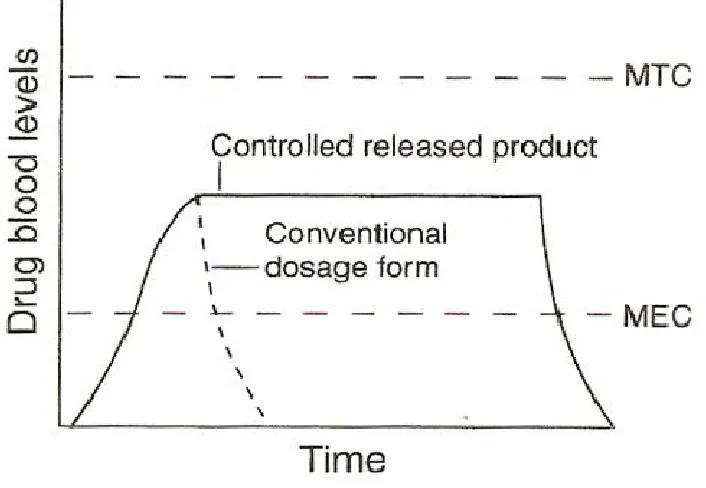
ii) Sustained release system: During the past few years, conventional dosage forms of
drugs are rapidly being replaced by the new and the novel drug delivery systems. Amongst, these
the controlled release/sustained release dosage forms have become extremely popular in modern
therapeutics. The basic rationale for sustained release drug delivery is to alter the
pharmacokinetics and pharmacodynamics of drugs by using novel drug delivery systems or by
modifying the molecular structure or physiological parameters inherent in a selected route of
administration. It is desirable that the duration of drug action becomes more a design property of
a rate controlled dosage form and less or not at all a property of the drug molecule’s inherent
kinetic properties. Thus, optimal design of a sustained/ controlled release system necessitates a
thorough understanding of the pharmacokinetics and pharmacodynamics of the drug. When the
drug is administered in a conventional dosage form, it results in a fluctuation of drug
concentration at the site of action (peak and valley pattern) and therefore in systemic circulation
and tissue compartment.
¾ Advantages of sustained release drug delivery:
Following are the potential advantages of sustained release products
• Decreased local and systemic side effects reduced gastrointestinal irritation.
Formulation development &in-vitro evaluation of potassium chloride extended release tablets
Department of Pharmaceutics 9 JKKMMRF’s College Pharmacy
• Improved efficiency in treatment, optimized therapy, more uniform blood
concentration.
• Reduction in fluctuation in drug level and hence more uniform pharmacological
response, cure of control of condition more promptly, less reduction in drug
activity with chronic use.
• Method by which sustained release is achieved can improve the bioavailability of
some drugs e.g. drugs susceptible to enzymatic inactivation can be protected by
encapsulation in polymer systems suitable for sustained release.
• Improved patient compliance, less frequent dosing, reduced night-time dosing,
reduced patient care time. The importance of patient compliance in successful
drug therapy is well recognized. It has been found that there is an inverse
relationship between the number of dosages per day and the compliance rate.
• Although the initial unit cost of sustained release products is usually greater than that of conventional dosage forms because of the special nature of these products,
the average cost of treatment over an extended time period may be less. Economy
may also result from a decrease in nursing time and hospitalization time.
¾ Disadvantages of sustained release drug delivery:
The disadvantages of sustained release drug delivery system are
• Decreased systemic availability in comparison to immediate release conventional
dosage forms, which may be due to incomplete release, increased first-pass
metabolism, increased instability, insufficient residence time complete release,
site specific absorption, pH dependent stability, etc.
• Retrieval of drug is difficult in case of toxicity, poisoning or hypersensitivity reactions.
• Reduced potential for dose adjustment of drugs normally administered in varying
strengths.
iii) Site-specific targeting: Site-specific and receptor targeting refer to targeting of a
drug directly to a certain biological location. In the case of site-specific release, the target is
adjacent to or in the diseased organ or tissue.
iv) Receptor targeting: For receptor release, the target is the particular receptor for a
drug within an organ or tissue. Both of these systems satisfy the spatial aspect of drug delivery
Formula Departme 1.3 EXT D therapeut release m from the day, inste ation develop
ent of Pharma ENDED RE
Dosage form
tic level for
medications h
pill into you
ead of more
pment &in-v
aceutics ELEASE (E
ms release dr
r a prolonge
have special
ur body. Thi
often.[15]
Fig
vitro evaluat
ER) TABLE
rug slowly,
ed period of
coatings or
s may allow
gure: 1 Con
tion of potas
11 ETS:
so that plas
f time (usua
ingredients
w you to take
trolled relea ssium chlori JK sma concen ally between that control certain med
ase dosage fo
ide extended
KKMMRF’s
ntrations are
n 8 and 12 h
how fast the
dications onl
orms
d release tab
College Phar
maintained
hours).Exten
e drug is rele
ly once or tw
blets
rmacy
d at a
nded-eased
Figure: 2 Controlled release dosage form
1.3.1 ADVANTAGES OF ORAL EXTENDED RELEASE DELIVERY SYSTEM
¾ Reduce amount of drug administration
¾ Maximizing availability with minimum dose
¾ Causes less fluctuation of plasma drug level
¾ Leads to more uniform drug effect and lesser total dose.
¾ Improved patient compliance, resulting from the reduction in the number and frequency
of doses required to maintain the desired therapeutic response
¾ There is a reduction in the incidence and severity of localized gastrointestinal side-effects
produced by 'dose dumping' of irritant drugs from conventional dosage forms, e.g.
potassium chloride. The more controlled, slower release of potassium chloride from it’s
per oral ER formulations minimizes the build-up of localized irritant concentrations in the
gastrointestinal tract. Consequently, potassium chloride is now administered per orally
[image:14.612.127.480.82.326.2]Formulation development &in-vitro evaluation of potassium chloride extended release tablets
Department of Pharmaceutics 13 JKKMMRF’s College Pharmacy 1.3.2 DISADVANTAGES OF ORAL EXTENDED RELEASE DELIVERY SYSTEM
¾ Generally higher cost,
¾ Relatively poor in vitro/in vivo correlation,
¾ Unpredictable and even reduced bioavailability and subjected to increased first pass
metabolism for certain drugs. [8]
1.4 TABLET FORMULATION DESIGN:
Tablet formulation design starts with a predetermined value, which is the dose size. The
amount of drug in a tablet can be a limiting step in formulation design. Tablet excipients can be
classified on the basis of their functionality as listed below:
Fillers/diluents
Binders
Disintegrants
Lubricants
Glidants
Buffering agents
Sweeteners
Wetting agents
Coating agents
Matrix formers
1.4.1 Fillers/diluents used in tablet formulations
¾ Lactose (a-lactose monohydrate, anhydrite b-lactose, spray-dried lactose)
¾ Starch (Corn starch, partially hydrolyzed starch)
¾ Dibasic calcium phosphate (Emcompress, Di-Tab)
¾ Mannitol (Parteck, Delta M)
¾ Sorbitol (Neosorb 60)
¾ Calcium sulfate (Delaflo)
¾ Compressible sucrose (Di-Pac, Des-tab, Nu-Tab)
1.4.2 Binders used in tablet formulations
¾ Polyvinylpyrrolidone (PVP)
¾ Sodium carboxymethyl cellulose
¾ HPMC (Low molecular weight, 5 cps)
¾ Starch paste
¾ Simple syrup
1.4.3 Lubricants and glidants used in tablet formulations
¾ Magnesium stearate
¾ Stearic acid
¾ Sodium stearylfumarate
¾ Hydrogenated vegetable oil
¾ PEG 4000, 6000
¾ Hexagonal boron nitride
¾ DL-Leucine
Formulation development &in-vitro evaluation of potassium chloride extended release tablets
Department of Pharmaceutics 15 JKKMMRF’s College Pharmacy
¾ Glicerylbehenate
¾ Sodium benzoate
¾ Colloidal silicone dioxide
¾ Talc
¾ Starch
1.4.4 Super disintegrants
¾ Sodium starch glycolate (Explotab)
¾ Cross-linked PVP (Polyplasdone XL)
¾ Cross-linked carboxymethyl cellulose (Ac-Di-Sol)
1.4.5 Coprocessed Excipient Products
Some flexibility is necessary in the design of tablet formulations. Selecting each
excipient depends on the physical and chemical properties of the drug, the drug dose, and the
required final form and function of the tablet. There are however aids for the formulator. There
are some coprocessed excipients containing usually a diluent and binder, and sometimes, even a
disintegrant in a readymade granulation. LudipressTM(BASF, Germany) contains a-lactose
monohydrate, polyvinylpyrrolidone (PVP), and KollidonCL. Cellactose 80TM (Meggle,
Germany) contains a-lactose monohydrate and cellulose powder, ProsolvTM SMCC (JRS
Pharma, Germany), silicified MCC, contains 98% MCC and 2% colloidal silicon dioxide, which
provides a better granule flow and an opportunity for smaller and denser tablets upon direct
compression. There are also coprocessed actives like ascorbic acid, thiamine, riboflavine,
volumes, the use of coprocessed excipients is efficient, since the small capacity of many
pharmaceutical manufacturing plants for wet or dry granulation cannot deal with huge volumes.
Materials that contribute to plastic deformation, which means stronger compacts upon
compression or forming a matrix such as methyl cellulose (MC), HPMC, hydoxypropyl cellulose
(HPC), cellulose powder, gelatine and mannitol are used. Coprocessed products are so designed
that by simple addition of the drug, compressed tablets may be produced. Using coprocessed
active allows minimum excipient addition and manipulation.
1.4.6 Fillers/Diluents
Fillers are used to arrive at a tablet of reasonable size when a drug forms a small portion
of the formula, as in the case of 25 mg estradiol vaginal tablets. Depending on the physiological
conditions and formulation, one needs a tablet of around 100 mg for ease of handling and
administration, and therefore, fillers are used to increase bulk. Usually, a-lactose monohydrate is
the first material to be considered. This water soluble disaccharide is obtained from whey by
crystallization and drying after cheese production. Lactose is a water-soluble diluent, 216 mg
dissolving in 1-mL water. Using three different drying techniques, fluidized-bed methods, roller
drying, and spray drying, a-lactose monohydrate, anhydrous b-lactose, and spray-dried lactose
are obtained, respectively. The three different lactose grades differ considerably in their
mechanical properties in relation to tableting. For instance, anhydrous b-lactose shows a steep
compression force–tablet crushing strength relation. On the other hand, a-lactose monohydrate
and even spray-dried lactose are inferior grades in this respect. Spray drying of lactose forms
partial amorphous structures, and that contributes to its better compressibility. Spray-dried
Formulation development &in-vitro evaluation of potassium chloride extended release tablets
Department of Pharmaceutics 17 JKKMMRF’s College Pharmacy
and the size distribution of lactose types must be known before making a selection out of many
lactose grades. A partial list of excipientsused in tablet manufacturing is following:
1.4.7 Binders
Binders in tablet technology serve the purpose of binding small drug or excipient
particles together to impart cohesiveness, and to form a granulate of a designed size range,
usually larger than the initial material that flows freely and is also compressible, and eventually
to be compressed into tablets or to be filled into capsules. A binder will help the tablet to remain
intact after compression. Binders can be added as dry powders to form a matrix that will include
the drug, as in the case of dry granulation or in direct compression. Sometimes, the binders are
dissolved in liquids such as water or alcohol and then sprayed onto the powder mixture as with
wet granulation. Materials such as MCC act as a binder/ diluent in the case of direct
compression. However, a polymer such as PVP is solely used as a binder. One of the commercial
products of PVP is KollidonTM(BASF), which has grades on the basis of molecular weight of
the polymer: Kollidon K 25 (MW 28,000–34,000), K 30 (MW 44,000–54,000), and K 90 (MW
1,000,000–1,500,000) contain PVP of increasing molecular weights. PVP has some advantages
over other binders: it is used in relatively small concentrations such as 1% to 5% to prepare a
binder solution, itis soluble to above 10% in water, ethanol, and glycerol, which provides an
opportunity for water-free granulation. One of the most significant advantages of PVP is its low
viscosity (5–10 mPa.sec) even up to concentrations as high as 20% (w/v). A low-viscosity
solution can easily be sprayed using peristaltic pumps during a fluidized-bed granulation. Starch
paste has been a traditional binder, at concentrations between 5% and 10%. Starch is dispersed in
is formed, it can be diluted with cold water. On the other hand, preparing a starch paste with
modified starch will not require boiling, since it dissolves in warm water because of the free
amylopectin. In modern granulation processes using highshearmixers, starch paste finds few
applications. HPMC, MC, HPC, and ethyl cellulose can be used as binders in tablet formulations.
These cellulose-based binders perform as well as PVP in modern granulation processes.
Hydrophilic polymers, especially of low molecular weight, for instance HPMC E6 (6 cP
viscosity grade), can be dissolved in water to obtain a low-viscosity solution, and they bind well
and contribute to plastic deformation during tableting. The high-molecular weight grades of
these cellulose based materials can be used as matrix formers, and incorporated into formulations
as dry binders. Ethyl cellulose is not water soluble, so it is used as an alcoholic solution.
Materials such as PVP and HPMC have largely replaced other binders such as gelatine, sucrose,
simple syrup, or acacia.
1.4.8 Disintegrants
Disintegrants serve the purpose of facilitating the disintegration of tablets into
itsComponents either after administration in the GI tract or just before administration, suchAs in
the case of the fast-disintegrating tablets. Disintegrants may play an important role in the
bioavailability of a drug in tablet dose forms. When disintegrantscome into contact with water,
they usually swell, as their cross-linked molecular structure, such as in amylose in starch or in
cross-linked PVP, imbibes water and swells, providing the force to disperse the tablet.
Depending on the formulation design, some tablets containing higher percentages of MCC may
disintegrate readily during disintegration tests without an additional disintegrant. Addition of
Formulation development &in-vitro evaluation of potassium chloride extended release tablets
Department of Pharmaceutics 19 JKKMMRF’s College Pharmacy
purposes. Starch is a “mild” tablet disintegrant. In the past, there was concern that tablet
compression forces should not exceed certain limits or tablet crushing strengths 70 to 80 N
because of the probability of prolonged disintegration times. However, with the advent of
modern excipients, mechanically strong tablets with 200 to 300 N crushing strengths can be
produced, and these tablets will disintegrate within five minutes or less using the
super-disintegrants. Super-disintegrants are materials added to tablet formulations in a range of 1% to
5% to assure disintegration within 1 to 10 minutes. Among these are sodium carboxymethyl
starch (ExplotabTM, Mendell, U.S.A.), cross-linked sodium carboxymethylcellulose
(PharmacelTM XL, DMV, Netherlands), and cross-linked PVP (17) (KollidonTMXL, BASF).
The rank order of the degree of swelling in water in two minutes for those disintegrants has been
reported to be sodium carboxymethyl starch >sodium carboxymethyl cellulose > L-HPC 11 >
cross-linked PVP > starch > MCC.
1.4.9 Lubricants
Pharmaceutical lubricants are materials used in tablet formulations to reduce the friction
Between the lower punch and the die and the tablet. Friction damages both the tablet and the
tablet press during the ejection cycle. Lubricants are a mechanical necessity, without which
modern tablet manufacturing would be impossible. Glidants are materials that reduce
interparticular friction, covering the particle surfaces with a thin layer, and as a result helping in
better granule flow. Colloidal silicon dioxide, talc, and starch can be used as glidants; colloidal
silicon dioxide is effective as low as 0.5% as a glidant. Lubricants are added to pharmaceutical
granules just before the tableting stage. Mixing the main granule mass with a lubricant has been
magnesium stearate negatively affects the binding capacity of a granule mass. Hence, tablet
formation might be inhibited, unless the granule mass undergoes brittle fracture and creates new
clean surfaces. Especially, materials exhibiting plastic deformation with a limited surface area
Would show a strong sensitivity to lubricants. Therefore, the specific surface area of a lubricant
as well as the surface area of the granule mass are both important parameters in selecting
lubricant type, concentration, and mixing times. Boundary lubricants will adhere on the metal
surfaces of the tablet press, die, and punches and will form a boundary layer with the tablet.
Alkaline stearates such as magnesium stearate are an example of a boundary lubricant.
Magnesium stearate is still the most effective pharmaceutical lubricant. Its usual concentration
range is between 0.1% and 2%, and its effectiveness shows a biphasic profile, a region of a fast
reduction in friction up to 1 %, and a slower friction-reducing effect after 1%. Magnesium
stearate reduces not only the lower punch ejection force by about 70% but also tablet tensile
strength. Stearic acid is the second most important lubricant. It is not as effective as magnesium
stearate, the minimum effective stearic acid concentration is about 1%, and it reduces the lower
punch ejection force no more than 30%. This fatty acid is however useful when an alkaline
ingredient in a tablet formula is undesirable. The hexagonal form of boron nitride (HBN) has
been reported as a potential tablet lubricant. HBN is similar to graphite, which is soft and
lubricious. This inorganic solid powder retains its ability to lubricate in extreme cold or heat.It
was reported that boron nitride reduced the lower punch ejection force as efficiently as
magnesium stearate, but its ability to reduce the tablet tensile strength is less than magnesium
stearate. The result is mechanically stronger tablets. Therefore, there is a good potential for HBN
to be used as a tablet lubricant. For effervescent tablets, water-soluble lubricants are required
Formulation development &in-vitro evaluation of potassium chloride extended release tablets
Department of Pharmaceutics 21 JKKMMRF’s College Pharmacy
cloudy solution with an alkaline taste, all of which is undesirable. Sodium lauryl sulfate,
DL-leucine, or various PEGs can be used as water-soluble lubricants. Liquid paraffin and
hydrogenated vegetable oil are also among the lubricants, but their effectiveness is lower than
that of magnesium stearate and stearic acid.[3]
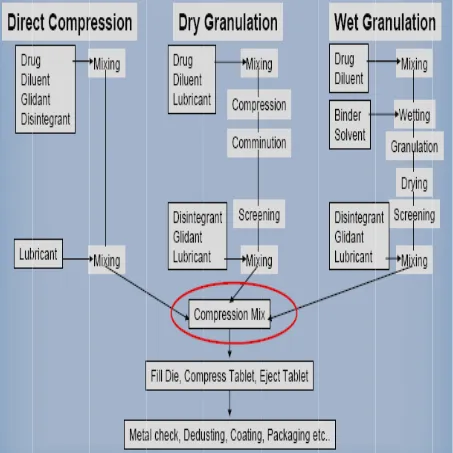
1.5 TABLET-MANUFACTURING OPERATIONS:
There are three general methods of tablet preparation.
¾ Direct compression method
¾ Dry granulation method
¾ Wet granulation method
1.5.1 Direct compression
Direct compression is the process by which tablets are compressed directly from powder
mixture of API and suitable excipients. This method of tablet making is of special interest for
small group of crystalline chemicals having the entire physical characteristic necessary for the
formulation of a good tablet.
¾ Advantages
1. The most important advantage of direct compression is economical process. Reduced
processing times, reduced labors costs, fewer manufacturing steps and less number of
equipment’s are required, less process validation, reduced consumption of power.
2. Elimination of heat and moisture, thus increasing not only the stability but also the
suitability of the process for themolabile and moisture sensitive API’s.
3. Particle size uniformity.
4. The chances of batch-to-batch variation are negligible, because the unit operations
5. Chemical stability problems for API and excipients would be avoided.
6. Provides stability against the effect of aging which affects the dissolution rates.
¾ Disadvantages
1. Problems in the uniform distribution of low dose drugs.
2. The choice of excipients for direct compression is extremely critical. Direct compression
diluents and binders must possess both good compressibility and good flowability.
3. Many active ingredients are not compressible either in crystalline or amorphous forms.
4. Direct compression blends may lead to unblending because of difference in particle size
and density of drug and excipients. Similarly the lack of moisture may give rise to static
charges, which may lead to unblending.
5. Non-uniform distribution of colour, especially in tablets of deep colours.
1.5.2 Dry granulation method
This process of granulation is also known as slugging, double compression or
recompression method. This process of tablet preparation is commonly used when the tablet
ingredients are sensitive to moisture or are unable to withstand elevated temperature during
drying. Under such conditions dry granulation is the method of choice provided the tablet
ingredients have sufficient inherent binding or cohesive properties.
¾ Advantages
1. It uses less equipment’s and space.
2. It eliminates the need for binder solution, heavy mixing equipment and the costly and
time consuming drying step required for wet granulaion.
3. It can be used for moisture sensitive and heat sensitive materials.
Formulation development &in-vitro evaluation of potassium chloride extended release tablets
Department of Pharmaceutics 23 JKKMMRF’s College Pharmacy
¾ Disadvantages
1. It requires a specialized heavy duty tablet press to form slug.
2. It does not permit uniform colour distribution as can be achieved with wet granulation
where the dye can be incorporated into binder liquid.
3. The process tends to create more dust than wet granulation, increasing the potential
contamination.
1.5.3 Wet granulation method
Wet granulation process simply involves wet massing of the powder blend with a granulating
liquid, wet sizing and drying.
¾ Advantage
1. It is a robust process suitable for most compounds.
2. It imparts flowability to a formulation.
3. It can reduce elasticity problems.
4. In this process drug binds with excipients, thus reduces segregation potential.
5. Non aqueous wet granulation process is suitable for moisture sensitive drugs.
¾ Disadvantages
1. The greatest disadvantage of wet granulation is its cost. It is an expensive process
because of labour, time, equipment, energy and space requirements.
2. Loss of material during various stages of processing.
3. Stability may be major concern for moisture sensitive or thermo labile drugs.
4. Multiple processing steps add complexity and make validation and quality control difficult.
5. An inherent limitation of wet granulation is that any incompatibility between formulation
1.6 MECHANISM OF GRANULE FORMATION:
Granules are formed in three stages:
1.6.1 Nucleation;
Here, the particles adhere due to liquid bridges which are the initiation step of Granulation.
These adhered particles play a role of nucleus for further enlargement of granules.
1.6.2 Transition;
Enlargement of nucleus takes place by two possible mechanisms. Individual particle adhere to
the nucleus or two or more nuclei combine among themselves.
1.6.3 Ball growth or enlargement of the granule;
Ball growth occurs either by Coalescence or Breakage or Abrasion Transfer or Layering. In
Coalescence a larger granule is formed when two or more granules are united. In Breakage
granules break and the fragments of granule adhere to other granules. This forms a layer of
material over intact granules. In Abrasion Transfer granule material are abraded through attrition
by the agitation of granule bed and abraded material adheres to other granules resulting into
enlarged granules. In layering particles adheres to the already formed granules increasing their
Formula
[image:27.612.82.535.156.609.2]Departme Figure:
ation develop
ent of Pharma : 3 Unit oper
pment &in-v
aceutics
rations invol
vitro evaluat
lved in wet g
tion of potas
25
granulation,
ssium chlori
JK
dry granulat
ide extended
KKMMRF’s
tion and dire
d release tab
College Phar
ect compress
blets
rmacy
1.7 COM After the compress machine the punch head (top the lower two punc force exe
tablet is p
MPRESSION
e preparation
sion is done
(Rotary pre
hes are drive
p of the uppe
r cam edge.
ches. This se
erted on the
perfectly for
N
n of lubricat
e either by
ess). The pun
en together b
er punch) sit
The shapes
equence is r
ingredients
rmed. [6]
F
ted granules
single pun
nches and di
by two fixed
ts on the upp
s of the two
epeated ove
in the dies
Figure: 4Tab
s they are co
nch machine
ies are fixed
d cams – an
per cam edg
cams determ
r and over b
is very care
blet compressio
ompressed t
e (Stamping
d to a turret t
upper cam
e. The botto
mine the seq
because the t
efully contro
on machine
to get the fi
g press) or
that spins ro
and a lower
om of the low
quence of m
turret is spin
olled. This e
inal product
by multi st
ound. As it s
r cam. The p
wer punch si
Formulation development &in-vitro evaluation of potassium chloride extended release tablets
Department of Pharmaceutics 27 JKKMMRF’s College Pharmacy 1.8 TABLET COATING:
Coating is a process by which an essentially dry, outer layer of coating material is applied to the
surface of a dosage form in order to confer specific benefits that broadly ranges from facilitating
product identification to modifying drug release from the dosage form. After making a good
tablet, one must often coat it. Coating may be applied to a wide range of oral solid dosage form,
including tablets, capsules, multiparticulates and drug crystals. When coating composition is
applied to a batch of tablets in a coating pan, the tablet surfaces become covered with a tacky
polymeric film. Before the tablet surface dries, the applied coating changes from a sticky liquid
to tacky semisolid, and eventually to a non sticky dry Surface pans. The entire coating process is
conducted in a series of mechanically operated acorn-shaped coating pans of galvanized iron
stainless steel or copper. The smaller pans are used for experimental, developmental, and pilot
plant operations, the larger pans for industrial production
1.8.1 Basic principles involve in tablet coating
Tablet coating is the application of coating composition to moving bed of tablets with
concurrent use of heated air to facilitate evaporation of solvent.
a. Solution in which influences the release pattern as little as possible and does not markedly
change the appearance.
b. Modified release with specific requirement and release mechanism adapted to body function
in the digestive tract.
c. Color coating which provides insulation.
d. To incorporate another drug or formula adjuvant in the coating to avoid chemical
incompatibilities or to provide sequential drug release.
1.8.2 Film-coated tablets
A film-coated tablet is covered with a thin layer of resins, polymers and/or plasticizers
capable of forming a film.
1.8.2.1 Disintegration test
Film-coated tablets comply with 5.3 Disintegration test for tablets and capsules. Operate
the apparatus for 30 minutes, and examine the state of the tablets.[12]
1.9 QUALITY CONTROL OF TABLETS:
After manufacturing tablets, a series of tests are carried out to assure that they meet the
Specifications of pharmacopoeia or industry standards. These tests are as listed below:
¾ Crushing strength
¾ Disintegration
¾ Friability
¾ Dissolution
¾ Drug content uniformity
¾ Weight uniformity
¾ Weight and thickness
Some tablets are ready to be used after manufacture, while some need to be coated For further
Formulation development &in-vitro evaluation of potassium chloride extended release tablets
Department of Pharmaceutics 29 JKKMMRF’s College Pharmacy
2 LITERATURE REVIEW
2.1 Lloyd N et al; The use of extended-release products offers some potential advantages in
patient convenience/compliance and therapeutic outcomes. However, the range of drugs for
which clinically significant advantages have been shown is limited. Prescribers and pharmacists
should be aware of the costs of these products and have a knowledge of their clinical use in
selected patient groups. In some instances, the formulation is probably serving a marketing
objective rather than a clinical objective.
2.2Navin Dixit et al; The oral route is the most popular route used for administration of drugs,
which is due in part to the ease of administration and to the fact that gastrointestinal physiology
offers more flexibility in dosage form design than most other routes. The terms Sustained
release, prolonged release, modified release, extended release or depot formulations are used to
identify drug delivery systems that are designed to achieve or extend therapeutic effect by
continuously releasing medication over an extended period of time after administration of a
single dose. There are several reasons for attractiveness of these dosage forms: provides
increased bioavailability of drug product, reduction in the frequency of administration to prolong
duration of effective blood levels, reduces the fluctuation of peak trough concentration and side
effects and possibly improves the specific distribution of the drug.
2.3 K.P. Sampath Kumar et al;Pharmaceutical invention and research are increasingly focusing
on delivery systems which enhance desirabletherapeutic objectives while minimizing side
effects. Oral drug delivery system represents one of the frontier areasof controlled drug delivery
system. Such a dosage forms having a major advantage of patient compliance. Sustainedrelease
constant drug concentration for a specific period of time with minimum side effects. Now a days
as very few drugs are coming out of research and development and already existing drugs are
suffering the problem of resistance due to their irrational use specifically in case of drugs like
antibiotics. Hence, change in the operation is a suitable and optimized way to make the some
drug more effective by slight alteration in the drug delivery. Sustained Release is also providing
promising way to decrease the side effect of drug by preventing the fluctuation of the therapeutic
concentration of the drug in the body.
2.4 Christenson et al; This invention provides extended release potassium chloride granules
consisting essentially of potassium chloride crystals having a mesh size of about 20—60 mesh
that are coated only With ethyl cellulose. The granules may be compressed into tablets that
disintegrate rapidly in an aqueous environment to provide uniform dissolution of the potassium
chloride. Tablets containing about 10 to about 20 milliequivalents potassium may be formulated
in accordance With the invention. Processes to produce extended release granules without using
surfactants, processing aids or other coating aids are also provided by this invention. A method is
further provided whereby a patient’s supplemental potassium requirements are met by
administering an appropriate combination of dosage units chosen from available dosage units
containing different quantities of potassium.
2.5Alsop WR, et al; the effects on the upper gastrointestinal tract of five different preparations
of KCl were compared in 90 healthy subjects treated with glycopyrrolate. The KCl preparations
studied were wax-matrix KCl, microencapsulated KCl, liquid KCl, experimental
extended-release capsules, experimental extended-extended-release tablets, and placebo. The subjects were
Formulation development &in-vitro evaluation of potassium chloride extended release tablets
Department of Pharmaceutics 31 JKKMMRF’s College Pharmacy
was seen with all of the potassium preparations as well as with placebo. No statistically
significant differences between the various KCl groups or between KCl groups and placebo were
seen. All of the lesions were superficial, except for one ulcer seen with the microencapsulated
KCl. None of the subjects developed occult gastrointestinal bleeding. There were no differences
in the incidence of abdominal symptoms.
2.6 Dr. D. M. Patel et al; the objective of the present study was to evaluate the effect of
sintering condition on matrix formation and subsequent drug release from polymer matrix tablet
for controlled release. The present study highlights the use of a microwave oven for the sintering
process in order to achieve more uniform heat distribution with reduction in time required for
sintering. We could achieve effective sintering within 8 min which is very less compared to
conventional hot air oven sintering. The tablets containing the drug (propranolol hydrochloride)
and sintering polymer, were prepared and kept in a microwave oven at 540 watt, 720 watt and
900 watt power for different time periods for sintering. The sintered tablets were evaluated for
various tablet characteristics including dissolution study. Tablets sintered at 900 watt power for 8
min gave better dissolution profile compared to others. We conclude that microwave oven
sintering is better than conventional hot air oven sintering process in preparation of controlled
release tablets.
2.7 Monica Rao et al; The present research studied the effect of sintering technique in the
development of a controlled release formulation for ketorolac tromethamine. The method
consisted of mixing drug and wax powder (Compritol® 888 ATO) along with lactose as diluent
and talc as lubricant followed by direct compression at room temperature. The compressed fluffy
by their physical parameters and in vitro dissolution profile. The sintering time markedly
affected the drug release properties of Compritol® 888 ATO matrices. It is notable that the
release rate of ketorolac tromethamine from matrices was inversely related to the time of
sintering. This may be due to the increase in the extent and firmness of sintering which further
compacts the mass so that drug release is affected. Contact angle measurement and scanning
electron microscopy analysis indicated that heat treatment caused the wax to melt and
redistribute. This redistributed wax formed a network-like structure in which the drug along with
lactose is entrapped. This particular formed matrix is responsible for retarding the drug release.
Fourier transform infrared spectroscopy results did not show any drug–wax interaction due to
sintering. Differential scanning calorimetric and powder X-ray diffraction studies ruled out the
occurrence of solid solution and polymorphic changes of the drug. Drug release from the wax
tablets with or without sintering was best described by the Higuchi equation.
2.8 Sunil Kumar et al; Oral drug delivery is the most preferred route for the various drug
molecules among all other routes of drug delivery, because ease of administration which lead to
better patient compliance. So, oral extended release drug delivery system becomes a very
promising approach for those drugs that are given orally but having the shorter half-life and high
dosing frequency. Extended release drug delivery system which reduce the dosing frequency of
certain drugs by releasing thedrug slowly over an extended period of time. There are various
physiochemical and biological properties which affect the extended release drug delivery system.
This article providing the recent literature regarding development and design of extended release
Formulation development &in-vitro evaluation of potassium chloride extended release tablets
Department of Pharmaceutics 33 JKKMMRF’s College Pharmacy 2.9 K. P. R. Chowdary et al; Formulation and manufacture of matrix tablets is a least
complicated approach widely used in industry for obtainingoral controlled release. Matrix tablet
formulation needs an efficient release retarding material, which plays a critical role in regulating
drug release from matrix tablets. Literature on matrix tablets along with recent research on
3.AIM & OBJECTIVES
Patients who cannot tolerate or refuse to take liquid or effervescent potassium preparations or for
patients in whom there is a problem of compliance with these preparations.
The aims of the present study were to formulate and evaluate potassium chloride extended
release tablets
The study was carried out in the following stages:
¾ To Development and in vitro evaluation of potassium chloride extended release tablets
¾ To carry out pre-formulation studies
¾ To carry out the stability studies of the formulated extended release dosage form as per
Formulation development &in-vitro evaluation of potassium chloride extended release tablets
Department of Pharmaceutics 35 JKKMMRF’s College Pharmacy
4. PLAN OF WORK
This research work comprises the following
1. Literature review
2. Selection of excipients from the reference literature
3. Selection of excipients quantity from available reference product.
4. Preformulation studies.
5. Formulation of Trial Batches.
6. Evaluation of Pre-compression and Post-compression characteristics.
7. Selection of final formulation.
8. Comparison of dissolution profile between finalized potassium chloride formulation
and reference product.
9. Stability studies for the finalized potassium chloride formulation.
10.Comparison of drug release with the reference product.
5. MATERIELS AND METHODS
5.1 List of materials and their manufacturers or suppliers.
Table No: 1
S.No Materials Functions Manufacturers/suppliers
1. Potassium chloride Active Ingredient Klinge Chemicals Limited
2. Hydrogenated vegetable oil Release controlling agent Abitech corporation
3. Ethocel 100 FP Release controlling agent Colorcon asiapvt lid
4. Ethocel 10 FP Binder Colorcon asiapvt lid
5. Colloidal silicon dioxide Glidant Cabot Sanmar lid
6. Talc Glidant& Lubricant Luzenac
7. Syloid Glidant Grace Davison
8. Magnesium stearate Lubricant Valerus speciality chemicals
9. Iso propyl alcohol Solvent Merck
Formulation development &in-vitro evaluation of potassium chloride extended release tablets
Department of Pharmaceutics 37 JKKMMRF’s College Pharmacy
5.2 LIST OF EQUIPMENTS USED
The following equipment’s and instruments were used in the formulation and development of
potassium chloride Extended release tablets.
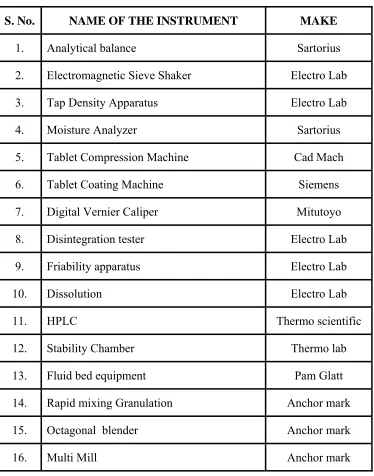
Table no: 2
S. No. NAME OF THE INSTRUMENT MAKE
1. Analytical balance Sartorius
2. Electromagnetic Sieve Shaker Electro Lab
3. Tap Density Apparatus Electro Lab
4. Moisture Analyzer Sartorius
5. Tablet Compression Machine Cad Mach
6. Tablet Coating Machine Siemens
7. Digital Vernier Caliper Mitutoyo
8. Disintegration tester Electro Lab
9. Friability apparatus Electro Lab
10. Dissolution Electro Lab
11. HPLC Thermo scientific
12. Stability Chamber Thermo lab
13. Fluid bed equipment Pam Glatt
14. Rapid mixing Granulation Anchor mark
15. Octagonal blender Anchor mark
[image:39.612.121.495.211.687.2]5.3 EXCIPIENT SELECTION:
Excipients used in the present work were selected according to innovator excipient list.
Excipients includes
¾ Hydrogenated vegetable oil
¾ Ethocel 100 fp
¾ Ethocel 10 fp
¾ Colloidal silicon dioxide
¾ Talc
¾ Magnesium stearate
5.3.1 HYDROGENATED VEGETABLE OIL
a) Chemical Name and CAS Registry Number
¾ Hydrogenated vegetable oil
¾ Hydrogenated soybean oil
b) Structural Formula
R1COOCH2—CH(OOCR2)—CH2OOCR3
Formulation development &in-vitro evaluation of potassium chloride extended release tablets
Department of Pharmaceutics 39 JKKMMRF’s College Pharmacy
c) Description:
Hydrogenated vegetable oil is a mixture of triglycerides of fattyacids. The two types that
are defined in the USP32–NF27 arecharacterized by their physical properties. Hydrogenated
vegetable oil type I occurs in various forms, e.g.fine powder, flakes, or pellets. The color of the
material depends onthe manufacturing process and the form. In general, the material iswhite to
yellowish-white with the powder grades appearing morewhite-colored than the coarser grades.
d) Functional Category
Tablet and capsule lubricant; tablet binder.
e) Applications in Pharmaceutical Formulation orTechnology
Hydrogenated vegetable oil type I may be used as a lubricant in tablet and capsule
formulations. In this application it is used at concentrations of 1–6% w/w, usually in combination
with talc, silica or a silicate to prevent sticking to tablet punch faces. It may also be used as an
auxiliary binder in tablet formulations. Hydrogenated vegetable oil type I is additionally used as
the matrix-forming material in lipophilic-based controlled-release formulations; it may also be
used as a coating aid in controlled-release formulations. It has also been investigated in
5.3.2 ETHYL CELLULOSE
a) Chemical Name and CAS Registry Number
Cellulose ethyl ether
b) Molecular structure
c) Description
Ethylcellulose is a tasteless, free-flowing, white to light tan-colored powder.
d) Functional Category
Coating agent; flavoring agent; tablet binder; tablet filler; viscosity increasing agent.
e) Method of Manufacture
Ethylcellulose is prepared by treating purified cellulose (sourced from chemical-grade
cotton linters and wood pulp) with an alkaline solution, followed by ethylation of the alkali
cellulose with chloroethane as shown below, where R represents the cellulose radical:
RONa+ C2H5Cl→ROC2H5 +NaCl
The manner in which the ethyl group is added to cellulose can be described by the degree of
Formulation development &in-vitro evaluation of potassium chloride extended release tablets
Department of Pharmaceutics 41 JKKMMRF’s College Pharmacy
anhydroglucose unit that have been reacted with ethyl chloride. Since each anhydroglucoseunit
of the cellulose molecule has three hydroxyl groups, the maximum value for DS is three.
f) Incompatibilities
Incompatible with paraffin wax and microcrystalline wax.
g) Applications in Pharmaceutical Formulation or Technology
Ethylcellulose is widely used in oral and topical pharmaceutical formulations, the main
use of ethylcellulose in oral formulations is as ahydrophobic coating agent for tablets and
granules. Ethylcellulose coatings are used to modify the release of a drug, to mask an unpleasant
taste, or to improve the stability of a formulation; for example, where granules are coated with
ethylcellulose to inhibit oxidation. Modified-release tablet formulations may also be produced
using ethylcellulose as a matrix former. Ethylcellulose, dissolved in an organic solvent or solvent
mixture, can be used on its own to produce water-insoluble films. Higher-viscosity ethylcellulose
grades tend to produce stronger and more durable films. Ethylcellulose films may be modified to
alter their solubility, by the addition of hypromellose or aplasticizer; Drug release through
ethylcellulose-coated dosage forms can be controlled by diffusion through the film coating. This
can be a slow process unless a large surface area (e.g. pellets or granules compared with tablets)
is utilized. In those instances, aqueous ethylcellulose dispersions are generally used to coat
granules or pellets. Ethylcellulose-coated beads and granules have also demonstrated the ability
5.3.3 COLLOIDAL SILICON DIOXIDE
a) Chemical Name and CAS Registry Number
Silica
b) Description
Colloidal silicon dioxide is a submicroscopic fumed silica with a particle size of about 15
nm. It is a light, loose, bluish-white-colored, odorless, tasteless, amorphous powder.
c) Functional Category
Adsorbent; anticaking agent; emulsion stabilizer; glidant; suspending agent; tablet
disintegrant; thermal stabilizer; viscosity-increasing agent.
d) Incompatibilities
Incompatible with diethylstilbestrol preparations.
e) Method of Manufacture
Colloidal silicon dioxide is prepared by the flame hydrolysis of chlorosilanes, such as
silicon tetrachloride, at 1800◦C using a hydrogen–oxygen flame. Rapid cooling from the molten
stateduring manufacture causes the product to remain amorphous.
f) Applications in Pharmaceutical Formulation or Technology
Colloidal silicon dioxide is widely used in pharmaceuticals, cosmetics, and food
products. Its small particle size and large specific surface area give it desirable flow
characteristics that are exploited to improve the flow properties of dry powdersin a number of
processes such as tableting and capsule filling. Colloidal silicon dioxide is also used to stabilize
Formulation development &in-vitro evaluation of potassium chloride extended release tablets
Department of Pharmaceutics 43 JKKMMRF’s College Pharmacy
preparations. With other ingredients of similar refractive index, transparent gels may be formed.
The degree of viscosity increase depends on the polarity of the liquid (polar liquids generally
require a greater concentration of colloidal silicon dioxide than nonpolar liquids). Viscosity is
largely independent of temperature. However, changes to the pH of a system may affect the
viscosity. In aerosols, other than those for inhalation, colloidal silicon dioxide is used to promote
particulate suspension, eliminate hard settling, and minimize the clogging of spray nozzles.
Colloidal silicon dioxide is also used as a tablet disintegrant and as an adsorbent dispersing agent
for liquids in powders. Colloidal silicon dioxide is frequently added to suppository formulations
containing lipophilic excipients to increase viscosity, prevent sedimentation during molding, and
decrease the release rate. Colloidal silicon dioxide is also used as an adsorbent during the
preparation of wax microspheres; as a thickening agent for topical preparations and has been
used to aid the freeze-drying of nanocapsules and nanosphere suspensions.
5.3.4 TALC
a) Chemical Name and CAS Registry Number
Talc
b) Functional Category
Anticaking agent; glidant; tablet and capsule diluent; tablet and capsule lubricant.
c) Description
Talc is a very fine, white to grayish-white, odorless, impalpable, unctuous, crystalline powder. It
d) Incompatibilities
Incompatible with quaternary ammonium compounds.
e) Method of Manufacture
Talc is a naturally occurring hydropolysilicate mineral found in many parts of the world
including Australia, China, Italy, India, France, and the USA. The purity of talc varies depending
on the country of origin. For example, Italian types are reported to contain calcium silicate as the
contaminant; Indian types contain aluminum and iron oxides; French types contain aluminum
oxide; and American types contain calcium carbonate (California), iron oxide (Montana),
aluminium and iron oxides (North Carolina), or aluminum oxide (Alabama).Naturally occurring
talc is mined and pulverized before being subjected to flotation processes to remove various
impurities such as asbestos (tremolite); carbon; dolomite; iron oxide; and various other
magnesium and carbonate minerals. Following this process, the talc is finely powdered, treated
with dilute hydrochloric acid, washed with water, and then dried. The processing variables of
agglomerated talc strongly influence its physical characteristics.
f) Applications in Pharmaceutical Formulation or Technology
Talc was once widely used in oral solid dosage formulations as a lubricant and diluent, although
today it is less commonly used. However, it is widely used as a dissolution retardant in the
development of controlled-release products. Talc is also used as a lubricant in tablet
formulations; in a novel powder coating for extended-release pellets; and as an adsorbant. In
topical preparations, talc is used as a dusting powder, although it should not be used to dust
surgical gloves. Talc is a natural material; it may therefore frequently contain microorganisms
and should be sterilized when used as a dusting powder, Talc is additionally used to clarify
Formulation development &in-vitro evaluation of potassium chloride extended release tablets
Department of Pharmaceutics 45 JKKMMRF’s College Pharmacy
5.3.5 MAGNESIUM STEARATE
a) Chemical Name and CAS Registry Number
Octadecanoic acid magnesium salt
b) Structural Formula
[CH3 (CH2)16COO] 2Mg
c)Functional Category
Tablet and capsule lubricant.
d)Incompatibilities
Incompatible with strong acids, alkalis, and iron salts. Avoid mixing with strong oxidizing
materials. Magnesium stearate cannot be usedin products containing aspirin, some vitamins, and
most alkaloidal salts.
e) Method of Manufacture
Magnesium stearate is prepared either by the interaction of aqueous solutions of magnesium
chloride with sodium stearate or by the interaction of magnesium oxide, hydroxide, or carbonate
with stearic acid at elevated temperatures.
f) Description
Magnesium stearate is a very fine, light white, precipitated or milled, impalpable powder
of low bulk density, having a faint odour of stearic acid and a characteristic taste. The powder is
g) Applications in Pharmaceutical Formulation or Technology
Magnesium stearate is widely used in cosmetics, foods, and pharmaceutical formulations.
It is primarily used as a lubricant in capsule and tablet manufacture at concentrations between
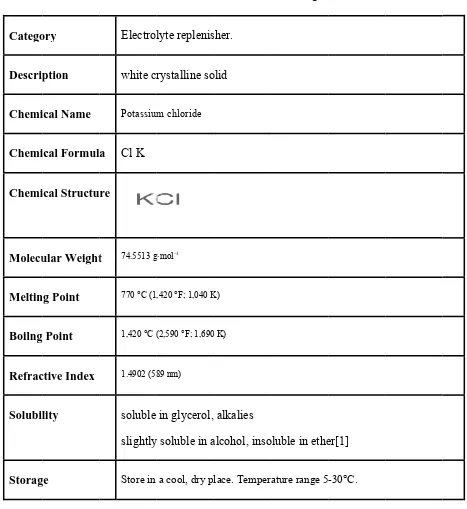
Formula Departme Catego Descrip Chemi Chemi Chemi Molecu Meltin Boilng Refrac Solubil Storag ation develop
ent of Pharma ory ption ical Name ical Formul ical Structu ular Weight ng Point Point ctive Index lity ge pment &in-v aceutics Electrol white cr Potassium
a Cl K
re
t 74.5513 g
770 °C (1
1,420 °C (
[image:49.612.72.539.117.626.2]1.4902 (58 soluble slightly Store in vitro evaluat
6.
DR
Table N lyte replenis rystalline so m chloride g·mol−1,420 °F; 1,040 K
(2,590 °F; 1,690
89 nm)
in glycerol,
y soluble in a
a cool, dry pl
tion of potas
47
RUG PRO
No: 3 Detail
sher. olid K) 0 K) alkalies alcohol, inso lace. Temper ssium chlori JK
OFILE
ls of Drugs
oluble in ethe
ature range 5
ide extended
KKMMRF’s
er[1]
-30°C.
d release tab
College Phar blets
6.1 INDICATIONS AND USAGE
Because of reports of intestinal and gastric ulceration and bleeding with
controlled-release potassium chloride preparations, these drugs should be reserved for those patients who
cannot tolerate or refuse to take liquid or effervescent potassium preparations or for patients in
whom there is a problem of compliance with these preparations.
¾ For the treatment of patients with hypokalemia with or without metabolic
alkalosis, in digitalis intoxication, and in patients with hypokalemic familial
periodic paralysis. If hypokalemia is the result of diuretic therapy, consideration
should be given to the use of a lower dose of diuretic, which may be sufficient
without leading to hypokalemia.
¾ For the prevention of hypokalemia in patients who would be at particular risk if
hypokalemia were to develop, eg, digitalized patients or patients with significant
cardiac arrhythmias.
The use of potassium salts in patients receiving diuretics for uncomplicated essential
hypertension is often unnecessary when such patients have a normal dietary pattern and when
low doses of the diuretic are used. Serum potassium should be checked periodically, however,
and if hypokalemia occurs, dietary supplementation with potassium-containing foods may be
adequate to control milder cases. In more severe cases, and if dose adjustment of the diuretic is
Formulation development &in-vitro evaluation of potassium chloride extended release tablets
Department of Pharmaceutics 49 JKKMMRF’s College Pharmacy 6.2 DOSAGE ADMINISTRATION:
The usual dietary potassium intake by the average adult is 50 to 100 mEq per day.
Potassium depletion sufficient to cause hypokalemia usually requires the loss of 200 or more
mEq of potassium from the total body store. Dosage must be adjusted to the individual needs of
each patient. The dose for the prevention of hypokalemia is typically in the range of 20 mEq per
day. Doses of 40-100 mEq per day or more are used for the treatment of potassium depletion.
Dosage should be divided if more than 20 mEq per day is given such that no more than 20 mEq
is given in a single dose. Potassium Chloride extended-release tablets provide 8 mEq, 10 mEq
and 20 mEq of Potassium Chloride.
Potassium Chloride extended-release tablets should be taken with meals and with a glass
of water or other liquid. This product should not be taken on an empty stomach because of its
potential for gastric irritation (see WARNINGS).
(NOTE: Potassium Chloride extended-release tablets are to be swallowed whole without <
![tablet is pperfectly forrmed. [6]](https://thumb-us.123doks.com/thumbv2/123dok_us/167092.44236/28.612.97.520.353.679/tablet-is-pperfectly-forrmed.webp)